
Matador Network's Blog, page 618
July 30, 2021
10 architectural wonders you must visit the next time you’re in Denmark

Visionary and ingenuous artistry has made Denmark a torchbearer for design and architecture innovations. Danish architects have left their mark around the world. From Jørn Utzon’s iconic Sydney Opera House, to Henning Larsen’s Harpa Concert Hall in Reykjavik, to the recent Icefjord Center in Greenland by Dorte Mandrup, each design is a testimony to Danish architecture’s cutting edge style and practical functionality.
But to experience the gamut of Denmark’s architectural and urban design masterpieces, you do not have to venture farther than Copenhagen, the capital city and a few more of its neighbors. Here are 10 of Denmark’s most famous and iconic buildings that are worth seeing.
1. The Utzon Center, Aalborg
Photo: Utzon Center/Facebook
The last building to be designed by Pritzker Prize winner Jørn Utzon who’s most noted as the architect of Sydney Opera House in Australia, the Utzon Center was a collaboration with his son Kim Utzon. The Utzon Center, inaugurated the year that Utzon died in 2008, is in the city where he grew up. Jørn Utzon envisioned the center as a cultural spot, rather than as a museum, where people of all ages and not just architects or students could access the knowledge of architecture and design.
The buildings of the center grace the revitalized waterfront of Aalborg. They overlook the Lim Fjord with striking and highly reflective curved rooftops, reminding visitors of sailing ships and shipyards, Aalborg’s main industry and the inspiration behind the design. The interior courtyards, a part of which forms the outdoor restaurant area, channel Middle Eastern and Mediterranean styles.
2. Moesgaard Museum, Aarhus
Photo: Moesgaard Museum/Facebook
A cultural history museum of archaeology and ethnography, the Moesgaard Museum in Aarhus stands out for its open-air design. Set amid a stunning landscape of woodlands and forests, overlooking the Bay of Aarhus, this almost Brutalist structure that’s softened by a grass, moss, and wildflower-covered rooftop was designed by Henning Larsen Architects.
Originally located in the historic Moesgaard Manor and still a part of the site, the new museum, which opened in 2014, forgoes the archaic narrative of box-like museums and instead places the building as part of the surrounding landscape where the gently sloping green roof is open to visitors all year round. The exhibition halls, bookshop, cafe, conference halls and auditorium are all arranged in split level forms, spread out over underground levels, mimicking for visitors a trip to an archaeological dig.
3. Bølgen (The Wave), Vejle
Photo: Stig Alenas/Shutterstock
Vejle, a town located in the Jutland Peninsula at the head of the Vejle Fjord, is particularly scenic thanks to its rolling hills and magnificent waterfront by the Bay of Skyttehusbugten. In 2006, Henning Larsen Architects began constructing a 100-apartment and 151,000 square-foot residential complex on the waterfront along Vejle Inlet. Their architectural vision of five consecutive wave-shaped towers was interrupted by the global recession of 2008, and construction came to a halt after the completion of two towers in 2009. The remaining three towers were completed in 2018 by the firm, after the passing of Larsen in 2013. Today the five towers of The Wave stand as an architectural tribute to the Vejle landscape.
Each wave reaches nine stories and has 20 apartments, with the largest ones on the top floor. The sculpture-like complex incorporates its residential zone with the public pier on the waterfront, making it an instant icon of Danish style.
4. The Black Diamond/The Royal Library, Copenhagen (1999)
Photo: footageclips/Shutterstock
The Royal Library, which is the national library of Denmark, was founded in 1648 by Frederick III, the king of Denmark and Norway. Situated in Slotsholmen, an island in Copenhagen harbor, the library is set among the notable National Archives and the glorious Christiansborg Palace, the seat of the Danish Parliament, the Prime Minister’s Office, and the Supreme Court.
In 1999, a modern extension created by Schmidt Hammer Lassen Architects was added to the old building of the Library, which resulted in a striking architectural landmark on the Copenhagen waterfront.
The Black Diamond, called as such because of its polished black granite exterior and irregular angles, is an expansive cube cleaved into two slightly tilted parts by a soaring, glazed atrium offering stunning views of the sea and sky beyond. Along with serving library purposes, it is home to the National Museum of Photography, exhibition halls, a bookshop, a roof terrace, a cafe and restaurant, and a concert hall and theater that seats 600. Visitors can traverse between the old and new buildings using one of the three glass-enclosed bridges that connect the Black Diamond with the Royal Library to experience the impactful blend of historic and modern architecture.

Photo: M/S Museet for Søfart/Facebook and BIG
A mere 45-minute train ride from Copenhagen lies the coastal town of Helsingor on the island of Zealand. The town is known for its 15th-century Kronborg Castle, immortalized as Elsinore Castle in William Shakespeare’s “Hamlet.” As it was housed since 1915 in the castle, a relocation was planned for the maritime museum. Bjarke Ingels of BiG architects had the unique task of creating a building that would not impinge on the views of Kronborg Castle, designated a UNESCO World Heritage Site in 2000.
The design by the Bjarke Ingels Group placed the M/S Maritime Museum of Denmark below ground and within the walls of an old, ship-shaped dry dock. A stone’s throw distance away from the imposing castle ramparts, and next to The Culture Yard, Helsingor’s other architectural marvel, the museum which welcomed the public in 2013, is invisible as one approaches it. Visitors navigate sloping bridges to descend 23 feet into the depths of the building to view exhibitions and events about Denmark’s 600-year maritime past. Although entirely underground, it is Denmark’s tallest museum.
6. Den Blå Planet (National Aquarium), Kastrup
Photo: 3XN
While the creatures that inhabit aquariums are usually spectacular, the buildings themselves mostly fall short of the mark. But that is certainly not true of the National Aquarium Denmark. It was first established as Denmark’s Aquarium in 1939 and delighted visitors for more than 73 years. By the mid-1990s it became clear that despite many extensions, Denmark needed a new venue for the aquarium.
After winning an international competition, architectural firm 3XN designed the present premises of Den Blå Planet on the shores of the Øresund in Kastrup. The aquarium opened its doors to the public in 2013. Inside there are sea creatures that live in 53 aquariums that contain a total of 1.85 million gallons of water. The architecture takes its cue from a whirlpool and is shaped like a spiraling star with five arms. The center of the structure is the entrance hall from where visitors can fan out into each of the arms. Clad in aluminum, with a fish-scale pattern on its facade and surrounded by a reflecting pool, the building creates the theme of an aquarium through its concept and form.
7. Camp Adventure Observation Tower, Rønnede
Photo: Camp Adventure/Facebook
The Gisselfeld Klosters Skove, a preserved forest, lies about an hour south of Copenhagen. Situated in the middle of this lush forest is Camp Adventure Park, a go-to destination for nature and camping enthusiasts. There are picnic spots, climbing parks, the longest zip line in Northern Europe, a sauna, luxurious Mongolian yurts for glamping in the park, and even a Renaissance-era castle in the vicinity. But the supreme attraction is a tower.
The Camp Adventure Observation Tower opened in 2019 and is the brainchild of the architectural firm EFFEKT. The structure is accessible to all and offers the unparalleled experience of observing nature from above the tree canopies. The 147-foot tall tower is reached by walking on a two-mile-long boardwalk. Visitors have options to stop and observe the scenery from a number of viewing platforms and an open-air stepped amphitheater before arriving at the entry ramp to the tower. The seamless climb to the top of the helical-shaped weathered steel and oak tower offers panoramic views from every point.
8. Isbjerget (The Iceberg), Aarhus
Photo: balipadma/Shutterstock
Rising futuristically on the waterfront overlooking the Bay of Aarhus is a building complex that gives new meaning to unconventional architectural design. Aarhus Ø, once an industrial harbor area and a container port, was regenerating as a vibrant neighborhood in 2010. The first project to be completed in 2013 was a residential block consisting of 208 apartments, called Isbjerget or The Iceberg.
Resembling a cluster of floating icebergs, the complex designed by CEBRA and JDS Architects of Denmark, Louis Paillard of France and SeARCH of the Netherlands is a sight to behold. There are four L-shaped buildings composed of single-story apartments, two-story town-houses, and penthouses with the shortest buildings in front and the tallest to the back, which enables all residences to be bathed in sunlight and enjoy views of the bay.
9. Copenhill Amager Bakke Power Station, Amager, CopenhagenPhoto: Oliver Foerstner/Shutterstock
Can a power station belching smoke and gas be a tourist attraction? Architect Bjarke Ingels believed it could be and showed us how it’s done. The Amager Bakke Power Station, located in a former industrial zone of Amager island in Copenhagen, combines public utility and unique fun. Designed by Bjarke Ingels Group and built in 2017, the waste-to-energy plant burns trash in two huge incinerators to produce heat for about 140,000 households. Also, its roof is an artificial ski slope.
SLA has landscaped the 279-foot high, sloping roof of Amager Bakke into a year-round open artificial ski slope covered not with snow, but natural grass that grows through synthetic bristles. Known as Copenhill, it includes a hiking slope, a slalom course, a freestyle park and the world’s tallest climbing wall. At the highest point of Copenhill is a bar that offers spectacular views of Copenhagen, the Øresund bridge, and Sweden. At the base are a restaurant and cafe, a ski school and a ski shop.
10. Cirkelbroen (The Circle Bridge), Copenhagen
Photo: Oliver Foerstner/Shutterstock
There are 17 biking bridges in Copenhagen, 15 of which were built in the last four years. Many have architectural brilliance — the Belvederbrøen (2016) built by SLA is bright red; the Inderhavnsbro (2016) provides stunning city views; the Cykelslangen (2014) artfully curves over the wharf, separating cyclists above from pedestrians below; while Lille Langbro (2019) is an elegantly curving bridge across the Inner Harbor that opens to let marine traffic through. But the Cirkelbroen or the Circle Bridge deserves special mention.
Designed by Studio Olafur Eliasson, the firm of Danish-Icelandic artist Olafur Eliasson, the Circle Bridge was an instant hit when it opened in 2015. The cable-stayed bridge is comprised of five connected circular platforms of varying sizes with a “mast” on each, paying homage to Copenhagen’s nautical history. Pedestrians and cyclists crossing the bridge over the Christianshavn canal can pause and relax and use the bridge as a “public square,” according to Eliasson. The timber handrail, the inwardly tilted glowing red railings, and the lighting at night all enhance the bridge’s beauty. Part of the bridge glides and pivots open to let larger boats go by. 
The post 10 architectural wonders you must visit the next time you’re in Denmark appeared first on Matador Network.


San Marino becomes the smallest country to ever win an Olympic medal

San Marino made history at the Tokyo Olympics 2020 when Alessandra Perilli shot right on target and won the first Olympic medal for the country. Hitting 29 of the 50 targets in the final for trap shooting, Perilli earned a bronze medal in women’s trap for her small country.
Made up of only 34,000 people, San Marino is now the smallest country by population to ever win an Olympic medal. The picturesque republic completely surrounded by Italy — and lying due east of Florence — measures only 23 square miles.
She has won #bronze in #Shooting Women's Trap final. She is a legend forever, forza Alessandra 💙🤍 pic.twitter.com/gNBpZuVtXk
— San Marino fan account (@SanMarino_FA) July 29, 2021
While the first rounds involve shooting at 125 targets, competitors get one shot each at 50 targets. Perilli’s third-place finish this year is a comeback after placing fourth in the 2012 Olympics. USA’s Kayle Browning won the silver, while Slovakia’s Zuzana Rehak Stefecekova took gold, with her record-breaking 43 on-target hits.
“During the final, when the fifth shooter went out, I thought, I don’t want to be one more time in fourth place, so I have to make it,” Perilli told journalists, reported CNN. “This is the first medal for me and for my country. We are a small country but very proud,” she said after the medal ceremony. “They [country] are for sure going crazy, crying. I don’t know, but for sure now they are.”
The country only entered five competitors this year. It has mostly entered shooters since it joined the games in 1960.
“There was no pressure, but only support from my country, from my team, from my federation and the Olympic committee,” she said.
The post San Marino becomes the smallest country to ever win an Olympic medal appeared first on Matador Network.
This Providence, Rhode Island, hotel has the only karaoke lounge in the city

I’ve long been someone who views hotels primarily as a place to lay down my head. Hotels all too often feel like a place set a world away from its location, and you can’t really explore what makes a city special if you surround yourself only with other hotel goers. But there are always exceptions, as I found at The Dean in Providence, Rhode Island.
The Dean is a pet-friendly, 52-room hotel in historic downtown Providence. As with many hotels in the area, the name is a nod to the nearby Brown University and Rhode Island School of Design (RISD). The early 19th century building gets a modern feel from neon signs throughout the lobby and hallways, though there are still touches of what the location used to look like, including the original brick facade and mosaic tile flooring. Other original parts of the building are charming but impractical depending on your group’s size and the amount of luggage you have. Case in point: the elevator with a sliding metal door, which looks like a mid-century lift that needs a bellhop (though it would be a tight squeeze, to say the least, if there was a bellhop).
The old-school lift, of course, isn’t why you come to The Dean. I was in Providence for a wedding, and during the rehearsal dinner, a group of us were chatting with the photographer from the area to gather some bar recommendations. First and foremost she mentioned The Boombox. Then, a couple moments later, she name dropped The Dean Bar. Both are on site at The Dean hotel; this was the first time I encountered someone who lives in a city I was visiting who recommended not one, but two hotel bars.
The Boombox holds the special place as Providence’s first and only karaoke lounge. There’s a main room where you can sing in front of friends and strangers alike if you’ve got the voice for it (or even if you don’t but the sake has you ready to jump on a public stage). For a more private singing affair, there are five rooms you can rent by the hour for as many as 20 people. The Dean Bar is a cozy cocktail lounge serving elevated classics and originals (currently due to COVID restrictions the drinks and cocktail kits are to-go only through The Dean’s partner restaurant, north).

Photo: Christian Harder
It’s the rare hotel bar (or in this case, bars) that make it onto a local’s top spots list. Of course, you don’t have to stay at The Dean to visit any of the above. It certainly is easier to waddle back up to your room than it is to find your way back to another hotel, though. And there’s a good chance that other hotels won’t have the same design-forward thinking as The Dean.
The rooms are furnished with European and American antiques from global dealers, as well as pieces from local artists. The elephant-carved nightstands, for example, were made by artist and RISD professor Will Reeves. The artful interior design helps the space feel lived in.
There are eight room sizes and styles to choose from, all of which have signature black bathrooms, actually good snacks, rain showers, original artwork, a TV, and exclusive toiletries. The smallest room is The Kin, which is designed for two and has a bunk bed, while The Classmates is made for four with two bunk beds. The Patron and The Mates are for two with a single queen bed, and some of the latter have what The Dean describes as “a revealing shower ideal for voyeurs and exhibitionists.” The Gang and The King fit four, while the Guardian Suite can fit up to six. Lastly, there’s The Heights, which is a suite with four interconnected guest rooms on the private top floor that sleeps 10.
For longer stays, The Dean is conveniently surrounded by other notable destinations that are easy to walk to or travel to on one of the bikes The Dean offers for rent through Dash Bicycle. For groups of beer lovers, there’s The Malted Barley, Congress Tavern, and Providence GPub (which also has a rooftop). Cocktail fans won’t be disappointed with the drinks at The Eddy.
At the end of your time in Providence, though, you might just find yourself returning for a final round of karaoke.
The post This Providence, Rhode Island, hotel has the only karaoke lounge in the city appeared first on Matador Network.
The most popular cocktails in the world, according to search data

It’s no secret that sitting outside under the sun while sipping your favorite cocktail is a beloved summer pastime around the world. Where many people diverge, though, is deciding what they like to drink. New data gathered by Cruise Croatia attempts to find those differences by finding the most-searched-for cocktails in nearly every country.
These aren’t necessarily the most popular cocktails in every country — the data is based solely on the cocktails that people search the most for online. According to a press release from the cruise company, “We then found the average monthly global search volume for the list of cocktails in every country of the world, with the cocktail showing the highest volume ranking first for that country … The search volume data used shows how many times per month, on average, people search for the target keyword in each country.”
Going by the Cruise Croatia metric, the most-searched-for cocktails in the world are the mojito, the mimosa, and the piña colada. The mojito, which came in first place, had the highest search volume in 84 countries.

Photo: Cruise Croatia
A diverse selection of cocktails ended up on this list. For instance, the negroni is the most-searched-for cocktail in the UK, while in Bulgaria, it’s the Bloody Mary. Poland, Denmark, and Finland all Googled the Aperol spritz at high rates.
Over in Asia, the martini and Moscow mule proved popular, while “Bolivia’s second-highest search volume was for the Caipirinha (along with the Martini), and Chile’s was bordering Peru’s Pisco Sour.” You can read the full data set and the complete list of cocktails here.
Someone in America might not think they have anything in common with someone in Ukraine, but if there’s one thing to be learned from Cruise Croatia’s survey, it’s that almost everyone on Earth needs to look up how to make a mojito every once in a while.
The post The most popular cocktails in the world, according to search data appeared first on Matador Network.
A big e-bike tax credit may make bicycle travel a lot cheaper, and easier

This is The Climate Win, the most positive sustainability news around the world every week.
Electric bicycles may soon become a larger part of your travel itinerary. A bill that would provide a 30 percent tax credit on the purchase of e-bikes is under consideration in the US Senate. It’s called the Electric Bicycle Incentive Kickstart for the Environment (E-BIKE) Act. Technically, it’s an amendment to the Internal Revenue Code of 1986 and, if passed by Congress, it will create a very strong tax incentive for buyers of most new e-bikes.
If the bill passes the Senate and the House of Representatives, and is signed into law by President Biden, the hope is that the tax incentive will drive e-bike sales and encourage citizens to commute by bike rather than in their car. The e-bike tax credit would also provide a boon to bike shops both in big cities and in areas that depend on income generated by outdoor recreation.
In addition to financial incentives, getting more people on e-bikes is in line with the desire of cities to encourage more bike travel to ease congestion on clogged urban streets. Denver, New York, Philadelphia, and other major cities around the US saw a major boost in bicycle travel during the COVID-19 pandemic and hope to keep that momentum going even as a “new normal” establishes itself around the country.
What this may mean for you is not just a discount on a more sustainable way to get around in your city, but to travel as well. Electric mountain bikes, for example, encourage more people to get outside and explore the outdoors. Bikes can actually be combined with public transportation to create an emissions-free bikepacking trip with public buses or you can get to top mountain bike routes via Amtrak.
No matter how you arrive at another US city, once you get there a great way to explore it is via bicycle. Bikes allow you to see the city up-close while traveling greater distances than you could on foot. With an e-bike rented on arrival, you can see even more of the city without tiring yourself out — even hilly cities like Seattle. These are some of the best US cities to explore by bike.
There’s a lot for travelers to love in this bill. You can help make sure it’s passed by contacting your representatives in Congress and asking them to support its passage.
More climate winsGrist reported this week on cadmium telluride technology, a material being used to create solar panels without the use of crystalline silicon. That’s good news because crystalline silicon is facing supply shortages due to the increasing global demand for solar panels. Also, suppliers in China’s Xinjiang region face US sanctions after being accused of using forced labor. Cadmium telluride could help alleviate supply shortages and diversify the supply chain, helping the market for solar energy keep up with ever-increasing demand. According to the report, cadmium telluride — which is thinner than silicone — is a viable alternative to crystalline silicone, accounts for 40 percent of utility-scale solar in the US and five percent globally.
The Indiana Department of Transportation will create the first pilot for a highway system that can charge electric vehicles as they drive, Smart Cities Dive reported. Following research and development through 2022, the state and its partners hope to deploy a quarter-mile stretch of highway in 2023, setting the stage for adoption of the technology around the country.
We close with a spotlight on a travel destination that makes it easy for visitors to be green. Matador this week published a guide on how to support local and sustainable businesses on Maui.
The post A big e-bike tax credit may make bicycle travel a lot cheaper, and easier appeared first on Matador Network.
How pan-Asian supermarkets are changing the way Americans eat

The way the so-called Asian speciality grocery store has evolved in the United States stands out. This type of shopping center usually often occupies a nondescript strip mall, surrounded by fast-food restaurants, mortgage lenders, and beauty salons. It may specialize in products from one Asian country, but rarely fails to carry some Latin pantry items like canned and dried beans, chili powder. and essential American goods from Oreos to Progresso chicken noodle soup. Larger chains tend to be pan-Asian, stocking Vietnamese shrimp sauce, Filipino calamansi concentrate, and Korean fermented soybean paste close together, or Cantonese egg noodles and Japanese soba side by side, and often come with a bakery and a food court. This expansive stock of diverse ingredients is gradually changing the way many Americans cook and eat.
The rise of pan-Asian grocery stores in the US is a product of shifting immigration patterns. According to census data, the Asian American population grew by 70 percent in the ‘80s, mainly driven by immigration. Unlike their predecessors who mostly worked manual labor jobs and sent money home, the wave of immigrants in the 1980s had higher educational and professional qualifications, partly thanks to immigration policies that favored skilled workers. Many were eventually joined by their families. Parents commuted long distances to STEM jobs and brought grandparents to the US to take care of the kids. Some of today’s most successful Asian grocery chains, such as H Mart and 99 Ranch Market, were founded around this time to serve the needs of these multigenerational families.
The founders often cite homesickness in their origin stories. “[He] missed his hometown — the familiar sounds, the smells, and the food. He wondered why he couldn’t shop for those foods and brands that were familiar from home here, in a grocery environment similar to his local American supermarket,” a marketing manager at 99 Ranch Market once said of the company’s Taiwan-born founder in an interview with South China Morning Post.

Photo: Manuela Durson/Shutterstock
For many customers, however, shopping at Asian grocery stores was as much about necessity as nostalgia. Usually, the grandparents cooked, and they much preferred familiar ingredients and dishes. Many of my Chinese American friends have fond memories of their grandmas’ cooking (soy-braised chicken wings were a favorite recipe).
It was usually the parents who did the shopping, which entailed driving long distances on weekends to a region’s biggest (and sometimes only) Asian supermarket. Today, travel is still part of the ritual, but as much for fun as necessity. Before the pandemic, a coworker of mine, a single, 25-year-old, used to ride the 7 train all the way from midtown Manhattan to Flushing every other week to “eat a good meal, do a nice facial, and haul back some groceries.” Another college friend said it was “well worth it” to sit for two hours in Los Angeles weekend traffic to buy ingredients for homemade hotpot.
Upgrades to Asian grocery store chains that seem stuck in the 1990s are underway, these days. Successful chains are expanding nationwide, moving into neighborhoods with growing Asian populations. The new stores are clean and well-lit; the selections are often tailored to local demographics. The H Marts near Columbia and New York universities, opened in 2018 and 2019 respectively, are stocked with entire isles of frozen potstickers (and a lot of frozen rice cakes too), instant noodles, and Japanese cookies — staples in college dorms.
This new wave of expansion has coincided with the growing popularity of Asian cuisines in the US, stoked by celebrity chefs and fueled by social media and global travel. Mainstream American grocery stores now carry Asian ingredients (I myself buy fish sauce and sesame oil from Trader Joe’s), and influential food media also introduced once unfamiliar Asian vegetables to the general audience, sometimes with Americanized twists to acclimate uninitiated palates.
But American home cooks flock to Asian grocery stores not just to buy specialty items for Asian recipes. “The Asian eggplant […] works better for Mediterranean recipes like melitzanosalata [and] baba ganoush,” a Reddit user wrote of a recipe that actually works better with ingredients that can typically only be found in an Asian grocery store. “It’s not quite the same variety as what’s used in Greece, but it’s a closer substitute than the typical American eggplant is.”
Vegetarians can also get a larger variety of meat alternatives beyond baked tofu and vacuum-sealed tempeh in regular health food stores, including soy-free tofu (also called tamago, made of eggs and seaweed stock), shirataki noodles, and pure wheat gluten.
It’s not just home cooks that appreciate the offerings. A bar owner told me that he regularly shops at a local 99 Ranch Market for his specialty dishes. “They have very well-priced seafood. The lobsters are $9.99 a pound,” he says.
Another chef, who asked to remain anonymous, started a weekend meal delivery service called ThatzKoththu during the pandemic. He said he goes to Asian supermarkets for recipe ideas. His signature dish, called koththu, is a Sri Lankan street food similar to pad thai. When we first met, he was finalizing the recipe for a Sichuan-style koththu. The sauce uses Sichuan peppercorn and, as he wryly revealed to me, a dab of hotpot soup base.

Photo: Trong Nguyen/Shutterstock
There is always a sense of exploration shopping at Asian grocery stores today, even for those well-versed in Asian food. New products are showing up in greater varieties than ever before. Many products that I first saw on Chinese social media, such as brown sugar bubble tea ice pop, self-heating hot pot, and stinky rice noodle in river snail broth are vying for the attention of the new generation of fun-loving, global-trotting customers.
I myself am often surprised at the speed at which trending products from Asia turn up in American stores. I almost laughed when I saw in my local 99 Ranch Market a peach-flavored seltzer made by Nayuki, a Chinese bubble tea chain trying fiercely to carve out a share in the bottled drink market. I had to find out for myself what the fuss was all about. The drink was more assertive than subtle, halfway between a good old Japanese Ramune soda and LaCroix. It’s vaguely “western” but unabashedly and proudly Asian — just like the grocery stores themselves.
The post How pan-Asian supermarkets are changing the way Americans eat appeared first on Matador Network.
Watch: Dubai is so hot it’s using laser-beam-shooting drones to encourage rainfall

As the world gets warmer due to climate change, some countries are looking for ways to keep it cooler. The National Center of Meteorology in Dubai, United Arab Emirates, is using drone technology to shoot laser beams at clouds to create rainfall. Electrifying the clouds charges them up to create bigger raindrops and more rain overall. The country’s official weather service posted two videos on its Instagram showing the technology in use.
View this post on InstagramA post shared by المركز الوطني للأرصاد (@officialuaeweather)
View this post on InstagramA post shared by المركز الوطني للأرصاد (@officialuaeweather)
In June, Dubai reached 125 degrees Fahrenheit, and the country averages four inches of rainfall per year. Critics of the technology worry about unintentional flooding and privatization of the technology. The UAE spent $15 million on nine projects encouraging rain over rain for the last few years, according to Forbes. In March, the country searched to test the project and then collaborated with the University of Reading in the UK, according to the BBC.
Other countries using this technology for rainfall solutions include the United States. In 1923, the US began using cloud seeding, which uses crushed-up silver iodide to create water clusters in the air. Most recently, on July 13, 2021, Death Valley, California, recorded the Earth’s hottest temperature record since 2017, at 128 degrees.
The post Watch: Dubai is so hot it’s using laser-beam-shooting drones to encourage rainfall appeared first on Matador Network.
Everything you need for a trip to the beach this summer

We hope you love the beach essentials we recommend! Just so you know, Matador may collect a small commission from the links on this page if you make a purchase. Listed prices are accurate as of the time of publication.
There is, quite frankly, nothing better than a perfect day at the beach. Beaches along the coast and at lakesides provide an ideal environment for a safe, socially distanced activity and a way to beat the heat this summer.
Whether you are planning a long weekend away or a quick afternoon escape, you need to have all the essentials ready to go. If it’s been a while since you’ve had a chance to enjoy time on the sand or if you’re just in need of upgrading some of your gear, we’ve put together a great list of beach essentials for this summer. From a sand-free blanket to beach games, shelter, sunscreens, and other beach must-haves, here’s everything you need for a perfect fun day out of sun and sand.
1. Reusable tote bag
Photo: REI
A reusable tote bag is essential, but that does not mean it needs to be boring. This trendy and stylish beach bag by Matador Transit packs away into a compact sack so it can be neatly stored when not in use. When unfolded it can hold 18 liters and is perfect for snorkeling gear, sandy shoes, and wet swimming costumes as you can easily rinse out the quick-drying fabric after use.
Price: $24.73
2. Sun hats
Photo: REI
Never underestimate the need for a sun hat. Not only do they top off your summer outfit, but they give much-needed protection from the sun and double up that given by sunscreen. This CTR Summit Crushable straw hat can be flattened down and popped into a bag, ideal for those who don’t travel light to the beach.

Photo: REI
We also love this Havana hat by Sunday Afternoons, which has adjustable sizing, a wicking sweatband and is made of breathable fabric.
Price: $19.73 — $34.00
3. Sunscreen
Photo: REI
Sun Bum is one of our favorite sunscreen brands because they are vegan, cruelty-free and reef safe. Their Mineral SPF 30 Sunscreen Lotion is a beach essential sunscreen and is water-resistant for up to 80 minutes. Couple the lotion with their signature lip balm which is zinc-based with moisturizing shea butter and vitamin E.
Price: $14.95
4. Sunglasses
Photo: REI
Sunglasses not only need to suit your face and look chic, but they also need to be durable, especially if you are going to be running about with a frisbee on the sand or jumping in the waves. We rate these Knockaround Mai Tais Polarized Sunglasses because they are affordable and wearable. With UV400-rated protection and polarized lenses, they are a must-have in your beach bag. If you are worried about them disappearing into the ocean, tag on a colorful glasses chord for around $10.
Price: $25
5. Waterbottle
Photo: REI
Keeping hydrated when in the sun is a no-brainer with this Hydro Flask. The double-wall vacuum insulation will keep your water cold throughout the day and its outer coating is BPA-free. It holds 20 fl oz of liquid and is one of the best flasks on the market outdoor activities. Although it is a bit of an investment, Hydro Flask products come with a lifetime warranty.
Price: $37.95
6. Portable charger
Photo: REI
The last thing you want is a dead phone battery when you want to capture your day on the beach for the gram. This portable charger will have your back. It comes with three USB ports and is solar rechargeable in four to five hours.
Price: $19.95
7. Beach towels
Photo: REI
Slow Tide have a great collection of beach towels. Their Mauka Beach Towel has an especially fun tropical design making it easily spottable after a swim. Slow Tide also adheres to a responsible cotton production program, which we respect. This towel is 60 x 30 inches and will fold comfortably into your beach tote.
Price: $29.95
8. Beach chair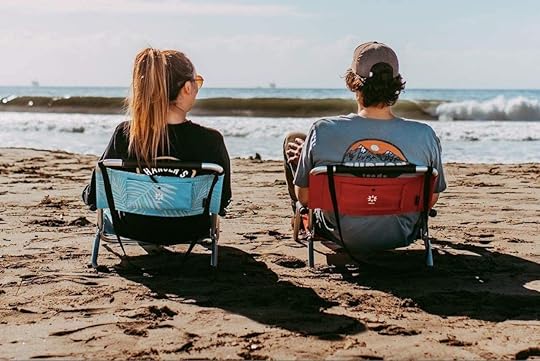
Photo: REI
A beach chair is not for everyone, but if you are someone who would rather sit above the sand with a beer rather than roll about on a towel or a rug, this lightweight framed chair is a great buy. It’s super comfortable, stable and sits snug into the sand. It also comes with storage on the back for the safekeeping of your phone, sunscreen and other beach essentials.
Price: $49.95
9. Beach shelter
Photo: REI
Those who are going to the beach with a family might want to consider investing in a beach tent or shelter. This pea-green shade by Big Anges is super versatile. One of its best selling points is that the outer shell can rotate so it can be adjusted accordingly when the sun moves. It’s also very easy and quick to erect and comes with handy inside pockets and hooks for storing your beach picnic snacks.
Price: $127.73
10. Portable cooler bag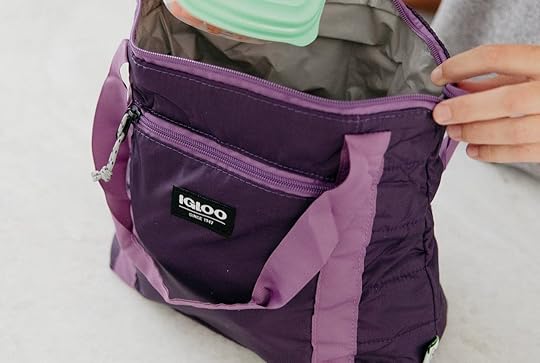
Photo: IGLOO
Talking about a beach picnic, you might also want to consider purchasing a decent cooler bag. So much lighter and fashionable than a large clucky hand case cooler, this portable cooler by Igloo is made from recycled bottles and keeps drinks and food cold for up to 12 hours. If you are planning on a beach party this will hold around 20 cans in its spacy interior.
Price: $39.95
11. Snorkel set
Photo: REI
Aqua Lung Sport’s snorkel set comes on a handy travel bag, so there’s no need to worry about juggling fins, a mask and snorkel to and from the beach. The mask promises clear vision with its shatter-resistant tempered glass and antifog coating. Their short blade fins are also convenient for traveling and make kicking through the waves a breeze.
Price: $74.95
12. Sand free mat
Photo: REI
Who likes sand in their sandwiches — no one. This mat provides the solution. Made from weaved materials grains are able to fall through the mesh allowing for a sand-free lunch. It comes in various colors and patterns from a classic blue and white stripe, aqua green, a blue zig-zag design and quilted navy.
Price: $69.95
13. Beach games
Photo: REI
A day on the beach without games is no fun at all. Grab an Aerobie Superdisc and team up with friends for an iconic game of frisbee. This disc floats, so if your game goes into the water, it’s easy to retrieve. Its cushioned edge makes for an easy catch, so it makes a perfect game for young beachgoers too.
Price: $10-$17.95
14. Portable speaker
Photo: REI
Not all portable speakers are splash-proof, so purchasing one such as the JBL Clip 4 Speaker is a great shout for the beach. Although it is small, it packs a punch with great sound quality and strong bass. The speaker has an inbuilt cabana making it easy to clip to your beach shelter, chair or belt — if you desire to take the music with you. It also is Bluetooth compatible so you can stream your summer beach playlist from your device.
Price: $69.95
More like thisTechnology + GearEverything you need in your pack to travel to Southeast AsiaThe post Everything you need for a trip to the beach this summer appeared first on Matador Network.
Road tripping Nevada's ET Highway
 The ultimate guide to road-tripping Nevada’s Extraterrestrial Highway
By: Suzie Dundas
Photo: Whit HassettIn most places, if you want to up your odds of experiencing something extraterrestrial, you’ll need to cross your fingers and keep your eyes on the skies.
And then there’s Nevada.
Home to Area 51, the secret, off-limits government base supposedly hiding proof of alien aircraft and technology, Nevada is the setting of many of the country’s juiciest stories about extraterrestrial activity. From hotbeds of UFO sightings to alien art and the backdrops to your favorite sci-fi movies, you’ll find weird and wild destinations dedicated to all-things-alien simply by following a short, looping road trip north out of Las Vegas. On the Extraterrestrial Highway, alien artifacts can be found around nearly every turn, though some may be in the form of offbeat roadside attractions rather than actual little green dudes and their flying saucers.
If you believe the truth is out there, set off on this three-leg, three-day road trip through the lesser-seen side of Nevada. Be sure to carry water and snacks when you’re driving through the desert — and maybe download a few alien-themed playlists in advance, too. Ready to make contact? Let’s go.

This guide is proudly produced in partnership with Travel Nevada.
Leg 1: Getting "Out There" Natural Arch at Basin and Range National Monument Night sky at Basin and Range Basin and Range National Monument Pahranagat National Wildlife Refuge Ready to uncover the mystery in Nevada’s Great Basin Desert, a short drive north of Las Vegas? Once you get here, you’ll see that going off the grid brings you closer to some of the most intriguing sights, adventures, and landscapes in the modern Wild West.Where: North out of Vegas
Distance: 200 miles, depending how much you explore
Stay: Sunset View Inn, Alamo
Set out in the morning from Las Vegas, heading towards Pahranagat National Wildlife Refuge. It’s about 90 minutes north of the city and covers 5,380 acres — for reference, the original gaming strip in Las Vegas was only 110 acres. There’s a lot to see here.
The refuge covers lakes, marshes, meadows, and desert, and it’s home to a wide variety of wildlife thanks to that ecological diversity. While visiting, you may see bald eagles, rattlesnakes, coyotes, desert tortoises, (aliens?) and more than 250 bird species. The refuge has seven miles of hiking trails where you’re likely to encounter more lizards than people, as well as a visitor center where you can sign up for guided programs or learn about the Indigenous Paiute people, whose history in the region goes back thousands of years.
So long as your legs are still feeling strong, set your GPS toward a few of the sites within Basin and Range National Monument. It’s about an hour’s drive north of Pahranagat and the town of Alamo — depending on where you land, as it’s massive — and you’ll want a good off-road vehicle (or at least a car with high clearance) to drive the monument’s roads. You’ll find well-preserved American Indian petroglyphs in the White River Narrows and Mount Irish Archaeological Districts, and rock arches, formations, and cacti-dotted landscapes that photographers will flip over throughout the monument.
Once night starts to fall, you’ll need more of a plan. Many people traveling this way camp in the monument — it’s a great spot to practice your astrophotography or, if you’re lucky, UFO photography — but you’ll find affordable roadside accommodations in nearby towns as well, like the Sunset View Inn in Alamo.
.map * { font-family: sans-serif !important;}.info-window-link { display: block; margin-top: 10px; padding: 3px 10px; border-radius: 3px; background-color: #0099ff; color: white !important; font-size: 12px; text-align: center;}.info-window-link:hover { text-decoration: none;}var _icons = { red: { url: 'https://travelstoke.s3.amazonaws.com/...', size: { width: 22.8, height: 35.4 }, anchor: { x: 11.4, y: 35.4 } }, orange: { url: 'https://travelstoke.s3.amazonaws.com/...', size: { width: 22.8, height: 35.4 }, anchor: { x: 11.4, y: 35.4 } }, yellow: { url: 'https://travelstoke.s3.amazonaws.com/...', size: { width: 22.8, height: 35.4 }, anchor: { x: 11.4, y: 35.4 } }};var _styles = { travelstoke: [ { featureType: 'administrative', elementType: 'geometry.stroke', stylers: [{ color: '#999999' }] }, { featureType: 'landscape.natural.terrain', elementType: 'geometry', stylers: [{ visibility: 'off' }] }, { featureType: 'poi.business', elementType: 'all', stylers: [{ visibility: 'off' }] }, { featureType: 'road', elementType: 'geometry.stroke', stylers: [{ color: '#ffffff' }] }, { featureType: 'water', elementType: 'geometry', stylers: [{ color: '#53acce' }] } ], desert: [{"elementType":"labels","stylers":[{"visibility":"off"},{"color":"#f49f53"}]},{"featureType":"landscape","stylers":[{"color":"#f9ddc5"},{"lightness":-7}]},{"featureType":"road","stylers":[{"color":"#813033"},{"lightness":43}]},{"featureType":"poi.business","stylers":[{"color":"#645c20"},{"lightness":38}]},{"featureType":"water","stylers":[{"color":"#1994bf"},{"saturation":-69},{"gamma":0.99},{"lightness":43}]},{"featureType":"road.local","elementType":"geometry.fill","stylers":[{"color":"#f19f53"},{"weight":1.3},{"visibility":"on"},{"lightness":16}]},{"featureType":"poi.business"},{"featureType":"poi.park","stylers":[{"color":"#645c20"},{"lightness":39}]},{"featureType":"poi.school","stylers":[{"color":"#a95521"},{"lightness":35}]},{},{"featureType":"poi.medical","elementType":"geometry.fill","stylers":[{"color":"#813033"},{"lightness":38},{"visibility":"off"}]},{},{},{},{},{},{},{},{},{},{},{},{"elementType":"labels"},{"featureType":"poi.sports_complex","stylers":[{"color":"#9e5916"},{"lightness":32}]},{},{"featureType":"poi.government","stylers":[{"color":"#9e5916"},{"lightness":46}]},{"featureType":"transit.station","stylers":[{"visibility":"off"}]},{"featureType":"transit.line","stylers":[{"color":"#813033"},{"lightness":22}]},{"featureType":"transit","stylers":[{"lightness":38}]},{"featureType":"road.local","elementType":"geometry.stroke","stylers":[{"color":"#f19f53"},{"lightness":-10}]},{},{},{}]};window.addEventListener('load', function() { jQuery(document).ready(function($) { var boundPadding; var id = 'map-61051d77aafd2'; var atts = {"lat":"38","lng":"-115","zoom":"7"}; var markers = [{"lat":"36.114647","lng":"-115.17281","title":"Las Vegas"},{"lat":"37.246689","lng":"-115.10963","title":"Pahranagat National Wildlife Refuge"},{"lat":"38.187789","lng":"-115.52723","title":"Basin and Range National Monument"},{"lat":"37.347123","lng":"-115.14823","title":"Sunset View Inn"}]; var map = new google.maps.Map(document.getElementById(id), { mapTypeId: google.maps.MapTypeId.ROADMAP, disableDefaultUI: true, zoomControl: true, scrollwheel: false, zoomControlOptions: { style: google.maps.ZoomControlStyle.LARGE, position: google.maps.ControlPosition.LEFT_CENTER } }); if (atts.style && _styles[atts.style]) map.setOptions({ styles: _styles[atts.style] }); if (atts.padding !== undefined) boundPadding = parseInt(atts.padding); var mapBounds; if (atts.lat !== undefined && atts.lng !== undefined) { // Use lat and lng if provided map.setCenter({ lat: parseFloat(atts.lat), lng: parseFloat(atts.lng) }); } else if (markers && markers.length) { if (markers.length === 1) { // Use lat lng from first marker if only 1 provided map.setCenter({ lat: parseFloat(markers[0].lat), lng: parseFloat(markers[0].lng) }); } else { // With multiple markers create a boundry that includes all of them mapBounds = new google.maps.LatLngBounds(); } } var labels = 'ABCDEFGHIJKLMNOPQRSTUVWXYZ'; var labelIndex = 0; if(atts.offset !== undefined) { labelIndex = parseInt(atts.offset); } var infoWindow = new google.maps.InfoWindow({ content: '' }); var openInfoWindow = function(marker, target) { var info = $('<div>', { style: 'max-width:150px' }); $('<div>').append(marker.title).appendTo(info); if (marker.scroll_to) { $('<a>', { class: 'info-window-link', href: '#' marker.scroll_to, }).append('Jump To').appendTo(info); } infoWindow.setContent(info[0].outerHTML); infoWindow.open({ anchor: target, map: map, shouldFocus: false }); }; $('#' id).on('click', '.info-window-link', function(e) { e.preventDefault(); var target = $(e.target).attr('href'); $('html, body').animate({ scrollTop: $(target).offset().top - 55 }, 1000); }); for (var i = 0; i < markers.length; i ) { var marker = markers[i]; if (marker.lat !== undefined && marker.lng !== undefined) { var markerObject = { map: map, position: { lat: parseFloat(marker.lat), lng: parseFloat(marker.lng) }, animation: google.maps.Animation.DROP, locationId: i, } if(atts.ordered !== undefined) { if(atts.numbered !== undefined) { number = labelIndex = labelIndex 1; markerObject.label = number.toString(); } else { markerObject.label = labels[labelIndex % labels.length]; } } if(marker.icon !== undefined) { markerObject.icon = marker.icon; } var mapMarker = new google.maps.Marker(markerObject); if (mapBounds) mapBounds.extend(mapMarker.getPosition()); if (marker.title) { var infowindow = new google.maps.InfoWindow({ content: marker.title }); if (markers.length === 1) { setTimeout(function() { openInfoWindow(marker, mapMarker); }, 1200); } google.maps.event.addListener(mapMarker, 'click', function() { openInfoWindow(markers[this.locationId], this); }); } } } if (mapBounds) { map.fitBounds(mapBounds, {top:boundPadding, right:boundPadding, left:boundPadding, bottom:boundPadding}); } else if (atts.zoom) { map.setZoom(parseInt(atts.zoom)); } else { map.setZoom(16); } });});Photo credits: Bob Wilk/BLM/Travel Nevada, Dominic Gentilcore PhD/Shutterstock, Bob Wilk/BLM/Travel Nevada, and Sydney Martinez/Travel Nevada
Leg 2: Beaming along the E.T. Highway E.T. Fresh Jerky Alien Research Center Rachel Lunar Crater National Natural Landmark Clown Motel Now it’s all about exploring the E.T. Highway. Just getting here was probably enough to give you a sense of why these landscapes consistently inspire rumors of desert secrets and alien sightings. Thus primed, you’ll spend today squarely focused on chasing down the truth behind those rumors.Where: Crystal Springs to Tonopah
Distance: 215 miles
Stay: Clown Motel, Tonopah
From whatever accommodations you chose for the night, make your way to Crystal Springs, the official start of the E.T. Highway. Begin the odyssey at the E.T. Fresh Jerky store in Hiko (at the junction of US-93 and Highway 318) to stock up on road trip eats and drinks — you’ll know you’re there when you see the giant alien cowboy mural, the first of many essential selfie spots during your travels today. The store offers a wide selection of snacks and small-batch treats, plus plenty of funky souvenirs. Be sure to take photos with the alien murals and backdrops and try as many types of “alien jerky” as you can stomach.
Your next stop, the enigmatic-sounding Alien Research Center, is only a few miles away, though you should also pull over quickly and take a photo at the E.T. Highway sign at the start of Highway 375. About three minutes later, you’ll see the 20-foot-tall alien marking the entrance to the research center. This is the real kick-off to your tour, and staff in the shop are genuinely happy to chat for as long as you’d like about alien sightings and where to go for the best chance of seeing something inexplicable. Pro tip: Ask for directions to the nearby Black Mailbox, which marks the site of more than a few self-reported UFO encounters.
Next, drive about 30 minutes west on 375 to the town of Rachel, which you may recognize as a set from the hit ’90s flick Independence Day. Head to the Alien Cowpoke Gas & General Store, where you could spend at least an hour on E.T. selfies — make sure to pose with the “road tripping” aliens stationed in the old car out front. Fill up with gas from the alien-covered pumps and stock up on snacks from the store before heading on.
When you’re ready, keep driving the Extraterrestrial Highway toward Tonopah, but take a detour to the right on US-6 to check out Lunar Crater National Natural Landmark. When you arrive, you’ll see where the landmark gets its name: It looks like a giant moon crater, some 430 feet deep. Apollo astronauts from missions 16 and 17 actually trained here to prepare for their groundbreaking work. If time allows, explore a bit of the Lunar Crater Backcountry Byway, which links 20-some other craters, cinder cones, ancient obsidian-laden lava beds, and other out-of-this-world geologic features.
Next up, continue your westward trek to Tonopah, about 90 minutes away from Lunar Crater. Depending on when you arrive, you should have a few hours of daylight before it’s UFO-spottin’ time. History buffs may want to seek out Tonopah Historic Mining Park, a sprawling turn-of-the-century silver mine once known as the “Queen of the Silver Camps.” Dozens of buildings, bridges, and pieces of mining equipment are still standing. It’s only $5 to get in and is open daily with guided and self-guided tour options.
Before dark, check into the Clown Motel for the perfect #WeirdNevada accommodations to cap off your day of hunting aliens. The hundreds (if not thousands) of clown figurines waiting to greet you in the lobby will immediately tip you off that this is not your ordinary motel stay. What’s that you say, clowns don’t spook you? Well, the resident ghosts from the historic cemetery next door might do the trick. Hauntings are kind of a thing in Tonopah — if you end up at The Mizpah Hotel instead, keep an eye out for the “Lady in Red.” Sleep tight!
But first, pack up a blanket, warm clothes, and your camera and tripod in your backpack before heading to dinner at Tonopah Brewing Company. The brewery is known for beer and BBQ, though the fried jalapenos and cheese curds are worth it for sure. No matter what you order, be sure to taste a few beers so you know which to take to-go for the last activity of the evening: UFO spotting. Post up near the Clair Blackburn Memorial Stargazing Park, which has individual stargazing platforms throughout the lawn. Break out your blanket and beers, and keep your eyes peeled to see if you’ll be the next to report a Nevada UFO sighting.
Pro tip: Consider downloading a smartphone app in advance to help you identify constellations in real time, and check the park’s website to see if you can catch a summer stargazing or photography event.
.map * { font-family: sans-serif !important;}.info-window-link { display: block; margin-top: 10px; padding: 3px 10px; border-radius: 3px; background-color: #0099ff; color: white !important; font-size: 12px; text-align: center;}.info-window-link:hover { text-decoration: none;}var _icons = { red: { url: 'https://travelstoke.s3.amazonaws.com/...', size: { width: 22.8, height: 35.4 }, anchor: { x: 11.4, y: 35.4 } }, orange: { url: 'https://travelstoke.s3.amazonaws.com/...', size: { width: 22.8, height: 35.4 }, anchor: { x: 11.4, y: 35.4 } }, yellow: { url: 'https://travelstoke.s3.amazonaws.com/...', size: { width: 22.8, height: 35.4 }, anchor: { x: 11.4, y: 35.4 } }};var _styles = { travelstoke: [ { featureType: 'administrative', elementType: 'geometry.stroke', stylers: [{ color: '#999999' }] }, { featureType: 'landscape.natural.terrain', elementType: 'geometry', stylers: [{ visibility: 'off' }] }, { featureType: 'poi.business', elementType: 'all', stylers: [{ visibility: 'off' }] }, { featureType: 'road', elementType: 'geometry.stroke', stylers: [{ color: '#ffffff' }] }, { featureType: 'water', elementType: 'geometry', stylers: [{ color: '#53acce' }] } ], desert: [{"elementType":"labels","stylers":[{"visibility":"off"},{"color":"#f49f53"}]},{"featureType":"landscape","stylers":[{"color":"#f9ddc5"},{"lightness":-7}]},{"featureType":"road","stylers":[{"color":"#813033"},{"lightness":43}]},{"featureType":"poi.business","stylers":[{"color":"#645c20"},{"lightness":38}]},{"featureType":"water","stylers":[{"color":"#1994bf"},{"saturation":-69},{"gamma":0.99},{"lightness":43}]},{"featureType":"road.local","elementType":"geometry.fill","stylers":[{"color":"#f19f53"},{"weight":1.3},{"visibility":"on"},{"lightness":16}]},{"featureType":"poi.business"},{"featureType":"poi.park","stylers":[{"color":"#645c20"},{"lightness":39}]},{"featureType":"poi.school","stylers":[{"color":"#a95521"},{"lightness":35}]},{},{"featureType":"poi.medical","elementType":"geometry.fill","stylers":[{"color":"#813033"},{"lightness":38},{"visibility":"off"}]},{},{},{},{},{},{},{},{},{},{},{},{"elementType":"labels"},{"featureType":"poi.sports_complex","stylers":[{"color":"#9e5916"},{"lightness":32}]},{},{"featureType":"poi.government","stylers":[{"color":"#9e5916"},{"lightness":46}]},{"featureType":"transit.station","stylers":[{"visibility":"off"}]},{"featureType":"transit.line","stylers":[{"color":"#813033"},{"lightness":22}]},{"featureType":"transit","stylers":[{"lightness":38}]},{"featureType":"road.local","elementType":"geometry.stroke","stylers":[{"color":"#f19f53"},{"lightness":-10}]},{},{},{}]};window.addEventListener('load', function() { jQuery(document).ready(function($) { var boundPadding; var id = 'map-61051d77adf85'; var atts = {"lat":"38","lng":"-115","zoom":"7"}; var markers = [{"lat":"37.528364","lng":"-115.21850","title":"ET Fresh Jerky"},{"lat":"37.532923","lng":"-115.24249","title":"Alien Research Center"},{"lat":"37.646765","lng":"-115.74583","title":"Little A\u2019Le\u2019Inn"},{"lat":"38.383700","lng":"-116.06953","title":"Lunar Crater National Natural Landmark"},{"lat":"38.068747","lng":"-117.22998","title":"Tonopah Historic Mining Park"},{"lat":"38.068320","lng":"-117.230571","title":"The Mizpah Hotel"},{"lat":"38.057076","lng":"-117.20840","title":"Clair Blackburn Memorial Stargazing Park"}]; var map = new google.maps.Map(document.getElementById(id), { mapTypeId: google.maps.MapTypeId.ROADMAP, disableDefaultUI: true, zoomControl: true, scrollwheel: false, zoomControlOptions: { style: google.maps.ZoomControlStyle.LARGE, position: google.maps.ControlPosition.LEFT_CENTER } }); if (atts.style && _styles[atts.style]) map.setOptions({ styles: _styles[atts.style] }); if (atts.padding !== undefined) boundPadding = parseInt(atts.padding); var mapBounds; if (atts.lat !== undefined && atts.lng !== undefined) { // Use lat and lng if provided map.setCenter({ lat: parseFloat(atts.lat), lng: parseFloat(atts.lng) }); } else if (markers && markers.length) { if (markers.length === 1) { // Use lat lng from first marker if only 1 provided map.setCenter({ lat: parseFloat(markers[0].lat), lng: parseFloat(markers[0].lng) }); } else { // With multiple markers create a boundry that includes all of them mapBounds = new google.maps.LatLngBounds(); } } var labels = 'ABCDEFGHIJKLMNOPQRSTUVWXYZ'; var labelIndex = 0; if(atts.offset !== undefined) { labelIndex = parseInt(atts.offset); } var infoWindow = new google.maps.InfoWindow({ content: '' }); var openInfoWindow = function(marker, target) { var info = $('<div>', { style: 'max-width:150px' }); $('<div>').append(marker.title).appendTo(info); if (marker.scroll_to) { $('<a>', { class: 'info-window-link', href: '#' marker.scroll_to, }).append('Jump To').appendTo(info); } infoWindow.setContent(info[0].outerHTML); infoWindow.open({ anchor: target, map: map, shouldFocus: false }); }; $('#' id).on('click', '.info-window-link', function(e) { e.preventDefault(); var target = $(e.target).attr('href'); $('html, body').animate({ scrollTop: $(target).offset().top - 55 }, 1000); }); for (var i = 0; i < markers.length; i ) { var marker = markers[i]; if (marker.lat !== undefined && marker.lng !== undefined) { var markerObject = { map: map, position: { lat: parseFloat(marker.lat), lng: parseFloat(marker.lng) }, animation: google.maps.Animation.DROP, locationId: i, } if(atts.ordered !== undefined) { if(atts.numbered !== undefined) { number = labelIndex = labelIndex 1; markerObject.label = number.toString(); } else { markerObject.label = labels[labelIndex % labels.length]; } } if(marker.icon !== undefined) { markerObject.icon = marker.icon; } var mapMarker = new google.maps.Marker(markerObject); if (mapBounds) mapBounds.extend(mapMarker.getPosition()); if (marker.title) { var infowindow = new google.maps.InfoWindow({ content: marker.title }); if (markers.length === 1) { setTimeout(function() { openInfoWindow(marker, mapMarker); }, 1200); } google.maps.event.addListener(mapMarker, 'click', function() { openInfoWindow(markers[this.locationId], this); }); } } } if (mapBounds) { map.fitBounds(mapBounds, {top:boundPadding, right:boundPadding, left:boundPadding, bottom:boundPadding}); } else if (atts.zoom) { map.setZoom(parseInt(atts.zoom)); } else { map.setZoom(16); } });});Photo credits: Whit Hassett and Kristin Kremers
Leg 3: Completing the orbit International Car Forest of the Last Church Rhyolite Ghost Town Golwell Open Air Museum The truth is out there — have you found it yet? Because today, you’re heading back to Las Vegas, a drive that takes a little over three hours if you do it in a straight shot. But since you’ve got all day, turn it into another quest for close encounters. As long as you’re in Nevada, the adventure’s never over.Where: Tonopah back to Vegas
Distance: 250 miles
Stay: Las Vegas
When you’re ready, head south on US-95 and piggyback onto another of Nevada’s excellent road trip routes: the Free-Range Art Highway. Your first stop should be the International Car Forest of the Last Church. Created by a local artist, it’s an interactive art exhibition smack in the middle of the desert, filled with dozens of brightly spray-painted cars and buses.
Another hour south and you’ll come to two more great stops: the Goldwell Open Air Museum and the ghost town of Rhyolite. If you do your research in advance, you’ll see that the most recent UFO sighting in Rhyolite was in 2016 — E.T. may be overdue for a visit.
If you have time before getting back to Las Vegas, make a stop at either Mt. Charleston or Red Rock Canyon National Conservation Area. Near Mt. Charleston, hike the Mary Jane Falls Trail to see how diverse Nevada’s landscapes really are. Though most of your trip has been spent in the desert, Mary Jane Falls cascades down a forested cliffband. In Red Rock Canyon, the Fossil Ridge Trail is a great spot to peek at ancient history, especially if you believe life on our planet began when a meteorite seeded with alien cells crashed into Earth — a theory called “panspermia,” if you want to be scientific about it.
One of the best parts of driving to, from, and along Extraterrestrial Highway is that it’s an open-range playground. At any point, you can pull over and search the skies or have an impromptu photoshoot in the desert — and the business owners and travelers you’ll meet along the way are usually brimming with stories to share with their fellow offbeat adventurers. If you love wide-open spaces, vast skies, and feeling like you’re the only human in the world, set aside a few days to explore this outlandish side of Nevada on your next Vegas vacation.
.map * { font-family: sans-serif !important;}.info-window-link { display: block; margin-top: 10px; padding: 3px 10px; border-radius: 3px; background-color: #0099ff; color: white !important; font-size: 12px; text-align: center;}.info-window-link:hover { text-decoration: none;}var _icons = { red: { url: 'https://travelstoke.s3.amazonaws.com/...', size: { width: 22.8, height: 35.4 }, anchor: { x: 11.4, y: 35.4 } }, orange: { url: 'https://travelstoke.s3.amazonaws.com/...', size: { width: 22.8, height: 35.4 }, anchor: { x: 11.4, y: 35.4 } }, yellow: { url: 'https://travelstoke.s3.amazonaws.com/...', size: { width: 22.8, height: 35.4 }, anchor: { x: 11.4, y: 35.4 } }};var _styles = { travelstoke: [ { featureType: 'administrative', elementType: 'geometry.stroke', stylers: [{ color: '#999999' }] }, { featureType: 'landscape.natural.terrain', elementType: 'geometry', stylers: [{ visibility: 'off' }] }, { featureType: 'poi.business', elementType: 'all', stylers: [{ visibility: 'off' }] }, { featureType: 'road', elementType: 'geometry.stroke', stylers: [{ color: '#ffffff' }] }, { featureType: 'water', elementType: 'geometry', stylers: [{ color: '#53acce' }] } ], desert: [{"elementType":"labels","stylers":[{"visibility":"off"},{"color":"#f49f53"}]},{"featureType":"landscape","stylers":[{"color":"#f9ddc5"},{"lightness":-7}]},{"featureType":"road","stylers":[{"color":"#813033"},{"lightness":43}]},{"featureType":"poi.business","stylers":[{"color":"#645c20"},{"lightness":38}]},{"featureType":"water","stylers":[{"color":"#1994bf"},{"saturation":-69},{"gamma":0.99},{"lightness":43}]},{"featureType":"road.local","elementType":"geometry.fill","stylers":[{"color":"#f19f53"},{"weight":1.3},{"visibility":"on"},{"lightness":16}]},{"featureType":"poi.business"},{"featureType":"poi.park","stylers":[{"color":"#645c20"},{"lightness":39}]},{"featureType":"poi.school","stylers":[{"color":"#a95521"},{"lightness":35}]},{},{"featureType":"poi.medical","elementType":"geometry.fill","stylers":[{"color":"#813033"},{"lightness":38},{"visibility":"off"}]},{},{},{},{},{},{},{},{},{},{},{},{"elementType":"labels"},{"featureType":"poi.sports_complex","stylers":[{"color":"#9e5916"},{"lightness":32}]},{},{"featureType":"poi.government","stylers":[{"color":"#9e5916"},{"lightness":46}]},{"featureType":"transit.station","stylers":[{"visibility":"off"}]},{"featureType":"transit.line","stylers":[{"color":"#813033"},{"lightness":22}]},{"featureType":"transit","stylers":[{"lightness":38}]},{"featureType":"road.local","elementType":"geometry.stroke","stylers":[{"color":"#f19f53"},{"lightness":-10}]},{},{},{}]};window.addEventListener('load', function() { jQuery(document).ready(function($) { var boundPadding; var id = 'map-61051d77afdc5'; var atts = {"lat":"38","lng":"-115","zoom":"7"}; var markers = [{"lat":"38.060055","lng":"-117.22093","title":"Central Nevada Museum"},{"lat":"37.698845","lng":"-117.22860","title":"International Car Forest of the Last Church"},{"lat":"36.894819","lng":"-116.83062","title":"Goldwell Open Air Museum"},{"lat":"36.901071","lng":"-116.82881","title":"Rhyolite"},{"lat":"36.194427","lng":"-115.43781","title":"Red Rock Canyon National Conservation Area"},{"lat":"36.271598","lng":"-115.69556","title":"Mt. Charleston"},{"lat":"36.114647","lng":"-115.17281","title":"Las Vegas"}]; var map = new google.maps.Map(document.getElementById(id), { mapTypeId: google.maps.MapTypeId.ROADMAP, disableDefaultUI: true, zoomControl: true, scrollwheel: false, zoomControlOptions: { style: google.maps.ZoomControlStyle.LARGE, position: google.maps.ControlPosition.LEFT_CENTER } }); if (atts.style && _styles[atts.style]) map.setOptions({ styles: _styles[atts.style] }); if (atts.padding !== undefined) boundPadding = parseInt(atts.padding); var mapBounds; if (atts.lat !== undefined && atts.lng !== undefined) { // Use lat and lng if provided map.setCenter({ lat: parseFloat(atts.lat), lng: parseFloat(atts.lng) }); } else if (markers && markers.length) { if (markers.length === 1) { // Use lat lng from first marker if only 1 provided map.setCenter({ lat: parseFloat(markers[0].lat), lng: parseFloat(markers[0].lng) }); } else { // With multiple markers create a boundry that includes all of them mapBounds = new google.maps.LatLngBounds(); } } var labels = 'ABCDEFGHIJKLMNOPQRSTUVWXYZ'; var labelIndex = 0; if(atts.offset !== undefined) { labelIndex = parseInt(atts.offset); } var infoWindow = new google.maps.InfoWindow({ content: '' }); var openInfoWindow = function(marker, target) { var info = $('<div>', { style: 'max-width:150px' }); $('<div>').append(marker.title).appendTo(info); if (marker.scroll_to) { $('<a>', { class: 'info-window-link', href: '#' marker.scroll_to, }).append('Jump To').appendTo(info); } infoWindow.setContent(info[0].outerHTML); infoWindow.open({ anchor: target, map: map, shouldFocus: false }); }; $('#' id).on('click', '.info-window-link', function(e) { e.preventDefault(); var target = $(e.target).attr('href'); $('html, body').animate({ scrollTop: $(target).offset().top - 55 }, 1000); }); for (var i = 0; i < markers.length; i ) { var marker = markers[i]; if (marker.lat !== undefined && marker.lng !== undefined) { var markerObject = { map: map, position: { lat: parseFloat(marker.lat), lng: parseFloat(marker.lng) }, animation: google.maps.Animation.DROP, locationId: i, } if(atts.ordered !== undefined) { if(atts.numbered !== undefined) { number = labelIndex = labelIndex 1; markerObject.label = number.toString(); } else { markerObject.label = labels[labelIndex % labels.length]; } } if(marker.icon !== undefined) { markerObject.icon = marker.icon; } var mapMarker = new google.maps.Marker(markerObject); if (mapBounds) mapBounds.extend(mapMarker.getPosition()); if (marker.title) { var infowindow = new google.maps.InfoWindow({ content: marker.title }); if (markers.length === 1) { setTimeout(function() { openInfoWindow(marker, mapMarker); }, 1200); } google.maps.event.addListener(mapMarker, 'click', function() { openInfoWindow(markers[this.locationId], this); }); } } } if (mapBounds) { map.fitBounds(mapBounds, {top:boundPadding, right:boundPadding, left:boundPadding, bottom:boundPadding}); } else if (atts.zoom) { map.setZoom(parseInt(atts.zoom)); } else { map.setZoom(16); } });});Photo credits: Sydney Martinez/Travel Nevada
This guide is proudly produced in partnership with Travel Nevada.
The post Nevada’s Extraterrestrial Highway: One spaced-out road trip appeared first on Matador Network.
July 29, 2021
This underrated national park is unexpectedly epic for scuba divers

Of all the outdoor activities America’s national parks call to mind, scuba diving is low on the list, especially when that national park is in the Midwest.
Michiganders know better. Isle Royale National Park, which doubles as the largest of Lake Superior’s 400-plus islands, is one of the most unexpectedly exciting places to scuba dive in the United States. The water is invigoratingly icy, the lake floor is a maze of shipwrecks waiting to be explored, and the view from the surface captures Lake Superior at its most remote.
If you’re looking for an unforgettable experience in one of the country’s most underrated national parks, wetsuit up, and look no further than Michigan’s Isle Royale National Park.
What to know about scuba diving in Isle Royale National Park
Photo: Isle Royale National Park/Facebook
The first thing you need to know about scuba diving in Lake Superior is that it’s cold, like really cold, averaging about 35 degrees Fahrenheit once you plunge below 50 feet. It’s also dark, with visibility that ranges from 20 to 70 feet. And it’s rugged to boot, with capricious waves that may be moderately choppy one minute and downright stormy the next.
None of this should discourage divers, provided they have advanced certifications and cold-water, wreck, and deep diving experience. But it should serve as a reminder to come prepared and stay vigilant — two tenets seasoned divers already abide. At Isle Royale, being prepared starts with having the right gear. Drysuits are preferable, but six- or seven-millimeter wetsuits may suffice if worn with three-finger mitts and a hooded vest. Cold-water regulators and dive lights are a must, and dive computers are highly recommended.
To stay vigilant, divers should stick to a buddy system, both while navigating shipwrecks where the visibility can be slim to none and by ensuring that there’s at least one person monitoring conditions from the surface at all times. The park also reminds divers to respect the no-decompression limits, which is the maximum amount of time a diver can spend underwater at a given depth without needing to make decompression stops during their ascent. Only experienced and equipped divers should attempt dives below 100 feet.
The best way to ensure you’re prepared to dive Lake Superior is to book a charter. Isle Royale Charters is a National Park Service-licensed operator specializing in liveaboard dive trips averaging four nights, five days, between Sunday and Thursday. Regardless of your plans, all divers are required to register at one of the park’s three visitor centers.
Note that Isle Royale is only open from April 16 to October 31 and is only accessible by ferry, boat, or seaplane from either Michigan or Minnesota. More information on the ferries and seaplanes operating in both states is available on the Isle Royale website.
The best wreck sites in Isle Royale National Park
Photo: Isle Royale National Park/Facebook
There are 10 major wreck sites in Isle Royale, only some of which are available or advisable for recreational, non-technical dives. Among the best-preserved is the America shipwreck, a 183-foot freighter built in 1898 and sunk in 1928 after sustaining damage on a rocky reef. Swimming through the midship and stern, or back of the boat, divers will find the engine room, boilers, galley, crew quarters, and various cabins intact, although visibility can be poor. Starting at a depth of merely two feet, the dive caps at 80 feet. Not only popular among sport divers, the America wreck is also an attraction for ferry passengers and is unavailable to divers between 10:00 AM and noon to give onlookers a better view.
Another popular and well-preserved wreck is the Emperor, which is accessible at 25 feet and reaches an impressive depth of 175 feet. As with the America, the bow of this steel freighter suffered the majority of its damage when the vessel struck a rocky reef in 1947. The stern is mainly intact, with the engine room and several cabins on display. Divers will see a variety of equipment here, from the ship’s rudder and propeller to multiple anchors and various other features of the deck. At the time of its launch in 1910, the Emperor was the largest Canadian-built freighter ever made at 525 feet long. It’s now said to be haunted by a ghostly crew member, though that hardly stops intrepid divers from hopping aboard, so to speak.

Photo: Isle Royale National Park/Facebook
Though divers should have at least 50 open water dives under their belts before planning a trip to Isle Royale, those with just enough experience will enjoy the Congdon Bow site. The dive showcases the back end of the 532-foot Chester Congdon bulk freighter that sunk during a storm in 1918, barely over a decade after it launched. While the rest of the ship plunged farther down in the lake and wound up on the opposite side of a reef, the bow sits upright in 50 to 120 feet of water. Because much of the site is unenclosed, like the decks, mast, and pilothouse, it’s comparatively easier to navigate. Less experienced divers are also suited to the shallow Glenyon bulk freighter wreck, which ranges from 15 to 60 feet but is less intact.
Other outdoor opportunities in Isle Royale National Park
Photo: Arlene Waller/Shutterstock
Adventuring beneath Isle Royale’s surface is undeniably exhilarating. Still, it’s not the only way to dive into the park, which is among the least-visited national parks in the United States.
Located miles offshore in northwest Lake Superior, closer to the borders of Minnesota and Canada than it is to mainland Michigan, the national park encompasses 850 square miles and hundreds of tiny islands, with Isle Royale being the largest at over 200 square miles. The island has no permanent population but plays host to wildlife like moose and gray wolves. There are, however, 36 wilderness campgrounds for backpackers to call their temporary home.
Backpackers could spend days exploring Isle Royale’s North Woods forest, which has 165 miles of scenic trails, while day hikers can plan outings around the ferry depots in Rock Harbor and Windigo. Both areas also have lodging. The Rock Harbor Lodge is the lone full-service accommodation on the island. At the same time, the Windigo Camper Cabins are equipped with rustic amenities, such as bunk beds, futon sofas, picnic tables, and grills.

Photo: Steven Schremp/Shutterstock
It goes without saying that Isle Royale is also an excellent choice for water sports, even those that stick to the surface. Kayaking, canoeing, and paddling are all popular activities here, as is fishing. The lake is filled with various trout species, as well as northern pike, herring, and others. Angling is regulated, though, so read up on what is and is not allowed before you arrive.
Even if you choose to leave your hook and line at home, boating provides a relaxing introduction to the area’s wilderness. Sturdy shoes are recommended on guided boat cruises, many of which include hikes to scenic lookouts and sites such as the Passage Island Lighthouse.
Whether you plan to dive, are traveling with a diver but are not certified, or want nothing to do with Lake Superior’s depths, Isle Royale is a pristine pocket of wilderness that every outdoor enthusiast should experience. Little visited and far away from the civilized world, it’s one of few national parks that can truly promise an escape from the crowds, on land and underwater.
The post This underrated national park is unexpectedly epic for scuba divers appeared first on Matador Network.
Matador Network's Blog

- Matador Network's profile
- 6 followers


