J.C. Martin's Blog, page 20
September 26, 2012
PANDORA Blog Tour: Guest Post by Joanna Parypinski & E-Book G1veaway
%Úte%% | J.C. Martin
*shudder* That cover gives me the heebie-jeebies every time I look at it!
I’m excited to be part of Joanna Parypinski’s blog tour to promote the release of her book, Pandora! As a horror buff, this intriguing and spooky-sounding tale is high on my to-be-read list!
Joanna Parypinski is here today to talk about books that inspired her to write Pandora:
***Read on to find out how you could win an e-copy of Pandora!***
Literary Influences on Pandora
by Joanna Parypinski
You know youâre reading a good book when you think, âMan, I wish I had written that sentence.â Those moments provide my greatest motivation as a writer, challenging me to write something just as beautiful. So, which books inspired me the most while I was writing Pandora?
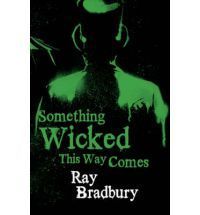
Something Wicked This Way Comes by Ray Bradbury
(Click for image source)
Something Wicked This Way Comes by Ray Bradbury
On the surface, this book has nothing to do with PANDORA. Itâs about two boys who, one autumn, encounter a supernatural carnival that threatens to steal their youth. Yet thereâs something about Bradburyâs style that reminds me of music. Reading his words, I can hear wind in the trees and the flight of fallen leaves and the scampering of footsteps on the sidewalk. Every sentence is lyrical, so well-chosen that it reminds me of what poetry might look like in novel form. I finished reading this book shortly before diving into chapters eight and nine of Pandora, and the lyrical nature of the dream sequences in these chapters came directly from my love of Bradbury.
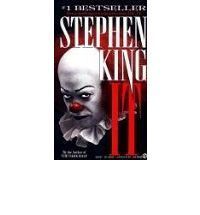
IT by Stephen King
(Click for image source)
IT by Stephen King
My favorite King book, IT influenced my writing more than most other books written by the King of Horror. Though I enjoy Kingâs style, Iâve grown tired of the idea that all budding horror writers want to be the next Stephen King. I wanted to be my own writer, separate and distinct from King, so my inspiration came more from the plot of IT than the style. The terrifying thing about Pennywise the clown is that he can become whatever you fear most: a zombie, a mummy, a giant spider. The ancient, Lovecraftian creature is fear incarnate. Whether consciously or subconsciously, I used a similar idea for Pandora. The box in my book represents whatever you fear most, and it haunts the characters with their personal horrors, just as Pennywise does in IT.
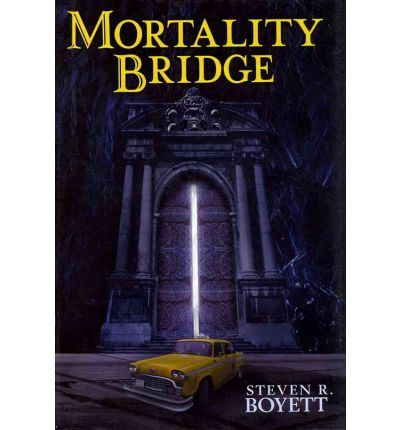
Mortality Bridge by Steven R Boyett
(Click for image source)
Mortality Bridge by Steven R Boyett
I didnât actually read this book until after Iâd already written the first several drafts on Pandora, but I loved it so much that it influenced my final rewrite of the book. Both the style and the themes inspired me this time. Mortality Bridge is a modern-day telling of the Orpheus legend, in which he must descend into Hell to retrieve his beloved. Boyett blends Greek mythology with a Dantean underworld to create this epic adventure. The way he plays with Greek mythology and horror obviously had an effect on my own mixture of the two in Pandora, which takes another legend from Greek myth and introduces it into modern times.
Giveaway!
It seems every time I read something, Iâm inspired by it in some way.
Have YOU read a book recently that took hold of you, that planted itself in your mind and now refuses to let go? What is it about that book that inspires you?
Comment below with your answer: the first person to respond will win a FREE e-book copy of Pandora! Make sure to include your e-mail address and which format you would prefer (PDF or ePub) to claim your prize.
Pandora
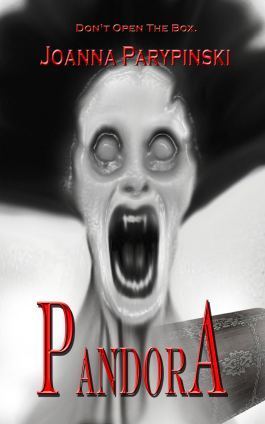
Pandora
Thereâs something in the basement of Mariaâs new house â something dark and primeval that made the previous owner commit suicide. It has infected the town of Sickle Falls, giving its inhabitants nightmares of a dark, fanged spirit that thirsts for blood. When Maria finds a mysterious ivory box buried in the bowels of her house, she must unearth its secrets before whatever is inside escapes and destroys them all.
Purchase Links: Amazon US | Amazon UK | Barnes & Noble | Damnation Books
About the Author

Joanna Parypinski
Joanna Parypinski grew up in Chicago, where she developed her lifelong fascination with all things macabre. Shortly after graduating Summa Cum Laude from Butler University, she began publishing short stories in horror anthologies. When she isnât writing, she can be found working at a bookstore or playing the cello. She also enjoys blogging, rock music, and traveling to haunted places and ancient ruins.
Contact: Website | Blog | Twitter | Facebook
Click here for the full blog tour schedule. The Pandora Blog Tour continues tomorrow at Wesley Southard‘s blog.
Source: J.C. Martin, Fighter Writer


September 24, 2012
Cover Reveal: RESONANCE by J.A. Belfield
%Úte%% | J.C. Martin
Fellow J. Taylor Publishing author J.A. Belfield reveals the cover for her latest book today!
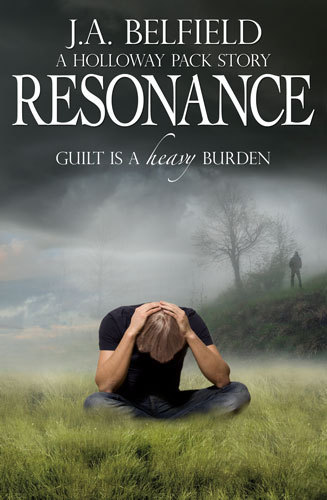
Resonance by J.A. Belfield
Intriguing cover, isn’t it? Here’s some more information about this upcoming title:
Resonance
Guilt is a heavy burden for the one carrying it.
Jem Stonehouse is no exception to this rule.
What if sheâd acted sooner? What if sheâd fully recognised the threat? What if she hadnât allowed the male pack members to head into the witchesâ ambush?
For one, youngest pack member Josh Larsen wouldnât be trapped in the sleep of the dead.
Now, Jem is convinced itâs her job to bring him back to life no matter what it takes â learning more about her heritage, risking pack exposure, or travelling to places she couldnât have imagined possible.
Even if the journey endangers her soul.
About the Author

J.A. Belfield
One day, a character and scene popped into J. A. Belfield’s head, and she started controlling the little people inside her imagination as though she were the puppet master and they her toys. Questions arose: What would happen if …? How would they react if …? Who would they meet if …? Before she knew it, a singular scene had become an entire movie. The characters she controlled began to hold conversations. Their actions reflected the personalities she bestowed upon them. Within no time, they had a life, a lover, a foe, family … they had Become.
One day, she wrote down her thoughts. She’s yet to stop.
J. A. Belfield lives in Solihull, England, with her husband, two children, three cats, and a dog. She writes paranormal romance with a second love for urban fantasy.
Contact: Website | Blog | Twitter | Facebook
What do YOU think of the cover? Would you read this?
Source: J.C. Martin, Fighter Writer
September 23, 2012
Six Sentence Sunday: Inside the Empire
%Úte%% | J.C. Martin
 In this week’s Oracle excerpt, we continue our tour of one of London’s oldest theatres:
 —
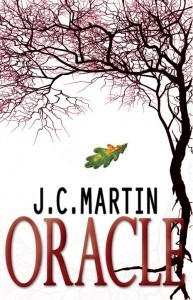
ORACLE
The foyer welcomed us with its magnificent lofty ceiling, elaborate chandeliers, and rich furnihsings in hues of red and gold. A pair of staircases swept upwards to the auditorium. As we climbed, my feet sank into the plush burgundy carpet, solid marble underneath.
Inside the auditorium, the gilded ceiling arched high above us, a round skylight in the centre promised a peephole to the heavens. Row upon row of seats, arranged in tiers, faced a grand stage framed with marble and crowned on both ends by Indian domes. It was like being inside a maharajah’s palace.
—
Here are some photos of the areas mentioned:

The foyer of the Hackney Empire.
(Click for image source)
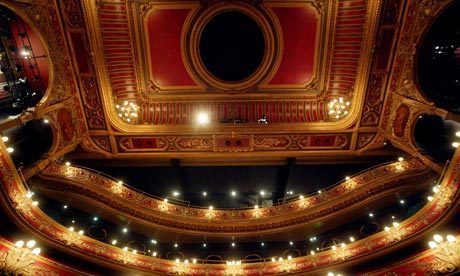
The skylight in the auditorium ceiling.
(Click for image source)
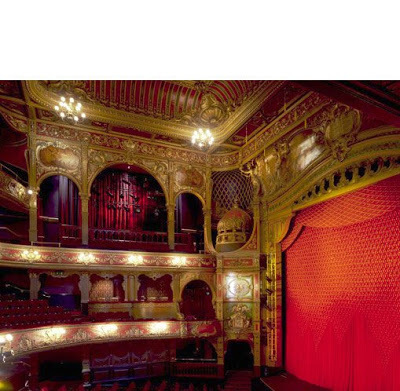
Inside the auditorium. You can see one of the Indian domes in the top corner of the stage.
(Click for image source)
To check out other SSS entrants, click here.
Source: J.C. Martin, Fighter Writer
September 21, 2012
Not Read ORACLE Yet?
%Úte%% | J.C. Martin
[image error]And why not!?
(Click for image source)
Just kidding.  If you’ve not gotten around to it yet, why not check out this sneak-peek excerpt featured on Indies Unlimited?
Source: J.C. Martin, Fighter Writer
September 20, 2012
Results of Publishing Poll … Plus an Interview with a Difference!
%Úte%% | J.C. Martin
Last week I posted a summary of Talli Roland‘s talk comparing self-publishing and traditional publishing from the Festival of Writing. I conducted a small survey at the end of the post, and thought the results interesting enough to share:
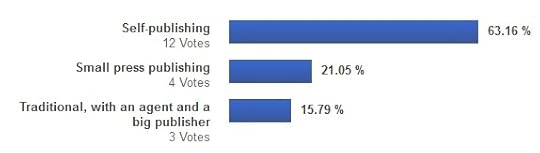
Results from the poll on different publishing routes.
Sure, the sample size is small, but it’s interesting nonetheless to note that the traditional model of publishing seems to be the least desirable route for many of my readers. With all the speculation about the rise of e-books, particularly here in the UK and Europe where it’s a couple of years behind the States, it would be really interesting to see where this goes. I think the publishing industry is going through an exciting time, don’t you?
In other news, I’m being interviewed over at Daniel Dinnie @ Parenting from a child’s point of view. Daniel doesn’t ask the usual run-of-the-mill questions, so I had great fun subjecting myself to his unique grilling! Pop on over and say hi!
Are YOU surprised by the results of this poll? What do you think the future of publishing holds?
Source: J.C. Martin, Fighter Writer
September 19, 2012
LAKEBRIDGE: SPRING Blog Tour
%Úte%% | J.C. Martin
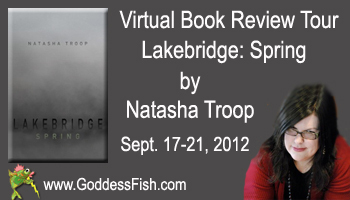 Natasha Troop is running a short blog tour to promote her book, Lakebridge: Spring, the first in a four-book cycle.
***Read on to find out how you could win a bottle of maple syrup and a stuffed moose from the author! (Why such an odd prize? You’ll have to read the book to find out!)***
Here is more information about the book:
Lakebridge: Spring
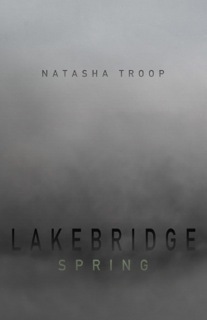
Lakebridge: Spring
Vermont, picturesque and lovely, attracts visitors from across the country in search for the perfect picture, the perfect fall foliage or perhaps a taste of maple syrup. Stansbury is best known for the odd covered bridge that spans Stansbury Lake and goes nowhere, connecting no roads and serving no known purpose. The locals call it the Lakebridge. Very few know of its mysterious origins and fewer care to know more. Those visiting the town perhaps take a few snapshots and leave, their curiosity quelled by an uneasy feeling that they shouldnât think on it anymore.
The tourists will eventually leave Stansbury, but its residents strangely linger, seemingly held captive by a force they barely recognize. They also do not think about the townâs mysterious artifact much except in passing, all but Gil, his father, Ben, and a few others. They know of the bridgeâs dark history and understand that it is responsible for every horror that ever befell the people of Stansbury: the people who fear the bridge but will not speak of it. The bridge makes people do things â bad things â so that it can continue to love and care for them all.
Some have tried to destroy the bridge, but as long as the bridge is fed with the lives of the innocents of Stansbury it will go on â loving the people of Stansbury.
Lakebridge: Spring is the first of a four book cycle revolving around Stansbury and the Lakebridge.
Purchase Links: Amazon US | Amazon UK | Barnes & Noble
Excerpt
For a while, he thought he would take the Counter Girl. He had always taken the Counter Girls before when he could, but when he stumbled onto this Teacher Girl, he knew he had to have her, that she would make a much better addition to his project. She was so happy and so right. The Counter Girl, for as much as she smiled and made other people happy, didnât really have that glow about her that the Counter Girls usually had. He figured it was because of her friends who were so damaged. She was damaged by association.
But the Teacher Girl. She was perfect. She could have been a Counter Girl, really. She was always so joyful, she made all the kids so happy, too. Everyone loved the Teacher Girl. He loved the Teacher Girl. When he loved them, he knew he had to have them.
She wrote on her board. She wrote her numbers and her letters and her handwriting was so neat. He wanted to let her finish so that when they came in the next day and she wasnât there, at least they would have her numbers and her letters. So he waited and watched her. He was in her room and she didnât even notice. She was too happy for her own good, she didnât even feel the danger. He hated that he was her danger because he loved her so much and knew that she could never see how pure that love was. But, finally, she was done. She turned around and saw him and smiled.
About the Author

Natasha Troop
Natasha grew up in Southern California and received her Bachelorâs degree from UCLA in Comparative Literature. She also holds Masters Degrees in both Secondary Education and Creative Writing. Natasha currently lives in the Phoenix area with her spouse, son, daughter and menagerie of pets, including a Basset named Moose and a very overprotective collie dog. Aside from writing, she spends her days teaching high school students to love theatre.
Contact: Website | Blog | Twitter | Facebook
Contest!
Natasha is awarding one random commenter a bottle of maple syrup and a stuffed moose. All you have to do is to leave a comment below. Why not check out the rest of the tour? The more you comment, the better your chances of winning!
Source: J.C. Martin, Fighter Writer
September 17, 2012
Genre Favourites Blogfest
%Úte%% | J.C. Martin
It’s been a while since I’ve had time to participate in a blogfest, but just could not pass up this one hosted by the fabulous Ninja Captain, Alex J. Cavanaugh.
For the Genre Favourites Blogfest, you have to list your favourite genre of movie, music, and book, plus a guilty pleasure genre from any of the three categories.
So here are my genre favourites:
Movie: Animated Films
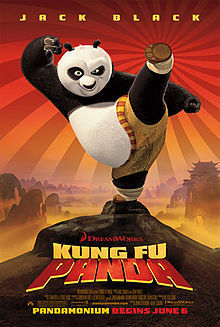
I love kung fuuu … AND animated films!
(Click for image source)
Cartoons are by far my favourite genre of movies! Ever since I was a kid, I’ve been watching and re-watching all the Disney classics, with my favourites being Pocahontas, Mulan, The Little Mermaid, and The Hunchback of Notre Dame. More contemporary favourites include Kung Fu Panda and the Pixar films, especially Finding Nemo. Upcoming films I’m looking forward to in this genre include The Lorax, Brave, Hotel Transylvania, and Wreck-it Ralph.
Music: Easy Listening & Eclectic
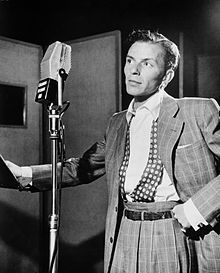
Ol’ Blue Eyes, one of my favourite artists.
(Click for image source)
That’s the best word to describe my taste in music. I enjoy anything not too loud and bassy, with a catchy tune and meaningful lyrics. Favourite songs include covers by Frank Sinatra and Nat King Cole, to soft rock by Bon Jovi, to old country by Kenny Rogers, to 90′s pop music by Westlife and the Backstreet Boys, all the way to theme songs from my favourite movies.
Notable songs: The Rose by Bette Midler, Desperado by the Eagles.
Books: Crime! (What else?)
As a kid, I enjoyed reading Nancy Drew and the Hardy Boys, before graduating to hand-me-down books from my Mom, who is also a crime fiction buff. Little wonder that I ended up being a crime writer!
Some of my favourite books in the genre: Messiah by Boris Starling, Blood Orchids by Toby Neal
Guilty Pleasure Movie Genre: Horror
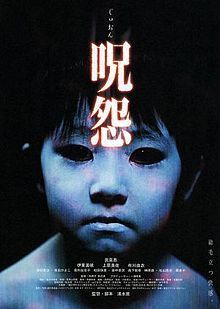
Ju-On: The Grudge
(Click for image source)
I know, it’s a far cry from animated films! Not cheap B-movies about giant spiders and alien bloodsuckers, but I’m a big fan of intelligent horror flicks that affect you more psychologically, keeping you thinking well after the end of the film. Horror films that have kept me up at night include Ju-On: The Grudge, The Eye, and Darkness Falls.
To check out the other participants’ genre favourites, click here.
What are YOUR genre favourites? Care to share your guilty pleasure?
Source: J.C. Martin, Fighter Writer
September 16, 2012
Six Sentence Sunday: Where Are We?
%Úte%% | J.C. Martin
This week we return to Oracle. Londoners may find the building described familiar:
 —
ORACLE
We continued past the modern, glass-fronted section of the theatre until we reached the original entrance, guarded overhead by an ornate statue of Thalia, one of the nine Greek Muses. Perched high atop a pediment in between carved terra cotta domes and arches, Thalia held court to the rooftops, a witness to the evolution of Hackney Central over the past century, yet she remained a beacon of enduring constancy. The Victorian facade of the Empire had remained largely unchanged since its completion in 1901.
Standing before the Empire was like stepping back through time, except for the bright yellow crime scene tape strung up across the glass double doors like a septic scar, and the horde of reporters and looky-loos swarming around the blocked off entrance like flies circling a rotting carcass. Word had spread fast, and no one seemed fooled by the hastily scrawled notice reading: Due to technical difficulties, tonightâs scheduled performance is cancelled.
—
And here’s the photo of the building in question, the Hackney Empire.
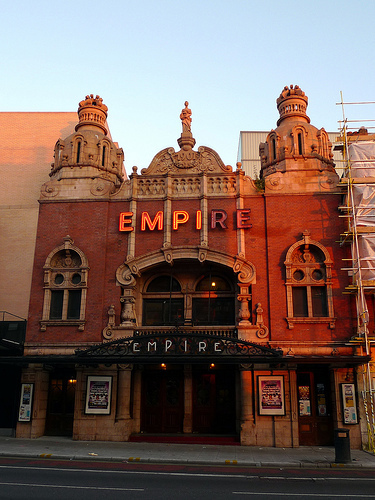
The historic Hackney Empire theatre in East London. The statue of Thalia is in the centre between the two domes.
(Click for image source)
To check out other SSS entrants, click here.
Source: J.C. Martin, Fighter Writer
September 14, 2012
FoW’12: The E-Book Revolution
%Úte%% | J.C. Martin

The rise of the e-book.
(Click for image source)
This was a discussion panel chaired by Harry Bingham, founder of the Writers’ Workshop, and featured panellists from various areas of the publishing industry: a British agent, an American agent, a publisher, and self-pubbed author David Gaughran. As can be expected, the debate swung towards traditional versus self-publishing, and it was a fierce one. Here are just some interesting points raised:
The Transatlantic e-book divide
There is mutual agreement that the UK is up to 2 years behind the US in terms of embracing the e-book. This Christmas is expected to bring about another e-book boom in the UK.
Based on the popularity of e-books in the States today, it will only be a matter of time before they take off here as well
Considering this, self-publishing is becoming more and more of a viable option for writers to pursue, resulting in higher royalty rates compared to the agency model
Agents and publishers need to learn to adapt in this fast-changing climate: publishers have had to review old contracts to include an e-book clause, and some agencies have become publishers themselves in a way by re-releasing their clients’ back-lists and out-of-print titles in e-book form.

Amazon’s stranglehold on the e-book market.
(Click for image source)
The Amazon monopoly
Whilst the US has got the Nook and Barnes & Noble, here in the UK, the Kindle and Amazon appears to be monopolising the e-book market
Now that Amazon is becoming a publisher in its own right, with various imprints, competition has become even tougher for both publishers and self-pubbed authors alike
E-book price wars
With a smaller overhead, self-published authors can afford to sell their e-books at very low prices, something traditional publishers cannot compete against
But does this devalue the worth of an e-book, and the hard work of the writer?
Does a low price mean low quality? (Interestingly, here’s an article I came across about the most expensive e-books on the market)
It is also worth noting that despite the successes of many self-published authors, the top spots in the Amazon e-book rankings remain monopolised by books from traditional publishers
One suggestion for traditional publishers to remain competitive is to offer a free e-book copy to every reader who purchases a hardback of their book

“You shall not pass!”
(Click for image source)
Publishers as gatekeepers of quality
While the agents and publisher both agree that there are some very well-written self-published books out there, they are concerned that these are overshadowed by the masses of poor quality works. How do you make your work stand out from the crowd? How can a reader separate the wheat from the chaff? With so many e-books on the market, having a publisher’s name behind a title is similar to having someone knowledgable recommend a book to you
Self-pubber David Gaughran argued that the majority of readers may be able to name their favourite book and author, but how many can actually name the publisher said book or author is published under?
While publishers being gatekeepers of quality may by and large be true, there are examples of traditionally published books by big-name authors with glaring errors in them
David Gaughran explained how he maintains the quality of his self-published works, including investing in a good editor and cover designer. After all, his name is his brand, and he would not want to tarnish it with low-quality products
He also mentioned the great flexibility allowed self-published authors to publish what they wish, regardless of market trends, and when they wish. (Susan Kaye Quinn has an interesting post on innovative self-publishers taking advantage of this flexibility)
The question was raised as to just how critical and honest an editor would be if he/she was being paid by a self-pubbed writer to edit their work. And with the lack of a gatekeeper, could the quality of the story and not the writing, limit just how much an editor can help polish up a book?
Finally, the agents assured us that they will happily consider a client who has previously self-published successfully, although the definition for “success” varies wildly between the UK and US: in the UK, selling 7,500 copies of your e-book may be considered a success, but in the States, they will be looking at 25,000 copies and up!
One word of warning though: the publisher explained that sometimes a self-publisher’s success could be their downfall. Publishers may not want to take on a self-pubbed title that has sold, say 7,000 copies, because that’s 7,000 readers that has already purchased the book, and so will not purchase it again when the publishers re-release the title.
As with many of these panels, it is fair to say that many of us came away with more questions than answers, but it was nevertheless an interesting panel.
What are YOUR thoughts? Is Amazon becoming the world’s biggest slush pile? Are poorly edited self-published titles giving reputable self-pubbed authors a bad name? Are there ways to assure the quality of a self-published e-book you purchase?
P.S.: In other news, The Bawdy Book Blog is featuring an excerpt of Oracle today! If you’ve not read the book, click over and check it out!
Source: J.C. Martin, Fighter Writer
September 13, 2012
FoW’12: Self-Publishing v Traditional Publishing by Talli Roland
%Úte%% | J.C. Martin

There is more than one way to get your book published!
(Click for image source)
I attended blogger buddy and self-published chick lit star Talli Roland‘s talk on self-publishing versus traditional publishing at the Festival of Writing. Talli presented a balanced and convincing argument for both:
Self-publishing
Pros:
Total control of release schedule, cover design, etc.
You keep all profits (and if your books are priced above $2.99, you get 70% royalty from Amazon)
Rise of e-books mean your have a wide online reach
You get paid monthly
Easy to track sales and impact of marketing strategies
Freedom to change prices whenever
Cons:
You’ll have to seek out and pay for your own editor and cover designer
Little if any physical distribution
As with any business, you have to invest time and money, and there are inherent risks
Marketing, promotion, formatting, etc. could mean less time for actual writing (for advertising resources, Talli suggested sites such as Ereader News Today and Pixel of Ink )
Giving up the ‘dream’ of seeing your book on shelves
Existing ‘stigma’ (esp. in the UK) of self-publishing
Need to keep abreast of latest news within the publishing industry (Talli cited GalleyCat and Kindleboards as excellent sources)
Traditional publishing
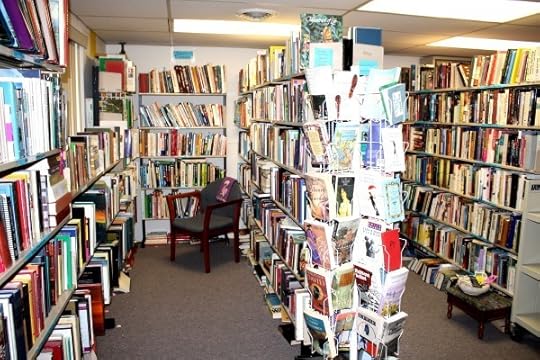
Every writer’s dream: to see their title displayed on a bookshelf!
(Click for image source)
Pros:
No need to invest any money
Editing and cover design all done for you
Marketing backing
Wider distribution: both online and physically (Another speaker in a separate talk mentioned that despite the high volume of self-published books, the top 25 books on Amazon remains titles from traditional publishers)
Cons:
Little say in cover design, release schedule, etc.
Slow manuscript-to-book process means you only release a book every year or two
More and more likely that you’ll still have to do your own marketing and promotions anyway
No guarantee your book will be distributed widely, esp. to supermarkets, WH Smiths, etc.
Small royalties: agents and publishers take a cut
You only get paid twice a year
No access to up-to-the-minute sales records
Finally, although Talli’s talk didn’t quite make the distinction, as a published author from a small press, I feel I’d add a third category to the mix:
Small press publishing
In my opinion, small press publishing is quite different from both self-publishing and traditional publishing with the big houses. It is kind of a half-way point between the two, with many advantages from both, as well as disadvantages:
Pros:
No need to invest any money
Editing and cover design all done for you
No need for an agent to still get traditionally published; as a result, no need to give a cut of royalties to agent
More intimate relationship means more say in cover design and release schedule
Small publishers are more willing to take on “risky” projects
Cons:
Manuscript-to-book process remains slow
Need to do your own marketing and promotions
Less likely for wide distribution; appearance on bookshelves unlikely
Small publishers can seldom offer an advance
You only get paid twice a year
No access to up-to-the-minute sales records
No agent to help with negotiations and interpretation of contracts
Finally, Talli mentioned that none of these publishing routes are exclusive: she cited examples of self-published authors who eventually signed with traditional publishing houses (e.g. Amanda Hocking, E.L. James). On the other hand, there are also numerous traditionally published authors who later opt to self-publish, often re-releasing out-of-print back-lists on their own. (Later panels featuring agents and publishers further supported her comment, when they stated they will not discount a writer’s submission because he/she has previously self-published)
After the talk, I came away convinced that these are all perfectly viable routes to get your book published. With e-books growing in popularity as much as it is currently, industry prejudice towards self-publishing is changing, and the field of play is wide open. The route you choose may well depend on current circumstances and personal preference. Personally, I would not discount any of these routes into publishing.
What do YOU think? Which of these routes would you consider? Which would you not? Fill in the poll below and comment!
Pop back tomorrow for my final post from the Festival: notes from a panel discussion on the e-book revolution.
Source: J.C. Martin, Fighter Writer