Len Joy's Blog, page 8
August 10, 2014
The Argument for Unrealistic Goals
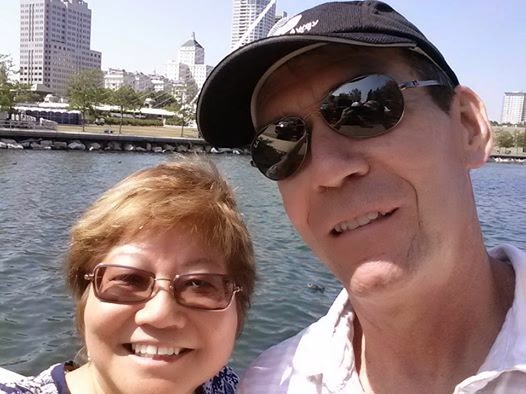 USAT Nationals - Milwaukee - The day before the race
The Argument for Unrealistic Goals
“Ah, but a man's reach should exceed his grasp,
Or what's a heaven for?”
― Robert Browning, Men and Women and Other Poems
I began my blog on July 28, 2009. I explained that the purpose of the blog was to chronicle my development as a writer and as a triathlete. I wisely didn’t come up with any specific goals for writing, but for my triathlon career I was clear:
“My goal is to finish in the top ten at the USAT National Age Group Championship for the 60-64 year old age group. I will turn 60 in 2011 so at least I’ll have youth going for me.”
It turned out that youth was not enough. I first competed in the Nationals in 2009 in Tuscaloosa, Alabama. It was hot and humid and we swam in a river against the current and the water temperature was 84 degrees. I became dehydrated and my legs cramped so bad I had to withdraw after the first mile of the race. So I finished last.
In 2011 I made it back to the Nationals, which was held in mountainous but cool Vermont. During that race my new front-mounted water bottle fell off and I wasted five minutes getting it reassembled. Managed to finish in 2 hours 59 minutes and 41 seconds. So at least I was under three hours and I finished 43rdout of 48, so I moved up from last to the top 90% (or for the glass half empty folks: bottom 10%).
I took a break from the Nationals in 2012 to try the Ironman at Coeur d’Alene. For that race, time didn’t matter as long as I finished before they all went home. When I crossed the finish line I heard the announcement: “Len Joy, age 61 in his first Ironman…Age 61! Len Joy you are an Ironman.” That was cool and for a few weeks after that I thought seriously about entering another Ironman, but I got over it.
The USAT Nationals moved to Milwaukee in 2012. I really wanted to race there and I entered five races trying to qualify. Finally, a month before the race I qualified at the Regional championship in Ann Arbor.
Race day in Milwaukee was perfect. Cool and sunny and the water was calm. I swam okay, but got a little off course when my goggles fogged up. I hit it hard on the bike course, averaging over 20 mph, but then I didn’t have much left for the run. And when my hamstring tweaked at the end of mile two I had to slow to a jog. I finished in 2 hours fifty minutes, but with that nine minute improvement I had climbed all the way to the 82nd percentile.
Yesterday I raced in my fourth USAT National event. It was in Milwaukee again, so I had the advantage of knowing the course. Knew what to expect. I had learned through these years of training that I wasn’t going to show up on race day and all of sudden be thirty minutes faster –which is what I would have to be in order to make the top ten in the age group.
I just wanted to have a solid race that reflected all the training I had done. Wanted to execute the plan I had worked out with my coach (Heather Collins). I wanted to finish strong.
And that’s what I did. I stayed on course in the swim, ran through the transitions, controlled my effort on the bike so that my legs would be fresh for the run. On the run, my hamstrings cramped up on mile one and two, but this year I knew how to work through that and while it hurt my time, I still managed a pace of 8:11. Not great, but not bad either. I crossed the finish line in 2 hours 42 minutes – which put me in the 62ndpercentile.
I was 21 minutes behind the 10th place finisher – a huge amount and not something I’m going to be able to overcome next year – my last year in the 60-64 age group. But the 10thplace finisher in the 65-69 age group had a time of ONLY 2 hours 28 minutes.
So I have a new goal:
Top 10 finisher in 2016 when I will be 65. I just need to pare fourteen minutes from my time.
I’m sure I can do that.
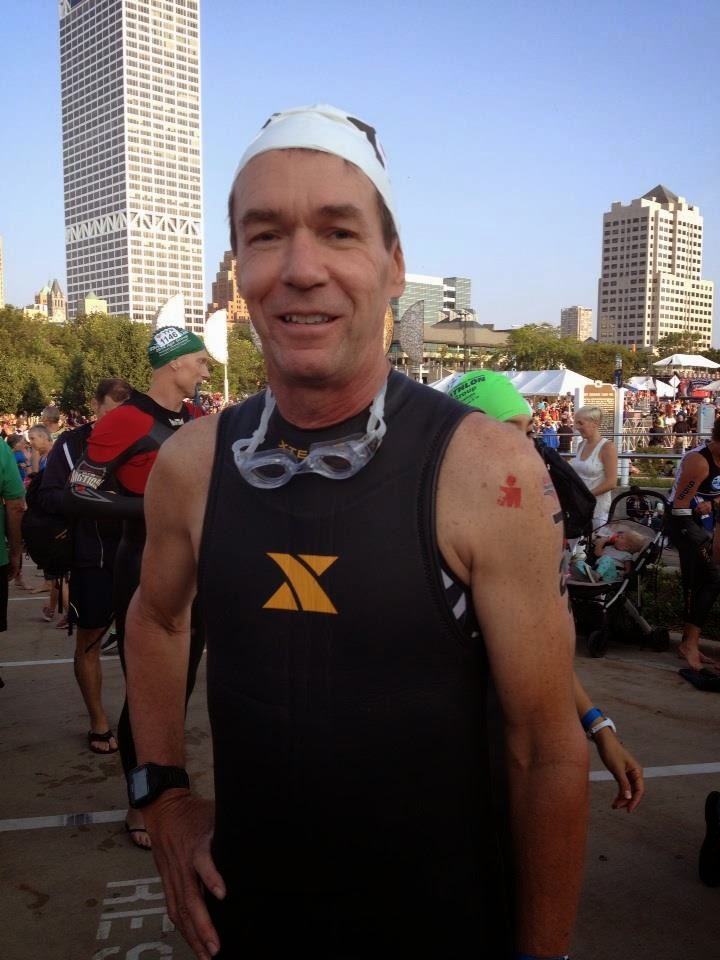


August 3, 2014
"The Birdhouse Builder"
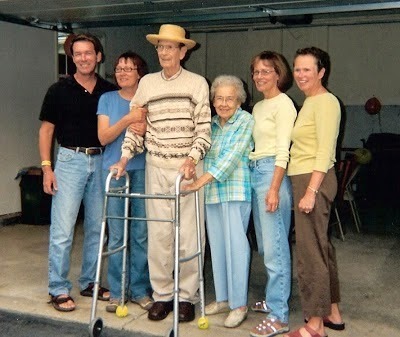
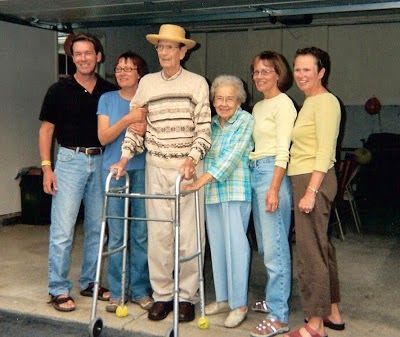
Today's story is fictionalized non-fiction. Faction? It originally appeared in FWRICTION: REVIEW so I guess it's fiction. But true. Not true events, just true feelings. How about "inspired by true events?" The picture below was taken in August 2008 a few weeks before my dad died. It was his last good week. The ladies in the picture are my mom and three sisters, Christine, Carol and Kendra.
We’re in the seasonal interregnum. The last winter snow hangs on in the shadows of my parents’ two-story colonial, while the first wave of migratory birds circle the neighborhood, checking out the accommodations. Dad wants to reconstruct the birdhouse. The son of a farmer, he can fix broken things. Build stuff. Use tools the right way. I have none of those skills. As a boy I was his unhappy assistant. “Hand me the needle-nose,” he would say, his arm reaching back, head buried in the bowels of the cranky Maytag washing machine. I would stare at the battlefield of tools surrounding him and try to pick one that resembled a needle nose. I usually guessed wrong.
He has disassembled the remnants of the old birdhouse. Measured the wood slats and created a spec sheet. He doesn’t trust his memory anymore. It’s less reliable than that little boy who would hand him vise grips instead of pliers. When I was a kid, these projects would start with a trip to Ike’s Hardware in the small town where I grew up, not this resort town where my parents have grown old. Back then Dad never had a spec sheet—usually just a scrap of paper with a few odd numbers on it. Ike’s was full of open bins of screws and bolts and nails and rolls of sandpaper and shelf after shelf of hand tools. It had a metallic, oily smell, different from a Home Depot or Loews or one of those garden-hardware-lumber behemoths.
That’s where we go now. Krendall’s Home Center. It has patio furniture out front. And a greeter. My dad walks slowly, dragging his left leg. He had a hip replaced ten years ago. The greeter asks me if she can help us. My dad says, “Specialty Lumber.” She smiles at him and tells me to go see Ray in the lumberyard behind the store.
Ray looks just like Ike: sandy crewcut and a red hardware apron. But now he’s twenty years younger than me. Dad would usually tell Ike what he was working on and Ike would nod and maybe rub his chin and then hustle off to retrieve the hardware. Dad tries to describe the birdhouse to Ray, but Ray can’t follow him. I can’t either. There is a thin bead of sweat on his upper lip and I want him to wipe it away, but he just starts over, trying to explain his project. Ray turns away from him and asks me what it is we want.
I’m just the boy. Why is he asking me?
“Show him the paper, Dad.”
He has forgotten about his sheet. Dad pats his pockets, and on his fourth pocket he finds it. Ray looks at Dad’s detailed drawing and the list of pieces and parts and he nods like Ike.
We bring home a sack of wood slats and black enamel and half-inch wood screws. Dad lays everything out on his work table. He picks up one of the slats and turns it all around. His hands shake and his grip on the piece is tentative as though he doesn’t know what to do with it. My mom calls from the kitchen. Lunch is ready. After lunch Dad takes a nap.
Three years later, after my dad dies and I move Mom to the assisted living facility, I clean out their house. I find the birdhouse parts stuffed back in their Krendall’s Home Center bag, tucked away in a far corner of the garage.
We’re in the seasonal interregnum. The last winter snow hangs on in the shadows of my parents’ two-story colonial, while the first wave of migratory birds circle the neighborhood, checking out the accommodations. Dad wants to reconstruct the birdhouse. The son of a farmer, he can fix broken things. Build stuff. Use tools the right way. I have none of those skills. As a boy I was his unhappy assistant. “Hand me the needle-nose,” he would say, his arm reaching back, head buried in the bowels of the cranky Maytag washing machine. I would stare at the battlefield of tools surrounding him and try to pick one that resembled a needle nose. I usually guessed wrong.
He has disassembled the remnants of the old birdhouse. Measured the wood slats and created a spec sheet. He doesn’t trust his memory anymore. It’s less reliable than that little boy who would hand him vise grips instead of pliers. When I was a kid, these projects would start with a trip to Ike’s Hardware in the small town where I grew up, not this resort town where my parents have grown old. Back then Dad never had a spec sheet—usually just a scrap of paper with a few odd numbers on it. Ike’s was full of open bins of screws and bolts and nails and rolls of sandpaper and shelf after shelf of hand tools. It had a metallic, oily smell, different from a Home Depot or Loews or one of those garden-hardware-lumber behemoths.
That’s where we go now. Krendall’s Home Center. It has patio furniture out front. And a greeter. My dad walks slowly, dragging his left leg. He had a hip replaced ten years ago. The greeter asks me if she can help us. My dad says, “Specialty Lumber.” She smiles at him and tells me to go see Ray in the lumberyard behind the store.
Ray looks just like Ike: sandy crewcut and a red hardware apron. But now he’s twenty years younger than me. Dad would usually tell Ike what he was working on and Ike would nod and maybe rub his chin and then hustle off to retrieve the hardware. Dad tries to describe the birdhouse to Ray, but Ray can’t follow him. I can’t either. There is a thin bead of sweat on his upper lip and I want him to wipe it away, but he just starts over, trying to explain his project. Ray turns away from him and asks me what it is we want.
I’m just the boy. Why is he asking me?
“Show him the paper, Dad.”
He has forgotten about his sheet. Dad pats his pockets, and on his fourth pocket he finds it. Ray looks at Dad’s detailed drawing and the list of pieces and parts and he nods like Ike.
We bring home a sack of wood slats and black enamel and half-inch wood screws. Dad lays everything out on his work table. He picks up one of the slats and turns it all around. His hands shake and his grip on the piece is tentative as though he doesn’t know what to do with it. My mom calls from the kitchen. Lunch is ready. After lunch Dad takes a nap.
Three years later, after my dad dies and I move Mom to the assisted living facility, I clean out their house. I find the birdhouse parts stuffed back in their Krendall’s Home Center bag, tucked away in a far corner of the garage.
July 31, 2014
"Happy Hour"
This story was originally published by Hobart Literary Journal in February 2008. It was inspired by a true incident, but the characters (other than Missy) are fictional, even though I use real names. So don't get upset if you see your name in the story. It's not really you.
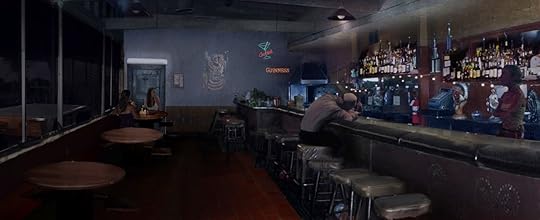
After work on Fridays we'd usually go over to The Holly on 27th for a beer.
One night I'm working late so I don't get there till seven. Quigley is sitting at the bar in his usual place. I take the stool next to him.
You missed all the action, he says.
I look around. The Holly's mismatched chairs and table don't look any more broke than last week and there's no glass or blood on the floor. What action? I ask.
Missy got run over by her truck, he says.
Missy tests valve springs. Nice bod, cute little-girl face. Good worker, too.
What happened? I ask, not sure I want to know.
Quig lights his cigarette, tugs on his golf shirt, which is stretched tight across his belly, gets into a comfortable storytelling position.
She was sitting over there, he says, nodding his head towards the empty table in the middle of the barroom. Doing shots with Hector and Luis and that gal from small parts.
Leticia? I say.
Yeah. They probably did four or five and then Missy leaves and gets run over.
How could she get run over by her own truck? I ask.
Well, it was more like sideswiped. These kids today don't know how to drink and drive.
Quigley's had three DUIs but I don't say anything.
He takes a deep drag on his cigarette and continues. She started up WITHOUT fastening her seat belt OR closing her door, he says. Had that steering-wheel cranked hard left. Lost her grip, fell plumb out of her pickup.
He shook his head. She's sitting on her ass trying to figure out what the fuck happened. The truck keeps going - makes a big circle and, before she can move, it rolls by and the door smacks her in the face. Damned thing was coming back for another shot but Billy Flohr rammed it with his Merc. Probably saved her life.
But she's okay? I ask.
He gives me a look. Well if your idea of okay is having a broke nose and two black eyes and a busted truck, then yeah, she's okay, he says.
Missy didn't go back to the Holly for a month. And after that she didn't do shots any more. Just beer.


After work on Fridays we'd usually go over to The Holly on 27th for a beer.
One night I'm working late so I don't get there till seven. Quigley is sitting at the bar in his usual place. I take the stool next to him.
You missed all the action, he says.
I look around. The Holly's mismatched chairs and table don't look any more broke than last week and there's no glass or blood on the floor. What action? I ask.
Missy got run over by her truck, he says.
Missy tests valve springs. Nice bod, cute little-girl face. Good worker, too.
What happened? I ask, not sure I want to know.
Quig lights his cigarette, tugs on his golf shirt, which is stretched tight across his belly, gets into a comfortable storytelling position.
She was sitting over there, he says, nodding his head towards the empty table in the middle of the barroom. Doing shots with Hector and Luis and that gal from small parts.
Leticia? I say.
Yeah. They probably did four or five and then Missy leaves and gets run over.
How could she get run over by her own truck? I ask.
Well, it was more like sideswiped. These kids today don't know how to drink and drive.
Quigley's had three DUIs but I don't say anything.
He takes a deep drag on his cigarette and continues. She started up WITHOUT fastening her seat belt OR closing her door, he says. Had that steering-wheel cranked hard left. Lost her grip, fell plumb out of her pickup.
He shook his head. She's sitting on her ass trying to figure out what the fuck happened. The truck keeps going - makes a big circle and, before she can move, it rolls by and the door smacks her in the face. Damned thing was coming back for another shot but Billy Flohr rammed it with his Merc. Probably saved her life.
But she's okay? I ask.
He gives me a look. Well if your idea of okay is having a broke nose and two black eyes and a busted truck, then yeah, she's okay, he says.
Missy didn't go back to the Holly for a month. And after that she didn't do shots any more. Just beer.
July 30, 2014
"Jury Duty"
***Originally published in r.kv.ry quarterly literary journal****

Prologue
The last time I served on a jury was in 1977. I was an alternate. For two weeks I drove to felony court in Harvey, Illinois and listened to testimony in the case of the State of Illinois v. Melvin Thigpen. Mr. Thigpen was charged with abducting a high school girl from cheerleading practice, driving her out into the country, where she was raped, thrown into a ditch and shot three times.
The state laid out their evidence. For two days we heard testimony from police, evidence technicians, and medical professionals. Some of the witnesses were clear and precise, others fumbling and inarticulate. The evidence was delivered without emotion or drama. On the third day we heard from Carly Simmons. She was the victim.
Carly was poised and soft-spoken, but her voice carried, perhaps because it was so quiet in the courtroom. She had given the police artist a detailed description of her assailant. The sketch that the artist created bore a striking resemblance to Mr. Thigpen.
Carly described how she had been grabbed in her high school’s parking lot, held at gunpoint, and driven off into the country. She described the nubby texture of the car’s upholstery and the paisley pattern of her assailant’s nylon shirt. She explained in extreme detail how she was raped and then dragged from the car and thrown into a ten-foot drainage ditch. As she lay in the muddy ditch, she heard a gunshot and felt a burning sensation in her side. Then two more shots. One bullet hit her in the thigh and one grazed her neck. She played dead, and after several seconds she heard the car door slam and the sound of spitting gravel as her attacker drove off.
When she had finished testifying, the State’s Attorney asked if the assailant was in the courtroom. Carly looked at the defense table, raised her arm, and pointed to Mr. Thigpen. Her face betrayed neither anger, nor hate. She was not afraid. She was serene, triumphant. She had survived and now she had her day in court. That was thirty-five years ago.
The next five days of the trial were taken up with procedural arguments and we spent much of the time in the jury room, not discussing the case. The defense took one day to present their case and we listened to impassioned closing arguments by both sides before the judge gave us his instructions. The jury was escorted back to the jury room and I, as an alternate, was sent home, like one of those Survivor contestants who don’t make the grade.
The next day I called Ron, the foreman of the jury and an insurance adjustor for Allstate who I had lunched with on several occasions during procedurals. He told me it had taken them three hours to find Melvin Thigpen guilty on all charges. There had been no dissent among the jurors, except towards Ron who insisted they go through all the evidence before they voted.
For weeks I checked out the local news to see if there was a report on Thigpen’s sentence, but there was none. I figured I would never learn what happen to Melvin Thigpen.
Ten years later I was reading an article in The Wall Street Journal on career-development in prison. In their lead they featured an inmate in the Joliet Correctional Facility named Melvin Thigpen, who was serving fifteen to twenty years for rape. The Journal writer reported that Mr. Thigpen had become an accomplished watercolor artist.
Jury Duty – The Notice
Last month I received a notice from the court that I had been selected for jury duty again. In the intervening years I had been called several times, but was never needed. Just as well. I had bought an engine remanufacturing business in Arizona, which consumed all my time. It would have been difficult to be stuck on a jury for two weeks.
But my work schedule these days is more flexible and I wouldn’t mind serving on a jury in Skokie or even in the Loop. The notice indicates I’ve been drafted for criminal court on the southwest side, thirty miles from home. When I call in the day before, a recording tells me that if my last name starts with the letter D through M, then they want me. So I cancel my Friday activities – spin class and a personal training workout – and figure out when I need to leave the house to make it to the courtroom by 9:30 a.m.
The Questionnaire
Jury notice includes a questionnaire, which we are to fill out and bring with us. They want to know such things as age, occupation, marital status, age of children, whether we have ever been convicted of a crime, or been a party to a lawsuit, or whether we have any family in law enforcement. And the last question is whether we or any member of our family has been a victim of a crime. I have to think about that.
When I had the business in Phoenix, we were the victims of crime every week. Our plant was in a rough industrial neighborhood. Scavengers would scale the razor-wire fence and dump our valuable engine cores so they could steal the wood pallets. Most of our employees were honest, but like any business, a small percentage was not. Our trusted core buyer embezzled $50,000 and one of our financial managers falsified borrowing certificates.
Those weren’t trivial offenses, but they are nearly forgotten. What I remember from those fifteen years is the murder of Alma Hernandez.
Alma was eighteen years old. She had just started working for us as a piston installer. One day in August her ex-boyfriend came by during the morning break and asked to see her. When she met him in the parking lot in front of our office he shot her in the head and then made an insincere effort to shoot himself, but missed. One of the customer service reps rushed to Alma’s aid, but she died before the paramedics arrived. There were over a hundred employees at Alma’s funeral.
I know it was Alma and her family who were the victims of that crime, but her murder touched everyone in the company. Even so, I decide it doesn’t qualify as a crime against me or my family so I check the “No” box.
The Commute
There are six million people between me and the Criminal Court building. Half of them are on Interstate 94. It’s a one-hour drive if I leave at 6 am, but then I’d get there before the building opens. I roll out of my driveway at 7:30. It takes ninety minutes, but I’m sitting in the Jury room by 9:10.
I’m the third juror to arrive. The lady at the front table takes my questionnaire and hands me a sheet of paper identifying me as part of Panel 3. I take a seat in the back behind the vending machines, next to the window.
The Vending Machine Challenge
I’m ten feet from the coffee machine. I know the coffee will suck, but it smells really good. The machine is complicated. There are different sizes and the usual choice of sugar or cream-like substance or decaffeination. There are a bunch of options for flavoring the coffee with hazelnut or maple or chocolate so it won’t taste so bad. I just want black. The coffee is hot.
A few minutes later, a stout black woman, who has squeezed into jeans several sizes too small, approaches the snack machine. She stares at the selection of chips and cookies and candy and looks very confused. Finally she turns and mumbles something at the professional-dressed young lady who is tapping on her laptop at the table next to me. The woman stops tapping, but doesn’t look up. “I don’t know,” she says. She sounds unnecessarily harsh, and maybe she realizes that because then she adds, “Sorry,” but the other woman has already turned back to the machine.
I look for someplace to perch my coffee so I can help her, but then I hear the sound of Doritos falling from their hook into the bottom of the machine. Vending success achieved, the woman ambles back to her seat.
The New Yorker
I have two dozen unread novels on my Kindle and I’ve brought five magazines, The Wall Street Journal, and the Chicago Tribune. I could be sequestered for a year and not run out of stuff to read. All I really need is The New Yorker. It has everything. I always check out the short story first. As I’m thumbing through to the story, I see an article about a convicted hit man serving a sixty-year sentence.
It’s a typical New Yorker feature. About twice as long as it needs to be, but fascinating. The hit man is candid with the reporter. He describes his crimes in great detail. He worked for drug dealers who hired him to kill other drug dealers. He just walks up and shoots them. Several times. Other than the fact that he has committed, by his count, a dozen murders, he seems like a nice guy. Good family man. Doesn’t do drugs or alcohol. Loyal to his wife. Devoted to his five-year-old daughter.
The Call
At 11 a.m., a young man in a wrinkled suit stands at the front of the room. He delivers a speech that sounds memorized. He thanks us for showing up and plays a video about what to expect if we are called for a trial. My panel is called. They line us up in two rows, like a kindergarten class, but instead of marching us to our courtroom we are told to go to lunch and report back at 12:45.
Act of Kindness #1
I opt for the cafeteria on the second floor, grab a roast beef sandwich, chips, and a lemonade. The woman from the vending machine is two ahead of me in line. She has eight dollars’ worth of food and hands the cashier four crumbled one-dollar bills. The cashier, a pleasant-faced white-haired lady tells her she needs more money, but the woman just frowns, confused. The cashier hesitates, then smiles and waves her on through. She tells her she will take care of it, but the woman doesn’t hear her.
Act of Kindness #2
The lady in front of me gives the cashier an extra dollar. “For that woman’s bill. That was a very nice thing you did,” she says. The cashier thanks her.
The Courtroom
After lunch we’re escorted to Courtroom 206. It looks like a small chapel, with stone walls and windows on the west side. It’s bright and cold and the acoustics are bad. The judge tells us we have been called to serve as jurors in the trial of William Bancroft and Ronnie Washington. The two men have been charged with first-degree murder. The judge explains that Mr. Washington will have his own jury, but for some of the testimony both juries will be present.
The judge introduces the bailiff, the court clerk, the stenographer and the three state’s attorneys – two men and a woman. The judge introduces Mr. Bancroft and his two attorneys. The defendant, when introduced, turns to the jurors (we’re seated in the gallery) and says, “Good afternoon.” He’s a young black man. Good looking and fit. He wears a dark suit with a white shirt and tie. He looks more professional than the two male state’s attorneys, who both have a stubby, rumpled Chicago-pol look. Actually, he looks a little bit like the hit man in The New Yorker article.
Bancroft’s lead attorney looks like Linda Hunt, the diminutive actress who plays the boss on NCIS: Los Angeles. Hunt always plays smart characters and I find myself thinking that Bancroft has a good lawyer.
The Judge
The judge is affable and also sort of rumpled, but robed, which helps. He acknowledges the room’s poor acoustics, then does nothing to help us hear him better. He talks fast and has an unusual cadence so it’s hard to realize he’s asking us a question until he finishes and says, “Anybody have a problem with that? Okay, no hands, no questions. Moving on.”
He asks us to stand to be sworn in. A juror raises his hand. Glasses, salt and pepper short-cropped hair. Earnest. Sort of a bookkeeper look. “Your honor, no disrespect, but I can’t take an oath.”
The judge sighs. “Can you affirm?”
The man repeats that he can’t take an oath.
“Whatever,” the judge says. He is clearly annoyed, but moves on to his next order of business, which is the pep talk.
The Two Brians
The judge tells us a story about two Brians. One, we’ve heard of, Brian Urlacher, and one we’ve never heard of, Brian Anderson. Long story short, one day the judge is watching television and sees Brian Anderson get off a plane returning from Iraq. He’s a triple amputee and his message is, “Life is good.” The judge tells us if Brian Anderson, with all he has endured, can have that kind of attitude, then we jurors have no reason to complain about the inconvenience of spending a week on jury duty.
It’s a good point. Perhaps he might try to slant it a little more positively. After all, none of us have complained or raised any problems (other than the guy who can’t take an oath). It takes the judge ten minutes to tell us the story. When he finishes I’m still waiting to learn what happened to Brian Urlacher. I decide not to ask.
The Lottery
There are sixty jurors in the two panels. The judge shuffles the questionnaires and picks fourteen. I’m the third juror called. There are eleven women and three men. When the recording asked only for jurors with last names from D to M, I wondered how that might affect the jury pool. None of those great Chicago names that start with Z or W or X are in our pool. But the fourteen of us called are a cross-section of Chicagoland. We are Irish, Polish, Lithuanian, Black, East Indian, Hispanic; employed, unemployed, retired; a tattooed biker, a white suburban dude (that would be me), a PTA lady, an insurance adjuster, and a legitimate blonde babe wearing tight-fitting jeans with lots of holes in the thighs.
The judge interviews each candidate. If we are married, he wants to know our spouse’s occupation. If we have married children he wants to know what their spouses do. He asks what we watch on television, how we get our news and what we read. No one has been the victim of a serious crime, although the biker had a cousin murdered twenty years ago.
The judge asks me what kind of work I do. I tell him I’m a writer. I figure this is not the time to share my angst over whether I should call myself a writer or say that I’m TRYING to be a writer. He asks me what I write and I tell him I’ve written a novel about a minor league baseball player. He asks me who it is, and then he says, “Wait, you said it was fiction. Never mind.” So I miss the opportunity to plug my book. Then he asks me what I’ve been reading. I suppose technically I should reveal that I’ve been reading about the hit man from Detroit who looks like the defendant. But I don’t. I just say fiction and the judge moves on.
The woman who had trouble at the vending machine is one of the fourteen selected. He asks her if she has ever been on a jury. She huffs something that sounds like it might be yes. He asks her if she reached a verdict. She doesn’t say anything. He frowns at her for upsetting his timetable. “Did you listen to testimony and decide whether the defendant was guilty or innocent?” She still doesn’t say anything. Finally he concludes she was just in the panel but had not been selected. I think he’s probably right, because I can’t imagine anyone accepting her as a juror.
We are given a ten-minute break while the judge and the attorneys go into his chambers to discuss us.
Thirty minutes later we’re back in the jury box waiting for the judge and lawyers to emerge from the judge’s chambers. The judge instructs us to follow the clerk to the jury room and says the clerk will read a list of those who will be given a check and dismissed. Those not called should report back to the courtroom at 10 a.m. on Tuesday to begin the trial of Mr. Bancroft.
My guess is they will keep everyone except the biker, vending machine lady, the black woman who said she read the bible every night, and maybe the Indian woman who ran the mini-mart with her husband.
Biker dude is the first name called. He smiles and wishes us all a happy week as he takes his check. The next name called is the blonde with the nice jeans. I have to admit I’m a little disappointed—she could make a good character if I write a story about this experience. The bible-reader goes next. And then the clerk calls my name. She hands me a check for $17.20. I feel like I’ve been fired. Vending machine lady makes the cut.
I am disappointed, but after two hours in bumper-to-bumper traffic on I-94, I start to feel a vague sense of relief. Someone – from the defense or the prosecution – decided I wasn’t a good choice to sit in judgment of William Bancroft.
I think they’re right.
**Note: All the names were changed, except for Melvin Thigpen’s.
Read an interview with Len here.
July 29, 2014
"Triage"
The following story was originally published by The Legendary ezine on October 25, 2011.
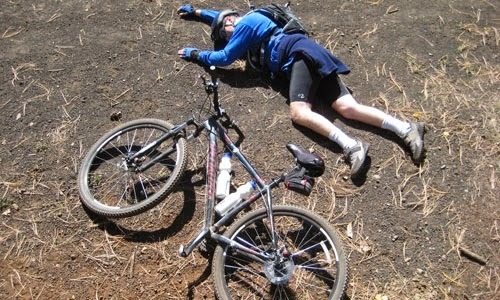
Frank Summers wandered into his garage in search of a project. After thirty years as an emergency room surgeon at Phoenix General, he’d been forced to retire when PG was gobbled up by one of those hospital corporations run by accountants.
In his first month of retirement he’d swum a thousand laps in his pool, mastered thirty new iPhone apps, read five forgettable novels and played one round of golf with his wife, Lucy.
Car keys in hand, Lucy entered the garage. “What are you doing out here, Frank?” Her blondish hair was ponytailed and she was wearing jeans and a tee-shirt. Her animal shelter uniform.
Lucy, who’d retired ten years ago, had been no more excited about Frank’s retirement than Frank. She played golf three days a week, volunteered at the shelter on weekends, and took writing classes at the college. She was busier than when the kids were at home. And happier. Frank didn’t want to interfere with her life.
“I thought I’d clean the garage.”
She wrinkled her nose. “In this heat? Do something fun.” She pointed to the mountain bikes hanging from the ceiling. “Take Frank Jr.’s bike. You can ride along the canal all the way to 75thAvenue.”
“Good idea. I haven’t been on those mountain preserve trails in years.”
“Not the trails, Frank. The bike path. Leave the saguaros for the kids.”
<>
Frank cruised through the mountain preserve on the novice trail that circumnavigated the mountains. Not as exciting as the ER, but it beat the hell out of golf. Two girls passed him and took the intermediate trail that branched off to the right. Frank followed them. He missed his nurses. The close quarters of the operating room. The camaraderie. The not-so-innocent touches.
The trail got rougher – pebbled with chunks of white granite and guarded by bottle cacti and some distant saguaros. It was high noon, blistering hot and eerily quiet. Everyone had gone home – even the birds. He rounded a large outcropping and headed downhill, with mountainside to his left and steep valley to his right. He tugged on his helmet strap, then squeezed the brakes.
It was a rush. His heart beat wildly as the bike careened down the rocky pathway. And then the image of Inez in her hot tub – her bronze breasts and brown nipples luminous in the foamy water – popped into his head, uninvited. She’d been his last ER nurse.
A bowling-ball chunk of granite loomed in the center of the trail. Frank steered hard to his left, but the bike fishtailed into the wall, shot back across the path, hit another rock and went airborne.
Frank lost his grip and hurtled into space.
His son’s twenty-year old helmet smashed into the mountainside and split like a walnut, but when Frank stopped bouncing fifty feet below the edge of the trail he was still conscious. The helmet had done its job. Frank wouldn’t die from a head injury. However, as he assessed his situation, he found little reason for optimism. His palms had been filleted, his right ankle severely sprained and he had at least four broken ribs, one of which had punctured his lung. With the stifling heat and the oozing wounds he figured he had three hours, tops.
The bike with his iPhone and water were a hundred feet farther down the mountainside. The trail ledge was closer, but with his hands nearly useless, he couldn’t climb. He rolled over. The broken rib stabbed his lung. He took shallow breaths and when his heart stopped racing he rolled over again.
It took him two hours to reach his bike. His water bottle was missing. He unsnapped the seatbag with his teeth and coaxed the iPhone out of its pocket.
No bars.
Fucking retirement really sucked.
He closed his eyes, then remembered the pictures. He pressed his bloody fingertip on the photo app and opened the Nurses folder.
Crazy Kelly on her boat.
Bonita flashing her snake tats.
Wendy giving him the finger.
Karen.
Sami.
Rebecca.
Inez in all her hot-tub glory.
One last look, then he deleted the folder.
He opened the family album and thumbed to the photo of Lucy and him on the beach at Malibu.
So young. So happy. So in love.
He kissed the screen and propped the phone on a rock so he could see it as he lay on the mountainside.
<>

Frank Summers wandered into his garage in search of a project. After thirty years as an emergency room surgeon at Phoenix General, he’d been forced to retire when PG was gobbled up by one of those hospital corporations run by accountants.
In his first month of retirement he’d swum a thousand laps in his pool, mastered thirty new iPhone apps, read five forgettable novels and played one round of golf with his wife, Lucy.
Car keys in hand, Lucy entered the garage. “What are you doing out here, Frank?” Her blondish hair was ponytailed and she was wearing jeans and a tee-shirt. Her animal shelter uniform.
Lucy, who’d retired ten years ago, had been no more excited about Frank’s retirement than Frank. She played golf three days a week, volunteered at the shelter on weekends, and took writing classes at the college. She was busier than when the kids were at home. And happier. Frank didn’t want to interfere with her life.
“I thought I’d clean the garage.”
She wrinkled her nose. “In this heat? Do something fun.” She pointed to the mountain bikes hanging from the ceiling. “Take Frank Jr.’s bike. You can ride along the canal all the way to 75thAvenue.”
“Good idea. I haven’t been on those mountain preserve trails in years.”
“Not the trails, Frank. The bike path. Leave the saguaros for the kids.”
<>
Frank cruised through the mountain preserve on the novice trail that circumnavigated the mountains. Not as exciting as the ER, but it beat the hell out of golf. Two girls passed him and took the intermediate trail that branched off to the right. Frank followed them. He missed his nurses. The close quarters of the operating room. The camaraderie. The not-so-innocent touches.
The trail got rougher – pebbled with chunks of white granite and guarded by bottle cacti and some distant saguaros. It was high noon, blistering hot and eerily quiet. Everyone had gone home – even the birds. He rounded a large outcropping and headed downhill, with mountainside to his left and steep valley to his right. He tugged on his helmet strap, then squeezed the brakes.
It was a rush. His heart beat wildly as the bike careened down the rocky pathway. And then the image of Inez in her hot tub – her bronze breasts and brown nipples luminous in the foamy water – popped into his head, uninvited. She’d been his last ER nurse.
A bowling-ball chunk of granite loomed in the center of the trail. Frank steered hard to his left, but the bike fishtailed into the wall, shot back across the path, hit another rock and went airborne.
Frank lost his grip and hurtled into space.
His son’s twenty-year old helmet smashed into the mountainside and split like a walnut, but when Frank stopped bouncing fifty feet below the edge of the trail he was still conscious. The helmet had done its job. Frank wouldn’t die from a head injury. However, as he assessed his situation, he found little reason for optimism. His palms had been filleted, his right ankle severely sprained and he had at least four broken ribs, one of which had punctured his lung. With the stifling heat and the oozing wounds he figured he had three hours, tops.
The bike with his iPhone and water were a hundred feet farther down the mountainside. The trail ledge was closer, but with his hands nearly useless, he couldn’t climb. He rolled over. The broken rib stabbed his lung. He took shallow breaths and when his heart stopped racing he rolled over again.
It took him two hours to reach his bike. His water bottle was missing. He unsnapped the seatbag with his teeth and coaxed the iPhone out of its pocket.
No bars.
Fucking retirement really sucked.
He closed his eyes, then remembered the pictures. He pressed his bloody fingertip on the photo app and opened the Nurses folder.
Crazy Kelly on her boat.
Bonita flashing her snake tats.
Wendy giving him the finger.
Karen.
Sami.
Rebecca.
Inez in all her hot-tub glory.
One last look, then he deleted the folder.
He opened the family album and thumbed to the photo of Lucy and him on the beach at Malibu.
So young. So happy. So in love.
He kissed the screen and propped the phone on a rock so he could see it as he lay on the mountainside.
<>
July 7, 2014
ITU World Triathlon - Chicago - Age Group Olympic Race - June 29, 2014
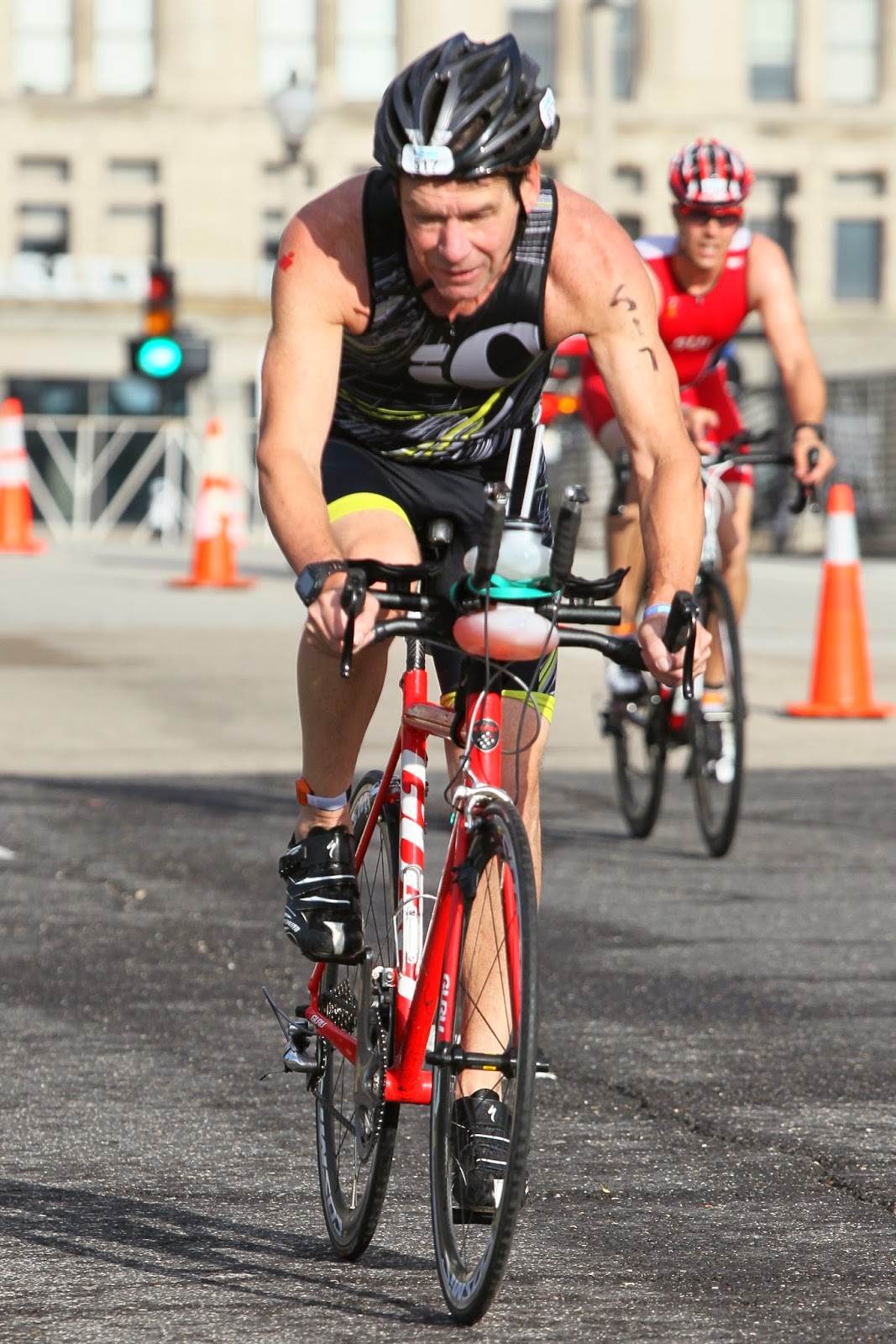
Last Sunday the ITU World Triathlon for professional triathletes held their first race in Chicago. As a special promotion for their first race in Chicago they held an age-group competition before the pro race –so us age groupers could experience what it would be like to compete on a pro-style course.
It was a great day if you were old and lucky enough to get an early wave assignment like I did. The 60-64 age group went in the water at 6:15 a.m. and our race was done before 9 a.m. Later in the day the sun rose and the clouds disappeared and it got HOT and HUMID.
We swam south from Buckingham Fountain towards the Shedd Aquarium and then ran across Lake Shore Drive to the transition area. For the bike course we rode north on Columbus Drive to Wacker and then went west and south on Wacker, then turned around and rode back. We did that four times. Portions of Wacker were the underground segments which are always being used for films like Batman Returns and the Blues Brothers. It was a flat and very fast bike course. I averaged over 21 mph and I was passed by a bunch of riders who were riding MUCH faster.
The run was also a loop course. We ran along Columbus Drive and adjacent to Lake Shore Drive for three and half loops finishing next to Buckingham Fountain.
My coach (Heather Collins of Precision Multisport) and I had outlined a strategy for this race, which is my last race before the Nationals next month in Milwaukee. The ITU course was flat and fast and similar in that respect to the course in Milwaukee. So this was a good preparation for my last triathlon of the season.
The plan was to swim easy and straight (not something I always do), not blow up on the bike (i.e. keep my heart rate at around 140) so I would have legs left for the run. Last race in Elkhart I pushed too hard on the hilly bike course and that resulted in a run time of 55 minutes.
This race I got off the bike with fresh legs (it helped of course not having any hills) and I ran the fastest 10K leg of my triathlon career, finishing with a time of 47:48, which is 7:42 pace.
Finished 18th out of 40 in the age group and 624th out of 1209 overall in the Men’s division. My overall time was 2:37:29, which included 10 minutes of transition time due to the distance between segments. Compensating for that was a bike course that wasn’t quite 25 miles long.
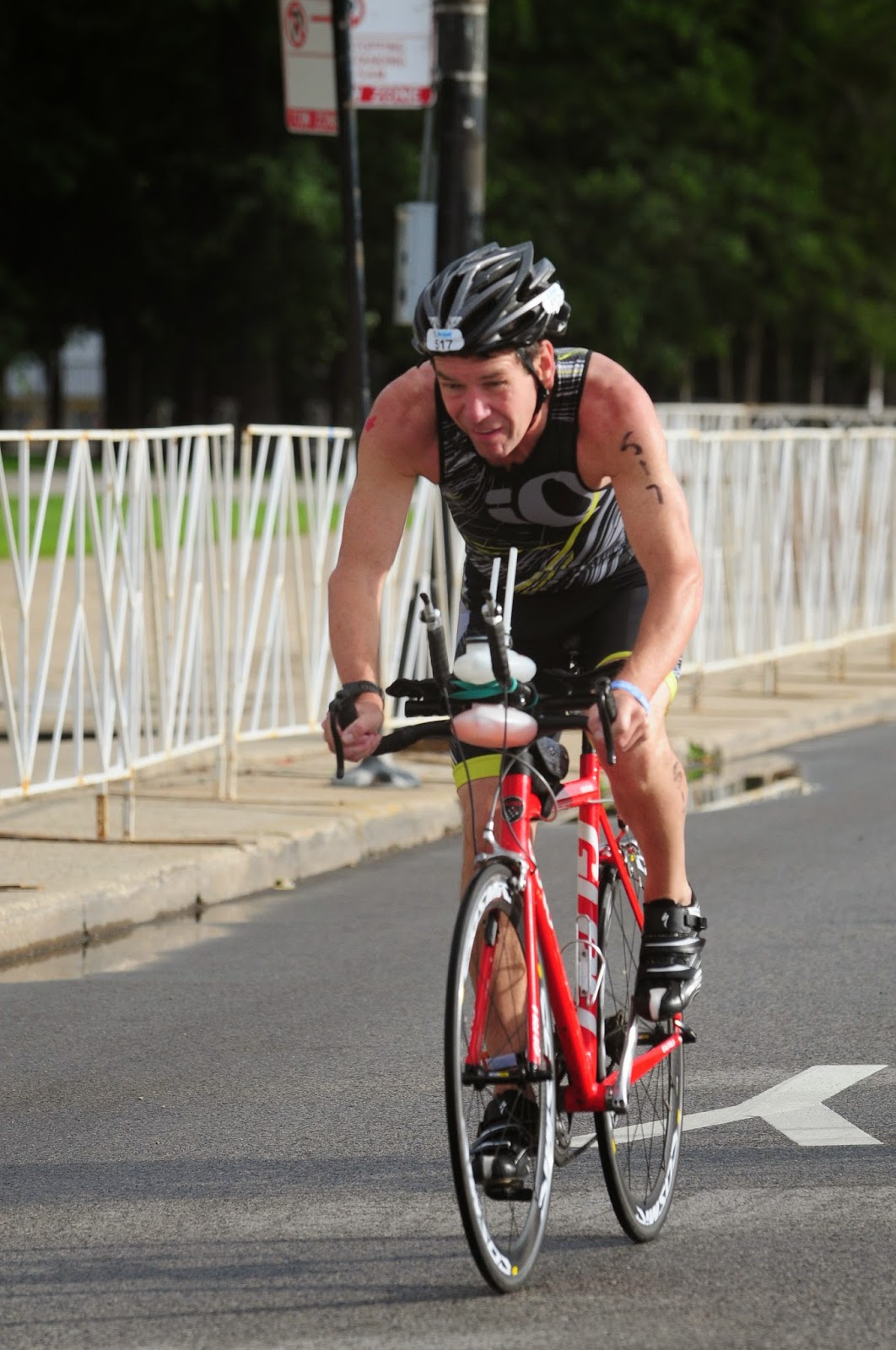
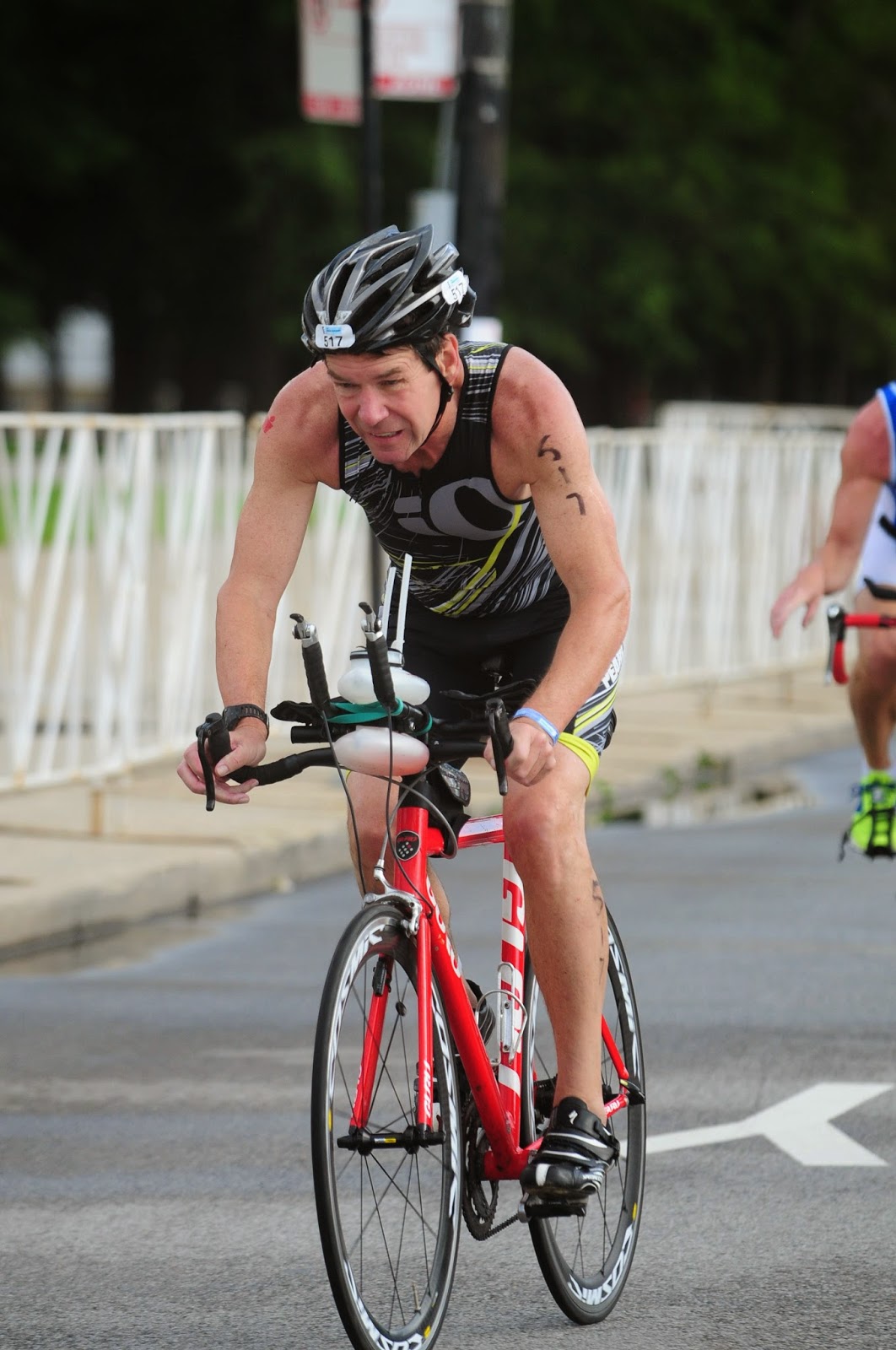
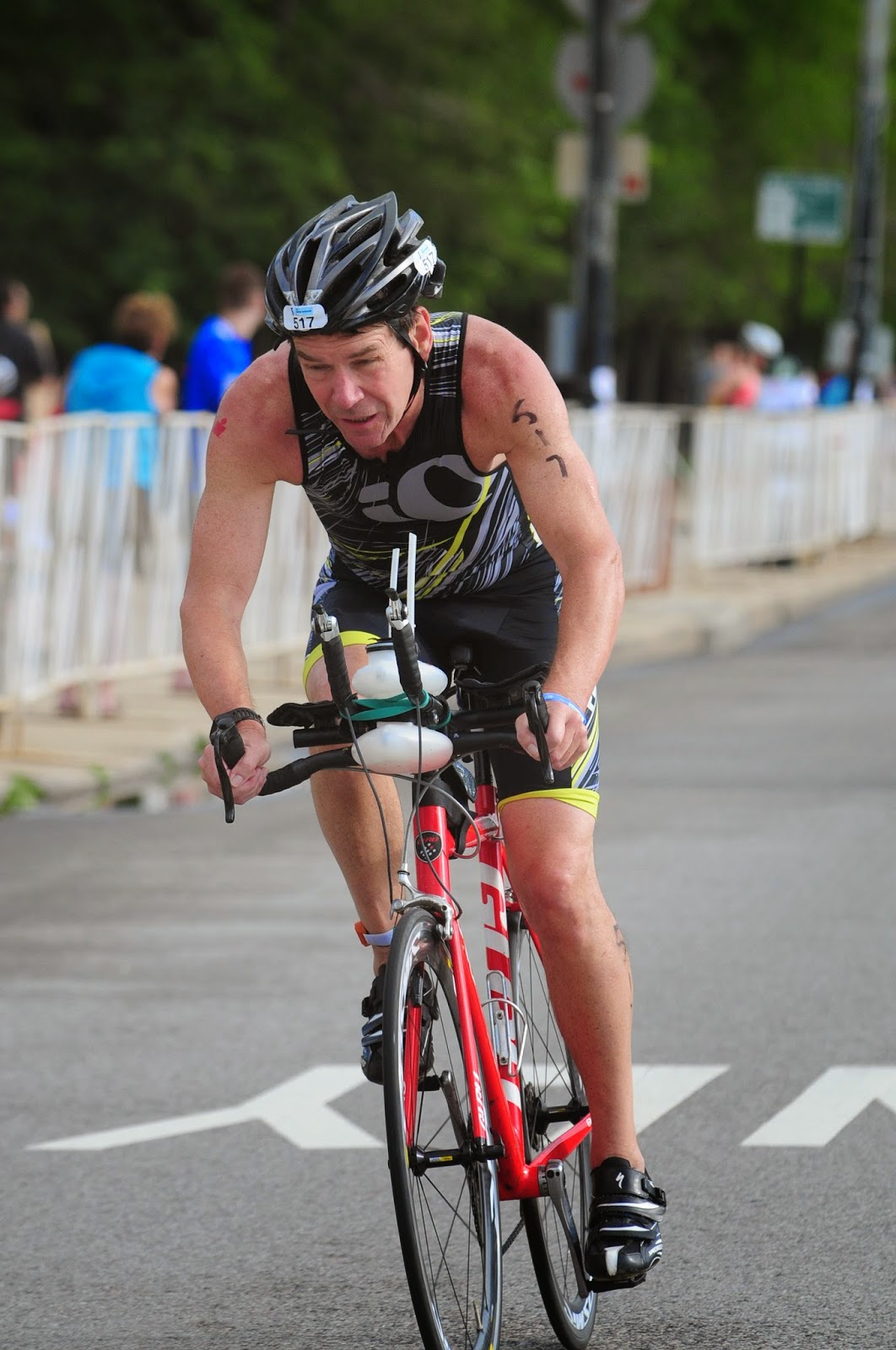
My faithful photographer, Suzanne had a great location near Buckingham Fountain and I was confident she would have some great photos each time I passed by. But her camera broke so I had to buy the race photos, which are displayed below. (I know they all sort of look the same, but I paid for them so I am going to get my money's worth.)
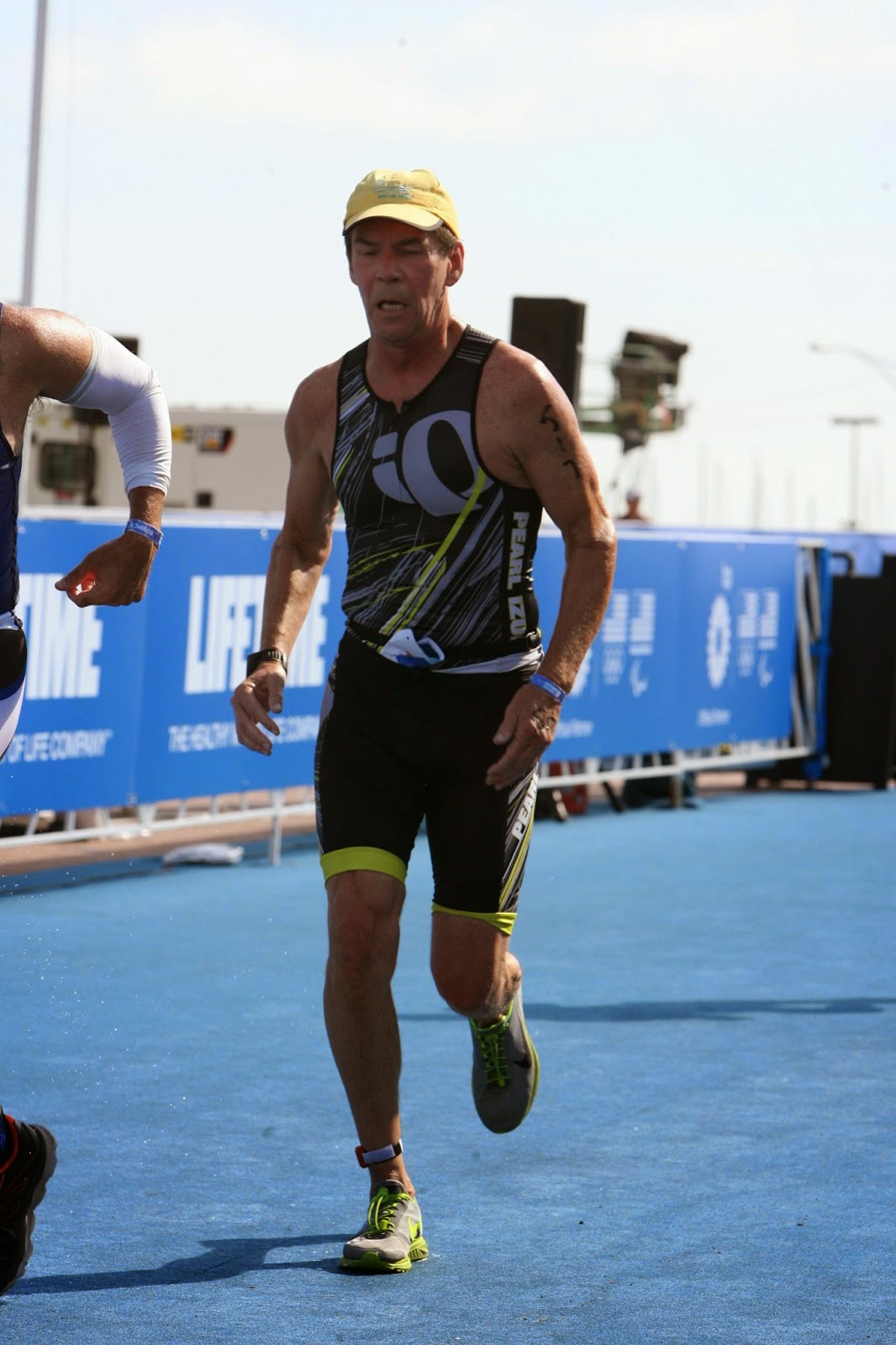 No heel strike
.jpeg) See I can ride in Aero
See I can ride in Aero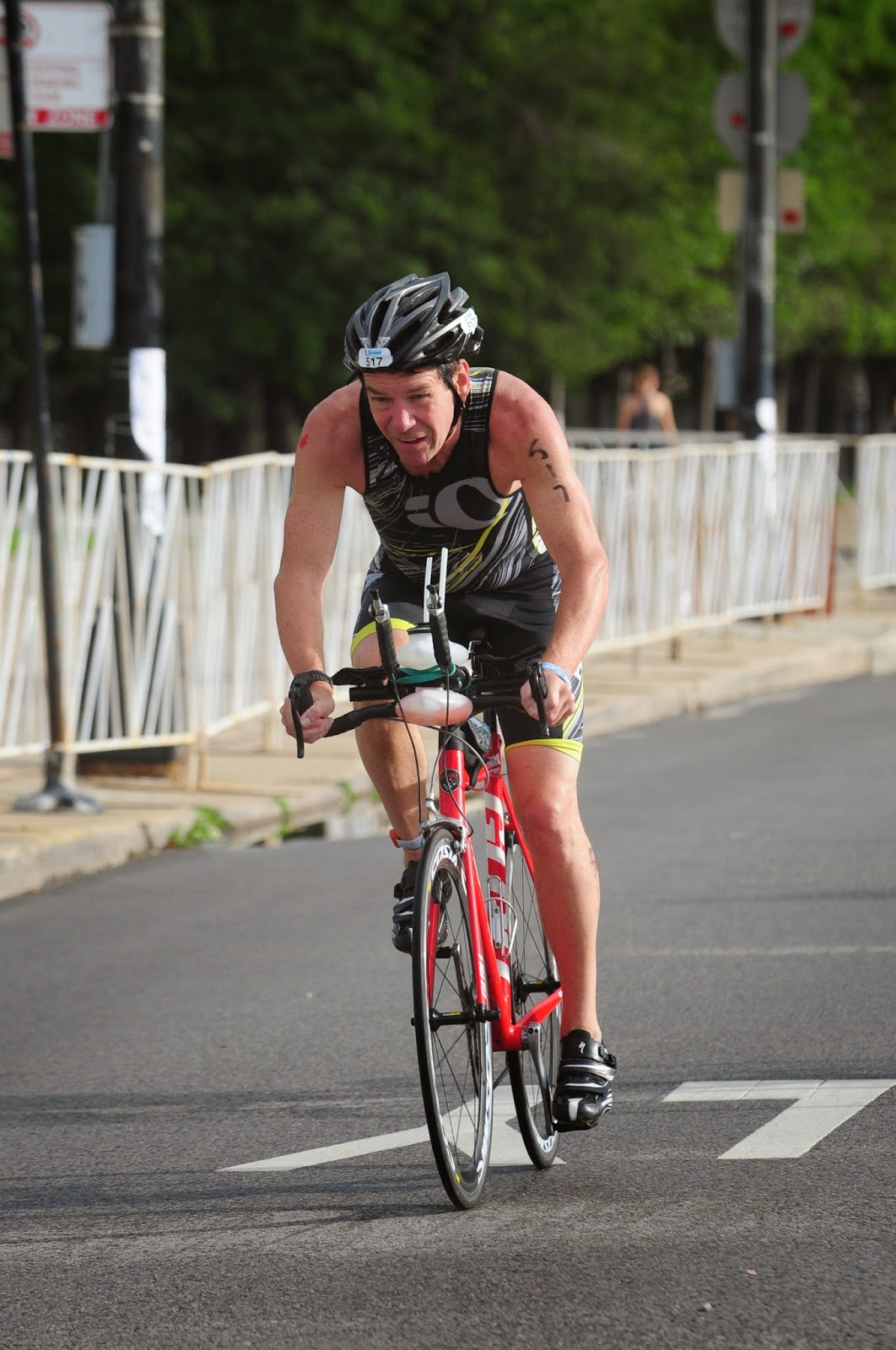
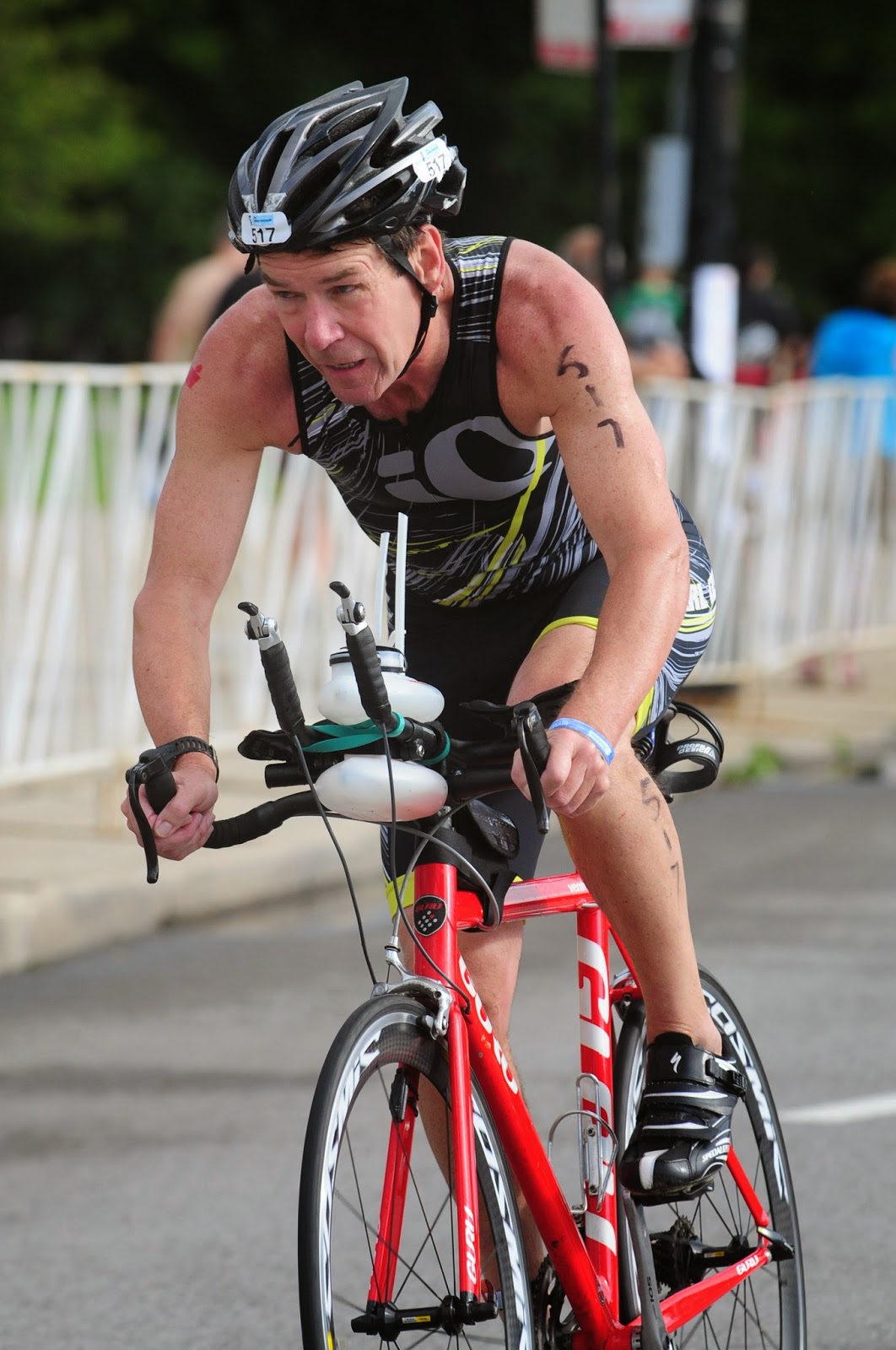
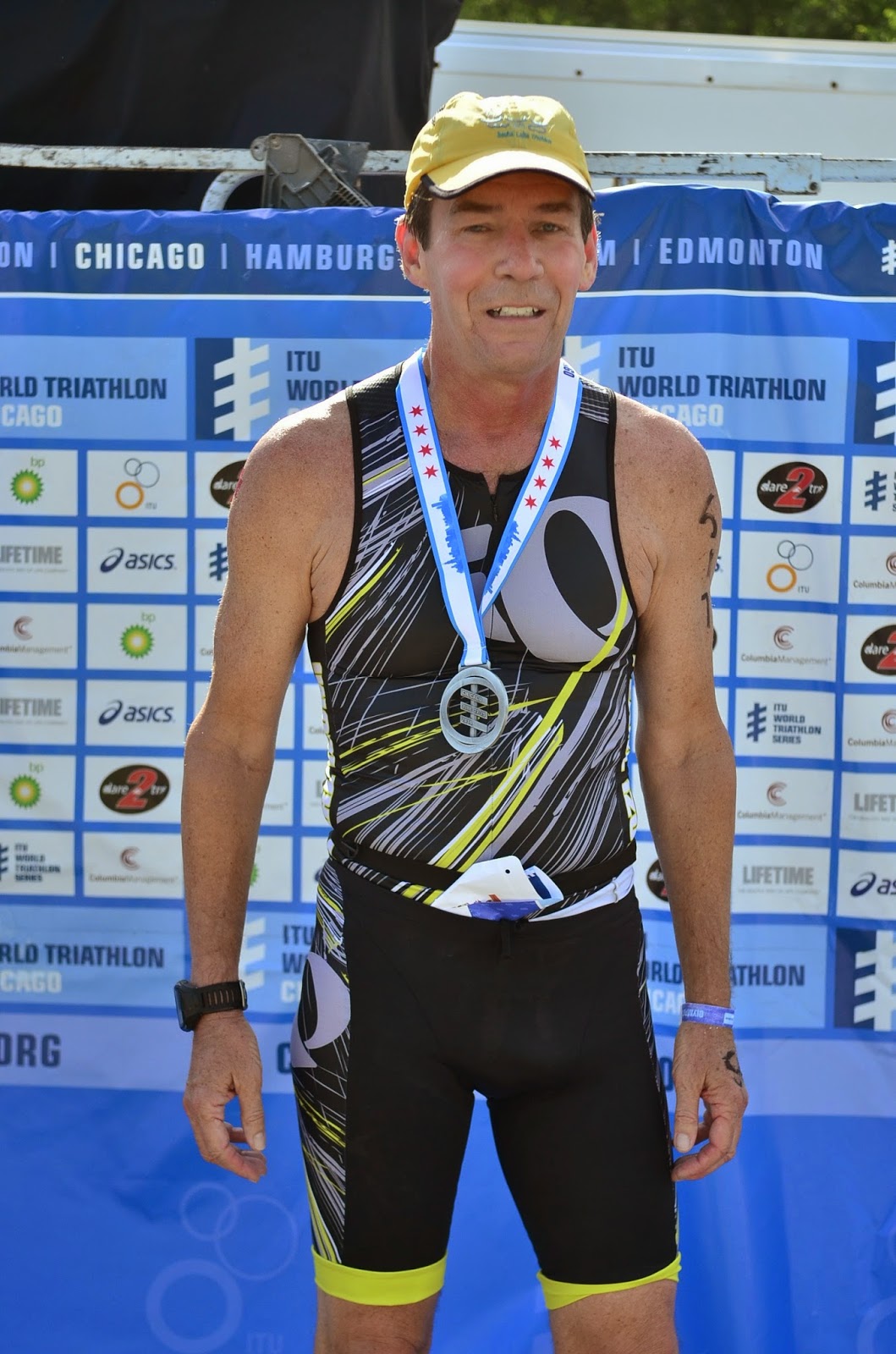 Finished before it got HOT
June 20, 2014
Leaving Home - The Epilogue

In September 2010 I wrote in this blog:
Leaving Home
Three weeks ago, Suzanne and I accompanied our youngest daughter, Christie, to London to help her get settled into her new school – Central St. Martins School of Art and Design. Two years ago Christie had enrolled in The Pratt Institute in Brooklyn. She did well her first year, but wanted a program that had more of a fashion design focus. One of her professors had suggested she apply to St. Martins and the Royal School, both in London. So last year she stayed home, got a job as a cashier at CVS and worked on her portfolio and her applications to art schools. She was accepted at the School of the Art Institute in Chicago and Parsons in New York and then to her surprise at St. Martins and the Royal School. I had been secretly hoping that SAIC or Parsons would win out but she chose St. Martins.
I had really enjoyed the year she spent at home. Probably because she had been gone for a year and so I’d already had a chance to experience the empty nest (although our house is definitely not empty even when nobody is home.) She doesn’t drive so I would chauffeur her to work most days. We usually did the grocery shopping together – she’d take of the produce and cosmetics and I’d get the beer and wine. We were a good team. Her friends hung out at our house a lot (we had cable and they were all True Blood fans.)
Everyone tells me how exciting it is for Christie to have this experience – and intellectually I absolutely agree. But I will miss those silent rides to work, and the grocery shopping grand prix and all of those young people taking over my television. I will miss the casual encounters with Christie. Visits aren’t the same.
Life goes on. We don’t own our kids – we just rent them for a couple decades.*********
Somehow four years have passed and now Christie is a few weeks from graduation. We are back in London to attend the exhibit of fine arts prepared by the graduating students. Yesterday we toured the exhibits of Textile Futures, Textile Designs, Ceramics and Fashion.
Today is Jewelry – Christie’s section. Her work was described as “unsettling.” But not in a bad way. I think. I actually don’t have a clue, but maybe by tomorrow I’ll be more informed. I already feel a lot smarter about textiles.


June 9, 2014
Do Not Go Gentle...

I started my blog, “Do Not Go Gentle…” five years ago. The purpose was to chronicle my pursuit of two specific goals:
- To finish in the top 10 of the USAT Age Group Championship and
- To get my novel, “American Past Time” published.
Back then I was young and naïve and thought I would achieve those goals in a year or at most two years.
In the last five years I have made it to the Nationals twice. The first time I didn’t even finish and last year I finished 33rd about 20 minutes out of tenth place. I’ve qualified for the Nationals again this year and I’ve been training all winter with the goal of this year making it to the podium.
Meanwhile, I rewrote the novel three more times. In April it was published, but now the challenge is to find readers who aren’t family and friends. I want the book to be read by strangers.
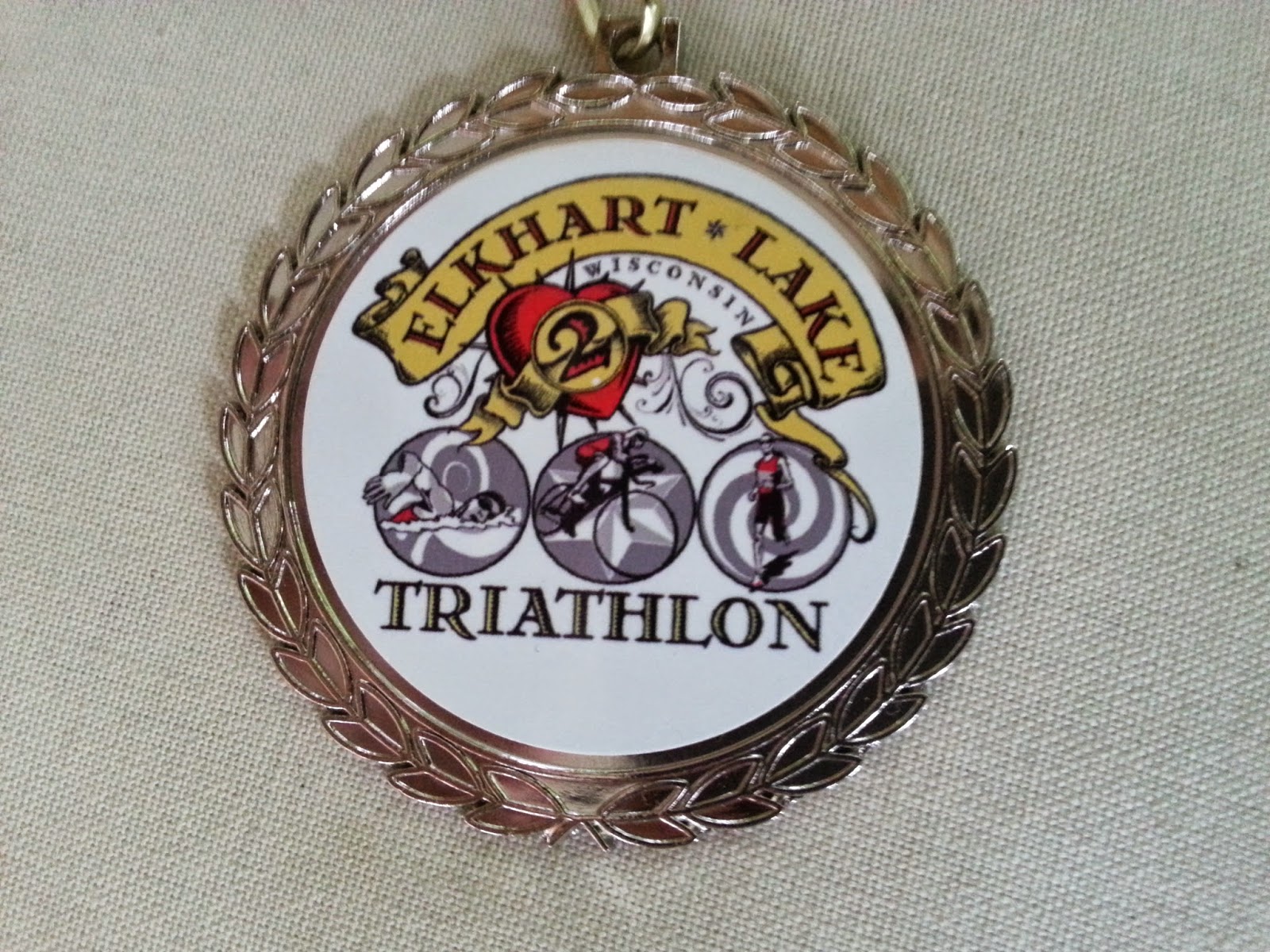 2nd Place Medal This weekend I had a rare convergence of the two missions. On Saturday I competed in the Elkhart Lake Triathlon. I finished 2ndin my age group, which is an improvement from last year when I finished 5th, but not good enough to be even close to a top ten finish in August. I still think I have a chance. My coach has been working on form in all segments and I can see improvements (for the first time I finished 2nd in the swimming segment, which has my weakest leg). I need to pull it all together and continue to train smart for the next two months. It’s a longshot, but not impossible.
 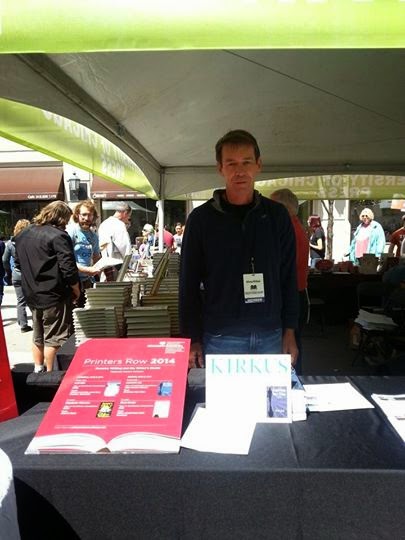 Famous author awaits his fansOn Sunday I got to attend the Printers Row Litfest as an alumni author of the Writers Studio of the Graham School of the University of Chicago. Me and James Patterson and a few other notables. I brought copies of the book to sell, but I didn’t have high expectations and I only brought four. I didn’t sell out. Okay I didn’t sell any. But I did give away a bunch of post cards with the laudatory Kirkus Review excerpted on the front.
 It was fun to attend and talk with other aspiring writers who were interested in the Writers Studio. I have two months until the Nationals and then maybe I will need to come up with a new goal for the blog. Or maybe a retirement party.
For the blog not me.
May 31, 2014

May 9, 2014
Wildflower Triathlon - May 4, 2014

On Sunday I competed in the 32nd annual Wildflower Triathlon, thirty miles north of Paso Robles, California in the central coastal region.
As a result of the severe drought the lake where they have always held the swim leg of the triathlon was empty so we had to swim in a body of water that was 2.2 miles from the bike transition. I am not sure what the body of water was – they referred to it as Harris Creek, but it appeared to be more of a pond than a creek. For the first twenty or thirty yards the water was literally black from the silt. But it was reasonably warm and calm and the course was well-marked, so I have no complaints.
The Widlflower team came up with a creative solution to the water shortage and turned the race into a Swim – Run – Bike – Run competition. When we got out of the water, we put our wetsuits in a plastic bag with our number on the outside, slipped into our running shoes and ran the 2.2 miles to the bike transition.
When we finished the 25 mile bike segment, instead of 6.2 miles, we ran 4.0 miles, all uphill. At least that is how I remember it now.
This was my first race of the season, and because of the cold weather in Chicago I didn’t have a chance to ride outside even once. Well, I had a chance but I don’t like being cold so I did all my bike training on the Computrainer.
My strategy and goal for this race was to:Maintain swim discipline, which for me meant to not go out too fast, utilize bi-lateral breathing (breathing on alternating sides every three strokes) and to stay on course. On the bike segment, pace myself on the hilly course and use all of my gears; I knew I wasn’t going to set any records, but I wanted to have something left for the run, which I knew would be challenging.
Maintain the run form that my coach had worked with me on all winter. Run the entire course; don’t burn out and end up walking on the hills;
I accomplished my objectives on all segments. I swam effectively and finished in 29 minutes, which is a good time for me. In my last race at this distance I was 31:25 minutes so I think the swim lessons I took all winter have paid off; On the bike, I didn’t burn out. I only averaged 16 mph, but some of that is due to my acute timidity on the downhill sections where I didn’t have the confidence to let the bike go all out. And on the run, while I only averaged a 9 minute pace, that was a good outcome given the extremely hilly course. On the last long hill, I was the only runner still running (of course all of the faster competitors had finished long ago).
I finished first for out of state competitors in my age group. That’s a category I made up. All of the other competitors in my age category were from California. Among that group I finished 7th.
During my stay, I rented a room through Airbnb (most of the competitors camp, but I’m not a camper) in Paso Robles in a house made of straw bales. It was a cool house (literally and figuratively), and it was a great place to relax after a day of racing.