
Winn Collier's Blog, page 57
December 8, 2010
Second Week of Advent: Danger
If we had to describe the Christmas vibe in a word, gentle might do. Most of us grow warm-hearted as we see white twinkles showing up on our street and nog showing up in our fridge. We watch sappy reruns like Charlie Brown's Christmas and It's a Wonderful Life. Some of us take time with friends to gather on the porch of a neighbor we barely know and belt out carols, which is a rather odd practice if you think about it. In December, we think of the children. We reminisce. We are usually more generous - precisely why all the bells and red buckets and nonprofit appeals pop up everywhere about now. Christmas is a sweet, kind-hearted season. And it should be.
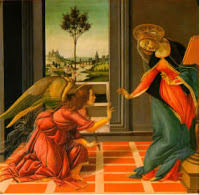 However, we are kidding ourselves if we think that the deepest truth of Christmas, the moment toward which Advent points, is gentle. I'm thinking of Mary whose entire life was disrupted with a visitation from a fiery angel. I'm thinking of Herod whose empire, constructed by a lifetime of manipulation, subterfuge and violence, would be crushed in one swift moment under the Kingdom which has no end. I'm thinking of shepherds who trembled when the Palestinian night-skies ripped open with the kind of angel's music that makes you hit the ground in terror and wet yourself (not exactly the image you want on a Christmas card).
Mostly, I'm thinking of a cross. Jesus said that he came not to bring peace, but a sword. Of course, elsewhere (and repeatedly) he also said he brought peace. In fact, he is the King of Peace - but apparently not that kind of peace. Not the peace that is frilly and tame, the kind that means nothing because it pretends to be everything. Jesus did not bring peace stripped of any real power because it can only offer us timid platitudes about the quaint advantages of being nice. Jesus carried in himself the kind of peace that made every force aligned against peace quake in its boots. It is a dangerous thing to encounter Peace when your allegiance is power or war or greed or self.
This Advent, my heart longs to be disrupted. I'm weary of the ways I domesticate God, the ways I've figured out how to subvert God's call to true life by the well-ordered, comfortable life I create. Advent scares me a bit. Advent is dangerous. Because God is dangerous.

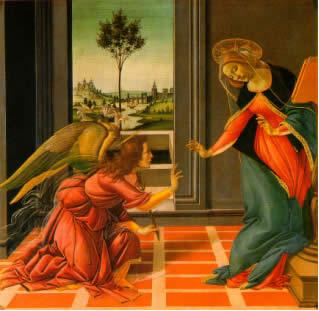 However, we are kidding ourselves if we think that the deepest truth of Christmas, the moment toward which Advent points, is gentle. I'm thinking of Mary whose entire life was disrupted with a visitation from a fiery angel. I'm thinking of Herod whose empire, constructed by a lifetime of manipulation, subterfuge and violence, would be crushed in one swift moment under the Kingdom which has no end. I'm thinking of shepherds who trembled when the Palestinian night-skies ripped open with the kind of angel's music that makes you hit the ground in terror and wet yourself (not exactly the image you want on a Christmas card).
Mostly, I'm thinking of a cross. Jesus said that he came not to bring peace, but a sword. Of course, elsewhere (and repeatedly) he also said he brought peace. In fact, he is the King of Peace - but apparently not that kind of peace. Not the peace that is frilly and tame, the kind that means nothing because it pretends to be everything. Jesus did not bring peace stripped of any real power because it can only offer us timid platitudes about the quaint advantages of being nice. Jesus carried in himself the kind of peace that made every force aligned against peace quake in its boots. It is a dangerous thing to encounter Peace when your allegiance is power or war or greed or self.
This Advent, my heart longs to be disrupted. I'm weary of the ways I domesticate God, the ways I've figured out how to subvert God's call to true life by the well-ordered, comfortable life I create. Advent scares me a bit. Advent is dangerous. Because God is dangerous.


December 2, 2010
First Week of Advent: Rest-Time
For it is impossible to "put Christ back into Christmas" if He has not redeemed it -- that is, made meaningful -- time itself.
{Alexander Schmemann}
One of the subversive affects of following the Christian calendar is how this way of marking time intrudes upon us. Jesus' claim is that he is Lord over all. Lord over our money. Lord over our politics. Lord over every human kingdom. Jesus is even Lord over time. There are few things we consciously think of less - and few things that (though we barely ever consider it) rule us more overtly than the way we live and measure our days. Whether your prevailing calendar is an academic year or a fiscal year or a retail year (and will someone, for God's sake, please stop Black Friday from swallowing up that one small space of quiet we had left - Thanksgiving) or merely a plodding-along year, the Church's calendar stands there, quiet and solid, resisting every competing claim for our devotion.
 Our calendars mark our time and, with each tick, remind us to get moving (faster) and to get planning and to get working - because, of course, ruin awaits if we don't rule our minutes well.
The Church Year, however, does much more than mark time; it tells a story. The Church Year invites us to enter, each and every year after year after year, the central narrative of our history: the story of God come to us in Jesus, living, dying and living again - and now ruling over the universe and moving toward that moment when all God's creation is good and peaceful once again.
And this is crucial for us to remember - God's time always begins with rest. Each week begins with sabbath, the day where we rest from our labour, content in the fact that since God is working, we don't have to. Most humans view rest as reward. After we've exerted all our energy and shot our very last wad, then finally we can collapse and receive a moment's rest to recoup and try (at least for a nanosecond) to recoup without guilt. This is a miserable way to live. This is also a very secular, human-centered way to live.
God's invitation is to begin each week resting first. Each week, we acknowledge that we are not Lord of the Universe. We do not make anything happen. The sun will rise and fall without us. We cannot, when all is said and done, control our fortunes or secure our family's well-being. We do our part; but we are completely reliant on God doing God's part first. We work from rest, not the other way around. And this practice takes shape at every level. In the Hebrew daily rhythm, the day begins at sundown. In other words, the day begins with sleep. You sleep first, resting while God is at work; and then, you awake to join God in whatever activity God has already been up to.
It makes complete sense then why Advent is the beginning of the Church Year. Advent is a time of waiting, resting and being quiet. In Advent, we don't do much of anything ... other than sit and wait and hope and pray. Our attention is turned fully toward God. For four weeks, we have a long sabbath. We rest in anticipation for all God has - and is - doing.

{Alexander Schmemann}
One of the subversive affects of following the Christian calendar is how this way of marking time intrudes upon us. Jesus' claim is that he is Lord over all. Lord over our money. Lord over our politics. Lord over every human kingdom. Jesus is even Lord over time. There are few things we consciously think of less - and few things that (though we barely ever consider it) rule us more overtly than the way we live and measure our days. Whether your prevailing calendar is an academic year or a fiscal year or a retail year (and will someone, for God's sake, please stop Black Friday from swallowing up that one small space of quiet we had left - Thanksgiving) or merely a plodding-along year, the Church's calendar stands there, quiet and solid, resisting every competing claim for our devotion.
 Our calendars mark our time and, with each tick, remind us to get moving (faster) and to get planning and to get working - because, of course, ruin awaits if we don't rule our minutes well.
 The Church Year, however, does much more than mark time; it tells a story. The Church Year invites us to enter, each and every year after year after year, the central narrative of our history: the story of God come to us in Jesus, living, dying and living again - and now ruling over the universe and moving toward that moment when all God's creation is good and peaceful once again.
And this is crucial for us to remember - God's time always begins with rest. Each week begins with sabbath, the day where we rest from our labour, content in the fact that since God is working, we don't have to. Most humans view rest as reward. After we've exerted all our energy and shot our very last wad, then finally we can collapse and receive a moment's rest to recoup and try (at least for a nanosecond) to recoup without guilt. This is a miserable way to live. This is also a very secular, human-centered way to live.
God's invitation is to begin each week resting first. Each week, we acknowledge that we are not Lord of the Universe. We do not make anything happen. The sun will rise and fall without us. We cannot, when all is said and done, control our fortunes or secure our family's well-being. We do our part; but we are completely reliant on God doing God's part first. We work from rest, not the other way around. And this practice takes shape at every level. In the Hebrew daily rhythm, the day begins at sundown. In other words, the day begins with sleep. You sleep first, resting while God is at work; and then, you awake to join God in whatever activity God has already been up to.
It makes complete sense then why Advent is the beginning of the Church Year. Advent is a time of waiting, resting and being quiet. In Advent, we don't do much of anything ... other than sit and wait and hope and pray. Our attention is turned fully toward God. For four weeks, we have a long sabbath. We rest in anticipation for all God has - and is - doing.
November 24, 2010
No Time
Last week I turned 39. Of course, my next birthday looms. One (supposed) friend was quick to remind me that I am already in my 40th year and am merely biding time until the digits actually catch up. Miska and I have a tradition twice a year, at both of our birthdays - a quiet dinner out, usually a little upscale with appetizers and dessert to make it lavish (we love to celebrate). We reminisce the year that is passing and speak of our hopes for the year to come.
This is what I want for the year ahead. I want to be boldly present. I want to move more into who I am. I want to live the life my heart longs for. I want to be a strong, engaged presence for Miska and my boys - and for all the people I love.
I don't have time for anything less. I don't have time to tone down who I am when I think others don't want it - or can't handle it. I dont have time to piddle around with fear, giving it power and allowing it to swell up from the shadows. I don't have time to spend lingering with regret or selfishness. I don't have time to couch my words or, as George MacDonald says, "to reason with the darkness." I don't have time for cynicism or pride or false-humility.
I have something to say. I have things I believe, with all I am. I have people to love. I have a life to live.
But for all that other stuff - I've got no time.

This is what I want for the year ahead. I want to be boldly present. I want to move more into who I am. I want to live the life my heart longs for. I want to be a strong, engaged presence for Miska and my boys - and for all the people I love.
I don't have time for anything less. I don't have time to tone down who I am when I think others don't want it - or can't handle it. I dont have time to piddle around with fear, giving it power and allowing it to swell up from the shadows. I don't have time to spend lingering with regret or selfishness. I don't have time to couch my words or, as George MacDonald says, "to reason with the darkness." I don't have time for cynicism or pride or false-humility.
I have something to say. I have things I believe, with all I am. I have people to love. I have a life to live.
But for all that other stuff - I've got no time.
November 17, 2010
Mocked and Alone {into the story}
The soldiers also came up and mocked him..."If you are the king of the Jews, save yourself."
{Gospel reading for the 26th Sunday after Pentecost: Christ the King Sunday, Luke 23:33-43}
Scripture tells us that when Jesus hung on the cross, the religious leaders scoffed at him and the Roman soldiers mocked him. If it were not enough for Jesus to bend under the weight of the entire world's sin, to be abandoned by friends and followers, to feel the Father's dark absence - if all this were not enough to crush a man, then perhaps the ridicule of his persecutors would finish him off. I find that I can bear a good bit of pain and hardship, but the death-nail usually arrives with that one glancing jab, that one dismissive gesture - that moment when it finally lands for me - I am alone.
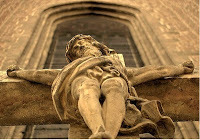
It doesn't matter if (as for Jesus) an enemy delivers the word or the silence. Of course, we expect our foes to deride us; however, we also expect our friends to come to our rescue, to have our back. We expect our friends to see us in our distress and in our aloneness - to see us. As Jesus was scoffed and mocked, there were no friends, no rescue. Jesus was, in every way, alone.
As Jesus hung alone in agony, the soldiers attached a sign, a jeering act of sarcasm, above his bruised and bleeding head: This is the King of the Jews. The Romans didn't believe this at all; they were heckling. Look here, he says he's a king - and we've got him on a skewer. Even one of the criminals hanging next to Jesus piled on, deriding Jesus. You're no Messiah - a Messiah would be able to save himself from all this. You're a joke.
But in the strangest of turns, we find that these men's taunts in fact proclaimed the bold irony of the gospel. Indeed, this was the King of the Jews. This was God come to humanity. This was the most impossible moment: God, in Jesus, surrendering himself to the most horrific anguish - all for the sake of love. And the criminal was actually right. The Messiah could save himself. Only, the Messiah chose not to.
If Jesus had saved himself, he could not have saved us. Jesus willing entered into the abyss so he could carry us out of it.

{Gospel reading for the 26th Sunday after Pentecost: Christ the King Sunday, Luke 23:33-43}
Scripture tells us that when Jesus hung on the cross, the religious leaders scoffed at him and the Roman soldiers mocked him. If it were not enough for Jesus to bend under the weight of the entire world's sin, to be abandoned by friends and followers, to feel the Father's dark absence - if all this were not enough to crush a man, then perhaps the ridicule of his persecutors would finish him off. I find that I can bear a good bit of pain and hardship, but the death-nail usually arrives with that one glancing jab, that one dismissive gesture - that moment when it finally lands for me - I am alone.
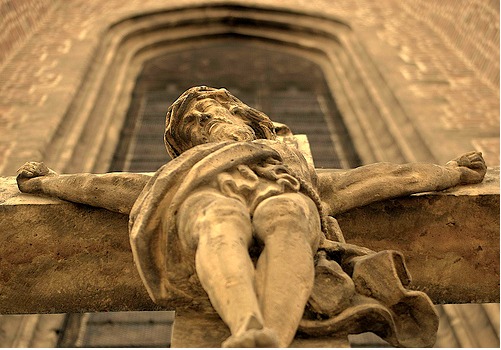
It doesn't matter if (as for Jesus) an enemy delivers the word or the silence. Of course, we expect our foes to deride us; however, we also expect our friends to come to our rescue, to have our back. We expect our friends to see us in our distress and in our aloneness - to see us. As Jesus was scoffed and mocked, there were no friends, no rescue. Jesus was, in every way, alone.
As Jesus hung alone in agony, the soldiers attached a sign, a jeering act of sarcasm, above his bruised and bleeding head: This is the King of the Jews. The Romans didn't believe this at all; they were heckling. Look here, he says he's a king - and we've got him on a skewer. Even one of the criminals hanging next to Jesus piled on, deriding Jesus. You're no Messiah - a Messiah would be able to save himself from all this. You're a joke.
But in the strangest of turns, we find that these men's taunts in fact proclaimed the bold irony of the gospel. Indeed, this was the King of the Jews. This was God come to humanity. This was the most impossible moment: God, in Jesus, surrendering himself to the most horrific anguish - all for the sake of love. And the criminal was actually right. The Messiah could save himself. Only, the Messiah chose not to.
If Jesus had saved himself, he could not have saved us. Jesus willing entered into the abyss so he could carry us out of it.
November 8, 2010


October 27, 2010
Wee Little Man {into the story}
And Jesus said, "Zacchaeus, come down immediately. I must stay at your house today." {Gospel reading for the 23rd Sunday after Pentecost, Luke 19:1-10}
If you grew up in Sunday School, you know the story because you know the song. Zacchaeus was a wee little man, and a wee little man was he... I'd hate to be known by young and old as wee, a sing-songy character relegated to children's Sunday coloring projects.
Luke does tell us, matter-of-factly, that Zacchaeus was "a short man," and that, in order to see Jesus, he had to climb a sycamore (or fig) tree. However, as Luke narrates the story, it becomes obvious that Luke holds Zacchaeus in high regard. Zacchaeuss was not a wee man but a courageous man. Zacchaeuss had courage to run after Jesus, courage to follow Jesus, courage to throw the dice on whatever Jesus asked him to do.
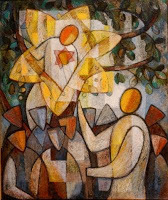 When Luke makes the introduction, he tells us Zacchaeus was a chief tax collector (read: despicable tool of the Empire) -- and rich. This addition is crucial. Any first-century reader would have assumed Zacchaeus to be rich. If you are a tax collector (and especially the chief tax collector) and if you get to doctor the books and add your "service" fees and skim your pocket-money off the top of whatever you say is due - then, God knows, you've got money. You've sold your soul for it. Money's the one thing, maybe the only thing, you do have. You've got no integrity, no friends, no dignity - but you are rich.
So why add this synonym? Why highlight this word?
It would seem this biographical note serves to push our memory back to the previous story Luke had just told, a tale of another rich man (Luke 18:18-30). This young, wealthy ruler came to Jesus, full of self-importance, asking Jesus to tell him whatever he needed to do in order to inherit God's kingdom. Just tell me, he says. I've got it covered. Taken aback by such brash arrogance, Jesus lays down the law, literally.
"Well, you're not that good. Why don't you just go and keep all Moses' commandments," Jesus answers.
Remarkably, the wealthy ruler remains indomitable. "Yeah, all good there. Done. What else you got?"
What do you say in the face of such ignorance, such unabashed egotism? What do you say to someone who insists they have no problems, no weaknesses, no sin? Jesus upped the ante; Jesus hit him where it would certainly hurt. "Okay, then, if you are so almighty and good - go sell everything you own. And give it away." Luke says simply the ruler walked away sad. This was the one thing he could not do. He could not surrender what he clung to for life: money.
Jesus summed up this encounter with his disciples: "How hard it is for the rich to enter the kingdom of God." And the disciples and those listening and all the first readers would have sat dumbfounded. What? How can this be... For them, the rich (by honest means - so long as you weren't a Roman tax collector) were those closest to God. Wealth signalled God's blessing. If the rich who've got it all together can't get in...
But then, we come to a second rich man, Zacchaeus. The first rich man (the young ruler) was the one everyone assumed was righteous - and he went away without God. The second rich man (Zacchaeus) was the one everyone assumed to be evil - and the story ends with Jesus, at his house, having a party and ticking off all the religious elites. In an act of humble contrition, Zacchaeus offered this: "Here and now I give half of my possessions to the poor, and if I have cheated anybody, I will pay back four times the amount." And Jesus honored and embraced him.
It is as though the point was not at all about the amount the rich might give away but about the heart that acknowledges it has nothing to give, nothing to lose, a life fully cast onto God for mercy. That is the place to be - because Jesus is quick with mercy, quick to embrace.
Zacchaeus was not a wee little man. Short, perhaps - but his heart was huge. His heart was open to God.
__
I had a piece this week in the Washington Post. Take a peek.

If you grew up in Sunday School, you know the story because you know the song. Zacchaeus was a wee little man, and a wee little man was he... I'd hate to be known by young and old as wee, a sing-songy character relegated to children's Sunday coloring projects.
Luke does tell us, matter-of-factly, that Zacchaeus was "a short man," and that, in order to see Jesus, he had to climb a sycamore (or fig) tree. However, as Luke narrates the story, it becomes obvious that Luke holds Zacchaeus in high regard. Zacchaeuss was not a wee man but a courageous man. Zacchaeuss had courage to run after Jesus, courage to follow Jesus, courage to throw the dice on whatever Jesus asked him to do.
 When Luke makes the introduction, he tells us Zacchaeus was a chief tax collector (read: despicable tool of the Empire) -- and rich. This addition is crucial. Any first-century reader would have assumed Zacchaeus to be rich. If you are a tax collector (and especially the chief tax collector) and if you get to doctor the books and add your "service" fees and skim your pocket-money off the top of whatever you say is due - then, God knows, you've got money. You've sold your soul for it. Money's the one thing, maybe the only thing, you do have. You've got no integrity, no friends, no dignity - but you are rich.
So why add this synonym? Why highlight this word?
It would seem this biographical note serves to push our memory back to the previous story Luke had just told, a tale of another rich man (Luke 18:18-30). This young, wealthy ruler came to Jesus, full of self-importance, asking Jesus to tell him whatever he needed to do in order to inherit God's kingdom. Just tell me, he says. I've got it covered. Taken aback by such brash arrogance, Jesus lays down the law, literally.
"Well, you're not that good. Why don't you just go and keep all Moses' commandments," Jesus answers.
Remarkably, the wealthy ruler remains indomitable. "Yeah, all good there. Done. What else you got?"
What do you say in the face of such ignorance, such unabashed egotism? What do you say to someone who insists they have no problems, no weaknesses, no sin? Jesus upped the ante; Jesus hit him where it would certainly hurt. "Okay, then, if you are so almighty and good - go sell everything you own. And give it away." Luke says simply the ruler walked away sad. This was the one thing he could not do. He could not surrender what he clung to for life: money.
Jesus summed up this encounter with his disciples: "How hard it is for the rich to enter the kingdom of God." And the disciples and those listening and all the first readers would have sat dumbfounded. What? How can this be... For them, the rich (by honest means - so long as you weren't a Roman tax collector) were those closest to God. Wealth signalled God's blessing. If the rich who've got it all together can't get in...
But then, we come to a second rich man, Zacchaeus. The first rich man (the young ruler) was the one everyone assumed was righteous - and he went away without God. The second rich man (Zacchaeus) was the one everyone assumed to be evil - and the story ends with Jesus, at his house, having a party and ticking off all the religious elites. In an act of humble contrition, Zacchaeus offered this: "Here and now I give half of my possessions to the poor, and if I have cheated anybody, I will pay back four times the amount." And Jesus honored and embraced him.
It is as though the point was not at all about the amount the rich might give away but about the heart that acknowledges it has nothing to give, nothing to lose, a life fully cast onto God for mercy. That is the place to be - because Jesus is quick with mercy, quick to embrace.
Zacchaeus was not a wee little man. Short, perhaps - but his heart was huge. His heart was open to God.
__
I had a piece this week in the Washington Post. Take a peek.
October 12, 2010
Wrestling Under the Moon {into the story}
Jacob was left alone, but a man wrestled with him until daybreak.
{OT reading for the 24th week after Pentecost, Genesis 32:22-31}
It is not good to prevail when one is wrestling an angel.
{John Walton}
Such a strange story. Jacob embarks on the long trek home after his exile for stealing his brother Esau's birthright when he receives word that Esau and his warriors are heading their way. Jacob fears the worst. Though decades have passed and both brothers have aged and secured their own wealth and powerful family-clans, Esau may still have a taste for revenge. No one loves like brothers, but no one hates like brothers too - it's a sad theme of the human saga.
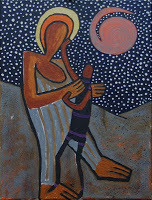 So late in the evening, Jacob sends his people across the river, with an elaborate, ingenious stratagem for how the family is to split up and how they are to meet Esau in waves and what they are to say with each encounter - all scripted, just as we would expect from one whose name means schemer. Jacob schemed to get his father Isaac's blessing. Jacob schemed to snatch Esau's birthright. Jacob schemed to secure the cattle he wanted from his father-in-law. Jacob was a schemer par excellence.
But now Jacob was alone, alone with his fears and the weight of his years maneuvering and plotting and working the angles. Jacob must have sensed everything crashing, unraveling. He'd put together his best plan - but Esau was stronger, more powerful. Esau's warriors were men of the sword, and Jacob's conniving efforts were futile if Esau decided on payback.
What do we do when our skill and ingenuity are spent, when there is nothing else we can do - and when all indicators point to the fact that our best effort simply won't be enough?
Jacob sat alone, under the dim moonlight, when a figure leaps from the shadows. And an epic wrestling match ensues. At this moment in the story, we are told that Jacob is grappling with "a man," but later we discover Jacob is actually wrestling God - or an angel sent by God which, though I have no experience in such things, I would imagine is (for us mortals) pretty much the same as wrestling God.
Jacob and the angel wrestled through the night, and Jacob, true to form, proved scrappy. He had spent his life fighting, and he wouldn't go down easy. Only this time, Jacob couldn't win. When the angel tired of the contest, the divine wrestler touched -- only touched, like a flick of the finger, as if to say, "Now, did you really think you had a chance, did you?" -- Jacob's hip.
And Jacob was done. Incapacitated. Finished. All Jacob could do was hang on, as Buechner says, like a "man drowning."
This is the moment all of us schemers must come to -- the point where we are finished, worn out, exhausted. Drowning. So long as we are convinced we've got life by the scruff of the neck, we will scheme and manipulate and keep God a safe distance. At some point, though, if God is kind, God will wrestle us to the ground and hold us there until we cry "mercy!" Mercy is what God longs to give - but we have to receive it.
God will love us with mercy that heals or with mercy that hurts - but from God, it's mercy all the same. In the wise word of George MacDonald: "There are victories far worse than defeats; and to overcome an angel too gentle to put out all his strength, and ride away in triumph on the back of a devil, is one of the poorest."

{OT reading for the 24th week after Pentecost, Genesis 32:22-31}
It is not good to prevail when one is wrestling an angel.
{John Walton}
Such a strange story. Jacob embarks on the long trek home after his exile for stealing his brother Esau's birthright when he receives word that Esau and his warriors are heading their way. Jacob fears the worst. Though decades have passed and both brothers have aged and secured their own wealth and powerful family-clans, Esau may still have a taste for revenge. No one loves like brothers, but no one hates like brothers too - it's a sad theme of the human saga.
 So late in the evening, Jacob sends his people across the river, with an elaborate, ingenious stratagem for how the family is to split up and how they are to meet Esau in waves and what they are to say with each encounter - all scripted, just as we would expect from one whose name means schemer. Jacob schemed to get his father Isaac's blessing. Jacob schemed to snatch Esau's birthright. Jacob schemed to secure the cattle he wanted from his father-in-law. Jacob was a schemer par excellence.
 But now Jacob was alone, alone with his fears and the weight of his years maneuvering and plotting and working the angles. Jacob must have sensed everything crashing, unraveling. He'd put together his best plan - but Esau was stronger, more powerful. Esau's warriors were men of the sword, and Jacob's conniving efforts were futile if Esau decided on payback.
What do we do when our skill and ingenuity are spent, when there is nothing else we can do - and when all indicators point to the fact that our best effort simply won't be enough?
Jacob sat alone, under the dim moonlight, when a figure leaps from the shadows. And an epic wrestling match ensues. At this moment in the story, we are told that Jacob is grappling with "a man," but later we discover Jacob is actually wrestling God - or an angel sent by God which, though I have no experience in such things, I would imagine is (for us mortals) pretty much the same as wrestling God.
Jacob and the angel wrestled through the night, and Jacob, true to form, proved scrappy. He had spent his life fighting, and he wouldn't go down easy. Only this time, Jacob couldn't win. When the angel tired of the contest, the divine wrestler touched -- only touched, like a flick of the finger, as if to say, "Now, did you really think you had a chance, did you?" -- Jacob's hip.
And Jacob was done. Incapacitated. Finished. All Jacob could do was hang on, as Buechner says, like a "man drowning."
This is the moment all of us schemers must come to -- the point where we are finished, worn out, exhausted. Drowning. So long as we are convinced we've got life by the scruff of the neck, we will scheme and manipulate and keep God a safe distance. At some point, though, if God is kind, God will wrestle us to the ground and hold us there until we cry "mercy!" Mercy is what God longs to give - but we have to receive it.
God will love us with mercy that heals or with mercy that hurts - but from God, it's mercy all the same. In the wise word of George MacDonald: "There are victories far worse than defeats; and to overcome an angel too gentle to put out all his strength, and ride away in triumph on the back of a devil, is one of the poorest."
October 7, 2010
Seth's Perfect Number
Seth turns 7 today. This boy brings immense delight to my heart.
Two days ago, Miska and I had (another) conversation where Seth, with a word and a wink, revealed his tenderness and compassion. As Seth hopped away (he's something like Tigger, bouncing and twirling and smiling most everywhere he goes), Miska said, "Where did that boy come from?"
 I'm pretty sure Seth came from us - I was there for most of it. Still, I share her question: Where did that boy come from?
When I arrived home yesterday, Seth had to talk to me. One of his classmates has been having a rough go. Whenever a parent visits their first-grader for lunch, the kid can pick two friends to eat with him out in the courtyard, with the turtles. But, for one boy in Seth's class, this has not gone well.
"Dad," Seth said, "you need to come eat lunch with me tomorrow."
"Why, Seth?"
"Well, whenever a parent comes to eat lunch, ______ always asks nicely if he can eat lunch with them. And no one ever picks him! And he always asks nicely. But still, they always tell him 'no.' So, today I told him I would get my dad to come eat lunch with me – and he could eat with us."
Insert: dad's tears.
"And, dad, no one plays with him very much either. He likes to sit by me – but he has to sit by the teacher a lot (apparently, he's a bit of a wild one…). So, dad, you have to come eat lunch with me. Tomorrow.
I did. Of course I did. Noon appointments cancelled, I had a lunch to go to. I was Seth's co-conspirator in friendship and kindness. Really, I was just watching. And learning.
I love this boy. Happy birthday, Seth. You are a gift to this world.


Two days ago, Miska and I had (another) conversation where Seth, with a word and a wink, revealed his tenderness and compassion. As Seth hopped away (he's something like Tigger, bouncing and twirling and smiling most everywhere he goes), Miska said, "Where did that boy come from?"
 I'm pretty sure Seth came from us - I was there for most of it. Still, I share her question: Where did that boy come from?
When I arrived home yesterday, Seth had to talk to me. One of his classmates has been having a rough go. Whenever a parent visits their first-grader for lunch, the kid can pick two friends to eat with him out in the courtyard, with the turtles. But, for one boy in Seth's class, this has not gone well.
"Dad," Seth said, "you need to come eat lunch with me tomorrow."
"Why, Seth?"
"Well, whenever a parent comes to eat lunch, ______ always asks nicely if he can eat lunch with them. And no one ever picks him! And he always asks nicely. But still, they always tell him 'no.' So, today I told him I would get my dad to come eat lunch with me – and he could eat with us."
Insert: dad's tears.
"And, dad, no one plays with him very much either. He likes to sit by me – but he has to sit by the teacher a lot (apparently, he's a bit of a wild one…). So, dad, you have to come eat lunch with me. Tomorrow.
I did. Of course I did. Noon appointments cancelled, I had a lunch to go to. I was Seth's co-conspirator in friendship and kindness. Really, I was just watching. And learning.
I love this boy. Happy birthday, Seth. You are a gift to this world.
September 30, 2010
Mustard and Mulberry {into the story}
The apostles said to the Lord, "Increase our faith!" The Lord replied, "If you had faith the size of a mustard seed, you could say to this mulberry tree, `Be uprooted and planted in the sea,' and it would obey you.
{NT reading for the 22nd week after Pentecost, Luke 17:5-10}
I've never much liked this story. While there's some debate about whether or not Jesus actually referred to a mustard seed (poppy seed is one of the other possibilities), it makes no difference. Either way, the point is the same: the seed is tiny, minuscule, next to nothing. And Jesus says that if we have even itty-bitty faith, just a dollop, we can command a mulberry tree to lift its roots out of the crusty earth and walk its way right down to the sea. Matthew's account is even more dramatic - there, we are told that pint-sized faith moves mountains. Moves mountains. What??
 When some read this account, it stimulates exciting, supernatural possibilities. That's all we need, a thimble full of faith - and look what could happen. Hold on, everybody... When I read, though, I am bewildered. I've never moved a mulberry tree, certainly no mountains. A couple weeks ago, my mom received word that she has bone cancer. I'd love to take a drive to Texas, say a blessing over her and know that vile cancer would evaporate. But I can't. I don't possess that kind of faith.
I'm wondering if that might be (at least partly) the point.
When Jesus spoke these words, no disciples jumped up to start tossing trees. In fact, a wider reading suggests that the disciples were confused, perplexed - humbled, we might say. The disciples consistently attempted to commandeer Jesus' kingdom imagery and displays of power into resources for their own agenda. And Jesus would always refuse. Jesus would say something outlandish that would put them in their place. For instance, Jesus would invite the disciples to gather up their 1/2 teaspoon of faith and rearrange the hillside. An offer like that is bound to take a person down a notch.
Perhaps Jesus' response to the disciples' mixed-motives (at best) request for an increase in faith wasn't intended to help them gain a positive vision of their endless possibilities, a divine pep-talk. Perhaps the nod to mulberries and mountains was to show the disciples how small they were, how much they needed God.
God isn't one we use, one to provide us with material for divine magic tricks. God is, well, God. God is the one we worship. The one we love and obey. The one we hope in. The one who, in Jesus, died and rose again to defeat evil, embody redemption and commence new creation.
With the mountains and mulberry trees, perhaps Jesus was suggesting we don't first need bigger faith. We need a bigger view of God.

{NT reading for the 22nd week after Pentecost, Luke 17:5-10}
I've never much liked this story. While there's some debate about whether or not Jesus actually referred to a mustard seed (poppy seed is one of the other possibilities), it makes no difference. Either way, the point is the same: the seed is tiny, minuscule, next to nothing. And Jesus says that if we have even itty-bitty faith, just a dollop, we can command a mulberry tree to lift its roots out of the crusty earth and walk its way right down to the sea. Matthew's account is even more dramatic - there, we are told that pint-sized faith moves mountains. Moves mountains. What??
 When some read this account, it stimulates exciting, supernatural possibilities. That's all we need, a thimble full of faith - and look what could happen. Hold on, everybody... When I read, though, I am bewildered. I've never moved a mulberry tree, certainly no mountains. A couple weeks ago, my mom received word that she has bone cancer. I'd love to take a drive to Texas, say a blessing over her and know that vile cancer would evaporate. But I can't. I don't possess that kind of faith.
I'm wondering if that might be (at least partly) the point.
When Jesus spoke these words, no disciples jumped up to start tossing trees. In fact, a wider reading suggests that the disciples were confused, perplexed - humbled, we might say. The disciples consistently attempted to commandeer Jesus' kingdom imagery and displays of power into resources for their own agenda. And Jesus would always refuse. Jesus would say something outlandish that would put them in their place. For instance, Jesus would invite the disciples to gather up their 1/2 teaspoon of faith and rearrange the hillside. An offer like that is bound to take a person down a notch.
Perhaps Jesus' response to the disciples' mixed-motives (at best) request for an increase in faith wasn't intended to help them gain a positive vision of their endless possibilities, a divine pep-talk. Perhaps the nod to mulberries and mountains was to show the disciples how small they were, how much they needed God.
God isn't one we use, one to provide us with material for divine magic tricks. God is, well, God. God is the one we worship. The one we love and obey. The one we hope in. The one who, in Jesus, died and rose again to defeat evil, embody redemption and commence new creation.
With the mountains and mulberry trees, perhaps Jesus was suggesting we don't first need bigger faith. We need a bigger view of God.
September 29, 2010
Simon Høgsberg
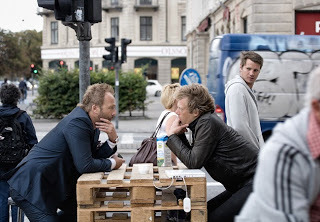
Simon Høgsberg is a Danish photographer, currently living in Copenhagen. His images are intensely human. With his camera, Høgsberg asks human questions and tells human stories. One of my favorite projects is when he snapped shots of 10 New Yorkers and got them to talk about their faces.
I recently interviewed Høgsberg for HalogenTV. A common theme in his work is separation, the human tendency to hide from one another, to keep our distance. Høgsberg narrates how photography forces him to come up close to people and resist his private narcissism (a narcissism we all struggle with). Check out the interview. I love this guys' work.


I recently interviewed Høgsberg for HalogenTV. A common theme in his work is separation, the human tendency to hide from one another, to keep our distance. Høgsberg narrates how photography forces him to come up close to people and resist his private narcissism (a narcissism we all struggle with). Check out the interview. I love this guys' work.


