Jeff Goins's Blog, page 45
January 20, 2016
090: 3 Stages of Creative Collaboration You Can’t Ignore [Podcast]
Looking at the author’s name on the cover of a book, it’s easy to assume they did it all on their own. But when you turn to the last page and find the acknowledgements, you discover just how wrong you were.

In a recent article, I wrote about the unfair truth behind the success of some of the most creative icons in history — authors, painters, and musicians whose work still endures today. The cornerstone of the piece was this:
Without a network, creative work does not endure.
If you think you can tackle your craft alone and hope for sustainable success, then you’re kidding yourself. Be it writing, music, or business, you need people to reach people.
This week on The Portfolio Life, Andy and I talk about how networks magnify the work of their members, and why some places become hubs of art, entrepreneurship, and innovation, and why others do not.
Listen in as we discuss how networking is the foundation of these hubs and why it’s in your best interest to start building one today.
Listen to the podcast
To listen to the show, click the player below (Reading this via RSS? click here).
Bring your own oar
Years ago, I went on a high school canoe trip in Wisconsin. After paddling hard for what felt like hours, we hit a calmer section of the river and linked up with the other canoes in a makeshift floating caravan. It provided a safe environment to enjoy our surroundings and to navigate the waters around the bend.
Looking back, this exemplifies networking pretty well. On your creative journey, there are white-knuckle rapids and calm, soothing stretches. What helps you stay afloat are the people in your canoe and the others around you.
A strong network and a skilled team are the keys to reaching your goals. But how do you find a network? How do you convince someone to let you in their “canoe?” The best place to start is to bring your own oar (talent, skill, knowledge).
All right. That’s enough with the canoeing analogy.
Here’s the bottom line: There’s no such thing as a free ride to success. You must be good at something before you jump into an industry and get noticed. Networking is more than who or what you know, it’s who you help. Generosity gets you on the river, community keeps you in the boat.
Show highlights
In this episode, we discuss:
The natural progression of working relationships
Questions to consider before you build a team
Different levels of collaboration
What the greatest creatives in history knew about networking
How to create an environment with an excess of intellectual capital
Why places like New York City, Nashville, and Paris become hubs for an abundance of art, culture, and innovation
When to start thinking about building a team
Where to find sojourners who are on the same path as you
A secret to successful collaboration
Quotes and takeaways
People are more powerful when they are united over a common idea.
To become a successful creative professional you have to network.
Community is within our grasp more than ever before.
When you get enough people together you create an abundance, an economic spillover.
You have to be good at something before you jump in to help someone.
If you want to reach people, you need people.
Don’t rob someone of the chance to be generous.
Resources
The Unfair Truth About How Creative People Succeed
Good to Great by Jim Collins
Where are you at in the stage of building your business, platform, or art? Share in the comments


January 15, 2016
Want to Get Paid for Your Passion? Do This First
Every week, someone emails me asking how they can become a full-time writer, start an online business, or work for themselves in some capacity. It’s the dream that defines the 21st Century. But most people start in the wrong place.

Note: My friends at Fizzle are doing a special through Mon., Jan. 18, where if you sign up for a year’s worth of online video business teaching, you’ll get five months free! Check it out.
We are living in an age when more people have the ability to work from home, pursue location-independent careers, and build a business around their own passions and skills instead of just doing what they need to do to get by. But the truth is this isn’t easy stuff.
The journey to your life’s work can be riddled with false starts. I thought about doing what I’m now doing for years and failed at it for a long time. What finally changed for me was when I got serious about the direction in which I was headed and started making significant changes.
In this post, I want to share with you the three things (because I like the number three) that I did differently in 2012, which was the year that changed my life.
And I want to point one very important lesson from all of this: Passion is not enough to make a living doing what you love. So if you want another rah-rah treatise on why you should just follow your bliss, stop reading now.
But if you’re willing to do the work to earn people’s attention and their money, then keep reading. Before I share that, though, here’s a little back story for you.
First things first: practice every day
In 2011, I got serious about blogging. I had launched an earlier version of Goinswriter.com in 2010 as a way to pick up some freelance writing, but it wasn’t anything special. Like a lot of people, I wrote in fits and starts, thinking I was better than I really was, and I got mad when nobody noticed.
But that got old after a while, and so I resolved to do something different.
What I decided to do was write and publish a new article on my blog every single day for a year. In retrospect, that sounds kind of crazy, but it didn’t seem that way at the time. Real writers write every day, and I wasn’t doing that.
So I launched a self-hosted blog and began investing in my craft.
Why every day?
The best accountability is a daily deadline. So if you aren’t doing your work, it’s immediately evident. That first year, if I missed a day, I would feel the pain of regret and want to get back to my work as quickly as possible.
This is an important lesson in habit formation: make your habit small and repeatable so if you miss it, you know right away. If you have to wait six months for feedback, then you’re doing it wrong.
So I started writing on my blog every day — not for the fame or publicity. I did it for me, for the practice, and it worked. Over time, I got better, and by the end of the year, my friend Mike told me, “You’ve found your voice.”
He was right. I had. And that part is so important. You can’t get paid until you get good, and as obvious as that may sound, most people in this world are looking for shortcuts. Don’t do that. Be different. Mastery comes with practice, and the last thing you want is to get paid for something you have no business doing. That’s a recipe for disaster.
So that was 2011, the year I wrote a lot, built a successful blog, and got a book contract. But it was also the year that I didn’t make any money writing. Which brings us back to those three things I mentioned.
How to make a living doing what you love
Not too long ago, I sat down with the leadership team at Fizzle, a membership program that helps people build businesses online, and asked them a series of questions.
What does it take to do your own thing, to pursue your dream, make a living doing what you love, and have the freedom you dream of?
That’s what we discussed. In that interview, which you can listen to on my podcast, we covered a few things that are worth paying attention to. But my takeaways were basically this: if you want to run your own business and work for yourself, you need three things:
1. Product: Something people want or need
You need to do something that other people can’t do or don’t know how to do, something that other people value. This is the must-have thing (sorry, I don’t have a better word for it) to start a business.
You don’t have to start a business, but if you want to make money doing something, you need more than passion. You need legitimate demand for that passion. And you need to be good at it.
In other words, don’t start with what you want. Start with what otehrs want, and then build something you can get excited about that meets that need.
2. Packaging: An attractive way to offer your product
Having a special skill is not enough to be able to charge for what you do or know. You have to package it in a way that is easy to access and understand. This is what we sometimes call a product, but really it’s the packaging.
The product is the the thing people want. The packaging is the way people interact with your offering. It may be a course or a book or a speech you deliver. It could be made out of wood or metal, or it could be an online community.
For example, Apple’s product is simple solutions to your daily technology needs. It just happens to be packaged in tools like iPhones and Macbooks. Their product is intangible, but without the tangible, people won’t buy it.
How it’s packaged is not what matters. What matters is that it’s packaged and in a way people get a hold of it and use it. Until you have this, you don’t have anything — nothing worth monetizing, anyway.
3. Platform: A way to make people aware of your product
Your thing needs to be visible. It needs to be in front of people. You can buy a bunch of advertising or get a bunch of celebrities to talk about it, but those are often expensive strategies. The best thing to do is to create a way to get your message out there to the people who already want it.
Keep in mind: this is different from finding a market for your product. You’ve already done that in Step 1 when you identified the market first, then found a product to suit their needs. Now, you just need a way to broadcast that to the world.
I call that a platform (credit belongs to Michael Hyatt who wrote the authoritative book on this). For writers, that’s often a blog or a website with an email list.But it can be anything at all that connects your product to those who need it is a platform.
The tools are less important than the fact that you have a way to communicate with people who want what you have to offer. If you serve them over time and earn their trust, they’ll want to repay you with both attention and money.
Where we go from here
So many people obsess over the wrong parts of this stuff. They focus too hard or too long on the idea, but the truth is the idea will change. Your passions will change. The market will change, too.
What you need to get is to get your thing out there, do it smartly and in a way that people will understand. And if you do that, it’s only a matter of time and tweaking before you succeed.
So, where does passion fit into all this? Shouldn’t that factor in somewhere, when it comes to making a living doing what you love?
Of course. But passion is the fuel, the driving force behind everything you do. If you find what people want and use your skills to serve that need, it just may be that passion follows you. Passion is important, but it’s one part of the recipe (read more about that here).
OK, so now you know how this works, but maybe you still feel stuck. What now?
The best place to figure out all that is Fizzle, where they help you figure out what your “thing” is, how to connect it with the right audience, and what it takes to build a business around that. As an affiliate, I love these people, endorse what they do and how they do it. I know they can help you.
What’s really cool is they’re currently doing a special, which they extended just for my people through Monday: If you sign up for the entire year, you get five months free. Pretty amazing, if you ask me. Click the link below if you want to learn business from the people I learn from
Learn More About Fizzle
So that’s what I know. It’s not a ton, certainly not enough for you to found a billion-dollar startup or something like that. But few people I know want to do that. They just want to find a way to take their unique gifts, skills, and interests and turn them into income somehow.
And here’s the good news. Not only is that possible. It’s easier than it’s ever been. And what I’ve shared with you here just might be enough to get started, which is really all you need. And don’t forget to check out Fizzle for extra help.
Do you want to get paid for your passion? What is your special skill or knowledge? Are you stuck on Thing 1, 2, or 3? Share in the comments.

January 13, 2016
089: How to Find the Story You Were Meant to Write: Interview with Robert Kurson [Podcast]
I have claimed that Escape is one of the main functions of fairy-stories, and since I do not disapprove of them, it is plain that I do not accept the tone of scorn or pity with which ‘Escape’ is now so often used. Why should a man be scorned if, finding himself in prison, he tries to get out and go home? Or if he cannot do so, he thinks and talks about other topics than jailers and prison-walls?
—J.R.R. Tolkien
Books allow us to escape the confines of reality and explore the realms of imagination. Between the pages of a book, anything is possible, anything can happen. But sometimes, as Mark Twain said, “The truth is stranger than fiction.”

Many writers spend their time not crafting stories but searching for them. Whether that means conjuring one out of thin air or through arduous research. Sometimes, though, the best stories are the ones that surprise us.
Robert Kurson, a writer who writes true stories that are almost too incredible to believe, found his story in the Dominican Republic’s historical archives. It was the unbelievable story of pirate ship. And as it turns out, real-life pirates are even bigger than they are portrayed in Hollywood.
This week on The Portfolio Life, Robert and I talk about what writers and pirates have in common, we uncover the truth behind popular treasure-hunting myths, and explore what it takes to find your own story. Listen in as we discuss all that and more.
Listen to the podcast
To listen to the show, click the player below (if you are reading this via email or RSS, please click here).
X does not mark the spot
Continuous innovation and advancing technology is shrinking the world. While we enjoy the intrigue and adventure of movies like National Treasure and Indiana Jones, it’s easy to think that everything has already been found, that there are no more pirate ships to discover or treasure chests to dig up.
But that’s just not true. As Robert Kurson shares in our interview, the truth tells a much different story. A lot of deep-seea treasure has been found, but there are still plenty of ships waiting to see the light of day.
But adventure doesn’t come cheap. There is no convenient “X” on the map telling you where to dig or dive. Professional treasure hunters often spend years and small fortunes looking for a valuable find. Becoming a writer requires the same kind of dedication. Great writers aren’t made overnight any more than a treasure chest will magically appear next to your bed.
While there are plenty of stories waiting to be written, you must look for a story with the same drive of a pirate looking for treasure. The trick is to keep your eyes open and know where to look.
Show highlights
In this episode, Robert and I discuss:
What to do when you realize you’re in the wrong career
Why it’s never too late to start writing
Two different ways to think about escape
Discovering incredible human stories
The unique power of true stories over fiction
How to know when you’ve found a good story
Why fiction writers have an advantage when writing the end of a story
Learning to tell a full story with very limited space
A secret to finding a master who will train you in your craft
How writing a story changes a writer
Quotes and takeaways
“A lot of people know a lot of interesting things if you ask them about it.” –Robert Kurson
“There are always adventures out there in the world if you’re bold enough to take a blind step forward.” –Robert Kurson
“The hardest part of telling a good story is finding one.” –Jeff Goins
“Great art is created through constraints.” –Jeff Goins
Resources
Shadow Divers by Robert Kurson
Pirate Hunters by Robert Kurson
Crashing Through by Robert Kurson
Robert Kurson’s website
Follow Robert Kurson on Twitter
Interested in learning more about writing and publishing? Check out this new podcast I just launched with Pamela Wilson on the Rainmaker.fm podcasting network. Here’s the first episode: To Self-Publish or Traditionally Publish?
Do you look for a story like a pirate searches for treasure? What is unique about your writing journey? Share in the comments

January 12, 2016
8 Lessons That Surprised Me After 8 Years of Marriage
Today, my wife Ashley and I celebrate eight years of marriage. I’ve learned so much about life and relationships from this woman, so much of which has surprised me.

Photo credit: Jimmy Rintjema
Recently, we went out to eat at a super-fancy place thanks to a gift card from a friend. While gorging ourselves on every appetizer, entree, and dessert we could stuff in our mouths (because we were really trying to max out the ridiculously generous gift card), we reflected on our life together and what we wanted the future to look like.
Afterwards, I was struck by the fact that marriage did not turn out the way I thought it would. It ended up being much, much better. Here are seven somewhat surprising lessons I’ve learned from my marriage, and these apply to a lot more than just matrimony:
You were not meant to be alone. I don’t think everyone needs to or even should get married, but I do know that life happens best in community. And having a partner by your side is essential to staying encouraged and staying sane. I used to think that you needed to learn to be okay on your own before getting married (and there’s some truth to that), but now I know that we were meant to need each other.
You can’t make someone else happy. But you can help them find their own happiness. You can drive yourself nuts trying to fix someone else. It’s better just to love them and do what you can to guide them to where they, not you, want to go.
You have to celebrate the good but remember the bad. No one should live a life of regret, but remembering the moments when you’ve failed will help you not repeat the same mistakes later.
You don’t think things can change until they do. A friend who’s been married 25 years told me the one thing he wished more people would realize is how much a person can change. There’s hope. In spite of what we often believe and say, people do, in fact, change. They just get stuck sometimes in familiar patterns and don’t know how to break out of them. Ashley has taught me so many things about being a grownup, things I thought were impossible to learn… until I did.
You should never apologize with the word “but.” Apologies do not come with exceptions or rationalizations (I am still learning this). And “I was wrong” sounds a lot more convincing than a halfhearted “I’m sorry.” This was hard for me, because I fear not being heard, but I now know that an apology with a reason for why I did what I did is really just an excuse.
You should always have something to look forward to. Anticipation can break the monotony of familiarity. That’s not to say that the daily routine can’t be a beautiful thing; it can be. But we all get bored sometimes and need a goal to aim for. Hope produces joy.
Your quirks are what make you lovable. It’s not true that opposites always attract, but it’s also not true that you should marry someone just like you. Or partner in business with them, for that matter. The truth is we need each other’s quirks and idiosyncrasies — in life and relationship. Our differences don’t divide us. They make us need one another.
You will be misunderstood. This has been a tough lesson to learn, but an important one. We all want to be misunderstood by the people we love, and it can be painful when someone so close to us gets us so wrong. But this is exactly what happens in every relationship. And when it happens, your job is to not simply wallow in your wounded-ness but instead to clarify and communicate the best you can what you need and how you need it. A solid apology goes a long way, but what makes a relationship even better is an earnest desire to repair what was broken and seek to better understand this person you love a little better. Yes, you will be misunderstood but every misunderstanding is an opportunity to grow closer together.
So whether you’re married or have a best friend you couldn’t part with, what’s one surprising lesson you’ve learned from a long-term relationship? Share in the comments.

January 11, 2016
The Untold Story Behind Vincent van Gogh’s Success
Not every mom puts her kids’ drawings on the refrigerator. Some mothers are critical, even cruel. And to be fair, some drawings are just not that good. But can you imagine being the mother of Vincent van Gogh and ridiculing your child’s work? It sounds crazy, but crazy was a major theme of his life.

Vincent van Gogh led a life of madness, one with many starts and stops that looked as frenetic on the outside as they must have felt on the inside. Only during the final years of his short life was Vincent a professional artist, and even then, a tortured one ridiculed by others, even by his own mother.
So what can we learn from the career of a man whom history either remembers as a lunatic or a genius? A lot, in fact.
False starts can lead to success
An impassioned young man never content to sit still for too long, Vincent van Gogh chased many vocations in his youth.
First, he apprenticed for an art dealer in London, which was an arrangement made by his family and one he eventually resented. This was where the first of many heart-breaking love affairs would occur.
Then he pursued a career in Christian ministry.
After a dramatic conversion experience in London, the zealous van Gogh was determined to enter the pastorate. Unfortunately, he failed the required entrance exam to begin his theological education, which was then followed by another failed attempt at gaining a religious education.
This was a common theme in van Gogh’s life: failure after failure, disappointment after disappointment. When it became clear that in spite of his fervor, he would not likely become a pastor, he was forced to face the facts. He was going to have to find another path. Still, he continued to try to force it.
Van Gogh spent some time as a traveling missionary and evangelist before eventually deciding to become an artist, a vocation he believed might also honor God. At the time, it looked as if he was wandering through life; in fact, his parents were deeply concerned, probably even ashamed of him.
At one point, Vincent’s father looked into admitting the eccentric boy to an insane asylum. But despite the series of seemingly disparate events, in retrospect, we see a pattern: from young Vincent’s long walks as a child in nature, where he marveled at the natural beauty of creation; to an early apprenticeship for an art dealer; to his failed attempts at entering the ministry. None of it was an accident.
There was a force, which van Gogh believed to be God, guiding him through life, helping him find his way. Such a force guides each of us, leading us to our destiny. But the way this force chooses to reveal itself is surprising.
At times, it may feel and look like failure; it certainly did for Vincent. But what’s really happening is our life is being directed, guided in a certain direction, in a way that is beyond our control. As we continue to face adversity, we adapt. We grow.
Trust yourself
What made Vincent van Gogh remarkable, and the reason we know his name today, is that he didn’t quit. At no point did he ever give up on the search for his calling. He knew he was destined for greatness, believing God had called him to some sacred service — he just didn’t know what it was.
“My only anxiety,” Vincent wrote in a letter to his brother Theo, “is how can I be of use in the world?”
So he kept going, trying new things until he found something that worked. And as with other stories of calling, this wasn’t something new. It was something old, something he had always loved but hadn’t considered a career, maybe due to the jabs of his mother or pressure from his family to make a living. At the age of twenty-seven, however, Vincent van Gogh decided to become an artist.
It’s a little disingenuous to say he didn’t give up. He did, in fact, quit many things. He just never gave up on that inner nudge he felt to do something significant with his life. He used failure to help him find out what it was, using each closed door of opportunity as a pivot point to send him in a new direction.
“Use each closed door as an opportunity to pivot in a new direction.Tweet thisTweet
Vincent van Gogh failed his way to success. And when he got to his destiny, he realized how everything, from his spiritual frustration borne of growing up under a Dutch clergyman to his obsession with the outdoors, all had a purpose. All these things were preparation; they became his inspiration.
His career as an artist was short-lived, lasting only ten years. His life ended at the age of thirty-seven at his own hands, and he died a poor, mentally ill man. His brother had to finance most of his career, and he experienced little commercial success during his life. And yet, within a hundred years, his name would become famous, and his works would go on to be some of the most valuable in the world.
Why gatekeepers matter
How did this happen? It wasn’t just luck. There were guides who met Vincent at every stop along his journey. These were the people who both rejected him and affirmed him. Each step was an approach towards greatness, even when that step involved failure.
When he failed, Vincent grew reflective, asking himself what he was doing wrong. And what often happened afterward was a renewed resolve to dedicate himself more fully to his work. As he continued, he found people who resonated with what he was trying to do, even when he didn’t fully understand it.
This very much follows what one psychology calls the “systems theory of creativity”, which I wrote about here. What it takes for an artist to succeed is not to simply master his or her craft and wait for people to acknowledge their genius. It doesn’t work like that.
If you want your creative work to succeed, you have to satisfy three core systems: the self, the field, and the domain.
Practically, what that means is you have to get good, then you have to find gatekeepers who affirm the importance of your work, and then you must do something that changes or contributes to your domain in some way.
For Vincent van Gogh, that meant struggling for years, first trying to find his calling in life, and then dedicating himself to the practice of art to the point that he could acquire enough hours to be great. But that, in and of itself, was not enough.
Vincent had to find people in the art world whom others trusted, and this was difficult. At the time, the way Vincent painted was so bizarre and offensive that people didn’t know what to do with it. It looked like child’s play. But when he met a group of French painters, everything changed. He realized that his dense paint and broad brushstrokes full of bright, vibrant colors had a name: Impressionism.
Then there was his brother Theo, who acted as a patron to his art for a decade, supporting him both financially and emotionally, if not always fully understanding him. The two van Gogh brothers were so closely connected that shortly after the latter took his life, the former joined him in death.
Even in death, Vincent van Gogh had not attained the level of fame his work would soon experience. It was his sister-in-law, Theo’s wife, who saw to it that his paintings were sold and eventually recognized. Were it not for Johanna van Gogh, we may not have ever seen Starry Night or any number of other paintings that are now worth millions.
Deconstructing genius
So what does this mean for us? If we feel, as Vincent did, that we have important work to share, then we must consider the road ahead of us. It won’t be easy, but the reward may be worth the obstacles.
Here are three lessons I think we can learn from this story:
Listen to failure. Vincent van Gogh failed a lot, but each failure taught him something about himself and moved him closer to his calling. If you sense you are somehow destined for greatness but don’t know what to do, do what Vincent did and just start trying things. Failure will be a good friend and guide you to where you want to go.
Persevere in the right things. Not all failure is a sign that you should quit. Over time, you will learn to trust yourself. I find that prayer and meditation are worthwhile practices for this. Deep in your subconscious, there is what my friend Dov calls an “inner knowing” which will tell you where to go and what to do. In other words, pay attention to your intuition and keep doing the things it tells you to do.
Find people who resonate with your work. Even if that means seeking out other outcasts, as it often does for creative individuals, you need a collective. The French Impressionists were in many cases banned from art galleries and their work was censored for years. But they banded together to create something new and fresh. And over time, people began to understand it. But until that happened, they had each other, which was enough encouragement to keep going.
The creative life is filled with rejection and failure, but that’s not all there is to it. There is also success and encouragement and meaning when you understand how to navigate this windy road. Good luck.
Resources
To learn more about van Gogh, mastering your craft, and how creative people succeed, check out the following:
The Unfair Truth About How Creative People Succeed (ARTICLE) This Medium post, which was repurposed and adapted from my blog, has gone viral a couple of times and is the best distillation of what I think creative people need to understand about the way the world works.
3 Stages of Personal Development Borrowed from the Middle Ages (PODCAST) . This recent podcast episode explains how artisans and artists mastered their crafts for centuries and what we can learn from that model today.
Lust for Life by Irving Stone (BOOK) . This is the most entertaining biography of Vincent van Gogh I have ever read. As a biographical novel, it’s a powerful piece of literature and was painstakingly researched. Everything about van Gogh in this article came from either that book or this article.
If you haven’t picked up a copy of my best-selling book, The Art of Work , yet, I highly recommend that. You can get the audio for free here.
What failures are you listening to? How are you pushing through rejection on the right things? Share in the comments.

January 6, 2016
088: Three Stages of Personal Development Borrowed from The Middle Ages [Podcast]
After his first mentor died, Luke Skywalker showed up to apprentice under Yoda. Luke thought he was hot stuff and cut his training short, which resulted in his hand getting cut off. We may not lose a limb, but if we dismiss the value of apprenticeship, our craft will suffer a similar fate.

One of the benefits of self-publishing is that anyone can be an author. But one of the drawbacks of self-publishing is that not everyone should be an author.
Digital platforms remove barriers to entry, but uninhibited access to the masses does not guarantee great work. We have a greater responsibility to our readers.
This week on The Portfolio Life, Andy and I talk about the ancient process of apprenticeship, and what it teaches us about personal development today. Listen in as we discuss how you can build a realistic timeline of your own path to becoming great at your craft.
Listen to the podcast
To listen to the show, click the player below (If you are reading this via email or RSS, please click here).
Mastery is a journey
When you reach a tipping point and finally make the leap into pursuing your calling, it’s easy to feel like you’ve made it. In reality, the story is just beginning.
After quitting my job as a marketing directer to write full-time, I thought I’d arrived. Everything was going to be awesome, and I’d get to teach other people how to write and do what I’d done. I didn’t recognize the gap between apprenticeship and mastery.
This timeframe as a journeyman is when an artist proves their work to themselves and to the world. It’s not enough to practice and prepare. You have to prove your value to the market. Not just once, but usually for 2–3 years.
One of the benefits of being a journeyman centuries removed from the Middle Ages, is we get to choose who we try to prove ourselves too. We are not bound by geography or class to practice our craft in obscurity.
Show highlights
In this episode, we discuss:
The powerful initiation of reaching mastery among our peers
Why apprenticeships are a lost art we must rediscover
How to find masters to study under
The impact of a fast food culture on creative pursuits
Why universities are not a sustainable system for artists
Giving yourself permission to take the long road
The benefits of submitting to the apprenticeship model
Why you can’t skip the journeyman phase
What it takes to become a master
Quotes and Takeaways
Subject yourself to critique so you can get better.
It’s not enough to practice and prepare. You have to prove yourself.
Masters want to endorse great work.
You cannot produce extraordinary work without community.
High standards pull greatness out of you.
Resources
The Art to Designing Your Own Apprenticeship
The Secret to Influence is This
The Art of Work Podcast: Accidental Apprenticeships
Where are you on the development timeline? What are you doing to move forward in your development as an artist? Share in the comments

January 4, 2016
The Slow Start Solution to Conquering New Year’s Resolutions
Off to a slow start with your New Year’s Resolutions? Maybe that’s a good thing. So many people profit from selling you instant (but rarely lasting) results that we often forget the virtue in taking the long way.

The other day, an old friend emailed me a list of his goals for the new year. There were thirteen of them. Most were vague and imprecise, and I told him so. But the truth is most of us do this in one way or another. Figuring out how to not fall into this trap is the secret to setting goals and actually obtaining them.
I should begin by saying that I’m not the best person to pay attention to when it comes to setting goals. See my friend Michael Hyatt if you want a Type-A roadmap to getting everything you want in life. I, however, am more of a “let’s throw it against the wall and see what sticks” kind of guy. But as a driven individual, I do like achieving things. I just struggle with the discipline of it all and, quite frankly, with even knowing what I want in the first place.
So what’s a guy like me to do, when for so long I set goals and never achieved them? Well, I think it comes down to practice. As a musician, writer, and mediocre runner, I get practice. I understand why it’s important to get up every day and do the same thing over and over. But for a short while, I forgot this.
Recently, my new friend Chris came across a quote of mine on Twitter or Instagram, and in his words, it changed his year. The quote was this:
“When the passion goes away, it’s the practice that sustains us.Tweet thisTweet
He told me these few simple words were some of the most impactful ones he had read in the past year. He told me how, in the previous year, his business had gotten out of control and he’d experienced some failures that were the result of broken promises and over-committing.
But one thing saved him:
“The practice,” Chris told me, which he defines as: “a set of habits, rituals and plans that are scheduled to support the pursuit of a goal.” For him, this meant having a seven figure business. One million dollars. He gave up nearly everything — relationships, integrity, even his health — in pursuit of this goal. And in the end, he realized it wasn’t worth it, at least not the way he was doing it.
“The practices,” he wrote in a blog post, “are meaningless without the virtues.”
I love that. In fact, Chris taught me more about my own quote than I knew myself. So, here’s what I’m doing as someone who has struggled with setting and attaining goals most of my life. Maybe it makes sense for you, too:
Focus on the habit, not the result. With most things frequency matters more than quantity. Make it a habit to go to the gym every day even if you only spend a few minutes there.
Make the habit small, easy, and repeatable. Then make it more difficult over time. Don’t binge. Nibble. Don’t write a book. Write 500 words per day. Don’t get into shape. Walk 10,000 steps a day. Or start even smaller with one push up before bedtime.
Don’t do something big and audacious. This year, do something small and consistent. That’s the secret to breakthrough with any goal, resolution, or change you want to make.
It’s not the big things that change our lives, or our world. It’s the small things that add up over time. Drip by drip, as Seth Godin likes to say. It’s not the passion, but the practice that sustains us.
Resources
If you need help, here are a few resources worth checking out:
For writers: The My 500 Words a Day Challenge. This is a 31-day writing challenge that’s completely free. You get an email prompt a day plus access to a 5000-member community. Every year, I start off my January writing 500-1000 words per day to jumpstart my creativity and help me create the next project I want to work on. Usually, this continues through the rest of the year. If you’ve always said you’d write a book some day, this is a great place to start.
For people wanting clarity: The Art of Work Video Course and Workbook. This is a free resource for anyone who buys my latest book, The Art of Work . You can get it in any format, including audio, which is my preferred way to read books these days. Once you buy the book, you are eligible for the free bonuses. Find out more at artofworkbook.com.
For goal setters: Michael Hyatt’s Best Year Ever . This once-a-year course is a great resource for figuring out what you want out of every area of life and how to create a plan to get there. I use this system every year, in spite of being averse to goal-setting, and it works.
Further reading
And if that’s not enough for you, then there’s a smattering of pieces I’ve written on resolutions here:
13 New Year’s Resolutions for Writers
How to Not Set Yourself up for Failure with New Year’s Resolutions
The Secret to Setting Goals that Actually Get Done
The New Years Resolution You’ve Already Broken
Don’t Bother with Resolutions This Year
Which goals are you setting for this year? What habits do you need to practice to support them? Share in the comments.

January 1, 2016
087: A Counterintuitive Approach to Gaining Influence and Growing Your Platform: Interview with Brad Lomenick [Podcast]
If you are trying to influence how a group of people thinks or acts, you are a leader by definition. As entrepreneurs seek to build their tribes and establish online communities, some fail to recognize their role as a leader.

With self-proclaimed “gurus” popping up across the internet, it’s difficult to discern true leadership habits from the cliche quips and memes.
Leadership is one of those topics everyone has an opinion about, but few are widely recognized as experts. Brad Lomenick studied under the godfather of leadership, John Maxwell, is the author of The Catalyst Leader, and was the visionary behind the iconic Catalyst movement for over 10 years.
This week on The Portfolio Life, Brad and I talk about the essential elements of leadership, and why you need all three in order to gain influence. Listen in as we discuss the relationship between humility, hunger, and hustle, and why this three-pronged strategy is the critical for digital creatives.
Listen to the podcast
To listen to the show, click the player below (If you are reading this via email or RSS, please click here).
Focus on the work first
Brad Lomenick has long featured a monthly “Young Influencers List” on his blog. When I was about 27 and working in marketing for a non-profit, I watched the list obsessively, hoping to see my name.
Month after month, I’d read Brad’s blog to check the list, and be disappointed each time I reached the end and didn’t see my name.
One day, I finally gave up and instead focused the energy I’d spent watching the list on doing work that mattered. You can guess how surprised I was to see my name on Brad’s coveted list the very next month.
Hustle rarely pays off so quickly, but the point is the moment I stopped watching the “Young Influencers List” is when I finally got on it. Making the cut wasn’t the result of one month of hard work, it was the eventual outcome showing up each day for years, and investing in others.
Influence is more about who you help than what you know or who you know. It’s a combination of doing great work and knowing the right people.
“The moment you stop worrying about what other people think about you, is usually the moment they start paying attention.” —Brad Lomenick
Go be great at what you do.
Show highlights
In this episode, Brad and I discuss:
The quickest path to sustained success
Why you must exercise intentional humility as your platform grows
Developing a hunger for learning
How to gain influence in new relationships
The art of asking good questions
Avoiding the temptation to always have an answer
Reclaiming hustle as a key component of your leadership formula
How humility and hustle counter-balance each other
One of the most difficult lessons for leaders to learn
What greatness looks like for the next generation
Establishing the practice of handing over the baton
Quotes and Takeaways
It’s easy to destroy what you’ve built without a strong infrastructure.
Big breaks come from weak ties.
“Successful leaders have an insatiable appetite for learning.” —Brad Lomenick
“The quickest way to gain credibility is to ask really good questions.” —Brad Lomenick
“A humble leader with no hustle doesn’t do anything.” —Brad Lomenick
“You will never get extraordinary results from average work.” —Brad Lomenick
Resources
H3 Leadership: Be Humble, Stay Hungry, Always Hustle by Brad Lomenick
The Catalyst Leader: 8 Essentials for Becoming a Change Maker by Brad Lomenick
BONUS: Until the end of today (January 1, 2016) you can get my best-selling book, The Art of Work , for only $0.99. Click here for details on how to get your copy before the price goes up.
Do you struggle to be humble? How hungry are you to learn? Is it easy to avoid the hustle? Which H3 leadership quality do you want to work on? Share in the comments

December 29, 2015
How to Get The Art of Work Book and Course for $1
For the next three days (Dec. 30-Jan. 1), my publisher is doing something fun and making the digital edition of The Art of Work available for under a buck (that’s 90% off). But let’s not stop there: I’ll throw in $250 of additional bonuses, as well.
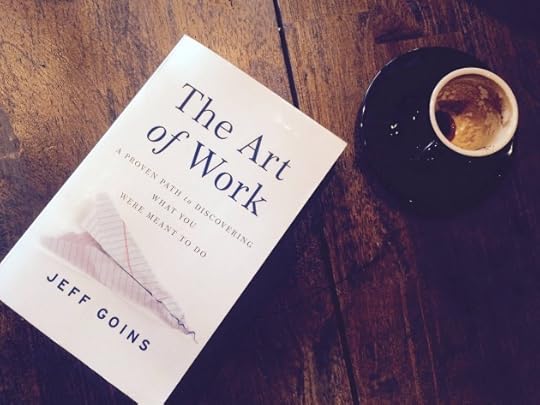
If you’ve ever wondered what you were born to do or how to find meaning in your work, this book is what you need. I’ve heard from so many people that this was literally life-changing for them to read. And I want to make sure everyone who needs this book gets a chance to read it.
So that’s my New Year’s gift to you: my best-selling book for less than a dollar. Not bad, right? And if you’ve already read it, you can gift it to a friend for New Year’s. 
Here’s where you can find the book:
Buy now on AMAZON
Buy now on APPLE
Buy now on BARNES & NOBLE
Just be sure to download this before the price goes back up to $9.99 Friday night at midnight. This may be the only time it’s this affordable.
Why do you need this book?
If you’ve heard a bunch about this book but still aren’t sure it’s right for you, here are three reasons why now is the time to get it:
Because it’s the best book I’ve ever written by a long shot. But don’t take my word for it. Read some of the 400+ reviews in which people say how much the book surprised them or spoke to them in powerful ways.
Because it’s not even a buck (it’s only 99 cents!). I mean, how bad does something have to be to not be worth a whole dollar? Pretty bad. And I promise, at the very least, to be a little bit better than that bad.

December 28, 2015
I Got Everything I Wanted This Year (and It Wasn’t as Thrilling as I Thought)
In 2015, I made more money than I’ve ever made before, grew my blog email list to over 100,000 people and published a best-selling book. So why at the end of the year did I still feel like I was missing something?

This is the time of year when many a self-help guru would like to sell you some dream of “getting what you want” or “creating your best life now”. And don’t get me wrong. Those sound like great things. I want them for myself. But as someone who wrote down a bunch of goals last New Year’s and basically accomplished them all, I can tell you: it’s not as thrilling as you might think.
Why is this? I think there are a few reasons.
1. We humans are notoriously bad at understanding what will actually satisfy us.
“That’s what the present is. It’s a little unsatisfying, because life is a little unsatisfying.”
—Gil, Midnight in Paris
Nobody believes that becoming rich will make you happy, but as Zig Ziglar once remarked, we all want to find out for ourselves.
Something I’ve found to be very important is understanding that happiness is a byproduct of purpose. So if you chase happiness, you won’t find it. But if you chase purpose, you’ll find happiness.
“Happiness is a byproduct of purpose.Tweet thisTweet
The work of Viktor Frankl illustrates this in his best-selling book Man’s Search for Meaning in which he shares that what human beings need more than pleasure is meaning. But how do we go about this? Find a project, Frankl says, something to work on. It doesn’t have to be your passion, just something that requires your dedication and is a challenge you must overcome.
Having some kind of ability to meet the challenge is important, but it can’t be too easy. When we embrace this tension between competency and challenge we find ourselves in what’s called a state of “flow”, which, according to another notable psychologist named Mihaly Csikszentmihalyi, is the secret to happiness.
So after reaching the same goals again doing more of the same things I’ve done for the past four years, what I realized is I’m bored. It’s time for a new challenge, time to try something that might not work.
2. The journey is the destination.
“Roads? Where were going we won’t need roads.”
—Doc, Back to the Future
The thrill of a goal is setting it, not accomplishing it. The satisfaction of running a marathon is the training, not the race. The enjoyment of starting a business is building it, not selling it.
When Steve Jobs left Apple, he had $100 million to his name. He never had to work another day in his life, if he didn’t want to.
So what did he do?
He sunk half his life’s fortune into a little animation studio called Pixar. And when this big bet paid off, making him a millionaire, he didn’t stop there, either. He launched another computer company called NeXt that failed but was bought back by the company that fired him. And the rest, as they say, is history.
What do we call this? Workaholism? Maybe. But it just might mean that in spite of what we want to believe about our vocations, work is really a good thing — something we need to make sense of our lives.
And if that’s true, then one of the best things we could do is not squander how we spend our working lives, making sure we always have the next thing to work on, never growing too content with any single success, and never despairing too much of any single failure.
So much satisfaction lies in our pursuit of a thing, not the thing itself. And yet if we don’t have those small but significant “arrival” moments in life, we struggle to make sense of the rest of the journey. We need milestones and achievements to remind us we’re making progress. But we also need to remember it’s a long road we walk and that the process, not the individual success, is what make it fun.
So I will celebrate my accomplishments from the past year but not coast on them. I’m already bored with what I’ve done and want to do something else that requires more than just more of the same. For me, that means focusing on better work not just more of the same accomplishments. I want to grow in my craft.
3. Only you can decide when you get to be happy.
“How much is enough? Just a little more than you already have.”
—John D. Rockfeller
Until recently my goal every year was to double my income, increase my influence, and simply do more of the same things I’d already done. But this year I started to question why. What was the point of all this? Was I growing just for the sake of growing?
Not long ago, I had lunch with a business owner who has intentionally not grown his business in eight years.
“Why? Don’t you ever want more? I asked over sushi.”
“More? No. Not more but better. I want to do better work.”
“Not more, but better”; has been a mantra ringing in my ears ever since that meeting. Just after that, I went on a personal retreat in the mountains of Colorado, and I couldn’t get that voice out of my head. As I started to ask for critical feedback from friends, family, and mentors, the same message resonated.
My goal for 2016 is not more, but better. To do better work. To have deeper relationships. To make more of an impact with the money, resources, and possessions I already have.
And maybe, just maybe, this is what you need, too. I’m not assuming it is, but I also know that if one of us is lost in the woods, looking for a way out, then there may be others who stumble along their way, as well.
This is for my fellow stumblers:
We must stop this endless search for more and realize that we already have more than we need to make the impact we want. You have enough money. You have enough influence. You have enough skill.
Now, do something with it.
And remember, the secret is not more, but better.
NOTE: This next year is shaping up to be a big adventure. Join me on the journey and be the first to know when new projects begin. Click HERE to get on the list.
What goals have you reached that aren’t enough anymore? How do you want to complete better work in New Year? Share in the comments.