Susan Smith Nash's Blog, page 13
January 27, 2019
Risk Mgmt Unit 2: Cascading Risks: Workflows for Risks
Learn to identify and evaluate cascading risks and causal chains is the goal of this unit, with easy-to-use tools for creating flow charts and maps for analysis and decision-making.
• Determine the data you need to understand systemic risks
• Identify the relationships that lead to cascading risks
• Discuss ways do develop workflows of flows of risks
• Identify the locations most likely to trigger cascading failures
• Identify the types of risks associated with the failures
• Describe methods of analyzing cascading risks using several analytical techniques
• Explain how a Bayesian analysis can be effective for identifying relationships
Unit Presentation:
Video: https://screencast-o-matic.com/watch/cqVZhl3Ozi
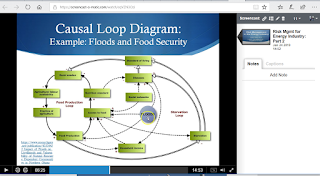
PDF (contains links to readings, etc.) http://zenzebra.net/risk/risk-management-nash-pt2.pdf
Scenario 2: Cascading Risks: Workflows for Risks
Joseph works for Wolf Midstream, which recently diversified into solar and wind energy to generate electricity for the grid in northeastern Texas and southwest Arkansas.
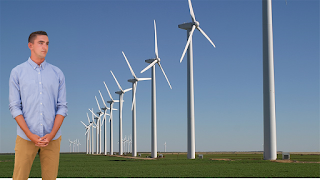
Things have been going well. However, the weather forecast says there is a high likelihood of a tornado outbreak near their solar panel farm and also near the Wolf wind farm. Wolf Midstream is connected with Lone Wolf Electric, which owns transmission lines into the small towns and rural homes.
The leadership of Wolf wants a report that provides 3 different scenarios for different levels of storms. They want to know what all the potential impacts will be, and how they will affect each other.
Your Task: Help Joseph develop a map that shows how damage in one place will affect other places, resulting in causal chains, and cascading failures.
What will Joseph need?
Which data does she need to collect?
What kind of maps should she build?
Use a diagram to show with arrows the cascading failures.
Then, mark on a map where the problems will occur (after you’ve completed the diagrams).
You may wish to create 4 different maps:
Stage 1: Initial impact
Stage 2: Secondary impact
Stage 3: What happens after Stage 2 failures occur
Stage 4: Final level of outcomes (long-term consequences).
Readings:
“Risk relationships and cascading relationships in critical infrastructures”
https://www.preventionweb.net/english/hyogo/gar/2015/en/bgdocs/McGee%20et%20al.,%202014.pdf
Destruction of infrastructure => disruption of supply chain => disruptions in global / local manufacturing (or mining, etc.)
Bottlenecks (constraints)
Strategic Supply Chain Mapping Approaches
https://pdfs.semanticscholar.org/6cd0/25fd30d1441935eb8bd6f1511cdc22cc0294.pdf
Mapping Supply Chain Constraints in LPG
Analysis of Liquified Petroleum Gas (LPG) Shortage in Ghana: Case of the Ashanti Region
https://www.researchgate.net/publication/267245130_Analysis_of_Liquefied_Petroleum_Gas_LPG_Shortage_in_Ghana_A_Case_of_the_Ashanti_Region
Illustration:
https://www.researchgate.net/figure/Structure-and-mapping-of-LPG-supply-chain_fig3_267245130
Interventions
Bayesian networks: https://www.kdnuggets.com/software/ba...
Bayesian Network Tools in Java: http://bnj.sourceforge.net/
Getting started: https://www.loginworks.com/blogs/how-to-perform-a-risk-assessment-with-data-analytics/
Texas AM Texarkana TAMUT MBA in Energy Leadership: Click link to apply - more information
For more information about the courses (and this full course), please contact me.
• Determine the data you need to understand systemic risks
• Identify the relationships that lead to cascading risks
• Discuss ways do develop workflows of flows of risks
• Identify the locations most likely to trigger cascading failures
• Identify the types of risks associated with the failures
• Describe methods of analyzing cascading risks using several analytical techniques
• Explain how a Bayesian analysis can be effective for identifying relationships
Unit Presentation:
Video: https://screencast-o-matic.com/watch/cqVZhl3Ozi
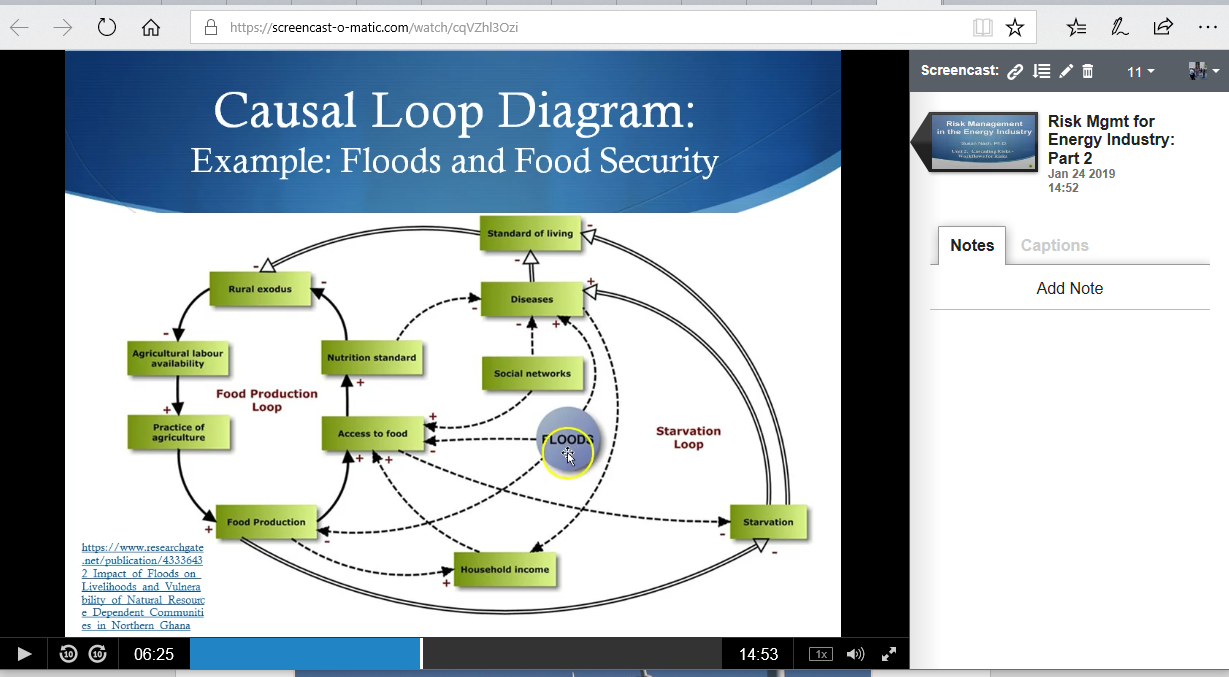
PDF (contains links to readings, etc.) http://zenzebra.net/risk/risk-management-nash-pt2.pdf
Scenario 2: Cascading Risks: Workflows for Risks
Joseph works for Wolf Midstream, which recently diversified into solar and wind energy to generate electricity for the grid in northeastern Texas and southwest Arkansas.

Things have been going well. However, the weather forecast says there is a high likelihood of a tornado outbreak near their solar panel farm and also near the Wolf wind farm. Wolf Midstream is connected with Lone Wolf Electric, which owns transmission lines into the small towns and rural homes.
The leadership of Wolf wants a report that provides 3 different scenarios for different levels of storms. They want to know what all the potential impacts will be, and how they will affect each other.
Your Task: Help Joseph develop a map that shows how damage in one place will affect other places, resulting in causal chains, and cascading failures.
What will Joseph need?
Which data does she need to collect?
What kind of maps should she build?
Use a diagram to show with arrows the cascading failures.
Then, mark on a map where the problems will occur (after you’ve completed the diagrams).
You may wish to create 4 different maps:
Stage 1: Initial impact
Stage 2: Secondary impact
Stage 3: What happens after Stage 2 failures occur
Stage 4: Final level of outcomes (long-term consequences).
Readings:
“Risk relationships and cascading relationships in critical infrastructures”
https://www.preventionweb.net/english/hyogo/gar/2015/en/bgdocs/McGee%20et%20al.,%202014.pdf
Destruction of infrastructure => disruption of supply chain => disruptions in global / local manufacturing (or mining, etc.)
Bottlenecks (constraints)
Strategic Supply Chain Mapping Approaches
https://pdfs.semanticscholar.org/6cd0/25fd30d1441935eb8bd6f1511cdc22cc0294.pdf
Mapping Supply Chain Constraints in LPG
Analysis of Liquified Petroleum Gas (LPG) Shortage in Ghana: Case of the Ashanti Region
https://www.researchgate.net/publication/267245130_Analysis_of_Liquefied_Petroleum_Gas_LPG_Shortage_in_Ghana_A_Case_of_the_Ashanti_Region
Illustration:
https://www.researchgate.net/figure/Structure-and-mapping-of-LPG-supply-chain_fig3_267245130
Interventions
Bayesian networks: https://www.kdnuggets.com/software/ba...
Bayesian Network Tools in Java: http://bnj.sourceforge.net/
Getting started: https://www.loginworks.com/blogs/how-to-perform-a-risk-assessment-with-data-analytics/
Texas AM Texarkana TAMUT MBA in Energy Leadership: Click link to apply - more information
For more information about the courses (and this full course), please contact me.


Risk Mgmt Unit 1: Identifying and Quantifying Risks in the Energy Industry Using Heat Maps
Upon successful completion of this unit, learners will be able to identify and define risks in the energy industry (petroleum, natural gas, alternative), and construct risk heat maps for analysis, strategic planning and decision-making.
Unit Presentation:
Pdf: (contains links to readings): http://zenzebra.net/risk/risk-management-nash-pt1.pdf
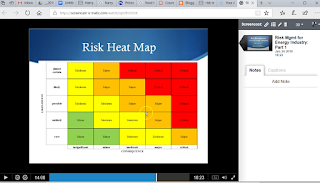 https://screencast-o-matic.com/watch/cqVZh33OzE
Video: https://screencast-o-matic.com/watch/cqVZh33OzE
Activity:
Scenario 1: The Real Risks: Identifying and Quantifying Using Heat Maps
Mark, Tamara, and Talib have put together a small company, Invictus Energy, with the goal of buying two or three small mature fields that also has a pipeline and gas gathering system.
Their goal is to revitalize the fields, renegotiate contracts, and then sell the fields and the gas gathering system and pipelines. They have obtained private equity financing, but are a bit alarmed at how much personal "skin in the game" they have to put up.
They are required to put in their own savings and assets, which makes them very nervous. But, they believe they can boost the production and recoverable reserves by 50%. They are worried because the pumps are old, and the pipeline and gas gathering systems have not had any corrosion control or maintenance in many years.
Your Task: Help Mark, Tamara, and Talib identify and rank the risks. Then, help them create a heat map so they can make sound financial decisions.
--What are the kinds of risks that Invictus Energy will face?
--What is the probability and potential impact of each?
--What does a risk heat map look like for Invictus?
--What are 3 or 4 decisions that the heat map can help with?
Readings:
Unit Presentation: http://zenzebra.net/risk/risk-management-nash-pt1.pdf
Heat Maps – where how to build them
https://riskmanagementguru.com/create-risk-heatmap-excel-part-1.html/
https://riskmanagementguru.com/create-risk-heatmap-excel-part-2.html/
Example: Upstream oil and gas exploration and development
Geological Risk (model, quality of information, imaging)
Legal risk (title, etc.)
Analytics risk (model, organization of information)
Data Acquisition Risk
Safety risk
Drilling Risk (out of zone)
Hydraulic fracturing risk
Completion Risk
Other examples: Solar and wind energy generation and distribution.
Texas A&M Texarkana MBA in Energy Leadership: Click link to apply - more information
For more information about the courses (and this full course), please contact me.
Unit Presentation:
Pdf: (contains links to readings): http://zenzebra.net/risk/risk-management-nash-pt1.pdf
https://screencast-o-matic.com/watch/cqVZh33OzEVideo: https://screencast-o-matic.com/watch/cqVZh33OzE
Activity:
Scenario 1: The Real Risks: Identifying and Quantifying Using Heat Maps
Mark, Tamara, and Talib have put together a small company, Invictus Energy, with the goal of buying two or three small mature fields that also has a pipeline and gas gathering system.
Their goal is to revitalize the fields, renegotiate contracts, and then sell the fields and the gas gathering system and pipelines. They have obtained private equity financing, but are a bit alarmed at how much personal "skin in the game" they have to put up.
They are required to put in their own savings and assets, which makes them very nervous. But, they believe they can boost the production and recoverable reserves by 50%. They are worried because the pumps are old, and the pipeline and gas gathering systems have not had any corrosion control or maintenance in many years.
Your Task: Help Mark, Tamara, and Talib identify and rank the risks. Then, help them create a heat map so they can make sound financial decisions.
--What are the kinds of risks that Invictus Energy will face?
--What is the probability and potential impact of each?
--What does a risk heat map look like for Invictus?
--What are 3 or 4 decisions that the heat map can help with?
Readings:
Unit Presentation: http://zenzebra.net/risk/risk-management-nash-pt1.pdf
Heat Maps – where how to build them
https://riskmanagementguru.com/create-risk-heatmap-excel-part-1.html/
https://riskmanagementguru.com/create-risk-heatmap-excel-part-2.html/
Example: Upstream oil and gas exploration and development
Geological Risk (model, quality of information, imaging)
Legal risk (title, etc.)
Analytics risk (model, organization of information)
Data Acquisition Risk
Safety risk
Drilling Risk (out of zone)
Hydraulic fracturing risk
Completion Risk
Other examples: Solar and wind energy generation and distribution.
Texas A&M Texarkana MBA in Energy Leadership: Click link to apply - more information
For more information about the courses (and this full course), please contact me.
January 20, 2019
Web of Contradictions: Prince Harry and Duchess Meghan's Christmas Card
There are different ways to look at the Christmas card sent out by newlyweds Prince Harry and Duchess Meghan Markle. If you have not seen the card or the image, it is of the newly married friends and his wife, the new Duchess, standing on the edge of a pond and looking at a fireworks display so immense it covers the entirety of the sky.
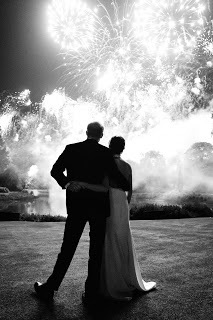
There is so much smoke in it that you can’t really see the points of light and ornate formations that you might see at a Fourth of July fireworks display. But the smoke to acts as an eliminating cloud so one feels that one is either transported into the heavens or looking into the jaws of apocalypseAnd that duality informs everyone’s interpretation of the image. The most innocuous of the interpretations is the idea that you are sharing the joy of the new couple and that the way that the landscape and skies appear parallels their internal landscape. That, too, has its duality as they either feel joyous eruptions of life changing chaos or grinding raw fear of the battlefield. One cannot help but think that think that the smoke and rockets red declare look a lot like a firefight or mortar attack in Afghanistan. Harry is a veteran of Afghanistan and used to being on the battlefield and not in the air, since he was a soldier in the Army. And, I know that many Marines and soldiers who went through combat in Afghanistan do not enjoy fireworks. So, it seems rather odd to see that Harry might actually be enjoying that scene. I would imagine that if it does reflect his interior landscape, it is one of raw fear that he then attempted to blot out, self-medicate, and avoid the great enemy, sleep. There is a flip side, of course. A more common interpretation of the people who voyeuristicly enjoy anything having to do with a glimpse of the inner workings of the royal family is that they want to see the royal family acting like normal folks and inviting them in two their living rooms or a play date where they wear hand-me-down sweaters and kick up their heels in a woodsy setting. I think that to reduce the royal family to regular folk is to reduce their ability to affect great change in society and, especially in these moments after Brexit – the exit of Britain from the European Union. It marks a moment for Britain to strengthen the Commonwealth. To do that requires the Machiavellian scheming of an Elizabeth I or the boundlessly ambitious Plantagenet houses of Lancaster and York. It doesn’t need a “Hey, come hang out with us!” approach. But those who like to voyeuristicly insert themselves or feel titillated by vicarious intimacy or invasions into privacy of the royal family have the feeling that with backs turned, Harry and Meghan are perhaps communicating that they are cold, unfeeling, and are profoundly indifferent. Having one’s back turned communicates a message that always has two sharp edges just like Melania Trump’s message to the world with her “I don’t care coat” as she was going to visit the boder and the scene of tragic separations of vulnerable children and their mothers. If the idea of backs turned means that you’re not invited into their inner world, if their inner world includes either joy or apocalypse or battlefield horrors, you should thank your lucky stars that you have not been invited into that. At any rate, it’s a photo with many conflicting and contradictory interpretive possibilities, and we just cannot know with certainty. What we do know is that with Britain’s exit and the continuing disintegration of the Royal Family’s impact and relevance, something powerful needs to be done. It’s a leadership, and not fraternity or confraternity. Leadership in history has usually been ugly and not necessarily in the right direction. Think of Henry VIII. I remember visiting a Cathedral in Bury St. Edmunds that contained the ruins of an abbey destroyed by Henry VIII. To be honest it was one of the saddest and most gripping feelings I have had and I imagine it is similar to going to places where beautiful works of architecture or sculpture have been destroyed because they were unfortunate symbols of an ideology and a group of people who needed to be exterminated at least from the perspective of the usurpers.
Needless to say, this is not a time for destructive leadership, but constructive leadership.

There is so much smoke in it that you can’t really see the points of light and ornate formations that you might see at a Fourth of July fireworks display. But the smoke to acts as an eliminating cloud so one feels that one is either transported into the heavens or looking into the jaws of apocalypseAnd that duality informs everyone’s interpretation of the image. The most innocuous of the interpretations is the idea that you are sharing the joy of the new couple and that the way that the landscape and skies appear parallels their internal landscape. That, too, has its duality as they either feel joyous eruptions of life changing chaos or grinding raw fear of the battlefield. One cannot help but think that think that the smoke and rockets red declare look a lot like a firefight or mortar attack in Afghanistan. Harry is a veteran of Afghanistan and used to being on the battlefield and not in the air, since he was a soldier in the Army. And, I know that many Marines and soldiers who went through combat in Afghanistan do not enjoy fireworks. So, it seems rather odd to see that Harry might actually be enjoying that scene. I would imagine that if it does reflect his interior landscape, it is one of raw fear that he then attempted to blot out, self-medicate, and avoid the great enemy, sleep. There is a flip side, of course. A more common interpretation of the people who voyeuristicly enjoy anything having to do with a glimpse of the inner workings of the royal family is that they want to see the royal family acting like normal folks and inviting them in two their living rooms or a play date where they wear hand-me-down sweaters and kick up their heels in a woodsy setting. I think that to reduce the royal family to regular folk is to reduce their ability to affect great change in society and, especially in these moments after Brexit – the exit of Britain from the European Union. It marks a moment for Britain to strengthen the Commonwealth. To do that requires the Machiavellian scheming of an Elizabeth I or the boundlessly ambitious Plantagenet houses of Lancaster and York. It doesn’t need a “Hey, come hang out with us!” approach. But those who like to voyeuristicly insert themselves or feel titillated by vicarious intimacy or invasions into privacy of the royal family have the feeling that with backs turned, Harry and Meghan are perhaps communicating that they are cold, unfeeling, and are profoundly indifferent. Having one’s back turned communicates a message that always has two sharp edges just like Melania Trump’s message to the world with her “I don’t care coat” as she was going to visit the boder and the scene of tragic separations of vulnerable children and their mothers. If the idea of backs turned means that you’re not invited into their inner world, if their inner world includes either joy or apocalypse or battlefield horrors, you should thank your lucky stars that you have not been invited into that. At any rate, it’s a photo with many conflicting and contradictory interpretive possibilities, and we just cannot know with certainty. What we do know is that with Britain’s exit and the continuing disintegration of the Royal Family’s impact and relevance, something powerful needs to be done. It’s a leadership, and not fraternity or confraternity. Leadership in history has usually been ugly and not necessarily in the right direction. Think of Henry VIII. I remember visiting a Cathedral in Bury St. Edmunds that contained the ruins of an abbey destroyed by Henry VIII. To be honest it was one of the saddest and most gripping feelings I have had and I imagine it is similar to going to places where beautiful works of architecture or sculpture have been destroyed because they were unfortunate symbols of an ideology and a group of people who needed to be exterminated at least from the perspective of the usurpers.
Needless to say, this is not a time for destructive leadership, but constructive leadership.
William Hogarth and the “Social Media” of 18th Century England: What Would Hogarth Say About Brexit?
Starting around 1711, with the launching of the one-page news and gossip sheet, The Tatler, London suddenly had an explosion of daily information that was liked, shared, trolled, and sometimes even “demonetized” in ways that profoundly parallel today’s social media. The Tatler, The Spectator, and The Guardian were the most influential, but there were many competitors and upstarts, all competing in a London hungry for outlets to protest conditions, rail against the leaders, and promote the theatre, arts, and literature. https://www.impmedia.co.uk/single-post/2017/03/11/New-age-of-journalism-The-Tatler-The-Spectator-and-The-Guardian
Much of the content was social and political commentary – and disinformation was as popular as truth, and more so if the truth was not very interesting.
In addition to stories and journalism, ink prints, often hand-colored, were extremely popular, and of all the artists, William Hogarth (1697 - 1764) was by far the most the most popular with his satiric and moralizing visual narratives.
 Hogarth Self-Portrait with Pug (17457)The most popular were lurid cautionary tales: A Harlot’s Progress and A Rake’s Progress (1733) were sold, and virtually all of London was encompassed in the expansive den of sin: http://www.bbc.com/culture/story/20150610-london-city-of-sin
  Hogarth Rake's Progress: Part I Hogarth’s depictions of society and the kinds of characters people knew in their own society told biting stories that were built on truth. They illustrated much of what one would see in the novels and theatre of the time as well, in such classics as Oliver Goldsmith’s She Stoops to Conquer. In his paintings, Hogarth shows a great deal of admiration for the Dutch and Flemish realist traditions, with small details showing the humanity of the subjects, such as children teaching their dogs to shake hands, as in the case of Hogarth’s oil sketch of the family of George II. https://www.rct.uk/collection/401358/the-family-of-george-ii-0
 As in the social media of the 21st century, Hogarth’s prints had an immediate impact on public opinion. They were reproduced, shared, and commented upon in the news and widely circulated daily broadsides. They had the ability to influence public opinion of public figures, as well as to openly acknowledge the darker aspects of a modernizing, industrializing center of an emerging empire.
The Role of Technology and Free SpeechAs almost always is the case, technology made the breakthrough in communication possible. New hydraulically-powered milling technology made cheap paper possible, along with printing presses, good ink, and distribution systems.
And, also there was the willingness of the government to tolerate a free press, and even though libel and slander laws were in place, the overall atmosphere was one of freedom of expression. The public loved the lurid depictions of their own society, and they had more disposable income than ever.
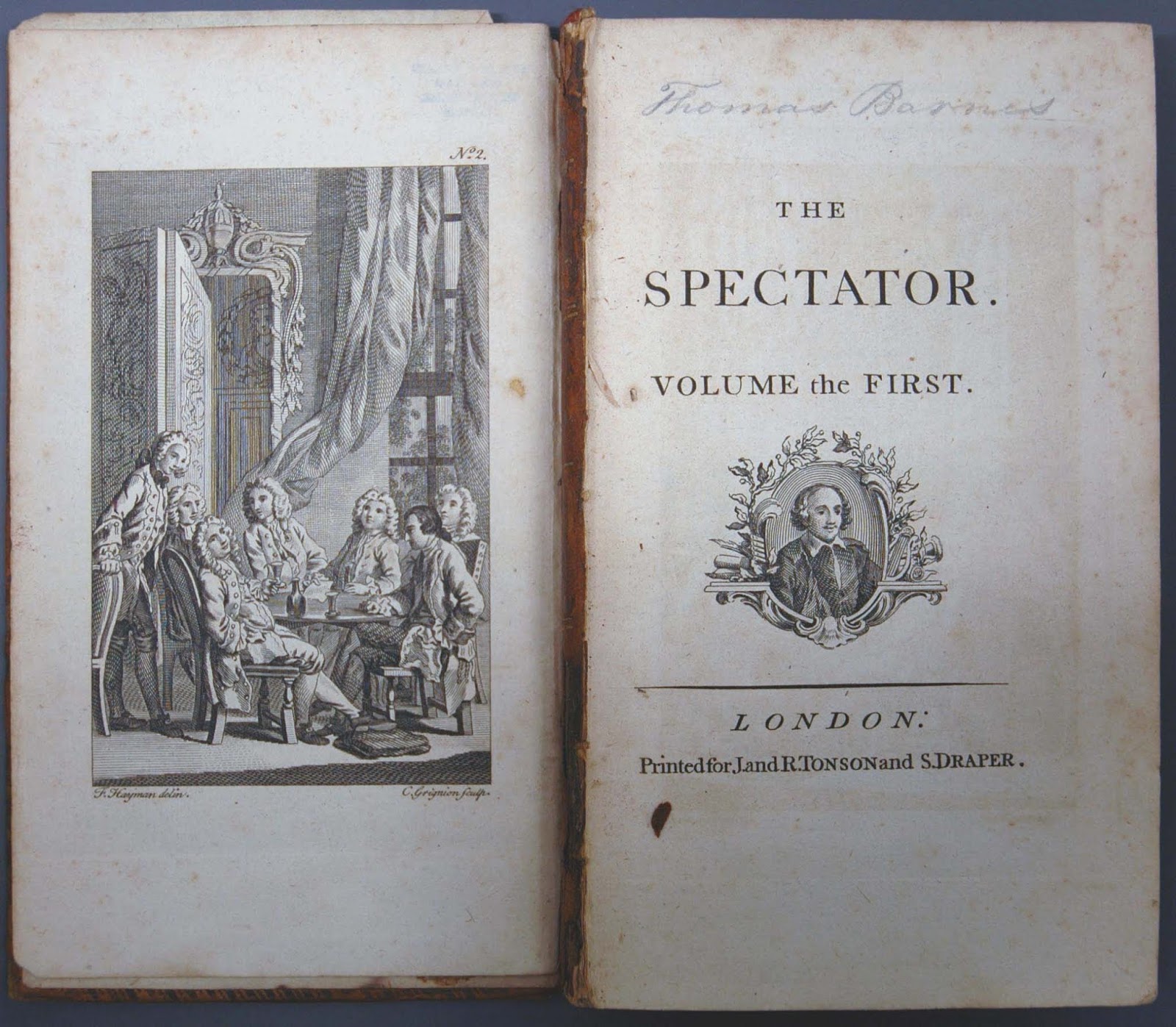 The SpectatorPart of the willingness to tolerate a free press could have to do with the fact that the new Hanoverian king, George I, did not speak English very well, and in fact, did not even feel comfortable in England. He was king by a trick of fate. The previous monarch had no living offspring, despite his wife’s 14 pregnancies. The King was willing to delegate authority and take more of a hands-off approach, recognizing the role of parliament in day-to-day government. Hogarth depicted Georgian society with satire, which may have displeased the Hanoverian monarchs. https://www.bbc.co.uk/programmes/articles/glJQ3M6dRg8D7JhH03dR4k/hogarth-and-the-hanoverians
  King George II (source: Wikipedia)Under the Hanoverians, England grew, but not without controversy. With the new social media, aspects of society that could have been kept under wraps were free to be exposed, and an entire population could be awakened to what really transpired in their midst. Hogarth’s Gin Lane and The Marriage Transaction were hard, honest, and humorous looks at the realities of London:
 Gin Lane (1752): https://www.tate.org.uk/art/artworks/hogarth-gin-lane-t01799
Marriage a la Mode: The Marriage Settlement (1745): https://www.tate.org.uk/whats-on/tate-britain/exhibition/hogarth/hogarth-hogarths-modern-moral-series/hogarth-hogarths-2
Jump-start to Brexit: What would William Hogarth do? England is on the cusp of a dramatic change, but instead of growth and expanding influence, the change involves a rather startling potential shrinkage. Brexit could open new trading relationships. In 2016, trade with the European Union constituted 48% of UK’s total exports (https://www.ons.gov.uk/businessindustryandtrade/internationaltrade/articles/whodoestheuktradewith/2017-02-21). In 2016, trade with the 52 nations of the British Commonwealth constituted only 9% of total exports. (https://www.ons.gov.uk/businessindustryandtrade/internationaltrade/articles/commonwealthtradeinfocusasukpreparesforbrexit/2017-03-0)
Brexit does not mean that there will no longer be trade with the nations of the European Union. However, it does mean that trade will be slower, more complicated, and subject to protectionism without the hard-won trade partners bloc harmonization protocols that are not easily replicated individual countries on a piecemeal basis. So, even if the U.K. maintains a 48% percentage of exports to the U.K., the profits are likely to be much lower. Most economists predict that a Brexit without any sort of trade harmonization with the E.U. will result in an immediate collapse of exports to the E.U. as tariff and import ambiguities constitute a powerful barrier.
With such disastrous potential consequences, what was it that induced members of the U.K. to vote to leave the European Union? Two factors were portrayed by social media, and they had a measurable impact on popular opinion: first, fear of immigration, and second, the resentment of external standards that resulted in very high production cost, especially in food and agricultural sectors.
One can imagine Hogarth’s depiction of U.K. farmers, shopkeepers, city-dwellers terrified by violence, and then also of immigrants and the E.U. as seen through the eyes of English nationalists.
Background Readings
Bury, Stephen. (2015) “British Visual Satire in the 18th-20th Centuries” Oxford Art Online. http://www.oxfordartonline.com/page/british-visual-satire-18th-20th-centuries
Office for National Statistics (3 March 2017) Commonwealth Trade in Focus as the U.K. Prepares for Brexit. https://www.ons.gov.uk/businessindustryandtrade/internationaltrade/articles/commonwealthtradeinfocusasukpreparesforbrexit/2017-03-09
Office for National Statistics (2 Feb 2017) Who does the U.K. Trade With? https://www.ons.gov.uk/businessindustryandtrade/internationaltrade/articles/whodoestheuktradewith/2017-02-21
William Hogarth. (n.d.) National Gallery. https://www.nationalgallery.org.uk/artists/william-hogarth
William Hogarth. (n.d.) New World Encyclopedia. http://www.newworldencyclopedia.org/entry/William_Hogarth
November 30, 2018
Isak Dinesen (Karen Blixen): Nairobi, Kenya
I had expected Africa to be hot, but Nairobi was not, due to the altitude, which was right at a mile high, and perfect for cultivating coffee.
The air was cool under the trees, and there was a soft, light breeze. I was in Kenya for two weeks on as a volunteer consultant for an economic development program to develop marketing materials and to develop a system for communication among smallholders in order to achieve economies of scale and to improve the markets. It was a fascinating project and there was a sincere desire to make things better for people in rural areas. It was not easy, though.
The Danish author, Isak Dinesen (real name, Karen Blixen) lived in Kenya for 17 years as she tried to make a go of her coffee plantation. It was a turbulent time in terms of politics and also in terms of her emotional life, all of which she captures in Out of Africa, which was written long after she had moved back to Denmark.
Blixen published under the name, Isak Dinesen, for English-speaking audiences. I have no idea why. I think that no one cares about the name the author uses; they care about the writing. Karen Blixen lived in Nairobi, Africa, in a suburb now named “Karengata” which means Karen’s home. The suburb is an exclusive one, now, and all the homes have walls and security services. There are lush gardens, green lawns, and large, shade-imparting trees.


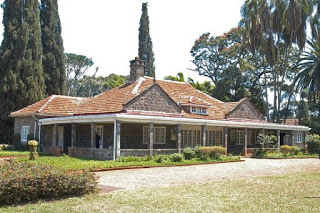
Karen’s house is a one-storey rock building, a farmhouse with multi-paned windows, a steep red tile roof, and long winding paths that crisscross the grounds. The suburb, Karengata, is near the lovely Ngong hills that she visited frequently during her years in Kenya (1917 to 1931).
I visited one cool, cloudy afternoon, and the greens had a super-saturated hue, and one felt the magic of possibilities. During Karen’s years in Africa, Karen established deep bonds of trust with the Masaii people and their culture. She came to deeply appreciate the changes in the politics, and the conflicts over land, influence, and control of resources. Her experience, however, was difficult, and at the end of the day, she failed to make her farm economically viable.
One thing that interests me about the process of writing the novel is that was written in 1937, years after Karen had moved back to Denmark. Like Wordsworth’s “Lines Written a Few Miles Above Tintern Abbey” (1798), Out of Africa was written years after the events happened and in a different location, which means that work is freighted with an unforgettable emotional element.
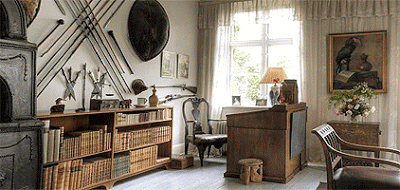
Blixen's (Dinesen's) work is shrouded in nostalgia, regrets, and memories of a glorious, youthful time of intense experiences and feelings. In addition to trying to make her family’s farm a success, Karen went lion-hunting and explored the African veldt in a small plane flown by her pilot friend, a man she could never have, but whom she dearly loved.
The novel is drenched in a hot, bright Africa sun, the Rift Valley area with its thorn trees, grass lands, massive shallow lakes that radiate a shimmering pink hue as thousands of flamingos stand knee-deep in the waters brimming with fish.
Out of Africa was one of fellow author Carson McCullers’s favorite books, and there is a photograph in Carson McCullers’s house that features Karen Blixen and also Marilyn Monroe.
The air was cool under the trees, and there was a soft, light breeze. I was in Kenya for two weeks on as a volunteer consultant for an economic development program to develop marketing materials and to develop a system for communication among smallholders in order to achieve economies of scale and to improve the markets. It was a fascinating project and there was a sincere desire to make things better for people in rural areas. It was not easy, though.
The Danish author, Isak Dinesen (real name, Karen Blixen) lived in Kenya for 17 years as she tried to make a go of her coffee plantation. It was a turbulent time in terms of politics and also in terms of her emotional life, all of which she captures in Out of Africa, which was written long after she had moved back to Denmark.
Blixen published under the name, Isak Dinesen, for English-speaking audiences. I have no idea why. I think that no one cares about the name the author uses; they care about the writing. Karen Blixen lived in Nairobi, Africa, in a suburb now named “Karengata” which means Karen’s home. The suburb is an exclusive one, now, and all the homes have walls and security services. There are lush gardens, green lawns, and large, shade-imparting trees.


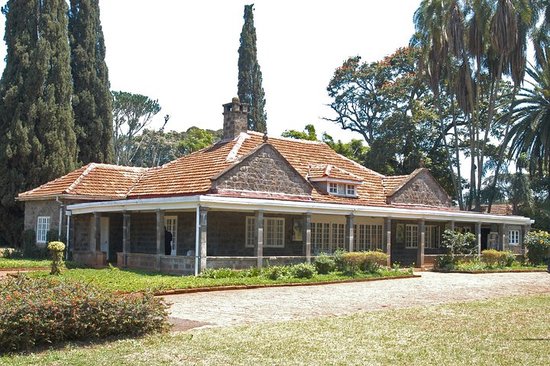
Karen’s house is a one-storey rock building, a farmhouse with multi-paned windows, a steep red tile roof, and long winding paths that crisscross the grounds. The suburb, Karengata, is near the lovely Ngong hills that she visited frequently during her years in Kenya (1917 to 1931).
I visited one cool, cloudy afternoon, and the greens had a super-saturated hue, and one felt the magic of possibilities. During Karen’s years in Africa, Karen established deep bonds of trust with the Masaii people and their culture. She came to deeply appreciate the changes in the politics, and the conflicts over land, influence, and control of resources. Her experience, however, was difficult, and at the end of the day, she failed to make her farm economically viable.
One thing that interests me about the process of writing the novel is that was written in 1937, years after Karen had moved back to Denmark. Like Wordsworth’s “Lines Written a Few Miles Above Tintern Abbey” (1798), Out of Africa was written years after the events happened and in a different location, which means that work is freighted with an unforgettable emotional element.

Blixen's (Dinesen's) work is shrouded in nostalgia, regrets, and memories of a glorious, youthful time of intense experiences and feelings. In addition to trying to make her family’s farm a success, Karen went lion-hunting and explored the African veldt in a small plane flown by her pilot friend, a man she could never have, but whom she dearly loved.
The novel is drenched in a hot, bright Africa sun, the Rift Valley area with its thorn trees, grass lands, massive shallow lakes that radiate a shimmering pink hue as thousands of flamingos stand knee-deep in the waters brimming with fish.
Out of Africa was one of fellow author Carson McCullers’s favorite books, and there is a photograph in Carson McCullers’s house that features Karen Blixen and also Marilyn Monroe.
November 22, 2018
Alexander Pushkin’s home in St. Petersburg, Russia.
This was actually a palace and not exactly a home.
To visit it, you had to take off your shoes and put on slippers in order to not destroy the wood floors or the exquisite carpets. Everything was built in the style of Louis XIV through Louis XVI – lots of bright white walls, gilt frames, gold leaf, mythological figures, dolphins, etc. Many paintings in the style of Poussin.
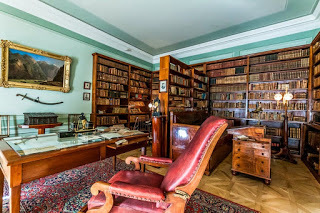
I could better imagine Pushkin’s values and sense of heroic loss and the desire to write epics and thereby construct history when I saw his house. I could imagine Pushkin drafting “The Bronze Horseman” in his home library, which had so many shelves it resembled the library of a university or monastery.
The wood parquet floor was roughly the same color as his mahogany escritoire, which had intricately worked bronze pulls and terminations.
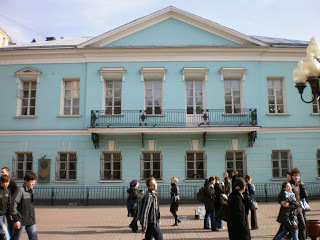
Pushkin lived the philosophy of political resistance, personal honor, heroism, and valor that he expressed in his poems. He died at age 38 in a duel.
To visit it, you had to take off your shoes and put on slippers in order to not destroy the wood floors or the exquisite carpets. Everything was built in the style of Louis XIV through Louis XVI – lots of bright white walls, gilt frames, gold leaf, mythological figures, dolphins, etc. Many paintings in the style of Poussin.
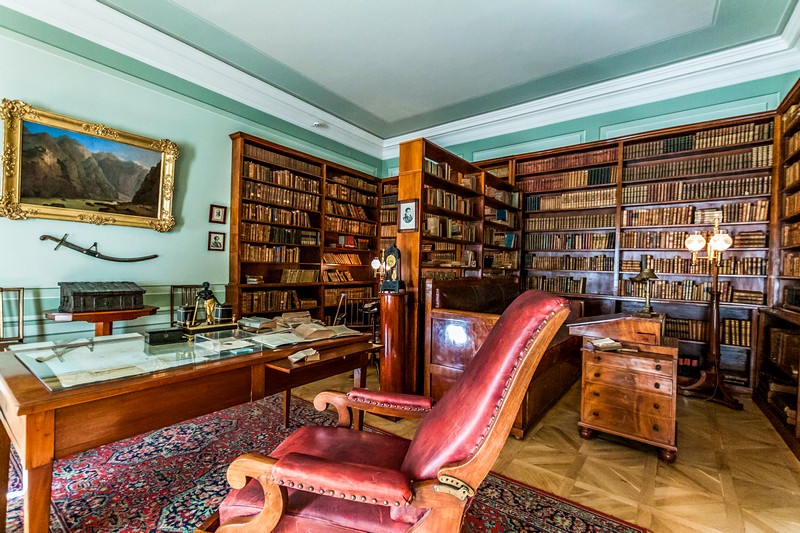
I could better imagine Pushkin’s values and sense of heroic loss and the desire to write epics and thereby construct history when I saw his house. I could imagine Pushkin drafting “The Bronze Horseman” in his home library, which had so many shelves it resembled the library of a university or monastery.
The wood parquet floor was roughly the same color as his mahogany escritoire, which had intricately worked bronze pulls and terminations.
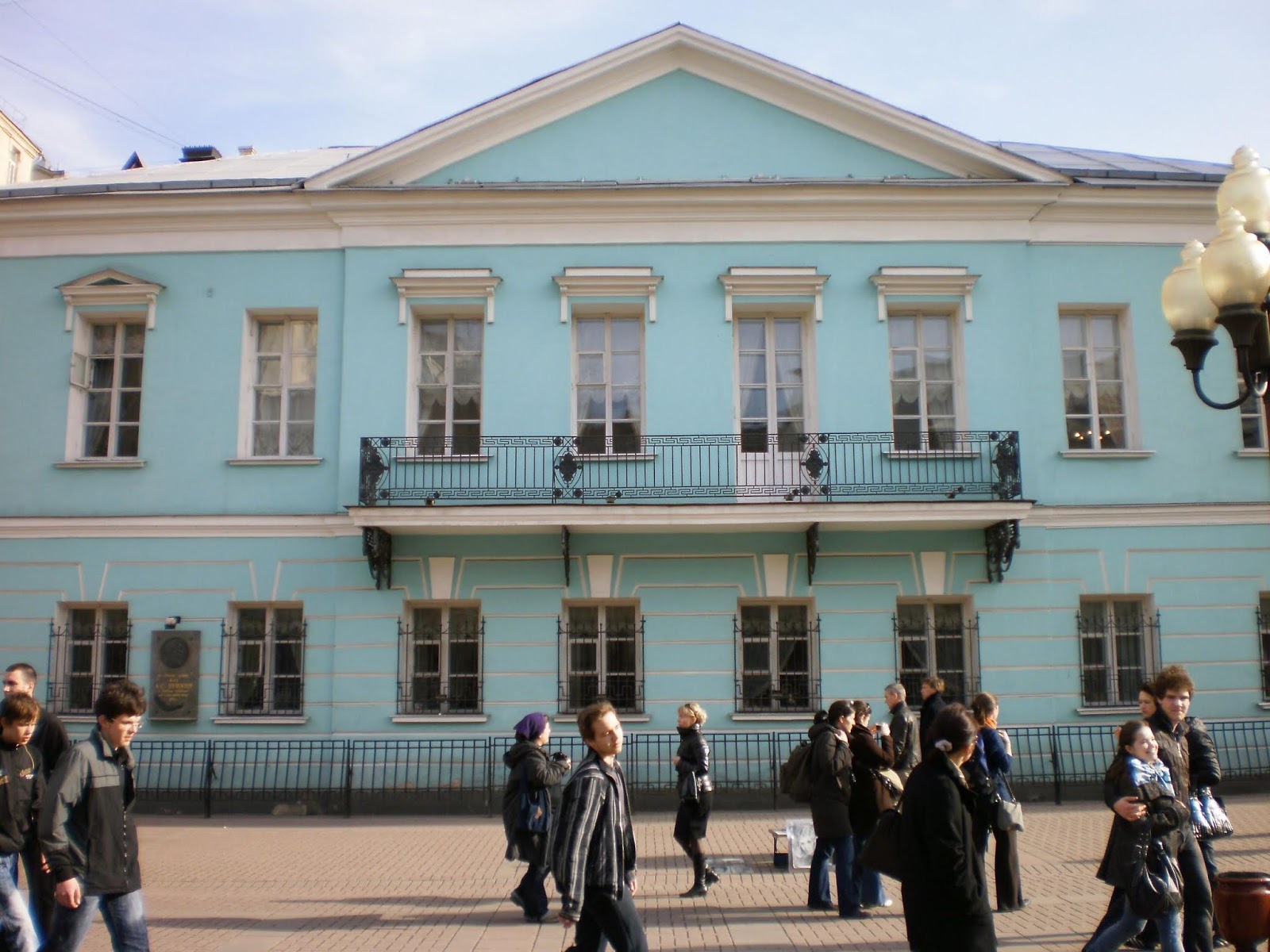
Pushkin lived the philosophy of political resistance, personal honor, heroism, and valor that he expressed in his poems. He died at age 38 in a duel.

November 17, 2018
Pablo Neruda’s home in Valparaiso, Chile.
It’s on a steep road on a hillside, and I think you could see the Pacific Ocean from his rooftop balcony. I could imagine his writing Veinte poemas de amor y una canción desesperada (1924) and Residencia en la tierra (1931) with a fountain pen in his hand, clean, white sheets of paper in his notebook under his arm, and a stiff ocean breeze on his face.
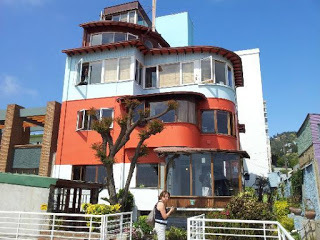
In the summer, I can imagine his using his handkerchief to blot the sticky saltiness of the air on his arms. You feel your quadriceps tremble as you ascend the almost vertical steps, your throat fill with joy.
The colors were bright, and each house seemed to be painted a different bright, cheerful hue. The rooms seemed small, which is not how I would design a house, but perhaps the options are limited when the hillside is so steep.
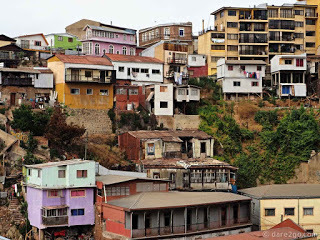
Valparaiso is still a critical port city. It is proud of its Navy, which undoubtedly was charged with maintaining the waters safe for commerce. If one thinks that this is a trivial duty, all one has to do is to look at Somalia, a failed state, and the fact that its waters are teaming with ersatz, improvised flotillas of pirate bandits who will attack and kidnap absolutely everything and anything.
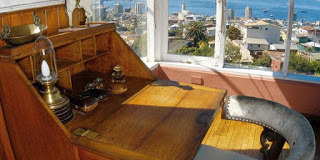
As I look at the narrow pathways up and down the steep hills, I reflect that Valparaiso was also the epicenter of a number of earthquakes. I’m sure the Bolivians feel mixed emotions at that, given that Chile basically robbed them of their access to the sea. Bolivia will probably have the last laugh.

In the summer, I can imagine his using his handkerchief to blot the sticky saltiness of the air on his arms. You feel your quadriceps tremble as you ascend the almost vertical steps, your throat fill with joy.
The colors were bright, and each house seemed to be painted a different bright, cheerful hue. The rooms seemed small, which is not how I would design a house, but perhaps the options are limited when the hillside is so steep.

Valparaiso is still a critical port city. It is proud of its Navy, which undoubtedly was charged with maintaining the waters safe for commerce. If one thinks that this is a trivial duty, all one has to do is to look at Somalia, a failed state, and the fact that its waters are teaming with ersatz, improvised flotillas of pirate bandits who will attack and kidnap absolutely everything and anything.

As I look at the narrow pathways up and down the steep hills, I reflect that Valparaiso was also the epicenter of a number of earthquakes. I’m sure the Bolivians feel mixed emotions at that, given that Chile basically robbed them of their access to the sea. Bolivia will probably have the last laugh.
November 13, 2018
Ilya Repin’s house outside St. Petersburg, Russia
Okay, Ilya Repin was not a writer, but an artist, but it was extremely interesting to see the lovely home where he painted. It was in a wooded little area, and it had lots of windows and rooms, plus several inventions to make it easier for the cook to send him his meals without interrupting him. The house was comfortable and the rooms not too large, but definitely large enough for painting and having a studio.
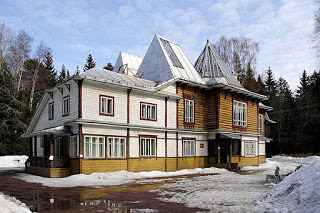
His eyesight failed and he developed arthritic hands (similar to Matisse, I think). He had special accommodations made for that as well. One of Repin’s most famous paintings, “Reply of the Zaporozhian Cossacks” (1891) was painted in his home. Now hanging in the Russia Museum in Saint Petersburg (which I happened to visit as well), it depicts Cossacks engaged in the delightful task of composing a profanity-laced letter to the Sultan after they had defeated the Ottoman Empire troops in battle.
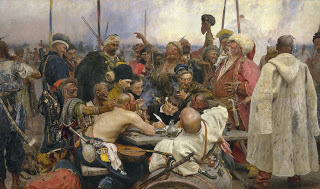
The Cossacks are laughing uproariously as they collectively pen the appropriate response to their mortal enemies. It’s a gorgeously composed canvas in the realistic / Romantic style of the late 19th century.
Imagine my surprise and delight when I found myself in the city museum of the town of Gandze, Azerbaijan, where I happened upon an exhibit describing Ilya Repin’s visit in 1888 where he sketched people and objects to correctly capture the people, artifacts, and culture of the Ottoman Empire.
Even more astonishing was a scabbard and long sword exactly matching the scabbard and sword which take center stage in Repin’s famous painting.
There is no doubt that I think of all three places: The Russian Museum, Ilya Repin’s house, and the Gandze, Azerbaijan City Museum’s Repin exhibit.

His eyesight failed and he developed arthritic hands (similar to Matisse, I think). He had special accommodations made for that as well. One of Repin’s most famous paintings, “Reply of the Zaporozhian Cossacks” (1891) was painted in his home. Now hanging in the Russia Museum in Saint Petersburg (which I happened to visit as well), it depicts Cossacks engaged in the delightful task of composing a profanity-laced letter to the Sultan after they had defeated the Ottoman Empire troops in battle.

The Cossacks are laughing uproariously as they collectively pen the appropriate response to their mortal enemies. It’s a gorgeously composed canvas in the realistic / Romantic style of the late 19th century.
Imagine my surprise and delight when I found myself in the city museum of the town of Gandze, Azerbaijan, where I happened upon an exhibit describing Ilya Repin’s visit in 1888 where he sketched people and objects to correctly capture the people, artifacts, and culture of the Ottoman Empire.
Even more astonishing was a scabbard and long sword exactly matching the scabbard and sword which take center stage in Repin’s famous painting.
There is no doubt that I think of all three places: The Russian Museum, Ilya Repin’s house, and the Gandze, Azerbaijan City Museum’s Repin exhibit.
October 15, 2018
Carson McCullers’s Home in Columbus, Georgia
It was early in March and the weather alternated between chilly and wet, and bright green blossoming spring. I walked down the old sidewalks in the neighborhood where Carson McCullers lived, and I could feel a certain vibration – was it the feeling of the underdog? The town is on a river that had just flooded, and like all towns on rivers, the heart and soul of the flowed in the waters.
October 10, 2018
Energy Industry 4.0: Extreme Transformation Opens Extreme Opportunities
Industry 4.0 has arrived in the energy industry. Just how does the extreme digitalization, monitoring, and assessment of seemingly everything affect the people who now tend to all aspects of the business? What will project managers, financial professionals, data scientists, geologists, engineers, geophysicists, and other energy professionals do? What are some of the knowledge bases they will