Susan Smith Nash's Blog, page 12
April 1, 2019
Flared and Stranded Gas Solutions: Mini LNG Plant
<!-- /* Font Definitions */ @font-face {font-family:"Courier New"; panose-1:2 7 3 9 2 2 5 2 4 4; mso-font-charset:0; mso-generic-font-family:auto; mso-font-pitch:variable; mso-font-signature:3 0 0 0 1 0;} @font-face {font-family:Wingdings; panose-1:5 0 0 0 0 0 0 0 0 0; mso-font-charset:2; mso-generic-font-family:auto; mso-font-pitch:variable; mso-font-signature:0 268435456 0 0 -2147483648 0;} @font-face {font-family:"MS 明朝"; panose-1:0 0 0 0 0 0 0 0 0 0; mso-font-charset:128; mso-generic-font-family:roman; mso-font-format:other; mso-font-pitch:fixed; mso-font-signature:1 134676480 16 0 131072 0;} @font-face {font-family:"Cambria Math"; panose-1:2 4 5 3 5 4 6 3 2 4; mso-font-charset:0; mso-generic-font-family:auto; mso-font-pitch:variable; mso-font-signature:-536870145 1107305727 0 0 415 0;} @font-face {font-family:Cambria; panose-1:2 4 5 3 5 4 6 3 2 4; mso-font-charset:0; mso-generic-font-family:auto; mso-font-pitch:variable; mso-font-signature:-536870145 1073743103 0 0 415 0;} /* Style Definitions */ p.MsoNormal, li.MsoNormal, div.MsoNormal {mso-style-unhide:no; mso-style-qformat:yes; mso-style-parent:""; margin:0in; margin-bottom:.0001pt; mso-pagination:widow-orphan; font-size:12.0pt; font-family:Cambria; mso-fareast-font-family:"MS 明朝"; mso-bidi-font-family:"Times New Roman";} .MsoChpDefault {mso-style-type:export-only; mso-default-props:yes; font-size:10.0pt; mso-ansi-font-size:10.0pt; mso-bidi-font-size:10.0pt; font-family:Cambria; mso-ascii-font-family:Cambria; mso-fareast-font-family:"MS 明朝"; mso-hansi-font-family:Cambria;} @page WordSection1 {size:8.5in 11.0in; margin:1.0in 1.25in 1.0in 1.25in; mso-header-margin:.5in; mso-footer-margin:.5in; mso-paper-source:0;} div.WordSection1 {page:WordSection1;} /* List Definitions */ @list l0 {mso-list-id:1061251562; mso-list-type:hybrid; mso-list-template-ids:1666997442 67698689 67698691 67698693 67698689 67698691 67698693 67698689 67698691 67698693;} @list l0:level1 {mso-level-number-format:bullet; mso-level-text:; mso-level-tab-stop:none; mso-level-number-position:left; text-indent:-.25in; font-family:Symbol;} @list l0:level2 {mso-level-number-format:bullet; mso-level-text:o; mso-level-tab-stop:none; mso-level-number-position:left; text-indent:-.25in; font-family:"Courier New";} @list l0:level3 {mso-level-number-format:bullet; mso-level-text:; mso-level-tab-stop:none; mso-level-number-position:left; text-indent:-.25in; font-family:Wingdings;} @list l0:level4 {mso-level-number-format:bullet; mso-level-text:; mso-level-tab-stop:none; mso-level-number-position:left; text-indent:-.25in; font-family:Symbol;} @list l0:level5 {mso-level-number-format:bullet; mso-level-text:o; mso-level-tab-stop:none; mso-level-number-position:left; text-indent:-.25in; font-family:"Courier New";} @list l0:level6 {mso-level-number-format:bullet; mso-level-text:; mso-level-tab-stop:none; mso-level-number-position:left; text-indent:-.25in; font-family:Wingdings;} @list l0:level7 {mso-level-number-format:bullet; mso-level-text:; mso-level-tab-stop:none; mso-level-number-position:left; text-indent:-.25in; font-family:Symbol;} @list l0:level8 {mso-level-number-format:bullet; mso-level-text:o; mso-level-tab-stop:none; mso-level-number-position:left; text-indent:-.25in; font-family:"Courier New";} @list l0:level9 {mso-level-number-format:bullet; mso-level-text:; mso-level-tab-stop:none; mso-level-number-position:left; text-indent:-.25in; font-family:Wingdings;} ol {margin-bottom:0in;} ul {margin-bottom:0in;} </style> --> First, there was horizontal drilling, then massive multistage hydraulic fracturing. Then "smart oilfield" with factory drilling and remotely operated operations dramatically improved productivity.<br /><br /><div class="MsoNormal">This was good, except that production outstripped pipeline capacity, especially for gas. It also glutted already saturated markets, resulting in a price collapse. The best thing to do with gas was either to flare it or not produce it all, and neither option was good for companies that counted on cash flow from operations to pay for their capital expenditures and private equity financing. </div><div class="MsoNormal"><br /></div><div class="MsoNormal">Martin was in a bind. He raised money for two different projects. One was a plan to go into the Panhandle Gas Field and drill horizontal wells to liberate the gas left behind by vertical drilling. </div><div class="MsoNormal"><br /></div><div class="MsoNormal">"Fish in a barrel," he gloated inwardly. And, it worked.<span style="mso-spacerun: yes;"> </span>What he had not counted on was the terrible condition of the 40-year-old pipelines that had weathered price collapses and negligent owners.<span style="mso-spacerun: yes;"> </span>He had "stranded gas" unless he wanted to pay the midstream company to update the system. </div><div class="MsoNormal"><br /></div><div class="MsoNormal">"Good grief," he said.<span style="mso-spacerun: yes;"> </span>"I might as well buy my own midstream company." But, buying a pipeline did not make sense. After all, he did not know how long the gas production would hold up. or at what production volume. </div><div class="MsoNormal"><br /></div><div class="MsoNormal">Martin's other project was equally challenging. He drilled horizontal wells in the Antrim Shale in Michigan, which was really close to the hungry market of Chicago. But, the field was not huge, and there were no nearby pipelines. Given that the wells had a productive life of about 36 months, he could continue to time the development of the new wells to compensate for the depleting ones for at least 5 or 6 years. But, after that, unless they found another field, there would be nothing to produce into a pipeline.<span style="mso-spacerun: yes;"> </span>Given those conditions, no midstream companies would touch him. </div><div class="MsoNormal"><br /></div><div class="MsoNormal">Martin found a solution:<span style="mso-spacerun: yes;"> </span>small-scale, portable LNG facilities</div><div class="MsoNormal"><br /></div><div class="MsoNormal">He decided to contact the company and find out how to put in portable LNG solutions, and instead of putting the produced gas into a pipeline, the produced gas would go to the LNG plant, and then they'd put the liquid natural gas in bottles to sell or put in a warehouse (rather than flaring or not producing at all). </div><div class="MsoNormal"><br /></div><ul style="margin-top: 0in;" type="disc"><li class="MsoNormal" style="mso-list: l0 level1 lfo1;">Texas and Oklahoma Panhandles (old Panhandle Gas Field) </li><li class="MsoNormal" style="mso-list: l0 level1 lfo1;">Marcellus (remote parts of West Virginia and Pennsylvania)</li><li class="MsoNormal" style="mso-list: l0 level1 lfo1;">New Mexico stranded gas</li><li class="MsoNormal" style="mso-list: l0 level1 lfo1;">Utica (remote parts of New York and Ohio) </li><li class="MsoNormal" style="mso-list: l0 level1 lfo1;">Antrim (Michigan)</li><li class="MsoNormal" style="mso-list: l0 level1 lfo1;">New Albany (Indiana)</li><li class="MsoNormal" style="mso-list: l0 level1 lfo1;">Mancos (remote parts of Colorado</li><li class="MsoNormal" style="mso-list: l0 level1 lfo1;">Haynesville (Louisiana, East Texas) </li><li class="MsoNormal" style="mso-list: l0 level1 lfo1;">Fayetteville (remote parts of Arkansas)</li><li class="MsoNormal" style="mso-list: l0 level1 lfo1;">others... </li></ul><div class="MsoNormal">Now Martin is looking for more available gas fields.<br />Contact me him if you'd like to explore the economics of getting a mini-LNG plant on your property.<br /><br /></div><div class="MsoNormal"><br /></div><div class="MsoNormal"><br /></div><div class="MsoNormal"><br /></div><div class="MsoNormal"><br /></div>


March 28, 2019
The Mysteries of Dinosaur Extinction: What Really Happened? Dragon's Heir.
Part of the mesmerizing pull of science fiction and fantasy is the opportunity to travel in the mind to a new universe and to experience what Mikhail Bakhtin referred to as “bestrangement” – that vertiginous experience of being off-balance and aware that language and languages are only loosely anchored in a correlative “other,” and that we rely perhaps more than we should on our own experience and what we have socially learned is “real” or “true.”
In a text, the space within the words where there is little or no comprehension of the denotation, much less the cultural meaning(s), gives a reader a feeling of extreme vulnerability due to the inability to “read” the discourse and anticipate behaviors of others. At the same time, “bestrangement” imbues a sense of invulnerability and a sheltering psychological distance from the workaday reality that the reader may live in. It’s escape in its purest form.
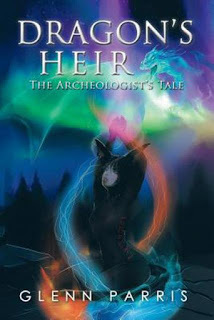
The novel by medical specialist Glenn Parris, The Dragon’s Heir: The Archeologist’s Tale, begins comfortably enough in coastal Maine in a tavern. But, the conversation quickly becomes bestranging, as we become aware that Earth has had some sort of transformation and we’re either in the distant past or in the future, where there has been an Exodus Corridor, a Jing Pen, and Efilu, Nelky, and more. There are no explanations of what the terms mean, and in Chapter 1, the special vocabulary and language of the different world, continue to be developed. The narrative does not pause to explain the terms (although there is an Abridged Jing Pen Translator at the end of the book.
So, it’s a bit of work to make one’s way through the world and follow the dialogue and plot. But, as one reads, and continues to float along in a sense of being transported to another world and another time, it becomes clear that what has happened is that we’re seeing a world that is the result of a mass extinction event – the Cretaceous-Tertiary (K/T) boundary event 65 million years ago that marked the extinction of the dinosaurs, and the subsequent rise of the mammals.
Instead of being single-mindedly predatory (the gaudy, feathered raptors), the dinosaurs were highly evolved creatures with technologies that allowed them to escape the terrible conditions on Earth. In their absence, the mammals rose to power.
Now, as in the way of all diasporas, there is a desire to return to the original home. In this case, it’s also a time to find out what happened to the ancient beliefs, the culture’s leaders, and to understand the traditions. So, they launch a space ship with archeologists, soldiers, and scientists. Vit Na, the head archeologist, is in charge.
What she finds is a culture of vile mammals who rose, as Vit Na observes, without the pressure of a predator class. And, they have been able to run amok, undisciplined, and to develop divided, sneaky minds as they foul their own nests.
The book begins to shift tone and to be about survival and hope, and also about levels of communication and alienation in experiences of beings that have powers unfathomable by those who do not share the same ones.
In a certain way, Dragon’s Heir evokes James Joyce’s Ulysses, with a sense of wandering and extreme attention to detail. The narrative refuses to attach to a single plot or sub-plot, and the only reality that one can be sure of is the reality of the body itself. In the heroic acts (or villainous), there is a building sense of philosophy of beingness and reality. What does it take to reinvent our way of understanding the world so we have a chance of survival? Where are the ancient beliefs? What good is a mystic? What good is magic (or technology)?
As in Ulysses, the main issue is that of time travel – in other words, of memory, experience, and the uncovered beliefs and institutions of the past. What have we lost? In the case of Dragon’s Heir, what has been lost is reborn in the heart of a reinvented heroism: Vit Na’s careful listening to all of those around her, and an awareness that learning the language and beliefs of those around her will require her to decide on her own reality, and to live in a constrained world. The “rage for order” in Ulysses is a return to Dublin, and an affirmation of the power of love, and in the case of Dragon’s Heir, an enlightened self.
Parris, Glenn. (2019) The Dragon’s Heir: The Archeologist’s Tale. X-Libris. 978-1-9845-4151-2.
In a text, the space within the words where there is little or no comprehension of the denotation, much less the cultural meaning(s), gives a reader a feeling of extreme vulnerability due to the inability to “read” the discourse and anticipate behaviors of others. At the same time, “bestrangement” imbues a sense of invulnerability and a sheltering psychological distance from the workaday reality that the reader may live in. It’s escape in its purest form.
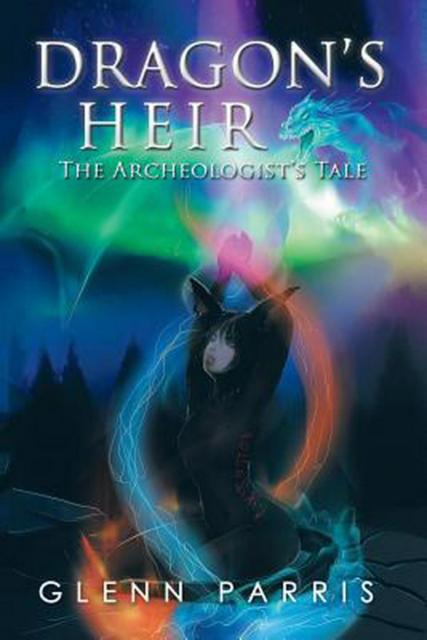
The novel by medical specialist Glenn Parris, The Dragon’s Heir: The Archeologist’s Tale, begins comfortably enough in coastal Maine in a tavern. But, the conversation quickly becomes bestranging, as we become aware that Earth has had some sort of transformation and we’re either in the distant past or in the future, where there has been an Exodus Corridor, a Jing Pen, and Efilu, Nelky, and more. There are no explanations of what the terms mean, and in Chapter 1, the special vocabulary and language of the different world, continue to be developed. The narrative does not pause to explain the terms (although there is an Abridged Jing Pen Translator at the end of the book.
So, it’s a bit of work to make one’s way through the world and follow the dialogue and plot. But, as one reads, and continues to float along in a sense of being transported to another world and another time, it becomes clear that what has happened is that we’re seeing a world that is the result of a mass extinction event – the Cretaceous-Tertiary (K/T) boundary event 65 million years ago that marked the extinction of the dinosaurs, and the subsequent rise of the mammals.
Instead of being single-mindedly predatory (the gaudy, feathered raptors), the dinosaurs were highly evolved creatures with technologies that allowed them to escape the terrible conditions on Earth. In their absence, the mammals rose to power.
Now, as in the way of all diasporas, there is a desire to return to the original home. In this case, it’s also a time to find out what happened to the ancient beliefs, the culture’s leaders, and to understand the traditions. So, they launch a space ship with archeologists, soldiers, and scientists. Vit Na, the head archeologist, is in charge.
What she finds is a culture of vile mammals who rose, as Vit Na observes, without the pressure of a predator class. And, they have been able to run amok, undisciplined, and to develop divided, sneaky minds as they foul their own nests.
The book begins to shift tone and to be about survival and hope, and also about levels of communication and alienation in experiences of beings that have powers unfathomable by those who do not share the same ones.
In a certain way, Dragon’s Heir evokes James Joyce’s Ulysses, with a sense of wandering and extreme attention to detail. The narrative refuses to attach to a single plot or sub-plot, and the only reality that one can be sure of is the reality of the body itself. In the heroic acts (or villainous), there is a building sense of philosophy of beingness and reality. What does it take to reinvent our way of understanding the world so we have a chance of survival? Where are the ancient beliefs? What good is a mystic? What good is magic (or technology)?
As in Ulysses, the main issue is that of time travel – in other words, of memory, experience, and the uncovered beliefs and institutions of the past. What have we lost? In the case of Dragon’s Heir, what has been lost is reborn in the heart of a reinvented heroism: Vit Na’s careful listening to all of those around her, and an awareness that learning the language and beliefs of those around her will require her to decide on her own reality, and to live in a constrained world. The “rage for order” in Ulysses is a return to Dublin, and an affirmation of the power of love, and in the case of Dragon’s Heir, an enlightened self.
Parris, Glenn. (2019) The Dragon’s Heir: The Archeologist’s Tale. X-Libris. 978-1-9845-4151-2.
March 25, 2019
Brexit Supply Chain Collapse: What Should Sarah Do?
<!-- /* Font Definitions */ @font-face {font-family:"MS 明朝"; panose-1:0 0 0 0 0 0 0 0 0 0; mso-font-charset:128; mso-generic-font-family:roman; mso-font-format:other; mso-font-pitch:fixed; mso-font-signature:1 134676480 16 0 131072 0;} @font-face {font-family:"MS 明朝"; panose-1:0 0 0 0 0 0 0 0 0 0; mso-font-charset:128; mso-generic-font-family:roman; mso-font-format:other; mso-font-pitch:fixed; mso-font-signature:1 134676480 16 0 131072 0;} @font-face {font-family:Cambria; panose-1:2 4 5 3 5 4 6 3 2 4; mso-font-charset:0; mso-generic-font-family:auto; mso-font-pitch:variable; mso-font-signature:-536870145 1073743103 0 0 415 0;} /* Style Definitions */ p.MsoNormal, li.MsoNormal, div.MsoNormal {mso-style-unhide:no; mso-style-qformat:yes; mso-style-parent:""; margin:0in; margin-bottom:.0001pt; mso-pagination:widow-orphan; font-size:12.0pt; font-family:Cambria; mso-fareast-font-family:"MS 明朝"; mso-bidi-font-family:"Times New Roman";} .MsoChpDefault {mso-style-type:export-only; mso-default-props:yes; font-size:10.0pt; mso-ansi-font-size:10.0pt; mso-bidi-font-size:10.0pt; font-family:Cambria; mso-ascii-font-family:Cambria; mso-fareast-font-family:"MS 明朝"; mso-hansi-font-family:Cambria;} @page WordSection1 {size:8.5in 11.0in; margin:1.0in 1.25in 1.0in 1.25in; mso-header-margin:.5in; mso-footer-margin:.5in; mso-paper-source:0;} div.WordSection1 {page:WordSection1;} </style> <br /><div class="MsoNormal">Sarah Carruthers was fit to be tied. She watched with horror the way that the members of the British government argued and debated with each other, but were unable to come up with a plan to harmonize with the European Union. That mean that all imports and exports from the European Union would hit a wall of red tape, not only tariffs but of documentation, which could amount to, in some cases, upwards of a hundred documents required for a single export into the European Union. </div><div class="MsoNormal"><br /></div><div class="MsoNormal"><div class="separator" style="clear: both; text-align: center;"><a href="https://1.bp.blogspot.com/-xHHMUtI_Nm..." imageanchor="1" style="margin-left: 1em; margin-right: 1em;"><img border="0" data-original-height="845" data-original-width="564" height="320" src="https://1.bp.blogspot.com/-xHHMUtI_Nm..." width="213" /></a></div></div><div class="MsoNormal"><br /></div><div class="MsoNormal">"Don't worry! We're going to replace the European Union market with our old standby, the Commonwealth!" crowed a 20-something Brexit-er on his YouTube channel. </div><div class="MsoNormal"><br /></div><div class="MsoNormal">Sarah watched him with mounting animus. "I hope you get deplatformed!" she glowered to herself. </div><div class="MsoNormal"><br /></div><div class="MsoNormal">She thought of her own business. She had a small restaurant in the cathedral town of Bury St. Edmunds and she catered to Londoners who liked to go to farmer's markets on the weekends, and also to walk through some of Britain's most historic reaches, where assiduous treasure hunters had found hoards of Roman silver, Anglo-Saxon cloisonne and intricate braid-patterned knife hilts, hidden Catholic abbey chalices during Henry VIII's rampages, and then Georgian and Victorian knick-knacks. There were walking and biking paths, and it was altogether a historical gold mine. </div><div class="MsoNormal"><br /></div><div class="MsoNormal">"I should expand into a boutique hotel," she told herself. But with the impending Brexit shock, Londoners were scared. They were not in a mood to explore history, charming walks in nature, and fascinating churchyards immortalized by novelists and poets. </div><div class="MsoNormal"><br /></div><div class="MsoNormal">Sarah went into survival mode. </div><div class="MsoNormal"><br /></div><div class="MsoNormal">1.<span style="mso-spacerun: yes;"> </span>She looked at what it would take to keep up her sales to Germany and France of English Shortbread and Peter Rabbit Chocolates. Most of her sales were around Easter and Christmas. Perhaps she could work with a broker.<span style="mso-spacerun: yes;"> </span>At least she understood the anatomy of the demand. </div><div class="MsoNormal"><br /></div><div class="MsoNormal">2.<span style="mso-spacerun: yes;"> </span>She looked at how complicated it would be to import the packaging, and other elements she used to create her hand-crafted shortbread cookies and chocolate rabbits. </div><div class="MsoNormal"><br /></div><div class="MsoNormal">Then, Phase II. She looked at how she could replace lost sales to the Commonwealth. Here were her first thoughts.<span style="mso-spacerun: yes;"> </span>The biggest markets in the Commonwealth were India, Australia, New Zealand, Pakistan, Bangladesh, and South Africa. </div><div class="MsoNormal"><br /></div><div class="MsoNormal">1.<span style="mso-spacerun: yes;"> </span>Peter Rabbit chocolates for Easter.<span style="mso-spacerun: yes;"> </span>Sarah had to smile (albeit through tears) at this one. Easter?<span style="mso-spacerun: yes;"> </span>in India? Pakistan? Peter Rabbit may seem exotic, but it's not going to capture the Hindi, Muslim, or Buddhist populations. </div><div class="MsoNormal"><br /></div><div class="MsoNormal">2.<span style="mso-spacerun: yes;"> </span>Christmas shortbread. Same problem as Peter Rabbit in South Asia. </div><div class="MsoNormal"><br /></div><div class="MsoNormal">3.<span style="mso-spacerun: yes;"> </span>There's always Australia, South Africa, and New Zealand, right?? <span style="mso-spacerun: yes;"> </span>Sarah's heart sank. They celebrated Easter and Christmas, but the seasons were opposite, and she did not know how chocolates and shortcake were viewed.<span style="mso-spacerun: yes;"> </span>Plus, there was the distance, and the costs of transportation. </div><div class="MsoNormal"><br /></div><div class="MsoNormal">Also, there were complications with logistics: transportation, warehousing.. </div><div class="MsoNormal"><br /></div><div class="MsoNormal">And, there was the pesky issue of brand recognition and marketing -- Sarah's products were well-known in France and Germany, and, thanks to quirky and cute advertising, their jingles were a part of the culture at large.<span style="mso-spacerun: yes;"> </span>With the Commonwealth, they'd be starting from ZERO. </div><div class="MsoNormal"><br /></div><div class="MsoNormal">Challenge: You've been hired to give Sarah advice. What should she do to keep her sales high and profitable? </div><div class="MsoNormal"><br /></div><div class="MsoNormal"><br /></div><div class="MsoNormal"><br /></div><div class="MsoNormal"><br /></div><div class="MsoNormal"><br /></div><div class="MsoNormal"><br /></div><div class="MsoNormal"><br /></div>
March 18, 2019
Creativity and Psychological Well-Being: A Detailed Look
I came across a very interesting article that provides details about the ways in which getting involved in creative activities will help your psychological well-being. It also discusses the development of creativity and how to make yourself more resilient, particularly when going through difficult times.
Link to the podcast: https://screencast-o-matic.com/watch/cqeebp0qLx
Friedman, M. B. (2014). Creativity and Psychological Well-Being. Contemporary Readings in Law and; Social Justice, 6(2), 39–58.
Purpose of the article:
Look at how creativity contributes to mental health and where it can be most effective.
Useful findings:
Instead of holding to the stereotypical connection between madness and creativity, this article points out that creativity actually helps maintain mental health.
Applicability of the article:
Creativity involves cultivating a skill, which increases engagement and leads to a sense of accomplishment. It satisfies needs for accomplishment, recognition, and affiliation. Artistic activities affirm and validate one’s unique identity and sense of self (and self-worth).There are four dimensions of the experience of art that can help one’s mental healthCultivating skill: builds self-efficacy and confidenceImmersion in activity: generates the joy and happiness; the process is almost meditative; if done with others, it meets the need for affiliationAccomplishment: satisfies the need for recognition, builds sense of identity and self-efficacyConnection and celebration: Makes validating and emotions-sharing connections with other peopleUseful strategies for healing for those with anxiety, depression, and more.
Link to the podcast: https://screencast-o-matic.com/watch/cqeebp0qLx
Friedman, M. B. (2014). Creativity and Psychological Well-Being. Contemporary Readings in Law and; Social Justice, 6(2), 39–58.
Purpose of the article:
Look at how creativity contributes to mental health and where it can be most effective.
Useful findings:
Instead of holding to the stereotypical connection between madness and creativity, this article points out that creativity actually helps maintain mental health.
Applicability of the article:
Creativity involves cultivating a skill, which increases engagement and leads to a sense of accomplishment. It satisfies needs for accomplishment, recognition, and affiliation. Artistic activities affirm and validate one’s unique identity and sense of self (and self-worth).There are four dimensions of the experience of art that can help one’s mental healthCultivating skill: builds self-efficacy and confidenceImmersion in activity: generates the joy and happiness; the process is almost meditative; if done with others, it meets the need for affiliationAccomplishment: satisfies the need for recognition, builds sense of identity and self-efficacyConnection and celebration: Makes validating and emotions-sharing connections with other peopleUseful strategies for healing for those with anxiety, depression, and more.
March 11, 2019
What to Do when the Robot Comes for Your Job
It's not a matter of "if" but "when." An excellent article published in Mother Jones breaks it down and provides a timeline of the kinds of jobs that will be replaced between now and 2040. The article examples many of the arguments that have been used to make the predictions less apocalyptic.
Mother Jones breaks them all down. It's apocalyptic, indeed, but at least with warning, you can develop a plan.
Link to podcast: https://screencast-o-matic.com/watch/cqeebb0qM1 (Links to an external site.)Links to an external site.
Drum, K., and; D, A. D. (2017). You Will Lose Your Job to a Robot. Mother Jones, 42(6), 38–69 Purpose of the article: To address the questions about when and how AI-powered machines replace jobs, and to point out that the owners of the AI-powered machines and the businesses are the ones who will benefit most.
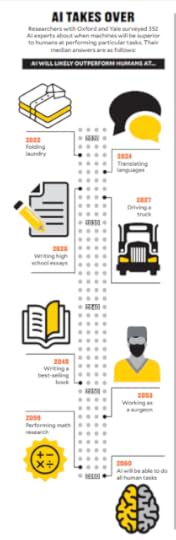
Useful findings: Machines powered by artificial intelligence will become better than humans in many different tasks. The article provides a useful timeline.
Applicability of the article:
*Routine physical tasks will be the first to be replaced, which includes packing boxes, driving trucks, etc.
*Routine cognitive tasks will be next to be replaced (teller, phone sales)*Non-routine cognitive will be the last to be replaced.
Here is a chart with a timeline showing the robot take-over. It's not "if" but "when."
 <!-- /* Font Definitions */ @font-face {font-family:Wingdings; panose-1:5 0 0 0 0 0 0 0 0 0; mso-font-charset:2; mso-generic-font-family:auto; mso-font-pitch:variable; mso-font-signature:0 268435456 0 0 -2147483648 0;} @font-face {font-family:"Cambria Math"; panose-1:2 4 5 3 5 4 6 3 2 4; mso-font-charset:0; mso-generic-font-family:auto; mso-font-pitch:variable; mso-font-signature:3 0 0 0 1 0;} @font-face {font-family:Calibri; panose-1:2 15 5 2 2 2 4 3 2 4; mso-font-charset:0; mso-generic-font-family:auto; mso-font-pitch:variable; mso-font-signature:-520092929 1073786111 9 0 415 0;} @font-face {font-family:"Calibri Light"; panose-1:2 15 3 2 2 2 4 3 2 4; mso-font-charset:0; mso-generic-font-family:auto; mso-font-pitch:variable; mso-font-signature:-1610611985 1073750139 0 0 159 0;} /* Style Definitions */ p.MsoNormal, li.MsoNormal, div.MsoNormal {mso-style-unhide:no; mso-style-qformat:yes; mso-style-parent:""; margin:0in; margin-bottom:.0001pt; mso-pagination:widow-orphan; font-size:10.0pt; font-family:"Times New Roman"; mso-fareast-font-family:"Times New Roman";} h1 {mso-style-priority:9; mso-style-unhide:no; mso-style-qformat:yes; mso-style-link:"Heading 1 Char"; mso-style-next:Normal; margin-top:0in; margin-right:0in; margin-bottom:0in; margin-left:.1in; margin-bottom:.0001pt; text-indent:-.1in; mso-pagination:none; mso-outline-level:1; mso-layout-grid-align:none; text-autospace:none; font-size:20.0pt; font-family:"Times New Roman"; mso-font-kerning:12.0pt; font-weight:normal;} h2 {mso-style-priority:99; mso-style-unhide:no; mso-style-qformat:yes; mso-style-link:"Heading 2 Char"; mso-style-next:Normal; margin-top:0in; margin-right:0in; margin-bottom:0in; margin-left:30.25pt; margin-bottom:.0001pt; text-indent:-.2in; mso-pagination:none; mso-outline-level:2; mso-layout-grid-align:none; text-autospace:none; font-size:12.0pt; font-family:"Times New Roman"; mso-font-kerning:12.0pt; font-weight:normal;} span.Heading1Char {mso-style-name:"Heading 1 Char"; mso-style-priority:9; mso-style-unhide:no; mso-style-locked:yes; mso-style-link:"Heading 1"; mso-ansi-font-size:20.0pt; mso-bidi-font-size:20.0pt; mso-font-kerning:12.0pt;} span.Heading2Char {mso-style-name:"Heading 2 Char"; mso-style-priority:99; mso-style-unhide:no; mso-style-locked:yes; mso-style-link:"Heading 2"; mso-ansi-font-size:12.0pt; mso-bidi-font-size:12.0pt; mso-font-kerning:12.0pt;} .MsoChpDefault {mso-style-type:export-only; mso-default-props:yes; font-size:10.0pt; mso-ansi-font-size:10.0pt; mso-bidi-font-size:10.0pt;} @page WordSection1 {size:8.5in 11.0in; margin:1.0in 1.25in 1.0in 1.25in; mso-header-margin:.5in; mso-footer-margin:.5in; mso-paper-source:0;} div.WordSection1 {page:WordSection1;} /* List Definitions */ @list l0 {mso-list-id:-2; mso-list-type:simple; mso-list-template-ids:-1807057778;} @list l0:level1 {mso-level-start-at:0; mso-level-number-format:bullet; mso-level-text:*; mso-level-tab-stop:none; mso-level-number-position:left; margin-left:0in; text-indent:0in;} @list l0:level1 lfo1 {mso-level-numbering:continue; mso-level-text:" "; mso-level-tab-stop:none; mso-level-number-position:left; mso-level-legacy:yes; mso-level-legacy-indent:0in; mso-level-legacy-space:0in; margin-left:0in; text-indent:0in; mso-ansi-font-size:20.0pt; font-family:Calibri;} @list l0:level1 lfo2 {mso-level-numbering:continue; mso-level-text:; mso-level-tab-stop:none; mso-level-number-position:left; mso-level-legacy:yes; mso-level-legacy-indent:0in; mso-level-legacy-space:0in; margin-left:0in; text-indent:0in; mso-ansi-font-size:20.0pt; font-family:Wingdings;} ol {margin-bottom:0in;} ul {margin-bottom:0in;} </style> -->
Mother Jones breaks them all down. It's apocalyptic, indeed, but at least with warning, you can develop a plan.
Link to podcast: https://screencast-o-matic.com/watch/cqeebb0qM1 (Links to an external site.)Links to an external site.
Drum, K., and; D, A. D. (2017). You Will Lose Your Job to a Robot. Mother Jones, 42(6), 38–69 Purpose of the article: To address the questions about when and how AI-powered machines replace jobs, and to point out that the owners of the AI-powered machines and the businesses are the ones who will benefit most.
Useful findings: Machines powered by artificial intelligence will become better than humans in many different tasks. The article provides a useful timeline.
Applicability of the article:
*Routine physical tasks will be the first to be replaced, which includes packing boxes, driving trucks, etc.
*Routine cognitive tasks will be next to be replaced (teller, phone sales)*Non-routine cognitive will be the last to be replaced.
Here is a chart with a timeline showing the robot take-over. It's not "if" but "when."
 <!-- /* Font Definitions */ @font-face {font-family:Wingdings; panose-1:5 0 0 0 0 0 0 0 0 0; mso-font-charset:2; mso-generic-font-family:auto; mso-font-pitch:variable; mso-font-signature:0 268435456 0 0 -2147483648 0;} @font-face {font-family:"Cambria Math"; panose-1:2 4 5 3 5 4 6 3 2 4; mso-font-charset:0; mso-generic-font-family:auto; mso-font-pitch:variable; mso-font-signature:3 0 0 0 1 0;} @font-face {font-family:Calibri; panose-1:2 15 5 2 2 2 4 3 2 4; mso-font-charset:0; mso-generic-font-family:auto; mso-font-pitch:variable; mso-font-signature:-520092929 1073786111 9 0 415 0;} @font-face {font-family:"Calibri Light"; panose-1:2 15 3 2 2 2 4 3 2 4; mso-font-charset:0; mso-generic-font-family:auto; mso-font-pitch:variable; mso-font-signature:-1610611985 1073750139 0 0 159 0;} /* Style Definitions */ p.MsoNormal, li.MsoNormal, div.MsoNormal {mso-style-unhide:no; mso-style-qformat:yes; mso-style-parent:""; margin:0in; margin-bottom:.0001pt; mso-pagination:widow-orphan; font-size:10.0pt; font-family:"Times New Roman"; mso-fareast-font-family:"Times New Roman";} h1 {mso-style-priority:9; mso-style-unhide:no; mso-style-qformat:yes; mso-style-link:"Heading 1 Char"; mso-style-next:Normal; margin-top:0in; margin-right:0in; margin-bottom:0in; margin-left:.1in; margin-bottom:.0001pt; text-indent:-.1in; mso-pagination:none; mso-outline-level:1; mso-layout-grid-align:none; text-autospace:none; font-size:20.0pt; font-family:"Times New Roman"; mso-font-kerning:12.0pt; font-weight:normal;} h2 {mso-style-priority:99; mso-style-unhide:no; mso-style-qformat:yes; mso-style-link:"Heading 2 Char"; mso-style-next:Normal; margin-top:0in; margin-right:0in; margin-bottom:0in; margin-left:30.25pt; margin-bottom:.0001pt; text-indent:-.2in; mso-pagination:none; mso-outline-level:2; mso-layout-grid-align:none; text-autospace:none; font-size:12.0pt; font-family:"Times New Roman"; mso-font-kerning:12.0pt; font-weight:normal;} span.Heading1Char {mso-style-name:"Heading 1 Char"; mso-style-priority:9; mso-style-unhide:no; mso-style-locked:yes; mso-style-link:"Heading 1"; mso-ansi-font-size:20.0pt; mso-bidi-font-size:20.0pt; mso-font-kerning:12.0pt;} span.Heading2Char {mso-style-name:"Heading 2 Char"; mso-style-priority:99; mso-style-unhide:no; mso-style-locked:yes; mso-style-link:"Heading 2"; mso-ansi-font-size:12.0pt; mso-bidi-font-size:12.0pt; mso-font-kerning:12.0pt;} .MsoChpDefault {mso-style-type:export-only; mso-default-props:yes; font-size:10.0pt; mso-ansi-font-size:10.0pt; mso-bidi-font-size:10.0pt;} @page WordSection1 {size:8.5in 11.0in; margin:1.0in 1.25in 1.0in 1.25in; mso-header-margin:.5in; mso-footer-margin:.5in; mso-paper-source:0;} div.WordSection1 {page:WordSection1;} /* List Definitions */ @list l0 {mso-list-id:-2; mso-list-type:simple; mso-list-template-ids:-1807057778;} @list l0:level1 {mso-level-start-at:0; mso-level-number-format:bullet; mso-level-text:*; mso-level-tab-stop:none; mso-level-number-position:left; margin-left:0in; text-indent:0in;} @list l0:level1 lfo1 {mso-level-numbering:continue; mso-level-text:" "; mso-level-tab-stop:none; mso-level-number-position:left; mso-level-legacy:yes; mso-level-legacy-indent:0in; mso-level-legacy-space:0in; margin-left:0in; text-indent:0in; mso-ansi-font-size:20.0pt; font-family:Calibri;} @list l0:level1 lfo2 {mso-level-numbering:continue; mso-level-text:; mso-level-tab-stop:none; mso-level-number-position:left; mso-level-legacy:yes; mso-level-legacy-indent:0in; mso-level-legacy-space:0in; margin-left:0in; text-indent:0in; mso-ansi-font-size:20.0pt; font-family:Wingdings;} ol {margin-bottom:0in;} ul {margin-bottom:0in;} </style> -->
March 5, 2019
When To Use Visuals in Your Report, Presentation, or Informational Social Media
What’s the quickest way to “Death By PowerPoint”? Put together a presentation that consists only of bullet points. Conversely, a presentation or report that consists only of visuals may seem superficial and confusing. So, when should you use visuals? How should they be placed for maximum impact and effectiveness?
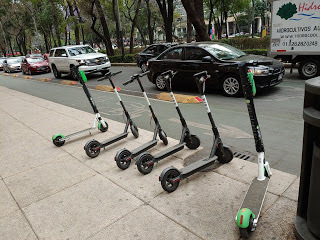 Lime or Bird? You decide.... Mexico City 2019 (photo credit: Susan Nash) What Is a Visual?
Generally speaking, a visual is anything that is pictoral, graphic, or semiotic. A visual can be composed of text (a sign, etc.). Generally speaking, visuals are graphics that may include diagrams, drawings, photographs, charts, graphs, figures, and more.
According to Patrick Cavenaugh, visual elements within a report or presentation are highly effective because they both capture the viewer’s attention and then direct or guide it. The visual architecture creates a process that then continues to arouse interest and direct attention from visual stimulus to visual stimulus (Cavanaugh, 2011).
Video on using visuals:
When to Use a Visual
Think of your overall goal or objective in writing your report or creating your presentation. Then, consider your audience. What will they relate to? What will they expect? What will resonate with their values and beliefs?
Keep in mind the following purposes of visuals:
* Instruct or persuade
* Draw attention to something immediately important
* Provide information quickly
* Engage the audience
* Keep the audience focused
* Provide accurate information concisely
Then, as you organize the content, think of the sequencing and space out the visual elements in order to maintain an optimized pace and to keep attention focused.
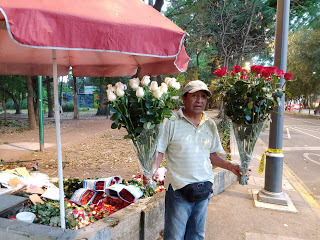 Roses before the storm in Mexico City. Photo credit: Susan Nash Audience Perspective
As you prepare your visuals, and determine where to place them, it is useful to keep in mind the following questions that your audience will have as they approach the material.
*Why is the visual here?
*What does it tell me?
* Which aspect of the visual is most important?
* Where, exactly, should I focus?
* What do these numbers or statistics mean?
* What should I be thinking or doing?
* Where does the graphic begin? Where does the information end?
How Visuals Work
Make the abstract concrete. Your audience can more easily relate the content to their own experience.
Analyze relationships. If the visuals appear on the same page, or next to each other, it is fairly easy to discuss how they relate to each other. The relationships can be grasped at a glance with skillful use of design, color, pattern, and placement.
Facilitate comparisons. With visuals, it is easy to discuss to things, particularly when you locate them side by side.
Emphasize key points. You can make key points clear using visuals.
Transcend language barriers. It is possible to create visuals that can be communicated across language and cultural differences.
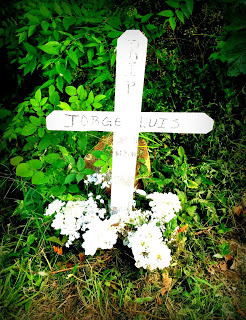 A memorial for a man who drowned in the Arkansas River, Tulsa, Oklahoma (photo credit: Susan Nash) What Types of Visuals to Consider
Tables. Tables display data (as number or words) in rows and columns for comparison.
Photographs. Photographs can help document a place, person, or thing, and they can help emphasize the application of a concept in real life. Be sure to give proper attribution to the graphics you use, and to obtain permission. If you use graphics that have a Creative Commons license, be sure to give it the correct attribution.
Graphs. Graphs translate numbers into shapes, shades, and patterns by plotting two or more data sets on a coordinate system.
Maps. Maps or grids are very helpful when discussing locations, demographics, and even the results of data mining (for example, for marketing).
Charts. Charts depict relationships without the use of a coordinate system by using circles, rectangles, arrows, connecting lines, and other design elements.
Graphs. Graphic illustrations are pictorial devices for helping readers visualize what something looks like, how it's done, how it happens, or where it's located.
Maintaining Effectiveness With Visuals
After you’ve analyzed your goals and objectives, and have determined where and when to use visuals, be sure to let another person take a look at your presentation or report. Peer review can be quite helpful – they can help you gain insight into how diverse learning styles and preferences can be accommodated by using visuals. You can also get an idea if your visuals are of the appropriate complexity.
Reference
Cavanaugh, P. (2011) Visual cognition. Vision Research. 51 (13): 1538-51.
 Lime or Bird? You decide.... Mexico City 2019 (photo credit: Susan Nash) What Is a Visual?
Generally speaking, a visual is anything that is pictoral, graphic, or semiotic. A visual can be composed of text (a sign, etc.). Generally speaking, visuals are graphics that may include diagrams, drawings, photographs, charts, graphs, figures, and more.
According to Patrick Cavenaugh, visual elements within a report or presentation are highly effective because they both capture the viewer’s attention and then direct or guide it. The visual architecture creates a process that then continues to arouse interest and direct attention from visual stimulus to visual stimulus (Cavanaugh, 2011).
Video on using visuals:
When to Use a Visual
Think of your overall goal or objective in writing your report or creating your presentation. Then, consider your audience. What will they relate to? What will they expect? What will resonate with their values and beliefs?
Keep in mind the following purposes of visuals:
* Instruct or persuade
* Draw attention to something immediately important
* Provide information quickly
* Engage the audience
* Keep the audience focused
* Provide accurate information concisely
Then, as you organize the content, think of the sequencing and space out the visual elements in order to maintain an optimized pace and to keep attention focused.
 Roses before the storm in Mexico City. Photo credit: Susan Nash Audience Perspective
As you prepare your visuals, and determine where to place them, it is useful to keep in mind the following questions that your audience will have as they approach the material.
*Why is the visual here?
*What does it tell me?
* Which aspect of the visual is most important?
* Where, exactly, should I focus?
* What do these numbers or statistics mean?
* What should I be thinking or doing?
* Where does the graphic begin? Where does the information end?
How Visuals Work
Make the abstract concrete. Your audience can more easily relate the content to their own experience.
Analyze relationships. If the visuals appear on the same page, or next to each other, it is fairly easy to discuss how they relate to each other. The relationships can be grasped at a glance with skillful use of design, color, pattern, and placement.
Facilitate comparisons. With visuals, it is easy to discuss to things, particularly when you locate them side by side.
Emphasize key points. You can make key points clear using visuals.
Transcend language barriers. It is possible to create visuals that can be communicated across language and cultural differences.
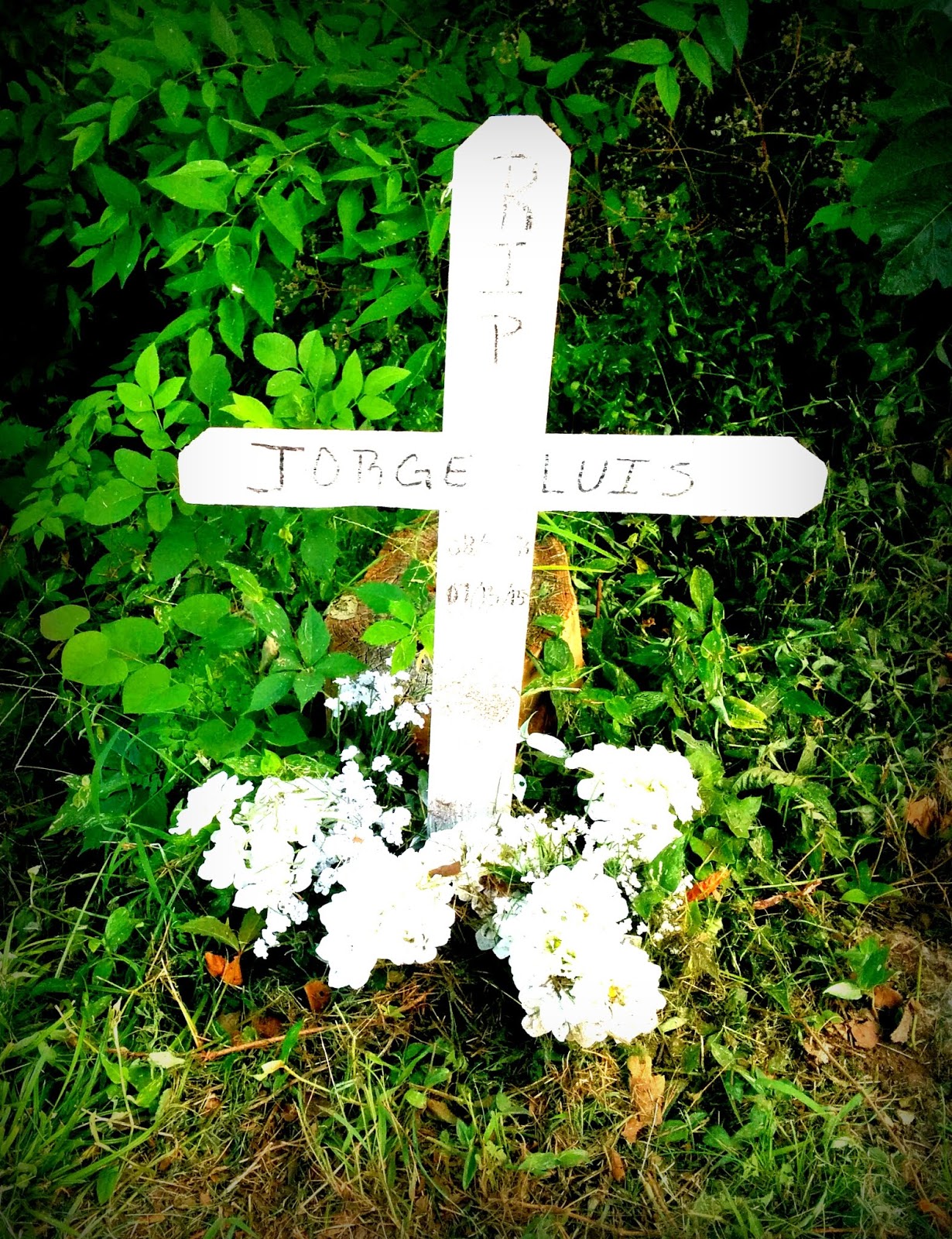 A memorial for a man who drowned in the Arkansas River, Tulsa, Oklahoma (photo credit: Susan Nash) What Types of Visuals to Consider
 Tables. Tables display data (as number or words) in rows and columns for comparison.
Photographs. Photographs can help document a place, person, or thing, and they can help emphasize the application of a concept in real life. Be sure to give proper attribution to the graphics you use, and to obtain permission. If you use graphics that have a Creative Commons license, be sure to give it the correct attribution.
Graphs. Graphs translate numbers into shapes, shades, and patterns by plotting two or more data sets on a coordinate system.
Maps. Maps or grids are very helpful when discussing locations, demographics, and even the results of data mining (for example, for marketing).
Charts. Charts depict relationships without the use of a coordinate system by using circles, rectangles, arrows, connecting lines, and other design elements.
Graphs. Graphic illustrations are pictorial devices for helping readers visualize what something looks like, how it's done, how it happens, or where it's located.
Maintaining Effectiveness With Visuals
After you’ve analyzed your goals and objectives, and have determined where and when to use visuals, be sure to let another person take a look at your presentation or report. Peer review can be quite helpful – they can help you gain insight into how diverse learning styles and preferences can be accommodated by using visuals. You can also get an idea if your visuals are of the appropriate complexity.
Reference
Cavanaugh, P. (2011) Visual cognition. Vision Research. 51 (13): 1538-51.
March 3, 2019
Entrepreneurial Passion: Taking It to the Next Level
I found a very interesting article that explains how and why people with hobbies who are entrepreneurial will take their passion to the next level and turn it into an actual job. They take the passion, transform it into entrepreneurial intent, and then they start making concrete steps to achieve their dreams.
But.. watch out for the robots! The second part of the video discusses another article that explains how not to lose your marketing job to a robot.
Link to a presentation / podcast:
https://screencast-o-matic.com/watch/cqeeDC0q7f
Biraglia, A., and; Kadile, V. (2017). The Role of Entrepreneurial Passion and Creativity in Developing Entrepreneurial Intentions: Insights from American Homebrewers. Journal of Small Business Management, 55(1), 170–188.
Purpose of the article: How can we use creativity and entrepreneurship to adjust ourselves in difficult times? Useful findings: We can apply Bandura’s Social Cognitive Theory (SCT) to understanding how and why people are entrepreneurs, and how and when they succeed. Learning, Motivational and Behavioral processes are the result of reciprocal and bidirectional interactions Environmental Inputs Personal Factors Behavioral Outcomes
Applicability of the article •Entrepreneurial passion is often a characteristic of people who are able to turn hobbies into businesses, and they relate to a thorough knowledge of the topic and also skills and practice.•Creativity helps a person solve problems, and thus build a sense of self-efficacy and confidence.•Entrepreneurial self-efficacy and entrepreneurial intentions are very much influenced by feedback from the environment (awards, collaborations, and presumably financial rewards). •To assure success in an entrepreneurial endeavor, it is important to build reinforcing feedback loops that strengthen cognitive, behavioral, and environmental factors.
************************* Cramer, T. (2017). How Not to Lose Your Marketing Job to a Machine. EContent, 40(5), 4–8. Purpose of the article: To discuss how artificial intelligence is replacing some jobs in marketing, but creating others.
Useful findings: Machine learning and artificial intelligence are highly effective at conducting market research and selling, but for each task for AI, there is a need to manage it.
Applicability of the article:
-Each AI function also needs a person who can design and manage it.
-With the proliferation of websites, it is often necessary to have a human who determines if a site is fraudulent.
-Creativity is still uniquely human. To develop strategies to grow markets, and also to tell stories still requires human beings. <!-- /* Font Definitions */ @font-face {font-family:Wingdings; panose-1:5 0 0 0 0 0 0 0 0 0; mso-font-charset:2; mso-generic-font-family:auto; mso-font-pitch:variable; mso-font-signature:0 268435456 0 0 -2147483648 0;} @font-face {font-family:"Cambria Math"; panose-1:2 4 5 3 5 4 6 3 2 4; mso-font-charset:0; mso-generic-font-family:auto; mso-font-pitch:variable; mso-font-signature:3 0 0 0 1 0;} @font-face {font-family:Calibri; panose-1:2 15 5 2 2 2 4 3 2 4; mso-font-charset:0; mso-generic-font-family:auto; mso-font-pitch:variable; mso-font-signature:-520092929 1073786111 9 0 415 0;} @font-face {font-family:"Calibri Light"; panose-1:2 15 3 2 2 2 4 3 2 4; mso-font-charset:0; mso-generic-font-family:auto; mso-font-pitch:variable; mso-font-signature:-1610611985 1073750139 0 0 159 0;} /* Style Definitions */ p.MsoNormal, li.MsoNormal, div.MsoNormal {mso-style-unhide:no; mso-style-qformat:yes; mso-style-parent:""; margin:0in; margin-bottom:.0001pt; mso-pagination:widow-orphan; font-size:10.0pt; font-family:"Times New Roman"; mso-fareast-font-family:"Times New Roman";} h1 {mso-style-priority:9; mso-style-unhide:no; mso-style-qformat:yes; mso-style-link:"Heading 1 Char"; mso-style-next:Normal; margin-top:0in; margin-right:0in; margin-bottom:0in; margin-left:.1in; margin-bottom:.0001pt; text-indent:-.1in; mso-pagination:none; mso-outline-level:1; mso-layout-grid-align:none; text-autospace:none; font-size:20.0pt; font-family:"Times New Roman"; mso-font-kerning:12.0pt; font-weight:normal;} h2 {mso-style-priority:99; mso-style-unhide:no; mso-style-qformat:yes; mso-style-link:"Heading 2 Char"; mso-style-next:Normal; margin-top:0in; margin-right:0in; margin-bottom:0in; margin-left:30.25pt; margin-bottom:.0001pt; text-indent:-.2in; mso-pagination:none; mso-outline-level:2; mso-layout-grid-align:none; text-autospace:none; font-size:12.0pt; font-family:"Times New Roman"; mso-font-kerning:12.0pt; font-weight:normal;} span.Heading1Char {mso-style-name:"Heading 1 Char"; mso-style-priority:9; mso-style-unhide:no; mso-style-locked:yes; mso-style-link:"Heading 1"; mso-ansi-font-size:20.0pt; mso-bidi-font-size:20.0pt; mso-font-kerning:12.0pt;} span.Heading2Char {mso-style-name:"Heading 2 Char"; mso-style-priority:99; mso-style-unhide:no; mso-style-locked:yes; mso-style-link:"Heading 2"; mso-ansi-font-size:12.0pt; mso-bidi-font-size:12.0pt; mso-font-kerning:12.0pt;} .MsoChpDefault {mso-style-type:export-only; mso-default-props:yes; font-size:10.0pt; mso-ansi-font-size:10.0pt; mso-bidi-font-size:10.0pt;} @page WordSection1 {size:8.5in 11.0in; margin:1.0in 1.25in 1.0in 1.25in; mso-header-margin:.5in; mso-footer-margin:.5in; mso-paper-source:0;} div.WordSection1 {page:WordSection1;} /* List Definitions */ @list l0 {mso-list-id:-2; mso-list-type:simple; mso-list-template-ids:-1807057778;} @list l0:level1 {mso-level-start-at:0; mso-level-number-format:bullet; mso-level-text:*; mso-level-tab-stop:none; mso-level-number-position:left; margin-left:0in; text-indent:0in;} @list l0:level1 lfo1 {mso-level-numbering:continue; mso-level-text:" "; mso-level-tab-stop:none; mso-level-number-position:left; mso-level-legacy:yes; mso-level-legacy-indent:0in; mso-level-legacy-space:0in; margin-left:0in; text-indent:0in; mso-ansi-font-size:20.0pt; font-family:Calibri;} @list l0:level1 lfo2 {mso-level-numbering:continue; mso-level-text:; mso-level-tab-stop:none; mso-level-number-position:left; mso-level-legacy:yes; mso-level-legacy-indent:0in; mso-level-legacy-space:0in; margin-left:0in; text-indent:0in; mso-ansi-font-size:20.0pt; font-family:Wingdings;} ol {margin-bottom:0in;} ul {margin-bottom:0in;} </style> </span></i><br /><i><span style="color: #404040; font-family: "calibri"; mso-bidi-font-family: Calibri;"><br /></span></i></div>
But.. watch out for the robots! The second part of the video discusses another article that explains how not to lose your marketing job to a robot.
Link to a presentation / podcast:
https://screencast-o-matic.com/watch/cqeeDC0q7f
Biraglia, A., and; Kadile, V. (2017). The Role of Entrepreneurial Passion and Creativity in Developing Entrepreneurial Intentions: Insights from American Homebrewers. Journal of Small Business Management, 55(1), 170–188.
Purpose of the article: How can we use creativity and entrepreneurship to adjust ourselves in difficult times? Useful findings: We can apply Bandura’s Social Cognitive Theory (SCT) to understanding how and why people are entrepreneurs, and how and when they succeed. Learning, Motivational and Behavioral processes are the result of reciprocal and bidirectional interactions Environmental Inputs Personal Factors Behavioral Outcomes
Applicability of the article •Entrepreneurial passion is often a characteristic of people who are able to turn hobbies into businesses, and they relate to a thorough knowledge of the topic and also skills and practice.•Creativity helps a person solve problems, and thus build a sense of self-efficacy and confidence.•Entrepreneurial self-efficacy and entrepreneurial intentions are very much influenced by feedback from the environment (awards, collaborations, and presumably financial rewards). •To assure success in an entrepreneurial endeavor, it is important to build reinforcing feedback loops that strengthen cognitive, behavioral, and environmental factors.
************************* Cramer, T. (2017). How Not to Lose Your Marketing Job to a Machine. EContent, 40(5), 4–8. Purpose of the article: To discuss how artificial intelligence is replacing some jobs in marketing, but creating others.
Useful findings: Machine learning and artificial intelligence are highly effective at conducting market research and selling, but for each task for AI, there is a need to manage it.
Applicability of the article:
-Each AI function also needs a person who can design and manage it.
-With the proliferation of websites, it is often necessary to have a human who determines if a site is fraudulent.
-Creativity is still uniquely human. To develop strategies to grow markets, and also to tell stories still requires human beings. <!-- /* Font Definitions */ @font-face {font-family:Wingdings; panose-1:5 0 0 0 0 0 0 0 0 0; mso-font-charset:2; mso-generic-font-family:auto; mso-font-pitch:variable; mso-font-signature:0 268435456 0 0 -2147483648 0;} @font-face {font-family:"Cambria Math"; panose-1:2 4 5 3 5 4 6 3 2 4; mso-font-charset:0; mso-generic-font-family:auto; mso-font-pitch:variable; mso-font-signature:3 0 0 0 1 0;} @font-face {font-family:Calibri; panose-1:2 15 5 2 2 2 4 3 2 4; mso-font-charset:0; mso-generic-font-family:auto; mso-font-pitch:variable; mso-font-signature:-520092929 1073786111 9 0 415 0;} @font-face {font-family:"Calibri Light"; panose-1:2 15 3 2 2 2 4 3 2 4; mso-font-charset:0; mso-generic-font-family:auto; mso-font-pitch:variable; mso-font-signature:-1610611985 1073750139 0 0 159 0;} /* Style Definitions */ p.MsoNormal, li.MsoNormal, div.MsoNormal {mso-style-unhide:no; mso-style-qformat:yes; mso-style-parent:""; margin:0in; margin-bottom:.0001pt; mso-pagination:widow-orphan; font-size:10.0pt; font-family:"Times New Roman"; mso-fareast-font-family:"Times New Roman";} h1 {mso-style-priority:9; mso-style-unhide:no; mso-style-qformat:yes; mso-style-link:"Heading 1 Char"; mso-style-next:Normal; margin-top:0in; margin-right:0in; margin-bottom:0in; margin-left:.1in; margin-bottom:.0001pt; text-indent:-.1in; mso-pagination:none; mso-outline-level:1; mso-layout-grid-align:none; text-autospace:none; font-size:20.0pt; font-family:"Times New Roman"; mso-font-kerning:12.0pt; font-weight:normal;} h2 {mso-style-priority:99; mso-style-unhide:no; mso-style-qformat:yes; mso-style-link:"Heading 2 Char"; mso-style-next:Normal; margin-top:0in; margin-right:0in; margin-bottom:0in; margin-left:30.25pt; margin-bottom:.0001pt; text-indent:-.2in; mso-pagination:none; mso-outline-level:2; mso-layout-grid-align:none; text-autospace:none; font-size:12.0pt; font-family:"Times New Roman"; mso-font-kerning:12.0pt; font-weight:normal;} span.Heading1Char {mso-style-name:"Heading 1 Char"; mso-style-priority:9; mso-style-unhide:no; mso-style-locked:yes; mso-style-link:"Heading 1"; mso-ansi-font-size:20.0pt; mso-bidi-font-size:20.0pt; mso-font-kerning:12.0pt;} span.Heading2Char {mso-style-name:"Heading 2 Char"; mso-style-priority:99; mso-style-unhide:no; mso-style-locked:yes; mso-style-link:"Heading 2"; mso-ansi-font-size:12.0pt; mso-bidi-font-size:12.0pt; mso-font-kerning:12.0pt;} .MsoChpDefault {mso-style-type:export-only; mso-default-props:yes; font-size:10.0pt; mso-ansi-font-size:10.0pt; mso-bidi-font-size:10.0pt;} @page WordSection1 {size:8.5in 11.0in; margin:1.0in 1.25in 1.0in 1.25in; mso-header-margin:.5in; mso-footer-margin:.5in; mso-paper-source:0;} div.WordSection1 {page:WordSection1;} /* List Definitions */ @list l0 {mso-list-id:-2; mso-list-type:simple; mso-list-template-ids:-1807057778;} @list l0:level1 {mso-level-start-at:0; mso-level-number-format:bullet; mso-level-text:*; mso-level-tab-stop:none; mso-level-number-position:left; margin-left:0in; text-indent:0in;} @list l0:level1 lfo1 {mso-level-numbering:continue; mso-level-text:" "; mso-level-tab-stop:none; mso-level-number-position:left; mso-level-legacy:yes; mso-level-legacy-indent:0in; mso-level-legacy-space:0in; margin-left:0in; text-indent:0in; mso-ansi-font-size:20.0pt; font-family:Calibri;} @list l0:level1 lfo2 {mso-level-numbering:continue; mso-level-text:; mso-level-tab-stop:none; mso-level-number-position:left; mso-level-legacy:yes; mso-level-legacy-indent:0in; mso-level-legacy-space:0in; margin-left:0in; text-indent:0in; mso-ansi-font-size:20.0pt; font-family:Wingdings;} ol {margin-bottom:0in;} ul {margin-bottom:0in;} </style> </span></i><br /><i><span style="color: #404040; font-family: "calibri"; mso-bidi-font-family: Calibri;"><br /></span></i></div>
February 24, 2019
Teaching Children How to Be Good Citizens: Interview with Sean Callahan and Russell Glass, authors of Voting with a Porpoise
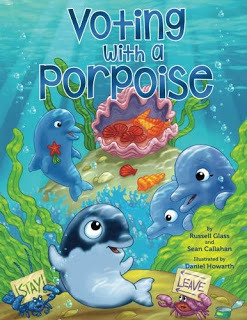
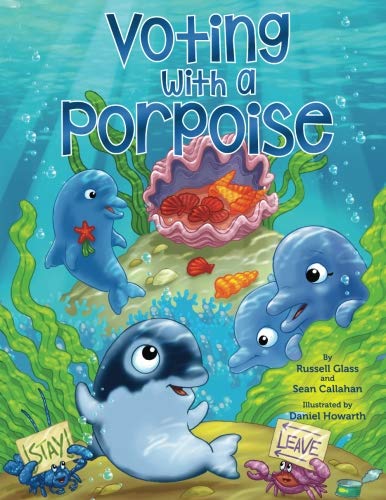
Learning what voting and citizenship can be fun when children can engage with a colorful, accessible book which encourages creativity and interactivity. Welcome to an interview with Sean Callahan and Russell Glass, authors of Voting with a Porpoise.
1. What is your name and background?
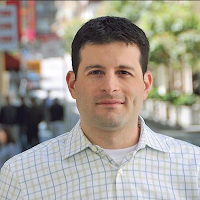
Sean Callahan is a content marketer at LinkedIn. He has written several books including The Leprechaun Who Lost His Rainbow, A Wild Father’s Day and co-authored The Big Data-Driven Business. His journalism work has also appeared in The New York Times, The Washington Post, and Notre Dame Magazine. Callahan lives with his wife and two daughters in Chicago. He is also a voter.
Russell Glass is a serial technology entrepreneur and author, having founded or held senior positions at four venture-backed technology companies and co-authored of The Big Data-Driven Business. He is currently the CEO of Ginger.io, an on-demand behavioral health company, and a board member of Rock the Vote where he uses his experience with technology, data science and narrative branding tactics to develop unique strategies to increase engagement and turnout among young votes. He is also a voter.

2. What is Voting with a Porpoise?
Voting With a Porpoise is a children’s book in which the voting process is brought to life for children of all ages. While kids giggle over dolphin pod leader Finn and Petey the Porpoise, parents are reminded just how vital voting and civic engagement are for a healthy democracy.
3. What inspired the book?
We know that young people are voting at significantly lower rates than people over 65. So we wanted to go to the next generation of voters to speak directly to them about the power that their voices can have if they chose to use them, and make voting something they feel empowered to do and positive about from the start. We wanted to find a project that we were both passionate about.
4. Who wrote it, and what is his / her background?
Sean and Russ, see above.
5. What are some of things you'd like to change in society?
The biggest change we'd like to see in society is more people voting. We want to change the culture around voting in the United States. We'd like to see more locales adopt the law that Sandusky, Ohio, just passed, which makes Election Day a holiday. We'd like to have more early voting, to make it as easy as possible for us to vote. We'd like to see it become customary for Americans to register to vote on their 18th birthday, just like they get their drivers licenses when they turn 16 and have a beer when they turn 21. Ultimately, we'd like Americans to feel embarrassed not to cast their vote on Election Day. Primarily, we'd like to see more people, especially young people, make it to the voting booth. If a critical mass of people voted, politicians could no longer ignore them. Politicians serve those who get them elected. Right now, the people who have the most influence on getting politicians elected is their donors. But if more people voted, politicians would be forced to serve the people who elected them — their constituents.
6. What kinds of changes are you seeing now?
We are seeing more people getting to the polls. In the 2018 mid-terms, Americans aged 18-29 showed up to vote. One statistic in particular shows the surge in young people voting: 3.3 million Americans under 30 voted early in the 2018 mid-terms — that's up 188% over the 2014 mid-terms. Now the trick is to turn this trend into a full-fledged change in voting culture.
7. Can you recommend other books as well?
A Day in the Life of Marlon Bundo
Written by Jill Twiss, Illustrated by EG Keller
Great comedic TV shows think alike. In this book, backed by Last Week Tonight with John Oliver, the story of Mike Pence’s rabbit, Marlon Bundo, takes an ironic turn when we discover that Marlon has fallen in love with another bunny who happens to be a boy. The book’s dedication says it all: “For every bunny who has ever felt different.”
What Can a Citizen Do?
Written by Dave Eggers, Illustrated by Shawn Harris
Dave Eggers first came into the public eye with his memoir, a Heartbreaking Work of Staggering Genius. With this book, Eggers urges young people to use their power as citizens. The School Library Journal summed up this book very well: "This must-have book distills the fundamentals of citizenship into easy-to-digest concepts and emphasizes the importance of caring for others, accepting differences, and taking action to initiate positive change." (Note that Eggers also wrote the charming “Her Right Foot,” which reminds all of us that immigration built the nation).
1. What is your name and background?
Sean Callahan is a content marketer at LinkedIn. He has written several books including The Leprechaun Who Lost His Rainbow, A Wild Father’s Day and co-authored The Big Data-Driven Business. His journalism work has also appeared in The New York Times, The Washington Post, and Notre Dame Magazine. Callahan lives with his wife and two daughters in Chicago. He is also a voter.
Russell Glass is a serial technology entrepreneur and author, having founded or held senior positions at four venture-backed technology companies and co-authored of The Big Data-Driven Business. He is currently the CEO of Ginger.io, an on-demand behavioral health company, and a board member of Rock the Vote where he uses his experience with technology, data science and narrative branding tactics to develop unique strategies to increase engagement and turnout among young votes. He is also a voter.


2. What is Voting with a Porpoise?
Voting With a Porpoise is a children’s book in which the voting process is brought to life for children of all ages. While kids giggle over dolphin pod leader Finn and Petey the Porpoise, parents are reminded just how vital voting and civic engagement are for a healthy democracy.
3. What inspired the book?
We know that young people are voting at significantly lower rates than people over 65. So we wanted to go to the next generation of voters to speak directly to them about the power that their voices can have if they chose to use them, and make voting something they feel empowered to do and positive about from the start. We wanted to find a project that we were both passionate about.
4. Who wrote it, and what is his / her background?
Sean and Russ, see above.
5. What are some of things you'd like to change in society?
The biggest change we'd like to see in society is more people voting. We want to change the culture around voting in the United States. We'd like to see more locales adopt the law that Sandusky, Ohio, just passed, which makes Election Day a holiday. We'd like to have more early voting, to make it as easy as possible for us to vote. We'd like to see it become customary for Americans to register to vote on their 18th birthday, just like they get their drivers licenses when they turn 16 and have a beer when they turn 21. Ultimately, we'd like Americans to feel embarrassed not to cast their vote on Election Day. Primarily, we'd like to see more people, especially young people, make it to the voting booth. If a critical mass of people voted, politicians could no longer ignore them. Politicians serve those who get them elected. Right now, the people who have the most influence on getting politicians elected is their donors. But if more people voted, politicians would be forced to serve the people who elected them — their constituents.
6. What kinds of changes are you seeing now?
We are seeing more people getting to the polls. In the 2018 mid-terms, Americans aged 18-29 showed up to vote. One statistic in particular shows the surge in young people voting: 3.3 million Americans under 30 voted early in the 2018 mid-terms — that's up 188% over the 2014 mid-terms. Now the trick is to turn this trend into a full-fledged change in voting culture.
7. Can you recommend other books as well?
A Day in the Life of Marlon Bundo
Written by Jill Twiss, Illustrated by EG Keller
Great comedic TV shows think alike. In this book, backed by Last Week Tonight with John Oliver, the story of Mike Pence’s rabbit, Marlon Bundo, takes an ironic turn when we discover that Marlon has fallen in love with another bunny who happens to be a boy. The book’s dedication says it all: “For every bunny who has ever felt different.”
What Can a Citizen Do?
Written by Dave Eggers, Illustrated by Shawn Harris
Dave Eggers first came into the public eye with his memoir, a Heartbreaking Work of Staggering Genius. With this book, Eggers urges young people to use their power as citizens. The School Library Journal summed up this book very well: "This must-have book distills the fundamentals of citizenship into easy-to-digest concepts and emphasizes the importance of caring for others, accepting differences, and taking action to initiate positive change." (Note that Eggers also wrote the charming “Her Right Foot,” which reminds all of us that immigration built the nation).
January 27, 2019
Risk Mgmt Unit 4: Using Blockchain to Eliminate Counterfeit Electronics: Scenarios and Simulations
Learn how to develop probabilistic models using machine learning and other analytic tools to identify and quantify risk. Identify effective ways to use scenarios and simulations, especially in a collaborative environment or context, to identify risks and manage them by using all available combinations of resources. Describe how blockchain is revolutionizing the supply chain.
Unit Presentation:
Video:
https://screencast-o-matic.com/watch/cqVZhC3OAL
PDF (contains links to readings, etc.)
http://www.zenzebra.net/risk/risk-management-nash-pt4.pdf
Scenario 4: Using Blockchain to Eliminate Counterfeit Electronics: Scenarios and Simulations
Emily and Charles are worried. They’ve agreed to put sensors on all the pumps, gas gathering systems, in pipelines, injection wells, and disposal wells.

They hope to eliminate the need for field techs to have to check installations every day, and they want to be able to predict maintenance schedules, as well as where / when to maintain corrosion control, and when to replace equipment. They want to move away from a rigid schedule of maintenance and move to a more “reality based” maintenance and replacement.
However, they are worried. Their entire model depends on high-quality sensors and electronic components that do the job they’re supposed to do.
They’ve come to find out that an alarming percentage of electronic components are counterfeit, which means that they do not do what they’re supposed to do. That’s a terrifying thought when one considers that all the decisions are made based on the readings that the sensors and components deliver via the Industrial Internet of Things (IIoT).
Your Task: Help Emily and Charles come up with a plan to make sure that all that the components they have are authentic.
• Develop a plan for Emily and Charles to work with their suppliers to use Blockchain technology to assure authenticity.
• Also, help Emily and Charles develop a plan to use the information from the IIoT to determine when and how to maintain and replace equipment.
• Explain to Emily and Charles how to brainstorm using mind-mapping and role-playing with other team members.
• Develop recommendations for both supply chain integrity (using blockchain) and maintenance / replacement protocols and best practices for the company.
Readings:
Thinking about Scenarios:
How to do them
Define the elements
What can happen?
Who is impacted?
Who can do anything?
When?
Where?
Mind maps
Coggle
https://coggle.it/
MindMUp
https://www.mindmup.com/
Group activity (collaborative online and face to face)
Simulations:
What is the information that you need?
What is the situation?
What are the variables?
What can be controlled?
What is the flow? (mapping / workflow)
How to get started: software
Dealing with complexity
Possible outcomes: listing / prioritizing
Quantifying possible consequences
Simulations
https://qlikcloud.com/
Future directions:
Blockchain:
What is Blockchain Technology? A Step-by-Step Guide for Beginners
https://blockgeeks.com/guides/what-is-blockchain-technology/
Blockchain Fundamentals: https://youtu.be/OSriZ_SeTfk
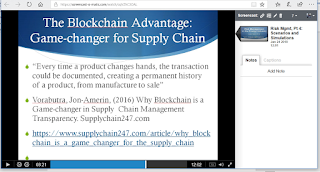
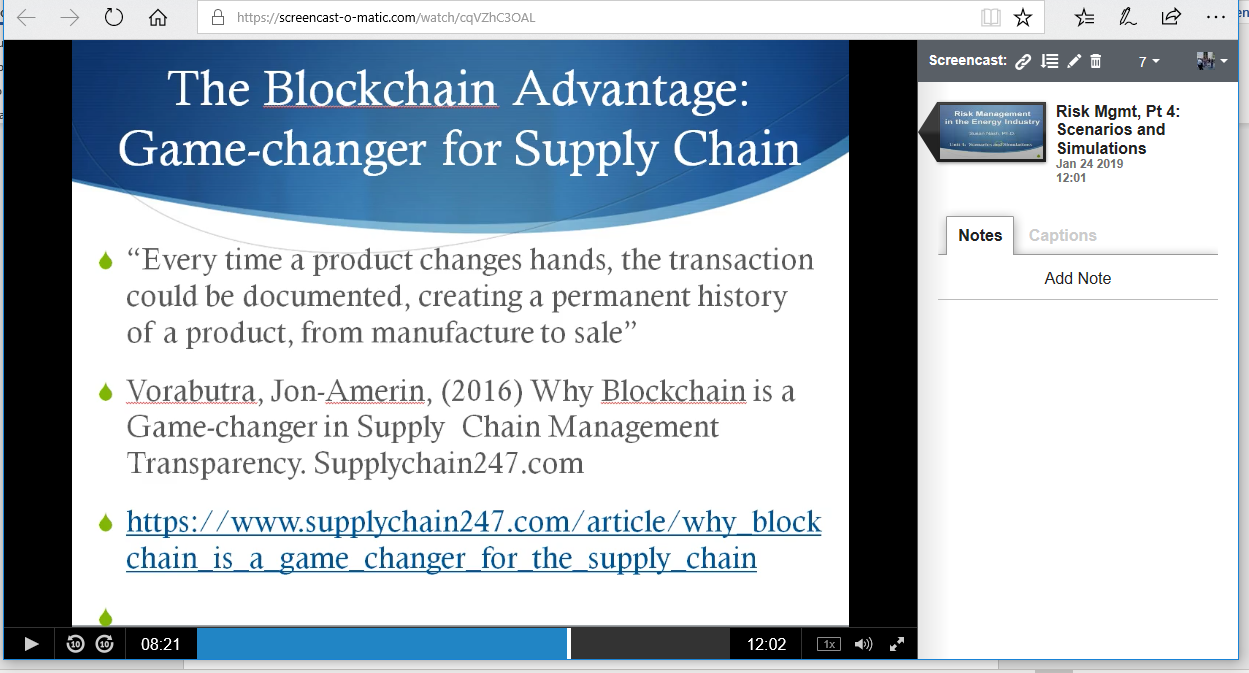
“Every time a product changes hands, the transaction could be documented, creating a permanent history of a product, from manufacture to sale”
Vorabutra, Jon-Amerin, (2016) Why Blockchain is a Game-changer in Supply Chain Management Transparency. Supplychain247.com
https://www.supplychain247.com/article/why_blockchain_is_a_game_changer_for_the_supply_chain
TAMUT MBA in Energy Leadership: Click link to apply - more information
http://www.tamut.edu/Academics/colleges-and-departments/CBET/Graduate-Programs/MBA-Program/Energy-Leadership.html
For more information about the courses (and this full course), please contact me.
Unit Presentation:
Video:
https://screencast-o-matic.com/watch/cqVZhC3OAL
PDF (contains links to readings, etc.)
http://www.zenzebra.net/risk/risk-management-nash-pt4.pdf
Scenario 4: Using Blockchain to Eliminate Counterfeit Electronics: Scenarios and Simulations
Emily and Charles are worried. They’ve agreed to put sensors on all the pumps, gas gathering systems, in pipelines, injection wells, and disposal wells.

They hope to eliminate the need for field techs to have to check installations every day, and they want to be able to predict maintenance schedules, as well as where / when to maintain corrosion control, and when to replace equipment. They want to move away from a rigid schedule of maintenance and move to a more “reality based” maintenance and replacement.
However, they are worried. Their entire model depends on high-quality sensors and electronic components that do the job they’re supposed to do.
They’ve come to find out that an alarming percentage of electronic components are counterfeit, which means that they do not do what they’re supposed to do. That’s a terrifying thought when one considers that all the decisions are made based on the readings that the sensors and components deliver via the Industrial Internet of Things (IIoT).
Your Task: Help Emily and Charles come up with a plan to make sure that all that the components they have are authentic.
• Develop a plan for Emily and Charles to work with their suppliers to use Blockchain technology to assure authenticity.
• Also, help Emily and Charles develop a plan to use the information from the IIoT to determine when and how to maintain and replace equipment.
• Explain to Emily and Charles how to brainstorm using mind-mapping and role-playing with other team members.
• Develop recommendations for both supply chain integrity (using blockchain) and maintenance / replacement protocols and best practices for the company.
Readings:
Thinking about Scenarios:
How to do them
Define the elements
What can happen?
Who is impacted?
Who can do anything?
When?
Where?
Mind maps
Coggle
https://coggle.it/
MindMUp
https://www.mindmup.com/
Group activity (collaborative online and face to face)
Simulations:
What is the information that you need?
What is the situation?
What are the variables?
What can be controlled?
What is the flow? (mapping / workflow)
How to get started: software
Dealing with complexity
Possible outcomes: listing / prioritizing
Quantifying possible consequences
Simulations
https://qlikcloud.com/
Future directions:
Blockchain:
What is Blockchain Technology? A Step-by-Step Guide for Beginners
https://blockgeeks.com/guides/what-is-blockchain-technology/
Blockchain Fundamentals: https://youtu.be/OSriZ_SeTfk
“Every time a product changes hands, the transaction could be documented, creating a permanent history of a product, from manufacture to sale”
Vorabutra, Jon-Amerin, (2016) Why Blockchain is a Game-changer in Supply Chain Management Transparency. Supplychain247.com
https://www.supplychain247.com/article/why_blockchain_is_a_game_changer_for_the_supply_chain
TAMUT MBA in Energy Leadership: Click link to apply - more information
http://www.tamut.edu/Academics/colleges-and-departments/CBET/Graduate-Programs/MBA-Program/Energy-Leadership.html
For more information about the courses (and this full course), please contact me.
Risk Mgmt Unit 3: Predicting Risk: Approaches using Artificial Intelligence and Machine Learning
Upon successful completion of this unit, learners will be able to identify how to use artificial intelligence and machine learning to predict levels and types of risk, both known and unknown. Links to open source platforms, languages, and computing environments are provided. It is not necessary to learn the computing languages or to develop new code or programs; the goal of this unit is to familiarize learners in order to work effectively in teams with data scientists, domain experts, and financial decision-makers.
Unit Presentation:
Video: https://screencast-o-matic.com/watch/cqVZht3OAh
PDF (contains links to readings, etc.)
http://zenzebra.net/risk/risk-management-nash-pt3.pdf
Scenario 3: Predicting Risk: Approaches using Artificial Intelligence and Machine Learning
Julia, Patricio, and Reyna are part of a team that is tasked with classifying old shallow-water offshore wells in the Gulf of Mexico in new ways that will help them develop a plan to boost production.

They feel very fortunate in that around a million geological and production records have been scanned, and they cover the 150 or so wells in the field. It’s a treasure trove of data, and they want to incorporate it with the new data in order to develop a profile of the best wells, as well as the good, mediocre, and underperforming wells.
Your Task: Help Julia, Patricio, and Reyna develop a plan to analyze the data, and then help them determine where, when, and how they can use artificial intelligence and machine learning to create profiles.
Here are a few things to consider:
How will you select the data to use?
How will you organize it?
What does it mean for a well to be:
Excellent
Good
Mediocre
Bad
What are the attributes or clusters of characteristics you’ll use?
What approach will you use to select data?
To clean the data?
To analyze the data?
What kind of AI / ML approach will you use?
How will you use the results?
Readings:
Overview thoughts / concepts
Lists of uses of AI / Machine Learning the energy industry
Upstream
Classify wells using your own unique set of criteria
Identify high-value (or potential high-value) blocks
Midstream
Classify infrastructure (pipelines, etc) with your own criteria
Predict overall performance and the location of bottlenecks
Downstream
Refining
Retail / distribution
Wind energy Identify high-value, high-return new locations
Identify small businesses that would benefit from local energy
Solar energy
Workflow for machine learning (in general)
● Pinpoint the problem you want to solve.
● Identify the data you’ll need to use
● Collect the data
● Clean the data
● Organize your data (put into a model - if structured, may use Open Source models such as those from Apache HaDoop)
● Find a model
● Develop algorithms (May use repositories and also cloud-based interfaces)
● Train the model
● Test with data sets
● Reality check
● Decision points
How do I clean data?
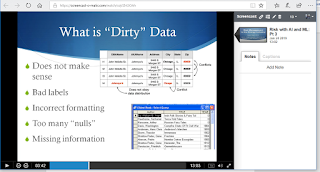
What is “dirty” data?
Does not make sense
Bad labels
Incorrect formatting
Too many “nulls”
Part of the data in a different order or different columns
Brendon Bailey’s Guide: Use Excel or Python to Clean Data?
Use Excel if: You have fewer than 1 million records
You need to do the job quick and easy
There is a logical pattern to cleaning the data and it’s easy enough to clean using Excel functions
The logical pattern to cleaning the data is hard to define, and you need to clean the data manually
When you might use Python or another scripting language:
Use Python if: You need to document your process
You plan on doing the job on a repeat basis
There is a logical pattern to cleaning the data, but it is hard to implement with Excel functions
Brendon Bailey. “Data Cleaning 101” TowardDataScience.com
https://towardsdatascience.com/data-cleaning-101-948d22a92e4
Where do you keep the data?
cloud solutions (Google, Amazon Web Services (AWS))
Software for risk analytics (free / open source):
Spotfire (http://www.spotfire.com)
Qlik.com (free Spotfire alternative, Qlik.com)
Jupyter Notebook https://jupyter.org/
iPython
R
C++
Julia
A Gallery of interesting Jupyter Notebooks (ready to share)
https://github.com/jupyter/jupyter/wiki/A-gallery-of-interesting-Jupyter-Notebooks
How do we predict where and when high-risk situations may take place?
Analyze data
Probabilistic analysis (Spotfire, etc.)
Using geospatial elements
What is the ideal combination of variable or factors to tell us when / where / how conditions are ideal for a) optimization; b) an accident or problem ?
Use multivariate analysis
Bring together all risk factors: geological, logistical, political, economic, legal, environmental, etc.
Weight them by importance (assign a percentage)
https://www.kinetica.com/wp-content/uploads/2017/09/OilGas_jt1.0mn.pdf https://medium.com/syncedreview/how-a...
Learn and Use Machine Learning
Tensorflow: https://www.tensorflow.org/tutorials/keras/
Tensorflow Machine Learning Cookbook: https://github.com/nfmcclure/tensorflow_cookbook
AI and Probabilistic Models
Part I
https://medium.com/tensorflow/industrial-ai-bhges-physics-based-probabilistic-deep-learning-using-tensorflow-probability-5f215c791863
Part II
https://medium.com/tensorflow/predicting-known-unknowns-with-tensorflow-probability-industrial-ai-part-2-2fbd3522ebda
Bougher, Benjamin Bryan. (2016) Machine Learning Applications to Geophysical Data Analysis. Open Collections. University of British Columbia.
https://open.library.ubc.ca/cIRcle/collections/ubctheses/24/items/1.0308786
Bougher, Ben B. (2016) Using the scattering transform to predict stratigraphic units from well logs. Seismic Laboratory for Imaging and Modeling (SLIM), The University of British Columbia, Vancouver
https://www.slim.eos.ubc.ca/Publications/Public/Journals/CSEGRecorder/2016/bougher2015CSEGust/bougher2015CSEGust.html
Data: Trenton Black River gamma ray logs
Methodology: supervised learning ("uses labelled datasets to train a classifier to make predictions about future data" (Bougher, 2016))
Methodology - what's the algorithm? Bougher uses a scattering transform - and then it fieeds a K-Nearest Neighbours (KNN) classifier).
How can I do this?
Using convolutional neural networks to solve a mineral prospectivity mapping problem
Framing the exploration task as a supervised learning problem, the geological, geochemical and geophysical information can be used as training data, and known mineral occurrences can be used as training labels. The goal is to parameterize the complex relationships between the data and the labels such that mineral potential can be estimated in under-explored regions using available geoscience data.
Granek, Justin. (2016). Application of Machine Learning Algorithms to Mineral Prospectivity Mapping. Open Collections. University of British Columbia.
https://open.library.ubc.ca/cIRcle/collections/ubctheses/24/items/1.0340340
TAMUT MBA in Energy Leadership: Click link to apply - more information
For more information about the courses (and this full course), please contact me.
Unit Presentation:
Video: https://screencast-o-matic.com/watch/cqVZht3OAh

PDF (contains links to readings, etc.)
http://zenzebra.net/risk/risk-management-nash-pt3.pdf
Scenario 3: Predicting Risk: Approaches using Artificial Intelligence and Machine Learning
Julia, Patricio, and Reyna are part of a team that is tasked with classifying old shallow-water offshore wells in the Gulf of Mexico in new ways that will help them develop a plan to boost production.

They feel very fortunate in that around a million geological and production records have been scanned, and they cover the 150 or so wells in the field. It’s a treasure trove of data, and they want to incorporate it with the new data in order to develop a profile of the best wells, as well as the good, mediocre, and underperforming wells.
Your Task: Help Julia, Patricio, and Reyna develop a plan to analyze the data, and then help them determine where, when, and how they can use artificial intelligence and machine learning to create profiles.
Here are a few things to consider:
How will you select the data to use?
How will you organize it?
What does it mean for a well to be:
Excellent
Good
Mediocre
Bad
What are the attributes or clusters of characteristics you’ll use?
What approach will you use to select data?
To clean the data?
To analyze the data?
What kind of AI / ML approach will you use?
How will you use the results?
Readings:
Overview thoughts / concepts
Lists of uses of AI / Machine Learning the energy industry
Upstream
Classify wells using your own unique set of criteria
Identify high-value (or potential high-value) blocks
Midstream
Classify infrastructure (pipelines, etc) with your own criteria
Predict overall performance and the location of bottlenecks
Downstream
Refining
Retail / distribution
Wind energy Identify high-value, high-return new locations
Identify small businesses that would benefit from local energy
Solar energy
Workflow for machine learning (in general)
● Pinpoint the problem you want to solve.
● Identify the data you’ll need to use
● Collect the data
● Clean the data
● Organize your data (put into a model - if structured, may use Open Source models such as those from Apache HaDoop)
● Find a model
● Develop algorithms (May use repositories and also cloud-based interfaces)
● Train the model
● Test with data sets
● Reality check
● Decision points
How do I clean data?
What is “dirty” data?
Does not make sense
Bad labels
Incorrect formatting
Too many “nulls”
Part of the data in a different order or different columns
Brendon Bailey’s Guide: Use Excel or Python to Clean Data?
Use Excel if: You have fewer than 1 million records
You need to do the job quick and easy
There is a logical pattern to cleaning the data and it’s easy enough to clean using Excel functions
The logical pattern to cleaning the data is hard to define, and you need to clean the data manually
When you might use Python or another scripting language:
Use Python if: You need to document your process
You plan on doing the job on a repeat basis
There is a logical pattern to cleaning the data, but it is hard to implement with Excel functions
Brendon Bailey. “Data Cleaning 101” TowardDataScience.com
https://towardsdatascience.com/data-cleaning-101-948d22a92e4
Where do you keep the data?
cloud solutions (Google, Amazon Web Services (AWS))
Software for risk analytics (free / open source):
Spotfire (http://www.spotfire.com)
Qlik.com (free Spotfire alternative, Qlik.com)
Jupyter Notebook https://jupyter.org/
iPython
R
C++
Julia
A Gallery of interesting Jupyter Notebooks (ready to share)
https://github.com/jupyter/jupyter/wiki/A-gallery-of-interesting-Jupyter-Notebooks
How do we predict where and when high-risk situations may take place?
Analyze data
Probabilistic analysis (Spotfire, etc.)
Using geospatial elements
What is the ideal combination of variable or factors to tell us when / where / how conditions are ideal for a) optimization; b) an accident or problem ?
Use multivariate analysis
Bring together all risk factors: geological, logistical, political, economic, legal, environmental, etc.
Weight them by importance (assign a percentage)
https://www.kinetica.com/wp-content/uploads/2017/09/OilGas_jt1.0mn.pdf https://medium.com/syncedreview/how-a...
Learn and Use Machine Learning
Tensorflow: https://www.tensorflow.org/tutorials/keras/
Tensorflow Machine Learning Cookbook: https://github.com/nfmcclure/tensorflow_cookbook
AI and Probabilistic Models
Part I
https://medium.com/tensorflow/industrial-ai-bhges-physics-based-probabilistic-deep-learning-using-tensorflow-probability-5f215c791863
Part II
https://medium.com/tensorflow/predicting-known-unknowns-with-tensorflow-probability-industrial-ai-part-2-2fbd3522ebda
Bougher, Benjamin Bryan. (2016) Machine Learning Applications to Geophysical Data Analysis. Open Collections. University of British Columbia.
https://open.library.ubc.ca/cIRcle/collections/ubctheses/24/items/1.0308786
Bougher, Ben B. (2016) Using the scattering transform to predict stratigraphic units from well logs. Seismic Laboratory for Imaging and Modeling (SLIM), The University of British Columbia, Vancouver
https://www.slim.eos.ubc.ca/Publications/Public/Journals/CSEGRecorder/2016/bougher2015CSEGust/bougher2015CSEGust.html
Data: Trenton Black River gamma ray logs
Methodology: supervised learning ("uses labelled datasets to train a classifier to make predictions about future data" (Bougher, 2016))
Methodology - what's the algorithm? Bougher uses a scattering transform - and then it fieeds a K-Nearest Neighbours (KNN) classifier).
How can I do this?
Using convolutional neural networks to solve a mineral prospectivity mapping problem
Framing the exploration task as a supervised learning problem, the geological, geochemical and geophysical information can be used as training data, and known mineral occurrences can be used as training labels. The goal is to parameterize the complex relationships between the data and the labels such that mineral potential can be estimated in under-explored regions using available geoscience data.
Granek, Justin. (2016). Application of Machine Learning Algorithms to Mineral Prospectivity Mapping. Open Collections. University of British Columbia.
https://open.library.ubc.ca/cIRcle/collections/ubctheses/24/items/1.0340340
TAMUT MBA in Energy Leadership: Click link to apply - more information
For more information about the courses (and this full course), please contact me.