Gary A. Nilsen's Blog, page 3
July 11, 2016
Self-Publishing: An exercise in Math
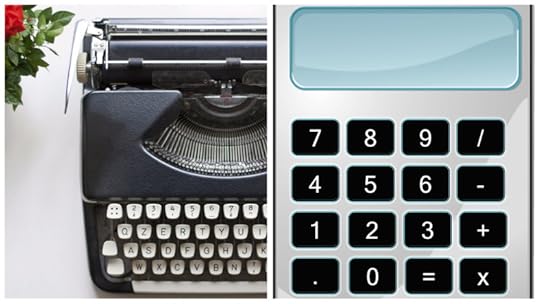
One of the first things an aspiring writer learns is that writing must come from passion and not from a desire to become rich and famous. That is an indisputable axiom, and one I wholeheartedly agree with. So, let’s set aside the rich and famous part – such notoriety goes to a tiny group of authors, anyway: Stephen King, JK Rowling, James Patterson, and perhaps a few dozen others. Instead, let’s focus on the financial realities that come with the decision to self-publish.
For the purpose of this post, I’m going to assume (rather boldly, I might add) that the writer has undertaken all the “must-do” steps of writing, re-drafting, editing, drafting some more, hiring a developmental editor, redrafting, hiring a line editor, corrections, and finally a proof-reader. Then of course, there is the cover art, the copyright, the ISBNs, the cost to prepare mobi, epub, and print ready files, and a publicist.
Okay, so now you’re ready to publish. Today, it’s pretty easy to do – that’s the good news. The bad news is that most of what you might earn is going to disappear into the profit margins of others in the process. If you’re willing only to upload your work in the form of eBooks to Amazon, Barnes & Noble, Kobo, and iTunes and leave it at that, your take home royalties will be palatable (possibly as much as 65% or 70% of the eBook price). However, that also means leaving money on the table. There is a very significant population of readers who still want to hold a book in their hands – you cannot ignore these readers, which means you must provide a way for them to get a physical copy of your book. This is where the choices you make become difficult.
Here are your options: Offset printing of your book, Amazon’s Createspace, and Ingramspark.
The choice to offset print means spending multiple thousands of dollars to have two or three thousand copies of your book printed. By way of example: my novel was 366 pages long, with a 5.5 x 8.5 trim size, trade paperback, and a glossy cover. The cost to print 2000 copies priced at $5,803 or $2.90 per book. This option is only cheaper when considering a larger volume of books. The inherent risk here is that if you fail to sell a major percentage of these printed copies, you will be out the money and will contend with finding a place to shelve them. Here is another truth: most debut writers will come nowhere near selling that many copies.
That leaves the choice to have your book produced via POD: Print on Demand.
Let’s start with Amazon. You already have your book listed with them for Kindle users. Their company, Createspace will take print ready files, produce your book by POD, and ship it out to a reader. They’re very efficient at doing this. Now, here’s the math. In my case, my novel was a young adult urban fantasy. A close audit of all new books in this genre dictated that the selling price of the book could not exceed $10.99. A reader orders the book on Amazon, their commission is 40% or in this case $4.40. Createspace will charge $5.21 to POD your book. That leaves the self-published author $1.38. That’s 12.6% and not a bad thing.
An author can get a store like Barnes & Noble to list your book so that a shopper can have it ordered on BN.com or at the store where a bookseller will find it on their Bookmaster, in-store computer system. Typically, Barnes & Noble wants a 55% cut of your book. In my same scenario, that meant their commission was $6.04 per copy. Ingramspark, the company which produces the POD copies for Ingram Book Company (the company Barnes & Noble uses to order books for their customers) charges $6.30 per copy (Note: that’s 21% higher than Createspace. When I asked about this, I was told that it’s a business-to-business service and therefore they charge whatever they want). This means that for every copy you sell, you lose $1.35. The only way I was able to make it work when uploading my book to Ingramspark was to choose the “less advantageous” (for them, not for me) alternative of having Barnes & Noble take only 40% discount (meaning at the stores, customers have to pre-pay for the book) and allow for the book to be fully returnable. This altered the math such that each sale now produces a royalty of $0.29 per copy. Considering all the cost and years of hard work, this is distasteful. Please note the distinction of having a book marked “returnable”. You might have to place a deposit with Ingramspark to cover the cost of the returns and, also, Barnes and Noble will not typically stock POD books unless they are.
Now let’s wade into murkier waters and contemplate what many writers consider the ultimate for their book – to have it on the shelves of a bricks and mortar store like Barnes & Noble. An author can submit their book to Barnes & Noble’s Small Press Department for consideration of having it stocked in their distribution network. If they accept your book for shelving, you have to think hard about the inherent risks. As I mentioned earlier, to fulfill that order you will either have to have an offset printer produce the copies for delivery to the BN distribution centers or have Ingramspark produce them. I confirmed with Ingramspark that they would not allow for a volume-pricing discount if the order flows down from BN to Ingram Book Company to Ingramspark, they would charge you the same per copy price as if you were only ordering one book. Ingramspark will only offer a volume-pricing discount if you order the copies yourself and arrange for them to ship it to the BN distribution centers. The reduced price (which is still more expensive than an offset printer at that volume, in my case $3.50 vs $2.90) will allow you to sell the copies profitably at the BN desired discount of 55%, but it doesn’t end there. Barnes and Noble also wants the ability to return unsold copies of your book, which means you might inherit back a very substantial number of books and be out the printing cost. Books have, at most, a three-month shelf life at a Barnes and Noble store and often less if it isn’t selling. Shelves are routinely rotated for new titles. Also, consider that if you don’t have a very proactive promotion campaign drawing attention to your book, the likelihood of someone browsing at a BN store picking up and actually buying a copy of your book is a long shot.
When all is said and done, a writer must anticipate an investment of $15,000 to $20,000 if you want to go beyond simple epub and to present your book in a professional way. Writing is art; self-publishing is business.
Filed under: Tips That Help Tagged: book sales, distribution, ebooks, ingram, POD, print on demand, self publishing, supply chain





June 15, 2016
How do you feel?
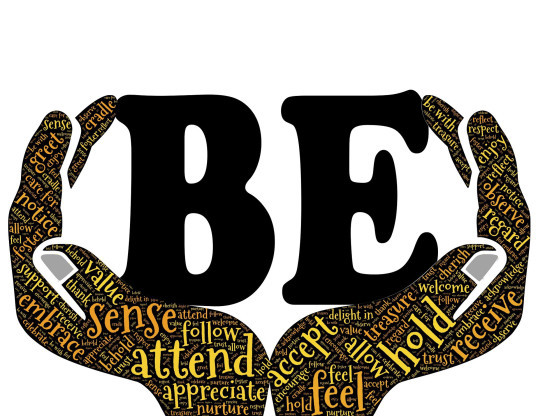
Four words, a construct of social interplay designed to initiate an exchange between two people. It’s up there with Good morning, How’s it going, and Hey there. It’s a question asked and a question answered with equally uninformative phrases like: Doing good, not bad, or I’m okay. Many add the required: how about you, for which round two concludes in the same innocuous manner.
Such lackluster exchanges point to a deficiency in emphasis and genuineness. As a whole, we’re good at the former and not so much the latter. How do you feel? If you stop to consider the question, it’s not a greeting, but an invitation. If you apply emphasis on the last word, how do you FEEL, the asker is being genuine, as if they really want to know. It’s then incumbent on the askee to be honest. That’s usually where the bond crumbles. How often do you pose the question, just to break the ice in greeting, really hoping that you get one of the standard answers from the list? After all, who wants to be the recipient of someone capable of grabbing your ear for an hour on the subject? How often do you avoid the answer because you simply believe the other person is just being polite, or you don’t feel comfortable bearing your soul, or you simply haven’t taken inventory of the real answers? You could ask yourself the question to step away from being two-dimensional, but let’s face it; we’re not really adept at being honest with ourselves either.
There’s a reason therapists belabor their patients with this question. Feelings, something that humans try to usurp as being one of the hallmarks that set our species apart (a blatant fallacy) are what drive us. A feeling is the steering wheel that turns us in the direction of action. I suspect many of our actions derive from a superficial sense of feelings we haven’t adequately analyzed, for if we did, would we truly be racist, or homophobic, or hateful? How can we expect the world to behave better if we individually act from a perspective of inattentiveness to our own feelings? Feeling is the one tool that drives empathy, and empathy breeds tolerance and acceptance. To ignore feeling opens a channel to destruction and hate. If Omar Mateen had stopped to consider the intrinsic value of seeing two men kissing, that the simple expression of love was of far more worth than hate and murder, he would have been able to override the nonsensical and bombastic canon all religions foist on their followers and seen the truth of that moment. He would never have pulled the trigger.
We’ve become too used to spouting words devoid of genuineness. The other morning, watching news coverage on the Pulse Nightclub shootings, the anchor opened the stage to a local journalist on the scene. As the line of communications opened, the journalist began by saying, “Good Morning”. My only thought was, no, it’s really not. The journalist wasn’t trying to be insensitive; he was using a salutation that was simply polite, even though it was horribly inappropriate to the moment. It speaks to the notion that we do so many things by rote.
The element of global danger is escalating at the speed of sound. Many hear the nauseating rhetoric of Donald Trump (the man who would set our society firmly on a path to the dark ages) and react to his hateful invective because on the surface he offers a solution to the issues that strike at the heart of what angers us. He garners support on the principal of mob mentality. The polls suggest an uncomfortably titanic number of people are stupid enough to fall for it. News reports of death and devastation abound everywhere; the United States is not the only target and is frequently the aggressor of the same destruction we rally against. We emphasize our thoughts and reactions from the standpoint of anger and hatred, but fail to infuse our thinking with intelligence. We employ the inelegant methods of a club-wielding troll. We do need to act. We do need to consider how best to dial back the ability of those who seek to do harm. We do need to change the way the country operates. Politicians are, for the most part, useless individuals at best, malcontent enablers at worst. They refuse to act on issues based on truth, honesty, and necessity; instead, they tout party lines, willfully ignorant – to our detriment. Most frightening to consider is that our elected officials lack the essential aptitude needed to deepen the quality of our country. They stand in positions to serve with bought and paid-for elections and by the grace of great campaign managers. So, they serve the masters of finance and corporate greed selling out the American people like the good puppets they are. We stand by and let it happen, time and again. Vote they say. That’s all well and good, but when the offerings are as useless as deciding what flavor of yogurt to have for breakfast, there is little opportunity for any significant change. Never has there been a time when it was more important to close the distance between what we feel and how we act. Not six months or a year from now, but RIGHT NOW.
Dig in, ask your friends, your family, people you work with: how do you FEEL. When someone asks you the same question, think hard on it. Tunnel down and figure it out, then tell them. Your challenge is to find the best method of delivery to effect a change. I’m a writer, the only tool in my arsenal is written expression. You must find your own way; don’t shirk on this responsibility. The only rule of the game is to consider all sides. Test yourself by asking if what you feel really makes sense. There was a common theme of apathy in movies and media in the 1970s; it clearly lingers in the 2000s. Don’t fall prey to that. I don’t care, nor is it important who originally coined the axiom, but it bears repeating: “The only thing necessary for the triumph of evil is that good men do nothing”. I’ve said it before, there is no cure for what ails us as a whole; there is a rising tide of terminally evil people. Sprinkling your dose of honesty and well-considered feelings on an expanding web of well-thinking and well-meaning people might abate the disease long enough that cooler heads prevail as we search for the elusive, and likely unattainable goal of peace and understanding.
So, how do you feel?
Filed under: Uncategorized





May 23, 2016
Making magic…
This blog post was by the man who brought a first reunion of our MFA alumni together with some stellar help – Thank you Darren, Lori, and Kat for this incredible gift. As our captain and mentor, Merle Drown suggested, writers are able to continue writing new novels after the first one because the confidence that you’ll get it done is there. We now all have the confidence that we will have many more reunions to come as a result of this. Writing is magic, and getting back into the bubble was like a trip back to Hogwarts…


How do you make magic? Since I don’t have a cauldron or a wand, and I am unfortunately all muggle, my method was less Prospero and more Field of Dreams. “If you build it…”
This past weekend, twenty some odd writers gathered at a one hundred fifty year old farm house in the rural north country of New Hampshire. It was the first reunion of Southern New Hampshire University’s MFA alumni. These writers traveled from Oklahoma, Michigan, New York, Tennessee, and one even sneaked in from Canada.
The magic was not a slow build. It did not need to percolate. It burst upon us and just gained in power like a flywheel hurtling at maximum speed. People who had not seen one another in years, or had never met, immediately curled into chairs and nooks and shared writing and ideas.
We called our grad school residencies “the bubble.” In the bubble we were not…
View original post 239 more words
Filed under: Uncategorized


May 10, 2016
Alfheim – Gary Nilsen
When you write your heart out, to hear the kinds of things that this review says…well, that’s what it’s all about!!


I was given the opportunity to read Alfheim before it was released and if I’m honest I was a little hesitant given my past experience with free eBooks. When I started reading Alfheim I had to swallow my fears and hesitations because it wasn’t long into the plot and I was hooked. Alfheim follows the story of Timothy, a seventeen year old student who is struggling after losing his mother. He has hardly any friends and a few bullies willing to make his life hell in and outside of school. Just as he gives up hope and contemplates suicide a fairy saves him from his mundane life and himself, introducing him to a world he never knew existed and one that depends on him.
I really loved this plot, it was like nothing I’d read before, I haven’t read many fairy based plots but this book has made me want…
View original post 326 more words
Filed under: Uncategorized


March 31, 2016
Point of View (POV): Who’s Telling the Story Anyway?

Every writer has encountered the POV police, those nagging editors who tell you that you’ve violated the rules and gives you a literary slap on the wrist. The transgression – allowing two or more characters access to his or her own feelings or thoughts within the same scene, or worse – the same paragraph. Omniscient writers of the 19th and 20th centuries were masters of it, but the style has evolved into something much better. Today, we have scene or chapter shifts when writing in third person and alternating first person chapters as an additional choice. Violations of this sort contribute to an agent or editor thinking the writer is an amateur at worst or sloppy at best – neither of these things are desirable.
Rather than looking at these violations as something to avoid, writers should seek to capitalize on that element of craft. Use it! Get inside more of the characters’ heads. Let the reader see and feel what’s going on from the varied cast of characters who inhabit your world. The result will be added depth. After all, who likes to listen to a one-sided conversation?
Broadening the POV experience in a novel can create added tension and conflict; all the goodies that make readers turn the page. Any character in a chapter can be given dialogue, but consider what happens when you are in that characters POV, and the thought is not the same as what s/he says, especially if the character isn’t your protagonist. She might be saying I love you, but secretly thinking: I hate you, and I’m going to kill you. The reader now understands where she’s coming from, but the protagonist doesn’t. It’s like watching a movie knowing the killer is standing behind the door and the hero doesn’t. Instant tension. Readers love tension – give ‘em some.
POV is a direct path to characterization. Just as actions speak louder than words, so does what a person thinks, and in novels we get the luxury of knowing what that is. If your standing in a room of people, you have no idea what people are really thinking, only what they’re doing and saying, so use POV to flesh out your characters; all of them.
How do you avoid breaking the rule? First, practice and more practice writing will help. Second, before you begin to write a scene or chapter, take a moment to consider who the best choice would be in terms of moving the story forward and building conflict and tension. Once you’ve decided, then pretend you’re a demon and simply invade the body of that character. Every thought, feeling, and sentence that proceeds from that character’s mouth stems from the experience, knowledge, and education of that character. How and why they say and do things will be unique to that character, and that makes the story three-dimensional.
Don’t try to avoid the rule – grab it and own it.
Happy writing!!!
Filed under: Issues of Craft, Uncategorized Tagged: Characterization, creative writing, Point of View, POV





September 7, 2015
Theme: To Choose or Not to Choose…

Every writer is ultimately asked:
“What’s your book about?”
“Oh, it’s about this guy who kills a store clerk and then tries to hide from the police.” The recipient of this information will give a nod of the head and then ask:
“Yeah, but what’s your book about?” This is the point where the writer suddenly has no words. Why?
It all comes down to theme. It’s the difference between writing a book that has a lot of plot: bombs going off, people chasing other people, innumerable twists and turns, and reading a book that lasts in the mind of the reader beyond the ten minutes after the book is finished. If you look up any of the cheat sheets like SparkNotes, there is always a treatment about the theme of a book. Some are very broad, like it’s about the forces of good vs. evil. Note: most books are in some way. If one were to write the story I suggested above (I haven’t) one theme I might suggest is that the story concerns how superficial facts are often taken as gospel without looking to the root causes. The perpetrator’s guilt is assured by the public because they simply read the initial facts in the newspaper. It’s still very broad, but it now speaks to a dire societal tendency. Now the book will become an indictment on how the forces of criminal justice and public media operate. The resonance of the book will carry much farther because it’s about something other than how the character ducks the police or the vigilantes at every turn.
Some writers go in with certain themes in mind; others just get the story down on paper first. Either way works, and I’ve used both approaches. In some ways knowing your theme from the beginning is an advantage because you can bear it in mind as you write, and seize the opportunity in the moment to strengthen the ties to your theme. But, here’s the really cool part. If you just sat and wrote from page one to page three hundred with no thought as to what your story is about beyond its characters and plots, you will have subconsciously introduced theme or themes into your story. That’s why revision can be so much fun. Put the finished novel away for a month and then sit down quietly and read it from start to finish. Read it as a writer, and look for what surfaces. In one of my novels I did just that. I told the story of a boy who goes through several traumatic incidents as he tries to deal with his mother’s murder. On reflection, I realized that I had introduced themes of social injustice, racism, and bullying into it with no forethought at all. On revision (so many revisions, including rewriting the entire novel in third from first person) I underscored these issues and strengthened passages with backstory, dialogue, narrative, and plot. The story that emerged was so much better than the first draft, or even the second and third.
One piece of advice: the literary approach to writing dwells significantly on character and theme, but don’t worry about this. Just write. If you have a theme, great, if you don’t, then just get the whole thing down first. It’s my personal belief that it’s possible to achieve a balance between literary and mainstream novel writing. Dan Brown is often accused of writing plot boilers, but if you really look at his novels, he deals with some very substantial themes like the subjugation of women and overpopulation.
To borrow a familiar iconic quote: if you build it, they will come. In writing, if you write it, the theme will come.
Happy writing!

© Vectorchef | Dreamstime.com – Character Boy Write Letter Theme Elements Photo
Filed under: Issues of Craft, Tips That Help Tagged: creative writing, inspiration, Theme, Theme in Writing, writing inspiration


August 30, 2015
Writing: Give yourself permission…

…an odd piece of advice, to be sure. Why would you need permission to write? Because you won’t succeed unless you do.
At its very core, writing is a solitary function. Not so much once you’ve completed a novel; at that point you will be sharing your work with beta readers, editors, proofreaders, agents, and hopefully a publisher. It won’t be so solitary at that point. The project itself, however, is a relationship between only you and your keyboard or, for some, a notepad. The permission you need to give yourself is to take that time away from friends and family. It means saying okay to feeling guilty about doing something for yourself, and not to be so vigilant about doing laundry or vacuuming or getting the car washed. Be a little selfish about understanding that anyone can get the chores done because only you can do your writing. I’ll repeat that: only you can do your writing. The expression of art comes from within; it is unique to the individual. Often, it requires taking that permission one-step farther, and it’s one of the hardest. You must learn to say no: no to invitations, no to watching an extra episode of a TV show, and no to friends and family on occasion because you must be faithful to the process of getting words down on paper.
I have also encountered another form of permission I needed to give myself. Story ideas circle like mad in our minds. While they’re tucked away up there, they remain safe. You remain safe from people thinking you’re a little bit touched in the head (face it – we are). Writers become fearful about bleeding their stories onto the page, as it becomes the evidence of our madness. Give yourself permission to write them anyway. I had a dream when I was about ten years old. Two of the characters in my dream were girls from school, but in my imagination they had morphed into leprechaun-like creatures, hell, they were even dressed in green. They virtually kidnapped me and brought me into their world. I still wish I could remember what went on during that part of the dream, but I distinctly recall them bringing me back at dawn and leaving me in the sunlit hallway of my house. I was frantic they were going to go away, because I wanted to go back. I woke up angry about losing my grip on the dream. I tried desperately to go back to sleep, but it was no use. That dream has haunted me most of my life. While it didn’t provide a distinct story idea, it did give me a sense of wonderment of the paranormal. Forty-odd years later, I did have a story idea, one that involved fairies and elves, but I felt ridiculous wanting to write it. Many people either love or hate the Twilight series, but I owe particular thanks to Stephenie Meyer. While reading her series, I recognized it was okay to put paranormal-esqe ideas into a novel. I’ve not felt funny about writing or sharing any subject since, because I gave myself permission to allow my imagination to produce a completely new world.
There are a gazillion forces and reasons, which prevent writers from writing. Be true to your inner passion and give yourself the permission to do whatever it takes to answer that call. Not every writer is destined to have a book or a short story published, but that has nothing to do with what’s inside. If you truly have the passion, if you actually feel resentful or annoyed when you’re prevented from getting those words out of your head, then write a permission slip to yourself and get to it. It’s the empowerment you need.

Filed under: The Writing Process Tagged: creative writing, inspiration, Permission to Write, writing process


August 22, 2015
World Building: An exercise in creativity…

Perhaps the most fun I’ve had in terms of writing have been those sessions where I worked to create a different world or a world within a world for a novel. For Flashback, a story where an historian tries to prevent an assassination in the past, I needed a way to deal with time-travel in a convincing way. When you write science fiction, if you don’t base your premise on plausible science, you’ll lose your audience before you start and receive countless notes on how you got it all wrong. The challenge, as an accountant by training and profession, was to learn several theories of quantum physics relative to the creation of an artificial wormhole. Physics anticipates their existence, but how do you make a credible one up? This is where the opportunity to stand on the shoulders of genius comes by. Men and women with an amperage of brainpower I will never possess have actually discussed how to get this done. I adapted the methodology into the framework of my story, created a few rules that the plot would have to live by and voilà; I had a secret world known to only a few dozen people and a science-based platform from which to launch my characters. In essence, the science (as science fiction requires) became something of a character in itself. As went the wormhole, so did the stakes for the characters. One of the lasting joys of that exercise – which took a month of reading and re-reading texts on quantum mechanics just to warp my brain around the concepts – was that I now have the foundation for an unlimited number of sequels.
My second novel, Alfheim, a story of a boy who is actually an elf (think more in terms of Legolas and not one who works for Santa) was a whole different challenge. Like a Harry Potter or Twilight, I needed to create a completely coexistent world to our own. I spent hours and hours in the library, reading and soaking up elements of mythology that suited the ethereal images that existed in my mind. Like an architect who chooses from a diverse spectrum of building materials to create the physical embodiment of his creation, I found threads of folklore that inspired me to flesh out the characters that were slowly coming to life in my head. Each discovery of some fascinating morsel forced new questions as to how or why that would work in the world that was emerging. This is the crucial point where it’s imperative to start writing down the rules, the parameters that will govern your world, for once you begin to write, everything depends on those boundaries. If you violate these rules, you will anger your reader and unwittingly introduce a deus ex machina along the way, something to avoid at all costs. In the exercise, I borrowed from Tolkien, from sources on Fairy and Elfin lore (Celtic and Scandinavian), Medieval shipbuilding techniques, Medieval clothing styles, castle structures, ancient Celtic names and words and their meanings and pronunciations, Irish history, American history, driving through the White Mountains of New Hampshire, but never once reading a book of similar genre until the book was completely done. Often, the advice is to read heavily in the genre you are interested in writing. Counter to this, I avoided it. I wanted the mythology and world building to be completely free of any other writers’ notions of what a fairy world is like (and there are many writers in the field).
The important things to remember in doing world-building are these: Create the rules for your world and stick by them, violate them only with a really good reason, make them as plausible within the expectations for the suspension of disbelief as possible, don’t be afraid to let your imagination run totally wild, and for heaven’s sake – HAVE FUN!
Filed under: The Writing Process Tagged: creative writing, fantasy, imagination, world building


August 9, 2015
A picture is worth…

From: Philosophywall.com
As writers, we already possess an active (if not over-active) imagination. Often, the images in our heads are hazy, and we can’t quite glimpse the sharp details when it comes time to describe a person or a place in the narrative. This is especially true in the case of authors who dabble in novels with world building or historic fiction. When I was writing about 1940s Russia, it was invaluable that I found photographs of Moscow, the uniforms the military wore, the cars they drove, the weapons they used – the internet and sites like Pinterest are visual encyclopedias that lend an air of authenticity to our descriptive abilities.
Later, when I turned to writing fantasy, I found it was like trying to describe something I was seeing but without glasses, the images were there, but they were blurry. It was like having a hankering for steak when the aroma from the bar-b-que comes your way. You smell it, you can almost taste it, but you can’t quite describe it – is it a London broil or a thick Porterhouse, a strip steak or a ribeye? The compulsion is to run outside so you can see it to describe it in a way that matches your imagination. So, I turned to imagery to boost my ability to describe what I was thinking. We’re taught to study other writers for craft. Why? So we can copy what they do and, hopefully, improve our own craft by seeing if their methodology compliments our own natural writing abilities. Images for everything are out there. At first, I found myself thinking it was a cheat in some way. I got over myself.
My thirst for imagery was slated in two ways. First, was by studying real people to see if they hit the mark by congealing what I was thinking into something flesh and blood. The first time this happened to me was a shock. I had written the character of Victoria Heath, a young archaeologist. I knew her intimately, but only had a sense of what she looked like. It wasn’t completely necessary for the story, but I wanted to know. One evening, I went to see the movie Julie and Julia. Amy Adams was the protagonist of the story and played the part of Julie who decided to write a blog by cooking every recipe in Julia Child’s groundbreaking cookbooks. There was one scene in the movie where Amy Adams sat in her cubicle at work, wearing glasses, and talking on the phone. A voice inside my head screamed: “Oh my God! That’s Victoria Heath!” I checked myself first to make certain I hadn’t actually screamed that out. I had not, thankfully. But, from that moment on, I had a very clear idea of who my character was, she was now complete in my mind.

When it came to fantasy imagery, it was a little tougher, because the stuff I was writing about didn’t really exist. I found artists, especially fantasy artists and photographers, the most wonderful, if unwitting, collaborators. Again, I had the fuzzy images in my head of what my characters and settings looked like. I found websites – Pinterest, of course, and places like Deviant Art to have massive collections of the most imaginative people. I was in awe of their ability to render such fantastical images in the form of visual art. We use words, they use canvas, graphic arts programs, and color – it’s like we speak English and they speak French, but we both understand what it means to be kissed. So, I would peruse these sites for hours, and so often find a drawing or a painting or a photograph that would illustrate so beautifully what I was thinking and imagining. I could take whatever part I wanted to use and describe it in words the way a sculptor carves a statue from looking at a model.
Just by way of some examples:
In my novel, Alfheim, I had an image of massive trees for an elfin realm – even California Redwoods wouldn’t have served. I found this:

The art is heavily Asian in flavor, which I didn’t use, but the other elements were there, the diameter of the trees, the circular stairways, and the deep, dark forest tonal qualities.
Later on, my characters traveled to a very secret place, my description might not have been so rich without these:


Then there was costuming. It was wonderful seeing the textures, and the colors, and the styling:

I imagined forests lit by thousands of fireflies, and sure enough, an artist had depicted the very image to compliment what I was dreaming of:

And lastly, for my central female character – a fairy creature, I looked at the current slate of young actors. And there she was, the perfect embodiment of the girl I pictured.

Chloe Grace Moretz
We often listen to music to help set a mood. Pictures can do that, also. As I mentioned in a previous post on ‘what if’, images can have the same effect, especially when you encounter one that reminds you of your own imaginings and then say ‘what if’ or ‘what about’. Descriptions might open in ways you hadn’t thought of. Try it, you might like it.
Filed under: The Writing Process Tagged: A picture is worth a thousand words, imagery, inspiration, writing inspiration





August 4, 2015
What if?

Submerged Selfie
Nothing has ever been invented, ever discovered, or ever written that hasn’t been in answer to that question. I can’t speak for all writers, but when those two words cross my mind it usually means a trip through the worm hole or a peek through the key lock, and to quote Dr. Seuss: “Oh, the Places You’ll Go!”
It’s true that I’ve had story ideas from the time I was a teenager, but they rarely went anywhere. Once, I had this great idea for a Civil War novel based on a ‘what if’, but that was before the internet, and I was living in a place devoid of libraries and books.

Red sands outside Riyadh
I’m fairly convinced that if the internet and the ability to do in-depth research at a keyboard had existed in the early 1980s, my writing career would have developed sooner.
In 1997, I was going through my underwater archaeology phase. I never lost the passion for it, but at this point it’s served only by reading articles about it. In March of that year, I was kneeling on a bed of sand, thirty feet below the surface of the Red Sea just off-shore a tiny uninhabited island called Black Assarca. In turn, this remote location was twenty-five miles off the coast of Eritrea in Africa. Under sixteen hundred years of sand and coral encrustation was a shipwreck of unknown origin, and we were painstakingly fanning layers and layers of sand away from the artifacts buried beneath from around the time that Rome was being sacked by the Visigoths. The Persians were fighting the Armenians, Attila was running around with the Huns, and the Vandals were beating up on Carthage – almost sounds like a normal day in the New York Times, today.

My Bedroom complete with spiders nearly the size of your fist

The Bathroom over an open hole to the sea. High tide was problematic
Anyway, on the first couple of days working in my assigned area, I uncovered three amphorae, sort of the ancient equivalent of Tupperware, only much bigger and heavier. I was excited; I was holding a vessel in my hands that had last been handled by some guy who thought of Rome the same way we think about the United States now.

Amphorae
Eager to continue, I went back the next day to my section and fanned away at the bottom, creating a swirl of sediment as thick as a nineteenth-century London Fog. What did I find? A stone block; even the fish are looking at it like: “Dude, you got a rock.”

My Block
The head archaeologist on-site scratched his head for a moment and told me not to worry, it was probably used for ballast. Undaunted, I went back to work. Then, out of nowhere – because that’s where it comes from, nowhere – WHAT IF? What if I uncovered something that just couldn’t be there, something unreservedly anachronistic? How would it have gotten there? Who would have put it there? Needless to say, I overstayed my bottom time and had to be brought back to reality by the dive tender banging a piece of rebar on the steel tub of the platform overhead.
Writers know that once the seed of an idea is planted, it germinates and gestates, twining its tendrils of imagination so firmly around the contours of your brain that if you don’t find a way of getting it out of your head, you’ll simply explode – yes, it’s an alien life-force. Three years later, however, the imagining of how that artifact got there became the opening scene in my first completed novel, Flashback. It’s ironic that what firmly planted my feet on the road to writing was writers block. Sorry, I had to go there. I dug up a block, get it? Never mind.

Flashback. One of these days it will be ready for release.
The point is, one must always allow the synapses of their brain to be open to any situation that begs the question: What if? Even if it doesn’t occur to you, just pick a few moments, look around and ask the question – you’ll never know what you’ll find.
Filed under: The Writing Process Tagged: imagination, What if, writing ideas, writing process