Gary A. Nilsen's Blog, page 2
August 26, 2017
Book Review: The Trees Beneath Us
[image error]
A man named Finn goes for a walk, a really…long…walk; a hike actually, along a fifteen-hundred mile stretch of the Appalachian Trail. As stories go, one might think it a yawner of a novel, but in the superbly capable hands of a master storyteller like Darren R Leo, it becomes a journey, not just of time and distance, but one that reaches into the soul. Leo leads a sojourn to the headwaters of emotion and treats us to the purest form of contemplative reflection on life and joy and heartache.
Like the switchbacks of a trail into the mountains, the book juxtaposes life along the path with snippets of the one left behind; the serenity of the forests, the perfect backdrop to sort out the experience of a lifetime in consideration of the question: “what do you do when you’re done living before your life is over?”
Readers who have suffered forms of clinical depression and anxiety, will instantly relate to Finn. Readers fortunate enough not to have suffered forms of clinical depression and anxiety, will have the opportunity to experience that cloud of darkness, which is the great gift writing such as this offers.
It’s hard to imagine how this book has not risen to the top of an Oprah booklist, or missed landing on the shortlist for any number of prestigious book awards. It’s said the true success of a book can be measured by how long the story will stay with you after reading the last page. This one might alter your DNA.
Filed under: Book Reviews Tagged: amazing fiction, Darren R Leo, fiction, inspiration, The Trees Beneath Us





August 22, 2017
Book Review: The Giving Tree (with some additional commentary)
[image error]
The other day, I took a call at the multi-story bookstore where I work. The customer inquired whether we stocked The Giving Tree by Shel Silverstein. A quick check of our inventory revealed that we did.
“Oh yes,” I said. “We have three dozen copies.”
“Wonderful,” she said. “Would you please make sure you reserve a copy and have it waiting for me by the cash register?”
I wanted to mention that the simple request required me putting her on hold, walking to a different part of the store, retrieving it, returning to the phone and the computer, filling out then printing a document with phone number and name, leaving a line of waiting customers, go downstairs to the register area to file the book on a shelf, and finally return upstairs to help the customers who had actually made the effort to come to the store and needed some help. Had she simply arrived, taken the escalator to the upper floor, we could have handed her a copy of the book in less than fifteen seconds. I didn’t mention any of this, it would have made me a bad employee.
There is a point to telling this, beyond my growing disillusionment with retail in general. A fellow bookseller offered an opinion on the book in question. It wasn’t favorable; my curiosity peaked. I took another copy (of the remaining 35 on hand) to read during my break; it’s very short.
The Giving Tree is a celebrated children’s book that features a tree who loves, unconditionally, a boy who plays in and around her, eating her apples, and napping in her shade. It’s charming through the first few illustrated pages. At each stage of his life, the boy details what he really wants, and the tree always finds a way to help him. He takes her apples to sell for money, takes her branches to build a house for his family, cuts down her trunk to make a boat because he feels like sailing somewhere, leaving her just a stump in the ground. As an old man, he even uses that as a place to sit, once again, for his comfort.
It’s true the parable delivers a message of inexhaustible and unrequited love. The tragedy is that the boy never shows gratitude, he merely shows up when he wants something. The tree’s unwavering devotion is evident as she derives joy by giving without question or remorse, sacrificing herself (literally) for the boy’s needs.
The book left me feeling angry and unreceptive to the theme. There is so much evidence in the world that suggests just how many people are that boy. The tree stands in for the devoted parents of selfish children, the battered spouse in an abusive relationship, the businessperson who climbs the ladder taking more and more with little or no thought of who gave so he could have.
The story seems to suggest it’s all right to give and give to the point of self-destruction. However, it’s not okay, and for my money, the book is over-rated for what it lacks to teach. Had there been even the slightest guilt on the part of the boy at any stage in his life, some recognition for what the tree had done for him, I might have had less of an issue with the book.
It made me wonder if the woman who called for a copy and insisted on the reservation and special shelving would ever realize she behaved just like the boy in the story. It never occurred to her what someone else must do to cater to her needs, or that sometimes it’s nice to consider what it costs another person to do something for you. It might be a good suggestion to use the book, not to teach about love, but to demonstrate how not to behave if on the receiving end. I’m afraid the lesson will never register with those who need to comprehend it the most.
Filed under: Book Reviews Tagged: Love, Retail, Shel Silverstein, The Giving Tree





July 31, 2017
Book Review: The Beast Is An Animal
[image error]
Obviously, as an author of fantasy fiction, I love fairy tales. The Beast Is An Animal is such a story; think Brothers’ Grimm. Immersing in the story was like a cool swim on a hot day. The fictional setting felt like seventeenth century New England with small changes in the spelling of names and places to suggest a landscape that was different; forest became fforest and Alice became Alys, the story’s heroine.
The book touts the story of a girl coming of age while learning to deal with good and evil, beauty and ugliness. One cannot exist without the other, but she finds it all exists, within both her own character and her immediate environment.
I didn’t work hard to study the thematic treatments Peternelle van Arsdale infused in the work, but one especially relevant statement for our times rose to the surface, at least for me. Specifically, Beast demonstrates how extremism gives birth to evil, which continues to feed on itself until everything around it becomes tainted and ripe for destruction. In reflection, I’m not quite certain what role the Beast plays in the narrative as Alys must deal with creatures who morphed from children to something sub-human. The Beast itself did not appear to have much in the way of malevolence, and in fact, it seemed to be at risk right along with the humans of Alys’ world.
If there was one disappointment, it came at the end. Alys serves more as a spectator to the defeat of evil than an active defender of good, and the heroine who saves the world for the people she loves.
Overall, van Arsdale is a competent storyteller and should be on a short-list of authors to look for again.
Filed under: Book Reviews Tagged: fantasy, Peternelle van Arsdale, The Beast Is An Animal, young adult, young adult fiction





June 4, 2017
Book Review: Reaper
[image error]
One of the earliest forms of trauma for most young teens has to deal with the subject of coping with death. Reaper, by Kyra Leigh, follows the story of Rosie Wolfe, which starts with her waking up in the strangest looking hospital-like room. It’s a prelude to the discovery that she no longer inhabits the land of the living. Leigh puts a completely different spin on her examination of death by having her hero dealing with it post-mortem. Not only does the trauma of her father’s death from cancer still haunt her, she now faces some very unsavory tasks in order to win her place in paradise in order to reunite with him. There is a very clear Heaven Can Wait aspect to the story as the after-life has a fully functioning set of rules and procedures governed by the Grim Reaper and her administrative staff.
By alternating flashbacks of Rosie’s life with her current quest, we come to understand how tenuous the bonds of life are and how capricious death can be. They seem both cruel and uncalled for. Leigh is a competent writer who quite deftly tugs, and sometimes wrenches, at your heartstrings.
There was a level of disappointment in that Reaper never delivers a solid resolution except the conclusion that death, in and of itself, leaves loved ones floundering in its wake and that there is never a one-size-fits-all way to deal with it.
Filed under: Book Reviews Tagged: death, fiction, ya, young adult, young adult fiction





May 30, 2017
Book Review: The End Of Our Story
[image error]
This exquisite novel, by Meg Haston, needs to be a best seller. The treat is how she probes the fringes of relationships and then dives in deep, exploring and tasting the facets and flavors of complex motivations, false starts and stops, hurt and joy, and finally resolution.
Good writing is supposed to make you feel. For me, The End Of Our Story drilled through forty-five years of ‘trying to forget’ and exposed a raw nerve that throbbed as painfully as when I was seventeen. And, that’s not a bad thing; it’s a tribute to Haston’s talent. The story centers on two teens: Bridge (short for Bridget) and Wils, a pair who have known each other since childhood. Through a time-staggered series of chapters, we experience their path, and witness the significance of people’s actions, how they can alter an otherwise beautiful trajectory. While it sits on the shelves in the teen section of a bookstore, adults should not feel shy about jumping in with both feet if for no other reason than to accept the reminder of the their role in teen life.
If there is any detraction, it might be the repetitive observations that Bridge makes while dealing with the narrative’s issues. Having said that, I still could not put the book down, staying up quite late absorbing the storyline. While it is certainly a stand-alone novel, I am hoping that Haston discovers a compelling way to continue Bridge and Wils’ story.
Filed under: Book Reviews Tagged: fiction, ya, young adult, young adult fiction





May 18, 2017
Review: Wake Up and Smell The Coffee
[image error]
Wake Up and Smell The Coffee, is a collection of monologues from actor and playwright Eric Bogosian that stream together into a one man show that examines a variety of topics from family to religion to the frustration of societal inequity and the devastation that comes with the realization there’s nothing you can do about it. It’s a play that makes you think.
In the interest of transparency, I must admit two things: I have some acting experience, and I know Frank Zagottis, the consummate performer in this adaptation. First, from an acting perspective, to tackle an eighty to ninety minute monologue is insane. In a normal play, an actor is part of an ensemble, sharing dialogue and blocking. In “Wake Up” it’s Frank and only Frank. Second, I know Frank can sing – I’ve seen him, he teaches film, he’s an all-around good guy. What I didn’t know was that he can act. My yardstick for measuring a performance is when an actor is subsumed by a role. When you watch Tom Hanks play Forest Gump, you’re not thinking “oh, that’s Tom Hanks playing Forest Gump”. When you see Stanley Tucci preen as Caesar Flickerman in Hunger Games, you’re witnessing a wholly new entity in the form of a character. Watching “Wake Up and Smell The Coffee”, I lost Frank. I forgot I knew Frank. He disappeared in plain sight.
This one-man performance is a must-see and begs the question, what will he do next and how long will we have to wait for it.
Filed under: Reviews Tagged: Amazing Performance, Eric Bogosian, Frank Zagottis, Plays, Wake Up and Smell The Coffee





Book Review: To Catch A Killer
[image error]
Sheryl Scarborough’s novel follows a teen girl, who as a toddler witnessed her mother’s murder, a horror that remains unsolved. Obsessed with that lack of resolution, Erin is drawn into the world of forensics, largely in part because her adoptive mother’s brother works for the FBI and authored a book on the subject. Her life is further complicated by an uncommunicative parental figure, a strong desire to learn the identity of her birth-father, and deal with the murder of her favorite teacher – the catalyst that launches the story. Tossed into the mix are her burgeoning feelings toward a boy who is a prime suspect and her relationship with two zany girlfriends.
The book felt like a contemporary spin on a Nancy Drew plot as Erin moves deeper into the gray areas of the law in her search for clues to both murders and her paternity. In a classic case of misdirection, suspects keep stepping to the forefront as Erin struggles to handle the full range of teen emotions that pull in all directions.
Though she faces danger on a number of occasions, the narrative never generates a truly palpable sense of peril, and the real culprit barely scores a menacing personality. Teen fans of TV shows like CSI will appreciate the forensics primer as Erin works through the evidence she accumulates.
A fun story even if it lacks strong emotional teeth.
Filed under: Book Reviews Tagged: creative writing, fiction, Thrillers, young adult





March 23, 2017
Book Review: Without Mercy
[image error]
Reading Without Mercy by Colonel David Hunt and R. J. Pineiro was like a long-awaited visit to the house that Clancy built. From start to finish, the writing duo maintains heart-pounding pacing and tension. In an all too plausible scenario, radical Islamic terrorists target New York City once more, this time with a nuclear device. The remainder of the book has multiple covert and military assets, several federal agencies, and a new President of the United States working around the clock to prevent the rest of the planned attacks.
Hunt and Pineiro have a tendency to over season their writing with the precise make and model numbers of ships, weapons, and guns; presumably to lend an air of authenticity to the narrative, but the mixture could have done with a little less salt. As always, it’s fun to see stories where the best of American talent is unleashed against impossible odds and its many enemies. It was refreshing to see a movement away from male dominated thrillers by following four very strong female characters throughout the novel, though they couldn’t resist having two of them dealing with romantic issues. But then again, strong human/romantic relationships are often forged against a backdrop of death and destruction and are a great source of tension.
Hunt and Pineiro made sure to illustrate the mindset of the terrorists and elucidate their motivations. The reader would be hard-pressed to resist the sense of empathy that comes with seeing what drove them to their hatred of the west. They’re also not shy about pointing out the posturing among politicians and government agencies and how dangerous it can be when faced with time bomb.
Without Mercy delivers a story that reminds the reader just how unstable and unsafe our world is and begs the question of how effective our leadership would be if the circumstances in the novel played out in real life. Given the current political climate, the contemplation of that is almost more frightening than the book.
Filed under: Book Reviews Tagged: Thrillers





March 9, 2017
Book Review: Ruthless
[image error]
Ruthless, a realistic young adult novel by Carolyn Lee Adams is a competently told tale about a girl who struggles to survive as the target of a serial killer. Through her ordeal, the heroine Ruth is forced to strip her self-image and reassess the person she thought she was. The plot alternates between the immediacy of her predicament and chapters devoted to backstory. Though relevant, Adams oddly chooses to relay this information by increasing the narrative distance, offering the material through an unnamed omniscient voice. She squanders the opportunity to dig deep and mine the veins of gold that would have enriched the characters. Ruthless does reflect on the way choices and actions alter personality and add to baggage that will forever be a part of the soul, especially when committed by necessity. Adams also offers a distinct testament to the prevalence in our society to stand by and allow bad things to happen.
Serial killers are the true monsters among us, and if the novel falls short in any way, it’s by not having a deeper sense of what Ruth was truly up against. A hero’s dilemma is only as great as the obstacles he or she must face. By increasing the terrifying nature of the killer, it would have served to increase our fear for Ruth. As serial killers go, I thought the character, initially known to her as Ted, was somewhat mild. The reader sees the evidence of his past crimes, but we didn’t get enough sense of the wolf in sheep’s clothing, the thing that is most fearsome about these people. It’s the deadliness hidden by the face of normalcy that provides the minefield of suspense for the reader, and on that score, Ruthless didn’t quite hit its stride.
Filed under: Book Reviews, Uncategorized





August 18, 2016
Barnes & Noble and the Writer: Friend or Foe?
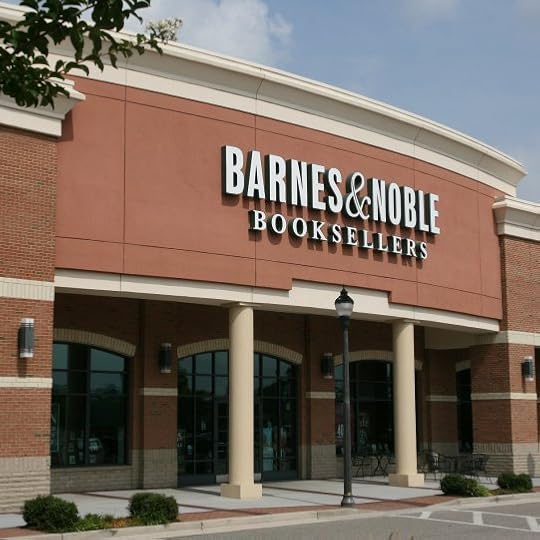
Here’s a hint: they are not a writer’s friend. Walk into any Barnes & Noble and this might seem counter-intuitive given their very existence rests upon the backs of tens of thousands of writers – past, present, and future – whose works line the shelves of every store. As a company, Barnes and Noble does all in its power to cultivate a strong consumer/membership base. You can’t check out of the store without being quizzed about membership status. The recent trend is for staff to hawk a Barnes and Noble MasterCard as a means to build customer loyalty (the carrying cost of credit notwithstanding as compared to the free $25 gift card and 5% cash back). Their overall approach is to offer discounts (from 10% to 40%) off the retail price of books through risk-free acquisition of titles and demanding deep wholesale discounts from publishers in order to give it away to their customers.
It is especially painful for small indie presses and self-published authors. If the small press department is willing to stock the title, their terms generally require a 55% discount from the retail price, so if a trade paperback book (not the smaller dime store mass-market size) was to retail for $10.99, the publisher would get $4.95 to cover their profits, the cost of production and printing costs, the marketing and publicity costs, and a small amount as a royalty to the author after their agent withholds a fee of 15%. Barnes and Noble keeps $6.04, so they’re happy to start discounting to their customers – no sweat off their back. But it doesn’t end there. If after a few weeks, and rarely longer than three months, the title doesn’t sell, Barnes and Noble simply returns the unsold books to the publisher for a full refund – again, no sweat off their backs – the loss is absorbed by the publisher. This, in turn, makes it more difficult for a publishing house to stoke the fires of creativity as cash flow is diverted back to warehousing “unsuccessful” titles and is now unavailable for even modest advances to help struggling writers get their product to market. This is one of the reasons why POD (print on demand) books are becoming more and more common; it alleviates the need to devote large blocks of capital to pay for lower cost print runs for books that might only sell a few hundred copies at worst and a couple of thousand at best. As a policy, Barnes and Noble will not stock POD books. The best an indie press or self-published writer can hope for is to have the title made available for ordering through BN.com or via their in-store Bookmaster program should a customer happen to ask for it.
The problem is compounded in one additional way. If a customer orders a title that is by POD, the Barnes and Noble system passes the order to Ingram books (one of the two major book distribution companies) who in turn orders the book from Ingramspark, the company which actually does the printing. Ingramspark’s charge for printing a book is at least 21% higher than Amazon’s company, Createspace, to produce the exact same product (based on the identical print ready files) which further diminishes the compensation that might eventually trickle down to the author. In a recent analysis of a title from a small indie press, a young adult novel was priced at $10.99 – the upper limit for the majority of similar trade paperback offerings at Barnes and Noble. The 55% discount of $6.04 plus the printing cost from Ingramspark of $6.30 meant the net to the publisher was a negative $1.35 – a loss for each copy sold to Barnes and Noble. The publisher, who could not afford the alternative investment of $6,000 to produce 2,000 copies at a much lower per book cost that would most likely be returned anyway, was forced to offer the book at a discount rate of only 40%. The mathematics turned the sale profitable, but only to the extent that the publisher and the author would share a mere twenty-nine cents per book while Barnes and Noble gets to play with $4.40. The publisher/author is further penalized under this scenario by forcing a customer at the store to prepay the purchase should they wish to order a copy – not so with most all other titles on their system. It’s a stigma that leaves a poor taste in the customer’s mouth and nine times out of ten, the customer simply declines.
There is no lack of popularity for brick and mortar bookstores, eBook sales have leveled, and the attractiveness for holding a book in hand is as strong among customers as it ever was. It seems strange that Barnes and Noble fails to take the opportunity for championing the writers who feed its income-stream instead of penalizing them through extra profit-taking and posturing for their customers. As of this past Tuesday, the nascent CEO, Ron Boire, was released by the company’s board of directors as not being a “good fit.” Leonard Riggio, the businessman who purchased the company back in 1971 has taken back the reins for the time being. It can only be hoped that Mr. Riggio comes to recognize the value of the creative people whose efforts have lined his pockets for over four decades before the company is eclipsed by Amazon who offers much greater breathing room for writers.
Filed under: Industry Issues Tagged: authors, Barnes and Noble, book publishing, indie publishing, Ingramspark, self publishing, writing