Debra H. Goldstein's Blog, page 33
August 4, 2014
Debra Does Cooking by Debra H. Goldstein
Debra Does Cooking by Debra H. Goldstein
Remember when I decided to try my hand at pottery? (Stop laughing L.M.) Well, I’ve decided to impress Joel with my culinary talents. There is some danger in this decision because I’ve spent thirty years training him to expect a certain level from my homemaking skills.
For example, I was working on a new recipe a few weeks ago when a button popped off his pants. Disgusted at having to change his pants, he said something about needing to take the slacks to the tailor. I was focused on my dish and without thinking volunteered, “Would you like me to sew it back on?”
He stared at me and asked, “Do you know how to do that?”
“On second thought,” I replied, “take it to the tailor.” I then went back to figuring out how to rescue the recipe I had accidently put 2 tablespoons rather than ¼ teaspoon of pepper into when Joel distracted me during my crucial measuring moment. At dinner, there was no further mention of his pants and we agreed my dish looked good, but it definitely had a bit of heat.
My new interest in the kitchen has resulted in me taking stock of my kitchen equipment. Although I could boast some still in their box utensils and two unopened spices from the “Can She Recognize This” kitchen shower my friends had for me, I never received the pots, pans, and gadgets new brides receive today. The high points of that shower were when I recognized a garlic press and when I pulled out some beautiful paper plates and matching napkins and someone quipped, “Oh, look! She got her good china.” The low point of the shower was opening a mixer with dough hooks rather than the food processor I really wanted.
I’ve made up for being deprived during the last three weeks. I now own a new wok (I did have one once but I used it for something other than cooking and it was never the same), an on-the stove smoker (the salmon came out good, but the house reeked of burnt ash for two days), and my first crockpot (I made Joel come home for my first one pot dinner at four because I miscalculated the 7-8 hours the stuff was bubbling). Over the years, I’ve always enjoyed purchasing cookbooks (some of my favorites include Peg Bracken’s I Hate to Cook Cookbook; Come For Cocktails, Stay for Supper; and especially You Should Write a Cookbook for its spinach pie recipe that features thawed frozen spinach soufflés), so it was a no brainer to buy five new ones to match my new kitchen items. I’m sure I’ll use four of them often, but the one I accidentally downloaded won’t get much use as I read somewhere it wasn’t wise to put an ipad near gas generated flames.
For years, I joked that I only cooked when we had snowstorms. Joel hasn’t said he wishes I would return to that practice, but he has started calling me every afternoon to ask “Would you like to go out for dinner, tonight?”
Maybe I should take that quilting class that was on my post-retirement bucket list.



July 21, 2014
Guest Blog: The Writer’s Life Isn’t for Sissies by Marilyn Levinson

Marilyn Levinson-Author
The Writer’s Life Isn’t for Sissies by Marilyn Levinson
The electronic age has made it easy for anyone to self-publish a work of fiction. All you have to do is write a book. It needn’t be approved, edited or even good. As long as the text is formatted correctly, up it goes on Amazon and other publishing sites. And voilà! You’re an author.
Perhaps, but who’s going to buy your book besides your nearest and dearest? Who is your audience? Where are your readers? And what do you plan to write about in your next book?
Because so many people are writing novels these days, it’s difficult for a writer to make his or her mark in today’s literary marketplace. There are many choices. Writers can self-publish, publish with small presses, or publish with the big companies. I know, because I’ve gone the route of all three. We’ve an over-abundance of available books because so many writers give away e-copies of their work, hoping that this will entice readers to buy their other titles. Every day I receive several emails encouraging me to download novels that are inexpensive or free. Which is why I have close to 600 novels on my Kindle, waiting to be read.
This proliferation of novels gives the impression that becoming a novelist is easy. That anyone can write a good book that will sell thousands of copies. It’s not so. Becoming a good fiction writer is a process that takes years of hard work. Sure there are a few exceptions, but I believe the more books we write, the better skilled we become at creating characters, weaving plots, and telling satisfying stories. In The Telegraph on June 29th, best-selling crime writer, Val McDermid, “has claimed that she would be a failed novelist if she were starting out today because the publishing industry no longer allows for slow-burning careers.”
“It takes a strong stomach to be a writer!” says Peg Cochran, who writes the Gourmet de Lite series under her name and the Sweet Nothings Lingerie Series as Peg London. “It’s a scary business putting yourself out there…not only am I nervous about not living up to other authors, I’m worried about living up to myself!”
Peg isn’t alone. As a mystery writer, I know I’m only as good as my last book. I hope readers will like my next book. Will they love my characters? Will the plot hold? Will they detect the murderer before I want them to?
 And it’s not enough to write an enticing mystery. Unless you’re very successful, very famous, or both, most mystery writers I know spend a good deal of time promoting their work. I was delighted that my mystery, A Murderer Among Us, was listed on Book Town’s 2014 Summer Reading list, and that A Murderer Among Us & Murder a la Christie made Book Town’s 2014 Summer Mystery Reading List. Then it was up to me to tweet and announce these honors to my Facebook and Yahoo groups. I must seek reviews of my books and ask to have my books featured on various sites and blogs. It’s my job to promote my novels and tend to them as I would my children, making sure they’re in healthy, growth-producing after-school activities. The odd thing is, I never know what helps improve my sales, but I get the word out when my books receive 5 star reviews and accolades.
Reviews are something else we authors have to deal with. Good reviews are wonderful to read. We’re delighted that readers are enjoying our books, and happy that they “get” us. Eventually we all get the other kind of review. The not so great review or even a hurtful review from a reader who was less than satisfied.
We’re told not to respond to reviews that are cutting or cruel, or even inaccurate. This is  frustrating, but I try to concentrate on the good reviews and the many people who have made it a point of telling me they enjoy my books. I’ve checked out the reviews of well-known novelists and was surprised to see that they had their share of not so great reviews. It gave me heart to know that these authors still sell thousands of copies of their novels. It reminded me that not everyone is going to love my work.
Having a writing career means finishing a novel and moving on to the next. It demands hours of promotion, dealing with deadlines and edits and covers you may not like. Coping with changing editors, an editor who changes your every other word, rejection. You name it. There are many frustrations, but having a writing career means you’re doing what you love best—writing.
~ ~ ~ ~ ~
A former Spanish teacher, Marilyn Levinson writes mysteries, romantic suspense, and books for kids.
Her latest mystery, Murder a la Christie, is out with Oak Tree Press. Untreed Reads has brought out new e-editions of her first Twin Lakes mystery, A Murderer Among Us–a Suspense Magazine Best Indie and its sequel, Murder in the Air. Both Murder a la Christie and A Murderer Among Us are on Book Town’s 2014 Summer Reading Mystery List. Her ghost mystery, Giving Up the Ghost, and her romantic suspense, Dangerous Relations, are out with Uncial Press. All of her mysteries take place on Long Island, where she lives.
Her books for young readers include No Boys Allowed; Rufus and Magic Run Amok, which was awarded a Children’s Choice; Getting Back to Normal, & And Don’t Bring Jeremy.
Marilyn loves traveling, reading, knitting, doing Sudoku, and visiting with her granddaughter, Olivia, on FaceTime. She is co-founder and past president of the Long Island chapter of Sisters in Crime. She can be contacted through her website http://www.MarilynLevinson.com. For all of her writings, check out her Amazon page at http://amzn.to/K6Md10 .


July 7, 2014
Fourth of July Gratitude
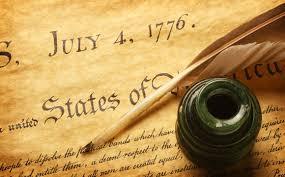 Fourth of July Gratitude by Debra H. Goldstein
When I think about the Fourth of July, I think about watermelon, fireworks, ribs, and family fun, but I also realize it celebrates the adoption of the Declaration of Independence. The signing of that short document on July 4, 1776 declared our independence from Great Britain. The bravery of the group of men who affixed their names to that piece of writing is why I am able to live in the manner that I do.
This past weekend, I celebrated by doing things in whatever manner I chose. During the year, I read, write, and say whatever I want because I live in a country whose citizens were willing to stand up and be counted for their freedom and independence. Although I value those who historically brought freedom to our country in the 1700’s, I appreciate each generation of young men and women who have served in any branch of the armed services to protect the nation which I hold dear.
Politically, in America, we have never fought so much over slogans or been so polarized by party lines. Gridlock has become a threat of our own making to the independence we prize. We must find a way to communicate and make decisions that preserve our independence. In the meantime, during this Fourth of July, at least the one thing we can all hold constant is that despite differently articulated philosophies, we are united in our gratitude for those who defend us and keep us free.


June 20, 2014
The Meaning of Life by Debra H. Goldstein
 The Meaning of Life by Debra H. Goldstein
Recently I’ve been giving a lot of thought to the meaning of life and its other alternative. This isn’t a new topic for me to explore. I first started thinking about it shortly after my fiftieth birthday when I woke one morning to find my arms had turned to flab and I had become my mother. The thoughts were generated by a discussion with a friend who was in the last stages of cancer. She was questioning what purpose living in her debilitated state had and whether after we die, we are remembered or the life we lived fades away.
I couldn’t answer her questions. I was too focused on reaching outside my comfort zone to find ways to ease her journey. When she died, I decided her purpose was the seed of herself planted in others through charitable doing, mentoring, and touching people at the right time. Her nourishment of others left ideas, feelings, and values to reseed the next generation.
Time went on and I didn’t spend much time dwelling on the meaning of life. I was too busy enjoying the life cycle events that constantly were occurring in the lives of my friends and my own family. Trips to visit and cuddle new babies, writing events, the coming of age Bar Mitzvah ceremony of a nephew, graduations from pre-school through professional school, and the joy of watching my daughter walk down the aisle to be with the man she has chosen to spend the rest of her life with consumed my waking hours. Why dwell on life and death when so many things were going on?
I was attending a writer’s conference being held on a property in Disneyworld when I glanced down at my smartphone and noticed an email entitled “OMG.” Above “OMG” was an endless string of responding e-mails. A friend who was a wife, mother, respected professional, devoted kayaker, and person who was taking me out for a birthday lunch the next week had had a cerebral bleed and died within minutes the night before. Everyone, including me, was in shock that this young and healthy vibrant woman was gone. No “why” made sense.
My other friends and I went on living. At one of the other planned lunch celebrations for my birthday, one of our lunch bunch mentioned she was celebrating her 25th wedding anniversary. Knowing she had married a much older man and that part of his proposal had been he would be hers for at least twenty-five years, we asked what he had given her for their special anniversary. The answer: the promise of trying for another twenty-five years as wonderful as the first. Last week, our lunch bunch held our breath when this man who never gets sick was hospitalized with pneumonia and a low blood count. We all feared he wouldn’t be able to keep his promise. Happily, his positive response to medical treatment has given them the opportunity to share many more years together.
In Jewish tradition, between Rosh Hashanah and Yom Kippur, it is decided who shall live and who shall die. At the time of Yom Kippur, one’s fate hopefully is inscribed in the book of life. I don’t know how or why the final decision is made. I cannot venture a guess as to our true purpose in living or if there is an existential meaning of life, but I do know I value every moment of it that I share with my family, friends, and those individuals I will meet in the future.


June 9, 2014
Guest Blogger: Barb Goffman – Before You Hire a Freelance Editor, Read these Tips

Barb Goffman
Author/Freelance Editor
Before You Hire a Freelance Editor, Read These Tips
By Barb Goffman
Everyone can always use a second pair of eyes. That’s where I come in.
I’ve been editing fiction for several years as a co-editor of the Chesapeake Crimes anthology series. (Stories in the series have won nearly every major crime-fiction award—check ’em out if you haven’t already.) I’ve been editing nonfiction for far longer than that, thanks to training from the Medill School of Journalism at Northwestern University. (Go Wildcats!) Finally, last year, I decided to hang out my shingle and offer my services on a freelance basis. And I must say I’ve been pleased with the response, both in terms of clients and promotional support from my friends.
My business’s focus is crime fiction. While I could provide a copy edit for any type of fiction (grammar, spelling, and punctuation don’t vary across genres), the genre I’m most familiar with is crime, as it’s what I write. So it’s crime fiction for which I offer developmental editing services, as well as line editing and copy editing.
Having been immersed in it for a while now, allow me to offer my top ten tips for authors planning to use a freelance editor (also known as: how to save yourself a little money and your editor a little gray hair—and yes, that’s gray with an a).
10. The better shape your manuscript is in when I receive it, the less I’ll charge you. So run a spell-check yourself. And pay attention to American spellings. Gray. Toward. Backward. Canceled. Did I mention gray?
9. Real people use contractions when they speak. So use them in your writing, especially your dialogue and internal monologue.
8. Real people also hem and haw when they speak, but, um, well, you don’t, you know, um, have to include all these tics when you write. They can be distracting. A little goes a long way.
7. No one shouts all the time. So lay off using a lot of exclamation points. You can show a person is excited by what he says or by using the occasional “he shouted.” Otherwise, remember that the period is your friend.
6. Put yourself in your characters’ shoes and consider “how would I react?” as your plot moves along. Then put those reactions in your story. When you get too wedded to moving the plot along, you can miss the chance to bring your characters to life by showing their reactions.
5. Description is great, but it’s not always appropriate. If your character is entering a place for the first time, it’s believable he’ll look around and notice the architecture and décor. But if he’s coming home after a long day at work to a house he’s lived in for ten years, he’s not going to notice that his house is decorated in a certain style, and he’s not going to focus on the fact that he has four windows in the living room with plantation shutters. At most, he’ll notice that his house smells funny because he forgot to take out the garbage that morning. Again.
4. Always keep your main character’s point of view in mind while you’re writing. If Jane hears a car pulls up outside her house, she can’t know whose car it is unless the car makes a distinctive noise or Jane is looking out the window. (Of course, you could create a character who makes a lot of assumptions, but in that case, I would make use of that. Let Jane wrongly assume it’s John who’s pulled up outside so she flings open the front door, allowing herself to be kidnapped by Sebastian.)
3. Every scene should move the plot along. Character development is wonderful, but you shouldn’t create a scene that only builds character. If your plot isn’t moving forward, your story is stagnant, and the reader may start flipping pages. Don’t do that to yourself.
2. Think through your action scenes to ensure they make sense. I know some writers who once acted out a romance scene. They realized that for the scene to work, one of the characters needed three arms.
1. Create a list of the things you often do that you know you shouldn’t, and go through that list after you type The End. If you tend to overuse a certain word, search for it and change some of them. If you tend to write long, complicated sentences, break some of them up. And please, please, please have someone review your work before you send it out into the world. Someone who’ll tell you the truth—not your mom or your best friend. That’s where I can come in. I’d love to hear from you.
~ ~ ~ ~ ~
Barb Goffman is the author of Don’t Get Mad, Get Even, a collection of short stories published in 2013 by Wildside Press. She won the 2013 Macavity Award for best crime short story published in 2012, and she’s been nominated twelve times for national writing awards—the Agatha (seven times), the Anthony (twice), the Macavity (twice), and the Pushcart Prize once. You can reach her at goffmaneditin[[at]]gmail[[dot]]com . Learn more at http://www.barbgoffman.com and http://www.goffmanediting.com.


May 26, 2014
Volunteering and Writing Conferences – Why Do I Bother?
 Volunteering and Writing Conferences – Why Do I Bother? by Debra H. Goldstein
I hate wasting time sitting in meetings where people talk to hear themselves heard, fail to stick to agenda topics, or where programs are repetitive of what I’ve heard before. So, why do I serve on civic committees and why do I attend Writing Conferences? I volunteer hoping to make a difference for people and things I care about. My attendance at Writing Conferences is prompted by my secret hope each will make a difference in fulfilling my passion by teaching me things I don’t now and introducing me to people I wouldn’t meet under any other circumstances.
My volunteering can take the form of doing something hands on, writing a check, or brainstorming to put the right people together to accomplish our goals. The writing conferences I attend are equally varied. Some are purely technical or skill oriented while others offer fan interaction or personal networking opportunities. I recently attended my third Malice Domestic Conference.
Although Malice Domestic tends to be one of the largest fan oriented conferences, each time I have come away impressed by the authors I have met there. My first year, Maze in Blue, my mystery set on the University of Michigan’s campus, had just been published so I was invited to speak at the New Author’s Breakfast and assigned to the Academic Mystery Panel. There were five of us on the academic panel – all at different stages in our careers. I came away from that panel with two things that are still with me today: I learned I should listen and stick to the topic without worrying about self promotion (which being nervous and new I certainly overdid) and having made two good friends Linda Rodriguez and Judy Hogan. To this day, I look forward to reading whatever they write. BTW, I already have read Linda’s new book, Every Hidden Fear, and Judy’s Farm Fresh and Fatal and enjoyed both.
By the time I attended my second Malice Domestic, I had developed a real respect for the excellent balancing act of the entire conference, especially Barb Goffman’s programming skills. Not only did volunteers pull things off smoothly, but I truly understood the complexity and delicate maneuvering involved in scheduling programming that fans and authors both appreciated. That year, I was assigned to be an individual speaker on Author’s Alley. Again, I came home from the conference with new friends and a suitcase of books written by writers I continue to follow.

Malice Social Issues Panel-Linda O. Johnston, John Clement, Debra H. Goldstein, Nancy Cohen, & Judy Hogan
This year, I moderated the Social Issues panel. Although I knew the social issue contained in my book, my preparation for our panel included reading the newest books written by Nancy Cohen, Linda O. Johnston, John Clement and Judy Hogan. Each book integrated different social issues either as primary or subplots, but what they all had in common was being fun and interesting reads. Once again, I left the programming portion of Malice with new friends.
But at Malice or any conference, it isn’t only the time one spends with people on panels that creates long lasting respectful relationships. It is exchanges that occur at casual Guppy lunches, pick-up breakfasts, informal dinners, formal banquets, Sisters in Crime or MWA functions, visiting in the bar, talking to people one happens to sit next to in the audience at a panel, or by striking up a conversation in the elevator and following-up through emails, Facebook, and seeing each other at subsequent conferences.

New Friends Dining at Malice
The importance of these contacts was best brought out by the relationship between the three 2014 Malice Lifetime Achievement honorees: Margaret Maron, Joan Hess, and Dorothy Cannell. As they gave their remarks and paid tribute to their late friend Barbara Mertz aka Elizabeth Peters and Barbara Michaels and mentioned other friends, it became clear that from meeting at various conferences and building friendships outside of the confines of the structured meetings, the three of them and a group of other talented writers built support networks of respect and trust that endured for decades and helped the three be the writers and people they are today.
I may never achieve even a portion of the acclaim of these honorees, but I already feel that I have been blessed with the type of friendships they spoke of. The same holds true from the work I have done with others on civic committees to accomplish an organization’s or personal mission. That is why I bother volunteering and attending Writing Conferences.


May 12, 2014
Jaden Terrell – Jared McKean Mystery Series Author – Guest Interview

Author Jaden Terrell
An Interview with Jaden Terrell – Jared McKean Mystery Series Author
DHG: You write a very character-driven series…tell us something about it?
JT: The seeds of the character—Jared McKean—were sown during the opening scenes of Saving Private Ryan. I watched those young men being cut to pieces, the surf turning red, and they just kept getting out of those boats, pushing for the shore. And I thought, “This is what we ask our men to do. And then we expect them to come home and be loving husbands, gentle fathers, and loyal friends. And they do. For the most part, they do.” I wanted to write about that man—not necessarily about a military man, because Jared served in law enforcement rather than the military—but about a man who is strong enough and brave enough to do what needs to be done but is able to hold onto his kindness and compassion. Jared lives in a dark world, but he is not a dark man.
DHG: You’ve said you developed a supporting cast to showcase various aspects of Jared’s character. What can you tell us about that?
JT: I always wanted to start with the typical tough-guy detective and then show his deeper, more complex interior landscape. He’s good friends with his former partner on the homicide squad, and their interactions show his ability to detach, his competence as an investigator, and his tougher side. His relationship with his ex-wife is complicated. They still love each other deeply, but their core needs are diametrically opposed. She needs safety and security, but his Galahad complex constantly leads him into danger. He takes risks. “You’re a hero looking for something to die for,” she says. He doesn’t have a death wish, but he does have a serious need to be—and be perceived as—heroic. Her remarriage to a steady, less exciting but good man is a challenge they all have to work through.
His housemate and best friend is Jay, Renfield, a gay man living with AIDS. They’ve been friends since kindergarten, and their relationship, along with Jay’s illness, has helped develop Jared’s compassionate side and his tendency to take up for the underdog.
His son, Paul, has Down syndrome, and I think that relationship, more than any, reveals his gentler side.
DHG: You were a special education teacher. How did your experience in the classroom influence Paul’s character?
JT: I knew from the beginning that Jared would have a son with a disability, because that experience would give him a greater sensitivity to others. Paul began as a composite of several students I taught. By the time I finished the first book, he’d developed into his own individual person, but several of his traits, such as his taste in movies and his love of Beanie Babies, came from children I worked with. There are a few exchanges that came straight from real life. One of my favorites is when Paul has his eighth birthday, and Jared asks how old he’s going to be. Paul says, “Seven.”
Jared says, “No, Sport, you’re going to be eight.”
“Eight?” Paul says. “What happen to seven?”
I loved the innocence and wisdom in that exchange, so of course, I had to use it.
DHG: How do you balance the character development with the plotting of the mystery?
JT: It’s one of the hardest things for me. My first drafts are over-full of Jared’s personal life—I’m especially guilty of putting in more and longer scenes with Paul than I should. In subsequent drafts, I pare all that way down. It’s like panning for gold. You sift out the extra words and if you do it well enough, you’re left with the clearest essence of the relationship. At the same time, I punch up the action. I’m always asking, “How could this be worse?”
DHG: What are the names of the books in your Jared McKean mystery series?
JT: Racing the Devil and A Cup Full of Midnight.
DHG: Are you working on your next book? What can you tell us about it?
JT: I just finished the third book in the Jared McKean mystery series. It’s called River of Glass and is about human trafficking. In the opening chapters, when the body of an Asian woman is found holding a decades-old photo of Jared’s father, Jared learns that the man he’s spent his whole life trying to live up to had a secret life—and a second family—in Vietnam. A few days after the body is found, the sister he never knew he had arrives on his doorstep asking him to help her find her daughter, who has been taken by traffickers. The book comes out in October but just became available for preorder. Meanwhile, I’m working on book four.
DHG: Where can readers learn more about you and your books?
JT: My website is the best place: http://www.jadenterrell.com. I always love to hear from readers and other writers, too. You can reach me on my Facebook author page or email me at jadenterrell@comcast.net. Thanks so much for inviting me to your blog.
~ ~ ~ ~ ~
Shamus award nominee Jaden Terrell is the author of the Jared McKean mysteries and a contributor to Now Write! Mysteries, a collection of exercises published by Tarcher/Penguin for writers of crime fiction. Terrell is the executive director of the Killer Nashville Thriller, Mystery, and Crime Literature Conference and a recipient of the 2009 Magnolia Award for service to the Southeastern Chapter of Mystery Writers of America. Learn more at http://www.jadenterrell.com.


April 20, 2014
Guest Blogger Linda Rodriguez: What Can We Learn From the Century’s Bestsellers

Linda Rodriguez
What Can We Learn From the Century’s Bestsellers by Linda Rodriguez
Matt Kahn is a blogger with an unusual idea. He is reading the 94 books that have been listed as the year’s bestseller by Publishers Weekly for each year of the 100 years since PW began announcing the bestselling book of each year. http://www.kahnscorner.com/2013/02/100-years-94-books.html
The list below comes from his blog. It’s eye-opening, I believe, to see what outsold all other books each year. Fifteen books on the list are books that still live, excepting the most recent years for which we have no real knowledge yet of which books will live on and which will sink into oblivion. If we knock off the last ten years’ books for that reason, that still leaves us with only fifteen out of eighty-four. Most of these books are unknown in the present day. Modern readers may know who H.G. Wells and Zane Grey are, but most will never have heard of Mr. Britling Sees It Through, The U. P. Trail, or The Man of the Forest. Other authors, such as Vicente Blasco Ibáñez, A.S.M. Hutchinson, and Henry Morton Robinson, will be unrecognizable to today’s readers.
What can we learn from this list then? One thing we can learn is that bestseller status doesn’t necessarily mean that the books are the best for their time—or even good. A second is that many great books don’t ever make the top bestsellers list. Missing are all of Faulkner’s and Hemingway’s, and they were both Nobel Prize winners. Also, you won’t find Fitzgerald’s, Willa Cather’s, Henry James’, Edith Wharton’s, Harper Lee’s, Truman Capote’s, and Kurt Vonnegut’s titles, to mention just a few writers with major literary reputations. A third lesson is that—witness the books listed for Wells and Grey—a writer may write his finest books without such success and then find a lesser book on the list by virtue of the quality of those earlier volumes.
The final take-away is that all of this is out of the author’s control. All we can do is write the best books we can. When I get discouraged at the difficulty of bringing my books to the attention of readers, I pull this list out and read and note the significant omissions.
Publishers Weekly Annual Bestsellers List
• 1913: The Inside of the Cup by Winston Churchill
• 1914: The Eyes of the World by Harold Bell Wright
• 1915: The Turmoil by Booth Tarkington
• 1916: Seventeen by Booth Tarkington
• 1917: Mr. Britling Sees It Through by H. G. Wells
• 1918: The U. P. Trail by Zane Grey
• 1919: The Four Horsemen of the Apocalypse by Vicente Blasco Ibáñez
• 1920: The Man of the Forest by Zane Grey
• 1921: Main Street by Sinclair Lewis
• 1922: If Winter Comes by A.S.M. Hutchinson
• 1923: Black Oxen by Gertrude Atherton
• 1924: So Big by Edna Ferber
• 1925: Soundings by A. Hamilton Gibbs
• 1926: The Private Life of Helen of Troy by John Erskine
• 1927: Elmer Gantry by Sinclair Lewis
• 1928: The Bridge of San Luis Rey by Thornton Wilder
• 1929: All Quiet on the Western Front by Erich Maria Remarque
• 1930: Cimarron by Edna Ferber
• 1931: The Good Earth by Pearl S. Buck
• 1932: The Good Earth by Pearl S. Buck
• 1933: Anthony Adverse by Hervey Allen
• 1934: Anthony Adverse by Hervey Allen
• 1935: Green Light by Lloyd C. Douglas
• 1936: Gone with the Wind by Margaret Mitchell
• 1937: Gone with the Wind by Margaret Mitchell
• 1938: The Yearling by Marjorie Kinnan Rawlings
• 1939: The Grapes of Wrath by John Steinbeck
• 1940: How Green Was My Valley by Richard Llewellyn
• 1941: The Keys of the Kingdom by A. J. Cronin
• 1942: The Song of Bernadette by Franz Werfel
• 1943: The Robe by Lloyd C. Douglas
• 1944: Strange Fruit by Lillian Smith
• 1945: Forever Amber by Kathleen Winsor
• 1946: The King’s General by Daphne du Maurier
• 1947: The Miracle of the Bells by Russell Janney
• 1948: The Big Fisherman by Lloyd C. Douglas
• 1949: The Egyptian by Mika Waltari
• 1950: The Cardinal by Henry Morton Robinson
• 1951: From Here to Eternity by James Jones
• 1952: The Silver Chalice by Thomas B. Costain
• 1953: The Robe by Lloyd C. Douglas
• 1954: Not as a Stranger by Morton Thompson
• 1955: Marjorie Morningstar by Herman Wouk
• 1956: Don’t Go Near the Water by William Brinkley
• 1957: By Love Possessed by James Gould Cozzens
• 1958: Doctor Zhivago by Boris Pasternak
• 1959: Exodus by Leon Uris
• 1960: Advise and Consent by Allen Drury
• 1961: The Agony and the Ecstasy by Irving Stone
• 1962: Ship of Fools by Katherine Anne Porter
• 1963: The Shoes of the Fisherman by Morris L. West
• 1964: The Spy Who Came in from the Cold by John le Carré
• 1965: The Source by James A. Michener
• 1966: Valley of the Dolls by Jacqueline Susann
• 1967: The Arrangement by Elia Kazan
• 1968: Airport by Arthur Hailey
• 1969: Portnoy’s Complaint by Philip Roth
• 1970: Love Story by Erich Segal
• 1971: Wheels by Arthur Hailey
• 1972: Jonathan Livingston Seagull by Richard Bach
• 1973: Jonathan Livingston Seagull by Richard Bach
• 1974: Centennial by James A. Michener
• 1975: Ragtime by E. L. Doctorow
• 1976: Trinity by Leon Uris
• 1977: The Silmarillion by J. R. R. Tolkien and Christopher Tolkien
• 1978: Chesapeake by James A. Michener
• 1979: The Matarese Circle by Robert Ludlum
• 1980: The Covenant by James A. Michener
• 1981: Noble House by James Clavell
• 1982: E.T., The Extraterrestrial by William Kotzwinkle
• 1983: Return of the Jedi by James Kahn
• 1984: The Talisman by Stephen King and Peter Straub
• 1985: The Mammoth Hunters by Jean M. Auel
• 1986: It by Stephen King
• 1987: The Tommyknockers by Stephen King
• 1988: The Cardinal of the Kremlin by Tom Clancy
• 1989: Clear and Present Danger by Tom Clancy
• 1990: The Plains of Passage by Jean M. Auel
• 1991: Scarlett by Alexandra Ripley
• 1992: Dolores Clairborne by Stephen King
• 1993: The Bridges of Madison County by Robert James Waller
• 1994: The Chamber by John Grisham
• 1995: The Rainmaker by John Grisham
• 1996: The Runaway Jury by John Grisham
• 1997: The Partner by John Grisham
• 1998: The Street Lawyer by John Grisham
• 1999: The Testament by John Grisham
• 2000: The Brethren by John Grisham
• 2001: Desecration by Jerry B. Jenkins and Tim LaHaye
• 2002: The Summons by John Grisham
• 2003: The Da Vinci Code by Dan Brown**
• 2004: The Da Vinci Code by Dan Brown
• 2005: The Broker by John Grisham
• 2006: For One More Day by Mitch Albom
• 2007: A Thousand Splendid Suns by Khaled Hosseini**
• 2008: The Appeal by John Grisham
• 2009: The Lost Symbol by Dan Brown
• 2010: The Girl Who Kicked the Hornets Nest by Stieg Larsson
• 2011: The Litigators by John Grisham
• 2012: Fifty Shades of Grey by E. L. James
• 2013: To be determined…
* Publishers Weekly did not include the Harry Potter books in its listings. Harry Potter and the Order of the Pheonix was the bestselling book for 2003, and Harry Potter and the Deathly Hallows was the bestselling book of 2007.
~ ~ ~ ~ ~
Linda Rodriguez’s third Skeet Bannion novel, Every Hidden Fear, will be published May 6 and is available for pre-order now. Her second Skeet mystery, Every Broken Trust, was a selection of Las Comadres National Latino Book Club and is currently a finalist for both the International Latino Book Award and the Premio Aztlan Literary Prize. Her first Skeet novel, Every Last Secret, won the Malice Domestic Best First Traditional Mystery Novel Competition, was a Barnes & Noble mystery pick, and was a finalist for the International Latino Book Award. Her short story, “The Good Neighbor,” has been optioned for film. Find her on Twitter as @rodriguez_linda, on Facebook at https://www.facebook.com/LindaRodriguezWrites, and on blogs with The Stiletto Gang http: http://thestilettogang.blogspot.com/, Writers Who Kill http://writerswhokill.blogspot.com/, and her own blog http://lindarodriguezwrites.blogspot.com.


April 14, 2014
Guest Blogger: Paula Gail Benson – What Taking the Bar Exam Taught Me About Writing

Paula Gail Benson
What Taking the Bar Exam Taught Me about Writing
by Paula Gail Benson
Just having a law degree doesn’t make you a lawyer. Most states require that a law school graduate pass a bar examination to work and have the title “attorney.” Bar review courses of six-to-eight weeks help law school grads prepare for bar exams, which are grueling three-day marathons of mostly essay questions to be answered in set time periods.
The professor who taught test taking strategy in my bar review course was a meticulous man, a consummate lawyer, and an excellent writer. He did not make idle promises, but he assured us that if we followed his technique, we would improve our scores on the essay portion of the test.
He was correct. I used his method and have advised many law students to do the same. I credit it with helping me pass the bar exam.
This what he recommended:
(1) Read the question and see who it asks you to be. Usually, this is one of three choices: (a) an attorney being consulted by a potential client, (b) an attorney being asked to defend a client, or (c) a judge deciding a case.
(2) Write the first sentence of your answer based on who you are asked to be and how youwould resolve the situation. For example, “I am [the attorney advising or  defending a client or the judge deciding the case] and I would resolve the matter by [advising my client about his rights or deciding the case this way].”
(3) Write out your reasoning for the advice or decision. List it out point by point.
(4) If, during the reasoning process, you decide your initial statement was wrong, go back and correct it.
(5) Complete your answer with the following statement: “In conclusion, I as [the attorney or judge] would [advise my client or decide the case] in this manner _____________________.”
Why is the technique so beneficial? It gives the exam taker a framework for completing the task and signals to the exam grader that the answer was thought-out and well-organized.
How can it benefit other types of writing? It shows the writer the scope of his work and provides the reader with a full story.
A full story. That’s the key, isn’t it?
People expect a story (and an argument) to have a beginning, middle, and end. If you give them that framework, they’ll stick with you until the story is done. They’ll have a sense that not only is the story well-plotted, but also that it’s complete and satisfying.
So, how would I make the bar review advice applicable to fiction writing?
(1) Start by figuring out who your main character is, when the story occurs, and where it ends. Think about the first stories you heard. Don’t they begin with “once upon a time” or a human or animal character in a particular place, like Peter Rabbit at home with his family, but looking longingly at the forbidden garden?
(2) Write a brief synopsis of your story. For example, “Once upon a time, after going to the ball, Cinderella married her prince.”
(3) Now, spell out in greater detail how Cinderella achieved her objective. Reason it out step by step.
She was a poor girl whose father died. She lived with her jealous step-mother and step-sisters. They made her do all the chores around the house and sleep in the cinders. When they received an invitation to meet the prince at the ball, they told Cinderella she would have to stay at home.
 Fortunately, Cinderella had a fairy godmother who by magic helped Cinderella attend the ball. The fairy godmother encouraged Cinderella, telling her she had all the qualities to be a princess. However, Cinderella would have to follow certain rules to go to the ball because magic has its limitations.
Cinderella went, had a wonderful time, and met her prince. She forgot about the rules, so she returned home without the magic that had enabled her journey.
The prince found one of Cinderella’s enchanted shoes. Because it was a bit of the magic fitted to her, only she could wear it. The prince tried the shoe on every female foot in the kingdom.
When her step-mother and sisters tried to hide her away, Cinderella remembered what her fairy godmother had told her about her princess-like qualities. She took the prince’s horse some water. He saw her, and offered her a chance to try on the shoe.
(4) If, during the reasoning process, you decide your initial statement was wrong, go back and correct it.
Cinderella has a lot just happening to her. If she’s really the protagonist, she needs to face her own obstacles and work things out for herself.
That synopsis should be: “Once upon a time, after struggling to attend the ball and finding ways to believe in and assert herself, Cinderella created her own magic by taking charge of her life and agreeing to marry her prince.”
(5) Complete your story with a satisfying ending: “In conclusion, because Cinderella courageously took advantage of her opportunities and creatively followed her own path, she found her prince and lived happily ever after.”
I would add one more step to the modified bar review advice. This suggestion is from Rob Parnell’s The Easy Way to Write Short Stories that Sell. 
Practice writing short stories and finishing them with “THE END.” Doing this enough times helps you create your own magic and provides you with the confidence that you have what it takes to be a writer.
~ ~ ~ ~ ~
Paula Gail Benson is a legislative attorney and former law librarian. Her short stories have been published in Kings River Life, the Bethlehem Writers Roundtable, Mystery Times Ten 2013 (Buddhapuss Ink), and A Tall Ship, a Star, and Plunder (Dark Oak Press and Media, released January 20, 2014). She regularly blogs with others about writing mysteries at Writers Who Kill. Her personal blog is Little Sources of Joy, and her website is http://paulagailbenson.com.


March 26, 2014
AN INTERVIEW WITH AUTHOR HARRIETTE SACKLER

Harriette Sackler
AN INTERVIEW WITH AUTHOR HARRIETTE SACKLER
I recently had a short story, Who Dat? Dat the Indian Chief! published in the Mardi Gras Murder anthology. Of the thirteen stories included in the book, Queen of the King Cakes by Harriette Sackler particularly caught my attention so I decided to interview Harriette.
1. Tell me about your writing and your motivation to write.
Harriette: Of my many interests, writing is close to the top of my list. When I began writing short stories, I was motivated to continue when my first story, “Mother Love,” which appeared in the Chesapeake Crimes II anthology, was nominated for an Agatha Award for Best Short Story.
2. Give me a plot teaser about your Mardi Gras Murder story.
Harriette: “Queen of the King Cakes” is about a young woman who is determined to fulfill her dream of achieving success in an area she is most passionate about. However, one decision changes the course of her life.
3. How did you come to write Queen of the King Cakes? Where did you get the idea for the story?
Harriette: I find that somehow, my stories just come to me. Some of them are based on observations or incidents that have stuck in my mind over time. This story actually revolves around a woman who lived on our block when I was a little girl and the wonderful times I spent with my grandmother who shared a passion similar to my protagonist.
4. Did you need to do research for the story?
Harriette: Yes, I did research for this story. I read about the history of King Cakes, the geography of New Orleans, and the Louisiana penal system.
5. Anything else you want to say about the story or the Mardi Gras Murder anthology?
Harriette: I truly hope readers will enjoy my story and would love to hear from them at http://www.harriettesackler.com I also want to give a shout-out to Sarah Glenn and Gwen Mayo for providing short story writers with another venue for their stories.
~ ~ ~ ~ ~
Harriette Sackler serves as Grants Chair of the Malice Domestic Board of Directors. She is a past Agatha Award nominee for Best Short Story for “Mother Love,” Chesapeake Crimes II. “Fishing for Justice,” appeared in the Sisters in Crime-Guppies anthology, Fishnets. “Devil’s Night,” can be found in All Hallows’ Evil,” a Mystery and Horror, LLC anthology. “Thanksgiving with a Turkey,” appeared in a Shaker of Margaritas: a Bad Hair Day; and “The Factory,” was published in Chesapeake Crimes: This Job is Murder.
Harriette is a member of Mystery Writers of America, Sisters in Crime, Sisters in Crime-Chesapeake Chapter, and the Guppies.
She lives in the D.C. suburbs with her husband and their three pups and spends a great deal of time as Vice President of her labor of love: House with a Heart Senior Pet Sanctuary. She is a proud mom and grandmother. Visit Harriette at: http://www.harriettesackler.com.