Michael Scott Clifton's Blog, page 22
October 3, 2013


January 15, 2013
a href=”http://www.goodreads.com/book/show/13......
a href=”http://www.goodreads.com/book/show/13...” style=”float: left; padding-right: 20px”>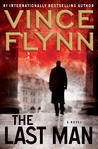 The Last Man by Vince Flynn
My rating: 4 of 5 stars
The Last Man was another great thriller by Vince Flynn. So far, I have read every book written by Flynn, and I have yet to read a bad novel. They are all fast-moving, fast-paced action thrillers.
In The Last Man, the CIA’s top-counterespionage agent in Afghanistan has mysteriously disappeared in an apparent bloody kidnapping. Because this particular agent has intimate knowledge of among other things, the names of covert agents in Muslin countries such as Pakistan, Mitch Rapp is called in to determine what happened to the agent and track him down before he is forced to reveal the names and locations of the CIA’s covert assets.
As is usual with Flynn’s story-lines, Rapp’s efforts are hampered by power-hungry U.S. officials, corrupt foreign agents, sadistic government officials, and religious fanatics…and of course, the clock is ticking! Rapp must solve the mystery of the disappearance of the counterespionage agent before he reveals the identities of U.S agents and they are killed!
Also as usual, Rapp’s methods are straight forward and violent, and the body count rises with each turn of the page. The Last Man builds to a heart-pounding climax, and it includes a “twist” which I found very satisfying.
I liked The Last Man, and if you are a Vince Flynn fan, you will not be disappointed. Four Stars for The Last Man!
View all my reviews
The Black Box by Michael Connelly
My rating: 4 of 5 stars...
 The Black Box by Michael Connelly
My rating: 4 of 5 stars
The Black Box was a great book! In this latest Harry Bosch novel by Michael Connelly, Bosch is back on the trail of a twenty-year old cold case in which a young female foreign war correspondent is murdered during the height of the Rodney King riots in Los Angeles. Bosch had originally been assigned the case as a young detective twenty years earlier, but because of the riots and the numerous deaths and murders that occurred at that time, he had not been able to do a thorough investigation…something that has haunted him during that entire 20 year period.
Thinking that the cold case was hopeless, Bosch learns that a murder weapon in the course of another investigation is, in fact, the same gun which killed the young woman those twenty years before. As Bosch digs deeper, he begins to uncover a conspiracy which began the night the woman was murdered.
As Bosch closes in on solving the twenty-year old cold case, he finds his direct supervisor as well as the Chief of Police both putting obstacles in his way. Both want his investigation stopped and stopped immediately. Refusing to back down, Bosch incurs their wrath and soon finds himself the object of an internal investigation.
One of the things that I really like about Michael Connelly’s books is that he always keeps me guessing until the end. The Black Box is no exception, and he has another great climax and fantastic finish.
Four Stars for The Black Box!
View all my reviews
November 25, 2012
Book Review For The Help
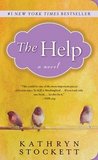 The Help by Kathryn Stockett
My rating: 4 of 5 stars
The Help was a delightful, thought provoking book. Set in early 1960’s Jackson, Mississippi, it is actually the story (told in first person), of three different characters; Skeeter-a twenty-something white female whose parents are well-to-do cotton farmers; Aibileen-a black maid and nanny for a white family; and Minny-a tart-tongued black maid with five children and an abusive, alcoholic husband.
The Help chronicles the lives of these three people through the turbulent times of the segregated south and the birth of the civil rights movement. Their paths cross, and inexplicably, despite the wall of segregation, all three women find themselves collaborating on a book which records the stories of black maids and nannies and what it is like to work for rich, white families.
The Help is at times touching, as Skeeter recounts the close, loving relationship she had with her own maid, Constantine; at times heart-rending as Aibileen tries to instill a sense of self worth and esteem in Mae Mobley, the toddler she is nanny to because her mother, Elizabeth, thinks she is too fat and ugly and therefore shows her little love; and finally, The Help can be cruel, as Minny loses not only her job but her ability to find a new job based on a lie spread by the manipulative and vindictive character Hilly Holbrook. It has been quite awhile since I have come across a character in a book that is as vile and distasteful as Hilly.
Kathryn Stockett does a masterful job of describing the south that existed in Jackson, Mississippi in 1963. The “verbage” used by Aibileen, Minny, and the other maids, the attitudes about race and race relations, and the documented and sometimes violent history of civil rights, all were weaved together in The Help.
Three things stand out for me in The Help. The first was how Stockett was able to essentially tell three different individual’s stories and integrate them seamlessly into one novel. That was no easy task. The second was balancing an authentic and accurate portrayal of the period that The Help was based upon, such as the vernacular used by poor blacks in the south and the attitudes toward race that existed at this time. It was a fine balancing act, and could have easily come across as patronizing on the one hand, or too “preachy” on the other. Finally, Stockett gave what all good writers do…a human feel to her characters and to their story. Skeeter, Aibileen, Minny, despite their differences in class, status, and race, still shared many of the same wants, desires, hopes, and dreams.
And that really is the point of The Help. When you boil it down to the basic complexities of life, race becomes irrelevant, and there really isn’t that many differences between us.
Four very solid stars for The Help!
View all my reviews
July 31, 2012
KETK Interview
Click the link below to watch my interview with KETK. I was honored to be interviewed and am excited to have it posted online for you to enjoy.
http://www.ketknbc.com/east-texas-live/etl-treasure-hunt-club
May 15, 2012
Be Careful What You Ask For
Have you ever come across a story which chronicles the lives of people who suddenly become rich? For example, someone who wins the lottery and becomes a millionaire overnight? Or how about someone who suddenly comes into a large inheritance? What happens to these people once they are wealthy beyond their wildest dreams? In our society, we often associate happiness with material possessions, yet time and again, how many times do we read of the misery, the unhappiness, and the downright bizarre that happen to those who come into sudden wealth.
Lottery winners are perhaps the best examples of individuals who become overnight millionaires. While many have benefited from their sudden wealth and gone on to live solid, productive lives, there are some glaring exceptions. Reflect if you will on the following unfortunate lottery winners:
Consider Andrew Jackson Whittaker. Until 2012, Whittaker was the single largest lottery winner in US history when in December, 2002, he won a $314.9 million dollar jackpot. Robbed several times, including once when he was robbed of over $500,000, Whittaker started drinking heavily, wrote hot checks to Atlantic City casinos, and even had a granddaughter (whom he supported with a weekly $2,000 stipend) die of a drug overdose. Hardly the circumstances Whittaker could have imagined when he won his huge jackpot.
Other examples include:
(1) William “Bud” Post who won $16.2 million in the Pennsylvania Lottery in 1988. His own brother tried to hire a hit man to kill him for his inheritance, a former girlfriend successfully sued him for a share of his winnings, and ultimately, he was forced to file for bankruptcy. Today he lives off food stamps and Social Security
(2) Winning the $31 million Texas Lottery in 1997, Billie Bob Harrell Jr. committed suicide two years later.
(3) Evelyn Adams won the New Jersey Lottery not once but twice in 1985 and 1986. Gambling and high living caused her to spend all of her winnings, and today, she lives in a trailer.
(4) Jeffery Dampier won $20 million in the Illinois Lottery in 1996. Seven years later, he was kidnapped by his sister-in-law and her boyfriend who demanded money from him. He was found in the back of a van dead after being shot through the head, and his sister-in-law and her boyfriend were charged with his murder.
Now these are extreme examples, but you cannot pass a magazine rack in the supermarket or a newspaper stand that doesn’t chronicle the dysfunctional and often, sad lives of numerous movie stars, celebrities, or otherwise famous and successful people. By all accounts, they should be happy; they have wealth, fame, and success. So why are they often so desperately unhappy?
I attempt to answer this question in my novel, The Treasure Hunt Club. You see, I believe that many times, our values are misplaced, and that what we ought to place a high value on, we often take for granted. As Thomas Paine once said, “What we obtain too cheap, we esteem too lightly”. Those intangibles that make life worth living such as family, friends, love and acceptance ought to take precedence in our lives. But money, fame, and material possessions are routinely how we measure happiness and success. So this begs the question; what value would you place on such things?
As the saying goes…be careful what you ask for.
May 14, 2012
November 19, 2011
A TV Special By Geraldo Rivera Inspired The Treasure Hunt Club!
Many of you may recall a TV special that aired some 15-20 years ago that was hosted by Geraldo Rivera. It was called something like “Al Capone’s Lost Vault”. I believe the TV special originated from the basement of a hotel somewhere in Chicago, and it was reputedly the headquarters of Capone’s criminal empire.
Rivera claimed that a vault was discovered in this hotel’s basement and that it had been hidden for all these years. The TV special was live as they used a team of men and a Bobcat to uncover the vault’s entrance so that it could be opened and we could all see what was hidden within. I don’t know about other people at the time, but I was fascinated by what might be revealed within the hidden vault, and my imagination ran wild!
As it turned out, the hidden “vault” contained nothing more than fill dirt, and I was bitterly disappointed. As a matter of fact, I felt I had been scammed, and I haven’t thought much of Gerlado Rivera since. But, I have never forgotten the sense of anticipation I felt as more and more of the vault’s entrance was uncovered.
Years later when I wrote The Treasure Hunt Club, I based the book’s premise on Rivera’s old TV special. What if there existed a book that could reveal the location of lost treasures? What if, unlike Rivera’s failed attempt to uncover “treasure” from Capone’s lost vault, you could successfully recover these lost treasures? What’s more, what if the only limitation was your imagination?
So, there you have the central thesis of The Treasure Hunt Club. I added a set of rules that “The Book of Lost Treasures” must follow simply for clarity. For example, in order for a lost treasure to be revealed, it must actually exist! Another twist I added was what actually constitutes a “lost” treasure. When most people conjure up ideas of “treasure” they undoubtedly think of chests of gold and silver. However, I decided that “treasure” could have a much broader meaning. It could be a tangible or intangible items, but more importantly, I treated treasure as a relative term whose measuring stick varies from person to person. What you value highly, I may not.
So, there you have it. This idea I based my book on. I will post other blogs concerning other aspects of The Treasure Hunt Club, not the least of which will be what happens when use of The Book of Lost Treasures allows the characters in the novel to become fabulously wealthy…in a short period of time! Hint: Remember the old adage, “Be careful what you ask for”. See you on my next blog!