
Laurie Boris's Blog, page 45
February 19, 2013
The DREAM BIG Blog Hop
Here’s the pitch, courtesy of Cody Martin:
“Writing is largely solitary, and sometimes a lonely endeavor. Sure, you talk to friends, experts for research, discuss what works and what doesn’t with your editor, and bounce ideas off of fellow writers. But in the end it’s one person pounding the keyboard or twirling the pencil. But what if it didn’t have to be completely alone? Who would YOU work with if you could work with anyone on your favorite project?
“In this post, that’s what I’m asking. Choose a person for each category and tell why you want to work with them. If you want, feel free to post their picture, a piece of their work, or a link to something about them. The only rule is that the person must still be alive.
“Writers dream. Now it’s time to dream BIG.”
1. You have the opportunity to hire anybody as your cover artist. If you write children’s books or books that are heavily illustrated, who would you get for the interior artwork?

Illustration by Elwood Smith
This may give me marital tsuris because my husband is a fantastic illustrator. If he is not available, I want my next cover done by Elwood Smith. He’s a local guy. I met him once, and worked frequently with his partner, Maggie, on some projects. His illustrations are quirky and done with a great sense of humor and style. When he addressed a networking group I used to belong to, someone asked why his little characters often wore hats. He shrugged and said, “I don’t know how to draw hair.” Gotta love a guy who says that.
 2. Who would you co-write your next novel with? What genre? Why?
I want to co-write my next novel with Janet Evanovich. Because she’s funny. I need to write some humor right now. Very badly. The universal forces that supply me with novels to write are apparently not complying with my request to lighten up a bit.
 3. Your publisher wants to do an audiobook version of your novel and they’re not sparing any expense. Who do you think can narrate your masterpiece?
Sweet. I want Janeane Garafolo to narrate The Joke’s on Me. She has the perfect sarcastic bite without becoming insufferable after a few hours.
4. They’re really going all out! Your novel is getting a full soundtrack. Who should compose it? If your novel uses a lot of songs, list your compilation here.
Yikes, I don’t know. I don’t think much about music when I write. Suggestions, anyone?
5. Congratulations! Your novel is being turned into a major motion picture. As the creator of the original work, you get to pick the director.
Jason Reitman. Because I loved Juno. I think he’d do a good job with Drawing Breath.

6. The director has some ideas on who to cast, but you get to cast one character. What role/character is it and who portrays them?
I’ve always pictured Kathy Bates as Jude, Frankie’s sister, in The Joke’s on Me.
7. You’ve been hired to write a novel based on a preexisting character or franchise from another medium. Which character or franchise is it?
I’m dying to know how things worked out for Harry and Sally. You know that honeymoon has to end sometime. Probably the three hundred and tenth time she asks for her salad dressing on the side.
8. It’s the anniversary of your favorite literary character’s debut. You’ve been hired (yay, work!) to write an anniversary novel. Who is the literary character?
Anna Karenina. But this time, she pushes her husband under the train.
Tag, Ellie Mack. You’re it.


February 12, 2013
Flash Fiction!
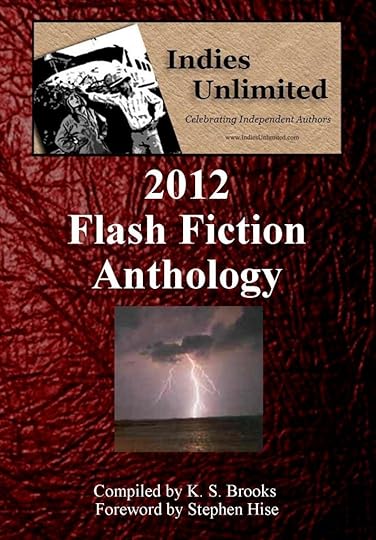 My writing-self felt a little creaky and stiff this week, so I entered Indies Unlimited‘s weekly flash fiction contest. A new prompt goes up every Saturday, and it’s a great chance to play around with the 250-word challenge and bust up a few of those mental cobwebs.
In fact, this flash fiction contest is so cool that IU’s masterminds Stephen Hise and KS Brooks took all of last year’s winning pieces and published them in an anthology. So many great little stories in one place; some of my friends like Ed Drury, Rich Meyer, JD Mader, and David Antrobus were multiple winners. I think I even have one in there somewhere about a rainy night and an angry little white dog.
Anyway, here’s this week’s entry. It’s not in the 2012 anthology, but if it wins this week (voting starts on Wednesday), it will be in next year’s!
———————
Help Wanted
Mike sneezed as the cloud of patchouli incense assaulted his sinuses. “Hello?” He fished a tissue out of his pocket. “You advertised for a groomer?”
An old dude with a gray ponytail and a Warren Zevon T-shirt popped out from the back, drying his hands on a towel. “Namaste,” he growled. “Sorry about the ambiance. It’s the only thing that covers up the wet dog smell. Keeps the neighbors from complaining. It’s not gonna be a problem, is it?”
Mike shook his head and sneezed again.
“Most people get used to it.” The guy eyeballed him, one brow climbing his forehead. “No offense, brother, but you look kind of puny for this work. Some of these critters pack serious poundage.”
“I had a bunch of Irish wolfhounds at my last gig,” Mike said.
“Wolfhounds. Funny.” Crooking a hand, he gestured for Mike to follow him into the back. “They can smell fear. So be cool.”
“Be cool?” Mike said. “I love dogs.”
The dude smirked as he pulled back the curtain. “Just remember that.”
Mike gaped. There was a big tub. And one giant cage. Eight hounds paced a restless loop, softly whimpering. Their variegated coats blended and swirled as they moved under the dim lights.
“They like to stay together. Pack animals.” He turned to Mike. “So when can you start?”
One hound bared a glistening fang. “Uh, right away?”
“Groovy. We’d better hurry, though.” In the shadows, the dude’s eyes seemed to glow. “There’s a full moon tonight.”


February 6, 2013
Why Would Anyone Want to Read a Novel about Cancer?
 When I write the first draft of a novel, I normally don’t think much about marketing. I tell the story that falls into my head, the one that has the most energy and won’t leave me alone until I finish writing. And then I think about how to sell it.
Even while I was writing Don’t Tell Anyone, which I’d titled The C Word at the time, I knew I’d face some serious challenges once I published it. But I still felt compelled to complete the novel and release it, hoping it would find an audience, secretly terrified that even if it came out well-written, thought-provoking, insightful or whatever good adjective you want to plunk on it, people would hear the word “cancer” and run.
I wrote it and published it because of my mother-in-law, Madeleine. She died from breast cancer, the progress of which might have been slowed or even arrested if she’d done something about it earlier. In fact, if she’d done anything about it earlier. Panicked out of her mind because (as our theory went) the cancer treatment she was familiar with—her mother’s, a horrific experience—was so traumatic, she kept her own lumps a secret for years. I found out later that she’d sought therapy in order to gather the courage to tell her family. Which became a moot point when a health emergency outed her to my husband, his sister, and me.
That it was a shock to all of us would be a gross understatement. I’d liken it more to having our guts wrenched out. We pushed our feelings of shock, grief, pain, resentment, and anger to the side, however, as we helped get her through the now-aggressive treatment her oncologist recommended: a radical double mastectomy, chemo, and radiation. The usual things happened, some they show on TV, some they don’t. She lost her hair. She lost her sense of taste and smell. She made a few dark jokes. She fell into a deep depression. The long-awaited remission brought her little joy; much as we tried to bolster her spirits, nearly all she could think about was when it would come back. Five years later, it did, and killed her.
Now we were left to face our emotions alone. My husband’s and his sister’s are private things and I’ll leave them to talk about them publicly or not. But my mother-in-law and I had a special relationship. Sure, we had our bumpy parts. My husband and I lived in her house for a few years out of economic necessity; I was not as tidy as she would have liked me to be, and we became much better friends after my husband and I moved out. But she called me her “favorite daughter-in-law” (yeah, big joke, only daughter-in-law, yet she said it with such joy) and she was one of my biggest fans. She nagged me to finish my novels because she said she needed something good to read.
I, however, needed to reconcile my own feelings. Especially the big question: why? Why stick your head in the sand? Why do that to your children? She had no quarrel with doctors. She had decent health insurance. She lived a scant few miles from a compound of medical services. Why not get that lump checked out, particularly because of her genetic predisposition?
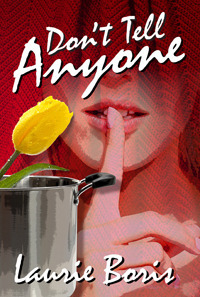 The questions dogged me, long after her diagnosis, long after her death. So I wrote about it. That’s my way of exploration. I gave the situation to Estelle Trager, the matriarch of the novel. Then I let it play out with her fictional family, who already had a boatload of problems of their own. I wanted to know why she’d made the choice (and not making a choice is still a choice) to ignore her condition. I wanted to explore the effect that choice had on family dynamics between and among her children, which lead to some difficult, sometimes painful, sometimes sweet, sometimes heartbreaking, sometimes funny moments.
So let me leave you with one funny story from my mother-in-law’s treatment, which I would have put in the book if the situation arose, but it didn’t.
After my mother-in-law’s double mastectomy, she was kept in the hospital a few days. But given the bottom-dollar-focus of HMOs, we were warned that once released, her aftercare would include our tending to a series of drains that filled with fluid and needed to measured, monitored against signs of infection, and emptied regularly. When we arrived at the hospital to pick her up, she was already dressed and sitting up in a chair. Four plastic drains, about the size of hand grenades, were pinned to the outside of her blouse. She gave us a devilish grin and said, “How do you like my new jugs?”
Miss you, Madeleine.


January 31, 2013
My Year of Living Indie
 Jacqueline Hopkins-Walton, a member of a Facebook group I belong to, recently asked us to kick in our “top ten” favorite books we read in 2012. Five immediately came to mind, several others I can’t name because they’re not officially published yet or I had a hand in editing, and the rest resulted from a quick consultation with my Kindle.
Only one book was put out by a large publisher.
In fact, a further consultation with the K-dude revealed that with the exception of The Maltese Falcon, nearly every book I read in 2012 was written by an indie author.
Curiosity? Solidarity? Poverty?
Yes, all are true. When, in late 2011, I started testing the waters prior to self-publishing my second novel, Drawing Breath, I met a bunch of great, funny, quirky, generous authors who’d decided to chuck pitching to the Big Guys and go their own way. Curious, I read a bunch of affordable—and frequently free—books that didn’t have a flightless waterfowl on their spines. Some needed some work. Some were good. Some were pretty amazing.
I didn’t consciously make a choice to avoid the big names. A few of my favorite trad-published authors, like Michael Chabon, Joyce Carol Oates, and Ian McEwan came out with books this year and I will read them, eventually, when the budget allows. (Before you suggest my local library, I am a big fan, although Marion the Librarian does not care for my slow reading pace, which resulted in my returning Ian McEwan’s Solar only halfway done under threat of large fines and manual dispossession.)
My TBR indie list sort of…evolved. Friends came out with new books. Other authors recommended their favorites. One thing led to another. My involvement with Indies Unlimited brought me closer to inspirational, heartbreakingly talented, funny, smart authors from around the world.
Doesn’t mean I won’t sink into a big-name book again. In fact, two are waiting on my nightstand: Jeffrey Eugenides because I’ve adored him since Middlesex and The Virgin Suicides, and Jane Green, because I won her latest in a Goodreads Giveaway.
This year in reading just happened. And I’m very happy about it. It’s a lovely feeling, looking down my Kindle directory and seeing so many friends’ names.
So, in no particular order, these were my favorite books I read in 2012:
Jimmy Mender and his Miracle Dog by Leland Dirks
Joe Café by JD Mader
Dissolute Kinship: A 9/11 Road Trip by David Antrobus
My Temporary Life by Martin Crosbie
Upgrade by Stephen Hise
Bad Book by Stephen Hise, KS Brooks, and JD Mader
Mini Skirts and Laughter Lines by Carol E. Wyer
The Sable City and Death of a Kingdom by M. Edward McNally [from the same series; The Norothian Cycle, so it counts as two!]
Charmed Life by Susan Bennett
What were some of your favorites?
Disclaimers:
1. I am a relatively slow reader, and it’s been a busy year.
2. Which means I probably read about thirty books.
3. So I do what I can. And this only one reader’s opinion.
4. There are many, many wonderful authors I’ve yet to read.
5. Even ones I know.
6. Your actual mileage may vary.


January 26, 2013
Healing with Humor
 I love a good joke. Even a bad one. Which is one of the reasons I wrote my first novel. In The Joke’s on Me, a stand-up comic returns to her hometown of Woodstock after a major crisis and tries to get her groove back. One stepping stone toward reinventing herself is to craft a workshop on Healing with Humor. Frankie ferrets through research notes, movies, and videos of other comics, trying to glean what’s funny and why it makes people feel good.
Having laughed my way through some serious and not-so-serious health problems over the years, I felt unerringly qualified to write about a fictional character writing her workshop.
After all, a string of funny romance novels by Janet Evanovich got me through a nasty back injury, and elephant jokes once saved my sanity.
Elephant jokes? Yeah. Okay, they’re a little juvenile, but a good case of the giggles is still good medicine. About twenty years ago, I had one of those not-so-great mammograms (which turned out to be a false positive), and my perhaps overzealous doctor had referred me and my films to a breast surgeon. Needless to say, the forty-minute drive to his office was a bit stressful. So I turned on our local NPR station, which was running “Knock on Wood” during that time period. Some of you—and especially those of you in the Woodstock area—may know Steve Charney and Harry, his ventriloquist’s dummy (Yeah, I know. A ventriloquist on the radio.) That day, Steve was doing a long string of elephant jokes, one after the other. I was giggling so hard I almost ran off the road. Yeah, silly, but it definitely took my mind off where I was going.
So this is why one particular joke stuck in my head. Recently, when the lovely Carol Wyer, author of several humorous novels about aging disgracefully, interviewed me on her blog, Facing Fifty with Humour, she asked me to tell a joke. This was the one I selected:
Q: What do you get when you cross a kangaroo with an elephant?
A: Great big holes in Australia.
Okay, not spit-coffee-across-your-keyboard funny, but cute.
Then I came across this website. Apparently, the author, Kevin R.R. Williams, had read Carol’s interview and felt the same about my joke. In an effort to parse the eternal question of what makes people laugh, he deconstructed it over a dinner party. How I wish I could have been a fly on the wall.
Or the elephant in the room.
What do you think? Has humor ever helped you through a tough spot? Can humor really be analyzed? Once we do, does it lose its comedic value? And what’s your favorite elephant joke?


January 18, 2013
16 Uses for My Old Livestrong Bracelets
 Yeah. I bought into the whole Livestrong thing way back when. I rooted for the guy. When I was a health blogger, I even applied to become part of the Livestrong division on a website I will not name. And even though I knew more about omega-3 fatty acids and visceral massage than any civilian has a right to, I was turned down for lacking, I don’t know, something they called the “high Livestrong standards.” Yeah. Irony. But now I have all these Livestrong bracelets. Even though they’re made in China, I hate waste and I’m a recycling girl from way back, so if you’re in my situation as well, here are a few things you can do with them.
Melt down and make new solidarity bracelet for Manti T’eo.
Wear inside out until Tibet is free.
Change to LOVESTRONG and give to marriage equality causes.
Keep several pairs of socks together in the dryer.
Physical therapy tool for relieving texting-induced tendonitis in thumbs.
Pea shooter (Thank you, Carmy!)
Fit over beverage container of choice to prevent slippage.
Change to LIVESTRANGE and distribute in Woodstock and Portland. (Kidding. I love you guys.)
Extra-strength exercise band to build up toe muscles.
Secure hems of yoga pants so they don’t catch in the StairMaster.
Bind together several dozen colored pencils or markers to make one big rainbow.
Bring to the farmer’s market to keep the broccoli stalks from falling apart.
Beauty pageant sashes for Barbie dolls.
Change to LIVE LONG AND PROSPER and give away at ComicCon.
Hairbands for Troy Polamalu.
Mail them back to Lance Armstrong for a refund. And an apology.


January 16, 2013
The Brave New World of Self-Publishing
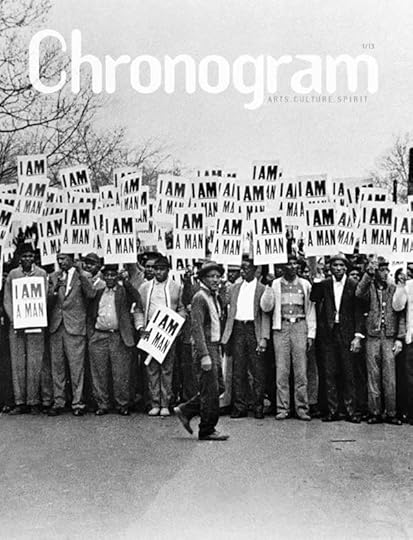 Over the last couple of weeks, I’ve been sharing this link to an article by Nina Shengold in the January issue of Chronogram, an arts and culture magazine that serves the Hudson Valley area of New York.
It’s a look at the growing number of authors in the Hudson Valley area—a kind of mecca for traditionally-published writers–who have chosen to self-publish their books.
Nina surveyed twenty-two authors to craft her article, plus asked local bookstore owners and even literary agent Jean Naggar for their comments.
I was one of those authors. My last two novels were self-published, and if you look very closely at the lower-right corner of the photo with the article, [the chick wearing what looks like a Muppet around her neck] I’m holding both of them. I also edit and proofread for authors, mainly of the indie variety. If you’d like to hear more about what I do or how I can help you, please drop me a note via the “contact” form on my website.
Thank you to multi-talented local author and publisher Brent Robison for the idea for this blog.


January 13, 2013
Never Look Back?
 One of my heroes, Satchel Paige, is credited as having said, “Don’t look back. Something might be gaining on you.” When I ran competitively, coaches warned me that every peek over my shoulder was a waste of energy that could have been propelling me forward. Mindfulness meditation taught me to focus on the present. It seems like for most of my life, I have been strongly encouraged to either stay in the moment or look ahead.
But where does writing fiction fit into all of this? It seems to be perpetually looking backward. It allows me to “taste life twice,” according to Anais Nin. Through my characters, I mine past pain for the fiction of my present and future. I return to those old forks in the road and wander down the one I rejected to see if that alternative future might yield rich material, a new character whose story begs to be written.
This week, I looked back at some of my former fiction. An old story, one that I’d abandoned, called to me. Great, I thought, because that’s part of my “writing plan” for 2013. Write a new novel and dip into my Closet of Unfinished Things to complete and publish one of the many first drafts that I’d abandoned.
To my horror and dismay, the Closet of Unfinished Things popped out one really bad, bad, manuscript. (Bad Manuscript! Down, boy!) I barely recognized it as something I’d written. I guess that’s good, because it shows evidence that I’ve improved, but I cringed at every clumsy sentence, every typo, and every awkward metaphor. And that protagonist! I wanted to slap her! She has no spine. She is a dishrag. Every other character in this book—even the ones off camera—are more interesting than this little mouse. Maybe that’s why I’d given up on it in the first place. I adore the story. I love the themes, which are so relevant, so human. But it is not this woman’s story. She simply can’t carry it.
So I recast the lead, and I’m rewriting the thing. I have my doubts: Did this character fall into the wrong novel? Will a new character in an essentially character-driven novel change the story? Maybe. Maybe it will be a better story. There’s only one way to find out and that’s to plunge forward. No looking back, at least for now.


January 12, 2013
When You Have Editorial Differences
This post on Behler Blog today is so spot-on that I wanted to share it with you. Although the example is based on releasing your manuscript to a publisher and working with the publisher’s editor(s), this applies to self-published authors as well. Trust and communication is vital for both author and editor. You both have a common goal: make the best possible product for potential readers. Yes, readers. This is one big reason why we make books, yes? Anyway. I’m interested in your thoughts.
When You Have Editorial Differences.


December 31, 2012
2012 By The Monkeys
No, not those monkeys. They don’t even spell their name that way. Although I would pretty much let Davy Jones and Michael Nesmith post anything they wanted, if they were still alive. Since Peter Tork is not available and Micky Dolenz will not return my calls, the WordPress.com stats helper monkeys prepared a 2012 annual report for this blog. Mainly, it nagged me to write more and questioned my obsession with Cloris Leachman and Madagascar hissing cockroaches. But I’ll leave the final judgment to you.

Here’s an excerpt:
600 people reached the top of Mt. Everest in 2012. This blog got about 5,700 views in 2012. If every person who reached the top of Mt. Everest viewed this blog, it would have taken 10 years to get that many views.
Click here to see the complete report.


