
Laurie Boris's Blog, page 38
September 25, 2013
Sliding Past Vertical: It’s Here!
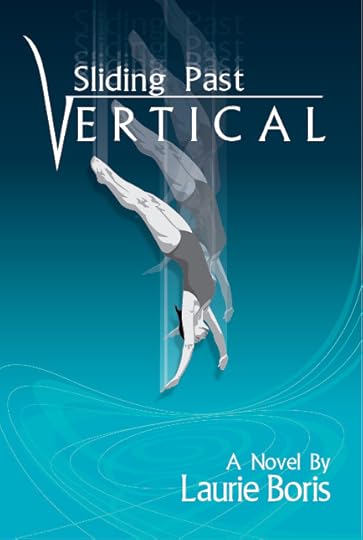 It’s here! Sliding Past Vertical, at least the e-book version, is now officially live on Amazon, and I’m celebrating! For today only, you can pick up a free copy on Amazon for your Kindle or Kindle-app.
A bit about the novel:
Sarah Cohen is a walking disaster. She means well, but the ex-diver’s hasty decisions wreak havoc on her life in Boston. Good thing Emerson is a phone call away in Syracuse, with a metaphorical mop to clean up the mess. Their long-distance friendship can be excruciating for him, though. Years after they shared a brief college romance, he’s still in love with her. When everything goes wrong, Sarah takes another plunge: back to the scene of her last mistake, to start fresh. Unfortunately for Emerson, the move puts her too close for comfort. Her attempts to straighten her life’s trajectory are sometimes amusing and sometimes catastrophic. With Sarah around, is anyone safe?
Want to know more? Read the first chapter here or check out the trailer:
Want to join my mailing list and hear about upcoming releases and other goodies? Right this way... (I promise not to spam you.)



September 23, 2013
Have You Read a Banned Book Lately?

Have you ever read a banned or challenged book? Chances are that if you had a public school education, you’ve already read plenty of them. The Grapes of Wrath? Banned for its religious and labor union references. Brave New World? Banned for references to drug use and sex without benefit of marriage. The Catcher in the Rye? You name it. One of my favorite novels, Lolita, has been on a banned or challenged list pretty much every year since its publication.
First launched in 1982 and held during the last week in September, Banned Book Week celebrates and supports the freedom to read. It seeks to bring together everyone in the book community—schools, libraries, bookstores, publishers, writers, and more—to preserve the freedom to share ideas, even those out of the mainstream.
Part of that celebration has included some great videos on YouTube. For weeks now, people have been uploading videos either about banned books or of someone reading from a banned book. Why not make your own? Or check out some of the other events going on this week, like Twitter parties and virtual hangouts. Here are a few of my favorite videos.
A Catcher in the Rye
About Banned Books
Bookmans Does Banned Books
What’s the last banned book you read?
(Note: Part of this blog has been stolen, er, borrowed, from one I wrote on the subject for Indies Unlimited.)


September 9, 2013
Get What You Want, Part 1---Are We Being Busy or Fruitful?
 Reblogged from Kristen Lamb's Blog:



We live in a society that feeds us a lot of lies. The biggest one is about TIME. Oh, if I only had more time, then I could (fill in the blank). The truth is we are all given the same amount of time---24 hours a day. Of course the next big lie that's easy to believe (and I've been guilty) is
I really resonated with Kristen Lamb's blog today. It made me think about how I'm using my time and ways I can be more efficient.
September 5, 2013
Risk and the Novelist
 One summer afternoon, not too many months after Husband and I had bought our house, I walked up the hill to a neighbor’s. She and her family were hosting a barbecue. We’d been invited to events at their home before, but that was during the winter. As I reached their yard, another neighbor screamed up to me in her little red sports car.
“Get in and hold my watermelon,” she yelled out the window. I asked why, which felt like a perfectly natural question. Weren’t we here already? Where were we going with a watermelon, and why did I need to hold it? She didn’t seem to understand my confusion. We went a couple of rounds and she finally said, “Just get in the freakin’ car already.”
So I did. Then I understood. The barbecue was being held in the giant, bumpy meadow adjacent to their home. Who wanted to carry a watermelon all that way or have it bounce around the interior of one’s car? Judging from the three or four other vehicles already parked in the grass, nobody else wanted to carry their goodies, either.
This is mainly a long-winded example to show that I’m not much of a risk-taker in my normal life. I want to know where I’m going and why, and if you ask me to hold your watermelon, expect a few questions.
But writing fiction is a different story (ouch). I take tremendous risks. If it’s organic to the character and the plot, I will jump out windows, face terrible odds, say things that I would never dare say to real-life people who ask me to get into their ridiculously tiny cars and hold their fruit. And I’m not sure what’s going on with me, whether it’s getting my writing “sea legs” or if I need to be medicated in some way, but with each novel I publish, I seem to be taking greater and greater risks.
I don’t do this to be cavalier or take risks for the sake of the adrenaline rush. I’m doing it for my characters, who are like real people to me. I’m doing it for the authenticity of my stories. Some readers might not like all my choices. In Sliding Past Vertical, I have some edgy, broken characters who don’t always do the right thing. And that’s another risk I take.
Because my upcoming novel feels riskier than normal to me, and because I count myself among writing professionals who are not so cavalier as to publish without input and the fresh eyes of test readers, I widened the beta circle on this one. Letting more readers in earlier in the process is an idea I borrowed from Guy Kawasaki. This method has been working out well for him. He says that more feedback earlier on improves his final product.
In some ways, Kawasaki’s concept has been working well for me. Beta readers—awesome, fabulous people, all of them—have caught things that others have missed. They have brought to my attention details that need focus and cultural references that need to be refined or changed. It’s also given me a bit of a “focus group” experience. That can be good and not so good. Honest, objective input from a few people can fine-tune a novel and reveal pesky unresolved threads, poorly developed characters, or awkward sentences. Honest, objective input from a crowd can get a little confusing. Author Martin Crosbie has written that in the face of divergent opinions, it’s up to that “little voice” inside every writer to parse through this input and see if it rings true with your vision for the story and the characters. If only one test reader out of ten hates X about the story, you might be dealing with personal preference. And that’s fine. As human critters, we have different tastes, and everyone isn’t going to like everything about any novel. This is why it’s a bit of a comfort for an author to see how many one-star, awful reviews a literary “masterpiece” has garnered.
But trusting that little voice and making the right choices for a story is an art in itself. Even after writing for twenty-five years, I’m still learning.
I hope I never stop learning.
For the writers out there, what sorts of risks have you taken in your work? Readers, care to weigh in about edgy characters or stories and which ones have captured your imaginations?


September 3, 2013
The Kindle Book Review Awards: Finals!
 Most of you might know by now that out of the danged amazing writers chosen to be semifinalists in The Kindle Book Review‘s 2013 Best Indie Book Awards (several are friends and three of those friends are fellow Indies Unlimited minions or alums), the final five have been chosen in each of the eight categories.
I’m still in a bit of shock that out of those amazing books, Don’t Tell Anyone is in the top five in the Literary Fiction category. I’m also Snoopy-dancing for Nicole Storey, making the finals with the first book in her Grimsley Hollow series, and Rosanne Dingli, chosen for her Camera Obscura. Also, once again I’m standing beside Hugh Howey in a final, and once again grateful that we are in different categories.

Hugh Howey!
Cooler still is one of the perks of reaching the finals. The forty finalists have been asked to write two guest posts for a contest sponsor’s blog: one, a dream interview; the other, a dream review. Stephen Woodfin, the gentleman who sent me the email request, set a high bar for entries. Informal “bragging rights” for last year’s finalists went to, yes, Hugh Howey, for his dream interview done by Natalie Portman while giving him a massage.
So I could not resist having a bit of fun with that. Here’s my entry, Good Things Gone Bad.


September 2, 2013
Sliding Past Vertical: The Trailer
Hot off the…uh…whatever the database is that makes these things..is my new trailer for Sliding Past Vertical. Happy Labor Day (or, to the rest of the world, happy Monday.)


August 26, 2013
Sliding Past Vertical: First Chapter Sneak Peek!

Happy Monday, everyone! I’m so excited to share with you this excerpt from Sliding Past Vertical, my romantic suspense novel, which will be published in just a few weeks on Amazon.com. First, the blurb:
Sarah Cohen is a walking disaster. She means well, but with each ill-considered decision, this twenty-nine-year-old graphic artist and ex-diving protégé damages not only herself, but also her fellow Bostonians. Good thing she has Emerson McCann on her side, at least for now. This nursing home orderly and aspiring author is just a phone call away in Syracuse, with a metaphorical mop to clean up the messes of her life. For Sarah, who moved east after graduating from Syracuse University in 1979, it’s become a comfortable long-distance friendship. But it can be excruciating for Emerson. Eleven years after their short and emotionally consuming freshman-year romance, he is still in love with her. When everything goes wrong all at once, Sarah plunges into another rash decision. To correct her mistakes, as her high school coach used to tell her when she flubbed a dive, she must return to the point where she went wrong and start again. So she’s moving back to Syracuse and into a vacancy in Emerson’s rooming house, a choice that has sometimes amusing but sometimes catastrophic consequences. And nobody is safe.
Chapter One
Boston: July 1987
The breeze off the waterfront prickled goose bumps on Sarah’s arms. She rubbed them to keep warm, wishing she’d brought a sweater to cover her slip of a dress. Couple after sparkling couple disappeared inside the restaurant, some giving her an occasional backward glance but then leaving her alone on the sidewalk, teetering on her heels. Their laughter taunted her, as did the aroma of lobster and melted butter.
She squinted down the pier. Nothing resembling Jay or his car was anywhere within visual range. Glancing at her watch again only proved that he was ten minutes later than the last time she’d checked, when he’d only been twenty minutes late. The pay phone across the street had already eaten two of her quarters, gifting her nothing in return but two fruitless stabs at his answering machine.
Her stomach growled, poking at her for trusting him to show up and for starving herself all day in anticipation of the fancy dinner he’d promised. I should have known, she thought, shaking her head. This was supposed to have been a celebration. He’d been clean for six weeks and wanted to thank her for sticking by him. Again. But getting a “something came up, meet me there” message had never been the start of anything good. It was often the start of another binge, and another morning-after when she’d be called in to do damage control, armed with orange juice, aspirin, and a fifth of something from the package store across the street. She gave him another ten minutes, made her flustered excuses to the maître d’, who’d already given away their table, and booked it toward South Station with just enough quarters in her purse for the trip home.
The T ride back to Sarah’s apartment near Boston College felt like the longest of her life. Into the hamper went the slinky new dress she had no business buying on her joke of a salary. She tossed on an oversized T-shirt and jeans with a rip in the knee. While she settled into her roommate’s sofa with a bowl of leftover spaghetti, she managed to convince herself that lobster was overrated.
Then, she called Emerson.
“Why do I keep cleaning up other people’s messes?”
His electric typewriter, the same Smith Corona Super Sterling he’d been using since college, hummed in the background. Sarah felt a twinge of guilt for disturbing his writing. He always made time for her; she knew that and tried not to take advantage, but sometimes—
“For the same reason I do,” he said. “It makes you feel useful.”
She missed Emerson: the way he spoke, how carefully he chose his words. Even when they were words she didn’t want to hear. “I don’t feel useful. I just feel used. He stood me up tonight. Again. It was totally humiliating.”
“So… stop seeing him.”
“I tried that,” she bit at her lower lip, “a few times…”
Emerson let out his breath. It was an old, wounded sound, clearly discernible over the purr of the typewriter. His voice took on a serious tone, deeper than usual. “Sarah—”
“I know,” she sighed. “You’re tired of this conversation. I’m tired of it, too. I’m sorry, Em. But I think I need to have it one more time.”
The humming stopped. She hadn’t visited him for a couple of years—another thing to feel guilty about. How easy it would be to pack a bag, take the bus to Syracuse, and let him adore her until she got her confidence back. But she knew the cost of his adoration and how much easier it was to bear from a distance.
She pictured Emerson leaning his long, unmuscled body back against his chair. He’d push a lank curtain of dishwater blond hair off his forehead and his little, round glasses back onto the bridge of his nose. The corners of his mouth would set into that heartbreaking perpetual downward turn—to match his eyes, his brow, his shoulders—as if his very genetics were trying to drag him into the earth, piece by piece.
His voice now came out lighter. “All right.”
“What were you working on?”
“You don’t want to talk about Jay anymore?”
“No. It’s too depressing. Tell me what you’re writing about.”
Pause. “You really want to know?”
“Sure.”
Another pause. “Spray cheese.”
Sarah laughed for the first time that day. “Not something for the New Yorker?”
“Not exactly.”
To supplement his paycheck, Emerson wrote “personal experience stories” for men’s magazines. His forte was using food products in ways Shop-Rite never intended. He’d started back in college. The money was easy, and it was all kind of a goof to begin with, but Sarah preferred not to think about why, at twenty-nine, he still wrote for men who read with one hand.
To further distract herself, she asked, “What happened with that short story you were writing about your brother?”
At first, he said nothing. She imagined him pulling off his glasses, rubbing at his eyes. “It’s a melodramatic pile of crap,” he finally said. “Every time I read it, I keep thinking how much better it would be in the hands of a real writer.”
“You are a real writer, Em.”
His laugh sounded bitter around the edges. “Don’t humor me. I’m a hack. I push a mop at an old age home and get paid by the word to write fake letters so men with no imaginations can get off.”
“But only until something else pans out,” she added quickly, a running joke she’d added quickly many times.
“Right,” he said, drawing out the word. “I’m just biding my time until the Nobel committee finally notices my literary accomplishments. Or my skill with a mop-wringer. Whichever comes first.”


August 23, 2013
Flash Fiction Potluck Edition
 Thanks to writing exercises like Indies Unlimited’s Flash Fiction Competition and JD Mader’s Friday flash fiction parties, I’ve been working at toning up my word muscles between novel scenes. I like the IU competition because of the challenge of being inspired by a prompt and getting a story into 250 words. I like JD’s because it’s freewriting fun: just write and don’t look back for three minutes, or two, even for one minute if it’s been that kind of week, and then we post the results on his blog. [Okay, in the interest of full disclosure, I did touch up the first two a smidge after my original posts. Go visit JD's blog if you want to see the originals.]
Here are a few bits I’ve written lately.
The Wedding Portrait
She’s frozen in time, the tall, patrician woman in the starchy wedding gown, her face a mask of steel and nerve. But come closer. Look into her eyes. She wants to run. You can see it. If not for the thousands of guests, or the photographers with their awkward black boxes and powder flash, she might have done it. Although how can one run in those shoes, those terrible shoes, and with all the whalebone stays in her dress she’ll collapse from an inability to breathe. She liked this man, this childhood companion, a distant cousin, but she doesn’t want to marry him; that much shows on her face. It’s only for the papers, for his political career. Her mother wanted her out of the house and wedded to a man with promise to keep the young woman out of trouble, to keep the neighbors from talking. If the woman only knew what she was getting herself into. But by her face, maybe she already did. Maybe she knew the trouble she was getting into, the misery she would face, the harpie of a mother-in-law she was also marrying that day.
Wishes on Fireflies
She asked what was wrong and he couldn’t tell her, because then she’d know and it would be all over. The fun they’d had all summer, the evenings they’d stayed out late and made wishes on fireflies and bets on falling stars, it would be gone, and they’d be called too old for that kid stuff, their parents would fill their lives with serious activities and they’d never have another day like this, an afternoon tip-toeing across fallen logs on the creek, daring each other to jump in the freezing cold lake in the old abandoned quarry, roasting marshmallows by the fire and telling ghost stories into the night. Her mother would say that nice girls didn’t chase after boys or skin their knees climbing trees; his mother might say that he should spend more time on his schoolwork. He couldn’t tell her that he wished to be the one she’d kissed first instead of that jock who didn’t deserve her. He couldn’t tell her any of that, so he just said that he’d thought of a funny joke and when he asked her what it was, he said the first dopey one that came to mind, something stupid his father had told him, and that was the last thing he remembered when he fell asleep that night, her laughter in his ears.
——
(Posted on Indies Unlimited. Original prompt here.)
Eddie, fighting off his seasickness and fear of sharks, steeled his nerve and fixed his salt-stung eyes on the horizon. The plane had gone down fast and possibly drilled deep in the muck at the bottom. Maybe that’s why all they’d found so far was a bit of rope and a shred of red fabric. Until…
“That’s weird.” Captain Ralph lifted his binoculars. “It’s—”
Squinting down Cap’s sight line, Eddie said, “A survivor?”
“Row!” Ralph bellowed, grabbing an oar. “Possible survivor at two o’clock.”
The dozen men pulled as one, Eddie training his eyes straight ahead. Then he saw it. A pair of arms floated above the crest of a wave, almost as if they were clutching an unseen chunk of flotsam. Between the arms was a head, draped with tangled hair…or seaweed?
Eddie’s stomach lurched. Cripes. Cap said you only see a body in that attitude when a shark has bitten through the rest.
But then one of the arms lifted weakly; the hand waved. “She’s…it’s…still alive!” Ralph whooped. “Faster, men!”
They pulled her in and found her whole but wearing some kind of weird bathing suit and bracelets. Heck, Eddie thought, people traveled in weirder things. Cap checked her vitals as she sputtered and coughed.
“Do you know what happened, miss?” Ralph said. “Did something hit the aircraft?”
She snarled up at them, eyes huge and angry beneath the tangle of black hair. “Yeah, I did. Stupid invisible planes. I thought I had the only one.”


August 21, 2013
Sliding Past Vertical Cover!
Happy Wednesday, everyone! Here’s the brand-spanking-new cover for my upcoming romantic/suspense novel, Sliding Past Vertical, which is still
on schedule for a mid-September release.
If you’d like to get the latest news about new releases, events, and other goodies, won’t you join my mailing list? Thank you!


August 18, 2013
How Writing 200 Install Sheets Improved My Editing
 Many years back, I worked in the marketing department of a lighting manufacturer that asked us to create installation instructions for each of their 200-and-some products. It was challenging to translate from engineer-speak into English and to get all parties on the company-wide team to agree on the simplest of concepts, but we did it.
In the process, which took many drafts, many months, and many cups of coffee, I sharpened my editing skills. Here’s what I learned:
Be Clear. There is not much worse than being atop a ladder with half a light fixture in one hand, a screwdriver in the other, and installation instructions that read like they’ve been translated into Norwegian, and then into Mandarin Chinese, and then back into English. If it’s impossible to install this fixture any other way than to assemble the whole shebang on the ground and attach it to the ceiling with the help of three other guys and some duct tape, say so. Or you may never get a second order from this customer, because you’ve made him squander valuable union contractor time and money taking the #$@$% thing out of the ceiling and reassembling it.
Be Concise. Contractors don’t have time to parse out flabby language. Say you write, “In order to properly install the battery pack onto the frame, make sure you have selected the correct screwdriver, which should be a #5 flat head screwdriver.” Not only is this an eyeful to read, it’s insulting. Of course a competent contractor would install something properly. So this sentence becomes, “Attach the battery pack to the frame using a #5 flat head screwdriver.” Done.
Be Accurate. Check all your facts before the boxes leave the warehouse. When a customer has a hundred fixtures on site is not a good time to discover you’ve neglected to include (let alone write) programming instructions for the whiz-bang remote that controls the dimming on all of them. Or that you’ve told them to use the wrong screwdriver to install the wrong widget. Know your widgets, people!
Be Compact. Anyone who writes has probably been told showing is better than telling. It’s the same for installation instructions. If Steps 4, 5 and 6 require a clear diagram, you’ll have less room for text. Carve those unnecessary words from the text, and you can make the visuals even bigger.
Know Your Audience. An install sheet for a licensed electrical contractor reads very differently than one designed for a residential customer. Just as you’d never assume the average homeowner knows how to install something “according to local code,” don’t tell the contractor to screw in the “light bulbs.” These, in non-residential land, are called “lamps.” Bulbs, they say, grow in the ground. You will be laughed at and made to buy the coffee and donuts.
Consider Industry Standards. Construction codes and legal liability dictated that we include certain things on our install sheets, like a UL logo and this line: “Read all instructions before installation.” (Even though probably 75% of contractors use installation instructions as nothing more than a placemat for the coffee and donuts you bought them.) Similarly, consider your publisher’s standards or website requirements before you submit. Or else you could end up doing the literary equivalent of disassembling a hundred-pound light fixture on the floor and possibly losing a few widgets down the heating vents.
Have you picked up tips in any unexpected places for the work you do?
(Note: This post appeared on a different blog in a slightly different form in December, 2010.)



