
Laurie Boris's Blog, page 35
February 3, 2014
The problem is…
 …I don’t know how to not write. I go into a kind of fugue state when I finish the first draft of a manuscript. Intellectually, I know I’m done for now. I’ve reached the end of the story, and I know to tuck it in the drawer and come back with enough perspective so I can wave my little magic wand and rewrite the kinks out of it.
But in my heart I want to keep playing with it. I want to write the backstory to the big first kiss that started it all. I want to do more character work; I want to know MORE. I want to go back into that document and clean up those messy lines I left. Around ten thirty, eleven at night, I get this pang. Because that’s when Charlie, my protagonist, wants to sit down with a few fingers of scotch, play his Frank Sinatra albums, and tell me stories. I miss him. I know that I’ll be with this universe of characters for six, seven, eight drafts. It’s not like I have to say goodbye right now. And maybe when I do that rewriting I’ll need to write new material and I’ll need to call on him again. (I do love when that happens!) But for now, I need the separation. I need the break. My writing mind is tired and needs to do other things.
Okay, I cried. It feels that real to me.
Maybe the novel isn’t the only thing that needs perspective. Maybe I do, too. I love my work, editing and writing, and the three months I spent working on the first draft of this story have been intensely rewarding and a continual surprise. I learned that I can (sort of) work from an outline. That I can (sort of) write a sequel. And that (maybe) I can write from the POV of several people I will never be. Although sitting in front of the keyboard day and night not only makes this Jill a dull girl but also means forking out extra for chiropractic adjustments.
So I’ll take my break. At least from this story. And then I’ll come back to my people, pour a virtual scotch, and see where they take me next.


January 28, 2014
Guest Author Laurie Boris

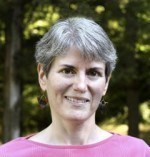
Today I'd like to welcome Laurie Boris. Aside from Laurie's many talents, she is one of those individuals who makes you comfortable right at the get go. Laurie is a true pleasure.
Knowing is The First Step
A lot of writers talk about the moment they “knew” of their calling to the page. Not just the time they decided to refer to themselves as writers, perhaps a little shyly testing the waters at a gathering of friends and hoping nobody would laugh or start in with the maddening questions we are all asked: Are you published?
I'm guest posting on Aron Joice's site today, so come visit! I'd love to see you.
January 25, 2014
Calendar Girl
 I tried. Really, I tried. But electronic calendar devices and I get along like Chris Christie and…well, just about everyone lately. Oh, back in the 90s it was kind of cool to whip out my stylus and zap my next chiropractor appointment onto a tiny square in a tiny month in the screen of my Palm Pilot. Except any time I wanted to check my schedule, I had to first find the device (oops, left it at work again), hope that it still had a charge, and then peck around for the month and date. And if I lost it, I’d be screwed.
Print calendars are SO much easier, I’d think, every time I’d get that annoyed call from the chiropractor’s assistant telling me I’d missed another appointment, or when I left the device in my car on a cold night and it wouldn’t boot up in the morning.
That’s why for years afterward, I used my good old Franklin-Covey day planner, building up my shoulder muscles and making more work for my chiropractor by carrying the behemoth everywhere I went. Maybe I was working myself into a case of scoliosis, but I could SEE my whole week in front of me. I had a special index for the birthdays I needed to remember. A place to jot down all those stray thoughts and character notes. Aside from the weight and having to buy a refill annually, it did everything I needed it to.
That all changed when an iPad entered my life. With not just the native calendar app but also several variations of scheduling software to choose from, most for free or a couple dollars at the most, it seemed silly and wasteful to keep ordering those paper refills.
So I went electronic. I plugged in all those birthdays, all those recurring appointments, and the contact information for everyone I needed to contact. I was in a learning curve, I told myself. I’d get adjusted, and really, wasn’t this so much better for the earth than contributing to the killing of so many trees?
Until last January, when I upgraded the operating system and lost everyone’s birthdays.
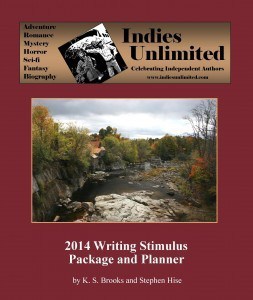
About that same time, the lovely KS Brooks sent me a copy of Indies Unlimited’s first Writing Stimulus Package and Planner. Lo and behold. A calendar. In print. It opened up on my desk and I didn’t need to hang it on the wall. I could see it, the whole month, at all times, and it still booted up if I left it in the car overnight! But it was much more than a calendar. The left-hand pages contained a photo, a writing prompt, and space to write what that inspired while I was on hold or when I needed to stir my brain up.
Immediately I appointed that planner as my writing calendar. I kept track of my blogging deadlines, conferences, workshops, when I was putting my books on sale: basically anything related to my editing, writing, or promotion.
It gets better, kids. At the back of the book are handy and helpful reference sheets for writers: worksheets on character development, chapter formatting, how to write the dreaded, evil blurb, and even some common editing errors.
I typed the character development sheet into my computer so I could use it for all the characters in my current WIP, and it’s fantastic to have all that at my fingertips so I don’t give the protagonist blue eyes in chapter one and brown eyes during the climax. (No, he doesn’t wear contacts.)
I’m still looking for a good program to help me remember birthdays, but as for the rest of it? This is now my calendar. I’ve just ordered the 2014 edition. And my chiropractor can find someone else to finance his children’s college education.


January 17, 2014
The Editing Myth
 On Indies Unlimited: Food for thought by Melissa Bowersock about her experience with being edited (or not, actually) by traditional publishers versus the editorial control she has as an indie author.
Although for most authors, I recommend hiring a professional editor, at the minimum, get your manuscript in front of beta readers who can give you honest, thorough critiques and fresh eyes to catch errors. As Martin Crosbie has frequently written in his posts and in his book, How I Sold 30,000 eBooks on Amazon’s Kindle: An Easy-To-Follow Self-Publishing Guidebook, we indie authors have a larger target on our backs than traditionally published authors. Therefore it’s up to us to ensure that we’re producing the best quality product that we can.
Your thoughts, as always, are welcome.


January 10, 2014
Writing Characters Outside the Box
 I hate stereotypes. I get why they exist; human brains like order. They process a lot of information, so they want to sort things into boxes and get on with the day.
But we—individual people—are not tick boxes on a form. We are not the sum of the things people claim we are. We are not X, Y, and Z because our skin is a certain color, or our grandparents were born in a particular country, or because of whom we love.
When I think about how stereotypes apply to writing, I keep coming back to an amazing author and professor I studied under years ago, who cautioned women writers never to write from a man’s point of view. It’s a topic I’ve tackled before but it still applies to so many situations.
“Stay out of their heads,” she implored, because according to her, it’s simply not possible for us to understand how they think. “And if you ask them,” she continued, “they will lie.”
“So,” I answered, “That means I’m only able to write point-of-view characters who are female, have not reproduced, are descendants of Eastern European Jews, and are my current age or younger?”
She stopped calling on me.
I believe in imagination. I believe that if I can imagine it, I can write it. If I pay attention to people, if I have empathy and compassion for them, I can write their stories. I believe we’re more alike than we are different. We want to be loved. We want to belong, we want to be acknowledged, and we want to feel useful. Maybe I’m deluding myself; who knows? Also, if you plunk me beside another female who has not reproduced, is a descendent of Eastern European Jews, and is my exact chronological age down to the moment I took my first breath, I’m pretty damned sure she is not going to think the way I do or react to things the way I do.
I’ve written several stories that have had male point-of-view characters. I think I did these characters justice, but because I burn to get it right, I ran those manuscripts by actual real-life men before I published. I don’t believe they lied to me when they gave me their feedback that in some of my fictional situations, a guy probably wouldn’t say or do whatever I had them saying or doing. So I fixed it.
As if I need more challenges, the characters I’m working with now are pushing me so far to the edge of the envelope that I might need overseas postage and a customs form. Nearly every day I wrestle with my worthiness to take them on, and how readers will react to my writing from the head of a person I’ve never been.
I just know that I have to try. Whatever cosmic radio station gives me my characters and stories has given me this one. Like a challenge. Like a dare. Like a triple-word, triple-letter, triple-dog dare. And I can’t let go of it.
Tell me what you think. Do you think writers have the right to write as a character they are not? Have you read any books where an author has gotten it right? Or gotten it terribly wrong?


January 5, 2014
Are You Appositive About That?
 One of the trickier tricks with commas is figuring out how to use them around appositives. An appositive is a noun or a noun phrase in apposition (used to describe) another noun. Um…what? Here’s an example:
Professor Katydid, award-winning entomologist, will be lecturing tonight on the mating habits of Madagascar hissing cockroaches.
“Award-winning entomologist” is a noun phrase that further describes Professor Katydid. Therefore, it’s an appositive. Notice that our appositive is set apart from the rest of the sentence by commas. This tells us whether the appositive is nonrestrictive or restrictive.
How do you identify a nonrestrictive appositive? Glad you asked.
If you can remove the appositive and still have a sentence that makes sense (and you still know who the heck we’re talking about), it’s considered nonessential information and you have a nonrestrictive appositive.
Professor Katydid will be lecturing tonight on the mating habits of Madagascar hissing cockroaches.
Okay, even though we know a little less about the dude, we still clearly know who’s lecturing, so the appositive we removed is nonrestrictive and needed to be set apart with commas.
Here are a few more examples of nonrestrictive appositives you might come across:
Suzy’s husband, Freddy, said he’d rather eat a Madagascar hissing cockroach than attend the lecture with her.
Dr. Katydid’s daughter, Penelope, eagerly anticipated the chance to stay home alone.
Okay, here’s where sentences like the last two can get a little tricky. If the noun phrase is restrictive (that is, a restrictive appositive), it provides essential information about the noun. If Dr. Katydid had three daughters, and we removed “Penelope” from the above sentence, we would not know which daughter is being referenced.
So if this were a restrictive appositive situation, the sentence would look like this:
Dr. Katydid’s daughter Penelope eagerly anticipated the chance to stay home alone.
Maybe so she could go online and gossip with her two other sisters, both away at college, about how weird Dad’s getting with those cockroaches.
And, assuming that Suzy only has one husband, the commas in the first nonrestrictive appositive would stand.
Sometimes I see comma confusion around things like this:
Pete Seeger, the folk singer, celebrated his ninety-fourth birthday last May.
Folk singer Pete Seeger celebrated his ninety-fourth birthday last May.
Both examples are correct. The first is nonrestrictive, and the second is restrictive. If we remove “the folk singer” from the first sentence, we still get it. We know we’re talking about Pete Seeger. Therefore, that appositive is not essential information. If we remove “Pete Seeger” from the second sentence, then we get something that doesn’t make much sense, unless you write newspaper headlines. So, that’s essential information to the sentence.
If we boil it all down:
Nonrestrictive appositive = non-essential information = don’t need commas
Restrictive appositive = essential information = need commas
Here are a few more examples:
Suzy’s sister-in-law Mary shot a guy in Reno just to watch him die. [Nonrestrictive. No commas, assuming Suzy has more than one sister-in-law.]
The guy Mary shot, a suspected child abuser, had been under surveillance for three weeks. [Restrictive. Commas. The appositive adds information about “the guy Mary shot,” but is not essential to the integrity of the sentence.]
Pete Seeger’s song “Abiyoyo” is one of my childhood favorites. [Bonus points here: “Abiyoyo” is not set apart with commas because Pete Seeger has recorded a boatload of songs. And a song name is set in quotations (at least according to the Chicago Style of Manual), yet the name of the album it appears in would be set in italics.]
Just for playing, enjoy Pete Seeger performing “Abiyoyo” here. Have a great week.


December 31, 2013
Proposed Actionable Items to Take Under Advisement in 2014
 The Board of Trustees of this writing/editing single proprietorship has convened, debated according to Robert’s Rule of Order, and agreed upon a list of proposed guidelines and actionable items for the upcoming calendar year. We agree to add these items into the public record and indemnify ourselves to be accountable for their delivery.
 1. Bound reading material constructed from paper (hereafter referred to as “print books”) shall not be used as coasters, doorstops, or weapons, except in clear-cut cases of self-defense. Although in the creation of same, weapons may be used at the discretion of the author, particularly in clear-cut cases of self-defense. (See Appendix #1, Woodchippers and Crossbows.)
2. Following up on complaints from the IT department, beverages are not to be placed adjacent to the computer’s input devices. The consumption of food near the computer shall be limited to those items that will not interfere with the integrity of the devices. And especially not Doritos or similar snack foods. (See Appendix #2, removal of grease and artificial colors from input devices; and #3, A Projection of Hip Girth Over Time vs. Physical Limitations of Chair.)
3. Pursuant to additional complaints from the IT department, beverages are not to be consumed while reading Chuck Wendig’s blog posts. Other blog posts may also apply, including those by Stephen Hise, KS Brooks, or Rich Meyer. Reasonable analytical action must be taken prior to consumption of beverages.
4. Continuing directive from last three calendar years, authors engaging the services of the editing component of the single proprietorship shall have the full and undivided attention of the editing component when installed at the computer with author’s manuscript open and actionable.
5. When the editing component of the writing/editing single proprietorship is installed at the computer, the Chicago Manual of Style (hereafter referred to as “CMOS”) shall be within comfortable ergonomic distance. (See Appendix #4, Chiropractic and Physical Therapy Expenses.)
6. All reasonable attempts will be made not to drop aforementioned CMOS on unprotected extremities, fragile items, or the unprotected extremities of the adjunct resident design single proprietorship, hereafter referred to as “spouse.” Unless needed for reasonable attempts at self-defense. (Note: Refer to Point #1.)
7. When seated, if the axis of the writer or editor component tips beyond ninety (90) degrees forward or if the eyelids of same begin descent, immediate action must be taken to remedy the situation. (See Appendix #5, Sleep; or Appendix #6, Caffeine.)
These rules have been reviewed and approved by all members of the Board this last day of December 2013. Meeting adjourned.


Consolidation, Nooble & Agents Who CARE—What’s Ahead for 2014 in Publishing

I love these ideas, especially the microstores and actually COMMUNICATING with people. Happy New Year and New Brave New World, everyone!
 Originally posted on Kristen Lamb's Blog:

Image via Flickr Creative Commons courtesy of Mr. Muggles.
I promised yesterday, I’d offer up some predictions for publishing in 2014. I don’t know if these are “predictions” or “suggestions” but I am, at heart, an eternal optimist. As I’ve said many, many times, this is a WONDERFUL time to be a writer. It’s a Golden Age of Publishing if we’re willing to embrace the new. Yes, there are challenges. I might be an optimist, but I’m not a moron (okay, that time I accidentally drove to Missouri doesn’t count).
There are new perils ahead, ones we won’t know about until we step both feet in them. In ways, writers are The Lewis and Clark Expedition Literary Edition unfolding in 0s and 1s. This part of why I implored yesterday for writers to be involved in their social media communities. This new paradigm is awesome, but predators abound.


Consolidation, Nooble & Agents Who CARE---What's Ahead for 2014 in Publishing
 Reblogged from Kristen Lamb's Blog:




I promised yesterday, I'd offer up some predictions for publishing in 2014. I don't know if these are "predictions" or "suggestions" but I am, at heart, an eternal optimist. As I've said many, many times, this is a WONDERFUL time to be a writer. It's a Golden Age of Publishing if we're willing to embrace the new. Yes, there are challenges.
I love these ideas, especially the microstores and actually COMMUNICATING with people. Happy New Year and New Brave New World, everyone!
December 30, 2013
Supporting Indie Writers and their wonderful work
 Reblogged from The Whimsical Musings of a Menopausal Miss:

As an avid reader I was delighted to discover the world of Indie Authors. Six months ago I had never heard of them, or the term. How happy I am to have been introduced into their world. I am now a huge fan of the whole concept of Indie writers and I think supporting them is a great use of my time.
Aw, nice, a little indie love!


