Our Man in Abiko's Blog, page 18
November 25, 2012
Zeroes over the capital - 2012 JAPAN ELECTION DIARY: DAY 10
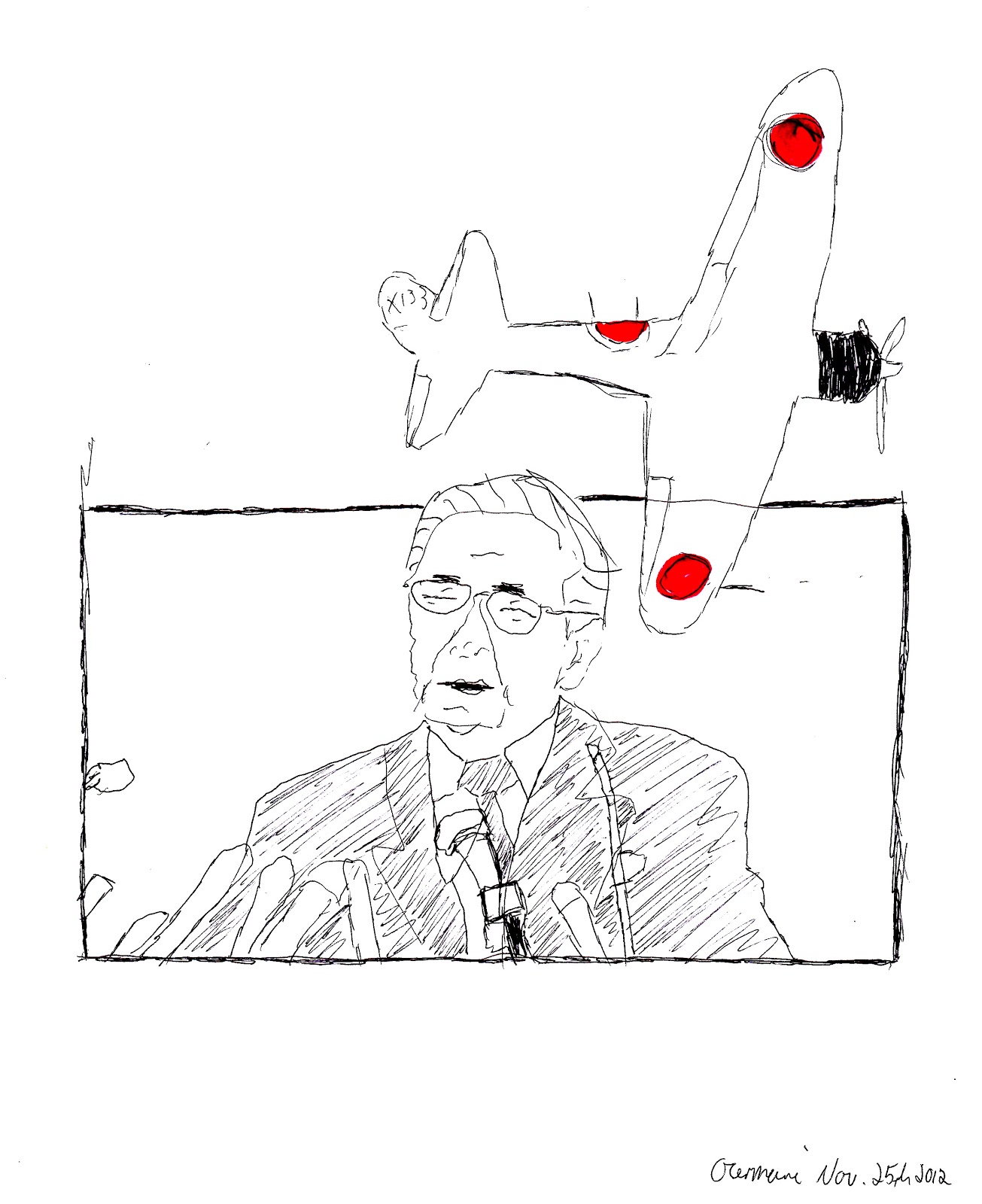
"We'll be over our target in 10 minutes, kick back and enjoy the music."
The pilot's hachimaki bandanna fluttered in the ice-cold cockpit.
It was noisy as hell and I was too keyed up, sitting in the rear-gunner's seat, to pay much attention to the music. But sure enough I could make out a tinny Glenn Miller number. The Japanese pilots knew they were getting close to Pearl Harbor when they could hear Chattanooga Choo Choo.
So the pilot told me, but our target today was the Arkansas State Capitol. We circled it a couple of times as if to strafe it, and dived with the sun behind us.
I was sitting in the back of a VAL dive-bomber of the same ilk that had struck on that infamous day. Although whether it was a replica or the real thing I don't recall now. During the week my pilot was a DHL pilot based in Memphis, Tennessee. But at the weekends, he would fly with the Tora Tora Tora air display team re-enacting battles for folks at air shows around America. Though naturally, in their retelling of Pearl Harbor, the US won the day, with a P-51 Mustang chasing the Zeroes out of the sky.
Well, you have to play to your audience.

"How come you get all the good assignments?" my editor said after I got back to the office. That was a joke. Excluding the editor, The Jacksonville Patriot had a news staff of one (me) and a girl who worked three mornings a week, so I pretty much got all the assignments. It was my second paper. I'd quit the Conway Log Cabin Democrat after two years, tired of being thought of the weird foreign guy only good for doing the weather reports, obits and fetching biscuits and gravy for the real journos. Now, I was covering the Little Rock Air Force Base, an Agent Orange incineration plant, not to mention all the Rotary and Lions Club International lunches you could shake a press pass at.
The editor was a pretty good fella, despite being a born-again Christian. But we did have our differences.
He was adamant Paul was better than John. His argument was that if you compared their solo careers, any reasonable man would agree.
"Wings was so much better than the Plastic Ono Band."
"That's not Lennon's fault."
"What about Live and Let Die? Band on the Run?"
"What about Working Class Hero? Imagine?"
"Two words: Revolution No. 9"
"That's three. Two words for you: Frog Chorus."
And so on and so forth, a battle neither side could win. Or risk losing.

The war is still casting a shadow over Japan. It would be nice to think that this election the country could finally put the damn thing to rest, but every would-be PM has his position informed by nationalist agendas.
Ishihara's is the clearest. He told John Nathan in a New Yorker article on the origins of his nationalism: “The Americans could see that we were kids, but they would strafe us anyway, for fun. One day I had to throw myself into a barley field. As I lay there, the Grummans and P-51s came roaring over me, flying low, and I could see that they had pictures of naked women and Mickey Mouse painted on the fuselage. I couldn't believe my eyes! I was scared to death, and angry but I was also thinking what a place America must be, what a culture, and how different from Japan. Then I heard other planes but no machine guns this time; they were Zeros in pursuit, and their insignia was the Japanese flag. I felt like reaching up to embrace that rising sun.”
He denies the Rape of Nanking: ”People say that the Japanese made a holocaust but that is not true. It is a story made up by the Chinese. It has tarnished the image of Japan, but it is a lie.”
Young Hashimoto, Ishihara's understudy, is compared to Hitler by his detractors, but apart from insisting Osaka teachers stand for the national anthem and claiming the South Korean sex slaves were willing participants, the jury is still out.
Abe too has difficulty admitting that the Japanese army made use of Korean sex slaves and has difficulty in believing that "Class A" war criminals (the diplomats and generals who sent Japan to war) are in fact criminals. By the way, his grandfather was a Tojo cabinet member. Just sayin'
That leaves Noda. He too believes the Class A War Criminals are not criminals. I don't know what his views on sex slaves or the Rape of Nanking are, I daren't ask.
I have to admit that my knowledge of the Rape of Nanking, Class A war criminals and Korean sex slaves is sketchy at best. I do note that the war crime trials were hardly impartial and suffered from two massive faults: that their intention was to shift the blame from the imperial family, whom MacArthur wanted to keep clean to help with Pax Americana; and that they had nothing to say about Allied crimes against humanity, you know, Hiroshima? Nagasaki?
But even so. Call Our Man an ignoramus, but he still doesn't get why it is easier for pols to construct elaborate lies than just admit the truth. Can't the politicians just say: "Our ancestors did bad things, under direction of our government of the day, and we cannot hope to hold our heads up high in the world without fear of moral blackmail until we admit that to ourselves. We fucked up, but you can trust us now to never do that again because we have learnt the lessons of our past."
Have they?

I showed Our Woman my pictures of the men who would be prime minister and she smiled absently.
"Well, what do you think?"
"I think they should all be playing shogi in a park somewhere, not trying to run the country. They are Japanese from a different time. Is this the best Japan can offer? If it is then I'm sorry for Japan. Really sorry."
Click here to go to Day 1 of the 2012 Japan Election Diary.


November 24, 2012
Filtered views - JAPAN 2012 ELECTION DIARY: DAY 9

In seven years, my mother in law was never once able to order a cup of coffee in the United Kingdom.
But not through lack of trying. Starbucks, Cafe Nero, Costa Coffee, McDonald's, you name it, she tried and failed to order coffee from the lot. Something about the way she pronounced "coffee" more like the Japanese "kohee" would inevitably result in a tepid cup of Earl Grey being plonked in front of her. At first this would bother her, but after a few years, she came to expect the unexpected and even took a delight in what strange beverage would appear before her, bewildered that "kohee" could be interpreted by the barristas as tea, chai, hot chocolate or Coca Cola.
There's a certain view that Japan is different from everywhere else. Piles of books have been written about what makes Japan uniquely unique, either a shining beacon to the world of what's right with urban living, robots and Buddhism; or more recently, as a cautionary tale of what's wrong with everything under the sun.
I have no intention to add to either pile. It's getting late on a Saturday night and I can't dazzle my way to any original insights or rehash an argument that would convince you, even if you happened to be sober, that underneath the sushi conveyor belts and cosplay codpieces, Japan isn't much different from any other place. In fact, go on and pour yourself a drink or two, I'll be better company if you've had a few.
That's not to say there aren't differences. But the longer I stay in Japan the harder it is for me to see the otherness of what has become home. Increasingly, I have to ask others to see any strangeness unique to the country and not just the universal strangeness that is life.
Back in my first tour of duty in Japan in '97, the otherness veneer was wearing thin and I began to suspect Japan was just the UK in a kimono. I asked a Japanese student who had lived in London what the difference between the countries was.
"That's easy. In Japan we have all the little things right, but the big things wrong."
He said if you left your phone on the table of a Ueno coffee shop, it would still be there when you return from the toilet, that the baths will be piping hot, but that the chance of a woman becoming Prime Minster would be as remote as whale being removed from the national diet.
"In the UK, you have all the little things wrong, but the big things right."
He's right. The UK suffers from a chronic lack of water pressure, train doors that don't open unless you roll the window down and open from the outside, and if you could actually find a plumber to install a power-shower, he'd be unlikely to show up within a day or two of his promised arrival. I could go on, but this is not the Daily Mail letters page, thank Buddha. And yet despite it all, Brits manage to change their governments from right to left and back to right again, fairly frequently and with relative ease.
Not so in Japan. News broke today that a chap took five people hostage at knifepoint in an Aichi Prefecture bank to demand the resignation of Prime Minister Noda. Which was really a waste of effort as, er, he has already jacked it in. You know, that's why there's an election and everything? Perhaps the fella should read the papers more. Police nabbed him when he fell asleep in a chair at 3am on Friday (perhaps he had been reading the papers...? ed.) about an hour after I'd finished writing yesterday's diary entry. Must admit, I'm relieved to discover there is a soul passionate about the Japanese election who knows even less about it than Our Man.
Well, I might as well do a round-up on other news that has filtered through to the bunker here. Hashimoto, the Outlier from Osaka, the junior partner to Ishihara has admitted the obvious -- their party can't hope to win a majority of the 480 seats in the Lower House since they won't be able to field more than 150 or so candidates. But he and The Ishihara are clearly scaring the mainstream.
Noda and Abe appear to have agreed to do a one-on-one debate on the internet. I thought this would be a mistake for Abe, who is technically the favourite but might not be if people actually heard him mangle the language, and a gift to underdog Noda who could have a reasonable chance to be understood at Starbucks, but I realised I was missing a trick here.
An internet interview sounded all very down with the kids and all, but actually it's politics as usual: by going the internet route, they are avoiding having to debate with Ishihara which if the programme appeared on TV, they'd have to include all the candidates by law. Being only fair and all. So, now Our Man has to keep an eye on YouTube as well as read the paper.
He's given up doing the big things right, but hopefully Our Man can get the little things right.
Click here to go to Day 1 of the 2012 Japan Election Diary.

November 23, 2012
It's the stupid economy -- 2012 JAPAN ELECTION DIARY: DAY 8

You could tell it wasn't going to go well by her half-hearted bow.
The junior high school student tried to turn the knob at the back of the chair to lower the seat, but it wouldn't budge and she perched herself on the edge, hunching over the Steinway grand piano, head tucked between her shoulders like she was trying to hide from the onlookers. But her expression was betraying a guilty conscience. I thought of those particularly insensitive teachers who say stupid things like "just enjoy it" before an exam. The enjoyment is all theoretical, academic. Not real. Not enjoyable.
As far as this poor girl was concerned, she was heading to a public execution. But she started strongly, getting through the first few bars with no difficulty, but then her fingers faltered and she had to backtrack to find her place again. The audience held its breath. She found her place again, but then a few flat notes billowed through the hall and before long she was just picking out the odd riff with her right hand and clawing blindly with her left.
She stopped, and I wondered if tears would flow instead of the music, but she turned a page and continued, haltingly. The old folks in my field of view had fixed expressions, not so much from the suffering of listening to her massacring a show tune, but out of sympathy of how much she must be suffering. It seemed cruel and unusual punishment to make one so young go through with so public a humiliation. In this corner of the world, a mistake or two due to inexperience or lack of skill can be overlooked, but failing to practice for such a public spectacle is unforgivable.
I looked away. I searched twitter on my phone. I actually started to read a business story in the Japan Times about Abe. Not out of disrespect for the perfomer, but out of embarrassment for her. I wanted to be as far away from here as she did, I couldn't bear to add to her misery.
So I read the first thing that came to hand. The biz briefs. Stocks in Sony and Panasonic were downgraded to junk status by Fitch. I don't know who Fitch is, but this is apparently significant. Our Man and Woman had his and hers Panasonic mountain bikes as a wedding present back 15 years ago. My eldest has a Sony mp3 Walkman. This may or may not be significant.
Finally, her fingers came to rest, the halting music expired. It was over. The audience gave her a measured round of applause, 50 percent politeness, 50 percent relief. Her choice of song was My Favorite Things.
So it was that I found myself back in Inzai for the second day in a row, this time for the annual piano show that my girls' piano teacher holds in the Inzai Civic Hall, a great public hall with seating for a thousand. Today, it was host to 30 kids and their families in the morning and again in the afternoon. That's a maximum of 200 people using the hall over six hours. A hall with a Steinway. A hall with a parking lot, staff and heating, lighting, not to mention its own traffic lights.
You could take this as a sign of the affluence of a nation that could afford to throw such resources at the fostering of kids' piano lessons. Or you could take this as a sign that the nation that was going to take over the world in Rising Sun back in the 80s has blown its fortune on concrete multi-purpose halls (the "no purpose halls" of Alex Kerr's Dogs and Demons) that scar the landscape in a similar way to the giant box retail stores in the US.
Whatever. Somebody has to pay for it.
But not me. Or anyone today, because November 23rd is a national holiday to celebrate labour and productivity. At least it has been since the end of the war. Before that it was Niiname-sai the imperial harvest festival. But times have changed since then.
I forced myself to read about the "right wing" LDP's economic policies under Abe (so you don't have to, dear reader). It appears that he is against the Trans Pacific Free Trade blah blah blah and that he is in favour of quantative easing and fixing interest rates. I'm not sure what this all means, but I take it that he doesn't want folk to buy cheap groceries from the Americas and Australia, that he does want to print money and if the governor of the bank of Japan doesn't like it, he's out of a job. Doesn't sound very right wing to me, but what would I know? Economics is not one of my favourite things. Cheap Chilean and Australian wine is though, and a strong yen, as that's the currency I'm paid in. But apparently that's stupid, according to the business pages. Well, according to me, I think they're stupid. Howdya like them comparing apples to oranges, huh?
I did read something else via Twitter today that could be construed as business-related and to do with the Japan election, so it deserves its place in this entry. According to Phil Brasor, writer for hire and the bunker's favourite columnist at the Japan Times, Ishihara's sudden resignation as governor will cost Tokyo taxpayers $50 million to foot the bill for an election to find his replacement. Which will be Naoki Inose, his former hand-picked vice mayor, who has been endorsed by the LDP and of course his former boss Ishihara.
Hmmm. A crass disregard for other folk's money. An inability to keep his stupid mouth shut. Got it. Ishihara is the Donald Trump of Japan politics.
I'm going to quantitively ease my backside into bed now, in preparation for another day.
Click here to go to Day 1 of the 2012 Japan Election Diary.

November 22, 2012
Father's Day -- 2012 ELECTION DIARY: DAY 7

"I'm thinking of voting for the Liberal Democratic Party," Our Mother-in-Law announced from the back seat on the way to the cemetery this morning.
"I mean, we tried the Democratic Party of Japan for three years, and they didn't do anything."
We'd passed dozens of election signs on the road from Abiko to Inzai, most for the 38-year-old New Komeito candidate whose teeth were so white he could have a second career advertising toothpaste. Or Photoshop.
The only other signs Our Man noticed were for the LDP candidate, a man of a similar age, though strangely not emblazoned on his campaign poster. This young man's mother had made her fortune as the head of a private kindergarten chain. He had definitely been photoshopped. Behind his face was a heavernly-pure blue sky with cotton-candy wisps of clouds. Pretty sure he was wearing lip gloss too.
"They didn't do anything because the LDP stopped them at every turn."
Our Woman gave Our Man a hard stare, but translated for the benefit of her mother.
"What do you think of Ishihara?"
Our Mother-in-Law emitted a sound reserved for the thorniest of problems, like how to remove a soy sauce stain from the crotch of a beige pair of trousers.
Ishihara had been all over the news yesterday for his comments that he thought Japan should possess "simulated nuclear weapons" to deter China from doing whatever he imaged China would do if Japan didn't start simulating nuclear weapons sharpish. Unsure how you go about simulating a nuclear weapon. Images of Marcel Marceau entered Our Man's head, using his body to mimic the plume of a mushroom cloud.
"Well, he's 80. He's too old. And I don't think we should have a war with China. It's not a good idea. Also, he doesn't stick around to solve problems. He'll be off as soon as he gets bored or in trouble. So that leaves Abe-san..."
***
Shinzo Abe. A whipper-snapper at 58, who had resigned abruptly as prime minister of Japan citing a poorly tummy after year in power in 2006, was the grandson of a Tojo cabinet member, had retaken top spot in the party by defeating one of Ishihara's sons and now was favourite to be the next prime minister of Japan. Although "favourite" is perhaps a misleading term implying popularity. "Favourite on a technicality" may be closer to the mark. He is a man devoid of charisma. Our Man wasn't in Japan when Abe was first Prime Minister, so has no recollection of him. In fact, apart from the 7am wake-up call from Our Father-in-Law's television the other day, he had never heard him speak. According to a neighbour, that is no bad thing. His Japanese is hard for even Japanese to follow.
"Why?"
"He sounds funny. His words don't sound right."
"He has a lisp?"
"What's a lisp?"
"When he talkth itth really hard to underthtand."
"Yes, like that."
It would be cruel to suggest Abe's speech impediment was due to being born with a silver-spoon in his mouth. But it's probably true.
***
"Abe, huh?"
Our Mother-in-Law's frown filled the rear-view mirror.
At the cemetery office, the priest turned off the game of solitaire on the screen and bid us to sit down on some fold-out metal chairs next to a paraffin heater. The table had a thick transparent plastic veneer that I'd last seen at a real estate office when we'd bought our home in Abiko, must be five prime ministers ago.
A stocky man appeared, bowed to us and promptly disappeared back into the back office. He came back with three cups of coffee. He was the stonemason.
The priest chatted with us. He was an adherent to the Tendai-shu sect of Chinese Buddhism. He gave an impassioned but hard to follow impromptu talk on Buddhism, Catholicism and Islam. He asked if Our Man was Protestant. Our Woman said he wasn't much of anything.
He smiled.
"That's OK, this is an inclusive, comprehensive sect."
Kind of like a spiritual Liberal Democratic Party. The priest's father had been a banker and official with the Ministry of Health before contracting something incurable and becoming a priest.
"So you've always been a priest?"
"No, no, I used to be a clothes designer."
***
We went out to the tombstone. It reads in kanji and English: "Love and truth are eternal." It's probably the only bilingual tombstone in Inzai.
The priest opened one of three tatty prayer books and chanted, clicked his fingers and dinged a little brass bowl. And chanted some more. And clicked his fingers and dinged his little brass bowl. Time passed. Unsure how much time.
Our Mother-in-Law unwrapped a tray covered with her best tea towel. Beneath it were two 500 millilitre cans of Sapporo beer, a couple of mikan tangerines, manju junk food and a packet of Mild Seven cigarettes.
Our Man recalled a discussion he'd had with Our Woman about what to put in the coffin.
"Well obviously his best suit and walking stick. And he'll need his bifocals."
"Of course," I'd said, "but..."
"What?"
"Well, would he really need his stick and his glasses?"
"Of course he would. He can't see very well and he has a limp."
***
In the end, he left this world in the way he had lived it. What more could anyone ask for?
Click here to go to Day 1 of the 2012 Japan Election Diary.

November 21, 2012
A study in scarlet: 2012 JAPAN ELECTION DIARY: DAY 6
Click here to go to Day 1 of the 2012 Japan Election Diary.
You may have noticed that Our Man doesn't have any answers when it comes to the Japan elections. Or any answers to much else. But he does have a few questions and he is fortunate to know a chap who does know a great deal more about Japan politics than Our Man. Maybe he should be keeping a diary, not Our Man. Although that is what his blog is all year round. But here's the next best thing. An interview with the man himself, Michael Thomas Cucek, the Sherlock Holmes to Our Man's Dr. Watson.
Does this election have any deeper meaning? In 2009 it was a verdict on 50 years of LDP rule. This time, anything as momentous?
 I would take issue with the characterization of the House of Representatives election of 2009 as the verdict on 50 years of LDP rule. The verdict on the LDP was delivered in 1993. The period 1994 to 2009 represented a delay in the imposition of the sentence. Recall that Koizumi Jun'ichiro remained entirely credible despite his paradoxical pledges to destroy the LDP. Koizumi was not all words: he did damage the LDP through his reform program's alienation of many segments of the grand LDP coalition. By promising ice cream for everyone in the DPJ's 2009 manifesto, Ozawa Ichiro was able to scoop up voters in the alienated sectors of society and the economy. When it became clear that there was nowhere near enough fat to trim from the budget to fulfill the manifesto's grandiose promises, Ozawa's ad hoc neo-LDP coalition, fragile and self-serving, collapsed. Ozawa's extravagant promises were superfluous. After the mis-and poor management of the country by prime ministers Abe Shinzo, Fukuda Yasuo and Aso Taro, the LDP was on a course straight for the iceberg.
Two grand themes standout as regards the 2012 election: the consequences of lying and the evaporation of a grand umbrella party of the center-left. Hatoyama Yukio, Ozawa and Noda, all told major lies, for which the DPJ paid and will pay dearly. Noda Yoshihiko's DPJ has in addition been expelling its left-leaning and anti-market liberalization wings. The views held by the remaining members of the DPJ are indistinguishable from those held by their counterparts inside the LDP. One could argue that these policy position are the only tenable and stable ones available to Japan. Such a Panglossian view, however, strikes one as the way elites justify their jobs and their opinions rather than being tested propositions.
There should be, along with the constellation of microparties, two major parties grappling over policies. As it is, the DPJ has become an LDP clone, so the voters cannot vote with their hearts, just their heads. No leader in the upcoming election will have the people behind him (and it will be a him) as a vote for him and his party will have to have been done with both nostrils pinched shut.
OMIA: If the centre-left umbrella has lost its shape, what's a progressive with principles to do? Vote Ozawa (where available)?
An interesting question that neither the public opinion polls nor the policy stances of the various parties answer. Progressives tend on the whole to not be single issue voters and vice versa. The micro-parties thus have little traction, aside from the Socialists and the Communists, who are still limping forward propelled by the momentum of past glories. In the end, with disgust, the progressive voter will either not vote or vote DPJ.
While Ozawa has been cleared of criminal wrongdoing, he remains a power-mad, secretive, paranoid, preening bully and coward. Good if you are, let us say, a banker running a hedge fund. Bad if you want to be a credible political party leader. When one tries to consider what kind of psyche could accept being subservient to Ozawa, one's head aches.
If the LDP is so undesirable, why does the DPJ try to mimic it?
One argument is that the viable policy choices are limited, making a radical departure, even one the populace finds attractive on a theoretical level, impossible to implement. This was certainly the argument put forth by Paul Scalise and Devin Stewart in their famous article for Foreign Policy Japan's Revolutionary Election .
Another view is that both parties have strong lateral ties in between individual members, with the result of a broad non-partisan consensus on policy, the differences in between the parties being expressed in the fringe elements. Another view along similar lines would argue that the present orientation comes after experimentation by the three successive DPJ administrations, with Hatoyama Yukio following a non-traditional and ultimately untenable path, Kan Naoto trying to reconcile experiment with tradition and Noda stabilizing administration in a traditional manner. All forms three paths proved to be insufficient to deal with the challenge posed by a nihilistic LDP, ready to do anything and say anything to bring down the DPJ government.
OMIA: Final questions, if I may… is the election illegal? If so, will it matter?
 No person has come forward with an explanation as to how the election could be legal. Even if the courts accept the contemptuous +0/-5 solution to the unconstitutional disparity in between the largest and the smallest districts -- which is not being applied in this election -- the current electoral map became defunct in January of this year. Under the law, the ministerial advisory council on electoral districts, attached to the Ministry of Internal Affairs and Communications, must produce a new map within one calendar year after the release of the decennial census. The council did not receive guidance from the government on the number of seats the House of Representatives should have in it or on the guidelines for redrawing the boundaries of the districts. As a result the council was unable to do its job and has not submitted a new map.
It will matter because holding an election in contempt of the law will not go unchallenged.
Despite an article in the Constitution declaring that the Supreme Court is the ultimate arbiter of all laws and government acts, the Court has never exercised its powers in any significant way, choosing instead to defer to the decisions made by the country's elected officials. However, in recent years the Court has been warning the Diet and the government that it will protect the fundamental rights of the populace.
The politicians have essentially thumbed their noses at the courts. If the justices take the insult personally, there is a very, very small chance that the courts could void the election. More likely there would be an erosion of the deference the courts, including the Supreme Court, have been showing the Cabinet and the Diet.
OMIA: A supplementary question: is a vote for Ishihara/Hashimoto a vote for insanity?
Yes. If Hashimoto were quitting his day job as Osaka City's mayor, the exercise might have some meaning. As it is, the merger with the Party of the Sun makes clear that the national-level Japan Restoration Association is an ego trip for Hashimoto and Ishihara, nothing more.
OMIA: Our Man in Abiko. MTC: Michael Thomas Cucek, Research Associate, MIT Center for International Studies. Sorry about the red ink, closest Our Man could get to scarlet.
You may have noticed that Our Man doesn't have any answers when it comes to the Japan elections. Or any answers to much else. But he does have a few questions and he is fortunate to know a chap who does know a great deal more about Japan politics than Our Man. Maybe he should be keeping a diary, not Our Man. Although that is what his blog is all year round. But here's the next best thing. An interview with the man himself, Michael Thomas Cucek, the Sherlock Holmes to Our Man's Dr. Watson.
Does this election have any deeper meaning? In 2009 it was a verdict on 50 years of LDP rule. This time, anything as momentous?
 I would take issue with the characterization of the House of Representatives election of 2009 as the verdict on 50 years of LDP rule. The verdict on the LDP was delivered in 1993. The period 1994 to 2009 represented a delay in the imposition of the sentence. Recall that Koizumi Jun'ichiro remained entirely credible despite his paradoxical pledges to destroy the LDP. Koizumi was not all words: he did damage the LDP through his reform program's alienation of many segments of the grand LDP coalition. By promising ice cream for everyone in the DPJ's 2009 manifesto, Ozawa Ichiro was able to scoop up voters in the alienated sectors of society and the economy. When it became clear that there was nowhere near enough fat to trim from the budget to fulfill the manifesto's grandiose promises, Ozawa's ad hoc neo-LDP coalition, fragile and self-serving, collapsed. Ozawa's extravagant promises were superfluous. After the mis-and poor management of the country by prime ministers Abe Shinzo, Fukuda Yasuo and Aso Taro, the LDP was on a course straight for the iceberg.
Two grand themes standout as regards the 2012 election: the consequences of lying and the evaporation of a grand umbrella party of the center-left. Hatoyama Yukio, Ozawa and Noda, all told major lies, for which the DPJ paid and will pay dearly. Noda Yoshihiko's DPJ has in addition been expelling its left-leaning and anti-market liberalization wings. The views held by the remaining members of the DPJ are indistinguishable from those held by their counterparts inside the LDP. One could argue that these policy position are the only tenable and stable ones available to Japan. Such a Panglossian view, however, strikes one as the way elites justify their jobs and their opinions rather than being tested propositions.
There should be, along with the constellation of microparties, two major parties grappling over policies. As it is, the DPJ has become an LDP clone, so the voters cannot vote with their hearts, just their heads. No leader in the upcoming election will have the people behind him (and it will be a him) as a vote for him and his party will have to have been done with both nostrils pinched shut.
OMIA: If the centre-left umbrella has lost its shape, what's a progressive with principles to do? Vote Ozawa (where available)?
An interesting question that neither the public opinion polls nor the policy stances of the various parties answer. Progressives tend on the whole to not be single issue voters and vice versa. The micro-parties thus have little traction, aside from the Socialists and the Communists, who are still limping forward propelled by the momentum of past glories. In the end, with disgust, the progressive voter will either not vote or vote DPJ.
While Ozawa has been cleared of criminal wrongdoing, he remains a power-mad, secretive, paranoid, preening bully and coward. Good if you are, let us say, a banker running a hedge fund. Bad if you want to be a credible political party leader. When one tries to consider what kind of psyche could accept being subservient to Ozawa, one's head aches.
If the LDP is so undesirable, why does the DPJ try to mimic it?
One argument is that the viable policy choices are limited, making a radical departure, even one the populace finds attractive on a theoretical level, impossible to implement. This was certainly the argument put forth by Paul Scalise and Devin Stewart in their famous article for Foreign Policy Japan's Revolutionary Election .
Another view is that both parties have strong lateral ties in between individual members, with the result of a broad non-partisan consensus on policy, the differences in between the parties being expressed in the fringe elements. Another view along similar lines would argue that the present orientation comes after experimentation by the three successive DPJ administrations, with Hatoyama Yukio following a non-traditional and ultimately untenable path, Kan Naoto trying to reconcile experiment with tradition and Noda stabilizing administration in a traditional manner. All forms three paths proved to be insufficient to deal with the challenge posed by a nihilistic LDP, ready to do anything and say anything to bring down the DPJ government.
OMIA: Final questions, if I may… is the election illegal? If so, will it matter?
 No person has come forward with an explanation as to how the election could be legal. Even if the courts accept the contemptuous +0/-5 solution to the unconstitutional disparity in between the largest and the smallest districts -- which is not being applied in this election -- the current electoral map became defunct in January of this year. Under the law, the ministerial advisory council on electoral districts, attached to the Ministry of Internal Affairs and Communications, must produce a new map within one calendar year after the release of the decennial census. The council did not receive guidance from the government on the number of seats the House of Representatives should have in it or on the guidelines for redrawing the boundaries of the districts. As a result the council was unable to do its job and has not submitted a new map.
It will matter because holding an election in contempt of the law will not go unchallenged.
Despite an article in the Constitution declaring that the Supreme Court is the ultimate arbiter of all laws and government acts, the Court has never exercised its powers in any significant way, choosing instead to defer to the decisions made by the country's elected officials. However, in recent years the Court has been warning the Diet and the government that it will protect the fundamental rights of the populace.
The politicians have essentially thumbed their noses at the courts. If the justices take the insult personally, there is a very, very small chance that the courts could void the election. More likely there would be an erosion of the deference the courts, including the Supreme Court, have been showing the Cabinet and the Diet.
OMIA: A supplementary question: is a vote for Ishihara/Hashimoto a vote for insanity?
Yes. If Hashimoto were quitting his day job as Osaka City's mayor, the exercise might have some meaning. As it is, the merger with the Party of the Sun makes clear that the national-level Japan Restoration Association is an ego trip for Hashimoto and Ishihara, nothing more.
OMIA: Our Man in Abiko. MTC: Michael Thomas Cucek, Research Associate, MIT Center for International Studies. Sorry about the red ink, closest Our Man could get to scarlet.
November 20, 2012
Let them eat cake: 2012 JAPAN ELECTION DIARY: DAY 5

Beware labels. Just because you've read the label, doesn't mean you know what's inside. And Our Man is not just talking fruitcakes.
Picture a student with a red rash. You needn't picture how he got the rash, just know that it was a rash. And it was red. The student went to the doctor, showed him the rash. The doctor poked it and prodded it, and stroked his chin. Finally he said: "You are suffering from ruber temerarium, come back in a day or two if it gets worse." The student was crestfallen. If it gets worse? He had no idea what was ailing him. And this was in the olden days before the internet. He went to the university library, searched through the card catalogues on the ground floor and found a card for a dictionary of Latin terms. He went to the reference floor on the second floor, found the right shelf and pulled the dusty tome from the shelf, and sat at an empty desk to leaf through the pages until finally he found the right entry. Ruber temerarium... Latin for "red rash."
Labels are reassuring things when you don't have a clue what's inside. Google articles about Japanese politics and you'll find terms like "right-wing" LDP, "left-leaning" DPJ (Our Man's guilty of using that one) as if knowing the label means you know how the fruitcake will taste.
Speaking of fruitcakes, it strikes Our Man that he hasn't introduced the dramatis personae of this morality play he's trying to piece together from the Japan election with bits of string and knotted hankies. He had been hoping, like the good novelist he aspires to be, to let the characters tell their own stories through their actions, and just fill in the gaps. But the candidates don't seem to be doing much of anything, at least as far as Our Man can tell as seen through the ink-stained Influencing Machine of this morning's copy of the Japan Times. Although they did helpfully provide a vox pop about ex-Tokyo governor Shintaro Ishihara quitting the day job to pursue a career on the national stage, so Our Man will take this as a starting point to do some fact checking by way of introducing OUR POTENTIAL FUTURE PRIME MINISTER.
He did shirk his responsibility as governor of Tokyo but he has big ideas on how to improve the national government and Japan. If he waited until the end of his term as governor he would be too old, so I think he decided to quit at the right time. I would vote for him and his party at a general election.
TRUE: He's 80 years old. Eighty. Eight-Ohhh. He has some big ideas all right. Like the one that Washington took an interest in back in 1989 when a collection of his speeches "The Japan Who Can Say No" included an idea that Japan should tip the balance of power by selling Japanese computer chips to the USSR for their nuke missiles.
I think that he is the main troublemaker behind the ongoing (trouble with China and) Senkaku Island problem, so whilst maybe he did a good job and was a good leader for Tokyo, he is not the person to take the country forward.
FALSE: He did nothing for Tokyo, other than losing the bid for the Olympics, which saved us all a lot of time and money. Remember the manga museum? No? Exactly.
I wouldn't (vote for him). I think he's popular with many Japanese as he shoots pretty much straight from the hip — not so popular with non-Japanese due to past comments about foreigners. A lot of people I know find the thought of him having his own party and possibly becoming PM scary.
FALSE: I find the thought of him having his own party and possibly becoming PM absolutely hilarious. In a scary kind of way, possibly.
I think Japan's government needs a powerful politician who has strong views about the future, so I approve of his decision to resign his governorship. However, I don't agree with his opinions on restarting the nuclear reactors, so I won't vote for him.
FALSE: Ishihara is a feeble-minded politician with strong views about the past. The Rape of Nanking? Didn't happen according to Ishihara, or rather, a lot of bad happened on both sides, so you can't really attribute blame. You know, they threw rocks at us, we raped women and killed children. Sticks and stones. You know, Israel and Gaza Strip, right?
He made a big decision when he quit the governorship, but I like him because he is very strong mentally and he is like Japanese men from years gone by. His actions are strong, and I would support him in a general election.
TRUE: Verrrrry strong mentally. Verrrrry. Let's face it, he wrote a musical based on Treasure Island, that's no mean feat. Not to mention his first novel in 1955, Season of the Sun, aka Shintaro Does Tokyo, that won the Akutagawa Prize -- Japan's Booker Prize -- about a bunch of rich kids gambling, brawling and shagging around, famously through a paper screen. He is not like Japanese men from years gone by, he is a Japanese man from years gone by.
I wanted Ishihara to continue as governor as we need a person with charisma and leadership abilities, but it is no surprise he set up a new political party, and I think this caused (the DPJ) to call the election. Whatever happens to the new party, as long as Ishihara is in there, I'm going to support them.
TRUE: It is no surprise a former failed candidate for the leadership of the LDP would set up his own party -- nobody else would have him. And charisma. Oh, yes. He became an idol to teens who wore their hair long and clipped on sides known as a "Shintaro" cut. Back in the '50s. His debut into international politics by attempting to buy the disputed Senkaku Islands off the coast of China for Tokyo set off a series of missteps that culminated in Beijing and Taiwan rattling sabres, Chinese consumers smashing Toyotas and Japan slipping into recession for the first time since the earthquake. That's leadership.
Do not make the mistake of labelling this fruitcake.
Click here to go to Day 1 of the 2012 Japan Election Diary.

November 19, 2012
Senior moments: JAPAN ELECTION 2012 DIARY: DAY 4
2:05 Where the hell am I? It's hot and dry, I'm burning up. Arizona?
8:10 Is there no window in this room? There was yesterday. Why is it still dark? Where is the sun? Oh, blackout curtains. They are good quality. If I hurry, I could sit in the hot bath one more time before they stop serving breakfast.
 8:23 Figure out which way to correctly fold my yukata and ram my feet into the dainty slippers, that I know without looking won't fit. The rest of my heel drags out the back, scraping along the ground as I walk. Who let that knuckle-walking monkey wander through the hotel lobby? Oh. It's a mirror.
8:25 Change out of dainty indoor slippers into dainty outdoor slippers, that are also several sizes too small. Open airlock and walk down the path covered with flimsy bamboo shades. Wind whistling through. Must be minus 10 with the wind-chill factor.
8:26 Open sliding door to bath house. Take off outdoor slippers. Supposed to change into indoor slippers but the sentry post is empty so I'm not in danger of offending anyone. I just wander through the noren curtains barefoot. Bloody cold though. It's as cold in the changing room as it is outside despite the paraffin floor heater on full blast. There's a wall of two dozen baskets, only one other has clothes in. I strip off and slide open the door to the bath. I clasp a skimpy hand towel over my privates. I sit on a little plastic stool and try to warm as much as clean myself in the shower jet. The bath behind me fills two thirds of the floorspace. I step through the mist and wade into the water. It is the consistency and temperature of a green tea cappuccino. I ease myself down until only my head is in the freezing air. I can feel the warmth seeping into my bones. In front of me is Lake Chuzenji. Above me the steam from the bath rises through the Meiji era wooden rafters, condensing on the window panes that rattle in the wind that foretells of the barren winter to come... Beside me is a little old naked man.
8:28 He is wiry, in his 70s and sitting on a step above water level, splashing a steel handrail. Scoot myself away from him and stare out of the window, even though without my glasses I wouldn't know if I was beholding the beauty of a mountain lake or a used-car showroom. But when I glance back at the man I can see he is doing press-ups in the bath.
8:56 Am not the only foreigner in the dining room for breakfast. I count three out of 18 guests. There are two breakfast bars, a western and a Japanese. My wife and mother-in-law tuck in to the rice, miso soup and natto fermented beans, I tuck in to toast, bacon, sausage and eggs. My kids have a mixture. The old man from the bath walks past my table. I don't acknowledge him, he doesn't acknowledge me. I've seen his arse, he's seen my beer belly.
9:16 Receive an email from a reader. The signs in Nikko of two candidates I wrote about yesterday were for the Tochigi Prefecture gubernatorial race. The silver-hared chap was the LDP/New Komeito sponsored incumbent. The buck-toothed lady was the Communist challenger. He won by a margin of 6 to 1, not entirely unexpected in a rural constituency, or as my contact put it, "Who would have thought that a Communist would not have a snowcone's chance in hell in Tochigi?" He reminds me that the candidate signboards don't go up for the House of Representatives elections until December 4th.
10:02 Wife and daughter are watching a TV English lesson. A man teaches kids to clap to 10; two 20-something women practice today's expression: "I'm going to Hong Kong for my sister," whatever that means. Then a middle-aged man behind a desk says: "Every journey of a thousand miles begins with a few steps." I take a few steps, turn off the TV, and take the bilingual book of Buddha that was on my bedside table and stash it in my backpack for future use. I leave the Giddeons Bible.
10:10 Notice that Yuri Kageyama, AP business writer, is tweeting about the elections. She says: "No vote cast yet and if any election is confusing and uncertain it's this one. Anyone's game."
11:32 Arrive at the old Italian Embassy retreat by the lake. But it's closed on Mondays. Think of Italian retreat joke from childhood -- how many gears does an Italian tank have? Seven - one forward and six reverse. A Japanese monkey watches us from the slopes above our heads, unamused.
13:58 On three-hour drive home to Abiko have a chance to think. I'm aware that I'm only skirting the surface of the election, but feel that most other folk are too. They are doing it with more facts and figures, but most are just as clueless as I am. Writing 1,000 words a day about something I have only a passing knowledge of is OK as long as I can keep the jokes coming. What I'm lacking (apart from knowledge, time, ability and good jokes) is some kind of framework to view the election. But I don't have the luxury of figuring one out after the event. If this book is to have any worth at all it has to be as a record of how things appeared at the time, not washed clean of its truth through extensive editing in which the reader is denied the joy of discovery that I went through writing it. Wouldn't want the prose hammered into consistency, conformity and good taste. Mush, in other words. If the price of freedom is a few typos and the odd chapter which doesn't quite work, I don't mind, as long as the writer has something worthwhile to say and says it as soon as possible. Is this writing in the Reality TV age? Is technology fundamentally changing the relationship between reader and writer? Dunno, just no more Italian jokes, please.
22:24 Finally have a chance to sit down and throw these words at the screen. Too pooped to figure out the loose strands tonight, but have an idea for what I'll write tomorrow.
Click here to go to Day 1 of the Japan Election 2012 Diary.
8:10 Is there no window in this room? There was yesterday. Why is it still dark? Where is the sun? Oh, blackout curtains. They are good quality. If I hurry, I could sit in the hot bath one more time before they stop serving breakfast.
 8:23 Figure out which way to correctly fold my yukata and ram my feet into the dainty slippers, that I know without looking won't fit. The rest of my heel drags out the back, scraping along the ground as I walk. Who let that knuckle-walking monkey wander through the hotel lobby? Oh. It's a mirror.
8:25 Change out of dainty indoor slippers into dainty outdoor slippers, that are also several sizes too small. Open airlock and walk down the path covered with flimsy bamboo shades. Wind whistling through. Must be minus 10 with the wind-chill factor.
8:26 Open sliding door to bath house. Take off outdoor slippers. Supposed to change into indoor slippers but the sentry post is empty so I'm not in danger of offending anyone. I just wander through the noren curtains barefoot. Bloody cold though. It's as cold in the changing room as it is outside despite the paraffin floor heater on full blast. There's a wall of two dozen baskets, only one other has clothes in. I strip off and slide open the door to the bath. I clasp a skimpy hand towel over my privates. I sit on a little plastic stool and try to warm as much as clean myself in the shower jet. The bath behind me fills two thirds of the floorspace. I step through the mist and wade into the water. It is the consistency and temperature of a green tea cappuccino. I ease myself down until only my head is in the freezing air. I can feel the warmth seeping into my bones. In front of me is Lake Chuzenji. Above me the steam from the bath rises through the Meiji era wooden rafters, condensing on the window panes that rattle in the wind that foretells of the barren winter to come... Beside me is a little old naked man.
8:28 He is wiry, in his 70s and sitting on a step above water level, splashing a steel handrail. Scoot myself away from him and stare out of the window, even though without my glasses I wouldn't know if I was beholding the beauty of a mountain lake or a used-car showroom. But when I glance back at the man I can see he is doing press-ups in the bath.
8:56 Am not the only foreigner in the dining room for breakfast. I count three out of 18 guests. There are two breakfast bars, a western and a Japanese. My wife and mother-in-law tuck in to the rice, miso soup and natto fermented beans, I tuck in to toast, bacon, sausage and eggs. My kids have a mixture. The old man from the bath walks past my table. I don't acknowledge him, he doesn't acknowledge me. I've seen his arse, he's seen my beer belly.
9:16 Receive an email from a reader. The signs in Nikko of two candidates I wrote about yesterday were for the Tochigi Prefecture gubernatorial race. The silver-hared chap was the LDP/New Komeito sponsored incumbent. The buck-toothed lady was the Communist challenger. He won by a margin of 6 to 1, not entirely unexpected in a rural constituency, or as my contact put it, "Who would have thought that a Communist would not have a snowcone's chance in hell in Tochigi?" He reminds me that the candidate signboards don't go up for the House of Representatives elections until December 4th.
10:02 Wife and daughter are watching a TV English lesson. A man teaches kids to clap to 10; two 20-something women practice today's expression: "I'm going to Hong Kong for my sister," whatever that means. Then a middle-aged man behind a desk says: "Every journey of a thousand miles begins with a few steps." I take a few steps, turn off the TV, and take the bilingual book of Buddha that was on my bedside table and stash it in my backpack for future use. I leave the Giddeons Bible.
10:10 Notice that Yuri Kageyama, AP business writer, is tweeting about the elections. She says: "No vote cast yet and if any election is confusing and uncertain it's this one. Anyone's game."
11:32 Arrive at the old Italian Embassy retreat by the lake. But it's closed on Mondays. Think of Italian retreat joke from childhood -- how many gears does an Italian tank have? Seven - one forward and six reverse. A Japanese monkey watches us from the slopes above our heads, unamused.
13:58 On three-hour drive home to Abiko have a chance to think. I'm aware that I'm only skirting the surface of the election, but feel that most other folk are too. They are doing it with more facts and figures, but most are just as clueless as I am. Writing 1,000 words a day about something I have only a passing knowledge of is OK as long as I can keep the jokes coming. What I'm lacking (apart from knowledge, time, ability and good jokes) is some kind of framework to view the election. But I don't have the luxury of figuring one out after the event. If this book is to have any worth at all it has to be as a record of how things appeared at the time, not washed clean of its truth through extensive editing in which the reader is denied the joy of discovery that I went through writing it. Wouldn't want the prose hammered into consistency, conformity and good taste. Mush, in other words. If the price of freedom is a few typos and the odd chapter which doesn't quite work, I don't mind, as long as the writer has something worthwhile to say and says it as soon as possible. Is this writing in the Reality TV age? Is technology fundamentally changing the relationship between reader and writer? Dunno, just no more Italian jokes, please.
22:24 Finally have a chance to sit down and throw these words at the screen. Too pooped to figure out the loose strands tonight, but have an idea for what I'll write tomorrow.
Click here to go to Day 1 of the Japan Election 2012 Diary.
November 18, 2012
Truth about metaphors: JAPAN ELECTIONS 2012 DIARY DAY 3
Our Man would love to know what politicians really think. He has a sneaking suspicion that most of them, certainly the most successful, are simply not self-aware. How could they be and live with themselves? He'll never know the answer for sure, so the best he can do is find a half-decent metaphor that may or may not fit the truth, like a scientist trying to make a formula fit a phenomenon, or failing that, make reality fit the formula, which is a damned site easier.
It certainly worked that way in newspapers. Our Man doesn't have enough appendages to list the times that he was told make the story fit the headline 'Our eternal shame' only to find 10 minutes before deadline he had to reverse the story to fit the opposite headline 'We're so proud'. The truth depended on the editor's feelings that day for what the punters wanted to read. There was a tacit understanding that reality was secondary to the needs of the day, that the truth was fluid. If you didn't like that newspaper's truth, you could always find another that had a more palatable line. This used to disturb Our Man and still upsets True Journalists, but recently Our Man has come round to the view that reality has a way of looking after itself. The truth certainly cares nothing for office politics, which are fluid in even the most rigid of systems.
Take the Daily Yomiuri, where Our Man worked for a couple of years back when prevailing realities were that Yeltsin was a statesman and Y2K was a terrible danger that would push the civilised world to the brink of savagery. The Daily Yomiuri is the English language version of the Japanese Yomiuri Shimbun, the world's biggest selling newspaper, if you believe the company line. The Daily ran turgid English translations of the turgid Japanese articles from a paper that convinced a nation that suffered atomic genocide to adopt nuclear power. And worse. The Daily would run barely edited Kissinger articles as if they were the word of God.
But there were ways to change reality, even there.
As a gaijin, a foreigner, Our Man was only allowed once a week to pick the stories for the world pages (considered lower status than the hallowed domestic Japanese news and domestic business pages) which suited Our Man just fine, as one editorial meeting a week with the bucho was more than enough. The Daily was staffed by foreigners and Japanese folk on the way up or on the way down, either they were practising for the real deal at the Japanese paper or they were put out to pasture here where they couldn't do too much damage.
Bucho was on the way down, but instead of accepting his fate and having fun with it, he felt an urge to prove his worth by acting the biggest dick. Each page editor had to stand around his editor's table with their half-completed pages for him to spew his wisdom. This manifested itself in different ways, but usually it wasn't enough to find fault with everyone's pages, it was necessary to make the female business editor break down in tears with a deft mixture of subtle put-downs and blatant public humiliation, or get the sports editors to seethe by deciding that in fact the golf should be the back page splash, not football. No wait, make it sumo. No, tennis. What's that? You'd planned a spread on the Superbowl? Cut it down to a sidebar and fill the rest with a feature on cycling. That won't take you long to write and edit will it?
But there are ways to subvert his world. My favourite was Spot the Cock-up. To play this game, you had to misspell Kissinger's name, run a pic of folk rolling a cheese down a hill as your main art on the page instead of Mandela raising his fists as he was released from prison, or spell Japan with a silent "gh". Bucho spots the obvious error and publicly humiliates you as an imbecile. You bow your head in mock shame, and agree bucho knows best, which is code for "I hereby publicly acknowledge you have a bigger dick than I." He feels good, you have lost face in public, but you can have the inward glow that while he was humiliating you in public, he was too busy to notice that you had filled the briefs column with innuendos that would make Benny Hill blush and headline acrostics that spelt out "FUCK BUCHO" when read from the bottom up. And you wonder why newspapers are nearly dead.
So much for reality.
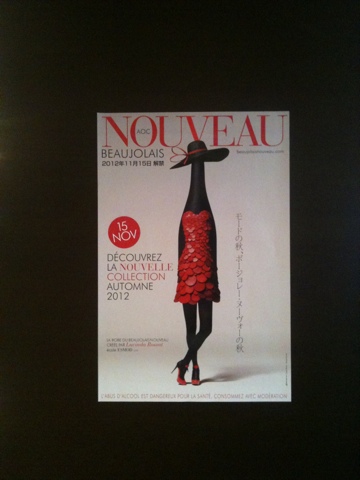
No, the metaphor is a far better measure of the truth than the editor's whim. So which metaphor is best to fit the elections for Japan? Ah, it's the Autumn leaf-turning season in Japan. A time when every city-dweller dreams of heading to the mountains to snap shots of the pretty colours and swill great buckets of beaujolais (French for cow's piss). And this year, Our Man was there too. In fact, he still is. He is typing right now these clunky words on an even clunkier laptop in the lobby of the Nikko Lakeside Hotel, 1,200m above sea level. And, he's got electoral metaphors coming out the wazoo as a result. How about: Only after a cruel, barren winter will the green chutes of democracy sprout again? Or perhaps: Japan: A country of dead wood. Or: The winds of change blow cold. Or: Democracy is overpriced French cow's piss. You can pick your own reality, Our Man's too tired to do it for you.
Our Man spent much of today bracing himself against the wind whistling off Lake Chuzenji and visiting the Kogen Falls, a very pretty place infamous as a good spot to commit suicide (dammit there's a metaphor for Japan! - ed.) to give much thought to the elections. He did notice official election signboards around town. These pop up all over the country at times of elections and picture mugshots of all the local candidates running for office. In Abiko, that can mean around eight folks smiling inanely or raising a fist in "guts pose" to show they have what it takes to sort out Japan's myriad problems. Or inseminate a cow, it's hard to tell from their expressions. Our Man has seen huge signboards in Tokyo Wards featuring dozens of candidates. In the mountains of Nikko there were only two. A silver-haired bloke in a black suit and buck-toothed woman in green.
In other election news that actually might mean something, Our Man noticed two adverts for the Democratic Party of Japan on the television within 20 or so minutes of each other. They were sponsoring one of those innumerable Japanese TV shows in which 'B' rate has-been celebs get together to reminisce about the good old days while watching other people eating ramen noodles and exclaiming in orgasmic terms how delicious the pretty standard fare is. You think your reality is bad, walk in the shoes of a minor Japanese celeb for one season. So, the ruling party is advertising on a programme that advertises celebs who advertise food products, between the advertising. Our Man has no way of knowing whether this means anything, it could mean the DPJ is not going down without a fight. Or that they have a mate running a ramen shop who needs a favour. Or maybe they are joining the ranks of yesterday's celebs.
But he does detect a tiny swing toward the DPJ and Prime Minister Noda. Our Woman in Abiko said she caught something on TV about Noda being a smart operator and calling the snap election at just the right time to wrong-foot the minor parties and be in a position to broker power if the LDP wins the election, but not a majority. Again, Our Man has no way of knowing if this tiny piece of political tittle tattle means a thing. It could just be the TV building up the ratings of the election as a fight that either side could win, rather than a boring old shoe-in for the LDP. But it surely must mean something that Our Woman watched a prograrmme about politics on TV.
The hotel concierge has just come over and told me that he has to turn the lights off in the lobby. This is not a metaphor. This is bedtime.

November 17, 2012
Ghost in the machine: JAPAN ELECTIONS 2012 DIARY: DAY 2
My father-in-law's television woke me up at 7am today, as it has done every day since he died last month.
I've grown accustomed to this new morning routine, and have ceased to worry about the paranormal aspects. The new normal is the paranormal you might say. It's not so surprising as in Japanese Buddhist thought, the spirit lingers in the family home for 49 days after death before getting on with more pressing matters elsewhere. Seems perfectly reasonable to me that my father-in-law's spirit might want to catch up on the latest Tokyo traffic news and weather reports while he's still here. Or you might say it was less paranormal than laziness on my part. He'd no doubt set some kind of timer and I for the life of me couldn't figure out where the blinking BluRay Plasma Screen remote control timer "off" button was.
Besides, it was kind of nice to hear a polite young woman's voice every morning nattering inconsequentially into my half-conscious head, but today I was rudely awakened by the cawing of hundreds of middle-aged men in grey suits raising clenched fists, chanting obedience to their leader. As a rule, proto-fascist greetings are not the best way to be woken. But Our Man has long realised that how things appear often has little to do with what they really are. To the uninitiated, this was Triumph of the Will breakfast TV, when in fact it was no more threatening than the obligatory hokey cokey at kiddie parties or half-hearted hip hip hoorays at a company retirement do for the sour old accountant who took a personal delight in nixing your almost legitimate business expense chitties for "entertaining clients."
But this was not a retirement, or a kiddie's party. This was the LDP geeing up their parliamentary candidates to take Japan by storm. And then a procession of soundbites from other parties with fewer suits of grey and even two women. Our Man learnt a new party name too -- the New Renaissance Party, no doubt much improved on the Old Renaissance Party. He also learnt that Our Woman in Abiko doesn't care for morning TV. She wondered what the devil Our Man was up to watching dozens of incomprehensible (not only to him) talking heads when there was breakfast to be made and vacuuming to be done before work.
"What are you doing?"
"Research."
"Do you have to do it so noisily?"
"Yes, I'm writing a book."
"Another one? How was that Mickey Mouse thing -- the essay? I should read it."
"You should finish reading my novel first. But yeah, I sold another one last night."
"To family?"
"No. I don't have 11 members of my family, do I?"
"Extended family?"
"Do you want some coffee?"
But my research didn't stop with staring uncomprehendingly at the TV. It continued in earnest throughout the work day, as I was fully aware that only true professional pundits can pull a 1,000 words of waffle out of thin air, the rest of us need material and I didn't have any for the night's writing. This being only Day 2 and all. So I asked everyone I came into contact with through work about the election. Call it a DIY vox pop. My question, that I scientifically devised to ascertain the level of excitement, engagement and knowledge about the coming election among potential Japanese voters was worded thus: "So, you excited about the big news or what?"
This invariably got the same response. A tilt of the head and furrowing of brows.
"Big news?"
"The Election?
"Excited?"
"Yes, you see I'm writing a book and I wondered if you were excited about the elections, you know, so soon after Obama and all. You know? Excitement about elections?"
"Americans get excited about elections. I have a friend who lives in New York. I went for a drink with him. He said Americans are more mature about politics than Japanese."
"Well, I don't know about that. Is your friend American, that sounds kind of arrogant..."
"No, he's Japanese."
"Oh."
"You have to understand that nothing will change. Nothing ever changes."
"But the DPJ won last time and a different party got in and..."
"Different parties, different people, it doesn't make any difference. This country is run by the bureaucrats, the politicians don't make any difference."
"But..."
"There is nothing to get excited about."
"I don't care about the elections. Who are these people? They live in their own world. They have nothing to say or do about my world. They will raise taxes and they will live their own life doing their own thing and fighting their own battles."
"But what if..."
"Can we talk about something else, please?"
So, away from the known world, in the fantasyland of electoral politics: Ishihara and Hashimoto merged their parties as expected but didn't exactly explain how they were going to reconcile leadership or the fact that Ishihara wants to keep nuclear power but is against free trade, while Hashimoto is against nuclear power but for free trade.
Policy.
It made me think of the other story today that had caught my eye doing the rounds on Twitter: In the 1980s Ikea had knowingly used East German political prisoners' forced labour to make their cheap, shitty furniture just that little bit cheaper and shittier, morally speaking, and it made Our Man think something he was happy to realise: the uniformed are actually often right. The experts get their policies in order or not, say the right things or not, meanwhile 325,000 people are still living in temporary accommodation close to two years after the earthquake.
Are the politicians thinking about them when they form their nifty new parties and make policy castles in the air?
Find out tomorrow, Our Man is off to bed.
I've grown accustomed to this new morning routine, and have ceased to worry about the paranormal aspects. The new normal is the paranormal you might say. It's not so surprising as in Japanese Buddhist thought, the spirit lingers in the family home for 49 days after death before getting on with more pressing matters elsewhere. Seems perfectly reasonable to me that my father-in-law's spirit might want to catch up on the latest Tokyo traffic news and weather reports while he's still here. Or you might say it was less paranormal than laziness on my part. He'd no doubt set some kind of timer and I for the life of me couldn't figure out where the blinking BluRay Plasma Screen remote control timer "off" button was.
Besides, it was kind of nice to hear a polite young woman's voice every morning nattering inconsequentially into my half-conscious head, but today I was rudely awakened by the cawing of hundreds of middle-aged men in grey suits raising clenched fists, chanting obedience to their leader. As a rule, proto-fascist greetings are not the best way to be woken. But Our Man has long realised that how things appear often has little to do with what they really are. To the uninitiated, this was Triumph of the Will breakfast TV, when in fact it was no more threatening than the obligatory hokey cokey at kiddie parties or half-hearted hip hip hoorays at a company retirement do for the sour old accountant who took a personal delight in nixing your almost legitimate business expense chitties for "entertaining clients."
But this was not a retirement, or a kiddie's party. This was the LDP geeing up their parliamentary candidates to take Japan by storm. And then a procession of soundbites from other parties with fewer suits of grey and even two women. Our Man learnt a new party name too -- the New Renaissance Party, no doubt much improved on the Old Renaissance Party. He also learnt that Our Woman in Abiko doesn't care for morning TV. She wondered what the devil Our Man was up to watching dozens of incomprehensible (not only to him) talking heads when there was breakfast to be made and vacuuming to be done before work.
"What are you doing?"
"Research."
"Do you have to do it so noisily?"
"Yes, I'm writing a book."
"Another one? How was that Mickey Mouse thing -- the essay? I should read it."
"You should finish reading my novel first. But yeah, I sold another one last night."
"To family?"
"No. I don't have 11 members of my family, do I?"
"Extended family?"
"Do you want some coffee?"
But my research didn't stop with staring uncomprehendingly at the TV. It continued in earnest throughout the work day, as I was fully aware that only true professional pundits can pull a 1,000 words of waffle out of thin air, the rest of us need material and I didn't have any for the night's writing. This being only Day 2 and all. So I asked everyone I came into contact with through work about the election. Call it a DIY vox pop. My question, that I scientifically devised to ascertain the level of excitement, engagement and knowledge about the coming election among potential Japanese voters was worded thus: "So, you excited about the big news or what?"
This invariably got the same response. A tilt of the head and furrowing of brows.
"Big news?"
"The Election?
"Excited?"
"Yes, you see I'm writing a book and I wondered if you were excited about the elections, you know, so soon after Obama and all. You know? Excitement about elections?"
"Americans get excited about elections. I have a friend who lives in New York. I went for a drink with him. He said Americans are more mature about politics than Japanese."
"Well, I don't know about that. Is your friend American, that sounds kind of arrogant..."
"No, he's Japanese."
"Oh."
"You have to understand that nothing will change. Nothing ever changes."
"But the DPJ won last time and a different party got in and..."
"Different parties, different people, it doesn't make any difference. This country is run by the bureaucrats, the politicians don't make any difference."
"But..."
"There is nothing to get excited about."
"I don't care about the elections. Who are these people? They live in their own world. They have nothing to say or do about my world. They will raise taxes and they will live their own life doing their own thing and fighting their own battles."
"But what if..."
"Can we talk about something else, please?"
So, away from the known world, in the fantasyland of electoral politics: Ishihara and Hashimoto merged their parties as expected but didn't exactly explain how they were going to reconcile leadership or the fact that Ishihara wants to keep nuclear power but is against free trade, while Hashimoto is against nuclear power but for free trade.
Policy.
It made me think of the other story today that had caught my eye doing the rounds on Twitter: In the 1980s Ikea had knowingly used East German political prisoners' forced labour to make their cheap, shitty furniture just that little bit cheaper and shittier, morally speaking, and it made Our Man think something he was happy to realise: the uniformed are actually often right. The experts get their policies in order or not, say the right things or not, meanwhile 325,000 people are still living in temporary accommodation close to two years after the earthquake.
Are the politicians thinking about them when they form their nifty new parties and make policy castles in the air?
Find out tomorrow, Our Man is off to bed.
November 16, 2012
JAPAN ELECTION 2012 DIARY DAY 1: Fifty Suits of Grey

Today, Yoshihiko Noda has thrown in the towel and called a snap election for a month from now. As far as Our Man can tell, the Prime Minister knows full well his left-leaning party, the Democratic Party of Japan, is heading for dismal failure, but for whatever reason he feels compelled to put us all through it.
Know the feeling. In a similar spirit, Our Man has decided to throw caution to the wind, unscrew his inner red and follow the progress of the election in his adopted homeland of Japan every single day for a month, and keep a diary of the goings on in his life and whatever else he is able to make out of greater import outside his bunker. Our Man doesn't claim to be an expert on Japan or its politics, but he is pretty sure that expectations for this election are pretty low. So low in fact that the idea of doing a daily diary about a change of leadership in a country that will have seen seven Prime Ministers in seven years (isn't that a musical? -- ed.) is frankly preposterous.
But Our Man will see your frankly preposterous and raise it to completely insane:
He is going to turn this diary into a book and publish it on Monday, December 17th, the day after the election.
But in order to do that he is going to need about 30,000 words or so for a 100-page book, which according to the boffins back at HQ, means he has to produce 1,000 publishable words a day. Not to mention all the editing, proofing and formatting that needs to be done to turn these first drafts of history into something you wouldn't mind having lying around in your home.
And that's only 291 words.
However, he is aided and abetted in this insanity by You The People. That is, as Hillary Clinton wisely noted in It Takes a Village Idiot (this joke better not make it into the book -- ed.), you need more than one loon to change the world. Our Man thinks. He doesn't have time to read it now.
But he does have Twitter and a virtual army of agents provocateur whose wisdom and insanity he reserves the right to freely make use of. He has already been given the blessing of his co-conspirator at the Abiko Free Press, Dan Ryan, to make a go of this book. And @Durf of Twitter infamy has provided him with the first working title of the book for an election unlikely to prove very exciting: Fifty Suits of Grey, an improvement on Our Man's first thought, Thirty Days of Indifference.
Earlier today, NHK did a vox pop with three people concluded that Japan was on the edge of its collective heated train seats with the news of the coming election. A fifty-year-old man said he couldn't get enough of election news on TV, another chap said he was disappointed in the performance of the current government after being so hopeful of change, and an 85-year-old woman who said she didn't know who to vote for was going to vote for someone anyway "for the good of the young." This report raised a major concern for Our Man: Does an interview with three people qualify as a vox pop? At the Japan Times they frequently have double the number of uninformed folk in train stations and drunken mates of the reporter to measure the beating pulse of the nation. By the way, a word of advice from an old pro at doing vox pops: finding folk who actually agree to having their mugshot taken and answering questions about pressing issues of the day (such as who would make the best prime minister, what's the best breed of dog or what's their favourite colour) can be time-consuming. The best bet is to find some homeless folk in the station. They'll say anything you want for the price of a packet of smokes and usually don't mind being photographed. Just crop the picture tight and no-one's any the wiser. Win-win, baby. Anyway, with this level of electoral excitement, just imagine the prospects for future entries in this diary.
To be fair though, there was some real electoral news today. Ishihara, who had just formed the Sunrise Party after jacking in his job as Tokyo governor, remember, agreed to merge his party with Hashimoto's Japan Restoration Party. They differ on key matters such as whether in the wake of the Fukushima Japan should have nuclear power, whether to sign the Trans-Pacific Partnership free trade agreement and who was the best James Bond. Ishihara is definitely a Connery man, Hashimoto is leaning more toward Timothy Dalton.
These two are hoping to become a third force in Japanese politics, which sounds lovely, but there are barely two forces at the moment: a corrupt old-school political machine LDP in opposition and largely incompetent DPJ in power now. Then the news gets a bit harder to follow. Various obscure parties are negotiating with other obscure parties to make pacts. They've got great names like Your Party, the People's Life First party, New Party Daichi-True Democrats, and the Kizuna ("bonds") Party. Hashimoto and Ishihara are expected to announce a policy compromise tomorrow (perhaps a Daniel Craig? George Lazenby is also under consideration), but Our Man is in danger of losing sight of the wood for all the trees, and he's nearing his minimum word-count for the day, so he'll take his leave of the minor parties for now.
What you can expect of the rest of the diary, Our Man can't say for sure. But he has an idea that future diary entries will include a rundown of the questions that face the country, the candidates and parties that have all the answers, and possibly an interview or two with folk such as Our Woman and Our Mother in Law in Abiko. If Our Man finds a third interviewee, he'll call it a vox pop.
Until tomorrow, that's all folks.