Our Man in Abiko's Blog, page 2
December 4, 2015
'Something must be done'
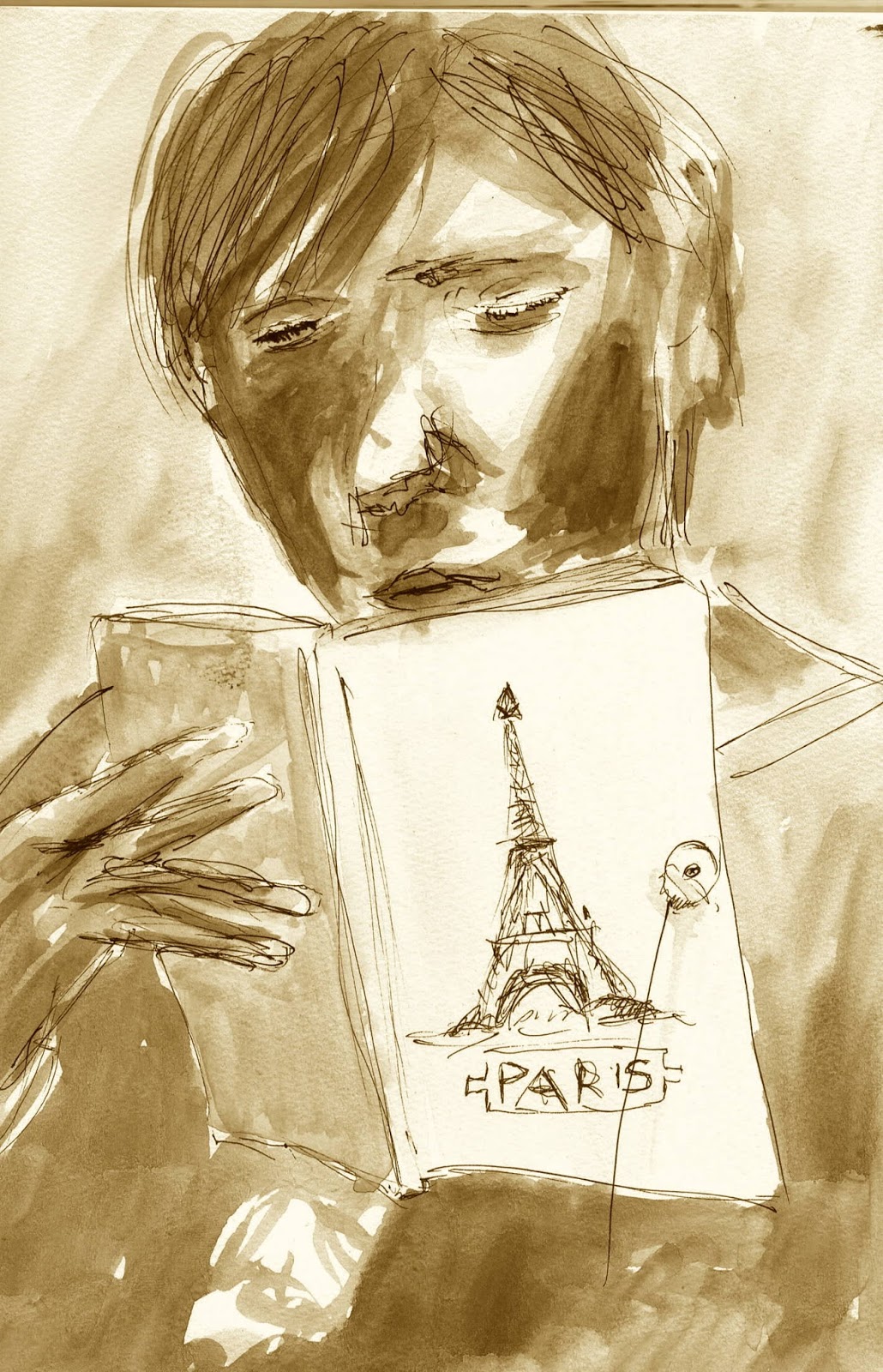
Our Man's thoughts on Hilary Benn’s speech in favour of Britain bombing Syria, not that you probably care, but Our Man cut and paste them here to get them straight in his mind if no one else's...
It was a coherent speech, but the substance boiled down to: action, while not perfect, is better than inaction. Islamic fundamentalists are fascists, we are anti-fascist, therefore we must do something. This, I think, we can all agree on.
The problem is the efficacy of air strikes. For all the talk of 1930s parallels, a more apt one would be Vietnam where France, then US, had much more skin in the game and relied on air power in a doomed attempt to prove you could bomb a country to peace. You can't, by definition.
The honest truth is I'm not sure the best course of action. But to use another example in the news, bombing because we have a need to prove we are "doing something" is like fighting the mass shootings afflicting America by shooting the neighbours of the crazed gunmen. "Well, it's not very effective, but it's something" turns out to be worse than a flimsy argument, and actually would be exactly what we're trying to stop.
In closing, my right honorable friends, it is relatively easy to talk the talk, but just because action is needed doesn't mean this is the right walk to walk. Case not proven, imho.
I wish we we would approach terrorism as international crime rather than acts of war. Terrorists are criminal scum. Fight them as such, don't give them what they want which is the elevated status of being enemies powerful enough to change the course of history, which is what oratory like Hilary Benn's confers on them. That plays into their hands and makes us pawns in their game. Not a sensible thing for statesmen to do.
Just my two penneth.


September 9, 2015
I am not a foreigner
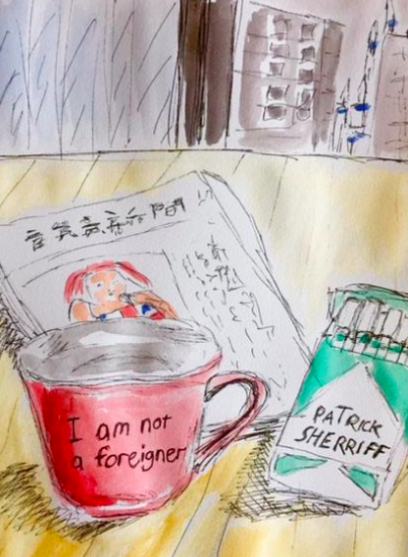
Our Man is not dead, but he is on life support.
The action has moved on to fresher fields, and yet he is still here. If he were a more religious man he would say -- unto thee --"Keep the faith!"
But he's not.
He's quite the rationalist. You can find him on twitter @ourmaninabiko, where he still guffaws at the usual bollocks that passes for political thought and journalistic integrity, but he's shifted his attention to writing stuff he hopes will outlive blogging, tweeting and instawhatevering. Sure, he's not there yet, but if you want to join him on that journey (or at least throw popcorn and half-empty beer cans from the bleachers at him) sign up for the newsletter right bloody here and you'll get a free humorous short story called "I am not a foreigner" in your inbox that is everything Our Man wanted to say but never had the virtual balls to write before.
Our Man will be blogging again, but if (window-licker of an oddball that you are) you miss him, click on that link and you won't be (very) disappointed until we meet again.
Carry on.
May 30, 2015
Sherlock in Japanese manga? The game is on

Our Woman has long finished the Sherlock episodes on hulu.co.jp. Our Man has gone through all the Wallander episodes. It got so bad last night that we actually sat down together and watched an episode of Downton Abbey. And then Our Man found this in the shopping mall bookshop (they still have them in Japan): A whole series of manga licensed from the BBC based closely on the Sherlock screenplays. The first one Our Man bought is great, and he'll have to go shopping again to buy the rest. And work on his Japanese illiteracy.
It's fun to have a project, eh readers? Our Man's last one, his sketch travelogue Children of the Tsunami, is here. But you didn't come for that. Just look at this:
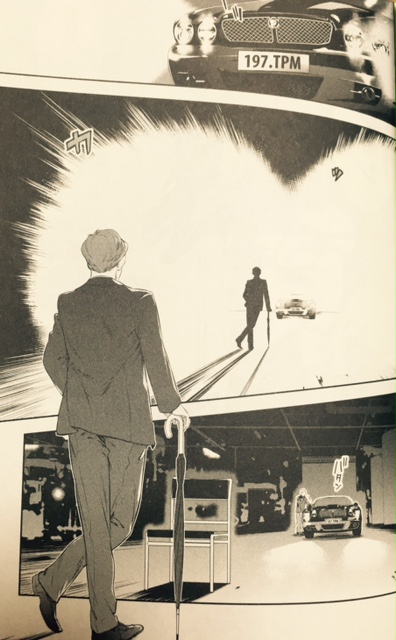 Mycroft awaits John Watson
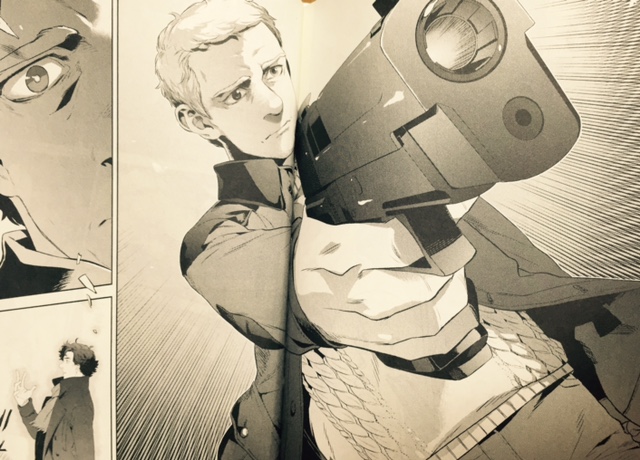 John Watson saves the day.
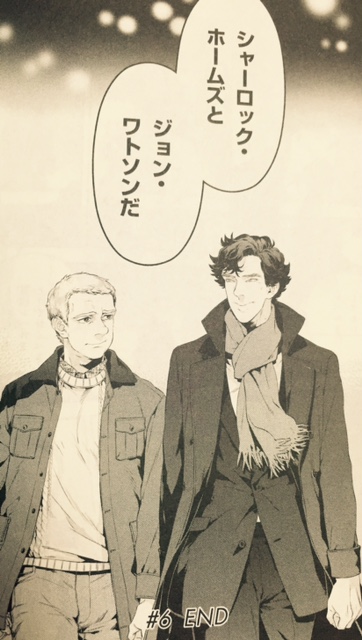 "It's Sherlock Holmes and John Watson."LATER, if you're searching for the manga abroad, the ISBN is 978-4-04-120710-9. Happy hunting.
May 25, 2015
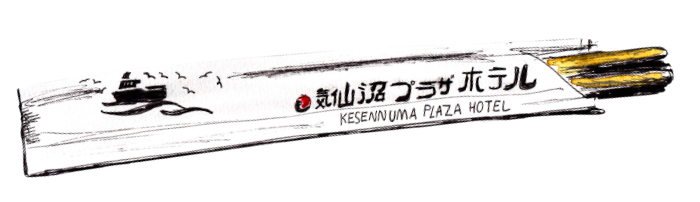
Arriving at the Kesennuma Plaza Hotel
Back on the road, when we go five minutes without seeing another car in either direction of the four-lane expressway. We leave the toll road and join more winding roads. They are free but single lane which means, this far from Tokyo, getting stuck behind white mini-pickups.
It’s around 4pm when we hit the first traffic lights of Kesennuma. Four policemen in uniform are by the side of the road, as a wiry man in a scruffy baseball cap is being made to walk in a straight line by an officer with a clipboard. A white pick-up is at an odd angle on the pavement.
It’s a beautiful sunny day and we come down through a winding road, with small-town shops on either side. It could have been Eureka Springs in the Ozarks but for the faded painted kanji of the signs. It’s not exactly a thriving metropolis, but not dead either.
We have a satellite navigator and are confident our lady of the dashboard who speaks unfailingly polite Japanese will not lead us astray. The route she picks to the Kesennuma Plaza Hotel is the most direct, on the screen, at least, but our car is seven years old and so much can change in that time.
As we come out of the last of the foothills and glimpse the ocean, our car tells us to turn right at the ENEOS petrol station. There is no petrol station. In fact there is no right. The road just continues through an open plain of brown earth on either side of a gravel road.
For the next five minutes she keeps telling us to turn right or left at the next traffic light or convenience store, but in front of us is just gravel.
That’s how we know the tsunami came through here. The densely packed shitamachi old town that the polite woman’s voice is dutifully guiding us through is no longer outside our windows.
Hiroki graduated from Kesennuma High School three years ago. He has a good idea of where the Plaza Hotel is. We follow the new road layout with our eyes. The satnav picks out a Shell petrol station that we were to turn left at and it actually is still there. But the forecourt is boarded up. It has the same brown film of dirt that is covering the tsunami zone.
The hotel is 100 metres up on the bluff overlooking a cove. From the hotel lobby you can look out the floor-to-ceiling windows and watch life all along the Kesennuma coastline, a channel leading to Oshima island and to the Pacific beyond.
Directly below us is the street through the tsunami zone. Parallel to that a dozen fishing trawlers are tethered motionless to the quayside. We had driven in right next to the ocean. In the setting March sun, the ocean glistens a golden brown.
“See that Shell petrol station? On March 11th, the tsunami waters were up to its roof,” says the hotel receptionist, lowering his bifocals on his nose.
“But it could have been worse. Oshima out there prevented the tsunami from being even more deadly.”
He points to the left and the rows of bayside buildings that in any other locale would be worth a small fortune for their views.
“A lot of the houses over here were badly damaged but they were not swept away, they could be repaired. But not so over there.”
He points to the right and further along the quay from where we had driven in. On the wall of the hotel lobby are aerial photos taken in the days after the tsunami. You can make out the hotel undamaged on the bluff, but all around, anything on lower ground, perhaps a third of the city of Kesennuma, is destroyed. I think of military aerial reconnaissance photos from the war after a bombing run.
Did he personally suffer in the tsunami?
“My job disappeared with the tsunami. That’s a tough thing to deal with for a guy like me. I never thought I’d have to worry about finding a new job in my 40s, but things are OK now. I have this job. I’m happy.”
A white sign on the door of the room next to ours proclaims “Tsunami Media Centre.” In the three months after the tsunami the hotel was home to emergency personnel and the media. Now, apart from this sign, the hotel resembles others I’ve stayed at in Japan, slightly too grand for the number of guests, with a stale air of tobacco in the lobby.
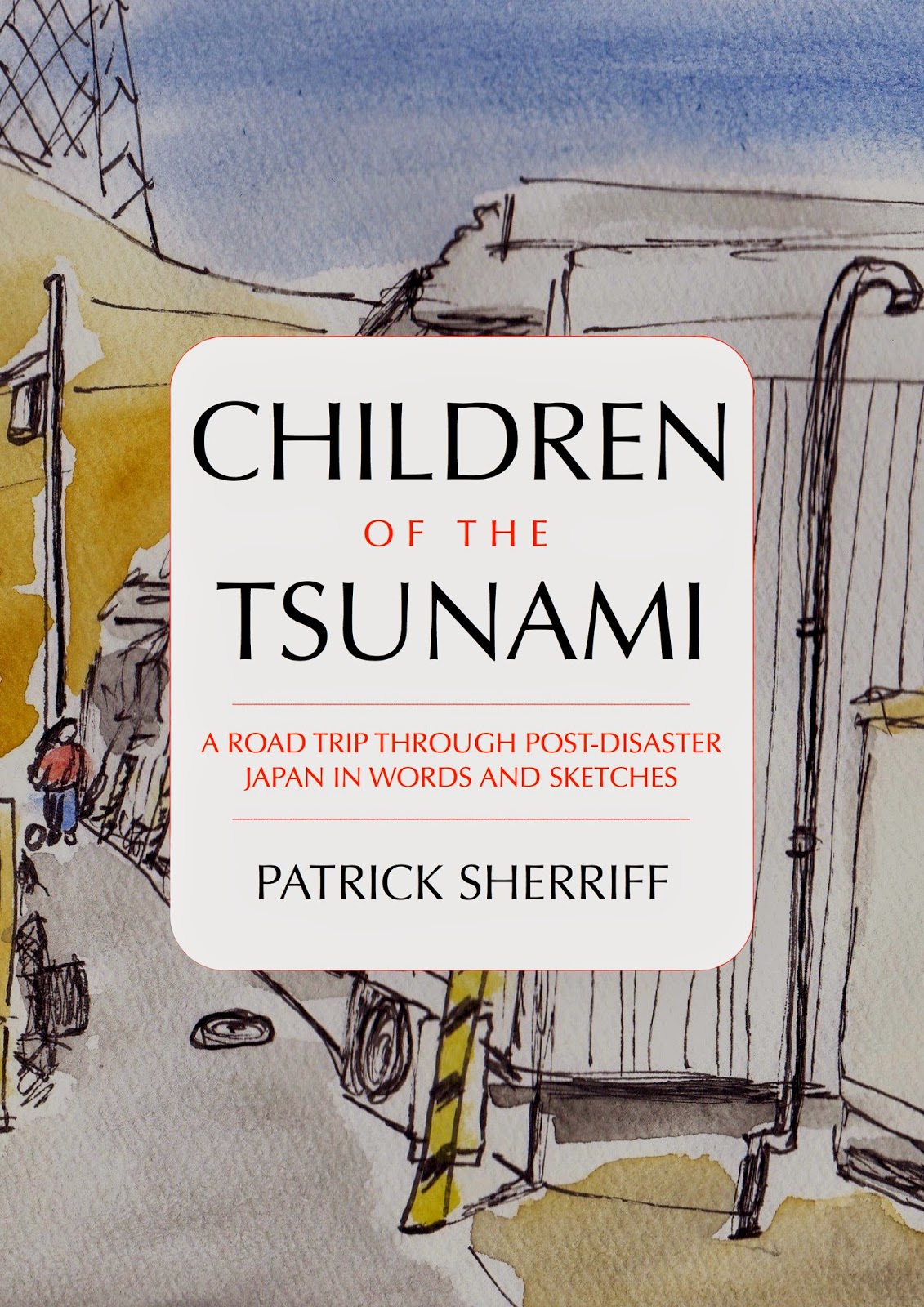 The preceding was an excerpt from Children of the Tsunami: A road trip through post-disaster Japan in words and sketches by Patrick Sherriff. It's available as an ebook for $0.99 or an oversize paperback at $6.99 from all Amazon sites including here at Amazon.com. Amazon.co.jp and Amazon.co.uk, or get the paperback directly from CreateSpace.
April 12, 2015
Four years later
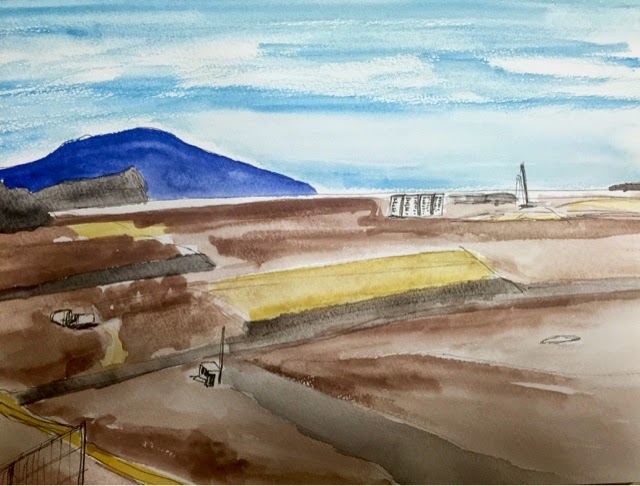
This is Rikuzentakata four years after the tsunami. As viewed from Capital Hotel 1000, the only building around.
April 4, 2015
Living in a box
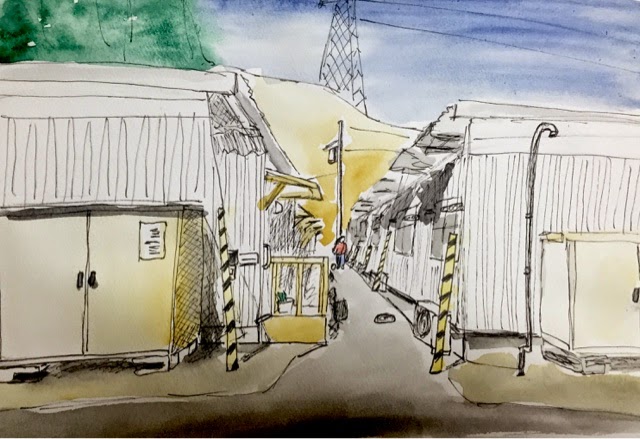
Here's my latest watercolour from last weekend's trip to Tohoku. This here is a temporary home "camp" on high ground in Rikuzentakata which was nearly wiped out in the tsunami. Each row houses five families. Reminded me of living in terraces in England, with all the advantages and disadvantages of living so close to each other.
April 3, 2015
Fresh tuna

Willpower (and remembering to set your alarm) can do amazing things. Thus armed, Our Man managed to roam the bits of Kesennuma scarred by the tsunami at 5:30am last Saturday. This is the result: an ink and watercolour sketch of a tsunami-gutted building that was being used as a warehouse for tuna. How long the boxes of fresh tuna had been in the building, Our Man couldn't say, but he found the place worthy of sketching. It's all very symbolic: The plucky fishing town that was adapting to life after the tsunami by carrying on regardless; or the doomed town living in the past, on course for extinction, just like the fish. Take your pick.
April 1, 2015
Back from Tohoku
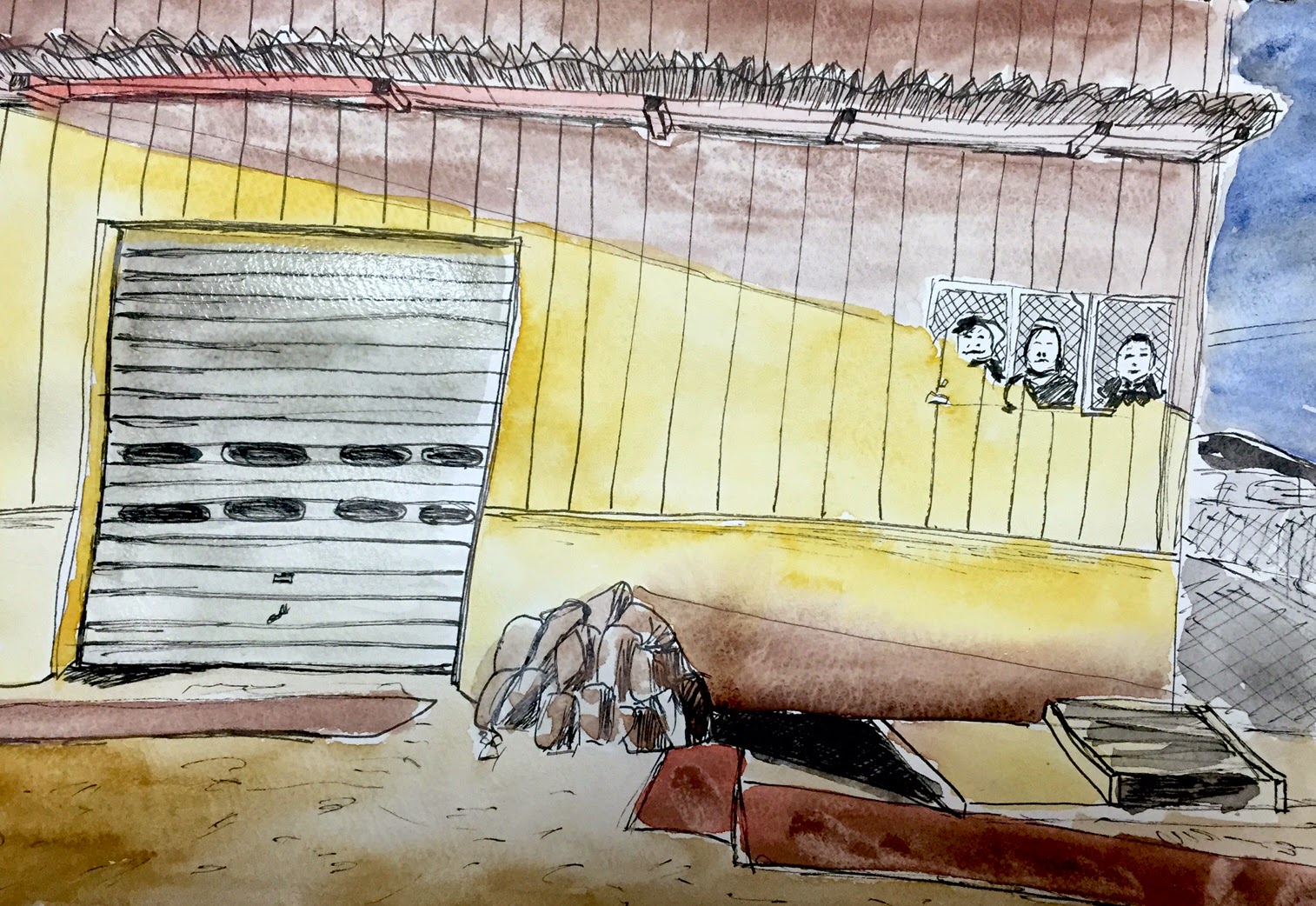
Our Man is still processing what he saw up in Tohoku. Trying to summarise what is going on for folk in Kesennuma, Rikuzentakata and Ishinomaki is beyond Our Man's ability at present, just because their experiences are so varied and Our Man's time in Tohoku so short.
All he can do is write up his notes and post some of his pictures. There will be an ebook (and may well be a paper book too) in time. Meanwhile, here's his first watercolour of a warehouse standing in the middle of the tsunami zone of Kesennuma, a beautiful fishing port that is doing its best to carry on despite the chasms in its skyline.
March 11, 2015
Shifting from neutral four years after 3/11

It's 3/11 again. Apart from re-tweeting a few news stories and mentioning that it's been four years since the earthquake, tsunami and nuclear meltdown, I don't really have anything to say. But disasters are not something you can be neutral about. Neutrality is tacit acceptance of the status quo, not something Our Man is into.
Not that disasters care what Our Man thinks, to be frank.
And let's be frank. Our Man was here, in Abiko, not more than a couple of hundred metres from this cabbage patch above, back on this day in 2011. His story is pretty unexceptional. Thankfully.
But he is lucky enough to be heading back up the Joban Expressway at the end of the month with Our Woman in the co-pilot seat and we'll be stopping off in Ishinomaki and a couple of other places that the tsunami came close to wiping off the map. We're going to meet some survivors Our Woman has kept in touch with over the last four years.
I'm pretty sure their opinions will be worth listening to.
Our Man is taking his reporter's notebook and sketchpad, so you'll hear and see what he does.
February 13, 2015
Early doors

There is fast approaching a time when Our Man will have more to offer than his usual sketchbook dregs (this latest one titled "Afternoon drinks") and pseudo-philosophical empties. See, he's now published two more TEFL textbooks this year, and with only two more textbooks to go by April, he'll be relatively free to get on with the second novel that has been stewing in its first draft juices for nearly a year now. Once that's done, he's got a backlog of essays and short story ideas to churn out, all of which means he needs to get back into the swing of writing pretty words, pretty sharpish. He's running out of time to tell all that he wants to, but at least he'll not collapse on the newsroom floor. Only because no newsroom would have him.