Sarah E. Glenn's Blog, page 18
August 5, 2013
Strangely Funny Authors: Meet Paul Wartenberg!
 PaulToday, I'm interviewing Paul Wartenberg, who wrote "I Must Be Your First". We met at NaNoWriMo and, although he relocated, we've stayed in touch.
Q: When did you know you wanted to become a writer?
When I was younger and was getting into reading, perhaps around First Grade, I was intrigued with the idea of books being what they were, that someone went out of their way to create them, put the words onto paper to tell stories or pass on information. In my family, we kids were encouraged to find outlets for creativity, music or art or writing, and for me it got to be writing (I was okay at art but never got past a certain stage). I worked on the high school's creative arts magazine, took classes on writing fiction, studied journalism as a career.
 Paul's MuseQ: We met at NaNoWriMo, so I gotta ask: plotter or pantser?
A mix of both, but I'd go with plotter. I'll have a basic outline and list of major characters, and then it's just a question of setting the scenes, and starting the story. But everything else is wide open: half the time I'll create a new character I didn't plan on, or change a dialog or change the characters saying and responding to the dialog. The changing point is where and when I feel like I'm flying by my pants to get the rest of the story told.
Q: Can you tell us a little about your writing process when you're not doing NaNoWriMo?
The Writing Process: Step One, plan a day when I'm not scheduled to work. Step Two, do a lot of laundry that day. Step Three, blog about writers' block. Step Four...
I kid. I do plan for a day I'm not full-time working and get my laptop or desktop fired up to get the writing done. If I'm travelling somewhere for a day, and I can plan ahead, I sometimes bring the laptop with me, travel earlier than I need to, find a spot to plug in and write, and use the extra time between here and there to get a few pages done.
Q: I know you're working on something new that's not a short story; tell us a little about it.
It's a novel that's part of a superhero universe I've tinkered with over the years. The idea of humans with psychic-based "talents" who can enter superheroing as a licensed profession, but it also happens to be very much like our universe where super-hero comics existed (1930s) before the Talents were scientifically proven (during WWII and conclusively during the 1960s), which means that the heroes have to cope with pop culture expectations (not to mention the fact all the good superhero names are taken, meaning they have to work under fake common names). It plays like superheroing as a professional sport: trading cards, promotional tours, stunt shows, etc. with heroes up for trades between franchise cities: one short story idea I have is one of L.A.'s heroes horrified he's getting traded to Des Moines (sorry Des Moines, but seriously your Mad Scientist quota is shockingly low).
I've published a short story based in this universe: The Hero Cleanup Protocol, through Smashwords.com. It's ebook only at the moment.
The novel itself is about two of the more unique powersets I'm allowing inside the universe's rules, one of them a young woman hunted for her unique Talent and the other the only person on the planet able to defend her.
Q: Peanut butter: creamy or crunchy?
No. OH NO. You ASKED. I warned you NOT to ask. The flame war is upon us whether we want it or not!
(whisper: actually, I prefer honey roasted flavor)
Q: What makes you so sexy?
...wait, what?
Q: You've worked in libraries, so you've had access to a smorgasbord of books. Who is your favorite author and what really strikes you about their work?
I'm currently a big fan of Neil Gaiman. Just finished reading Ocean At the End of the Lane. He's able to create stories that are at once familiar yet fresh. I tend to read more non-fiction, though: a lot of history, sociology, computer science, general academia. If I read fiction it's more science fiction/fantasy/something with a humorous vein to it, which is where Douglas Adams and Terry Pratchett count for a lot. Ray Bradbury, one of the best short story writers I've ever read and I will argue the case to any doubters. Outside of SciFi I'll read Elmore Leonard and Tim Dorsey (vicious but twistedly funny).
Q: Why are there so many librarians in Second Life? I've met a bunch of them there.
I can't speak for all librarians, and to be honest I'm not in Second Life (never got past the avatar formation stage). Librarians do tend to be tech-savvy for one thing (we need to keep up with technology as the information we manage is more digital than ever), and while most librarians might not be into MMO gaming they would be interested in alternate reality/world building. Maybe also they want to build libraries in other worlds...
 Thanks for talking to us today!
Paul's books,Welcome to Florida and Last of the Grapefruit Wars, is available at Amazon. Read Paul's blog at Witty Librarian and the Book with the Blue Cover.
And don't forget: Strangely Funny is now on sale in print, Kindle, and other email formats.


August 4, 2013
Strangely Funny Authors: Meet Alex Azar!
 Today, I'm interviewing Alex Azar, who wrote "The Taste of Copper" for Strangely Funny. It's a good bit funnier than the first story I read from him, "No Lights" in Isolation (Post Mortem Press).
Q. Am I correct that you chose the story idea for your submission by taking a poll on your blog? What were the other contenders?
You are correct. It just so happened that at the time the call for submissions for Strangely Funny came out, my blog was about to hit 100 posts. I thought a fun way to commemorate that was with my first poll, allowing followers to choose from several different ideas. The other options were, a geriatric monster hunter in a retirement home still hunting his one that got away (imagine a werewolf with a walker being chased by an old man in a wheelchair), and the final option was the a story about the slow build of preparing for a zombie apocalypse, that turns out to only consist of a single zombie.
Side note: the werewolf with the walker would have been a good sell, too!
Q. Many writers know what they are from a young age, but your bio suggests you had a grand "Aha!" moment instead during college. Tell us a little more about that. I started in electrical engineering myself, but that was after I was informed I couldn't major in something as impractical as comic book writing.
I had always been a budding author. I still have notebooks from elementary school filled with early attempts at comics of my own. However, it wasn't until after I spent two years at college studying to be an electrical engineer that I realized I hated math. More to the point, I took every English course the college offered. That was my "Aha" moment when I realized maybe writing was a viable profession for me. Telling my engineering father I was going to be a writer wasn't an easy conversation, but he's now my biggest fan.
Q. Are you a plotter or a pantser? ( http://www.urbandictionary.com/define.php?term=pantser )
And here I always thought a pantser was someone who dropped other people's pants. I'd like to claim that I'm a plotter, but reality hits every time I begin a new project and realize that the three lines of "cool" dialogue I've jotted on a post-it note don't really amount to much of a plot.
Q. What is your latest writing project? Tell us a little about it.
For the past several years I've been writing the cases of a paranormal detective, James S. Peckman. The stories are told from James' recollection after he's lived through decades worth of misery and adventure. In his older state, the cases aren't told chronologically, painting an interesting tapestry that can't be fully appreciated until he's finished his tales. The hope is to publish his various cases in two collected editions.
Q. Who is your favorite author, and what do you enjoy most about his/her writing?
There's certainly a few contenders for favorite author like H.P. Lovecraft, C.J. Henderson, and Stephen King, but I'd have to say my absolute favorite would be Edgar Alan Poe. Aside from his writing being so visceral and emotionally driven, his style was the most influential to the development to my writing. In fact, the first story of mine to be accepted for publication, was actually written for a 'disciples of Poe' anthology. The company went out of business before I even heard back regarding the submission, but I sent it elsewhere, and it started a trend that continues with "Strangely Funny" containing my tenth publication, "The Taste of Copper".
Thanks for visiting with us!Learn more about Alex's current projects (and possibly vote on them) at http://azarrising.blogspot.com .
Check out Alex's story in Strangely Funny, now available in print, Kindle, and other e-book formats.
August 3, 2013
Strangely Funny Authors: Meet John Lance
Q. What was your inspiration for Deadbeat?
The financial crisis, and the Bernie Madoff fraud in particular, gave me the initial nugget for Deadbeat. That and the idle thought "if one of these greedy bastards the government is chasing dies, who gets the money?" Throw in a morally flexible lawyer and we're off and running.
Q. I see that you also write for younger readers. Which audience did you first write for, and why?
Back when I started, I wrote sweeping, epic, dramatic Fantasy novels. The kind that beg to be trilogies (and/or HBO series, if there's anyone from the network out there).
Sadly, those did not sell (though I'm sure Cinemax could do lovely things with the core concepts - call me).
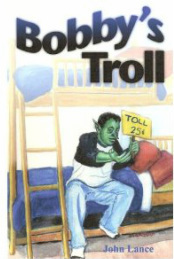
At that point I took a detour and wrote an amusing short story about a troll that moved into a boy's room and not only refuses to leave, but charges the boy a toll to sleep in his own bed! The combination of humor and fantastical elements proved to be a winner, and I wound up writing a number of short stories for kids that were eventually collected into the volume Bobby's Troll and Other Stories.
Following that success, I started writing humorous stories for adults, of which Deadbeat is the most recent.
"First there's blood. Then there's sweat. And I usually finish with the tears."
Q. Can you tell us a little about your writing process?
First there's blood. Then there's sweat. And I usually finish with the tears. Sometimes I vary the order just to keep life interesting.
All kidding aside, one of the keys to my process is a mini-notebook I always keep in my back pocket. Whenever I get even a whiff of a possible story idea, I jot it down. Then later, when I'm trying to think of something to write, I'll flip through the notebook for ideas. Some are garbage ("Werewolf eats a milkman - discovers he's lactose intolerant?" - I mean, what the heck is that!?!?) but others bear fruit. Deadbeat started as a few lines in that notebook.
Then I whip out the first draft. And then I revise. And revise. And revise And revise .
The other tool in my chest is my story blog, Titles Are Hard at www.johnmlance.com. I regularly post flash fiction stories out there just to keep the creative juices flowing.
Q. We know you're an author. What do you enjoy reading?
Fantasy was my first love. Insert the obligatory, and honest, homage to J.R.R. Tolkien here. A close second is Terry Pratchett. I think his Discworld is one of the most fully realized worlds in all fantasy. The fact he leaves me in stitches doesn't hurt.
Recently I read a Den of Thieves which is about the insider trading scandals of the 1980s and just serves as a reminder that the more things change, the more they stay the same. I'm also working my way through a collection of stories from H.P. Lovecraft, which ensures I get a regular dose of monsters and ghouls.
 Thanks for talking to us today!
Bobby's Troll and Other Stories recently became available on Kindle, so click on the pic above or click here to learn more.
And don't forget: Strangely Funny is now on sale in print, Kindle, and other email formats.
August 2, 2013
Strangely Funny Authors: Meet Suzanne Robb!
"I started writing when I could hold a crayon."
Today, I'm interviewing Suzanne Robb, author of "No More Blue Pills". She also wrote Were-wolves, Apocalypses, and Genetic Mutation, Oh my! and Contaminated. I also discovered that she belonged to one of the other writing teams in The ePocalypse: emails at the end. Loved the idea for that anthology!
1. You wrote a fun takeoff on the craze for 'ED' pills. Were you inspired by an actual desire to get rid of the pills, or did a piece of spam land in your inbox at a propitious moment?
The idea for the story occurred when I was watching a parody on medications and their side effects, and going through my junk folder. I thought what if a woman (tired of all the ED spam, like myself) decided to do something about it, but it all went sideways.
2. You have a string of stories that sound like great fun. What got you interested in writing?
I started writing when I could hold a crayon. I think it had a lot to do with being an only child and living in the middle of nowhere. As for the fun element in my stories, I like to make people smile or laugh. I embrace the goofiness that is life.
3. What is your current project? Tell us a little about it.
Current project, just one? I have several, but the one I am hoping will get picked up is The Moonlight Killer, a different take on the werewolf mythology. Basically, a man decides to bite back his lupine attacker and chaos ensues on the next full moon.
4. How did you get into LEGOs? Uh, as a presumed grown-up?
LEGOs are an anxiety reducer for me. I tend to get stressed out easily and when that happens I head into a room, toss several LEGO on the floor and see what happens. I find it is a good way to focus and forget about the things bogging me down.
5. We know you're an author. What do you enjoy reading?
I like to read almost everything. Christopher Moore, Jasper Fforde, Jeff Lindsey, early Dean Koontz, Phillip Pullman, and loads of others. If it is in print I will likely read it.
Thanks for talking to us today!Learn more about Suzanne on her blog:
http://suzannerobb.blogspot.com/
And don't forget: Strangely Funny is now on sale in print, Kindle, and other email formats.
August 1, 2013
Strangely Funny Authors: Meet Leslie Carmichael!
 I'd like to introduce you to one of the authors featured in Strangely Funny: Leslie Carmichael. She wrote the story "Something Plucked This Way Comes", which stars a very... odd creature. Let's learn more about it - and her.
Q. How did you come up with the creature in your story? It was an unusual selection, even for an unusual book.
A. It actually started out as a joke: somebody mentioned the word "poultrygheist" to me (I forget what we were chatting about at the time), and I thought, "Hey, I could use that!" But I also thought, "Nah, that's too easy. But what if..." The critter, um, evolved, over time from a chicken that had somehow devolved into a dinosaur, but I changed my mind, and it is proudly what it is today.
Q. You're leading an adventuresome life. What got you interested in writing, an activity usually done sitting on one's butt?
A. I have always wanted to write and be a writer, since about grade three, I think. But it's hard to do that when you don't have a lot of life experience. I love to travel and use what I learn from other places and times. The reason I went to Egypt was for research for one of my children's books. Iceland was for a "roots" trip, to see where some of my ancestors had come from.
Q. What is your current project? Tell us a little about it.
A. I'm currently working on one of my comic interactive murder mystery plays, called "Mummy Dearest." It's for Halloween and (you guessed it) has an Egyptian theme. In my "time off" from playwriting, I work on a young adult novel about a 17-year-old boy who gets involved with stopping shark finners (fishermen who kill sharks only to slice off their fins for sale, and often throw the sharks back in the water, alive, to die of blood loss, shock, or being eaten by other predators). Yes, there is real horror in the world, and we cause it.
Q. What makes you so sexy?
A. Belly dancing. And cats.
Q. We know you're an author. What do you enjoy reading?A. Science Fiction, fantasy, mysteries, humor, plays, non-fiction for research, books for children and young adults (especially Harry Potter).
Learn more about Leslie at her web site: http://www.lesliecarmichael.ca/
And don't forget: Strangely Funny is now on sale in print, Kindle, and other email formats.
July 27, 2013
MAHLLC Publishes Its First Antho: What Happens Now?
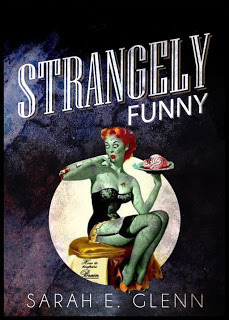 I apologize for the lengthy absence from posting here, but frankly, I've been very busy. First: I have a temp job that is a) full-time, and b) pays decently. The drive to work is about an hour in the morning and 75 minutes to get home in the evening, so I've been AFK (at least on my own time) a lot. My brain has often been fried as a result, but I still managed to read through 70+ submissions and select stories for Strangely Funny.
In a nutshell: this is a collection of paranormal stories that are also humorous. Despite what the cover implies, I did not write all the stories; I wrote one of them. I am the editor of the collection, which made getting an acceptance for my story much easier. I may decide to keep editing anthologies for that very reason, although it is a bit of extra work.
There are some pretty damned funny stories in here, and I don't just mean mine. In the next couple of weeks, I'll be featuring some author interviews from other contributors to the anthology on this blog, plus the MAHLLC Blog. The first interview will be with Leslie Carmichael, author of "Something Plucked This Way Comes".
The e-version of Strangely Funny is now available on Amazon and Smashwords. The trade paperback version will be available on August 1, and Amazon is taking preorders for the print version now. You can read some sample stories from the collection for free on either site, so look them over and see if this book is for you!
June 10, 2013
Guest Post: T.W. Brown
[image error] One of the things that I hear from time to time is that “zombies are history” or “The market is oversaturated”. Five words: What a load of crap. People have been saying that about vampires for over a decade…guess what? Twilight blew away box offices, despite all the people who openly grouse about it.
I have a different take; I think BAD zombie offerings are what are on the endangered species list. With so much out there, the readers can now be more selective. The days of just being glad you could find a zombie book on the market have been replaced by a wide variety and some very creative takes on the classic ideas.
I think most of the people banging the drum on the undead hordes are the people who either A) were never along for the ride to begin with; or B) can’t help but share the sour grapes in the bowl at their desk. One thing there has never been a shortage of is negative spewing, armchair quarterbacks.
[image error] As I write this, World War Z is just a few weeks away from opening. Brad Pitt folks. It doesn’t get much more mainstream than that; The Walking Dead is one of the most watched cable programs in history; the Amazon Top 100 Horror Writers list is like a zombie author minefield. And just recently, my friend John O’Brien was entrenched for several days at number three behind King and Koontz. I don’t care who you are, that is a horror writer’s dream to be sitting at that table.
So, I return to my premise that it is not the zombie that is old news, it is the abundance of mediocrity that has suffered a bullet to the brain. Not that they are gone, but I think that cream has risen to the top. That is a good thing. It makes it easier for those seeking to carve their own niche to find some quality examples because, let’s face it, that was a real hit-and-miss exercise just a year ago.
As a writer, I enjoy picking up a good zombie book and seeing where a talented author will take me. This past few months, I have had the pleasure of reading offerings by Armand Rosamilia, Mark Tufo, and the aforementioned O’Brien. As a person who has watched the original Dawn of the Dead over a hundred times (not an exaggeration), I love zombies. A good book blows away a movie any day, and as recently as 2005, that was not easy to do by any stretch of the imagination. David Wellington’s Monster Island was one of the rare gems. Other than that, the offerings were sparse and difficult to find. At one point, I had every single title that Amazon had to offer in the “zombie fiction” search.
[image error] It is easy to forget that e-readers were still being resisted and the self-pub scene was comparable to FM radio in the early seventies. For those of you old enough to understand that reference, I think it might still come as a bit of a shock when you take in the landscape that unfurls before us.
So, let people continue to scream about how the sky is falling on the zombie genre. Those acorns that are falling are growing into mighty oaks.
To learn more about T.W. Brown, check out his blog or, better yet, Dead Confrontation - now available!
May 27, 2013
Review: I Am Murdered by Bruce Chadwick
 I Am Murdered
is Bruce Chadwick's account of the poisoning of George Wythe, close friend of Thomas Jefferson and a signer of the Declaration of Independence. His great-nephew George Sweeney was the prime suspect, and the subsequent trial is now referred to, at least by the publishers, as America's first 'Trial of the Century'.
I Am Murdered
is Bruce Chadwick's account of the poisoning of George Wythe, close friend of Thomas Jefferson and a signer of the Declaration of Independence. His great-nephew George Sweeney was the prime suspect, and the subsequent trial is now referred to, at least by the publishers, as America's first 'Trial of the Century'.Chadwick begins with a recounting of Wythe's poisoning, showing us the normal pattern of Wythe's morning and when and how things went drastically wrong. We learn of the shockwave his death sent through the Richmond of the early nineteenth century, and his close-knit group of friends, also known as 'America's Founding Fathers'.
We learn who George Wythe is and why he is an important part of America's history, Virginia's in particular. He was America's first law professor, a member of the Continental Congress, the judge for the high Chancery Court of Virginia, and a co-reviser of Virginia's laws. This last will become pertinent later. Wythe was titled 'the American Aristides' and seemed to be universally loved - with one clear exception.
George Sweeney, a teenager, has been living the high life in a Richmond far less stodgy than the one that exists today. Sweeney is up to his eyeballs in gambling debts. As a result, the youth is always broke and begging money from the great-uncle he was named for. When Uncle George refuses, Sweeney forges checks in his name. There's a more permanent solution, of course, and young George doesn't have to be an Agatha Christie reader to come up with it: Uncle George is childless. Half of Uncle George's estate goes to Sweeney when he dies, and the other half goes to a mulatto protege that Uncle George has been teaching.
On May 25th, 1806, Sweeney visits the kitchen in Wythe's elegant home. The cook is convinced that Sweeney dumped something from a paper packet into the coffee. I would have dumped the contents personally; instead, everyone in the house, including the cook, drink the adulterated beverage and fall ill. The mulatto protege dies, opening up that half of the estate for Sweeney, but there's a problem: Wythe has a damned good idea that he's been poisoned, and who did it. He declares "I am murdered" (hence the title of the book), and insists that he be autopsied when he dies. He also lives long enough to change his will, disinheriting George entirely. Impressive for an eighty-year-old man, but this will also be pertinent later.
Chadwick makes a strong case for Sweeney's guilt. Unfortunately, justice could not be served for a number of reasons, which Chadwick explains in detail in the rest of the book. It is rich in irony.
First: Wythe lived too long after ingesting the poison. The three prominent physicians, including Wythe's personal physician, were not absolutely certain that poison was the cause. They also refused to believe that someone could live two weeks after ingesting a fatal dose of arsenic, despite anecdotal evidence to the contrary. Cholera could have been the cause, or Wythe could have died from an excess of bile in his system. This wavering on the cause of death bolstered the defense. Chadwick makes sure that we know what a piss-poor job these men did with determining Wythe's cause of death, but to citizens of the nineteenth century, they were experts who knew what they were doing.
Second: as a lawgiver, Wythe was too much Solon with serious punishments and too much Draco where blacks and slaves were concerned. The revised laws forbade blacks from giving evidence against whites. This meant that his cook, the only living witness, could not testify against Sweeney. Another person, a man who found some concealed arsenic Sweeney had tried to ditch following his arrest, was barred from testimony for the same reason. This was especially ironic because Wythe was a staunch abolitionist who had accepted the harsher laws regarding slaves to get the whole body of law accepted.
Third: the economy of the nineteenth century had gotten ahead of the law where banking was concerned. Forging checks today is a criminal offense today. When the revised law of Virginia was completed in 1779, however, it did not include forgery against a public institution like a bank. The first bank in Virginia wasn't chartered until 1792. The prosecution couldn't even charge him with stealing from his uncle.
As a result, Sweeney was freed and swiftly left town.
There is a large amount of history and detail in this book, perhaps more than some readers will want to take on. It is a nonfiction work regarding a real crime, but it is in no way a lurid 'true crime' book. If you like in-depth history, though, or are an author, it's good reading. For the historical mystery writer, the book is a gold mine, covering several aspects of both Virginian and medical history. The notes and bibliography section provide plenty of avenues to locate more specific knowledge of events, education, and law. If you're setting a novel, especially a mystery, in the period following the Revolutionary War, this book could be a great help.
April 14, 2013
Inspiration Has Struck!
Marian Allen named my blog as one of her Very Inspiring Blogs for my actions in the face of adversity. And here I thought I was just carping and whining.
Rules:
Display the award logo on your blog.
State SEVEN facts about yourself.
Link back to the person who had already nominated you.
Nominate seven other bloggers who deserve this award.
Notify each of the bloggers of your nomination.
My seven facts:
1. Marian has never seen TITANIC. I have never seen TOP GUN.
2. I took classes in dancing during college. Because I enjoyed it, not because I was necessarily good at it.
3. My burning ambition in my teenage years was to write and draw for Marvel comics.
4. Many authors start with fanfic. But did you know that my first fanfic was inspired by The Black Stallion?
5. I co-founded a Pagan church in Kentucky. My official position, as I described it to the IRS, was 'genetrix'.
6. I still buy Pretenders albums. Yeah, it's no longer the Eighties, but Chrissie Hynde isn't dead.
7. I loathe James Joyce's writing, no matter how much Joseph Campbell loved it.
My most inspiring blogs:
1. I gotta kick the first one back to Marian. She finds joy in the littlest things.
2. Doctor Grumpy in the House: Dr. Grumpy's posts about strange patient encounters are hilarious, but he also gives us insights on American history. The Love Boat - 1863 is probably my all-time favorite.
3. The SL Newser. Coverage of the arts and community in Second Life. A great boost to the creatives there and a revelation of how many good-spirited people there are in SL.
4. Other Things Amanzi. This is the blog of "Bongi", a surgeon who works in Mpumalanga, South Africa. His observations about life, surgery, and his area of South Africa always take me out of myself. It's a whole other world. He doesn't post enough.
5. Gwen Mayo's blog. Yes, she's my spouse. Her view of our shared life, however, does the same thing Bongi's posts do.
6. Magpie a la modus operandi. Marguerite's great personal accounts about her life that make observations about life in general. Perseverance is a virtue after all.
7. Terribleminds: Chuck Wendig. His combination of writer's coaching and drill-sergeant language inspires me to get back on the keyboard when I think my writing sucks.
---
April 1, 2013
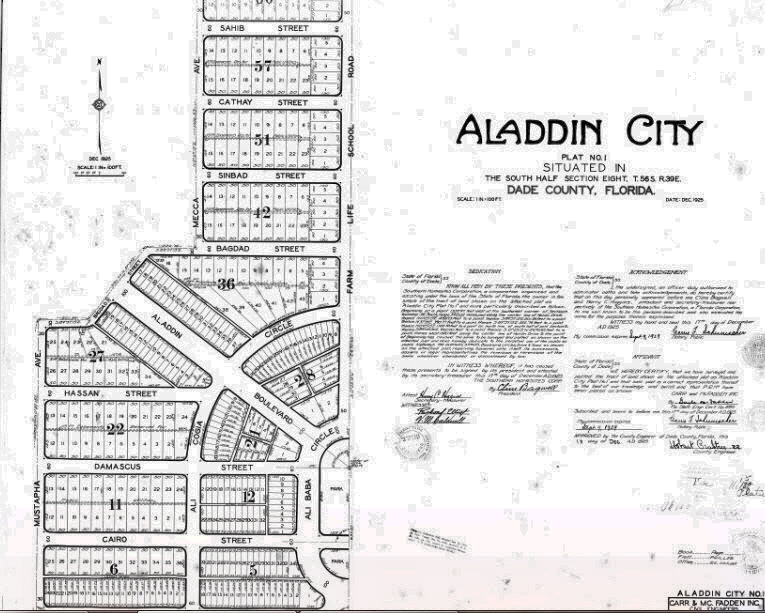
Great Stuff you find when looking up background info: Aladdin City
Sears Homes of Arlington Heights and Mount Prospect: Aladdin City: the “Town Where Homes Will Rise Almost Over Night: The Aladdin Company of Bay City, Michigan was a competitor of Sears in the mail-order house business. (Click link to learn more. LOVED it.)