
Sarah E. Glenn's Blog, page 15
August 27, 2014
Strangely Funny II Authors: Meet Omar Sakr!
 Omar J. Sakr is an Australian writer and poet with a Masters in Creative Writing from the University of Sydney. His short story 'Aftertweet' was selected as part of the Twitter Fiction Festival, and his poetry has featured on Cordite Poetry Review, as well as the ABC. He has poetry forthcoming in Meanjin and Carve Magazine. You can follow him on Twitter @OmarjSakr or on his website http://omarsakr.wordpress.com .
His story in Strangely Funny II, "Caryard Jack", tells the story of a necromancer awakened after several centuries into the modern world. Unfortunately, his ex still remembers him, and not fondly.
When did you know you wanted to become a writer?
I first tried my hand at writing when I was about 11, and I’d just finished reading Lord of the Rings. I can’t remember what I wrote, except that it was undoubtedly pure plagiarism. Put off by that, it wasn’t until I was 15 that I wrote again. I was hit by a story out of the blue, and sat down to write it. I finished it in one sitting, hand cramped, page full of my ungainly blue scrawl, and that’s when I knew.
How did you pick the genre/setting/era you (usually) write in?
I like to think I didn’t choose it at all – that it chose me. Truthfully, I had the choice all but dictated to me. When I was about 10, my step-father bet me $10 I couldn’t sit through an entire novel. The novel he chose was King Arthur and His Knights of the Round Table by Roger Lancelyn Green. It had magic, kings, queens, knights and witches, and from then, I was lost to this world, and always in another. The next few books I read were largely picked by my mother, in Harry Potter, and Stephen King’s Rose Madder. These are the books which shaped my imagination, a mix of magic, medieval England, and horror.
How did you come up with the idea for your story in Strangely Funny II?
I was at work, drudging away, trying to overcome a mental block to a story I was in the middle of writing. I loved the concept, and thought the beginning of it was some of the best writing I’d done. Consequently, I began to treat it too preciously, and was worried about ruining it. I was stuck – doubly so by being at work – but had the writing itch, so I opened up a page and just started writing the first thing that came to my head. It says a whole lot about me that the first thing I thought of was an ancient murderous bisexual necromancer, but there you have it.
Do you think certain genres lend themselves to a humorous twist?
Life lends itself to humour; I don’t think there’s a single genre or medium out there that shouldn’t be layered with humour. The universe is an enormous cosmic joke and if I wasn’t able to laugh at it every day, I don’t think I’d manage to get by. That said, any subject dealt with pompously – my dear beloved fantasy, I’m looking at you – ought to have the mickey taken out of it, and no one is more conscious of that then fantasy writers today.
Plotter or pantser?
Pantser. I write as it comes to me, in flashes of inspiration (read: delusion), otherwise I’d likely be too bored if I knew the entirety of it from the outset.
Which author do you most admire, and why?
This is an impossible question to answer. I admire different authors for different things – their prose, mastery of structure, brilliant concepts, etc. If we’re talking in general, I’d say right now the author I admire most is Patrick Rothfuss, for his inspiring charitable work with Worldbuilders.
Which place that you haven’t visited would you most like to go?
Turkey, my ancestral homeland.
 Okay, so you're an author. What do you enjoy reading?
Fantasy, Science Fiction, and Horror predominantly, although if the past year or two is any indication, my current loves are poetry and literary fiction. Above and beyond everything else, short stories remain my favourite reading type. I also love graphic novels and comic books.
Thanks for talking with us!
Be sure to check out Omar's story in Strangely Funny II, now available in print and e-book formats on Amazon and Smashwords. And don't forget - we're also giving away three free copies of the book on Smashwords! The deadline is August 31, so don't delay!


August 14, 2014
Strangely Funny II Authors: Meet F.R. Michaels!
 Today, we say 'hello' to F.R. Michaels, author of "Dead People, Seriously". He's a multitalented guy. His first short story, “Mrs. Edgecliff”, appeared in Alfred Hitchcock’s Mystery Magazine and received an honorable mention in The Year’s Finest Fantasy and Horror Sixth Annual Collection by Ellen Datlow and Terri Windling. Another short story, “Fluf”, appeared in Haunts magazine and was made into a short film that was shown at the Sundance film festival. He also does artwork and illustrations that have appeared in various fan publications and small press works.
When did you know you wanted to become a writer?
Ever since I found out that no one was writing the stories I wanted to read. I think I was 8.
How did you pick the genre/setting/era you (usually) write in?
Nothing gives a person the same thrill as a good scary story. As for the setting, I have a collection of fictional towns based on Long Island's north shore where I grew up; "Dead People, Seriously" takes place there.
How did you come up with the idea for your story in Strangely Funny II?
There are a lot of zombie stories out there where the undead are a plague of mindless relentless monsters... but what if a zombie was raised from the dead and was the same person he was during his life? Multiply that by a whole graveyard full of people, throw in a couple of college frat boys who should not be playing with black magic, shake vigorously, and "Dead People, Seriously" is what came out.
Do you think certain genres lend themselves to a humorous twist?
I think you can inject humor into any genre. What I like about humor in a horror setting is the horror can build such a storm head of tension and the humor can release it. Think American Werewolf in London.
Plotter or pantser?
Oh, I'm not nearly organized enough to be a plotter. Come to think, I'm not even organized enough to be a pantser. But closer to pantser than plotter, definitely.
Which author do you most admire, and why?
Mary Wollstonecraft "Scary Mary" Shelley. She wrote Frankenstein when she was 19, on a bet, published it anonymously, and wrote the very first science fiction novel and one of the scariest stories in existence even today, back in a time when women weren't even considered writers. That's hardcore.
Which place that you haven’t visited would you most like to go?
I'm not that much of a traveler. There are places in my own head I don't like to go.
Okay, so you're an author. What do you enjoy reading?
I love old school: Poe, Stoker, Shelley, LeFanu, Saki, Bierce, Machen, Blackwood, Lovecraft, Robert Louis Stevenson, C.S. Lewis, Tolkien, Arthur Conan Doyle, etc - and fall back to them periodically. That being said, I think there's a small renaissance going on right now in modern speculative fiction, with small press and e-book publishers leading the way. There is an entire roster of new and emergent authors who are breaking some exciting new ground. I'm gobbling up as much of that as I can, and liking what I find.
Thanks for your time!!!
You're welcome. Can you untie me now...?
Frank Raymond Michaels (F. R. Michaels) is actually a very nice, normal person who happens to like weird stories and scary artwork. No, seriously. He lives on Long Island with his wife, daughter, several cats, a small dog, a big dog, and whoever happens to be in his basement at the time. He writes horror and dark fantasy. He is currently working on several short horror fiction and artwork projects and a Swords and Sorcery novel.
Meanwhile, you can enjoy "Dead People, Seriously" in Strangely Funny II, now available on Amazon and Smashwords.
August 11, 2014
Strangely Funny II Authors: Meet B. David Spicer!
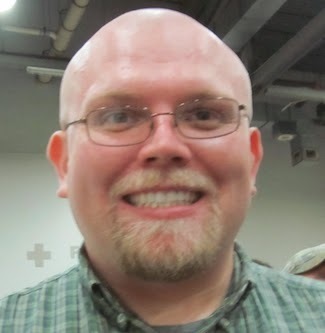 Today, we meet B. David Spicer, author of "Two Martini Lunch", which appears in Strangely Funny II. Mr. Spicer writes crime fiction, science fiction and horror fiction and occasionally writes scripts for independent comic book publishers. His short fiction has appeared in several anthologies and journals throughout the country and overseas. In "Two Martini Lunch", we meet a vampire who prefers a specific... taste to his blood.
When did you know you wanted to become a writer?
By the time I turned twelve I’d read The Chronicles of Narnia and The Lord of the Rings, and after that I knew I wanted to write. Unfortunately, it took over twenty years from that point for me to get serious about writing.
How did you come up with the idea for your story in Strangely Funny II?
When I was in high school I played a role-playing game with my friends called Vampire: The Masquerade. One of the characters I played was an alcoholic who got turned into a vampire, but still wanted to get drunk, which led to some hilarious situations. Something my dad said reminded me of that character, and I knew right then what I wanted to write about.
Do you think certain genres lend themselves to a humorous twist?
Absolutely, especially horror. The things that scare us are often patently ridiculous when you look at them closely. Take zombie movies for instance. Why would a dead person, even one who could still walk around, need to eat? Are they digesting all those brains? Do they use ketchup or mustard? What would a zombie do if it got an upset stomach?
Plotter or pantser?
Definitely a pantser. I start with an idea and let the story grow organically. I think trying to force a story to fit inside a pre-plotted framework hampers the growth of the story. If I’m writing a scene and get a great idea for a plot-twist that’ll take the story off in a completely different direction, I run with it. Tolkien once said that The Lord of the Rings “grew in the telling,” which I’ve always taken to mean that it grew well beyond his original conception of the story and went off in a direction he hadn’t thought of at the beginning. That’s how I write, and I can’t imagine doing it any other way.
Which author do you most admire, and why?
Well, I’ve already mentioned how Tolkien influenced me from a young age. Reading The Hobbit for the first time was a turning point for me, one that changed me forever. Reading went from being a fun hobby to an outright obsession, and I began to create stories of my own in my mind, and it wasn’t long before I wanted to write them down. Tolkien instilled in me a love of fantasy and the fantastic, and more importantly a love of reading, and eventually writing. I wouldn’t be a writer today if it hadn’t been for Tolkien.
Okay, so you're an author. What do you enjoy reading?
 During my formative years I read mostly fantasy series, Tolkien, C.S. Lewis, David Eddings, Tad Williams and the like. In high school I found Stephen King and read him obsessively for a few years. As I’ve gotten older I’ve found myself drawn to Ray Bradbury, Harlan Ellison, and Charles Dickens. Within just the last five years I’ve read almost all of Agatha Christie and Dorothy L. Sayer’s mysteries. Likewise I’ve delved into the hardboiled style mysteries of Raymond Chandler and Dashiell Hammett. I think my future holds a few mystery stories.
 We'll be looking forward to those! Thanks for talking with us!
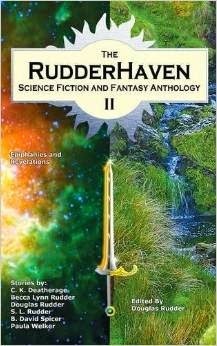
Be sure to check out B. David Spicer's contribution to Strangely Funny II. He also has several other stories out now: the Torched anthology by Nocturnal Press Publications, Dark Light Book Four by Crushing Hearts and Black Butterfly Press, and The RudderHaven Science Fiction and Fantasy Anthology II by RudderHaven Publications.
August 6, 2014
Strangely Funny II Authors: Meet DJ Tyrer!
 Once again, we invite DJ Tyrer to an interview. When we last met him, he had a story in All Hallows' Evil. We learned then about his fascination with the King in Yellow and his involvement with The Yellow Site wikia. This time, he's come to the funny side and joined us for Strangely Funny II!
When did you know you wanted to become a writer?
I've always wanted to be a writer as far back as I can remember and have written stories ever since I could write. I grew up surrounded by books, so writing has always been part of my life.
How did you pick the genre/setting/era you (usually) write in?
A lot of my fiction falls within the boundaries of horror and I also write quite a bit of humour (because if you push horror too far it becomes comedic and if you push humour too far it becomes horrific). However, I've never consciously chosen to write in a specific genre or style, as I like to experiment and prefer to let my writing go where it will rather than force it to conform. I think I've confused a people when they discover that I write quite divergent fare!
How did you come up with the idea for your story in Strangely Funny II?
The idea for Costumed Hero popped into my head when I was attempting to come up with a horror story for a Hallowe'en-themed anthology. As I thought through all the aspects of the holiday the title for this story came to me. Initially, I played with various permutations of partygoers dressing up as superheroes to no success when the plot just came from nowhere.
Do you think certain genres lend themselves to a humorous twist?
Horror is easy to blend into humour, as they are effectively either ends of a sliding scale. If you push horror too far it ceases to be scary and becomes humorous in its grotesque absurdity, whilst humour pushed too far ceases to be funny and becomes horrific. Paranormal fiction that isn't intended to be horror per se (such as that which my story draws upon) is also ripe for humour as it can easily be pushed into absurdity. It's much the same for other genres – push them through the unpleasant until you find yourself laughing rather than crying or cringing – it's just that the darker genres are already close to that point.
Plotter or pantser?
In almost every area of my life I like to have everything planned out. However, when it comes to plots, that's not generally true. Even when I write a plot down I usually treat it as an aide memoir of points to include rather than a map – when I have crafted a detailed plan, it usually gets binned before the halfway point as developments render it irrelevant! However, whilst I sometimes go into a story 'blind' having no idea where it's going – or perhaps knowing how it should end but having no idea how it'll get there – I frequently have a constantly-changing mental map of the plot. Or, to be it another way, a bit of both!
Which author do you most admire, and why?
I struggle with requests for my top ten favourite authors/books, let alone whittling them all down to one! Different authors have different strengths, so it's difficult to put one above the other in terms of quality or importance.
Which place that you haven’t visited would you most like to go?
I would love to visit the archaeological sites of Egypt and the Middle East, as the ancient world is one of my passions.
Okay, so you're an author. What do you enjoy reading?
I read a wide variety of fiction from different genres, but the authors I return to most often are the Bronte sisters, Jane Austen, Robert W. Chambers, HP Lovecraft, JRR Tolkien, Weis & Hickman, Arthur Machen, Clarke Ashton Smith, CS Lewis, Lewis Carroll and Oscar Wilde. Other Cthulhu Mythos fiction and the various Doctor Who novels also feature regularly and I also enjoy reading JK Rowling, Clive Cussler and James Patterson. A nostalgic fondness for the Nancy Drew series and the Worst Witch stories of Jill Murphy never fails to baffle some!
I also read a lot of non-fiction, especially history, which has always been an obsession of mine.
Thanks for talking with us!
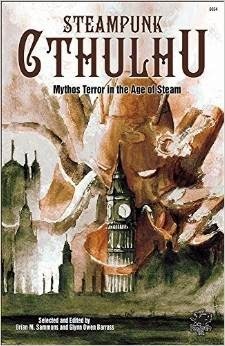
 DJ Tyrer's story The Promised Messiah can be found in the new Steampunk Cthulhu anthology from Chaosium, whilst his sorcerous fantasy Kamilda of Ys can be found in the new Tales of the Black Arts anthology from Hazardous Press, both of which are available now from Amazon. You can learn more about DJ and his publications from his blog at http://djtyrer.blogspot.co.uk/ .
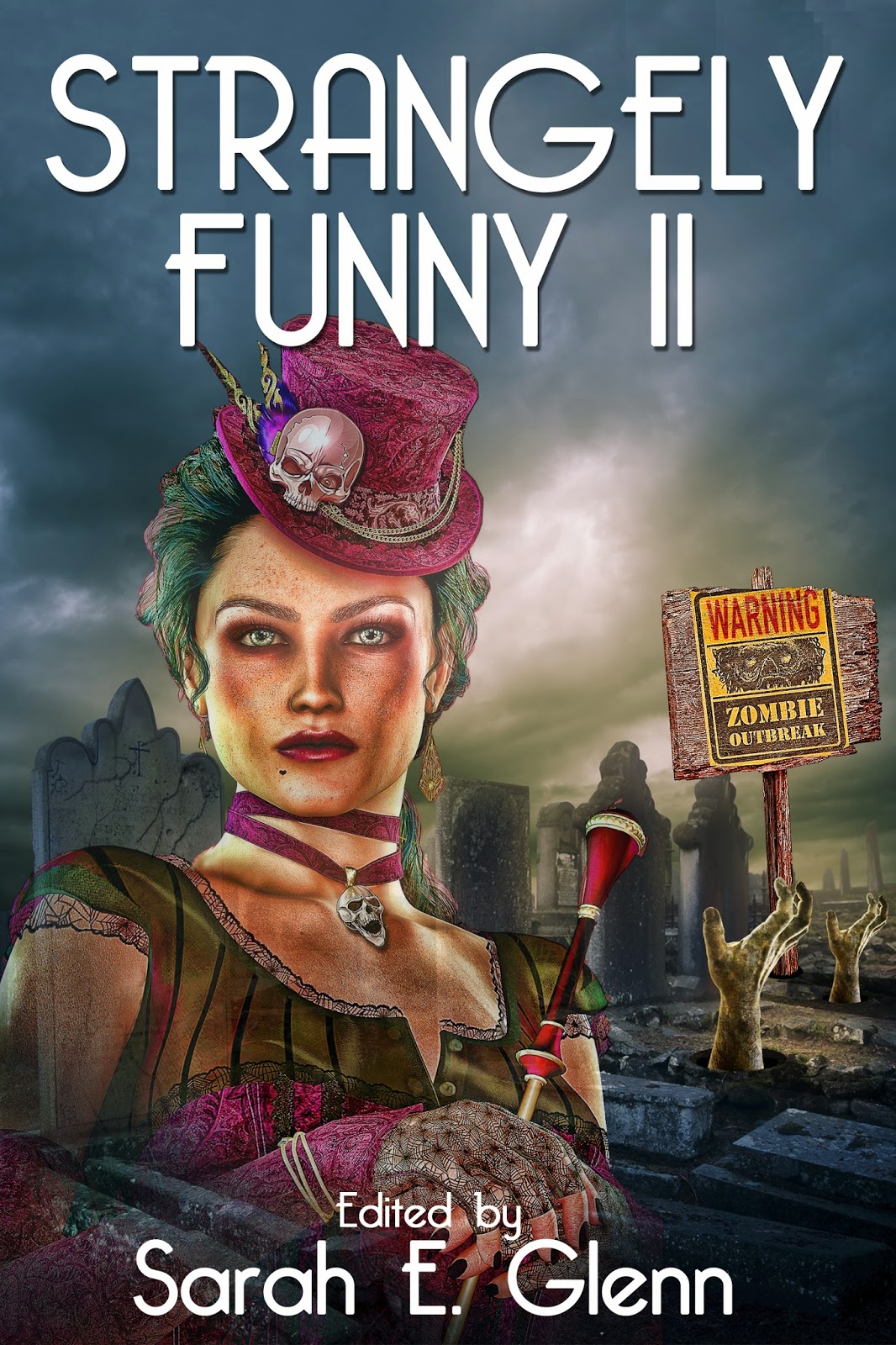
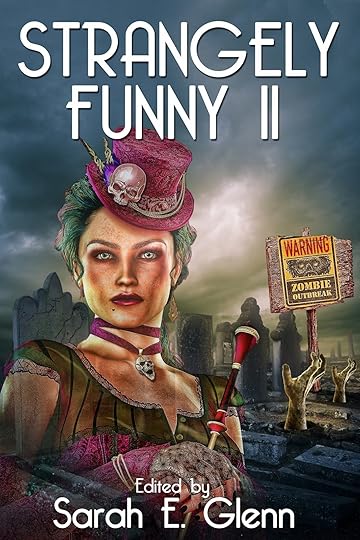
Strangely Funny II is now available in print or Kindle from Amazon, plus it is also available on Smashwords. You can also get a shot at a free copy right now via our giveaways!
August 5, 2014
Strangely Funny II Authors: Meet Marc Sorondo!
 Today, I introduce you to Marc Sorondo, author of "The Trouble with Decorations". The story involves a decorative item/toy that didn't exist when I was young (I would have flushed that ratfink). This particular specimen, however, is more gifted than the ones available in stores.
When did you know you wanted to become a writer?
I started writing stories when I was a kid. I want to say junior high, but it could have been freshman year of high school. I was hooked right away and based my college choice on the writing program it offered.
How did you pick the genre/setting/era you (usually) write in?
My stories are all over the place: distant past to sci-fi future, and all over the world (and universe in some of the science fiction). I go where the stories seem to want to go, but I do get some extra enjoyment out of setting stories in places I’ve actually been and know. I love adding little details about settings that are completely accurate but that only someone who has been to a place would recognize as being real.
How did you come up with the idea for your story in Strangely Funny II?
The toy “Elf on a Shelf”…it creeps me out. A little elf doll that comes alive and spies on you. Come on, that thing is a horror tale already without knowing it.
Do you think certain genres lend themselves to a humorous twist?
I think a humorous twist can work with any genre.
Plotter or pantser?
Hybrid. I tend to let ideas marinate for a long time in my head before I actually sit down to write them. I’ll spend months or even years letting an idea ripen and jotting down notes on scraps of paper. Then, when I write a story, I've got some scenes that are already written and vaguely in order, but with a bunch of emptiness in between that I fill in as I go.
Which author do you most admire, and why?
I’m going to cheat a bit and name two. For pure storytelling skill, I love Stephen King. The man can weave an insanely layered and complicated story without it ever lagging for a paragraph, but he can also compose a short tale that packs a tremendous punch. He’s a master of both the long and short form. For the poetic nature of his prose, I envy Ray Bradbury. There is a quality to his writing that his unique to Bradbury…it’s got a haunting simplicity and a rhythmic aspect. His shorts and his novels all feel like long narrative poems.
Which place that you haven’t visited would you most like to go?
I’ve got a long list of places that I’d like to see. At the top, battling for primacy are Spain and Germany.
 Okay, so you're an author. What do you enjoy reading?
 Right now I’m working on a Ph.D. in History, so I read a lot of history and science history. In between semesters, I load up on fiction. I’ve already mentioned my love of King and Bradbury. Some of my other favorites are Clive Barker, Dan Simmons, Joe Hill, and Robert McCammon. There are a million others who I admire and probably should name, but I’m trying to keep this short.
Thanks for talking to us today!
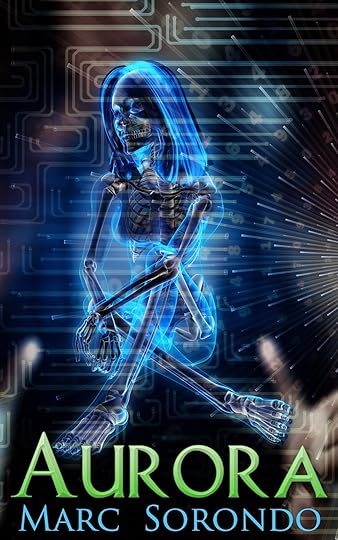
Marc Sorondo lives with his wife and children in New York. He loves to read, and his interests range from fiction to comic books, physics to history, oceanography to cryptozoology, and just about everything in between. He's a long time student and occasional teacher. To learn more about Marc's fiction, including his novella Aurora: Dawn of a New Era, visit his site at:http://www.marcsorondo.com/2013
August 4, 2014
Strangely Funny II Authors: Meet David Bernard/Goudsward!

Aaaannnnd our press is back with Strangely Funny II, the followup to last year's collection. It's already available in print and e-book formats on Amazon and Smashwords.
I'd like to introduce you to an author who has appeared in both anthologies. David Bernard is the pen name of David Goudsward, a native New Englander who now lives (albeit under protest) in South Florida, a paradoxical place where, when temperatures drops below 60˚, locals break out parkas to wear over their shorts and sandals. Fans and detractors alike will enjoy the Florida-set "Goldy Luke and the Three Gators".
When did you know you wanted to become a writer?
I started writing back in 1975. I was in a local theatre group and started correcting errors in the script – I’m not talking grammar. I’m talking about dialogue so bad it confused the word ancestor for descendant. That was my “I can do this, and I can do this better” moment. I immediately set out with a cohort and we wrote the production for the next summer’s children theater group. More or less wrote plays through high school, switched to radio plays when a friend started a pirate radio station. I flirted with an internship at a newspaper and stayed with non-fiction after that. I didn’t return to fiction until 2010 at the insistence of my brother. By that point, I already had seven books out on non-fiction topics.
Do you think certain genres lend themselves to a humorous twist?
I think most genres lend themselves to humor, but I also think there’s a difference between humor and parody. I rarely find making fun of a style lends itself to hilarity unless it’s done by someone well-versed in the nuances of the genre; this is also why so many spoof movies bomb. Then you look at Robert Bloch – the man could integrate humor into horror so seamlessly and subtly that it bumps the horror up a notch.
Plotter or pantser?
 I’m sort of a hybrid – I start all stories with an idea that I just run with, making me a pantser. But I’m also a stickler for as much accuracy as possible in details and chronology, so if I’m doing a story in a historical setting, I’ll plot out the real world events occurring during the story. More often than not, the outline will give me a new angle to consider. But pantsing makes it hard to meet deadlines on calls for submissions, since I really have no idea where the story is going until it arrives. Many a half-finished tale has been abandoned at a missed deadline until a later publisher sent out a call for submissions for stories of a similar ilk.
 Thanks for talking with us!
David's most recent works include short stories in anthologies such as Once upon an Apocalypse and Mortis Operandi. His newest nonfiction book is Horror Guide to Massachusetts from Post Mortem Press.
June 23, 2014
Summer of Zombie 2014 SPOTLIGHT ON: Timothy Baker
 Timothy Baker is a retired firefighter and an aspiring, perspiring, horror writer. He is published in Fifty Shades of Decay by Angelic Knight Press with his zombie/erotica story, Love Stinks, and the forthcoming Midian Unmade: Tales of Clive Barker's Nightbreed from Tor. Tim has also received a commendation in the Australian Horror Writer’s Association 2009 Short Story Competition. We're grateful to feature him on the Summer of Zombie Tour today!
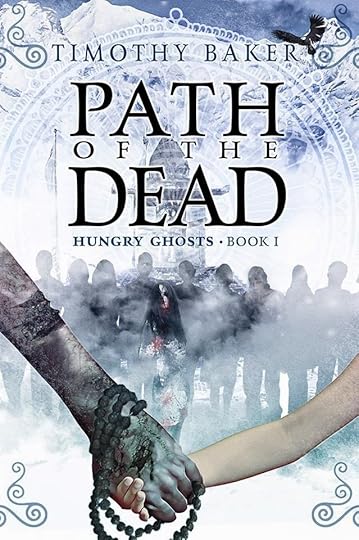
So: What is your latest zombie release?
Path of the Dead (Hungry Ghosts I)
Quick description of it (no spoilers)In Tibet, in a village riding a foot of Seche La Mountain, the zombie apocalypse arrives. With hundreds gathering for a holy day, the carnage is overwhelming and the town burns. Five survivors, a Chinese soldier, a Buddhist High Monk and his bodyguard nun, a ten-year-old boy, and a Nirvana seeking Shoalin monk, flee in the only direction they can: into the high mists of the mountain to barricade themselves against the following dead in the long abandoned, cliff-clutching monastery, Eagle's Nest.
There's a lot of zombie stories out there. Tell us something unique about yours. The Tibet setting, a rural village that thrives near the top of the world. And it has a Kung Fu monk and a mute, badass, warrior nun!
Learn more about Timothy Baker at:http://www.ragnarokpub.com/#!hungry-ghosts/c1eew
There's also a great interview with him at Beauty in Ruins!
The stench of rotting flesh is in the air! Welcome to the Summer of Zombie Blog Tour 2014, with 33 of the best zombie authors spreading the disease in the month of June.
Stop by the event page on Facebook so you don't miss an interview, guest post or teaser… and pick up some great swag as well! Giveaways galore from most of the authors as well as interaction with them! #SummerZombie
AND so you don't miss any of the posts in June, here's the complete list, updated daily:
http://armandrosamilia.com/2014/06/01/summer-of-zombie-blog-tour-2014-post-links/
April 22, 2014
Dark Poetry: Anthony Crowley
‘I never felt alive on this dreaded world called Earth,(from Sanitarium Magazine 14)
I’ve been driven into sadness and pain all my past life,
The darkened blessed shadows allowed me for a beginning of a
symbolic rebirth..'
.jpg) Today, we take a detour into the world of poetry. Many of the great early horror authors, like Poe, Lovecraft, and Clark Ashton Smith, were poets as well as authors. I normally interview fiction authors, but British author Anthony Crowley is also a dark poet. I haven't written much poetry, so I thought I might learn something if I asked him a few questions.
Today, we take a detour into the world of poetry. Many of the great early horror authors, like Poe, Lovecraft, and Clark Ashton Smith, were poets as well as authors. I normally interview fiction authors, but British author Anthony Crowley is also a dark poet. I haven't written much poetry, so I thought I might learn something if I asked him a few questions.Q. Does poetry offer you a different type of satisfaction than writing fiction?
A. I have complete satisfaction from both poetry and fiction. But when I write I can express my writing in the different forms and styles with a different emotion involved into the idea. When I write stories I can be more descriptive with the Characters and themes and let my mind travel and wander around the whole nightmare or scenario and revert back to the original plot and with my poetic writings I focus mainly on one theme and subject and be descriptive and fluent as I can.
Q. What drew you to horror?
A. From childhood I always felt comforted by Horror; it was my escape and felt perfectly natural, it is my scenic home and mental abode. But also I was inspired by the classic literature of Edgar Allan Poe, Stephen King, Clive Barker. Dennis Wheatley and H.P.Lovecraft and two of my favourite story adaptions was 'The Devils Ride Out' and 'The Raven'. I also have several more inspirations within these subjects, but these are just an example.
Q. Can you tell us a little about your writing process? (for instance, do you have a secret hideout that you go to when you're working, or maybe a comfortable chair overlooking the garden)
A. My hideout is my mind; the doorways within there create thoughts regularly on a daily basis. Sometimes one word can open up a visual piece of literature. All around us is inspiration and the creation of ideas.
Q. Who is your favorite author and what really strikes you about their work?
A. I have several influential Authors I could name and including the Authors I mentioned in previous question. One of those has to be Edgar Allan Poe and when I first heard The Raven' and Masque of Red Death' I really admire the mysterious atmosphere in which Edgar creates visually and poetically.
 Q.What is your current project?
 A. I am working on several projects. Some of these writings are unfinished works from during the last 6 years. I am also working on a few new projects and I have just published 'The Black Diaries (Volume One) which forms part of a new series which shall include a variation of Horror themed short stories and poetic dark verse. Tombstones is a collection of a variation of horror-related poetic literature which is also available now on both paperback and kindle editions.These publications were also in the Top 10 Horror literature charts at five consecutive Amazon sites. I have this week revised my first published Supernatural short story of 'The Light of Keeps Passage'. During these recent days, I have been editing and finishing my long-awaited novella 'The Mirrored Room', which was a semi-finalist at the 2013 book awards at 'authorsdB'.
Thanks for visiting with us!
Learn more about Anthony Crowley and his writing on his Amazon page at:
http://www.amazon.com/ANTHONY-CROWLEY/e/B0048E5L3K/
April 11, 2014
Hoosier Hoops and Hijinks Interview: Andrea Smith
 Published by Blue River Press.Please allow me to introduce you to yet another author from
Hoosier Hoops and Hijinks
. The tales in Hoosier Hoops, the current anthology from the Speed City Indiana chapter of Sisters in Crime, all involve one of Indiana's greatest obsessions: basketball.
Published by Blue River Press.Please allow me to introduce you to yet another author from
Hoosier Hoops and Hijinks
. The tales in Hoosier Hoops, the current anthology from the Speed City Indiana chapter of Sisters in Crime, all involve one of Indiana's greatest obsessions: basketball.Today's guest is Andrea Smith, the president of the Speed City chapter. She began writing mysteries and romantic suspense because there were few positive African-American female protagonists in her favorite genre. Smith has published three short stories featuring her Chicago police detective Ariel Lawrence. Her story in this anthology, "Fallen Idols", introduces a new character: Lenora Wise.
Q. What gave you the idea for "Fallen Idols"?
I actually sort of ripped it from the headlines. When we chose a basketball theme for our chapter’s third anthology, I thought about all the sports figures who were in the news for behaving badly. Indianapolis really loves its basketball, so I wondered what if there are some heroes on the city’s beloved team who aren’t what they seem and don’t deserve the pedestal they’ve been put on.
Q. You're using a new heroine in this anthology: Lenora Wise. Tell us a little more about her.
Like many who go into law enforcement, Lenora Wise became a cop after losing a loved one to crime. Her mother was shot and killed in a carjacking, and the killer was never found. Every time Lenora catches a murderer, she feels she’s getting justice for her mother. I developed Lenora for this story because I wanted to explore what it’s like for a detective to move to a new city and have to fit into a new police structure. Lenora had been with the St. Louis police department and became disillusioned because her superiors were more concerned about boosting their careers than getting criminals off the street. She hoped the Indianapolis police department would be different.
Q. Will there be more stories with Ariel Lawrence?
Absolutely. I have an Ariel Lawrence novel under revision. She has to catch a serial killer while working with a partner she loathes. There are ideas for three other stories in the Ariel Lawrence detective series. Ariel’s a fierce defender of justice for the everyday person who can’t defend themselves. And she believes neither money nor prominence should make a person immune from the law. Often her cases involve white-collar criminals who believe their position and their millions mean they don’t have to play by the same rules as others.
Q. Who is your favorite author (or current fave) and what really strikes you about their work?
Walter Mosley who writes the Easy Rawlins Mysteries is one of my faves. His writing is lyrical to me, and he’s created an iconic character who will forever live in readers’ minds. That’s something I’d like to achieve.
I also enjoyed Lisa Scottoline’s legal thriller series and like her stand-alone novels. She draws strong women characters and mixes thrilling plots with humor.
Q. What's your current (or next) project?
In addition to the Ariel Lawrence novel, I’m finishing a historical mystery short story for our chapter’s next anthology. It’s set in 1930s Indianapolis, and features a husband and wife who find themselves hunted by police for a murder they didn’t commit. I also plan to turn a short story I wrote featuring an amateur sleuth into a novel. The character, Lela Ames, is a feisty, middle-aged beauty salon owner/entrepreneur who everyone brings their troubles to. Usually those troubles result in Lela having to solve a murder.
Thanks for visiting us today!
Check out Hoosier Hoops and Hijinks on Amazon. You can learn more about Andrea Smith at the Speed City chapter's website.
---
March 16, 2014
Thoughts
When I take the trash and recyclables to the curb on Sunday, I often think about the changes my life has gone through.
I used to think, "A year ago, I was in my own home."
Then, it became, "A year ago, my father was alive."
Now, it's become, "Two years ago, I was in my own home."
Next month, will I say, "Two years ago, my father was alive--?"
Do we ever stop grieving for what we once had?
I used to think, "A year ago, I was in my own home."
Then, it became, "A year ago, my father was alive."
Now, it's become, "Two years ago, I was in my own home."
Next month, will I say, "Two years ago, my father was alive--?"
Do we ever stop grieving for what we once had?


