
Jeremy Rodden's Blog, page 6
July 11, 2017
Promotions and giveaways – Fellowship of Fantasy & SFF Book Bonanza!
A quick update to say hello peoples and share a few promotions I’m involved in this week with some of my indie author friends at two different locations!
First up, the Fellowship of Fantasy is doing a giveaway to celebrate their newly released anthology of fantasy short stories (I don’t have a piece in the anthology, but am giving away a copy of Anchihiiroo – Origin of an Antihero as a part of their Hero-themed event!). Details from FoF:
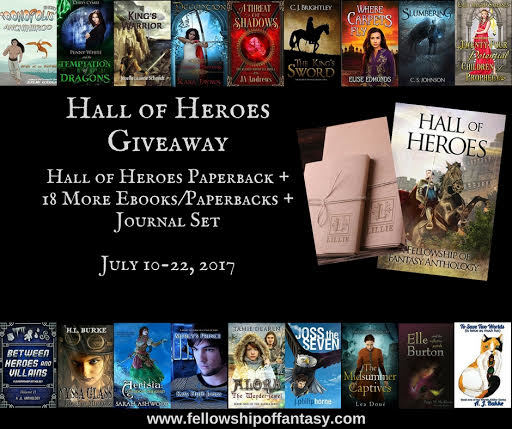
“Calling All Heroes!
Unwilling or epic, tragic or super, heroes are key to any story. Join in our Hall of Heroes giveaway for a chance to add both ebooks and paperbacks by eighteen Fellowship of Fantasy authors to your library.
At the center of our giveaway is the Hall of Heroes short story anthology, jam packed with thrilling tales. And best of all, if you can’t want to see if you win the paperback, you can get the ebook now for FREE!
We’ve also got a little something extra in the form of a custom journal set. So what are you waiting for? Enter now and join the adventures!”
Here is the link to participate in the giveaway: http://www.leadoue.com/contests-giveaways-and-sales.html
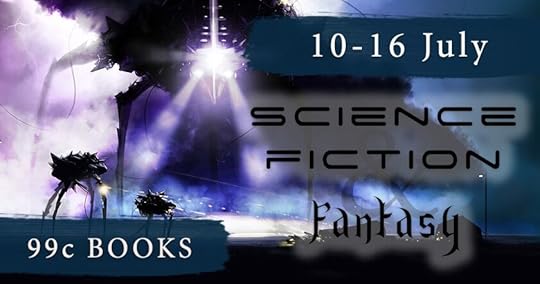
In addition, both of my currently published Toonopolis titles are involved in a few promotional events over with my friends at SFF Book Bonanza.
Anchihiiroo – Origin of an Antihero is listed in a wonderful curated list by the SFF Book Bonanza folks of 99c titles. Check it out for a great listing of other great SciFi & Fantasy books you can get for less than a buck! Some of these titles are always 99c (like Anchihiiroo) but others are on sale for this promotion only. Be sure to go grab them while you can for cheap! Click here to check them out:
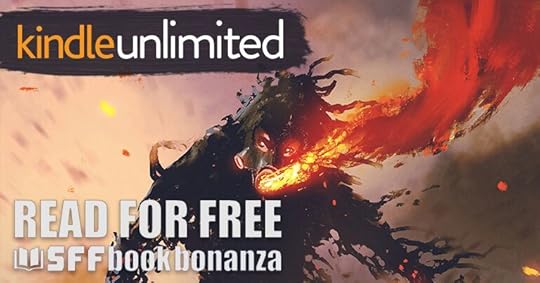
The other promotion over at SFF Book Bonanza centers around Kindle Unlimited. There you will find another curated list of great SciFi & Fantasy books to read FOR FREE through the KU program. They’ve put together a great list of free-to-read with KU books that includes Toonopolis: Gemini (sidenote: Anchihiiroo is also available to read through KU if you don’t wanna spend 99c on it). Either way, click here to check out the offerings and get to reading some awesome indie SciFi/Fantasy for free!


July 10, 2017
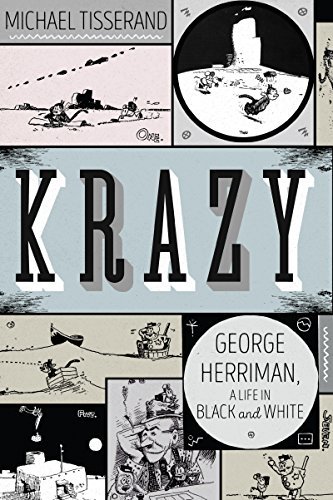
Krazy: George Herriman, A Life In Black And White by Michael Tisserand, Books for Boys Review
Introduction
Title: Krazy: George Herriman, A Life In Black And White
Author: Michael Tisserand
Genre: Non-Fiction, Biography
Release Date: December 6, 2016
Synopsis (from Amazon):
In the tradition of Schulz and Peanuts, an epic and revelatory biography of Krazy Kat creator George Herriman that explores the turbulent time and place from which he emerged—and the deep secret he explored through his art.
The creator of the greatest comic strip in history finally gets his due—in an eye-opening biography that lays bare the truth about his art, his heritage, and his life on America’s color line. A native of nineteenth-century New Orleans, George Herriman came of age as an illustrator, journalist, and cartoonist in the boomtown of Los Angeles and the wild metropolis of New York. Appearing in the biggest newspapers of the early twentieth century—including those owned by William Randolph Hearst—Herriman’s Krazy Kat cartoons quickly propelled him to fame. Although fitfully popular with readers of the period, his work has been widely credited with elevating cartoons from daily amusements to anarchic art.
Herriman used his work to explore the human condition, creating a modernist fantasia that was inspired by the landscapes he discovered in his travels—from chaotic urban life to the Beckett-like desert vistas of the Southwest. Yet underlying his own life—and often emerging from the contours of his very public art—was a very private secret: known as “the Greek” for his swarthy complexion and curly hair, Herriman was actually African American, born to a prominent Creole family that hid its racial identity in the dangerous days of Reconstruction.
Drawing on exhaustive original research into Herriman’s family history, interviews with surviving friends and family, and deep analysis of the artist’s work and surviving written records, Michael Tisserand brings this little-understood figure to vivid life, paying homage to a visionary artist who helped shape modern culture.
Why I Think Boys Anyone Interested In Cartoons May Enjoy This
Truth is, this book does not really fit into my “Books for Boys” format but it was just so good I wanted to give it some space in review form. So I fixed the section heading above to reflect that. While the book is sold and set up under the premise of exploring George Herriman’s questionable ethnicity (he could *not* have been ‘openly’ black and done what he did with his life in the era he did it) and how it connects to his main legacy’s genderfluidity (I discovered this book via a New Yorker article discussing just that), it is so much more than that. In fact, this book should serve as a primer to the history of cartooning and even the rise of animated cartoons for anyone interested in either.
Even deeper than that, Tisserand dives into American history such as the rise in prominence of New Orleans (where Herriman is originally from), the birth of Los Angeles (and ultimately Hollywood), and the racial barriers in boxing (and ultimate crowning of the first black heavyweight boxer Jack Johnson). While this feels like a grandiose adventure for the biography of a humble cartoonist, Tisserand makes it all fit together seamlessly. Whenever he feels the reader needs more context to understand the gravity of a situation or Herriman’s involvement, he goes just far enough down the “background info” rabbit hole to set the context but pulls the reader back before he or she gets lost on a tangent.
To give an example of just *how* thorough Tisserand is in this biography, the text of the book (hardcover) is 439 pages. His notes, bibliography, and index run from page 447-545. Even more amazingly, there is so much background info surrounding Herriman’s rise to “prominence” that the introduction of Krazy Kat, Herriman’s main legacy, didn’t even come around until halfway through the book, even though there are Krazy comics sprinkled throughout the book (as well as other Herriman works from throughout his career). Another nice element to the writing is that, though it’s obvious Tisserand thinks very highly of Herriman, it falls far short of a hero worship biography. He presents Herriman, to the best of his ability, as his contemporaries saw him (which, at times, was almost hero worship itself).
Content/Appropriateness
It’s a biography about a cartoonist. Spoiler: he dies in the end. From a content standpoint, it’s more than appropriate for anyone who would want to learn more about the history of cartooning in America (with some side lessons on racial relations in the early 20th century as well). Tisserand writes matter-of-factly about minstrel shows and blackface and other common vaudeville entertainment in the time period and does a good job of reserving judgement, only discussing it when it is relevant to Herriman himself, who lived as a white man even if he had some black heritage.
As any in depth non-fiction work can be, the language and context is deep and complex, much like Herriman’s work itself. Tisserand does a fantastic job of making century-plus old stories feel accessible to the reader so I would think an interested high schooler would be able to handle this book without much issue.
Rating

Buy Links
Amazon | Barnes & Noble | IndieBound | iBooks | Google Play | Kobo
July 3, 2017
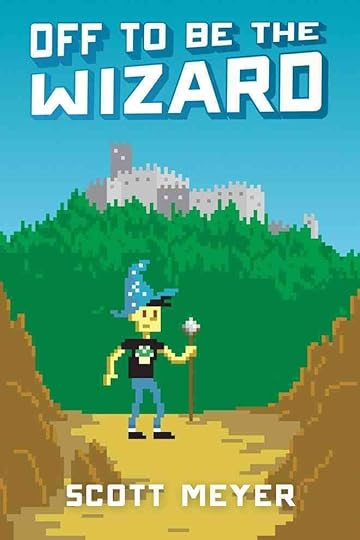
Off To Be The Wizard (Magic 2.0 #1) by Scott Meyer, Books for Boys Review
Introduction
Title: Off To Be The Wizard (Magic 2.0, #1)
Author: Scott Meyer
Genre: Fantasy, Science Fiction
Release Date: March 18, 2014
Synopsis (from Amazon):
Martin Banks is just a normal guy who has made an abnormal discovery: he can manipulate reality, thanks to reality being nothing more than a computer program. With every use of this ability, though, Martin finds his little “tweaks” have not escaped notice. Rather than face prosecution, he decides instead to travel back in time to the Middle Ages and pose as a wizard.
What could possibly go wrong?
An American hacker in King Arthur’s court, Martin must now train to become a full-fledged master of his powers, discover the truth behind the ancient wizard Merlin…and not, y’know, die or anything.
Why I Think Boys May Enjoy This
This book is such a fun hybrid of science fiction and fantasy, it’s hard to decide which it is *more* of. If I had to pick, I’d say it’s science fiction but that this particular application of the story takes place in a fantasy setting. It’s just as likely Martin could have used the computer file to go to a futuristic space opera type of adventure instead, but he played it safe and ended up in medieval England (humorously enough, this was less his own choice than he thought as he was manipulated in a way to end up there — and he wasn’t alone in that).
The core concept of this story is very unique and anyone who identifies as a nerd or geek will likely enjoy it. The characters are not all that complex and don’t really develop that much beyond their initial stereotypes (an 80’s guy, a British guy, etc.) but the point of this story is less the plot and more the humor. That isn’t to say the story itself isn’t enjoyable. There’s a plot. There’s a bad guy. There are twists and turns. Most of them are derivative from a storytelling standpoint but the humor carries the book past that. The medieval England we see is a parodic version, not an attempt at a serious epic fantasy world, which is why I consider the book SciFi-Fantasy and not really fantasy.
Content/Appropriateness
The characters in the book are adults and act like adults (albeit very immature ones) so that’s an important note. I still think this book is more than appropriate for 12-13+ readers. There is no real violence because everything is done in a magical setting where the main characters are actually impervious to damage (not pain, though) because of their ability to manipulate the computer file that controls the universe. There are plenty of sexual innuendo jokes (much like one would hear among a group of pubescent teens but nothing too overtly sexual.
Aside from some minor language, there really isn’t any major problem there either. Ultimately, the content inappropriateness level never really rises above some sophomoric euphemisms and giggling computer nerds. Whether the characters are 20-30+ years old or 15 is kind of irrelevant in the story Meyer created. This, in my opinion, is a good thing and opens up the stories to a younger (albeit still mature-ish) audience.
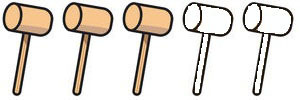
Rating
Buy Links
Amazon | Barnes & Noble | IndieBound | iBooks
June 26, 2017
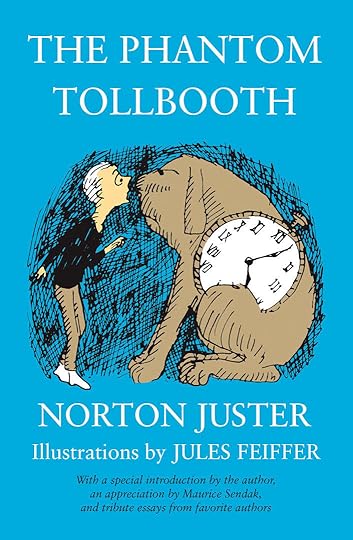
The Phantom Tollbooth by Norton Juster, Books for Boys Review
Introduction
Title: The Phantom Tollbooth
Author: Norton Juster
Illustrator: Jules Feiffer
Genre: Fantasy
Release Date: 1961
Synopsis (from Amazon):
For Milo, everything’s a bore. When a tollbooth mysteriously appears in his room, he drives through only because he’s got nothing better to do. But on the other side, things seem different. Milo visits the Island of Conclusions (you get there by jumping), learns about time from a ticking watchdog named Tock, and even embarks on a quest to rescue Rhyme and Reason! Somewhere along the way, Milo realizes something astonishing. Life is far from dull. In fact, it’s exciting beyond his wildest dreams. . . .
Why I Think Boys May Enjoy This
Somehow in all my life (until now) I missed this book. It wasn’t until someone made a comparison to it in a review for my first Toonopolis book that I discovered it. That being said, I am quite happy to have found it! The first instinct is Alice’s Adventures in Wonderland for boys. I think, in a way, Phantom Tollbooth is a step above Alice and turns on the clever wordplay to an even higher level, which is impressive. In Alice, there was no overall purpose behind the nonsense. In Milo’s adventure, however, there is an amazing sense of underlying lessons and learning that can be done using the glut of literal puns around cliches and literary devices.
I could easily picture (or even develop) an extended lesson plan in an English class using Phantom Tollbooth as an anchor. Juster masterfully mixes in humorous dialogue with valuable lessons on perspective (Alec Bings, the boy who grew down instead of up), repetitive diction (the five advisers from DIctionopolis), and jumping to conclusions (literally, with the Island of Confusion). The most impressive to me, however, was easy to pass over because very little time was spent on it: the various monsters on the Mountains of Ignorance. A great lesson in a middle school English class would be to take one of the monsters mentioned in brief (such as the Overbearing Know-it-all, Gross Exaggeration, or Threadbare Excuse) and expand on them and why they are such monsters of ignorance even today.
Content/Appropriateness
This book is content appropriate for all ages. Much like the aforementioned Alice stories, it takes place in a whimsical other-world with no real consequence or bearing on the real world. In fact, Milo is only gone for an hour and the only change is knowledge on his part. There is no content that would preclude the youngest of readers from being able to enjoy the story.
The mile-a-minute cliches and wordplay, however, lends me to think that this book is best for 10+. In order to fully appreciate some of the literal humor, the reader will have to have enough experience with English language idioms. Luckily, Juster used some of the most common cliches and even a child reading this book 50+ years after its publication should be able to pick up on the majority of the jokes (and lessons) contained in the book.
Rating
Buy Links
Amazon | Barnes & Noble | IndieBound | iBooks | Google Play | Kobo
June 19, 2017
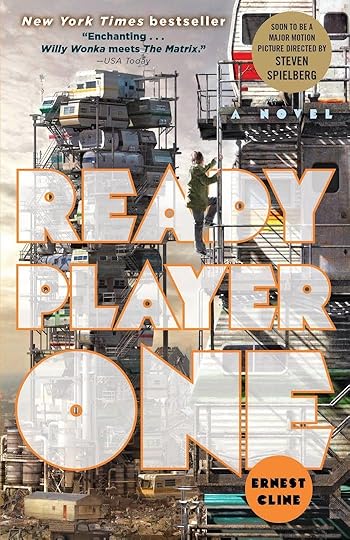
Ready Player One by Ernest Cline, Books for Boys Review
Introduction
Title: Ready Player One
Author: Ernest Cline
Genre: Science Fiction, Dystopia
Release Date: August 16, 2011
Synopsis (from Amazon):
In the year 2044, reality is an ugly place. The only time teenage Wade Watts really feels alive is when he’s jacked into the virtual utopia known as the OASIS. Wade’s devoted his life to studying the puzzles hidden within this world’s digital confines—puzzles that are based on their creator’s obsession with the pop culture of decades past and that promise massive power and fortune to whoever can unlock them.
But when Wade stumbles upon the first clue, he finds himself beset by players willing to kill to take this ultimate prize. The race is on, and if Wade’s going to survive, he’ll have to win—and confront the real world he’s always been so desperate to escape.
Why I Think Boys May Enjoy This
This following statement might be my age talking, but kids these days live heavily in an online world. The jump from modern times to the near-future OASIS concept (whereby you even attend school through your virtual life as an avatar) is really not that farfetched. When I first read this book (listened to the Audiobook read by Wil Wheaton, actually), I felt it might not appeal to younger readers so I handed it off to my (at the time) 10yo son. He blew through it and enjoyed it as well.
The reasons for the appeal might vary depending on level of exposure to 1980’s pop culture, but if my son is any example, it is not exactly a prerequisite for enjoying the book. My kid has never played Joust or seen WarGames so his only frame of reference was what information Wade/Parzival shared in the story and Cline wrote it detailed enough that you don’t need to have seen/played the referenced material to follow the plot. Gamers in particular will love the exploration of the Second Life/Sims type of world overlaid with a World of Warcraft-esque leveling/fighting system.
The plot itself has a great mix of digital espionage, real world danger, and online gaming to keep a reader of any age engaged. It moves fast and the perspective of Wade/Parzival is a solid one. From his awkwardness in his interactions with Art3mis to his fanatical obsession with all things 1980’s (due to the influence of the contest set up by the OASIS creator), Wade is a well-written and more three-dimensional version of your quintessential geek boy.
Content/Appropriateness
While the vast majority of the conflict takes place inside the OASIS and therefore has minimal “real world” implications, the story does also go into a darker place when the antagonists–the greedy IOI corporation that wants to win the contest simply to monetize OASIS in a way the creator never allowed–target some of the gamers in the real world (up to the point of attempting to kill them). This makes the story a little more realistic but not in a blood and guts sort of way. All “on screen” violence is limited to the virtual world.
There is no sexual content and romantic entanglements aren’t really a thing. Wade develops a crush on Art3mis but it is a very juvenile type of fascination and they don’t meet in person until very late in the book to even consider acting on things (which they don’t in the book). The only major content warning I’d consider would be language. These are teenagers playing online video games. They swear like teenagers trash talking each other in online video games. Other than that, the content is accessible to even younger readers. Because of the ages of the protagonists, serious nature of life or death situations as the book progresses, and the language content, I’d suggest 12+ however.
Rating
Buy Links
Amazon | Barnes & Noble | IndieBound | iBooks | Google Play | Kobo
June 14, 2017
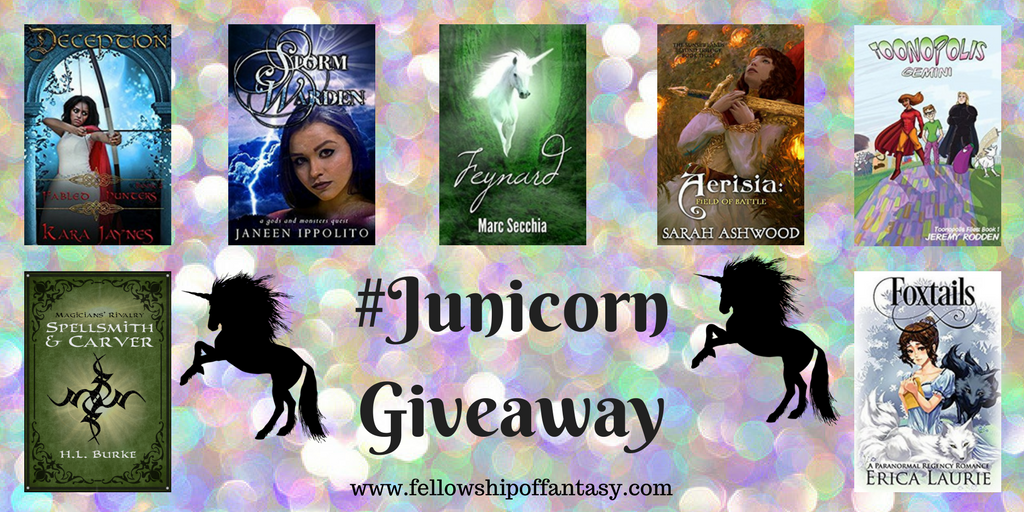
Fellowship of Fantasy #Junicorn Giveaway Event!
It’s June and that means it is time to celebrate the majestic Unicorns. Seven authors from the Fellowship of Fantasy have banded together to bring you this awesome giveaway. What’s more, you have double the chance to win because we will have …
TWO WINNERS!
That’s right!
One lucky winner will receive a unicorn mug (US winners only)
the other a SEVEN ebook Library including …
Aerisia:Field of Battle—Sarah Ashwood
Feynard—Marc Secchia
Toonopolis:Gemini—Jeremy Rodden
StormWarden: A Gods and Monsters Quest—Janeen Ippolito
Spellsmith& Carver: Magicians’ Rivalry—H. L. Burke
So sign up via the Rafflecopter prize below here or at
http://www.fellowshipoffantasy.com/special-events
June 12, 2017
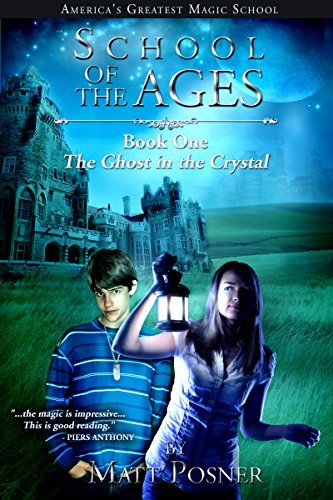
The Ghost in the Crystal (School of the Ages #1) by Matt Posner, Books for Boys Review
Introduction
Title: The Ghost in the Crystal (School of the Ages #1)
Author: Matt Posner
Genre: Urban Fantasy
Release Date: August 13, 2010
Synopsis (from Amazon):
Ghosts, elementals, time travel, magic duels, teen romance, sacrifice, and ultimate loss… Simon, thirteen, is drawn by surprise into America’s greatest magic school: New York City’s School of the Ages. When the evil spirit of a bitter and scheming heretic from ancient Alexandria attacks, he must risk everything in order to save his soul. Kids and adults won’t stop reading — The Ghost in the Crystal.
Why I Think Boys May Enjoy This
Let’s just get the obvious comparison to Harry Potter out of the way from the beginning (as even the author draws that comparison). This story is about a school for magic-using kids but in New York City. However, other than that over-arching comparison, the School of the Ages series is hardly a Potter clone with American kids slapped into a magical school instead of British ones. First and foremost, the serious tone of these books is struck early and often and definitely hits home more than the fun and whimsical nature of the early Potter books (sure, Voldemort is scary but he’s just a hypothetical scary for the beginning of the Potter series). All else I’ll say in comparison to Potter is this: if you want to compare them, remember that the first Harry Potter begins when Harry is just turning 11. Simon, our protagonist in this book, is nearly 14 when the series starts. So comparison wise, think about the Potter series beginning at Goblet of Fire and the level of seriousness (and romantic interests) by the time Harry hit that series.
Okay, let’s discuss the uniqueness of the series now that that comparison is out of the way. The part that stood out most for me (and will appeal to anyone who loves learning about other cultures) is how well Posner incorporates Chasidic Judaism as an important part of this world. At the school itself, there are many Jewish kids of varying degrees of commitment to the religion (ranging from ultra-orthodox to simple cultural connections) and Cabala (Jewish Mysticism) is integral to the teachings of the school. The author does a great job using Simon’s experiences to educate the reader on a culture that may be otherwise unfamiliar to most people (myself included). At the same time, it’s not a primer or an attempt to indoctrinate. As someone who loves to learn about other cultures, this well-written exposure to the Chasidic world through Simon’s eyes was enlightening. In one chapter, he handles exposure to a Hindu family ritual with the same level of respect and deft description that is also very cool.
As for the actual plot, the story gets you hooked right away. Starting with a simple premise that gets demonstrated very early–magic is real and is no joke–Ghost in the Crystal hooks you. A young boy reading the book can easily see themselves in Simon’s shoes. Even the realization that his study partner (Goldberry) is a girl sets Simon down the “omg, it’s a girl and I wonder if we’ll like each other” line of thought that would be very logical for any 13 year old boy to experience upon finding out that someone he has to spend a lot of time with in the coming months is a girl. Simon felt very real to me. Very believable as a 13 year old boy and not just an older writer’s version of what they think a 13 year old would be.
Content/Appropriateness
As I said before, this book gets serious very early on. It is made quite clear to the reader, through Simon, that there are real consequences for magic and real issues to be dealt with. Sure, there are still humorous moments in the book and the entertaining sidekick (Simon’s roommate Robbie), but in his first real magical interaction (with his study partner’s father), Simon enters a magically binding agreement to exchange favors.
What is also great is that the teachers and faculty of the school hold the children to adult-like levels of responsibility, even to the degree that the kids are allowed to battle each other and even cause harm (unless one person submits). This leads to some bloody situations and adult-level conflicts (even if they are just teenagers). There is no major violence or gore or anything, though, so it’s still more than age-appropriate for the middle grade and up crowd.
There are no language or sexual content concerns in this first book to make parents or educators shy away either. But, as I said, this book, even as the first in a series, makes sure the reader knows that magic is no joke and everything will not simply be solved with a magical wave of the wand by the end of it. The gravitas of the first book in the series is somewhat refreshing for a YA fantasy and adds to the realism of the story that really drives home the urban fantasy aspect (this could be real and take place in New York City to this day).
Rating

Buy Links
June 5, 2017
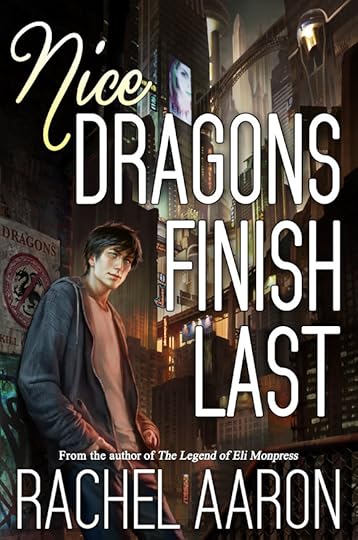
Nice Dragons Finish Last (Heartstrikers #1) by Rachel Aaron, Books for Boys Review
 Introduction
Title: Nice Dragons Finish Last (Heartstrikers #1)
Author: Rachel Aaron
Genre: Urban Fantasy, Dystopia
Release Date: July 13, 2014
Synopsis (from Amazon):
As the smallest dragon in the Heartstriker clan, Julius survives by a simple code: keep quiet, don’t cause trouble, and stay out of the way of bigger dragons. But this meek behavior doesn’t fly in a family of ambitious magical predators, and his mother, Bethesda the Heartstriker, has finally reached the end of her patience.
Now, sealed in human form and banished to the DFZ–a vertical metropolis built on the ruins of Old Detroit–Julius has one month to prove he can be a ruthless dragon or kiss his true shape goodbye forever. But in a city of modern mages and vengeful spirits where dragons are considered monsters to be exterminated, he’s going to need some serious help to survive this test.
He only hopes humans are more trustworthy than dragons…
Why I Think Boys May Enjoy This
First and foremost, it’s about dragons. Boy or girl, who doesn’t love dragons?! Aaron, though, has found a great way for us to learn about the dragon world presented by the entire Heartstrikers series, in that Julius is sealed into a human form from before the first book begins. Both because of this and Julius’s uniqueness as a very un-dragonlike dragon, it is easy to sympathize with Julius as a human reading this story (I can’t speak for dragons reading the story, but I’d assume they’d be more likely to identify with Justin or Ian, Julius’s brothers). This combination is a brilliant way for Julius to be both an outsider to the dragon world and give the reader enough insight to not feel confused.
All that being said, Julius struggles with very human-connected issues that many teen boys face: finding their own identity and voice, dealing with an overbearing (and murderous) mother, and being singled out and ridiculed for being different. That Julius is actually a dragon is irrelevant for the humans reading to connect with him. Add in the very human and very awesome Marcie Novalli (a mage who becomes Julius’s best friend over the course of the story). Marcie brings an even further human element to the story but she also serves as our conduit to the amazing magical capabilities unearthed in this dystopian future.
Content/Appropriateness
Even though Julius and Marcie are older than your traditional Young Adult audience (they are in their 20s), I’d still consider this a great book for pre-teens on up. The familial obstacles faced by Julius and Marcie are not unlike those typically faced by teen antagonists in your more traditional YA fantasy stories: venturing out on their own with minimal support. So even though the age of the main characters would suggest this book be NA instead of YA, the content is clean enough that readers as young as 10 could easily enjoy this story.
There is some violence and gunplay in the story (Marcie’s father apparently ran afoul of some human gangsters who like to use guns) but nothing worse than your average cartoon/children’s show. Most of the fighting involved in the story is supernatural in nature, involving spirits and dragons as opposed to more realistic human on human violence. There are no major language concerns and zero sexual content (which is why I say the characters could easily have been 16 instead of in their 20s had the author chose to do so).
All in all, it’s good, clean dragons and magic fun!
Special note: I personally listened to this series on Audible, and Vikas Adam did a *fantastic* job narrating them. So if you are into audiobooks, I can highly recommend them. My 11yo read the physical books and enjoyed them just as well.
Rating
Buy Links
May 29, 2017
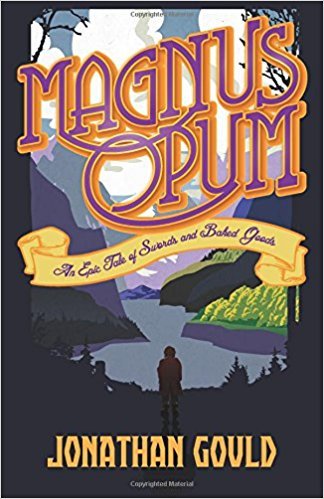
Magnus Opum by Jonathan Gould, Books for Boys Review
Introduction
Title: Magnus Opum
Author: Jonathan Gould
Genre: Epic Fantasy, Satire
Release Date: April 1, 2012
Synopsis (from Amazon):
An epic tale of swords and baked goods.
Magnus Mandalora never planned to go out into the big, wide world. He thought he’d live out his life in his homely little village, happily cooking and eating pflugberry pies. But fate had other ideas.
Before he knows it, Magnus has embarked on an incredible adventure. He discovers a world full of marvels and wonder, surprises and delights. But it’s also a world of perils and danger. As Magnus finds himself right in the middle of a long-running war between the fair and noble Cherines and the vile and despicable Glurgs, he faces challenges beyond anything he could have imagined.
Why I Think Boys May Enjoy This
The story begins Tolkien-ish enough: an adventure-seeking member of a comfortable diminutive race (Magnus Mandalora of the Kertoobis) ventures outside of his happy, comfort zone on a quest to follow in his brother’s footsteps. The parallels to Lord of the Rings and other epic fantasies are also found in the two main races he deals with: the wise and beautiful Cherines (elves?) and the grotesque and barbaric Glurgs (orcs?).
However, like any truly great parody work, Gould also brings his own staggering imagination into the fray. This is where his master satirical pen steps in and elevates Magnus Opum from mere genre mimicry to a wonderful piece of original art. Through Magnus’s journey, we learn lessons on the absurdity of materialism (blasted Plergle-Brots), gossip & the hidden truths in rumors (never trust a Doosie), and the problems that a simple misunderstanding of cultural differences can cause. Gould tells the story in such a silly and playful way, it’s easy to ignore his deeper lessons and just enjoy the cartoonish (at times) storytelling.
The world of Magnus Opum is so amazingly other with its odd creatures, customs, and naming conventions (hence the comparisons to Seuss’s whimsical worlds). At the same time, Jonathan Gould is skilled enough to show parallels to our own culture and customs that we can enjoy Magnus’s story as an outsider, but still see the absurdity present in our own societies.
Content/Appropriateness
Jonathan Gould describes his first full-length novel as “Tolkien meets Dr. Seuss.” While, on the surface, this is a completely accurate way to prepare someone to read his wonderful epic comedic fantasy, it does not fully do the work justice. When I first started reading it, I agreed that it felt like The Hobbit recast in Whoville.
Having previously read Gould’s first two pieces (the satiric novellas Doodling and Flidderbugs), though, I was prepared to look into Magnus Opum with a deeper perception. What I found was that Gould’s brilliant satiric mind found a way to send us messages even if it was obscured in a larger work of parody such as this.
At the end of the day, the story of Magnus Mandalora of the small homely village of Lower Kertoob is fun, funny, educational, and a master work of both parody AND satire rolled into an easy-to-read family-friendly story. This is one of those stories that a twelve year old could read and enjoy but that a teen to adult would read and be able to appreciate the layers and depth of the satire.
Rating
Buy Links
Amazon | Barnes & Noble | iBooks | Kobo
May 27, 2017
Steven Universe (A Review)
Note: I started this review approximately 2 years ago but never finished it. As I hope to get back into cartoon reviews (as well as my new book reviews!), I’ll start with finishing this.
It’s been quite a while since I last did a cartoon review, partially because I have not been doing much writing at all the last few years and partially because my family “cut the cord” about a year or so ago and don’t have cable anymore. The lack of passive TV watching has made it harder to keep up with new shows. That all being said, I have been inspired by a recent binge watching of a Cartoon Network show and wanted to review it for whatever audience I still have on this page. Today I review Steven Universe.

Image Source: Wikipedia
First and foremost, let’s just say that I very quickly became a fan of this show. The premise of the show immediately grabbed me from the very first episode. I love that the writers didn’t try to go with a big long origin story in order to introduce us to this world (which is, ostensibly, just our world plus gems). They threw us right in: Steven lives with three gem-women and is essentially raised by them. We immediately have to accept this without any initial backstory and I, personally, am a huge fan of this type of storytelling. Don’t tell me the world I’m in. Just throw me in there and let me figure it out along the way!

Look at this diverse cast of voice actors! Image Source: Pinterest
The voice cast for this show is pretty unique. The majority of the cast has no prior voice acting experience and were apparently selected for their stage/singing voices more than their acting (I 26remember reading that in an interview with Rebecca Sugar [the creator] somewhere but I can’t seem to find that interview now). The one exception to that seems to be Steven himself, Zach Callison, has developed a very unique singing and speaking style for Steven that wouldn’t be traditionally considered a “good singing voice” but it works for the character. The Crystal Gems had collectively more stage experience than voice-acting experience before this show: Estelle (Garnet) is a well-known British singer, Deedee Magno (Pearl) was part of national touring casts of Miss Saigon and Wicked, and Michaela Dietz (Amethyst) was mostly known for her work as Riff on Barney (yeah, the purple dinosaur show).
Collectively, the cast is delightful and, in a very happy note, one of the more diverse casts out there for animation. In what seems to be an intentional move, Cartoon Network took a show starring a white boy (and cast a white boy for the role) and put three minority women around him (Estelle is Black British, Magno is Filipino-American, and Dietz is Korean-American). It is nice to actually have women (and minority women at that) voicing female characters (I’m looking at you, Bob’s Burgers) that are themselves very unique and diverse. And their experience as singers is used very regularly with numerous musical numbers throughout the series.
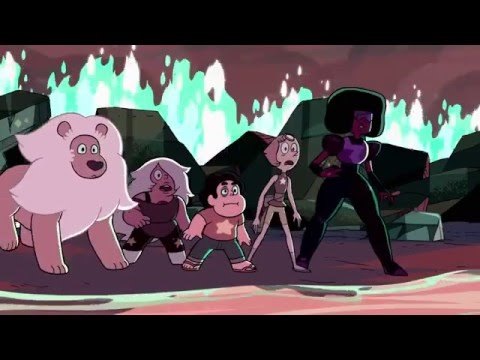
Screenshot from “Jail Break” episode. Source: YouTube
As for the actual show itself, it is one of the best I’ve watched in a long time and the first time I really got into a Cartoon Network show since Adventure TIme/Regular Show (two shows I reviewed back in 2011 on the blog). On its surface, the show is a quick-hit adventure story with splashes of humor added. Underneath, it’s a touching story that hits sweet notes ranging from LGBT acceptance, parental sacrifice, and immigrants adopting a new environment and calling it home. You don’t need to see or even care about the deeper meanings to enjoy the show; it is perfectly good just to enjoy the lovable, doofusy Steven bumbling his way through life with nothing but positive vibes and love in his heart.
If you find the show a slow starter, I tell you to stick with it. If you don’t fall in love with everything the Steven Universe team is doing by the time you hit the episode “Jail Break” then I’ll eat my left shoe (this episode also features my favorite song of the series, Garnet’s “Stronger Than You”). I give this show a heart 5/5 giant cartoon mallets and look forward to every episode with glee.


![[image error]](https://1.bp.blogspot.com/-hjoyCUfOBx0/WT9qKoOG8PI/AAAAAAAAMuQ/MViLqrVeq4EsWO1wzNIiQeRJQ5rozMzcwCLcB/s1600/%2523Junicorn%2BGiveaway.png)