
Jeremy Rodden's Blog, page 4
December 11, 2017
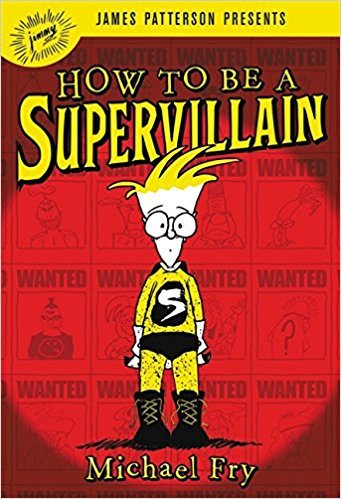
How To Be A Supervillain by Michael Fry, Books For Boys Review
 Introduction
Title: How To Be A Supervillian
Author & Illustrator: Michael Fry
Genre: Fantasy
Release Date: October 1, 2007
Synopsis (from Amazon):
Victor Spoil comes from a long line of famous supervillains and he’s fully expected to join their ranks one day. But to his family’s utter disappointment, Victor doesn’t have a single bad-guy bone in his body. He won’t run with scissors, he always finishes his peas, and he can’t stand to be messy. Hopeless!
As a last-ditch effort before they give up and let him be a–gasp!–civilian, Victor’s exasperated parents send him to apprentice under a disgraced supervillain called The Smear. This matchup starts off as a complete disaster, but Victor and The Smear eventually find that they have a lot to learn from each other. When the stakes get high as Victor is forced to choose between his mentor and his family morals (or lack thereof)…what will the world’s nicest bad guy do?
In this rollicking, nationally bestselling middle-grade adventure, Michael Fry’s witty text and hysterical artwork combines superhero action with classic fish-out-of-water humor.
Why I Think Boys May Enjoy This
This book is along the lines of other modern illustrated chapter books (eg, Diary of a Wimpy Kid) with what are essentially comic panels inserted into written text. Instead of simply being illustrations, the panels themselves continue the narrative. It’s a good elementary school/middle grade bridge book, with enough fun pictures to break up large chunks of text but without relying solely on the images to keep attention.
The book is full of random-based humor. Sometimes it hits (such as the randomness of The Smear’s stains and stain-based fighting attacks) and sometimes it misses (some of the lame superheroes/villains). Unfortunately, I also find it falls into the trap of “old person writing down to young people” using such tropes as parents always being annoying/idiotic and I often felt that Victor was portrayed as *way* younger than the 12 years old he is supposed to be.
However, it was definitely fun. The concept that superhero/supervillain battles were ostensibly public displays and scripted performances like professional wrestling is a fun one. The plot and story that spun from this central idea made for some fun moments, especially as Victor grows to understand the complexity of The Smear (who is really the only character that isn’t a basic stereotype throughout the book).
I hope as the series continues the author, who is more well-known for being a comic artist, is able to talk to his audience instead of continue to rely on what I call “Disney TV show” tropes and gags. His art style is perfect for this hybrid comic/chapter book format and his core ideas are fantastically fun.
Content/Appropriateness
Even though Victor is supposedly twelve, he really presents as way younger throughout the book. Thanks to this, he never really acts in a way inappropriate to ages as young as 8. There is no real danger or violence throughout the book and definitely no language or sexual concerns. There’s no reason any young reader would have a problem with content here.
Rating

Buy Links
Amazon[image error] | Barnes & Noble | IndieBound | iBooks | Kobo


December 4, 2017
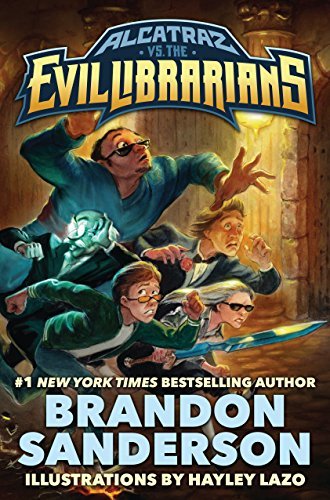
Alcatraz vs. The Evil Librarians (Alcatraz vs. The Evil Librarians #1) by Brandon Sanderson, Books for Boys Review
Introduction
Title: Alcatraz vs. The Evil Librarians (Alcatraz vs. The Evil Librarians #1)
Author: Brandon Sanderson
Genre: Fantasy, Steampunk
Release Date: October 1, 2007
Synopsis (from Amazon):
Alcatraz Versus the Evil Librarians is the first adventure in a fantasy series for young readers by the #1 New York Times bestselling author Brandon Sanderson. The fast-paced and funny series is now available in deluxe hardcover editions illustrated by Hayley Lazo.
On his thirteenth birthday, foster child Alcatraz Smedry gets a bag of sand in the mail-his only inheritance from his father and mother. He soon learns that this is no ordinary bag of sand. It is quickly stolen by the cult of evil Librarians who are taking over the world by spreading misinformation and suppressing truth. Alcatraz must stop them, using the only weapon he has: an incredible talent for breaking things.
Why I Think Boys May Enjoy This
Before I get to why I would recommend this book, let me first say that I fully understand why teachers and librarians would recommend it on the basis of the overwhelming amount of direct reference to literary themes and techniques. To me, however, this was the weakest part of the entire book.
Told in the first-person, Sanderson uses the fact that this is an “autobiography” to regularly break the fourth wall and directly expatiate on the methods of storytelling and writing. To me, this is one of the biggest pet peeves I have with middle grade books that have a tendency to “talk down” to their intended audience with such direct and blatant exposition.
That being said, if these bits were removed (and could easily be done, since they are often in the beginning of chapters), the fantasy story *behind* this nonsense is quite brilliant. Alcatraz is a very relatable protagonist and the uniqueness of the world and the Smedry magical “talents” (all of which seem silly on the surface until their true usefulness comes into play). The duality of the world Sanderson built is also fantastic, between the Hushlands (eg, the world we know as filtered through the control of the Librarians) and the world as Alcatraz learns it to be.
As a parody writer, I am a fan of twisted tropes and fourth wall breaking, and Sanderson uses his “autobiography” method of storytelling to find plenty of ways to do this, seemingly referencing the silliness of several major fantasy stories throughout this telling. Overall, I really enjoyed this story and just wish he didn’t have the numerous bits that interrupted the flow of the story time and again.
Content/Appropriateness
This is more than appropriate for a middle grade (as low as 8 years) audience. There is no concern for language or sexual themes at all and there is minimal violence. There are references and scenes concerning torture and the violence is real, but nothing is described in too vivid or overly horrific detail as to make it unfit for young audiences.
Rating
Buy Links
Amazon[image error] | Barnes & Noble | IndieBound | iBooks | Google Play | Kobo
October 30, 2017
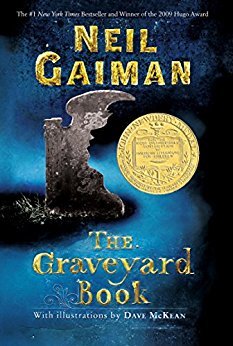
The Graveyard Book by Neil Gaiman, Books for Boys Review
Introduction
Title: The Graveyard Book
Author: Neil Gaiman
Genre: Fantasy
Release Date: September 30, 2008
Synopsis (from Amazon):
Bod is an unusual boy who inhabits an unusual place—he’s the only living resident of a graveyard. Raised from infancy by the ghosts, werewolves, and other cemetery denizens, Bod has learned the antiquated customs of his guardians’ time as well as their ghostly teachings—such as the ability to Fade so mere mortals cannot see him.
Can a boy raised by ghosts face the wonders and terrors of the worlds of both the living and the dead?
The Graveyard Book is the winner of the Newbery Medal, the Carnegie Medal, the Hugo Award for best novel, the Locus Award for Young Adult novel, the American Bookseller Association’s “Best Indie Young Adult Buzz Book,” a Horn Book Honor, and Audio Book of the Year.
Why I Think Boys May Enjoy This
Any book that opens with the murder of three people is sure to entice any reader who is into things a little macabre. The Graveyard Book is no exception to this concept. For that matter, anyone familiar with some of Gaiman’s other works for younger audiences (Coraline, Stardust) shouldn’t be surprised at the darker material contained within.
An interesting connection that I didn’t make until I was listening to the author himself read an essay he wrote as a backmatter piece for the audiobook version I listened to is that, at its core, The Graveyard Book is a reimagining of Kipling’s The Jungle Book. Only instead of being raised by wild animals, our protagonist is raised by the denizens of a graveyard, his adoptive parents being ghosts (instead of wolves) and his main instructor/guardian being a vampire (instead of a panther).
Even though the concept is borrowed from a previous work, the result is a completely unique story. One of the things that I loved the most was how Gaiman was able to get into Bod’s mind and motivations at various stages in live, ranging from infant to teenager. It truly felt as though we were able to get into his head and learn and grow along with Bod. Part of the reason this worked so well was that each chapter felt like a closed unique short story in and of itself. As each chapter/story is told at a different age for Bod, it really felt like the story was written more in an episodic nature, with an overarching storyline threading them together but a complete story within each chapter.
I really want to know more about Silas and Miss Lupesco and the Honor Guard that is only touched upon throughout the story. I could imagine a wonderful Gaimain-penned version of The League of Extraordinary Gentlemen starring these characters (or, hey, maybe Gaiman should run Universal’s new attempt at a Monster Universe series of films [one could hope]). Either way, I loved every aspect of this book and really hope Gaiman has more in the tank for this world in the future.
Content/Appropriateness
Well, the book literally starts with a triple murder. That being said, the dark nature of the book as set from the beginning is tempered repeatedly by the innocence of Bod learning of all the supernatural aspects of the graveyard and its inhabitants through the eyes of a growing child.
As I said above, Gaiman is known for “darker” material even with his books for young audiences. There are no bad words (only alluded to), extreme gore (again, death is an obvious common thread but not extreme violence), or sexual concerns at all. It’s all-ages appropriate within the context of the necessarily macabre nature of the setting and its characters.
Rating

Buy Links
Amazon[image error] | Barnes & Noble | IndieBound | iBooks | Google Play | Kobo
October 23, 2017
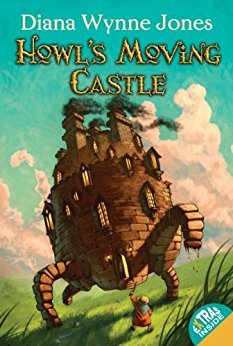
Howl’s Moving Castle by Diana Wynne Jones, Books for Boys Review
Introduction
Title: Howl’s Moving Castle (Howl’s Castle #1)
Author: Diana Wynne Jones
Genre: Fantasy
Release Date: April 1986
Synopsis (from Amazon):
Sophie has the great misfortune of being the eldest of three daughters, destined to fail miserably should she ever leave home to seek her fate. But when she unwittingly attracts the ire of the Witch of the Waste, Sophie finds herself under a horrid spell that transforms her into an old lady. Her only chance at breaking it lies in the ever-moving castle in the hills: the Wizard Howl’s castle. To untangle the enchantment, Sophie must handle the heartless Howl, strike a bargain with a fire demon, and meet the Witch of the Waste head-on. Along the way, she discovers that there’s far more to Howl—and herself—than first meets the eye.
Why I Think Boys May Enjoy This
Since I generally like to address when books that were made into well-known film adaptations, let me start off by pointing out that the (beautifully done and Academy Award nominated) Miyazaki adaptation is vastly different from the book. Miyazaki’s film uses the same core concepts but the entire “war” subplot and the much more sympathetic and likable Howl character make the film really different from the book. They are both great for their own reasons but I just felt it was important to note that the book is a really different experience.
Unlike the film, the book feels more like a fairy tale fantasy than that steampunk/adventure story of the film. From the word go, the story feels more like Little Women than Wizard of Oz. By the midway point, the two concepts merge into an amalgamation of the two. The courting/romance plots of Sophie’s sisters (which is cut from the film) is really important and weaves the extra layer of mystery and “ah-ha” moments throughout the story. The mysterious origin of Howl (and Wizard Suliman) demonstrate how this world is connected to but separate from our world (in an Alice in Wonderland sort of way).
Sophie Hatter is the key reason this book is so delightfully wonderful. She is one of the greatest irreverent heroines I’ve read. What I mean by this is that she just takes whatever comes without any complaint and pushes on. Her ability to just accept being turned into an old woman with basically a shrug of her shoulders early in the book really sets the tone for her ability to face any situation with casual dismissal and steadfast determination. Sophie’s attitude sets the pace for everything in the story and it’s quite refreshing.
Overall, it would be a travesty if I don’t mention Calcifer in this review. Sophie is amazing. Michael is fun. Howl is a brooding, whiny teenager throughout. Calcifer, though, is a snarky fire demon who also serves as one of the few continuous comic relief characters. (Sidenote: Billy Crystal voicing Calcifer in the film was a perfect casting.) In addition to his sarcasm, he provides a lot of the foreshadowing that pulls the plot together between the missing prince, Howl’s attitude, and the Witch of the Wastes’ motivations. He may seem like he’s just a fire for cooking bacon, but Calcifer is the glue that keeps the story from falling apart throughout.
Content/Appropriateness
This story is a wonderful read appropriate all the way down to middle grades. It is an easy read and even a strong 8+ reader could handle it without issue. There are no sexual, violent, or language concerns either. There are romantic subplots in the book but they are very simple and Victorian in nature (eg, the girls fawning over who they’re going to marry and all) but it is far from a “kissing book”.
Rating
Buy Links
Amazon[image error] | Barnes & Noble | IndieBound | iBooks | Google Play | Kobo
October 16, 2017
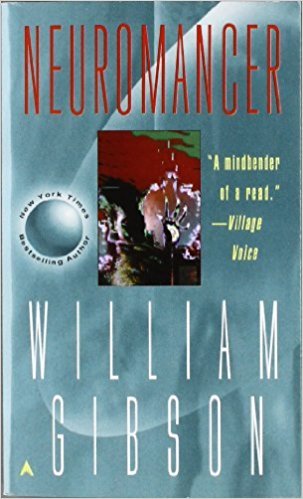
Neuromancer by William Gibston, Books for Boys Review
Introduction
Title: Neuromancer
Author: William Gibson
Genre: Science Fiction, Cyberpunk
Release Date: July 1, 1984
Synopsis (from Amazon):
The Matrix is a world within the world, a global consensus-hallucination, the representation of every byte of data in cyberspace…
Henry Dorsett Case was the sharpest data-thief in the business, until vengeful former employees crippled his nervous system. But now a new and very mysterious employer recruits him for a last-chance run. The target: an unthinkably powerful artificial intelligence orbiting Earth in service of the sinister Tessier-Ashpool business clan. With a dead man riding shotgun and Molly, mirror-eyed street-samurai, to watch his back, Case embarks on an adventure that ups the ante on an entire genre of fiction.
The winner of the Hugo, Nebula, and Philip K. Dick Awards, Neuromancer was the first fully-realized glimpse of humankind’s digital future—a shocking vision that has challenged our assumptions about our technology and ourselves, reinvented the way we speak and think, and forever altered the landscape of our imaginations.
Why I Think Boys May Enjoy This
In a world that way more approximates the imagined world of Neuromancer, it is important to look back at the originators from time to time. I had personally never read Neuromancer or really any cyberpunk. I sought to remedy that and social media universally told me I should read this book as my introduction to the genre. Insomuch as I can be introduced to a genre that has skyrocketed in popularity in the last twenty years (especially after the success of a little 1999 film called The Matrix, which unapologetically borrows a ton of its concept from Neuromancer). Throw in a little game called Shadowrun and you’ve got the makings for a massively popular sub-genre on your hands.
As with any science fiction, it’s important to look at it in the context of the time it was written and published. It’s really hard to look at older SciFi (and I can’t believe I’m saying that 33 years ago constitutes “older” but I digress) in the context of a current worldview when many times the “futuristic” technology of the story has been superseded by existing technology. In this case, I think we’re closer to living at the threshold of Gibson’s story than being past it, so it’s actually fun to read right now. Gibson had his finger on the pulse of the future of networked computing (“cyberspace”) and human augmentation with cybernetics (still “cutting edge” technology) so it doesn’t feel like it was written three decades ago.
At its core, Neuromancer is a heist story. That is to say: a group of people are put together to commit a crime and each of them have special talents that befit the intended action. Case, for his part, is a reputable hacker who, in addition to his skills, has a potent toxin in his system that allows his employer (“Armitage”) to hold him hostage to ensure he does his job. All future technology, cybernetics, and world-building aside, the story plays out like a heist-gone-sideways where the players have ulterior motives and you don’t really know who the main characters are even working for (even when you think you know).
The drug and sex content (more on the content below) are not really plot drivers so much as they are window dressing to color how disparate the world of Neuromancer has become. In many ways the Matrix serves as just another form of escapism (if the drugs aren’t enough), which is a lot of where the social commentary of the story comes in. Rich people have better access and better lives and poor people are left to the drugs and despair.
As both a genre-producer and a stand-alone story, Neuromancer holds up wonderfully to time. That may change in the coming decades but at this moment, I’d consider it a must-read for anyone interested in cyberpunk and its various iterations. A brilliant story with strong characters and an amazingly groundbreaking world.
Content/Appropriateness
Let’s be really up front here that this book has sexual content, copious drug use, and pervasive cursing. This is an adult book. I am reviewing it here and used the 15+ tag because I still think it is appropriate for a 15 year old whose parents are aware of these content warnings and wants to introduce a kid to the book that arguably *created* the concept of cyberspace years before it existed.
In my opinion (as a parent and an educator), if you’ve waited until they are 15+ before talking about any of these issues (sex and drugs especially), someone else has already educated your teen. There’s no reason to throw out a masterpiece of literature because it contains things that kids will see online at every turn anyway. Better to educate than ostrich. /endopinion
Of course, we don’t want anyone telling us what is and isn’t appropriate for our own children (looking at you, school boards banning books like To Kill A Mockingbird and Catcher in the Rye). That doesn’t mean we shouldn’t be informed of what’s in a book so we can decide if it’s right for our kids and that’s all I’m trying to do here. Okay, now for real /endopinion
Rating
Buy Links
Amazon[image error] | Barnes & Noble | IndieBound | iBooks | Google Play | Kobo
October 9, 2017
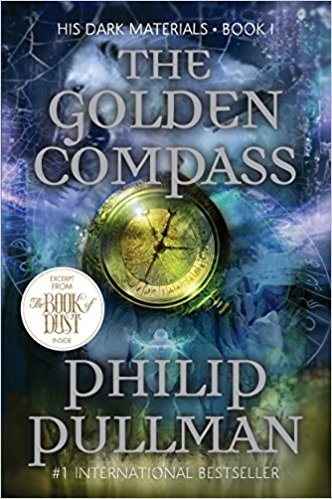
Golden Compass/Northern Lights (His Dark Materials #1) by Philip Pullman, Books for Boys Review
Introduction
Title: The Golden Compass/Northern Lights (His Dark Materials #1)
Author: Philip Pullman
Genre: Fantasy, Steampunk
Release Date: July 1995
Synopsis (from Amazon):
Lyra is rushing to the cold, far North, where witch clans and armored bears rule. North, where the Gobblers take the children they steal–including her friend Roger. North, where her fearsome uncle Asriel is trying to build a bridge to a parallel world.
Can one small girl make a difference in such great and terrible endeavors? This is Lyra: a savage, a schemer, a liar, and as fierce and true a champion as Roger or Asriel could want.
But what Lyra doesn’t know is that to help on of them will be to betray the other…
A masterwork of storytelling and suspense, Philip Pullman’s award-winning The Golden Compass is the first in the His Dark Materials series, which contintues with The Subtle Knife, and The Amber Spyglass.
Why I Think Boys May Enjoy This
Note, while this book is better known as The Golden Compass, I wanted to acknowledge that it was a completely different name when released in the UK originally (Northern Lights). The subsequent movie was also called Golden Compass so we’ll go with that from now on. But wanted to point that out to start.
This book (well, the whole series) is one of my biggest inspirations for writing middle grade/young adult fantasy. Funny thing is, I didn’t even realize it was part of the steampunk genre until I was setting up the page for this review. I didn’t know what steampunk was back when I read it years ago so maybe that’s why. As it stands, this series is an awesome way to introduce to youngsters the concept that really complex science can present itself as magic (as is a lot of the crux of what makes steampunk so unique).
Onto the book itself! Lyra Belacqua is one of my favorite fantasy heroines. She is established very early on to be more “tomboyish” of a young girl, running wild around the town with her daemon Pantalaimon along with the little boys. Her friendship with Roger is wonderfully devoid of romantic entanglements, which is always refreshing when you have opposite-gender friends in a middle grade book.
Throw in an awesome cast of characters with complexity and depth in her “uncle” and the awesomely complex Mrs. Coulter who you are constantly wondering which side she’s on (a la Severus Snape in Harry Potter). And all this is before we even get into the panserbjørne (AKA: GIANT INTELLIGENT ARMORED BEARS!). Sorry, don’t mind me. I loved the panserbjørne from the second they were introduced.
Aside from all the uniqueness, what we have here at the core is a simple “going on an adventure” plot that places Lyra into difficult situations and forces her to use her intelligence to get out of sticky places. The elevation of the plot throughout the series and the nefariousness of the Church just throw more fuel to a superior story.
Content/Appropriateness
This is more than appropriate for all ages. There are no concerns about violent scenes (although there is death, and giant fighting armored bears) from a blood/gore standpoint and language and sexual content are non-existent.
*Some* may be turned off by the Anti-Church sentiments and I didn’t want to ignore that concept. I’ve often told people when recommending this series that His Dark Materials is to what atheism as The Chronicles of Narnia is to Christianity. That is, it’s an allegorical story that places a moral lesson supported by the theism of the author. Philip Pullman is an outspoken atheist and the pro-science/anti-Church themes throughout this book are very strong. I don’t think this should turn anyone away from reading this series (even if you’re pro-Church) because it’s important to read alternative views from time to time. However, I felt it would be unfair of me to not mention this facet of Golden Compass to parents/educators who may look to my reviews for guidance.
Rating
Buy Links
Amazon[image error] | Barnes & Noble | IndieBound | iBooks | Google Play | Kobo
October 2, 2017
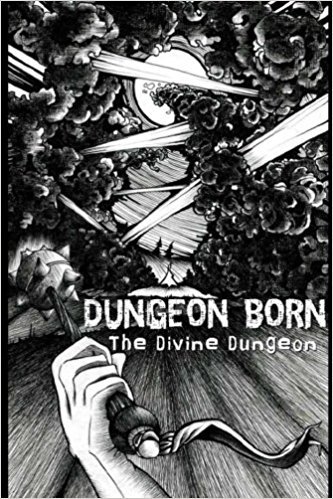
Dungeon Born (Divine Dungeon #1) by Dakota Krout, Books for Boys Review
Introduction
Title: Dungeon Born (Divine Dungeon #1)
Author: Dakota Krout
Genre: LitRPG, Epic Fantasy
Release Date: October 21, 2016
Synopsis (from Amazon):
For eons, conquering dungeons has been the most efficient way to become a strong adventurer. Although, not everything is as straightforward as it seems. Several questions have always plagued the mind of those that enter these mythical places of power: Why are there so many monsters? Where does the amazing weaponry and heavy gold coins come from? Why does the very air fill with life-giving energies?!
Cal has all of the answers to these age old questions, for a very simple reason. He is a Dungeon Heart, a soul forced against his will into a magical stone. After several lonely years, Cal was able to regain sentience, allowing him to form new memories while slowly growing a dungeon around himself. With help from a friend, Cal learned how to create monsters and traps, increasing his power and size quickly.
When a threat to his existence rears its head, Cal decides that he will do anything to stay alive and become stronger. Unfortunately for treasure-seekers, the fastest way for Cal to achieve his goal… is to eat anyone that enters his depths.
Why I Think Boys May Enjoy This
I’ve read plenty of Epic Fantasy over the years, but this is my first foray into what the cool kids are referring to as “LitRPG”. LitRPG is a very new (eg, maybe 10 years old or so) sub-genre of Epic Fantasy that exists in a post-D&D/MMORPG world wherein the adventure is structured around familiar gaming concepts (paying attention to things such as levels, ranks, etc.). I felt that was important to discuss before talking about the actual story. It’s a concept I play with in my Toonopolis books in Adventure Realm (you’ll see it more in the forthcoming Toonopolis: Chi Lin) but I digress.)
I was skeptical about LitRPG (I expected it to be kinda dry and potentially boring) but this particular story was quite a fun read. There are two really unique aspects to this story that I enjoyed. One was expected, the other surprising.
The surprising aspect was that the author shifted POVs pretty aggressively throughout. Not merely from one third person POV to another (that isn’t really a big deal, especially in Epic Fantasy) but from first person (Cal, the ‘dungeon core’) to third person (predominantly Dale, the rising adventurer at the crux of the story *outside* the dungeon). Normally, this type of POV shift can be quite jarring but it really worked well due to the uniqueness of the “character” of Cal. First person worked extremely well for Cal’s POV.
The other expected uniqueness was that the story included the POV of a frickin’ dungeon. That in and over itself is worth the price of admission. I am not sure if other LitRPG books have done this before or if Krout got there first, but the concept was brilliantly executed either way. Cal being a “human” soul allowed the reader to connect to the dungeon core in a human-like way. Dany is a fun, sarcastic, non-human sidekick/mentor, which is a common trope in this type of story but she’s enjoyable nonetheless.
The back-and-forth between Cal and Dale is what I think makes the story less “boring” than I feared an LitRPG becoming. If we only ever had Cal’s POV, we would lose the adventurer perspective that mostly feels like a traditional adventure/epic fantasy story. When we are in Dale’s POV, it feels more like a traditional story and I enjoyed that aspect well. I am not sure if this will make me dive into more LitRPG (as I fear it can be very derivative in the same way Epic Fantasy is now-a-days) but I will definitely read the next book in this series and see if Krout can keep the story engaging beyond the uniqueness giving the story so much excitement.
Content/Appropriateness
Well, there is a whole lot of death involved, considering plenty of adventurers (especially low-level ones) die in dungeons (and the dungeon, in this story, eats them and delights in their deaths since they feed the dungeon’s energy levels). Other than that, it’s pretty standard fare for Epic Fantasy. PG13 level violence at worse (mentions of blood, injuries, etc. but that’s about it).
There are no language or sexual concerns–aside from some mature level humor and jokes about Pleasure Houses and the like. There is no direct sexual content to worry about at all. There are some RPG-level religious themes (eg, the Church fights against Demons) but no real judgement in either direction about the religious concepts.
Note: I do wonder how much I enjoyed this story because of how much I enjoy the narrator of the audiobook (Vikas Adam) and if he may have overcome any flaws/concerns I would have had otherwise. No way to know, just a thought. And a shout-out to how awesome Vikas Adam is as an audiobook narrator.
Rating
Buy Links
September 25, 2017
Miss Peregrine’s Home for Peculiar Children (Miss Peregrine’s Peculiar Children #1), Books for Boys Review
Introduction
Title: Miss Peregrine’s Home for Peculiar Children (Miss Peregrine’s Peculiar Children #1)
Author: Ransom Riggs
Genre: Urban Fantasy
Release Date: June 7, 2011
Synopsis (from Amazon):
A mysterious island.
An abandoned orphanage.
A strange collection of very curious photographs.
It all waits to be discovered in Miss Peregrine’s Home for Peculiar Children, an unforgettable novel that mixes fiction and photography in a thrilling reading experience. As our story opens, a horrific family tragedy sets sixteen-year-old Jacob journeying to a remote island off the coast of Wales, where he discovers the crumbling ruins of Miss Peregrine’s Home for Peculiar Children. As Jacob explores its abandoned bedrooms and hallways, it becomes clear that the children were more than just peculiar. They may have been dangerous. They may have been quarantined on a deserted island for good reason. And somehow—impossible though it seems—they may still be alive.
A spine-tingling fantasy illustrated with haunting vintage photography, Miss Peregrine’s Home for Peculiar Children will delight adults, teens, and anyone who relishes an adventure in the shadows.
Why I Think Boys May Enjoy This
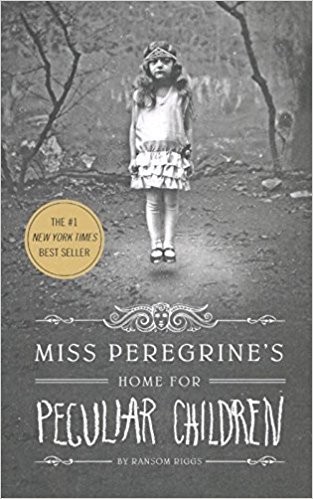
Well, it’s got super-powered kids, deadly bad guys, and a cool Camp Half-Blood/Hogwartz/Xavier School for the Gifted thing going on, but still has its very own uniqueness that makes it cool. There are clearly a bunch of “special kids go to a special school” style of stories out there, but there are some amazing facets to Miss Peregrine that set this book apart from the others. First, the unique inclusion of the pictures, supposedly of the characters in the story, are quite awesome. One of the few times I was sad to be listening to the audiobook (although, thankfully, I had a copy of the paperback as well so I was able to find the pictures to look at there).
The characters are perfectly set to an “older” age group (well, Jacob at least, was–as we learn, many of the children are hardly the ages they appear) and it makes their trek (especially as the series continues past the first book) more believable and acceptable. The entire concept of time loops and frozen moments is maybe one of the coolest parts of the entire series.
The characters are really well fleshed out and diverse, which is probably the strongest aspect of the book. Riggs does an amazing job of working with “children” that are young in appearance but much, much older in actual age. This is probably the part that separates this series apart from the aforementioned “kid goes to a magical school” concepts I mentioned above. I legitimately cared about all the other characters, especially Enoch and Bronwyn. Enoch’s complexity in particular was one that I loved. A kid with the power to raise the dead is pretty dark but it’s handled quite well for a book appropriate to a MG/YA audience.
All in all, it was a fantastic book and I gobbled up the entire series quickly.
Content/Appropriateness
There is nothing content-inappropriate here. Some violence including death but nothing majorly gory or bloody. The romantic elements (which are minimal) are kept to a PG rating.
Rating
Buy Links
Amazon | Barnes & Noble | IndieBound | iBooks | Google Play | Kobo
September 18, 2017
Console Wars by Blake J. Harris, Books for Boys Review
Introduction
Title: Console Wars
Author: Blake J. Harris
Genre: Non-Fiction
Release Date: June 2, 2015
Synopsis (from Amazon):
Following the success of The Accidental Billionaires and Moneyball comes Console Wars—a mesmerizing, behind-the-scenes business thriller that chronicles how Sega, a small, scrappy gaming company led by an unlikely visionary and a team of rebels, took on the juggernaut Nintendo and revolutionized the video game industry.
In 1990, Nintendo had a virtual monopoly on the video game industry. Sega, on the other hand, was just a faltering arcade company with big aspirations and even bigger personalities. But that would all change with the arrival of Tom Kalinske, a man who knew nothing about videogames and everything about fighting uphill battles. His unconventional tactics, combined with the blood, sweat and bold ideas of his renegade employees, transformed Sega and eventually led to a ruthless David-and-Goliath showdown with rival Nintendo.
The battle was vicious, relentless, and highly profitable, eventually sparking a global corporate war that would be fought on several fronts: from living rooms and schoolyards to boardrooms and Congress. It was a once-in-a-lifetime, no-holds-barred conflict that pitted brother against brother, kid against adult, Sonic against Mario, and the US against Japan.
Based on over two hundred interviews with former Sega and Nintendo employees, Console Wars is the underdog tale of how Kalinske miraculously turned an industry punchline into a market leader. It’s the story of how a humble family man, with an extraordinary imagination and a gift for turning problems into competitive advantages, inspired a team of underdogs to slay a giant and, as a result, birth a $60 billion dollar industry.
Why I Think Boys May Enjoy This
Sometimes you read a book because you discover it. Sometimes your read a book because one of your best friends from high school discovers it and flat out mails you a copy of it instead of telling you about it. Console Wars for me was the latter. Apparently, my friend felt this book was so far into my wheelhouse that he didn’t even ask me first. He just sent it to me. He was right, of course.
That being said, I’ve only ever reviewed one non-fiction book before now, predominantly because I find non-fiction to be dryer and less exciting than fiction and a lot of what I try to do here on this blog is find books I think (or have seen in the cases of my own kids or friends’ kids) will grab kids’ attention. Console Wars is a non-fiction that I think can grab the attention of a teen gamer, especially one who is into gaming history and what would be called retro gaming at this point.
Harris writes the story more like a biopic than a biography (as in, he has put it into a story format in an attempt to make it more interesting than a simple listing of dates, people, and events). It isn’t surprising that this book has been opted for film (to be helmed by Seth Rogen & Evan Goldberg, which bodes well for anyone who’s seen their adaptation of the Preacher graphic novels [not kids, hopefully]). All in all, Harris does a good job of treating these very real humans as characters. His protagonist being Tom Kalinske, a marketing master known for his work with Mattel before being pursued by Sega to helm their David vs. Goliath fight in the late 80s/early 90s against Nintendo.
A compelling story is woven with updates on some of Kalinske’s most trusted companions along the way. Ultimately, it’s an awesome “rise and fall” story that shows how a little guy can make a huge difference, beat up the bigger guy, and only the hubris/inflexibility of Sega of Japan put a spoke into the wheels of Sega of America’s bike in the end. I loved this book and would recommend it to anyone interested in the epic Sega vs. Nintendo battle of the 90s.
Content/Appropriateness
It’s a biography about marketing people at a video game company in the 90s. If that line alone doesn’t lead you to know that this is content-appropriate for all ages, I don’t know what to tell you. Even the history of the gaming industry’s descent into the ESRB (the video game ratings system) due to a brand new little game known as Mortal Kombat even shows how prudish the industry was back then. It took Congress getting involved for the industry to even develop its ESRB system (to avoid even more political input).
From the complexity of the content, I’d still rate it for mid to late teens. This deep of a biography that spends a lot of time discussing marketing concepts and sales figures is unlikely to hold the attention of anyone younger, unless they’re a big retro gaming geek and really want the history here.
Rating
Buy Links
Amazon | Barnes & Noble | IndieBound | iBooks | Google Play | Kobo
September 11, 2017
Scott Pilgrim’s Precious Little Life (Scott Pilgrim, #1) by Bryan Lee O’Malley, Books for Boys Review
Introduction
Title: Scott Pilgrim’s Precious Little Life (Scott Pilgrim #1)
Author & Illustrator: Bryan Lee O’Malley
Genre: Graphic Novel, Urban Fantasy
Release Date: August 18, 2004
Synopsis (from Amazon):
Scott Pilgrim’s life is totally sweet. He’s 23 years old, he’s in a rock band, he’s “between jobs,” and he’s dating a cute high school girl. Nothing could possibly go wrong, unless a seriously mind-blowing, dangerously fashionable, rollerblading delivery girl named Ramona Flowers starts cruising through his dreams and sailing by him at parties. Will Scott’s awesome life get turned upside-down? Will he have to face Ramona’s seven evil ex-boyfriends in battle? The short answer is yes. The long answer is Scott Pilgrim, Volume 1: Scott Pilgrim’s Precious Little Life.
Why I Think Boys May Enjoy This
Well, it’s a graphic novel (the first I’ve reviewed here on the #BooksForBoys review blog) so that’s a start. Also, I enjoyed the movie and never read the graphics. /endexplanation
To start, if you’ve seen the movie starring Michael Cera, it almost feels like you don’t even need to read the graphic novel (or at least volume one so far). I’m not sure how fans of the comic responded to the movie, but I don’t think I’ve ever seen a movie adaptation that so *precisely* mirrored the source material. I’m assuming this will continue as I read the rest of the series, but the movie literally feels like a shot-for-shot reproduction of the comic (which is good in some ways but adaptations really should add their own stamp – but that’s a Catch 22 situation).
That all being said and necessary, it’s still an enjoyable read for an older teen looking for a quick and easy graphic novel focusing on relationships from the perspective of a (kind of) dumb and bumbling boy. Usually, “romance” books are targeted to young girls but the heart of Scott Pilgrim ultimately is about Scott’s “love triangle” with Knives and Ramona. Everything else in the story follows from there.
It’s nice and refreshing to see classic romance tropes being flipped around a bit in this story (1 boy, 2 girls instead of the reverse) and, of course, the obvious and repeated references to geeky stuff (Scott’s band being named after a bad guy in Super Mario, the X-Men logo on his jacket, etc.) is fun and even a modern kid will get the references since they are timeless geek allusions and not niche stuff (which, you know, is funny because a lot of the Scott Pilgrim hype I recall from when this first came out was very hipster-ish in nature).
I kinda had trouble classifying this book other than “Graphic Novel” but decided on Urban Fantasy due to the sometimes-magical elements (Ramona literally traveling through Scott’s head, the first evil ex-boyfriend’s Bollywood demon summoning powers, etc.) and, I’m assuming based on the movie, the continuation of similar “gaming” style elements incorporated into the story that makes it more fantasy than pure reality.
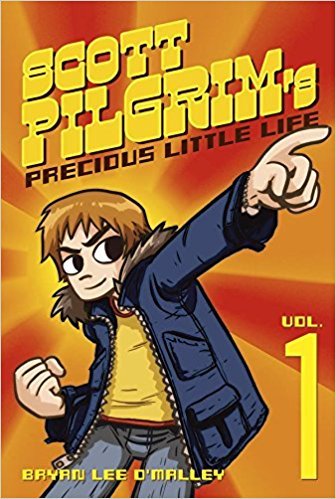
All in all, it’s a fun and quick read and I expect to devour the other five books in quick succession. Any teen could read it without issue (see Content section below) and enjoy it. The art style is simple and O’Malley is clearly influenced by Japanese Manga in his illustrations and format (even the story-telling, to be truthful). The heavy use of blackspace in the black and white drawings allows the characters to pop out nicely and nothing interrupts a quick and easy flow for the reader.
Content/Appropriateness
Technically, Scott is outside the “YA” range (he is 23) I normally look for. However, like other books I’ve read with older protagonists, the content of the book and his motivations are very much younger in nature and not really classifiable as Young Adult. Even the first (and running) gag is Scott’s relationship with Knives Chau, a 17-year old Chinese school girl (and yeah, his friends and sister immediately point out how cliche that is). The relationships throughout Volume 1 are definitely more juvenile and high school-ish in nature, even Scott’s obsession with Ramona.
There are direct references to sex, especially when Scott goes to Ramona’s house after their first date. No nudity is shown (Ramona is seen in bra/panties), but there is a GREAT lesson in this first “adult” interaction about consent that I think is done nicely and with subtlety. It looks as though they will have sex (after kissing and being near-naked) but Ramona tells him that he’s changed her mind. Scott makes no move to pressure or argue against this. This is an “adult” situation that would do well to be demonstrated to anyone in high school.
In the first book, there are no other content concerns about language or violence (seriously, the first “mini-boss” literally turns into coins like in a video game, it’s that tame). Other than the sexual conversation, especially coming from Scott’s “very gay” roommate Wallace, there’s nothing to stop a mature-enough 15+ (maybe even younger pending parental veto) from enjoying this book.
Rating
Buy Links


