Sean Keefer's Blog, page 7
May 2, 2011
The Genius of Charlie Sheen
A couple of months ago if you had seen the phrases #winning or #tigerblood you likely wouldn't have given them a second thought.
Charlie Sheen, you crazy man. Or, perhaps marketing genius.
Flash back a couple of months. Charlie is doing great. In May of 2010, he's making approximately $2 million per episode of a 30-minute sitcom that is also in syndication.
It shouldn't have been a surprise to anyone that Charlie's personal life was a bit, well, shocking. Over the years some have even called him a "Hollywood Badboy."
That aside, Charlie appeared to generally balance the personal and professional. That is to say the two co-existed and things had, at the time, not risen to the level of some celebrity meltdowns seen in the last decade.
However, when the Charlie Sheen train derailed, it happened fast. In the span of what seemed only hours, he lost his job, his family fell apart, Goddesses appeared and Charlie allowed the media a front row seat to it all.
Then subtle events started to occur that made me wonder what was really going on. Charlie hit Twitter and explosion doesn't even come close to describing the result. Charlie's approaching 4-million followers and still climbing.
Then came a coast-to-coast tour. Initially the reviews were horrid, but Charlie retooled and the reviews are better. And, he keeps selling tickets.
Most people quickly offer the opinion that Charlie is just nuts. Maybe he is. Maybe he has substance addiction problems, maybe he got some bad Tigerblood. Who knows?
Needless to say, something is going on, and people are lining up to see what happens next and they seem to be paying for the privilege.
The general celebrity meltdown results in a fall and rarely is there any meaningful recovery.
Not Charlie. He falls, but he seems to bounce back at least to the level from which he fell. So is this accidental or intentional? I have no idea.
However, I believe there are some lessons to be learned from Charlie that you could apply to marketing that book you're trying to sell.
Charlie got rejected, heck, he got fired from the most successful sitcom on television. What did he do? He made sure everyone knew he felt he was getting the short end of the deal.
I won't get into his lawsuit, but Charlie showed a #winning spirit. Charlie is refusing to be rejected. He's fired? So what?
Do what Charlie did. If you're a writer and you're dealing with rejection, so what? I'm not saying sue anyone of course, but retool and focus more attention on your book. You Tube a glowing book trailer or interview about the book. Continue to build a following. Rejections be damned!
Get your book in front of people. Invite them into your world. Post excerpts on line. Solicit feedback and input from your Twitter and Facebook friends. Make people a part of the process and encourage them to invite more people to the party.
Self-Promote. Evaluate. Modify as needed. Charlie lost his television show, what does he do? He orchestrates a nationwide tour and adapted to make it work. Do the same with your book. If something isn't working, fix it and make it work.
I believe the true genius of Charlie Sheen is that he completely believes in himself and has the ability to adapt. With the whole world saying he is insane and washed up, he adapts and keeps people interested in Charlie Sheen. He also keeps people spending money on Charlie Sheen. He refuses to believe he will be anything other than an overwhelming success.
Pull a page from Charlie's playbook. If people tell you that you won't succeed, smile and prove them wrong. You may not have the dollars of Charlie Sheen, but there is nothing prohibiting you outspending him in effort and confidence.
And if you ever need a bit of inspiration, follow @CharlieSheen on Twitter. At a minimum you'll be entertained.
Good Luck and feel free to leave a comment with your thoughts.
Oh and as long as you're here, why not read an excerpt of my book, The Trust or evenbuy a copy of your own. A percentage of all sales will be donated to canine related nonprofits. Support K9 rescues!
Charlie Sheen, you crazy man. Or, perhaps marketing genius.
Flash back a couple of months. Charlie is doing great. In May of 2010, he's making approximately $2 million per episode of a 30-minute sitcom that is also in syndication.
It shouldn't have been a surprise to anyone that Charlie's personal life was a bit, well, shocking. Over the years some have even called him a "Hollywood Badboy."
That aside, Charlie appeared to generally balance the personal and professional. That is to say the two co-existed and things had, at the time, not risen to the level of some celebrity meltdowns seen in the last decade.
However, when the Charlie Sheen train derailed, it happened fast. In the span of what seemed only hours, he lost his job, his family fell apart, Goddesses appeared and Charlie allowed the media a front row seat to it all.
Then subtle events started to occur that made me wonder what was really going on. Charlie hit Twitter and explosion doesn't even come close to describing the result. Charlie's approaching 4-million followers and still climbing.
Then came a coast-to-coast tour. Initially the reviews were horrid, but Charlie retooled and the reviews are better. And, he keeps selling tickets.
Most people quickly offer the opinion that Charlie is just nuts. Maybe he is. Maybe he has substance addiction problems, maybe he got some bad Tigerblood. Who knows?
Needless to say, something is going on, and people are lining up to see what happens next and they seem to be paying for the privilege.
The general celebrity meltdown results in a fall and rarely is there any meaningful recovery.
Not Charlie. He falls, but he seems to bounce back at least to the level from which he fell. So is this accidental or intentional? I have no idea.
However, I believe there are some lessons to be learned from Charlie that you could apply to marketing that book you're trying to sell.
Charlie got rejected, heck, he got fired from the most successful sitcom on television. What did he do? He made sure everyone knew he felt he was getting the short end of the deal.
I won't get into his lawsuit, but Charlie showed a #winning spirit. Charlie is refusing to be rejected. He's fired? So what?
Do what Charlie did. If you're a writer and you're dealing with rejection, so what? I'm not saying sue anyone of course, but retool and focus more attention on your book. You Tube a glowing book trailer or interview about the book. Continue to build a following. Rejections be damned!
Get your book in front of people. Invite them into your world. Post excerpts on line. Solicit feedback and input from your Twitter and Facebook friends. Make people a part of the process and encourage them to invite more people to the party.
Self-Promote. Evaluate. Modify as needed. Charlie lost his television show, what does he do? He orchestrates a nationwide tour and adapted to make it work. Do the same with your book. If something isn't working, fix it and make it work.
I believe the true genius of Charlie Sheen is that he completely believes in himself and has the ability to adapt. With the whole world saying he is insane and washed up, he adapts and keeps people interested in Charlie Sheen. He also keeps people spending money on Charlie Sheen. He refuses to believe he will be anything other than an overwhelming success.
Pull a page from Charlie's playbook. If people tell you that you won't succeed, smile and prove them wrong. You may not have the dollars of Charlie Sheen, but there is nothing prohibiting you outspending him in effort and confidence.
And if you ever need a bit of inspiration, follow @CharlieSheen on Twitter. At a minimum you'll be entertained.
Good Luck and feel free to leave a comment with your thoughts.
Oh and as long as you're here, why not read an excerpt of my book, The Trust or evenbuy a copy of your own. A percentage of all sales will be donated to canine related nonprofits. Support K9 rescues!


April 29, 2011
More Marketing - Book Events
Book events are a great way to meet people interested in books. If you handle it correctly, after your event they'll leave interested in your book. Or better yet they'll leave with your book.
However, there's more to it than showing up with a pen and a stack of books.
Readers haven't met many writers, but readers like being able to hold their book and announce they met, or perhaps, know the writer. It's my opinion these readers have a stronger attachment to your book. Stronger attachments mean a higher likelihood they tell others about the book.
So how do you orchestrate a successful event?
Exploit friends, family, friends of family, and on down the line. Ask friends to host a release party for you. Invite friends to come and bring friends. Offer to help, but take advantage of the resources available to you.
Think outside the box. It's not unusual to walk into a big bookstore and see an author signing books. Not that this is a bad thing or doesn't hold the potential for success, but at a large bookstore there are loads of other books. Sure you will be there with your book, but it is one in the crowd.
Instead look for locations outside the retail bookstore setting. For instance, boutique wine stores. These venues are always looking for an event to host that will get folks in with a thirst. Plus, a glass or two of wine and people will love to talk. What better way to make your book the topic of conversation?
Look for smaller independent bookstores for events. Drop by for a visit and give the owner a copy of your book. If they like it they'll likely get behind it and recommend it. So when the event occurs, they'll be steering people to your book. This is something that you rarely get in the larger bookstores.
Third, market your event. Use word of mouth, visit business in the area, spread the word on Twitter, through your website, Facebook, etc. Put up fliers. If you have the budget look at local arts magazines. Get friends to help spread the word.
Don't be afraid to approach people. Ask them what they're looking for at the bookstore, ask them how the wine is, then steer them to your book. Be excited about it. Get them excited about it. Chances are this will result in a sale, if not on the spot, then later.
Bring flyers, business cards, postcards, bookmarkers, etc. If people don't buy your book, give them some material about it. Make sure you have a website they can check out. Keep them thinking about it and make them want to come back.
Also get email addresses of everyone that attends so you can do a newsletter. You want to keep your book on their mind. Also, have someone shoot some video and post it on your website. People love to watch video.
Think themed events. Find a theme from your novel and build an event around it. For instance, in my novel, The Trust, in the book specific menus and dishes are mentioned. Several friends offered to host a release party for my book with the theme, "A Taste of the Trust." Deal! Food, wine and books on a Saturday night even if not a single sale were to occur, that is a recipe or fun.
At the end of the day the more events you have the more people you'll reach. Send out press releases to local media. Target smaller papers. Keep at it and be persistent. One large event where you sell and sign 100 books for an indie author is great, but a number of small events where you sell 10-15 are even better.
Good Luck and feel free to leave a comment with your thoughts.
Oh and as long as you're here, even though it isn't in person, why not read an excerpt of The Trust or even buy a copy of your own. A percentage of all sales will be donated to canine related nonprofits. Support K9 rescues!
However, there's more to it than showing up with a pen and a stack of books.
Readers haven't met many writers, but readers like being able to hold their book and announce they met, or perhaps, know the writer. It's my opinion these readers have a stronger attachment to your book. Stronger attachments mean a higher likelihood they tell others about the book.
So how do you orchestrate a successful event?
Exploit friends, family, friends of family, and on down the line. Ask friends to host a release party for you. Invite friends to come and bring friends. Offer to help, but take advantage of the resources available to you.
Think outside the box. It's not unusual to walk into a big bookstore and see an author signing books. Not that this is a bad thing or doesn't hold the potential for success, but at a large bookstore there are loads of other books. Sure you will be there with your book, but it is one in the crowd.
Instead look for locations outside the retail bookstore setting. For instance, boutique wine stores. These venues are always looking for an event to host that will get folks in with a thirst. Plus, a glass or two of wine and people will love to talk. What better way to make your book the topic of conversation?
Look for smaller independent bookstores for events. Drop by for a visit and give the owner a copy of your book. If they like it they'll likely get behind it and recommend it. So when the event occurs, they'll be steering people to your book. This is something that you rarely get in the larger bookstores.
Third, market your event. Use word of mouth, visit business in the area, spread the word on Twitter, through your website, Facebook, etc. Put up fliers. If you have the budget look at local arts magazines. Get friends to help spread the word.
Don't be afraid to approach people. Ask them what they're looking for at the bookstore, ask them how the wine is, then steer them to your book. Be excited about it. Get them excited about it. Chances are this will result in a sale, if not on the spot, then later.
Bring flyers, business cards, postcards, bookmarkers, etc. If people don't buy your book, give them some material about it. Make sure you have a website they can check out. Keep them thinking about it and make them want to come back.
Also get email addresses of everyone that attends so you can do a newsletter. You want to keep your book on their mind. Also, have someone shoot some video and post it on your website. People love to watch video.
Think themed events. Find a theme from your novel and build an event around it. For instance, in my novel, The Trust, in the book specific menus and dishes are mentioned. Several friends offered to host a release party for my book with the theme, "A Taste of the Trust." Deal! Food, wine and books on a Saturday night even if not a single sale were to occur, that is a recipe or fun.
At the end of the day the more events you have the more people you'll reach. Send out press releases to local media. Target smaller papers. Keep at it and be persistent. One large event where you sell and sign 100 books for an indie author is great, but a number of small events where you sell 10-15 are even better.
Good Luck and feel free to leave a comment with your thoughts.
Oh and as long as you're here, even though it isn't in person, why not read an excerpt of The Trust or even buy a copy of your own. A percentage of all sales will be donated to canine related nonprofits. Support K9 rescues!
April 25, 2011
A Creative Recharge
I just got back from vacation, which is why I haven't posted in a while. Quite wonderful, well except for the day one of the canines decided he wasn't getting enough attention and had to go to the vet. After a 45-minute drive and an eye-popping bill for an upset stomach, I spent the drive back to our house thinking I perhaps should've been a vet.
That drama aside, I used the vacation for an experiment – a mini-writer's retreat. My goal was to see the benefit, if any, from a week of concentrated writing.
I'll admit writing on vacation may not be possible if chaos is the norm, but with a little planning you may be pleasantly surprised.
Here are a few thoughts for orchestrating your own writing vacation.
1 – Plan accordingly. Pick a favorable location, somewhere conducive to writing. Let other's know you'll be writing and will need some space. Try to minimize external distractions and if there are outings, schedule accordingly.
2 – Have a goal. At the start, I was approximately 1/3 of the way through my current novel. My goal was to do a comprehensive read through and then make a stab at around 7500 words.
3 – Set aside a consistent time each day. Set aside a block of time for writing. Take some days off. I wrote Monday through Friday from 8 till noon and took off the weekends. Start and stop on time. Put a cap on the time you'll spend and don't do more than that each day.
4 – Don't let the work spill over. My promise to folks was leave me alone while I write and I won't talk about writing unless asked. After all, it was everyone's vacation and I didn't want to make other's involuntary participants in my own little writer's retreat. However, I found that people wanted to talk and I was able to use them as a sounding board for my ideas.
5 – Minimize the wired effect. I pretty much unplugged for the week. I checked my email and Twitter once a day only. This kept me from breaking my focus when I was writing.
6 – Have fun and remember the unexpected benefits. I was curious how this would work, so I decided just to have fun. I couldn't have been more pleased. The time each day allowed for uninterrupted blocks of focused attention. I avoided frustration even if it meant some time staring out the window waiting for inspiration to wave.
The biggest benefit was the total emersion in the process. I was amazed at the nuances this allowed me to craft into my plot, how it gave me a better handle on the story. I'm not sure I would have occurred if I had been writing around my everyday schedule at home.
So what about all the people who are reading thinking, "I can't just take a vacation and spend half of my time writing!"
No worries.
Think staycation and do a long weekend. Fit 9-12 hours in over a weekend. I spent the first day reviewing my partial manuscript, if you take that out, in a weekend you'll have a lot of time. Get up early. Stay up late when the distractions are minimized. Sure, you'll have to plan but that's part of the fun.
So how did it go?
My expectations were reached and beyond. In addition to the editing, the clearer view of the plot and the refinement of my story, I was able to write almost 15,000 words. More than doubling my goal and far in excess of my normal output over the same time frame when I am literally having to steal time to write.
I also learned from an accountant friend that since I had planned accordingly, kept records, and established a schedule, that I now have a bona fide deduction on my taxes. How's that for an added benefit?
Oh and as long as you're here, even though it isn't in person, why not read an excerpt of The Trust or even buy a copy of your own. A percentage of all sales will be donated to canine related nonprofits. Support K9 rescues!
That drama aside, I used the vacation for an experiment – a mini-writer's retreat. My goal was to see the benefit, if any, from a week of concentrated writing.
I'll admit writing on vacation may not be possible if chaos is the norm, but with a little planning you may be pleasantly surprised.
Here are a few thoughts for orchestrating your own writing vacation.
1 – Plan accordingly. Pick a favorable location, somewhere conducive to writing. Let other's know you'll be writing and will need some space. Try to minimize external distractions and if there are outings, schedule accordingly.
2 – Have a goal. At the start, I was approximately 1/3 of the way through my current novel. My goal was to do a comprehensive read through and then make a stab at around 7500 words.
3 – Set aside a consistent time each day. Set aside a block of time for writing. Take some days off. I wrote Monday through Friday from 8 till noon and took off the weekends. Start and stop on time. Put a cap on the time you'll spend and don't do more than that each day.
4 – Don't let the work spill over. My promise to folks was leave me alone while I write and I won't talk about writing unless asked. After all, it was everyone's vacation and I didn't want to make other's involuntary participants in my own little writer's retreat. However, I found that people wanted to talk and I was able to use them as a sounding board for my ideas.
5 – Minimize the wired effect. I pretty much unplugged for the week. I checked my email and Twitter once a day only. This kept me from breaking my focus when I was writing.
6 – Have fun and remember the unexpected benefits. I was curious how this would work, so I decided just to have fun. I couldn't have been more pleased. The time each day allowed for uninterrupted blocks of focused attention. I avoided frustration even if it meant some time staring out the window waiting for inspiration to wave.
The biggest benefit was the total emersion in the process. I was amazed at the nuances this allowed me to craft into my plot, how it gave me a better handle on the story. I'm not sure I would have occurred if I had been writing around my everyday schedule at home.
So what about all the people who are reading thinking, "I can't just take a vacation and spend half of my time writing!"
No worries.
Think staycation and do a long weekend. Fit 9-12 hours in over a weekend. I spent the first day reviewing my partial manuscript, if you take that out, in a weekend you'll have a lot of time. Get up early. Stay up late when the distractions are minimized. Sure, you'll have to plan but that's part of the fun.
So how did it go?
My expectations were reached and beyond. In addition to the editing, the clearer view of the plot and the refinement of my story, I was able to write almost 15,000 words. More than doubling my goal and far in excess of my normal output over the same time frame when I am literally having to steal time to write.
I also learned from an accountant friend that since I had planned accordingly, kept records, and established a schedule, that I now have a bona fide deduction on my taxes. How's that for an added benefit?
Oh and as long as you're here, even though it isn't in person, why not read an excerpt of The Trust or even buy a copy of your own. A percentage of all sales will be donated to canine related nonprofits. Support K9 rescues!
April 24, 2011
The King Whisperers by Kerwin Swint - A Review
 At its core The King Whisperers by Kerwin Swint is a study of the proverbial power behind the thrones of history.
 Swint takes the reader on a journey through history delving into events spanning thousands of years, exploring individuals who, in varying ways, helped establish, guide, influence or control those who ruled.
At first blush one may be tempted to pass over such a work thinking it lacked focus, was too broad in its undertaking or, even that it was going to be too academic to be engaging to all but those in, well, academia. After all, Swint is an academic himself.
However, you would be wrong. On all counts.
The King Whisperers, just shy of 300 pages, is divided into 10 distinct categories based upon characteristics of each Whisperer. Each of the 10 sections profiles multiple individuals.
To address such a large number of individuals throughout history in such a short work is quite a promise to make. However, Swint delivers on this promise.
Swint populates each category with profiles of individual Whisperers and in doing so sets out some of the most remarkable tales I've read in sometime.
The starting point was logical – Niccolo di Bernardo Dei Machiavelli; however, as with all of the profiles, Swint does more than simply regurgitate history, rather he demystifies Machiavelli and allows the reader to understand that Machiavelli, while focused in his efforts, was not the most Machiavellian of those in history, either before of after him.
Throughout the book Swint moves from profile to profile allowing the reader to understand how certain individuals appeared, sometimes from no where, sometimes by self appointed divine right, sometimes through the military or traditional politics, to wield the power behind the throne. His use of categories as a vehicle to better understand the particular Whisperers' style and approach could not be better formulated.
For instance, one of his categories, Schemers, addresses individuals who literally clawed their way to the top. They lied, cheated, betrayed and rose to their respective seats of power in often less than ethical ways.
In the Schemer category Swint recounts the story of an individual famously portrayed in a Hollywood blockbuster. The portrayal was that of one who was grandiose and larger than life, but alas, as is often the case in Hollywood, the story on the big screen was anything but accurate. However as Swint explains the true story, I was left to believe that Hollywood had actually toned down the reality of a fascinating tale.
Another section of the book, the Rebels, tells the tale of one of the most renowned (or perhaps infamous) political figures of the 20th century, Che Guevara. As most of the individuals in the book are profiled in passages of 5-10 pages, I was curious as to the information that could be conveyed in such an abbreviated length. Swint, again, anticipated this concern.
While Guevara's life and activities could serve as fodder for an extended work, his exploits, failings, and his philosophy are succinctly set out in 7 pages (something Swint does throughout the book with each profile). After reading this brief passage, though I was familiar with Guevara previously, I had a renewed perspective as well as a keen understanding of the actuality and irony of his life.
In reading the different sections certain themes became apparent that allow the reader to understand how, throughout history, more often than not events leading up to critical, historically resonating events have been a collective that, in varying degree, were guided by someone other than the actual ruler, a King Whisperer.
Whether it was the attack on Pearl Harbor, the Spanish Inquisition, the rise of the Bolsheviks, Japanese Imperialism, the Crusades, or a variety of other notable events through history, the conception through to the implementation of these events was, in large part, if not completely, the end produce resulting from the work of a King Whisperer.
As the book progresses, the reader will begin to understand how each of the 10 different Whisperer categories builds upon and compliments others. To a degree, it is reasonable to believe that many of the different categories have cross-over characteristics in that a General could benefit, and likely did, from being a Silver Tongue Devil. Likewise, what other ambitious individual couldn't benefit from having a bit of Schemer at their disposal?
Men, women, military, religious, common man alike, they all have their place at the table of the King Whisperers.
There is a quote that finishes the book by H.L. Mencken which solidifies the perspective of the King Whisperers, "The urge to save humanity is almost always only a false face for the urge to rule it."
The question I had before I started the book was "Why help a ruler when you could be the ruler yourself?"
Swint answers this by allowing the reader to understand that while it is one thing to rule, it is another to have the power and be able to wield it as one sees fit. The majority of the individuals in this book had little if any desire to rule (though there are some exceptions to this) yet were addicted, sometimes with singular focus, to power. Many exercised their influence with grace and compassion, at least as they understood or believed the concepts; however, others, not so much. It is interesting to see how the lives of each of the Whisperers resolved. To me, the story of the demise of the Whisperers was as telling to me as the story of the rise to power. Their ends are sometimes tragic and sometimes deserving. Some simply fade to history. However, in the end I believe that much about the motives of the individual whispers can be found in their end as in their beginning.
Swint takes what could be a very thick subject spanning an almost impossible to manage timeframe and condenses it into a work that is overflowing with keen insight, clear understanding, wit and a page turning quality that leaves the reader wanting for more. Read this book!
Tour Notes: Please vote for my blog in the traffic-breaker poll for this tour. The blogger with the most votes wins a free promotional twitterview and a special winner's badge. I want that to be me! You can vote in the poll by visiting the official King Whisperers blog tour page and scrolling all the way to the bottom. The next word for the book give-away is (AND). Learn more about the give-away and enter to win 1 of 3 copies on the official King Whisperers blog tour page. The other 2 copies are being given-away courtesy of the GoodReads author program, go here to enter. And don't forget to stop by the Q&A with Kerwin Swint Group to discuss the King Whisperers (including questions from the official book club guide), the author, and his previous works. Book Trailers for the King Whisperers:
April 11, 2011
Review - Revenge by Mark Young
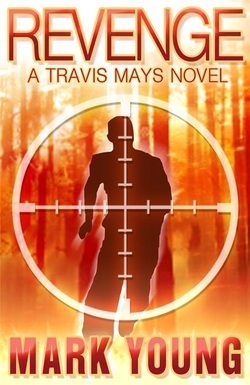 From time to time I am reviewing books that I run across or that I have enjoyed. Today I am reviewing Revenge by Mark Young. I ran across Mark Young on Twitter @MarkYoungBooks and was happy to have had the opportunity to review Revenge.
Revenge
A Travis Mays Novel
By Mark Young
The wilds of Idaho are a serene and soothing place complete with forest, native American reservations, rivers and a slower pace of life. You can imagine a peaceful river lazily winding its way along the base of majestic mountains.
It is against this background that Mark Young builds the tension and suspense that is Revenge. What the reader soon understands is that the lazy winding river leads to rapids up around the bend. Clearly Mr. Young knows the Pacific Northwest.
Young starts out with a bang to get things going. Characters are introduced, tension is built then everything suddenly collapses.
For the main character, Travis Mays, that is. This collapse leaves us with the foundation for a story of Revenge.
After the murder of a close associate (pick up a copy and read for more on this), Mays leaves the law enforcement job he not only loved but in which he was near legend. He winds up a professor of criminology in the Pacific Northwest, trying to leave his past behind.
However, Young brings Mays back to the forefront when Mays finds himself square in the middle of a murder investigation. At first Mays is reluctant to get involved because doing so could bring back painful memories from his former life as a detective.
However there's always a girl and this girl's brother has been murdered. Mays, though at first reluctant, is drawn into a tangled web that tightens with the turn of every page.
Young clearly draws upon personal knowledge and experience in creating his characters. The dialogue is sharp and fits the edginess of the story and setting. While there were a couple of places I was curious as to how the events were going to tie together into the storyline, I didn't have to wait long to get back on the path.
Young uses the determination of his characters to slowly build the crescendo of the plot to a peak where he launches the reader on a whirlwind ride to the finish.
The pacing of the book provides for a quality that makes it easy to pick up even if you have been away for a bit. The chapters are of a comfortable length and do not belabor in any fashion. This quality contributes to the overall readability of the book.
A solid 4 out of 5 stars. Fans of suspense, mystery, police thrillers and crime dramas are sure to enjoy Revenge.
Revenge by Mark Young can be purchased from Amazon. For more information on Mark Young, visit his website.
April 8, 2011
Even More Marketing
I've decided I'm learning a tremendous amount about book marketing and apparently I feel the need to share.
Two things make me think this.
First, I've always been told you should learn from your mistake. I'm certain a ton of mistakes have originated with me in the last three months in regards to my marketing efforts, so I have to have learned something.
Right?
Secondly, from time to time I've noticed two things. 1 – Spikes in the traffic to my website and 2 – a steady pace to book sales, The Trust.
It's the strangest and sometimes unexplained, or at least unexpected, things that can cause a traffic increase, but never the less; there's definitely a cause and effect going on.
For instance, I've been on several blogs where the blog-owners reviewed my book or featured me in an interview or some other fashion. This happens, up my numbers go. When this does I generally know about it and have learned to expect it.
On occasion I will look at my numbers, Google Analytics is invaluable for this by the way, and they are up for no apparent reason.
From time to time I've noticed the numbers were up for no reason I could identify. On one occasion, I studied the referring sites for a bit after I noticed a spike. It turns out a prior review of mine caught the attention of blogger. In working through her thoughts on her blog, she posted and linked to my blog. People saw it and they stopped by my blog for a visit.
The lesson on this is blogging pays off. I had no idea that a review would spark so much traffic.
When I released my book, I targeted the large newspapers in my state. I sent out focused press releases about the release of my book. The release of a book from an unknown author. The release of a book from an unknown author with no reader base or other foundation, etc. etc.
The results were astounding. That is if by astounding you understand astounding to mean absolutely nothing at all happened. Overwhelming silence.
Then from all of the announcements and press releases that had been sent out I found a few gold mines.
I started to realize that the local presses were open to unknown writers.
I've received excellent press and the experience has been great. Seems they love the human-interest angles and they particularly love the stories if there's a tie-in to their locale.
Think your hometown paper. Think the setting of the book. Find some way to make your book relate to the location of the paper you target.
There are a lot of local papers and similar publications out there.
If you have a book signing, think smaller presses, community papers, etc. I've been amazed at how many people study these publications and will then visit my web site or show up at events. I'll post on my signing experiences soon.
The lesson behind all of this is that I'm becoming a huge fan of small, locally focused events and marketing efforts. The likelihood of me selling a million books this way is beyond slim, but it is working to continue enough book sales to justify my keeping on with my efforts.
Best of all most of the local efforts on marketing are low to no cost. Which means that if you screw up the lesson gets written off but doesn't hit you in the wallet.
So while you're here why not read a chapter from my book or even buy a copy of your own. A portion of all proceeds from the sale of The Trust will be donated to canine related charities.
Two things make me think this.
First, I've always been told you should learn from your mistake. I'm certain a ton of mistakes have originated with me in the last three months in regards to my marketing efforts, so I have to have learned something.
Right?
Secondly, from time to time I've noticed two things. 1 – Spikes in the traffic to my website and 2 – a steady pace to book sales, The Trust.
It's the strangest and sometimes unexplained, or at least unexpected, things that can cause a traffic increase, but never the less; there's definitely a cause and effect going on.
For instance, I've been on several blogs where the blog-owners reviewed my book or featured me in an interview or some other fashion. This happens, up my numbers go. When this does I generally know about it and have learned to expect it.
On occasion I will look at my numbers, Google Analytics is invaluable for this by the way, and they are up for no apparent reason.
From time to time I've noticed the numbers were up for no reason I could identify. On one occasion, I studied the referring sites for a bit after I noticed a spike. It turns out a prior review of mine caught the attention of blogger. In working through her thoughts on her blog, she posted and linked to my blog. People saw it and they stopped by my blog for a visit.
The lesson on this is blogging pays off. I had no idea that a review would spark so much traffic.
When I released my book, I targeted the large newspapers in my state. I sent out focused press releases about the release of my book. The release of a book from an unknown author. The release of a book from an unknown author with no reader base or other foundation, etc. etc.
The results were astounding. That is if by astounding you understand astounding to mean absolutely nothing at all happened. Overwhelming silence.
Then from all of the announcements and press releases that had been sent out I found a few gold mines.
I started to realize that the local presses were open to unknown writers.
I've received excellent press and the experience has been great. Seems they love the human-interest angles and they particularly love the stories if there's a tie-in to their locale.
Think your hometown paper. Think the setting of the book. Find some way to make your book relate to the location of the paper you target.
There are a lot of local papers and similar publications out there.
If you have a book signing, think smaller presses, community papers, etc. I've been amazed at how many people study these publications and will then visit my web site or show up at events. I'll post on my signing experiences soon.
The lesson behind all of this is that I'm becoming a huge fan of small, locally focused events and marketing efforts. The likelihood of me selling a million books this way is beyond slim, but it is working to continue enough book sales to justify my keeping on with my efforts.
Best of all most of the local efforts on marketing are low to no cost. Which means that if you screw up the lesson gets written off but doesn't hit you in the wallet.
So while you're here why not read a chapter from my book or even buy a copy of your own. A portion of all proceeds from the sale of The Trust will be donated to canine related charities.
April 4, 2011
For Your Consideration
I love Law & Order. Really the whole franchise is excellent, but the original Law & Order is perhaps my favorite. I even have a favorite cast of characters during which I thought the show was at its peak.
One of the characters I adore is Lennie Briscoe who was portrayed by the late but greater that great Jerry Orbach. When I was formulating this post I was reminded of a scene when Briscoe, the king of one-liners, was searching through some high-class trash at a Hollywood film studio. He had a great comment about the quality of the garbage.
In thinking about that scene and Law & Order as a whole, the show had a great way of taking non-fiction, "ripped from the headlines" ideas and fictionalizing the story of the events.
A conundrum can develop in mixing fiction and non-fiction. I've started dealing with this issue on my blog. The task for me has been changing gears in my reviews between fiction and non-fiction reviews.
For me, in doing my book reviews, I am using one decidedly different method for addressing fiction and an entirely different method for non-fiction.
With fiction I am paying attention to character development, the plot, sub-plots, pacing, dialogue, etc.
Not the case with non-fiction. Was the book adequately researched? How are different theories presented? Are there shortfalls in the premise behind the book? Is the author of the proper pedigree or do they possess the proper credentials to address the subject matter? These and other assorted questions form the foundation for non-fiction reviews. Oh yes, I also like it when non-fiction writers can actually write, though I enjoy this with writers of fiction as well.
I recently read a book about intrigue, murder, mystery and mayhem set in our nation's capital and while I didn't dislike it completely, I was left with a ho-hum feeling afterwards. Based upon the subject matter alone, I just knew it was going to be a great, speedy read that I would love.
Not the case.
On the other hand I am currently reading a non-fiction work on quantum physics and it is a page turner. And I don't even have a science background.
Reviews are an important part of the writing process; however, fiction and non-fiction are two entirely different types of writing. I think that as reviewers it is important that we embrace this and address the work in question in the proper light with the proper filters.
This may seem all too obvious, but from some of the reviews I have read lately, I'm not so sure it is as clear as it might be.
For me the important thing that I keep in mind is that neither fiction nor non-fiction is any better or worse than the other. However, I believe that as a reviewer you have to keep in mind there is a focus to the work and that in either fiction or non-fiction you need to give a hard look to make sure that the intent of the work is met and that the it is done in a method that will serve the intended audience.
I'd love to hear your thoughts, so feel free to comment.
So while you're here why not read a chapter from my book or even buy a copy of your own. A portion of all proceeds from the sale of The Trust will be donated to canine related charities.
One of the characters I adore is Lennie Briscoe who was portrayed by the late but greater that great Jerry Orbach. When I was formulating this post I was reminded of a scene when Briscoe, the king of one-liners, was searching through some high-class trash at a Hollywood film studio. He had a great comment about the quality of the garbage.
In thinking about that scene and Law & Order as a whole, the show had a great way of taking non-fiction, "ripped from the headlines" ideas and fictionalizing the story of the events.
A conundrum can develop in mixing fiction and non-fiction. I've started dealing with this issue on my blog. The task for me has been changing gears in my reviews between fiction and non-fiction reviews.
For me, in doing my book reviews, I am using one decidedly different method for addressing fiction and an entirely different method for non-fiction.
With fiction I am paying attention to character development, the plot, sub-plots, pacing, dialogue, etc.
Not the case with non-fiction. Was the book adequately researched? How are different theories presented? Are there shortfalls in the premise behind the book? Is the author of the proper pedigree or do they possess the proper credentials to address the subject matter? These and other assorted questions form the foundation for non-fiction reviews. Oh yes, I also like it when non-fiction writers can actually write, though I enjoy this with writers of fiction as well.
I recently read a book about intrigue, murder, mystery and mayhem set in our nation's capital and while I didn't dislike it completely, I was left with a ho-hum feeling afterwards. Based upon the subject matter alone, I just knew it was going to be a great, speedy read that I would love.
Not the case.
On the other hand I am currently reading a non-fiction work on quantum physics and it is a page turner. And I don't even have a science background.
Reviews are an important part of the writing process; however, fiction and non-fiction are two entirely different types of writing. I think that as reviewers it is important that we embrace this and address the work in question in the proper light with the proper filters.
This may seem all too obvious, but from some of the reviews I have read lately, I'm not so sure it is as clear as it might be.
For me the important thing that I keep in mind is that neither fiction nor non-fiction is any better or worse than the other. However, I believe that as a reviewer you have to keep in mind there is a focus to the work and that in either fiction or non-fiction you need to give a hard look to make sure that the intent of the work is met and that the it is done in a method that will serve the intended audience.
I'd love to hear your thoughts, so feel free to comment.
So while you're here why not read a chapter from my book or even buy a copy of your own. A portion of all proceeds from the sale of The Trust will be donated to canine related charities.
April 1, 2011
More Marketing - Going Old School
These days thoughts of marketing are a near constant. My motto has become "Do more today because what you did yesterday wasn't enough." I'm always trying new thing, but recently I've been focusing on some old school methods.
It is largely accepted our society is such that technology literally changes from day-to-day.
As of late the hot button approaches for marketing are twitter, facebook, websites and all things social media. No matter what you're doing online, it seems there is always one more option available.
Chances are you ended up on this blog entry from a social media site; however, I've been using a few decidedly low-tech approaches that have been amazingly successful.
I've been targeting book clubs, independent bookstores, and even using some non-traditional retail outlets to expand exposure to The Trust.
With book clubs I've reached out to friends and friends of friends who are in or know someone in a book club. I have an excerpt from my book posted on my website and I direct them there.
I've been prepared to prime the pump by giving away my book to help spread the word, but I've been fortunate that readers have been happy enough with the excerpt, and have read the entire book.
When I'm asked where people can purchase the book, I direct them to local independent bookstores even though it is available from all the major online booksellers.
Why you ask? More on this in a moment.
I also offer to come to a book club meeting to speak about The Trust. This has been one of the most successful and enjoyable things I've done in marketing my book.
Oh yes, the independent bookstores. Decidedly low-tech. I mailed out a postcard to the stores soon after publication, followed up with an email and then stopped by with book in hand. On occasions when I've been traveling and have seen an independent bookstore, I'll skip straight to the last step. I walk in and introduce my book and myself. After all, my book is a friendly book and likes to meet readers and booksellers.
I've encountered a couple of different reactions from the storeowners with this approach.
Some will, without even reading the book, take copies on consignment. When they sell, they ask for more.
However, many of the booksellers will ask for a copy and then have someone will read it.
If they like it, not only will they stock it but they will recommend it.
Independent bookstores have fiercely loyal customers and if the owner says to read something the patrons listen. This is also a great way to set up signings to meet even more readers.
I also have several friends or friends of friends who retail stores and I've approached them. They've been wonderful in not only stocking the book – generally the only or one of the few books in their store – but also in promoting it.
I was even lucky enough to have had the opportunity to appear on a local market morning television show.
Social media has provided a reach for my novel and has helped me sell a number of copies that I never would have otherwise sold, but in an age where everyone is focused on the latest technology, we as writers need to remember that readers still like bookstores and like being talked to in person.
Don't overlook the old fashion face to face contact as one of the most tried and true methods of selling you books.
Oh and as long as you're here, even though it isn't in person, why not read an excerpt of The Trust or even buy a copy of your own. A percentage of all sales will be donated to canine related nonprofits. Support K9 rescues!
It is largely accepted our society is such that technology literally changes from day-to-day.
As of late the hot button approaches for marketing are twitter, facebook, websites and all things social media. No matter what you're doing online, it seems there is always one more option available.
Chances are you ended up on this blog entry from a social media site; however, I've been using a few decidedly low-tech approaches that have been amazingly successful.
I've been targeting book clubs, independent bookstores, and even using some non-traditional retail outlets to expand exposure to The Trust.
With book clubs I've reached out to friends and friends of friends who are in or know someone in a book club. I have an excerpt from my book posted on my website and I direct them there.
I've been prepared to prime the pump by giving away my book to help spread the word, but I've been fortunate that readers have been happy enough with the excerpt, and have read the entire book.
When I'm asked where people can purchase the book, I direct them to local independent bookstores even though it is available from all the major online booksellers.
Why you ask? More on this in a moment.
I also offer to come to a book club meeting to speak about The Trust. This has been one of the most successful and enjoyable things I've done in marketing my book.
Oh yes, the independent bookstores. Decidedly low-tech. I mailed out a postcard to the stores soon after publication, followed up with an email and then stopped by with book in hand. On occasions when I've been traveling and have seen an independent bookstore, I'll skip straight to the last step. I walk in and introduce my book and myself. After all, my book is a friendly book and likes to meet readers and booksellers.
I've encountered a couple of different reactions from the storeowners with this approach.
Some will, without even reading the book, take copies on consignment. When they sell, they ask for more.
However, many of the booksellers will ask for a copy and then have someone will read it.
If they like it, not only will they stock it but they will recommend it.
Independent bookstores have fiercely loyal customers and if the owner says to read something the patrons listen. This is also a great way to set up signings to meet even more readers.
I also have several friends or friends of friends who retail stores and I've approached them. They've been wonderful in not only stocking the book – generally the only or one of the few books in their store – but also in promoting it.
I was even lucky enough to have had the opportunity to appear on a local market morning television show.
Social media has provided a reach for my novel and has helped me sell a number of copies that I never would have otherwise sold, but in an age where everyone is focused on the latest technology, we as writers need to remember that readers still like bookstores and like being talked to in person.
Don't overlook the old fashion face to face contact as one of the most tried and true methods of selling you books.
Oh and as long as you're here, even though it isn't in person, why not read an excerpt of The Trust or even buy a copy of your own. A percentage of all sales will be donated to canine related nonprofits. Support K9 rescues!
March 28, 2011
Get in the Dance - The Twitter Dance that is.
I've been on Twitter a couple of months. It started like this.
Day 1 - no idea at all what to do or how to go about doing it.
Hashtags? DM's. Lists. On and on with the lingo.
Days 2 – 9 - I waited and watched and still absolutely nothing happened. My mother told me a watched pot never boils so I walked away for a few days and checked back to reap the rewards that had befallen my patience.
Still nothing.
Day 10 - I did something novel. I sent a tweet. Then another. Then the strangest thing happened. Someone followed me. I followed them back.
A thought occurred to me. The people who were following me – who were they following? Who was following them?
Then I discovered lists.
People on twitter – Tweeps I've since learned they are called – spend their time organizing followers into categorized lists. Lists are a gold mine of information if you are looking for people who tweet about particular topics. Between the list from people you follow and people who follow you, you can find thousands of tweeps with similar interests. Many of these people have great things to say.
Wow the floodgates opened. I started following other writers, bloggers, publishers, readers, and loads of other people who had interest that touched on mine. Many in turn followed me back.
Since then I've found a few things helpful and have a few things that I believe are best avoided.
First, stay active on Twitter. I've found it's a truly a "What have you done for me lately?" proposition. You want to remain engaged with your followers. If not you're dead weight on the timeline.
Oh and engage in conversations, but if things get too detailed on a topic, send a direct message. This keeps other followers from getting confused or from feeling neglected and at the same time you're engaging your followers.
Give your followers good content. Good content includes information about your book or work in progress, but it shouldn't only be about that. Link to your regularly updated blog, retweet interesting tweets, share insight. Keep the mix productive and beneficial to your followers. If your followers are engaged they will help support you, you'll be followed by others and so grows the network.
Help spread the word for your followers. If you have someone you find interesting, tell your followers about them.
I believe you should avoid tweets that only promote your book or platform in a sales pitch fashion. I also feel that you should avoid saturating the timeline with too many things on one topic. It's okay to recycle tweets, but after a few appearances on the timeline, those tweets, like extended house guests or 5-day-old fish, may start to smell a bit.
Oh, and just be nice and treat other people with respect or perhaps I should say twitspect.
At the end of the day all it takes is a little planning and a willingness to dive into the deep end of the pool. Engage your followers; let them know you are interested in what they have to say. Thank them when they mention you or retweet something you've done. When people thank you return the favor. It's pretty simple. What comes around goes around. Help out and you'll be helped out.
It is like the high school dance. It's fun to lean against the wall and be entertained by what everyone else is doing, but the real fun is out on the dance floor.
So while you're here why not read a chapter from my book or even buy a copy of your own. A portion of all proceeds from the sale of The Trust will be donated to canine related charities.
Day 1 - no idea at all what to do or how to go about doing it.
Hashtags? DM's. Lists. On and on with the lingo.
Days 2 – 9 - I waited and watched and still absolutely nothing happened. My mother told me a watched pot never boils so I walked away for a few days and checked back to reap the rewards that had befallen my patience.
Still nothing.
Day 10 - I did something novel. I sent a tweet. Then another. Then the strangest thing happened. Someone followed me. I followed them back.
A thought occurred to me. The people who were following me – who were they following? Who was following them?
Then I discovered lists.
People on twitter – Tweeps I've since learned they are called – spend their time organizing followers into categorized lists. Lists are a gold mine of information if you are looking for people who tweet about particular topics. Between the list from people you follow and people who follow you, you can find thousands of tweeps with similar interests. Many of these people have great things to say.
Wow the floodgates opened. I started following other writers, bloggers, publishers, readers, and loads of other people who had interest that touched on mine. Many in turn followed me back.
Since then I've found a few things helpful and have a few things that I believe are best avoided.
First, stay active on Twitter. I've found it's a truly a "What have you done for me lately?" proposition. You want to remain engaged with your followers. If not you're dead weight on the timeline.
Oh and engage in conversations, but if things get too detailed on a topic, send a direct message. This keeps other followers from getting confused or from feeling neglected and at the same time you're engaging your followers.
Give your followers good content. Good content includes information about your book or work in progress, but it shouldn't only be about that. Link to your regularly updated blog, retweet interesting tweets, share insight. Keep the mix productive and beneficial to your followers. If your followers are engaged they will help support you, you'll be followed by others and so grows the network.
Help spread the word for your followers. If you have someone you find interesting, tell your followers about them.
I believe you should avoid tweets that only promote your book or platform in a sales pitch fashion. I also feel that you should avoid saturating the timeline with too many things on one topic. It's okay to recycle tweets, but after a few appearances on the timeline, those tweets, like extended house guests or 5-day-old fish, may start to smell a bit.
Oh, and just be nice and treat other people with respect or perhaps I should say twitspect.
At the end of the day all it takes is a little planning and a willingness to dive into the deep end of the pool. Engage your followers; let them know you are interested in what they have to say. Thank them when they mention you or retweet something you've done. When people thank you return the favor. It's pretty simple. What comes around goes around. Help out and you'll be helped out.
It is like the high school dance. It's fun to lean against the wall and be entertained by what everyone else is doing, but the real fun is out on the dance floor.
So while you're here why not read a chapter from my book or even buy a copy of your own. A portion of all proceeds from the sale of The Trust will be donated to canine related charities.
March 25, 2011
What the $&%^#$ Did He Just Say?
$#*$% ? I say $%#@#$# and *&$^%$ &%$% yes. If not some *&^$ person may not be *&^&% again.
Translation?
I'll hold off for now and allow you a moment to fill in the blanks, but suffice it to say simply because you see a mix of symbols doesn't mean that the first sentence has to be X-Rated. But it easily could be.
The point of this comes from a conversation I recently had concerning the use of profanity and what exactly was appropriate language for books on the market today.
As the saying goes, opinions are like $#*&%$ - everyone has one. Keep in mind everyone has a hometown and probably a pair of pants.
I'm of the opinion, as with many things in literature, there is certainly that which is not only appropriate but, necessary. On the other hand there is that which I believe is for shock value and shock value alone.
For instance, if there's a scene where every third word out of a character's mouth is an F-bomb, it's likely we have shock value. Or, say a character is given a profanity laced case of Tourette's Syndrome with no other plot tie-in, then perhaps we have shock value.
However if you have a particularly seasoned police detective, some profanity, perhaps even at inappropriate times, is to be expected. Perhaps a man of the cloth has fallen from grace and will utter every profanity in the book; however he refuses to take the Lord's name in vain. I believe these uses of profanity help create a full character.
Even with the average person sometimes a single well-placed expletive can be amazingly effective in conveying a subtle difference in mood or tone that, I believe, is difficult to otherwise create. To avoid such or, even worse, to write around this, would simply not be true to the character.
But wait you say! Won't you alienate your audience? Well, I believe you have to know your audience before you can alienate them. However, if you are not true to your characters or your story, you may not have readers to alienate.
I write thrillers and mysteries. I don't believe my readers would enjoy too much graphic language or even too much blood and gore. I don't believe they want me to discuss politics or religion. I do believe they want believable characters.
However, if, on occasion the language in a book mirrors that which you may hear in real life, I believe that not only does my audience accept, but also expects it. To do otherwise I believe I run the risk of losing readers.
I believe if a character limps then the reader needs to know it. If a character is a seasoned police officer but tends bonsai trees for relaxation, the reader needs to know it. And if a specific word conveys the emotion or adds to the tone of a scene, I believe the reader should have it.
Really? I say completely and affirmatively 100% yes. If not some loyal reader may not be loyal again.
Oh yes, the translation of the first sentence?
You just read it.
As long as you're here, why don't you read an excerpt from The Trust or even buy a copy of your very own. A portion of all proceeds from The Trust will go to K9 nonprofit organizations. Feel free to comment!
Translation?
I'll hold off for now and allow you a moment to fill in the blanks, but suffice it to say simply because you see a mix of symbols doesn't mean that the first sentence has to be X-Rated. But it easily could be.
The point of this comes from a conversation I recently had concerning the use of profanity and what exactly was appropriate language for books on the market today.
As the saying goes, opinions are like $#*&%$ - everyone has one. Keep in mind everyone has a hometown and probably a pair of pants.
I'm of the opinion, as with many things in literature, there is certainly that which is not only appropriate but, necessary. On the other hand there is that which I believe is for shock value and shock value alone.
For instance, if there's a scene where every third word out of a character's mouth is an F-bomb, it's likely we have shock value. Or, say a character is given a profanity laced case of Tourette's Syndrome with no other plot tie-in, then perhaps we have shock value.
However if you have a particularly seasoned police detective, some profanity, perhaps even at inappropriate times, is to be expected. Perhaps a man of the cloth has fallen from grace and will utter every profanity in the book; however he refuses to take the Lord's name in vain. I believe these uses of profanity help create a full character.
Even with the average person sometimes a single well-placed expletive can be amazingly effective in conveying a subtle difference in mood or tone that, I believe, is difficult to otherwise create. To avoid such or, even worse, to write around this, would simply not be true to the character.
But wait you say! Won't you alienate your audience? Well, I believe you have to know your audience before you can alienate them. However, if you are not true to your characters or your story, you may not have readers to alienate.
I write thrillers and mysteries. I don't believe my readers would enjoy too much graphic language or even too much blood and gore. I don't believe they want me to discuss politics or religion. I do believe they want believable characters.
However, if, on occasion the language in a book mirrors that which you may hear in real life, I believe that not only does my audience accept, but also expects it. To do otherwise I believe I run the risk of losing readers.
I believe if a character limps then the reader needs to know it. If a character is a seasoned police officer but tends bonsai trees for relaxation, the reader needs to know it. And if a specific word conveys the emotion or adds to the tone of a scene, I believe the reader should have it.
Really? I say completely and affirmatively 100% yes. If not some loyal reader may not be loyal again.
Oh yes, the translation of the first sentence?
You just read it.
As long as you're here, why don't you read an excerpt from The Trust or even buy a copy of your very own. A portion of all proceeds from The Trust will go to K9 nonprofit organizations. Feel free to comment!