Sean Keefer's Blog, page 5
July 29, 2011
Iron House - John Hart - A Review
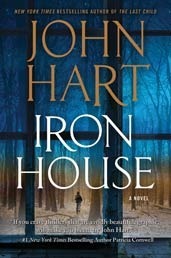 I discovered John Hart a few years back. I read his first book and loved it. I was even more pleased when I learned he had a second book out and I was able to dive right in. Then, as an added bonus, I learned his third, The Last Child, was soon to be released.
 Then I had to wait for number 4.
It was worth the wait.
Through each of his 4 books, Hart has progressed to what I would simply call a master storyteller.
In Iron House, Hart strays a bit beyond his comfort zone for the setting. Until now his books have been set exclusively in rural North Carolina with a strong preference for Rowan County and the Salisbury area – not surprising given that Hart calls the area home. However with Iron House, Hart takes a few steps away.
Iron House opens in New York City where Michael, our main character, awakes in the bed of his girlfriend, the exotic and terribly sexy Elena. I will admit, the opening catches you and doesn't let you go.
Iron House ostensibly tells the story of two boys, Michael and Julian, who were orphaned at a very young age. The boys end up filed away in a mental hospital turned orphanage called, Iron House. Iron House is not a happy place, in fact Hart paints it to be just a step or two better than hell in that on the rarest of occasions a child is adopted.
There's a murder and the boys are separated. Julian is adopted and Michael runs away.
Flash forward near 25 years.
Michael, taken under the wing of one of the largest crime bosses in New York, has become a top enforcer. Julian, adopted by the now United States Senator from North Carolina, has become a children's author, but is haunted by the ghosts of his past.
Michael is at a crossroads in his life. He wants out of the mob life. His girlfriend is pregnant and the crime boss is dying. However, the mob won't let him leave.
In an explosive New York City confrontation, Michael and Elena narrowly escape and head to North Carolina to make sure Michael's brother is safe.
With this as the setting Hart spins his tale.
Hart does a wonderful job combining both plot and character driven fiction. His flawed characters make for some extremely entertaining reading and his ability to command the story makes me as a writer plain envious. I believe that in Hart there has been discovered a new champion of Southern literature.
As I was reading the book I was nearing the point of resolution between several of the characters but was puzzled given the pace of the book at that point balanced against the number of remaining pages. In true form, Hart was not finished when the point of resolution was reached. He allowed a moment for composure then it was off to the races once again.
If you like mysteries blended with southern literary fiction you'll love Iron House. However, even if you don't you owe it to yourself to read this book.
There are a few points that I should mention. They're minor, but I believe it would be okay to have one or two characters that were without inner demons. After all, while I believe most people could benefit from therapy, not everyone needs it.
Overall it was worth the wait and I'm already looking forward to Hart's next.


July 14, 2011
Defending Jacob - William Landay - A Review
So I was in Mobile, Alabama recently for a brief business trip. During my visit, I wandered into the most delightful little bookstore on Dauphin Street.
The bookstore, Bienville Books, is just amazing. Lots of new and many used (many of these signed) were to be found on the two floors. The staff was over the top wonderfully helpful.
I found several books and after paying was told I could have an ARC (Advance Reader's Copy). There were many from which to chose, but after asking for a recommendation in the legal thriller genre, the owner handed me a copy of Defending Jacob by William Landay.
I didn't ask twice. I took it.
Homerun.
For reasons that escape and frustrate me, I'd not yet read anything by William Landay but that is now a thing of the past. (As an aside, I plan on reading his entire catalog and I'd suggest you do the same.)
Landay is a master storyteller with a gift for characters, pacing and dialogue.
Defending Jacob opens with a former senior assistant district attorney, Andy Barber, being examined before the grand jury.
We soon learn that in the sleepy bedroom community outside of Boston where professionals come to raise their families a heinous murder has taken place. A young boy was murdered. Murdered in the same neighborhood where Barber lives. The murdered boy was the same age and in the same class as Barber's son.
And it doesn't take long to learn that Barber's son, Jacob, has been arrested for the murder.
The plot builds towards Jacob's trial but Landay, as he moves us forward, fills in the past while working to bring the reader forward to the grand jury and the testimony being given by Barber.
Oh what surprises await us along the way.
The plot unfolds in the most pristine of fashions. As you turn each page you'll have to remind yourself to breath as you wait for the suspense that you find has embraced you to relax its hold so you can recover for the next chapter.
Driven by amazingly complex characters, great dialogue and a razor sharp plot that simply won't stop, my best counsel would be to run, not walk to the nearest bookstore and reserve your copy today.
I read and write legal thrillers and pride myself on being able to, if not solve the mystery, at least know where things are going. In Defending Jacob, I felt like an amateur sleuth trying to find the door to 221B Baker Street.
The book will literally have you guessing until the final page.
If you like classic courtroom dramas, this is the book for you. It is paced well and would make a great beach read or vacation book.
Mark your calendars for the February 2012 release.
So while you're here why not read a chapter from my book or even buy a copy of your own. A portion of all proceeds from the sale of The Trust will be donated to canine related charities.
The bookstore, Bienville Books, is just amazing. Lots of new and many used (many of these signed) were to be found on the two floors. The staff was over the top wonderfully helpful.
I found several books and after paying was told I could have an ARC (Advance Reader's Copy). There were many from which to chose, but after asking for a recommendation in the legal thriller genre, the owner handed me a copy of Defending Jacob by William Landay.
I didn't ask twice. I took it.
Homerun.
For reasons that escape and frustrate me, I'd not yet read anything by William Landay but that is now a thing of the past. (As an aside, I plan on reading his entire catalog and I'd suggest you do the same.)
Landay is a master storyteller with a gift for characters, pacing and dialogue.
Defending Jacob opens with a former senior assistant district attorney, Andy Barber, being examined before the grand jury.
We soon learn that in the sleepy bedroom community outside of Boston where professionals come to raise their families a heinous murder has taken place. A young boy was murdered. Murdered in the same neighborhood where Barber lives. The murdered boy was the same age and in the same class as Barber's son.
And it doesn't take long to learn that Barber's son, Jacob, has been arrested for the murder.
The plot builds towards Jacob's trial but Landay, as he moves us forward, fills in the past while working to bring the reader forward to the grand jury and the testimony being given by Barber.
Oh what surprises await us along the way.
The plot unfolds in the most pristine of fashions. As you turn each page you'll have to remind yourself to breath as you wait for the suspense that you find has embraced you to relax its hold so you can recover for the next chapter.
Driven by amazingly complex characters, great dialogue and a razor sharp plot that simply won't stop, my best counsel would be to run, not walk to the nearest bookstore and reserve your copy today.
I read and write legal thrillers and pride myself on being able to, if not solve the mystery, at least know where things are going. In Defending Jacob, I felt like an amateur sleuth trying to find the door to 221B Baker Street.
The book will literally have you guessing until the final page.
If you like classic courtroom dramas, this is the book for you. It is paced well and would make a great beach read or vacation book.
Mark your calendars for the February 2012 release.
So while you're here why not read a chapter from my book or even buy a copy of your own. A portion of all proceeds from the sale of The Trust will be donated to canine related charities.
July 6, 2011
Determination
 As of late I feel my blog entries have been akin to motivational posters, but I've found that, ironically enough, some of my past blogs, Inspiration and Perspective, have been some of my most popular, well except for that one on Sex.
To continue this theme, I'm going to write about determination.
I frequently describe writing as a football game of sorts, a special kind of football game.
You as the writer get to be the quarterback. In our game of football the writer/quarterback is also leading a really tight and seasoned offense. Isn't every writer a master of their craft making precision/machine like use of all the resources available to them?
In our football game we're going to say that is just the case. After all, it could be fantasy we're writing.
Of course there has to be a defense. Let's just say they're good, the best ever against the run and the pass. It's also been almost 25 games since they allowed a score of any kind.
Your team is on their own 30 yard line and has to score in under 2 minutes. A touchdown.
Not too bad, huh?
Oh, I forgot, in this special game the defense has 22 players instead of the normal 11. The crowd? Well, they're not too friendly. They're throwing things at you and just for fun it's raining.
See, a special game. Excuse me, I forgot to mention, everyone on your team is blindfolded.
So, all you have to do is score and your home free.
In publishing today for the new, unknown author, going from obscurity to being able to sustain yourself with your passion can be like scoring in the football game I describe above.
Not impossible, but certainly not the easiest thing you'll ever do. So if you're going to score, it will take determination and lots of it.
That simply is how it is with writing. If you're motivated and the least bit savvy, you can get your novel written and published. There are a variety of options available today that simply previously didn't exist in the past that ease the prospect of publishing beyond that of the traditional. No longer is the process of publishing the obstacle it once was.
However, getting the word out about your novel is another proposition entirely. Most successful independent authors approach things one sale at a time. Sure that's slow, but as long as you keep moving the ball forward, you will find yourself closer to the end zone with every book sale.
Therein is where the determination comes in.
The obstacles facing a writer, even a writer who has managed to publish a great book, can be overwhelming. For many it is enough to bring them to a grinding halt.
Understanding determination can be the most valuable tool you have in a situation like this. Determination means always asking what you can do to take a step forward and then another and another after that. Determination means being willing to make the wrong decision from time to time. It also means learning from your mistakes and only making the same mistake once.
Determination means not being crushed when you have your expectations raised to never before contemplated lofty heights only to unexpectedly fall back to the ground.
I know a writer who has a book out with a small publisher. The reviews are excellent and people are buying it, but he is still unknown and is having trouble breaking to a larger audience. His book has even won some awards.
He called me recently to say he had received an unsolicited email from a nationally televised morning show on a major cable network indicating an interest in his appearing on the show.
I thought I had lost him. He was understandably off the chart elated. I was happy for him.
The next day I received another call from him and in a matter of moments I realized I was talking to a different person. Turns out the show, while interested in his appearing, also wanted a "pre-production fee" of several thousand dollars. While I wanted to tell him that he should be quite careful of paying money to anyone in a situation like that as it reeked of a scam, I refrained not wanting to worsen things.
Turns out he was mostly mad at himself at getting so excited before learning all of the facts. Turns out he was well aware that there are a lot of wolves in sheep's clothing. Particularly when it comes to people looking to exploit writers – seems we've been an easy mark in the past.
Never the less my friend emerged even more determined to make his book a success. His approach has been that if came to the attention of one person then if he continues he will likely come to the attention of another and another.
The goal is to constantly evaluate where you are in the process and always look to move yourself one step forward. This may mean one more sale or it may mean one more novel published. It may also mean one more rejection.
Set goals and work towards them. Don't be afraid to adjust them either – and by adjust I mean up or down. Be realistic, but move forward.
Be determined. If you keep wanting something hard enough, long enough, perhaps karma will shine on you and reward your efforts. Either that or people will realize that you actually have a really great book and will flock to you get a copy of their very own.
So while you're here why not read a chapter from my book or even buy a copy of your own. A portion of all proceeds from the sale of The Trust will be donated to canine related charities.
This is your new blog post. Click here and start typing, or drag in elements from the top bar.
July 3, 2011
Inspiration
 It wasn't there, then it is - as simple as that. In a single moment inspiration can hit, changing the course of your moment, minute or day.
 Sometimes you find it in the oddest of places.
When I began working on The Trust I was flying home and started typing at 20,000 feet. To this day I can't remember where I had traveled, but I remember as I looked out over a blanket of clouds it was, at that moment, time to start writing. That was inspiration enough for me, though I had been waiting for that delivery for the better part of a decade.
One year during the holiday season I was traveling the back roads of Virginia searching for a Christmas tree. I visited farm after farm without success. While I knew I would find the right one, I knew patience was the rule of the day.
Earlier during the day I'd made a conscious decision to turn off the writer in me to focus on the Christmas tree quest. However, as I was traveling the Virginia countryside, quite by chance, I noticed the name of a particular road.
The name inspired a character and a plot line in a matter of moments. There ended my Christmas tree quest and set me quickly on the path home. (Fortunately for all concerned my trip home took me by the most wonderful Christmas tree farm so I returned home not only inspired, but with tree in hand.)
The point of this is that inspiration can and does strike when you least expect it. You have to be ready for it. However perhaps the better question is, "How do you create inspiration to avoid the wait?"
Simple. Learn what inspires you and do it.
I have a friend that is both a talented guitarist and photographer. We frequently go out with cameras in hand having picked a location or an event and spend the morning taking photographs. When we go over our work, it's amazingly motivating and inspiring to see the perspective another lens had on what I just photographed.
He would tell you we also get together from time to time to play guitar. I would describe it a bit differently. As proficient as I am on the guitar, my friend runs circles (or should I say "runs scales") around me. So our time "playing" is spent mostly with me asking, "How did you do that?" Followed by his very patient efforts to show me.
Check out some of James Slater's music at JamieSlaterOnline.
For reasons that I really don't grasp, when I see and hear another's creativity (like James Slater), I'm inspired myself to be creative.
Something about seeing the creative product of others makes me want to do the same. Whether it is a photograph, a live performance, the written word or even something esoteric. For me, creativity inspires creativity.
The second thing that inspires me is when others respond to my writing.
I'm keenly aware that in a time of immeasurable demands from friends, family, work and the like, that everyone's time is a precious commodity. For people to take their time to read not only a book, but my book (and then to actually follow up by posting a review or mentioning my book) is humbling beyond words.
Recently out of the blue a friend took the time to post about my book on her blog. She didn't have to take the time to do this, but she did. Check her blog out here.
When I see this, I'm inspired to create more.
That is, at least as I see it, the essence of inspiration. Sure, it will strike at the most unexpected of times, but you may not be ready when it does. You may even miss it. So learn how to create or even just find inspiration without leaving it to chance.
This is the perfect time of year to kick start your inspiration. We're halfway through the year. You should have a handle on whether the New Year's resolutions are even still on the table. We also have Independence Day just around the corner. If you are wondering what to do for the 4th, fire up the grill and check out my recipe for Pulled Pork BBQ, Macaroni & Cheese or another tasty treat on A Taste of The Trust.
However, if you're in need of inspiration, take a moment and reflect on the date of our Independence, the date of our Nation's birth and founding. Regardless of what you think, or don't think, about the current state of affairs, you get to think it and write about it with a freedom that has alone served as the inspiration for many who have come before. Use that and get to writing!
Best wishes for a great holiday!
This is your new blog post. Click here and start typing, or drag in elements from the top bar.
June 28, 2011
An Interview with dk LeVick - Author of Bridges - A Tale of Niagara
 1 – From your website bio it's easy to see how you were drawn to write about the Falls and the Niagara area. One of the more interesting places in the book is "Ol'Gordy's." Is this an actual place and if it is how does it compare to the "Ol'Gordy's in
Bridges
? If not, how did you come up with this idea?
1 – From your website bio it's easy to see how you were drawn to write about the Falls and the Niagara area. One of the more interesting places in the book is "Ol'Gordy's." Is this an actual place and if it is how does it compare to the "Ol'Gordy's in
Bridges
? If not, how did you come up with this idea?dk - While there are a number of shops and businesses in Niagara with pictures of Niagara Falls, and some from the old days, Ol'Gordy's was a fabrication of life as I recall it in 1962. It's actually a combination of a corner deli called "Wally's Market" that was in Riverside, Buffalo and what I think it should have been if I owned it in Niagara Falls.
2 – The descriptions of the places and the locales in Bridges were quite effective in transporting the readers to the Niagara of the early 1960's. One particular setting that struck me was the secret passage down to the Falls and the "Wall of Ice" the boys found there. Does such a passage exist and, if it does, have you ever ventured down to the "Wall of Ice?" Is there really a demon?
dk - The power station and its collapse in 1956 were real enough. I was going to include a story within the novel about it but it got left on the cutting floor. As far as the tunnel passage down the side of the gorge from there – that was all fiction, so no there was no secret way down and no ice wall.
I've been asked a lot about the 'ice demon' and what exactly that was. I've addressed the "ice demon" on my website and readers can learn more details about this here.
3 – The personalities of the boys are all quite authentic. Are these based upon real people and did any of them have similar adventures at the Falls?
dk - I grew up in a diverse, mixed part of Buffalo, so it was natural for me to write about the diversity of the boys. Also, I wanted to tie the themes of the historical stories into the main characters and so I included their nationalities and backgrounds.
For example, I love the paradox of Lennie and Kevin standing looking at the railroad bridge not knowing that it was their ancestors, working together, a hundred years earlier that allowed Lennie his freedom – only the reader knows.
I'm not aware of anyone from my youth having any involvement with the Gorge. I didn't know there was such a thing as the Gorge. Never seen it until I was in my 20's. I grew up on the Upper Niagara, above the Falls, and never gave the lower river a thought. I went there once with an old fisherman to catch 'Blue Pike' but it was at night and I was 13 so it might as well been in Africa. The Falls itself was something I only feared as we tubed and swam in the river above it. We didn't want to go over that 'ya know'.
4 – The flashbacks were captivating. Through their placement the reader gains an understanding of the area and the lore around Niagara that would have otherwise been difficult to work into the story of Bridges . How did you decide on the precise flashbacks in the book? Were there others that didn't make the cut?
dk - Niagara is steeped in history and lore. People only think of the Falls themselves when they think of Niagara. I wanted to show people some of the history of Niagara. The events are true – the characters and stories came from my pen. There are so many more stories I wanted to write about but I thought four was enough. Anymore and it would have taken too much away from the central story. I also wanted to tie in some of the threads of the historical stories with the main story and these were appropriate. One I wrote but cut out was about the power plant collapsing, as I mentioned. Also one about the Honeymoon bridge collapsing. I was going to write one about Maria who was the only woman to ever walk across the gorge. But that's a story into itself.
5 – Of the historical flashbacks, which is your favorite and why?
dk - I don't have a favorite, couldn't do that. That would be like picking which son is my favorite. I love each one for different reasons. Each is separate and stands on its own and I tried to bring each one alive for the era in which it occurred. Lizzie and the Drummer boy and Francis and Henry are all my friends and family.
6 – What was the most challenging part of researching and writing Bridges ?
dk - The hardest part is and 'is' and not a 'was'. Not being satisfied with what's finished. I never am. To this day I can't read any piece of it without grabbing a pencil and making changes. I don't know if it's a blessing or a curse – but it sure makes me unhappy.
The hardest parts to write about were the historical inserts. After some failed attempts, I realized I had to write each one totally separate and then bundle everything together. With those inserts, the novel covers 230 years of history with varying nationalities, dialects and races included. Each one required separate research and background development. I had to keep each one separate and real. Turned out to be a lot more difficult than I had anticipated.
Lots of research went into the novel. I'm physically very aware of the Falls and the Gorge, but the stories I wasn't. People there don't know their own history as much as we'd like to think we do. But there is a large contingent of 'history nuts' who know a great deal of Niagara history, so I took a lot of time to research the events surrounding the stories to make them as historically accurate as I could. In fact most of the 'editing' and revising I did to get the novel down from over 100000 words to just over 80000 was cutting out detail.
7 – How long did it take you to complete Bridges ?
dk - Not long, somewhere between 2 and 38 years.
In September 2008, I had cause to go through some old papers and I came across a short story I had written 36 years earlier. It was 12 typewritten, yellowed pages and was about an old picture of the ice bridge of Niagara Falls I had seen then. Reading it on the floor I grabbed a pencil and immediately started rewriting it. One year to the month and 350 pages later "Bridges" was written.
One year and 22 rewrites after that, "Bridges – a Tale of Niagara" was done. So, I guess you could say it took somewhere between 2 and 38 years. (let you in on a secret: read my blog here and see if you can't put my answer to this question together with the blog?!)
8 – Excellent answer, now, as you are aware, taking a novel from conceptualization to reality can be a long and frustrating journey. What advice would you offer for those writers who are just starting out?
dk - Everyone has their own system and way of writing. Whatever that system is, stay true to the writing and to yourself. Believe in yourself and allow the pen to work. Don't force it and don't stick to preconceived plots. Let the creative energy that's inside you work. It will if you let it and it'll always be better by it.
Then polish, polish, polish. For me it never ends. If I pick it up now and read it I start penciling in changes. I can't rest unless each word is right.
9 – Going back to "Ol'Gordy's" for a moment. Are there any local icon type establishments in the Niagara area where one may stumble upon a picture of you on the wall? If so, is there a story behind the photo?
dk - No one's ever asked anything like that, but since you did, there's pictures hanging inside the 'Barton' house. Yes it's still there today. Another secret: You see I once owned it, but that's another story.
10 – After reading Bridges one can only wonder if you have ever been out on an ice bridge and if you have, what was it like? Any photos you'd like to share?
dk - I'll leave that answer for the reader to decide. How do they say it "I plead the fifth, so as not to incriminate myself"?
11 – Finally, what's next for you as a writer?
dk - Absolutely! I've written some short stories recently that I'm preparing for publication soon and I'm working on my next novel. I'm fortunate and blessed that my 'flame' didn't go out over the years and was able to be turned up, so as long as there's breath in my body, words in my mind and feelings in my heart, I'll find the means to write and hopefully, someone will want to read it.
For more information on the author, visit his website here. For a review of Bridges – A Tale of Niagara go here.
June 24, 2011
Book Signing Events – Did you Bring the Bricks?
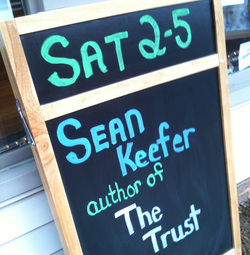 "Okay, we have everything?"
"Books, business cards, bookmarks, stand, poster, yes, it all seems to be here."
"Did you get the bricks?"
"Damn it, we forgot the bricks."
Getting ready for a book signing is a exercise in planning and organization – plain and simple. Oh, and plan on nothing going the way you plan or organize.
However if you do plan you can at least minimize the chaos that will surely be trying to run you down.
I've developed an approach I use to get ready for the book signing events that I've found works well to make sure things run as smoothly as possible. I thought I'd share it and, please, comment or email and let me know if I've overlooked anything or if there are things that help your events run more smoothly.
The first thing I do for events is to maintain a pre-packed set up ready to go. This includes copies of my books that I monitor and restock to ensure ample copies on hand for future events.
I make sure I have an adequate stock of all of my promotional materials. I keep refills of pens for signing and I also keep a change for payments.
As to payments, make sure to take credit cards. One of the neatest things I have found is an app for the iPhone called SquareUp. The app lets you process credit cards on your iPhone.
I also have other assorted things in my brief case – assorted office supplies, paper, post it notes, calculator, scissors, and the like. Basically if I am at a signing event and need something that I don't have then I get it after the signing and put it in the permanent kit.
I keep all of this organized in one area of my home office so it's ready to go and I can avoid last minute, "Where is the darn widget?" moments. As well you never know when you may need to do an emergency signing.
Now you've got your stuff ready to go. What's the next step?
What follows assumes you've already booked a signing. It's a timeline of sorts to ease with planning and make your event all that much more enjoyable.
When you're about 3-4 weeks out from the event, follow up with the venue and find out what set up they will offer. Make sure to discuss your specific needs – table, chairs, etc. You don't want to be signing books sitting on the floor!
If you'll be doing a reading find out if they'll video it or if you need to arrange to do it. Don't speak unless you record it for use on your website. Talk through the logistics. This shouldn't take long, but do it in advance to avoid last minute problems.
About this same time start marketing. Market, market, market. I find it helps with events if you have a core group of people who will show up when you do your events as it will let the event host see that you have support which will cause word of mouth to kick in and will help with getting booked again. Make extensive use of social media.
About a week out confirm once again with the host and make sure that the times are firm and a meeting place is established. Make sure the event host has a handle on everything from their end.
The day before, check all of your material and supplies to make sure you have everything you need.
On the day of the event, pack early. Leave early and plan to arrive early. If you are driving, don't speed. Nothing will ruin a book event like a speeding ticket.
One of the most crucial elements I have at my book signing events is an email sign up list. Even if people don't buy your book, get their email and put them on your mailing list (You do have a mailing list, right?)
I also find it really helpful to have an assistant or someone else to help out. If you are busy talking to a person then the second person can answer questions and then introduce you to the new folks. Sometimes I take one of my dogs to events (Check with the venue in advance) people love dogs and my dog loves them. Helps to get people talking and if readers start talking they want to buy and read your book.
Set up smile and sell some books!
Oh yes, the bricks. When I do signings I have a tripod stand where I display an enlarged cover of my book with Microsoft tags for more information, jpegs of awards and a photo of myself. If the signing is outdoors the tripod and display tend to want to blow away in the wind. The bricks are to anchor the stand do I don't look like I am running away from potential readers.
While you're here, if you would like to read an excerpt from my book do that here. You can also buy your own copy – they are available through the website with free shipping. A portion of all proceeds will be donated to canine charities.
June 20, 2011
Take Half a Step Back
My book, The Trust, has been out for about 5 months. I'm not giving up my day job anytime soon, but I've been overwhelmed and humbled by the support and reception the book has received.
Especially when you consider the fact that I am a first time, unknown writer such as myself.
However several interesting things have happened I never expected. I was completely taken off guard at the new things I began to notice that before I never even knew existed. (Of course this makes me wonder what else I am missing).
Amazon sales rank for instance. As any writer is likely aware Amazon and other online retailers track sales numbers for books that are sold through their respective sites.
Amazon goes so far as to regularly update their ranking numbers giving authors the ability numerous times through the day to see what their books are doing (of not doing) as to sales.
This has also created a plethora of individual lists for rankings. This has also created an addiction of sorts for some new authors, or so I've been told.
In the past the one major list people looked towards for "best seller" information was the New York Times Best Seller List. Period.
Today things are decidedly different with some of the online retailers offering a seemingly ever-increasing number of "best seller" lists.
In the past we had a fiction best seller list and a non-fiction best seller list.
Today while those two lists still exists, is seems like every week new lists are added as the existing lists are broken down in to growing list of categories.
However, this creates an interesting reality. Much like a search one would do on Google™, the more the search is refined the fewer results you get. In the realm of best sellers, the more you focus the list, the fewer books you have that make up the sub-genre.
In the past if you had two novels, one about a young woman involved in a coming of age story with vampires and another about a retired watchmaker searching for the perfect left-handed coffee cup, you'd have two works of fiction massed together with all of the other books on a single best seller list.
However, today with multiple sub-categories present, while the coming of age tale may be in the top 10 on virtually any all encompassing list from the New York Times Best Seller list on down, there may be one or two lists where the coffee cup seeker's tale is #1. However, when was the last time you looked at the best seller list "Fiction-ebook-mystery-thriller-coffee related books-left-handed protagonist?"
Probably not too recently.
I've found myself in this trap and have worked to stay away from the fray. I find I generally feel better when I avoid the temptation to check my Amazon too often.
In large part, I've tried to avoid the sales rank obsession. Sure, I want my book to do well and I, like the majority of independent and small press authors, am working incredibly hard to ensure the success of my book, but Amazon sales rank is not the be all end all in the success equation.
Focus on small quantifiable steps. Every sale counts and if you go out and make the sale happen yourself, you stand a much better chance of having the reader you connected with go out and tell someone else about your book.
If you have a couple of events in a week and sell 50 books your Amazon numbers may drop significantly, but it was an incredible week for you as an author. Bases loaded home runs are amazing to watch but small ball will win games too.
Look at Amazon sales numbers from time to time, but remember that those sales numbers don't take into account the good will you are building by getting out and selling your book. Take half a step back and realize the success you are enjoying.
So while you're here why not read a chapter from my book or even buy a copy of your own. A portion of all proceeds from the sale of The Trust will be donated to canine related charities. I promise I won't check my Amazon sales numbers until tomorrow!
Especially when you consider the fact that I am a first time, unknown writer such as myself.
However several interesting things have happened I never expected. I was completely taken off guard at the new things I began to notice that before I never even knew existed. (Of course this makes me wonder what else I am missing).
Amazon sales rank for instance. As any writer is likely aware Amazon and other online retailers track sales numbers for books that are sold through their respective sites.
Amazon goes so far as to regularly update their ranking numbers giving authors the ability numerous times through the day to see what their books are doing (of not doing) as to sales.
This has also created a plethora of individual lists for rankings. This has also created an addiction of sorts for some new authors, or so I've been told.
In the past the one major list people looked towards for "best seller" information was the New York Times Best Seller List. Period.
Today things are decidedly different with some of the online retailers offering a seemingly ever-increasing number of "best seller" lists.
In the past we had a fiction best seller list and a non-fiction best seller list.
Today while those two lists still exists, is seems like every week new lists are added as the existing lists are broken down in to growing list of categories.
However, this creates an interesting reality. Much like a search one would do on Google™, the more the search is refined the fewer results you get. In the realm of best sellers, the more you focus the list, the fewer books you have that make up the sub-genre.
In the past if you had two novels, one about a young woman involved in a coming of age story with vampires and another about a retired watchmaker searching for the perfect left-handed coffee cup, you'd have two works of fiction massed together with all of the other books on a single best seller list.
However, today with multiple sub-categories present, while the coming of age tale may be in the top 10 on virtually any all encompassing list from the New York Times Best Seller list on down, there may be one or two lists where the coffee cup seeker's tale is #1. However, when was the last time you looked at the best seller list "Fiction-ebook-mystery-thriller-coffee related books-left-handed protagonist?"
Probably not too recently.
I've found myself in this trap and have worked to stay away from the fray. I find I generally feel better when I avoid the temptation to check my Amazon too often.
In large part, I've tried to avoid the sales rank obsession. Sure, I want my book to do well and I, like the majority of independent and small press authors, am working incredibly hard to ensure the success of my book, but Amazon sales rank is not the be all end all in the success equation.
Focus on small quantifiable steps. Every sale counts and if you go out and make the sale happen yourself, you stand a much better chance of having the reader you connected with go out and tell someone else about your book.
If you have a couple of events in a week and sell 50 books your Amazon numbers may drop significantly, but it was an incredible week for you as an author. Bases loaded home runs are amazing to watch but small ball will win games too.
Look at Amazon sales numbers from time to time, but remember that those sales numbers don't take into account the good will you are building by getting out and selling your book. Take half a step back and realize the success you are enjoying.
So while you're here why not read a chapter from my book or even buy a copy of your own. A portion of all proceeds from the sale of The Trust will be donated to canine related charities. I promise I won't check my Amazon sales numbers until tomorrow!
June 19, 2011
Review - Bridges - A Tale of Niagara
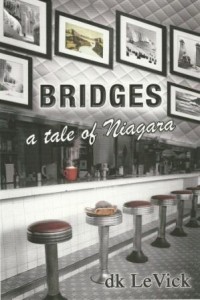 Niagara Falls evokes similar images for virtually any who consider this natural wonder and the surrounding area. Water flowing over the two falls, the Maid of the Mist, and yes, honeymoons, all likely come to mind.
But it shouldn't surprise anyone to learn there is oh so much more to Niagara.
With this in mind, dk LeVick opens the door to the history and lore of all that is Niagara.
The tale opens as a firefighter slowly makes his way towards the falls to render aide during a natural phenomenon that occurs at the Falls. From time to time the river below the falls freezes forming a natural "ice bridge" that allows the brave, or foolish, to walk out literally to the base of the falls. The firefighter is investigating reports of people on the ice when,….
It turns out several young boys, all residents of the area embarked on a winter adventure below the falls.
The members of this rag tag crew decided the best way to make their mark and to preserve their place in Niagara's history is to accomplish a feat worthy of a spot on the wall of fame at the local café where the history of Niagara is told through photographs.
What better way to get their photo on the wall than by venturing out onto a rare ice bridge and capturing the moment on film? A quick trip down for one picture and the boys place in history is ensured.
If only reality was as simple as conceived by the adolescent mind.
Set in the early 1960's, Levick uses the boy's adventures to escort the reader on a trip through Niagara's fascinating history by using a series of flashbacks to paint the picture of the Falls' colorful and amazing past.
Those who have traveled to the Falls will recall seeing a small island that divides the American and Canadian Falls. The island, Goat Island it is called, has a history all its own centered around a reclusive soul who once called the island home. Thus the reader learns about the Hermit of Goat Island.
Another flash back touches on the history of the honeymoon or "honey-lunacy" the tradition was first called. In 1848, two couples travel to Niagara to celebrate their respective marriages. During their stay the falls runs dry leading to a chain of events that one would have never expected.
Bridges is full of unexpected flashbacks such as these making the book so much more than a tale of the less than well developed plan of a group of boys.
However, the major theme of the book is that of the bridge. Through the book, bridges become the touchstone for literally every major event.
LeVick gets a lot into the book. Given the time period and his unique way of revisiting the past, he is able to deal with a number of themes that would otherwise be difficult to tackle. Racism, slavery, coming of age, parent/child relationships and the general and life's ever-present balance of right and wrong are all woven together in surprisingly effective fashion.
I'm often skeptical when I see an author tackle too many lofty themes and I will say that I was initially a touch confused when the story was broken up with the first flashback after what I would describe as a very compelling start. However, the rhythm and pace of the story is quickly established and the fabric of the story is woven together in a way that ties the past together with the present making the flashbacks a pleasant twist.
LeVick has a gift for dialogue, particularly with the boys who are the central characters. Even though he is dealing with adolescents, he does a very effective job of capturing the personalities of his characters as they grow through the story. His dialogue also shines in capturing nuances in the language and speech patterns covering more than 150 years of cultural change.
Perhaps the most enjoyable part of the story is how LeVick leaves a trail of literary breadcrumbs through the novel that he assembles at the end of the tale leaving the reader quite satisfied and, at least for this reviewer, quite impressed.
Bridges is an easy and enjoyable read that I would recommend for someone looking for an interesting and engaging tale. In particular fans of historical fiction will find this book interesting as so much of the less known past of Niagara is told throughout the book's story.
Tour Notes: Please vote for my blog in the traffic-breaker poll for this tour. The blogger with the most votes wins a free promotional twitterview and a special winner's badge. I want that to be me! You can vote in the poll by visiting the official Bridges blog tour page and scrolling all the way to the bottom. You can win a free paperback copy of Bridges: A Tale of Niagara by entering your name and email address on its official blog tour page. The winner of the give-away will be announced on Wednesday, June 29 – be sure to enter before then! Learn more about this author by visiting his website, blog, Facebook or GoodReads pages or by connecting with him on Twitter.
June 15, 2011
Making a First Impression
In a nod to Forrest, Forrest Gump, "Momma said you never get a second chance to make a first impression."
Words more true have never been spoken.
Particularly if you're a writer.
As a writer, it's all about grabbing a reader's attention and getting them serious about another look.
Think about it for a moment.
Say you want to get an agent's attention. What do you need? An amazingly effective query letter. It doesn't matter if your manuscript is out of this world, you have to quickly grab the agent's attention and keep it.
Say you want to get the reader to move past the first page. Your first line has to be enough to get them to the second line, then to the next then to the end of the page and beyond.
Keep in mind readers have any number of things they could be doing other than reading your book. In fact, before a reader even gets to the first page, they have to get the book in their hands.
Here the first impression is of paramount importance.
How does your book make a first impression? Either have a well-funded ad campaign behind it or have a great cover (though both really helps). Since most of us don't have huge ad budgets, we get to go with the cover approach.
You need a cover that sets your book apart and makes it really stand out.
Take a look at the cover. Something about this just makes you want to read the book.
Check this one out. How could you not want to read that book?
Then there's this one. Personally, one of my favorites.
Now, I will say that not every great book has a great cover. One of my favorite books, A Confederacy of Dunces, has an interesting cover, but it, in my humble opinion, the cover doesn't really make you rush right over and want to dive in. It more so makes you stop, wander over and wonder what the book possibly could be about. If your wondering, check out the review here.
So what do you need for a good cover?
1 – Go Professional
If you have a publisher, follow their lead. Your publisher knows what sells and what works. They will be motivated to have your book grab attention and fly off the shelf. They want that first impression to be a reaction that makes the reader reach for their wallet. If your publisher suggests a cover, give it really careful attention.
So you don't have a publisher? Spend some money to have a professional with a tight portfolio design your cover. There are loads of firms online that provide the service at all price points, so shop around. One firm you might want to check out is Novel Publicity. (I don't own the company or even get a kickback, but they are great people who do good work.) The point here is money spent to put a great cover on your book will always be an excellent investment.
It's your book, but remember you're a writer not a design professional. (Unless you happen to be a design professional who is also a writer.) Get a pro involved.
2 – Keep it Simple
The one thing I like about effective book covers is that they aren't too busy. They pick a theme and convey it in a straightforward fashion. If a cover is too busy you run the risk of having the reader move on to the next and more appealing cover.
If a reader is browsing the bookstore shelves they may spend perhaps 2 seconds on a particular cover.
So you have 2 seconds to grab their attention. The previous paragraph is less 20 words and it likely took you longer than 2 seconds to read it. You have to grab and keep a reader's attention.
Short and simple. Powerful and effective. Those are the covers that scream, "READ THIS BOOK!" Of course, without literally saying that.
3 – Color or Black and White
Ah, there's the rub. As with many things in the writer's realm, there is no simple answer. Think mood. What are you trying to convey? You may not want to have a black and white cover for a tale of hope and wonder, but for a edgy tale black and white may be just the thing. Check this one out.
The same is true for graphics or a photograph. It depends on the mood you are trying to convey and what you are wanting to get across to the reader. My book, The Trust, has a photograph on the cover, but the photo yields to the theme and feel of the book.
4 – Options and more Options
Before you decide on a final cover for your book, work through several options. Get input from other readers, from friends and even those off of the street. A second opinion is always important and a third and fourth are even better. Particularly when it deals with the face you're putting forward on your book.
That all being said, there are no hard fast rules for covers. Perhaps the one rule that covers all situations is, "Don't have a bad cover." Another good catchall rule is, "When in doubt, less is more." There is nothing wrong with a simple design. No one can complain about a text only publisher.
At the end of the day the cover of the book is the face the world will see. Make sure it is one everyone wants to look at again and again. As long as it is effective then the cover is right for you!
So while you're here why not read a chapter from my book or even buy a copy of your own. Feel free to leave a comment, even if it is about my cover. A portion of all proceeds from the sale of The Trust will be donated to canine related charities.
Words more true have never been spoken.
Particularly if you're a writer.
As a writer, it's all about grabbing a reader's attention and getting them serious about another look.
Think about it for a moment.
Say you want to get an agent's attention. What do you need? An amazingly effective query letter. It doesn't matter if your manuscript is out of this world, you have to quickly grab the agent's attention and keep it.
Say you want to get the reader to move past the first page. Your first line has to be enough to get them to the second line, then to the next then to the end of the page and beyond.
Keep in mind readers have any number of things they could be doing other than reading your book. In fact, before a reader even gets to the first page, they have to get the book in their hands.
Here the first impression is of paramount importance.
How does your book make a first impression? Either have a well-funded ad campaign behind it or have a great cover (though both really helps). Since most of us don't have huge ad budgets, we get to go with the cover approach.
You need a cover that sets your book apart and makes it really stand out.
Take a look at the cover. Something about this just makes you want to read the book.
Check this one out. How could you not want to read that book?
Then there's this one. Personally, one of my favorites.
Now, I will say that not every great book has a great cover. One of my favorite books, A Confederacy of Dunces, has an interesting cover, but it, in my humble opinion, the cover doesn't really make you rush right over and want to dive in. It more so makes you stop, wander over and wonder what the book possibly could be about. If your wondering, check out the review here.
So what do you need for a good cover?
1 – Go Professional
If you have a publisher, follow their lead. Your publisher knows what sells and what works. They will be motivated to have your book grab attention and fly off the shelf. They want that first impression to be a reaction that makes the reader reach for their wallet. If your publisher suggests a cover, give it really careful attention.
So you don't have a publisher? Spend some money to have a professional with a tight portfolio design your cover. There are loads of firms online that provide the service at all price points, so shop around. One firm you might want to check out is Novel Publicity. (I don't own the company or even get a kickback, but they are great people who do good work.) The point here is money spent to put a great cover on your book will always be an excellent investment.
It's your book, but remember you're a writer not a design professional. (Unless you happen to be a design professional who is also a writer.) Get a pro involved.
2 – Keep it Simple
The one thing I like about effective book covers is that they aren't too busy. They pick a theme and convey it in a straightforward fashion. If a cover is too busy you run the risk of having the reader move on to the next and more appealing cover.
If a reader is browsing the bookstore shelves they may spend perhaps 2 seconds on a particular cover.
So you have 2 seconds to grab their attention. The previous paragraph is less 20 words and it likely took you longer than 2 seconds to read it. You have to grab and keep a reader's attention.
Short and simple. Powerful and effective. Those are the covers that scream, "READ THIS BOOK!" Of course, without literally saying that.
3 – Color or Black and White
Ah, there's the rub. As with many things in the writer's realm, there is no simple answer. Think mood. What are you trying to convey? You may not want to have a black and white cover for a tale of hope and wonder, but for a edgy tale black and white may be just the thing. Check this one out.
The same is true for graphics or a photograph. It depends on the mood you are trying to convey and what you are wanting to get across to the reader. My book, The Trust, has a photograph on the cover, but the photo yields to the theme and feel of the book.
4 – Options and more Options
Before you decide on a final cover for your book, work through several options. Get input from other readers, from friends and even those off of the street. A second opinion is always important and a third and fourth are even better. Particularly when it deals with the face you're putting forward on your book.
That all being said, there are no hard fast rules for covers. Perhaps the one rule that covers all situations is, "Don't have a bad cover." Another good catchall rule is, "When in doubt, less is more." There is nothing wrong with a simple design. No one can complain about a text only publisher.
At the end of the day the cover of the book is the face the world will see. Make sure it is one everyone wants to look at again and again. As long as it is effective then the cover is right for you!
So while you're here why not read a chapter from my book or even buy a copy of your own. Feel free to leave a comment, even if it is about my cover. A portion of all proceeds from the sale of The Trust will be donated to canine related charities.
June 12, 2011
Review - A Confederacy of Dunces by John Kennedy Toole
I thought it time to review a classic. A Confederacy of Dunces.
The late John Kennedy Toole wrote Confederacy and no review could be complete without an understanding of Toole.
Toole was born in New Orleans where he started writing at an early age. His first novel was completed when he was but 16. Toole became a college professor though he wrote Confederacy while in the Army. Once completed, he undertook the task we all know as publishing; however, Confederacy was universally rejected. Suffering from depression in part from his perceived failure as a writer, Toole took his own life at the age of 31. With his death came the end of one of the most unique voices in American literature. Ever.
More than a decade after his death, through the tireless efforts of his mother and with the assistance of novelist Walter Percy, Confederacy was published in 1980. It went on to be receive a Pulitzer. Not bad for a book that was called "pointless" by one editor.
Today Confederacy is recognized as a mainstay of Southern Literature.
At the heart of Confederacy is Ignatius J. Reilly, a flamboyant, vile, larger than life anti-hero. In fact if told the main character was a 30 something overweight, grotesque, flatulent, self-indulgent slob, it's no surprise that an editor might pass on the book. However, to pass on this book is to pass on virtual perfection.
In short summary, Ignatius is frustrated by the hand in life he has been dealt. No one understands his genius. No one understands his plight. No one is his equal. He struggles everyday to bring some semblance order to his world, to unite those around him in the common goal of realism and intellect – his intellect.
Oh the ride on which he takes us.
Ignatius abhors all that is modern culture. He despises Greyhound. He attends the movies only to mock them. He feels the world lacks order and "geometry." He finds solace in the medieval philosophers, Boethius in particular. However, this is balanced against his love for all of the modern conveniences of the world. (If Ignatius lived today he would curse social media, technology and progress all the while Tweeting about it to the masses.)
Ignatius feels he does not belong in this world and that a higher power, Fortuna and her evil wheel of fate, guide his destiny and that all he can do is hold on and bear witness.
As complex as is the plot, it begins in the most simple of fashions.
Dressed in a green hunting cap complete with earflaps, large tweed trousers, flannel shirt and muffler, Ignatius awaits his mother's return from shopping in downtown New Orleans. While waiting Ignatius and his garb attract the attention of a patrolman who decides to haul him in as a "suspicious character." Though Ignatius avoids a trip to jail, while driving them home, his mother crashes their car into a building. Not having the money to pay for the damage, Ignatius must go to work to help pay the debt. From here we are off to the races, or for Ignatius, off to the hot dog cart by way of the textile factory.
Pair with Ignatius a burnt out manufacturing executive, a scheming female burlesque club owner, an African-American porter, a downtrodden police officer, a crew of French Quarter dandies, a juvenile delinquent, a moronic night club dancer and a cast of other characters and the fun is non-stop.
Toole is from New Orleans and his knowledge of the city with all of its subtleties is the true strength of Confederacy. He has a command of the dialogue and undoubtedly was intimately acquainted with each and every character in Confederacy.
The prose is lyrical as the tale unfolds.
The dialogue at times will have you pause to put the book down. You'll be laughing so hard you won't be able to focus on the words. At other times the plot will make you stop in an effort to understand how Toole was able to accomplish what you just read.
For fans of southern literature, read Confederacy. For those who have yet to discover the magic, read Confederacy. For those of you who are reading this review having read Confederacy, read Confederacy again.
We have heard a lot about New Orleans today and perhaps we have lost perspective on what the city once was. Confederacy will always preserve the city in a way that everyone should love to remember.
So while you're here why not read a chapter from my book or even buy a copy of your own. A portion of all proceeds from the sale of The Trust will be donated to canine related charities.
The late John Kennedy Toole wrote Confederacy and no review could be complete without an understanding of Toole.
Toole was born in New Orleans where he started writing at an early age. His first novel was completed when he was but 16. Toole became a college professor though he wrote Confederacy while in the Army. Once completed, he undertook the task we all know as publishing; however, Confederacy was universally rejected. Suffering from depression in part from his perceived failure as a writer, Toole took his own life at the age of 31. With his death came the end of one of the most unique voices in American literature. Ever.
More than a decade after his death, through the tireless efforts of his mother and with the assistance of novelist Walter Percy, Confederacy was published in 1980. It went on to be receive a Pulitzer. Not bad for a book that was called "pointless" by one editor.
Today Confederacy is recognized as a mainstay of Southern Literature.
At the heart of Confederacy is Ignatius J. Reilly, a flamboyant, vile, larger than life anti-hero. In fact if told the main character was a 30 something overweight, grotesque, flatulent, self-indulgent slob, it's no surprise that an editor might pass on the book. However, to pass on this book is to pass on virtual perfection.
In short summary, Ignatius is frustrated by the hand in life he has been dealt. No one understands his genius. No one understands his plight. No one is his equal. He struggles everyday to bring some semblance order to his world, to unite those around him in the common goal of realism and intellect – his intellect.
Oh the ride on which he takes us.
Ignatius abhors all that is modern culture. He despises Greyhound. He attends the movies only to mock them. He feels the world lacks order and "geometry." He finds solace in the medieval philosophers, Boethius in particular. However, this is balanced against his love for all of the modern conveniences of the world. (If Ignatius lived today he would curse social media, technology and progress all the while Tweeting about it to the masses.)
Ignatius feels he does not belong in this world and that a higher power, Fortuna and her evil wheel of fate, guide his destiny and that all he can do is hold on and bear witness.
As complex as is the plot, it begins in the most simple of fashions.
Dressed in a green hunting cap complete with earflaps, large tweed trousers, flannel shirt and muffler, Ignatius awaits his mother's return from shopping in downtown New Orleans. While waiting Ignatius and his garb attract the attention of a patrolman who decides to haul him in as a "suspicious character." Though Ignatius avoids a trip to jail, while driving them home, his mother crashes their car into a building. Not having the money to pay for the damage, Ignatius must go to work to help pay the debt. From here we are off to the races, or for Ignatius, off to the hot dog cart by way of the textile factory.
Pair with Ignatius a burnt out manufacturing executive, a scheming female burlesque club owner, an African-American porter, a downtrodden police officer, a crew of French Quarter dandies, a juvenile delinquent, a moronic night club dancer and a cast of other characters and the fun is non-stop.
Toole is from New Orleans and his knowledge of the city with all of its subtleties is the true strength of Confederacy. He has a command of the dialogue and undoubtedly was intimately acquainted with each and every character in Confederacy.
The prose is lyrical as the tale unfolds.
The dialogue at times will have you pause to put the book down. You'll be laughing so hard you won't be able to focus on the words. At other times the plot will make you stop in an effort to understand how Toole was able to accomplish what you just read.
For fans of southern literature, read Confederacy. For those who have yet to discover the magic, read Confederacy. For those of you who are reading this review having read Confederacy, read Confederacy again.
We have heard a lot about New Orleans today and perhaps we have lost perspective on what the city once was. Confederacy will always preserve the city in a way that everyone should love to remember.
So while you're here why not read a chapter from my book or even buy a copy of your own. A portion of all proceeds from the sale of The Trust will be donated to canine related charities.