
Heather Solos's Blog, page 33
September 27, 2015
Gluten-Free Pumpkin Banana Muffins
 Heather says:
I didn’t think I would jump on the pumpkin train this fall, but Ray, who can’t have wheat requested muffins recently. So here we are.
This is the third time I’ve experimented with this recipe which I originally found over on SavyNaturalista.com. The first two times I made them, I noticed that the batter was far too stiff, with gluten-free flour to work and I added yogurt or milk and honey to compensate. This third and final version, I recorded my adjustments to make the recipe repeatable.
Like most other quick breads, muffins are magically healthy and being gluten free doesn’t give anyone the ability to eat all they want without consequences. This base recipe will be used for many muffin variations to come. If you feel adventurous think of it as batter base + 2 cups mashed fruit + appropriate spice. If your fruit doesn’t mash, like blueberries, you’ll need to increase the amount of yogurt used.
Important: Muffins are generally forgiving, but be sure to get the muffins into the oven quickly after they are mixed. The baking soda is reacting with the other ingredients to create the bubbles that keep the muffins from becoming dense hockey pucks.
Additionally – the GF batter will retain its shape and the muffin tops will be a little blobby, unless you carefully swirl the batter with a spatula. I hope you will forgive the lumpy muffin tops as no one has time for that around here.
These were made with Krusteaz All Purpose Gluten Free flour and other flour blends may need more or less liquid for similar results. Start with less yogurt than this recipe calls for and add more until the consistency is just softer than fresh playdough.
Enjoy!
 Gluten Free Pumpkin Banana Muffins 2015-09-27 16:15:05 Serves 12 Easy gluten free muffins adaptable for other muffin recipes.
 Write a review
Save Recipe Print
Prep Time
10 min
Cook Time
30 min
Total Time
40 min
Prep Time
10 min
Cook Time
30 min
Total Time
40 min
Ingredients 3 cups GF All Purpose Flour (Krusteaz GF All Purpose Flour was used in this version) 2 tsp cinnamon 3 tsp baking powder 1/2 cup granulated sugar 1/2 tsp salt 2 TBSP vegetable oil (I used peanut) 1 cup pumpkin puree (this is not pumpkin pie filling) 2 bananas, smashed 1 cup plain or vanilla yogurt 1/4 cup honey 2 eggs, beaten just until mixed 1 generous tsp vanilla
Instructions Preheat the oven to 400F, make sure the rack is centered in the oven. Otherwise in a large bowl combine the dry ingredients except the sugar: GF Flour, cinnamon, baking powder, and salt. In a medium bowl combine all of the wet ingredients and sugar, stir until mixed thoroughly. Carefully stir the wet ingredients into the large bowl of dry ingredients. Stir just until fully mixed. Spray the muffin tin with your preferred cooking spray. Scoop the batter by generous 1/3 cups into the muffin tin. The tin will be slightly over-filled. Smooth the tops of the muffins with a spatula if desired. Bake for 30 minutes or until a tooth pick inserted into the muffin comes out clean.
Adapted from Savy Naturalista
Adapted from Savy Naturalista
Home Ec 101 http://www.home-ec101.com/
The kids have been enjoying these in their lunch boxes.


September 20, 2015
Laundry Tips: A Home-Ec 101 Guide
It seems like anybody should be able to do laundry. Throw in some soap with some clothes and let the washer do it’s work. Theoretically that’s all you have to do. However, you can make your clothes -and your washing machine- last longer and look better by knowing a few more things about laundry basics.
Below is a list of articles to help you master the basics of laundry care. Just click the title of the article that you want to read.

Beating the Monster Laundry Pile: Getting Started
It seems that whenever I manage to get caught up, there’s a new giant pile lurking somewhere 5 seconds afterwards. So I share with you some of the strategies I’ve picked up over the years to keep the laundry monster at bay.
Can I Wash Clothes in Cold Water?
Lately I’ve been hearing about using cold water when doing laundry, in order to save energy. I have always washed everything in warm water. Can my socks, my toddlers clothes, and my husbands workout clothes really get clean using cold water?
Do you remember when we talked about freezing jeans?
I’ve actually come across this twice now in the last month. The first was a speaker at a conference, he mentioned this as an aside, talking about how he expects the jeans -when he washes them in a year- to show the wear on the knees from playing with his child and then, just now in an interview of Levi’s CEO.
Hard Water and Dark Laundry
I am very careful about how I wash my darks in order to avoid fading – washing them only in cold water, air drying or drying on the lowest setting. Despite this I feel my darks are fading much sooner than they should. Any suggestions?
How to Clean Kitchen Laundry in a Public Laundromat
I’ve been washing my dishcloths in a bucket with regular laundry detergent and dish washing liquid for stains. But when it comes to bigger items like aprons and table cloths… I’m embarrassed to say, I’ve been buying new ones because it just feels strange to wash them on a public laundromat, even if I wash them separately from my clothes. If I don’t have a washer, how should I wash kitchen things?
How to Reduce Lint
My husband just started a new job that has him wearing dress slacks -like Dockers- and dress shirts instead of the jeans and t-shirts he’s always worn. Even though I wash and dry them separetely (to avoid any ironing!) they still come out with quite a bit of lint on them.
How to Use Bleach Safely
Over the past few years, I have gotten the impression that many people are using chlorine bleach in an unsafe manner. Chlorine bleach aka sodium hypochlorite is a powerful disinfectant and is one of only a few widely available, inexpensive sanitizing agents. It is so powerful in fact that it should only be used in fairly low concentrations.
How to Use Vinegar and Borax in the Laundry
You mentioned using vinegar or borax to remove detergent build-up from towels. We have hard water in our area and I believe this could be a problem for us, even though I haven’t had a problem with odor. I have few questions…
Laundry Lessons: Colors Bright and Whites White
It seems lately my whites or mostly whites have been coming out dingy and faded. I don’t want to use bleach on them because a lot of them have colored sections as well. What can I do to keep the whites sparkling without effecting the rest of the color on these garments? And what can I do to prevent the dinginess before it starts?
Kitchen Towels Vs. Paper Towels
I use way too many paper towels and kitchen wipes. Part of the problem is that it drives me crazy to have to wash all the kitchen towels separately! Do I have to wash them separately, or can I wash them with everything else?
Laundry and the Great Diaper Blowout
I’m a brand new mom and I need to know if it is okay to wash clothes that have suffered through a diaper leak with the rest of the baby clothes. How do I make sure that poop (sorry!) doesn’t get all over the washer and the rest of our stuff without resorting to throwing away the outfit?
Laundry love: Decoding the label
Have you ever looked at the care label on your shirt only to find it covered in mysterious hieroglyphics?
Laundry Lovin’: To Wash or Not
If I have brand new sheets, should I wash them first before putting them on my bed?
pH and Its Role in Getting Your Clothes Clean Without Damage
My question is, what would the ideal profile of the water be pH, hardiness, total alkalinity or buffering, etc…? I would assume a pretty neutral pH and low as I could get hardness concentrations, but in my experiments with a full tub and mixed water, soap and softening agent’s, I seem to always be trading one ideal at the expense of another.
Quick Tip: Saving time with the laundry
When is the last time you saw wrinkly underwear?
Quick Tip: Tackling Mt. Laundry
If you have fallen behind on laundry and have several loads to do, start with the one that…
The Hard Water Headache
I was visiting my MIL recently and she told me that they have hard water, so she had to put a lot of extra soap in the washer because otherwise she didn’t get any bubbles and it wouldn’t clean the laundry. This confuses me because I always thought you weren’t supposed to have a lot of foam in the washer.
Those mysterious socks
Over the years, socks began disappearing during the laundry cycle at some indiscernible point. Tonight, while watching my basketball bracket begin to bleed (Texas A and M losing to Memphis), I decided to do a complete sock audit…gather em’ all up in one pile..launder them and attempt to sort them out. I now have 19 single socks that have no hope of a mate…
To Sort Or Not To Sort
I don’t do separate loads of whites and colors because my laundry consists of whites for underwear and work out clothes. It seems such a waste to use that much water for so few whites.

Click the picture for more tips!
What Exactly Is Permanent Press?
We love the questions that find their way into our email inboxes. I never knew exactly what permanent press was, either. I’m a casual dresser and don’t own much that doesn’t fall under: denim, cotton, or cotton.
Why Should We Wash Our Sheets Regularly?
Could you please explain to my 14 year old daughter why it’s important to wash sheets regularly?
Send your domestic questions to helpme@home-ec101.com.


September 17, 2015
How to Unclog a Kitchen Sink, Naturally
Dear Home-Ec 101,
Is there a “green” way to unclog the kitchen sink? I really hate having to use heavy drain cleaning chemicals. Thanks!
I have used boiling water (2 pots full) then the drain cleaner set 10= minutes followed by a pot of boiling water again.
Signed,
Clogged in Closter
Heather says:

Depending on the location and the severity of the clog in your kitchen sink, I can say yes, there are green ways to unclog your drain. However, there is a trade off. You’re going to have to be willing to deal with some nasty kitchen funk, but with improved kitchen drain habits, hopefully you’ll never have to deal with it again.
Why do kitchen sinks clog?

Image is in the public domain due to expired copyright in Norway.
Every drain in your home has what’s called a trap. This trap not only serves to hopefully catch mistakenly dropped objects (actually that’s not their primary function) they serve to create a water seal that keeps noxious (and dangerous) sewer gases from entering your home. Not all traps look like the one pictured to the right, but they do all serve the same purpose.
Even if your kitchen sink only has one drain with garbage disposal, it still has a water seal, beyond the disposal unit.
But Heather, I asked about unclogging my sink, why all this talk about water seals and traps?
The trap’s function also makes it the most typical place for a clog to occur. Please note that I say it’s the most typical clog point, tree roots can also cause problems further down the line, but in that case, you’ll usually notice problems in several drains.
If the clog is caused by food matter settling in the trap and slowing down water flow, a sink plunger is your go-to.
Remember a sink or drain plunger looks like a dome with a stick in the top, a toilet plunger has a cup that fits into the bottom of a toilet. The flat bottom of the sink plunger allows it to form a seal over the drain.
This article: How to Use a Plunger explains how to unclog a sink drain, as well as your usual toilet clogs.
Grease that has been poured down the sink has often cooled enough by this point that it clings to the walls of the pipe narrowing the drain. Caustic drain cleaners work by breaking down the organic matter, boiling water works by melting the grease and hopefully moving it far enough down the line where it no longer causes a problem.
If the caustic cleaners or boiling water only partially removes the clog, you’ll notice the problem reoccurs over and over. It’s like those cholesterol commercials where they show the scary plaque buildup in your arteries -only your pipes don’t get inflamed and bulge. If your pipes are inflamed, you have problems beyond the Home-Ec 101 scope of authority. You need a professional plumber and perhaps a priest¹ or shaman.
However, standard grease build up can be handled on your own, without chemicals.
How to unclog a grease clogged kitchen sink
Get a bucket, place it under the trap. Loosen the nuts that are before and after the trap. Sometimes they are only hand tightened, but you may need a large set of pliers. You need to be careful not to use TOO much force with PVC or you risk cracking the pipe.
When the nuts are loose², carefully remove the trap. Now clean it thoroughly with hot water (from another sink, I didn’t have to tell you that, right?) and a bottle brush or an old rag. This greasy funk is going to SMELL, you probably want to do this outside.
The trap usually connects to another section of pipe known as the trap arm. This is the section that goes from the trap toward the wall. Carefully remove this section and thoroughly clean it, if at all possible.
If your sink is a double sink, there will be a third section of pipe to address, this one will come from the second drain and probably join the pipe descending from the main drain just above the trap. Remove this section carefully and clean it, too.
Before reassembling your plumbing, check to make sure the threads are clean on each end of your pipe sections. The nut that holds the pipe in place must be able to tighten securely to prevent leaks. If there is any debris or you don’t tighten the nuts correctly, say you cross-thread it instead of twisting smoothly- you may find yourself with a leak.
You now have two chemical free ways to clear kitchen sink clogs.
Prevent Future Clogs and Slow Drains in the Kitchen Sink
Do not use your disposal unit to process pasta, rice, or chunks of potato. These tend to form gluey masses that love clinging to your trap.
Do not discard any grease in your sink.
When food has been rinsed down the drain, always follow with plenty of very hot water.
Good Luck!
¹With apologies to Fr. Ed, although I’m pretty sure he knows I’m only teasing.
² Too easy.
Submit your questions to helpme@home-ec101.com.


CommentsClog up sink on speggitt noodles by SylviaThank you so much for the hairdryer tip!!! I would never ever ... by Kristin @HeatherSolos Haha, thanks! I was hoping i could get a link ... by Ravlol – this is so good and so true! Sinks are our friends but ... by 71roses@bookchick The disposal came with the house, and I run it about ... by KeterMagickPlus 10 more...
September 16, 2015
How to Reduce Lint
Dear Home Ec 101,
My husband just started a new job that has him wearing dress slacks -like Dockers- and dress shirts instead of the jeans and t-shirts he’s always worn. Even though I wash and dry them separetely (to avoid any ironing!) they still come out with quite a bit of lint on them. I clean out the dryer lint trap every time and that doesn’t seem to matter. Any suggestions on how to reduce lint on clothing?
Signed,
Lint-ridden in Linton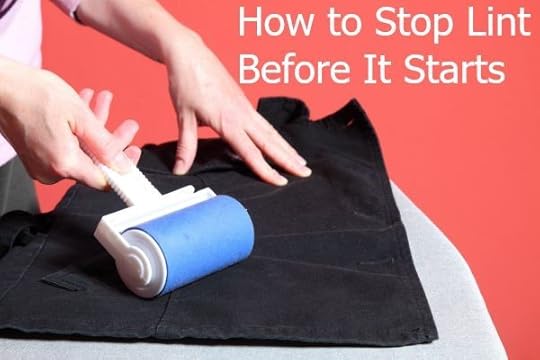 Heather says:
I just took a tour of the Internet before answering this email. Boy there are a lot of people out there asking, “What is lint?” and boy oh boy can the Internet be full of interesting suggestions.
Let’s keep it simple, lint is the fuzz created from tiny broken and loose threads (yarn in some cases). It tends to build up in washers and dryers. Lint is not dust mites, looking at you wiki.answers -that one just hurt to read.
First of all, new clothes are often quite linty. Why? The broken and snipped threads created during manufacturing are shed during the first few washes.
You can reduce the creation of new broken threads by drying your clothing minimally. Remove the clothes from the washer, shake them out of the twisted ball that some washers like to create, and toss into the dryer. Dry just until the wrinkles from washing disappear and hang to finish drying. You still won’t have to iron, the clothing will produce less lint, and as a nice little bonus, they will also last longer.
If you have one, use a clothesline and eliminate using a clothes dryer altogether.
Along the same line as not over-drying is don’t wash your clothing too often. Not only does this tip reduce wear on clothing, it also reduces your energy bill and overall environmental impact. Americans, as a whole, tend to wash their clothes more often than necessary.
Pants and outer shirts can certainly be worn more than once, provided:
a) you wears underwear (don’t tell me otherwise, just wash the pants, please)
b) undershirts and/or a good antiperspirant are used
c) there hasn’t been anything spilled.
Hang clothing after wearing to allow it to air out. Obviously there are times of the year when sweat is more of an issue and some people are just heavy sweaters and can’t get away with a second wear. Use your common sense and your nose, I suggest this on behalf of everyone you interact with, to help make that decision.
Before you wash your next load of hopefully lint-free clothing, take a peek inside the tub of your washing machine. You may need a flashlight to do this. If the machine itself is full of lint or hair, it’s time to clean out the machine. Wipe out what you can with a towel (and shake it before throwing it back in the washer) or use a paper towel and run an empty cycle on hot with detergent and vinegar OR chlorine bleach. Not gallons of bleach either, just a cup in a standard top-loader and 1/2 cup or less in a high efficiency model. This should be done a few times a year.
If your washing machine is older, there is a chance that it has a built-in lint trap. If this is the case and you were unaware it existed, over time it can become an automatic lint spreader. If you don’t have your washing machine manual, use Google and search for YOUR WASHING MACHINE BRAND AND MODEL MANUAL. You don’t need to use all caps. Almost all washing machine manuals are online, usually in a pdf. Follow the directions for cleaning the lint filter.
If you have a new, high efficiency washing machine, wipe out the rubber gasket that lets the door seal tightly. This is a major lint, hair, and other funk trap. If this isn’t done, lint from one load can transfer to the next.
Finally, all over the Internet I see people suggesting that a 1/2 cup of vinegar in the rinse cycle will rid your life of lint problems. Eh, it’s a your mileage may vary tip it can improve the solubility of the detergent and may help wash away the sticky detergent residue. Without the residue lint won’t stick as much to clothing. Will it be life changing? Not unless you habitually use too much detergent.
Best of luck.
Send your questions to helpme@home-ec101.com


CommentsI have a big pile of 6'x6' microfiber cloths (instead of rags). ... by DonnaThanks for this idea. I have an lg washing machine now. Is it ... by demiTo remove lint will require you fit a lint filter into the ... by Bruce FerabendCan someone please help. I am drowing in lint while I sleep. It ... by MirellaCan someone please help. I am drowing in lint while I sleep. It ... by MirellaPlus 10 more...
September 14, 2015
Menu Monday: Football Season in Full Swing
Heather says:
This middle school introduction to yes, you actually to have to have responsibility and be accountable for your things is and has been rough.
I’m trying to model responsible adult behavior and that means we need to make and follow a plan for our meals. It helps us not break our budget and ensures everyone gets a reasonable amount of vegetables in their diet, even if the meals are eaten on the way home from practice. And yes, I do see our reliance on pork but it’s an adaptable protein and not nearly as expensive as beef.
I am looking forward to when the kids’ dad and I can go in on a side of beef.
 You may have noticed over the past few weeks I’ve mentioned experimenting with curry a few times. Neither Indian nor Thai are cuisines I grew up with, so there is more trial and error than more familiar techniques. Last night’s attempts were a big success. Recently, I’d been sent a jar of Gurunanda Pure Cow Ghee –clarified butter that has had all of the solids removed– and I liked the results. Normally I use the oils called for in the recipes I’ve been playing with. This week I substituted about half the fat with ghee and the potato curry, especially, turned out amazing.
That said, I’m glad the weather turned cool enough to open the windows and air out the kitchen. I do love curry, but I don’t necessarily enjoy the lingering odor with my morning coffee.
Have you experimented with any new recipes or ingredients lately?
Do you need a printable to plan your menu and shopping list?
This week’s menu plan:
Monday: Ribs, dirty rice, collard greens

Tuesday – Crockpot Roast Chicken, roast potatoes, carrots, kale

Wednesday – Planned overs
Buffalo Chicken Macaroni and Cheese (GF) and steamed broccoli
I’m excited about this recipe as I have finally found a gluten-free pasta that doesn’t make me say: I miss real pasta and daydream about my next work trip where I can sneak a meal.
I’ll post a specific recipe for this, but it’ll be based on this recipe for oven baked macaroni recipe.
 Thursday –
Pulled pork Burrito Bowls
Friday –
We’ll be introducing the kids to the concept of tailgating. In other words, we’ll be having a picnic in a parking lot before a high school football game.
If there is leftover pulled pork, we’ll be using that and I think I’m going to adapt Plain Chicken’s Club Sandwich Cornbread Bites to a wheat-free version.
If there isn’t any pulled pork left, I’ll just make chili, yes, again.
It goes in the slow cooker and no one complains, so I don’t think I’ll be crying that it keeps showing up in the rotation.
Saturday –
By popular demand Taco Night.
Ground pork tacos made with taco seasoning, cabbage slaw, refried beans and pico de gallo
We’ll have been out all day at football and soccer games, so an easy dinner with no one pouting is a big relief.
Sunday –
A skillet of some sort, maybe with squash, maybe with potatoes, but the method will be like this one:

What are you having for dinner this week? Let us know in the comments.


September 10, 2015
Apple Cider IS Not Vinegar (Yet)
Heather says:
This morning I woke up to a strange comment on the Apple Cider Pancake Recipe:
I was excited to try this recipe, but it was a total flop
The only thing I can guess is that the vanilla yogurt I used had significantly less sugar than the vanilla yogurt you used. The pancakes we ended up with had such a strong vinegar flavor that no one could finish even one… even after drowning in syrup. I am going to continue to experiment with this recipe, though, because the texture was excellent and they smelled wonderful cooking. Perhaps just cutting back on the vinegar would solve the issue?
The comment is strange because the recipe does not actually call for vinegar.
4 TBSP butter, melted
2 cups vanilla yogurt
1 cup apple cider
2 large eggs
2 cups all-purpose or plain flour
1 tsp salt
1 tsp baking soda
1 tsp baking powder
1 large apple – sliced very thin
Cooking oil- optional
I double checked. Yep, no vinegar.
Suddenly it hit me, the commenter did one of two things, they used a cup of apple cider vinegar  OR the commenter’s apple cider had turned.
If the conditions are right, apple cider can ferment and turn into hard apple cider (yum!) or continue to ferment and turn into vinegar.
The solution:
Read carefully and don’t use apple cider vinegar unless a recipe explicitly calls for vinegar
Sniff and or taste ingredients before using them.
We all have cooking fails. I truly hope that this is something the commenter can look back on and laugh. “Remember that time when?”
That said, I still mess a recipe up once in a while, sometimes it’s because I wasn’t paying attention and sometimes it’s because a recipe was poorly written. When I test recipes that I intend to share, I always make the recipe, the first time as written. I want to look for errors and the intention of the original. The second time, I adjust it to our tastes and preferences, but only where the chemistry of cooking allows.
One of the great things about learning to cook is that over time, if you pay attention, you gain more flexibility in this experimentation. The role of each ingredient becomes more understood and the practice becomes intuition. In baking you learn what gives moisture and what actually creates the bubbles that keep cakes and breads from falling flat. In sauteeing and grilling you learn more about what flavor combinations makes you happy.
Can I substitute x for y is a great question and one that should often be asked.
Dare to experiment.
Just understand that not everything will always work out perfectly.
Here’s to learning.
Send your questions to helpme@home-ec101.com


September 5, 2015
How To Fall Clean Your House
You’ve had a busy summer that possibly included vacations / staycations, trips, relatives, camp, etc. There’s been lots of time out of the house, lots of excitement, and probably…lots of laundry. The air is getting cooler, the leaves are changing, the kids are back to school, and life in general is settling back down. What do you do now? You clean the house!!!

Following are some articles about fall cleaning; just click on the title of the one you want to read more about. There’s a link at the bottom to spring cleaning tips which work just as well in the fall.
It’s Fall Cleaning Time!
I think fall cleaning is actually more important than spring cleaning- you want to get your house as clean as possible before the busy holiday schedule starts.
Fall Cleaning Day 2
Washing walls – I like to mix up a bucket of something that smells fabulous… and vacuuming…
Fall Cleaning Day 3 and 4
Hunt down all the laundry that was hiding under beds, in closets, and any other place it might be hiding.
Fall Cleaning Day 5
Today was just a day of wrapping up loose ends- putting the curtains back up, finishing up the holiday decorating, finishing up laundry.
Fall Outdoor To Do List

Click the picture for more tips!
In most areas of the country the triple digit days are over and it’s time to head outside and check things out.
Do you do any major fall cleaning at your house?
Send your domestic questions to helpme@home-ec101.com.


September 3, 2015
Apple Cider Pancakes
Heather says:
Whenever birthday season rolls around, we like to give the birthday child a few treats of their own choosing, within reason. I do believe my middle child is a budding foodie. The days leading up to his birthday he talked about how he wanted to have apple pancakes for breakfast, something we have never made or even offered. I got to thinking. How could I alter my buttermilk pancakes to create a version apple-y enough for a four-year-old’s palate, but not cloyingly so for the rest of us? As I was mulling over the idea, I realized that this was a perfect Fearless Friday experiment.
Click for a handy, printable shopping list.
 Apple Cider Pancakes
4 TBSP butter, melted
2 cups vanilla yogurt
1 cup apple cider
2 large eggs
2 cups all-purpose or plain flour
1 tsp salt
1 tsp baking soda
1 tsp baking powder
1 large apple – sliced very thin
Cooking oil- optional

With half an hour to kill, how could I not play around a little?
Just like with the buttermilk pancakes, it’s very helpful to let the liquid ingredients approach room temperature. Measure the yogurt and apple cider and set out the eggs about 30 minutes before you begin the recipe.
When you’re ready to get started, melt the butter. Crack the eggs and beat them just until they are one color. Combine all the liquid ingredients in a large bowl, stirring thoroughly. Set aside.
In a smaller bowl, whisk together the flour, salt, baking soda, and baking powder. If you tried the buttermilk pancakes, you may have noticed I omitted the sugar. Both the apple cider and vanilla yogurt bring enough of their own to this recipe.
Pour half the dry ingredients into the large bowl of wet. Whisk or stir briskly until there are no lumps. Carefully add the second half of the flour mixture and gently stir until it is just combined. We’re trying to not disturb the chemical reaction we started with the first half of the dry ingredients.
Begin heating your skillet. If you’re using an electric skillet, I found this recipe needed to be 275F, vs the 300F of the buttermilk pancakes. If you are using a skillet on the stove, you’ll need to be on the lowest setting, but give the pan plenty of time to get hot before adding the first cupful of batter. Don’t forget, if you need to grease your pan, to wipe out all of the excess oil. Pancakes are little sponges and easily get greasy. If you use a nonstick pan that is in good shape, cooking oil is probably not necessary.
 While the skillet is heating and the batter is resting – actually the batter is very busy, there’s a reaction between the baking soda, powder and the acids in the yogurt and apple cider- slice your apple. It’s best if the apple is not red delicious or any of the blander varieties. We are huge fans of Gala or Honeycrisp, they have enough tartness to survive heating, but aren’t so tart that they aren’t fun to eat out of hand. If you are doubling or tripling this batch for an event, sprinkle the apples with lemon juice to prevent browning.
 When the skillet is hot, pour the batter onto the skillet by 1/3 cup fulls. Place 2 – 3 slices of apples on each pancake and allow them to cook for about 2 minutes each side. Be careful, these are a little harder to turn than the plain buttermilk ones.
Unless you enjoy playing short-order cook for people, keep the finished pancakes in the oven set at 200F. This will keep them at serving temperature until the whole batch has been cooked.
Enjoy!


CommentsWhere does one source apple cider? by Steve BerryBy: Lowcountry Bloggers » Cinnamon, Spice, and everything nice.. » Blog Archive by Lowcountry Bloggers » Cinnamon, Spice, and everything nice.. » Blog ArchiveBy: FoodieView Blog » Recipe Roundup: Getting Creative with Apple Cider by FoodieView Blog » Recipe Roundup: Getting Creative with Apple CiderThese look so good – my boys will love them! I'll try them ... by amy2boysI almost had a FF post… I will have to work on it for next ... by AngelaPlus 9 more...
September 2, 2015
Potential Sources for Mildew Odor in a Bedroom
Dear Home-Ec 101,
There is a musty / mildew smell in my home, but I’m having issues locating the source of the smell. As far as I can tell, it’s restricted to one bedroom. I’ve examined all of my clothing, removed the air conditioner, checked all of the furniture, and even the air ducts. I’m guessing it might be in the carpet? Any ideas? The mildew smell is driving me crazy, and I’m sure the bleach fumes aren’t great for me either.
Thank you for any and all suggestions help!
Signed,
Musty in Muncie

Heather says:
First of all, you are right to not ignore a musty or mildew scent in a home. While the chances are that it’s cause was rather benign -not thoroughly drying carpeting after cleaning up a pet mess- there are chances that the smell may be your first clue to a more serious problem.
The sniff test is one of the less than fun homeowner chores, but get ready, you’re going to try to find the source of the problem. If you have central AC, turn it off and turn off any fans in the room. What you’re going to do is try to zero in on the source of the smell and we don’t want anything stirring the air, making that more difficult. Enter the room and shut the door.
Begin trying to find the source of the smell by following the mildew. It is likely to be found around sources of moisture.
Check your windows as a potential site for mildew growth.
Sometimes condensation occurs due to temperature differences between indoors and out. If the blinds are never opened this moisture may take a long time to evaporate, especially if the window is on the north side of a home.
Sometimes there is a problem with the flashing around a window that has allowed rain or melting snow or ice to seep down into the walls. If this has occurred, mold may be growing inside your walls.
Remove switch plates and outlet covers.
Is the air trapped in the walls musty? Is the room adjacent to the bathroom, kitchen, or laundry where there may be a hidden, leaky pipe?
Check the HVAC vents.
Sometimes, especially homes on crawl spaces, it’s possible your duct work may have a leak. If this is the case, stale or musty odors may be drawn into your home. (We actually had this issue and our only clue was a musty odor in a bathroom; I’m just so thrilled we spent part of the summer air conditioning the crawl space.)
Look up at the ceiling.
Look for any discolorations that may hint at water damage.
Finally get down on your hands and knees and check the most likely source, your carpeting.
Work your way around the room. If the smell is isolated to a certain spot and you know that there is ongoing problem exacerbating the situation (a leaky pipe, window, or toilet) then first dry the area thoroughly. A shop vac is great for extracting any water. Then lightly spray the area with a dilute solution of white vinegar (about 50:50) and set up a fan to dry the area thoroughly. If after two applications this has not taken care of the mildew odor, it’s time to ensure that mildew is not growing in the pad or the subflooring. If this is the case, the carpet and pad may have to be patched or replaced (depending on the size of the mold growth).

Click the picture for more tips!
If the subflooring also shows signs of mold / mildew growth, it will need to be sanded and sealed to prevent recurrence.
Home Eccers, have I missed any potential sources of mold / mildew growth in a bedroom?
Send your questions to helpme@home-ec101.com.


CommentsHow did you sort out the problem of a leaking bottle in your ... by SubakakiHi mike. I've been having this exact same issue in my home and ... by Lesliehello, I have recently smelled a mildew smell coming from my ... by mike??? by SandeeHill… by MilehimamaPlus 5 more...
August 24, 2015
Menu Monday Staying On Track
Heather says
I’d give us a solid B+ for last week. Instead of staying at home and eating leftovers, we did get dinner out one evening. It was still a good week and on Saturday I spent some time cooking for this coming week and some travel I have in the next couple of months. Managing four kids in three schools and three sports takes a ridiculous amount of planning.
I made a huge batch of chicken bog and roasted two small chickens I picked up on clearance. I also turned those chickens into stock. It wasn’t a bad way to spend a rainy afternoon.  The roast chicken is going to be turned into chicken salad. The minions have been requesting a buffalo version with celery and a ranch version with apples and sunflower seeds.
The pulled pork burrito bowls we had yesterday were a huge hit with everyone.
I also learned, last week, that a batch of chili goes a lot further when served over baked potatoes and that it was requested again for this week. I am happy to oblige when a meal is that easy.
What worked for you last week?
What didn’t? Will anything you tried be making it into regular rotation or was it simply a learning experience?
If you’re just getting started with menu planning we have a series that might be helpful for you.

What will you be having this week? Anything new?
Monday – Ground beef and cabbage skillet
Tuesday – Tacos w/ leftover pulled pork, cabbage slaw, refried beans
Wednesday – Chili over Baked Potatoes
Thursday – Butternut Squash, Kale, and Bacon Skillet, I’ll be throwing some potatoes in to stretch it a little further
Friday – The great Thai Curry Chicken experiment continues (I have yet to be able to replicate exactly what I’m looking for, but we’ll get there.
Saturday – Choucroute – we’ll see how it is accepted around here that’s kielbasa, sauerkraut and potatoes. I’m excited, we’ll see how others feel about it
Sunday – Not quite date night will be garlic butter shrimp over spaghetti squash tossed in pesto.
At some point I’ll also be making a big batch of granola.
Let us know what you’re trying in the comments.


Heather Solos's Blog

- Heather Solos's profile
- 12 followers

