
Sylvain Reynard's Blog, page 46
May 9, 2011
Art - Rembrandt's "The Return of the Prodigal Son"
Dear Everyone,
As I mentioned previously, art plays a very important role in my novel, "Gabriel's Inferno." Without posting spoilers, I'll simply point out that sometimes the mention of a particular painting carries with it either a back story or an element of foreshadowing.
There is a scene, for example, in which I mention Rembrandt's The Return of the Prodigal Son. Rembrandt's painting illustrates a story from the Bible - Jesus' parable of the Prodigal Son, which is told in the Gospel according to St. Luke 15:11-32. There are at least two interpretations of the parable. In the most common reading, the focus is on the Prodigal, himself, and how he wastes his inheritance indulging in sin until he is humbled completely. When he returns to his father, his father welcomes him and forgives him. The second reading focuses on the Prodigal's brother, the son of constancy. While the Prodigal is wasting his inheritance on prostitutes and indulging (no doubt) in all seven deadly sins, the son of constancy is working faithfully on his father's farm. His reaction to the Prodigal's return is less than warm. The story closes with his father's admonishment to join in the rejoicing over the Prodigal's return and not to demand rough treatment for the brother, who no doubt justly deserves it.
The parable is short but powerful and it provides a twin message for all human beings, regardless of religion: the message of forgiveness for those who seek it and the message of mercy for those who need to do the forgiving. Yes, the son of constancy's impulse was toward justice - the just punishment of his brother's moral failings. But it is the impulse of the father - forgiveness and mercy - that is praised in the story. Sometimes it is better to forego justice for mercy, even though such a choice is inherently difficult.
Rembrandt captures a key moment from the parable and although the painting is static, it vibrates with emotion. He doesn't retell the story frame by frame. He chooses a single instant, but in so doing he tells you what he thinks is important in the parable.
A writer can do the same thing by including art in a novel. The artwork doesn't have to retell the story, it only has to highlight a key message or moment. Once again, I'll allow the readers to decide for themselves what those moments are.
The response to the release of my book has been overwhelming. Thank you. And thank you to those who are sharing the story with friends and family. I treasure book recommendations from friends and so I'm honoured that you would recommend my book to others.
All the best and thanks for reading, SRwww.sylvainreynard.com
PS. If you're interested, I'm on twitter. I'm also on Facebook.Some of the readers over on Goodreads have begun a discussion group for "Gabriel's Inferno." Anyone can join, at any time.
As I mentioned previously, art plays a very important role in my novel, "Gabriel's Inferno." Without posting spoilers, I'll simply point out that sometimes the mention of a particular painting carries with it either a back story or an element of foreshadowing.
There is a scene, for example, in which I mention Rembrandt's The Return of the Prodigal Son. Rembrandt's painting illustrates a story from the Bible - Jesus' parable of the Prodigal Son, which is told in the Gospel according to St. Luke 15:11-32. There are at least two interpretations of the parable. In the most common reading, the focus is on the Prodigal, himself, and how he wastes his inheritance indulging in sin until he is humbled completely. When he returns to his father, his father welcomes him and forgives him. The second reading focuses on the Prodigal's brother, the son of constancy. While the Prodigal is wasting his inheritance on prostitutes and indulging (no doubt) in all seven deadly sins, the son of constancy is working faithfully on his father's farm. His reaction to the Prodigal's return is less than warm. The story closes with his father's admonishment to join in the rejoicing over the Prodigal's return and not to demand rough treatment for the brother, who no doubt justly deserves it.
The parable is short but powerful and it provides a twin message for all human beings, regardless of religion: the message of forgiveness for those who seek it and the message of mercy for those who need to do the forgiving. Yes, the son of constancy's impulse was toward justice - the just punishment of his brother's moral failings. But it is the impulse of the father - forgiveness and mercy - that is praised in the story. Sometimes it is better to forego justice for mercy, even though such a choice is inherently difficult.
Rembrandt captures a key moment from the parable and although the painting is static, it vibrates with emotion. He doesn't retell the story frame by frame. He chooses a single instant, but in so doing he tells you what he thinks is important in the parable.
A writer can do the same thing by including art in a novel. The artwork doesn't have to retell the story, it only has to highlight a key message or moment. Once again, I'll allow the readers to decide for themselves what those moments are.
The response to the release of my book has been overwhelming. Thank you. And thank you to those who are sharing the story with friends and family. I treasure book recommendations from friends and so I'm honoured that you would recommend my book to others.
All the best and thanks for reading, SRwww.sylvainreynard.com
PS. If you're interested, I'm on twitter. I'm also on Facebook.Some of the readers over on Goodreads have begun a discussion group for "Gabriel's Inferno." Anyone can join, at any time.


May 3, 2011
Art- Holiday's Painting
Dear Everyone,
As promised, I'll be posting on the artwork related to my new book, "Gabriel's Inferno," over the next few Tuesdays.
Last week, I discussed Gustave Doré, noting the contrast between his illustrations of Dante's Divine Comedy and those of Sandro Botticelli. The Digital Dante Project provides access to both collections. (Unfortunately, their links to Salvador Dali's pictures have been taken down)
http://bit.ly/kvgMPr
As promised, I'll be posting on the artwork related to my new book, "Gabriel's Inferno," over the next few Tuesdays.
Last week, I discussed Gustave Doré, noting the contrast between his illustrations of Dante's Divine Comedy and those of Sandro Botticelli. The Digital Dante Project provides access to both collections. (Unfortunately, their links to Salvador Dali's pictures have been taken down)
http://bit.ly/kvgMPr
May 1, 2011

April 26, 2011
Art - Gustave Doré
Dear Everyone,
Over the next few Tuesdays, I'll be posting additional information about the art and literature from my novel "Gabriel's Inferno." (But I'll be careful not to post any spoilers!)
One of the joys of working with Omnific Publishing was their commitment to making "Gabriel's Inferno" aesthetically pleasing - from the images on the front and back cover, to the typeface and handwriting fonts, to the inclusion of an illustration in the front matter. I've already posted previously about the significance of the art on the book's cover and how it relates to Auguste Rodin's sculpture The Gates of Hell. Art is an important element of the story and the works of different artists are referred to by the main characters in several passages.
Gustave Doré (1832-1883) is well known for his illustrations of a number of famous works, including the Bible, Don Quixote, and Dante's Divine Comedy. Doré's work is very different from that of Botticelli - it's darker, it borders on the grotesque, and it's entirely in black and white....
www.sylvainreynard.com
Over the next few Tuesdays, I'll be posting additional information about the art and literature from my novel "Gabriel's Inferno." (But I'll be careful not to post any spoilers!)
One of the joys of working with Omnific Publishing was their commitment to making "Gabriel's Inferno" aesthetically pleasing - from the images on the front and back cover, to the typeface and handwriting fonts, to the inclusion of an illustration in the front matter. I've already posted previously about the significance of the art on the book's cover and how it relates to Auguste Rodin's sculpture The Gates of Hell. Art is an important element of the story and the works of different artists are referred to by the main characters in several passages.
Gustave Doré (1832-1883) is well known for his illustrations of a number of famous works, including the Bible, Don Quixote, and Dante's Divine Comedy. Doré's work is very different from that of Botticelli - it's darker, it borders on the grotesque, and it's entirely in black and white....
www.sylvainreynard.com
April 25, 2011
Art - Henry Holiday
Dear Everyone,
As promised, I'll be posting on the artwork related to my new book, "Gabriel's Inferno," over the next few Tuesdays. Last week, I discussed Gustave Doré, noting the contrast between his illustrations of Dante's Divine Comedy and those of Sandro Botticelli. The Digital Dante Project provides access to both collections. (Unfortunately, their links to Salvador Dali's pictures have been taken down)
Admittedly, I favour Botticelli. His illustrations of the Comedy are referenced in my book, but with a twist. Many of his depictions are solely in pen and ink. Only a few have been painted with colour.
Two of Dante's texts inspired "Gabriel's Inferno." First, (and most obviously), the Comedy , which is Dante's allegorical account of the pilgrimage of the soul to God. Second, Dante's La Vita Nuova , which includes the story of Dante's love for Beatrice and many of the poems he wrote for her. You can read a short summary and discussion of La Vita here.
The love affair of Dante and Beatrice falls squarely in what is called the courtly love tradition. There is a very fine explanation of the tradition, with images and links, on Professor Debora Schwartz's page. If you've read "Gabriel's Inferno," consider the ways in which the primary romantic relationship in it manifests aspects of the courtly love tradition...
When it came to choosing artwork to illustrate the romance in "Gabriel's Inferno," I wanted to use Botticelli. But as I mentioned above, his depictions of Dante and Beatrice are in pen and ink and although they are beautiful, I was looking for something more dramatic. So I exited the Renaissance and began to examine the work of the Pre-Raphaelites, who were noted for their pictorial realism and Romanticism.
Henry Holiday (1839-1927) was a British Pre-Raphaelite artist. He also designed stained glass windows for various churches. His most famous work is Dante and Beatrice, which he completed in 1883. It's owned by the Walker Art Gallery in Liverpool, England. You can see the painting and read about it here. As the museum curator points out, Holiday was inspired by the story of Dante and Beatrice as presented in Dante's La Vita Nuova.
Holiday's painting plays a very important role in my novel. I found the painting especially inspirational when writing the early interactions between Professor Emerson and his graduate student, Julianne Mitchell. In fact, the Prologue of the book is my interpretation of the painting, which differs markedly from that of the museum curator cited above. Read both, then look at the painting and decide for yourself what is happening between Dante and Beatrice by the Ponte Santa Trinita in Florence...
All the best everyone and thanks for reading,SRwww.sylvainreynard.com
PS. Miss Tigris Eden, of the book blog Garden of Books, recently reviewed "Gabriel's Inferno" on Goodreads, giving it 5/5 stars. Her review also appears here, where you can leave a comment and be entered to win an e-book of my story.
Once again, if you're looking for a place to discuss "Gabriel's Inferno," consider joining the book club over on Goodreads. The readers in the group are very nice.

As promised, I'll be posting on the artwork related to my new book, "Gabriel's Inferno," over the next few Tuesdays. Last week, I discussed Gustave Doré, noting the contrast between his illustrations of Dante's Divine Comedy and those of Sandro Botticelli. The Digital Dante Project provides access to both collections. (Unfortunately, their links to Salvador Dali's pictures have been taken down)
Admittedly, I favour Botticelli. His illustrations of the Comedy are referenced in my book, but with a twist. Many of his depictions are solely in pen and ink. Only a few have been painted with colour.
Two of Dante's texts inspired "Gabriel's Inferno." First, (and most obviously), the Comedy , which is Dante's allegorical account of the pilgrimage of the soul to God. Second, Dante's La Vita Nuova , which includes the story of Dante's love for Beatrice and many of the poems he wrote for her. You can read a short summary and discussion of La Vita here.
The love affair of Dante and Beatrice falls squarely in what is called the courtly love tradition. There is a very fine explanation of the tradition, with images and links, on Professor Debora Schwartz's page. If you've read "Gabriel's Inferno," consider the ways in which the primary romantic relationship in it manifests aspects of the courtly love tradition...
When it came to choosing artwork to illustrate the romance in "Gabriel's Inferno," I wanted to use Botticelli. But as I mentioned above, his depictions of Dante and Beatrice are in pen and ink and although they are beautiful, I was looking for something more dramatic. So I exited the Renaissance and began to examine the work of the Pre-Raphaelites, who were noted for their pictorial realism and Romanticism.
Henry Holiday (1839-1927) was a British Pre-Raphaelite artist. He also designed stained glass windows for various churches. His most famous work is Dante and Beatrice, which he completed in 1883. It's owned by the Walker Art Gallery in Liverpool, England. You can see the painting and read about it here. As the museum curator points out, Holiday was inspired by the story of Dante and Beatrice as presented in Dante's La Vita Nuova.
Holiday's painting plays a very important role in my novel. I found the painting especially inspirational when writing the early interactions between Professor Emerson and his graduate student, Julianne Mitchell. In fact, the Prologue of the book is my interpretation of the painting, which differs markedly from that of the museum curator cited above. Read both, then look at the painting and decide for yourself what is happening between Dante and Beatrice by the Ponte Santa Trinita in Florence...
All the best everyone and thanks for reading,SRwww.sylvainreynard.com
PS. Miss Tigris Eden, of the book blog Garden of Books, recently reviewed "Gabriel's Inferno" on Goodreads, giving it 5/5 stars. Her review also appears here, where you can leave a comment and be entered to win an e-book of my story.
Once again, if you're looking for a place to discuss "Gabriel's Inferno," consider joining the book club over on Goodreads. The readers in the group are very nice.
Art - Gustave Doré
Dear Everyone,
Over the next few Tuesdays, I'll be posting additional information about the art and literature from my novel "Gabriel's Inferno." (But I'll be careful not to post any spoilers!)
One of the joys of working with Omnific Publishing was their commitment to making "Gabriel's Inferno" aesthetically pleasing - from the images on the front and back cover, to the typeface and handwriting fonts, to the inclusion of an illustration in the front matter. I've already posted previously...
April 18, 2011
Autographs
Dear Everyone,
A few people have written to me asking how they can have their book signed. Since I haven't scheduled any personal appearances, the good people at Omnific have helped me come up with a solution.
Simply put, you can request a signed book plate for your book. Or you can send your book to the publisher and I will sign it. More details can be found here on my website. It will be costly to have the book autographed because you will need to cover the cost of international shipping...
A few people have written to me asking how they can have their book signed. Since I haven't scheduled any personal appearances, the good people at Omnific have helped me come up with a solution.
Simply put, you can request a signed book plate for your book. Or you can send your book to the publisher and I will sign it. More details can be found here on my website. It will be costly to have the book autographed because you will need to cover the cost of international shipping...
Book Release
Dear Everyone,
The 19th of April has arrived and so has the release date for "Gabriel's Inferno." As a reminder, the book is now on sale through Omnific, Amazon.com, and Barnes and Noble.com. It will be available as a paperback and as an e-book (for Kindle, Nook, etc.).
As a way of celebrating the book launch, I'll be posting here, on Goodreads, on Facebook and on Twitter throughout the day.
You are invited to join readers from around the world by posting your comments on these sites. Feel...
The 19th of April has arrived and so has the release date for "Gabriel's Inferno." As a reminder, the book is now on sale through Omnific, Amazon.com, and Barnes and Noble.com. It will be available as a paperback and as an e-book (for Kindle, Nook, etc.).
As a way of celebrating the book launch, I'll be posting here, on Goodreads, on Facebook and on Twitter throughout the day.
You are invited to join readers from around the world by posting your comments on these sites. Feel...
April 15, 2011
The Cover - Auguste Rodin
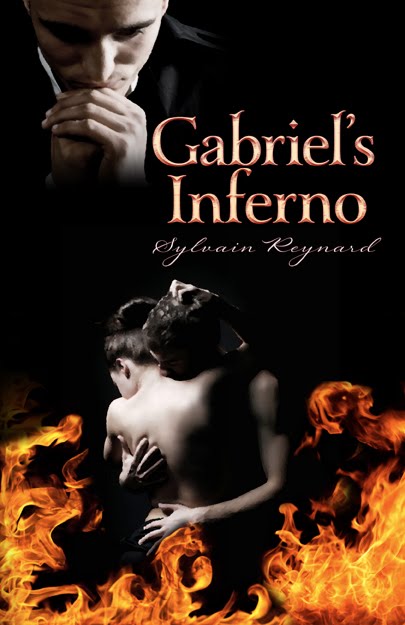
Dear Everyone,
Several people have asked about the cover artwork of "Gabriel's Inferno." There are three images - the flames, the embracing couple, and the male figure. As a way of celebrating the release of the novel, I thought I'd write a few words about the cover, explaining the significance of the art.
The male protagonist in my book is Gabriel Emerson, a professor of Italian Studies at the University of Toronto. He spends his days teaching and writing about the life and works of Dante...
April 2, 2011
Release Date for "Gabriel's Inferno"

Dear Everyone,
On Good Friday in 1300 A.D., Dante Alighieri wandered into a dark wood that led him to the underworld of Hell. Unable to return to his former life until he completed his pilgrimage, Dante began a dangerous journey fraught with temptation. Fearing for his very soul, his beloved Beatrice begged the deceased poet Virgil to guide Dante through the Inferno in order to ensure that he did not succumb to the flames.
Over seven hundred years later, I'm pleased to announce the...


