
Icy Sedgwick's Blog, page 83
April 8, 2013
A - Z - Ghostbusters

Hands up if you thought I could possibly feature any film BUT Ghostbusters for G? Sure, there are lots of other great movies beginning with G, but none of them are Ghostbusters. I remember how you could always expect to hear the theme tune at school discos (even though the film had been out about eight years by the time I ever went to one), and the cartoon series would be on after school. Ah, those were the days.
For those of you who have never seen Ghostbusters, and I sincerely hope there are none in this category, the film revolves around three parapsychology professors (plus Winston Zedmore (Ernie Hudson), a dude who just wants the paycheck) who form a company to rid New York of its resident spectres. For a fee, of course. The brainchild of Peter Venkman (Bill Murray), the Ghostbusters enterprise takes up residence in an old fire station, and what looks suspiciously like a hearse is pressed into service as Ecto 1, their means of transport. Sigourney Weaver's Dana brings in a new case, in which she thinks she's seen an old Babylonian god in her fridge, and the boys set to work trying to figure it out. Turns out her apartment building was built by an occult-obsessed architect, and it was designed as a portal to another realm. You don't see that type of dwelling on these property makeover shows, do you? Anyway, the Ghostbusters have to try and avert an apocalypse, part of which involves destroying a giant marshmallow man. As you do.
Ghostbusters came out in 1984, and it's true that the visual effects look their age. Thing is, it doesn't matter. I don't need my ghosts to look real - I just want them to look cool, even if they are dated. Whether the Ghostbusters are chasing Slimer around an upscale New York hotel (named the Sedgewick, pity the name's got an extra letter), or using their proton packs, the ropey CGI just adds to the film's charm. And what charm it has! It's highly quotable (indeed, Ray Stanz's line, "Listen, can you smell something?" became a regular fixture when I used to do paranormal investigations), it's funny, and it's got Rick Moranis in it. Triple win.
I've tried really hard to provide intelligent commentary or some sort of discussion about the films I've chosen thus far, but Ghostbusters is the kind of film that just provokes childish fangirl glee in me. So sorry about that.


April 7, 2013
A to Z - Fight Club
I was a little bit stuck between films for 'F', as I usually am, but I decided on Fight Club since it's one of those films I can watch again and again, never tiring of it (which is one of my personal criteria regarding whether or not a film can be considered a 'favourite').
In a nutshell, the film stars Edward Norton, who plays the unnamed protagonist but who is often referred to be commentators as 'Jack', and Brad Pitt, who plays delightfully anarchic Tyler Durden, as well as Helena Bonham Carter as Marla Singer, a support group junkie who becomes involved with, well, both of them. Jack and Durden strike up a friendship after Jack's apartment is trashed in a freak explosion, and soon they've begun an underground boxing group, the Fight Club. Things escalate, and soon Durden is running an anarchy organisation, Project Mayhem, hell bent on bringing down the establishments that fence in society.
Fight Club is notable as being the first film in which I ever saw Brad Pitt, and while I'd often dismissed him as nothing but a 'pretty boy', it became fairly obvious within about forty minutes of this film that the guy knows what he's doing. Durden is seductive in his chaotic ways, and Jack doesn't even seem to realise that he's swapped one routine for another; the former might be the way of capitalism and materialism, while the latter proposes itself as liberation, but they're both essentially routines. I once read a review which posited Jack as a 'misery vampire', due to his predilection for attending support groups for conditions he doesn't have, but in some ways, it is Durden who is the vampire, preying on the weak (Jack, Marla, the whole host of men that he turns into footsoldiers).
The film was originally touted as featuring 'subliminal' messages, due to the flashes of words and images during incongruous shots, but I refute that suggestion, since anything that appears on screen for long enough to be processed by the brain cannot be considered subliminal, and anything that appears for less than that doesn't get processed at all. No, Fight Club is extremely upfront about what it's trying to do. I actually don't see it as being a progressive statement in favour of individual freedom and an overthrow of the establishment - if that were the case, then Durden wouldn't need to turn the attendees of Fight Club, and later the drones of Project Mayhem, into automatons. They'd all follow him for the strength of the message alone. Instead, I can't help wondering if the film is trying to say that people need a leader.
I've since read Chuck Palahniuk's original novel, Fight Club, and I think the film is one of those rare instances where the film is more successful than the book. The characters feel more rounded in the film, more than just mouthpieces for what Palahniuk wants to say, and as a result the whole thing feels more plausible, which is extremely unsettling in a way.
The film became famous for its "rules", and really, I've broken the first two by talking about it, but I think it's equally quotable elsewhere. I've actually lost count of the number of times I've seen those "sunshine and pixie dust" life quotes on Facebook, and thought "You are not a unique and beautiful snowflake. You are the same decaying organic matter as everything else". But then that might just be me and my cynicism. It's also full of "Is that true?" moments, like the discussion about making soap - and how by adding a few household ingredients, you can make said soap a bit more...dramatic.
Anyway, I'll leave you with this clip, in which Durden really cranks up the crazy...

April 6, 2013
A to Z - Evolution
Today I'm moving on to 'E' in my A-Z of movies - I know a lot of people did E yesterday but I'm skipping Fridays to make room for my flash stories. I got a bit stuck for E, as it happens, but I wound up choosing Evolution.
Evolution was a stab at alien sci-fi by Ivan 'Ghostbusters' Reitman, and stars David Duchovny and Orlando Jones as a pair of hapless college professors who discover a new lifeform evolving on earth after a meteorite crashes into an Arizona cave system. Unfortunately the government also find out, and soon their attempts to document the obvious evolution are stymied by Julianne Moore's government scientist. It's not long before things get out of hand, and Duchovny and Jones have to come and lend a hand to save the world.
It's a daft, silly film, with a sideline in fairly immature humour, but still, it's an enjoyable watch. David Duchovny plays Ira as if Mulder never fully grew up, but Julianne Moore displays a comic touch that you don't normally get to see in her movies. Even Seann William Scott isn't that annoying as the aspiring fireman who ends up getting embroiled in the 'let's save the world' plan.
For me, the best part is the 'science' behind it. Studying the idea of evolution at school is one thing, but seeing it visually demonstrated from a single-celled organism into insects and eventually mammals, while clearly not based on reality, is still a neat idea, especially since it's the heat of the earth's atmosphere that provides the catalyst for such evolution. My favourite part has to be the sequence in the shopping mall, where the invading entity reaches the 'dinosaur' phase and attains the power of flight. It's like Jurassic Park meets Dawn of the Dead.
As films go, it was never going to be an Oscar winner, but as light entertainment goes, it's the kind of film you can drop into whenever you find it on TV somewhere. Everyone turns in solid performances, especially Moore, and I can think of worst films I could have nominated for 'E'.

April 4, 2013
#FridayFlash - Tomb Raiders

The man known as Al Shabah slipped between the pillars of
the crumbling ruin. He spotted the gaping hole across the site, the entrance
littered with discarded tools. The tomb raiders thought they’d located the lost
tomb of Mekerepsut. Al Shabah smiled – as long as they occupied themselves with
the false tomb, they wouldn’t disturb his exploration of the real one. Judging
by the silence of the site, they wouldn’t disturb him at all tonight.
The real tomb of the 22nd Dynasty princess lay at
the edge of the ruin – Al Shabah found the entrance by accident the day before.
Before the revolution, its location would have been reported to the
authorities, but now it was every man for himself. Some would call him a grave
robber, but the way Al Shabah saw it, he sold what he found to collectors, not
pawn brokers. At least he was keeping antiquities in circulation.
A quirk of ancient architecture hid the tomb’s entrance, turning
the narrow gap into a shadow cast by a nearby pillar. Al Shabah slipped through
the gap, and made his way down the tunnel. Mekerepsut’s burial came long before
the temple that hid her tomb, and given her reputation for darker magic, Al Shabah
wasn’t sure she’d be pleased to lie beneath the feet of Isis worshippers.
Al Shabah felt his way along the tunnels, his fingers
becoming his eyes. Before long, his nails scraped the smooth stone that
signalled the entrance to the tomb. He switched on his torch and breathed a
sigh of relief to see that the seal was still intact. He knelt down and forced
his hand pick into the wall. He always broke in below waist height – if anyone
came snooping around they’d expect to see a hole at eye level, not down by the
floor.
The rhythm came easily as he chiselled away at
the gaps between the bricks before prising them free, and he soon had a neat
pile of stones at his side. The hole was large enough to crawl through,
although he’d need to enlarge it to remove anything of note. He slipped a white
mask over his nose and mouth, and crawled through the gap.
Al Shabah stood up on the other side of the wall and frowned.
The tomb was smaller than he expected, its walls carved instead of painted. The
sarcophagus lay on the other side of the chamber, surrounded by statues of
animals. He thought there would be gold, or perhaps fine furniture, not a stone
menagerie. Al Shabah ran his hand over the head of a leopard – he knew a dealer
in Cairo who might give him a decent price, but removing them all would take
some time.
He flicked the beam of the torch around the tomb. A smaller chamber
lay to his right, but he would explore that after he’d looked inside the
coffin. He’d sometimes found riches hidden with the body, and someone like
Mekerepsut was bound to have plenty of amulets within her wrappings. If she was
as dark as he’d been led to believe, those amulets would fetch a fortune on the
black market.
Al Shabah smirked at his own joke as he knelt before the
sarcophagus. He pushed hard on the lid to test its weight, and it heaved aside
with a scrape of stone on stone. More carvings filled the sarcophagus, and Al
Shabah recognised snippets of familiar stories among the hieroglyphics.
It’s like they gave her something to read.
He shuddered, and leaned in to examine the coffin. Her painted
eyes stared up at him, and their slanted angle made her look sly.
Like she’s plotting something.
Al Shabah found the edge of the lid and wiggled his nails
into position. The wood of the cartonnage gave way easily, and he hooked his
fingers under the lid. He prised it upwards, and spluttered. The air smelled
old, even through his mask.
He gave himself a moment to recover, and peered into the
coffin. He expected to see a mummy, swathed in ancient cloth, perhaps weighed
down by amulets, or surrounded by shabtis. He once even found a mummy wearing
an elaborate death mask, surrounded by scrolls.
What he saw this time was an empty coffin.
“What? Someone got here first?” He swore aloud, and bent
over further, running his hand across the wood as if he might find a secret
compartment. It wasn’t unheard of.
Something tapped on his shoulder. Al Shabah stifled a shriek
and leapt to his feet. One of the grave robbers at the fake tomb must have
followed him. The thought his assailant could be armed drove a yelp from his
mouth, but then he thought of the empty coffin. Anger replaced fear.
Something long and pointed tapped on his shoulder again. The
ghost of a whisper rasped in the stale air behind him. Al Shabah spun around.
He had no time to see anything before his world imploded.
His lifeless husk would be found in three days’ time.
Three days is a long head start.
* * *
If you enjoyed this post, why not check out my post over at Nerine Dorman's blog, where you can meet Bakt en Hor, the lady in the image adorning this flash?

A to Z - Dead and Breakfast
April 1st marked the start of the A to Z blogging challenge, and I've chosen a movie theme for my posts (although I'll be skipping Fridays to make room for my Friday Flash stories). So far, I've done American Psycho, Back to the Future and Cars, and while D should theoretically have been Die Hard, I thought I'd use today to shine a light on a little gem of a horror film - Dead and Breakfast.
I came across Dead and Breakfast some years ago when my flatmate found it on sale in Music Zone. It's a comedy horror, telling the story of a group of friends who wind up in a small town on the way to a wedding. A murder is committed during the night, turning the bed and breakfast into a crime scene, and the friends into witnesses, so they're kept in the town. One of them manages to unleash a zombie curse, and one by one, the town falls victim to said curse. Unlike most zombie films in which a bite is enough to pass on the infection, in this case, part of you (be it hair, skin, blood etc.) needs to end up in a small box held by the Head Zombie.
Obviously the film has all the ingredients - town archive keeper who knows the mysterious secret behind the events, the strange owner of the bed and breakfast (played by David Carradine), the search for weapons, the attempt to lay the curse to rest, and the climactic showdown as the bed and breakfast is surrounded. Thing is, the film's strength lies in what it does with them. It adds a comedy twist to everything, providing some sick giggles as well as genuine laughs, and at no point does it take itself too seriously. It clearly loves the zombie genre in the way that it gently twists the narrative pattern, so it becomes an homage as opposed to a parody. My favourite element is the introduction of the narrator, a singing balladeer who commentates on the events of the film through song. The clip at the bottom of the post is one of his finer moments.
I often find that people who like zombie films tend to squabble over what makes them zombies - after all, the 'zombies' in 28 Days Later are simply infected, as opposed to undead, and newer zombies can apparently run, an ability denied to them in earlier films. My own favourite zombie films are the original three - White Zombie (1932) , I Walked With A Zombie (1943) and The Plague of the Zombies (1966), in which voodoo plays a role and a central priest figure becomes the antagonist against which the forces of good must rally, and Dead and Breakfast veers closer to these narratives than later films.
Comedy and horror spring from very similar origins, and commentators have long commented on the close relationship between the desire to laugh and the desire to scream. When mixed together well, the resultant hybrid can excel beyond either genre on its own - after all, moments of tension are punctured either by a joke or a scare, and in Dead and Breakfast's case, the combination is spot on. It's just a shame it never caught on the way that it should have. Still, with the rise of Netflix...

April 3, 2013
A to Z - Cars
April 1st marks the start of the A to Z blogging challenge. Continuing with my cinematic theme, today is Cars. As with most of the other letters, there are a myriad of films I could have chosen, but I didn't want to just use horror films!
Cars is actually one of my favourite Pixar films. I think they've gone a little off the boil lately, but Cars was one of their high points. I know that not everyone enjoyed it, but I was brought up watching motor racing, and I think that perhaps helped add to my enjoyment of the film.
Beyond that, I think the film scores because the limelight doesn't solely rest on its hero, Lightning McQueen (Owen Wilson) for the whole film. At the start of Cars, Lightning is a successful racer, gunning to be the first rookie to win the Piston Cup. After a three-way tie finish, it's decided that the three racers will face each other in one final race to decide the winner. En route to California, Lightning ends up on the old route 66, where he finds himself in Radiator Springs, a sleepy town that got forgotten when the interstate took the traffic away. At first, Lightning hates it, but he grows to like the town, and its inhabitants, particularly Sally (Bonnie Hunt) and Mater (Larry the Cable Guy). By the time he finally gets to leave, Lightning has begun to realise what it feels like to have friends.
It sounds like the kind of soppy, sentimental pap that I'd normally turn my nose up at, but somehow Cars manages to balance its message about teamwork and community with humour and motor racing, to the extent that it's become a favourite movie of mine. The graphics are astounding, and I remember my cinema companion even leaning across during the 'afternoon drive' sequence to mouth the word "Wow" as Sally and Lightning pass the waterfall.
Cars is a beautiful film, and I think its strength lies in its ensemble construction. Lightning is very much the hero, but if you removed any character, the film's strength would waver - which, in essence, simply reinforces the central message that community is key. In a fast paced world where we spend our lives dipping in and out of Twitter, choosing the quickest mode of transport to get us from A to B without truly seeing where we are, and where we often keep people around for what they can do for us, I guess it's an important idea that we sometimes slow down and admire the view with someone we actually like.
Cars Trailer

April 2, 2013
A to Z - Back to the Future
April 1st marks the start of the A to Z blogging challenge. Continuing with my cinematic theme, today is Back to the Future, easily one of my favourite films ever. I love the whole trilogy, particularly Part III in 1885, but I'm just going to talk about Part I here.
I can't remember when I first saw Back to the Future but given I saw the third one at the cinema, I must have seen it when I was fairly young. There was just something about the idea of a time machine in the form of a DeLorean that captured the imagination, even if the film does come very much within the tradition of films in which the protagonist's interference results in a life that better suits what they want.
Marty McFly (Michael J Fox) starts the film in 1985 as an aspiring guitarist in high school. His father, George, is continually pushed around by his boss, Biff Tannen, and his siblings are equally lacklustre. Marty's friend, Doc Brown (Christopher Lloyd) invents a time machine, and Marty ends up back in 1955 where he encounters his high school aged parents. Doc Brown needs to get him back to 1985, but as they have no access to the plutonium on which the DeLorean runs, they have to wait until the night of the school dance, when Marty knows there will be a lightning storm, to generate the 1.21gigawatts the time machine needs. Will Marty get his parents together before he leaves?!
OK, so how can you not like Back to the Future?! Sure, all time travel films suffer from a central paradox, but unlike later films, in which the hero leaves something in the past/future for the next version of himself to find (see Deja Vu for a particularly nonsensical example), Marty is very much the first to time travel, and learns the hard way that you can't interfere in anything since actions in the past affect the present. OK, so it's a bit creepy that his teenaged mother gets a crush on him, and he has to engineer a meeting between her and his teenaged father - not many films flirt with incest in the 'boy meets girl' stakes, but somehow Back to the Future manages it without being icky.
Thing is, as cool as Michael J Fox makes Marty, and as awesome as Christopher Lloyd is as Doc Brown, it's actually Thomas F Wilson who steals the films for me as the various members of the Tannen family. My favourite incarnation is Buford 'Mad Dog' Tannen from Part III, but considering he plays three versions of Biff in Part I (bully Biff from 1985, then teenaged Biff from 1955, then meek and mild Biff back in new 1985), it just shows what one person can do with one character.
Back to the Future is one of those films I can watch again and again, and I love it just as much every time I watch it. Plus it has one of the best renditions of Johnny B. Goode that I've come across...

April 1, 2013
A to Z - American Psycho
April 1st marks the start of the A to Z blogging challenge. Bloggers are encouraged to spend 26 days discussing whatever they want, assuming the topic of the day matches that day's 'letter'. I was a bit stuck for what to discuss, until I decided to stick to what I know best - movies. So every day, I'm going to be discussing a film I enjoy beginning with that letter. It's not always going to be one of my favourite movies, just one I think people should see.
Now, with A, I had a few films I wanted to mention, like The Adjustment Bureau, but I decided American Psycho was a more obvious choice given my predilection for horror. I actually used American Psycho in the dissertation for my undergraduate degree, comparing and contrasting it with Alfred Hitchcock's Frenzy. I have read the book, but in a lot of ways, I actually think the film is more successful. For one thing, it condenses the interminable lists that characterise the book, and it manages to balance that ambiguity around whether Patrick Bateman is a homicidal maniac - or he just thinks he is.
For those who've never seen it, American Psycho tells the story of Patrick Bateman, a 1980s yuppie who works on Wall Street by day, and hangs out in clubs and bars by night. As well as doing a lot of cocaine and spending his days at work doing the crossword, Patrick also stalks and kills people, seemingly at random. He dispatches one victim with an axe, another with a chainsaw. Most of his victims are women, but that doesn't stop him killing homeless people, colleagues, and even dogs. Put it this way, Patrick Bateman is not a nice man.
American Psycho was the first film in which I ever saw Christian Bale. I've since adopted the opinion that his career has been entirely downhill from that point, as he reprises the role in every film in which he appears, but that's a side issue. In American Psycho, he's perfectly cast. He strikes that fine balance between madness and apparent normality, all while fixating on the trivia of yuppie life. Bateman is a man obsessed by superficiality - business cards are subjected to intense scrutiny, and he finds life truths buried in the trivial pop songs of Whitney Houston. This is a yuppie for whom the clothes very much make the man. His narration doesn't introduce characters according to their personality - he talks about what they do, and how they look. Appearance is everything - which sums up our American Psycho, since his appearance of normality is his strongest disguise.
Yet Bateman is also an unreliable narrator. He kills people, only to have conversations with others who claim to have lately spent time with those same victims. It's never clear if Bateman has confused them with someone else, and killed the 'wrong' person, or if he didn't kill them at all. There are only two instances where outside parties appear to be aware of what's going on, and even then, the ambiguity remains. Strangely enough, even after he's made his confession and been absolved by the continued insistence that one of his victims is alive and well, you're almost glad that he's gotten away with it.
The book is a horrible, violent piece of work, while the film relegates the nastiest violence to passing comments, or the summary of crimes that Bateman leaves on his lawyer's answering machine. As a result, the inherent queasiness involved with American Psycho is translated into that ambiguity that allows the viewer to draw their own conclusions as to Bateman's guilt or innocence, making it an altogether more worrying viewing experience.

March 29, 2013
#FridayFlash - Click Your Heels Together

Mr Shuttleworth ushered Della into his office and pointed at the seat opposite his desk. She perched on the edge of the chair, a leather wing-backed seat at odds with the dilapidated office chair at her desk. Mr Shuttleworth eased his bulk into the vast reclining chair across his own desk, a walnut behemoth covered in executive toys, and folded his hands across his stomach.
"You've never been in my office, have you?"
Della shook her head and tried not to stare. The room was light and airy, with a view over the park across the street. Reproduction Impressionist paintings hung on the beige walls, and a fish tank burbled in the corner. The room didn't match the messy office space next door, with its narrow windows and flickering strip lights.
"Relax, Della. You're not being fired. No, we've got a new initiative going on here and I wanted you to be part of it. You see, it's all about the demographics," said Mr Shuttleworth.
He launched into a speech about 'the youth', 'generation X' and other terms that Della thought were outdated five years ago. As he talked, Della looked down at her feet, her toes hidden by the desk. Red glitter coated her new shoes, glinting as the metallic flakes caught the late morning sunlight. Her boss droned on, and she caught phrases such as "team building" and "unique selling point". Della didn't really care; she was more interested in the play of light across her shoes.
"Della, are you listening to me?"
She looked up, eyes wide. She nodded, praying Mr Shuttleworth wouldn't ask her to repeat the last things he'd said. That always caught her out.
"This is an important time for the company, Della. You do want to be part of that, don't you?"
"Of course I do, Mr Shuttleworth."
Della didn't care one jot about the company but Mr Shuttleworth didn't need to know that, just like he didn't need to know about the amount of time she spent at the window in the kitchenette, finding mythical creatures in cloud formations when she was supposed to be filing invoices. Whenever the photocopier started banging and whining, she imagined the sounds of battle. The hiss of the old lift became that of a grumpy dragon, intent on swallowing her whole.
"Good. Now, as I was saying..."
Mr Shuttleworth launched into another monologue about focus groups and annual targets. Della nodded a few times to look interested but her mind wandered back to her shoes. They'd arrived that morning from an eBay seller in Basingstoke, listed as 'used - like new'. Apparently their previous owner needed to move house and was selling things they didn't need. Della couldn't imagine not needing such beautiful shoes.
She looked up at Mr Shuttleworth. He'd swivelled his chair to the side, and was gazing into the middle distance while he babbled on about whatever jargon he'd found on the internet that morning. There would be no stopping him now.
Della slid her feet together, pressing the toes against each other. She clicked the heels together and stifled a giggle. She sneaked another glance at Mr Shuttleworth and found him deep in conversation with himself. Thinking hard of her little flat, with its secondhand furniture and deep blue walls, and she closed her eyes and clicked her heels together again.
She counted to three, opened her eyes, and smiled.

March 26, 2013
Tales of my London Trip: Part II
Yesterday I posted part one of my write-up of my recent London trip, talking about Saturday 16 March, and the entry was getting a bit long so I decided to split it in two and put the events of Sunday 17th into a separate entry.
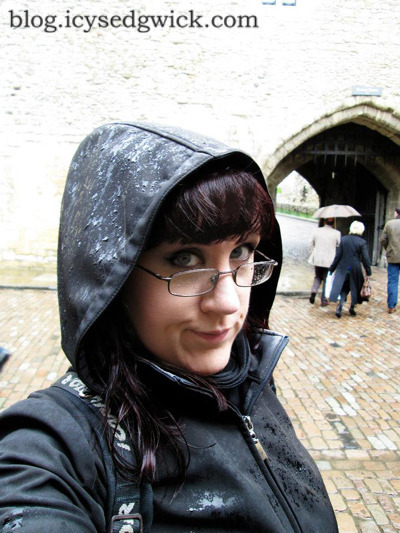
Sunday saw us check out of our hotel and take a trip along the District line back to old London to visit the Tower, one of the five Historic Royal Palaces in the city. I'd been to the Tower a couple of times before, the last time about four years ago, but Gemz had never been and wanted to see the Crown Jewels. As you can see, I wasn't particularly impressed by the damp and drizzly weather, and I was just glad I'd taken my raincoat with me! I think I had hoped that the poor weather might put people off venturing out of doors, but the Tower was really busy, and the continual rain meant that all of the indoor attractions were rather full. The Jewel House in particular was very busy, although I can't help thinking the mammoth steel doors are a better indication of royal might than the impressive range of royal plate and jewelled ephemera on display. It's a good job they have a moving walkway in front of the crowns, otherwise you'd never be able to get anywhere near them!
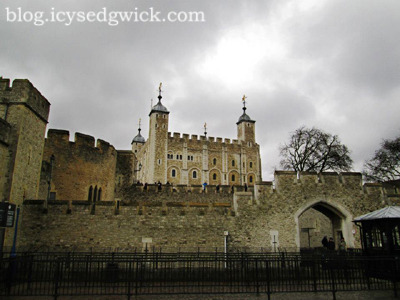
The Tower of London was founded in the latter half of 1066 after the Norman Conquest of Britain, and only Tower Hill separates it from the eastern boundary of the City of London. It's been used as both a royal palace and a prison, not to mention a symbol of royal power, and various monarchs have added different towers and functions. It used to house the Royal Mint and the treasury, as well as a Menagerie, and currently houses the Crown Jewels in the Jewel House, as well as the Royal Armouries in the White Tower. It also houses seven ravens, due to the legend that says if the ravens leave, the Tower will fall.
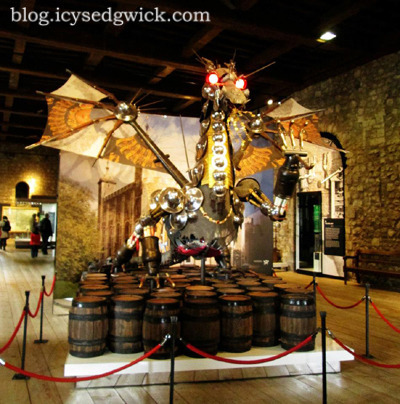
The Royal Armouries in the White Tower contain both the weaponry belonging to individual monarchs, such as Charles I's suit of armour and an articulated suit of armour for the thirteen year old Edward VI, as well as those weapons etc. that have been donated as gifts over the years. For example, they have a suit of samurai armour dating back to 1610. We came across this particular display, where a range of weapons and other items, were turned into a gigantic dragon. It was rather steampunk in its own way, and I couldn't not take a photo. I've been trying to find it online to see if there's a particular reason for its being there, but I can't find anything, so I don't know if it signifies anything, or a curator just got bored and wanted to do something a bit different with one of the displays.
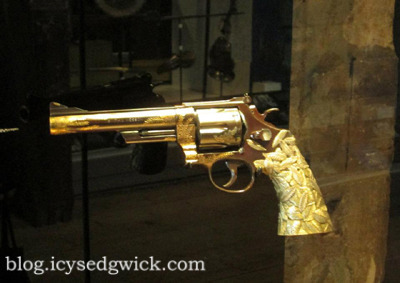
One of the displays is of weapons as art, and I couldn't not take this photo! Apparently the legendary US gunsmiths Smith & Wesson donated this revolver to the Royal Armouries in 1989. The Trustees of the Armouries commissioned Tiffany & Co. to decorate it as part of their policy to commission and collect fine craftsmanship. The decoration features leaves representing five different woods used in gun-making. They did also have a couple of other guns but they were a bit too 'bling' for my liking.
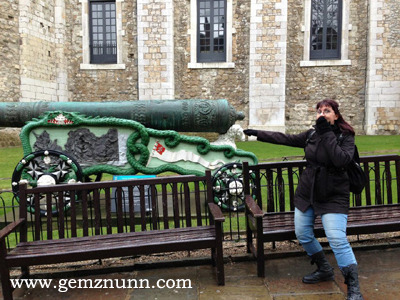
This is me faffing about outside the White Tower, pointing at a rather large cannon. I pinched this from Gemz, which is why I've tagged it with her web address instead of mine. (Give her website a look if you need to employ a web ninja!) As you can see, I have no problem with posing like an idiot in photographs, especially where heavy weaponry is involved. I think the rain had briefly stopped by this point, but the day was still somewhat dull and overcast. Still, we're Northerners so we're used to crap weather. All I can say is at least it wasn't snowing!
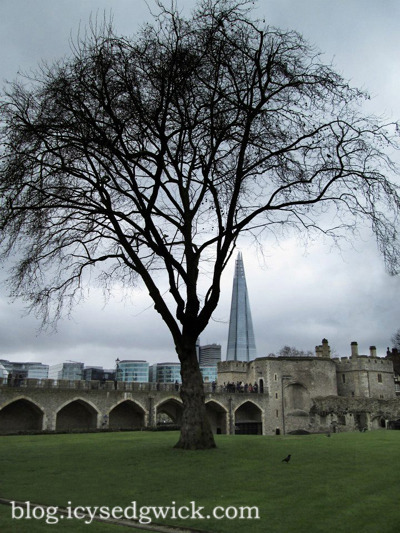
One of the strange things about the Tower is the fact it was once this imposing symbol of royal power, and it's now been dwarfed by the rest of modern London, now nothing more than a tourist attraction on the banks of the Thames. I took this photo from beside the south east corner of the White Tower, looking across the inner ward towards the Shard on the southern side of the Thames. The little black dot on the lawn to the right of the tree is one of the Tower's famous ravens, having a bit of a wander. While inside any of the buildings, you really do get a sense of the age and history of the place, but the second you get outside, the skyline is dominated by the hideous glass monuments to commerce that seem to have sprung up all over London. I suppose it's one of the signs of modern life, and perhaps I'm just too much of a traditionalist, but I really do prefer the 'historic' parts of London, as opposed to those glittering modern areas.

All over the Tower they now have these wire sculptures of various animals by Kendra Haste - we spotted lions, an elephant, a polar bear, a leopard and monkeys, all testament to the Menagerie that the Tower had between 1251 and 1835. No one actually knows where the Menagerie was kept, although the lions were kept, somewhat unsurprisingly, in the Lion Tower. The Menagerie was originally for the benefit of the monarch, and visiting royalty often gifted animals to join the Menagerie, but it was opened to the public in the seventeenth century. It was moved out to a site in Regent's Park in the nineteenth century, where it became London Zoo.
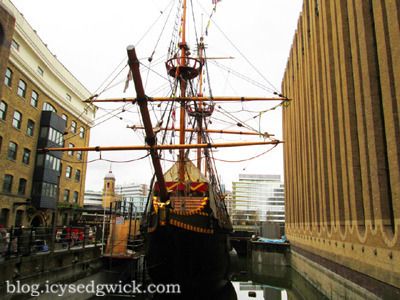
After the Tower, we crossed Tower Bridge, and took a walk along the South Bank towards the Tate Modern, passing Southwark Cathedral, Borough Market, and this, the Golden Hinde II in Pickford's Wharf. It's a replica of Sir Francis Drake's famous vessel, and while I've been on the original in Brixham, I've never been on the replica. It's something of a favourite for children's pirate themed parties (well Drake was a privateer, which is pretty much a polite way of saying he was a State-sponsored pirate) and there was one going on as we went past.
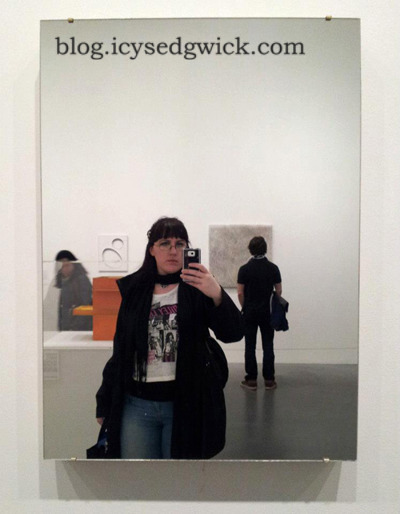
From there it was on to the Tate Modern, which is not one of my favourite art galleries due to my general aversion to modern art, but it's always worth a look. We'd wanted to see the Lichtenstein exhibition but so did the world and his wife so we ended up having to give it a miss due to the time difference between the time we were there, and the next available time for entry. We had a look around the other galleries, and I was somewhat disappointed to see that their collection of Pop Art has gone, as has their collection of Soviet political posters (I can only assume they're on loan to another gallery elsewhere). Obviously you're not really supposed to take photos, but I did take a photo of this particular piece of art. Well, it's a mirror, so I'm not sure how an artist could really claim that a mirror is art, but I don't really want to get into debates around found art, or other philosophical considerations. Plus, as the subject of the photo is me, I can claim copyright :-p
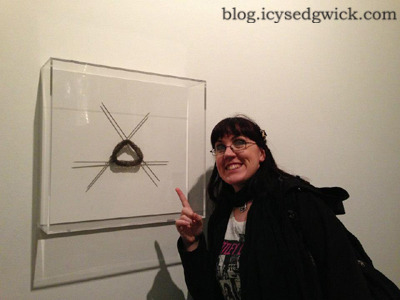
Here's me posing with an example of knitting in the Tate Modern, so really, if it's in an art gallery then it must be art...right? I've been campaigning for knitting to be considered art for a while! This is an example of tubular knitting, done on double pointed needles, and I think this one was done using nylon. That would absolutely wreck your fingers, but it certainly looks good It's actually Untitled by Marisa Merz, from 1969, and is in the Energy and Process gallery. I think knitting IS an art but it is also a process, and a very valuable one, so it was nice to come across something representative of my hobby in an art gallery.
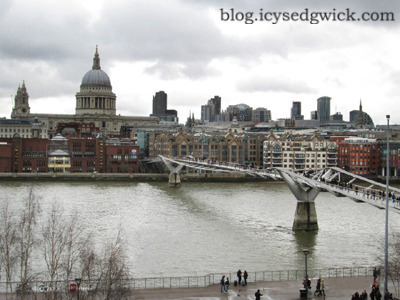
Here's the view of the Millennium Bridge from the viewing platform of the Tate Modern. Obviously that's the extremely distinctive dome of St Paul's Cathedral that you can see beyond all of the other buildings. The London skyline never fails to amaze me - Newcastle's is naturally somewhat smaller, and given our city centre stretches up a hill from the Quayside, our skyline is a bit more 'staggered', whereas the flat expanse of London gives you a good idea of its scale. I do quite like the Millennium Bridge, and if you've seen the Harry Potter films, you should recognise it.
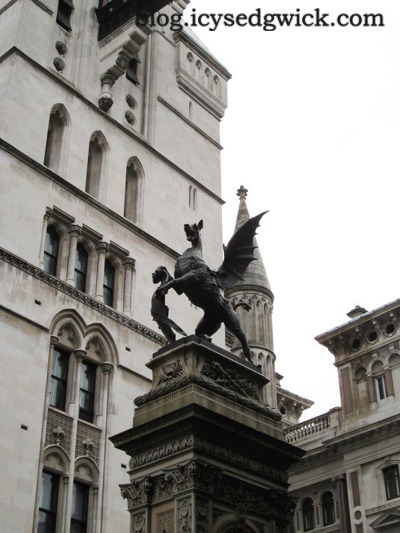
You are now entering the City of London...here be dragons! One of the weird things about London is that it's actually two cities for the price of one. The City is the square mile (well, 1.12 square miles) in the east that contains the likes of the Bank of England and Guildhall, and the area around it is Greater London. Boris Johnson might be Mayor of London, but the City has its own, the Lord Mayor of London, who holds office for a year. The City is pretty much the site of Londinium, and is therefore the oldest part of town, and the London Wall used to originally mark its boundaries. There are only fragments of it left, making it pretty useless as a wall, and I love the fact that they now use silver dragon statues to mark its boundaries. The dragons also appear on the City of London Corporation's crest, and some people think they refer to the legend of St George. This particular dragon marks the boundary between the City of London and the City of Westminster, and stands outside Temple Bar.
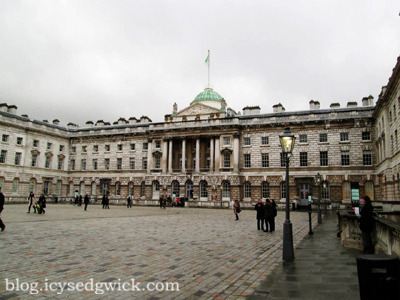
We walked along Aldwych from here to reach Somerset House, the palatial building on the north bank of the Thames where they now hold London Fashion Week. I'd only ever been in the courtyard before, and it's home to various gallery spaces, as well as the Courtauld Institute and part of King's College. Other royal palaces have stood on the site for centuries, but the present Somerset House was built in the late 1700s/early 1800s as a public building for organisations such as the Admiralty. It was even the home of the Inland Revenue until a couple of years ago.
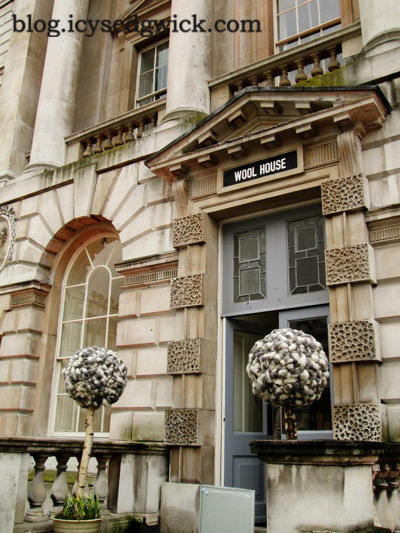
This was one of the exhibitions that was on, the Wool House expo for the Campaign of Wool. Considering Gemz and I are both very keen knitters (and I've recently taken up crochet), we couldn't very well not have a look around, especially since it was almost finished as an exhibition (it actually finished on Sunday). The Campaign for Wool has HRH The Prince of Wales as a patron, and it's a global community of sheep farmers, retailers, designers, manufacturers and wool users who want to educate people about the benefits and versatility of wool. There's a real push to make the wool industry big again to help those small businesses and local farmers that depend on it. Wool House was the world's biggest celebration of wool, and contained all sorts of yarn-related delights, from rooms decorated entirely with woollen products, to educational events and workshops. They also had rooms dedicated to wool in the fashion industry, including shoes by Vivienne Westwood that I would kill to own*! *Not really.
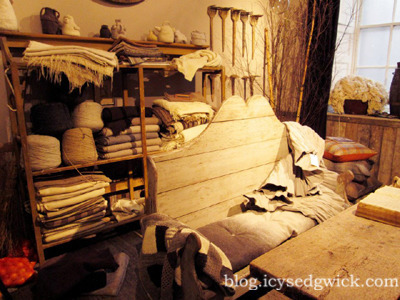
This is one of the rooms on display, and I'm determined that I will one day have a room like this in a house I own, with rustic wooden furniture and plenty of fabric and wool to hand. This is the Natural Room by Josephine Ryan, and she's created a room with naturally coloured yarns, coarse textures and layers. Other rooms in the exhibition featured interiors for modern living rooms, children's nurseries and entrance halls. If wool was a cheaper fabric, I'm sure I'd try and use a lot more of it at home! It was certainly a very inspirational exhibition and had me itching to reach for a ball of yarn and a pair of needles.
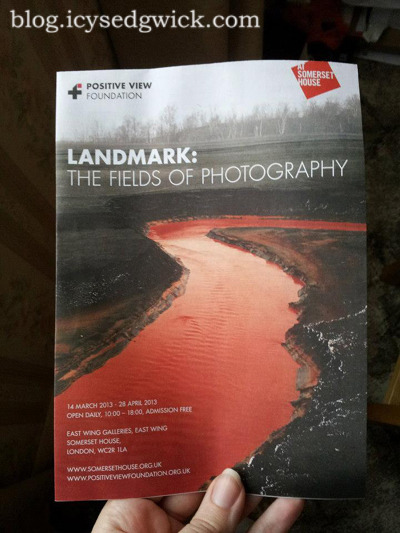
The other thing we saw was the Positive View Foundation's exhibition, Landmark: The Fields of Photography. It's on until 28 April and it's FREE so if you're in London and you like photography, I really recommend it. It's a huge exhibition, and knocks the stuff at the Tate Modern into a cocked hat. It features work by photographers from all over the world, with the common theme being that of landscape. It's not all digital work, either - some of the photographers have used 19th Century techniques involving plate photography, while others have used drones and satellites to capture their images. The exhibition's curator, William A. Ewing, says that “landscape has been and remains one of the most powerful forms of photography, and is even more so in a world which is changing so fast we can hardly keep up" and you get the feeling that the only way you'll be able to see a lot of these landscapes is through exhibitions like this, because the landscapes are either totally inaccessible, or on the brink of destruction.
It was a really busy and tiring weekend, but I thoroughly enjoyed the mix of history and culture, and I came back with a lot of ideas marinading in the back of my mind...


Sunday saw us check out of our hotel and take a trip along the District line back to old London to visit the Tower, one of the five Historic Royal Palaces in the city. I'd been to the Tower a couple of times before, the last time about four years ago, but Gemz had never been and wanted to see the Crown Jewels. As you can see, I wasn't particularly impressed by the damp and drizzly weather, and I was just glad I'd taken my raincoat with me! I think I had hoped that the poor weather might put people off venturing out of doors, but the Tower was really busy, and the continual rain meant that all of the indoor attractions were rather full. The Jewel House in particular was very busy, although I can't help thinking the mammoth steel doors are a better indication of royal might than the impressive range of royal plate and jewelled ephemera on display. It's a good job they have a moving walkway in front of the crowns, otherwise you'd never be able to get anywhere near them!
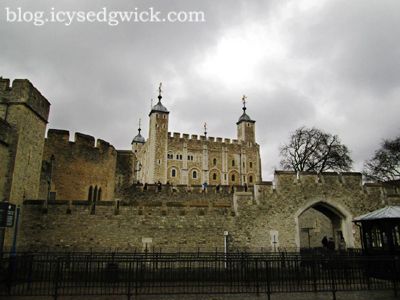
The Tower of London was founded in the latter half of 1066 after the Norman Conquest of Britain, and only Tower Hill separates it from the eastern boundary of the City of London. It's been used as both a royal palace and a prison, not to mention a symbol of royal power, and various monarchs have added different towers and functions. It used to house the Royal Mint and the treasury, as well as a Menagerie, and currently houses the Crown Jewels in the Jewel House, as well as the Royal Armouries in the White Tower. It also houses seven ravens, due to the legend that says if the ravens leave, the Tower will fall.
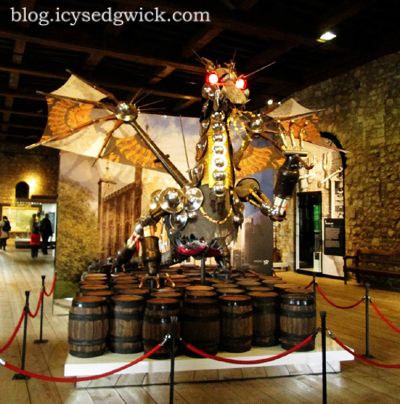
The Royal Armouries in the White Tower contain both the weaponry belonging to individual monarchs, such as Charles I's suit of armour and an articulated suit of armour for the thirteen year old Edward VI, as well as those weapons etc. that have been donated as gifts over the years. For example, they have a suit of samurai armour dating back to 1610. We came across this particular display, where a range of weapons and other items, were turned into a gigantic dragon. It was rather steampunk in its own way, and I couldn't not take a photo. I've been trying to find it online to see if there's a particular reason for its being there, but I can't find anything, so I don't know if it signifies anything, or a curator just got bored and wanted to do something a bit different with one of the displays.
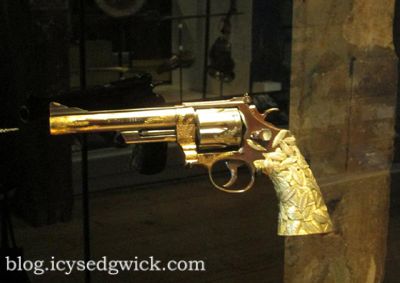
One of the displays is of weapons as art, and I couldn't not take this photo! Apparently the legendary US gunsmiths Smith & Wesson donated this revolver to the Royal Armouries in 1989. The Trustees of the Armouries commissioned Tiffany & Co. to decorate it as part of their policy to commission and collect fine craftsmanship. The decoration features leaves representing five different woods used in gun-making. They did also have a couple of other guns but they were a bit too 'bling' for my liking.
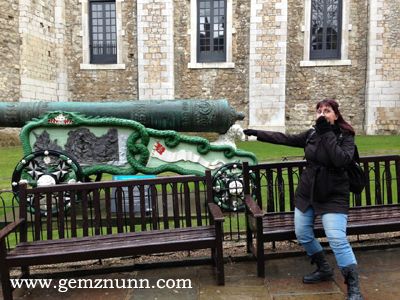
This is me faffing about outside the White Tower, pointing at a rather large cannon. I pinched this from Gemz, which is why I've tagged it with her web address instead of mine. (Give her website a look if you need to employ a web ninja!) As you can see, I have no problem with posing like an idiot in photographs, especially where heavy weaponry is involved. I think the rain had briefly stopped by this point, but the day was still somewhat dull and overcast. Still, we're Northerners so we're used to crap weather. All I can say is at least it wasn't snowing!
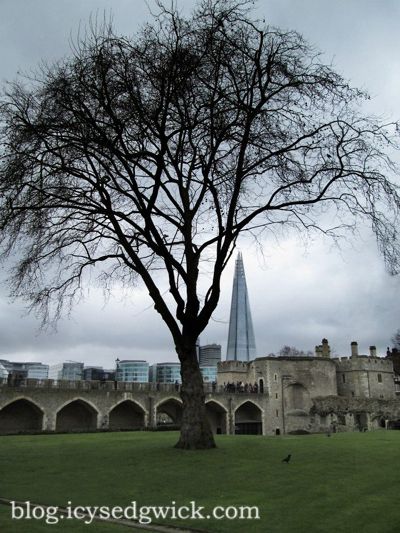
One of the strange things about the Tower is the fact it was once this imposing symbol of royal power, and it's now been dwarfed by the rest of modern London, now nothing more than a tourist attraction on the banks of the Thames. I took this photo from beside the south east corner of the White Tower, looking across the inner ward towards the Shard on the southern side of the Thames. The little black dot on the lawn to the right of the tree is one of the Tower's famous ravens, having a bit of a wander. While inside any of the buildings, you really do get a sense of the age and history of the place, but the second you get outside, the skyline is dominated by the hideous glass monuments to commerce that seem to have sprung up all over London. I suppose it's one of the signs of modern life, and perhaps I'm just too much of a traditionalist, but I really do prefer the 'historic' parts of London, as opposed to those glittering modern areas.
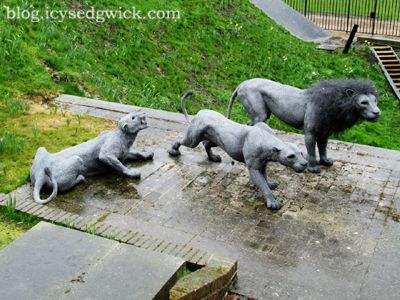
All over the Tower they now have these wire sculptures of various animals by Kendra Haste - we spotted lions, an elephant, a polar bear, a leopard and monkeys, all testament to the Menagerie that the Tower had between 1251 and 1835. No one actually knows where the Menagerie was kept, although the lions were kept, somewhat unsurprisingly, in the Lion Tower. The Menagerie was originally for the benefit of the monarch, and visiting royalty often gifted animals to join the Menagerie, but it was opened to the public in the seventeenth century. It was moved out to a site in Regent's Park in the nineteenth century, where it became London Zoo.
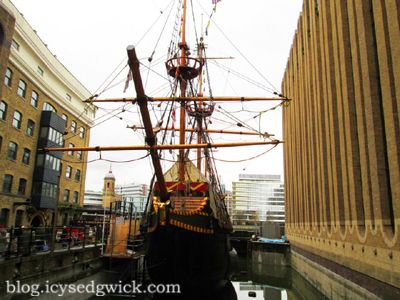
After the Tower, we crossed Tower Bridge, and took a walk along the South Bank towards the Tate Modern, passing Southwark Cathedral, Borough Market, and this, the Golden Hinde II in Pickford's Wharf. It's a replica of Sir Francis Drake's famous vessel, and while I've been on the original in Brixham, I've never been on the replica. It's something of a favourite for children's pirate themed parties (well Drake was a privateer, which is pretty much a polite way of saying he was a State-sponsored pirate) and there was one going on as we went past.
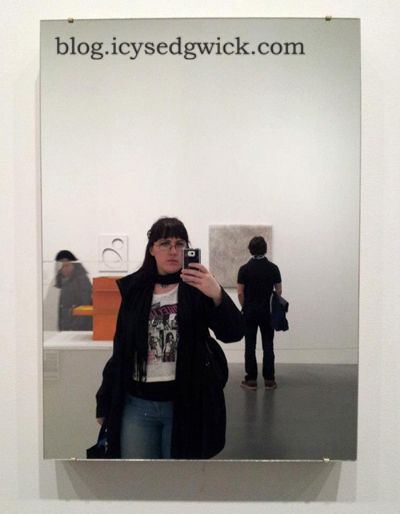
From there it was on to the Tate Modern, which is not one of my favourite art galleries due to my general aversion to modern art, but it's always worth a look. We'd wanted to see the Lichtenstein exhibition but so did the world and his wife so we ended up having to give it a miss due to the time difference between the time we were there, and the next available time for entry. We had a look around the other galleries, and I was somewhat disappointed to see that their collection of Pop Art has gone, as has their collection of Soviet political posters (I can only assume they're on loan to another gallery elsewhere). Obviously you're not really supposed to take photos, but I did take a photo of this particular piece of art. Well, it's a mirror, so I'm not sure how an artist could really claim that a mirror is art, but I don't really want to get into debates around found art, or other philosophical considerations. Plus, as the subject of the photo is me, I can claim copyright :-p

Here's me posing with an example of knitting in the Tate Modern, so really, if it's in an art gallery then it must be art...right? I've been campaigning for knitting to be considered art for a while! This is an example of tubular knitting, done on double pointed needles, and I think this one was done using nylon. That would absolutely wreck your fingers, but it certainly looks good It's actually Untitled by Marisa Merz, from 1969, and is in the Energy and Process gallery. I think knitting IS an art but it is also a process, and a very valuable one, so it was nice to come across something representative of my hobby in an art gallery.

Here's the view of the Millennium Bridge from the viewing platform of the Tate Modern. Obviously that's the extremely distinctive dome of St Paul's Cathedral that you can see beyond all of the other buildings. The London skyline never fails to amaze me - Newcastle's is naturally somewhat smaller, and given our city centre stretches up a hill from the Quayside, our skyline is a bit more 'staggered', whereas the flat expanse of London gives you a good idea of its scale. I do quite like the Millennium Bridge, and if you've seen the Harry Potter films, you should recognise it.
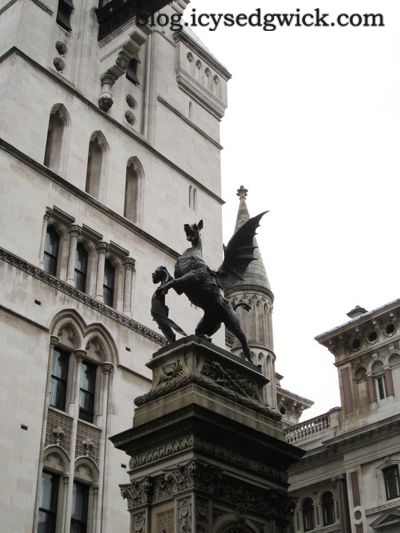
You are now entering the City of London...here be dragons! One of the weird things about London is that it's actually two cities for the price of one. The City is the square mile (well, 1.12 square miles) in the east that contains the likes of the Bank of England and Guildhall, and the area around it is Greater London. Boris Johnson might be Mayor of London, but the City has its own, the Lord Mayor of London, who holds office for a year. The City is pretty much the site of Londinium, and is therefore the oldest part of town, and the London Wall used to originally mark its boundaries. There are only fragments of it left, making it pretty useless as a wall, and I love the fact that they now use silver dragon statues to mark its boundaries. The dragons also appear on the City of London Corporation's crest, and some people think they refer to the legend of St George. This particular dragon marks the boundary between the City of London and the City of Westminster, and stands outside Temple Bar.
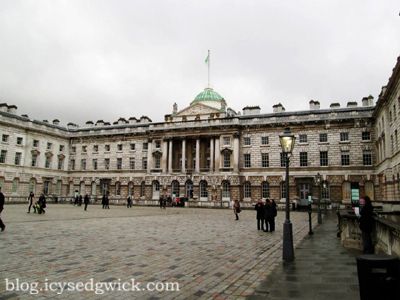
We walked along Aldwych from here to reach Somerset House, the palatial building on the north bank of the Thames where they now hold London Fashion Week. I'd only ever been in the courtyard before, and it's home to various gallery spaces, as well as the Courtauld Institute and part of King's College. Other royal palaces have stood on the site for centuries, but the present Somerset House was built in the late 1700s/early 1800s as a public building for organisations such as the Admiralty. It was even the home of the Inland Revenue until a couple of years ago.
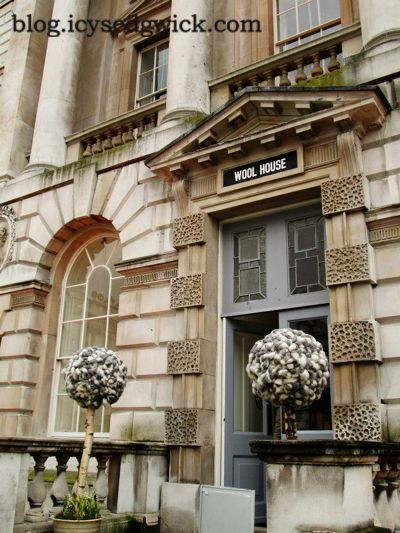
This was one of the exhibitions that was on, the Wool House expo for the Campaign of Wool. Considering Gemz and I are both very keen knitters (and I've recently taken up crochet), we couldn't very well not have a look around, especially since it was almost finished as an exhibition (it actually finished on Sunday). The Campaign for Wool has HRH The Prince of Wales as a patron, and it's a global community of sheep farmers, retailers, designers, manufacturers and wool users who want to educate people about the benefits and versatility of wool. There's a real push to make the wool industry big again to help those small businesses and local farmers that depend on it. Wool House was the world's biggest celebration of wool, and contained all sorts of yarn-related delights, from rooms decorated entirely with woollen products, to educational events and workshops. They also had rooms dedicated to wool in the fashion industry, including shoes by Vivienne Westwood that I would kill to own*! *Not really.

This is one of the rooms on display, and I'm determined that I will one day have a room like this in a house I own, with rustic wooden furniture and plenty of fabric and wool to hand. This is the Natural Room by Josephine Ryan, and she's created a room with naturally coloured yarns, coarse textures and layers. Other rooms in the exhibition featured interiors for modern living rooms, children's nurseries and entrance halls. If wool was a cheaper fabric, I'm sure I'd try and use a lot more of it at home! It was certainly a very inspirational exhibition and had me itching to reach for a ball of yarn and a pair of needles.
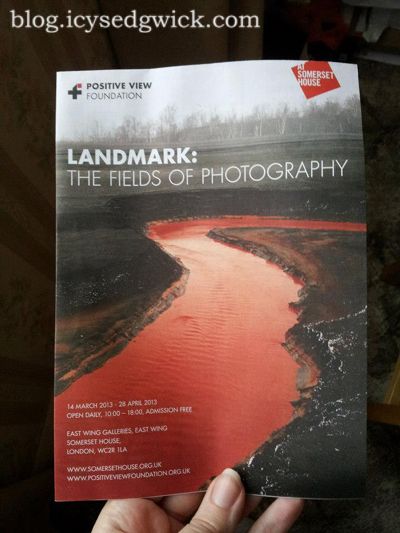
The other thing we saw was the Positive View Foundation's exhibition, Landmark: The Fields of Photography. It's on until 28 April and it's FREE so if you're in London and you like photography, I really recommend it. It's a huge exhibition, and knocks the stuff at the Tate Modern into a cocked hat. It features work by photographers from all over the world, with the common theme being that of landscape. It's not all digital work, either - some of the photographers have used 19th Century techniques involving plate photography, while others have used drones and satellites to capture their images. The exhibition's curator, William A. Ewing, says that “landscape has been and remains one of the most powerful forms of photography, and is even more so in a world which is changing so fast we can hardly keep up" and you get the feeling that the only way you'll be able to see a lot of these landscapes is through exhibitions like this, because the landscapes are either totally inaccessible, or on the brink of destruction.
It was a really busy and tiring weekend, but I thoroughly enjoyed the mix of history and culture, and I came back with a lot of ideas marinading in the back of my mind...


