
Kenneth Atchity's Blog, page 58
August 16, 2021
R.I.P. Christopher Kühne

This is an interview Chris did with VoyageLA in March.
Hi Christopher, we’re thrilled to have a chance to learn your story today. So, before we get into specifics, maybe you can briefly walk us through how you got to where you are today?
Born and raised in Mexico City, I grew a strong interest in ancient texts, History, and the classics early on. At 18 years old, I adopted fitness training as a discipline, which I have kept ever since. I have successfully dabbled in several passions throughout my life (from being a professional magician to fitness coach to video editor), but deep inside I always knew I was born to become a storyteller. To tell you how I grew aware of my call, I’ll tell you a true story. In 2009, I was taken on a group tour to a rural community in Mexico to mentor children on writing over the course of two weeks. I was assigned to mentor a shy little girl wearing cotton gloves despite the 92-degree weather who was bullied by other kids. After catching a glimpse of a notable mole on the back of one of her hands before she hastily put the glove back on, I understood why. Despite futile attempts at trying to make the girl speak to begin the mentorship, I paused and set the agents of the power of story in motion. Inspired by the mythology of Eros or Cupid, I came up with a story of the time Eros felt sad after his victims, whom he would strike with pointy arrows infused with love, complained of the pain these caused. So people began disliking falling in love. Mocked by everyone and feeling purposeless, Eros quit his job and retired to a remote forest, and the world became loveless. But as Eros endlessly sobbed, he felt the warm touch of a hand on his back. He turned and saw the most beautiful girl he had ever seen: so beautiful, he wished he could be mortal. After Eros explained to her the reason of his calamity, the girl smiled, reached for his face, and gently wiped his tears off. “Love should always feel like that.” The little girl began. “Gentle.”
In an instant, Eros took her hand and kissed it, causing a blinding source of light to sprout from the back of the girl’s hand. “Little girl,” Eros began, “From now on, everything you touch will be filled with the power of love. Use your power wisely!” Once the bright light on the back of the girl’s hand faded, she glanced down and saw a heart-shaped mark on it. The End. When I had finished telling the story, the girl’s eyes were wide with astonishment. She took her right-hand glove off (secretly-not-so-secretly, like children do) and stared at the mole on the back of her hand, which was shaped like a heart. Two weeks after the mentorship ended, I learned from one of the community’s leaders that the girl wasn’t wearing gloves anymore. She was now one of the most outgoing and social kids in the community, and the kids who once laughed at her were now her friends. They invited her to play with them and even asked her to teach them how to write stories. She excelled at it. So it was that the transcendental power of storytelling worked its magic once more, changing two lives forever and igniting the spark of what was to become my path as a storyteller. A year later, in 2010, I went on a family summer trip to Los Angeles, where I visited the backlot at Universal Studios, home to iconic films. As our studio tour tram drove by a real ongoing production, something deep inside me clicked and encouraged me to imagine a life working there, in the middle of the entertainment industry. In 2012, shortly after having earned my BA in Communications and Mass Media, I suffered an accident while wakeboarding in Mexico, which left me out of commission for about four months. This was the catalyst that forced me to turn my life 180º and set on my hero’s journey. I knew since an early age that my life wasn’t in Mexico, so I took this as a wake up call to pursue my aspirations.
Three months later, in January 2013, I was shooting a project at the Universal Studios backlot: I moved to Los Angeles to pursue a degree in filmmaking and screenwriting at the New York Film Academy. When I caught sight of a studio tour tram full of people touring the backlot, I saw myself from three years before on it, now looking at me actually shooting a project there, where legendary films have been shot. I was looking at myself from the other side. It was a very strange and incredible experience, almost like peering at oneself from the past and future simultaneously. When the epiphany concluded and I came back to the present, I knew the feeling I had back in 2010 was now manifesting in front of my eyes, coming to a full circle. In 2016, shortly after graduating from NYFA, I had the opportunity to work on my first major project, serving as a story consultant on acclaimed Spanish filmmaker Emilio Ruiz Barrachina’s award-winning film, El Violín de Piedra (The Stone Violin). In the spring, I began working with Hollywood producer and literary manager Ken Atchity (Joe Somebody, The Kennedy Detail, The Meg) on story and film development, establishing a professional relationship that continues to grow to this day. Shortly after that, I teamed up with Mr. Barrachina once more, this time coming onboard as a co-writer on his romance drama feature film Yerma: Barren, a modern adaptation of Federico Garcia Lorca´s play Yerma, set in 21st century London.
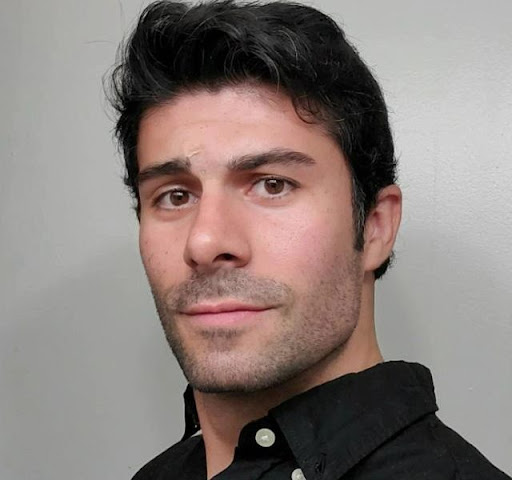 In 2017, I divided my time and enrolled at UCLA to pursue two certificates: Film and TV Development and Business and Management of Entertainment, graduating in 2019. Today, my efforts to spread and share the power of story continue with Storyan, my psychoanalytical story development company, which focuses on helping writers find the story behind their stories to improve their craft and keep transforming the world through authentic storytelling. Storyan is a development company which offers writers specialized story development services with a psychoanalytical approach. Digging deeper and beyond screenwriting, I works with writers to shed light on the foundations behind their stories: from logic and psychology to marketability, content, and form. While academia primarily teaches writers how to write screenplays, Storyan helps them understand how to compose authentic stories to improve their craft and write better stories (and scripts) that resonate on both commercial and artistic levels. I’m also currently working as an Associate Manager on a project by Steve Alten (best-selling author of The Meg, on which the 2018 Warner Bros. blockbuster film is based) and serving as a co-executive producer on an upcoming animated series with Kevin Smith attached.
Alright, so let’s dig a little deeper into the story – has it been an easy path overall and if not, what were the challenges you’ve had to overcome?
The biggest challenge has been being an immigrant. You first manage to come here, and then you realize you’re sort of an outcast competing not only against people born here but also against other outsiders like you. There’s so much stuff going on and so many people doing the same thing, it’s easy to disappear within the pile. But once you discover your voice and the elements that make you stand out from the rest, it only takes believing, patience, and perseverance. Discover your personal mark or brand before you go out there. You have it deep within you.
Appreciate you sharing that. What else should we know about what you do?
I’m a recognized screenwriter working part-time as an associate manager and story consultant in the industry. My writing is characterized by a fusion of high concept and deep storytelling aimed at resonating with audiences of all backgrounds and beliefs through sound entertainment. Most high concept films nowadays rely solely on content to reach audiences; Form has been mostly relegated to projects dealing with social trends and issues — a good thing, given that it helps delivering the message to the audience efficiently. But we’re also witnessing a split of the craft into factory-made, cookie-cutter products. Content makes money, but content alone fails to deliver a good story. Enter Form. You have to think of Content as the King and of Form as the Queen, and the kingdom of story can’t thrive without both of them. I’m religious about this philosophy every time I write and mentor. But knowing this alone is not enough to understand storytelling (and writing). Reading and understanding the very foundations of storytelling, spanning from the beginning of mankind, has shaped most of my writing and perspective, and studying classic film has given me the cinematic vision to apply my views, ideas, and beliefs to my craft. You’ve got to read the classics, and you’ve got to watch classic cinema. You’ve got to know works like Aristotle’s Poetics by heart. You don’t build a strong house without building strong foundations first, no matter what you build on top of it. It applies to story, it applies to everything.
Are there any important lessons you’ve learned that you can share with us?
Just like your outer world in a dream reflects your inner world (i.e., the elements in your unconscious), so the outer world of the character reflects his or her inner world in the dream, which makes up the story. And this also applies to real life. Here’s why. The human psyche has been, is, and will always be the same, everywhere, independently from location, culture, race, era, laws, customs, etc. It’s universal and eternal. Therefore the same mental symbols will always be present. They only change in appearance but preserve the same function. There’s a magnificent quote by Schopenhauer that illustrates this meaning perfectly when he said, “The Universe is a dream dreamed by a single dreamer where all the dream characters dream too.” Thus we see that life is a story, and a story is life; two manifestations of the same creating power, mirroring and complementing one another.
As we read in the Vedas, “Truth is one. The sages speak of it by many names,” so the universal story is one. Writers tell of it by many ways. That’s why we are all storyans, we’re all born storytellers because we are walking stories ourselves just as everything around us is a story — namely, a manifestation of the one story. But now, what distinguishes “awakened” or conscious storytellers is the act of telling the story of the unconscious, consciously. It’s about knowing, recognizing, embracing, and telling the universal symbols of the psyche while remaining conscious throughout the process. In other words, you have to be a conscious creator of the unconscious. That’s what art is. Which perfectly mirrors the deed of the true hero who comes back from the journey transformed to heal and restore the world, kingdom, tribe, society, etc. Only the hero who remains conscious through the unconscious trials and ordeals of initiation into life will attain the wisdom and knowledge to heal the world.
In practical terms, what writers need to keep in mind is that that such transformation of the character doesn’t take place at the end of the story or journey. As Karl Graf Dürckheim said, “When you are on a journey, and the end keeps getting further and further away, then you realize that the real end is the journey.” In other words, we see the transformation of the character grow and develop throughout the story journey. It is only the realization and recognition of such transformation that we see at the end of the journey, given that the character learned to apply the attained wisdom and knowledge. Many writers confuse this and make the character change only at the very end of the story. But the changes in the character take place through the trials and ordeals along the journey, just as we attain growth from the trials and ordeals of our lives. It’s the infinite pattern of death and rebirth. So, as we follow the journey into the unconscious while remaining conscious throughout, we become aware of the elements of the psyche that make us human and resonate with us universally, which are responsible for making up the story, whether you are writing about living toys, talking cars, suffragettes in Victorian England, or hyper smart computers. The story is always human and universal.


Dennis Palumbo on the Cover of Suspense Magazine’s Summer 2021 Issue


August 12, 2021
In Memoriam - Alex Cord
 Alex Cord
May 3, 1933 - August 9, 2021
 With the exception of a couple of frustrating phone calls, I began losing touch with Alex Cord after he pulled himself by the bootstraps out of his North Hollywood life and moved to his dream-ranch in East Texas. We spent nearly twenty years writing and chatting together, producing a number of yet-unmade screenplays, including Feather in the Rain, Dead South, Blood Witness, and Puppet on a String. Our martini-studded evenings with Bill Shatner, discussing Bill’s proposed directing of Dead South, were unforgettable.
We’d get together at Alex’s home, an island of macho tranquility unlike my bustling Park La Brea apartment where, he commented, I always sounded like I “was being pursued by a starving pack of Rottweilers.” There he would calmly and methodically whip up an excellent pasta while we free-wheeled convoluted chats about our mutual love of Italy (he was born Alexander Viespi), the serendipitous vagaries of life, the tragic disconnect between him and his son Wayne, the deteriorated state of male/female relationships--reciting Shakespearian monologues back and forth until it was time to settle down to our writing sessions.
 Imperially slim, Alex was indeed a gentleman from head to crown, a spinner of tales, and an endless reservoir of priceless jokes that he delivered with the intensity of the veteran thespian. One of the highlights of our artistic friendship was the trip we made together to my native south Louisiana where he met and mesmerized my Cajun uncles, aunts, and cousins—and rebuilt the front steps of Uncle Wib’s front porch because he noticed they weren’t symmetrical and sturdy enough. Then we rounded out the trip to the deep rural of the countryside with the decadent urban oblivion of New Orleans, to visit Romanian novelist Andrei Codrescu and raconteur extraordinaire Laurie Stieber in a non-stop Creole weekend of storytelling and hijinks. Alex was truly a man for all seasons, whose mere presence was riveting and inspiring. After a youth wrangling his anger at the stupidity of the world, Alex Cord was a man at peace with himself with a black and white view of things that lit up every room he entered.
August 11, 2021
Ken Atchity Joins the Jury on the Bengaluru International Short Film Festival 2021 - International Competition Section
Ken will also be available for be available for a discussion during the festival onf creative writing.


BISFF was conceived on an ambitious dream-fuelled evening, and the strength provided by multi-award winner Prakash Belawadi it came to fruition, Prakash who continues to be the festival mentor.
The idea of BISFF was to create a platform for young and amateur filmmakers, where they could screen their shorts to discerning audiences and, more importantly, find constructive and critical feedback from experts in the field. In the very first edition of the festival in 2010, there were only a total of 40 short films submitted. This number rose to 3500+ shorts in 2019, where we saw an eclectic mix of Indian and foreign language films. The journey has been a struggle, but a very thrilling and fulfilling one. Today BISFF has the distinction of being one of the largest Short Film Festivals in India.

August 9, 2021
Read the first chapter of the new Daniel Rinaldi thriller, PANIC ATTACK by Dennis Palumbo
READ EXCERPT: Panic Attack by Dennis Palumbo

A shooter takes deadly aim, and throws a city into panic Psychologist Daniel Rinaldi is no stranger to trauma. A survivor of not one, but two attempts on his life by a deranged killer, the therapist also counsels trauma patients in his private practice, and contracts with the Pittsburgh Police to help victims of violent crime cope with their experience. When a sports mascot is gunned down mid-field by a sniper at a college football game he attends, Rinaldi becomes an accidental yet integral part of the investigation. To begin with, the victim in the costume is not the person who was supposed to be wearing it.
Thriller fans, don't miss the newest Daniel Rinaldi mystery: PRE-ORDER your copy now!

August 6, 2021
It was 26 years ago this month that the seed that would become the MEG franchise took root in Steve Alten's mind!
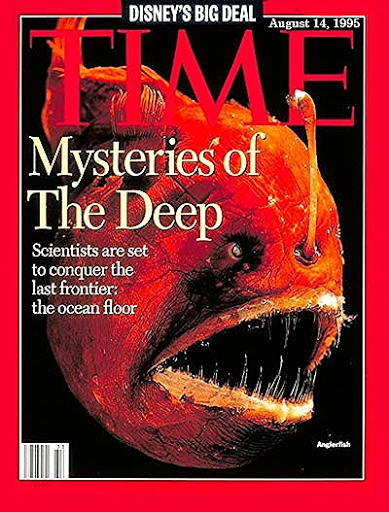 I was thirty-five at the time and living in West Boca Raton, Florida in a rented townhouse with my second (and present) wife, Kim, her daughter Amanda (age 10), son Chad (age nine), and our six month old daughter, Kelsey. I had moved down to South Florida four years earlier to open a Water Resources distributorship, hiring and training sales reps to sell whole house water treatment systems. We struggled to break even and I eventually closed up the office, running reps out of the townhouse. After a year I was the only one left and began searching for a new career. I tried several MLMs but never made a dime. And then, in August of 1995, I read the cover story of this issue of TIME magazine which introduced me to hydrothermal vents and the Mariana Trench, the deepest most unexplored location on Earth. I remember thinking, “Wouldn’t it be cool if that prehistoric Great White shark I read about when I was a teen was still alive down there… hell, I’d read that book! Better yet…” I drove to the library in West Boca and found the picture of six nerdy scientists seated in a giant shark jaw. Researching Megalodon produced very little other than the fact that they were not like the marine reptiles that went extinct 65 million years ago, these sharks were super predators that only disappeared 2 million years ago or less…
As a sales manager and (before that) a basketball coach, I believed in the power of setting a goal (read THINK & GROW RICH by Napoleon Hill). Convinced I had a great story to tell, I set the goal to become a best-selling author. I would complete a week of extensive research at my local library (no internet back then), create an outline, and then begin writing the manuscript to “White Death.” Water treatment home demos ran from 4pm to 10 pm on weeknights and all day Saturdays, so the only time I could write was in the morning when I watched my daughter (Kim worked in a doctor’s office from 9am to 4pm) and late at night. Every morning I’d feed Kelsey breakfast, then pop on Barney while I wrote, editing the previous day’s 2-4 pages before working on new pages. At the time I did not own a p/c, the original 450 page (single space) manuscript was written on a word processor that could only save 3,000 words per file… ugh. Kim got home around 4pm and I’d head out to try and sell water systems door to door to pay the bills. Each night upon returning home, I’d say goodnight to my wife and worked from 11pm to about 3 am – often falling asleep on my keyboard.
QUESTION: How do you eat an elephant? ANSWER: One bite at a time. Same for writing a novel – you write a 400+ page manuscript a page at a time. By January I had completed the first phase of my goal (the manuscript); phase-2 was to get it to a publisher. With no connections or a clue, I purchased a book: How To Get Published which said I needed a literary agent.
 Following the instructions, I wrote a 2-page query letter and sent it to every literary agent in the book that handled fiction. Of the 60 to 70 letters sent, I received about 30 rejection letters. The only interested agent was Ken Atchity at AEI in Los Angles. Ken believed my story had the potential to be a great book and movie – only it needed a ton of editing. He would assign an editor to work with me and teach me and then Ken would represent my manuscript to publishers, but his fee ($6,000) had to be paid up front. I didn’t have the money, but I did own a 1971 Chevy Malibu convertible my Dad had bought for me when I was eighteen. So I sold my car and borrowed the rest from a side job I had been working on and under the tutelage of my agent and editor, rewrote the book.
Meanwhile, I kept on writing every night and every weekend, and the new manuscript was amazing. In May, Ken and a producer associate (Warren Zide) optioned the first 100 pages of MEG and a treatment for the rest of the book on a first-look deal to Disney’s Hollywood Pics. And then, on Friday the 13th in September 1996 I went to work -- and was fired. Seems the Boys no longer needed me to babysit them. I drove home with no job and $45 in the bank. Kim was upset, but I said, “Don’t worry, hon – this is the best thing that could have happened - now I have more time to work on my next book!”
 Steve with Ken Atchity and Joel McKuin signing his million dollar deal.
Four days later Ken started a bidding war between the top publishing houses in the U.S. for the pub rights to MEG and a treatment for a Mayan Doomsday story. We went with the second highest offer from Bantam-Doubleday, the pub who had published JAWS (a 2 book, $2.1 million deal) and the rollercoaster that has been my career over the last 25 years started up a steep slope.
In October, MEG was named book of the Frankfurt Book Fair, BDD optioning the pub rights to over 20 countries. In July of 1997 the hardback of MEG: A Novel of Deep Terror hit bookstores and in August the NY Times, USA Today and Wall Street Journal best-seller list, buoyed by this interview:
What to read more? Sign up for Steve's Newsletter at: https://www.stevealten.com/

August 4, 2021
Alan Gibson's Rendezvous in Budapest!

With one of our Atchity Productions, Gibson Global and Vanishing Frame's The Seeding Budapest team, producer and award winning director Vandad Kashefi, waiting for our table at Menza.

August 2, 2021
Meet Donald Ian Bull | TV Editor and Producer, and Thriller Novelist on Shout Out!

We had the good fortune of connecting with Donald Ian Bull and we’ve shared our conversation below.
Hi Donald Ian, what led you to pursuing a creative path professionally?


Alright, so let’s move onto what keeps you busy professionally?
My path has been varied. I started in San Francisco, where I won a local Emmy at age 26 for documentary filmmaking, I was an editor on the early seasons of The Real World, I directed The Osbournes, and then I created and produced TV shows, like Dr. 90210, along with several short films and documentaries. None of it was easy, but I was lucky to have great mentors, like Jon Murray and Mary-Ellis Bunim, and friends and colleagues (Lisa Berger, Greg Johnston) who believed in me. Connections. Mentors. Friends. I can’t emphasize how crucial they are, and I wish I’d relied on them more.
I think what sets me apart is my enthusiasm and optimism. I believe I can work with anyone. I also love helping other people realize their vision. When someone says “That’s exactly how I imagined it,” I feel I’ve achieved some kind of Vulcan mind-meld.
My advice is to always ask for help. Collaborate and show other people your work. There is no direct route to success to the job you want, but good work leads to more good jobs, and you ping pong your way up the ladder. I have stalled more than once, however, and I wish I’d taken my own advice more often.
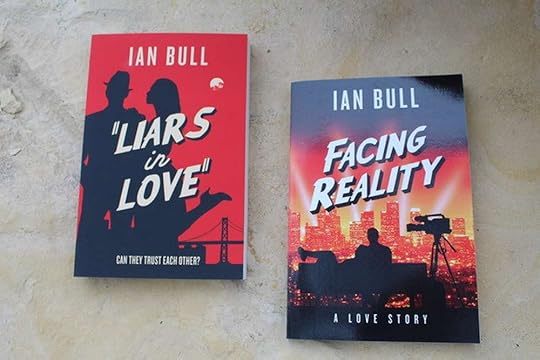
Eight years ago I started writing thrillers. like Robert Ludlum and Ken Follett. Using the pen name Ian Bull, I’ve written a trilogy called The Quintana Adventures, featuring Steven Quintana, a former Army Ranger photographer with physical and psychological wounds, and Julia Travers, the smart, beautiful, and famous actress who wants to help Steven find peace – if only he’d let her. In each book, I put Steven and Julia in dangerous situations that seem impossible to escape. I’ve also written a book about two thieves who fall in love, called Liars in Love, and Facing Reality, which explores the dark side of TV production. As Donald Ian Bull, I’ve written several books of nonfiction, including a how-to book on TV production.
I aspire to write books you can’t put down. That’s my brand. If I can create a real page-turner, then I know I’m succeeding as a storyteller. If I can become a successful genre writer, I will die happy. If someone adapted my books into movies, that would be nice, too.

If you had a friend visiting you, what are some of the local spots you’d want to take them around to?
Welcome to Los Angeles! Here’s our itinerary for the week. Starting in the San Fernando Valley on a Thursday night, we’ll start at Pit Fire Pizza in North Hollywood, where we’ll get whatever seasonal pizza is on the menu, and then dine and drink wine next to their outdoor fire. We’ll then cross the street and take in all the statues and busts of TV legends surrounding the TV Academy Building, and snap a selfie next to the giant Emmy statue. We’d then enjoy the latest independent movie at the Laemmle Theaters next door.
Friday morning we’ll get sandwiches at Art’s Deli on Ventura Blvd, then drive North on 101 and cross over the Santa Monica Mountains at Las Virgenes Canyon. It’s best in a convertible. We’ll zip north on PCH and make a right turn on Corral Canyon and take the road five miles up to the very top, where we’ll park and then hike a long stretch of the Backbone trail. From up there, we will see the entire Los Angeles Basin, Catalina Island, and the other Channel Islands further north. We may find cougar tracks, and even spot one if we’re lucky.
After a long day of hiking, we’ll head back to the valley to Bob’s Big Boy, which has a parade of classic cars every Friday night. It’s a wonderful mix of old surfers with their Bel Airs, bearded bikers with their Harleys, and young Latinx with their kit cars and low-riders.
Saturday morning we’ll head downtown and stop at Disney Hall and run around the outside taking photographs. There are a dozen staircases and passageways, and the light dancing off the brushed titanium is amazing. We’ll head to Little Tokyo next, and visit the Japanese American National Museum. The exhibits keep changing and there’s always arts and crafts to try. They have a barracks from a Japanese-American internment camp from World War II, and it honors the 110,000 Japanese-Americans who we forced from their homes and into American concentration camps. It’s a stunning piece of American history we can never forget.
We can then go to Rakkan, a great raman restaurant, eat lunch, then power past the Arts District to LA Boulders, where we will rent shoes, chalk up our fingers and climb some indoor boulders for the rest of the afternoon. Saturday evening we will stroll through the Arts District, wandering between galleries and eating at Pie Hole, and drinking beer at Angel City Brewery.
Sunday morning we’ll stay downtown and go to church at the Los Angeles Cathedral or the Cathedral of our Lady of the Angels. The art inside is stunning, especially the bronze doors created by Los Angeles artist Robert Graham. We’ll then have lunch at Philippe’s, where we can get French dip sandwiches. Monday, if it’s raining, we’ll go to Disneyland. It’s one of the best ways and days to see the Magic Kingdom.
On Tuesday, we’ll drive north to the town of Ventura, and take surf lessons at C Street. The waves there are small and consistent and easy to ride, and it’s one of the best places to learn how to surf.
By then we will both be exhausted, and we will take Wednesday off!

Who else deserves some credit and recognition?
My wife Robin deserves my never-ending praise and gratitude. I get on my knees every day and thank her for letting me into her life, and she laughs and says, “You’re welcome.” She draws out the best version of me, and when I stumble (which I do often), she forgives me and keeps us moving forward. She has been a puppeteer, a TV executive, a writer, while also being an amazing mother and wife. We love each other’s company, we still hold hands, and we disgust our teenage daughter Lily with our public displays of affection.
Website: www.quintanaadventures.com
Instagram: https://www.instagram.com/californianoirbooks/
Linkedin: https://www.linkedin.com/in/donaldbull/
Twitter: @ianbull3
Facebook: https://www.facebook.com/ianbullauthor, https://www.facebook.com/CaliforniaNoirBooks
Other: My other author website is www.californianoir.net My blog is californiabull.com My other Instagram is https://www.instagram.com/californiabull My Ian Bull Amazon author page is: https://www.amazon.com/Ian-Bull/e/B00CWE796U/ref=dp_byline_cont_pop_ebooks_1 My Donald Ian Bull Amazon author page is: https://www.amazon.com/Donald-Ian-Bull/e/B07D68W3X4%3Fref=dbs_a_mng_rwt_scns_share
Read more at Shout Out
July 28, 2021
Poet and Painter Alexis Rotella on Dreams
 Tree Peony by Alexis Rotella
Dream symbols are there to be noticed, to be recorded and to be experienced again on a self-conscious level. Dreams can restore our power, especially if the raw material of dreams can be transferred to a tangible art form.
Excerpt from Kenneth Atchity (Dreamworks Magazine)
 Alexis Rotella as the 2019–2020 honorary curator of the American Haiku Archives at the California State Library in Sacramento. This honor recognizes her longstanding and prominent contributions to the writing, editing, and publishing of haiku and related genres of poetry.
July 22, 2021
Survey: Most people prefer reading paper books over digital books on tablets, phones

LONDON — Digital books on tablets, smartphones, and devices like Amazon’s Kindle are certainly convenient, but according to a new survey most people still prefer a good old fashioned paper book. There’s just something satisfying about turning the page and holding a physical book in one’s hands, as over two-thirds of adults say they always opt for a real book over digital reading.
Put together by Oxfam, researcher polled 2,000 respondents in the United Kingdom regarding their thoughts on paper books versus digital books. Close to half (46%) enjoy physically turning pages and 42 percent prefer the feel of a physical book in their hands. One in four say they love the smell of paper books. Meanwhile, another 32 percent feel like they become much more immersed in the story while reading a paper book and 16 percent go for traditional books because they remind them of libraries.The look and feel of books is still special
Interestingly, over a third of respondents (35%) enjoy buying paper books because that allows them to proudly display them on their bookshelf as a background during Zoom meetings.
All in all, only 16 percent of adults prefer digital books and a meager eight percent who favor audio books. On average, the survey finds most adults own 49 books and read for three hours per week.
"People prefer to read physical books because they offer something more tangible and grounded. There’s something that can feel more “permanent” about real books over digital formats,” says Dr. Elena Touroni, a consultant psychologist and co-founder of The Chelsea Psychology Clinic, in a statement. “Reading offers us a form of escapism. It provides us with a break from our everyday lives, and often also, an opportunity to learn something new and expand our minds.”
What’s old is new again
Over half the poll (58%) read to relax, while 46 percent usually read as a break from the real world. More than three in 10 like to read as a means of learning something new and 39 percent read to feel happier. Close to half (45%) have been reading more ever since COVID lockdowns began. Moving past the pandemic, 84 percent plan to take a few books with them on vacation this year.
Three-quarters say they’re considering donating books they’ve finished and 72 percent usually buy used books themselves. Moreover, this research suggests that books are the top item most adults are willing to buy used. Seventy-one percent say they buy used books because it is cheaper and 52 percent do it because it is better for the environment.
Nearly one in five (18%) just like the smell of used books, while another 18 percent like the texture of a second-hand book. Fifteen percent of respondents just love the idea that they might find a note or letter written inside a used book. Nearly one in two people (45%) like to ponder where their old books have been before landing in their hands. Generally speaking, 49 percent of adults often buy second-hand items, with goods such as books, clothes, CDs, DVDs, and cars topping the list. Six in 10 adults believe buying used items is just as good as buying new.
The survey was conducted by OnePoll.
via Publishers Weekly


