
Stuart Aken's Blog, page 219
January 22, 2015
Buried Deep, by Penny Grubb, Reviewed.
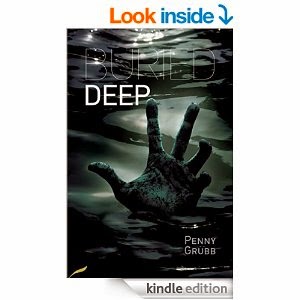 The wonderfully idiosyncratic heroine, Annie Raymond, appears first in Penny Grubb’s detective novel, Like False Money. Buried Deep is the fifth book in the series, and this well-imagined detective has significantly developed along the way.
This story holds the reader’s interest from the beginning and never lets go. The reader easily understands Annie; her faults making her a believable creation and endearing her to us as she struggles with the difficulties sent her way. In this book, she has to work with the flawed police detective, Webber. He brings his own problems, prejudices, insights and skills to the tale, building the book into something bigger than a simple crime novel.
Penny has a way of wearing the skin of her characters, even the villains, so that the reader cares what happens. But Annie and Webber are the ones we really empathise with, in spite of their faults, or maybe because of them.
The nature of the crimes in this story will disturb some readers, but crime fiction is designed to make people think, to bring the real world into the safe environment of our homes where we can experience it without personal danger.
As always, with this author’s work, there are shocks, moments of unexpected illumination, many twists and turns, and a complex puzzle to solve. And the developing pace of the story engages the reader as both Annie and Webber are led into great danger. The denouement builds slowly at first, then the pace increases with the tension until it becomes impossible to book the book down until it’s finished. And a satisfying finish it is.
Buried Deep is more than just a crime novel. It is a well-written, engaging, absorbing and truly attention-demanding piece of fiction. If you like your crime enlivened with humour, human failings, realism, and intelligence, this book is for you. I thoroughly enjoyed this book and heartily recommend it.


January 13, 2015
Ruled by Intellect or Emotion? Tips on Word Choice. #19
[image error]
English: The Dining Hall 2011 (Photo credit: Wikipedia)Certain words/phrases can induce fairly specific responses in readers. As writers, we all know this, but do we use the power of emotion in our work?
For these few weeks, I’m looking at something subjective: how to choose between emotional and intellectual words for effect. You won’t always agree with me, of course; you’re writers. But, hopefully, my suggestions will get the thought processes going.
In this series I’m looking at the difference between words that seem intellectual as opposed to those that evoke a more emotional response. How you use them is obviously up to you. The point is that the alternatives have the same, or very similar, meanings, but their effect upon the reader can be markedly different. I’ve made some suggestions here, but I’m sure you can think of others.
Intellectual: ContainerEmotional: Bag, Jar, Bottle
‘Take care when opening the container in case any of the caustic content we included damages your vulnerable skin, causing you to sue us for failing to consider your safety.’
‘Can you open this jar for me? The lid’s so tight I can’t get it open.’
Intellectual: DineEmotional: Eat
‘We will dine at eight and the ceremony will commence as soon as after dinner coffee is served.’
‘If I don’t eat something in a second, I’m going to die of starvation!’
Intellectual: FidelityEmotional: Faithfulness
‘Fidelity is an intrinsic quality of the marriage contract, regardless of gender and sexual orientation.’
‘One of the real signs of love in our relationship is our continued and mutual faithfulness.’Related articles [image error] Ruled by Intellect or Emotion? Tips on Word Choice. #18
For these few weeks, I’m looking at something subjective: how to choose between emotional and intellectual words for effect. You won’t always agree with me, of course; you’re writers. But, hopefully, my suggestions will get the thought processes going.
In this series I’m looking at the difference between words that seem intellectual as opposed to those that evoke a more emotional response. How you use them is obviously up to you. The point is that the alternatives have the same, or very similar, meanings, but their effect upon the reader can be markedly different. I’ve made some suggestions here, but I’m sure you can think of others.
Intellectual: ContainerEmotional: Bag, Jar, Bottle
‘Take care when opening the container in case any of the caustic content we included damages your vulnerable skin, causing you to sue us for failing to consider your safety.’
‘Can you open this jar for me? The lid’s so tight I can’t get it open.’
Intellectual: DineEmotional: Eat
‘We will dine at eight and the ceremony will commence as soon as after dinner coffee is served.’
‘If I don’t eat something in a second, I’m going to die of starvation!’
Intellectual: FidelityEmotional: Faithfulness
‘Fidelity is an intrinsic quality of the marriage contract, regardless of gender and sexual orientation.’
‘One of the real signs of love in our relationship is our continued and mutual faithfulness.’Related articles [image error] Ruled by Intellect or Emotion? Tips on Word Choice. #18
January 12, 2015
Writing and Running for ME/CFS #16
Okay folks; a quick heads-up.
I'm finally in the throes of actually moving house. We're leaving the old home on Tuesday and setting up in the new one on Wednesday. For a couple of days we won't have any phone line or internet connection, so I probably won't be able to do much online until Friday.
As for this week, I managed a single run on Monday, but nothing since, as I have been packing boxes and generally dismantling stuff to get it ready for the move. The same goes for the writing, but all will slowly return to normal as soon as we're settled in our new home. So, please bear with me for the moment.
More later!
I'm finally in the throes of actually moving house. We're leaving the old home on Tuesday and setting up in the new one on Wednesday. For a couple of days we won't have any phone line or internet connection, so I probably won't be able to do much online until Friday.
As for this week, I managed a single run on Monday, but nothing since, as I have been packing boxes and generally dismantling stuff to get it ready for the move. The same goes for the writing, but all will slowly return to normal as soon as we're settled in our new home. So, please bear with me for the moment.
More later!
January 6, 2015
Ruled by Intellect or Emotion? Tips on Word Choice. #18
[image error]
The Wealthy Man (Photo credit: Wikipedia)Certain words/phrases can induce fairly specific responses in readers. As writers, we all know this, but do we use the power of emotion in our work?
For these few weeks, I’m looking at something subjective: how to choose between emotional and intellectual words for effect. You won’t always agree with me, of course; you’re writers. But, hopefully, my suggestions will get the thought processes going.
In this series I’m looking at the difference between words that seem intellectual as opposed to those that evoke a more emotional response. How you use them is obviously up to you. The point is that the alternatives have the same, or very similar, meanings, but their effect upon the reader can be markedly different. I’ve made some suggestions here, but I’m sure you can think of others.
Intellectual: Fearful Emotional: Afraid
‘Many people, even those who show courage in other ways, are fearful of expressing a sincere opinion about the activities of those who have extreme religious views.’
‘I’m not afraid of those idiots who believe their version of God is the only one. I’m willing to let them know how stupid they are.’
Intellectual: Inform Emotional: Tell
‘We must inform you that you have exceeded your authority in the fulfilment of your duties and you will therefore be eliminated.’
‘When I tell you what I just heard, you’ll never believe it.’
Intellectual: WealthyEmotional: Rich
‘It has been calculated that 85 wealthy people own more assets than half the population of the world. Such inequality must surely result in serious consequences for those too greedy to share their good fortune.’
‘Rich people never understand that they got that way because of the efforts of hundreds or thousands of other people who did all the support work that allowed them to do it.’Related articles [image error] Ruled by Intellect or Emotion? Tips on Word Choice #16
For these few weeks, I’m looking at something subjective: how to choose between emotional and intellectual words for effect. You won’t always agree with me, of course; you’re writers. But, hopefully, my suggestions will get the thought processes going.
In this series I’m looking at the difference between words that seem intellectual as opposed to those that evoke a more emotional response. How you use them is obviously up to you. The point is that the alternatives have the same, or very similar, meanings, but their effect upon the reader can be markedly different. I’ve made some suggestions here, but I’m sure you can think of others.
Intellectual: Fearful Emotional: Afraid
‘Many people, even those who show courage in other ways, are fearful of expressing a sincere opinion about the activities of those who have extreme religious views.’
‘I’m not afraid of those idiots who believe their version of God is the only one. I’m willing to let them know how stupid they are.’
Intellectual: Inform Emotional: Tell
‘We must inform you that you have exceeded your authority in the fulfilment of your duties and you will therefore be eliminated.’
‘When I tell you what I just heard, you’ll never believe it.’
Intellectual: WealthyEmotional: Rich
‘It has been calculated that 85 wealthy people own more assets than half the population of the world. Such inequality must surely result in serious consequences for those too greedy to share their good fortune.’
‘Rich people never understand that they got that way because of the efforts of hundreds or thousands of other people who did all the support work that allowed them to do it.’Related articles [image error] Ruled by Intellect or Emotion? Tips on Word Choice #16
January 4, 2015
Writing and Running for ME/CFS #15
[image error]
People running at the 2007 20 kilometer road race through Brussels. (Photo credit: Wikipedia)The running first:I was due to do a 15 minute run on Monday, but I was driving my wife and daughter down south so we could all visit the new house we’re due to move into shortly. Kate hadn’t seen the place, and we needed to measure up so we could decide where the furniture should go. An overnight stay in a beautifully-located hotel, and a four hour drive each way rather removed the possibility of the run. No matter, I did manage the 10 minute run on New Year’s Day, in spite of the previous night’s celebrations. And Saturday morning saw me complete the 20 minute run. So, I’m still on plan for the proposed run. And, I’ve now entered the ballot for the half marathon I’m intending to run. Should hear whether I’ve got in by about 14th of the month, so I’ll let you all know about that after that date (by which time we should be in the new home!).
The writing:
Still curating the diary entries. But I’m through 2009 now, so just 3 more years of entries to go before I’ll be able to actually start planning and writing the book. Again, this is more likely to be once the house move has completed. Things are moving on that issue and it’s getting a little more manic here now. As my publisher, Dan Grubb, would say; ‘Onward!’.Related articles [image error] Race recap: 2014 Holiday Half Marathon [image error] The Race Towards A Greener Marathon [image error] Sign up for Reading Half Marathon 2015
The writing:
Still curating the diary entries. But I’m through 2009 now, so just 3 more years of entries to go before I’ll be able to actually start planning and writing the book. Again, this is more likely to be once the house move has completed. Things are moving on that issue and it’s getting a little more manic here now. As my publisher, Dan Grubb, would say; ‘Onward!’.Related articles [image error] Race recap: 2014 Holiday Half Marathon [image error] The Race Towards A Greener Marathon [image error] Sign up for Reading Half Marathon 2015
January 2, 2015
The Cunning Man, by John Yeoman, Reviewed.
 This ‘fictorial’ as the author calls it, should start a trend amongst authors with a desire to help other writers improve their craft. That is precisely what John Yeoman does in this collection of historical mystery stories. He tells a tale and inserts footnote links in the text, these lead to the footnotes, which explain what the writing sample has done, and how. It’s a fascinating and extremely useful tool for those wanting to become better writers of fiction.
The stories? Well, John Yeoman is an author with a very long history of writing both fiction and nonfiction. He’s a teacher and mentor who runs an excellent blog and he knows what he’s doing. These are great stories: amusing, full of historical detail, populated by characters with whom you can empathise and posing mysteries that will keep even the most jaded of readers hooked until the end.
Best read on a Kindle, as that will allow the links to work exactly as planned, but readable on any eReader you choose. I read my copy on an iPad and found the read a great experience.
This innovation, using great stories to illustrate writing practise and inform the editing process, is a great idea, and one I expect to be copied many times. If you love historical mystery, enjoy it as a reader. If you’re a writer seeking advice and inspiration, then read it with those aims in mind. You won’t be disappointed, whatever motivates you to read this one.
December 30, 2014
Ruled by Intellect or Emotion? Tips on Word Choice #17
[image error]
"I Am Tired" - NARA - 558861 (Photo credit: Wikipedia)Some words/phrases can induce fairly specific responses in readers. As writers, we all know this, but do we use the power of emotion in our work?
For these few weeks, I’m looking at something subjective: how to choose between emotional and intellectual words for effect. You won’t always agree with me, of course; you’re writers. But, hopefully, my suggestions will get the thought processes going.
In this series I’m looking at the difference between words that seem intellectual as opposed to those that evoke a more emotional response. How you use them is obviously up to you. The point is that the alternatives have the same, or very similar, meanings, but their effect upon the reader can be markedly different. I’ve made some suggestions here, but I’m sure you can think of others.
Intellectual: FatiguedEmotional: Tired
‘That ME/CFS has left her more or less permanently fatigued: I think we have to find an excuse to dismiss her.’
‘I’m sick and tired of this constant weariness. I’m sure the boss is going to sack me.’
Intellectual: ImmediatelyEmotional: Right Now
‘We must act immediately if we are to prevent the other team from winning.’
‘You have to do it right now, or the other buggers are going to win!’
Intellectual: TardyEmotional: Late
‘Your arrival is a little tardy this morning, Miss Demeanour. It will have to be recorded on your employment record.’
‘The ruddy bus didn’t come again. Now I’m late and the boss will be marking my card.’
For these few weeks, I’m looking at something subjective: how to choose between emotional and intellectual words for effect. You won’t always agree with me, of course; you’re writers. But, hopefully, my suggestions will get the thought processes going.
In this series I’m looking at the difference between words that seem intellectual as opposed to those that evoke a more emotional response. How you use them is obviously up to you. The point is that the alternatives have the same, or very similar, meanings, but their effect upon the reader can be markedly different. I’ve made some suggestions here, but I’m sure you can think of others.
Intellectual: FatiguedEmotional: Tired
‘That ME/CFS has left her more or less permanently fatigued: I think we have to find an excuse to dismiss her.’
‘I’m sick and tired of this constant weariness. I’m sure the boss is going to sack me.’
Intellectual: ImmediatelyEmotional: Right Now
‘We must act immediately if we are to prevent the other team from winning.’
‘You have to do it right now, or the other buggers are going to win!’
Intellectual: TardyEmotional: Late
‘Your arrival is a little tardy this morning, Miss Demeanour. It will have to be recorded on your employment record.’
‘The ruddy bus didn’t come again. Now I’m late and the boss will be marking my card.’
December 28, 2014
Writing and Running for ME/CFS No.14
[image error]
A Norwegian Christmas, 1846 painting by Adolph Tidemand. (Photo credit: Wikipedia)Writing:
The book is more or less where it was last week. Why? Many reasons, but mostly because it was Christmas and I had other things to do, people to see, happy times to have. Yes. I was having a break from the general work of writing. The coming week promises to be busy for a number of reasons, but I shall be making a real effort to spend some real time on the book. The house move is approaching, and we're awaiting an actual date, which will inevitably lead to more disruption. But things will settle down eventually, and I'll be able to get on with the job. Patience, they say, is a virtue. And it's a quality I came to understand only too fully whilst suffering with ME/CFS. We will get there.
Running:
This week the programme had me down for 2 ten minute runs and a fifteen minute run. I did the one on Monday, no problem. The next was due for Christmas Day, and I decided it was too cold to risk the wild outdoors, so completed that indoors before the family rose for present opening and the day's celebrations. Saturday was a fifteen minute run. Again, the temperature and icy conditions mitigated against an outdoor run and I ran indoors, wending my way around furniture and up and down the hallway for the full time required. Oddly, the indoor attempts seem to be less taxing than those outdoors. I suspect I take shorter strides when indoors; perhaps that takes less effort. In any case, the training continues on course, regardless of weather.
The book is more or less where it was last week. Why? Many reasons, but mostly because it was Christmas and I had other things to do, people to see, happy times to have. Yes. I was having a break from the general work of writing. The coming week promises to be busy for a number of reasons, but I shall be making a real effort to spend some real time on the book. The house move is approaching, and we're awaiting an actual date, which will inevitably lead to more disruption. But things will settle down eventually, and I'll be able to get on with the job. Patience, they say, is a virtue. And it's a quality I came to understand only too fully whilst suffering with ME/CFS. We will get there.
Running:
This week the programme had me down for 2 ten minute runs and a fifteen minute run. I did the one on Monday, no problem. The next was due for Christmas Day, and I decided it was too cold to risk the wild outdoors, so completed that indoors before the family rose for present opening and the day's celebrations. Saturday was a fifteen minute run. Again, the temperature and icy conditions mitigated against an outdoor run and I ran indoors, wending my way around furniture and up and down the hallway for the full time required. Oddly, the indoor attempts seem to be less taxing than those outdoors. I suspect I take shorter strides when indoors; perhaps that takes less effort. In any case, the training continues on course, regardless of weather.
December 27, 2014
The Writers’ Toolkit, by Penny Grubb and Danuta Reah, Reviewed.
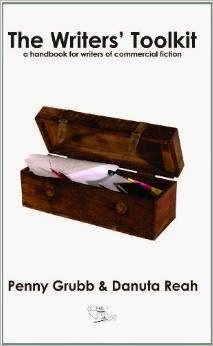 Interested in the inner workings of commercial fiction? Then this book is for you. The authors, both good commercial writers with that extra talent that separates them from the rest of the field, have produced a book that gets straight to the heart of what makes fiction commercial but also eminently readable.
Their advice is illustrated with samples, given in a clear and easily followed form so that writers can apply their methods to their own writing. Split into seven sections, the book deals with everything from overall structure, through opening sequences and tension building and releasing scenes, to bringing the story to a satisfying conclusion. The path is easy to follow and the information given in easily digested bites. Plenty of room for manoeuvre is allowed: this is not a dictatorial piece, but a guide to best practice for the general writer of good commercial fiction.
For readers, it will give insight to the way in which novels are constructed and what goes on in the mind of the writer during the building of the story. For writers, it provides detailed and sensible guidance in the most effective way of constructing a story and delivering it to your readers.
A small but comprehensive and practical ‘how-to’ book that should be on the shelves of all serious writers who want their books read by more than the minority. I shall use it in my future writing and thoroughly recommend it.
December 26, 2014
VAT shocker for Ereader Users in EU.
 Read ebooks? Just got one for Christmas, perhaps? Well, you may not know it, but your local MP and
 that friendly crowd of MEPs in Europe have got their heads together and imposed new regulations regarding VAT on digital items. The legislation was intended to stop mammoths like Ebay and Amazon taking advantage of low VAT rates in places like Luxemburg, but with the usual attention to detail shown by our political representatives (sic) they neglected to make allowances for small businesses.
For you, as a reader, this means that any digital book you purchase from 1st January 2015 will be more expensive. In some cases, depending on your country of residence, the price could rise by 25%. In UK, the VAT will go up from 3% to 20%, if you buy via Amazon.
So, it might be worth looking for and buying those new books for your Ereader before 1st January checks in.
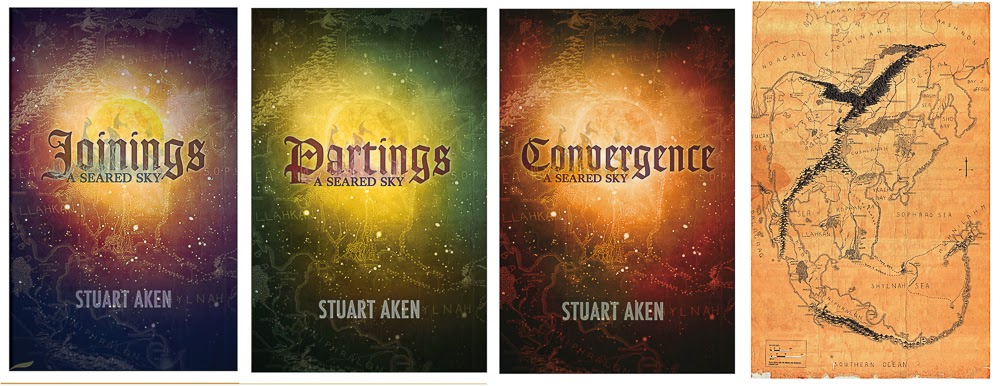
And, if I might be a bit cheeky, perhaps you'll understand if I alert you to the fact that my own adult epic fantasy trilogy, A Seared Sky, is available at a special price at present, which means you'll make double savings if you buy before 1st January. Click here to reach that deal
.
Related articles [image error] Immediate Reaction to EU VAT Regulations [image error] Everything web designers need to know about #VATMOSS


![[image error]](http://commons.wikipedia.org/wiki/File:The_Dining_Hall_2011_6.jpg)
![[image error]](http://commons.wikipedia.org/wiki/File:Bourdichon_The_Wealthy_Man.jpg)
![[image error]](http://commons.wikipedia.org/wiki/File:Brussels_marathon_2007.jpg)
![[image error]](http://commons.wikipedia.org/wiki/File:%22I_Am_Tired%22_-_NARA_-_558861.jpg)
![[image error]](http://commons.wikipedia.org/wiki/File:Adolph_Tidemand_Norsk_juleskik.jpg)