
Suzanne G. Rogers's Blog, page 44
May 28, 2013
Demons, Goddesses, and a Supernatural Series – Spotlight on Caitlin’s Book of Shadows
Fello w author Juli D. Revezzo has released the first book of her Antique Magic series, called The Artist’s Inheritance, but she’s now written a supplemental story that gives some additional texture to the tale. Called Caitlin’s Book of Shadows, it’s FREE for a limited time on Smashwords (linked below), and just $0.99 on Amazon and BN.com. I applaud Revezzo’s creativity, so if you like things that go bump in the night, this series is for you. ~ S.G. Rogers
 Blurb:
Something terrifying stalks Caitlin and her beloved Trevor. Something the bits and pieces she left claimed she had to make sense of–or so legend says. When the curator of their collection finds Caitlin’s long forgotten diary, she wonders will it tell the whole tale? Will it tell why Caitlin seemed so determined to tell the difference between reality and nightmare even as she continued the fight to defend her family from evil? Will it explain why she thought her world twisted? If she really became a witch?
Perhaps the answer lies between the lines of her story, one of lessons, struggles, and the hopes she carried like a warrior’s shield.
This is a side (or supplemental, if you will) story in the Antique Magic series, a companion to The Artist’s Inheritance (Antique Magic, Book One).
Download Caitlin’s Book of Shadows at Smashwords HERE • Buy at Amazon ($0.99) HERE • Buy at BN.com ($0.99) HERE • To follow Juli’s blog go HERE.


May 19, 2013
Author Sharon Saracino, Limoncello, and Death Benefits — Interview and Recipe
Welcome lovely author Sharon Saracino to Child of Yden! She’s going to talk about her current release, Death Benefits… and I even managed to “squeeze” the recipe for limoncello out of her. ~ S.G. Rogers
 First of all I’d like to thank Suzanne for having me on the blog today to talk about my new release, DEATH BENEFITS. While I’m here, she asked if I might also share a little about my life as an IBM. What is an IBM, you ask? Italian by Marriage. During her adventures in the afterlife, my heroine, Max Logan, discovers the utility of acronyms. I just thought I’d go with the flow! By birth I’m pretty much a Heinz 57, though I am predominantly Irish. I grew up in a large extended family that got together often and loudly, but nothing could have prepared me for becoming a member of la famiglia. When I first married into my husband’s large, boisterous Italian family it felt as though they got together en mass to celebrate everything from birth to death to how many rolls of toilet paper they used in a given week. Okay, I may be exaggerating just a little, but truly, not by much! Over the years I’ve come to appreciate these get togethers and embrace the Italian culture. Having traveled to Italy several times now, it has become clear that the hospitality, love of family and adherence to tradition isn’t just habit, it’s genetic! On to the questions!
What’s your favorite movie about Italians, or Italy, or starring actors of Italian descent?
Under the Tuscan Sun isn’t just my favorite movie about Italians or Italy, it really is one of my favorite movies of all time! Diane Lane is so incredibly gorgeous and talented and the story of a woman who has the rug pulled right out from under her and then finds the courage to take a gamble and build a new life is wonderfully inspiring.
What’s your favorite Italian food?
I am a fool for a really good spaghetti alla carbonara. But honestly, I don’t think I can choose just one favorite. Having married into a second generation Italian family, I never doubted that all of the wonderful food they prepared was any different than what native Italians ate in Italy. What I discovered when I finally went there, was that even ‘authentic’ Italian food in this country has been somewhat Americanized. We just do not have the same availability of ingredients here. No matter where I shop or what I buy, I have never been able to recreate the same freshness of flavor that the Italians achieve. I also have never been known to turn down a good bruschetta with fresh tomato, basil, and garlic drizzled with extra virgin olive oil. There’s nothing quite like it for a snack, an appetizer, or even a light meal.
To interject a taste of your book, how did your background as an R.N. contribute to the plot of Death Benefits?
I don’t know that it contributed to the plot as much as to the details. Having worked in healthcare for many years enabled me to portray the hospital environment accurately (I hope!)
Can you share your recipe for limoncello?
I’d claim it was an old secret family recipe, but I’m the only one in the family who’s ever made it and I’m only an IBM. It’s actually a recipe that I developed myself after watching Marcello and Frances sip the tempting brew on the beach at Positano in Under the Tuscan Sun. I mean, who wouldn’t be inspired by Marcello.. er, I mean, that stunning Amalfi coast scenery? After much trial and error and many resultant bottles of barely drinkable alcohol, I find this recipe works well. It may be a bit on the sweet side for some, so if you like your drink drier, omit some of the sugar and cut down the water accordingly. Limoncello is an amazingly refreshing after dinner drink, or something to sip on while sitting on the deck at dusk. Or after a hard day at work. Or poured over ice cream. Or as a topping for pound cake. Or …well, let’s be honest, I don’t really need a reason. Stored in the freezer and served ice cold, this will keep for months.
Sharon’s Limoncello
12 lemons
1 bottle plus 2 cups vodka (must be at least 100 proof to prevent freezing)
6 cups sugar
6 cups water
Using a vegetable peeler or very sharp paring knife, peel the skin from the lemons in long strips being careful to get only the yellow outer skin and avoiding the white pith. (the pith will cause the product to turn bitter). Place the lemon peels in a 2 quart or larger glass jar with a lid and pour vodka over peels. I often add the juice of one or two lemons as well, depends on my mood. Let the jar sit in a cool, dark place for at least a week. The vodka will turn yellow and the lemon rinds will pale. Strain the vodka to remove the peels. Bring the sugar and water to a boil in a large pan and boil for approximately 15 minutes to make a sugar syrup. Cool. Add the lemon infused vodka and mix well. Pour into bottles and store in the freezer. Enjoy in cordial glasses when well chilled! Salute!
Thank you so much for having me today, Suzanne! I hope your readers give the limoncello a try! It goes really well with a good book! *wink*
DEATH BENEFITS
 Max Logan’s insecurities have consumed her to the point that she has allowed them to skew her perceptions of people and circumstances. She has grown progressively more bitter, sarcastic, and solitary since her divorce and feels as though she has spent a lifetime getting the short end of the stick through no fault of her own; still she trudges on. Things can always get better, right? Of course, it’s hard to cultivate optimism when she finds herself dead; the victim of a D.I.E (Death in Error) caused by an overeager Grim Reaper in Training. She brokers a deal to be sent back to Earth as a temporary substitute for the Superintendent of Spiritual Impediment. Can a girl who can’t recognize her own problems rectify the issues of the living impaired? Or will she discover that concentrating on their issues gives her a new perspective on her own?
Buy Death Benefits at Amazon, BN.com, or Whiskey Creek Press.
Follow Sharon Saracino on Twitter, her blog, or on Facebook.


May 16, 2013
19th Century Guilty Pleasures — Dime Novels and Penny Dreadfuls
Back in the Victorian era, rising literacy rates in Europe and America gave birth to a new form of literature for the masses. Adjectives such as “lurid” and “melodramatic” have been used to describe this sort of literature, but then not everyone can be in the mood for Tolstoy and Ibsen all the time.
In 1860, enterprising American publishers Erastus and Irwin Beadle began releasing Beadle’s Dime Novels; the term ‘dime novel’ became ubiquitous for similar paperback novels to follow. Across the pond, a similar form of popular fiction arose in the 1830s, called the penny dreadful.  Originally an inexpensive, mainstream alternative to serialized fiction, within a few decades these booklets were targeted toward working class teenagers. American dime novels found new life in England as penny dreadfuls. The penny dreadful eventually gave rise to the modern day comic book, and dime novels might perhaps be compared to inexpensive formulaic romance paperbacks or e-books.
Although these stories were intended for the lower classes, I suspect more than a few highly educated people secretly enjoyed them too. In my upcoming novel Duke of a Gilded Age, Belle Oakhurst gets caught with an armful. So what’s wrong with a few guilty pleasures?
~ S.G. Rogers
Excerpt:
Fifteen minutes later, Belle had picked out several dime novels to go with Little Lord Fauntleroy. After she paid for her purchases, she positioned Little Lord Fauntleroy on top of the stack and waved to Wesley.
“I’ll wait for you near the door,” she said.
“I shall buy these two books and be along directly,” he said.
When he joined Belle, he reached for her books. “Let me carry those for you.”
“No! No, thanks, I mean. I’ve got them. They aren’t heavy.”
He gave her a shrewd glance. “You’re blushing.”
“I am not! It’s just hot in here. Shall we go?”
Wesley shifted his books to the crook of his left arm and opened the shop door for Belle. She acknowledged the courtesy with an approving nod.
“So you do know some manners.”
“And you’re not as priggish as you pretend. If you think I can’t tell you’ve got dime novels there, you’re wrong. I recognize the bindings.”
Belle was annoyed to be found out. “Fond of them yourself, are you?”
“No, my mother was constantly borrowing those things from the upstairs neighbor.” He tilted his head to one side to read the titles of her books. “Although, if you wouldn’t mind lending me A Tale of Two Romances when you’re finished, perhaps we could discuss the finer points of its subtext and characterization.”
Duke of a Gilded Age (coming June, 2013)
When American-born Wesley Parker inherits a dukedom, he must learn to be an aristocrat. Assigned to the task is his attorney’s daughter, prim Belle Oakhurst. As they travel to England together on a luxurious ocean liner, their tempestuous relationship encounters more than rough seas. Although Wesley is increasingly attracted to Belle, she is already engaged. While Belle begins to regret her hasty promise to marry, she is bound by honor and duty to keep her pledge. Furthermore, a thoughtless fabrication on her part threatens to expose her as a liar. Neither Wesley nor Belle can foresee that their voyage across the Atlantic will be fraught with peril, and will cost more than one man his life.


May 11, 2013
Children of Yden — Excerpt & Giveaway
My sequel to The Last Great Wizard of Yden has arrived, in which Jon Hansen starts to explore his newly discovered wizarding powers. Now that the duel threats of Efysian and Lord Mandral have been neutralized, the magic on Yden begins to reemerge. The combative nature of wizards, however, cannot be underestimated. The Fox Clan is building an army for some reason, but no one can figure out why. As Jon begins his magical training, a reckless skirmish with Guinn of the Fox Clan has unforeseen repercussions. Not only has he placed himself in danger, but nobody around him is safe. When Jon discovers Guinn is looking for a secret weapon, a magical artifact called the Portal Key, he vows to find it first. Jon does not yet realize the Fox Clan’s most potent weapon in its quest for power will be his unique ability to target the ones he loves. Please leave a comment, below, for a chance to win an e-book copy of Children of Yden. I’ll pick a winner just before Sunday (5/12/13), midnight, EST.
Excerpt:
 After lunch, Dr. Hansen and Jon’s sister transported home. Max, Ronny, and Jon reported to the open-air classroom Jon had dubbed ‘Dragonhenge.’ Quixoran set Ronny to work on levitation drills, but Max and Jon were to spar. Quixoran conjured a lightweight sphere about the size of softball. The two apprentices were supposed to send the ball back and forth toward one another, magically deflecting it before it made impact.
“I get it. It’s like a hands-‐‑free game of catch,” Jon said. “Easy.”
“No problem,” Max agreed, his teeth gleaming in a broad smile.
Quixoran moved off to supervise Ronny’s progress. She glanced up at Quixoran’s approach, a look of frustration on her
face. As Jon tried to catch her eye to give her a supportive nod, the sphere slammed into his shoulder. Although the sphere didn’t weigh much, at high rates of speed it packed a punch. Jon fumed, but he kept his temper under control. Max had no way to know
how much he’d been practicing at home. Jon merely massaged his new bruise and chuckled.
“Good one, Max.” Max peered at him with a glimmer of suspicion. Jon retrieved the sphere from the grass. “My turn.”
Jon sent Max a zippy shot straight to the gut. The Unicorn Clan wizard doubled over with a satisfying “oof.”
“You want to keep it up, Sunshine?” Jon muttered. “I got all afternoon.”
If you like what you see, please add Children of Yden to your Goodreads to-read list here.
.


May 6, 2013
Put Up Your Dukes — Literary References in Historical Romance
 While I was doing research for my historical romance novella, The Ice Captain’s Daughter, I became interested in the concept of male succession. My research actually provided the idea for my forthcoming novel, Duke of a Gilded Age, in which a dukedom passes to a young American man born on the mean streets of Victorian-era Brooklyn. Early on in the book, my main character, Wesley, gets into a fight with a group of local second generation Irish kids. Although none of them yet realize he’s inherited a title, including Wesley, his royal pedigree has been outed, thereby causing resentment.
Excerpt:
When Wesley stepped onto the street a few minutes later, however, the Irish were waiting for him.
“Thought you’d give us the slip, eh?” Liam said. “Where’s your silver spoon, pretty boy?”
Wesley’s hackles rose, and he assumed a cocky swagger. “How’s that fine-looking sister of yours, Liam? I hear she’s lonely for me.”
“Shut your filthy mouth about my sister! Why would Coleen be lonely for the likes of wee Lord Fauntleroy,” sneered Liam. He ended his sentence by knocking Wesley’s cap into the gutter.
Wesley’s knuckles showed white. “Don’t ever call me that again.” He decked Liam and turned to face the others.
One down, four to go.

The insult ‘wee Lord Fauntleroy’ was, of course, a reference to the novel Little Lord Fauntleroy (1886) by Frances Hodgson Burnett. Before I wrote Duke of a Gilded Age, I was familiar with the book only insofar as it involved a young American boy who discovers he’s the heir to a British earl, his grandfather. I decided to read the book to get more than a passing understanding of the story, and I was glad I did. As ‘unrealistic’ as the perfect child’s portrayal might have been, I’ve always been drawn to characters who have the ability to change others for the better. Although the earl grooms the boy, Cedric, to become an English aristocrat, Cedric’s sweet and loving nature softens his grandfather’s heart toward Cedric’s American mother and toward the people who serve him.
The book was originally published in serial form (1885 – 1886) in St. Nicholas Magazine, and became a huge phenomenon in the States especially. A fashion craze for Fauntleroy suits began (black velvet with a lace collar) and Fauntleroy hair (“lovelocks” and curly ringlets), as American mothers sought to give their young sons the “royal treatment.” Although I have no empirical data on the subject, I also suspect many matrons also tried (unsuccessfully) to get their boys to call them ‘Dearest,’ Cedric’s form of address to his mother. I daresay many of these poor little chaps were beaten up and bullied due to their fussy appearance, and perhaps harbored a lifelong resentment toward their mothers for being thus inflicted upon.
In Duke of a Gilded Age, Wesley Parker is far too old (twenty) to wear a Fauntleroy suit, and his mother is too poor (and sensible) in any case to have ever considered such a thing. Nevertheless, references to the novel pop up from time to time as certain inescapable parallels are drawn. Since my story is set in 1890, the Fauntleroy craze had not yet run its course, and would have been in the popular culture. Other literary references crop up too, as I depict what other books people may have been reading and discussing at the time. The context of a story thereby becomes an immutable character which adds richness and depth to the narrative.
I hope you agree.
~ S.G. Rogers
Blurb:
When American-born Wesley Parker inherits a dukedom, he must learn to be an aristocrat. Assigned to the task is his attorney’s daughter, prim Belle Oakhurst. As they travel to England together on a luxurious ocean liner, their tempestuous relationship encounters more than rough seas. Although Wesley is increasingly attracted to Belle, she is already engaged. While Belle begins to regret her hasty promise to marry, she is bound by honor and duty to keep her pledge. Furthermore, a thoughtless fabrication on her part threatens to expose her to shame. Neither Wesley nor Belle can foresee that their voyage across the Atlantic will be fraught with peril, and will cost more than one man his life.
Duke of a Gilded Age, a historical romance set in 1890, will be released June, 2013.


April 10, 2013
Meg Mims Sees Double And Strikes Gold
I’m thrilled to feature award-winning author Meg Mims on my blog today as she talks about her Spur Award winner Double Crossing and its smashing sequel, Double or Nothing. Enjoy! ~ S.G. Rogers
“Why d id you write your Double Series?”
I was influenced by Charles Portis’ True Grit, plus the 1969 movie version with John Wayne. The idea of a young girl whose father is murdered is the basis for Double Crossing, except my heroine is older than Mattie — 19, almost 20 — and quite sheltered and wealthy. Naive, I might add, which means Lily Granville’s determination to track her father’s killer brings plenty of unexpected education in life. It’s a twist of True Grit and Murder on the Orient Express, as one reviewer said — and won the 2012 Spur Award for Best First Novel! had fun rolling LaBoef and Rooster Cogburn into my hero, Ace Diamond. And when I started writing the sequel, Double or Nothing, I decided to use dynamite like in the (non-Charles Portis) follow-up film starring John Wayne, Rooster Cogburn, with a different twist. ~ Meg Mims
Double Crossing … A murder arranged as a suicide … a missing deed … and a bereft daughter whose sheltered world is shattered.
August, 1869: Lily Granville is stunned by her father’s murder. Only one other person knows about a valuable California gold mine deed — both are now missing. Lily heads west on the newly opened transcontinental railroad, determined to track the killer. She soon realizes she is no longer the hunter but the prey. As things progress from bad to worse, Lily is uncertain who to trust—the China-bound missionary who wants to marry her, or the wandering Texan who offers to protect her … for a price. Will Lily survive the journey and unexpected betrayal?
BUY LINKS Amazon for Kindle and print, B&N for Nook, Smashwords
Hardcover Large Print Edition (pictured): Click here for buy links – Amazon or B&N
Audiobook edition: Audible.com or Amazon
Double or Nothing … A mysterious explosion. A man framed for murder. A strong woman determined to prove his innocence.
 October, 1869: Lily Granville, heiress to a considerable fortune, rebels against her uncle’s strict rules. Ace Diamond, determined to win Lily, invests in a dynamite factory but his success fails to impress her guardian. An explosion in San Francisco, mere hours before Lily elopes with Ace to avoid a forced marriage, sets off a chain of consequences. When Ace is framed for murder before their wedding night, Lily must find proof to save him from a hangman’s noose. Will she become a widow before a true wife?
BUY LINKS — Amazon for Kindle and print, B&N for Nook, Smashwords
To learn more about Meg Mims, visit her website, find her on Amazon (Author page), on Facebook, Twitter, and Pinterest


April 9, 2013
Wild Hairs and Maggots – Sources of Inspiration

Clio, Euterpe et Thalie (The Muses)
Wild hairs, maggots, and muses are often cited as sources of inspiration. “Wait a moment… maggots, did you say?” Why, yes I did. At the beginning of the 16th century, the phrase “maggots in the head” was used to indicate obsession with a notion or fantasy, and was interchangeable with “bees in the bonnet.” (see Free Online Dictionary). Why is this factoid significant? Because Mr. Beveridge’s Maggot is the horrible name of a beautiful piece of music. Although the song is used in many Regency-era productions, it’s a traditional English country dance tune first published by Henry Playford in 1695.
I first became aware of the song in the mini-series Pride and Prejudice (1995).
Here is the same tune played at a more lively pace:
My friends and I used to use high-sounding names for the mundane, such as Chez BigMac (McDonald’s), or we’d use a French pronunciation to make something sound better (ie: The Target department store would be pronounced with a soft ‘g’, like ‘Tarjez’). I hereby propose Mr. Beveridge’s Maggot be pronounced ‘Mr. Beveridge’s Maj-oh,’ just to make it more palatable.
A maggot by any other name would be as whimsical.
~ S.G. Rogers


March 24, 2013
Guinevere or Aphrodite? Excerpt from Children of Yden
Excerpt:
Jon glanced over and was struck by how lovely Brett was under the tiny white lights he’d strung over the patio. She’d done her hair up in a kind of complicated braid thing, with curly strands escaping here and there. Brett is Juliet or Guinevere.
His eyes shifted to the dark‑haired beauty standing with Casey several yards beyond. Kira is Helen of Troy and Aphrodite rolled into one. Jon’s stomach did a peculiar somersault.
Stop staring, you idiot, before someone notices.
When a heavy hand clapped him on the shoulder, Jon flinched. His uncle Charles laughed at his reaction.
“What’s wrong, buddy? If I didn’t know any better, I’d say you had a guilty conscience.”
The Earth-born children of Yden are returning home, and it’s time to choose sides.
The Fox Clan is building an army, but its motives and goals are unclear. As Jon begins his magical training, a reckless skirmish with Guinn of the Fox Clan has unforeseen repercussions. Not only has Jon placed himself in danger, but nobody around him is safe. When Jon discovers Guinn is looking for a secret weapon, a magical artifact called the Portal Key, he vows to find it first. Jon does not yet realize the Fox Clan’s most potent weapon in its quest for power will be his heart.
Crowned Heart Award Winner Children of Yden (Sequel to The Last Great Wizard of Yden)
Available now for the Kindle at Amazon, for the Nook at BN.com and in all e-formats at Astraea Press.


March 17, 2013
Shh! I Can’t Hear You! — Musical References in Historical Literature
 What is the point of referencing music in historical romances? After all, it’s not audible. A reader can’t ask his or her book to hum a few bars… although future e-readers may yet surprise us with that ability. In addition, not everyone will be familiar with every composer or piece of music; why run the risk of boring the people who don’t care?
I do it because it sets a tone, literally. Each decade of my life has its own unique musical trends (ie: 60s – The Beatles, 70s – Bee Gees, 80s – Huey Lewis & the News, and so on) that help me recall the era rather distinctly.

Cécile Chaminade
The same could be said for people living in any other period of time. What were folks listening to in the latter half of the 19th Century? They were listening to tried and true oldies (music written before 1850), as well as up-and-coming composers. Among these late-Romantic era artists were newcomers such as Tchaikovsky (1840-1893), Edvard Grieg (1843 – 1907), Cécile Chaminade (1857 – 1944), and John Philip Sousa (1854 – 1932). Also included in this era was Arthur Sullivan (1842 – 1900), famous for his operettas with W.S. Gilbert.
To readers in the 21st Century, these are old classical composers, but to the people in the 19th Century, they were new, fresh, and often trendy (au courant in the vernacular of the day?)
The nice thing about putting an excerpt on a blog is the ability to link to the referenced music. Here is an excerpt from The Ice Captain’s Daughter (set in 1899) that mentions Morning Mood (1875) by Edvard Grieg. Following that is one of my favorite YouTube videos featuring a performance of the piece by the Copenhagen Phil. Enjoy! ~ S.G. Rogers
Excerpt
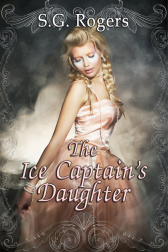 “Jillian, I could tell there was some feeling between you and Mr. Logan at Idunn Court. His presence in town confirms it. Give him some encouragement, dear girl. You may have found your match,” Aunt Letty said.
A ray of hope broke through the doubts clouding Jillian’s brow, and she suddenly felt quite buoyant. Mrs. Bleak asked her to play the piano just as the men began to filter into the parlor. Logan came over to listen, a rapt expression on his face.
“That was simply marvelous,” he said after she finished.
“It sounds best with a full orchestra, but ’Morning Mood’ by a Norwegian composer Edvard Grieg is one of my favorite pieces. It depicts a sunrise,” Jillian said.
“Yes, I could hear that as you played. Well done.” Jillian rose from the piano to allow Mrs. Bleak to be seated next. As the party grew noisier, Logan was obliged to lean in toward Jillian to be heard. His breath as he spoke tickled her cheek and ear. A delicious shiver traveled down her spine.
“Will you walk with me a bit, Miss Roring? My cousin keeps a beautiful courtyard out back. There is a view of it from the balcony.”
Jillian’s stomach gave a little lift. Her assent was on her lips, but her eyes flicked a glance at Aunt Letty. An almost imperceptible nod from her aunt gave her permission to accompany Logan for a stroll.
“Mr. Logan, I believe I would enjoy some fresh air.”


March 15, 2013
Wicked Chess – Excerpt from TOURNAMENT OF CHANCE by S.G. Rogers
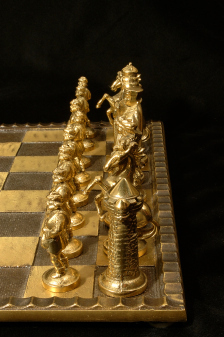 A vast chessboard spread out on the lawn next to the castle gardens. The king sipped a glass of chilled white wine as he finished his move.
“Ponder that, my dear Lord Survill,” he crowed.
“My word, Your Majesty, you’ve got me on the run,” Survill exclaimed.
Various young pages stood on the checkered lawn, in chess piece costumes. Although a shady canopy had been set up for the king and his opponent so they could play their game in comfort, the pages waited in the fierce sunlight. As sweat dripped from underneath their hot and heavy paper-maché headdresses, the boys struggled to stand at attention.
Minister Uspy hastened from the castle toward the chessboard.
“Please forgive the interruption, Your Majesty, but I have news.”
King Chance’s brow creased in annoyance. “Has Jovander or that wretched girl been located? Hester, wasn’t it?”
“Heather is the name. They both have vanished, Your Majesty. And I’m afraid that Lord Embrue has not returned from Jagged Peaks, nor the soldiers that accompanied him,” Uspy said.
King Chance waved his fingers, dismissively. “No doubt they have fallen into a game of cards or a bit of debauchery somewhere. Embrue’s success at Merrymouth may have gone to his head.”
“That’s entirely possible, Your Majesty; however Embrue’s steed was found wandering the countryside yesterday. Several mounts from the king’s army have turned up as well,” Uspy said.
“Send Lord Tether with the cavalry to question the villagers about Embrue. If you get no answers, burn Jagged Peaks down.”
“And if the villagers cooperate?”
“Burn it anyway. The commoners must understand I am in charge.”
Uspy left. King Chance returned his attention toward the chessboard, where his bishop had just keeled over from sunstroke. “I’m going to need a new bishop. Drag that boy to the dungeon and beat him for having spoiled the game.”
Heather’s skill is archery. King Chance’s skill is treachery. Who will win?
In the Kingdom of Destiny, King Chance decreed any female be she high or low born may earn a place at court by winning an archery competition known as the Tournament of Chance. Although no commoner has ever won before, this is Heather’s year. To prevent her from winning the tournament, however, King Chance will stop at nothing. The king does not yet realize Heather of the Jagged Peaks will be the spark that ignites a revolution — in time.
Tournament of Chance is available in all e-formats from Musa Publishing HERE. Also available at and wherever fine e-books are sold.
To return to Sweet Saturday Samples, go HERE


