
Stephen Metcalfe's Blog, page 4
June 19, 2023
A Game to Remember
Written for Racquet Magazine – NYC – 1981
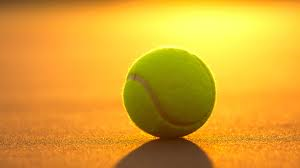
It was situated on a bluff that overlooked a lake surrounded by small cottages. It was quiet there, often deserted. The pine trees, Maine pine trees, as tall and proud as redwoods, formed a windscreen all around it and gave it a natural backdrop of green. It was a tennis court: dusty red clay, old canvas lines, saggy net—the first we ever had access to. My brother and I, thirteen and fourteen at the time, hardly knew what it was at first. It was just a flat, open space to us, and we used it that first vacation morning as a suitable spot for pitch and catch. The net made a good backstop when the attempted curve went off course. We pretended that the baseline was third to home, that the doubles alleys were bullpens. We caught fly balls close to the fence. We had a wonderful time, played till we were sweaty and finally went off to take a swim in the lake.
When we came back that evening to pick up from where we’d left off, the court was taken. For some reason I think they were from Philadelphia, the Main Line; either stockbrokers or lawyers. They were very formal with each other, even for adults. They dressed in white, square-cut, baggy-seated shorts, polo shirts, wool socks and boat shoes. The finish on their racquets gleamed in the warm, late afternoon sunshine. The balls that they stroked back and forth were pink with loose clay. It was some crazy thing they were doing on our adopted baseball field. The short, stocky one took the ball, tossed it ridiculously high in the air, pointed at it with outstretched left hand and then belted it, really whaled it, across the net. The tall, thin man on the other side, far from being intimidated, blasted it back. What was this? In my mind’s eye I can still see my brother and me watching, openmouthed, our mitts at our feet, forgotten. We felt a mixture of delight, confusion, and awe. Back and forth the two men glided, back and forth the ball flew, weightless, wonderful, back and forth until the tall player finally put it away.
“Nice shot, Phil.”
“Thank you, Dave.”
Dave would prove to be the better player by far, ranked in the East. Most of Phil’s shots would come flying back to land in far corners of the court. Phil ran a lot.
We went back to our cottage chat summer evening and laid siege. In the attic we found old racquets, Don Budge autograph models of iron durability. Balls were found on a shelf down at the general store, Pancho Gonzalez-approved, whoever he was. Banishing hardball and gloves to the closet, we took to the courts. Phil and Dave played every day, singles, sometimes doubles with their wives and every day we watched, taking mental notes, waiting for them to finish so we could go out and imitate what we’d seen. “All yours, fellas,” Dave would say as he came off, acknowledging us, even in our cut-offs and basketball sneaks, as fellow players. Overwhelmed, we’d try to impress him. We had potential in the power department but were severely lacking in control. Our cuts would often send the ball beyond the back fence, past cars, into trees and over rooftops. Only occasionally did the ball land where it was supposed to.
Our tutelage fell in the lap of one Max Rheinhart, age 78. Tennis players were scarce on the lake that July, especially on weekdays and Max, who understandably liked doubles, undertook the task of cultivating us as both partners and opponents. The game Max played bore little resemblance to the fireworks of Dave and Phil. Max not only couldn’t, but wouldn’t run – not more than a step and a half anyway. Control was put at a premium and power tennis was berated. We learned to keep the ball in play. “Get that!” Max would shout, grinning and karate-chopping the ball across the net. Stampeding to it, I’d carefully hit it back in Max’s direction. “Oh, you lucky cow,” Max would crow. “Now get that!” And he’d shovel the ball off to the other side of the court. If I was stubborn enough to hit the ball back again, Max would give up. “Yours,” he’d bellow and then look to my brother expectantly. Needless to say, my brother learned early to perform under pressure.
“I love this game,” Max would say. “I’ve been playing it for more than 60 years. It’s a great game… a game to remember. It’ll serve you young heathens in good stead, and you’ll play it always.”
We returned home to…public courts. They were within bicycling distance and were rarely used in the evening, if at all. Having a brother a mere year’s difference in age now seems part of some divine plan. There was no scrounging for practice partners. That summer was the beginning of countless sets and a passionate competitiveness, a marathon tennis match that lasts to this day. My brother had unassailable patience, and a shameless will to win. He would run and scramble and throw up sky-high lobs and somehow manage to get almost anything back. I, on the other hand, was an early victim of delusions of grandeur. I liked to win points with the great shot, the impossible shot, the shot hit three times harder than necessary and I double faulted with conviction. We were vocal in our disdain for each other’s style of play.
“You play like a girl,” I would yell, having just missed his third lob in a row.
“Hot dog,” my brother would roar, one of my miracle shots having found the eyes both to pass him and stay in the court.
“Those brothers are at it again,” the other players would murmur to each other.
Our brotherly rivalry would, over the years, become more famous than a circus. It never culminated in a fistfight, but one of us was always stalking off the court while the other was beseeching him to come back and one of us was always returning, only to have the other soon refuse to continue unless coddled accordingly. In between screams we hit a lot of tennis balls. The game was our teacher, and if my service toss didn’t go much higher than my head, and if my brother hit his backhand out of an impossibly open stance, we really didn’t care. The ball was beginning to go where we aimed it.
Something can happen that, in retrospect, makes all the difference. For us, as tennis players, it was a simple thing. That winter one of the first indoor tennis facilities in Connecticut opened in our town. Suddenly basketball had a rival, and at least twice a week we were dropped off at the tennis center to play. Beyond that, the center drew accomplished players from all over Connecticut. We watched and learned. And then, on a January Saturday, who should appear at the center, tanned saddle-brown, arms loaded with racquets, but two of the great Aussies. John Newcombe and Roy Emerson were playing a fledgling event in Hartford known as the Aetna Cup and needed practice time. They were miracle workers. The ball was like a living thing with a mind of its own as it flew on a line between racquet and racquet. When Newcombe came to the net, Emerson fed him a steady stream of laser beams, and Newcombe, possibly bored with the perfection of his forehand and backhand volley, returned the ball from between his legs, behind his back, and around his neck. It was a level of play we hadn’t known existed. Later in the locker room, when Emerson gave us a cheery “How you hittin’ the ball, mates?”, we could only mumble incoherently as he threw himself on the floor and ripped off an effort less 100 push-ups.
We graduated that winter to different tennis racquets, my brother to an aluminum Head Master and me to a Dunlop Fort. The Dunlop was the racquet that Rod Laver was using and, more than that, was the one that Dave had wielded that first summer evening in June. I loved that racquet, loved the aesthetics of it, the grain of the wood, the finish which featured the Dunlop logo emblazoned like an arrow across smooth throat. I was convinced that one of the reasons Newcombe and Emerson had been so good was because they always got to play with new racquets. My ambition at the was to get good enough to be worthy of a second Dunlop.
I broke my arm that winter in a late-season game of touch football, and so basketball was eliminated from my schedule. It was my left arm that was enveloped in plaster though, and so right-handed, my Dunlop and I began a war with the local Y.M.C.A. wall. As my brother involved himself with full presses, I whaled away, hoping against hope to gain an edge in our ongoing marathon match. Tennis is not a game designed for one. Yet if I realized that winter that a wall always wins, I also learned that not many things are as gratifying as hammering a tennis ball at an opponent who can’t complain about it. That winter at the Y, I disrupted many a fast break in pursuit of tennis balls that got away.
I don’t know when I first heard the phrase “tennis boom.” Tennis had been my favorite sport for some time now and my reaction to the news that it was boom was one of quiet pleasure and confidence. I felt I had a head start on everyone else. Suddenly there was tennis on television, and World Championship Tennis at that. Suddenly Morton’s Pharmacy had tennis magazines next to Mad and Road & Track. Suddenly it was difficult to get court time – occasionally we had to wait at the public courts. And suddenly there was talk of a town tournament.
I remember my first tournament, the way a teenager might remember their first high school prom. Weeks in advance my brother and I put aside the ongoing marathon match and took to the court to drill. We were not the best practice partners. To hit my megaton groundstrokes with any consistency, I demanded rhythm, pace and a regular bounce. My brother’s game was based on hitting no ball the same way twice in a row. Only the importance of the upcoming event kept us from quitting in frustration. We practiced overheads, volleys, and serves. We hit groundstrokes up and down the line, then crosscourt, forehand to backhand, backhand to forehand. To prepare for the doubles we played what we called “half-court” tennis, diagonal to diagonal, all shots going crosscourt. It might just as well have been Wimbledon we were preparing for. After all, the stages were the same.
We went shopping for new shorts and shirts. Part of the early tennis boom was the reaction against the all-white clause, which had ruled tennis attire for so long. Players now took to the courts in togs that resembled fantastic, mutated flowers-reds, greens, checks, plaids, lightning bolts. After much careful deliberation, I opted for a mix of old and new: plain white shorts and a navy-blue shirt. My first match would be played under a 90-degree summer sun, and I would learn something about navy blue. It holds heat like an oven. Ten minutes into the first set, that shirt, soaked with sweat, would be as heavy as a backpack. I also bought one of those floppy, white tennis hats. I had recently seen a picture of Laver wearing one and had read that he lined it with wet cabbage leaves on hot days. I considered that the final badge of professionalism.
Arthur Ashe had told an eager press he liked pancakes on the morning of a match. The day of the tournament I was up at dawn preparing pancakes. I wiped down my rackets with lemon-scented furniture wax. I filled an extra racquet cover with wristbands, shoelaces, a towel, and candy bars. I made lemonade and put it in a plastic cooler. I was ready. It was 6 o’clock in the morning and I sat down to wait.
It occurred to me later that day that singles should more appropriately be called triples. There seemed to be three antagonists on the court during my first tournament match: me, my opponent, and my jangled nerves. Seen in that light, the game might easily have been called quadruples, for my opponent’s nerves were shot, too. Set-ups were mashed into the bottom of the net. Serves not only didn’t land in the service box, but they also often touched down beyond the baseline. It was a classic confrontation. Both of us were intent on playing the game the way we thought it should be played-all fireworks, Sturm und Drang, but neither of us had the ability or the nerves to do it that way. Overheads were blasted into other courts. Lobs landed like downed birds in the laps of pic nicking spectators. We flailed. We clobbered. Both of us were from the “go for broke and maybe you’ll relax” school of stroke production. When we weren’t screaming in anguish at the sky and at each other, we screamed at ourselves. “Nobody ever said tennis should be fun,” intoned my brother to me on a changeover. In his first-round match, he had pit-patted an adult into an early grave in less than 50 minutes. To fail in front of him would be unbearable.
I hit burners. I hit smokers. I hit banshees and bullets. Some of them even went in. When the dust and sweat and blood had settled, I had won. My paralysis had been less than that of my opponent.
Sweet victory – how fast it makes us forget. I had sung a litany to myself during my first match: “Keep it in play, keep it in play, try just once to keep it in play.” I had vowed to take a page from my brother’s book. Give your opponent a chance to make a mistake, and he will. But my win drove all that from my mind. I saw only the great shots I had hit, the outright winners, the aces. Such would always be the case. I would ultimately fall into that group of players who would rather play well and lose than play badly and win.
I came up against the second seed in my next match, a fine player, one of the best for his age in our area. With nothing to lose, I went out relaxed and calm and, guns blazing, defied the odds by playing him to a standstill. I came back to earth only in the clinches, losing 7-5 in the first set, 6-4 in the second. Little did I know that this was also a precedent. To this day, I clutch against the opponent I feel I should beat, play over my head against the opponent whose skills far out shadow my own.
My brother eased through the second round. In the third round, he faced my conqueror. It is said that the term “moonball” became part of the tennis language when Harold Solomon, Tracy Austin and Andrea Jaeger arrived on the tennis scene. It was not invented by them. It was invented by my brother on a brain-frying, hot August day in 1969. For three hours he battled out there, running, lunging, throwing back the crushing blows of his more skilled opponent, prompting that opponent to holler, “Why can’t I hit the ball? It’s sitting up there as big as the moon!” I understood what he was feeling, having been there many times. “Tennis is not pretty,” rejoined my brother. He won in the third set, proving to all who watched that victory is not as much a matter of technique as it is a state of mind. He barely lost to an experienced opponent in the next round.
Looking back on tennis is like looking at a slide show of what are essentially very meaningful nonevents. My college tennis coach was the football coach called into active service for a sport he knew next to nothing about. He was a game and good-natured man whose answer to an unreliable forehand was a four-mile run. I impressed him from the beginning. On the first day of practice, in a fit of hopelessness, I heaved my racquet over the fence. He was wild with excitement when he suggested I report to the track coach as a potential hammer thrower.
But how wonderful to hit a cafeteria after a hard practice, breathless from wind sprints – hamburgers, we called them – and stride over to a beverage machine, there to down a quart or two of water, juice or soda. How wonderful to spend a snowy winter day in the gym, to play an impromptu game over lowered volleyball nets, the ball coming off the polished wood so fast that the game was one of trying for everything in the air-making crazy shots, hope less shots, playing rebounds off the back wall. Or a Saturday in early May, bright sunshine, coeds watching from the stands, and your game is on. Thwack. First serve hits the back fence head high off the bounce, ace down the middle. Thwack. Backhand passing shot, buzzing with topspin, drops toward the line as if it has airbrakes. Thwack. Forehand approach, come in behind it, and the ball comes back right where you thought it would. Boom. Volley it away. Game, set, match!
Such good memories.
I don’t play as much as I’d like to now. I live in a big city, and courts are scarce and expensive. It’s all too easy to fill my hours with other things. And yet, sometimes I wonder if, by not playing the game as often, I don’t appreciate it more. I don’t expect so much, don’t need so much, am more aware of the experience than I am of the outcome. Victory or defeat means little now. It’s just a game, and I am aware of the wonderful moments when the game possesses me, moments when it feels as I am the game and the court is like something I own. I can’t wait for the next point to begin. I feel it in my bones that the next shot will be perfect, so smooth and strong I’ll feel it right down to my toes. I pity the poor golfer – the better he gets, the less he gets to hit the ball. I pity the baseball player – three strikes and he’s out. There is an awareness, as I play, of breath drawn in and out, and of the miracle of motion. There is awareness too, of fatigue and aches and pains and there is the thought of how the cold beer will taste along with the post match conversation when I’m done.
As my brother said once over that beer one time “Is there any doubt why they score this game love?”
FOLLOW UP – 2023
A game to remember? How about a game hardly started. 1981? I would have been 28 and living in New York City at the time. A (tennis) babe in the woods. Little did I realize that the next 52 years would be filled with even more tennis memories and that like the early ones, those memories would be so intimately woven with memories of my beloved brother as to be inseparable. Brigham Metcalfe’s tennis journey took him back to Connecticut, to clay courts in summer and to indoor courts in winter. Mine took me to Southern California, to hard courts and balmy weather year-round. Brigham became a highly ranked USTA tournament player in New England, and I became a competent recreational player whose fiercest opponent remained myself. Oh, but the marathon match between us? It continued! There were cross-country visits and vacations. There were professional tournaments to attend, the US Open in New York and sometimes Indian Wells in California; excuses to visit and get together more than anything else, to share time and to take to the court. “Those brothers are at it again!” our families and friends would say to one another. And we were. My brother, Brigham, passed away in December of 2019. The final score of that life-long marathon match between us? Love.


June 9, 2023
Notes on a Son
When he was sixteen years old, my son, along with the boys and girls on his high school swim team, did the Sharkfest Swim. Alcatraz to the wharves of San Francisco, one and half miles in cold, turbulent, shark infested water. I still shiver and quake at the thought. Six months later, he and his swim mates did The Catalina Relay. Twenty miles from Catalina Island to the Pacific Palisades, at least half of it in the dark. I still get seasick thinking about it. A year after that, he and his fellow team members did a relay across the English Channel. Water temp – 54 degrees, no fins, no wetsuits, stinging jellyfish, heavy currents, and industrial freighters. It worked out that my son was the swimmer who touched the shore of France, barely evading the embrace of an enthusiastic Frenchman that would have disqualified the entire team. You’d think he might have shouted a warning, but he didn’t. He wouldn’t. My son is on the autism spectrum and can sometimes have a difficult time talking to people, especially those babbling loudly and exuberantly in a foreign language. Thankfully he hurried up and onto the beach and disaster was averted. Such is life for those who don’t work quite like “normal” people. Success can be one step away from mishap. Others, even well-meaning ones, can throw you because they move and talk faster than those who measure twice – sometimes three or four times – and then carefully cut once.
In my 2017 novel, The Practical Navigator, the protagonist, Michael Hodge, is a single father dealing with the news that his son is on the spectrum. The boy, Jamie, is six and in many ways Michael’s experience reflects that of my wife and my own, some fifteen years ago. The initial shock at the diagnosis. The fear. The uncertainty. We hardly knew what autism meant and what we read seemed ominous. What do we do? Where do we go? How do we help him? We had no idea. But we slowly learned. We found people and services. We learned about occupational therapy. Speech therapy. Floor time. All of this seemed to be in its infancy then. We had no idea if any of it was even helping. All we saw were the challenges.
My son gravitated early on to the swimming pool. He loved the pressure of the water on his body. He liked going to the rock-climbing gym and because we were told it was good for his coordination, we went as often as we could. I enjoy tennis and golf and would take him with me as often as he’d let me. A favorite story. My son was about nine and we were playing an easy local track. On the first hole, he hit a short, straight drive and as he approached the ball, he pulled a lob wedge from his small bag of clubs. It was at least one hundred and fifty yards to the pin, fifty to clear a fairway bunker.
“Wrong club, Bub,” I said.
“Dad,” he said, “it’s my decision.”
“You want to at least carry the bunker,” I insisted.
“Dad,” he repeated, “it’s my decision.”
I shrugged and watched as he hit the ball into the bunker. Four or five or six shots later, he was on the green, calmly putting out, when it hit me. “My man, you do know you’re trying to get the ball into the hole in as few shots as possible?” He looked at me in surprise. “Really? But- why? It’s fun to hit the ball.” It’s something I’ve tried to remember on the golf course ever since.
My son’s elementary school was a warm and nurturing place. It was close to home, and he was surrounded by supportive teachers and typical peers. We supplemented his studies as best we could with aides and outside tutors. Looking back, we probably could have done better in the academic department. At the time it though, it seemed more important that he be comfortable, secure, and accepted for who he was and frankly, we had no idea where else to go. His first middle school experience was a disaster. It was a private school for “students who have struggled” and it promised highly trained teachers and research-based learning strategies. After one unhappy, defeating semester with far too much time spent sitting in the principal’s office alone because they didn’t know what to do with him in class, we took him out. We explored public school options which increasingly seemed wrong for him. They gave little and they expected little of him. We were then lucky enough to find a city supported private school in San Diego, a school where, we were told, there were “no labels, no excuses” and that it was “life on life’s terms”. The school motto was “I will either find a way or make one.”
Students mentored one another and when my son first found himself in one-on-one situations with peers he wasn’t comfortable with it. Several weeks in, when unexpectedly told one day that all students would be staying to spend the night at school to engage in social activities, my son slipped out the door and ran away. The school searched for him, we searched for him, the police searched for him. At one point a helicopter was flying overhead – “Be on the look out for….” Hours went by and we were out of our minds with worry. And then out of nowhere a call came on my wife’s cell phone. It was him. He was in a questionable part of town at least 18 miles away. He had walked there, somehow crossing over, under or across two freeways, and trudging through several neighborhoods in the process. Tired, he had at last gone into a convenience store and asked to borrow someone’s cell phone. The school suggested that it be the police who picked him up and brought him back. Thirty minutes later, we were outside waiting when the cruiser pulled into the school parking lot. My son quickly jumped out of the back. The first words out of his mouth? A defiant – “I’m not spending the night!” Our reply? “Yes, you are!” And he did. And then, when he came home the next day? A triumphant – “I had fun!!” We can almost laugh about it now. Almost.
In the new school, my son was expected to focus on a college bound course of academics and even though he addressed the subjects with his teachers, a single subject at a time, he struggled at first. Math was difficult but doable. Literature was a nightmare. My son is a competent reader, but he doesn’t think in words, he thinks in pictures. When asked which foreign language he wished to study, he requested Tagalog, the national language of the Philippines. He was disappointed when told it wasn’t on the curriculum. He was asked to do culminating presentations on his course work, and they were mono-syllabic, and he spent most of the time staring at the floor. But three times a week he and his schoolmates swam. First in a YMCA pool, not far from school and then, when other members complained about the “weird kids”, in the ocean where the “weird kids” often scared the lifeguards half to death, hitting the high surf and swimming out to sea at six-thirty in the morning, no one ever dreaming that in several years the “weird kids” would all be swimming the English Channel together.
As he now approaches his senior year, my son, now nineteen, still struggles with math, and it’s doubtful he’ll ever be a literature major, but he has become a competent and dedicated student. Rather than Tagalog, which he has vowed to learn on his own, he opted for Spanish and as for those presentations, he now gets up, looks everyone in the eye and speaks with confidence. He talks about being a lifeguard, he talks about being a marine biologist, he talks about studying snakes and poison dart frogs. He talks about the kind of house he’d like to have some day. He likes the idea of bright colors and round, Hobbit doors. With the help of a service dog, he has achieved a level of independence. On weekend walks, he’s made friends in our small town. Local merchants. Wait staffs. The guys who play pickup basketball at the park on Saturday mornings and of course, the members of the local swim clubs. They all enjoy my son, and they look out for him. My son has come to a place where he rejects any imposed limits that come with the label of autism spectrum, and I am so proud of him for it. And yet I still worry. I still see the challenges. If the first hump to get over as a family was the initial diagnosis and the obstacles my son would face as a boy and a teenager, the second one will be those he faces as an adult. It can be hard out there for everybody, but it can be especially hard for those that are considered – and again, it should be in quotes – “different”.
In a recent New York times piece, the columnist, David Brooks, pointed out that we, as individuals, “want to go off and create and explore and experiment with new ways of thinking and living. But we also want to be situated — embedded in loving families and enveloping communities, thriving within a healthy cultural infrastructure that provides us with values and goals.” Brooks says we look to create a contract with society through work and service and we look to create a covenant with our families, friends, and communities through love.
Contract and covenant; my son wants both. Will there be a job for him someday studying poison dart frogs? Perhaps but probably not. We have no idea yet what his calling, his contract with society, will be. More important, will there be relationships and a family – a covenant – not of origin, but of his own making? There are no courses or schools or programs for that, at least none I’ve heard of. I do know my son is long on love.
I tell myself I’m not alone. I tell myself that all parents want the very best for their children, want them to be secure, happy, and fulfilled. I tell myself there are times when no parent has all the right answers. I didn’t when my son was six, and I don’t now that he’s nineteen. I can only tell you this. At a recent fundraiser for autism awareness, my son had the opportunity to go up on stage and answer questions. He is 6’1”, has long blonde hair and a swimmer’s body. He was wearing slacks and a dark sports jacket and his favorite bow tie. In front of several hundred people, he answered the questions put to him with poise and authority. He talked about his swims, and he talked about his dog, and he talked about his school. And when asked what he wanted to do next, he smiled and replied – “Maybe go to college, get a good job and marry a pretty girl.” The audience erupted in laughter and enthusiastic applause.
I did too.
2017ONGOING EPILOGUE
My son is 26 now. He still lives with us but is ALMOST completely independent. He works five days a week at a local market where he is a valued employee, and he does volunteer work at The Scripps Institute of Oceanography. It’s not what he wants for the rest of his life, but it works for the time being. He still hits the ocean on a regular basis, he is socially active with any number of devoted friends and finally, though he’s come close once or twice, he hasn’t found that pretty girl yet. He still says he wants to. From a young man’s mouth to God’s ear.
The Practical Navigator is available on Amazon:
https://author.amazon.com/books/bookDetail?book=B01ARSJJJW&marketplace=ATVPDKIKX0DER
June 3, 2023
Hey there, ho there, Hybrid!
Fact. Over four million new books were published in 2022. They were self-published, commercially published and hybrid published. What’s that you ask? Hybrid publishing is where an author pays a publishing company a set amount of money to publish their book. In exchange for the fees they pay, authors get higher royalties than they would with a traditional publishing company. My latest novel, Attachment Patterns, was released by a hybrid publisher.
A little background. My first two novels, The Tragic Age, and The Practical Navigator, were published by a traditional publisher in 2015 and 2017 respectively. I was given a nice advance on both novels and was led to believe that literary success was just around the corner. It wasn’t. Though both novels were well reviewed, they pretty much tanked at the box office (movie term). It goes without saying, peddling a third novel can prove a difficult task when the first two haven’t attracted a reading audience. (To coin another movie term – “what have you done lately?”) My agent submitted an early draft of Attachment Patterns to perhaps half a dozen different publishing houses and the reaction was pretty much the same – hmm, good, but not for us. It was the fall of 2019, and you can imagine what was around the corner. A pandemic. No, not just in publishing, but in the world in general. Batten down the hatches time, everyone working from home alone. Still, a writer pretty much lives in isolation anyway and when I wasn’t the family chauffeur, camp counsellor and bottle washer, I kept working and revising AP. There were things happening in the news daily, and they affected my story. I cut and trimmed (always good). Most importantly, I changed the narrative voice of the book. It became a story told by the protagonists’ aspiring author daughter. It helped lighten the tone on a serious subject – mental health. When I gave the new draft to said agent in early 2021, she had wonderful news. She was retiring. And no, as much as she liked the changes, the rejection of a client’s work felt like a rejection of her, and so she would not be resubmitting the novel. Thank you. Thank you so very much. So began the Oedipal journey of trying to find a new agent. You send out queries – “Dear so and so — my name is — I’ve done — I now have a new – ” One might have thought that because of a modest history of success, there might have been someone out there who’d want to take a look, but no, out of I don’t know how many queries sent, some with the recommendation of other professionals, I received next to no replies and those I did receive were “thank you but no thank you”. It was like breathing dead air. My one-time, long-time film agent, now an industry bigwig, had told me some years ago that “just like in baseball, all-stars eventually have to take the bench, but managers keep going to the world series”. I thought that was horse manure when I heard it, but I was starting to wonder if he was right. I considered self-publishing. I looked up the details on Amazon. It seemed very do-able, but it also seemed that at the end of the day I’d have a book read only by the people on my email list. (See previous post – Promotion) And then, out of the blue, a writer-friend came out with a novel, a wonderful, entertaining read, that he published through – what are they called again? – yes, a hybrid publisher. The book was well designed, seemingly well marketed, he even optioned the TV rights to an LA production company. Hmmm. Perhaps this was the way to go. I went online, did a search, and found immediate results. I made a short list and submitted. Replies started coming back, most of them positive. It was jump off the pot time and so I chose one. They seemed discerning and legitimate. They had offices in New York City and London, they seemingly didn’t accept just anything, and they promised a “personalized approach to books and authors”. Did I think to look for reviews of the company? At the time, as naive and ill-informed as I was, I didn’t know such things existed, so no, I did not. However, later, in the spring of 2022 I did happen upon some online reviews, and they were mixed, tending towards negative. I also read about publishers who claim to be hybrid publishers but are in fact vanity publishers. Vanity publishers accept any book submitted to them, they publish in as elementary a way as possible and often don’t have any distribution or marketing services. It made me nervous, but there was nothing to be done, I was already in. And I was already nervous. Work had begun on the book and so far, all contact had been by email. There seemed to be no one specific person to contact about the process, no one who was trying to “personalize” the approach. After about six months, the “edited” manuscript finally arrived for me to “proof”. Translation? Read each word and punctuation mark slowly and carefully while looking for errors. Now I have to say that as a writer one can become so inured to looking at your words on a page/screen, you become oblivious to your own mistakes. That’s why you have someone else do it. Still, I went through the manuscript, trying not to “read” it, and instead, as asked, looked for errors. Much to my surprise, I found quite a few. I also found that a nameless “someone” – an editor perhaps? – had taken some of my dialogue and written it “correctly”. Only people don’t always speak correctly, at least my characters don’t. I rewrote the dialogue “incorrectly” again and sent it back. There still seemed to be no one to talk to. Perhaps a month later I was sent a copy of what was to be the cover. (See a previous post – The Cover) It was the title of the novel – Attachment Patterns – set against a red background. I thought we could do a little bit better than that. To make a long story short. (Literary terms!) The novel was released some five weeks ago, late May 23’ – yes, it took more than a year, and the first review said this – “Attachment Patterns by Stephen Metcalfe is a fantastic book that deserves a rating of 4 out of 5 stars. I must note that the book was not professionally edited, if it were, it could potentially earn a complete 5-star rating because it truly is a wonderful read.”
Another review said this – “This book is well-written, emotionally charged, and a really good read…. However, the cover is an absolute insult.”
Four million books published in 2022. Four million! How do any of them find readers? Because at the end of the day that’s what a writer is looking for. If a tree falls in the forest and there’s no one around to hear, does it make a sound? If you put words on a page and no one ever reads them, do the words truly exist? You can forgive editing mistakes. You can overlook a less than creative cover. At the end of the day what I really wanted from my publisher, past and present, was help in finding readers.
Going to the company website now, I do pick up a different message than I did two years ago. “Send us absolutely anything you have and if you pay us, we’ll turn it into something that resembles a book.” They’re not the only ones. Hybrid should now be called hydra – it’s an online beast with multiple-multiple heads. There are also editing websites, ghostwriting websites, publicity websites, book review websites, book club websites. The one thing they seem to have in common is they’re all trying to make a buck. It’s what it is.
Me? I’m back to square one. I have a book I’m very proud of that will only be read by the people on my email list.
May 28, 2023
ORANGUTAN

(From 2015) So there I am the other day, sitting on a stationary bike at “Rehab United” trying, slowly, with great pain and no success, to get my surgically repaired knee to go 360 degrees around on the bike pedal, all the while watching young athletes and trainers and the seriously in shape, dip and bend and stretch and flex. Yes, there are some old people there but like me, they are watching the young people too, all of us wondering what the fuck happened? We got old.
Really, there is nothing like a sculpted-from-marble, twenty-something blond physical therapist in a banana colored sports bra and a grey leotard, doing effortless, jaw dropping lunges with 25 pound barbells, to make you feel like an orangutan at the zoo, sitting on a ragged blanket, with stomach folds like a dress and an itchy ass, chewing on a piece of limp grass, sticking your finger up your nose and occasionally scratching your pits for want of something better to do.
And there is nothing that makes you more wistful for your lost youth than watching a piece of steel in a UCSD basketball shirt, bench press his own weight 28 times and then leap up and roar and slap palms and act as if he doesn’t notice the admiring glances of the ladies. The pheromones are flying around here. Unfortunately they wrinkle, crash and burn as soon as they get near me.
Perhaps this is because since 1980 I’ve gained and lost about ten pounds a decade. Hard to believe, I know (!), but true. In 1980, I weighed about 175. In 1990, I checked in at 185. In 2000, yes, around 195. In 2010, I went back to 180 but only because I started working out with a personal trainer two to three times a week. It was boring, exhausting and painful and after two years of it, I decided I’d rather spend the money on good wine. Now, in 2015, I hover close to 185.
It goes without saying the lovely wife hasn’t gained an oz. in the 30 years I’ve known her. Call it a combination of good genetics, discipline and a vegetarian diet but if anything, she’s lost weight. The lovely wife can still do lunges with the best of them and with a week’s notice, would be benching her own weight and more. The lovely wife, of course, is of German descent. There is a reason they almost single handedly beat the world twice. However, as I like to remind her, the English were on the winning side both times and I am of English heritage. When I lived in London the idea of a sensible lunch was two pints of beer. I felt very much at home.
But back to the orangutan.
Adult males have large cheek flaps which get larger as the ape ages.
What a coincidence!
The sagging cheeks show their dominance to other males and their readiness to mate. My sagging cheeks show that I’m tired, hung over, constipated or all three.
Orangutans do not swim. I don’t either. I occasionally allow a wave to wash gently over me.
Orangutans eat dirt. I only do when I’m drunk
But back to my knee. (Enough about my knee, let’s talk about my knee).
My orthopedist, Dr. Stu, tells me that post op it looks pretty good. He tells me I have good extension and only fair flexion. I wonder if he’s talking about my knee.
Dr. Stu saw me on a tennis court the other day, standing in one place, feeding balls to my son. He stopped his, car, waggled a finger at me and told me that in no uncertain terms I was being a “bad boy”. I chewed on my limp blade of grass, stuck my finger in my nose and pretended I didn’t hear him.
Occasionally in the middle of the night, for no apparent reason, my knee locks and I howl – okay, bleat – in pain. The lovely wife is sick of it. It bothers her to no end that I immediately go back to sleep leaving her to worry about everything and nothing for the next hour or so. And then, just as she begins to doze off, I do it again. I don’t remember any of this in the morning but she does. And to get even, she insists on cogent conversation before I’ve finished my coffee.
Adult male orangutans are solitary and happiest alone. They usually have three or four eligible females in the general area with which they get together only at breeding time. The rest of the time the females take care of the young and leave the big guy to himself.
When the sculpted-from-marble, twenty-something blond physical therapist in a banana colored sports bra and a grey leotard, glances in my direction, I immediately go from doing lackadaisical, slow motion, uncompleted pedals to a first time, full out, 360 degree burst. This is against Dr. Stu’s orders and after the first go-round, it feels as if I’ve ripped out every stitch, torn all the scar tissue and have pulled my new enhanced ACL from its boney socket. But stifling my bleat, I pedal on like Greg Lemond.
Who says human beings are smarter than apes?
I’ll be playing tennis by December. The sculpted-from-marble, twenty-something blond physical therapist in a banana colored sports bra and a grey leotard will remember me.
May 27, 2023
HEY THERE, HI THERE, HYBRID, YOU’RE AS WELCOME AS CAN BE!
Fact. Over four million new books were published in 2022. They were self-published, commercially published and hybrid published. What’s that you ask? Hybrid publishing is where an author pays a publishing company a set amount of money to publish their book. In exchange for the fees they pay, authors get higher royalties than they would with a traditional publishing company. My latest novel, Attachment Patterns, was released by a hybrid publisher.
A little background. My first two novels, The Tragic Age, and The Practical Navigator, were published by a traditional publisher in 2015 and 2017 respectively. I was given a nice advance on both novels and was led to believe that literary success was just around the corner. It wasn’t. Though both novels were well reviewed, they pretty much tanked at the box office (movie term). It goes without saying, peddling a third novel can prove a difficult task when the first two haven’t attracted a reading audience. (To coin another movie term – “what have you done lately?”) My agent submitted an early draft of Attachment Patterns to perhaps half a dozen different publishing houses and the reaction was pretty much the same – hmm, good, but not for us. It was the fall of 2019, and you can imagine what was around the corner. A pandemic. No, not just in publishing, but in the world in general. Batten down the hatches time, everyone working from home alone. Still, a writer pretty much lives in isolation anyway and when I wasn’t the family chauffeur, camp counsellor and bottle washer, I kept working and revising AP. There were things happening in the news daily, and they affected my story. I cut and trimmed (always good). Most importantly, I changed the narrative voice of the book. It became a story told by the protagonists’ aspiring author daughter. It helped lighten the tone on a serious subject – mental health. When I gave the new draft to my lit agent in early 2021, she had wonderful news. She was retiring. And no, as much as she liked the changes, she would not be resubmitting the novel. Thank you. Thank you so very much.
So began the Oedipal journey of trying to find a new agent. You send out queries – “Dear so and so — my name is — I’ve done — I now have a new – ” One might have thought that because of a modest history of success, there might have been someone out there who’d want to take a look, but no, out of I don’t know how many queries sent, some with the recommendation of other professionals, I received next to no replies and those I did receive were “thank you but no thank you”. It was like breathing dead air.
My one-time, long-time film agent, now an industry bigwig, had told me some years ago that “just like in baseball, all-stars eventually have to take the bench, but managers keep going to the world series”. I thought that was horse manure when I heard it, but I was starting to wonder if he was right.
I considered self-publishing. It seemed very do-able, but it also seemed that at the end of the day I’d have a book read only by the people on my email list. (See previous post – Promotion) And then, out of the blue, a writer-friend came out with a novel, a wonderful, entertaining read, that he published through – what are they called again? – yes, a hybrid publisher. The book was well designed, seemingly well marketed, he even optioned the TV rights to an LA production company. Hmmm. Perhaps this was the way to go. I went online, did a search, and found immediate results. I made a short list and submitted. Replies started coming back, most of them positive. It was jump off the pot time and so I chose one. They seemed discerning and legitimate. They had offices in New York City and London, they seemingly didn’t accept just anything, and they promised a “personalized approach to books and authors”. Did I think to look for reviews of the company? At the time, as ill-informed as I was, I didn’t know such things existed, so no, I did not. However, later, in the spring of 2022 I did happen upon some online reviews, and they were mixed, tending towards negative. I also read about publishers who claim to be hybrid publishers but are in fact vanity publishers. Vanity publishers accept any book submitted to them, they publish in as elementary a way as possible and often don’t have any distribution or marketing services. It made me nervous, but there was nothing to be done, I was already in. And I was already nervous. Work had begun on the book and so far, all contact had been by email. There seemed to be no one specific person to contact about the process, no one who was trying to “personalize” the approach. After about six months, the “edited” manuscript finally arrived for me to “proof”. Translation? Read each word and punctuation mark slowly and carefully while looking for errors. Now I have to say that as a writer one can become so inured to looking at your words on a page/screen, you become oblivious to your own mistakes. That’s why you have someone else do it. Still, I went through the manuscript, trying not to “read” it, and instead, as asked, looked for errors. Much to my surprise, I found quite a few. I also found that a nameless “someone” – an editor perhaps? – had taken some of my dialogue and written it “correctly”. Only people don’t always speak correctly, at least my characters don’t. I rewrote the dialogue “incorrectly” again and sent it back. There still seemed to be no one to talk to. Perhaps a month later I was sent a copy of what was to be the cover. (See a previous post – The Cover) It was the title of the novel – Attachment Patterns – set against a red background. I thought we could do a little bit better than that.
To make a long story short. (Literary term!) The novel was released in late May 23’ – yes, it took more than a year – and the first review said this – “Attachment Patterns by Stephen Metcalfe is a fantastic book that deserves a rating of 4 out of 5 stars. I must note that the book was not professionally edited, if it were, it could potentially earn a complete 5-star rating because it truly is a wonderful read.”
Another review said this – “This book is well-written, emotionally charged, and a really good read…. However, the cover is an absolute insult.”
Back to square one and what’s most important. Four million books published in 2022. Four million! How do any of them find readers? Because at the end of the day that’s what a writer is looking for. If a tree falls in the forest and there’s no one around to hear, does it make a sound? If you put words on a page and no one ever reads them, do the words truly exist? You can forgive editing mistakes. You can overlook a less than creative cover. At the end of the day what you really want from a publisher is help in finding readers.
Going to the company website now, I do pick up a different message than I did two years ago. “Send us anything you have and if you pay us, we’ll turn it into something that resembles a book.” They’re not the only ones. Hybrid should now be called hydra – it’s a huge online beast with multiple heads. There are also editing websites, ghostwriting websites, publicity websites, book review websites, book club websites. The one thing they all seem to have in common is they’re trying to make a buck.
I now have a book I’m very proud of that will only be read by the people on my email list.
May 16, 2023
The Cover
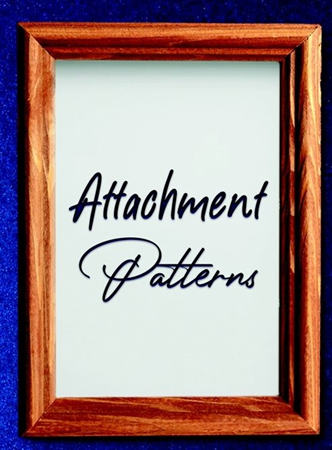
A review on Amazon of my new novel, Attachment Patterns, starts like this – “This book is all that it says it is, well-written, emotionally charged, and a really good read” – and ends like this – “However, the cover is an absolute insult. My suggestion to the author would be to do your book a favor and give it a cover that it deserves”.
The cover. Ah, yes, the cover. Not quite what I’d hoped for or envisioned. I’m not any kind of artist but my protagonist in AP is. From early on I wanted to make him just that, an artist, and as I worked on the novel I did a lot of research into the world of “art”. (And you think the worlds of theatre, film and fiction are challenging.) Part of that research was studying paintings and finding artwork that resonated in the character and in the story I was telling. I even went so far as to put a painting/illustration at the end of each chapter. Call it an exclamation point. It never occurred to me that artwork posted on the internet, some of it hundreds and hundreds of years old, would be still be subject to copyright. Well, I eventually learned that it is, and I removed the images from the manuscript. Having said that, when it came time to publish I shared some of the images with the publishers thinking that they could be the basis of the book’s cover. Nope. Again, copyright issues – way too expensive. Yes, but the idea, an artist, and the pictures and paintings in his head? For some reason, it didn’t seem to fly. The first cover sent to me was simply the title of the novel set against a red backdrop. I thought we could do a little bit better than that. Attachment patterns are about patterns of human connection and in the novel, the artist-protagonist’s patterns of connection have broken. I suggested that perhaps the empty, broken frame of a painting could symbolize that. What I didn’t notice in the cover image they eventually sent me was that the frame was not broken anywhere. I also didn’t realize that the white background within the frame would look like an unblemished canvas – meaning the frame didn’t look empty.
We now have a book cover no one seems to like. I’ve been told it’s stark and barren and suggests nothing of the story on the pages within. Some people have even said to me that at first glance they’re not even sure it’s a novel. Can the cover still be revised in some fashion? If so, in what way? I’ve suggested that perhaps an artist’s palette and brushes and swirls and flecks of paint might be added so we’re given the impression the letters – Attachment Patterns – have just been painted by the artist-protagonist. But at the end of the day does it really matter all that much? This is from a cousin of mine.
“Imagine a beaten-up old, unmarked trunk full of magical dust. It doesn’t look like much but people who open the lid will be rewarded with priceless treasures.”
I hope so.
May 7, 2023
The Youngsters (something not so serious)
A mistake was made. Yes. The lovely wife had errands to run before supper and left the youngsters at home alone. Normally the “youngsters” are to be trusted. They play, they sleep, they investigate. This day was different. They were in the kitchen.
Dude, what is that up there on the counter?
I do not know. I cannot see that far. But… but it… it smells… good!
I dunno, Dude. Lots of things smell good. Some of’m don’t come out so nice. Remember the salsa.
I do not know what this is, but it is not salsa. Oh! Oh, dear. My stomach is rumbling.
Dude, your stomach always rumbles. You’re a Lab.
I am drooling.
Dude, you are always drooling.
I am hungry.
Dude… you are always hungry.
I think… I think we should have a taste.
I don’t think that’s a good idea.
A small one.
Dude, they’ll be pissed.
Please!! A very small one. It smells wonderful. I am rumbling and drooling both at the same time. I am getting an erection.
Spare me. Trouble is, Dude, it’s up there on the counter.
You could get it.
Me?
I have seen you jump. You are a Vishla. You jump high. You could get it. You could it bring it down.
I dunno, dude, this is a pretty stiff jump even for a junior stud like me.
You could vault off my back.
What? Are you crazy?
No! You can do it. I know you can. You will take a running start. You will vault off my back! You will get it! And we will have a bite. And then we will put it back.
A bite, huh? Just a bite?
A small one.
All right. I’m gonna regret this but… don’t move. And… go!
You have done it! You are up there! You are on the counter!
Whoa, Dude, this thing is unbelievable.
I know it is! I can smell that it is! Now bring it down and we will have a bite! A small one!
I dunno, Dude. Maybe I better extensively check it out first.
No!!!
Aw, Dude, the juice is delicious.
Bring it down! NOW!!!!
All right, all right, hold your waddles. In coming! Awww! Dude! You didn’t catch it! The plate broke!
I do not care about the plate!
Dude, you gonna help me down or what? Dude? Dude, come on, leave me some! At least a wing!
No! All mine! All for me! Is this cilantro?!
What do you care? You’re eating so fast, you’re not even tasting.
I am tasting! I am taking small bites!
Yeah, like a steam shovel. Okay, coming down. Ouch. That hurt!
Get back up on the counter. Get away!
Dude, I’m not going near you, you might start eating me.
I am in ecstasy. I am in heaven. Is this the pope’s nose?
Dude, that’s a bone. You are now officially eating bones.
They are delicious!
And you are a garbage disposal.
No, I am a Labrador.
Same thing.
Oh, my goodness! It is gone! It is all gone! What happened to it?
You ate it, Dude. Every bite.
No!!!!!
Dude, you’re insane. We’ll put it in your papers. Insane dog.
There must be more! Oooh! Wait! There is!
No, Dude, you’re licking the floor.
Oh! Woe is me! It is gone! There is nothing left. Woe is me, woe, woe!
You realize, Dude, you are now probably going to have diarrhea for a week.
I do not care. I like diarrhea.
Nobody else does.
No. They will love me. We will play fetch the tennis ball and they will love me!
Not when they see the broken plate.
Ooooh! You are right! The plate!
No! Don’t eat it!
Oh! What shall we do? What shall we do? You are smart. You are a Hungarian hunting hound. What shall we do?
Not my problem, Dude. You’re the one who ate the thing.
You helped me. You got it down. They know I cannot jump high. They will blame you. You are a puppy, and they will blame you, not me.
Okay, look, we’re gonna pin it on the fat, furry idiots in the other room, okay?
The Doodles! Yes!
Okay. So get’m in here and everybody’ll blame them.
Oh! That is smart! You are smart. That is why I like you.
Dude, you like everybody.
I cannot help it. It is my nature. And now I must go to the bathroom.
First things first, Dude. You now know the plan. Any questions?
Yes! Yes! What time is dinner?
Aw, Dude. Really?
April 23, 2023
On Blockage
Writer’s Block: A condition in which a writer is either unable to produce new work or experiences a creative slowdown.
It should be so simple. I don’t know if it’s age, the anxieties, stress and uncertainties of the current times, but lately it feels as if I have lost my ability to create. It’s never happened before. In a forty-odd career (odd is an understatement), I’ve written twenty-two stage plays, written or rewritten over thirty screenplays, created four TV pilots and in the last ten years have written five novels, three of them published (ONE RIGHT NOW!), the other two waiting their turn. And now, I’m stuck. I have ideas, but they don’t coagulate. The words no longer flow. The voices that have always been ringing in my head are no longer speaking. What gives?
Is this solitary endeavor finally getting to me? You go to your desk; you face the blank page or screen – the wall. There are no rules or schedule, no timeline, no co-workers. There is no one telling you what to do and what not to do. There are good days when you become lost in your imagination. You take a step, and you follow Alice down the rabbit hole. You don’t come up for air. You blink, blink twice. Hours have passed. There are also days when you have to work at it. You’re not exactly sure where you’re going. You’re doing it but you’re not sure if you’re doing it right. Still, you know you’re creating something: fuel for the fire, spices for the stew. It will be part of the mix that fuels the rocket ship when it takes off again. Oh, and really, you’re never alone. Your co-workers are the people you’re creating on the page and they’re constantly talking to you.
And now, this new routine. Looking at the computer screen. Looking at my watch. Looking at the words. Clicking to the internet to check my email. Looking at my watch again. Minutes that seemed like hours have passed. Maybe I’ll get something to eat. Have I scheduled some tennis or golf? Oh, thank goodness – a dentist’s appointment. I’ll do some grocery shopping afterwards. Is it too early for a beer? I know, why don’t I shave my head! Big sigh. It’s like my brain needs a vacation from my desk and if I take it, it could be a long one. I’m not sure I’ll return.
Perhaps the problem is the things that once inspired me no longer hold water. I’m no longer interested in the theatre. The plays I see being produced don’t call out to me. Making an 8 o’clock start time seems like too much of an effort and an 11 o’clock curtain call is way past my bedtime. Besides, I always liked creating theatre more than seeing theatre anyway, and creating theatre, working on a play with a director and actors in rehearsal, seeing it done in front of an audience, seems unlikely now. I am an almost seventy-year-old, Caucasian male. I am an old voice, not a new one. I have been given the message more than once in the last few years that my time as a playwright is over and done. I’m not complaining, mind you. The fact that I had any time at all is a lovely miracle. Still… it’s hard to be in love with something that isn’t in love with you.
I am no longer all that interested in movies. Amazing because there was a time when I rarely missed one. These days too many of them don’t just bore me, they annoy me. The majority are about special effects, not about real stories and people, at least not stories and people I recognize or relate to. I don’t respond to the actors. Social media has made too many nameless faces “stars”. Maybe it’s the movie business itself. The egos, the unfulfilled promises. I spent over twenty-five years working it. It left a bad taste.
I even find it a struggle to read these days. If my own words don’t captivate me, other writer’s work seems to captivate me even less. And besides, why bother with fiction when you have the daily news. War, politics, culture, finance, immigration, global warming, right versus left, left versus right, woke versus asleep, opinion and commentary, all splayed out for you under headline titles that would do the cover of a grade B horror-thriller proud. The real world has become a shadow that makes it difficult to suspend disbelief. It makes conflict, even imaginary conflict, disturbing. Putting renditions of it on the page or watching it on a stage or screen has become unsettling.
Excuses, excuses, excuses.
Truth be known I have never written about the world. From the very beginning I wrote about people. Or rather, somehow I created characters who seemingly wrote about themselves. I am not in search of inspiration; I am in search of voices. Voices that have a story to tell. Keep looking, keep listening, Stephen. Have faith. The voices are still there. Find them. Write.
Simple as that.
April 17, 2023
On HOPE
I wrote this about fifteen years ago and have posted it once before. I’m posting it again because the idea that we be there for one another, that we provide hope, seems even more timely these days. It is one of the themes of the new novel, Attachment Patterns.
*
As I’ve gotten older I’ve had a harder and harder time with the concept of hope. Read too much. Too many newspapers. Too much internet. Too many news programs. It’s a tough world out there. I hope things will work out but I’m not surprised when they don’t. I hope for the best but I prepare for the worst. Because hope is not expectation. Hope contains a small element of doubt. Just “hoping”. And hope and faith are not the same thing. Faith suggests confidence and assurance. Yes, it will all work out in the end! Even if it doesn’t. Hope, on the other hand, suggests that the best is not a given, that there is a need for outside intervention and if it’s not forthcoming, well…. one can only hope.
And why not? The opposite of hope is hopelessness.
Imagine. To be without hope. To be in a place of no hope. No hope for the present. No hope for the future. No way out. No rescue. No help. No hope.
No. Hope is a choice we make. By choosing to hope, by giving others hope, we make hope real. At least real enough.
This is real enough.
My son met his honorary godmother, Jodie, when he was four and she became our neighbor. He would go over and they would sit outside on the terrace and they would chat. Sometimes he would just sit as she worked in the yard. And smoked.
My son has autism.
Jodie got him. Applauded him. Never got impatient with him. Their relationship grew deeper over the years. “I’m going to “Jode’s” my son would say and off he’d go. Daily. Twice on Saturdays and Sundays. She was patient and watchful and wise and for a little boy who had trouble making friends, she was the friend.
Several years ago Jodie moved to Berkeley to be closer to her daughter who had recently given birth to twins and needed the help. Her departure was tearful and difficult. For all of us, but especially for Jodie and my son.
I will see you, my son kept repeating, as much a question as it was a statement. And every single time Jodie answered, we will see each other. And you will call me. And I will call you. Now give me another hug. And even though we would always see Jodie once or twice a year, their relationship became one of cards and holiday gifts and letters and long phone calls. Twice on weekends.
This last spring Jodie called to tell us she had been diagnosed with terminal cancer. Lung cancer.
I’m not sure how but my son understands death. At least well enough. You will be gone, he’d tell her on the phone. I’ll be in the clouds watching you, she’d say. You’ll be watching me, he’d say.
In July, my wife and son went to Berkley to visit Jodie. He and Jodie did what they always did. They sat on the couch.. They laughed. They reminisced. My son likes to start most conversations with, “Do you remember the time?” And of course, Jodie did. You are the best, she said. Don’t you forget it.
I will never see you again, my son said. A question as much as a statement.
No, but you will take some of my ashes and you will put them in the ground under our favorite tree, she said and we’ll be close to one another.
Okay, he said.
My wife and son returned. He and Jodie talked on the phone whenever Jodie could. Every other day. Twice on Sundays. Two indomitable spirits. Still, she grew weaker. It was harder and harder for her to breathe.
The last time he called, Jodie couldn’t speak but asked her daughter to tell my son that she loved him. Love you too, my son said.
And then, Jodie passed away.
When we told him, my son was very quiet. As if he was trying to puzzle it out. And then after a while, he went out in the yard to pick flowers. He brought them in. He put them in bowl. Just the blossoms. And then, he took them next store to what had been Jodie’s house. He put the bowl on a table in front of an outdoor couch just like the one where he and Jodie used to sit. And then he came quietly home. Not sad. Full of the hope he’d been given over the years.
By Jodie.
April 14, 2023
PROMOTION!
Promotion. Look it up. “An activity that supports or provides active encouragement for the furtherance of a cause, venture, or aim.” Or more to the point – “the publicization of a product so as to increase sales or public awareness”. In this case, the product is a book. My latest novel, Attachment Patterns, is being released by Austin-Macauley Publishing at the end of this month, April 28th to be precise, and guess what? I have no idea how to promote it. Why? Because I don’t have any idea as to how to promote anything. I never have.
In the nineteen seventies and eighties I worked in the theatre: Off-Broadway and regional. When plays were produced the theatres promoted them. They created a subscription audience; they advertised in the newspaper, there were occasional features in the local Sunday arts section. More importantly, if the reviews and word of mouth on the play were pretty good, seats got filled. Through the eighties, nineties and early 2000s I wrote for the film business. Studios and production companies had entire international divisions dedicated to the promotion and marketing of their movies and I don’t remember the screenwriter ever being a part of the process. A publicist? Wasn’t that for movie stars? In 2015, my first novel, The Tragic Age, was released by St. Martins’ Press. They were an established publisher. Surely they knew what they were doing when it came to marketing and promotion. The early reviews were quite good and so I sat back and waited for the book tour, and the talk shows. They never happened. I was told that “the times they are a’changin’”. Promotion and marketing were apparently becoming more internet and social media focused. Translation? I was expected to do something to build an audience myself. Me? Were you kidding? At the time, I didn’t even have a Facebook account. My second novel, The Practical Navigator, was published by St. Martins in 2017 and leery of their seemingly nonexistent marketing machine, this time, I decided to use some of my advance to hire a publicist. Who did practically nothing. At one point I drove up to a Barnes and Noble in Orange County to do a book signing for 7 people. Another time I went to a book convention near LA where the entire place was filled with authors throwing their work at one another. Oh, and then there was the LA interview I did for a “youth media website”. Let me tell you, it’s a great experience when the juvenile delinquent doing the interview hasn’t read your book. It’s now 2023, here I am with another book coming out and guess what? I am still a complete on-line dunce. Twitter, Instagram, YouTube, etc. might as well be UFOs in my universe. Terms like networking, bookmarking, media sharing, microblogging, and online forum sites might as well be words in a foreign language. Should I know about these things? Is it worth it to take the time to learn? Yes, probably. It does seem these days that having a “reading audience” is about the author’s on-line presence as much as it is their work. Thankfully I have a friend or two I can turn to for some help. Oh, and I’ve received a “Top Tips to Self-Promote” package from the publisher – how thoughtful. But in the meantime, just know I’ll keep sending out these silly blurbs with the hope you might read and SHARE!! them. And if you’re on my email list, you can expect to hear from me – maybe twice. Attachment Patterns – spread the word!


