David A. Cleinman's Blog, page 3
March 5, 2012
Lisa Zhang Wharton
 Today I welcome Lisa Zhang Wharton to my blog. A native of China, and the product of what she terms a very disfunctional family, She has used her angst and experiences to produce some intriguing and profound works. Lisa was my guest on The Book Junkies Interview Livecast on BTR, showdate 2/21/2012. Listen to that amazing pppppppppppppp interview here:

Lisa
When did you decide to get serious about writing?
1990 during the 1989 Tiananmen Square Massacre. I wanted to be a writer in Peking University from 1979 to 1983 due the awareness of early life that is very strange and tragic. But I was majoring in Physics and was not allowed to change my major in China and didn't think I would switch to Creative Writing if I was given a chance. I kept writing after coming to the US in 1985. But I didn't have time until in 1990.
Which writers have inspired and influenced you?
Charlotte Bronte, I'm a fan of "Jane Eyre". Emily Bronte and I love "Wuthering Heights". Leo Tolstoy, my mother has identified with Anna in "Anna Karenina". Love Anton Chekhev and all his plays. Kazuo Ishiguro and all his books, especially "The Remains of the Day". Love Haruki Murakami and most of his books. Henry James and "A Portrait of Woman". "White Orleanda".
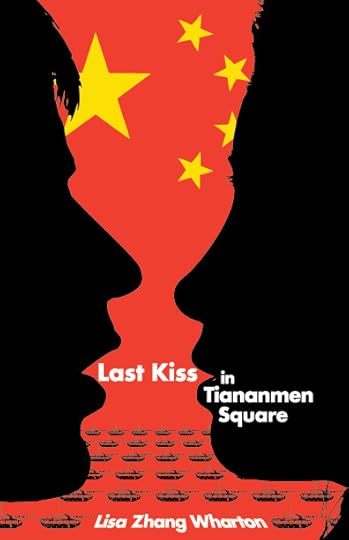
Last Kiss in Tiananmen Square
Share some information about your books with us:
I have written two complete books and one incomplete book. My novel "Last Kiss In Tiananmen Square" has been published by Fantasy Island Book Publishing last October. An editor at Simon and Schuster is reading and evaluating it. My second book "China Lolita", a book of linked stories about three generations women in my family, will come out soon.
I wrote the first draft of "Last Kiss In Tiananmen Square" 22 years ago soon after the 1989 Tiananmen Square Massacre. I didn't totally complete this book until last August. It is a long journey but I'm so glad that it is out.
Blurb:
"Last Kiss in Tiananmen Square" is a novel based on the 1989 Tiananmen Square Pro-democracy movement. The novel follows a young woman, Baiyun, a junior in college, trying to reconcile her upbringing while in the midst of the rising political movement in Beijing, China.
Baiyun grew up in a strange and cold household. In order to cope with her dysfunctional family, Baiyun worked as hard as she could, eventually getting herself in the prestigious Beijing University.
Baiyun joined the Pro-democracy movement to vent her frustrations. While protesting, she met the man of her dreams, Dagong, a handsome and charismatic factory technician who was orphaned at birth and lost his only relative during the Cultural Revolution. But even Dagong couldn't fully take Baiyun away: his face reminded her of one of her mother's lovers, both attracting her and drawing her back.
"Last Kiss in Tiananmen Square" is a coming-of age story set against the historic and devastating era in Chinese history. With the cultural significance and family bonds of "The Kite Runner", this book explores the way in which one's past is never forgotten.
What started you on the journey to write these books?
Writing found me by no accident. Before I was 18, I lived a life of misery and tragedy without knowing it. When I went to college, the renowned Peking University and studied physics, I discovered the literature and realized that I lived a typical writer's life. It is my duty to write it down and tell it to the world. Even today, I still live under such obligation.
How would you describe your literary voice and what do you think makes it unique?
I have a unique voice because I write about my very strange and unique up-bringing in China. I write about dysfunctional families in China which hasn't been touched very much yet.
What is your process for creating characters? What do you do to get them to feel genuine to your readers?
I based most of my characters on people I know in real life. I may give them different names and put them in different circumstances. But they are real people in the end. That's why they feel real.
What genre does you most love to read? Are your (books) (stories) exclusive to that genre?
I love literary novels like Kazuo Ishiguro, Haruki Murakami and Jonathan Frazen, and romantic comedies like Sophie Kinsella, Janet Evanovich and Carl Hiaasen.
What does writing do for you, personally? How does it make you feel?
Writing has been my therapy since my childhood. I wouldn't have survived my very dysfunctional family if I didn't discover writing.
Are there other genres of fiction that you would like to explore in the future?
I would love to write a romance. I have written many love short stories but haven't written a romance novel yet.
What new projects are you currently working on?
I would like to complete the screen play I have started last year called "Great Grandmother's Brothel". It is based on my mother's extraordinary life in China.
What is the story you remember best from childhood, and does it still influence your writing today?
The story I wrote called "my Uncle". It is about a young woman's awareness of her love for one of her mother's lovers. It won a second prize in Paris Writer's Workshop.
Where do you see yourself as a writer five years from now?
I'm hoping that if you google me, you will find there are three novels and 20 short stories under my name.
Is there anyone you'd like to give a mention to?
We have many great writers at Fantasy Island Book Publishing like J.Darroll Hall, Alison DeLuca, Connie Johnson Jasperson, Gary Hoover, Steve Swartz, Daniel Stanton, Danielle Raver, Lili Tufel, Johanna Garth, Dean Lappi, Lynette Ferreria and Nicole Carson.
Any last words for our readers?
Thank you for reading. I love you.
You Can Find More About Lisa here:
Lisa's Blog: http://lisazhangwharton.blogspot.com
& Website: http://www.lisazhangwharton.com
When I first came to this country, I felt like I had landed on a different planet. In San Francisco, my first stop in the US, I saw two giant ladies in hot pink and blue walking down the hill and could not believe how big they were. I was an alien in its true sense. I have so many stories to tell. I want to tell what is like in planet China and how different and similar we are.
Writing found me by no accident. Before I was 18, I lived a life of misery and tragedy without knowing it. When I went to college, the renowned Peking University and studied physics, I discovered the literature and realized that I lived a typical writer's life. It is my duty to write it down and tell it to the world. Even today, I still live under such an obligation. In the last two decades, my life has undergone dramatic changes by moving to the United States from Beijing, China, getting married and having a beautiful son. I also managed to write at least two book manuscripts, and four of my short stories have been published by:
"Paris Transcontinental"
"Salmon Magazine"
"The Great River Review"
"Do You Know Me Now"
Fantasy Island Book Publishing has published my novel "Last Kiss in Tiananmen Square." My linked short story collection "Chinese Lolita" is forthcoming. My short story "My 'Uncle'" has won the second prize in the WICE short story competition organized by the Paris Writer's Workshop.
I live in St. Paul Minnesota with my husband and son.


March 4, 2012
SuperWoman Nicole Storey
Today I welcome Nicole Storey to my blog. Nicole lives in Georgia with her husband, two children, a bossy cat, and tanks full of goldfish. Her profession is Super Woman. When she isn't busy being a nurse, maid, teacher, referee, chauffer, cook, and zoo-keeper, she dabbles a little in writing. She has been an avid supporter of special-needs children since her son was diagnosed with autism at the age of two. Nicole Storey (Nickie to me) was my guest on The Book Junkies Interview Livecast on BTR, showdate 2/20/2012. Listen to that amazing interview here:
 When did you decide to get serious about writing?
I didn't get serious about my writing until February of 2011. Up until then, I wrote to relieve stress and to have something to do when it was too cold to go outside and play in my garden.
Which writers have inspired and influenced you?
C.S. Lewis was the first writer to introduce me to fantasy and the wonder of visiting other lands with mysterious creatures and danger at every turn. I also love Kim Harrison. She has a snarky way of weaving paranormal with humor!
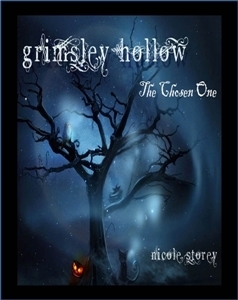
Grimsley Hollow The Chosen One
Grimsley Hollow-The Chosen One is about an autistic boy named Gage Gilbert whose only wish is to have a friend. He meets a young witch named Eve and embarks upon an adventure in another world called Grimsley Hollow that changes his life forever. It's an "underdog" story which proves that not all heroes wear capes. I call it mixture of fantasy and adventure with a touch of paranormal and a lot of Halloween!
What started you on the journey to write this book?
I wrote this book for my son, Gage, who has autism and Tourettes. He was having a rough time in middle-school with bullies. I wanted to spread a message that special-needs kids are no different than anyone else – they only want to be accepted and included in our lives.
What is your process for creating characters? What do you do to get them to feel genuine to your readers?
I draw on my love for fantasy and try to create characters that are unique, yet still relatable – especially to kids. I want characters that will evoke different feelings: love, dislike, humor, courage… It is my hope that when people read my book, there is at least one character they absolutely love and think about, even after they finish the book.
What genre do you most love to read? Is your book exclusive to that genre?
I love fantasy, paranormal, and horror. I think my book reflects heavily on fantasy and  paranormal and has a dash of R.L. Stine mixed in.
What does writing do for you, personally? How does it make you feel?
Writing for me is a way to share my love of reading with the world. I have been a book-lover all my life. Nothing gives me more pleasure than to be able to create those feelings of magic and adventure and share them with others.
Are there other genres of fiction that you would like to explore in the future?
I think I would like to write a darker fantasy/horror book in the future – one for older teens or adults.
What new projects are you working on?
I am writing the second book in the Grimsley Hollow series titled The Search for Siren. It picks up six months after the first book ends. I am also preparing some notes and outlines for future books in the series and dabbling a little with another idea I have for an unrelated book.
What is the story you remember best from childhood, and does it still influence your writing today?
My favorite childhood book is C.S. Lewis' The Lion, the Witch, and the Wardrobe. It was the first book I ever read that instilled a love for fantasy. To this day, when I open a closet, I still hope to find Narnia instead of clothes!
Where do you see yourself as a writer five years from now?
I hope to still be plunking away at my keyboard and turning out more books. It is the first "job" I've had in my life (other than being a Mom) that I love.
IS there anyone you'd like to give a a shout out to?
Laura Stubbe for taking on the role of cheer leader and always reminding me that I can when I think I can't; Inknbeans Press for bringing me into their family – especially Jo, the "Boss Bean", who has taught me that first drafts don't have to be perfect. They just have to be written. I also want to thank my fellow Indie authors who support and help me every day. I am so proud to stand beside you in this amazing profession!
Any last words for our readers?
Thank you to everyone who has supported me and bought my book. Please remember that special-needs kids need our love and understanding. Like my son, they only want to have real friends who accept them for the amazing people they are. Together, we can make this happen.
March 1, 2012
Zombie Tales With Todd Brown

Today I welcome Zombie Master Todd Brown to my blog. Todd was my guest on The Book Junkies Interview Livecast on BTR, showdate 2/19/2012. Listen to that amazing interview here:
When did you decide to get serious about writing?
I have always been serious about it, but simply lacked any support. My ex-wife (#3) found some of my stuff in a box one day and read it, she said that if I didn't do it, I would regret it forever. It was 2009 that I was prompted by a teacher in a writing class to write zombie fiction. My wife surprised me that year for Christmas with a published version of ZOMBLOG.
Which writers have inspired and influenced you?
Hands down, Stephen King. However, I glean something from every writer I read.
Share some information about your books with us:
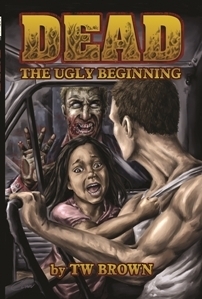
ZOMBLOG is a trilogy written as a journal. It was actually a warm up intended to get me ready for DEAD and never intended to be a book. After a reviewer contacted me and asked when the next book in the series was planned, I decided on two, then people asked for more but I drew the line at a trilogy. DEAD is going to be a 12-part series (the 4th book comes out in May, DEAD: Winter). The book is told in 3 rotating chapters: Steve, The Geeks, and Vignettes. I wanted something that focused on characters, not the usual rending and ripping of the standard zombie fare. I have some very evil villains and hopefully a few people that readers can relate to no matter their background.
What started you on the journey to write this these books?
I have been a fan of the zombies forever. I wrote a short for a college creative writing class 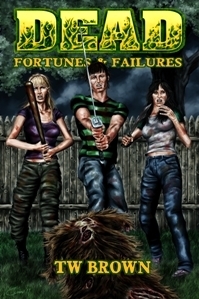 and the teacher pulled me up after class the next week and said I had something. She said she could tell I loved telling the story and should pursue it in addition to my other project (DAKOTA) which she had read already.
How would you describe your literary voice and what do you think makes it unique?
I think I am still finding it. However, I would say it can be described as unpredictable and genuine. I am not a guy who uses outlines, so I think my stories flow like rivers, sometimes spilling over and going places they shouldn't.
What is your process for creating characters? What do you do to get them to feel genuine to your readers?
I use a lot of music. Future Sound of London being a mainstay, but also Tomita and Mozart. I sometimes have to get into a mood for certain characters. There was one in particular in DEAD that I had to really get into a dark place in my mind to write. I couldn't be around people at all when I wrote him. He was a very bad man.
What genre do you most love to read? Are your books exclusive to that genre?
I just love stories. It can be Kim Harrison, George R. R. Martin or Nathaniel Philbrick. Fiction, non-fiction…I just love to read. I write the zombie stuff for the most part right now, but I have other stuff in my head like UnCivil War about a modern day race war the shatters this country. Also, there is DAKOTA, which I will return to soon. That is about two modern day men tossed back in time to just prior to the start of the Civil War. They are in Charleston, SC and one of the characters is black.
What does writing do for you, personally? How does it make you feel?
It is my therapy. It is a need that, if I ignore it for too long, actually alters my mood. My wife will sometimes comment "You haven't written in a few days, have you? Go. Now."
Are there other genres of fiction that you would like to explore in the future?
I would love to write for the over-glutted fantasy market. I enjoy a lot of those titles: Sword of Truth, Wheel of Time, Game of Thrones (Song of Fire and Ice).
What new projects are you currently working on?
I am writing DEAD: Winter. Also, I am editing a few projects for May December including our 3rd volume of First Time Dead which is only for those individual who have never been published in the horror genre before.
What is the story you remember best from childhood, and does it still influence your writing today?
The Stand. A friend and I read it the summer before my freshman year. We called each other checking what page we were on. At night we would share our best bits.
 Where do you see yourself as a writer five years from now?
Cracking a few Best-Seller lists…maybe seeing something optioned for film rights.
Is there anyone you'd like to give a shout out to?
Besides my wife Denise, who has believed in me even when I didn't, I'd have to say hi to Nickie Storey-Bailey and Christina Gavi. They have to be my first actual fans. I've had people like my stuff, but they make me blush sometimes. And honestly, I love it.
Any last words for our listeners?
Write because you love it, not because you think it will make you rich. Get a thick skin. Nobody wants to hear you whine about a bad review. Every writer gets them. Don't let the bad ones wreck you and don't let the good ones go to your head.
February 29, 2012
Helmy Kusuma

Today I welcome back Helmy Kusuma as part of the Book Junkies Interview series. Helmy lives in Indonesia at present and writes in a variety of genres including YA romance, post-apocalypse, and Flash fiction.
pppppppppppppppppppppppppppppppppppppppppppppppppppppppppppppppppppppp
 When did you decide to get serious about writing?
It was when I saw the deadline for submission into a writer festival and my writing was nowhere in the state of readiness. I wrote like crazy to meet the deadline, and I made it, but did not get selected. I spent two months of all-day-long editing after that, and that's how I became a writer.
Which writers have inspired and influenced you?
There are too many to mention. I know it's an excuse for not remembering names, but there are indeed too many! H.P. Lovecraft, Charles Dickens, Pearl S. Buck, and Kurt Vonnegut are some that I can name.
Share some information about your bookswith us:
'Mementoes of Mai' is a YA Romance about a certain young man who is faced with the 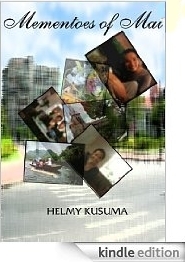 choice of a lifetime: passion or love.
'There Is Hope' is a short story about post-nucleocalypse world.
'A Flash of Inspiration' is a collection of flash fiction with several other indie authors.
What started you on the journey to write these books?
'Mementoes of Mai' is the novella (was 'Ai is Love') I would like to include in the festival that has undergone extensive editing. In the course of editing this novella I acquainted with several indie authors, and together we wrote 'A Flash of Inspiration'. 'There Is Hope' came on me when I was concerned with the way of how governments tend to run the countries these days.
How would you describe your literary voice and what do you think makes it unique?
I like to play with human emotion and consciousness, and to put them inside a hypothetical world. I know that all authors do that, but I would like to emphasis the consciousness part. I think that what make me unique.
What is your process for creating characters? What do you do to get them to feel genuine to your readers?
I based my characters upon various aspects of my own personality, and then complete each one according to the need of the stories. I don't have to get them to fell genuine, they are genuine.
What genre do you most love to read? Are your (books) (stories) exclusive to that genre?
Science fiction. I have always been fancying the stars, and the galaxies, and the UFOs, and the aliens, and… The list goes on and on. 'There Is Hope' is a little venture into that kind of realm, while 'Mementoes of Mai' is purely romance with no murder or spy, and 'A Flash of Inspiration' is of course an anthology.
What does writing do for you, personally? How does it make you feel?
I feel exhilaration and curiosity. I have always been curious of how the story plays out with all the twists and turns. The adventure is brought to me, inside my own head. How cool is that?
Are there other genres of fiction that you would like to explore in the future?
I have no intention now to deviate from science fiction and romance, but who knows if some demon would like its story written.
What new projects are you currently working on?
I have been working on 'Inverta: The Truth' which is scheduled to be finished eight months from now. It is about another version of Earth where Atlantis is never sunk.
What is the story you remember best from childhood, and does it still influence your writing today?
'Romance of The Three Kingdoms' is a folklore of Chinese tradition that forever etched inside my head. It doesn't influence me directly in my writing, but it has changed my perception of life.
Where do you see yourself as a writer five years from now?
In a nice cozy room dedicated specially to be the thinking room inside my ample house, writing my next bestselling novel after the 'Inverta' series.
IS there anyone you'd like to give a mention to?
I will save the names for the podium. Stay tuned.
Any last words for our readers?
Just do what you have always wanted to do. You only live once.
Helmy Kusuma was born in Palembang ( the old capital of late Kingdom of Srivijaya in 16th century ) – Indonesia. He spent most of his childhood dreaming about faraway planets and imagining about being the captain of a starship Enterprise.
Growing up he tinkered mostly with computers and how his mind (consequently, human ) works, ended up working in the IT industry for a decade. An abrupt turn-around occurred after he visited Viet Nam and was mesmerized by the beauty of both humans and nature.
He decided to write down his experiences and then published them. 'Mementoes of Mai' is the result. Afterward, characters keep popping up demanding their stories written, and he has been succumbing to their requests.
February 26, 2012
Kimberly Menozzi Visits from Italy

Kimberly Menozzi visited with me from her home in Reggio nell'Emilia, Italy, to discuss Ask Me If I'm Happy and her writing life. Kimberly was my guest on The Book Junkies Interview Livecast on BTR, showdate 2/16/2012. Listen to that amazing interview here:
 When did you decide to get serious about writing?
When I was in my mid-twenties. However, I didn't know what "writing" really meant, as a profession, at the time. It wasn't until my late thirties that I really dug in and started applying myself to the task of writing. Up until then, I'd always written whenever I could, but I didn't do the work of finding out how to workshop or what it really took to find an agent or publisher. I learned about the craft of writing and that made a world of difference for me.
Which writers have inspired and influenced you?
Richard Adams for the amount of detail he shares with his readers, Stephen King for his skill with characterization, John Irving for his fearlessness in writing his stories in the way he wants to, and Adriana Trigiani for her willingness to make her characters flawed and for her use of emotional touchpoints.
Share some information about your book with us
Ask Me if I'm Happy is a love story, set in Bologna, Italy. Emily and Davide are two people who meet by chance when she is stranded due to a transportation strike en route to her flight home to America. There's an immediate, deep emotional connection between them, but it takes a year before they are able to really bond and begin a relationship.
There are a number of unexpected barriers for them to fight through before they can determine whether or not they're going to be together for good, many of which they've built themselves, some of which were there from the start.
The city of Bologna is, as they say, a character in the story in its own right. I'm quite proud of that, as it isn't a "typical" setting for a story taking place in Italy. I'm hoping readers will see there's more to Italy than just Venice or Rome, even though both of those places do play a part in the story.
What started you on the journey to write this book?
It actually started when I was in the US for a visit in 2007. I watched a program about 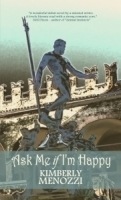 Bologna, Italy on television and was overwhelmed with homesickness when I heard locals speaking English with an accent that had become so familiar to me – it was very similar to the accents of my students in Reggio nell'Emilia, and I found I was missing them like crazy. When I went to bed that night, I dreamed a story set in Bologna (one of my favourite places), and I started working on it the next morning.
How would you describe your literary voice and what do you think makes it unique?
I'd say my voice is – in Ask Me…, at least – equal parts literary and commercial. I don't write fast-paced stories, but I do write fast-paced reads.
I'm a big fan of description – I want the reader to feel that they are there when they read my work: I want the reader to feel they're in the character's shoes as they read.
What is your process for creating characters? What do you do to get them to feel genuine to your readers?
They tend to come to me reasonably fully-formed. As I write, I try to go deeper into the emotional lives of my characters, to show what they're feeling and why, and how their best intentions sabotage them in spite of themselves sometimes. I work hard to make them realistic, even if that means the reader might not like them very much for a while. No-one is perfectly likable all the time, after all. Ultimately, though, these attempts at realism make characters readers can identify with, I believe. That seems to be the case so far, anyway.
What genre do you most love to read? Are your books exclusive to that genre?
I read a little of everything, but the majority of books on my shelves fall into either Literary Fiction or Women's Fiction. Since my current project has a distinctly commercial feel to it, I'd have to say I won't stick to one genre as a writer. Then again, it may well be that my writing voice dictates otherwise. It remains to be seen.
What does writing do for you, personally; how does it make you feel?
For me, writing can make me feel like I'm literally living through a dream. A lot of my story ideas come from my dreams, so this is natural, I think. When I'm "in the zone", I'm unaware of anything else – there's just the story I'm telling on the page and that's it. It's a sort of rush, really. Sometimes I come out of it feeling a bit dazed.
My mentor in high school was a writer (actually, he still is a writer) named Gabriel Horn. I once saw him writing something and there was an expression that came over his face as though he was listening to someone speaking just to him. When he finished what he was writing, he looked at me and said "Do you ever get the feeling, when you're writing, that you've been given something pure and right?" I had my own rush in that moment, realizing I knew exactly what he was talking about. I still get that feeling when I'm caught up in the story.
Are there other genres of fiction that you would like to explore in the future?
I don't consider anything off-limits, so I'd have to say "Sure!" even though I can't say what it would be, just now.
What new projects are you currently working on?
My current project is a novel set against the backdrop of a (fictitious) professional road-cycling race. I've had to build the race from the ground up, inventing everything from the colors of the winners' jerseys to the names on the team rosters – even the teams themselves. I'm very excited about it and so are my CP and my editor. In fact, my CP is pushing me to seek an agent with this story, so I have pretty high hopes.
What is the story you remember best from childhood, and does it still influence your writing today?
I read so much as a child it's hard to pin one story down as the one I remember best. The story which had the greatest influence on me would undoubtedly be Watership Down by Richard Adams. When I read that book I was nine years old, and I knew I wanted to be a writer from that point forward.
Where do you see yourself as a writer five years from now?
I see myself with a few more novels under my belt, possibly with an agent and a publishing contract as well. No matter what happens, I hope to keep writing – I have too many tales yet to tell.
Is there anyone you'd like to give a mention to?
I'd like to say a huge "Thank you!" to Gabriel Horn for the support he gave me when I first showed signs of developing this lunacy. I can honestly say his initial belief in me is the reason I kept working so hard. And, of course, I'd have to say another sincere and heartfelt "Grazie mille" to my husband, Alessandro. He's believed in me and my writing and has supported me ever since we met and right on through to today. I couldn't do any of this without him.
Any last words for our readers?
If you're a writer, learn the craft, work hard, and learn to take criticism. It's necessary and you'll be a better writer for it – even if the critique is utter nonsense. If you're a dedicated reader, whether you've read my work or not, I say "Thank you so much." Readers are why writers write; otherwise, what's the point?
Kimberly Menozzi was born in Ashland, Kentucky in 1971, and lived all over the southern US as an adult. She has written stories for as long as she can remember. In December of 2003, she moved to Reggio nell'Emilia, Italy to be with Alessandro, who would become her husband in February, 2004.
Since arriving in Italy, Kimberly has written a novel (Ask Me if I'm Happy – 2010), a novella (Alternate Rialto -2011), and is currently working on a novel inspired by her appreciation for professional road cycling (as a fan, not a participant). She has several more projects in mind for the future, including a possible sequel to Ask Me if I'm Happy.
Her current "day job" is teaching English Conversation both privately and for a local language school, which leaves plenty of time to work on various writing projects. These include her own blog as well as a monthly guest post about her life in Italy on the Book After Book review blog.
February 25, 2012
A Pow Wow With Kitty Sutton

Today I Pow Wow with Kitty Sutton, who writes historical fiction based on her Cherokee heritage. Her stories are mysteries, for the most part, and feature exceptional vignettes of Cherokee life. Kitty was my guest on The Book Junkies Interview Livecast on 2/15/2012. Please take some time and listen to that amazing interview here:
1. When did you decide to get serious about your writing?
I had actually been writing for many years, but it was more for myself. In 2010 I joined an online writing group called Writing.com. It was there that I discovered my preferred genre. On that site there is always something going on that can challenge your abilities, to write in ways you had not tried before. I entered a couple of contests that required short stories based on Native American or First Peoples themes. I wrote my stores and was surprised to find out that I won both contests. Finding my niche was an important step, because before that I was not sure and did not have any confidence in my abilities. It was ironic in a way because I am Cherokee and so is my husband, but it had not occurred to me to try to write in that genre before.
2. Which writers have inspired and influenced you?
I have a wide range of writers that I feel inspired me. First would be Charlotte Bronte' who wrote Jane Eyre. That book set me on the road to loving literature. Then in 2004 I had to quit my show in Branson because of illness and I found myself with some time on my hands with restrictions to what I could do physically. I began to read historical fiction books by Anne Perry. She has been a huge inspiration to me. Then I began to notice books about pre-history and the First Peoples of North America. Inspiration came from writers such as Kathleen and Michael Gear and their People series of books, and Richard S. Wheeler who writes historical fiction about the plains tribes during the fur trading years.
3. Share some information about your books with us:
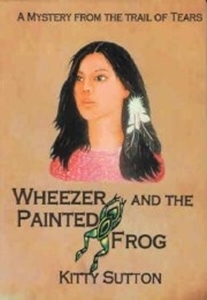
Wheezer And The Painted Frog is a Native American historical fiction mystery set in Indian Territory, now Oklahoma. It begins in the spring of 1839, immediately after the last group of Cherokees, removed from their homeland in the east, were unceremoniously left to fend for themselves after an over 1,100 mile march called the Trail of Tears, where over 4,000 Cherokee died.
Sasa (Swan) a thirteen year old Cherokee girl finds herself alone after all in her family dies. She finds and saves a lost dog who she names Wheezer. He is an extremely smart dog and he soon smells a human rat, but struggles to find a way to communicate what he senses is dangerous. His original owner, Jackson Halley, looks desperately for him, and when he finds Sasa and Wheezer together, they all become fast friends and soon set about solving the mystery of the reason why her five year old brother Usti Yansa (Little Buffalo) died.
Healthy little boys shouldn't grow weak and die when they have shelter, food and the care of their families, yet Sasa's little brother, the last of her family, sickens, mumbling the mysterious "I didn't do it right, I didn't do it enough. Why didn't it work?" Left alone, mourning and trying to survive in a new place with new ways, Sasa seeks answers with the help of her new friends, Wheezer and Jackson. The Jack Russell Terrier seems too wise, too fierce and too loyal to be just a dog. Did the Creator send Wheezer to Sasa and if so, how can a dog, albeit a smart one, help to solve a murder? Together, they discover a vast network of systematic plundering of the government funds earmarked for the Cherokee called the Allotment. Can they discover who is at the root of it all?
4. What started you on the journey to write this stories?
I had been working on my ancestry and was having a hard time running down some facts about my Cherokee roots. I wondered if there had been any stories written about what the families experienced once they were left in that very different land. The more I looked, the more I became indignant that there had not been anything written and I started doing some research. I found out that the newspapers had received many letters of disgust over the horrible things they printed about the deaths on the Trail of Tears. The paper companies were afraid of losing their readership, so they removed all of the newsmen out of the Territory. There was no one there to document what was about to happen.
This is a story based on an event that has never been written about before. I know this because the months of research I did to find out about this event revealed the absence of either fiction or historical literature. The event began in 1839, so that is where I began my story. The Cherokee were promised by Treaty to receive food supplies that would get them through the first year. Some of the Cherokee camps, though, did not receive food supplies that were edible. In fact they were rotten or full of bugs, the meat putrid. The reason for this was that the funds for these allotments were being drained off by greedy white men. The same men who were charged with protecting them. Their greed caused the deaths of another 1,000 Cherokees in that first year. They died of starvation.
5. How would you describe your literary voice and what do you think makes it unique?
I prefer to speak in the voice of each character instead of picking one POV. The name for this POV is Omniscient. With this POV I can say what the person thinks as well. I change scenes and it becomes a new POV of a different character. In this way I can reveal what is in the mind and heart of even the villain. Wheezer, the Jack Russell Terrier in my book also has his own POV. It is extremely freeing to me to write this way. I had a reviewer say that she had never read a book that used this technique, but she said it was extremely exciting. It made the story more real to her and she got closer to the characters than she normally would have. I have heard that same comment from several readers of my book.
6. What is your process for creating characters? What do you do to get them to feel genuine to your readers?
Since I must make sure I relate the historical part correctly, I must devise a likely scenario of how these things came about. I wanted my main character to begin the series as a child, and much of the book is seen through her eyes. I had to find characters to fill out the plot of land grabbing and the conspiracy to skim off the funds for the allotments so I added the villains and their "support" staff. In that day it would have been in the south and slaves were common. In the Characters of Jackson Halley and his father Andrew Halley I was able to establish how the money was handled from the government and passed down to the suppliers in order to demonstrate where the money could be skimmed off. There are Cherokee in the same camp as Sasa that I created in order to give the feel of the confusion and depressed feelings within the camps in the Territory. Each character has a need to be there including Wheezer.
7. What genre do you most love to read? Are your books exclusive to that genre?
I love to read pre-historical fiction about the First Peoples. In other words the ancestors of the Native Americans. Both of the short stories I told you about earlier were of that genre. I, too, could have written a book based on the archaeological finds of today, but, I chose to write about these untold events in the not too distant past because I felt they would be lost if I do not.
8. What does writing do for you, personally? How does it make you feel?
It satisfies the creative desire. No, it is not like performing in front of a huge audience, but it does satisfy some of that desire. In 1979 I began writing for the first time as a type of therapy. That book is not finished yet, however my publisher has read what I have and we are planning it's release after the Mysteries From the Trail of Tears series of done.
I was able to write the things I could not say. I used other characters to play the parts so it was happening to someone else and not me. It was probably the things that helped me progress and get past a black period of my life.
9. Are there other genres of fiction that you would like to explore in the future?
Yes, I would like to do some comic or humorous stories. I hope I will be able to do that some day.
10. What new projects are you currently working on?
I am working on the second book in the series and it is called, Wheezer And The Shy Coyote. It will cover another little known event that has played a huge part in the lives of all Native Americans today. I don't want to reveal too much. Wheezer will still be there doing what he does best.
11. What is the story you remember best from childhood, and does it still influence your writing today?
Jane Eyre by Charlotte Bronte. Yes it does influence me today. She wrote about a similar experience of the life that I lived and it felt comforting to know it.
12. Where do you see yourself as a writer five years from now?
I hope by then that I will have several books under my belt and that I have figured out the best way to promote them.
13. Is there anyone you'd like to give a a shout out to?
Yes, two actually. First would be to Inknbeans Press and all their other authors. They noticed me on Facebook and invited my manuscript, I will never forget it. Second would be to Annarita Guarnieri in Italy. After I had been approached by the publisher, even though she was in Italy and English was her second language, she offered to help me with my first edit and she asked nothing from me. She is an amazing person.
14. Any last words for our readers?
I am hoping that they will see how important historical fiction really is. In my case, I hope that I can preserve obscure events which have left barely a footnote behind, but are extremely important to our learning about our ancestors. I hope they will want to read all the books in the series.
Find Kitty here:
InknBeans Press Kitty's Blog
February 23, 2012
A Chat With Laurie Boris

Today I welcome Laurie Boris to my blog. Laurie is a fellow Book Junkie and a writer of women's literature. Laurie was my guest on the Book Junkies Interview Livecast on February 14. Please take some time to listen to that episode here:
When did yo u decide to get serious about writing?
When I was thirty (twenty years ago, for those who are counting), a novel fell into my head. Before that, I fooled around with shorter fiction. When I told my husband about my idea for a longer work, he said, "You can't write a novel." Hah. Nothing like starting your career on a dare. I've written eight more since then.
Which writers have inspired and influenced you?
TC Boyle. Vladimir Nabokov. Tolstoy. Kurt Vonnegut. John Irving. Joyce Carol Oates. Pat Conroy. I could go on all day. Nearly every author I've read has taught me something.
Share some information about your book with us
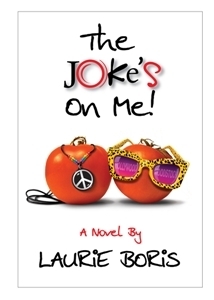 My first published novel, a hybrid of chick lit/women's fiction, came out this past July. The Joke's on Me is the story of Frankie Goldberg, a former actress and stand-up comic whose life in Hollywood falls apart with an exclamation mark when a mudslide destroys her home. Hoping for comfort, she returns to her mother's B&B in Woodstock, New York, where she spent her teen years making coffee, folding towels, and chasing after the handyman's hot, high-school-jock son. Now she has to deal with the mess she left behind, her bossy older sister, her mother's illness, and the family responsibilities she's been shirking. And the handyman's son, now a minor-league baseball coach, is back in town…
What started you on the journey to write this book?
I was working in Woodstock at the time. I'd gone into town for lunch and on the way back, got stuck in traffic. Two cars ahead of me, a driver had stopped to have a conversation with a female pedestrian. This woman was wearing a gypsy dress and a lot of bracelets…like a lot of women who come up from New York City to "do" Woodstock. The convo went on forever. Finally, I gave a little tap on the horn. I was late. The woman looked up, smiled and waved. Frankie started talking to me in my head. A whole stand-up routine about how annoying Woodstock has gotten. Then she started talking about her family and her ex-hippie sister.
How would you describe your literary voice and what do you think makes it unique?
I'm wry and quirky. I like inventing words and love to write crackling dialogue.
What is your process for creating characters? What do you do to get them to feel genuine to your readers? I get still and listen. Someone usually pops up with a story to tell. Often I'll use people I've met or known as an armature. Eventually they become "themselves." If a character is not being forthcoming, I'll interview him or her.
What genre do you most love to read? Are your stories exclusive to that genre?
I read nearly everything: literary fiction, humor, historical fiction, fantasy, memoir, biography, romance, mysteries. But I mainly write contemporary, mainstream fiction.
What does writing do for you, personally? How does it make you feel?
It's an outlet for me, a way to explore life through the eyes of others. Writing fiction takes me off the planet for a while. I literally lose myself and become these other people.
Are there other genres of fiction that you would like to explore in the future?
I would love to write a historical novel. I've felt "connected" to specific eras and would like to explore that. Plus, I love doing research.
What new projects are you currently working on?
I'm finalizing a literary YA novel, Drawing Breath, about a teenage girl who falls in love with the man who lives upstairs, an artist with cystic fibrosis. It touches my heart because a good friend died from CF. He ran out of his borrowed time, but was one of my heroes because he went at the things he loved with singular focus and passion, and never talked of himself in terms of limits until the very end. By example, he taught me to do the same. I'm honored to have one of his paintings in my home.
What is the story you remember best from childhood, and does it still influence your writing today?
I was a big Dr. Seuss fan, still am. I loved his wordplay and imagination, which cleverly hid deeper messages without sounding preachy.
Where do you see yourself as a writer five years from now?
Several more novels out. Hopefully a Woodstock series, a la William Kennedy's Albany. Several of the characters from "Joke" have told me they would like their own books.
Is there anyone you'd like to give a shout out to?
A BIG thank you to my husband and my family, who have all been so supportive. My PNN pals, who always have my back. And of course, the Book Junkies.
Any last words for our readers?
Thank you! Thank you for reading, and if you have children, thank you for encouraging them to read. And write.
February 17, 2012
Horror that Sticks to your Brain!

Today I welcome Erki Gustafson to my blog. Erik writes gripping horror stories that will make you think twice about doing everyday tasks, a unique aspect of his tales. Erik was my guest on the Book Junkies Interview Livecast on Monday 2/6/2012. You can listen to that interview here:

When did you decide to get serious about writing?
I first got excited about writing in 2010. My wife suggested I try the NaNoWriMo challenge and I went out and gave it a shot. I loved the challenge and more importantly, I loved writing! What I ended up with was a draft of Fall Leaves and the Black Dragon. I also wrote in high school (25 years ago now, I guess. Wow that was a long, long time ago) some. I had fun writing short stories but never did anything with them. I put them away and forgot about them until after NaNoWriMo. I pulled a few back out, most were terrible! But a few had hope with a little polish. One in particular, My Lover, My Garden is very popular and I wrote that in high school.
Which writers have inspired and influenced you?
I have always been fascinating with horror and getting scared. I used to love watching the lovely Rhonda Sheers on USA's Up All Night showing cheesy B rate horror flicks. As far as writers, Edgar Allen Poe and Charlotte Perkins were two of my early favourites. I don't know if Charlotte is horror, but her short story The Yellow Wallpaper really stuck with me. Powerful stuff. Of course, Stephen King and Peter Straub were big influences. I think my favourite Stephen King book is Salem's Lot. Scared the crap out of me. Now I am inspired by the Indie revolution. I am learning as I go, the hard way, you know but there are a lot of people in various Facebook groups that are extremely helpful and take the time to answer questions and guide me.
Share some information about your book with us:
I describe Fall Leaves and the Black dragon as a coming of age horror story. Liam's formative years were far from normal. When he was six, there was a huge fire that involved his childhood friend, piles of dry leaves and a box of wooden matches. This horrific past won't leave him alone. Literally. Secrets that should have burned away long ago have haunted him for years and ruined his childhood. Demons want him dead. Voices beckon to him in the night. At the brink of insanity, Liam heads back to confront the ghosts of his past and gain control of his life. Every step of the way something evil is trying to stop him. This dark coming of age journey reveals a truth more horrifying than the huge fire he lived through as a child. A truth that threatens many lives. I also have several short stories that I hope will soon appear in magazines and anthologies. One is about a psychopath shark lover that is going to appear in The Horror Zine next month. It's called The White Van.
What is your process for creating characters? What do you do to get them to feel genuine to your readers?
I try and think like my characters and feel what they feel. I keep writing about them, getting to know them better, and I rehearse the dialog in my mind. The story I am working on now, I wrote a character sketch and all sorts of back stories for my characters, but I don't think helped much.
What genre do you most love to read? Are your stories exclusive to that genre?
Sometime I like thrillers and the occasional crime novel but I read almost all horror and so far I have written all horror stories. I think I will try my pen at other genres someday. I have a few ideas centering around an epic fantasy featuring dwarves that fly on the back of huge eagles.
What does writing do for you, personally? How does it make you feel?
I guess I am a dreamer or something. It seems there is always a story unfolding in my mind- my dreams even seem to be story lines. My wife has told me that I talk in my sleep sometimes and tell stories. They are usually epic fantasies and she gets drawn up in the stories, that she keeps listening. I never remember them. So writing is something inside me that needs to come out. Filling a blank screen with words is relaxing. Telling stories seems to be something I was made to do.
Are there other genres of fiction that you would like to explore in the future?
I am branching off, slightly. The book I am writing now is a sci-fi horror story, so that is a little more than just horror. The working title is The Rise of Wenchiron Zombies. The first quarters is a traditional horror story then a discovery is made that sends the plot hurling into the science fiction realm. I am pretty excited about it, I hope the twist works.
What new projects are you currently working on?
I mentioned the book I am writing. The Rise of the Wenchiron Zombies. This one actually started out as a short story I titled The Fishers…with over a 1000 downloads on the Amazon Kindle store, I hope that is a sign it is being well received! The rough draft of the novel is almost done. It starts out with a missing son, a dead father, and a trail of other mysterious gruesome deaths. While searching for the missing boy, a bizarre discovery twists the story into an adventure on a distant planet, where a few desperate people are caught up in a grisly apocalyptic war. And all they want to do is get back home.
What is the story you remember best from childhood, and does it still influence your writing today?
There are two stories from childhood that stick with me. The Phantom Tollbooth by Norton Juster and Puff the Magic Dragon. They both are wild fantasy stories that take the reader on a journey outside of their everyday life and fill their boredom with adventure. I think that escapism is something I try to capture in my work. Everyone wants to get away now and then.
Where do you see yourself as a writer five years from now?
Five years from now? That's easy. I hope to be able to quit my day job and write fulltime.
IS there anyone you'd like to give a mention to?
I have had a great many of mentors and patient people show me the ropes and encourage me. Robert S. Wilson comes to mind right away. That man has done more than I could convey in words. He has many talents as well- he writes kick ass stories, is a gifted editor, and creates audio books.
Any last words for our readers?
If you like to write, then write. There are trends in writing you can follow and critics you can listen to…but the trends come and go and the critics aren't part of your inner voice. Write want you love, drag out the boxes in your mind and dig through them. Tell the stories you find inside yourself. Run with your ideas. If you stay true to yourself, the fans will follow.
February 15, 2012
Katrina Byrd Flounces Her Boa

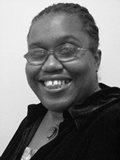
Today Katrina Byrd, the boa flouncing phenomenon shares her thoughts on writing, performing, and following our dreams with us. Katrina was my guest on the Book Junkies Interview Livecast on Sunday 2/12. Listen to the recording here: http://www.blogtalkradio.com/book-junkies-interview-livecast/2012/02/12/katrina-byrd-the-boa-flouncing-persona
1. When did you decide to get serious about writing?
About seven years ago when I sent my first play to Fondren Theatre Workshop, a local theatre group.
2. Which writers have inspired and influenced you?
Stephen King, John Floyd, Barbra Kingsolver, Mayah Angelou, Alice Walker
3. Share some information about your books with us:
I actually have three books published. Justice is Blind and One HOT Minute are short story collections and Byrds of a Feather is an inspirational book uplifting and motivating others with humorous feather boa quotes. The book that I'm working on now is titled Portrait of a Woman which is a play centered on the female experience. A reading of Portrait of a Woman will take place on March 11th at Lumpkins' BBQ at 7 pm. The reading is part of the editing process for the play as well as an event to jumpstart Women's History month and bring the community together. I received an artist minigrant from the Ms. Arts Commission to do publicity for this reading.
Find Katrina's Books on Amazon
4. What started you on the journey to write Portrait of a Woman?
I noticed that a lot of writing was about different types of women so I decided to turn these pieces into a play which will be published and available for theatres to perform. My goal in writing this piece, is to explore situations from the point of view of a diverse mix of female characters. One character, JUSTICE ROBERTSON is an African American, blind detective in a small Ms. Town. KAY is a seventy year old grandmother with a sexually transmitted disease. And there is BARBARA a housewife who believes in neatness and order.
5. What is your process for creating characters? What do you do to get them to feel genuine to your readers?
I love dialogue! One way I create my characters is by listening to conversations. I also love to observe people. It's amazing what you can learn just by watching someone. I also find great character development inspiration from the books I read, movies, plays and just living in general.
6. What genre do you most love to read? Are your (books) (stories) exclusive to that genre? I like reading so many different genres so I think my writing is pretty diverse as far as genre goes.
7. What does writing do for you, personally? How does it make you feel?
Writing is a way for me to escape reality. It helps me to become balanced. When I write I feel better. I think, for me, the act of creating stories is so calming; so freeing.
8. What new projects are you currently working on?
Annie Mae Jumps the Broom. Annie Mae Jumps the Broom is a book written by a wonderful story teller named Diane Williams. I am turning her into a play. The focus of the play is to share some of the traditions that were around during slavery (quilting, jumping the broom, singing) and how they were used.
9. What is the story you remember best from childhood, and does it still influence your writing today?
The Little Fat Policeman. I used to listen to it on my little record player. It does still influence me today mainly because there were so many different types of characters.
10. Is there anyone you'd like to give a mention or a shout out to?
I'd like to do a shout out to Dora Roberson, my family, the local artist community in Jackson and al of the Katrina Byrd fans.
11. Any last words for our readers?
Doing what you always dream about is important. Knowing that it takes a lot of trust and the support of others to help you on the journey toward your goals and dreams is a good thing to know. The small things are VERY important. Thread holds our clothes together. Nails and screws hold up strong walls and foundations. So small steps are essential to moving toward your dreams.
February 13, 2012
A Chat With Susan Wells Bennett
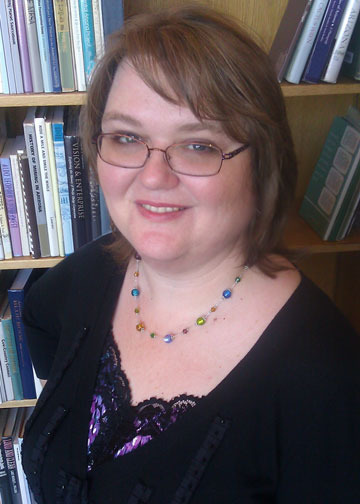
 Today I am pleased to welcome Susan Wells Bennett. Susan is the author of several novels and stories that are known for the smooth style and rich characters. Susan was my guest on the Book Junkies Interviews Livecast on Friday February 10th. You can enjoy that show here: Book Junkies Interviews Susan Wells Bennett
1. When did you decide to get serious about writing?
I always wanted to be a writer, but didn't believe I had enough life experience to write a book that would be relevant to others until I was in my late thirties. At that point, I asked my husband if he would support me for a few months while I attempted to complete a novel. He agreed. After he read the novel I produced, The Thief of Todays and Tomorrows, he told me to keep writing.
2. Which writers have inspired and influenced you?
I am a huge fan of John Irving and Margaret Atwood. I also have a place in my heart for Dorothy Parker, whose stories and poetry display her wicked sense of humor.
3. What started you on the journey to write An Unassigned Life?
The story came out of a random thought about the phrase "ghost writer." When I 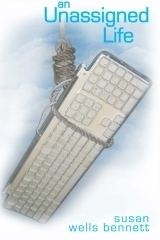 combined that thought with my interest in the paranormal, the whole thing just came together.
4. How would you describe your literary voice and what do you think makes it unique?
My readers have described my style as smooth and flowing, like a river that sweeps them through the story and immerses them in my world. I would say that what makes my voice unique is the way that I blend humor and tragedy. Life is neither all good nor all bad and I believe literature should reflect that.
5. What is your process for creating characters? What do you do to get them to feel genuine to your readers?
Most of my characters spring from writing exercises. Sometimes, writing just a few scenes with the character are enough for him or her to become real to me. Other times I have to complete a character questionnaire to feel like I really know the character. After that, I just slip into his or her mindset and write. I wish I could explain it more fully than that, but I don't have any other tips or tricks to share.
6. What genre do you most love to read? Are your books exclusive to that genre?
I'm a genre jumper, both in my reading and my writing. Some of my favorite books are humorous in nature, but I'm also a sucker from a drama or a thriller. So far, I've written three dramas, two comedies, and three comedic mysteries.
7. What does writing do for you, personally? How does it make you feel?
Writing is both extremely pleasurable and horrifyingly miserable at the same time. When I'm having a good day of writing, I get swept away on the current of my own storyline. When I have a bad day writing, it's all I can do to keep from crushing the keyboard with a sledgehammer. The high I get from finishing a novel is unlike anything else I've ever experienced. Because of that, I will never stop writing.
8. Are there other genres of fiction that you would like to explore in the future?
I recently wrote a zombie story for a collection my publisher, Inknbeans Press, is putting together for charity. I'm not sure I'll be doing any more work in that genre, but I'm open to trying anything once – except erotica. I would be awful at that.
9. What new projects are you currently working on?
I'm currently finishing up Night Life, the third novel in my Brass Monkey series, and preparing to write the fourth and final installment. The series, which includes Wild Life and Charmed Life, follows the lives of four Baby Boomers living in Sun City, Arizona. Each book has a mystery, but the novels are more about the characters than the crimes.
10. What is the story you remember best from childhood, and does it still influence your writing today?
The Lottery by Shirley Jackson. I do think it influences my writing quite a bit actually. I get a sense of satisfaction out of punishing those with a lack of empathy.
11. Where do you see yourself as a writer five years from now?
Still writing. My goal is to write three books a year for as long as I've got stories to tell. With any luck, I'll pick up some more readers along the way. I have an old friend who has become one of my devoted readers. A conversation we had one day led to the plot of Wild Life. So, of course, I love to talk to my readers!
12. Is there anyone you'd like to give a mention to?
Inknbeans Press http://www.inknbeans.com/ is more than my publisher. The Boss Bean and the other writers with the company are my support system. I might be able to do it without them, but I never want to.
13. Any last words for our readers?
If you would like to win an autographed copy of An Unassigned Life, please visit my blog at http://swellsbennett.blogspot.com I'll be giving away a copy to one lucky reader at the end of February!