Laurel Garver's Blog, page 13
February 3, 2016
8 signs you're doing better than you think you are: writers' edition
 Photo credit: Alvimann from morguefile.comI admit, this title is partially ripped off a post one of my Millennial friends linked on Facebook from a site called "Thought Catalog," meant to help folks feel less like a lost cause because, hey, they do this "adulting" thing with at least minimum competence. And they aren't starving or being carpet-bombed. Win!
Since only a handful of you lovely readers leave comments, I don't know how far to go in making sweeping generalizations abo...


January 27, 2016
Help! Critique partners bash my use of dialect
Dear Editor-on-call,
 Photo credit: Sgarton from www.morguefile.com
How do we figure out where the line is between a stylized voice/dialect vs. proper grammar? I know this is a hugely "case-by-case" basis, but I often find the pieces I write with a bit of a dialect or style get corrected by critiquers for grammar, effectively changing how the character would think.
Sincerely,
Dialectable Dilemma
Dear Di,
I suspect the subtext of your question is this: "What do you do when your critiquers are so zeal...
 Photo credit: Sgarton from www.morguefile.com
How do we figure out where the line is between a stylized voice/dialect vs. proper grammar? I know this is a hugely "case-by-case" basis, but I often find the pieces I write with a bit of a dialect or style get corrected by critiquers for grammar, effectively changing how the character would think.
Sincerely,
Dialectable Dilemma
Dear Di,
I suspect the subtext of your question is this: "What do you do when your critiquers are so zeal...
January 20, 2016
How I do it: identifying story weaknesses
In a previous post, How I do it: keeping revisions organized, I discussed my method for tracing particular revision threads throughout a novel manuscript, tracking them, developing a running list of changes, and methodically tackling those changes.
One of my young writer friends, after reading the post asked, "but how did you figure out what the problems actually were?"
 Image credit: clairer at morguefile.com
I rely a good deal on my intuition when it comes to writing decisions, but I also...
One of my young writer friends, after reading the post asked, "but how did you figure out what the problems actually were?"
 Image credit: clairer at morguefile.com
I rely a good deal on my intuition when it comes to writing decisions, but I also...
January 13, 2016
The center or the squad? Using core and corps
For today's phonics fun, I'd like to tackle a pair of homophones, pronounced /koar/ I've seen misused even in published books, though not because the spellings are at all similar. Rather, one form of the word is quite simple and familiar, and the other more obscure and less likely to be known.
Let's take a look at definitions, visuals, examples, and mnemonics to get the words clear in our heads. Because spell-check will not help you.
Core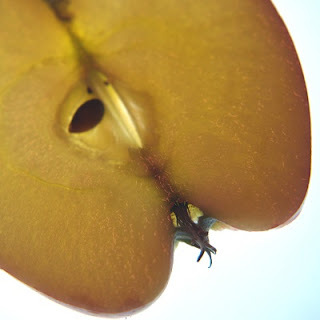 Image: marykbaird for morguefile.com(n.) the center;...
Let's take a look at definitions, visuals, examples, and mnemonics to get the words clear in our heads. Because spell-check will not help you.
Core
 Image: marykbaird for morguefile.com(n.) the center;...
January 6, 2016
Following your star: Focus, change, and an "unresolution"
Today is Epiphany, celebrating the "wise men from the East" coming to honor the Christ child. The Magi had been watching for something good and were willing to make great effort to get close to it. It is a powerful demonstration of hope--what it looks like, how it works.
 Image credit: rappj at PhotobucketHope comes from keeping an eye on the far horizon and being captivated by the good we see there. We lose hope when unhappy things in the immediate environment consume our vision and we stop re...
Image credit: rappj at PhotobucketHope comes from keeping an eye on the far horizon and being captivated by the good we see there. We lose hope when unhappy things in the immediate environment consume our vision and we stop re...
December 30, 2015
Roundup of best links for the year
 Photo credit: DanielaTurcanu from morguefile.comAnother year is ending, which naturally tends to make us stop and take stock of where we've been and where we are hoping to go next. I've done well with some goals, less well with others.
Reflecting on what worked, I realized there were some influential articles and blog posts that were especially helpful to me. As my year-end gift to you, here they are:
Most helpful posts of the year
The procrastination doom loop, and how to break it via @The...
December 16, 2015
How I do it: keeping revisions organized
Revisions. Love 'em or hate 'em, they're a necessary step to strengthening your work. But it's easy to get really overwhelmed by the prospect of fixing problems, or simply bounce randomly from place to place in the story doing small tweaks without tackling the bigger issues.
Once you have a manuscript that's complete, you can try to identify weaknesses yourself, after you've set the manuscript aside for a while. Or you can ask a few readers to give it a look. I've done both before digging into...
Once you have a manuscript that's complete, you can try to identify weaknesses yourself, after you've set the manuscript aside for a while. Or you can ask a few readers to give it a look. I've done both before digging into...
December 9, 2015
Escalation: The key to avoiding melodrama
Melodrama. It might make for addictive daytime TV, but it tends to drive readers crazy.
Consider the following melodramatic scenarios:
 It's a long, slow ride to the top (Photo by kconnors from morguefile.com)Eyes lock across a crowded room and the hero will now spend 300 pages risking his life for a woman he has never spoken to.The heroine's boyfriend sees her touch another man's shoulder in a conversation, A page later, he strangles the rival and disembowels him, then sends the...
Consider the following melodramatic scenarios:
It's a long, slow ride to the top (Photo by kconnors from morguefile.com)Eyes lock across a crowded room and the hero will now spend 300 pages risking his life for a woman he has never spoken to.The heroine's boyfriend sees her touch another man's shoulder in a conversation, A page later, he strangles the rival and disembowels him, then sends the...
December 2, 2015
Caring for your creativity during the holidays
 Photo credit: danielemusella from morguefile.comDecember is here, and with it comes a lot of rush and bustle. Shopping, decorating, parties, concerts, recitals, bake sales, visiting family and friends, preparing for visitors, more shopping, more baking, more parties, etc. All the festivities can be pretty draining, not only of your bank account and time, but of your creativity, too.
"Caring for your creativity" might sound a little strange, but think of it like a muscle. It need...
November 17, 2015
The emotions laboratory outside your door
 Photo credit: jdurham from morguefile.com I'm not here today, I'm guest posting over at Jami Gold's blog on honing your observation skills in order to better portray characters' emotion in fiction.
Reading others' emotions is something you do every day. It's a skill one begins to develop from infancy. But like other kinds of reading, it's a learned skill, not an entirely inborn one. So if you feel like this is a weakness, never fear, you can improve with practice.
And...