Rachel Maddow's Blog, page 3354
August 9, 2013
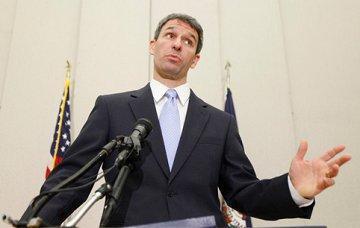
Cuccinelli's cash-flow problem
Associated Press
When Virginia Gov. Bob McDonnell (R) hired a crisis-management team to deal with his corruption scandal, the team of lawyers and consultants told him to stop the bleeding: return the gifts he'd received from Star Scientific CEO Jonnie Williams. So why has state Attorney General Ken Cuccinelli, the Republican who hopes to replace McDonnell, refused to do the same?
Last week, Cuccinelli said he couldn't return the $18,000 in gifts because they weren't tangible goods -- unlike the luxury goods McDonnell received, Cuccinelli received dinners, trips, and vacation lodging.
But that wasn't much an excuse -- Cuccinelli could determine the value of these gifts and pay his benefactor back, or perhaps donate a comparable amount to charity.
And that brings us to today, when the far-right gubernatorial candidate came up with a brand new excuse.
Cuccinelli, who serves as Virginia's attorney general, has maintained that those gifts -- including a flight, turkey dinner, stays at Williams's vacation home and nearly $7,000 in supplements -- were intangible items that he is unable to return.
But when pressed about reimbursing for the monetary value, Cuccinelli responded, "You mean just write a check? If I could do that, I just might do that. But that's just not something I can do, from my family's perspective."
Wait, Ken Cuccinelli can't resolve his corruption allegations because he doesn't have $18,000?
Yes, that is the new argument. A campaign spokesperson added, "As a father of seven children, like most Virginians, he needs to manage a family budget, and his comment simply reflected that reality."
In other words, Cuccinelli would pay back the money he should, but he can't afford to do the right thing. That's probably not going to give his candidacy a boost as the gubernatorial race reaches the home stretch.


Another day of setbacks for GOP outreach to minority communities
The Republican National Committee has said repeatedly, for quite a while, that it wants to expand beyond its older, white base, and bring in more racial and ethnic minorities. I think it's safe to say today was not a helpful day in this effort.
In New Jersey, for example, the leading Republican U.S. Senate candidate was forced to delete a racist tweet, directed at Newark Mayor Cory Booker, from his official campaign account. In Wisconsin, Gov. Scott Walker (R) was forced to fire an administration official who equated undocumented immigrants with "Satan." In D.C., Jason Richwine is talking again about minorities being intellectually inferior on a genetic level.
And then there's Oklahoma.
Watch on YouTubeAs Scott Keyes reported this morning, Rep. Markwayne Mullin (R) hosted a town-hall meeting in his Oklahoma district yesterday, and fielded a question from a self-described "Birther Princess." Mullin wasn't eager to pursue the racist conspiracy theory -- not because he considers it ridiculous, but because he believes it's too late.
Though Mullin at first appeared to be batting down the Birther Princess's nutty theory, it quickly became clear that he only took issue with her timing, not the substance of her accusation. "I believe what you're saying," he told the woman, saying he thought the birther issue "probably would've been" big enough to drag down Obama in 2012. Mullin felt aggrieved that he had to question whether Obama was actually born in the United States, concluding that although the issue is "still there," it's too late to prove it to the country.
Mullin is the second House Republican to endorse birtherism just this week.
Like I said, it's just a banner day for Republican minority outreach, isn't it?
'It's more of a religion than a science'
Associated Press
About a year ago, former Rep. Bob Inglis (R-S.C.) made the case that his party has no choice but to come around on climate change -- "the facts," he said, will "overwhelm" Republican resistance.
Last week, Inglis' argument picked up some welcome support from four former EPA chiefs from Republican administrations, all of whom got together to write a New York Times op-ed on the "Republican Case for Climate Action."
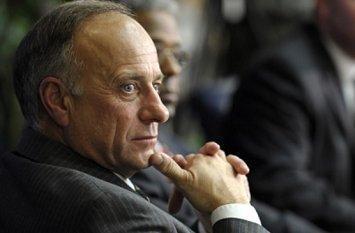
Rep. Steve King (R-Iowa) must have missed it.
On the environment, King said efforts to fight global warming are both economically harmful and unnecessary. "It is not proven, it's not science. It's more of a religion than a science," he said.
He said that even if carbon dioxide in the atmosphere causes the earth to warm, environmentalists only look at the bad from that, not the good.
"Everything that might result from a warmer planet is always bad in (environmentalists') analysis," he said. "There will be more photosynthesis going on if the Earth gets warmer. ... And if sea levels go up 4 or 6 inches, I don't know if we'd know that."
First, climate science is based on voluminous, objective, peer-reviewed research. Second, it's a little weird to hear a conservative Republican suggest religion is inherently untrustworthy.
But the larger takeaway from King's remarks is that we may well be entering the next phase of climate denial. There have traditionally been three parts to this, but King points to a fourth.
Long time readers may remember the drill:
Phase 1: Conservatives claim climate change isn't real.
Phase 2: Conservatives concede that climate change is real, but insist we don't know what's causing it.
Phase 3: Conservatives accepting climate science, acknowledge that human activity is responsible for climate change, but argue that it'd be too much trouble to do anything about it.
King's argument, which pops up from time to time, is that we might like climate change so there's no real point in making such a fuss about the global crisis.
I'm afraid we're a long way from the facts "overwhelming" Republican resistance to science.
Some of the people can be fooled some of the time
Associated Press
President Obama annoyed his conservative critics quite a bit two weeks ago when he argued, "[W]ith this endless parade of distractions and political posturing and phony scandals, Washington has taken its eye off the ball." For the right, the controversies they've grown to love aren't "phony" at all, so they've complained ever since.
So, Fox News conducted a poll.
Voters in the Fox News poll also indicated they thought the controversies should be taken more seriously. [...]
The Fox News poll phrases the question as an either or question on all the scandals: "Please tell me whether you think this is a situation that should be taken seriously or if it's more of a phony scandal."
If you're familiar with Fox News polling, you know it's generally wise to take the network's surveys with a grain of salt. Fox goes to remarkable, almost comical, lengths to guide respondents to the answer the network wants to hear.
But for now, let's put that aside and consider the results. A 59% majority, for example, believes the "IRS scandal" is real and deserves to be taken seriously. The same majority reached the same conclusion on the subpoenas of AP reporters during a leak investigation, while a 78% majority also rejects the assertion that the Benghazi political controversy is phony.
And this brings us back to a discussion from last week. The political world and major news organizations were quick to let the public know about the so-called "White House scandals," taking disparate stories, tying them together, and telling Americans Obama's presidency had been rocked by "scandal."
In time, the controversies either fell apart or became more routine policy disputes -- including, in some cases, debates in which Republicans agreed with the president -- making the whole "scandal" narrative look pretty silly.
But therein lies the rub: the political world neglected to mention this to the public. Of course the polls show results like these.
When the stories first broke, Americans were told, "OMG! Look over here!" And when details emerged showing the stories weren't quite so scandalous after all, Americans weren't told much of anything, leaving the public with the impression that those "scandals" were real.
I still think this matters, for all of the reasons we talked about last week: misguided coverage of phony controversies led the public to believe President Obama and his administration were responsible for serious misdeeds. The taint of "scandal" remains, for no reason other than the political world told the public about allegations, but decided the evidence to the contrary wasn't important.
The result is polling data pointing to a predictable public reaction: Americans taking stories seriously that were discredited months ago.
Christie signs new gun bills into law in New Jersey
Associated Press
On Capitol Hill in DC, federal efforts to address gun violence have clearly struggled, as evidenced by Senate Republicans killing a bipartisan measure on background checks in the spring. But in the states, a very different kind of picture emerges.
New measures have already been approved in states like Colorado and Delaware, and "Stand Your Ground" policies -- which clearly relate to gun violence -- are drawing new scrutiny in Florida and Michigan.
And yesterday, reform proponents made some additional progress in New Jersey.
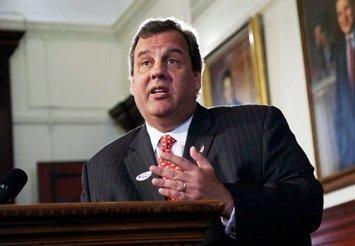
Gov. Chris Christie signed 10 gun bills today, ranging from measures aimed at stiffening penalties for the unlawful possession and smuggling of firearms to requiring the state to submit mental health records to the federal government. [...]
The package of bills Christie signed yesterday had for the most part sailed through the Legislature with bipartisan support and without inflaming supporters or opponents of gun control.
Scott Bach, executive of the New Jersey Association of Rifle and Pistol Clubs, said although his group opposed two bills Christie signed, they were not the top priority.
The 10 measures included a new prohibition on firearm purchases from those on the federal terrorist watch list. Most of the other measures stiffened penalties on existing state gun laws.
There are, meanwhile, five other gun bills pending on the governor's desk, which Christie has neither signed nor vetoed. Not surprisingly, these are the five most controversial -- they include a ban on .50 caliber rifles and mandatory safety-training courses for firearm permits -- and Christie, who's on vacation, hasn't announced his intentions on these additional measures.
As you might imagine, political considerations are fairly important in this process.
On the one hand, Christie has a re-election campaign to think about, and Election Day is less than three months away. The governor has an enormous lead in the polls, but if he vetoes popular gun-safety measures already approved by the state legislature, it may undermine his popular support at an inopportune moment.
On the other, Christie apparently has national ambitions, and if he expects to compete in presidential primaries, he'll have to win over right-wing activists -- most of whom strongly oppose efforts to prevent gun violence.
The Republican base is already suspicious of Christie -- he praised and embraced (literally) President Obama during the response to Hurricane Sandy; he's accepted expansion of the Affordable Care Act in the Garden State; and he's referred to elements of the conservative movement as "the crazies."
And now he's signed 10 new measures on gun safety into law. It's not difficult to imagine the 2016 attack ads.
As for the larger policy context, the gun issue has struggled to gain traction inside the Beltway, but there's still plenty going on at the state level worth watching.
Rand Paul's terrible, horrible, no good, very bad week
Associated Press
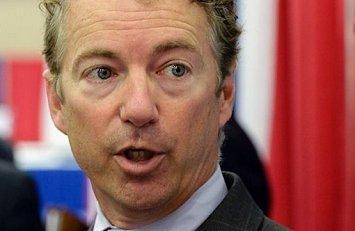
It's probably safe to say Sen. Rand Paul (R-Ky.) has had better weeks. Just over the last few weeks he started to lose his cool on NPR when asked about a neo-confederate he co-authored a book with; he was caught making ridiculous boasts about his record on minority rights; and he repeated a bizarre conspiracy theory about George Stephanopoulos that's already been debunked.
And then, after all of this, the Kentucky Republican sat down for a chat with Businessweek's Josh Green.
Green: A recent article in the New Republic said your budget would eviscerate the departments of Energy, State, Commerce, EPA, FDA, Education, and many others. Would Americans support that?
Paul: My budget is similar to the Penny Plan, which cuts 1 percent a year for five or six years and balances the budget. Many Americans who have suffered during a recession have had to cut their spending 1 percent, and they didn't like doing it, but they were able to do it to get their family's finances back in order. I see no reason why government can't cut 1 percent of its spending.
Except, whether the senator realizes it or not, his description of his plan is extremely deceptive. As Ezra Klein explained, Paul's response wasn't actually an answer: "Paul's budget eliminates the Department of Commerce. It also eliminates the Department of Education. And the Department for Housing and Urban Development. And the Department of Energy. The State Department gets cut by more than 50 percent. Meanwhile, it increases spending on defense by $126 billion. Perhaps these are good ideas! But Paul doesn't defend them. He obscures them. He tries to make his cuts sound small even though, in the areas Green asked about, they're huge."
In theory, Paul could at least try to explain why he thinks cutting the State Department budget in half would be good for the United States. But he either can't or won't do that, so he repeats vague talking points that obscure the facts.
Wait, it gets worse.
Green: Any political consultant who saw that list [of cabinet agencies Paul intends to eliminate] would tear out his hair and say the American people would never accept it. You disagree with that conventional wisdom?
Paul: You know, the thing is, people want to say it's extreme. But what I would say is extreme is a trillion-dollar deficit every year. I mean, that's an extremely bad situation.
Except, we're not running trillion-dollar deficits every year. If the senator takes this issue so seriously, shouldn't he keep up with the basics of current events?
Green: Who would your ideal Fed chairman be?
Paul: Hayek would be good, but he's deceased.
Green: Nondead Fed chairman.
Paul: Friedman would probably be pretty good, too, and he's not an Austrian, but he would be better than what we have.
Again, Paul doesn't seem to know what he's saying. As Jon Chait explained, the senator's answer "makes no sense" because, "Paul is a hard-money fanatic who wants to abolish the Federal Reserve's role in using money policy to stabilize the economy. That's the joke. Milton Friedman, though, had the complete opposite view of monetary policy. His central academic insight was support for very active monetary policy."
My principal concern with Rand Paul is not his ideology. On plenty of subjective questions, he and I would recommend very different courses of action, which is what spirited political debate is all about.
Rather, what troubles me about the senator is that he doesn't seem to have the foggiest idea what he's talking about. Worse, it's not like he's ignorant of obscure policy details on issues he deems irrelevant -- Paul is strikingly confused about the issues he claims to care about most.
This Businessweek interview was a mess for the senator on economic matters, but let's not forget that Paul also doesn't seem to understand his own views on the use of drones, which is another issue he says he cares deeply about.
If this guy intends to seek national office and ask the American mainstream to consider him credible, he has a lot of homework to do -- homework he probably should have done before making the transition from self-accredited ophthalmologist to U.S. senator.
Richwine returns
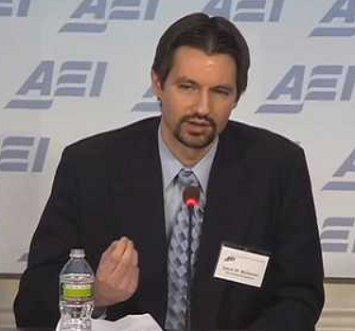
Remember Jason Richwine, the co-author of the Heritage Foundation's condemnation of immigration reform? The conservative scholar ran into some trouble in May after we learned that Richwine has argued, for several years, that white people are more intelligent than people of color. It didn't help when reports showed he contributed published pieces to a white nationalist website.
Indeed, Richwine's "research" shaped a fairly specific racial and ethnic vision: there are "real differences between groups," he's argued, with Jews on top as the smartest people, followed by "East Asians, then you have non-Jewish whites, Hispanics, and then blacks." These "differences" in intelligence, Richwine has said, should help shape U.S. public policy.
It wasn't long before the far-right think tank cut its losses and accepted Richwine's resignation. Three months later, Politico published a nearly 2,000-word piece from the conservative, asking, "Why can't we talk about IQ?"
"IQ is a metric of such dubiousness that almost no serious educational researcher uses it anymore," the Guardian's Ana Marie Cox wrote back in May. It was a breathtakingly ignorant statement. Psychologist Jelte Wicherts noted in response that a search for "IQ test" in Google's academic database yielded more than 10,000 hits -- just for the year 2013.
But Cox's assertion is all too common. There is a large discrepancy between what educated laypeople believe about cognitive science and what experts actually know. Journalists are steeped in the lay wisdom, so they are repeatedly surprised when someone forthrightly discusses the real science of mental ability.
If that science happens to deal with group differences in average IQ, the journalists' surprise turns into shock and disdain.
From there, the conservative goes on (and on) about how right he is about "science," even if it makes the media uncomfortable.
Yes, poor Jason Richwine. All he wants to do is talk about his belief that white people are smarter than everyone else. He's such a trooper to put up with rascally journalists and their "lay wisdom." Why can't reporters simply accept Richwine's assertions that people of color are intellectually inferior on a genetic level -- and will probably never catch up?
In his eyes, the reality-based community is apparently a bunch of killjoys.
Richwine's point in Politico seems to be that he wants an objective, unemotional conversation about his scholarly evidence on racial groups and IQ. Here's my not-so-radical suggestion: no, let's not have that conversation again.
Eugenics was a point of debate for many years in the cognitive sciences, and those claiming white intellectual superiority lost the fight.
As for the political implications of essays like these, if the left is really lucky, Richwine will just keep talking.
Issa finds a new toy to play with
Associated Press
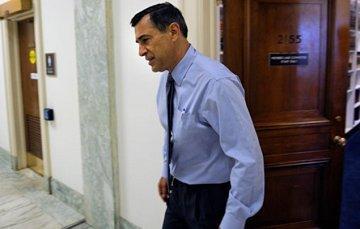
The discredited IRS controversy clearly didn't work out the way House Oversight Committee Chairman Darrell Issa (R-Calif.) had hoped, to the point that he no longer remembers the serious-but-false allegations he carelessly threw around just a month ago. The far-right Californian now wants to "expand" his investigation, which is a pleasant-sounding euphemism for, "The questions I asked produced answers that didn't fit my preconceived narrative, so I've come up with new ones."
And this week, after Issa grew tired of his broken old toys, he found something new to play with: officials at the Federal Election Commission apparently asked the IRS's tax exemption division last year about the status of some conservative political groups. Issa pounced, ordering the FEC to produce "all documents and communications between or among any FEC official or employee and any IRS official or employee for the period January 1, 2008 to the present."
So what seems to be the trouble? There's no evidence that the IRS shared private information with the FEC, but Issa and his allies want to know if maybe it happened anyway, and if there's some convoluted way to connect this to the debunked "scandal" Issa was so invested in.
As Dave Weigel explained, there's just not much here.
This level of scrutiny, with this much evidence, is a puzzle to some former FEC commissioners. "From what I've seen so far this doesn't look like anything," said Larry Noble, a Democratic appointee until 2000 who now advocates for public funding of elections. "It looked like what happened was that the staff contacted the IRS and asked for what was public. When I was there, certainly, it was always clear that the IRS would not give out anything that was not public. The IRS has a list of c3 groups, but it's often out of date, so people check with the source. This looked like a routine inquiry for public information."
A former Republican FEC commissioner said largely the same thing.
Where Issa sees a potential political scandal, everyone else sees routine and uncontroversial bureaucracy.
Tax Analysts reported this week:
"There are many legitimate or at least innocuous reasons for the FEC and the IRS to be sharing information about politically active nonprofits. The two agencies share regulatory oversight authority," [James P. Joseph of Arnold & Porter LLP] said.
Ofer Lion of Hunton & Williams LLP said it makes sense for the IRS and FEC to talk to each other when dealing with politically active tax-exempt organizations and applicants. "Most of this probably falls within the FEC's field of expertise anyway, so it makes sense that they would collaborate," he said. He added that it would be disastrous if the two agencies went after organizations for political reasons but that he sees no evidence yet that they have done that.
John Pomeranz of Harmon, Curran, Spielberg & Eisenberg LLP said it's possible an FEC staffer contacted Lerner to find out if a particular group had tax-exempt status, which is public information. If Lerner provided an answer, that would be fine, he said.
"It would be great if everybody went through official channels to get information like that, but I think there are a lot of people who rely on contacts inside the IRS to get a quick answer when it takes too long to get an answer the other way," Pomeranz said.
Gregory L. Colvin of Adler and Colvin said he is not surprised the IRS and FEC contacted each other regarding the AFF and other organizations that spend money on broadcast advertising featuring candidates for federal office. He said that for years the two agencies have been criticized for not coordinating their enforcement of tax and election laws, which "overlap in some respects and leave gaps in others."
In other words, the "scandal" is that some folks at the FEC were looking for official information one a couple of political groups that were flouting tax-exempt rules, and instead of following bureaucratic, inter-agency procedures, they just sent emails to the IRS.
If you care deeply about bureaucratic, inter-agency procedures related to the FEC and the IRS, this might be fascinating, but if Darrell Issa wants the political world to stay awake, he's going to have to do better than this.
Immigration reform's odds improve -- a little
Getty Images
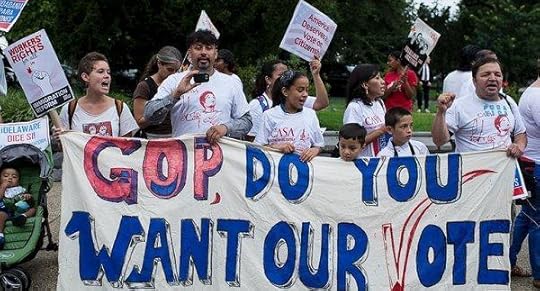
It's pretty easy to assume that fierce Republican opposition will doom comprehensive immigration reform. Indeed, for much of the summer, House GOP extremism on the issue has reinforced fears that the odds are poor.
But there's been some gradual movement of late, and it's given new hope to reform proponents.
Members of Congress have been on recess for only a few days, but it already seems the time away from Washington means more support for a pathway to citizenship among some Republicans.
In the past few days, two Republican members of the House of Representatives — Daniel Webster in Florida, Aaron Schock in Illinois — have expressed preliminary support for a way to legalize undocumented immigrants and allow them to eventually earn full citizenship. Even the House GOP whip, Kevin McCarthy (Calif.), announced support for legal status, although he stopped just short of supporting full citizenship.
After this ABC News report ran, Rep. Dave Reichert (R-Wash,) also endorsed a pathway to citizenship for undocumented immigrants already in the United States.
Rep. Luis Gutierrez (D-Ill.), a congressional leader on immigration policy, said yesterday there are "40 to 50 Republicans" in the House who are ready to support a comprehensive bill, even if they're reluctant to say so publicly at this point.
If even half of them were willing to sign a discharge petition -- or pull a "Reese Witherspoon" -- a bipartisan reform bill could reach the House floor for vote, at which point things would get awfully interesting.
This isn't to say success appears likely, but rather, that reform still has a pulse -- which is more than we could have said in June. Greg Sargent, after conceding that the odds still favor far-right opponents, noted yesterday, "[T]he easy conventional wisdom about what's happening now — which holds that the conservative base controls the outcome completely, that the death of reform is preordained, and that House Republicans are only looking for a way to kill reform blamelessly — is overly simplistic and is increasingly looking like it's just wrong."
And what about the prospects of using the August recess to push the debate in one direction or the other?
Let's not forget this Byron York piece we discussed briefly yesterday.
"There's definitely more interest right now in Obamacare than immigration, partly because folks believe immigration has been stopped or slowed," says conservative radio host Bill Bennett of the calls he receives from listeners. "The passion against Obamacare never subsides." [...]
If August goes quietly on the immigration front, some Republican lawmakers may return to Washington with the sense that voters back home don't really mind that immigration reform goes forward. And then it will. If, on the other hand, lawmakers hear expressions of serious opposition at town meetings, their conclusion will be just the opposite. And reform will likely go down to defeat.
So Democrats don't really mind if Republicans use up all their grass-roots energy railing about Obamacare. It's already the law. What would be a problem for Democrats, and for some pro-reform Republicans, is if the GOP grassroots concentrated its fire on immigration reform. That could well mean the end of President Obama's top legislative priority for his second term.
Ed Kilgore's question rings true: "[W]hat if the sudden conservative activist obsession with 'defunding Obamacare' as a demand being made of Republican Members of Congress convinces those self-same Members that allowing an immigration bill to come to a vote in the House isn't the career-ender it looked like a few weeks ago?"
Morning Maddow: August 9

Global News
Canadian Natural Resources, Ltd. provides media access to spills at its Primrose site near the Cold Lake Air Weapons Range in northeast Alberta. August 8, 2013.
Pres. Obama will talk to the press today.
Secretaries Kerry and Hagel are to meet with their Russian counterparts.
A doctor who lent money to Gov. Bob McDonnell's business was also offered an appointment to a state medical board.
The last abortion clinic in Toledo, Ohio may have to close.
A 14th woman comes forward alleging harassment by SD Mayor Bob Filner.
U.S. orders diplomats out of Lahore, Pakistan.
Roll Call reveals the this month.
The Canadian oil company responsible for four oil spills in Alberta lets the media take a look.