Rob Blackwell's Blog, page 6
April 1, 2013
Indie Author Settles Suit With Charlie Daniels Band; Agrees to Change Book Titles
It’s with a heavy heart – and a little relief – that I announce a final legal settlement between myself and The Charlie Daniels Band.
As some of you know, The Charlie Daniels Band sued me exactly a year ago today, arguing I had violated copyright on the song “The Devil Goes Down to Georgia,” from which I drew inspiration for the titles of my novels “A Soul to Steal” and “Band of Demons.”
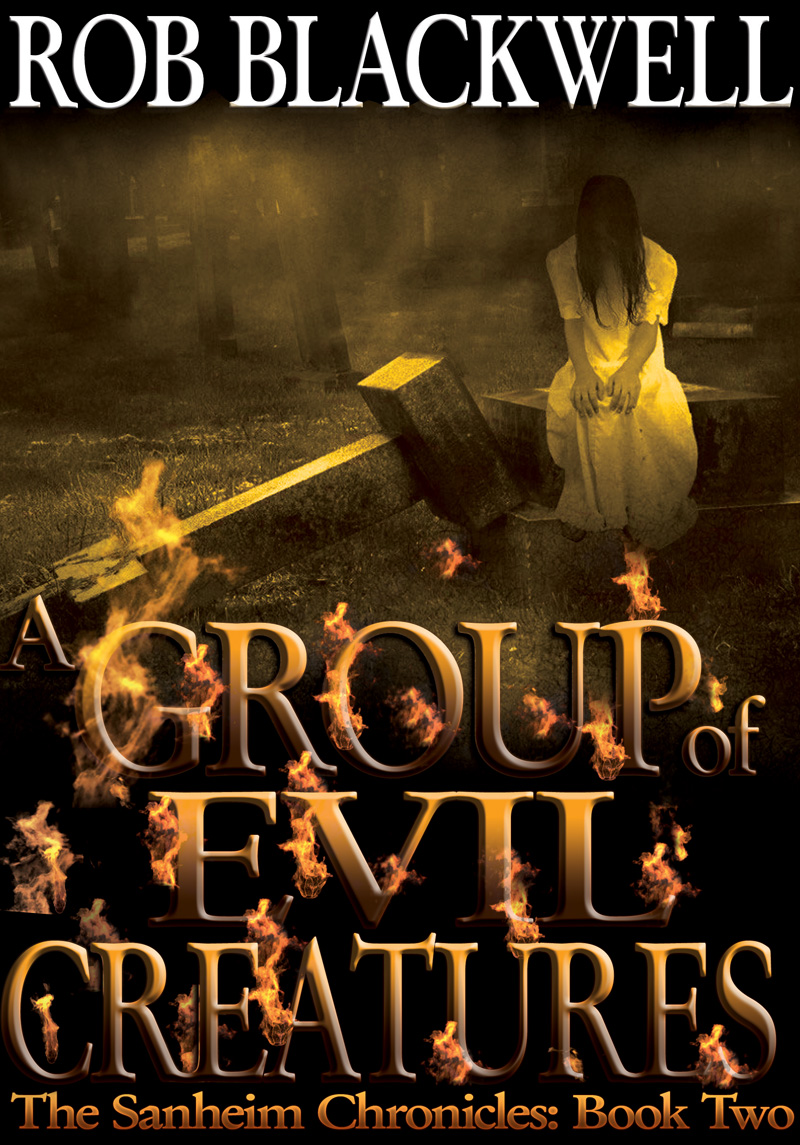
With few resources to challenge the band in court, I eventually had to give in to its demands. As a result of the settlement, I am now changing the names of my books. “A Soul to Steal” will henceforth be known as “A Spirit With Which to Abscond” while “Band of Demons” will be re-titled “A Group of Evil Creatures.”
 As always, I’m grateful for the assistance of my cover artist, Travis Pennington, who at the last minute agreed to re-work the covers of my books. You can take a peek at what the new cover for “Band of Demons” will look like to the left once it goes live on Amazon later today.
I am, of course, sorry to see the old titles go, but I think the new ones work almost as well. Unfortunately, the legal agreement does stipulate other changes. I must remove the following words from both of my novels: devil, demon, soul, steal, fiddle, fire, dare, Georgia and “hickory stump.”
I must also give the band at least half of my proceeds to date, which I calculate to be roughly $6.66, a fitting figure.
As I said, I’m sorry it came to this, but I’m hopeful that my fans will accept this decision and we can all put this sorry episode behind us.
As part of the legal agreement, please know that “A Soul to Steal” will be FREE on Amazon on April 2 and April 3. I doubt the new cover will be up by then, so it’s your last chance to enjoy it in its original form. For a larger view of the new cover, see below:


February 6, 2013
New 'Bookish' Site Ignores Indie Authors
According to a new site launched late Monday by a group of publishers, "Bookish" is supposed to collect the best books out there and provide readers with recommendations.
“The Bookish team reads non-stop, continuously enhancing recommendations with its analysis and intelligence," the site promises.
That may well be true, but what the Bookish team apparently doesn’t do—at least for now—is read indie authors.
Want to read more? Check out my full blog post on Indiereader here: http://bit.ly/14SmPbj

“The Bookish team reads non-stop, continuously enhancing recommendations with its analysis and intelligence," the site promises.
That may well be true, but what the Bookish team apparently doesn’t do—at least for now—is read indie authors.
Want to read more? Check out my full blog post on Indiereader here: http://bit.ly/14SmPbj
October 31, 2012
Creating a New Halloween Myth
Probably the question I’ve received most often about A Soul to Steal is whether its central mythology, a legend called “The Prince of Sanheim,” is based on something real. I’ve had friends admit that they Googled the term after finishing the book, and others who suggested they had heard of it before.There is very little as gratifying for a writer, since the truth is that I made up the entire story. What makes me happy is that it doesn’t feel fake. A good mythology should seem real or vaguely familiar, the kind of thing you heard once but have since forgotten.
 I’m not sure exactly when the idea came to me. I know a lot about Halloween, and much of what we think we know is not actually true. Occult fanatics and religious zealots in the 19thcentury invented a past for All Hallow’s Eve which has very little to do with actual history.Instead of rejecting that, however, I wanted to embrace it. I wanted a legend that drew from those old myths—real and fictional—and created something new. And I needed something that would go to my central theme: the nature of fear.What I wanted to know was this: do your fears define you as a person? What would it be like if your worst fear—whatever that is—suddenly took shape? Would you have the strength and courage to face it?I also wanted something that drew from a dark place. Fear is a powerful thing. We tend to view it negatively, but it’s also a great motivator, among other advantages. Still, it cuts both ways. It can either save you or paralyze you, depending on the person and circumstances. So I needed a legend that drew on old Halloween myths, explored the nature of fear, but also was something unique.Here’s what I came up with. Do you want to hear a new Halloween legend? Pull up your chair and I’ll tell you a story: Centuries ago, a Celtic tribe was on the verge of annihilation, facing the increasing incursions of a rival. In desperation, they made a deal with Sanheim, the Celtic god of the dead. Despite the fact that most of their young people were killed as a result of the neighboring tribe’s attacks, they agreed to sacrifice one man and one woman to Sanheim. They tied them to a post, bound their wrists together and left them there to die.But they didn’t die. A few days later, they returned to the village and the young man—who had seemed like just a boy before—was now a powerful warrior. The woman was his priestess. The town elders were frightened, but pleased. The two left the next day to wreak vengeance on the rival tribe. Except when they returned, instead of taking orders from the town elders, they took control.The two had immense powers—and were intimately bound together. When there was a battle to be fought, the man led the charge. But it was the woman guiding the tribe, making most of the decisions. Apart they were nothing. Together they were what became known as the “Prince of Sanheim.”But there was a weakness. Their powers waxed and waned with the changing of the seasons. They were strongest at Samhain, the harvest festival we now call Halloween. They were weakest the next day, what Christians call All Soul’s Day. And the power they wielded tended to corrupt them.Every generation, a man and a woman had the chance to become the Prince of Sanheim, but there was a catch. The man must first face his Cennad—a Celtic word for ambassador—that embodied his worst nightmare. If the man could defeat his Cennad, he and the woman would have access to great powers. The woman, too, would have to face her own test, but of a different nature.That was the basic legend, but I couldn’t really stop there. I didn’t want to just have an old myth with no echoes through history. So I invented stories for several Princes of Sanheim through the ages. In the original version of the novel, there were flashbacks to many of them so that the reader got a greater sense of their powers and vulnerabilities.In the end, however, I cut most of that, simply because my novel already has a lot going on. The entire backdrop of the Prince of Sanheim unfolds while on the hunt for a serial killer with his own twisted history and I was wary of throwing too much at the reader.The story I did tell was that of the most famous Prince of Sanheim: a Romantic-era poet named Robert Crowley. On Halloween night in 1873, he hosted a party at his estate in Scotland. Over 50 men showed up and history does not record the number of women who also attended. What is important, however, is that all but one disappeared. Only a man named Horace Camden survived and he shouted to anyone who would listen that Crowley had found his bride and become the Prince of Sanheim.
 The event was so mysterious it gave birth to a creepy rhyme: “Fifty men went up a hill, none of them came down. Fifty men went to see him, but none of them were found.” Camden went on to become a priest of the movement, talking about the coming of the next Prince of Sanheim. The final step was to set up an environment where this new legend was born again. Quinn O’Brion and Kate Tassel, the main characters of the novel, don’t know anything about the “Prince of Sanheim” when the book starts. Instead, they are more worried about catching the killer named Lord Halloween before he strikes again. But as the novel goes on, they eventually realize that the key to finding the killer may lie in uncovering the mystery of the ancient Celtic myth.They also have to learn something else: you are what you fear.
For more on A Soul to Steal, please “like” the Facebook page at: www.facebook.com/asoultosteal.
The novel can be bought for Kindle here.
This post was originally published in October 2011. This year's guest post can be found here: http://bit.ly/NBRGuest.
.jpg)

October 29, 2012
Infamous Serial Killer: Why I Love Halloween
Between Oct. 1 and Oct. 31 of 1994, a serial killer calling himself “Lord Halloween” terrorized Loudoun County, Virginia. While he communicated with police only through brief post-it notes left at crime scenes, he wrote long, detailed letters to Tim Anderson, a local reporter at the Loudoun Chronicle.
Those letters only recently came to light after Lord Halloween’s second killing spree in 2006. Most have remained sealed by the courts—until now. Following is a previously unreleased letter from Lord Halloween to Tim Anderson near the beginning of his first rampage.
LH File: Letter #4Date: Oct. 12, 1994Investigation Status: ClosedContents: Unclassified
Mr. Anderson,
Sometimes I wish we could meet face to face. I’ve watched you, of course. I’ve seen you go to the grocery store and the gym. I’ve even watched you on assignment—talking to the police about me. So I feel like I know you already.
But I wish you could ask me questions. One-sided conversations are always unsatisfying and it’s so hard for me to know what you’re thinking. Do you hate me? Do you think I’m a monster? Or am I the best thing that’s ever happened to you?
Come on: what’s a crime reporter without a story? I’m the biggest story this place has ever seen and you’re at the center of it.
Still, I keep wondering what you would ask me if you could. I bet I know one question: why Halloween? I could have picked any name. I could call myself Son of Satan or something equally ridiculous. Why be Lord Halloween? Why kill just in October? Why focus on a stupid holiday that’s just for kids?
The truth is it’s not for kids. It never was. It was a pagan holiday celebrated with human sacrifice. It was a tribute to death and decay and the end of the world. I’m just bringing it back into style, the way it was meant to be.
It makes me sick to see how twisted and lifeless (excuse the pun) Halloween has become. The little painted ghosts in the shop windows and the cute witches with their frisky kittens. All the kids bobbing for apples and dressing up like super heroes and fairy princesses. That’s not what Halloween is about, Mr. Anderson. It’s not meant to be something the kids look forward to. It’s meant to be the thing they dread.
Halloween is about fear. Fear of the thing that goes bump in the night. Panic at what lies beneath you while you sleep. There’s a whole world out there we don’t know or understand and it’s filled with terrors we can’t begin to comprehend. Halloween is a reminder of everything we don’t want to face, including our own mortality.
But like everything else, we’ve corrupted it. We’ve made it insipid and bland, tried to tame it and pretend it’s all in good fun. But it’s not fun, Mr. Anderson.
Jack O’ Lanterns were lit as a way to ward off demons roaming the night. They weren’t meant to be craft projects for school kids. Costumes were a way to hide from the things haunting you, not play make believe. Even the candy we hand out was originally a tribute to the Old Gods to let us live for one more year. Now the only person who finds Halloween threatening is the dentist.
The world needs to be reminded what Halloween is about. It needs a teacher. I am that person.
I promise you that when I am done, this entire area—hell, even the country—won’t even want to think about Halloween again. If anyone shows their face on All Hallow's Eve, I will consider them fair game.
I am staking my claim to Halloween, making me part of the legend. For now and forever, we will be intertwined. In future years, Leesburg residents will shudder when the very mention of Halloween passes someone’s lips. They’ll look behind them and wonder if I’m lurking in the shadows.
And I will be, Mr. Anderson. I always will be. I’ve told you before, but soon you will know first-hand: I am night. I am fear. I am Halloween.
Sincerely,
Lord Halloween
For more on Lord Halloween, check out “A Soul to Steal,” now available on Amazon.
.jpg)

October 25, 2012
Great Halloween Reads by Indie Reader, including Band of Demons
Indie Reader has released a list of "Spooktacular Seasonal Selections" for Halloween this year, and I'm pleased to say "Band of Demons: The Sanheim Chronicles Book Two" has topped the list!
Here's what reviewer Keri English says about the book: "In book one, we met The Headless Horseman and were ensconced by ancient Celtic mythology. Band of Demons delves deeper, bringing ancient Irish lore to the forefront of our already twitching minds. Sanheim, Horseman, ghosts and creatures…this is the perfect book for Halloween." (emphasis hers)
For more about Band of Demons-- plus a whole selection of other great reads -- follow the link here: http://bit.ly/IRHalloween


October 24, 2012
What’s in a Book Title? As It Turns Out, Everything
As a reporter and editor, one of the things I struggle with the most is a headline. Even with a story I write myself, the headline is usually the last piece of the puzzle to put in place. Yet it is also the most important. A good headline can sell even a mediocre story. And a bad one will kill off any chance that readers see your work, no matter how good it is.
The same is true for books. Just like cover art, it’s an aspect that new writers, particularly indies, can overlook. It’s tempting to assume that people don’t pay much attention to a title—or will look past it if they find your premise interesting. But the title is probably the most important aspect in catching a reader’s eye. Great cover art will attract attention, but without the right title, it’s unlikely to net a sale.
.jpg) By now, most anyone reading this blog knows that I worked on
A Soul to Steal
for 10 years. The novel had several different working titles during that period.
By now, most anyone reading this blog knows that I worked on
A Soul to Steal
for 10 years. The novel had several different working titles during that period.Originally, the book was called The Lords of Halloween. I liked it because it seemed dramatic and it evoked the serial killer in the novel named Lord Halloween. But as time wore on, it also felt wrong. For starters, I was always a little embarrassed that my book had a serial killer in it. And even though the title wasn’t exactly the same as his name, most people would assume it was referring to him. In truth, the book was never really meant to be about Lord Halloween. He was simply the catalyst for something else to happen.
I tried to work on a title that evoked the theme of the novel, but I couldn’t nail it. One of the original tag-lines for the book was: You Are What You Fear. So I tried for a while to base the title around that idea. Eventually I settled on Fear’s Rider. I was somewhat pleased with it, but it never really spoke to me. It was relevant to the novel, but would that title grab people if they saw it in a book store? Did it resonate? I was unsure.
And then I had a dream.
I have a lot of weird dreams and I pay arguably too much attention to them. I’ve recounted my strangest experience with one in this blog here, but it’s hardly the only one. For this particular dream, I only remember a couple things. I had published a book called A Soul to Steal and it was successful. When I woke up, I told my wife that morning that I was renaming the book A Soul to Steal.
It immediately spoke to me. There’s something instinctive about a title—either it works or it doesn’t, and it’s no use trying to sort out why. I look at a ton of books on Amazon and I’m surprised how many bad titles are out there. We all react to things differently, so others may like these same titles. While I don’t think Fear’s Rider was a bad title, it didn’t grab me. But A Soul to Stealdefinitely did.
It references the Charlie Daniels Band’s song, “The Devil Went Down to Georgia.” (Listen to the first verse and you’ll figure out why.) It worked with the deeper themes of the book. I added some specific references in the text to make sure it was clear, but the nature of soul and identity was in there from the very beginning. It also conveys the right amount of mystery and a hint of danger. In short, it spoke to me.
 As an added benefit, it also made naming the sequel much easier. Although I played around with a couple of alternatives, in the end
Band of Demons
was the natural choice. Like the first book, it is drawn from “The Devil Went Down to Georgia,” but it is also intimately connected with the theme of the novel. Additionally, it conveyed a sense of menace and a darker storyline. Though I liked some of the other ideas, it was never a close call.
As an added benefit, it also made naming the sequel much easier. Although I played around with a couple of alternatives, in the end
Band of Demons
was the natural choice. Like the first book, it is drawn from “The Devil Went Down to Georgia,” but it is also intimately connected with the theme of the novel. Additionally, it conveyed a sense of menace and a darker storyline. Though I liked some of the other ideas, it was never a close call.As for the third—and final—book in The Sanheim Chronicles, I already have the title picked out and it may be the best of the lot. Unless I find something better in my dreams.
Other Titles I Love:The Darkening DreamAs I Lay DyingThe Girl With the Dragon TattooOn a Pale HorseMidnight in the Garden of Good and Evil
What about you? Name some of your favorite titles in the comments below.

October 2, 2012
Band of Demons, the sequel to Kindle bestseller A Soul to Steal, is finally here!
After more than a year of painstaking work, Band of Demons, the No. 2 book in The Sanheim Chronicles and sequel to A Soul to Steal, is finally out! You can buy it on Amazon here: http://bit.ly/bofdemons.
I say this in the acknowledgements, but I just want to thank everyone for their support for A Soul to Steal. Over the past year, I’ve heard from many of you on my Facebook page, Goodreads, Twitter and Amazon. You’ve asked questions, expressed support and written some truly generous and thoughtful reviews. It is no exaggeration to say it has kept me going at times when I’ve despaired of this whole endeavor. Inevitably, when I was at a low point, a review would pop up or I’d get a posting on the Facebook page that helped restore my faith that this book was reaching its intended audience. It’s been quite a ride since I published A Soul to Steal, but your enthusiasm for the story and the characters have inspired me to keep going. This book simply wouldn’t be here without you. I’ll hope you will enjoy reading it as much as I have writing it. So what are you waiting for? Go buy it!

September 20, 2012
FAQ: Band of Demons, the No. 2 Book in The Sanheim Chronicles
Since several people have asked me on the book’s Facebook page, I thought I would deliver an update on progress for the sequel to A Soul to Steal .
Q: When is Band of Demons coming out? The release date is Tuesday, Oct. 2.
 Q: So is it totally done? As we speak, the final manuscript is in the copyediting stage. There is still work to do, but we’re really close. Barring some last minute disaster, Band of Demonsshould be ready on Oct. 2.
 Q: What’s the book about? Do you really want me to tell you? I’m one of those people who dislikes reading jackets for books that I know I want to read because I’m afraid it will give away plot points. As a result, I’m reluctant to say anything in my own book description. I also have trouble boiling down my plots to a few succinct lines. Let’s put it this way: Band of Demons continues the story of Kate and Quinn and delves deeper into the legend of the Prince of Sanheim.
Q: What genre is it? Is it a mystery? Yes and no. One of the driving questions of A Soul to Steal was: who is Lord Halloween? Because I feel sequels should be different and not rehash what worked in book #1, there is no equivalent question in Band of Demons. That doesn’t mean it isn’t a mystery, however. You may know which characters are committing certain acts—but you won’t know why. Overall, there are lots of twists and turns to keep you guessing until the very end. If you liked the ending of A Soul to Steal, then I think you will enjoy the sequel.
Q: How long is the book? There is a trend among indie authors to write short because we can crank out more books that way. While I agree wholeheartedly with this as a concept, unfortunately for me, I’m a tad verbose. Band of Demons is about the same length as A Soul to Steal, though I think it reads much faster.
Q: How much will it cost? The price will be $3.99.
Q: Do I have to read A Soul to Steal to understand the next book? I have specifically designed Band of Demons so that it reminds readers of what happened in A Soul to Steal. As a result, I suppose it’s possible that you could jump into book #2 without having read A Soul to Steal. That said, I don’t recommend it. You are likely to be at least a little confused and, more importantly, it will ruin all the important plot points from A Soul to Steal (like the identity of Lord Halloween, etc).
Q: Are you nervous?Yes, very much so. As you might imagine, releasing a book is a strange endeavor. I’ve lived with this novel for most of the past year, thinking about it every single day. I’ve spent nearly all my free time working on it. As I get ready to release it I’m excited, but nervous too. It’s the same fear I had the first time: what if readers don’t like it? The difference is that last time, nobody expected anything from the novel. When it was released, I had to work hard to convince anyone to give it a chance. Now I’ve received messages on my Facebook page, Amazon page and elsewhere asking when the sequel will be out. Don’t get me wrong—I live for those messages. But I’m also feeling the pressure. I hope fans of A Soul to Steal are as happy with Band of Demons. So yeah, I’m nervous.
Q: Anything we can do to help?Please spread the word! I’m really looking forward to releasing this into the wild. Just like A Soul to Steal, this is the perfect novel for Halloween, so now will be a great time to read it.

August 29, 2012
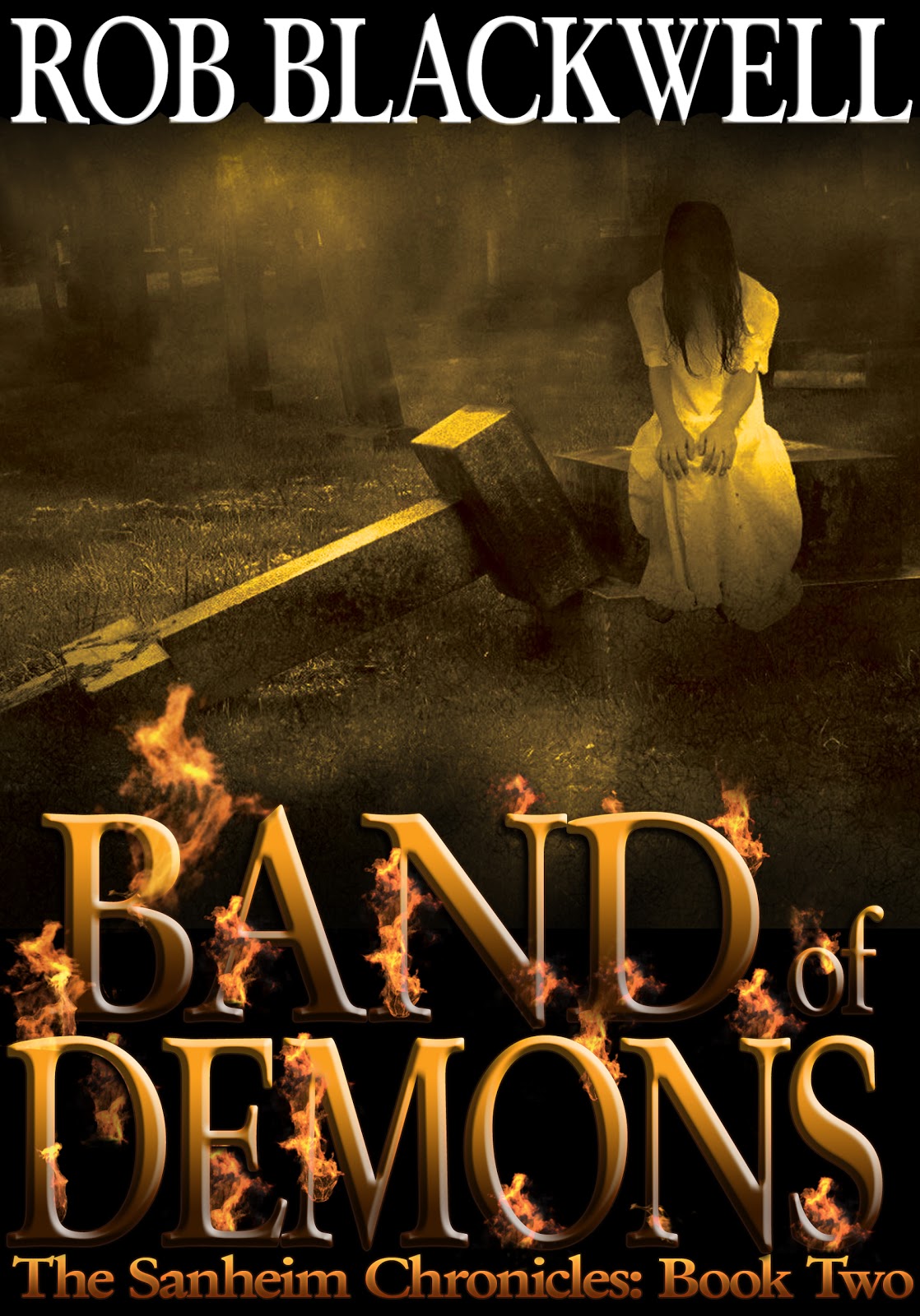
Cover and Title Reveal for the Sequel to Kindle Ghost Bestseller A SOUL TO STEAL
It’s interesting which dates are significant to a person. For me the obvious ones are: my family’s birthdays, my wife and my anniversary, Halloween, Christmas and now Aug. 29.Why today? Because that was the day my first novel, A Soul to Steal, went live on Amazon’s Kindle. That was the day I became a published author. I’ll be honest, I’d dreamed of that day for a long time, but it happened differently than I had imagined. I always thought it would come after painstakingly convincing an agent to represent me—and then convincing a big publishing house to give my book a shot. Instead, it happened after I pressed a few buttons on Amazon’s extremely user-friendly system and sent my novel—ten years in the making—out into the world. In the year since, it’s been exhilarating and more than a little exhausting. I have learned a ton, both about marketing a book and writing one. And let me tell you, writing one is a lot more fun.In an ideal world, I would have launched the sequel to A Soul to Steal today, if for no other reason than the universe loves synchronicity and so do I. But alas, I’m in the final stages of polishing the manuscript and I’m not ready to let it out into the harsh light of day quite yet. But I should do something to mark the occasion, right? So here it is: the cover art and title for my forthcoming novel, the second volume in The Sanheim Chronicles. I want to thank everyone who has asked me about the sequel and expressed interest in buying it. Without your kind words, reviews and encouragement, this would not have happened. I also want to thank Travis Pennington, the cover artist, who I hope you agree did some fantastic work here.
Without further ado, here it is. Please let me know what you think:


August 22, 2012
I is for Ignorant: How Sue Grafton Hates Indie Writers
As a political reporter, nothing is more tiring than watching a politician say something he or she truly believes, then issue a forced apology when the backdraft becomes too unpleasant. But it is even worse to watch a bestselling novelist engage in that kind of behavior. By now, many of you have already heard about mystery novelist Sue Grafton’s interview two weeks ago with the LouisvilleKy.com, in which she advised writers to avoid self-publishing at all costs and then proceeded to denounce any who have gone that route. “Don’t self-publish,” she says. “That’s as good as admitting you’re too lazy to do the hard work.”And that was just the beginning of Grafton’s obnoxious tirade. After interviewer Leslea Tashchallenged Grafton, she opined further: “The self-published books I’ve read are often amateurish… To me, it seems disrespectful…that a ‘wannabe’ assumes it’s all so easy s/he can put out a ‘published novel’ without bothering to read, study, or do the research. Learning to construct a narrative and create character, learning to balance pace, description, exposition, and dialogue takes a long time. This is not a quick do-it-yourself home project. Self-publishing is a short cut and I don’t believe in short cuts when it comes to the arts. I compare self-publishing to a student managing to conquer Five Easy Pieces on the piano and then wondering if s/he’s ready to be booked into Carnegie Hall. Don’t get me started. Oops, you already did.”Grafton’s comments sparked outrage from the indie author community who, quite understandably, didn’t like being called “lazy wannabes.” But Grafton was just the latest in a long string of prominent traditionally-published authors to criticize the burgeoning indie movement. John Grisham, who once sold his books out of the back of his car in an effort to get noticed, essentially said indies are the scum of the Earth. Jodi Picoult, meanwhile, provided this piece of “advice” to writers (emphasis hers): “DO NOT SELF PUBLISH.”As a result of the pushback, Grafton waited a week and then issued an apology: “I’d appreciate a chance to clarify the remark I made in the recent interview you posted. I meant absolutely no disrespect for e-publishing and indie authors.”She goes on at some length trying to justify her remarks by saying, a) she didn’t really know what she was talking about and b) she had incorrectly assumed indie publishing was the same as vanity publishing.While it’s good that she felt the need to respond, it’s worth noting that this apology is actually missing a, you know, apology. She calls her remarks a “gaffe” and—much like every politician I’ve ever seen after they made a mistake—says she wants to “clarify” her remarks. But she does not actually say she was sorry or, more tellingly, that she was wrong. Indeed, it seems likely that the non-apology apology was just a way to recover from the public relations problem her statements had created. Her initial comments, meanwhile, say a great deal about Grafton’s attitude toward indie writers. In short, we are hacks. We don’t know how to write books, spend no time trying to learn, but take our crap stories to the market without regard to the basic rules of narrative, dialogue, characters or plot. We are, to use her metaphor, children who want our crayon scribbles on paper to be regarded as the same kind of high art she produces. If we can actually write a good book, she says, the traditional publishers will find and promote us: “If you have a good story to tell and if you write it well, the Universe will come to your aid.”The arrogance reflected in Grafton’s comments is truly awe-inspiring. It’s clear that she believes that: a) all good writers will get traditional book contracts and b) anyone who doesn’t isn’t a good writer. Nothing in her apology in any way backtracks from those views. But they are clearly incorrect. Yes, there are plenty of bad self-published books. But there are awful books among the traditionally published as well. The idea that indie authors do not know how to “construct a narrative and create character” is demonstrably untrue.I read mostly indie novels now and I’ve found some fantastic books, including “Mercury Falls” by Rob Kroese, “The Darkening Dream” by Andy Gavin, “On the Island” by Tracey Garvis Graves, “Devil’s Hand” by M.E. Patterson and “Wool” by Hugh Howey. Those books feature great characters, interesting plots, and well-constructed narratives—and the “Universe” did not come to their aid. In all cases, they decided to STOP waiting for the Universe to come to them and seize their own destiny. Some of those writers have made it big, but others are still waiting to break through.The idea that indie authors are “lazy” is also insane. If anything, we work harder than traditionally published novelists. When she’s done with a book—no matter how long she works on it—she has a team of people ready to edit, design a cover and plan a marketing campaign. Indie authors do all that themselves.Candidly, I’ve seldom worked so hard as in the past year. I have a full-time job as a journalist that I must keep to support my family and—in my free time—I have tirelessly marketed my first book while simultaneously writing my second. During that time, I’ve mastered the art of the Facebook ad and spent thousands of my own money promoting the book. I’ve done blog tours, entered contests, been on radio programs, and found my way into the local newspaper. Trust me, that took work.As for the writing itself, I slave over it. I’m not tossing off dreck and throwing it on to Amazon’s KDP. I’m not even writing a short novella and selling it, which I would do if I had any sense. No, I plot, write, edit and edit again. And while my wife (who also writes and edits professionally) is my editor, I guarantee you she is harder on me than Grafton’s editor is on her. There is not a scene or line of dialogue that we have not discussed how to improve. So I get pretty upset when Grafton essentially tells me that I don’t “read, study or do research.”Don’t get me wrong, I’m not complaining. I am tremendously grateful for the opportunity Amazon and other ebook publishers have given me. My novel has been downloaded tens of thousands of times—a thought that makes me giddy just thinking about it. But don’t for a moment assume it was easy. And I’m just one many. There are thousands of indie authors out there working as hard as I am, if not harder, to find their readership. I see them all the time—on Twitter, Facebook, blog posts. The vast majority of writers I come across are pouring their heart and soul into it, trying to find a way to rise above the noise and get noticed. Yet Sue Grafton dismissed all of us out of hand. We are, to her mind, beneath her. In her apology, she says, “I am not arrogant or indifferent to the challenges we all face.”Yet that is exactly what she seems to be. As noted in this Forbes piece and in the comments on this stellar Indie Reader take on the same subject, you don’t normally see other industries attacking each other in this way. Does James Cameron take time out of his day to slam indie directors? Does Green Day stop to criticize any band that made a demo in their basement? Of course not. Yet Grafton and her ilk seem to think it’s okay to spit all over us.What she doesn’t realize—but perhaps understands now—is that indie authors really are the wave of the future. The ebook revolution is the cosmos’ way of evening the score, of letting readers decide what is worth reading rather than a handful of large publishers. We’ve got good stories to tell and finally the Universe—in the form of Amazon, Smashwords and others—has come to our aid.