
Terri Morgan's Blog, page 4
October 30, 2012
BlogFlash Halloween
 I thought it would be fun to participate with fellow writers and bloggers in the BlogFlash Halloween event. Thanks to Terri Guiliano Long and The Indy Exchange for setting up this spooky blogging contest.
 I've never been a fan of horror books or movies. I never liked ghost stories around the campfire. And the flying monkeys on the Wizard of Oz freaked me out when I was akid, even after seeing the movie eight times. So why did I get hooked on Stephen King novels back in the '80s? Because they were so well written, so imaginative, and were crafted so tightly they were literally page turners. King is a master at creating and developing compelling characters; turning words on a page into people you felt you knew better than your best friend, or even your husband. My friends and I gobbled them up (pun intended) and would spend hours talking about the stories and individual characters.
Although I've always been an avid reader, I was never one of those kids who used a flashlight to read under the covers. As an adult, I knew when to say when. I'd put down a book at a reasonable hour to get my rest. Stephen King ruined all that. I'd crawl into bed, vowing to read for just 20 minutes, and find myself hours later, feeling like my eyes were bleeding, struggling to read “just one more chapter.”
Other than some lost sleep, King's horror novels didn't truly horrify me. Sure, they were scarey, but they were so surreal they didn't have the impact of, say a letter from the IRS. That is, until one dark and stormy night. (OK, it was dark but it wasn't stormy.)
My housemates were all away. Alone in the big two-story house we were sharing, I settled down on the couch with the latest Stephen King. I don't remember which one it was, but I do remember how suddenly, in the wee hours of the morning, I was filled with a sensation that I was no longer alone. I could feel the adrenaline coursing through my body, my heart beating, and heard an unfamiliar noise from the upstairs. Terrified I strained my ears, only to jump up in fear when the motor on the refrigerator kicked on and the appliance started humming. Each click of the living room clock was magnified, making my heart race with each tick.
I don't remember how long I stayed on the couch drenched in fear. But I do remember the rule I set for myself the next morning, when I woke up bleary eyed and embarrassed about my anxiety. From that point on, I would only read Stephen King novels during the day time, preferably only on bright sunny days. When the sun set, the book closed, even if I was in the middle of a chapter. I haven't broken that rule at all since then, even though I am no longer terrified when I see the flying monkeys.
http://www.inlinkz.com/wpview.php?id=205357"> src="http://terrimorgan.net/2/post/2012/10/blogflash-halloween.html


October 23, 2012
book review
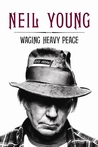 Waging Heavy Peace by Neil Young
My rating: 3 of 5 stars
I was really looking forward to reading Neil Young's autobiography, because I absolutely love his music. So I was a little disappointed by his book. I felt like he was holding back a lot of information about himself and his life. Of course, that's his right to do so. But I read biographies and autobiographies to learn something about the person, and I didn't really learn much about Neil Young in this book. It was well written, and interesting enough to keep me turning pages. But overall, I felt let down.
View all my reviews
October 21, 2012
Hurray for the Capitola Book Cafe
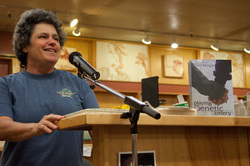 I did it! I sent the butterflies flying, and survived my book talk at the Capitola Book Cafe. More than survived: I had a lot of fun and learned a lot from my audience. I just regret having wasted so much energy beforehand worrying about standing up in front of a group of book lovers. I've spoken to groups numerous times before, but for some reason, the thought of speaking at my local bookstore made me nervous. But my audience was great: people laughed when I told jokes, didn't laugh when I was trying to be serious, and my friend Dian Reed took this great photo of me. I can't wait to do it again.
October 17, 2012
Self-Publishing Made Easy
 Recently, when I blogged about my decision to self publish my novel as a paperback, I mentioned it was a lot of work, but well worth it. Now I'll address the steps it took to convert my e-book into a paperback for those of you who are considering self-publishing.
By first publishing an e-book, I was ahead of the game. My novel had been written, edited, proofread, and the front cover designed. My next step was to decide which print on demand service would best suit my needs. I chose Lightning Source because I was impressed with their quality, service and their pricing. Lightning Source, however, only works with publishers, so I had to establish my own publishing house and handle all the pre production details, like getting an ISBN number, registering with the Library of Congress, and obtaining a preassigned control number. Fortunately, Lightning Source provided a list of the information needed, so it was just a matter of getting the proper forms on-line, filling them out, submitting them and paying to purchase an ISBN number.
Officially starting my own publishing business was even easier. Regulations vary from state to state, even county to county. In Santa Cruz County, California, where I live, I had to register a Fictitious Business Name statement with the county records department, pay a small fee, and, a month later, provide proof that my “Doing Business As” information had been published once a week for four consecutive weeks. I went online again, obtained a seller's permit from the State Board of Equalization, and I was officially the owner and operator of Silverdarts Press.
Even though I had Playing the Genetic Lottery copy edited and proof read before putting it out as an e-book readers spotted several typos. I enlisted half a dozen eagle eyed friends to proofread the novel again. While they were working I wrote the back cover blurb for the novel, and sent it to my brother's awesome and very talented girlfriend, Katja Coulter, who had designed the front cover for me. She expanded that design to include the spine and back cover of the book. Once the proof readers were done, all the typos corrected, Katja stepped in again to format the copy. She then selected a typeface, designed the interior layout of the book, and went through it page by page to make sure the chapter headings were consistent and in the proper sequence, that the page numbers were where they were supposed to be, and took care of dozens of other details. Once she was finally satisfied, we uploaded the copy to Lightning Source, chose the paper for the interior, and selected the size I wanted to book to be. Katja adjusted the width of the spine to match the dimensions, and uploaded the artwork.
I ordered a proof copy, which was delivered in about a week. I found additional typos that needed to be corrected. Katja corrected them in the draft, and uploaded the latest version of the copy to Lightning Source again.
Then I took a deep breath, charged about $1,200 on my credit card and ordered 150 copies of my novel. The books arrived on the Friday before Mother's Day, and I eagerly opened the first box and got the first look at my new baby, I mean book.
I was ecstatic, holding the first copy in my hands. All those months of hard work had finally culminated into a finished product. I reveled in my accomplishment for about two minutes. Then the panic set in. How do I get my books into the hands of readers, and sell enough copies to cover my expenses? That's a story for another day.
October 15, 2012
Book Talks and Butterflies
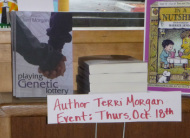 I'm really looking forward to my author event at the Capitola Book Cafe on Thursday evening. I've gone to dozens of author talks at the Book Cafe, but never imagined I'd be participating in my own talk. Of course, I never imagined I'd ever write a novel either. So I guess my lesson here is to never say never and to stay open to new experiences and events. My author event begins at 7:30 p.m., so I imagine the butterflies will arrive in force by about 5 or so.
October 10, 2012
Steve Mandel, Saving Wildlife One Frame at a Time
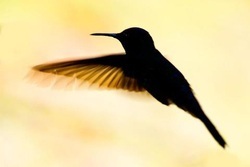 Copyrighted photo by Steve Mandel An “amateur” photographer from Soquel is using his hobby to help save endangered animals around the world. Orangutans in Borneo, Asiatic lions in India, leopards in Africa, and tiny tree kangaroos in the tiny remnants of Australia's rainforests are just some of the species getting widespread attention through Steve Mandel's stunning wildlife photographs. All are on the verge of extinction, as are the lemurs in Madagascar, proboscis monkeys in Borneo and the Japanese snow monkeys Mandel has photographed.
“These animals are disappearing at a frightening rate due to human encroachment,” Mandel said, adding that he hopes his images will move people to advocate for their protection. “The more people see them (my photographs) the better. I want people to look at them, appreciate them and think about wildlife.”
Thousands of people have been able to view some of Mandel's photographs at the Smithsonian Museum of Natural History in Washington DC. One of his images is currently on display as part of the museum's exhibit honoring the top 150 wildlife photos submitted in their annual Nature's Best Windland Smith Rice Competition. Judges for the annual contest, which drew over 21,000 entries this year, selected Mandel's photo of lemurs for its Highly Honored Awards. This is the second time Mandel's work has been displayed by the Smithsonian. In 2009 his photograph of two Japanese snow monkeys also won that prestigious honor. That image also graced the cover of a book published in 2010 by Palgrave Macmillan entitled“Second Nature: The Inner Lives of Animals.”
A collection of some of Mandel's top images can be found on his website: www.mandelphoto.com. The website includes an array of astronomy, landscapes, and people as well as wildlife.
“The guy's brilliant and his skill level is off the charts,” said Santa Cruz's Nola Moosman, another“amateur” photographer who routinely captures professional quality images, after viewing his website. “His photos are beautiful, and the subjects he shoots are very exotic.
“His subjects are well chosen and well edited,” added Moosman, who has a degree in fine arts.
Mandel submits his work to publications, but has yet to hang his photographs in a gallery.
“I haven't done any shows,” he said. “My main focus is my business and my family.”
Married for 29 years to Carol Foote, a former photojournalist, Mandel has three adult sons who are also skilled photographers. Mandel moved to the Central Coast in 1978 to teach communications at UC-Santa Cruz. He left academia in 1983 when he started a consulting firm as a presentations trainer and communications coach in the Silicon Valley. Today Mandel Communications which teaches effective communication skills to business professionals in 15 different languages in 42 different countries. Headquartered in an office in Capitola, Mandel's work requires him to travel extensively.
A highly accomplished amateur astronomer and astrophotographer Mandel became obsessed with photographing endangered wildlife in 2007 while vacationing in Australia with his youngest son. Mandel decided to focus his camera on animals on the verge of extinction rather than the night skies after looking into the eyes of a doomed tree kangaroo.
Even after five years Mandel still gets emotional describing the moment when he first witnessed the disastrous effect habitat destruction has on endangered wildlife. Standing on a hill in what was once an Australian rainforest, which had been clear cut as far as the eye could see, Mandel saw a single a tree kangaroo in the only remaining Eucalyptus tree in the area. Initially he was enthralled by the sight. Then he was sickened after the guide he was with told him the isolated animal would probably die.
“It shocked me out of my complacency,” Mandel said. Pausing for a moment to regain his composure he continued. “I got so upset I decided I had to try to do something. “I decided I would use photography to make people aware of what was going on,” he said.
Although Mandel's astronomy photographs have been published by NASA, Smithsonian Books and Sky and Telescope Magazine, he knew very little about photographing wildlife. Undaunted, he made it his mission to learn everything he could about the medium. Shortly after returning home to the Central Coast Mandel flew to New York for a weekend seminar on wildlife photography---the first of several seminars he would take from experts. Eager to learn more about his new passion, Mandel hired the instructor for a half day tutoring session after the seminar had concluded.
Two months later, Mandel was scheduled to fly to India for business. He decided to go early so he could visit the Gir Forest and photograph Asiatic lions, which once roamed from India up to Greece. The population had dwindled to a dozen animals a century ago when they were finally protected from hunters. Today, there are about 450 individuals left in the world, and the species remains threatened by the practice of digging and using open pit wells in the region. Without barricades to protect them, unsuspecting lions have drown after falling into the wells.
Mandel decided to do something about the situation. In 2008 he launched a non-profit called the Lions of Gir Foundation. Working with an organization in India called the Wildlife Conservation Trust, the foundation raises funds for barricades to be built by natives. To date, about 2,000 wells have been secured, and fund raising to barricade the remaining 9,500 wells is ongoing. For more information about the foundation visit www.lionsofgir.com
Mandel has also helped purchase equipment for a sloth sanctuary in Costa Rica. He and his wife are planning to travel to the sanctuary in the near future to photograph the endangered sloths. They then plan to donate the pictures to the sanctuary to use to publicize the plight of the animals.
The avid amateur photographer plans to continue his quest to photograph endangered wildlife throughout the world. He lugs 50 pounds of camera equipment with him routinely on business trips, arriving early and/or staying a few days later to capture compelling images of vanishing species.
“I travel quite a bit to visit clients in Brazil, Singapore, India, Europe, Hong Kong and Vietnam,”Mandel noted. “When I can I take my photographic equipment with me and do a lot of photography.”
This article originally appeared in the Fall 2012 issue of Santa Cruz Style Magazine.
October 4, 2012
Free downloads in honor of Mental Illness Awareness Week
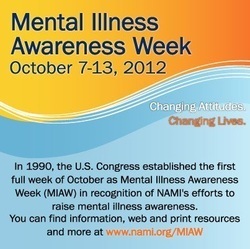 Novels can help enlighten and inform people by bringing subjects out in the open. One of my goals in writing Playing the Genetic Lottery--aside from creating a good read--is to educate people about schizophrenia and the impact it has on families. My hopes are by raising awareness about this illness, I can raise compassion for people who have been afflicted with the disease, as well as validate the experiences of family members and caregivers and help reduce the stimga associated with mental illness.
 In honor of Mental Illness Awareness Week, I'm offering free downloads of my novel, Playing the Genetic Lottery between October 7th and 13th to anyone and everyone with an e-reader, computer, tablet or I-phone. To get your free copy, go to www.smashwords.com/books/view/104186, click purchase, and enter this coupon code--CT94J.
October 3, 2012
Inspiration Comes in Many Different Forms
Building for Generations
Inspiration comes in many different forms. For Santa Cruz's Cory Ybarra, the founder of a non-profit that supports education projects for people with special needs, inspiration came in two parts. The first was a serious illness. The second was a DVD she had never heard of before a friend brought it over to watch with her.
The mother of an adult son with special needs, Ybarra had spent nearly 30 years deferring her dreams while earning a living and caring for Joaquin. In 2005, after her brush with mortality, she decided it was time to realize them. Ybarra had always wanted to travel to a developing country as a volunteer and work with people with special needs. So she took off for Tanzania, where she spent several days in a small classroom that served disabled children. Located in the village of
Arusha it was one of only a few facilities in the country for disabled youngsters.
Ybarra quickly bonded with the children, and with their parents.
"I intimately knew those peoples' experience," she said. "The loneliness, the
exclusion, the denial of critical services. There's a real heart connection with
people" who are raising disabled children.
The parents, who recognized Ybarra as a kindred spirit, asked her for help building a school. A donor had provided three acres of land for a school, but they had no money for construction. While Ybarra didn't think she was capable of fund raising, she agreed to give it a try. She raised about $2,000, or roughly 10 percent of the cost of building three classrooms on the site by holding a yard sale.
Overwhelmed by how much more work lay ahead, Ybarra was discouraged. To help cheer her up, a friend stopped by with a DVD. Neither had heard anything about the film, which was called Emmanuel's Gift, and had no idea what to expect.
The movie turned out to be a documentary about a young man named Emmanuel Ofosu Yeboah, who was born in Ghana with badly deformed leg. Growing up in a country where disabled people are largely shunned, and expected only to become beggars, Emmanuel shattered the stereotypes. Although his father abandoned the family in shame after Emmanuel was born, his mother treated him as an able bodied child, sending him to school, and helping instill confidence in himself. In 2002, against all odds, Emmanuel rode a bicycle across Ghana to raise awareness about disabilities and create a better future for the disabled.
The documentary gave Ybarra , who was struggling with fear and doubt, the inspiration she needed to raise the rest of the money needed to build the classrooms. Ybarra says she wasn't surprised by the fact that the movie, and the
man behind it, had such an impact.
"I really believe that when you have a deep heart passion whatever you need will come to you," Ybarra said. "He pushed me over the hump."
Ybarra returned to Tanzania in 2006, and oversaw the construction of the new school. When she got back home, she established the non-profit Building for Generations to advocate, educate and develop sustainable programs for people with special needs. She recruited a dedicated board of directors and a number of
"outstanding" volunteers to work with her. All of those involved in the
organization, like Rose Brindley of Santa Cruz, share Ybarra's commitment to
helping those with special needs.
"I really feel compassionate to special kids with disabilities," said Brindley. "It's such a beautiful soul they have. They're so cheerful, and they're just like you and
me, but different."
Ybarra has returned to Tanzania, and made several trips to Peru where Building for Generations funded the construction of a resource and rehabilitation center in
Chincha Baja. Brindley, who was born and raised in Peru, accompanied her one
one of those trips.
"We have a lot of kids with special needs (in Peru)," Brindley said. Programs to help them are rare she added.
Since money goes further in developing nations, both note that Building for Generations can have a bigger impact overseas with limited funds.
"Our group does not have the capital to build something here, but we can certainly make a difference in a developing country,"Ybarra said.
However, she has not forgotten her home town. Last year the organization launched its Building Rhythm project, which allowed 90 individuals with developmental disabilities to make music. This year, she is seeking funding to offer the program again.
In addition to looking for grants and foundations willing to help fund projects, Ybarra has taken a creative approach to fund raising through the organization's website. In addition to accepting Pay Pal donations, people can shop for hand crafted jewelry and clothing from Africa and Peru. There is also a easy way for people to donate some or all of their eBay sale proceeds to Building for Generations.
Other fundraisers were designed to inspire people as well as solicit money. In March Building for Generations presented a special showing of the documentary
Emmanuel's Gift, that was followed by a talk by Yeboah. Ybarra was thrilled to
finally meet the man behind the movie that motivated her mission in person.
"He's a global advocate for the disabled, but beyond that he's a huge inspiration," she said.
Others agreed. "He has a great, touching story that affects the lives of so many
people in the United States," said Foster Anderson, founder of Shared Adventures
in Santa Cruz, after viewing the movie. The non-profit organization provides
recreational activities for people living with disabilities. "He's following his
heart to do what he thinks is right."
For More Information on Building for Generations, go to their website at www.buildingforgenerations.com, or call them at (831) 477-7882.
September 29, 2012
Thrilled to be a Paperback Writer
Electronic gadgets don't thrill me. I don't rush out and buy the latest and greatest tools or toys. In fact, I didn't even purchase a CD player until well after the rest
of the music loving world had moved on to IPods and MP3 players. So when I
became a proud Kindle owner last year I automatically assumed I was the last
reader in America to embrace e-books.
That's why, when I self-published my first novel, Playing the Genetic Lottery, in November, 2011, I released it solely as an e-book. At that time e-book sales were climbing steadily, and people were speculating that traditional books would soon become relics of the past, like 8-track tapes and rotary phones. After all, e-books are more affordable than traditional books. The electronic version of my novel sells for $4.99, for example, while the paperback is $14.99. E-books are also convenient. You don't have to leave the house, or even get dressed, to buy them, and they arrive almost instantly. That's a definite plus if you're impatient, or, like me, get anxious when you run out of reading material. Lightweight and capable of
containing an entire library of books, e-readers are idea for travel, especially
by air where each extra bag costs more than the average hardback. And, even a
luddite like myself has to admit, e-readers are pretty cool.
By publishing an e-book I thought, for the first time in my life, I was on the cutting edge.My first clue that I wasn't came the day after my e-book became available. “Sounds like a great book, but I don't have an e-reader,” a friend said. “Let me know when it's out in paperback so I can buy a copy.”
It was a theme I heard over and over as days went by. It seemed, as strange as it may be, that I wasn't the last e-book owner after all. While I sold a handful of
e-copies in the first month, I realized I needed to publish a paperback version
as well if I was serious about attracting readers.
Self-publishing your own paperback book is much more complicated than putting out an e-book. It 's also a lot more expensive. It took months of hard work to get it print-ready, and a big leap of faith to pay for the first press run.
Was it worth it? You bet! I had been excited when my novel was published as an e-book. I was thrilled when I held the first copy of Playingthe Genetic Lottery in my hands. And by the end of the first week, I had already sold more paperbacks than I had e-books. It's also available in my local bookstores, which increases its
exposure, and boosts my ego.
I also discovered something interesting. A number of people who had purchased the e-book also bought a paperback copy. Some bought them as gifts, and, I suspect, to help support my endeavor. Others surprised me by admitting they hadn't read the e-version because they found it easier to read books in a traditional format.
I don't know if my experiences are unusual or not. I do know, however, that I'm glad I went to the trouble to publish my novel in paperback. Even though I do still love my Kindle.
of the music loving world had moved on to IPods and MP3 players. So when I
became a proud Kindle owner last year I automatically assumed I was the last
reader in America to embrace e-books.
That's why, when I self-published my first novel, Playing the Genetic Lottery, in November, 2011, I released it solely as an e-book. At that time e-book sales were climbing steadily, and people were speculating that traditional books would soon become relics of the past, like 8-track tapes and rotary phones. After all, e-books are more affordable than traditional books. The electronic version of my novel sells for $4.99, for example, while the paperback is $14.99. E-books are also convenient. You don't have to leave the house, or even get dressed, to buy them, and they arrive almost instantly. That's a definite plus if you're impatient, or, like me, get anxious when you run out of reading material. Lightweight and capable of
containing an entire library of books, e-readers are idea for travel, especially
by air where each extra bag costs more than the average hardback. And, even a
luddite like myself has to admit, e-readers are pretty cool.
By publishing an e-book I thought, for the first time in my life, I was on the cutting edge.My first clue that I wasn't came the day after my e-book became available. “Sounds like a great book, but I don't have an e-reader,” a friend said. “Let me know when it's out in paperback so I can buy a copy.”
It was a theme I heard over and over as days went by. It seemed, as strange as it may be, that I wasn't the last e-book owner after all. While I sold a handful of
e-copies in the first month, I realized I needed to publish a paperback version
as well if I was serious about attracting readers.
Self-publishing your own paperback book is much more complicated than putting out an e-book. It 's also a lot more expensive. It took months of hard work to get it print-ready, and a big leap of faith to pay for the first press run.
Was it worth it? You bet! I had been excited when my novel was published as an e-book. I was thrilled when I held the first copy of Playingthe Genetic Lottery in my hands. And by the end of the first week, I had already sold more paperbacks than I had e-books. It's also available in my local bookstores, which increases its
exposure, and boosts my ego.
I also discovered something interesting. A number of people who had purchased the e-book also bought a paperback copy. Some bought them as gifts, and, I suspect, to help support my endeavor. Others surprised me by admitting they hadn't read the e-version because they found it easier to read books in a traditional format.
I don't know if my experiences are unusual or not. I do know, however, that I'm glad I went to the trouble to publish my novel in paperback. Even though I do still love my Kindle.
September 28, 2012
Every week is Sea Otter Awareness Week
I wasn't aware on Wednesday that the last week in September is Sea Otter Awareness Week. Nor was I aware that there were two otters covered up and camouflaged in the kelp close to shore between New Brighton and Capitola. But they were aware of my friends and I as we paddled by, and popped their curious heads up to check us out as we cruised past them.
Normally, we try to give all marine mammals their space in the water. After all, it's their home and we're just visitors. It's common courtesy as well as common sense. Sea otters, despite their cute Teddy Bear appearances are wild animals. They've got sharp claws, sharp teeth, and they know how to use them. Most people don't realize it, but they've also got mean streak. They can be aggressive and vicious when they want to. Most of the time, that's directed at other marine life threatening their young, invading their space, or competing too closely for food. But I've known several surfers who have been nearly attacked by rogue otters. So I try not to get too close.
In this case, however, none of us saw the pair until we were a couple of feet away. They were in a small, isolated clump of kelp, rather than in the big kelp bed further offshore where we generally see otters. And they had wrapped themselves securely in kelp. Like most animals in the wild, they were much more aware of their environment than we are so they spotted us first. Fortunately, the didn't seem to mind us passing so close to them. They just watched us paddle by, then returned to their nap.
No matter how many times I spot otters in the ocean, I still get as excited as I did the first time I saw one in the wild back in 1976. For me, every week is Sea Otter Awareness Week. They're one of the special treasures found in the Monterey Bay.
Normally, we try to give all marine mammals their space in the water. After all, it's their home and we're just visitors. It's common courtesy as well as common sense. Sea otters, despite their cute Teddy Bear appearances are wild animals. They've got sharp claws, sharp teeth, and they know how to use them. Most people don't realize it, but they've also got mean streak. They can be aggressive and vicious when they want to. Most of the time, that's directed at other marine life threatening their young, invading their space, or competing too closely for food. But I've known several surfers who have been nearly attacked by rogue otters. So I try not to get too close.
In this case, however, none of us saw the pair until we were a couple of feet away. They were in a small, isolated clump of kelp, rather than in the big kelp bed further offshore where we generally see otters. And they had wrapped themselves securely in kelp. Like most animals in the wild, they were much more aware of their environment than we are so they spotted us first. Fortunately, the didn't seem to mind us passing so close to them. They just watched us paddle by, then returned to their nap.
No matter how many times I spot otters in the ocean, I still get as excited as I did the first time I saw one in the wild back in 1976. For me, every week is Sea Otter Awareness Week. They're one of the special treasures found in the Monterey Bay.
Terri Morgan's Blog

- Terri Morgan's profile
- 10 followers
Terri Morgan isn't a Goodreads Author
(yet),
but they
do have a blog,
so here are some recent posts imported from
their feed.

