
Jane Lindskold's Blog, page 116
November 18, 2015
Getting Into the Writing Zone
News Flash! This Saturday (11/21/15) I’m doing a book event for Curiosities at Page One Books here in Albuquerque. Hope to see some of you there!
November is NaNoWriMo. I don’t participate, but one thing I’ve noticed is that by mid-month many of those who do are feeling the pressure of trying to write a substantial amount every day. After two weeks plus, with nearly as much time left to go, they’re wondering how to get into their writing zone, each day, every day.
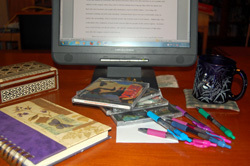
The Writing Zone
Even people who aren’t formally participating in NaNoWriMo often feel the pressure to produce. Write more. Write faster. After all, they’re seeing that other people are doing so and wondering if they’re slackers.
(For those of you who don’t know what I’m talking about, the short version is that NaNoWriMo encourages people to write a 50,000-word novel in a month. Want to know more? Here’s a link.)
I’m not going to talk about NaNoWriMo today.
What I’m interested in is chatting about how to get into your writing zone on a regular basis. There are as many ways as there are writers, but I’ll share a couple. I’d be interested in hearing what tricks you use to find your way into your creative space.
Instead of waiting for the Muse to come whisper in your ear, consider ways that you might invite her. Environmental stimuli are often good. Remember: Humans can be programmed for stimulus and response. Don’t believe me? Think about the last time you tried to break a habit. Doing so takes more than simply giving up cigarettes or coffee or a favorite food. Breaking a habit often means giving up or adapting those things you associated with that habit as well.
So, if you always have chocolate with your morning coffee, and are trying to give up chocolate, then you’re going to miss chocolate more when you sit down with the morning coffee.
When you’re trying to break a habit, the stimulus trigger is a horrible burden. However, when you’re trying to acquire a habit – like writing every day – the same quirk of human nature can work in your favor.
I’ve known writers who create musical playlists to go with whatever story they’re working on. When they want to get into the zone for that story, they queue up the songs. In time, the playlist becomes the opening theme… They hear the music and slip into the zone where the story lives.
I’ve never systematically used the music trick but, when I’m restless and unwilling to settle down, I’ll put on music that for one reason or another I associate with the piece. Often there is no thematic relationship between the story and the songs. When I started Artemis Awakening, I’d recently seen the film Velvet Goldmine. I’d also picked up the soundtrack and listened to it quite a bit. Although the works have nothing in common – Velvet Goldmine is set in England and deals with glam rock; Artemis Awakening is set on a fictional planet and has absolutely nothing to do with music or glam or rocks – something in my brain linked the one with the other.
When I started writing Artemis Invaded, the sequel to Artemis Awakening, a certain amount of time had passed. I’d written another novel in the middle. However, I found that putting on the Velvet Goldmine soundtrack put me back into the “Artemis” zone.
Other little rituals can help you find that zone. I know one author who uses the solitaire game on her computer as a form of self-hypnosis. She only plays the game before writing, so playing a game becomes a signal to her brain that she’s about to write.
Other writers use items of clothing, locations, or time of day to put them in the right mindset to write.
Of course, there’s a danger associated with any of these rituals. If you become too dependent on them, you may be unable to find your zone without them. I know one writer who absolutely had to write first thing in the morning or she would not write that day. She might write for ten minutes, then go do something else, but if she didn’t get that early start, she had lost the day.
Determined to write and unable or unwilling to break that habit, she decided that she had to find a way around it. Her solution for those days when she could not get to her computer was to grab a piece of paper and write longhand. Later, transcribing that material would become a bridge that would take her back into the zone.
Interacting with prose can become a ritual of its own. I know one prolific writer who begins his writing day by reviewing what he wrote the previous day. He tightens and edits as he goes along. This then takes him smoothly and naturally into new material. It has the added benefit of polishing the prose, so when he finishes the piece, his rough draft is a bit less rough.
One thing I feel is important to remember is that NaNoWriMo – or those lists that encourage people to post how much they wrote that day, or that week, or other such activities that use the sense of belonging to a group to encourage the writer to write – will not work for everyone.
Production requirements are most useful for those people who benefit from the validation of a group or who have a competitive streak. I’ve known excellent writers who produce nothing at all for months, then go on a binge and write an entire novel in a relatively short time. It wasn’t that these writers weren’t “working” during the time they would have been unable to report any words written. It’s that their work took a less quantifiable form.
So, there are a few of my thoughts on getting into the zone. I’d love to hear what tricks, gimmicks, incentives, or whatever you use to find your way into your personal creative zone.


November 13, 2015
FF: Interview Alert and More
Dave Gross interviewed me for his “Creative Colleagues” feature. His questions were just different enough to be fun – including a couple related to my alternate life as a gamer and how it relates to writing. Hope you enjoy!

Ogapoge ContemplatesTransformation
Just a reminder… The Friday Fragments lists what I’ve read over the past week. Most of the time I don’t include details of either short fiction (unless part of a book-length collection) or magazine articles.
The Fragments are not meant to be a recommendation list. If you’re interested in a not-at-all-inclusive recommendation list, you can look on my website under Neat Stuff.
Once again, this is not a book review column. It’s just a list with, maybe, a bit of descriptions or a few opinions tossed in.
Recently Completed:
Fighting the Flying Circus by Captain Eddie. V. Rickenbacker. Non-fiction autobiographical recollections of one of World War I’s hotshot pilots. His framing war as a form of sport was unsettling and alien, but a good eye-opener.
Naruto by Masahi Kishimoto, issue 72. (Manga.) I’ve been following this story nearly from the start. This was the last issue. I enjoyed – especially the resolution of the conflict between Naruto and Sasuke, which took an unexpected twist. Short epilogue was interesting, too.
In Progress:
Seventh Grave and No Body by Darynda Jones. Audiobook. Didn’t have as much time to listen as I would have liked, but am enjoying. The ostensible “case” is taking backseat to larger plot elements.
Alchemy by Margaret Mahy. YA, rather than her younger offerings that I looked at last week.
Also:
I also sampled some novels I was considering giving as gifts, just to make sure I liked them. I’ll be finishing some later on and let you know more!
So, what are the rest of you reading?


November 12, 2015
TT: The Many Facets of Mansfield
JANE: All right, Alan, I’m tantalized. Last time you said you had some thoughts as to how we might pin down national character… I’m eager to see what you have in mind.
ALAN: Yes, that’s right. I was thinking that fiction writers, whose material is derived from everyday life, give us a nice definition of what it means to be living in a given time and place.
Monsters Are Everywhere
Are you familiar with the New Zealand author Katherine Mansfield? She never wrote a novel, and during her life she published only two collections of stories: In a German Pension and Bliss and Other Stories. Two more collections were published posthumously: The Garden Party and The Dove’s Nest. So she was certainly not prolific. But many of her stories are steeped in the minutiae of daily life in colonial New Zealand in the early years of the twentieth century
JANE: I believe I’ve read some of her works, but I certainly am far from knowledgeable. Tell me more about Katherine Mansfield.
ALAN: She was born in Wellington in 1888 and died of complications from tuberculosis in 1923. She moved to the UK in 1907 and became part of the Bloomsbury set. Virginia Woolf is on record as declaring that she was jealous of Mansfield’s writing skills. Mansfield (probably) had a sexual relationship with D. H. Lawrence and I know that your PhD thesis was about Lawrence, so you may have come across her when you were researching Lawrence’s life.
JANE: That seems quite likely! Now I know why she sounded familiar. Go on…
ALAN: She tends to be a bit unpopular in New Zealand, mainly, I suspect, because far too many generations of school children have had her stories endlessly analysed in dull English classes. I remember her as a rather gloomy writer, but I re-read some of her stories recently and, while she certainly isn’t full of sweetness and light, she was nowhere near as dark as I remember.
JANE: When you say “steeped in the minutiae of daily life in colonial New Zealand in the early years of the twentieth century,” what do you mean by that? And how does “gloomy” reflect the national character? I found New Zealanders anything but…
ALAN: She had an enviable ability to invoke a time and a place. I think the only way I can tell you what I mean by that is to quote from her. Here are a few sentences from “The Woman at the Store”:
Jo rode ahead. He wore a blue galatea shirt, corduroy trousers, and riding boots. A white handkerchief, spotted with red so that it looked as though his nose had been bleeding on it, was knotted round his throat. Wisps of white hair straggled from under his wideawake—his moustache and eyebrows were the colour of old bones—he slouched in the saddle, grunting…
We were on the brow of the hill, and below us there was a whare roofed with corrugated iron. It stood in a garden, rather far back from the road and half in shadow—a big paddock opposite, and a creek and a clump of skeletal willow-trees. A thin line of blue smoke stood up straight from the chimney of the whare; and as I looked a gaunt woman came out, followed by a child and a sheep dog—the woman carrying what appeared to me a black stick. She made gestures at us.
I find the pictures painted in my mind by those words to be very vivid. I can see the landscape and the people and I’m sure she’s reporting very accurately just what she herself experienced.
JANE: Lovely prose. Wonderful use of color. I can see why Virginia Woolf admired her work!
Mansfield uses some very specific terminology. I realize you’re a late 20th, early 21st century Yorkshireman become New Zealander, so you may not be able to answer this, but I’m curious, would words like “galatea,” “wideawake,” and “whare” have been understood by a non-New Zealand audience of the time? For example, by the members of the Bloomsbury set who would have been her audience and – probably – her publishers, as well.
ALAN: Perhaps they’d be fine with “galatea” because of the classical links. “Wideawake” I’m not sure about. But I’m absolutely certain that “whare” would not have been understood. (It’s a Maori loan-word and it means “hut” or “house”. It is pronounced “foray”).
JANE: Uh… “Galatea”? How would a knowledge of classical material help with that? What comes to mind to me is the girl in the Pygmalion story, the one who started life as a statue.
Are you saying we’re to envision this man wearing a blue shirt printed with girls? Or statues?
ALAN: Galatea translates as “she who is milk-white” and the original statue that came to life was carved in ivory. Perhaps I’m wrong, but because of this I’ve always thought of the cotton galatea fabric as being white. The blue shirt that Mansfield refers to has presumably been dyed.
But a blue shirt printed with girls sounds like a wonderful garment to wear. It will be Christmas soon. Hint… Hint…
JANE: I’ll make sure that Robin gets that hint! And I think your idea as to the meaning of “galatea” sounds promising… but I like mine better!
Sadly, I fear that “wideawake” means nothing to this American except for what I’m not until I’ve had my shower. No, that’s not fair. I have a vague idea that it’s a sort of hat. But I have no concept as to what sort of hat.
ALAN: Sorry – I can’t help you there. It means nothing to me either.
JANE: Okay. We’ll toss that one to our readers. They’re wonderful at figuring out such puzzles.
I was interested in what those words might mean in context because, as a former English professor, language like that would be the sort of thing I would need to make sure my students understood, rather than breezing over. “Breezing over,” then admitting confusion, is a pretty typical response.
Help us out! We need help if we’re to understand what New Zealand is…
ALAN: The words may well have been unfamiliar (particularly whare) but the approximate meaning can be deduced from the context. So to that extent I think she is playing fair with her audience.
JANE: Maybe… Now, how about Ms. Mansfield’s “gloomy” aspect? As I said, that didn’t seem representative of the New Zealand character when I was there.
ALAN: As for gloomy – well, she herself wasn’t the happiest person in the world. Many of the relationships between her characters are quite tense and there is a dark undercurrent of violence. We’re probably just seeing a reflection of her own personality. But that doesn’t invalidate the word pictures she painted.
JANE: I agree… But I think there’s more to “national character” than simply landscape descriptions and idiosyncratic vocabulary.
ALAN: Oh, definitely. It’s the people who live inside those descriptions that bring the whole thing to life. “Prelude” is a story about the Burnell family moving house from Wellington to a country village. They are only moving six miles, but that distance, small though it is, is huge in terms of lifestyle changes. I think that contrast is a valuable indicator of just how people lived at that time.
JANE: Hmm… I see what you’re getting at. However, in terms of pinning down national character, I think we’re a century out of date. No wonder the school kids don’t identify.
ALAN: True – but you could say the same about Mark Twain and the way he chronicled the American life and times. He couldn’t describe modern day America, but that doesn’t make his work any less valid as an exploration of the time and the place in which it is set.
JANE: I agree, but while I’ve enjoyed some Twain, I wouldn’t put him forth for anyone trying to understand the “character” of the modern U.S. In fact, it would be a stretch to say that such trickster, law-bending characters as Tom Sawyer, Huck Finn, or even the Connecticut Yankee (of King Arthur’s Court fame) were representative of any but a small fragment of the population even at the time Twain was writing.
After you reminded me about the link between Katherine Mansfield and D.H. Lawrence, I started remembering that she’d had a very open mind for the time, both regarding sexual relationships and race relationships. I went and double-checked and the rather nice write-up on Wikipedia confirmed my memories.
Mansfield was apparently fairly honest about being bisexual. One of the great loves of her life was not only a woman, but a Maori woman. In other discussions about New Zealand – including our recent one about politics – you mentioned New Zealand’s liberality in both of these areas.
So, would you say that Mansfield reflects New Zealand’s character in this way? That her fiction being a staple in schools provides a subtle indoctrination, perhaps?
ALAN: It’s certainly a reflection of New Zealand as it is today, but I don’t think the ideas applied in Mansfield’s time. One of the reasons that she left the country was because of her frustrations with the provincial life of colonial Wellington. She described the journal she kept at this time as consisting of “…huge complaining notebooks”.
JANE: Ah, well. It was a nice idea.
ALAN: Mansfield’s gloomy aspects have had an interesting side effect. A couple of years ago, New Zealand writers Matt and Debbie Cowens published Mansfield With Monsters which took some of her iconic stories and, just as she descended into existential angst, they introduced a zombie or a vampire to take over the drama. It was a surprisingly effective ploy. They caught Mansfield’s style perfectly and the joins didn’t show at all.
JANE: Would you consider these readable by someone unfamiliar with Mansfield’s work? So many parodies rely on familiarity to be funny.
ALAN: Yes, I would. The book won a national award in New Zealand in the year it was published and many of the voters would have had little familiarity with the original.
JANE: While I’ve really enjoyed discussing her works, I’m not convinced that Katherine Mansfield would be a good gateway to understanding the national character of New Zealand. Do you have any other authors you’d like to put forth to add to my understanding of New Zealand – whether then or now?
ALAN: Yes, I do. But you’ll have to wait until next time to find out who they are!


November 11, 2015
Variety Is The Spice of Write
Over the last several weeks, I’ve been doing a bunch of things that – to an outside observer – would appear to have nothing at all to do with writing. However, in how these things are stimulating my imagination, they’re having a wonderful impact on my creativity.
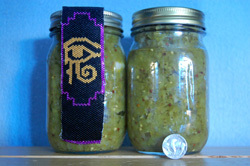
Various Activities
Last Friday, I went with Jim to a coin show. Jim is our family’s coin collector, but I often go along with him and our friend Michael Wester. Michael mentioned that he’d promised a mutual friend that he’d look for some buffalo nickels. I volunteered to help stretch our friend’s funds by searching through the loose coin boxes and see what I could find. Since the coins in these boxes have usually only had minimal sorting – usually to cherry pick out the best coins of a type – it’s possible to find some interesting things.
Armed with Jim’s magnifier, I set to work. In the course, I learned a lot of things, both about coins and otherwise. I learned that buffalo nickels were not well-designed (at least from a collector’s point of view) because the date is placed where it quickly wore off, as did the artist’s initial and other details. This meant that many of the coins I looked at had a smooth spot where the date should have been. I also learned that the tiny “S” or “D” mint marks were on the opposite side of the coin, so that to inspect coin properly, both sides needed to be checked.
Jim estimates that I looked at well over a thousand coins. In the course of this, I found twenty-two different dates and/or mint marks. I also found one 1935 nickel that had slipped through the pre-sorting. It was still very shiny, the date and mint mark both clear, as was the tiny “F” that was the artist’s mark. I bought this one for myself as a memento.
I also overheard some very interesting conversations, including one where a retired military officer mentioned being called back out of retirement because his specialization was needed. He also talked about various investments he’d made – none of which were things I would have every considered as options. As I sorted, I also had a nice chat with two of the coin vendors, and learned a lot about the trade.
On Saturday, Jim and I met our friend, Chip, and went to the natural history museum. The New Mexico Natural History Museum is one of the “youngest” such museums in the country. One of the very cool aspects is that, if you so choose, you can visit the various galleries in order of time, rather than randomly, by subject. You begin with the formation of the universe and solar system, then the planet, then progress to theories regarding how life might have come to be.
From there, you get to wander along, viewing increasingly complex lifeforms, up to prehistoric mammals like mastodons and mammoths. Oh, and dire wolves, of course!
Another thing that makes our natural history museum cool is that whenever possible the displays are tied to New Mexico. For example, instead of a generalized discussion of how areas that were once swamps are now mountains or deserts, the displays use sites in New Mexico to show the changes. This makes change on a geologic level a whole lot more real. The time-organized route ends where you can look into a paleontology lab, where fossils are being prepared for future displays. It’s really fascinating.
After we finished with the museum, Jim and I stopped to buy beads so I could finish a bracelet I’ve been weaving in my spare time over the last couple of weeks. For those of you who are into this sort of thing, I’m using even count flat peyote stitch. The original Eye of Horus pattern was odd count, but I find odd count too much of a hassle, so I adapted to even count.
Anyhow, after many hours and well over a thousand beads, I came up short by about eight rows. However, now it’s done and I’m looking forward to wearing it.
This past Thursday night, we finally had our killing frost. Earlier in the week, I spent a fair number of hours out in the garden, picking everything that could be saved. I also picked a bucket of green tomatoes, so we could renew our supply of green tomato relish.
The recipe we use is my maternal grandmother’s and is suitably old-fashioned, with measurements in bushels and pecks. However, with the aid of a dictionary, we converted the amounts to cups. We could have done metric and really brought the recipe into the 21st century, I suppose, but most of our cooking gear doesn’t have both formats.
It’s funny but, although I think of this as my grandmother’s recipe, we’ve adapted it to our tastes. The original calls for white vinegar, but we use apple cider vinegar. The original calls for green peppers, but we substitute some jalepeños, making for a hot/sweet relish, rather than just sweet. The end result is very good and worth the labor.
Another interesting thing about the recipe is how very much the process reduces the vegetables, mostly by removing liquid. When we finished the first stage of preparation, we had 36 cups of ground vegetables. This sat overnight covered in salt to draw off some of the liquid. By the next day, after we drained off the liquid, we had about half as much raw material. When we cooked this in vinegar, sugar, and added spices, then bottled the end result, we were down to seven and a half pints.
That, fifteen cups, for those of you who don’t do pints…
So, what does any of this have to do with writing? I’d enjoy hearing what you think…


November 6, 2015
FF: Chaos Reigns!
Well… I had to have a title. You decide it if applies!

Silver Considers Flight
Just a reminder… The Friday Fragments lists what I’ve read over the past week. Most of the time I don’t include details of either short fiction (unless part of a book-length collection) or magazine articles.
The Fragments are not meant to be a recommendation list. If you’re interested in a not-at-all-inclusive recommendation list, you can look on my website under Neat Stuff.
Once again, this is not a book review column. It’s just a list with, maybe, a bit of descriptions or a few opinions tossed in.
Recently Completed:
The Mysterious Affair at Styles by Agatha Christie. Audiobook. I enjoyed. Again!
Winter Witch by Elaine Cunningham. (Co-written with Dave Gross.) Audiobook. Another Pathfinder universe novel. Quite good, with two very solid main characters. I would enjoy reading more of their adventures.
The Great Piratical Rumbustification & The Librarian and the Robbers by Margaret Mahy.
Tick Tock Tales: Twelve Stories to Read Around the Clock by Margaret Mahy. Alan Robson mentioned this author to me. In fact, we’ve been talking about her works and will be sharing that chat in a week or so.
In Progress:
Fighting the Flying Circus by Captain Eddie. V. Rickenbacker. A non-fiction autobiographical account of what is was like to be a fighter pilot in WWI. Sometimes, a hundred years ago can see like an alien land.
Seventh Grave and Nobody by Darynda Jones. Audiobook. Just started.
Also:
Holiday shopping MUST be coming, because my mail box suddenly includes at least one catalog a day. Looking through them is a fascinating exercise in anthropology. I wonder what an alien would make of us based on, say, Vermont Country Store’s catalog or Signals?


November 5, 2015
TT: Slanging New Zealand
JANE: Last time you mentioned some uniquely New Zealand slang. I’m particularly intrigued by “tiki tour” and “rattle your dags.” Where do they come from?

Tiki Tours!
ALAN: It’s not clear where the phrase “tiki tour” originated, but one possible explanation (which I’m rather fond of) is that shortly after the end of WWII, the New Zealand government was keen to attract tourists to the country. They felt that tourism could be a big money-spinner and who’s to say they were wrong?
JANE: Uh… “Money-spinner”? I get it in context, but I can’t quite grasp the image. Could you clarify? How does spinning money produce more?
ALAN: It’s an English phrase rather than specifically a New Zealand one, and it’s such second nature to me that your question actually took me by surprise. But when I thought about it, the first thing that sprang to mind was the fairy tale about the miller whose daughter could spin straw into gold. (Rumpelstiltskin saves the day!). The image of turning something almost worthless into something very precious is a powerful one, and even if the saying doesn’t derive directly from the fairy tale, it really should, because that’s exactly what it means.
JANE: I really like that explanation. Thank you! Now, please, go on with tiki tours!
ALAN: Right! So they organised some rather rambling bus tours of the country under the name Tiki Tours. A Tiki is a traditional Maori carving of a rather squat human figure and I suppose the government felt that it was a quintessentially New Zealand symbol.
Of course, being a government-run initiative, it was hopelessly inefficient and never amounted to much. So the phrase entered the language and was used to denote something rambling and ultimately pointless.
JANE: I love that! I think I may start using the term “taking a tiki tour” when I need to fill out various forms… How about “rattle your dags”?
ALAN: “Rattle your dags” is much easier to explain. Dags are the dried clumps of mud and excrement that accumulate around a sheep’s bottom. If the sheep is running fast, it’s easy to imagine that the dags would bang together and make a rattling noise. (In fact they don’t, but why let reality spoil a good story?) So “rattle your dags” means “Hurry up!”
JANE: Australia is also known for sheepherding. Do they use the same term?
ALAN: They do have the phrase, but I think its use is more widespread in New Zealand. Australian sheep tend not to have so many dags because Australian shepherds try hard to keep their sheep’s bottoms clean in order to minimise the possibility of flies burrowing in and laying eggs. Australian flies are much larger and more vicious than New Zealand flies which is why New Zealand shepherds don’t worry as much about dags on their sheep. Actually, most Australian things are much larger and more vicious than their New Zealand counterparts. Including Australians…
JANE: “Dag” also sounds vaguely Scottish. Do you know if the term is another one influenced by the Scottish settlers?
ALAN: I don’t think so. As is so often the case, the origin of the word is obscure. However the Oxford English Dictionary claims it comes from Late Middle English and may possibly be derived from “tag”.
Both Aussies and Kiwis also use “dag” to describe people or things that are amusingly eccentric. If my dog Jake does something particularly cute, I might point it out and say, “What a dag!” or perhaps “He’s a bit of a dag!”
JANE: Here the phrase might be “What a wag!” This would have nothing to do with tails, either. The phrase is a bit old-fashioned, so I can’t even guess at why it was used.
You’re married to an Australian. How did Robin react to your comment: “Most Australian things are much larger and more vicious than their New Zealand counterparts. Including Australians…”?
ALAN: I haven’t shown it to her yet. She’s larger and more vicious than me…
Actually, one of the things that Robin complains about a lot is the extraordinarily large and complex way that Australia is governed. Their mechanisms are not inherently any more vicious than ours, but they are certainly significantly larger. Robin really likes the much simpler model that we follow in New Zealand – she’s worked in this area and she’s seen the advantages and disadvantages first hand.
JANE: What are some of the differences?
ALAN: Australia has a multi-layered system of government. At the top is the federal government which has two chambers, the Senate and the House of Representatives. The individual states are self-governing (and also have two debating chambers). There are local government organisations within the states as well. In addition, Australia recognises something they call a Territory which are areas within the country not claimed by a State. Territories can be administered by the government or they can be self-governing.
If you find this confusing, you are not alone…
JANE: Oh, this doesn’t sound confusing at all. This sounds very, very familiar. Very, very, very familiar…
How does New Zealand manage?
ALAN: It’s dead simple. We have local government and national government. End of story. And our national government only has one assembly. We got rid of the second chamber about fifty years ago, and we’ve never missed it.
JANE: I’m sure someone misses it. Probably the people who like to argue, rather than actually getting things done.
ALAN: Certainly, one disadvantage of the Australian model is that the lines of demarcation are blurred and it’s hard to determine just who is responsible for what. This makes it very difficult to assign blame when things go wrong (there’s always someone else to point the finger at). Furthermore, the ponderous nature of this multi-layered bureaucracy means that legislative changes are slow and difficult to implement. The Australian national character is very conservative, in the sense of being resistant to change, and I sometimes wonder if this is a reflection of the way they govern themselves. Though that, of course, is very much a chicken and egg question…
JANE: (whispering) Very, very, very familiar…
ALAN: The simplicity of the New Zealand model means that responsibility and lines of demarcation are very clear and well defined. And the single national assembly means that law changes are relatively quick and easy to put into practice. In complete contrast to Australians, New Zealanders have the reputation of being keen to embrace both social and political change. In the thirty-five years that I’ve lived here I’ve seen many quite radical changes take place.
JANE: I’d love to hear an example or two, especially those that reflect the differences in national character.
ALAN: I could witter on about fiscal policy and similar dull subjects, but I think a good reflection of our national character is in the way we interact with our government. New Zealanders are very much in love with technology. Many governmental functions are now available on the web. I recently renewed my passport – it was quick, painless and easy. I didn’t even have to leave home. I filled in a form on a web site, attached a digital photograph of my face and clicked the submit button. A few days later my new passport arrived in my mailbox. Australians can’t do that – there are on-line forms that they can fill in, but the forms have to be printed out and presented in person at the passport office. We’ve completely eliminated that step.
I applied for my pension on line and I recently claimed a tax refund on line. Literal paperwork is well on the way to disappearing over here.
JANE: Nice, I suppose, although I can see how such procedures would make identity theft and related forgeries much easier.
ALAN: In theory that’s probably correct, but in practice it doesn’t seem to happen. I imagine they have a lot of safeguards in place behind the scenes…
I also think that the make-up of our parliament reflects our national character very well indeed. Our MPs are a very heterogeneous and multiracial bunch (not just Maori and Pakeha). We have members from most of the major religions (as well as self-professed atheists). We have openly gay and transgender MPs and we currently have one who is completely deaf. I’m not sure what (if any) special arrangements have been made for her, but she is very active in debates and more than pulls her weight. None of this raises any eyebrows at all. But I simply can’t imagine any of it happening in Australia.
JANE: Or, sadly, in many parts of the U.S. I have one friend who I think would make an excellent politician. I asked her why she didn’t run for office, and she said she felt her open atheism would make it pointless.
How about a “social” example?
ALAN: OK, here’s a good example. Unlike Australia, we’re almost a completely cashless society, and we’ve been that way for all of this century. I can’t remember the last time I wrote a cheque – indeed, a lot of places now have big signs up saying that they will not accept cheques. Even the smallest shops have EFTPOS terminals, so cash is almost never needed.
JANE: We’re moving that way, too. I still use cash, but only in a few places. Mostly I use my credit card, then pay off the balance each month. This way I don’t pay interest charges, but I also don’t need to worry about my balance as I would with a debit card.
ALAN: Amusingly, when cash is required, New Zealanders and Australians get confused when trying to spend money in each other’s countries. Both countries have $1 and $2 coins. In New Zealand, the $2 coin is larger than the $1 coin, which makes logical sense because it’s a larger denomination. But in Australia, the $2 coin is smaller than the $1 coin, which is just plain weird. Not that any Australian would ever admit that…
JANE: Well, the idea that larger is worth more does seem to make sense…
ALAN: Exactly so. But we seem to have segued into discussing definitions of national characteristics. I have some thoughts about how we can pin that down. Do you want to talk about it next time?
JANE: That sounds fascinating – and challenging. Let’s do it!


November 4, 2015
What Were You (for Halloween)?
As someone who was both very shy and very imaginative, Halloween was always an ordeal for me. I dreamed of wonderful costumes that often didn’t work out quite the way I had hoped.

Alchemist (Camera Shy Variation)
In those days of old, Trick or Treating was an outdoor activity. As far as I know, there were none of the mall parties, church gatherings, or other indoor, structured activities that kids go to today. If there were, we certainly never attended any. Late October in Washington D.C could be balmy or brutally cold, so one never knew if a costume would need to be covered with a coat.

Detail, back of coat
Oddly, enough, probably my fondest Halloween memory comes from when I was in high school. My sister, Ann, and I had (reluctantly) decided we were probably too old to go trick or treating. Our younger sister, Susan, had a friend to go with, so we couldn’t even use her needing an escort as an excuse to dress up. We decided we would be “grown-up” and answer the door for the occasional trick or treater who labored up the steep hill that was our driveway.
However, as Halloween evening came on, we both felt the lack. I don’t even recall which of us had the impulse, but we decided that we could at least be dressed up when we answered the door. Ann dove into her copious hoard of make-up (she was always signing up for free introductory offers, then cancelling) and skillfully made us up as two of the members of the band KISS. She was the space alien (Ace Frehley’s role) and I was the cat (Peter Criss’s role).
Jeans, tee shirts, vests, and various odds and ends of jewelry made pretty good last-minute rock star costumes. I still treasure the faded Polaroid someone snapped.
As I said, we’d figured we’d just answer the door for the occasional trick or treater. However, an adult neighbor — Leone Hollander — dropped by, found us dressed up with nowhere to go, and dragged us out. I can’t remember if we rang many doorbells, but we certainly enjoyed being part of the magic of the night.
In the years that followed, I dressed up sometimes, sometimes not. Halloween was evolving toward an adult social occasion, but if there were any big college-sponsored parties, I didn’t go. A couple of years later, when I was in grad school, we had parties. I have fond memories of Chuck (Charles E.) Gannon, in anticipation of current social trends, coming as a nerd, complete with pocket protector, and such wonderful acting skills, that initially I didn’t recognize him, even though he’d been coming over to my place pretty much weekly for years.
Except for a brief jaunt into what is now called “cosplay” at an SF convention when I lived in Virginia, I never did much with costumes outside of Halloween. I suppose that’s why I look forward to the excuse. Every few years, our friends Patricia Rogers and Scott Denning throw an amazing, astonishing, over-the-top Halloween party. This year the theme was Mad Scientists and their creations.
Jim immediately decided that he would attend as a Mad Scientist version of an archeologist. This involved him bedecking himself with every item he could hang on his belt. (Did you know that they make sheaths for trowels?) He clipped on his “official” Area 51 badge, slung his “real” badge around his neck, and inserted a variety of green alien figures into his hatband and pocket. He even brought a shovel. (This ended up with him getting confused with several people who had shown up as grave diggers, but he handled the confusion with grace and style.)
In part because of some research I’ve been doing of late, I decided to go as a modern variation of the oldest mad scientist around: the Alchemist. My friend, Dominique, kindly donated a lab coat and I set to work with stencils and Sharpy markers. There are numerous interpretations of alchemy, so I decided to give a nod to several at once.
Alchemy is usually credited with having roots in Egypt. (Many sources claim that “chem” is actually “Khem” – one of the names for the “black land” of Egypt.) Therefore, in honor of this Egyptian heritage, I wrote my name in hieroglyphs (and English) on the upper pocket. I also added a Horus to one sleeve and made an ankh the centerpiece of the back.
However, alchemy is also associated with China as well, so I labeled the two lower pockets with the ideograms for the two most commonly-sought items in alchemy: long life (or immortality) and wealth. “Long life” was written in the auspicious color red, which is also the color traditionally associated with the Philosopher’s Stone. “Wealth” was done in gold. In each pocket I carried appropriate items: “gold” nuggets and a nicely sparkly red gem for the Philosopher’s Stone.
Traditionally, the two most important elements in alchemy are mercury – usually associated with a dragon – and sulfur – usually associated with a lion. I added these to the front, and a unicorn (associated with purification and/or perfect transmutation) to the sleeve that did not already bear Horus,
I had many thoughts as to how I might adorn the back of the coat, but in the end I found myself attracted to a cryptic quotation: “Mystery glows in the rose bed and the secret is hidden in the rose.” I wrote this in a curve over an ankh, then added roses (a very alchemical flower, fraught with occult meanings) of various colors to both front and back to tie the whole together.
I found a pendant with a phoenix (symbolic of the completed transformation). Since college, I’d had a pair of cloisonné earrings, one of which was a six-pointed star, the other a crescent moon. As these were also adorned with roses, they seemed the perfect final touch.
Scott and Patricia have many friends in the local SF/F writer community, so I was far from the only writer there in costume. Walter Jon Williams was dashing as a khaki-clad explorer, complete with pith helmet and someone’s head in a bag. His wife, Kathy Hedges, was elegant as a two-headed pumpkin monster. George R.R. Martin came disguised in a classic Venetian carnival mask. Steve (S.M.) and Jan Stirling wore lab coats, Jan adding a fetching green pageboy wig, that suited her astonishingly well. Bob (Robert E.) Vardeman was obviously fresh from the dissecting lab; the amount of blood on his surgeon’s cap made one wonder if he might have been indulging in a transplant. Joan Saberhagen was very much in keeping with modern recycling trends, and carried a bag soliciting spare parts for her next monster. Vic Milan was a calmly creepy scientist.
I’m sure I’m forgetting some – and that I missed others, since the party was very, very, very well attended.
So what were you for Halloween? Do you have any fond memories of costumes past?


October 30, 2015
FF: All Over the Place
My reading is more chaotic than usual this week…

Some of My Folklore and Mythology
Just a reminder… The Friday Fragments lists what I’ve read over the past week. Most of the time I don’t include details of either short fiction (unless part of a book-length collection) or magazine articles.
The Fragments are not meant to be a recommendation list. If you’re interested in a not-at-all-inclusive recommendation list, you can look on my website under Neat Stuff.
Once again, this is not a book review column. It’s just a list with, maybe, a bit of descriptions or a few opinions tossed in.
Recently Completed:
The Diviners by Libba Bray. Audiobook. A good Halloween-tide book with serial killers, comets, and conspiracies, all mixed in a cocktail shaker right out of the Roaring Twenties. Only complaint was that several plotlines seemed to be introduced solely because the characters will be needed in book two. I think she could have waited – even though, oddly, some of those characters were my favorites.
Sabine’s Notebook: In Which the Extraordinary Correspondence of Griffin & Sabine Continues and The Golden Mean: In Which the Extraordinary Correspondence of Griffin & Sabine Concludes by Nick Bantock. The first book made a sequel seem impossible, so this fascinates. I realized I’d picked up them out of order, so went back and things right.
Little Fuzzy by H. Beam Piper. This came up in Alan and my discussions, so I decided to read. The Fuzzies are adorable, but the plot drags because the “good guys” don’t figure out what the “bad guys” are up to, even though there’s ample evidence. But I did love the Fuzzies.
In Progress:
The Mysterious Affair at Styles by Agatha Christie. Audiobook. It’s been a stressful week, so I decided to spend time with my old friend Hercule Poroit.
Fighting the Flying Circus by Captain Eddie. V. Rickenbacker. A non-fiction autobiographical account of what is was like to be a fighter pilot in WWI.
Also:
I’ve been reading about praying mantises and alchemy. Seriously. I told you my reading was all over the place this week!


October 29, 2015
TT: The Next To Last Continent
JANE: The other day, when I was adding The Shepherd’s Crown to my shelf of Terry Pratchett novels, I saw The Last Continent. As I know you know, in addition to being a fun novel, it’s also a brilliant look at all the things that are characteristically – even stereotypically – “known” about Australia.

Uniquely New Zealand?
And suddenly I found myself wondering… Could Pratchett have done a sequel, called, say, The Next to Last Continent, about a Discworld New Zealand? Is there a National Type for New Zealanders or are they just like Australians?
ALAN: What a good question! Before I came to live here, like everybody else I lumped Australians and New Zealanders together. To me they seemed indistinguishable, in both their accent and their culture. I just thought of them as “antipodean,” and left it at that. But once I settled in and got used to how things worked, I began to realise that although the two countries do have a lot of similarities, there are some significant differences as well.
JANE: That’s fascinating! I definitely want to know more. Let’s start with the accent. How do people speak on “The Next to Last Continent”?
ALAN: The New Zealand accent has some peculiarities that really make it stand out from its Australian cousin. For example, New Zealanders have a very odd way of pronouncing some single syllable words – they tend to add syllables where none exist. So “known” and “grown” become “knowen” and “growen,” for example. And the word “no” has at least three syllables when spoken by a typical New Zealander, and I’ll swear that on occasion I’ve heard five…
JANE: Can you try to spell “no” as said by New Zealanders?
ALAN: Something like Naooohu. It’s a very odd sound indeed. I wonder what your spelling checker will make of that combination of letters…
JANE: It is puzzled. I am telling it to just put up with it!
ALAN: Conversely, there is a tendency to drop syllables out of multi-syllabic words. A certain very prominent New Zealand politician cannot actually pronounce the name of the country he helps to govern. It comes out sounding rather like “New Zlnd”.
JANE: Ah… An interesting contrast, however, not completely alien. At least when I was a kid – I don’t know if the accent has survived to now – Marylanders often said “Balmer, Merlin” for “Baltimore, Maryland.” Sounds like a magic spell…
Tell me more!
ALAN: New Zealanders also have a habit of turning declarative statements into something that sounds like a question, but isn’t. They do this by putting the word “eh?” at the end. So someone might say, “This is an interesting tangent, eh?” But despite the rising inflection and the question mark, it isn’t a question at all, it’s just a simple statement of fact. I’m told that Canadians do something similar, but I don’t know any Canadians, so I can’t be sure. Have you come across it? You are a lot closer to Canada than I am.
JANE: I have, although, here at least, the sound is usually given a long “a” sound, rather than the short “e” usually associated with “eh.” Which sound do New Zealanders use? Long “a” or short “e”?
ALAN: Definitely a short “e”.
JANE: You asked if I knew any Canadians. I do, in fact. My first editor, John Douglas, was Canadian. He’d lived in the U.S. for many years, but he said that whenever he went home to visit family, his accent would get “recharged.”
By contrast, author Charles de Lint and his wife, MaryAnn Harris, are both Canadian, and I don’t recall either of them using that characteristic verbal trick.
Maybe some of our Canadian readers – I know we have several – could weigh in and explain this for me.
ALAN: Good idea. When in doubt, consult the experts.
JANE: Your comment also makes me think about a tendency my husband, Jim, has, in his speech patterns. He doesn’t say “eh,” but he often ends statements with a rising inflection that turns them into a question. “Today we’re going to the grocery store,” can become a question.
This can drive me nuts, since we’ve usually discussed that we are indeed going grocery shopping, and I don’t know why he’s suddenly asking. Now I wonder if he was influenced by Canadian speech patterns. He grew up in a part of Michigan that is close enough to Canada that he could see it across the Detroit River, so this isn’t unlikely. A couple of the guys in his dorm were from the Iron Mountain area of Michigan’s Upper Peninsula. He said that, based on their speech patterns, anyone would have thought they were Canadians.
I remember you mentioning that New Zealanders also shift vowel sounds. I bet that really complicates the situation!
ALAN: Yes, that’s an odd one. New Zealanders have completely lost the sounds of “a” and “e” – those sounds have slid over towards “i” and “o.” And of course “i” and “o” themselves have moved a bit in the direction of “u.” So “yes” becomes “yis” and “peg” becomes “pig”. If you go into a shop to buy a pin, you will leave with a writing implement.
Australians love to tease us by claiming, with some degree of truth, that New Zealanders dine on “fush and chups.” Mind you, Australians do funny things with vowels as well; they elongate them. Therefore I could easily get my own back by pointing out that Australians dine on “feesh and cheeps.” So there!
JANE: Yuck! Both versions create nasty mental images for me.
ALAN: But by far the most interesting effect of the vowel shift is that “woman” and “women” have become homonyms. Both are pronounced “woman” and you simply have to depend on context in order to figure out whether the singular or the plural is being used. Even after all the years that I’ve lived here, I still find this one very confusing.
JANE: Wait! You say they are both pronounced “woman,” but if you don’t use “a,” than the sound is more like “wo-min”? Am I right?
ALAN: Sort of. The sound is actually closer to “wo-mun.”
JANE: I’m beginning to be surprised that Roger and I could understand you people at all when we were there. Maybe you made a special effort. I do recall that Vonda McIntyre had become something closer to “Vondurr.”
ALAN: What makes you think that you understood us?
JANE: (choking with laughter). Maybe we didn’t! Still, we all managed.
I also wondered whether New Zealanders had odd words, like the Australian “bonzer.” (I think that’s right; I didn’t look it up.) There’s Pakeha, of course, which is a loan word from Maori that’s become part of general use, but are there others?
ALAN: We have a lot of Maori loan words of course (Pakeha is a perfect example), but we also have some constructions that are uniquely our own. If you wander around aimlessly, you are taking a “tiki tour.” Something that is broken is “munted.” When you are very angry, you are “ropeable” and when you are very happy, you are “stoked.” When you go swimming you wear your “togs.” If you want to take a quick look at something you will “have a wee squiz” at it. When you want someone to hurry up, you might tell them to “rattle your dags.” Are those odd enough for you? They certainly sounded more than a little peculiar to me when I first heard them.
JANE: Hmm… I’ve heard of “swimming togs.” We use that here, sometimes, but the others are completely alien and seem vaguely Scottish, somehow.
ALAN: Well spotted! Much of the South Island was settled from Scotland, and some of their colourful phrasing has made its way into the mainstream of day to day Kiwi conversation. “Wee” in the sense of small is a particularly good example and is very common.
JANE: I feel almost like a linguist!
We’ve certainly had fun with the language. I bet those language changes – especially some of the expressions you mentioned – reflect a cultural identity that’s distinct not only from the Australian, but from other nations as well. Maybe next time, you can tell me more about what makes New Zealand uniquely itself, rather than a shadow Australia.


October 28, 2015
Chatting With Dave Gross
JANE: This week I’m interviewing Dave Gross, the author of the recently released Lord of Runes, the most recent of his “Radovan and the Count” novels set in the Pathfinder gaming universe.
I always start these interviews by asking the same question, so here it is…

Dave’s Pathfinder Novels
In my experience, writers fall into two general categories: those who have been writing stories since before they could actually write and those who came to writing somewhat later.
Which sort are you?
DAVE: The first sort, with an asterisk.
One of my first big treasures was an old Olivetti typewriter with which I struggled for years before taking a proper typing class.
I can’t remember when I first started writing stories, but I’ll never forget my earliest positive feedback on a writing assignment. Mrs. Hughes was the fourth-grade English teacher for the problem students, of which I was clearly one because of my habit of reading comics instead of listening. Mrs. Hughes was young, sweet-natured, and a knockout. I’m pretty sure I already had a crush on her before she cemented my affections by reading us The Lion, The Witch, and the Wardrobe. That was possibly my earliest introduction to full-on fantasy. Before that, I was more interested in horror and science-fiction.
Anyway, for my assignment I wrote a short story about a young guy who goes to Hollywood, gets work with a film crew, and gets bitten by a werewolf, as one does. I don’t remember much detail except that the actress’s name was Rae and a silver pocketknife was Chekhov’s gun. Mrs. Hughes was so delighted to receive a coherent and typed narrative that she read it aloud to class, simultaneously humiliating and inspiring me.
Alas, the school soon gave us standardized tests. When the results came in, I got kicked out of the slow class and the new, stricter teacher confiscated my comics. It was too late for that brand of discipline, though. I was already reading novels instead of listening in class.
The asterisk: My fiction writing became far less frequent as an adult, when I poured most of that energy into college essays, then technical manuals at my first proper job. Later, when I was teaching, and later still, when I was editing, I found most of my creative energy spent on the day job. Only in the mid-90s did I start publishing stories, and my first full-length novel didn’t come out until 2001.
JANE: So often I meet young people – like your fourth grade self – who are enthusiastic about writing or art (or both) and find that enthusiasm dampened by the demands of their school. I’m glad you found your way back again.
You mention having been an editor first. Can you talk a bit about that? How does one move from teaching to editing? And how did you find your way into the gaming magazines?
DAVE: One of the good things about my college experience is that I never accumulated student debt, but I did end up with three part-time jobs, two of them teaching gigs at the university and at a local business college. Even combined, they barely paid a subsistence living, so I soon realized I couldn’t afford to send myself through a Ph.D. program. I was going to have to take a proper job.
A buddy pointed me to a job opening at TSR, makers of Dungeons & Dragons, which I’d played since I was 12 or 13. The application process is a story in itself, but after a long period of waiting for a traveling VP’s approval, I joined the company as Associate Editor of Polyhedron. Soon I moved up to editor, then over to Dungeon, and then to Dragon and editor-in-chief. A few years after Wizards of the Coast bought TSR and moved us out west, I transferred to the Star Wars magazines. Later still, after we’d all left Wizards to form Paizo, I briefly edited Amazing Stories before being enticed up to the Great White North.
The teaching experience made the transition to magazine editor easy, because marking papers isn’t far removed from blue-lining stories.
JANE: As you know, I’m a gamer. That’s a hobby that, back in the late eighties, when I was getting started writing and selling fiction, was something one sometimes had to be careful about mentioning. Certainly, there was a lot of bad gaming fiction out there wherein, to borrow a phrase from the time, “you could hear the dice rattling.”
However, now game-related fiction is a major sub-section of SF/F publishing. Can you talk a little about what goes into writing for a specific game franchise? How familiar does one need to be with the game, for example? How directive are the editors as to plot, pacing, and such?
DAVE: Some tie-in fiction writers barely know the games (a combination of rules and setting), and a few of them can pull it off anyway—but most can’t. The challenge is to write a story that appeals to non-gamers while assuring gamers that the novel’s characters are in the game world. That means getting the laws of magic right, and there are rules for that. That means paying attention to the names of queens and heroes, gods and nations, and basically doing all the same research you’d do if preparing an historical fantasy. So yeah, don’t let them hear the dice rattling, but make sure you’re as absorbed in the setting as, say, a Star Wars novelist is in the films, comics, and everything else about the galaxy far, far away.
I’ve been fortunate in that, when I wrote for the Forgotten Realms, I knew the setting better than the book editors did. When I wrote for Pathfinder, I didn’t know the setting as well as the editors, but I learned it, played it, studied it, immersed myself. When I wrote for Privateer Press, it was even more challenging because, while I read a lot of the setting material, I hadn’t played the games much, so I relied a lot on guidance from the continuity team.
I like it better when I have the time to do the research, including the “lab work” of playing the games. If I’ve done that as a gamer before writing a book, so much the better.
As for how much of the plot is directed, it depends on the publisher. I enjoyed writing for TSR, Wizards of the Coast, and Paizo the most because they generally left everything in the author’s hands, editing primarily for setting continuity. Other publishers want you to write their existing characters. That’s fun in its way, but I much prefer creating the plot and characters while using the publisher’s setting.
JANE: I’ve very much enjoyed the three Radovan and the Count novels I’ve read to this point (Lord of Runes, Queen of Thorns, and Prince of Wolves). One of the elements that I enjoy the most is how very different the sections narrated by Radovan are from those narrated by Count Varian. You change not only point of view, but vocabulary, narrative style, and – most importantly – interpretation of events.
Since I’ve been reading the novels out of order, I’ve become aware of how your style shifted over time, especially in the parts narrated by Count Varian. Can you talk about some of the choices you made?
DAVE: The first Pathfinder story I wrote was a novella. While I considered alternating points of view from the very start, since it was a shorter work I decided it would be better to focus on the henchman, Radovan. That put him in the position of recording the stories of the great detective. However, I had just come off a month-long binge of film noir. The voice I developed for Radovan was more Sam Spade than James Watson. I took it a step farther into hardboiled territory by using present tense.
That worked fine for the novella, but when my editor wanted a novel pitch with the same characters, I realized that alternating first-person POV, especially in present tense, could challenge some readers. I ended up rewriting the first four or five chapters several times: first-person, third-person, present tense, and past. Once I started to “hear” Varian’s voice, I went with first-person, past tense, which felt like a good balance between the hard-boiled Radovan and the aristocratic Count.
In the beginning, I wrote Varian’s POV in more compound-complex sentences with occasional $5 words. Then I doubled down and composed his early chapters in an epistolary style to stick a red arrow over the plot point—a missing Pathfinder agent. Looking back at it, I realize the style, along with a first chapter heavy in setting names, was all a bit thick.
That’s why in Master of Devils, and again in Queen of Thorns I relaxed Varian’s diction, depending more on vocabulary and class prejudice to express the character. Queen of Thorns seemed to hit the sweet spot, so while I’ve experimented with slang and diction and different types of low humor for Radovan since then, the style has remained consistent from Queen to King of Chaos and Lord of Runes.
Even while writing Prince of Wolves I was aware that Varian’s voice could use another buff before the final draft, but those first few novels for Pathfinder Tales were on unusually short deadlines, and then my October release got moved up to August, which turned out to be both a blessing and a curse. Rather than a month, I had only a couple days to revise. If I could go back and edit any of my published works, I’d expand and revise “Hell’s Pawns,” “The Lost Pathfinder,” and Prince of Wolves for a deluxe edition.
As for the boys’ different interpretation of events, I think it’s important that every character sees the world through a distorting lens of prejudice, ideals, limitations, and desires. How else do you explain why perfectly reasonable people don’t agree with you on every little thing? There are times in my life when I completely disagree with myself at other times in my life. Perspective is slippery, and we’re all unreliable narrators.
JANE: That reminds me of a question a friend of mine who does a series of interviews for YALSA always asks her subjects. I think I’ll adapt it here.
Is there any advice you’d give your young writer self – either that fourth grade kid or the man who turned to writing novels after that long hiatus? As a former editor, you’re in a rather unique position to provide such advice.
DAVE: Recently I read an anecdote about a pottery teacher who offered students a choice: he’d judge their work on either quality or quantity. By the end of the term, the students who cranked out many pots to earn their As were also making the finest pieces, better than those by students who agonized over making a single perfect vase each time.
So my advice to Young Dave would be, “Crank ’em out!”
In a way, I’ve had that opportunity by working as what the great Garrison Keillor calls a “deadline writer,” sometimes turning out a short novel in a month when I wanted three. Now there are some fine writers who pride themselves on spending ten years on a single novel to “get it right the first time,” and there’s something to be said for that ethic, but I think quantity and repetition is also a good teacher, maybe a better one for beginning writers.
So, Young Dave, write a story every week, even if it sucks. Then write another one and another and another.
JANE: I’d agree… Although I’d also tell Young Dave, “But don’t expect them all to sell…”
Finally, do you have any future projects you’d like to tell us about?
DAVE: I’ve started a novel in a new setting that combines several of my favorite genres: epic fantasy, wuxia, and Mythos horror.
The other new thing is I’ve broken from my habit of starting with a novella-length outline. While I have a good sketch of the first half of the story, I’m holding off on outlining the second half until I establish the rules of the world and the principal conflicts. It feels like starting a coast-to-coast trip with a map of only the first state. It’s terrifying. It’s exciting. I’ve got the top down and the wind in my hair.
JANE: That last is particularly fascinating, since my Wandering a couple of weeks ago touched on the subject of intuitive plotter or outliner… It’s neat that you’re permitting yourself to be both!
I’ll let you get to your novel, and stop taking up your valuable writing time. Thank you very much. It has been a distinct pleasure chatting with you!


