Joshua Palmatier's Blog, page 14
March 19, 2015
Book Review: "The Thorn of Dentonhill" by Marshall Ryan Maresca
This is the debut novel from Marshall Ryan Maresca. I try to read new authors--and in particular, debut novels--as much as possible and am trying to do so even more this year as a New Year's resolution. This novel was a fun take on fantasy, mixing in some elements comic book flavor in terms of the storyline.
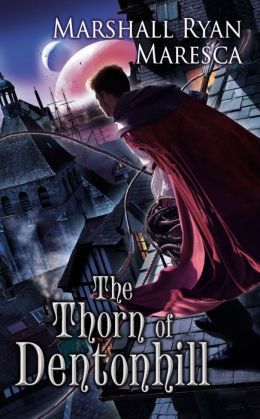
The premise: Veranix is a student at the local university studying magic--the use of numina. But secretly he's using his powers to hunt down and hound those in the surrounding area called Dentonhill who are dealing a drug called effitte. The ringleader of the drug dealers in a man who killed Veranix's father and forced his mother to take so much of the drug that her mind is lost, her body lying with dozens of others who were overcome by the drug. Veranix initially only intends to hurt the drug trade, but when he accidentally intercepts a deal involving a magic cloak and rope, everything changes . . .
As you can imagine, with a magic cloak and rope, the story takes on some comic book attributes--Batman, anyone? Veranix sneaks out at night and fights against the drug dealers, trying to destroy as much effitte as he can. Of course, initially his activities are minor nuisances, but with the cloak and rope to aid him, his attacks become much more troublesome to the ringleader and things escalate. Not to mention that the items he's accidentally come by were intended for a group of mages that desperately want them back and will do anything to get them. So the plot itself is very comic book-esque in nature . . . and the book itself takes on that tone. If you start reading with that in mind--that this is simply going to be a fun ride--then you'll enjoy the book.
The main character is certainly likeable--a little flippant, perhaps too daring, and somewhat oblivious about the realities of what it is he's attempting to do and what it is that he's stumbled into. I enjoyed following along his story, and I enjoyed his interactions with the his friends and mentors at the university. It's obvious his friends more or less "put up" with him, one out of true friendship, the other out of a similar sense of revenge that grows into something else, and a cousin out of family obligations.
The setting itself is a stereotypical medieval-ish fantasy world. It's obvious that the world has been well-developed, with tons of references to history and other lands, but the book itself sticks primarily to the city of Maradaine. And yet this was the most disappointing aspect of the book for me. The street gangs with their own lingo were interesting, but I didn't get any sense of originality in the world itself. There was no sense of uniqueness to the world, and I was searching for that.
Also, me being me, I kept expecting the storyline to take a much darker turn. This is a personal issue though, since the book never "promised" a darker turn in any way. I still kept expecting some more serious consequences for Veranix's actions. The plot down turn downward against him, of course (all plots do eventually), but the consequences weren't as significant as I'd hoped for.
Which is why I say that if you go into this novel with the idea that it's simply a fun little jaunt through Maradaine, like a superhero comic set in a fantasy world, then you'll thoroughly enjoy the book. It delivers on all of those aspects completely. But because the world itself was a little too stereotypical and the consequences weren't as dark as I personally like, I dropped what would have been a 4 star out of 5 review to a 3. I will be reading the next novel set in Maradaine, but I'll do so with a different set of expectations before I begin.
The premise: Veranix is a student at the local university studying magic--the use of numina. But secretly he's using his powers to hunt down and hound those in the surrounding area called Dentonhill who are dealing a drug called effitte. The ringleader of the drug dealers in a man who killed Veranix's father and forced his mother to take so much of the drug that her mind is lost, her body lying with dozens of others who were overcome by the drug. Veranix initially only intends to hurt the drug trade, but when he accidentally intercepts a deal involving a magic cloak and rope, everything changes . . .
As you can imagine, with a magic cloak and rope, the story takes on some comic book attributes--Batman, anyone? Veranix sneaks out at night and fights against the drug dealers, trying to destroy as much effitte as he can. Of course, initially his activities are minor nuisances, but with the cloak and rope to aid him, his attacks become much more troublesome to the ringleader and things escalate. Not to mention that the items he's accidentally come by were intended for a group of mages that desperately want them back and will do anything to get them. So the plot itself is very comic book-esque in nature . . . and the book itself takes on that tone. If you start reading with that in mind--that this is simply going to be a fun ride--then you'll enjoy the book.
The main character is certainly likeable--a little flippant, perhaps too daring, and somewhat oblivious about the realities of what it is he's attempting to do and what it is that he's stumbled into. I enjoyed following along his story, and I enjoyed his interactions with the his friends and mentors at the university. It's obvious his friends more or less "put up" with him, one out of true friendship, the other out of a similar sense of revenge that grows into something else, and a cousin out of family obligations.
The setting itself is a stereotypical medieval-ish fantasy world. It's obvious that the world has been well-developed, with tons of references to history and other lands, but the book itself sticks primarily to the city of Maradaine. And yet this was the most disappointing aspect of the book for me. The street gangs with their own lingo were interesting, but I didn't get any sense of originality in the world itself. There was no sense of uniqueness to the world, and I was searching for that.
Also, me being me, I kept expecting the storyline to take a much darker turn. This is a personal issue though, since the book never "promised" a darker turn in any way. I still kept expecting some more serious consequences for Veranix's actions. The plot down turn downward against him, of course (all plots do eventually), but the consequences weren't as significant as I'd hoped for.
Which is why I say that if you go into this novel with the idea that it's simply a fun little jaunt through Maradaine, like a superhero comic set in a fantasy world, then you'll thoroughly enjoy the book. It delivers on all of those aspects completely. But because the world itself was a little too stereotypical and the consequences weren't as dark as I personally like, I dropped what would have been a 4 star out of 5 review to a 3. I will be reading the next novel set in Maradaine, but I'll do so with a different set of expectations before I begin.


Latest Book Discussion!
I've posted the latest book discussion up at the DAW Books unofficial blog (
 dawbooks
)! We're looking at Stephen Leigh's standalone novel Immortal Muse, now out in paperback. Swing on by and check it out!
dawbooks
)! We're looking at Stephen Leigh's standalone novel Immortal Muse, now out in paperback. Swing on by and check it out!
dawbooks
)! We're looking at Stephen Leigh's standalone novel Immortal Muse, now out in paperback. Swing on by and check it out!March 17, 2015
Next Book Discussion
I've just posted the next book discussion for the March releases--the paperback of E.C. Ambrose's second Dark Apostle novel, Elisha Magus--at the unofficial DAW Books blog! Swing on by and check it out!
March 16, 2015
Latest Book Discussion
I've just posted the latest book discussion for the March releases from DAW Books (
 dawbooks
)! We're looking at Seanan McGuire's fourth InCryptid novel, Pocket Apocalypse, featuring Alexander Price. Swing on by and check it out!
dawbooks
)! We're looking at Seanan McGuire's fourth InCryptid novel, Pocket Apocalypse, featuring Alexander Price. Swing on by and check it out!
dawbooks
)! We're looking at Seanan McGuire's fourth InCryptid novel, Pocket Apocalypse, featuring Alexander Price. Swing on by and check it out!March 13, 2015
Next Book Discussion
I've just posted the next book discussion at the unofficial DAW Books blog (
dawbooks
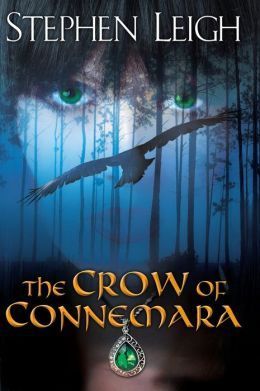
)! We're looking at Stephen Leigh's The Crow of Connemara, a contemporary fantasy set in Chicago and Ireland. Swing on by and check it out!
dawbooks
)! We're looking at Stephen Leigh's The Crow of Connemara, a contemporary fantasy set in Chicago and Ireland. Swing on by and check it out!March 12, 2015
Graphic Novel Review: Hellboy 1: Seeds of Destruction
I'm reading some graphic novels with a friend of mine who's an artist. So I give him my take on the writing and he gives me his take on the art. The Hellboy series is our current project.
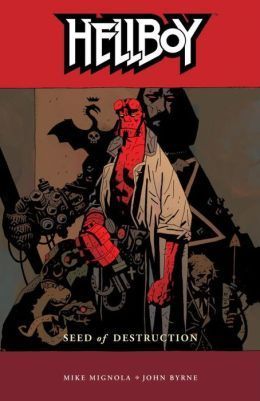
The premise: Hellboy is called forth by a dark mage working with the Nazis who wants to wake the Serpent, seven stones floating in space that serve as a prison for something dark and hideous. But Hellboy appears in a different location and becomes part of a paranormal investigation group. Fifty years later, the mage has returned, ready to use Hellboy as a conduit to bring the Serpent to Earth.
This is the beginning of the Hellboy saga and so my main reaction to this first volume is that the plot is simple and short. So it isn't as fulfilling in terms of plot as I'd like. BUT I think the real point here is to introduce us to Hellboy himself, and he certainly catches your attention. After reading this, I want to know more about him and the situations he's been in and will get into in the future. So this serves its purpose well. He's certainly an interesting character, not what you'd expect seeing just a drawing of him.
I had a couple of issues with this first volume. The graphic novel has a certain feel, based on the basis in the past (1940s), and the atmosphere of the mansion where most of this is set, so the sudden appearance of the stones floating in space with the spacemen for a single page was kind of jolting, since it didn't fit that atmosphere well. I assume in future editions we'll return to these people, but to have them for only one page in this story felt odd. And then the plot itself wasn't all that deep. Perhaps that should be expected when testing out a new concept/character like this though. I also felt that too much time was spent on Hellboy fighting the frog monsters. Personally, I thought some of this time could have been spent on deepening the plot.
But as my artist friend points out, the fight scenes are where the artist really gets to be creative, so perhaps I'm missing some of the awesomeness here. In terms of the art, I felt the style was very vertical in nature (lots of verticality in the people, the panels, etc). The dark borders of this edition worked well for the atmosphere and really helped with the shading and darkness of this piece. The colors used were also fitting for such a main character. I personally felt that there were some missed opportunities with the colorations though--where the artist could have made significant panels or parts of panels really pop by giving those parts a bright color that would contrast with the darker backgrounds and overall colorations. They do this with Hellboy's red skin readily enough (perhaps too much?), so why not with some of the more significant moments, like the discovery of Emma's body? or Liz's flame? (The artist does have a stunning blast in the final battle with the mage. In fact, that entire chapter was well done in terms of color, shifting from blues to greens to fiery yellows and oranges, then back to blues at the end.)
In any case, this was a good introduction to Hellboy and really piques your interest in his character. But it does feel like just an introduction, that there's much more that needs to be explored here, and could have been somewhat deeper in terms of plot.
The premise: Hellboy is called forth by a dark mage working with the Nazis who wants to wake the Serpent, seven stones floating in space that serve as a prison for something dark and hideous. But Hellboy appears in a different location and becomes part of a paranormal investigation group. Fifty years later, the mage has returned, ready to use Hellboy as a conduit to bring the Serpent to Earth.
This is the beginning of the Hellboy saga and so my main reaction to this first volume is that the plot is simple and short. So it isn't as fulfilling in terms of plot as I'd like. BUT I think the real point here is to introduce us to Hellboy himself, and he certainly catches your attention. After reading this, I want to know more about him and the situations he's been in and will get into in the future. So this serves its purpose well. He's certainly an interesting character, not what you'd expect seeing just a drawing of him.
I had a couple of issues with this first volume. The graphic novel has a certain feel, based on the basis in the past (1940s), and the atmosphere of the mansion where most of this is set, so the sudden appearance of the stones floating in space with the spacemen for a single page was kind of jolting, since it didn't fit that atmosphere well. I assume in future editions we'll return to these people, but to have them for only one page in this story felt odd. And then the plot itself wasn't all that deep. Perhaps that should be expected when testing out a new concept/character like this though. I also felt that too much time was spent on Hellboy fighting the frog monsters. Personally, I thought some of this time could have been spent on deepening the plot.
But as my artist friend points out, the fight scenes are where the artist really gets to be creative, so perhaps I'm missing some of the awesomeness here. In terms of the art, I felt the style was very vertical in nature (lots of verticality in the people, the panels, etc). The dark borders of this edition worked well for the atmosphere and really helped with the shading and darkness of this piece. The colors used were also fitting for such a main character. I personally felt that there were some missed opportunities with the colorations though--where the artist could have made significant panels or parts of panels really pop by giving those parts a bright color that would contrast with the darker backgrounds and overall colorations. They do this with Hellboy's red skin readily enough (perhaps too much?), so why not with some of the more significant moments, like the discovery of Emma's body? or Liz's flame? (The artist does have a stunning blast in the final battle with the mage. In fact, that entire chapter was well done in terms of color, shifting from blues to greens to fiery yellows and oranges, then back to blues at the end.)
In any case, this was a good introduction to Hellboy and really piques your interest in his character. But it does feel like just an introduction, that there's much more that needs to be explored here, and could have been somewhat deeper in terms of plot.
Latest Book Discussion
I've just posted the latest book discussion over at the unofficial DAW Books blog (
 dawbooks
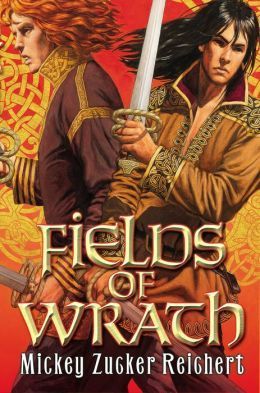
)! We're looking at Fields of Wrath by Mickey Zucker Reichert, the second book in the Renshai Sage. Swing on by and check it out!
dawbooks
)! We're looking at Fields of Wrath by Mickey Zucker Reichert, the second book in the Renshai Sage. Swing on by and check it out!
dawbooks
)! We're looking at Fields of Wrath by Mickey Zucker Reichert, the second book in the Renshai Sage. Swing on by and check it out!March 11, 2015
Book Review: "Doctor Sleep" by Stephen King
I don't usually review Stephen King books, because he doesn't really need the extra exposure, but what the hell.
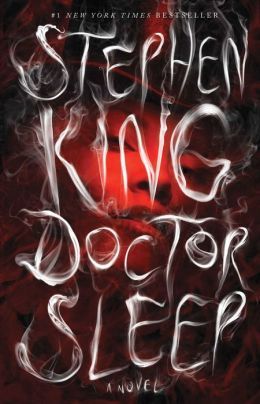
The premise: This novel is a sequel to The Shining in a sense, because it follows up with what happened to little Danny Torrance. What happened to him after the events at the Overlook Hotel? We get to see that in an attempt to drown out the shining and its unwanted visions, Dan turned to drink and drugs, eventually hitting bottom. He an attempt to sober up, he starts Alcoholic Anonymous and settles down in the Northeast, where a little girl named Abra is growing up. Abra is extremely powerful with the shining, so powerful that she attracts the attention of the True Knot--a group that feeds off of those with the shining. And their leader, Rose, wants Abra's essence. And only Dan has a chance to stop her.
I thought this was an excellent follow-up to The Shining, because even though there are ties to that first book, Doctor Sleep is really it's own story. Yes, it's Dan, and it's cool to see what's become of him, but in the end you focus on Abra and the True Knot and the novel becomes its own entity, separate from The Shining. I guess that's why I wanted to review the book. Because taking note of that is important.
Dan's attempt to blunt the shining with alcohol is completely understandable, especially since he's still being haunted by the events that happened at the Overlook. I also liked the fact that we catch up with Dan at the END of this self-destructive phase. We get enough of it to realize how bad it became, and then we get to see Dan redeem himself with AA, so there wasn't any wallowing in how low Dan went before he started to recover. I was afraid at first that the book would focus completely on that aspect of Dan's life. Instead, it became much more with the shift to Abra and with Dan coming to terms with what he'd done during his dark times with drugs and alcohol, and with him finally dealing with what happened at the Overlook.
So, definitely a good book and a nice way to return to a loved character without simply rehashing a loved book. Doctor Sleep is it's own story, and one well worth reading.
The premise: This novel is a sequel to The Shining in a sense, because it follows up with what happened to little Danny Torrance. What happened to him after the events at the Overlook Hotel? We get to see that in an attempt to drown out the shining and its unwanted visions, Dan turned to drink and drugs, eventually hitting bottom. He an attempt to sober up, he starts Alcoholic Anonymous and settles down in the Northeast, where a little girl named Abra is growing up. Abra is extremely powerful with the shining, so powerful that she attracts the attention of the True Knot--a group that feeds off of those with the shining. And their leader, Rose, wants Abra's essence. And only Dan has a chance to stop her.
I thought this was an excellent follow-up to The Shining, because even though there are ties to that first book, Doctor Sleep is really it's own story. Yes, it's Dan, and it's cool to see what's become of him, but in the end you focus on Abra and the True Knot and the novel becomes its own entity, separate from The Shining. I guess that's why I wanted to review the book. Because taking note of that is important.
Dan's attempt to blunt the shining with alcohol is completely understandable, especially since he's still being haunted by the events that happened at the Overlook. I also liked the fact that we catch up with Dan at the END of this self-destructive phase. We get enough of it to realize how bad it became, and then we get to see Dan redeem himself with AA, so there wasn't any wallowing in how low Dan went before he started to recover. I was afraid at first that the book would focus completely on that aspect of Dan's life. Instead, it became much more with the shift to Abra and with Dan coming to terms with what he'd done during his dark times with drugs and alcohol, and with him finally dealing with what happened at the Overlook.
So, definitely a good book and a nice way to return to a loved character without simply rehashing a loved book. Doctor Sleep is it's own story, and one well worth reading.
Book Review: "Swords and Deviltry" by Fritz Leiber
I'm probably going to get roasted by the SF&F community for this, but . . . After hearing about this series for ages, I finally decided to check it out as part of my "reading new authors" quest this year. This series has been around for a while (since the 60s and 70s) so it's a little retro and I tried to take that into account as I read it. That didn't seem to help too much.
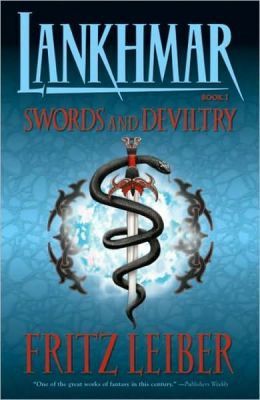
The premise: This first book is really simply three stories woven together to produce a book. The Snow Women is the back story of Fafhrd, relating his early life and how and why he flees and ends up in Lankhmar. Similarly, The Unholy Grail is the back story of the Gray Mouser and how he ends up in Lankhmar. And finally, Ill Met in Lankhmar is the story of how the two meet and become the famed Fafhrd and the Gray Mouser.
The third story is where the heart of this book lies, and also where I assume Fafhrd and the Gray Mouser caught readers' imaginations and really took hold. It is where I finally became interested in the two characters and where the story drew me in, with the two heading off to figure out how to hurt the thieves' guild and get revenge. Of course, things don't work out as planned and what started off as a mostly drunken excursion to scout things out becomes something much more meaningful to both of them. This is the real story, and this one story is the main reason that I'll go on and read the next book in the series.
Unfortunately, the two back stories for Fafhrd and the Gray Mouser didn't really catch my interest or hold my attention as well, especially Fafhrd's story (which was the introduction story in this book). I kept reading mostly because of what I'd heard from others about this series and this pair. The Gray Mouser's back story was more interesting and better written. Maybe the reason the second and especially the third story caught my attention and held it better is because they were more of what I was expecting in terms of "sword and sorcery," which is what these stories really are.
As I said, I tried to give the style of the writing some leeway, since they were written before I was born and the style then was slightly different. For example, the omniscient POV was much more prevalent, so what we now call "head-hopping" was more common. Now, we try mostly for third-person limited POV and "head-hopping" is frowned on (although still done occasionally). I must admit the head-hopping threw me and it took me a while to get used to it. The language itself and the structures of the sentences were also slightly "off" from current fiction, and that took some getting used to.
But in the end, I really think that my issues were with the story, not the style. The first one just didn't catch me. The second piqued my interested more, but it was the third where I finally felt that I was "getting" what everyone was raving out. The third story drew me in and, again, is why I'll go ahead and continue with the second volume.
The premise: This first book is really simply three stories woven together to produce a book. The Snow Women is the back story of Fafhrd, relating his early life and how and why he flees and ends up in Lankhmar. Similarly, The Unholy Grail is the back story of the Gray Mouser and how he ends up in Lankhmar. And finally, Ill Met in Lankhmar is the story of how the two meet and become the famed Fafhrd and the Gray Mouser.
The third story is where the heart of this book lies, and also where I assume Fafhrd and the Gray Mouser caught readers' imaginations and really took hold. It is where I finally became interested in the two characters and where the story drew me in, with the two heading off to figure out how to hurt the thieves' guild and get revenge. Of course, things don't work out as planned and what started off as a mostly drunken excursion to scout things out becomes something much more meaningful to both of them. This is the real story, and this one story is the main reason that I'll go on and read the next book in the series.
Unfortunately, the two back stories for Fafhrd and the Gray Mouser didn't really catch my interest or hold my attention as well, especially Fafhrd's story (which was the introduction story in this book). I kept reading mostly because of what I'd heard from others about this series and this pair. The Gray Mouser's back story was more interesting and better written. Maybe the reason the second and especially the third story caught my attention and held it better is because they were more of what I was expecting in terms of "sword and sorcery," which is what these stories really are.
As I said, I tried to give the style of the writing some leeway, since they were written before I was born and the style then was slightly different. For example, the omniscient POV was much more prevalent, so what we now call "head-hopping" was more common. Now, we try mostly for third-person limited POV and "head-hopping" is frowned on (although still done occasionally). I must admit the head-hopping threw me and it took me a while to get used to it. The language itself and the structures of the sentences were also slightly "off" from current fiction, and that took some getting used to.
But in the end, I really think that my issues were with the story, not the style. The first one just didn't catch me. The second piqued my interested more, but it was the third where I finally felt that I was "getting" what everyone was raving out. The third story drew me in and, again, is why I'll go ahead and continue with the second volume.
New Book Discussion
I've just posted the latest book discussion at the unofficial DAW Books blog (
dawbooks
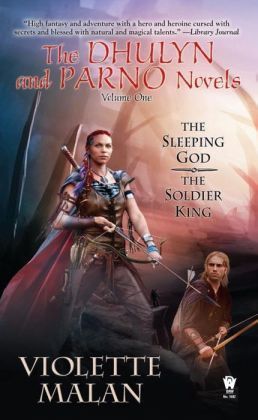
)! We're looking at The Dhulyn and Parno Novels, Volume One by Violette Malan, an omnibus edition of the first two novels in her Dhulyn and Parno series, which are The Sleeping God and The Soldier King. Swing on by and check it out!
dawbooks
)! We're looking at The Dhulyn and Parno Novels, Volume One by Violette Malan, an omnibus edition of the first two novels in her Dhulyn and Parno series, which are The Sleeping God and The Soldier King. Swing on by and check it out!