Patrick Whitehurst's Blog, page 36
May 24, 2012
Oral awesomeness
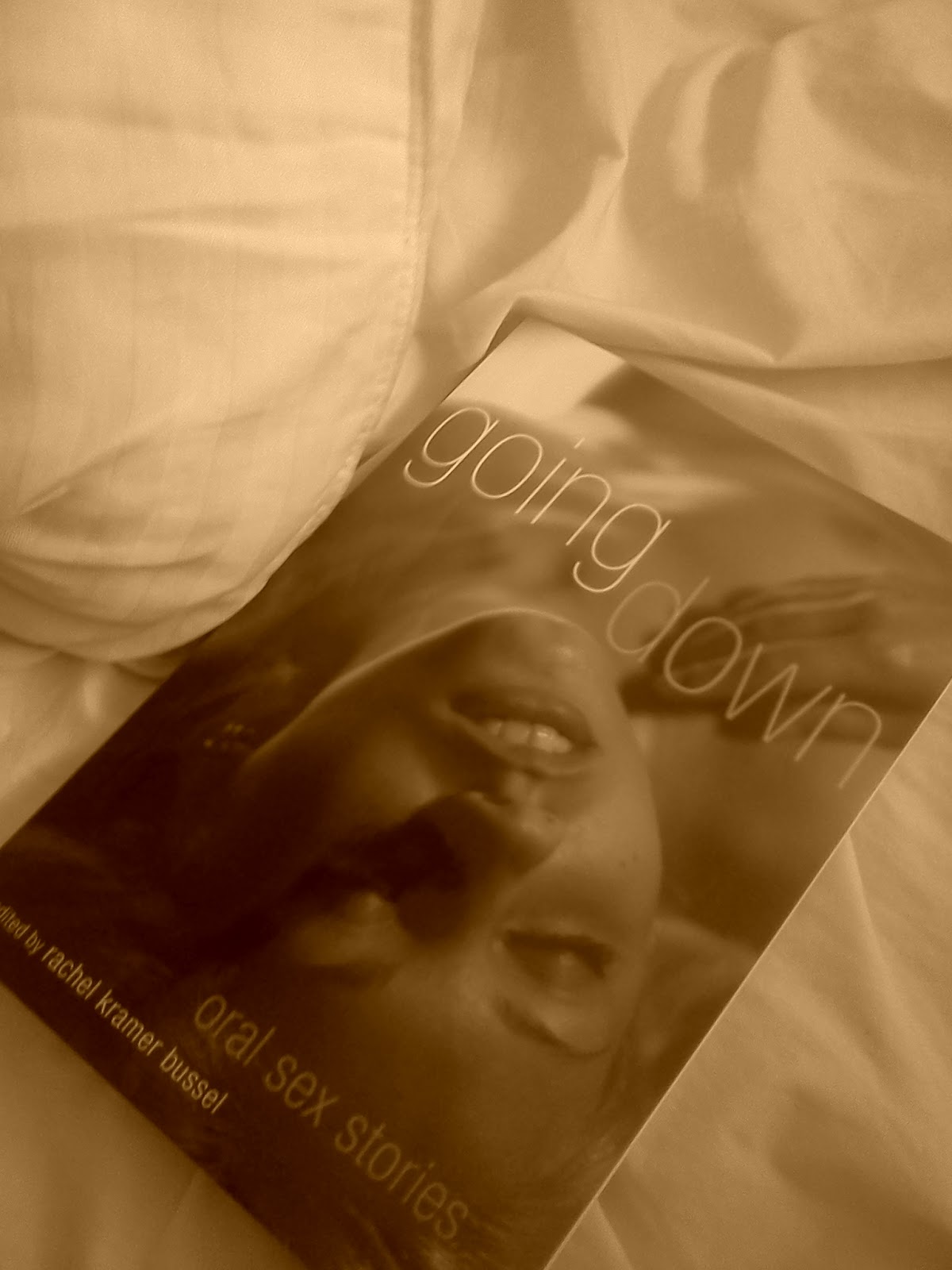 You either like it or you don't like it.
That's the common belief when it comes to oral sex. For some it's a taboo subject, too dirty to mention in polite society. For others it's a conversational highlight, particularly those who believe sex should be celebrated and explored from every possible, breath-taking angle.
With “Going Down: Oral Sex Stories,” editor Rachel Kramer Bussel takes the celebration of oral sex to a grand new level.
The anthology features some of today's top talent in the field of erotic fiction, including Jeremy Edwards, Elizabeth Coldwell, Lucy Felthouse and a hot little piece written by Bussel herself. Other authors include Chrissie Bentley, Graydancer and a slew of others.
For these talented wordsmiths, the quivering passion, ultimate power and relinquished fear inherent in oral sex overrules any sense of pristine modesty.
Jeremy Edwards brings pink to the fore in “Bubble Dance,” binding chewing gum to the pleasures of oral sex in a way that isn't easy to forget. In his fun and bubbly tale, Elaine's fascination for gum, from blowing bubbles to the color of the stuff, is just the thing to ignite her boyfriend Warren's hot-blooded lust.
A rather randy boyfriend describes his oral fixation for his “girl” in Felthouse's rabid sex-fest “Clean/Dirty.” No names, barely a mention to location, but plenty of descriptive action make her contribution to the anthology a fast and dirty one.
Juliette, the lead character in Elizabeth Coldwell's sultry short “The Perfect Shade,” spends an inordinate amount of her time finding just the right kind of lipstick. Her painstaking efforts aren't just to discover the best color for her lips, but for lipstick that smears well from the slightest use, as Bruce would have it no other way.
Bussel's steamy short “New Additions” adds a little metal into the oral mix. Marissa, out for a night on the town with two of her closest friends, finds herself sandwiched in a raunchy, frank threesome when friends Rosie and Derek show off their new piercings, along with the rest of their bodies.
While the title isn't much of a mouth full, the book itself takes in every creative, arousing inch, leaving nothing to want, and one hell of desire for a cigarette at the end.


May 22, 2012
Going to town on sexism, racism
When Esquire announced it would begin a series of fiction stories slanted to men, many began to question whether the magazine was living in the stone age. Comments on the May 20 article in the New York Times practically accused the magazine of catering to white men who will never pick up a novel featuring a female lead character.
 I suppose that means men will not read, nor had anything to do with the popularity of The Girl With the Dragon Tattoo or The Hunger Games? That men have not read the Twilight novels or Fifty Shades of Grey?
It is astounding many readers still believe literature is a male-dominated world when so much of today's prominent literature is written by and often starring women. Besides the two mentioned above, simply peruse best-seller lists to see how many books are written by women, then see how many feature women as leading characters. Then stop complaining. Or, at the very least, prepare a better argument as to why you still are. I need convincing at this point.
As a reader, I pick up a novel based on what I hear about it, whether it looks exciting or intriguing, and don't give a rat's ass how many men or women were involved in its creation or star in its passages. The more readers complain about male-dominated literature, the more I begin to think the whole thing is a setup. What's left when things are equal? Far better to convince everyone you remain an underdog, for pity's sake, and for that empowered feeling that comes when you have something to fight for.
Esquire's "Fiction for Men" ebook plans are no different than a magazine that caters to women, many with the words “women” on the banner. Only its not for women. When does the pendulum stop swinging to the extremes on both sides? Male sexism remains justified and poignant. Men cannot complain about a magazine that features only female entrepreneurs, but they'll likely be sued if they start one for men.
While women continue to fight, in some instances, a valiant and wholly relevant battle, many do so while swinging their own, quite significant, sexist axe. Esquire's series for men has as much a right to exist as any other form of the written word. It should excite readers, bring awareness and notoriety, and possibly create new readers. Not every reader, male or female, begins with Melville's Moby Dick or Mitchell's Gone with the Wind.
But once they start reading, they read more, and more, and the eyes slowly begin to open.
 I suppose that means men will not read, nor had anything to do with the popularity of The Girl With the Dragon Tattoo or The Hunger Games? That men have not read the Twilight novels or Fifty Shades of Grey?
It is astounding many readers still believe literature is a male-dominated world when so much of today's prominent literature is written by and often starring women. Besides the two mentioned above, simply peruse best-seller lists to see how many books are written by women, then see how many feature women as leading characters. Then stop complaining. Or, at the very least, prepare a better argument as to why you still are. I need convincing at this point.
As a reader, I pick up a novel based on what I hear about it, whether it looks exciting or intriguing, and don't give a rat's ass how many men or women were involved in its creation or star in its passages. The more readers complain about male-dominated literature, the more I begin to think the whole thing is a setup. What's left when things are equal? Far better to convince everyone you remain an underdog, for pity's sake, and for that empowered feeling that comes when you have something to fight for.
Esquire's "Fiction for Men" ebook plans are no different than a magazine that caters to women, many with the words “women” on the banner. Only its not for women. When does the pendulum stop swinging to the extremes on both sides? Male sexism remains justified and poignant. Men cannot complain about a magazine that features only female entrepreneurs, but they'll likely be sued if they start one for men.
While women continue to fight, in some instances, a valiant and wholly relevant battle, many do so while swinging their own, quite significant, sexist axe. Esquire's series for men has as much a right to exist as any other form of the written word. It should excite readers, bring awareness and notoriety, and possibly create new readers. Not every reader, male or female, begins with Melville's Moby Dick or Mitchell's Gone with the Wind.
But once they start reading, they read more, and more, and the eyes slowly begin to open.
Going to town on sexism, racism
When Esquire announced it would begin a series of fiction stories slanted to men, many began to question whether the magazine was living in the stone age. Comments on the May 20 article in the New York Times practically accused the magazine of catering to white men who will never pick up a novel featuring a female lead character.
I suppose that means men will not read, nor had anything to do with the popularity of The Girl With the Dragon Tattoo or The Hunger Games? That men have not read the Twilight novels or Fifty Shades of Grey?
It is astounding many readers still believe literature is a male-dominated world when so much of today's prominent literature is written by and often starring women. Besides the two mentioned above, simply peruse best-seller lists to see how many books are written by women, then see how many feature women as leading characters. Then stop complaining. Or, at the very least, prepare a better argument as to why you still are. I need convincing at this point.
As a reader, I pick up a novel based on what I hear about it, whether it looks exciting or intriguing, and don't give a rat's ass how many men or women were involved in its creation or star in its passages. The more readers complain about male-dominated literature, the more I begin to think the whole thing is a setup. What's left when things are equal? Far better to convince everyone you remain an underdog, for pity's sake, and for that empowered feeling that comes when you have something to fight for.
Esquire's "Fiction for Men" ebook plans are no different than a magazine that caters to women, many with the words “women” on the banner. Only its not for women. When does the pendulum stop swinging to the extremes on both sides? Male sexism remains justified and poignant. Men cannot complain about a magazine that features only female entrepreneurs, but they'll likely be sued if they start one for men.
While women continue to fight, in some instances, a valiant and wholly relevant battle, many do so while swinging their own, quite significant, sexist axe. Esquire's series for men has as much a right to exist as any other form of the written word. It should excite readers, bring awareness and notoriety, and possibly create new readers. Not every reader, male or female, begins with Melville's Moby Dick or Mitchell's Gone with the Wind.
But once they start reading, they read more, and more, and the eyes slowly begin to open.
I suppose that means men will not read, nor had anything to do with the popularity of The Girl With the Dragon Tattoo or The Hunger Games? That men have not read the Twilight novels or Fifty Shades of Grey?It is astounding many readers still believe literature is a male-dominated world when so much of today's prominent literature is written by and often starring women. Besides the two mentioned above, simply peruse best-seller lists to see how many books are written by women, then see how many feature women as leading characters. Then stop complaining. Or, at the very least, prepare a better argument as to why you still are. I need convincing at this point.
As a reader, I pick up a novel based on what I hear about it, whether it looks exciting or intriguing, and don't give a rat's ass how many men or women were involved in its creation or star in its passages. The more readers complain about male-dominated literature, the more I begin to think the whole thing is a setup. What's left when things are equal? Far better to convince everyone you remain an underdog, for pity's sake, and for that empowered feeling that comes when you have something to fight for.
Esquire's "Fiction for Men" ebook plans are no different than a magazine that caters to women, many with the words “women” on the banner. Only its not for women. When does the pendulum stop swinging to the extremes on both sides? Male sexism remains justified and poignant. Men cannot complain about a magazine that features only female entrepreneurs, but they'll likely be sued if they start one for men.
While women continue to fight, in some instances, a valiant and wholly relevant battle, many do so while swinging their own, quite significant, sexist axe. Esquire's series for men has as much a right to exist as any other form of the written word. It should excite readers, bring awareness and notoriety, and possibly create new readers. Not every reader, male or female, begins with Melville's Moby Dick or Mitchell's Gone with the Wind.
But once they start reading, they read more, and more, and the eyes slowly begin to open.
October 25, 2011
Classic King returns for spooky thrills with 'Mile 81'

He’s been called the master of modern horror, but that fails to do Stephen King the justice his longevity deserves. Whether ones believes his writing to be pedantic, formulaic, or even written by ghost writers, no one can argue the man’s ability to tell at least one story that even his critics remember fondly. For most it’s The Stand or The Shining, the latter of which comes thanks to Stanley Kubrick’s remarkable 1980 film of the same name. Let’s just forget about the 1997 version.
Always a prolific writer, King brings readers exactly what they would expect in a good, scary read. His newest novel, 11/22/63, is set for release November 8, less than a year after the hardcover release of Full Dark, No Stars.
Until then, King has treated his fans to a little old-fashioned horror in his short novella, Mile 81.
Mile 81 is the sort of tale that makes a person afraid to leave their home. It's one of those creepy short pieces that reminds us of our own youth, particularly when it comes to exploring places we shouldn't. King, like always, proves he is still the master at probing the base fears so many of us carry around just under our skin. We've all gone somewhere we shouldn't go, a deserted house, an old mine, an abandoned construction site, and felt a tingle of fear creep along our spine as a result of it.
In Mile 81, available exclusively in digital format, King chases fear from his mind and into ours. But it isn't the location we need fear. Like his early novel Christine, it's what drives up outside the rest stop you need to fear.
Pete Simmons decides he can have more fun alone than with his older brother and his friends, doing what any healthy ten-year-old would do: reading sex magazines, sipping old vodka, and generally goofing off. What's good for teenagers has to be good for ten-year-olds after all. And what better place to goof off than a decrepit, abandoned rest stop off the New England interstate?
Born-again insurance salesman Doug Clayton was the first to come upon the beat-up old station wagon at the closed-off Interstate 95 rest stop. Former mud wrestler Julie Vernon stopped next, horse-trailer and all, followed by the adult members of the Lussier family, who also ended up getting a little too close to the old vehicle. Six-year-old Rachel and and her little brother Blakie saw what happened to them. They knew what that muddy station wagon could do. When help came for the kids, however, it proved difficult to convince anyone of the imminent danger. But Pete Simmons, fresh from his own adventures, saw the whole thing. He knew the kids needed help. King, seemingly aware of his esteemed place in pop culture, even offers a nod to Christine in his latest tale of terror.
King has carved himself a notch above nearly every author out there, horror or otherwise, for it’s difficult to say he’s the master of fright alone and not a master of words. Like Hemingway and Bukowski, he’s found the pulse of common, mainstream mankind in his creativity.
Everyone can remember the first Stephen King book they read, as they can their first time cozied up with Anne Rice or Edgar Allen Poe. Like any first time, those moments spent with King’s often chilling adventures is hardly easy to forget. Whether it was Salem’s Lot, Cujo, Misery, Pet Sematary, or The Gunslinger doesn’t matter. The way you clutched the book, and carefully peeked at the next page before turning it, is what matters. Now is the time to discover the master of the macabre once more. With Mile 81, King’s literary fists keeping packing the punches.

December 1, 2010
Christmas book signing
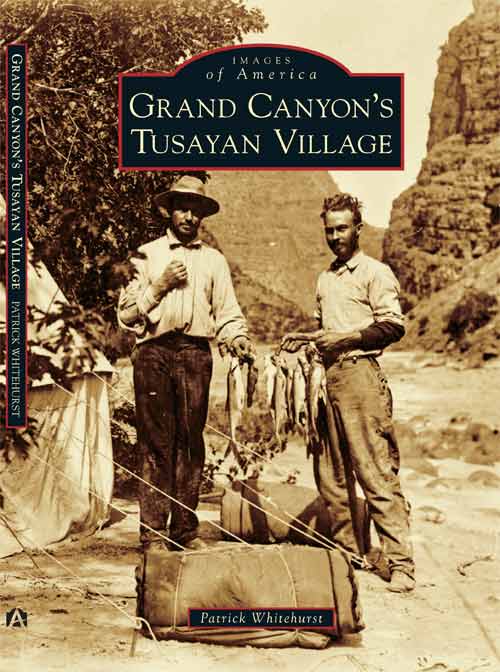
Grand Canyon authors will help ring in the holiday season at the South Rim Dec. 6 from 6:30 to 8:30 p.m. Writers such as Thomas Ratz, Wayne Ranney, Todd Berger, Tom Martin, and myself will be there signing our varied Grand Canyon books as part of the sixth annual Holiday Event. The traditional holiday gala will be held at the Grand Canyon Visitors Center and Books N’ More across the plaza. The occasion is always an exciting one for residents at the Canyon and there is no better place to sign books than at the edge of one of the world’s most splendid natural wonders. I hope to see you there!
Carolers, Santa, cookies and hot cocoa will also be on hand. Rangers will even be in attendance with a number of fun activities for kids. It’s sure to be an exciting evening at the South Rim.

November 9, 2010
Dirty Harry's pulp power
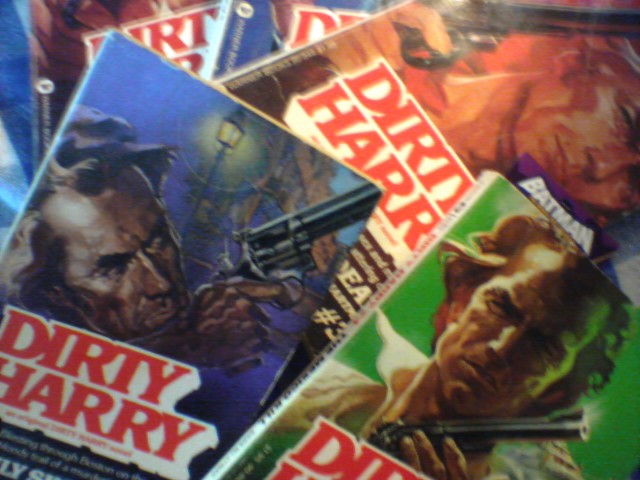
Dark and gritty streets don’t get that way by themselves. Lurking eyes, thoughts soured by peril and desperation, minds numbed by sickness and perversion, make them that way. San Francisco Inspector Harry Callahan can be called the cure to these back-alley ills. Like all hard-boiled detectives, Callahan didn’t earn the nickname “Dirty Harry” by sitting at a desk.
While the 1980s were full of meaty fiction, and paved the way for dark literary giants such as Stephen King, Anne Rice and Clive Barker, the 80s were also a time when lesser known novelists toiled away on classic characters. Conan novels were huge reads for anyone looking to devour the further adventures of their favorite Cimmerian for instance. Other famed series includes Mack Bolan, Nick Carter, the John Gardner James Bond continuation novels, a plethora of Star Trek paperback adventures, and plenty more. Into this mix came the pulpy, paperback Dirty Harry novels. Culled from the scenery-chewing Clint Eastwood films, which began with “Dirty Harry” in 1971, the series by Dane Hartman remained loyal to the no-nonsense, no mercy killer found in Inspector Callahan.
Drenched in sex and gore, the novels take the grime of San Francisco’s unspoken bowels and explore them in a way largely untouched by the popular Warner Brothers film franchise. With only 12 books in the three-year run, the Hartman pulps were published during the height of Dirty Harry’s thug-shooting popularity in the early 1980s. Then, with publication of The Dealer of Death, the novels burned into obscurity, just as so many hot-blooded pulps of the 1940s and 1980s did before it.
Hartman, however, is largely believed to be a pseudonym for two successful authors who wrote for Warner Brothers’ Men of Action Books imprint at the time. According to Wikimedia and other sources, authors Ric Meyers, a film consultant and martial arts authority, is credited with penning the novels alongside fellow author Leslie Alan Horvitz, who specializes in scientific fiction and non-fiction.
Beginning with Dual for Cannons, and including such lurid titles as The Mexico Kill and City of Blood, the books threw Callahan against every type of heartless criminal imaginable, from kidnappers to pirates and all in between. Like many of the great pulps, including “The Shadow” and “Fu Manchu” titles of yesteryear, the Dirty Harry series left creative writing’s tendency for intellectual overachievement at the door, focusing instead on the story, brutal descriptions and fast-paced action. Those looking for an adventure with their favorite .44 Magnum-toting San Francisco police inspector need look no further than the pages of the Hartman novels to get one hell of a fix.

September 6, 2010
'Grand Canyon’s Tusayan Village' available now

Grand Canyon’s Tusayan Village is now available through Arcadia Publishing, as part of their wildly popular Images of America series. Tusayan details the intriguing history of the small community located on the doorstep of the Grand Canyon National Park, from its earliest history with the noble Havasupai people to its current incarnation as a hub for visitors flocking in and out of the famed South Rim.
This book marks my second for Arcadia Publishing; the first being the story of Williams , located about 50 miles south of Tusayan, though both communities carry with them their own unique sense of individuality. It’s always nice to find others who share an appreciation for the real stories that help shape the history of a particular area. At signings, I get a chance to meet those with a fascination for a certain geographical location. Often those people have spent a great deal of time in the location in question, leading to a desire to know a little more than they did before.
During a recent signing at Coyote Kid in Williams, hosted by the Besler family, I met a number of these people. My thanks to the Beslers and all of those who came out to the event. Labor Day weekend marks the last of the summer visitors to the area and those visitors were certainly in evidence last Saturday, as were the rugged Cowboy entertainers and ample sunshine. Thanks also to the Grand Canyon News and Ryan Williams for a nice write-up on the book.
Next Saturday I will sign copies of Tusayan at the IMAX Theater in Tusayan, located along Highway 64 near the entrance to the national park. The signing will begin at 1 p.m. for those interested in attending. I’m looking forward to seeing you there!
Grand Canyon’s Tusayan Village is available on Amazon.com, Barnes and Noble.com, on Arcadia Publishing’s website and at a number of retail book stores in northern Arizona and other locations, including Colors of the West and the IMAX National Geographic Visitors Center in Tusayan.

June 29, 2010
Collected Works 2010 to showcase NAZAA members
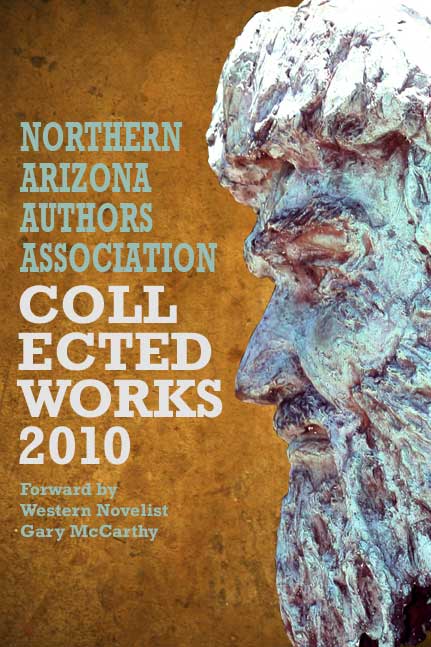
The Northern Arizona’s Authors Association plans to release their first book within the next few months, collecting stories from many of the authors and writers involved in the Williams-based organization. Called Collected Works 2010, the anthology will feature short stories, recipes, excerpts from novels, and much more. Celebrated western and historical author Gary McCarthy, a member of the association, will write the forward for the book.
Members of the Northern Arizona Authors Association decided to produce the book as a way to showcase the diversified talent represented by the individual members. Collected Works 2010 will be available online and at a number of northern Arizona locations in the coming months. Members also plan to sell the book during special signing events throughout the area.
The Northern Arizona Authors Association meets monthly at the offices of Williams City Hall. Their next meeting is planned for July 17 at 9 a.m. New members are encouraged to attend the meeting. For more information on the group, visit them online at http://nazauthassoc.webs.com. The Northern Arizona Authors Association can also be found on Facebook.

May 10, 2010
Train Day event
 The steam engine of the Grand Canyon Railway whistled nearby, model railroads tooted and made the rounds on their scaled tracks, and live music filled the air during the recent northern Arizona celebration of National Train Day. The two-day event was held at the historic Grand Canyon Railway depot in Williams. Organizers for the celebration offered rides aboard the popular 4960 steam engine throughout the day.
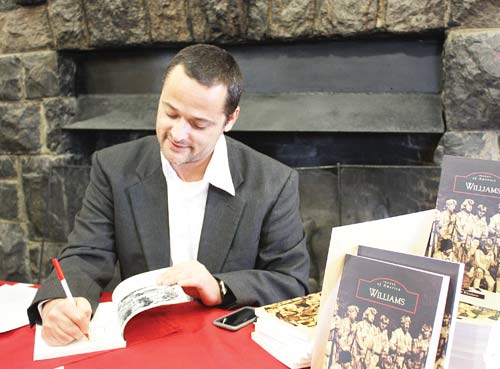
I was asked to sign copies of my Arcadia Publishing book, Williams, for the fun weekend event, alongside railroad author and Arizona State Railroad Museum Founder Al Richmond. Organizers with the signing hosted a wonderful event, which will hopefully become an annual one in Williams.
My second Arcadia title, Grand Canyon’s Tusayan Village, is slated for release later this year. Having completed my share of the work on the project, I am now expecting proofs on the book by July. Like my experience with the Grand Canyon Railway’s Train Day organizers, working with Arcadia Publishing has been a wholly rewarding tale. My thanks to them and to everyone who came out for the event!

April 21, 2010
The exciting world of author Gary McCarthy
 When it comes to writing westerns, there’s no one better equipped to handle the task than novelist Gary McCarthy. With his six-shooters drawn and a tumble weed hurrying past, McCarthy takes aim on the Old West genre like Stephen King does for the world of the macabre – with dead-on accuracy. But like King, and a host of other great and prolific authors of our time, he can just as easily break from the standard mold and create something unique and astounding, as evidenced in McCarthy’s latest works, River Thunder, Restitution, and others. With a walloping 50 novels under his belt, McCarthy continues to dazzle readers with every word he writes.
McCarthy’s novels speak to both our hearts and our taste for adventure. His tales encompass high-flying narratives of the southwest to literary masterpieces.
One of his early books, The First Sheriff, tells the story of Glen Collins as he runs for the position of first sheriff in San Diego. Collins isn’t a gunfighter, however, just an honest man who hopes to make a difference. Earning enough to support his love, Maria, also plays a part in his decision to run for the elected position. Problems arise for Collins when the brother of San Diego’s mayor breezes into town. Roy Whitlow, handsome and daring, also sets his sights on the young senorita. Further complications come in the form of local rancher Howard Trimmer, the self-styled ruler of San Diego. Trimmer also thinks it should be one of his own men wearing the sheriff’s badge and not someone with enough guts to stand up to his bullying tactics.
The First Sheriff is a simple tale of love and fortitude and it’s charming in that simplicity. Chock full of humor and action, including a fast paced gunfight in a saloon, dancing lessons in jail, and a final showdown sure to thrill, McCarthy’s early tale of San Diego is sure to resonate with readers young and old alike.
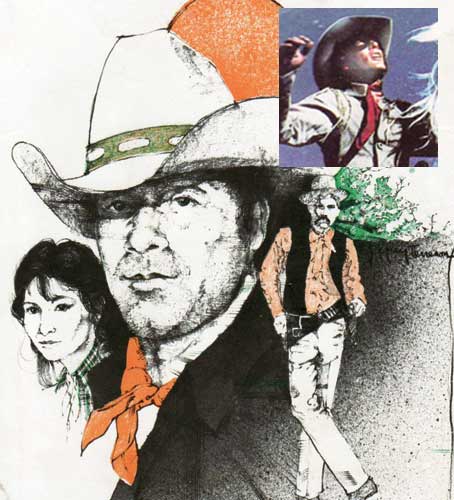
The thrills continue in his galloping take on the famous Lone Ranger character. Written in three weeks in the early 1980s, McCarthy adapted The Legend of the Lone Ranger for his publishers, who wanted to provide a novel tie-in for the upcoming big screen re-telling of the classic Clayton Moore television program. Released in 1981, the Lone Ranger film adaptation, starring relative unknown Klinton Spilsbury, would go on to become one of the studio’s most memorable flops. McCarthy’s novel tells the origin of the famous masked man, beginning with his first meeting with Tonto, the story of the Reid family, and his eventual confrontation with the murderous Butch Cavendish and his gang of thugs bent on taking over the state of Texas.
While staying true to the classic television story of the Lone Ranger’s transformation from Texas Ranger to western icon (including his first meeting with Silver, who he finds fighting a buffalo of all things and a scene McCarthy harbored serious reservations about), the story of the Lone Ranger deviates slightly in certain areas, particularly when it comes to Reid’s love interest Amy Striker and his rescue of President Ulysses Grant. Fans of the Lone Ranger and Tonto, despite the film version’s lackluster box-office success, will find the novel a thrilling addition to their western collection and a testament to McCarthy’s sterling writing ability.