Patrick Whitehurst's Blog, page 14
December 27, 2017
Whitehurst's Top Reads of 2017

The year 2017 will go down in history for a lot of reasons; some of those reasons being the addition of quality literature to the libraries of the world’s dwindling army of readers. Over the last year, possibly in an attempt to cower from real world political poison, I’ve disappeared into 20 books, including nonfiction and fiction, I found my share of quality literature, not to mention my escape.
Having read everything from Neil deGrasse Tyson’s Astrophysics for People in a Hurry to the first six entries of Don Pendleton’s Executioner novels, the year of lit in the Whitehurst house was a good one. Take a look at my top five picks for the year. While they didn't all come out last year, I read them in 2017, which is how my list works.
Zero Avenue by Dietrich Kalteis
 Who doesn’t love a punk rock masterpiece? That’s what I found when I read Zero Avenue. This is one gritty punk tale chock full of crime and the desperation of survival. Zero takes no prisoners in its detail and scope and keeps kicking through to the very end. What a movie this would make. And the score would rock. Someone better be on that.
A blast in the face, full of punk and vigor, and one of the best reads of the year for me.
Get your copy here.
Moving Through Life Ungracefully by S.M. Pastore
 There’s something satisfying about reading words that have echoed in your own mind at various times in your life. That’s how this collection of poetry and prose found me. It’s a quick read, but worth repeat reading, just to relish in the word choices and raw honesty found within.
For anyone who needs words whispered gracefully, honestly, and without remorse, lean into this book.
Find the book here.
Thrill Me: Essays on Fiction by Benjamin Percy

 Meeting and listening to Benjamin Percy talk were highlights of the year for me. He’s a charismatic speaker and has an impressive literary resume. This book, on the craft of writing and story-telling, should be on the shelf of every writer, whether they’re jotting their first line or their gazillionth. I zipped through it like a mad man. After meeting him and getting his John Hancock on the book, I couldn’t help but hear his captivating voice speaking every sentence.
Super informative, fun, and enthralling book.
Find it here.
The Gaslight Girl: A Decisive Devices Novella by Hargrove Perth
Billed as the first in the Decisive Devices Steampunk series, The Gaslight Girl functions just as well as a standalone tale, though readers will most certainly want to explore the other entries when they turn the last page. Get to know Halloran Frost, get to know a cinderwench, and sink your teeth into this thrilling romp in the hottest genre around.
For those with a taste for authors such as Gail Carriger and Kevin J. Anderson, not to mention the classics by H.G. Wells and Jules Verne, familiarize yourself with this series.
Find the book here.
The Name of the Wind by Patrick Rothfuss
Imagine Lord of the Rings with a Harry Potter storyline and you come close to the breathtaking tale that is The Name of the Wind. In fact, the previous sentence doesn’t begin to describe how wonderful I found this book and its main character, Kvothe. I simply could not put it down. The first in a planned trilogy (I hope there are more than that) got me so pumped, I very nearly grabbed the second to read immediately after finishing. Instead I put it aside to savor the anticipation, though it will be read in 2018.
Book One of the Kingkiller Chronicles. Buy it. Love it. Love it twice.
Get it .


November 29, 2017
Cornell Woolrich, quit staring at me
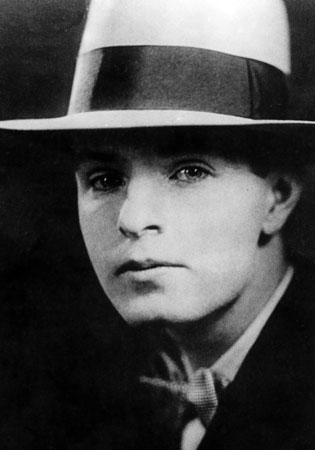 Cornell Woolrich.The streets get gritty and mean. Cold shadows keep the sun from hitting the pavement and those passing by bump into you with a snort and no apologies. If you’re lucky you see a set of bleak eyes staring out from under a shaded hat, piercing you with desire, and not the lustful kind, but the kind that makes you move your wallet from your back pocket.
Back in the day, those eyes might have hung from the face of Cornell Woolrich.
Woolrich was NYC in and out. Born there. Buried there. Barely left town. Barely left his place. Who cares that he might have had a mental blemish or two? Who cares he lived with his mother? The dude was killer.
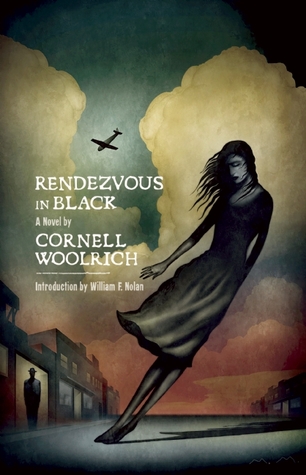 Rendezvous in Black, by Cornell
Woolrich, Centipde Press edition.Woolrich had a way of storytelling unrivaled in his time. Hitchcock fell into the spin of his yarns and shot Rear Window as a result. He wrote a ton, and tons were made into movies, including his novels, “I Married a Dead Man,” “The Phantom Lady,” and others. He may have written under the name William Irish for a while, perhaps thinking the pseudonym sounded more badass than Cornell, but these days we all know it was him. Yet he remains one of New York City’s, and the world’s, best and largely uncelebrated crime writers. At least he made the name Cornell a cool one.
Being a hermit, the man seemed more content to stare at the world without engaging in it, but he had a knack for people nonetheless. He could populate a story like no one’s business. And if you were in New York in his time, say between 1926 and 1968, the year he died, you might have fallen under his gaze.
Count yourself lucky.
September 28, 2017
Deitrich Kalteis interview on punk and words
 Zero Avenue, which comes out
 next Tuesday, is published by
ECW Press.It's always a delight to sit down with authors and talk shop. It's especially cool when you get to sit down with one you admire. I got lucky with Dietrich Kalteis.
His new book, Zero Avenue, is out Tuesday. The book features a gritty punk tale of crime and survival and takes no prisoners in its detail and scope. A great read. Look here to get your copy.
Whitehurst: How did you come up with this story? The writing feels so visceral one could almost imagine you had been there.
Dietrich: I do remember the times well, and listening to the music again and talking to people who lived during those times helped a lot with reviving the vibe. What I liked about the punk rock scene back then was its edge and the ‘us against them’ outlook, how that indie ‘shake it up’ attitude threw a middle finger to the status quo. It made a sharp contrast to what some considered a sleepy backwater town at the time. For me, it made the perfect setting for a crime novel.
It was easy to identify with the characters and that ‘shake it up’ attitude. I guess I had a bit of that rebel soul back then, and I did know people growing up who were into the music scene and were a lot like the characters in the book. And I knew some guys who tried to rob a pot field and had rock salt shot at them. So yeah, I guess parts of this one were close to home.
Whitehurst: Having dabbled in punk fandom in the 80s (DRI still gets me misty-eyed), I recognized a number of names, but not all of them. Are these all real bands and how much punk did you listen to in preparing for this book?
Dietrich: I always listen to music while I write, and I play what goes with what I’m working on. For Zero Avenue I got my hands on as much of the early Vancouver punk sound as I could find: D.O.A, the Subhumans, Pointed Sticks, the Dishrags, Payolas, Braineaters, Young Canadians, the Modernettes, the Reactors. I added some early Toronto bands on my playlists, bands like the Viletones, the Demics, the Diodes, the Cardboard Brains, the Mods, and the Ugly. And also Teenage Head and the Forgotten Rebels from Hamilton. I rounded it out with bands from the U.S. like the Ramones and the Stooges. And there were the Clash and the Sex Pistols from the U.K., and lots more.
Frankie’s band Waves of Nausea is, of course, made up. So is Middle Finger. And I threw some real-life personalities in the shadows among the characters I made up.
Whitehurst: What, if anything, didn't make it into the book that you would have liked to explore further? I loved how the Vancouver punk scene could easily have been the San Francisco punk scene or anywhere for that matter, as the struggle for discord was apparently the same no matter where you happened to live.
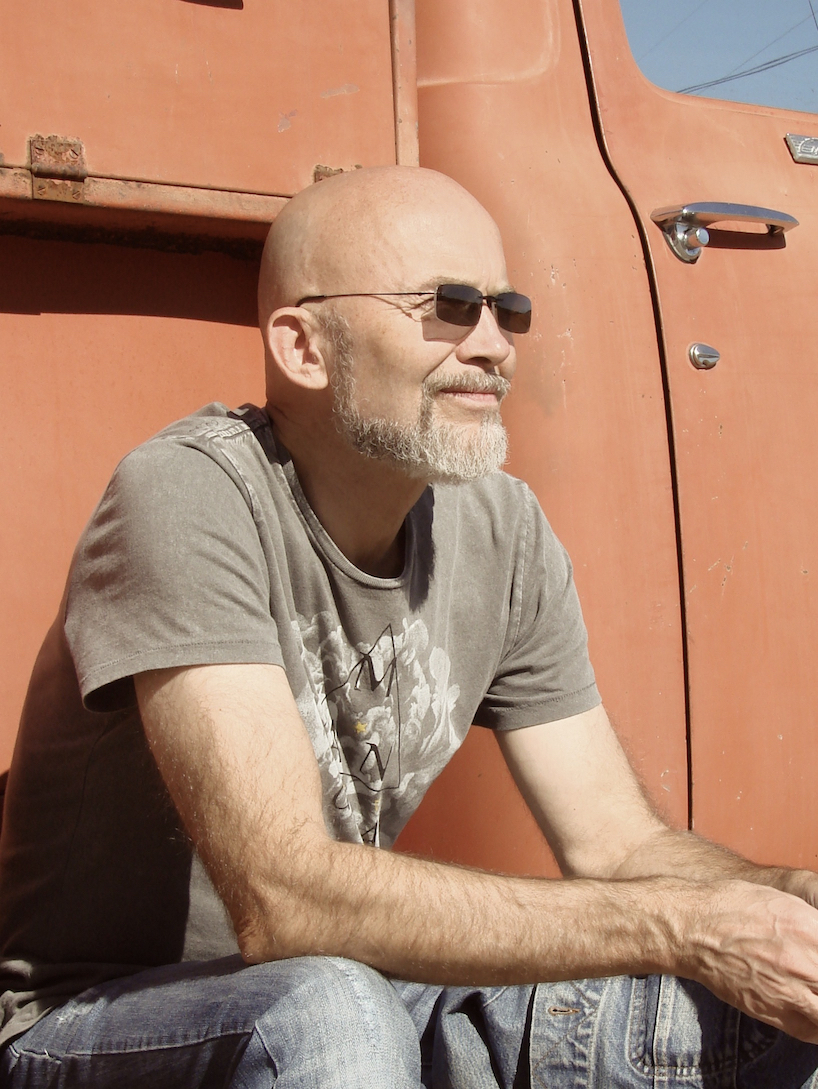 Author Deitrich Kalteis.Dietrich: There are some great books on the subject that filled in a lot of the details: Guilty of Everything by John Armstrong, Perfect Youth by Sam Sutherland, I, Shithead and Talk-Action=Zero, both by Joe Keithley helped relive those times. And there was Bloodied but Unbowed, an awesome documentary by Susanne Tabata. It’s jam-packed with clips, music and tales from that first wave of Vancouver’s punk scene. Then there were some firsthand tales. In fact, there was so much that could have been included, that I felt I had to be careful of what I did include so as not to slow the pace of the story.
There were many interesting details that I could have expanded on, from the self-published fanzines like Snotrag that kept a finger on the punk subculture, to the DIY recordings and local record labels that sprang up. One thing that I would have like to explore more was how the local scene seemed to line more with what was happening down the coast in San Francisco and L.A. than it did with what was happening in the punk scene in other parts of this country.
Whitehurst: You have written crime stories set in a number of settings, San Francisco at the turn of the last century and Vancouver at the start of the punk movement, what era do you have your sights set on next for your next book?
Dietrich: Poughkeepsie Shuffle is complete except for some copy edits and is due out next year. It takes place in Toronto in the mid-eighties and centers on Jeff Nichols, a guy fresh out of the infamous Don Jail. He gets mixed up in a gun-smuggling ring operating from a used car lot. The outfit brings guns in from upstate New York, and Jeff’s a guy who’s willing to bend the rules to get on the fast track to riches, a guy who doesn’t let the lessons from past mistakes get in the way of a good score in the future.
The story’s set at a time when I lived there, and I knew it well. On recent trips back I’ve been amazed by how much the city has expanded and grown since those days, so there’s a little nostalgia in there for me.
Right now I’m working on a story set in the dust bowl days of Kansas. It a story about a couple coping with drought, dust storms and debt. And they’ve got some interesting, although not legal ways, of saving their farm from the banks.
Whitehurst: Imagining a gritty, beat-up HBO mini series of this book, who would you picture as the leads, particularly Frankie and Marty?
Dietrich: When I’m writing, I always picture my stories like movie scenes and my characters like actors. For Frankie del Rey I saw her as a punked-up Krysten Ritter with a touch of Patti Smith’s edge. Lose the French accent and Vincent Cassel could play Marty Sayles. That guy's got the look for it. And for Johnny Falco, I think a young Johnny Depp would be right.
– Bio: Dietrich Kalteis is the award-winning author of Ride the Lightning, The Deadbeat Club, Triggerfish, House of Blazes and Zero Avenue. Nearly fifty of his short stories have been published internationally, and he lives with his family in West Vancouver, British Columbia. Visit his website here .
August 22, 2017
A Steampunk Pardon
 The carriage moved quickly through the cobbled streets, but slowed to a creaking crawl when it entered Phoenix. Bridges swooped over the apex of the double-decker carriage once in the city limits, coming close to breaking the stove top pipe belching steam at its highest point. Those crossing the bridge when the large vehicle passed below recounted the story later that night over a shot of absinthe. Mothers clutched their children and rushed to flee, dropping their parasols and groceries, laborers gripped the copper railing, waiting to topple over. But the carriage trundled along without causing harm. Standing in a cloud of steam, those bridge -goers raised their fists and shouted their anger, but to no avail. They could see no one in the large vessel’s stained-glass windows.
Had it been in the sea, the carriage would have been more at home. It carried the appearance of a Man O War, but without sails of any kind, only large wooden wheels and paneled walls reinforced with iron rigging. Those who witnessed the vessel from the cramped, hot street level saw a name burned proudly on the stern, STEAM SHIP ONE. It made its way down the winding, cobbled interstate to the center of the city, where the forefathers erected a large copper phoenix, metal feathers and head pointed toward the heavens, as a reminder of that it is always possible to rise from ashes and be stronger for it. Every day at noon, the phoenix spouted a geyser of flame straight up. Some days, however, the smog of industry made even the flames of the giant statue hard to see. Today was one of those days. Within moments, Steam Ship One vanished into the brown haze.
But for those who saw it approach, the meaning was clear. The President had finally arrived to pardon their sheriff. The nation’s first mechanical leader, run by well-oiled gears and golden pistons, had been elected due to his inability to act in the political theater. The sheriff supported him, which meant protection from his enemies. There were those who said it would never happen, that the heat of Phoenix would melt his clockwork brain, but others knew better. The mechanical man could take the heat. He boasted of it often enough.
The pardon, hammered onto a tin sheet and branded with the presidential seal, meant their jailed lawman would be back on the street, free to unleash his reign of single-handed terror on the mute second class. They were the ones who stoked the fires, suffered the pits, cobbled the interstate, but never spoke. They were the ones who never crossed the bridges over the interstate, but they built it.
August 3, 2017
Noir at the Bar on Oct 20th, 2017

Picture yourself in a dimly lit room. A light bulb hangs from the ceiling, swinging slowly to and fro, as if an ethereal skeletal hand had reached down from the inky shadows and tapped it. Beneath the light are a series of faces with dark shadows for eyes and grim, black lines for mouths. The grimy bulb swings overhead. The faces are there, then swallowed by darkness, then appear again, under the dancing, pale glow. This assembly is here for one reason and one reason only. And there are laws against it.
When you imagine an evening of crime fiction called “Noir at the Bar”, that’s how I picture it going down. It won’t be like that. Well, maybe it will be. Who knows? Maybe it will go down like a tea party in a Hercule Poirot novel, or turn into a backstage party at the end of a Rage Against the Machine concert on the eve of a government revolution? Or we’ll pose like we’re trapped in a Hopper painting. Perhaps we’ll just compete for who does the best “drunk Sarah Huckabee Sanders” impersonation?
My money’s on Dietrich Kalteis.
Dietrich is an amazing author and one of many who will take part in the Friday, October 20th, Noir at the Bar at the Press Club in Seaside, California. Starting at 7 p.m., and emceed by Janice Blaze Rocke, this event features not one or three, but nine incredible writers all in one place, and all ready to spill the beans on crime fiction. Authors for this event include Eric Beetner, SW Lauden, Tom Pitts, Rob Pierce, Dietrich Kalteis, John Lansing, Sandra Balzo, Joe Clifford and myself. Old Capitol Books will bring books to buy and the Press Club will provide the rest. What’s not to drool about with this lineup?
The Press Club can be found at 1123 Fremont Boulevard, Seaside, CA. They say the road construction will be done by then, so let’s celebrate. If it isn’t, come anyway, just bring a flask.
July 13, 2017
5 tips for non-fiction, photographic histories

There are plenty of paths to success when on deadline. Some prefer to wait until the last minute, as pressure makes them produce. Others prefer the slow boil, working at a snail’s pace until it all comes to a head, but only one of these techniques helps when it comes to historical non-fiction, particularly the sort that require finding a lot of photographs and documents from a certain era. If you have to work with others, particularly organizations, start early. You never know what will happen, photos can be misplaced, just plain gone, and the documents you thought would help may prove lifeless.
With my Pacific Grove Museum of Natural History book, forthcoming from Arcadia Publishing, I lit a fire under my chair the week I got back the contract. As the Museum book marks my third Images of America challenge, I thought I would share five tips to making the process an easy one.
1. Be confident you can get the materials and photographs you need before submitting a proposal. This way you’ll go into the work without a forehead vein popping out. Keep a bibliography document open at all times so you can add your sources without a drop of stress sweat.
2. Start writing. Write early and write more than you need. I tap out a longer chapter first, then take a weed whacker to it. Stray bits of information can always be saved for the photo captions, where I believe the meat of the research resides. Copy and paste those bits to a separate document for later use. I create individual documents first, then marry them to a master doc at the end.
3. Pay attention to the important deadlines. With Images of America, there are usually a few of them. Try to get there early. You’ll feel good about yourself.
4. Spend the clock talking to the people who know a great deal about the subject. Buy them dinner if they seem up for it, or just smile warmly, but make sure they’re included. This way they’ll remember you over the coming months when they unearth something that would be cool in the book. Answer their emails, send them emails, just talk to them.
5. Be a photo wizard. You don’t need a wand, just a lot of pics. Gather more than you need, maybe a hundred more, or maybe just bunches more. It gives you a chance to weed out the so-so pics for the strong ones. In the newspaper business, editors prefer faces to be as big as a quarter, or failing that a dime, but any historic photograph that gets your heart hammering is a good photograph.
June 8, 2017
COMING IN 2018: The Pacific Grove Museum of Natural History
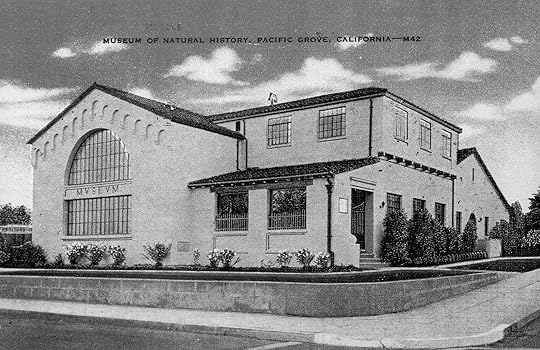 An old postcard depicting the Museum of old. My desk is on the second-floor window corner facing the camera, with a view of the bay!Imagine the world before the Internet, before modern medicine and modern science as we know it today; pre-cars, pre-phones, pre-fast food, and you’ve got the world that saw one of the first natural history museums on the California coast. The
Pacific Grove Museum of Natural History
has been a part of the Monterey Peninsula since 1883, nearly as long as Monterey County has been in existence.
An old postcard depicting the Museum of old. My desk is on the second-floor window corner facing the camera, with a view of the bay!Imagine the world before the Internet, before modern medicine and modern science as we know it today; pre-cars, pre-phones, pre-fast food, and you’ve got the world that saw one of the first natural history museums on the California coast. The
Pacific Grove Museum of Natural History
has been a part of the Monterey Peninsula since 1883, nearly as long as Monterey County has been in existence.I’ve been lucky enough to work for the Museum since 2014 and am happy to announce I’ll be depicting the history of this amazing place through writing and more than 150 historic photographs. In the short period of time I’ve been here, as the awesome story of this place soaked in, I’ve realized just how lucky I am to be a part of this local institution. History has always been a thing with me, no matter if it’s the history of 1940s and 1980s pulp novels or the history of Tusayan and Williams , Arizona. I daydream about what it would be like to live and thrive in an era where things moved a little slower, but were harder at the same time - for nearly everyone. I can’t think of any writer/bibliophile who hasn’t dreamed about living in a small cabin near a stream or rocky shoreline.
History is a learning curve without a shelf life. It’s a way for us to see what’s happened, good and bad, and carry it with us as we move forward. At the museum, history is preserved with just such a mission in mind. Taxidermy, geology, plants, Native peoples; they’re all there.
“The Pacific Grove Museum of Natural History”, will be published in 2018 by Arcadia Publishing in their Images of America series. It’s an exciting project, which I expect to have completed by October, and I’m very thankful to be the one who gets to write it. From the first Museum building to the arrival of Sandy the Whale, this book is long overdue.
April 30, 2017
REVIEW: Steampunk boils beautifully in The Gaslight Girl by Hargrove Perth
 Steampunk is a subgenre to behold in the science fiction and fantasy world. It’s the stuff of clockwork wonder and corseted amazement and, for many; it’s something readers can’t get enough of. Many, however, don’t quite get it. Exactly what is steampunk?
The best way to describe the steampunk life is to imagine a futuristic world with fantastic mechanical creatures, airships and weaponry, but rather than advance technology, picture it made with iron and copper, gears and cranks, and powered with steam. Picture men and women of the future, but in a setting more closely comparable to old London, of the time when Sherlock Holmes and Jack the Ripper skulked around.Author Hargrove Perth has steampunk down. In her fast-paced novella, The Gaslight Girl, she’s taken a story familiar to all of us and injected hot steam in its veins. The Cinderella story, full of despair and ugly-on-the-inside stepsisters, forms the bare bones in this the story of young Halloran Frost. Cinderella she is not, for this girl is armed, corseted, and chock full of attitude, not to mention the heir of her father’s gas company and his dark secrets. The Gaslight Girl has all the gears, mechanical creatures, airships and steam-fueled spirit that have enamored readers to the genre across the world. Perth’s novella is part one of the Decisive Devices series, with more excitement sure to come. This exciting ride is surely not over yet.For those with a taste for authors such as Gail Carriger and Kevin J. Anderson, not to mention the classics by H.G. Wells and Jules Verne, you’ll want to get to know Halloran Frost and Perth’s Decisive Devices series.Learn more about Hargrove Perth here.Order The Gaslight Girl here.
April 21, 2017
Review: Abandon All Hope grabs you by the throat
 Abandon All Hope: Gate 1: Book 1, by
Lizzi Cruz and Royce Steele
, is a grabber with blue collar hands.
Abandon All Hope: Gate 1: Book 1, by
Lizzi Cruz and Royce Steele
, is a grabber with blue collar hands.The book features an assortment of nine fast-paced rural horrors, similar in spirit to the early tales of Stephen King, but with a dash of Joe R. Lansdale thrown in for good measure, not to mention a few modern themes.
Hosted by the quirky, fiendishly funny Nefaris Rouge (think the Crypt Keeper), Abandon thrusts readers into a gripping, dark adventure chock full of screams and gore. Be prepared for anything in this short, dynamic read. The first in a planned nine-part saga (there are a lot of gates when it comes to horror, or levels, or whatever Dante-esque terrors ones prefers to call it), book one is a captivating start to what looks like a promising new horror series. I particularly enjoyed the short story “Mutha Bugga” for its simple exposition, memorable (and idiotic) main character, and that damn blue chair. It took a while for the heebie-jeebies to clear my mind after reading that particular short.
This is a book that aims to shock and aims to please fans of old school fright.
Cruz and Steele do a damn good job of it.
Buy the book here !
March 10, 2017
New short story on Spec Fics
 Looking for a little adult fun in the beatnik super hero genre? "Stare and Get Off" is focused on just that, with a sprinkle of nihilism thrown in for good measure. Check out the story over on Spec Fic. It's a little NSFW...Read it
here
Looking for a little adult fun in the beatnik super hero genre? "Stare and Get Off" is focused on just that, with a sprinkle of nihilism thrown in for good measure. Check out the story over on Spec Fic. It's a little NSFW...Read it
here