Rob Steiner's Blog, page 4
March 7, 2013
Telecommuter Blues
 Last week Yahoo CEO Marissa Mayer launched a brouhaha regarding telecommuting by mostly banning the practice at Yahoo (turns out that genuine abuse may have prompted the decision).
Now Best Buy has ended its ROWE (Results Only Work Environment) policy for corporate employees for much the same reasons as Yahoo.
I’ve been a full-time telecommuter for six out of the last ten years, so I thought I’d weigh in:
Successful telecommuting requires managers to communicate clear, measurable goals that telecommuters must attain. If those goals are not being met — as with any office employee — then it’s incumbent upon leadership to follow up with the employee to find out what happened. If telecommuting employees consistently do not meet their goals, then fire them just like any office employee.
Employees can “slack off” in an office just as well as from home. I used to work in an office cubicle next to guys who’d spend hours each day talking about their fantasy football line-ups; the ladies on the other side of me grumbled about the latest singer to get booted off American Idol. Working in an office does not stop “slacking.”
It goes back to expectations and goals — if telecommuters are meeting and/or exceeding their goals, then why should it matter if they spend a five hours a day on Facebook? And if the goals/expectations are too light, then shouldn’t managers adjust them to fill out the employee’s day?
Yahoo says they need “all hands on deck” for face-to-face collaboration. This is the flimsiest of their excuses, especially from an internet company. There are plenty of thriving companies today with remote employees who collaborate just fine. Again, if collaboration is not taking place among telecommuters, then that is a failure of leadership and imaginative use of existing technology, not telecommuting.
However, telecommuting is not for every one or every job. Some people are more productive in an office setting, while others are more productive when they work quietly by themselves. Some jobs require office “face time,” while others can be done at home. It should be up to managers and employees to decide which situation fits the job and the person.
Telecommuting is a valid work option for managers and employees who agree to clear expectations and goals. Banning it for everyone is lazy policy and makes a company look desperate.


February 19, 2013
USCF’s fancy new cards
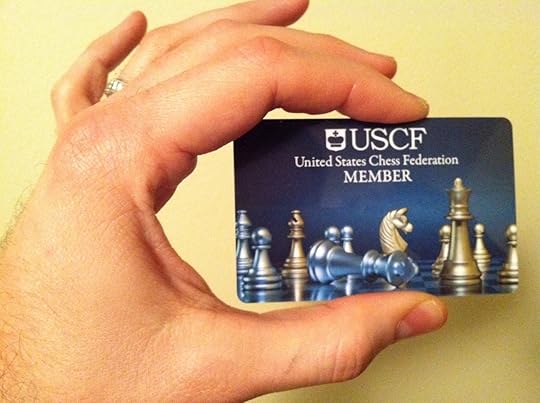
My new US Chess Federation membership card came in the mail today. I’ve been a member since 2004 and they always gave us little, perforated paper cutout cards.
But now, behold, they come in plastic! So proud to be a card carrying nerd.
February 14, 2013
ZERVAKAN – Published!
 It’s been a long time coming, but my latest fantasy novel, ZERVAKAN, is now published. It’s a story about faith versus science: Are they mutually exclusive, or two sides of the same coin?
Here’s the summary:
Reason and science gave the Recindian Compact wonders like steam engines, telegraphs, and gunpowder. The world had order. It made sense.
Until one night two multi-colored bands of light split the sky, spanning the horizons like rings around the planet. Soon after, unnatural storms assaulted the Compact’s cities. Whispers spread of ghoulish creatures haunting Compact forests. And then a message from a legendary race called the Mystics – “ally with us to fight the growing evil, or we all perish.”
The Compact’s desperate leaders turn to disgraced history professor Taran Abraeu. Taran spent years searching in vain for the ancient healing magic of the Mystics to save his dying daughter. His family and colleagues once mocked him. Now his research might save them.
When the Compact asks Taran to accompany a secret delegation to the Mystic homeland, he is swept up in an adventure that forces him to fight a horrifying enemy that only he among all his people can comprehend.
ZERVAKAN is available in print and eBook ($1.99 eBooks for a limited time!).
Paperback | Kindle | Nook | Apple iBooks | Smashwords
Want a free eBook? Go to Smashwords.com, enter the coupon code FV93C, and then download your preferred format. All I ask in return is an honest review on Amazon. Reviews are gold to authors, and even just a few lines helps.
Prefer print? How about a coupon for $6 off the price of the print version? Go to CreateSpace.com and enter the coupon code PCW5M8Y3 upon purchase. Same deal as with the free eBook — just write an honest review on Amazon.
Hope you all enjoy the book.
February 12, 2013
December 5, 2012
Sports Welfare
This info-graphic begs the question I’ve had for years – why do taxpayers have to fork over more money to build the stadiums of billionaire team owners than the billionaire team owners?

Via PopSci.com.
December 3, 2012
Book Review: Forged in Death by Jim Melvin
[image error]Forged in Death, the first of six books in Jim Melvin’s Death Wizard Chronicles, starts out with a scene from a claustrophobic’s nightmare – Torg, the Death-Knower and king of the Tugars, is imprisoned by the evil wizard Invictus at the bottom of a cold, dark pit bored hundreds of feet into a mountain. He can’t stretch out because the pit is too small, and he can’t lean against the walls, because they’re enchanted with flesh-burning magic. He either has to stand or curl into an uncomfortably tight fetal position.
We’re only in the prologue, and the book is already giving me the willies. And that’s a good thing.
Torg eventually escapes the pit and embarks on an Odyssey-like journey back to his desert home to stop Invictus from enslaving the world of Triken.
Jim Melvin’s world-building was at once fantastic and logical, from the unique human cultures to the strange twists on traditional monsters. It’s obvious Melvin put a lot of thought into the ecosystems that support his world. For example, Torg discovers a race of monkeys that live deep underground. How do they sustain themselves? By carving meat off a gigantic tentacled monster that inhabits the caverns, like microscopic mites on human skin. How does the monster survive? By eating the monkeys. It’s an elegant symbiosis, and Melvin portrays other unique creatures similarly throughout the book.
Forged in Death has a non-traditional magic system – Torg enters a state of temporary death, feeds off the power of the afterlife, and then returns to his body magically recharged (which is why he’s called a “Death-Knower”). The evil wizard Invictus, however, gets his power from the sun. This is a switch from most fantasies, which usually have the good guys feeding off the sun and the villains using death for their evil schemes.
The book also felt like a primer for real-world Theravada Buddhism (something the author acknowledges). The characters, Torg in particular, describe the principles behind meditation, karma, the eternal quest for enlightenment, and reincarnation. As one who’s ignorant of Buddhist scriptures, I now want to read up on the subject to learn more.
I do have some quibbles with an otherwise outstanding novel.
The hero Torg was a likable character and an all-powerful wizard. But at times he seemed too good and too all-powerful. He won every battle unless he chose to lose, like when he allowed his enemies to throw him into the pit. I wanted Torg to fail or make more mistakes, and then watch him overcome those failures to become a different man by the end of the book.
Also, Forged in Death was a cliff-hanger book. I’m not a fan of the style, but it’s a personal nit-pick of mine and not anything Melvin did wrong. Readers who enjoy cliff-hanger endings, however, will see no problem with it.
Forged in Death was beautifully written and a worthy addition to the epic fantasy genre. I hope to see Torg challenged a bit more in future books. I also look forward to learning more about Invictus, whose brief appearances painted him as an “interesting” villain. And the final battle between Torg and Invictus — Triken’s two most powerful wizards — promises to be truly world-shaking.
Forged in Death is available on Amazon.
Cross-posted at The New Podler Review of Books.
October 15, 2012
Cover Story
A great book cover inspires readers to ask the question the book seeks to answer. Since my design skills scream “amateur” (to put it kindly), I hired professionals to design great covers for two books I will publish in 2013. I think both designers did a fantastic job conveying the question of each book, and it was a pleasure to work with them both.
ZERVAKAN
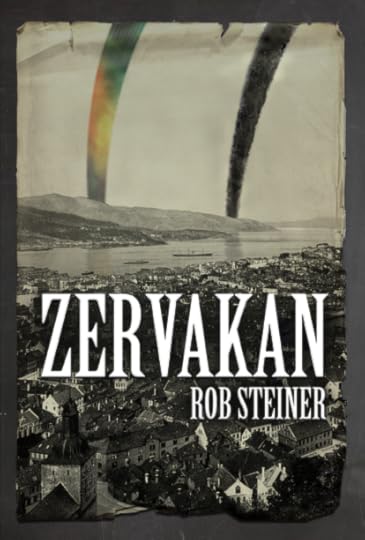 ZERVAKAN is a fantasy novel set in a world with 19th century technology — steam engines, guns, telegraphs — where two magical bands of light suddenly appear in the sky one night, spanning the horizons like rings around the planet. A scientist and a priest must discover the mystery behind the rings before their world is consumed by an evil they’re not ready to fight.
Given the setting, I wanted a cover with a 19th century feel, but one that said “fantasy” and not “historical.”
TJ Lomas brought my vision to life. He found an old photograph and added two bands of magical light on the horizons. He added color to the bands so they stood out. It’s simple, but elegant. It grabs your attention and makes you ask, “What’s with those two bands of light?”
ZERVAKAN will be released in January 2013, but you can read the “pre-published” version on on this site.
UMBRA CORPS
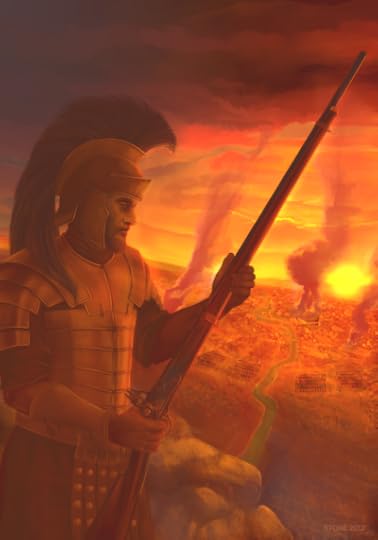 UMBRA CORPS (a working title) is an alternate history/sci-fi novel about a Roman Republic that survives its true-life fall and reaches the stars. A star ship crew of rogues must help the 12-year-old Consular Heir escape Rome with the terrifying secret behind the Republic’s god-like technology.
For this cover, I worked with professional illustrator Stone Perales. My idea was to combine something iconically Roman with an anachronism that told readers it was alternate history.
The result: Mark Antony holding a musket while looking down on his Legions as they sack Rome.
Stone did a wonderful job capturing the ethereal look on Antony’s face and the subtle detailing of his armor. My hope is that readers will see the cover and think, “Why is that ancient Roman soldier holding a musket? I’ve got to read this book to find out!”
UMBRA CORPS will be released in 2013.
Cross-posted at New Podler Review of Books.
October 5, 2012
ZERVAKAN – Chapters 49 and 50 – FINAL CHAPTERS
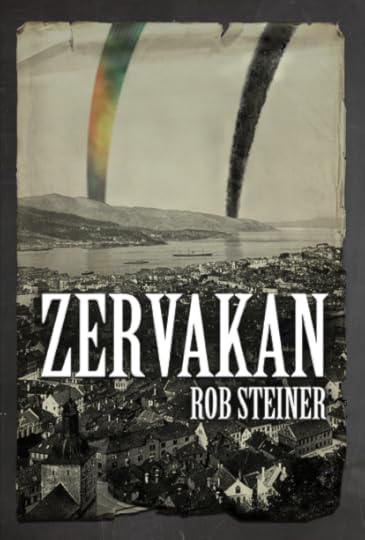
Cover by TJ Lomas.
So here we go with the final two chapters in my fantasy novel ZERVAKAN. I can’t begin to convey my appreciation for all the comments you sent me and typos you fixed. Thank you, thank you!
My goal is to publish the book sometime in January 2013. The chapters will remain here until then, but once I publish the book, I will remove all of the chapters from this site. So if you haven’t read them all yet, get cracking while they’re still free.
And feel free to keep sending me comments and/or typos while the chapters are still up. Those who spot a typo will get their names in the book’s acknowledgements. 
So once again, thank you all for your support and suggestions. This will be a much better book because of you.
ZERVAKAN
by Rob Steiner
Chapter 49
Taran stood across the street from his townhouse on University Avenue, beneath the canopy of the café two blocks down. It was a black night made even blacker by the drenching rain that had been pouring all day and most of yesterday. Science Ministry experts assured today’s newspapers that this weather pattern was normal and not like the devastating tornado of four months ago.
Taran knew they were right.
The steam trolley chugged up the hill from Taran’s left, and then stopped a block down from the townhouse. He saw that a pro-Edoss poster had been hastily glued to the door near the back of the trolley: “Free Dylan Edoss!” it proclaimed in large black letters on a white background.
Taran had read in Edellian newspapers that Edoss had been arrested on treason and heresy charges as soon as his ship from Turicia had docked in Levaken. It was a heavy-handed move for Adella Kiricia that seemed to be backfiring. While most Compact citizens—with the exception of the Orlenians—supported Edoss’s removal from office, ordering Edoss arrested and held without trial for simply traveling to the Beldamark had most people scratching their heads. For if Edoss had been on a heretical fool’s errand, according to Kiricia, then why was she so desperate to stop him from telling his story? It made some curious enough to read Edoss’s smuggled—and illegal—writings from his cell in Granthahm Prison in Calaman.
Now a small but vocal group was gluing posters all over the city, and had even started publishing a newspaper on Kiricia’s anti-Constitutional arrests of Edoss’s supporters, along with Edoss’s descriptions of the Tuathans. Taran had read several issues of the newspaper but saw nothing regarding the current location of the Tuathans. All Edoss said was that they were safe and “girding themselves for the coming war with Angra’s servants.”
Gas lamps illuminated the interior of the trolley, showing it empty but for two men with sooty faces and a single woman. When the trolley stopped, the woman exited with a brief smile for the trolley driver. Once she stepped off, the trolley steamed up the hill, passing Taran with a warm, wet breeze and the harsh sent of coal.
Taran watched Adhera walk wearily up the sidewalk to the house, her black umbrella held above her head. She entered the house, and then a few minutes later, the nurse who had been watching Mara left, opening her own umbrella and walking back the way Adhera had just come.
Taran jogged across the street, ignoring the soaking rain, and took the steps to his porch two at a time. He was about to open the door, but paused. It’s been three months, he thought. Will she even let me in?
He knocked. A minute went by. Then the circular greeting hole in the center of the door opened, and Taran could see Adhera’s eyes through the metal bars.
“Hello, Adhera,” he said.
She stared at him for several moments, the expression around her eyes unchanging.
“Can I come in please? The weather is—”
The greeting hole slammed shut. Taran was about to knock again when he heard the bolts on the door pulled back. Adhera opened the door, and then walked away into the living room without a word. Taran entered, removed his jacket and hung it on the coat pegs next to the door. He walked into the small living room where Adhera sat in the rocking chair she had used to nurse Mara after her birth. Her arms were folded, and she stared at the smoldering embers in the iron wood burner in the corner. Taran sat down on the couch across from her. The living room was so small that their knees were less than a pace apart.
“You’re working two jobs?” he asked.
Without looking at him, she said, “Three, actually. My Pathist Teacher credentials have been revoked. The only work I can find is house cleaning or grocery clerkships. Nurses aren’t free, you know.”
Taran sighed. “I know this is a feeble thing to say after what I’ve put you through, but I’m sorry, Adhera. I’m so sorry.”
She finally looked at him, her eyes glistening. “Sorry? You’re right. It is feeble. They told me you were dead. Never told me how, or where, just that you died a ‘hero.’ Some comfort. It crushed me, Taran. I thought all my love for you had died when you refused Mara the Mercy, but I guess it hadn’t.”
She shook her head. “And then you send me that wiretype two months ago saying you’re alive, saying that you would be home in another week.”
“I know. I was…delayed,” he said.
After he had sent Adhera the wiretype, he had gone to the Sydear train station to book passage to Calaman. Before he reached the ticket counter, he saw one of the clerks putting up a poster with his face on it on a bulletin board behind the counter. The poster said he was a “known associate” of the “revolutionary” Dylan Edoss, and the Compact was offering an unprecedented 100,000 han for information leading to his capture. He ducked out of the office. He had tried getting onto wagon trains, but found his face staring back at him at their ticket offices. He was forced to walk back to Calaman, hitching rides on private wagons that were traveling south. To avoid Edellian authorities—and Angra harrowers—he had stuck to roads that paralleled the Trans-Recindian Railroad, then turned east at the Perla Mountains, crossing the Komenda Steppes and entering the Compact through the Burrick Pass. He had not seen any sign that Angra harrowers had visited the towns through which he passed.
“I tried to get here as fast as I could,” he said. “And what I said in the wiretype is true. I know how to cure Mara.”
“Mara is receiving the Mercy next week,” she said, as if it were a simple treatment for a stomachache. “You are officially dead, so I have sole authority to request it.”
“Adhera,” Taran said, leaning forward. “I can heal Mara. Please let me see her.”
Adhera shook her head, and then laughed mirthlessly. “Even now you won’t give up your fantasies. I can’t live on wishes, Taran. Nor can Mara.”
“Then let me see her so I can prove it to you. At least let me see my daughter one last time before you send her to the Pathists.”
Adhera stared at him, and then sighed. “She’s finally sleeping, so be quiet.”
They walked up the stairs together and stopped at Mara’s room. The door was slightly ajar. Upon entering the room, the familiar smells of vomit and stale urine assaulted him. Mara lay on her back, dressed in her usual white sleeping gown. She had pushed her blankets to the end of the bed, likely during one of her episodic convulsions. Adhera went in and pulled the covers up so that they covered Mara’s thin frame, and then tucked them gently beneath her chin. Mara stirred a bit, turning her sleeping face toward Taran. A thin line of pink drool streamed from her mouth, and Adhera wiped it with a clean handkerchief. Taran had to hold back a sob when he saw how gaunt and pale Mara’s face had become in the four months he had been away.
Once Adhera had placed the blankets, Taran sat down softly next to Mara. “Oh, my sweet girl,” he said.
Without raising his hand, Taran reached for Angra. The chaotic power filled him instantly, and he sighed with pleasure. It had been months since he had Wielded Angra or Ahura. Angra’s surging currents raged in him, almost making him forget what he wanted to do. He put his hand on Mara’s chest and searched her body for the organisms that were killing her. They were buried deep in her blood, her muscles, her bones, and her brain, so he had to delve further than he had ever gone with the harrower back in the Beldamark.
Mara’s chest heaved. Her eyes sprung open and her back arched. He was aware of Adhera yelling at him, telling him to stop what he was doing, but he screamed something back to her, not knowing what it was, only caring that it made her leave him alone. Mara thrashed about in the bed, grunting and moaning, her eyes rolling into her head, but Taran went deeper still.
There.
He found the Blood feasting on her spinal chord and its connections to her brain. Now that he had them, he willed them all to die. They screamed at him most pleasingly before withering away to nothing. Their destruction seemed to fill him with more power and a sense of satisfied vengeance.
Now kill the rest of them, the dark voice said, speaking for the first time in months. Start with the girl, and the power you feel now will be like a breeze to a tornado.
Taran shut his eyes tight. “Ah…”
Do it! the voice screamed.
“Daddy?”
Taran opened his eyes and let go of Angra. Mara looked up at him. Her eyes were clear and focused. For the first time in six years, they were clear and focused.
Oh, Mercy, please let it be true…
“Daddy,” she said again, “why do you look so old?”
Taran felt a smile spread across his face, then a laugh, and then hot tears streamed from his eyes as he hugged Mara so tight that he had to let her go when she gasped.
“Mara…?” Adhera said from behind Taran.
Taran released Mara and turned to Adhera. She gave him a questioning look. He nodded. “It’s gone. The Blood is gone.”
A choking sob escaped her throat. She sat on the other side of the bed from Taran and hugged Mara tight.
“What’s wrong, momma?”
Adhera laughed, and said, “Nothing. I’m so happy. I’m so happy…”
When Adhera pulled back, Mara wrinkled her nose, and then asked, “Why does it smell so bad in here?”
Taran said, “You’ve been sick a long time. Do you remember any of it?”
Mara was thoughtful for a moment. “I had a really bad headache after we had iced cream…and that’s it, until waking up right now.”
Adhera said, “You can sleep in my room until we clean out your bed tomorrow.”
Then Adhera looked at Taran. “What…what did you do?”
Taran sighed. “It’s a really long story.”
She stared at him for a while longer, and then her eyes widened. “You have to leave.”
Taran nodded. “I know. I can’t stay in the Compact too long—”
“No, I mean you have to leave right now! I…I wiretyped the constables when I saw you at the door. They’ll be here any minute.”
Taran jumped up, went to Mara’s window, and parted the drapes a sliver. He scanned the dark street to the left and the right. He saw no one—
Wait. In the dark shadows of the grocer’s shop across the street and three doors down, Taran saw the faint outline of a man. Then he saw two constables round the corner and stride toward the house. Both nodded to the man in the shadows.
“I’m so sorry, Taran,” Adhera said. “They told me to contact them if you ever came home. If I had known you could really do…do what you did, I never would have wiretyped them. How could I have known?”
Taran turned to her. “It’s all right. You didn’t know.”
He went over to Mara, who was trying to get up, but her muscles were so weak from almost six years of lying in bed that she shook with the effort. Taran gently pushed her back down to the bed, and then hugged her again.
“I have to leave for a while,” he said. “But no matter where I go or how long I’m gone, know that I love you more than anything in this world. Do you believe me?”
Mara nodded her head as tears began to glisten in her eyes. “Why are you leaving?”
“Momma will explain it to you, but I have to go now.” He stood, backed away to the door so that he could look on his daughter for as long as possible.
Mara raised her hand in a feeble wave. “Goodbye, daddy.”
“Goodbye, Mara.”
Adhera followed Taran as he raced down the stairs. When he was halfway down, he stopped when he heard knocking at the front door.
“The alley?” Adhera asked.
“They’ll have that covered, too.”
He looked at Adhera, said, “I’m going to do something that will seem…unbelievable. Promise me you won’t panic.”
She gave him an irritated look. “After what you just did, you think there’s anything you can do now that would surprise me?”
Taran grinned. “I never stopped loving you, Adhera.”
Her eyes brimmed with tears. “There are so many things…”
The knocking came again, louder this time.
Taran said, “I’ll contact you when I can.”
Without raising his hand he reached for Ahura. The joy and peace that flowed through him was a calm river on which he could relax and let his fear float away. He searched for the right combination of Air and Spirit to create the illusion around him. When he found the Aspects, he molded them together and draped them over his body.
Adhera gasped. “Taran?”
The illusion stifled his voice as well, so he could not answer her. In response, though, he continued down the stairs, hoping the creaking steps would let her know where he was.
It worked. She followed him down the stairs, and then went to the door, where the constables knocked a third time. Opening the door, she said, “Thank you for coming, constables, but I’m afraid he left already.”
Taran stood in a corner of the room, watching the constables over Adhera’s shoulder. The gas lamps on the street illuminated their faces enough that he could see them give each other doubtful glances. One of them said, “Whose wet rain coat is that on the peg behind you?”
“My husband’s,” Adhera said without hesitation. “I used it tonight. It’s much roomier than my old coat.” She took a step back and said, “You’re welcome to search the house, if you’d like.”
They looked at each other again, and the first one said, “Thank you, ma’am, we would.”
They both entered, wiping their feet as best they could on the floor mat, then split up, one heading for the stairs and the other heading toward the kitchen and Taran’s old office.
“Be sure not to disturb my daughter,” Adhera whispered after the constable heading to the stairs. She continued to hold the door open despite the damp, chilly air rolling in. Taran took the hint and stepped quietly out the door and into the rain.
As Adhera shut the door, she whispered, “I love you, too.”
The door shut with a click, and Taran heard her muffled voice talking to the constables.
Taran glanced up and down the street. The man in the shadows of the grocer’s entry was still there, so he walked in the opposite direction. He maintained his hold on Ahura until he had rounded several corners and was over a mile from his house. He paused at an empty trolley stop shelter and waited there until a trolley chugged up the hill from the east.
Just as he remembered, releasing Ahura was like falling through the ice and into a cold, hard world. But this time, the worry and fear that had once greeted him was gone. It was the same worry and fear that had plagued him for the past six years.
Mara is going to live.
The trolley stopped in front of the shelter, and Taran stepped on. Neither the trolley driver nor the two other passengers gave him a second glance, though Taran was without a coat and soaked to the skin from the rain. He sat down in the back of the trolley and smiled at his reflection in the glass.
Mara is going to live.
He knew he had to leave the Compact, that he would most likely flee to the Wild Kingdoms to get away from the Compact’s long reach. He had no idea what he would do then, nor how long he would run.
But none of that mattered now.
Mara is going to live.
For the first time in six years, Taran Abraeu was happy.
Chapter 50
“Karak.”
Karak Frost opened his eyes and focused on Savix’s smiling face.
“Welcome back, my Zervakan harrower.”
September 28, 2012
ZERVAKAN – Free Fantasy Novel – Chapter 48
Cover by TJ Lomas.
I’m posting a chapter from my latest fantasy novel for free every Monday and Friday (click Zervakan above for a synopsis and to start from the beginning). It’s in a “pre-published state,” meaning you might find the occasional spelling/grammar mistake. If you do, please leave a comment below or email me at robsteiner01 [at] gmail [dot] com.
If you’re uncomfortable getting something for nothing, you can hit the PayPal Donate button in the Tip Jar section to the right. If you donate more than $3, I’ll send you a non-DRM ebook once the book is published (summer 2012). If you donate more than $20, I’ll send you a printed copy.
Thanks, and I hope you enjoy it!
ZERVAKAN
by Rob Steiner
Chapter 48
“Now try what I just showed you on my harrower,” Ladak said, pointing to the blank-faced Tuathan beside him.
Taran retained control of the Angra tendril, and placed his left hand on the heart of the gray-faced harrower. He felt the raging torrent of Angra consume his body, mind, and heart, but through the exhilaration, he maintained his focus.
“The human body,” Ladak said from beside Taran, “is infested with bacteria. With Angra’s help, we can find them and destroy them.”
He used the Aspects of Earth and Spirit to search for the organisms Ladak described, bacteria that maintained life and distributed death. His search through the harrower’s body was like sticking his hands into a decomposing corpse—it left Taran nauseous, but he continued the search. Where were they…?
There. The harrower’s Tainted body still retained enough of its former biology to sustain the bacteria it once held in life. Taran narrowed his focus on the bacteria in the harrower’s small intestines, and then…strangled them. He felt as if he were using his own hands to kill each one of the millions of bacteria swarming about in the harrower’s gut. When he could find no more, Taran opened his eyes and reluctantly released Angra.
Ladak looked at Taran. “Even killing something as small as bacteria makes one feel like a god, yes?”
Mercy help me, it does, Taran thought. But he did not have to say anything for Ladak to give him a knowing smile. “Perhaps you will become one of us after all.” Ladak turned his head slightly. “And it looks like you will have a chance to prove it right now.”
His right hand shot into the air and, simultaneously, his left hand pointed to the woods next to the road. Angra struck Ladak’s hand as fast as lightning, and Fatimah was pulled out of the woods, landing with a hard thump at Taran’s feet.
Ladak bent to one knee and lifted Fatimah’s chin with his fingers. Her eyes held defiance, but her chin quivered.
“I could smell you from a hundred paces,” Ladak said.
Ladak turned to Taran. “Now prove you are a man of your word and kill your first Tuathan.”
Taran stared down at Fatimah. Yes, the voice said, kill her, and then kill them all.
“Taran,” Fatimah said. “You are not one of them.”
She tried to stand, but Ladak forced her down to her knees again.
“Is she right, Taran?” Ladak snarled. “Kill her now, or my harrowers will. After they kill you.”
All three harrowers raised their hands, black tendrils of Angra connecting to each one. Ladak also held an Angra tendril.
Kill her, the voice screamed in his mind. Then kill them all!
Taran looked down at Fatimah, the dark voice irresistible. He began to raise his hand—
A crack sounded from behind him, and the top of a harrower’s head exploded. The harrower staggered backward, but he righted himself again. Everything above his forehead was a mass of gray, glistening meat. More firing erupted from the huts near the road, and from the trees near the huts. Taran saw Shadarlak hiding behind trees and in the windows of huts, firing at the harrowers, hitting most of them but doing very little to knock them down.
Taran heard Ladak grunt. He turned and saw Ladak’s black coat disappear into the woods on the left. Without thinking, Taran ran past the harrowers—who were walking towards the firing Shadarlak, ready to call down lightning from the black clouds gathering above—and plunged into the woods after the Fomorian.
When the firing started—which seemed like an eternity after she had been pulled from the forest—Fatimah dropped to her belly and put her hands over her head, praying to Ahura that the Shadarlak aim was as good as they promised it would be. The harrowers were concentrating on the concealed Shadarlak, and walked right past her. Maybe they thought she was dead. She did not know or care, just as long as they left her alone.
She glanced about and saw Taran disappear into the forest. Ladak was gone, so Fatimah assumed Taran was chasing the Fomorian.
Or fleeing with Ladak?
She leaped to her feet and ran to where Taran had entered the woods. As she passed the tree line, she heard the first explosions of lightning strike the Shadarlak positions. Pine branches and thorny bushes scratched her face and clothes, but she gave another silent prayer that the Recindians would not pay too dearly for helping her retrieve Taran.
Taran raced through the woods, spotting Ladak’s black coat, then losing it for a time. He’d hear rustling over the lightning strikes behind him to see Ladak dart out of sight again. Taran kept on him, listening for Ladak’s footsteps over his own pounding heart and haggard breathing. Taran lost the sound of Ladak’s flight, but then picked up a fresh trail of blood in the dead branches and needles on the forest floor.
Find him and destroy him, the dark, mad voice whispered in his mind, or he will find and destroy you. And then go back and slaughter the Tuathans.
The forest ended abruptly before a clearing of saw grass covered sand dunes. Footprints in the sand led up and over one of the dunes. Fearing a trap, Taran stopped, and then made his way around the dune, along the edge of the forest clearing. When he rounded the dune, he saw Ladak laying on his back, the top of his head pointing down the hill as if he had fallen and slid on his back all the way down the dune. Taran saw a large stain of blood covering Ladak’s entire chest on the white shirt beneath his black coat. Ladak’s face and lips were as gray as one of his harrowers. He turned his head slightly and smiled when he saw Taran.
“All these gifts from Angra and I can’t even stop a bullet,” Ladak said. He started laughing, then coughed up a gout of blood.
Taran walked slowly to Ladak. Dark blood was caking the sand around Ladak’s back.
“Wouldn’t mind giving a bit of that Ahura healing, would you?” Ladak rasped, and then laughed again, which sounded more like a wet gurgle.
Taran picked up a piece of heavy driftwood next to his feet. He looked at it a moment, wondering how it had ended up so far from the seashore. He swung it high above his head with both hands as if he were about to chop a piece of wood, and brought it down on Ladak’s head.
The point of the driftwood hit nothing but empty sand. Ladak’s body had disappeared.
Taran did not have time to look around before the bolt of lightning struck the ground several feet from him. He did not hear the bolt, nor did he feel its electricity, but he felt his body flying through the air. He landed silently in a pile of dead seaweed. He stared up at the sky, all blue except for the small black, roiling cloud above him. The sun was higher in the east now, shining into Taran’s eyes if he looked through a break in the woods a mile away. Beyond that break, he saw the blue waters of the Gulf of Pagilah.
Ladak stepped in front of the sun, his tri-corner hat blocking it. Taran noticed that the sleeve of his left arm was stained with blood, slick and glistening.
Though Taran’s hearing was beginning to return, he could not make out Ladak’s muffled words. He did understand, however, Ladak’s actions. He raised his right hand to Angra, and a black tendril snaked down and connected with Ladak. He bent down and put his hand over Taran’s heart. Taran knew what was going to happen.
You were too slow, the dark voice said. You are now his slave.
Unable to do more than groan, Taran closed his eyes and pictured Mara’s smiling face in his mind, the kind of smile she used to give him before the Blood struck. At least his last free thought would be of his daughter.
Ladak’s hand abruptly lifted away from Taran’s heart. Taran opened his eyes to see Ladak staring at his hands and body with a horrified expression. A blue, glittering shield surrounded him. He raised his right hand to Angra again, but no black tendril appeared. Ladak cried out in frustration, and then his gaze stopped on the top of the sand dune.
Fatimah stood at the top, her hand raised to Ahura and a beautiful, multi-colored tendril caressing her body. She had cast a barrier around Ladak, and he was now powerless.
But no less murderous. Ladak picked up the driftwood Taran had used to dispel Ladak’s illusion, and scrambled up the sand dune toward Fatimah with a feral shriek. Seeing the danger, she released Ahura and ran back down the other side.
Taran found the strength to turn over and make himself stand. On shaky feet, he raised his right hand to Angra and felt the chaotic power fill him. As he remembered Ladak doing, he Wielded Air and Spirit to form a hand around Ladak’s torso, and then dragged the Fomorian back down the dune. Cursing and screaming at Taran, Ladak tried to stand, but Taran Wielded Ladak’s arms to his sides and his ankles together.
Still holding on to Angra, Taran stooped down to both knees in front of Ladak and snarled, “Now you’re my slave.”
Ladak’s terrified eyes bulged satisfactorily.
Yes, the dark voice said, use him! He will make a powerful harrower for you.
Remembering the Wield Ladak was about to use on Taran, he put his left hand on Ladak’s heart—
Gunfire filled the air, and several holes appeared in Ladak’s chest. Ladak grunted, and then a third shot shattered his skull, spraying blood into Taran’s face. Startled, Taran fell onto his back, losing his grip on Angra.
When he looked up again, Fatimah was striding down the sand dune with a smoking revolver in her hand. Then she aimed the gun at Taran.
“Do I have to kill you, too?” Fatimah said in a shaky voice, her eyes welling with tears.
Taran sat motionless, propped up on his elbows, staring at the surprising figure of Fatimah. She held the revolver in both hands pointed at his chest, her stance wide like a trained soldier. She must have studied the Shadarlak well.
“I saw what you were about to do,” she said, stopping five paces from him. “I had to kill him. Or you would have made him a harrower. And for the sake of my people and the sake of your soul, I could not let you do it.”
Taran closed his eyes and lay on his back. I’m every bit the monster Ladak was, Taran thought with despair.
Yes, the voice said. So take that gun from her and shoot her with it. Then wipe out the whole lot of them on the beach. They would do it to you…
Taran put his hands on his head. “Stop…”
Fatimah thought he was talking to her, because she said, “I will not. You told me just a few days ago that our choices and actions are what define us, not the stations we were born into. You are a Zervakan, and that means you can Wield Angra. But that also means you can choose not to.”
Oh, Fatimah, Taran thought, you have too much faith in me.
He opened his eyes and stared at her. Without raising his hand, he called on Angra, and a flash of the black power surrounded him in an instant. Before Fatimah could fire, he blocked the blood flow into her brain, causing her to pass out. She fell to the sand in a heap, the gun falling from her hands.
Taran stood and walked over to her. He turned her over so that her face was not in the sand, and then gently picked her up. He trudged up the dune, and then placed her in the sand at the top, in plain view of anyone coming from the forest or from the beach path to his right. Someone would come soon—if they were not attracted by the gun shots, then they would surely notice the Angra and Ahura trails that had been Wielded here. He removed some hair from her sleeping face.
“Good-bye,” he said. When he heard movement in the woods, he ran into the trees in the opposite direction.
“Sir,” Captain Laesh shouted to Dylan, “over here!”
Without the long legs of the Shadarlak, Dylan’s jog through the forest was more of a sprint just to keep up with his men. At least the low hanging branches were not as much of a problem for him as they were for the Shadarlak. Trade-offs, he thought.
When he reached the sandy clearing, he saw Laesh bent over Fatimah on top of a steep sand dune. Four Shadarlak stood around him, their eyes scanning the forest. Another eight Shadarlak surrounded Dylan.
Dylan trudged up the dune and stopped before Fatimah. “Is she alive?”
“Yes, sir,” Laesh said. “No wounds that I can see.”
Dylan scanned the clearing and saw Ladak’s body at the bottom of the other side of the dune. From the looks of him, he was surely dead, but after the things he had seen the past two months, Dylan was not going to take that for granted. He ordered three Shadarlak to train their revolvers on Ladak and fire if he should move.
“Any sign of Abraeu?” Dylan asked Laesh.
“Not yet, sir,” Laesh said. “There are a lot of tracks about, but we should be able to pick up his trail.”
Fatimah took in a sudden breath, and then opened her eyes. She blinked several times and squinted up at Laesh. She looked confused for a moment, and then her eyes widened.
“Taran,” she said. She tried sitting up too quickly, and then fell back on her elbows.
“Easy, miss,” Laesh said.
“Taran’s not here,” Dylan said. “What happened?”
Fatimah told him.
“I really thought he was going to kill me,” she said, her eyes brimming.
A single cannon blast rung out from the ships at Tsall’s piers. There were no other blasts, which meant the ships were calling him back so they could depart.
“Captain,” Dylan called out to Laesh, who was conferring with one of his lieutenants at the bottom of the dune. “Abraeu’s trail?”
“No, sir. His footprints end at the edge of the forest here. Beyond the tree line…there’s nothing.”
Dylan looked at Fatimah. “Can he just…disappear?”
Fatimah shook her head. “I do not know the extent of his abilities. Maybe. I never thought anyone could Wield without raising a hand to one of the rings, but he proved me wrong there.”
She put a hand on Dylan’s arm. “He does not want to be found. Perhaps it is best we not look for him. My people still want to judge him and they would certainly find him guilty, especially after what I witnessed.”
“But isn’t he dangerous? If what you say happened, should he be allowed to roam free?”
Fatimah slowly said, “He could have killed me. But he did not.”
She stared at him for a few moments, allowing the words to sink in, and Dylan nodded. He turned around and said, “Captain, we’re going back to the ship. Recall your men.”
“Yes, sir.”
Fatimah smiled. “He is the Zervakan. He will do the right thing.”
Dylan scanned the forest into which Taran had disappeared. “I hope so.”