
Cynthia Morris's Blog, page 63
May 14, 2012
Chasing Sylvia Beach News
I’m squirreling away at the Original Impulse office, preparing for the launch of my novel Chasing Sylvia Beach.
I feel kind of like the character in Mission Impossible. You know, how he’s working the touch screen, waving his hands here and there, manipulating all the pieces of his project.
It’s like that. Lots of pieces. Without the fancy technology.
I’m loving it, and want to make sure you know what’s going on. (But some of it’s still secret!) To answer some of your questions…
Where and when can I buy the book?
 Thank you for asking! I’m beyond delighted that you’re ready, willing and able to read Chasing Sylvia Beach.
The official launch day for Chasing Sylvia Beach is June 22nd. On that date you can buy the paperback from online booksellers. You can also get the Kindle and the iBook versions if you prefer reading that way.
In late May, I will be offering a special limited edition for insiders at the Chasing Sylvia Beach web site. Sign up for the salon and get advance notice about special offers.
Be among the first to have access to the limited edition and other news about Chasing Sylvia Beach!
Is there a launch party?
Why, yes, there is! You don’t think I’d let more than twelve years’ labor go uncelebrated?
Join us at the Denver Woman’s Press Club on Friday, June 22nd, 6:00 – 8:00 pm, with a presentation by the author at 7:00 pm.
Details for the Chasing Sylvia Beach Denver launch party here.
Is there a Paris launch?
Oo la la! I’ll be in Paris the first week of October, 2012. We’re planning some special events and readings – most of it free and open to the public.
In 2013 I’ll be leading a special writing workshop in Paris. Stay tuned for information about that.
When is the book signing tour?
I’m planning a super cool indie author book tour for 2013. Want me to come to your region? Drop me a note and let me know where you are and how you can help bring me there!
How can I help get the word out?
I’ll be doing a virtual salon this summer, starting in late June. Some people call this a blog tour, but I prefer the word salon. Yes, it’s the snobby francophile in me.
The focus of our conversation will be the themes in Chasing Sylvia Beach:
creative authenticity
the drive to express something meaningful
how our role models can influence our work and lives.
There’s a lot to say on these subjects!
To be part of the virtual salon, host me on your blog for:
Interview – written, podcast or video
Article by you about this subject, or a review of the novel
Guest post – we’ll look at how the themes of this novel relate to your readers.
Please contact me by May 18th to be part of the Chasing Sylvia Beach virtual salon this summer.
How can I spread the word if I don’t have a blog?
Here’s a brief blurb you can post to Facebook now if you want:
Author Cynthia Morris is getting ready to announce a limited edition (with art!) of her novel Chasing Sylvia Beach. Don’t miss it – join us in the members’ salon here: http://www.ChasingSylviaBeach.com
Or send out a tweet, if you’re that kind of person:
Cynthia Morris @originalimpulse to announce a limited edition of her Paris novel. Don’t miss it; join us in the members’ salon: http://www.ChasingSylviaBeach.com
Feel free to copy and share the cover of the novel you see in this post.
Thank you for all the support you give me for this project. it’s truly a labor of love done in community and for that I am grateful.


May 11, 2012
Read This: The Mother’s Wisdom Deck Giveaway
Are you mothering with soul?
How would you know if you were?
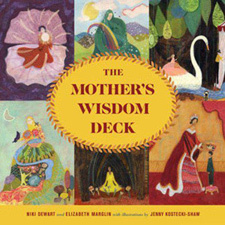 A gorgeous new card deck helps mothers slow down, take a moment for themselves, and find a deeper connection to soul. My friend, writer Elizabeth Marglin, has just released The Mother’s Wisdom Deck, co-authored with Niki Dewart and with lovely illustrations by Jenny Kostecki.
I’m not a mother but I have great respect for women who are. Bringing up children is a full-time job and most mothers are also working outside the home.
Elizabeth gave me a copy of The Mother’s Wisdom Deck to share with you.
This is a gorgeous and inspiring deck. I wanted one even though I am not a mother.
Whether you’re a mother or not, you’re probably bringing mothering to something. I’m birthing my novel, Chasing Sylvia Beach, after a 12-year gestation period! When I pause to reflect on the whole process, I realize that yes, I mothered this project with soul. It’s the pauses – and using a deck of cards helps us slow down – that give us the true sense of soul.
Leave a comment below about how you are mothering with soul. On Sunday, May 13th, 2012, I’ll choose a comment at random for the winner of a copy of The Mother’s Wisdom Deck.
Happy Mother’s Day to all mothers and to all mothering efforts.
May 8, 2012
The Daunting Work of Researching a Historical Novel in Paris
My novel Chasing Sylvia Beach shares the story of a young woman captivated by another era and what happens when she unexpectedly gets the chance to visit Paris, 1937, a place she’d only dreamed of. (Yes, very much like Woody Allen’s Midnight in Paris!)

From the interior courtyard at Gertrude Stein's former apartment in Paris
But even romantic dreamers need facts to breathe life into a story. I had to do solid research to take my readers all the way to Paris approaching the end of its heyday. I needed more details about bookseller Sylvia Beach’s world.
Many writers love research, but I’m no scholar. I didn’t know where to start searching. While I am able to delve in once I find a source, unearthing new material isn’t my forte.
Worse, in 1999 when I first began writing this book, research was a whole mostly analog. To contextualize this long-ago era, I didn’t yet have a personal computer or an email account. There was no Google and no abundant jungle of information to tap at a click.
Saving me with its vast abundance of information, the Internet blossomed as a treasure trove for researchers. Over the twelve years it took to write Chasing Sylvia Beach, I developed a multi-pronged approach in order to depict a historical period accurately.
If you’re writing a historical novel, you may consider some of the seven methods I used to show Paris, 1937, in all her fading glory.
In-person research
I took many trips to Paris, visiting Odéania, the name Sylvia and Adrienne gave their Left Bank neighborhood. I walked the streets, ducked down alleys and sniffed around second-hand bookshops. I’d squint to edit out the contemporary noise and hubbub, inspired by Leonard Pitt’s Walks in Lost Paris, which showed before and after pictures of the city.
Films
Paris is proud of its past and French nostalgia made it easy to find Paris-related media. Forum des Images, located in the center of Paris, is an archive of the films featuring the city of Paris.
On several visits, I viewed archived footage from this era and saw clips like this. Seeing animated images helped me to relate more immediately to the people in this era.
Stock photos
The city of Paris also hosts an extensive archive of Paris photos that I accessed online. From thousands of images, I generated my own gallery depciting people at the time (1937) and in the places (the Sorbonne, the Luxembourg Garden, the Latin Quarter and St Germain).
Staring at these images and writing immediately after inspecting them helped me hone my observation and description skills. Paris en Images has a huge database of photos of the city of Paris.
Conversations with masters
It never hurts to look at good examples of historical fiction for inspiration. You may be able to strike up conversations with the authors, as I did.
I had the good fortune to correspond with spy novelist Alan Furst about how he accessed Paris in the past. Interviews and conversations with Noel Riley Fitch, John Baxter and a Parisisan named Alexandre who survived the Nazi Occupation of Paris all helped me delve deeper into this city’s past.

The author, by interview subject Alexandre, Paris 2010
Paris booksellers were often willing to talk about the era and pointed me toward other books or resources that helped my quest.
Archived material
If the subject of your historical novel was a real person, there may be museums or archives devoted to that person. Because of a generous grant from the Alliance française of Denver, I was able to spend a week in Sylvia Beach’s archives.
I used every penny of the $1,000 to travel to Princeton, New Jersey, where Sylvia’s archives are held in the Special Collections of Princeton University Library. I managed to slip this experience into my novel, so you can read about it in detail there.
Touching Sylvia’s things and visiting her grave was a profound experience that deeply impacted the story and added a layer of emotion I couldn’t have accessed otherwise.
Books
Of course it was a book that got me into Sylvia Beach in the first place. Here’s the bibliography that helped me write my novel.
Cultural immersion
My friend, journalist Lys Anzia invited me to consider the gestalt of the era. She urged me to listen to music of the era, read up on the political climate, investigate social and cultural mores of the period. I also found myself inspecting fashion, transportation and writing tools (fountain pens and typewriters) to ensure accuracy.

Crossing the Seine in Paris
Trying to access another era calls for persistence and thoroughness. You’re attempting the impossible and know that you’ll never fully get there.
But you do the best you can, fueled by your intense desire to see, feel and know what it was like to inhabit another era.
I gave Lily Heller, my character, this chance to visit Paris, 1937. And she thanks me for it, as well as for what it leads her to.
What helps you do historical research? Was research easy for you or a challenge?
May 5, 2012
Read This: Creating Time by Marney Makridakis
I’m excited to recommend Creating Time: Using Creativity to Reinvent the Clock and Reclaim Your Life by Marney Makridakis.
This is a very clever and useful book that invites new ways to be with, think about, and mold time so we can create more.
Enjoy my video review.
You Must Read This: Creating Time by Marney Makridakis
I’m excited to recommend Creating Time: Using Creativity to Reinvent the Clock and Reclaim Your Life by Marney Makridakis.
This is a very clever and useful book that invites new ways to be with, think about, and mold time so we can create more.
Enjoy my video review.
May 1, 2012
Don’t Let Your Inner Critic Hijack Your Book Research
This is part of the Claim Your AUTHORity series.
You’re jamming away at your novel. You’re composing merrily when you realize you don’t know what the cars look like in Paris, 1937, the era you’re writing about.

Oh, the seductive impulse to keep looking for more.
You dip into Google, searching for images that will help you accurately describe those cars. Before you know it, you’ve spent 40 minutes leaping from link to link, gathering more support for what you’re writing.
Finding information for your book online, or re-surfing, is fun. You can claim, guilt-free, that you’re working on your book. But a glance at the clock shows it’s time to pick up the kids. You shutter your session and enter the slipstream of your busy day.
Your one-hour writing session involved exactly 20 minutes of writing and 40 minutes of re-surfing, yielding a couple scribbled pages and a lot of information, much of it not applicable to your book.
Sound familiar?
Three ways your inner critic can hijack your research
I know this scenario well; having written a historical novel, I have spent countless hours researching my era and time period. But early on I experienced these three pitfalls while researching for a book:
It is much easier to surf an endless research loop than to do the difficult work of writing. Your inner critic will love that you’re spending so much time looking at other people’s work.
Your inner critic is committed to making sure you don’t look like a fool. He can turn your commitment to accuracy into a practice of endless research that can prohibit you from ever getting your book done.
If you’re writing a non-fiction book based on your professional or personal expertise, your dedication to thoroughness can fuel deadly comparisons that wither your authorial confidence.
It doesn’t have to be this way.
Keep your re-surfing in check
Try these simple but effective practices that my clients and I use to keep research from becoming the purview of the critic.

Keep research in check.
Demarcate writing time and research time. If you have only 2 hours a week to work on your book, give 1.5 hours to writing and .5 to research.
While writing, keep a separate log of items that need to be researched. When an issue comes up – what kind of fabric were skirts made of in 1937? – jot that down on your research list. I kept a notebook for notes for my novel and always had a page going entitled ‘To research’.
Set aside a specific amount of time each week for this work. Be realistic; one or two hours is usually enough. Give yourself parameters. I usually did research at the end of the week in the afternoon, when my focus for writing waned.
If you’re writing a non-fiction book based on your expertise, consider drafting your material before looking to see what else has been done. Get a sense of how much you need to know about what’s ‘out there’ before you feel confident claiming your AUTHORity.
Keep a list of sources – web sites, magazines, people – whom you will turn to for research. Be open to the fun serendipity that will lead you beyond what you know and into territory that will enhance your book.
Notice when the impulse to research arises. Often it surfaces just as you sit down to write. But notice, too, how your focus and energy and perhaps even your confidence can diminish the more time you spend in research mode.
What helps you keep your critic from hijacking your research process?
April 24, 2012
Five Reasons to Keep Blogging When You Want to Abandon the Mission
You start out blogging with brio, believing that traveling the blogosphere will drive tons of readers and buyers to your business.

Blogging from Panama, December 2008
After a couple of months, your enthusiasm wanes. Readers are few, comments are fewer and buyers? You’re not sure your blog is inflating your bottom line.
You do know that your confidence is shrinking and your posting is flagging. You’re ready to abandon the entire mission.
I say don’t give up yet. Like many things, building an audience takes time, patience and attention. Many of the rewards aren’t visible to you.
I’ve been blogging for seven years on two blogs, I have logged nearly 700 posts. I get that sometimes you’d rather do something else.
But each fleeting desire to abandon the mission can be an opportunity to refresh, recommit and revive your blog.
Here are five reasons to keep blogging, even when you don’t have immediate evidence that it’s doing anything for your business.
1. Build trust in your impact. Not every post gets a lot of comments, but that doesn’t mean people aren’t reading it and being moved by what you’re sharing. I don’t get a ton of comments but I will often encounter someone who, unprompted, tells me how much my blog inspires her. If one person has been positively affected by my writing, I’m motivated to continue.
2. Become a better writer. It develops us and helps us refine our expertise. Writing about your work or subject area will help distinguish you in your field. Writing is a gateway skill that’s always useful for your work and personal life. Blogging helps you get comfortable expressing your ideas on the page.
3. Sharpen your visual sense. The ongoing challenge to make, choose and post relevant images develops your eye and hones your non-verbal communication skills. When I first started blogging, my photos and the way I displayed them were terrible. But I committed to improving and now I adore my photos. I love the challenge of being a better photographer.
4. Grow your confidence. You may not recognize it, but the more you blog, the more your confidence grows. Remember your first post? Recall all the things you had to learn to get your first blog up? You’ve come a long way, baby. Notice – and keep building -that confidence.
5. Blog your way to more authenticity. Keep blogging only if it’s right for you. The burden of blogging badly may weigh on you more heavily than any rewards you might be gleaning.
How could you change your blogging style to make it more authentic and enjoyable? Some possibilities include:
larger images, less text
serialized stories or articles
Q&A structure
poems or fragments of narrative
content for your book
having guest posts.
Before you give up blogging, take some time to assess the benefits you’ve gained so far. Use these questions:
What have you learned about yourself from being a blogger?
What connections have you made?
How has your relationship with your work changed as a result of blogging?
 If you need a boost to make your blogging time more effective, consider joining me and Alyson Stanfield for our online class Blog Triage. This class is for artists and writers who already have a blog, but need some serious help to keep on keepin’ on. Join us April 25th – May 25th.
April 23, 2012
World Book Night Giveaway – The Things They Carried
The best part of my job as a bookseller at Capitol Hill Books was recommending books to customers. There’s no greater pleasure than sharing a life-changing title.
 Through World Book Night, on April 23rd, I get to relive that pleasure. Why April 23rd? April 23 is the UNESCO International Day of the Book, chosen in honor of Shakespeare and Cervantes, who both died on April 23 1616. (It is also the anniversary of Shakespeare’s birthday.)
Book givers – that’s me! – will pick up copies of their chosen books from a local bookstore. The mission is to distribute the books to people who might not normally be reading. I’m considering heading down to Denver’s 16th street mall to give books away to people there.
I’m in charge of giving away 20 copies of the short story collection The Things They Carried by Tim O’Brien. My local bookstore pickup is the Tattered Cover on Colfax.
This is one of my favorite books – the writing is crisp, powerful and engaging. The characters are both sympathetic and tragic. The themes are rich and wide. The meta-content about the nature of story and what it does for us is profound.
O’Brien is a master storyteller and while the subject matter may not at first glance appeal – men humping their packs through the horrors of the Vietnam War – this book should be on every writer’s list of must-reads.
Tonight I’ll be out and about in Denver giving away copies of this book to strangers. If you don’t see me – because you live in another place – I recommend picking up a copy of The Things They Carried.
Have you read this book? Have you heard of World Book Night? Tell us about it in a comment below.
April 19, 2012
If Sylvia Beach Blogged
I was talking with a friend the other day about blogging. She asked, What would Sylvia Beach blog?

Would Sylvia blog from the local café like I do?
I laughed. Then I thought about it. Even though I have studied Sylvia for a long time – 15 years, holy cow! – I can’t comfortably say I know exactly what she would think, say or do in any given situation.
But it is fun to imagine, isn’t it? And that’s what I had to do to make a historical figure a character in my novel, Chasing Sylvia Beach.
So let’s play and imagine what Sylvia would blog about. I bet Sylvia would put up a blog because she thought she should, but perhaps it would be spottily populated.
Maybe she’d delegate the blog to one of her assistants, perhaps the character in my novel, Lily Heller, who gets a job working alongside Sylvia.
Here’s my best guess about her subject matter:
Sylvia’s mission was to bring Anglophone literature to readers in France. She would make short posts to feature new books that had come into the bookstore.
She’d blog about the literary magazines such as Transition literary magazine that she carried in her shop Shakespeare and Company.
If we read Sylvia’s blog, we might also see reports of readings she held in her shop, like the one in 1937 with novelist Ernest Hemingway and poet Stephen Spender. (This is a scene in my novel that I have fictionalized.)
Sylvia might dish on the books she was reading, and would probably love sharing her opinions on them.
Sylvia would never blog about:
Herself or her private life. Sylvia was an intensely private person, and I imagine that she’d think any kind of personal blogging would be ridiculous.
She’d never gossip or spread news about her friends and their private lives.
She would never blog a novel because she would never write a novel.
It’s fun to imagine what someone in 1930s Paris would blog about, isn’t it?
What do you think Sylvia Beach would have blogged about? What do you think makes for a good bookstore blog?
Two ways to get help now with your blogging
If you’re in business, you know that blogging should be a big part of your content marketing strategy. If you’re in Boulder, join me for Feed the Content Monster, tomorrow, Friday April 20th at Pivot Guild. This morning class will be the best investment you’ve made in your business in a long time, leaving you with tons of ideas and a plan for implementing them.
Sign up here for Feed the Content Monster.
If you’re an artist, and you are ready to be a better blogger, you will love the online class I co-teach with Alyson Stanfield. Make blogging more sane with the popular Blog Triage class. For artists or writers who have a blog that’s limping along, this is the way to blog health. Join us online April 25th – May 25th.
April 17, 2012
Borrowing Tenacity from Sylvia Beach
In the mid-1930s Paris, the Golden Age of the City of Light was waning. The Great Depression was in full effect and Hitler’s power was on the rise.
Americans were ditching the once-carefree lifestyle of Paris and fleeing for home. But Sylvia Beach, the owner of Shakespeare and Company bookstore, stayed.
This determination to stay in Paris at any cost was one of the main things that attracted me to Sylvia. Why did she stay when everyone else was headed for safety? How did she do it?
Sylvia’s tenacity inspired my own

Façade of Sylvia's former shop on rue de l'Odéon in Paris
Sylvia’s model of tenacity rooted in my imagination. Through this obsession with her, I developed my own tenacity. I have been researching and writing about Sylvia since 1997. In 1999, the stories I was crafting about her veered toward a novel. Now, nearly thirteen years later, the novel Chasing Sylvia Beach (June, 2012, Original Impulse) is nearly ready to be published.
I never considered myself to be the tenacious sort. Because I have a lot of interests, I shift gears often. (You, too?) Certainly I’ve never had Sylvia’s courage to move to Paris and stay – to immerse myself in the city beyond its romantic stereotypes, to wend my way through French bureaucracy in order to establish a business there, to deepen and nourish relationships beyond superficial connections.
But I persisted with the novel, guided by Sylvia’s example of dedication. I immersed myself in her world, witnessing from afar the decisions she made. The kind of person she showed herself to be impacted my own character.
I appreciate her willingness to work without financial reward but at great personal and creative gain. I resonate with her desire to connect and converse with other book lovers. First a bookseller like Sylvia, then a businesswoman, I found a better version of myself in writing this book.
Why was she so tenacious? From my research, I can infer that Sylvia was one of those no-nonsense people not easily deterred by obstacles. She was more interested in being of service to others than concerned about her own comfort. She lived in an apartment above her bookshop with no running water.

Stay with it
Sylvia didn’t go back to the comforts of home in the US because after more than a decade on the rue de l’Odéon on the Left Bank, Paris had become her home. This model of giving and commitment helped me set aside fears enough to get Sylvia’s story – and mine – into book form.
My parents’ tenacity showed me up-close how to stick with it despite challenges. My dad was a businessman who worked every day to build a beautiful life for his family. Whenever I cried, “I can’t!” he’d reply, “Can’t died in the cornfield!” I still don’t know exactly what that means but I know its essence is ‘Don’t give up.’
My mom was a dynamic saleswoman, and then her own businesswoman, building high-end custom homes. They married super young and are still married after 51 years. I owe much of my grit to them.
Grow your tenacity
While writing your book or creating your next great thing, you will have doubts. Your friends, family and peers may try to dissuade you. The economic climate and your own internal radar of safety will collude to assure you that it’s best to just give up and do something safe.
But now more than ever we need people to dedicate themselves to what they know to be true and right, despite the odds, despite the ‘norm’ and despite what seems ‘logical.
What helps you grow your tenacity? What books or heroines help you persist despite all odds? Share your stories in a comment below.


