Sarah Ettritch's Blog, page 17
February 22, 2013
My TMI Writing Process
I’m on the verge of releasing my next story, so I thought I’d tell you more than you want to know about my writing process, from the time I open an empty Word file to the time I publish the book. Here we go…
First Draft
I write the story! This step requires the most time and energy, because by the time I’ve finished the first draft, I’ve churned over and resolved all the story problems. I’ve heard the common writing advice to “let yourself write crap for the first draft.” I’ve tried that, and it doesn’t work for me. That doesn’t mean my first drafts are pristine and ready for publication. If they were, I wouldn’t have to do any editing. But I do all the heavy lifting during the first draft phase. Some writers celebrate when the book is released. I jump for joy when I’ve finished the first draft, because that’s when I feel the greatest sense of accomplishment. The rest of the process takes time, but it’s easy, relatively speaking.
First Edit
I start by incorporating any notes I wrote to myself while writing the first draft. Usually I have half a page or so, and it only takes one writing session to deal with the changes. Once that’s done, I read through the story to catch obvious errors (continuity, missing words, clunky sentences, etc.). Basically, I tighten up the writing. I’ll also catch stuff that I don’t understand. Yes, when I read over my drafts, I’ll sometimes read a sentence and have no idea what the hell I meant or intended to convey. It’s always something a character is thinking.
When I’m writing a first draft, I have to be in the head of the character I’m writing. For example, if I’m writing a scene from Lesley Thompson’s point of view, I have to be Lesley. During the editing phase, I’m not in the characters’ heads in the way that I am when I’m writing the first draft. So while I fully understood what Lesley meant when I was Lesley, I don’t always get it when I’m not Lesley. I always end up deleting what I don’t understand. It doesn’t happen a lot, but it does happen. When I finish this step, I pass the story to my beta reader and continue to the next step.
Audio Edit
I previously posted about this phase (see Rymellan Storytime), so I won’t say much here except that it’s great for catching flat dialogue and still clunky sentences.
Third Edit
I do another pass, incorporating my beta reader’s feedback and any other changes I want to make before sending the story to my editor.
With Editor
This is the easy part for me. I don’t do anything! 
Post Edit Pass 1
Most editors work the way mine does. I send her a Word file, and she returns a marked up file using Word’s comment/change feature. I read through everything once, without changing a word. If you’re curious about what a file from my editor looks like, I’ve included part of a page from The Dance. I’m not hiding anything; the rest of the page wasn’t marked up. I can spell, I know basic grammar, and I can craft a decent story, so I don’t receive a file that’s riddled with comments and markups.

Post Edit Pass 2
I incorporate my editor’s feedback. That doesn’t mean that I make every suggested change. I’ve never done that, and I doubt I ever will. I probably agree with my editor about 85% of the time. For that group, I’ll make most changes exactly as she suggested, or I’ll agree that there’s a problem, but I fix it a different way. The other 15% I just reject outright.
When I’ve finished this step, I could send the document back to my editor and ask her to look at any significant changes I’ve made (paragraphs I heavily edited, passages I added, that sort of thing). I don’t do that. I can write. I don’t need an editor to check every single word I type. All my published work contains passages that have never been edited by anyone but me. I’m not talking a significant amount of words, here; I’d estimate less than 500 words per work. But there’s always some. The Salbine Sisters takes the prize for having the most published words never seen by my editor.
Production: Smashwords
At this stage, I start the production process. Rather than doing my final read through now, and then having to read the story again after I’ve typeset it, I go ahead and prepare the Word file for typesetting. I do this by formatting the file for Smashwords. Why? Because Smashwords wants a file with minimal styles and formatting, which also happens to be perfect for the typesetting program I use.
Production: Typeset the print version
Now that I have the Word file I’ll upload to Smashwords, I import its contents into a program called InDesign, and I typeset the book. If you’ve never seen a typesetting program, I’ve included a screenshot of a couple of pages from The Salbine Sisters. I proofread the typeset version, which is a PDF file that looks exactly like what the interior of the printed book will look like (I have to upload two PDF files to the printer, one for the interior and one for the cover).
At this stage, if I want to tweak something or I find an error, I have to correct it in two places: the typeset file and the Smashwords file. I keep a running list of the changes I’ve made. When I’ve finished proofreading, I check both files to make sure that all my changes are there and I haven’t inadvertently introduced an error.

Production: Kindle and ePub
Now I use the Smashwords file (again) as the source file for the eBook files. I have to break out each individual chapter into its own file, and then I use a tool to create the mobi (for Kindle ) and ePub (for everywhere else) files.
One Last Look
I load the mobi file onto my actual Kindle, to verify that it’s formatted correctly for the device. I skim the story one last time. If I find an error at this stage, or want to tweak something, it’s painful, because I have to correct it in three places, regenerate the typeset version, and regenerate the eBook files. Still, I usually tweak one or two things, but I try to restrain myself. Honestly, to the writer, a book is never ready to publish. At some point, you just have to say that it’s good enough and push it out; otherwise nobody would ever submit/publish a story. I hate reading my work after it’s published, because there are always—always—things I’d like to change. I can’t think of a writer who hasn’t expressed a similar sentiment. If I decide to go ahead and write another Salbine book, I’ll have to read The Salbine Sisters again, and I’m dreading that. Anyway…
Publish
I upload the files to the printer and the various eBook stores, i.e. I publish the book. I’m done!
Despite reading the story numerous times and having it edited, errors can slip through. Our brains are amazing at filling in the blanks and understanding a sentence by skimming a few words. Sometimes my editor will catch something I missed during all my rounds of editing, and that my beta reader also missed. Sometimes I’ll find an error that was present all the way back in the first draft when I’m proofreading the typeset version . It happens.
I’m on the One Last Look step for The Missing Comatose Woman, so barring any unexpected catastrophes, I’m on track to publish the book next week. Since it’s just about ready, I’ve posted the first chapter, to give you a taste of the story and its tone. Meet Casey Cook, PI.
Enjoy your weekend!
My TMI Writing Process is a post from: Sarah Ettritch




February 15, 2013
Quick Update and a Funny Video
It’s been an incredibly busy week, and I’m already behind with a bunch of stuff I was hoping to get done today, so this post will be short and sweet.
I just thought I’d update you on where I am with The Missing Comatose Woman, my next release. I should finish proofreading the typeset version tomorrow, and then I’ll be ready to generate the eBook files. If all goes to plan, I expect the book to be available at Smashwords and kobo sometime during the week of February 25th. It might also be available at Amazon, but since there’s a lag that’s beyond my control between uploading the book and when it’s available in the Kindle Store, I can’t say for sure.
The book will eventually make its way to Sony and Apple. The print version will be available by the end of March.
Here’s a video for a Friday. Have a great weekend!
Quick Update and a Funny Video is a post from: Sarah Ettritch


February 8, 2013
Word Search #1: My Books
Something light and fun for today. Can you find the following words in the puzzle? Remember, words can occur in any direction – forwards, backwards, and diagonally:
Rymellan
Chosen
Triad
Salbine
Emmey
Love
Margaret
Threaded
Rhyme
Deiform
Jillian
Atheist

Word Search #1: My Books is a post from: Sarah Ettritch


February 1, 2013
Books I Read in January (2013)
Along with trying to post here every Friday, I’m going to start off each month by telling you what books I read and enjoyed the previous month. Note the word enjoyed. Most of the time, I’ll have read more books than those listed, but I don’t see the point of mentioning a book just to say that it didn’t float my boat. Taste is subjective, so I’d rather stick to books I’d recommend.
I won’t give mini-synopses of the books, since you can check them out at your favourite online or brick and mortar bookstore. Clicking on a book’s cover will take you to the Amazon page for the book.
So what did I enjoy last month?
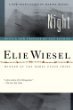

Night – Enjoyed is the wrong word to use for this one. The book is required reading in some schools, but it wasn’t in mine. I’ve had it on my reading list for years and finally got to it. What can I possibly say about this book? The answer is nothing, except to read it, if you haven’t already. I wish places like Amazon would turn off reviews for books like this.
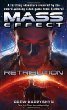

Mass Effect:Retribution – This is the third book in a trilogy. If you haven’t read the first two, you won’t appreciate the third one as much. Mass Effect is a science fiction role-playing game. I’ve had mixed luck with books that are based on game worlds, but this series was pretty good. It’s hard for me to say whether someone who hasn’t played the games would enjoy it. For those who have, Shepard isn’t in the books, but Anderson is.
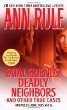

Fatal Friends, Deadly Neighbors – I’m not really one for true crime books, because some of them focus on (and sometimes glorify) the criminals. Ann Rule focuses on the victims. She’s a former police officer, and her empathy for the victims, families, and friends comes through loud and clear.
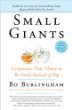

Small Giants – I like to read about people who go against conventional wisdom, or resist juicy opportunities, because they don’t want to violate their principles, or they have a definition of success that’s out of step with what society tells us we should want.
That’s it for January.
Books I Read in January (2013) is a post from: Sarah Ettritch


Books I read in January (2013)
Along with trying to post here every Friday, I’m going to start off each month by telling you what books I read and enjoyed the previous month. Note the word enjoyed. Most of the time, I’ll have read more books than those listed, but I don’t see the point of mentioning a book just to say that it didn’t float my boat. Taste is subjective, so I’d rather stick to books I’d recommend.
I won’t give mini-synopses of the books, since you can check them out at your favourite online or brick and mortar bookstore. Clicking on a book’s cover will take you to the Amazon page for the book.
So what did I enjoy last month?
Night – Enjoyed is the wrong word to use for this one. The book is required reading in some schools, but it wasn’t in mine. I’ve had it on my reading list for years and finally got to it. What can I possibly say about this book? The answer is nothing, except to read it, if you haven’t already. I wish places like Amazon would turn off reviews for books like this.
Mass Effect:Retribution – This is the third book in a trilogy. If you haven’t read the first two, you won’t appreciate the third one as much. Mass Effect is a science fiction role-playing game. I’ve had mixed luck with books that are based on game worlds, but this series was pretty good. It’s hard for me to say whether someone who hasn’t played the games would enjoy it. For those who have, Shepard isn’t in the books, but Anderson is.
Fatal Friends, Deadly Neighbors – I’m not really one for true crime books, because some of them focus on (and sometimes glorify) the criminals. Ann Rule focuses on the victims. She’s a former police officer, and her empathy for the victims, families, and friends comes through loud and clear.
Small Giants – I like to read about people who go against conventional wisdom, or resist juicy opportunities, because they don’t want to violate their principles, or they have a definition of success that’s out of step with what society tells us we should want.
That’s it for January.
Books I read in January (2013) is a post from: Sarah Ettritch
January 25, 2013
Behind the Scenes of the Rymellan Series: My Toughest Story Problem
 When I started posting about “Behind the Scenes of the Rymellan Series,” I said I’d tell you about “the most difficult story problem I ran into when writing the first three books.” The problem I’ll discuss will sound trivial on the surface, but it goes to the core of world building.
As the keeper of the Rymellan world, I have to ensure that everything the characters say and do makes sense for Rymellans and their society. When writing a Rymellan story, I constantly ask myself, “What would Rymellans do?” Maybe I should get a WWRD bracelet.  (see WWJD)
So what problem tied me into knots for a couple of weeks? I didn’t know how to answer the following question:
Why did Laura Finney become Lesley’s mentor?
I knew that Finney, as we called her then, played an important role in Lesley’s life. Long before I wrote Priorities, the story in which the question is answered, I knew that Finney had become Lesley’s mentor when Lesley was at the Military Academy. But I didn’t know why. I had to figure it out, because I’d reached the point in Lesley’s life when her relationship with Finney would be established.
 At the time, Finney was a commander, and commanders are busy, powerful people. Why would one take a personal interest in a cadet? Why would an Interior officer mentor a cadet who wanted to be a fighter pilot? Everything I came up with felt contrived for the Rymellan world. Okay, Lesley was living in Finney’s sector, but so was Mo. Why would Finney mentor one and not the other? They both wanted to enter the fighter pilot training program.
Okay, the military had identified Lesley as a cadet with the “right stuff,” and it was going to provide her with a mentor. But Finney wasn’t participating in that program. While she occasionally lectures about the Chosen Tradition at the Military Academy, she isn’t an instructor there. She’s also Joined, has three children, and as we later found out, heads a group that investigates potential Chosen Violations—in addition to everything else she does. So again, why take on a mentoring role for a cadet she didn’t really know?
 I came up with more explanations that were all inadequate in some way. None of them fit the Rymellan world. I discussed the problem with my partner, something I rarely do. It was starting to keep me up at night. So I decided to do what I usually do when I run into a story problem: keep writing, and believe that the answer would come.
It did, and I thought it was pretty cool, because it involved Lesley getting into trouble, which is unusual for her. It also had a lot to do with some personal history between Finney and Commander Morton. It made sense. Yes, a commander who didn’t belong to the Military Academy’s faculty normally wouldn’t offer to mentor a cadet, but Finney happened to be there when Morton was chewing Lesley out, and Finney and Morton…well, we find out the reason for their animosity toward each other in The Accident.
When writing in a fictitious world, small details are important. When it comes to the Rymellan world, I have to be careful. I could easily write myself into a corner, and doing so within Rymellan society could mean the loss of a character. But that’s part of what makes it so much fun.
Behind the Scenes of the Rymellan Series: My Toughest Story Problem is a post from: Sarah Ettritch


January 18, 2013
How Many Books Do You Read in a Year?
Someone recently posted this question on a writers’ forum, and some of the answers made me go, “Wow!” One writer said that, according to her Kindle, she’d read 365 books last year. However, a Kindle book could be a short story or a 3-page report.
Credit: M.Greengrass, 2012
The answers were all over the place, from as low as eight to as high as the mighty 365. It made me think about how many books I read in a year. On average, I read one or two books a week, so I’ll say that I read around 80 a year. I read more non-fiction than fiction, because I usually have two or three non-fiction books on the go, but I can only read one fiction book at a time. Also, I skim a lot of non-fiction.
Now, if I were to count short (10-30 pages) non-fiction books on niche subjects, then yeah, I can also claim hundreds. But I don’t think that’s what people mean when they ask, “How many books?”
I’m also not counting my own books. I do numerous rounds of editing, and I have to read the entire book for each round. By the time I release a book, I’ve read it at least five times (and will throw up if I have to read it again).
If I learned how to speed read, I suppose I could increase the number of books I read per year, but I’ve covered speed reading already.
How many books do you read in a year? Are you a speed reader, or do you like to take your time? Can you beat 365 books?
How Many Books Do You Read in a Year? is a post from: Sarah Ettritch


January 11, 2013
Gay and Lesbian Sucks
Earlier this week, I decided to set up some Goodreads ads. Some writers say that the ads are worth the investment; others report that they’re a waste of money. I decided to experiment with the ads myself.
When you create a Goodreads ad, you can target readers based on the genres they’ve shelved. I thought, “Great, for the Rymellan Series, I’ll target lesbian fiction readers.”
But I couldn’t do that.
Goodreads lumps gay fiction and lesbian fiction together under “Gay and Lesbian.” That sucks. I’m sure there are some people out there who read both genres, but I’m betting they’re a minority.
You can also target by gender, but that doesn’t help. First, Goodreads informs you that only 50% of its members have set their gender, so if you target by gender, you’re eliminating 50% of readers right off the bat.
Second, straight women read gay fiction, so my ad would still be presented to readers who aren’t interested in lesbian fiction. I’m not saying that straight women never read lesbian fiction, but that many women who have shelved books under gay or lesbian will be straight women who read gay fiction, but not lesbian fiction.
So…my only choice was to go with Gay and Lesbian, which isn’t ideal. I wrote to Goodreads and suggested that they split those genres, and received a canned, “Great suggestion!” reply. I won’t be holding my breath.
I don’t mean to single out Goodreads, because it’s not the only outfit that lumps the two genres together, or worse, completely ignores one of them. Bowker is the US ISBN agency. It also puts out Books in Print, and some online bookstores use its database to retrieve book information. Because of that, I always add my books to the Bowker database. I’m allowed to select two genres. Here are my fiction choices. Notice anything?
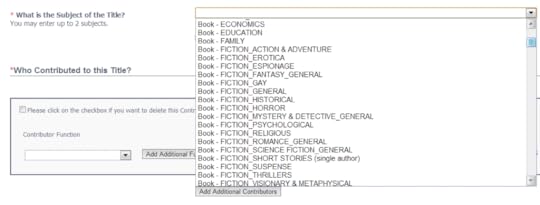
Now, you might be thinking, “Oh, you have to put lesbian fiction under FICTION_GAY.” You don’t have to do that. There is a FICTION_LESBIAN genre. But if you want it, you have to take the extra step of writing to Bowker and asking that it be added to the book. In this case, lesbian fiction is completely invisible.
I could see someone making the assumption that they should put a lesbian book under FICTION_GAY. Unfortunately, that could lead to their book being put into the wrong category at places that do have separate buckets for gay and lesbian.
Over to the bookstores: Yesterday I went to Amazon.com and pretended to be a naïve shopper who wants to browse the Kindle Store for lesbian fiction books. When I asked to browse Kindle fiction books, I was presented with this:
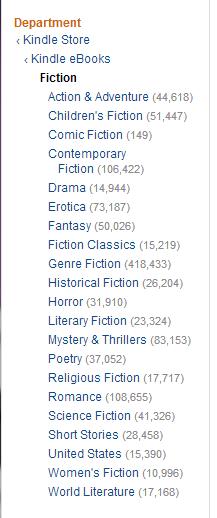
Wow, that’s helpful—not. You have to drilldown into “Genre Fiction,” and then you see, “Gay & Lesbian.” Why? You don’t have to do that for other genres. Grrrr. And when I clicked on “Gay & Lesbian,” the entire first page consisted of gay fiction. There’s nothing wrong with gay fiction, but that’s not what I was looking for.
The funny thing is, you can easily find lesbian print books by browsing “Books.” It’s a long trail, though. Here are the categories for The Salbine Sisters:
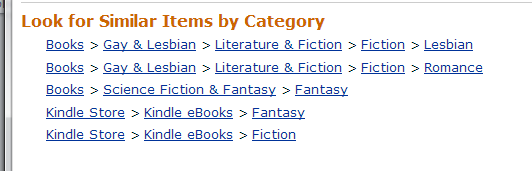
I don’t know why “Gay” and “Lesbian” don’t appear as choices directly under “Gay & Lesbian.” Better yet, split them up and have more granular choices under each. Putting a ton of books under a monolithic lesbian category doesn’t work well, but that’s a subject for another post.
Over at Smashwords, Gay and Lesbian are also lumped together. And check out Rymellan 1’s iTunes page. Yep, it’s under “Gay,” which I guess includes lesbian fiction, because here are the choices you get when you expand the fiction genre:
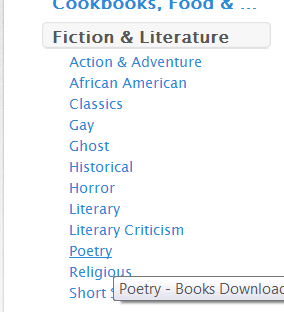
Lumping Gay and Lesbian together makes as much sense as lumping Mystery and Science Fiction together, or Fantasy and Poetry. It’s more difficult for readers to find what they’re looking for, and writers have a tougher time getting their books in front of their target audiences.
And that sucks, eh?
Gay and Lesbian Sucks is a post from: Sarah Ettritch


January 4, 2013
My Writing Plans for 2013
Before I talk about 2013, I thought I’d look back at what I said about 2012. How did I do?
“At the moment, I have only one story on my “to-write” list; in fact, I’m already writing it: the March Rymellan story. Will there be any other Rymellan stories in 2012? I don’t know. If I had to guess, I’d say no. “
Ding! I guessed right.
“I’ll try to do what I wanted to do in 2011: focus on shorter works.”
I blew it. The longest story I wrote in 2012 was ~60,000 words (The Atheist).
My concluding words were:
“In 2012, I’ll finish writing the March Rymellan story, and I’ll publish Rymellan 3 in print and eBook. I’ll focus on short stories, novelettes, and novellas for the remainder of the year.”
I got the first part right, but the second part wrong. I guess 50/50 isn’t bad.
Okay, what about 2013? Here we go…
1. THE MISSING COMATOSE WOMAN
My editor has this story right now. If you want to learn more about it, check out the post I did on Wednesday for the Next Big Thing Blog Hop.
2. Deiform Two
I’m currently working on this. It’s going well, and I expect to finish the first draft sometime around April.
3. A Rymellan story
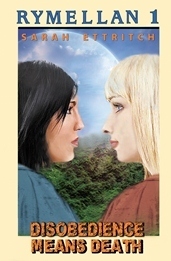 I’ll write a Rymellan story this year. Because I won’t have a quarterly deadline hanging over my head, the story will be self-contained and whatever length it needs to be. It won’t pick up right after Rymellan 3. It will start about a year after that point.
I ended Rymellan 3 where I did because I felt that we’d reached the point where we could skip forward in time without missing anything important (in terms of learning something new about the main characters or Rymellan society). I routinely skipped time between stories in Rymellan 1. Obviously, once the events in Shattered Lives occurred, skipping ahead a year or two wouldn’t have made sense. But now I feel comfortable jumping to the next significant event in Lesley, Mo, and Jayne’s lives.
4. After I’ve finished the first drafts for 2 and 3, I’ll sit down and seriously think about writing another book about the Salbine Sisters. Readers have asked if there will be another book, and I’ve said, “Probably.” Later this year, I’ll decide if it’s the right time to write that book. It definitely won’t be released in 2013. The earliest it would be available would be sometime in 2014.
That’s more than enough to keep me busy in 2013. When I know whether I’ll start another Salbine book this year, I’ll let you know.
Now, a final item:
5. I’m planning to post to my blog every Friday. I used to do that, but I fell behind. After I was sick last year for longer than I would have liked, I had to play catch up with too many other things. This year, I’ll do my best to post every Friday. Hey, so far, so good!
If you want to be notified as I release these stories, sign up for my new releases notification list using the signup form at the top of the sidebar.
Have a great weekend!
My Writing Plans for 2013 is a post from: Sarah Ettritch


January 2, 2013
The Next Big Thing Blog Hop
Last week, mystery and romance writer Patty Henderson tagged me for the Next Big Thing Blog Hop. Tagged authors answer a standard set of questions about their WIP (work in progress) and then tag an author for the following week. I usually start talking about a WIP when it’s gone to my editor. I sent the story to her last week, so this is fortuitous timing.
I’ve scattered several photos throughout this post. The items depicted are involved in the story in a significant way. Without further ado…
What is the working title of the book?
The title of my next book will be THE MISSING COMATOSE WOMAN. It’s a 49,000 word novella (depending on who you talk to, that’s 1000 words short of a novel).

Where did the idea come from for the book?
I keep a running ideas file. Whenever I think, “Hmm, that could be a story,” I’ll record one or two lines about the idea. Some will never be written, and some are years old. By the time I write an idea, I’ve usually forgotten what sparked it. That’s the case here. It could have been a news story, something I read on the Net, a daydream, or some random thought that entered my mind.
What genre does your book fall under?
The main genre will be mystery. The secondary genre will be lesbian fiction.
Which actors would you choose to play your characters in a movie rendition?
I never think about this unless I’m asked. Since THE MISSING COMATOSE WOMAN is a WIP, it’s not something I want to think about at this stage. All I’ll say is that could play Casey’s grandmother, since she’s one of my favourite actors and can pretty much play anyone.

What is the one sentence synopsis of your book?
Private eye Casey Cook lands her first case, and it’s a doozy: find a missing comatose woman.
What is the larger synopsis of your book?
Private eye Casey Cook lands her first case, and it’s a doozy: find a missing comatose woman. Eager to prove herself, Casey does whatever it takes to get answers, from pretending to be pregnant to fawning over a hairless cat.
As she runs into one dead end after another, Casey wonders whether she should have left her retail job. Determined to show that she can do the PI thing, Casey refuses to give up, chases down every lead, and snags herself a girlfriend along the way.
Will your book be self-published or represented by an agency?
As usual, I’ll publish the book myself.
How long did it take you to write the first draft of your manuscript?
About five months. A novella usually wouldn’t take me that long, but it started out as a secondary project. Due to health issues I experienced last year, it became my primary project so I could make an editing deadline.
Who or what inspired you to write this book?
Nothing inspired me to write the book. At some point, I got an idea. See question 2!
What else about your book might pique the reader’s interest?
Let’s see:
It’s my first mystery
It’s set in Canada
It’s a fun story, with interesting characters that range in age from twenty-something to…well, Gran swears she’s not a day over 60, but I’m not buying it
Casey bumbles her way into a relationship, so there are romantic elements (but the novella isn’t a romance)
If you’d like to be notified when THE MISSING COMATOSE WOMAN is available, sign up for my new releases notification list (form is at the top of the sidebar). Since I only send an email when I release a book, you won’t be deluged with emails.
Next week, meet Canadian science fiction and fantasy author Lorina Stephens. In addition to being an author, Lorina runs Five Rivers Publishing and leads the Canadian POD publishers Yahoo group. Drop by Lorina’s blog on January 9th to find out about her next big thing.
The Next Big Thing Blog Hop is a post from: Sarah Ettritch