Stuart Ross's Blog, page 9
December 30, 2016
So long, Mansfield Press. It's been surreal.
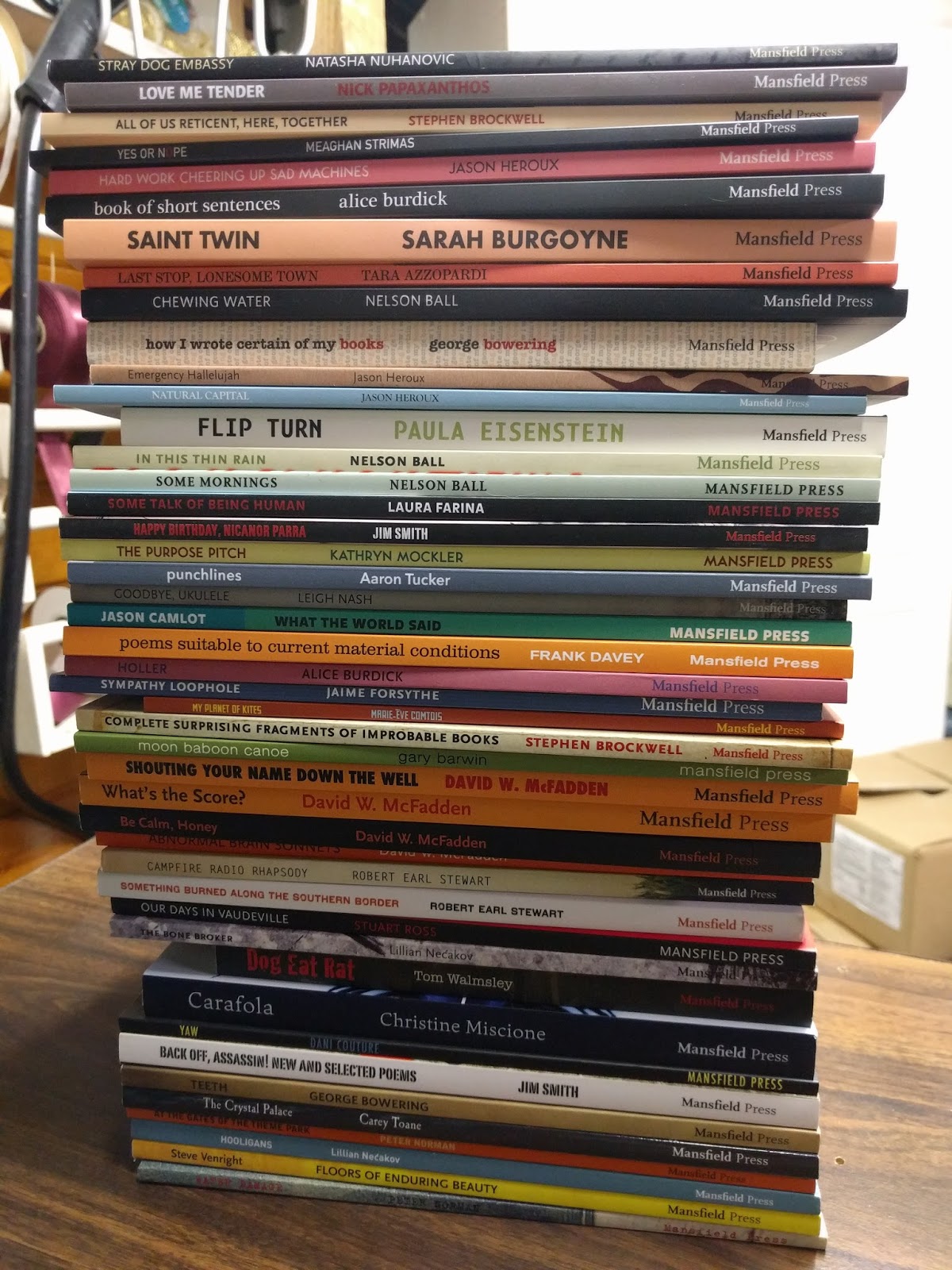
This past fall, I said goodbye to my partnership with Mansfield Press, where I had been acquiring and editing books of Canadian poetry, fiction and non-fiction for a decade. As an experiment, Mansfield founder/publisher/editor Denis De Klerck brought me aboard to broaden his list with a single book in 2007. When we couldn't decide between the two I proposed, we went with both, titles by Steve Venright and Lillian Necakov. Each season after that, I brought on between one and six books.
Working on the 46 books, by 30 different authors, was one of the most exciting and fulfilling facets of my literary life so far. It was a thrill to help an author's first book into the world, or to work with a seasoned pro I'd admired since I was a kid, and equally to see an already-published author move into the mid-career range with second, third, fourth books.
I'd like to think that with my contribution to the press Denis launched with four poetry titles in 2000, Mansfield's audience expanded, just as did its aesthetic.
Under my "a stuart ross book" imprint, I was responsible for bringing out stunning first full-length books by Natasha Nuhanovic, Nick Papaxanthos, Sarah Burgoyne, Tara Azzopardi, Paula Eisenstein, Aaron Tucker, Leigh Nash, Jaime Forsythe, Robert Earl Stewart, Carey Toane, and Peter Norman. In the cases of Robert and Peter, I also helped their second collections into the world.
I also co-translated and saw through the press the first English-language book by francophone Montreal poet Marie-Ève Comtois, which was an amazing experience.
In the mid-career category, I ushered in new books by Dani Couture, Meaghan Strimas, Stephen Brockwell (two collections), Jason Heroux (three collections), Laura Farina, Jason Camlot, Alice Burdick (three collections), Lillian Necakov (two collections), Kathryn Mockler, Christine Miscione (her first novel), Steve Venright, and Gary Barwin.
As for the old-timers, I had the privilege of working with these guys, all of whom I'd been following for decades: David McFadden (five books, including one memoir), George Bowering (a poetry collection and an essay collection), Nelson Ball (three collections), Frank Davey, Tom Walmsley (a novel), and Jim Smith (two collections, including a New & Selected).
I also did another really unusual book: a collection of collaborations between me and 29 other Canadian poets.
The one book I see I neglected to add to the stack in that photo above is David W. McFadden's 2015 collection, Abnormal Brain Sonnets. It's been a fulfilling journey with Dave: I've loved his work since I was a teenager, and he was a big influence on my own writing. Around 2004, Paul Vermeersch asked me to edit a Selected by McFadden for Paul's then-imprint with Insomniac Press. An incredible, exhilarating experience, and one followed up by a Collected Long Poems. Dave and I had a lot of success with his books: one was short-listed for the Governor General's Award for Poetry, and two for the Canadian Griffin Poetry Prize — with the second, What's the Score?, winning that most prestigious award. A nice recognition of Dave's remarkable six-decade writing career.
All these books are out there in the world, and you can still explore them. Find them in your local library, order them from Mansfield, or order them through your local indie bookstore or big-boxer. You might even find copies of some of the more recent titles on bookstore shelves.
I know I'm not exactly objective, but I believe many of these books are among the most exciting and unusual that contemporary Canadian poetry has produced. I wish I'd written most of them myself! There were more books I had hoped to bring through the press, too, but I had to accept it was time to move on.
Some of these books received a lot of attention, but many that were more than worthy never even got a singe print review. That's the struggle, increasingly, that Canadian publishers face. That, and finding space on bookstore shelves. Well, Canadian publishers face a lot more challenges than even those.
Although not all the books I championed through my imprint were surreal or post-surreal, "a stuart ross book" still feels to me a bit like a continuation of my 2005 anthology, Surreal Estate: 13 Canadian Poets Under the Influence (The Mercury Press). And while I'm proud of what I accomplished at Mansfield, my imprint isn't without its shortcomings. I need to think more about those, and I'll try to talk about them in a future blog.
Meanwhile, my gratitude to Denis for the opportunity to make what I feel is a significant contribution to the dialogue that is Canadian poetry.
Other projects are afoot, and more about those later.
Over and out.


December 28, 2016
Six poetry books for 2016 + a bonus for the kiddies
Truth is, I didn't read enough of 2016's poetry output to offer up a "best of." Whatever a "best of" is. But I read enough to be moved to write about six poetry books published this past year that especially
stood out for me.
Certainly there were others from 2016 that made their indelible mark on my skull. For example, the six books I ushered through Mansfield Press in my final year at that outfit: Yes or Nope , by Meaghan Strimas; All of Us Reticent, Here, Together , by Stephen Brockwell; Chewing Water , by Nelson Ball; Book of Short Sentences , by Alice Burdick; Hard Work Cheering Up Sad Machines , by Jason Heroux; Saint Twin , by Sarah Burgoyne. Every one of those wildly different titles is a brilliant contender. Here's what I say: collect the whole set.
I have also left out other books I loved, but had some kind of editorial role in. And other books I loved, but had no editorial role in.
Why didn't I read as much new poetry as I usually do? Well, a few reasons. For one, I spent far too much time reading about the terrifying decline into redneckery of the United States of America. Also, I read a lot more fiction, and a lot more essays, than I did poetry in 2016. And then there's this: I've been concentrating on reading some of the many hundreds of books I own that I haven't yet read, so I didn't pick up as many new books as I usually do.
But here are six poetry books I did read in 2016 that numbered among my favourites.
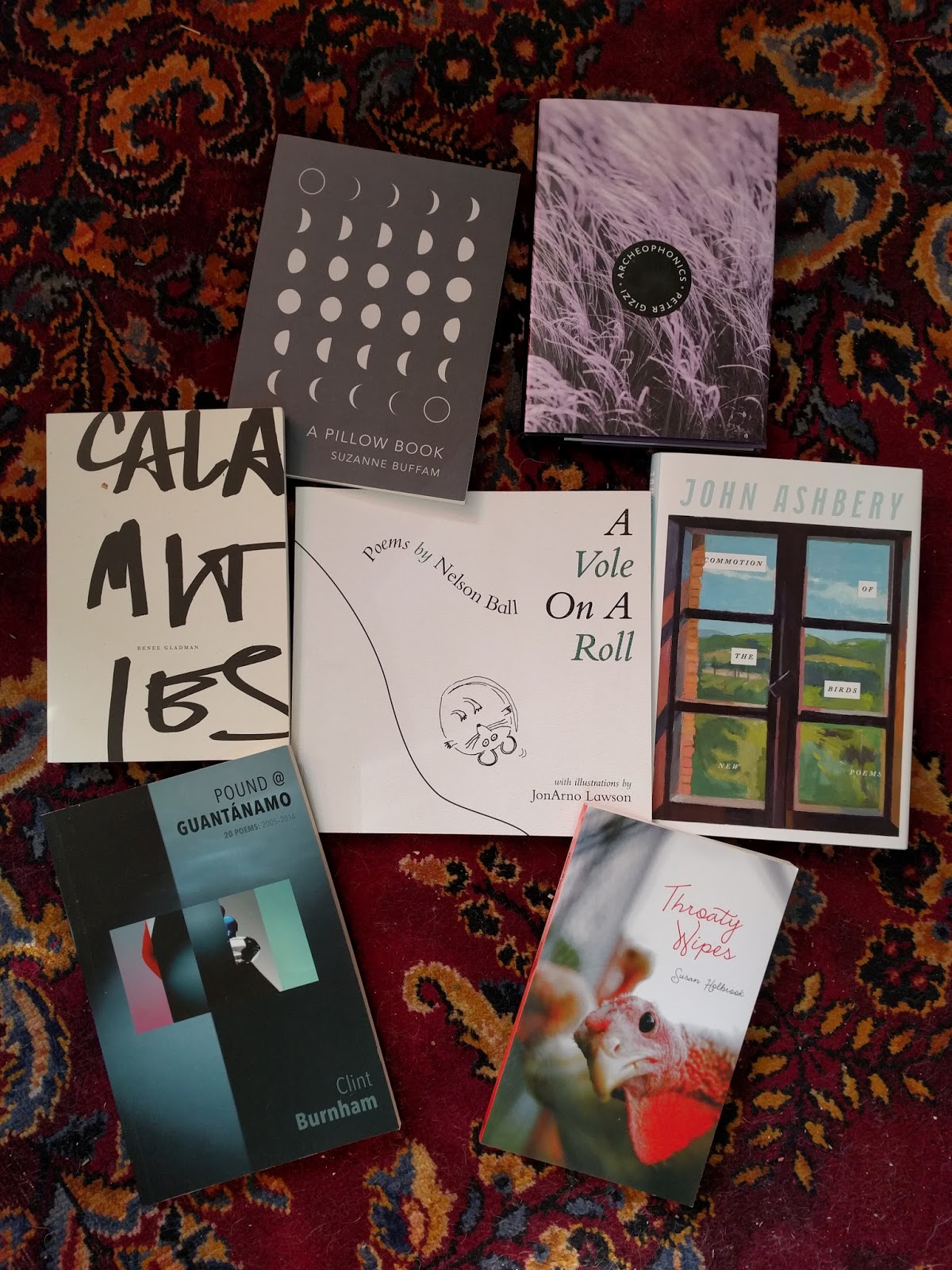
COMMOTION OF THE BIRDS, by John Ashbery (Ecco)
One of my favourites by Ashbery of the past decade: some tiny poems in here, some prose poems. I find this book so often hilarious, which isn't to say it isn't often moving.
A PILLOW BOOK, by Suzanne Buffam (Anansi)
Rich and rereadable, with surprises at every turn. Prose poems, lists, one-line poems, and abecedariums. How could I not love this book?
POUND @ GUANTÁMO, by Clint Burnham (Talonbooks)
An unsung hero of 2016, this collection is as chaotic and over-the-top as anything Clint writes. And that's what I love about him, that and his fearlessness.
 ARCHEOPHONICS, by Peter Gizzi (Wesleyan)
There are so many things going on in here, and all of it intelligent and readable. Gizzi continually explores what it is to be human in this world, through prose poems, list poems, lyrics and more.
CALAMITIES, by Renee Gladman (Wave Books)
A dense and exciting hybrid of prose poem/essay/fiction, with each piece beginning "I began the day" and then going somewhere entirely unexpected.
THROATY WIPES, by Susan Holbrook (Coach House)
This book is both complicated and fun. It's also refreshing. I love its eclecticism of form, and know I'll be visiting it again and again. A great follow-up to Joy Is So Exhausting.
***BONUS BOOK FOR THE KIDDIES!!!***
A VOLE ON A ROLL, by Nelson Ball, illus. JonArno Lawson (Shapes & Sounds Press)
Who knew that seventy-something poet Nelson Ball would come out with his first book of poetry for children this year? Well, I knew, because he showed me the manuscript last spring. These poems are delightful, and they are pure Nelson. JonArno Lawson's scrappy illustrations are a lovely accompaniment.
Next year, I'll try to keep up a bit more on the current output. After all, poets will have their work cut out for them in 2017.
Over and out.
stood out for me.
Certainly there were others from 2016 that made their indelible mark on my skull. For example, the six books I ushered through Mansfield Press in my final year at that outfit: Yes or Nope , by Meaghan Strimas; All of Us Reticent, Here, Together , by Stephen Brockwell; Chewing Water , by Nelson Ball; Book of Short Sentences , by Alice Burdick; Hard Work Cheering Up Sad Machines , by Jason Heroux; Saint Twin , by Sarah Burgoyne. Every one of those wildly different titles is a brilliant contender. Here's what I say: collect the whole set.
I have also left out other books I loved, but had some kind of editorial role in. And other books I loved, but had no editorial role in.
Why didn't I read as much new poetry as I usually do? Well, a few reasons. For one, I spent far too much time reading about the terrifying decline into redneckery of the United States of America. Also, I read a lot more fiction, and a lot more essays, than I did poetry in 2016. And then there's this: I've been concentrating on reading some of the many hundreds of books I own that I haven't yet read, so I didn't pick up as many new books as I usually do.
But here are six poetry books I did read in 2016 that numbered among my favourites.
COMMOTION OF THE BIRDS, by John Ashbery (Ecco)
One of my favourites by Ashbery of the past decade: some tiny poems in here, some prose poems. I find this book so often hilarious, which isn't to say it isn't often moving.
A PILLOW BOOK, by Suzanne Buffam (Anansi)
Rich and rereadable, with surprises at every turn. Prose poems, lists, one-line poems, and abecedariums. How could I not love this book?
POUND @ GUANTÁMO, by Clint Burnham (Talonbooks)
An unsung hero of 2016, this collection is as chaotic and over-the-top as anything Clint writes. And that's what I love about him, that and his fearlessness.
 ARCHEOPHONICS, by Peter Gizzi (Wesleyan)
There are so many things going on in here, and all of it intelligent and readable. Gizzi continually explores what it is to be human in this world, through prose poems, list poems, lyrics and more.
CALAMITIES, by Renee Gladman (Wave Books)
A dense and exciting hybrid of prose poem/essay/fiction, with each piece beginning "I began the day" and then going somewhere entirely unexpected.
THROATY WIPES, by Susan Holbrook (Coach House)
This book is both complicated and fun. It's also refreshing. I love its eclecticism of form, and know I'll be visiting it again and again. A great follow-up to Joy Is So Exhausting.
***BONUS BOOK FOR THE KIDDIES!!!***
A VOLE ON A ROLL, by Nelson Ball, illus. JonArno Lawson (Shapes & Sounds Press)
Who knew that seventy-something poet Nelson Ball would come out with his first book of poetry for children this year? Well, I knew, because he showed me the manuscript last spring. These poems are delightful, and they are pure Nelson. JonArno Lawson's scrappy illustrations are a lovely accompaniment.
Next year, I'll try to keep up a bit more on the current output. After all, poets will have their work cut out for them in 2017.
Over and out.
December 22, 2016
Talk Hunkamooga — I'd forgotten about it!!
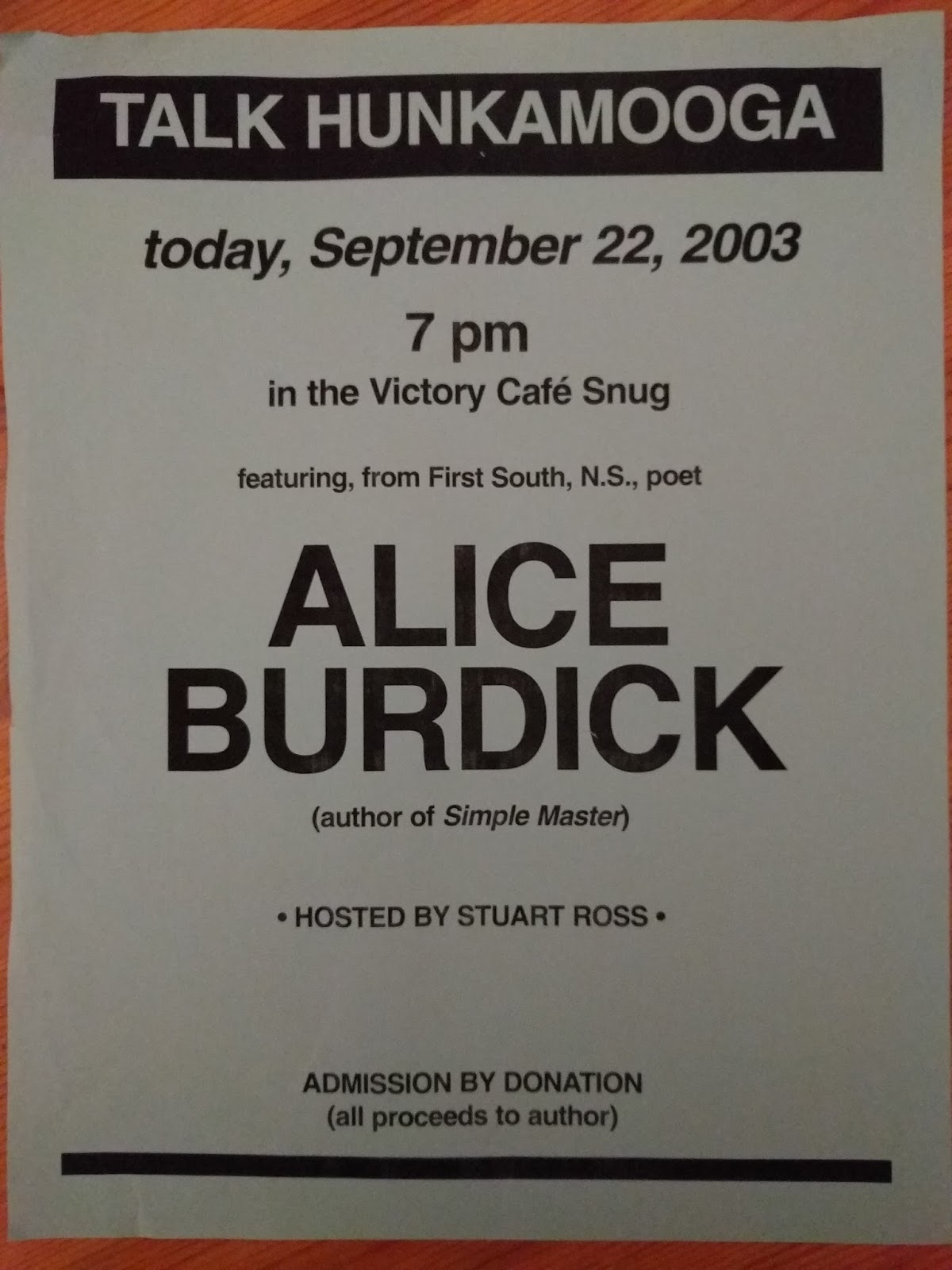 I was doing some excavations in my study — digging into a box of press clippings, old stationery, press releases, posters — and I came across this poster for Alice Burdick's 2003 reading at my short-lived Talk Hunkamooga series in Toronto's Annex neighbourhood. I'd forgotten that series ever happened! But now it's coming back to me.
Talk Hunkamooga took place at the soon-to-be-demolished Victory Café on Markham Street. Not upstairs, where most literary events took place, and not in the main bar, but in the little snug to the left as you came in the front door. I remember we could fit about 20 people in there, and for all three installments of Talk Hunkamooga it was a major squeeze; in at least one case, people left because there was simply no room for them.
Alice Burdick read around the time her first book, Simple Master, was released by Beth Follett's Pedlar Press. Beth had me edit that book for the press, and I remember what an exciting thing it was to be holding the manuscript for Alice's first-ever full-length poetry book. Even back then, in 2003, Alice already gave such good readings: so conversational, so matter-of-fact, with a sort of "didn't you already know this?" tone to her voice. One of Canada's greats, and it feels lately that she's finally getting some long-overdue recognition.
Mark Laba also read at Talk Hunkamooga, from his 2002 debut book-length collection, Dummy Spit. If you can dig up a copy of that book, you will be holding a very bizarre gem. Mark is uncompromising. That was a book that Mercury Press publisher Bev Daurio let me bring to her press. I'm sure it was a commercial disaster. But there is no book like it in the history of Canadian publishing. Mark continues to be a mad literary genius. We met when we were four years old and both lived on Pannahill Road in Bathurst Manor.
I believe the only other reading in the Talk Hunkamooga series was that given by David W. McFadden. His collection Five Star Planet had come out from Talonbooks in 2002 and there hadn't been a Toronto launch, so I invited him to the snug for what turned out to be a kind of intimate, fireside-chat-style reading. Dave, like Alice, was a master of the conversational reading back then. He did not disappoint the overflow crowd. I later went on to edit seven books by Dave.
I'm pretty sure I did a little leaflet for each reading by that evening's author. And I also held a little chat with them, and opened it up to audience questions. I know that my old friend Mako Funasaka, who is a videographer, documented one or two of the Talk Hunkamooga events. Sometime, in some further excavation, I will dig that — or those — up.
Over and out.
December 21, 2016
The 2016 Kitty Lewis Hazel Millar Dennis Tourbin Poetry Prize goes to … me
A nice surprise this morning. I saw that Ottawa poet and poetry-book blogger Michael Dennis was announcing the winner of his annual Kitty Lewis Hazel Millar Dennis Tourbin Poetry Prize and as my finger neared the link, I wondered who had won. Would it be Eva HD again, who won last year?
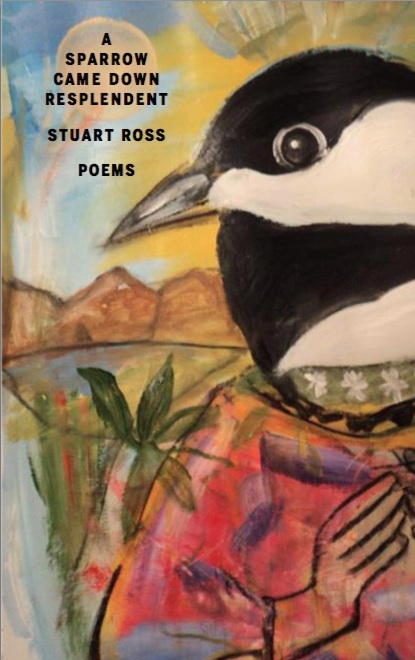
And it was me, for A Sparrow Came Down Resplendent , my most recent poetry book. I win bragging rights and dinner at Michael's house, and I have the hassle of revising my résumé.
For several years now, Michael has maintained a blog called Today's book of poetry. More or less, he writes about a poetry book he likes every two days. Yes, every two days. I just phoned him up now: he has written about 536 poetry books to date. That's a lot of poetry books, and also a lot of poetry books for one person to like.
But Michael has been receiving books in the mail, since he began the blog, from all over Canada, the U.S., and occasionally even abroad. I thought I had a pretty good idea of what literary presses were around, but more often than not, it's the first I've heard of the American publishers who send him stuff.
I interviewed Michael on this blog back in October 2013, when the project was still pretty young. And that interview also appeared in my 2015 Anvil Press book Further Confessions of a Small Press Racketeer (which I don't believe has received a single print review). I tried to convince Michael early on to write about books he didn't like; he was adamant that he would not. And really, how would he have the time, even if the idea interested him.
A lot has been said about the evils of prize culture, and I agree with much of it. And I've stayed pure by winning only prizes that have no or almost no money attached. Not by choice, mind you. I would gratefully accept a prize that would make me richer, or at least less in debt. But I never expect to be shortlisted for one. I might hope: I did have hopes for A Sparrow Came Down Resplendent — not expectations, though. After all, I did sell out in the writing of that book, and what's the point of selling out if it doesn't pay off?

The other thing about big prizes is they open the door to residencies and festival invitations. If they're really big prizes, it might even be a case of international invitations. It's too bad that's the way it works, but that's the way it works.
Here, by the way, are the previous winners of the KLHMDTPP:
2013 – Nora Gould, I See My Love More Clearly From A Distance (Brick Books)
2014 – Kayla Czaga, For Your Safety Please Hold On (Nightwood Editions)
2015 – Eva HD, Rotten Perfect Mouth (Mansfield Press)
I'm glad to join that list. The prize, incidentally is name for three pretty wonderful people: Kitty is the general manager of Brick Books. Hazel is the publisher and managing editor of BookThug. And Dennis (1946 – 1998) was a beloved writer and visual artist, and a very close friend of Michael's.
Meanwhile, I look forward to having dinner at Michael's place! It may be the first time he cooks vegetarian!
(And no pasta or rice for me, Michael: I have successfully reversed my diabetes this year [diagnosed in August; liberated in December], and I'm going to stay on the wagon. You'll need to use your imagination.)
Over and out.
And it was me, for A Sparrow Came Down Resplendent , my most recent poetry book. I win bragging rights and dinner at Michael's house, and I have the hassle of revising my résumé.
For several years now, Michael has maintained a blog called Today's book of poetry. More or less, he writes about a poetry book he likes every two days. Yes, every two days. I just phoned him up now: he has written about 536 poetry books to date. That's a lot of poetry books, and also a lot of poetry books for one person to like.
But Michael has been receiving books in the mail, since he began the blog, from all over Canada, the U.S., and occasionally even abroad. I thought I had a pretty good idea of what literary presses were around, but more often than not, it's the first I've heard of the American publishers who send him stuff.
I interviewed Michael on this blog back in October 2013, when the project was still pretty young. And that interview also appeared in my 2015 Anvil Press book Further Confessions of a Small Press Racketeer (which I don't believe has received a single print review). I tried to convince Michael early on to write about books he didn't like; he was adamant that he would not. And really, how would he have the time, even if the idea interested him.
A lot has been said about the evils of prize culture, and I agree with much of it. And I've stayed pure by winning only prizes that have no or almost no money attached. Not by choice, mind you. I would gratefully accept a prize that would make me richer, or at least less in debt. But I never expect to be shortlisted for one. I might hope: I did have hopes for A Sparrow Came Down Resplendent — not expectations, though. After all, I did sell out in the writing of that book, and what's the point of selling out if it doesn't pay off?
The other thing about big prizes is they open the door to residencies and festival invitations. If they're really big prizes, it might even be a case of international invitations. It's too bad that's the way it works, but that's the way it works.
Here, by the way, are the previous winners of the KLHMDTPP:
2013 – Nora Gould, I See My Love More Clearly From A Distance (Brick Books)
2014 – Kayla Czaga, For Your Safety Please Hold On (Nightwood Editions)
2015 – Eva HD, Rotten Perfect Mouth (Mansfield Press)
I'm glad to join that list. The prize, incidentally is name for three pretty wonderful people: Kitty is the general manager of Brick Books. Hazel is the publisher and managing editor of BookThug. And Dennis (1946 – 1998) was a beloved writer and visual artist, and a very close friend of Michael's.
Meanwhile, I look forward to having dinner at Michael's place! It may be the first time he cooks vegetarian!
(And no pasta or rice for me, Michael: I have successfully reversed my diabetes this year [diagnosed in August; liberated in December], and I'm going to stay on the wagon. You'll need to use your imagination.)
Over and out.
November 24, 2016
New Adventures at the Indie Literary Market!
Last Saturday, the Indie Literary Market, put on by the Meet the Presses collective, happened at Trinity-St. Paul Centre in Toronto. Although I'm one of the founders of the collective, which is named after a monthly small press event Nick Power and I put on throughout 1985, I'm no longer a member, having resigned to make way for other stuff — like my own writing. So it was fun just being one of the presses sitting behind a table.
 One of the items I featured was the brilliant poetry mag The Northern Testicle Review, featuring work by over 25 amazing poets from Canada, the U.S., Norway, Argentina, and South Korea. It's "Issue #1 — The Final Issue!" And it's produced in a format I've never used before: letter-size sheets stapled down the left side into cardstock covers. As for the title, it's a response to New Orleans poet Joel Dailey's mag The Southern Testicle Review, which contained some of my work.
In addition to that mag, a whole bunch of my books from various publishers, and a lot of old and recent Proper Tales Press chapbooks and books (including Richard Huttel's first full-length collection, That Said), I was offering three new wonderful chapbooks: Stories for My iPad, by Clint Burnham, who lives in Vancouver and whose powerful Pound @ Guantanamo came out from Talonbooks earlier this year; Those Problems, a selection of prose poems by Sarah Moses, who lives in Buenos Aires — this is her first book in English, after a self-translated collection came out in Spanish last spring from Socios Fundadores; and Outdoor Voices, a selection of recent prose poems by Leigh Nash, who calls Picton her home these days and whose recent work has been eagerly anticipated.

Another treat last Saturday was finally holding a copy of Sonnets, a collaborative project Richard Huttel and I undertook over the past year. This beautifully produced chapbook, published by Gary Barwin's serif of nottingham editions, contains 28 sonnets Richard and I wrote, exchanging lines over the Internet. When I was in Albuquerque in October, we presented a selection of them at a reading we gave and we also recorded all 28 sonnets; I hope to have that recording available soon for anyone who's interested.
And, as usual, I accumulated a lot of exciting stuff at the Indie Literary Market. There was plenty more I wanted to buy, but I restrained myself. Here's what I came home with:
David Alexander, Modern Warfare, Anstruther Press
Nelson Ball, A Vole On A Roll, Shapes & Sounds Press
Gary Barwin, My Father, Nazi Ventriloquist: Part One, serif of nottingham editions
Victor Coleman, Kate Van Dusen/Kate Van Dusen, After the Blue Flower (two-sided broadside)
Cough #9, featuring work by Victor Coleman, Emily Izsak, Michael Boughn, and others
Dani Couture, Black Sea Nettle, Anstruther Press
From The Root #3, edited by Whitney French & Melana Roberts
Emily Izsak, Stickup, shuffaloff/Eternal Network
Karl Jirgens, Big Bang Blues, A Rampage Chapbook
Long Story Short: An Anthology of (Mostly) 10-Minute Plays, edited by Rebecca Burton, Playwrights Canada Press
Finally, there was an awful lot of excitement in the room when Nelson Ball, one of Canada's greats, won the $4,000 bpNichol Chapbook Award for Small Waterways, from Cameron Anstee's Apt. 9 Press. In fact, three of the five shortlisted chapbooks this year were published by Cameron. So far as I know, this is Nelson's first award. And it's a fitting one, given the minimalist nature of Nelson's work and given his three-decade friendship with bp.
This Saturday: off to Ottawa for the Ottawa Small Press Fair!
Over and out.
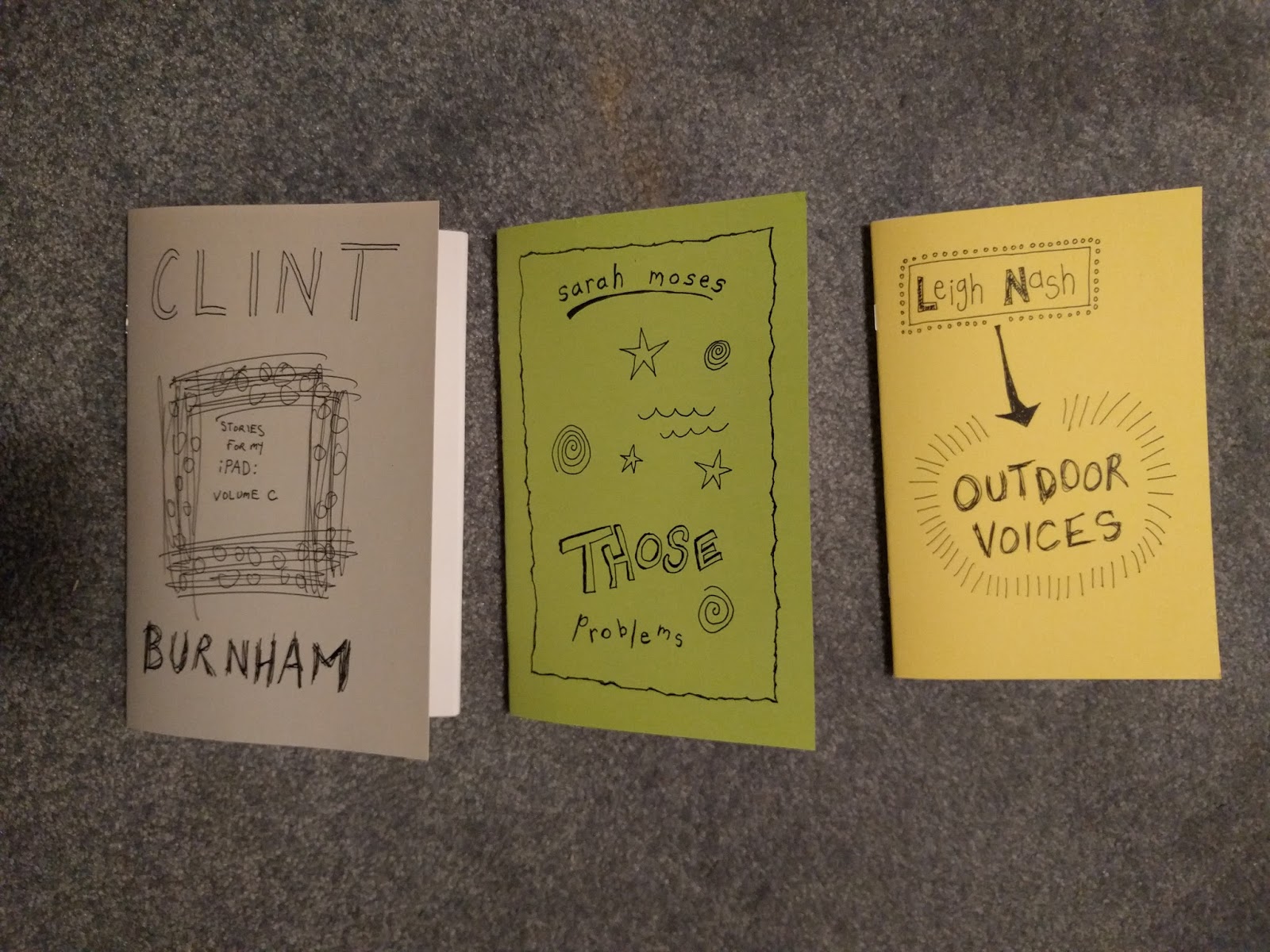 One of the items I featured was the brilliant poetry mag The Northern Testicle Review, featuring work by over 25 amazing poets from Canada, the U.S., Norway, Argentina, and South Korea. It's "Issue #1 — The Final Issue!" And it's produced in a format I've never used before: letter-size sheets stapled down the left side into cardstock covers. As for the title, it's a response to New Orleans poet Joel Dailey's mag The Southern Testicle Review, which contained some of my work.
In addition to that mag, a whole bunch of my books from various publishers, and a lot of old and recent Proper Tales Press chapbooks and books (including Richard Huttel's first full-length collection, That Said), I was offering three new wonderful chapbooks: Stories for My iPad, by Clint Burnham, who lives in Vancouver and whose powerful Pound @ Guantanamo came out from Talonbooks earlier this year; Those Problems, a selection of prose poems by Sarah Moses, who lives in Buenos Aires — this is her first book in English, after a self-translated collection came out in Spanish last spring from Socios Fundadores; and Outdoor Voices, a selection of recent prose poems by Leigh Nash, who calls Picton her home these days and whose recent work has been eagerly anticipated.
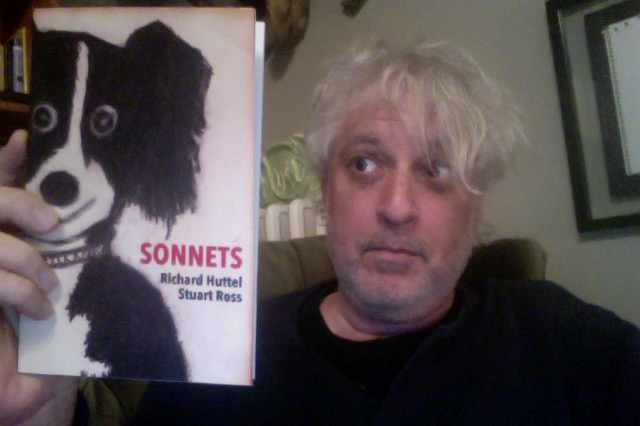
Another treat last Saturday was finally holding a copy of Sonnets, a collaborative project Richard Huttel and I undertook over the past year. This beautifully produced chapbook, published by Gary Barwin's serif of nottingham editions, contains 28 sonnets Richard and I wrote, exchanging lines over the Internet. When I was in Albuquerque in October, we presented a selection of them at a reading we gave and we also recorded all 28 sonnets; I hope to have that recording available soon for anyone who's interested.
And, as usual, I accumulated a lot of exciting stuff at the Indie Literary Market. There was plenty more I wanted to buy, but I restrained myself. Here's what I came home with:
David Alexander, Modern Warfare, Anstruther Press
Nelson Ball, A Vole On A Roll, Shapes & Sounds Press
Gary Barwin, My Father, Nazi Ventriloquist: Part One, serif of nottingham editions
Victor Coleman, Kate Van Dusen/Kate Van Dusen, After the Blue Flower (two-sided broadside)
Cough #9, featuring work by Victor Coleman, Emily Izsak, Michael Boughn, and others
Dani Couture, Black Sea Nettle, Anstruther Press
From The Root #3, edited by Whitney French & Melana Roberts
Emily Izsak, Stickup, shuffaloff/Eternal Network
Karl Jirgens, Big Bang Blues, A Rampage Chapbook
Long Story Short: An Anthology of (Mostly) 10-Minute Plays, edited by Rebecca Burton, Playwrights Canada Press
Finally, there was an awful lot of excitement in the room when Nelson Ball, one of Canada's greats, won the $4,000 bpNichol Chapbook Award for Small Waterways, from Cameron Anstee's Apt. 9 Press. In fact, three of the five shortlisted chapbooks this year were published by Cameron. So far as I know, this is Nelson's first award. And it's a fitting one, given the minimalist nature of Nelson's work and given his three-decade friendship with bp.
This Saturday: off to Ottawa for the Ottawa Small Press Fair!
Over and out.
September 1, 2016
My bloggy August adventure!
I had a really bloggy adventure in August. I was invited to act as that month's online writer in residence at Open Book Toronto. That meant posting a blog on whatever topic I wished every couple of days. If you don't know Open Book, check it out.
The first half of my summer was packed with deadlines, and so I didn't get a lot planned in advance: mostly I created a list of about 30 possible topics, most of which I abandoned when the time came. Since I tend to write well to deadline — in fact, I almost need that pressure — it was an exhilarating scramble over those four weeks. In the end, I found it so inspiring, so motivating, I have decided to at least try to keep up the momentum here in Bloggamooga. I think it'll be good for my writing life, which has caused me a lot of struggles especially since I left Toronto six or so years ago.
I'm going to try to write in this space every three days, more or less.
Here is what I wrote about on Open Book. Click and read to your heart's content!
• The aforementioned struggle to find my writing life here in the small town of Cobourg. Plus, my fear of spiders.
• An interview with my awesome American friend debby florence, who lives in Missoula, Montana, and has neat connections with Canadian poetry.
• My wrestling match with my Jewish identity, and a meditation on reclaiming my old family name of Razovsky.
• My first publication as a teenage writer, along with my childhood friends Mark Laba and Steven Feldman.
• A remembrance of the late Toronto literary undergrounder Crad Kilodney, and how he introduced me to an obscure chapbook that has influenced my writing.
• An impassioned defence of why I led a movement to boycott my own latest book of poetry.
• My relationship with science-fiction – and sci-fi writer Robert Sheckley's astounding avant-garde masterwork.
• The true, fish-on-a-bicycle story of my almost entirely ignored anthology of Canadian post-Surrealist poetry.
• An interview with my oldest friend, Mark Laba, an almost entirely ignored literary genius.
• 13 reasons to say goodbye to "closure" — that artificial and overrated and usually uninteresting literary goal.
• An interview with my other awesome American friend — and collaborator — Richard Huttel, a Chicagoan (now an Albuqueran) who also has ties with Canadian poetry.
• 50 exciting ways of distributing your poetry leaflets so that you can change the world.
• An interview with my friend Carolyn Smart, the wonderful and formidable poet, memoirist and writing teacher at Queen's University.
• The influence of legendary Hollywood icon Kim Novak on my writing — and her appearances in my poetry and fiction.
• Why you should tell writers whose work you like that you like their work — plus a tribute to my hero and friend Dave McFadden.
Enjoy! I sure enjoyed writing these.
Over and out.
The first half of my summer was packed with deadlines, and so I didn't get a lot planned in advance: mostly I created a list of about 30 possible topics, most of which I abandoned when the time came. Since I tend to write well to deadline — in fact, I almost need that pressure — it was an exhilarating scramble over those four weeks. In the end, I found it so inspiring, so motivating, I have decided to at least try to keep up the momentum here in Bloggamooga. I think it'll be good for my writing life, which has caused me a lot of struggles especially since I left Toronto six or so years ago.
I'm going to try to write in this space every three days, more or less.
Here is what I wrote about on Open Book. Click and read to your heart's content!
• The aforementioned struggle to find my writing life here in the small town of Cobourg. Plus, my fear of spiders.
• An interview with my awesome American friend debby florence, who lives in Missoula, Montana, and has neat connections with Canadian poetry.
• My wrestling match with my Jewish identity, and a meditation on reclaiming my old family name of Razovsky.
• My first publication as a teenage writer, along with my childhood friends Mark Laba and Steven Feldman.
• A remembrance of the late Toronto literary undergrounder Crad Kilodney, and how he introduced me to an obscure chapbook that has influenced my writing.
• An impassioned defence of why I led a movement to boycott my own latest book of poetry.
• My relationship with science-fiction – and sci-fi writer Robert Sheckley's astounding avant-garde masterwork.
• The true, fish-on-a-bicycle story of my almost entirely ignored anthology of Canadian post-Surrealist poetry.
• An interview with my oldest friend, Mark Laba, an almost entirely ignored literary genius.
• 13 reasons to say goodbye to "closure" — that artificial and overrated and usually uninteresting literary goal.
• An interview with my other awesome American friend — and collaborator — Richard Huttel, a Chicagoan (now an Albuqueran) who also has ties with Canadian poetry.
• 50 exciting ways of distributing your poetry leaflets so that you can change the world.
• An interview with my friend Carolyn Smart, the wonderful and formidable poet, memoirist and writing teacher at Queen's University.
• The influence of legendary Hollywood icon Kim Novak on my writing — and her appearances in my poetry and fiction.
• Why you should tell writers whose work you like that you like their work — plus a tribute to my hero and friend Dave McFadden.
Enjoy! I sure enjoyed writing these.
Over and out.
July 29, 2016
Sparrow reviewed in Winnipeg Free Press
Jonathan Ball is a Canadian poetry hero. He runs the only — so far as I know — regular poetry-review column in a Canadian newspaper. He crams three or four reviews into each installment, so they are short, but he always makes his point, and in a lively fashion.
In the June 25 edition of the Winnipeg Free Press, he wrote about A Sparrow Came Down Resplendent, along with three other really interesting books, including Jason Heroux's Hard Working Cheering Up Sad Machines, which came out this past spring under my "a stuart ross book" imprint with Mansfield. Here's what he wrote about Sparrow:
In the June 25 edition of the Winnipeg Free Press, he wrote about A Sparrow Came Down Resplendent, along with three other really interesting books, including Jason Heroux's Hard Working Cheering Up Sad Machines, which came out this past spring under my "a stuart ross book" imprint with Mansfield. Here's what he wrote about Sparrow:
Stuart Ross’s A Sparrow Came Down Resplendent (Wolsak and Wynn/Buckrider, 68 pages, $18) captures one of Canada’s most inventive and overlooked poets in fine form. "This is a poem about Johnny Cash / as the line above this one clearly states" — this fun, plain-spoken assertion seems to set the stage for a silly poem, but actually presages a crushing, sad scene.Over and out.
This is Ross’s oft-utilized but never-predictable method: to combine an observation that seems tossed-off and un-poetic with a harrowing image or something more complex than it at first appears.
"The books are full of words / but what’s a word?"
"I wrote a poem. I was / lonely. I wrote a poem / describing how I was / lonely. Many a person / said I should write a book."
There’s a clever joke and an existential crisis both crushed into those clean lines. Ross wins again.
July 20, 2016
The story of Pockets: my second solo novel
I'm pleased to announce that I recently signed a contract with ECW Press for the publication of my second solo novel, Pockets. It will appear in fall 2017 under Michael Holmes's Misfit imprint. This will be my sixth book with that press since 1996 (they published my first four poetry books and my first solo novel).
I had three other novels on the go (and still do), but this one broke out of the gate and crossed the finish line in the blink of an eye. Last December, I sat down to reread, for the umpteenth time, Toby MacLennan's astonishingly beautiful 1972 novel from Something Else Press, 1 Walked Out of 2 and Forgot It. I first read that book when I was still in my late teens. I hadn't read anything else like it, and still haven't, but I decided on that day in December that I would model a novel after MacLennan's. I liked the way the little chunks of prose rested on the bottom of each page. I liked the tone and the magic of the book.
That day I wrote about 40 pages of the novel I dubbed Pockets. (Some of the pages were only a couple sentences long.) I picked it up again in February, and started adding a new strand to it. I wrote another six or seven pages. Through April, I wrote on three separate days — first, eliminating the February strand (I'll use it elsewhere) and then expanding, lengthening, twisting. The novel reached about 70 pages (with a word count much shorter than your average Derek McCormack novel).
After those five days of work, I inserted epigraphs by Toby MacLennan and John Lavery into the manuscript and spent a week trying to decide where to send it. Perhaps because it is related so closely to my novel Snowball, Dragonfly, Jew , I sent it to Michael at ECW, and within a few days he had accepted it. (In my dreams, SDJ was going to be the book that would launch me into the big time, but that never happened, and the tiny, experimental Pockets certainly won't do it; I'm in the time in which I will remain.)
I've worked on Pockets for one more day, and I think I've got another few days' writing left, which I hope to accomplish by summer's end. (If you want to help facilitate my writing, please visit my Patreon page.) Then I'll see what Michael has to say about what will hopefully be a 90-page manuscript by then (about the length of Toby MacLennan's book). He has been a great supporter of my writing for two decades.
One nice side-effect of all this is that I decided I should finally search out Toby MacLennan and thank her for writing that book, and let her know how much it has meant to me. It wasn't hard to find her online, and I wrote her, and we've had a really lovely and inspiring email conversation that I hope will continue. As I get older, I realize how important it is to let writers — writers who are important to you — know the impact their work has had on you.
Over and out.
I had three other novels on the go (and still do), but this one broke out of the gate and crossed the finish line in the blink of an eye. Last December, I sat down to reread, for the umpteenth time, Toby MacLennan's astonishingly beautiful 1972 novel from Something Else Press, 1 Walked Out of 2 and Forgot It. I first read that book when I was still in my late teens. I hadn't read anything else like it, and still haven't, but I decided on that day in December that I would model a novel after MacLennan's. I liked the way the little chunks of prose rested on the bottom of each page. I liked the tone and the magic of the book.
That day I wrote about 40 pages of the novel I dubbed Pockets. (Some of the pages were only a couple sentences long.) I picked it up again in February, and started adding a new strand to it. I wrote another six or seven pages. Through April, I wrote on three separate days — first, eliminating the February strand (I'll use it elsewhere) and then expanding, lengthening, twisting. The novel reached about 70 pages (with a word count much shorter than your average Derek McCormack novel).
After those five days of work, I inserted epigraphs by Toby MacLennan and John Lavery into the manuscript and spent a week trying to decide where to send it. Perhaps because it is related so closely to my novel Snowball, Dragonfly, Jew , I sent it to Michael at ECW, and within a few days he had accepted it. (In my dreams, SDJ was going to be the book that would launch me into the big time, but that never happened, and the tiny, experimental Pockets certainly won't do it; I'm in the time in which I will remain.)
I've worked on Pockets for one more day, and I think I've got another few days' writing left, which I hope to accomplish by summer's end. (If you want to help facilitate my writing, please visit my Patreon page.) Then I'll see what Michael has to say about what will hopefully be a 90-page manuscript by then (about the length of Toby MacLennan's book). He has been a great supporter of my writing for two decades.
One nice side-effect of all this is that I decided I should finally search out Toby MacLennan and thank her for writing that book, and let her know how much it has meant to me. It wasn't hard to find her online, and I wrote her, and we've had a really lovely and inspiring email conversation that I hope will continue. As I get older, I realize how important it is to let writers — writers who are important to you — know the impact their work has had on you.
Over and out.
June 17, 2016
Bill Berkson Will Pass Among You Silently
Just heard that the American poet Bill Berkson died yesterday. He was 76 years old.
Berkson was the author of over 20 wonderful books of poetry, as well as volumes of art criticism, lectures, and memoir. He was also an enthusiastic collaborator with many other writers and artists. Among my favourite books of his are Our Friends Will Pass Among You Silently, Fugue, and Serenade. But everything he wrote is worth reading.
A few years back, I had the honour of including some poems by Berkson in my mag Peter O'Toole: The Magazine of One-Line Poems.
My new book, A Sparrow Came Down Resplendent, contains a poem for Bill Berkson, which I'm glad I got around to sending him shortly after I wrote it. (His response seemed, well … bemused in a friendly way.)
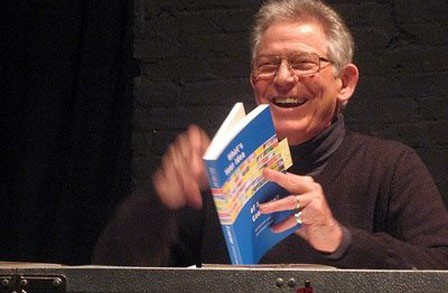
To Bill Berkson: good night and sleep well. Thank you for enriching the world of poetry with your incredible work. (Beautiful photo below, full of spirit and joy, by Robert Eliason.)
Over and out.

Berkson was the author of over 20 wonderful books of poetry, as well as volumes of art criticism, lectures, and memoir. He was also an enthusiastic collaborator with many other writers and artists. Among my favourite books of his are Our Friends Will Pass Among You Silently, Fugue, and Serenade. But everything he wrote is worth reading.
A few years back, I had the honour of including some poems by Berkson in my mag Peter O'Toole: The Magazine of One-Line Poems.
My new book, A Sparrow Came Down Resplendent, contains a poem for Bill Berkson, which I'm glad I got around to sending him shortly after I wrote it. (His response seemed, well … bemused in a friendly way.)
I DECLINE, THANK YOU, PLEASE GIVE IT TO BERKSON, BILL
The pure pleasure of reading Bill Berkson’s Serenade(Zoland Books, 2000; cover and interior drawings by Joe Brainard) while I’m lying in the claw-footed bathtub is such that I levitate. My body rises beyond the rim of the tub, then about another metre, till I can see sweet cobwebs flutter from the ceiling, and I hear the water drain below me, and drops sail down from my naked body, and as they fall they turn to various colours of paint and, landing in the tub, they make a portrait of Bill Berkson. His features are hewn and striking, and he wears a white hat, which the drops quickly change to brown with a white band. I raise a hand and brush away the cobwebs, “Fragile as the glitter on Dame Felicity’s eyelid,” and the ceiling opens, an Underwood typewriter lowering until it’s hovering just over me, a sheet of white foolscap rippling on the platen. I type this poem, shave, dry myself off, pull on some jeans and a madras shirt, and win the Nobel Prize for Literature.
To Bill Berkson: good night and sleep well. Thank you for enriching the world of poetry with your incredible work. (Beautiful photo below, full of spirit and joy, by Robert Eliason.)
Over and out.
June 6, 2016
The Sparrow continues its flight
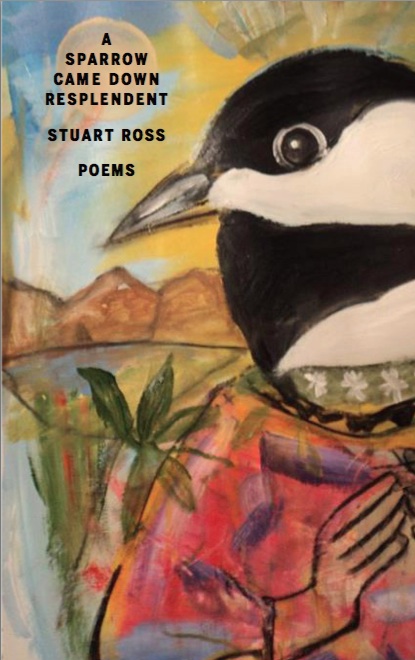
The Sparrow is landing in five more towns, starting tonight! I'm spreading my mainstream sensibilities far and wide with A Sparrow Came Down Resplendent, my new book from Wolsak and Wynn.
Monday, June 6, 7 pm — Cobourg, Ontario
The Human Bean, 80 King Street West
Also featuring: Ashley-Elizabeth Best, launching her debut poetry collection, Slow States of Collapse (ECW Press), and a musical set by Rhonda Murdoch of VanLand.
Tuesday, June 14, 7 pm — Hamilton, Ontario
Mills Hardware, 95 King Street East
Wolsak and Wynn spring launch party. Also featuring: Kilby Smith-McGregor with Kids in Triage; Susan Perly with Death Valley, and Rachael Preston with The Fishers of Paradise.
Thursday, June 16, 6 pm — Wolfville, Nova Scotia
The Box of Delights Bookshop, 466 Main Street
Also featuring Alice Burdick, launching Book of Short Sentences (Mansfield Press).
Saturday, June 18, 7 pm — Lunenburg, Nova Scotia
Lexicon Books, 125 Montague Street
Also featuring Lance La Rocque, author of Vermin (Bookthug).
Thursday, June 23, 7 pm — Halifax, Nova Scotia
The Writers' Federation of Nova Scotia, 1113 Marginal Road
Also featuring Alice Burdick, launching Book of Short Sentences (Mansfield Press).
Look for future launches in Ottawa and Montreal — and maybe even Alberta and British Columbia in the fall!
Over and out.