Hannah Faith Notess's Blog, page 3
July 9, 2011
#21 – Blankets by Craig Thompson
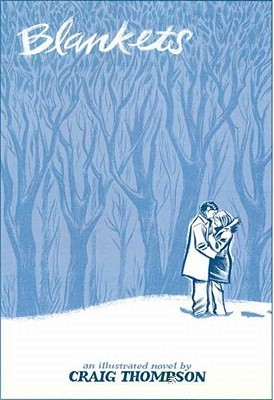
It's really only the last few years I've been getting in to reading graphic novels — especially memoir variety (it's weird to me that they're not called graphic memoirs. Oh well). Persepolis was the first I'd ever read, not counting lots of comic strips as a kid, plus Tintin.
Blankets takes the prize for the most amazing art of any I've read. The story is simple: boy who isn't sure what he believes meets girl who isn't sure she's all that into him at Christian camp. And the plot…that's about it, really.
But the the interaction between text and images — and even the white space — really transforms a simple story into something more.

It's hard to describe, but graphic novels are definitely changing the way I think about the printed page.
Extra Credit
Fun Home, by Alison Bechdel. Also a stunning graphic memoir.





July 7, 2011
#22 – When Everything Changed by Gail Collins
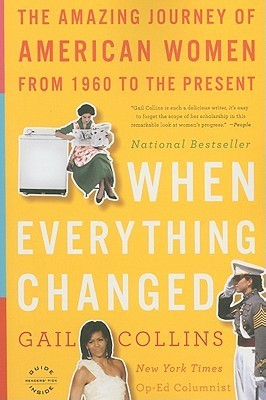
This book begins with the story of a young woman getting kicked out of traffic courts because she is wearing pants and it ends with the story of a female Pentecostal bus driver being told she can't wear a skirt on the job.
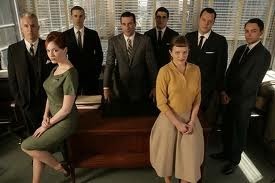
It's hard not to think about Mad Men as you read some of the early scenes.
In between, Collins interviewed heaps and heaps of American women from as many living generations as she can get her hands on, so the book ends up being a thorough, story-driven, well-reported account of women's lives over the last 50 years. I'd call When Everything Changed an oral history, but she switches back and forth between broad historical brushstrokes and individual women's stories who make up those brushstrokes.
I especially appreciated how she reported on the beginning of the women's movement. NOW was quite small when it started, in Betty Friedan's hotel room at a conference in 1966. But as soon as it started it swelled — it seems like the country was really ready for a change.
Collins kind of portrays the women's movement as riding the coattails of the Civil Rights movement whose positions were so well-articulated and clear (her treatment of the underrecognized role of women in the Civil Rights movement is excellent). Yet even very early on in the feminist movement there were differences about what women really wanted. Ending discrimination in the workplace, obviously (wouldn't that be awesome!). But beyond that — you start to see that feminism has always meant different things to different people.
But this book isn't just about feminism – it's about American women. A whole bunch of them. There are some big gaps (religion as a topic is hardly touched on at all). But there's a lot of fascinating stories here.





#23 – The Absolutely True Diary of a Part-Time Indian by Sherman Alexie
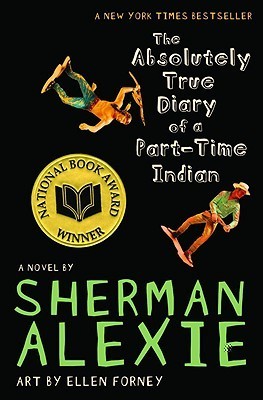
And now for a local shout-out!
Sherman Alexie lives in Seattle, and I go to his readings every chance I get. Unlike many writers, who sort of look down at their books and mumble, Alexie can do both page and stage really well (he is also very photogenic). You never quite know what he's going to say — or read, since he writes all sorts of poetry, fiction, and poetry-fiction hybrids — but that's half the fun. Just be aware: a rant about the Sonics could be involved.
It's hard to choose which of his works to recommend. The guy is prolific. War Dances is probably the one that's bowled me over the most with its beauty. And I love his poems. But when I read The Absolutely True Diary of a Part-Time Indian, I got to the last page of the book, immediately opened to the first page and read the whole thing straight through again. It was that good.
Ellen Forney's illustrations amplify the story. Here's one:

This is a young adult book, which some people think means it's a book for young adults that should "edify" or "uplift" them. Whatever. In fact, young adult books are ABOUT young adults. Which all of us not-young adults have been.
Alexie is adept at writing about real pain. He also makes an impassioned defense of why writing about pain is important. I'm not sure his argument encompasses all the reasons for writing or reading this type of book — Sara Zarr has an excellent and thoughtful critique here — but I do think he practices what Frederick Buechner calls the "stewardship of pain." Which is important.





July 6, 2011
#24 – Drinking Coffee Elsewhere by Z.Z. Packer
Another short story collection. Drinking Coffee Elsewhere contains some of the best short stories I've read, and one of my all-time favorites, "Brownies," which has an epic first line:
"By our second day at Camp Crescendo, the girls in my Brownie troop had decided to kick the asses of each and every girl in Brownie Troop 909."
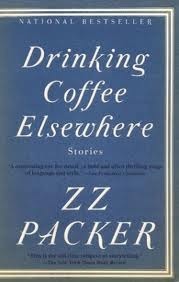
ZZ Packer is one of the New Yorker's anointed "20 under 40." I don't know what those awards really mean for a writer. Even if she never writes another word, though, as far as I can tell, she deserves it.

Bonus: UK book cover! Because the US book cover is boring.





July 2, 2011
#25 – St. Augustine's Confessions
Now we venture into "classic" territory.
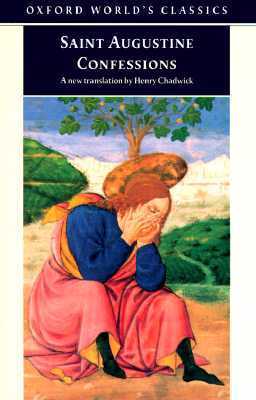
I first read Augustine's Confessions as a college freshman. But I've found myself returning to it multiple times over the years. This year, it was after listening to an intriguing lecture on how Augustine understood memory in relationship to the public spaces of the cities in which he lived his life. I've gone back to it as an imperfect Christian. And mostly, I've gone back to it as a writer of personal essays, many times, because this is the original text of someone writing about his own life in order to seek a deeper understanding of it and the world around him. Otherwise, why bother writing about yourself?
If you are interested in any of the following topics, I recommend this book:
1. Time
2. Memory
3. Pears
4. Heresy
5. Autobiography
6. Not being nice to your concubine
7. God
8. Gardens in Milan
9. Gladiators
10. Regret

Are the "pears" a metaphor for "something else?" (I find this interpretation annoying.)





July 1, 2011
#26 – Jonathan Strange & Mr. Norrell by Susanna Clarke
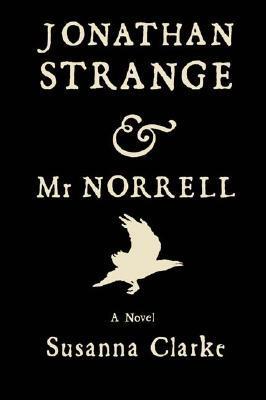
Today's selection is a bit more fun. I'm a sucker for big fat novels, and I like a little fantasy now and then.
The one thing that'll trip me up when reading a fantasy novel is when I have to hurdle a bunch of Jabberwocky-sounding names and terms that are hard to pronounce/imagine.* If the first sentence is something like "Snorglatt Qyridsiuyalp sighed, clutching his palwiuz and gieby, and gazed over the Yersib plains of Ywiecxhuuosxcz…" then my eyes glaze over.
Susanna Clarke's Jonathan Strange & Mr. Norrell is conveniently located in a fantasyland in which I've spent a substantial amount of readerly time: 19th-century England.
She does the 19th-century British novel thing of creating a village of complex characters — some of whom just happen to be magicians or whatever, and others of whom are based on historical figures. It's the kind of big fat novel you can get lost in without having to constantly wonder where you are.
I even enjoyed the footnotes!
*It should be noted that I struggle with fat Russian novels for the same reason. So maybe it's just me.





June 30, 2011
27 – The Democratization of American Christianity by Nathan O. Hatch
Okay, I waited a couple of days to drop a big one on you. Here it is.
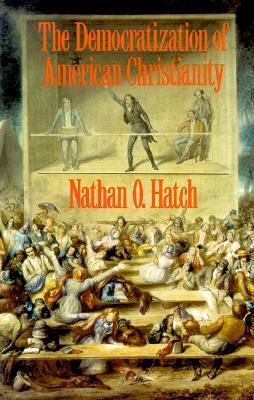
Here's the thing. We know that we Americans are ignorant about history. We know Americans are ignorant about religion.
And, I would posit, this makes us especially ignorant of religious history in our public discourse. This is a problem, especially when terms like "evangelical" get thrown around by people who have no idea what they mean.
Christians tend to act like the timeline of our religion goes something like:
Jesus……………………………………….Martin Luther* ………….Our Church As It Exists Today!
However, sometimes those critiquing us are just as ignorant. Case in point:

Nice try, atheists. The (pre-mill pre-trib dispensationalist) rapture was invented in the 19th century.
So, I really think everybody — no matter what you believe — should do a bit of reading about the history of Christianity in America. Smart books like Hatch's present a compelling, well-supported argument about how to understand the past in a way that can help us make sense of the religious landscape of the present day.
This book is dense, but very readable. There's even a story about Thomas Jefferson and a giant cheese! If that doesn't whet your appetite, I don't know what will.
Extra Credit
Also try the works of religious historians Mark Noll and George Marsden.
* Or John Calvin, Menno Simons, John Wesley, or whoever, depending on your denomination. It is possible that Catholics don't have this problem…but then they didn't score very high on the Pew Forum's religious knowledge test either.





June 29, 2011
#28 – Lunch Poems by Frank O'Hara
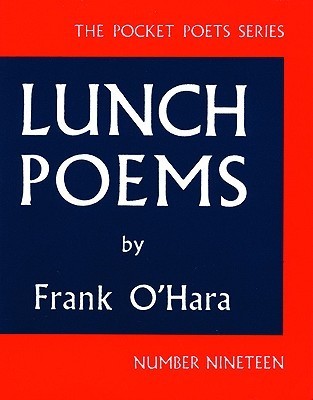
Does the design of this book cover look familiar to you at all?
Perhaps it reminds you a little bit of this:
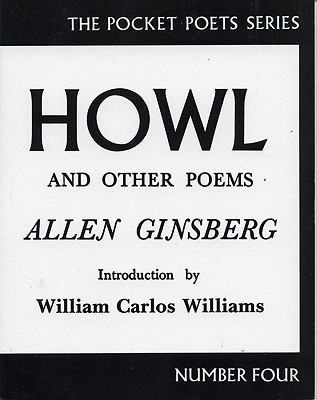
But this is a list of books to read before you're 30. Howl is for teenagers and college kids,* but Lunch Poems is for grown-ups.
Not that Howl doesn't have a certain appeal. It totally does. Who doesn't want to spend their days hanging out with "angelheaded hipsters burning for the ancient heavenly connection to the starry dynamo in the machinery of night"?**
But Lunch Poems exists in the world where a lot of us live. Offices. Buildings. Exciting things maybe happen to movie stars (oh Lana Turner) but not to us. We work in offices, and if we're lucky, that's a really good thing. Our 9-to-5 gigs might even contribute something good to the world (O'Hara worked at the Museum of Modern Art). And in between times, we have lunch breaks.
O'Hara used his lunch breaks to wander around the city and write poems. He was a flaneur! Yet he held down a regular job while writing poems. Good ones! Poems that we can now carry around and read on our lunch breaks.
Sidenote: In 1966, Frank O'Hara was hit by a dune buggy and died. A dune buggy! Sadness.
*Also if you were actually a hippie during the '60s, you get a pass. You can read/quote/love Ginsberg as much as you want.
**Especially if James Franco plays them in a movie.





June 28, 2011
#29 – The Night in Question by Tobias Wolff
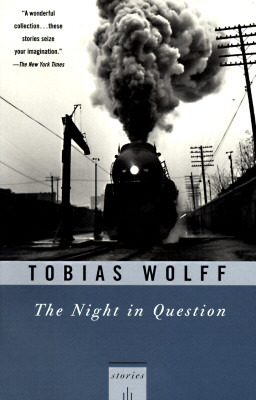
Here's one thing that's changed for me in the last decade: I like short stories.
I'd read Interpreter of Maladies and Dubliners and the odd Raymond Carver piece, and that was pretty much it. I'd try to read short stories, but they kinda seemed like a waste of time compared to a big fat novel. Why spend all this time and effort getting to know characters that you'll just have to say goodbye to in 20 pages?
And then I started grad school for creative writing. Suddenly I was rubbing shoulders with super smart people who cared passionately about short fiction. They were reading, writing, and recommending really good stuff.
(Note: at the time I was teaching unsuspecting undergraduates how to write and revise short fiction.)
In short, I've grown much more open-minded about how long I have to spend with a character to feel like it's worth cracking the spine.
What I love about Tobias Wolff's writing is that I feel like he's one of the most adept writers today at creating morally complex characters. People who want to do the right thing, but convince themselves otherwise for some reason. People who want to the wrong thing, but wish they wanted to do the right thing. These people feel real to me. The stories in The Night in Question are well-crafted, entertaining, and unforgettable.
I never pass a rug store in Seattle without thinking of "Firelight." I never go into an old-fashioned bank without thinking of "Bullet in the Brain."
Extra Credit
Tobias Wolff's memoir This Boy's Life and his memoir-ish novel Old School are also very good. Also his Paris Review interview is killer smart.





June 27, 2011
#30 – Persepolis by Marjane Satrapi

I begin the book countdown with a must-read: Marjane Satrapi's account of growing up in Iran — and elsewhere — during the Islamic revolution.
Did this book give me a complete understanding of the intricacies of Iranian politics? No.
But one image from this book will always stay with me: little Marjane in her headscarf and homemade "Punk is not ded" jacket.

Maybe I had this jacket.