Hannah Faith Notess's Blog, page 2
July 25, 2011
#11 – The Thing Around Your Neck by Chimamanda Ngozi Adichie
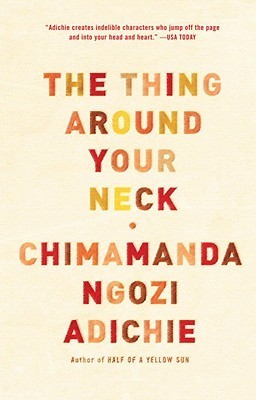
The list of critical accolades for The Thing Around Your Neck could wrap around my neck several times. Not sure what that means but I think it's worth noting.
Short stories. Good ones. She's young, so look for more from her in the future.





#12 – Twenty-eight Artists and Two Saints by Joan Acocella

If I could magically trade places with anybody and try out their career for a day, I might choose Joan Acocella. She gets to review dance and books for The New Yorker. What could possibly be more fun?
Twenty-eight Artists and Two Saints is a collection of Acocella's essay profiles of creative people. (As you may have guessed from the title, 28 of them are artists and two are saints — Joan of Arc and Mary Magdalene). Resisting cliches about art and suffering, she considers the lives of artists and asks thoughtful questions about the relationship between art and life.
I loved the profiles of Baryshnikov, Martha Graham, and other dancers. I discovered a writer, new to me, whose work I enjoy — Penelope Fitzgerald. I also loved her essay on the history of writer's block in which she considers famous cases — Ralph Ellison, Coleridge — and asks why and how it happens.
"Possibly, some writers become blocked simply because the concept exists, and invoking it is easier for them than writing," she says.
I may have skipped a few essays. But I would recommend this book to anybody interested in how creativity works.





July 24, 2011
#13 – The Year of Magical Thinking by Joan Didion
"Given that grief remained the most general of afflictions its literature seemed remarkably spare. … There were, in classical ballets, the moments when one or another abandoned lover tries to find and resurrect one or another loved one, the blued light, the white tutus, the pas de deux with the loved one that foreshadows the final return to the dead: la danse des ombres, the dance of the shades."
The Year of Magical Thinking is Joan Didion's pas de deux with her dead husband in a sense. This book's energy comes from the tension between Didion's desire to be a "cool customer," the elegant, detached observer who narrates her nonfiction, and her very real need to mourn her husband.
I cried a lot reading this book, even though is basically the opposite of sentimental. Maybe because of that. I started to think about how it will when I lose someone close to me. Hasn't happened yet, for which I am grateful every day. When it does I might reach for this book.
Extra credit:
Where I Was From is also excellent. That Didion's account of California — and the idea of California — attempts to make sense of both Thomas Kinkade and the prison guard lobby is pretty amazing. A thought-provoking, beautiful book I want to read again.





July 21, 2011
#14 – David Copperfield by Charles Dickens
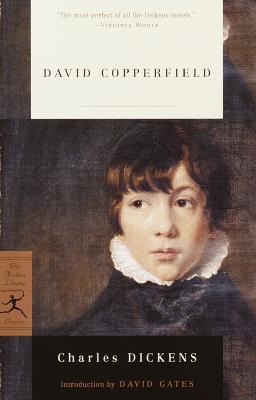
I'm really indebted to Chris Chaney for suggesting I read David Copperfield. Life lesson: English professors are wonderful people and are likely to be delighted to talk about books with you even if you are not or never have been their student.
I had a little bit of a phobia of Dickens. So many words. But eventually I just dived in and it was worth it.
Note: This novel doesn't really have a plot.
It is, however, a bildungsroman, which means that plot is not all that important. And it's always handy to know German literary terms to throw around at parties, so, there you go.





July 20, 2011
#15 – The Grapes of Wrath by John Steinbeck

Yeah, I'm just going to let Bruce tell you about The Grapes of Wrath.
Astonishingly (sadly) always relevant and beautiful.





July 19, 2011
#16 – View With a Grain of Sand by Wislawa Szymborska

When Wislawa Szymborska won the Nobel Prize for poetry, there was a bit of a kerfuffle about the fact that many of the prize committee did not read Polish. How can you truly know if the poetry is Nobel Prize-worthy if you can't read the original?
I wonder about this, too. I don't read Polish. But I find Clare Cavanagh and Stanislaw Baranczak's translations wonderful.
Here's a fine poem about Darwin, "Consolation."
She's also a long-time newspaper columnist. And her advice to would-be writers is as witty and blunt as her poems:
To Grazyna from Starachowice: "Let's take the wings off and try writing on foot, shall we?"
To Mr. G. Kr. of Warsaw: "You need a new pen. The one you're using makes a lot of mistakes. It must be foreign."
To Pegasus [sic] from Niepolomice: "You ask in rhyme if life makes cents [sic]. My dictionary answers in the negative."
View with a Grain of Sand is a fine introduction to her work.





#17 – A Room With a View by E.M. Forster
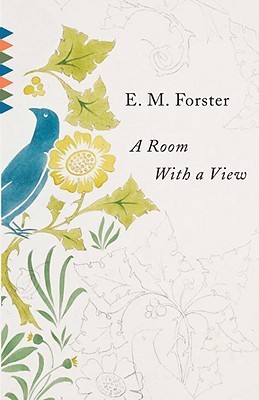 This book was a re-read, something I first read in high school. But unlike some other things I read in high school (ewwwww) it's held up remarkably well.
I wanted to include A Room with a View because, basically, Forster's prose is the best prose ever. Every sentence belongs. The paragraphs are so well-crafted, they give you a feeling of rosy well-being. I love his other novels that I've read, and Aspects of the Novel (again, great prose), but this is the snuggliest.
Extra credit:

So. much. hair.
The Merchant-Ivory movie with Helena Bonham Carter, Judi Dench, and Maggie Smith, of course. This is not an either/or book & movie situation, but a both/and.





July 13, 2011
#18 – In This House of Brede by Rumer Godden
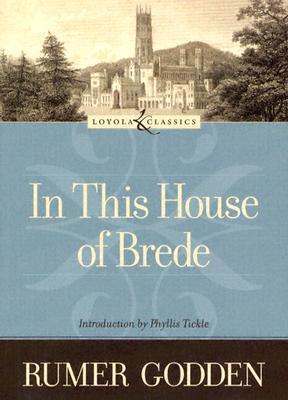
I love novels about nuns and wanted to include one in my list. Frankly, this post was a toss-up between In This House of Brede, Ron Hansen's Mariette in Ecstasy, and Mark Salzman's Lying Awake. The last two are more contemporary and perhaps more exciting from a plot perspective.
But I liked In This House of Brede because, more than being a story of an individual's journey, it's really the story of a community that, while isolated, changes over time in response to the changing world outside its walls. Great characters, too.
Credit where credit is due: I first heard about this book from SPU President Philip Eaton's blog.





July 11, 2011
#19 – The Art of Travel by Alain de Botton
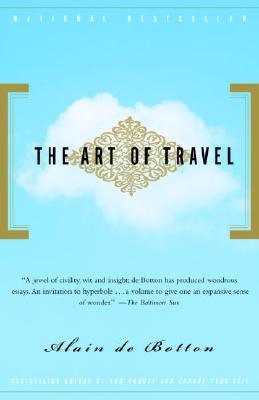
Here is, basically, the impetus for writing The Art of Travel:
"If our lives are dominated by a search for happiness, then perhaps few activities reveal as much about the dynamics of this quest — in all its ardour and paradoxes — than [sic.] our travels. They express, however inarticulately, an understanding of what life might be about, outside of the constraints of work and of the struggle for survival. Yet rarely are they considered to present philosophical problems — that is, issues requiring thought beyond the practical. We are inundated with advice on where to travel to, but we hear little of why and how we should go, even though the art of travel seems naturally to sustain a number of questions neither so simple nor so trivial, and whose study might in modest ways contribute to an understanding of what the Greek philosophers beautifully termed eudaimonia, or 'human flourishing.'"
I read it while I was here:

I am the luckiest girl in the entire universe.
It was perfect. You don't have to go to Florence to read this book. Just read it when you travel somewhere. In fact, one of the chapters is about a journey around the author's bedroom. Travel doesn't get more budget than that.





July 10, 2011
#20 – Wild Iris by Louise Gluck

Poetry time!
Attending an MFA program in creative writing was a little like going to poetry camp for three years. It was amazing. I loved it. And sometimes it seems like poetryland a completely different world divorced from the one I live in now.
For instance, in poetryland, I felt a bit self-conscious about liking Wild Iris so much. I don't love all of Louise Gluck's poems. And she has a reputation among some of the poetry people I know for not being friendly or something…I don't know. Actually now I can't remember why I felt embarrassed about liking this book. I have no idea. It's good.
Wild Iris is an amazing wild and weird book. Among the different poems emerges a sort of conversation between the soul, assorted plant life, and the divine. Here's a link to one of the plant poems, "Trillium."
And if that doesn't convince you to give it a try, maybe the shiny Pulitzer prize sticker on the cover will?