Jennifer Mosher's Blog, page 5
March 5, 2015
Use MS Word to save money on editing costs – quote marks
This is the second in a series of articles on how to use MS Word to self edit your document.
If you develop documents for business, or are writing a book or other document which you hope to publish one day, you can save money on editing and proofreading costs by delivering a higher quality document in the first place.
Part two – standardise your quotation marks

Consistency with quotation (speech) marks is very important – quote marks are a guide to your reader to help them know what it is that they’re reading: speech, an expression, or a quote within a quote. If you use both double quote marks and single quote marks without any consistency, you will confuse your reader.
Reasons for quote marks
The main reason for using quote marks is to indicate when someone is talking (speech).
Quote marks are also used when a character who is ‘speaking’ quotes something that someone else said.
Single quote marks are often used around ‘unusual expressions’ to indicate a different tone to be taken with those words.
And some authors use quote marks to indicate when a character is thinking. My preference here is to use italics without quotation marks:
How the hell am I going to get out of this mess? he thought.
Two main types of quote mark
The modern Australian style is to use single quote marks around speech:
‘I don’t know what to do!’ lamented Fred.
If quotes within quotes are required, then double quote marks should be used within the singles. For example:
‘I heard Fred say, “I don’t know what to do!” and he sounded very desperate,’ said Mary.
However, many people still prefer to use double quote marks. At the time of writing, this is still the standard in North America, so if you were using double quote marks to indicate speech, you would use single quote marks within the doubles to indicate quoted material within a quote:
“I heard Fred say, ‘I don’t know what to do!’ and he sounded very desperate,” said Mary.
Whichever way you choose is fine, so long as you’re consistent throughout your document.
Change your double quote marks to single quote marks
If you’ve chosen single quote marks, then use Word’s Find and Replace function to make sure you don’t have any unwanted double quote marks. This shouldn’t take long if you’ve been fairly consistent and should be easy if your document doesn’t use any quotes within quotes.
In the Find box, type a double quote mark “ and in the Replace box type a single quote mark (which appears as an apostrophe), ’ without any spacing either side. Click Next and check each instance of a double quote mark prior to replacing it – just in case it is a quote within a quote and you need to leave it in place:

Use MS Word’s Find and Replace function to change double quote marks to singles
If, however, you’ve unwittingly used double quotes all the way through, and now want to change them all to single quotes, it may be more expedient to choose Replace All and manually look for any instances where double quotes are required when you do your print review.
Traps for young players
If you decide to change from single quotes to double quotes, please don’t use Replace All or you’ll end up with something like this:
“I don”t know what she”s talking about!”
And that takes forever to recover from!
This is a very belated post following on from how to use Word to standardise your dashes.
The next post in this series should happen be a little sooner, and will look at removing empty paragraphs from your manuscript.
The post Use MS Word to save money on editing costs – quote marks appeared first on Jennifer Mosher - Editor.


Use MS Word to save money on editing costs ��� quote marks
This is the second��in a series of articles on how to use MS Word to self edit your document.
If you develop documents for business, or are writing a book or other document which you hope to publish one day, you can save money on editing and proofreading costs by delivering a higher quality document in the first place.
Part two – standardise your quotation marks
Consistency with quotation (speech) marks is very important – quote marks are a guide to your reader to help them know what it is that they���re reading: speech, an expression, or a quote within a quote. If you use both��double quote marks and single quote marks without any consistency, you will confuse your reader.
Reasons for quote marks
The main reason for using quote marks is to indicate when someone is talking (speech).
Quote marks are also used when a character who is ���speaking��� quotes something that someone else said.
Single quote marks are often used around ���unusual expressions��� to indicate a different tone to be taken with those words.
And some authors use quote marks to indicate when a character is thinking. My preference here is to use italics without quotation marks:
How the hell am I going to get out of this mess? he thought.
Two main types of quote mark
The modern Australian style is to use single quote marks around speech:
���I don���t know what to do!��� lamented Fred.
If quotes within quotes are required, then double quote marks should be used within the singles. For example:
���I heard Fred say, ���I don���t know what to do!��� and he sounded very desperate,��� said Mary.
However, many people still prefer to use double quote marks. At the time of writing, this is still the standard in North America, so if you were using double quote marks to indicate speech, you would use single quote marks within the doubles to indicate quoted material within a quote:
���I heard Fred say, ���I don���t know what to do!��� and he sounded very desperate,��� said Mary.
Whichever way you choose is fine, so long as you���re consistent throughout your document.
Change your double quote marks to single quote marks
If you���ve chosen single quote marks, then use Word���s Find and Replace function to make sure you don���t have any unwanted double quote marks. This shouldn���t take long if you���ve been fairly consistent and should be easy if your document doesn���t use any quotes within quotes.
In the Find box, type a double quote mark ��� and in the Replace box type a single quote mark (which appears as an apostrophe), �����without any spacing either side. Click Next and check each instance of a double quote mark prior to replacing it ��� just in case it is a quote within a quote and you need to leave it in place:
Use MS Word’s Find and Replace function to change double quote marks to singles
If, however, you���ve unwittingly used double quotes all the way through, and now want to change them all to single quotes, it may be more expedient to choose Replace All and manually look for any instances where double quotes are required when you do your print review.
Traps for young players
If you decide to change from single quotes to double quotes, please don���t use Replace All��or you���ll end up with something like this:
���I don���t know what she���s talking about!���
And that takes forever to recover from!
This is a very belated post following on from how to use Word to standardise your dashes.
The next post in this series should happen��be a little sooner, and will look at removing empty paragraphs from your manuscript.
The post Use MS Word to save money on editing costs ��� quote marks appeared first on Jennifer Mosher - Editor.
February 13, 2015
To pseudonym or not to pseudonym
We had an enquiry recently from a client looking to publish their autobiography under a pseudonym, which begged the question: Why? Why on earth would you hide from your own story? And if you have to hide from it, then why on earth would you want to publish it in the first place?
In reality, it���s none of my business why you should want to use a pseudonym, and I said as much to this author. But I did ask some pointed questions ��� so that they could at least reflect on their reasoning ��� and explained the issues surrounding using a pseudonym for your autobiography.
You see, the thing is, in my experience, those people that come to IndieMosh to publish their autobiography do so because they need to be heard. They need to tell their story and they need people to read it, to hear their take on their life. But if you put it out there under a pseudonym, then you���re not really telling your story, are you? Well, you���re telling your story, but pretending that it belongs to someone else. So you still won���t have the satisfaction of putting your story forward for yourself, if people don���t know that it���s from you.
If, however, you���re in a job or situation (say, Federal Police, Community Services, ASIO, witness protection, ex-gang member, etc) where it would be unwise for the general public to be able to trace your story back to you, then I can understand why you might need to use a pseudonym. But to be honest, you���d be better off waiting until you retire or leave the country so that it���s not so much of an issue.
But let���s say you do release your autobiography under a pseudonym. How are you going to market it? How are you going to sell it? How are you going to get out there and pretend that you���re that ���somebody else���? In these days of digital detection, it won���t take long before someone catches you out, before someone says, ���Hang on a minute, that���s not your name!��� And then you���re faced with either admitting that you published under a pseudonym and trying to explain why, or else trying to deny it. Either way, your credibility is shot. And in today���s world, authenticity is king.
Now, if you were publishing a novel, then no problem. It was a smart move of JK Rowling���s to release under the name Robert Galbraith. She was so entrenched in everyone���s minds as the author of Harry Potter, that to get any sort of non-judgemental reviews of new works, to not have her new works compared with Harry Potter, a pseudonym was her only alternative. However, Rowling was releasing fiction, and a different type of fiction to Harry Potter, so in essence it was a new product, and as such a pseudonym here was a smart move (despite the fact her identity didn���t stay hidden for long: http://www.themarysue.com/linguistic-tool-rowling/). In fact, she���s not the first author to write different genres under different names. But the point which I will stress again because I am a mother and we can���t say things just once, she���s writing fiction, and not her autobiography.
So if you���re considering writing your autobiography and you feel the need to release it under a pseudonym, ask yourself why. Brutally and honestly: Why? Are you ashamed of something you���ve done? Are you trying to hide something about yourself from certain people e.g. family, friends, employer? What is it that stops you ���owning��� your own story? Because I���m telling you now, if you release it as someone else���s story, then you are still in hiding. You are still in whatever closet you���ve locked yourself in and publishing under a pseudonym is unlikely to bring you the relief you need.
The post To pseudonym or not to pseudonym appeared first on Jennifer Mosher - Editor.
January 4, 2015
Honouring the dead long after they���ve gone
Over the last few months, I���ve noticed many stories beginning to appear in the press and on the internet where people remember those ancestors who gave their lives in World War 1, particularly at Gallipoli.
And then in November, there was the tragic death of Phil Hughes and the national grieving which followed.
Without discounting the impact of any of these losses or the grief their loved ones felt, I understand how those who have suffered ���non-public��� loss feel. How do you remember a loved one without appearing maudlin or attention-seeking? How do you commemorate someone else���s life without seeming as if you need to ���get over it���. Fortunately, I have long understood that you don���t ���get over��� a loss, you just learn to live with it ��� or rather, without the person or thing you lost. So read on if you wish or click away now if you prefer, I don���t mind, because this is for me, for those I lost, and for those they left behind ���
Today marks the fifth anniversary of one of the worst days of my life. Mine and several others���.
Around 7 pm on 4 January 2010, my cousin rang to let me know that her mother ��� my Aunty Doff and my own mother���s ���little sister��� ��� had passed away from cancer at the age of 81. For the prior two months I had been conditioning Mum, then aged 88, that this was going to happen, but she was still shocked and burst into tears when I rang to tell her.
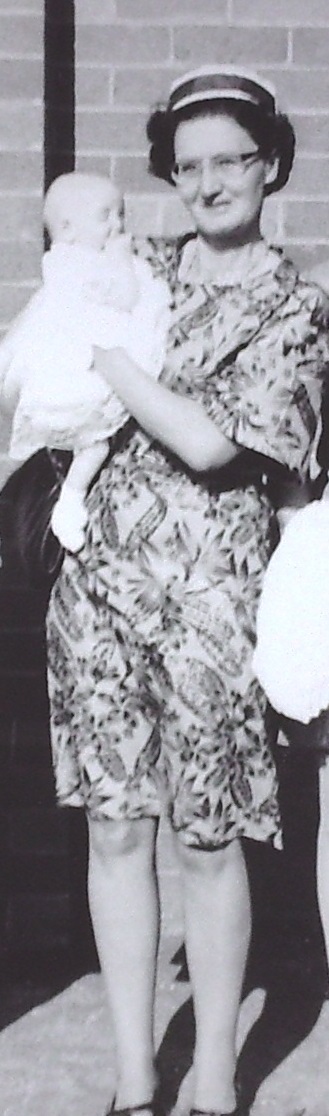
Aunty Doff holding Fiona at her christening
After hanging up from Mum, I rang my own ���little sister���, Fiona, aged 42, to let her know that Aunty Doff ��� Fiona���s godmother ��� had passed away. Fiona���s daughter, my niece, answered the phone and when I asked to speak with her mum, she managed to say something simple like, ���Mum���s dead���, before handing the phone to a poor paramedic who then had the job of trying to work out who I was and how much he could tell me. (It turned out that Fiona had suffered a major stroke about twelve hours earlier, leaving behind a son and three daughters, aged between 23 and seven. The eldest daughter, then aged 19, had found Fiona���s body after breaking into the house that evening ��� around the same time that Aunty Doff slipped away.)
A little later we drove down to my mother���s aged care unit to tell her that her daughter had also died that day. Ringing her with the expected news that Aunty Doff had died was one thing, but I couldn���t call back to tell her about Fiona. That had to be done in person and is something I never want to do to anybody ever again.
Five years on and I feel the need to mark today, to honour these women. But how? Both were cremated, so there are no graves for me to visit, nowhere to leave flowers. I know that a Facebook post will elicit a string of ���sorry for your loss��� comments and that���s not what this is about. I am not feeling sorry for myself. I just feel the need to mark the day in some way that lets their loved ones and others know that they haven���t been forgotten; that lets me know that I did something to show that while they���re gone, I haven���t forgotten them.
So thinking about it, the best I can do is to remember them my way ���

Aunty Doff (left and ready to party!) with Mum (her big sister) on my wedding day.
My Aunty Doff was a great woman. Feisty, lots of get-up and go, great organisational skills, a good sense of humour, a great cook and much fun to be around. She was born in a time when women stayed home and looked after their children while their husbands went to work.
Within the family and close friends, she was teased for her bossiness and even her children (my cousins) lovingly referred to her as Hyacinth Bucket (from Keeping Up Appearances). At her funeral, one of the local church choir members drew gentle but knowing laughter when talking about her ability to organise everybody for bus trips, choir practice, etc, and how none would dare argue with anything she suggested! As a youngster, much as I loved her, I was also somewhat scared of her. I shared that with her in later years and she was openly shocked at the thought because, despite her ���scariness���, she emitted an amazing amount of unconditional love to those around her.
On the way home from her funeral, it struck me as sad that, had she been born forty or fifty years later, she would probably have been the CEO of some company, such were her drive, energy, organisational skills, intelligence and sheer force of personality. I don���t think that thought would ever have occurred to her, and I don���t for one moment believe that she ever felt that she missed out on anything, but I wonder what might have been had she been born in a different time, with different opportunities open to her.
And I���ve often wondered what might have been had Fiona���s life been different. My parents adopted Fiona when she was just six weeks old. They did it with all good intentions, and in line with the general practice of the day (the mid 1960s). But it���s only as the years have passed that I���ve managed to understand the alienation that Fiona must have felt trying to grow up in our household.
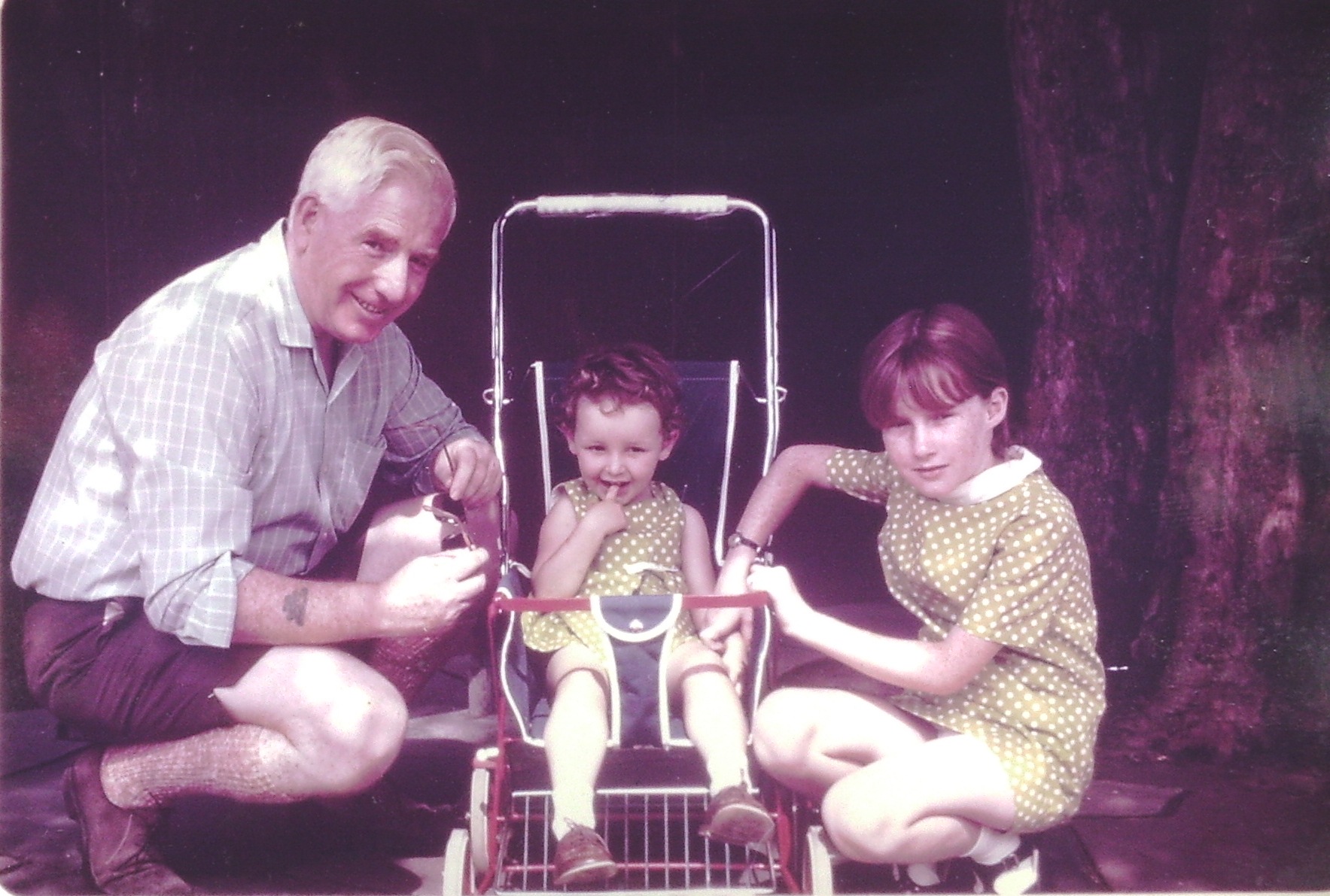
Dad, Fiona and I, at Taronga Zoo.
She was always loved and knew that, and was basically a happy kid, and she and Dad enjoyed a special bond where they would go to football matches together. But Dad allowed her adoption to play havoc with discipline in the house, and he would often undermine Mum���s decisions. Whenever she was upset after a row with Mum, his favourite expression was, ���Poor little kid. She hasn���t got anyone else in the world apart from us.��� And he would then proceed to make it up to her. This caused untold friction between my parents, and ensured that Fiona only had to play the right cards to get Dad to overturn any of Mum���s rulings that she didn���t like.
I don���t blame Fiona. Kids learn quickly how to get what they want without even knowing consciously what they are doing. She wasn���t deliberately manipulative. But Dad, totally misguided, made life harder for her by not keeping the discipline stable, and by not ensuring that she took responsibility for her mistakes from an early age.
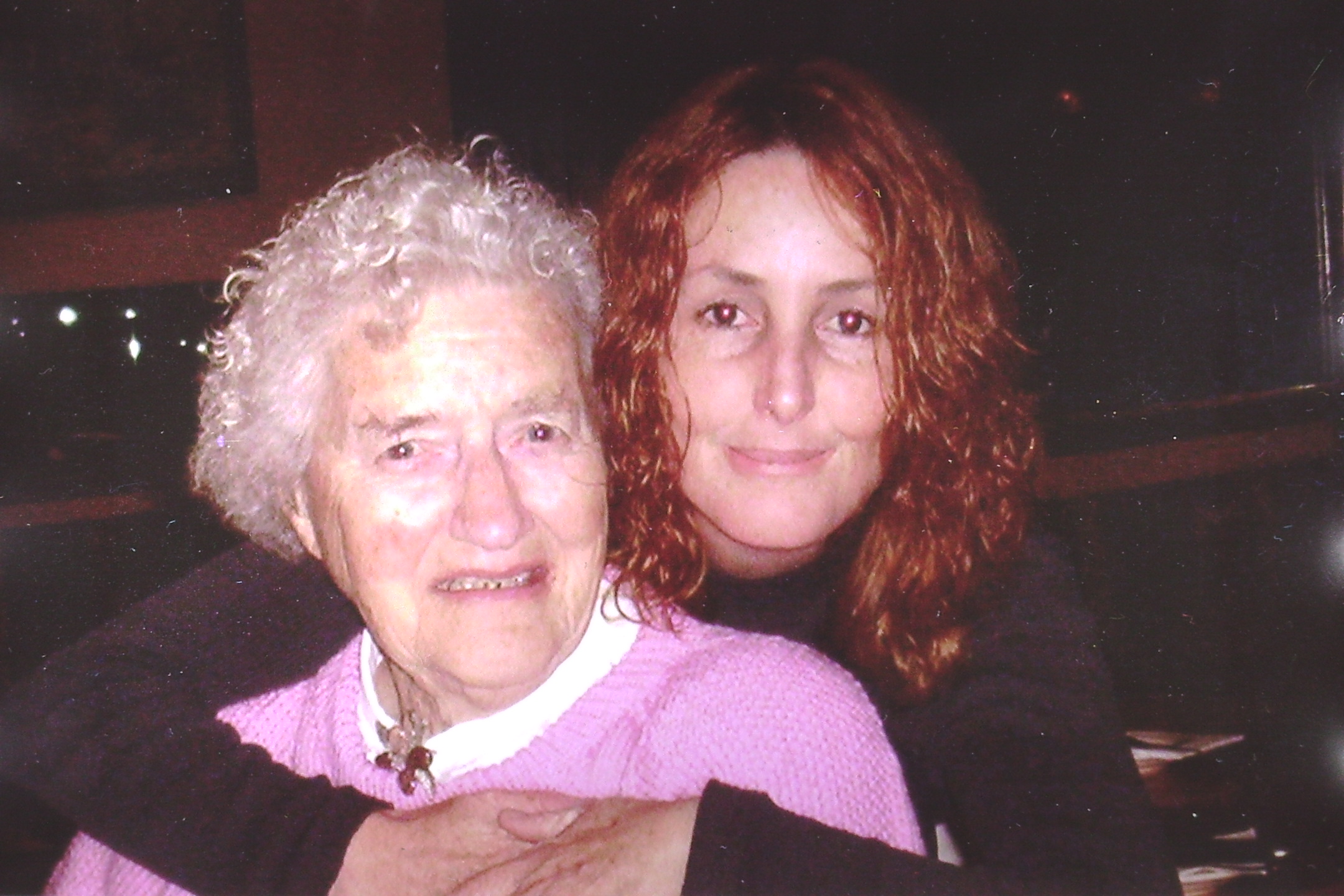
Mum and Fiona. Despite Mum being the ‘tough’ one in the household, there was still a lot of love between them as deep down Fiona knew that Mum was only trying to do what was best for her.
All three of them also suffered because, in the classic case of genetics vs environment, they didn���t understand her personality. In the days of Dr Spock, it seemed simple to raise a child. Follow the handbook and they���ll turn out perfectly. The problem was, though, that Mum and Dad were of similar background, ideals, thinking, and personality, and Fiona came from unknown stock, unknown personality components, and they simply did not understand her. Nor did they understand the plight, the isolation, the loneliness, of the adopted child.
As I���ve aged, my fascination with tracing my family tree has provided me with endless hours of delight as each new branch and leaf is added. Fiona never had this. Although she did meet her birth mother on a couple of occasions, and her grandparents (she adored her grandfather), she could never forgive her mother for giving her up. I tried more than once to explain that in a small country town in the mid 1960s, being an unmarried mother wasn���t really an option, but Fiona just couldn���t accept that. I believe that she allowed the hurt of that very first ���rejection��� to influence her life.
We all have a story, and we all need to know our story. Fiona���s story was cobbled together with bits and pieces borrowed from ours and mixed with her ���real��� story. But she never had that anchor, that link, to what came before and never enjoyed the stability of knowing who she really was, no matter what that story entailed.
Today, 4 January 2015, Aunty Doff has five grandchildren (all of whom she met and loved dearly) and several great-grandchildren. Fiona has four grandchildren with a fifth on the way. She never met any of them.
My niece will live for the rest of her life with the image of finding her mother on the floor. She and her siblings are finding their way in the world, some better than others. As a distant aunt, I can, and should, only do so much. Like my parents had to watch Fiona do it her way, I can���t tell my nephew and nieces how to live their lives. I can only be here for a sounding board if needed.
I am still sad at the thought of Fiona���s death. I was sad when she was alive because I couldn���t help her to find inner peace. I am sad that she died without finding a decent skerrick of it, and without seeing her grandchildren. She would have been a doting grandmother ��� full of the same unconditional love for her grandchildren that Aunty Doff had for hers.
I am sad that there are no graves for Fiona or Aunty Doff, nowhere I can go to say, to show, ���I remember you���. Nowhere to meet with others to mark the day.
So it���s here. On the internet. With love from me to them both. Where others who loved them may find this and take comfort in the thought that they aren���t the only ones who were remembering these women today.
I thank Aunty Doff and Fiona for being part of my life, for the lessons they taught me, and the love we all shared.
That others should be so lucky.
The post Honouring the dead long after they���ve gone appeared first on Jennifer Mosher - Editor.
December 30, 2014
Sydney Harbour Bridge and HMAS Sydney ca 1928
This post is one for the history and mystery buffs.
I had the pleasure this week of being contacted via Ancestry.com by a second cousin of my husband’s. Several great things came out of the initial and subsequent emails:
We discovered a whole branch of the family we didn’t even know existed. And now my husband has a bundle of second cousins he didn’t know existed, either!
I found out that the ‘Mrs Smith’ in a photo in an old wooden box of my late father-in-law’s is actually my husband’s great-grandmother on his mother’s side. I can’t believe that nearly 100 years after she most likely died (still a little research required there), we have suddenly placed ‘Mrs Smith’ in the tree.
I found out that Mrs Smith had more than just one daughter (my husband’s grandmother) – she had several sons, too! Hence the newly-found second cousins.
The other great thing to come out of it all was finding a photo of Sydney Harbour Bridge before the arches were joined. By itself, not so incredible as there are plenty around. But this particular photo has HMAS Sydney in it, front and centre, showing just how much work is still required on the bridge.
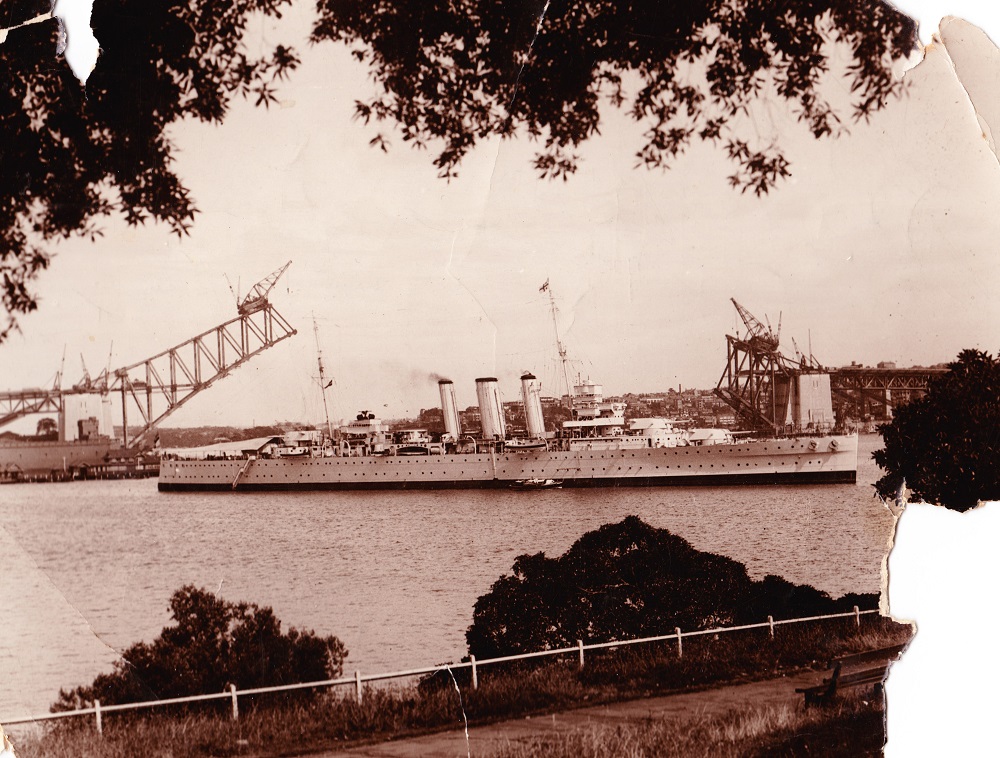
A little bit of internet sleuthing suggests that this is probably HMAS Sydney I, which is kind of sad in a way as my father-in-law’s brother-in-law (yeah, you go work that one out after a couple of beers!), Petty Officer Cook Bernard Frank Biram, lost his life when HMAS Sydney II was sunk by the German��HSK Kormoran on��19 November 1941. However,��I think it would have been terribly spooky had he had a photo of HMAS Sydney II so long before Bernie lost his life on it.
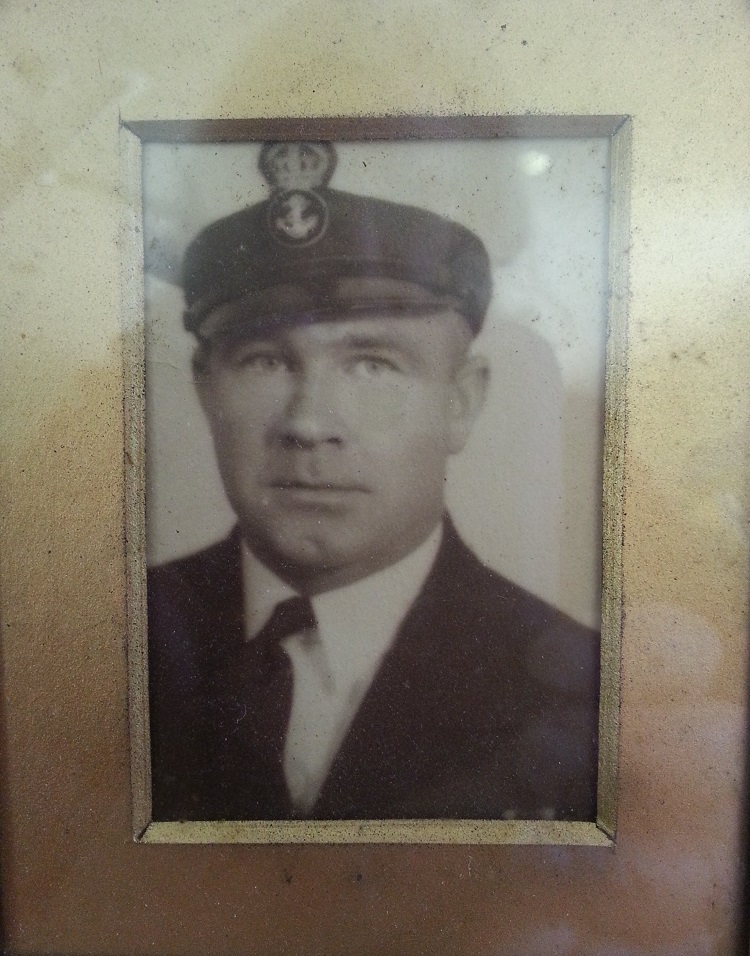
Petty Officer Cook Bernard Frank Biram
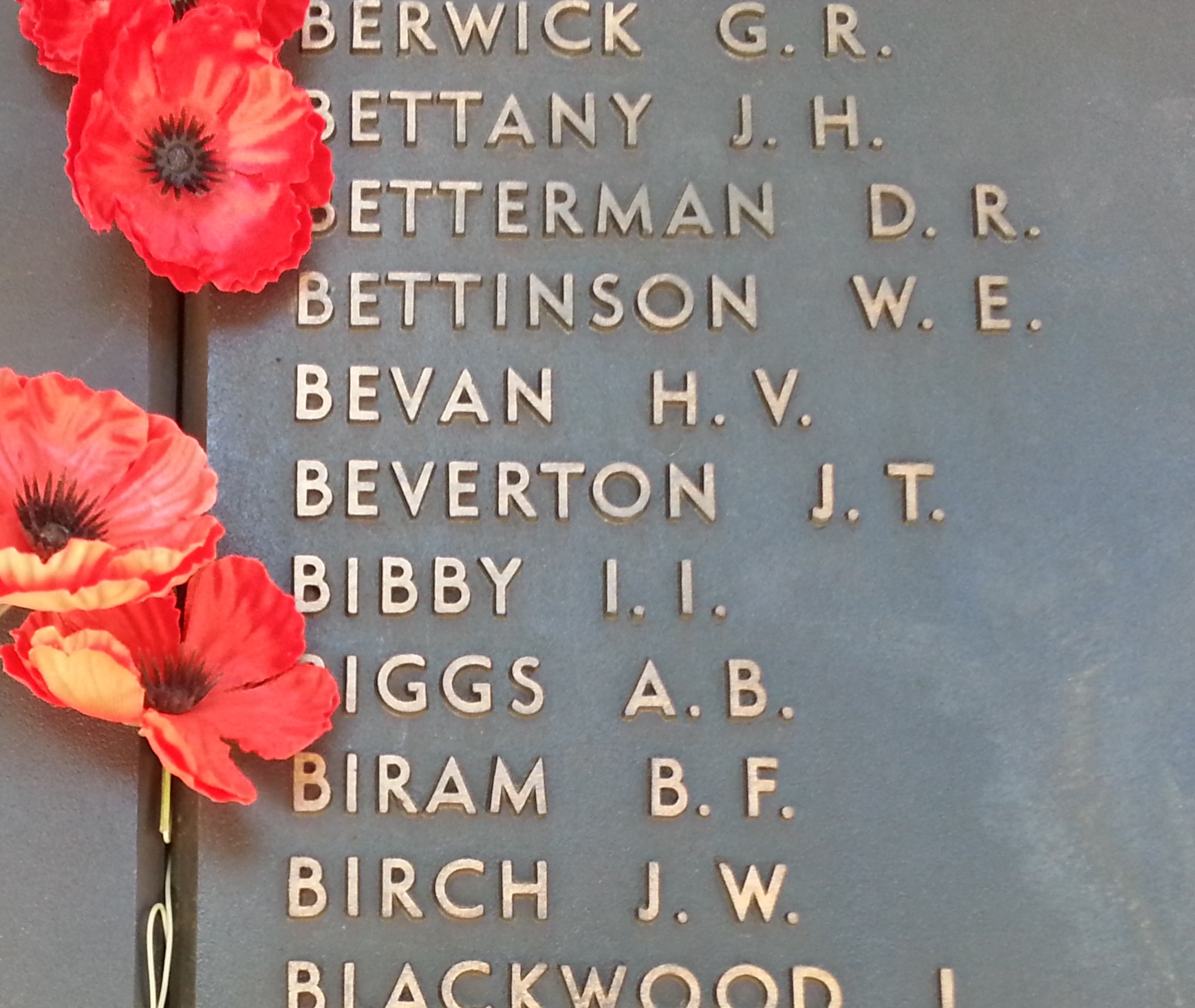
Australian War Memorial dedication board
So here are my questions:
When was this photo of the Sydney Harbour Bridge taken? (On the back of the photo the year was written as 1938, but that can’t be right as the bridge was opened in 1932, so I am guessing that it should have said 1928.)
Where was it taken from? My guess is Bennelong Point, long before the Opera House was even a twinkle in J��rn Utzon’s eye.
Which HMAS Sydney is it? No. I or No. II? My money is on No. I.
No prizes, just the sheer satisfaction of working it out.
Happy New Year, all!
The post Sydney Harbour Bridge and HMAS Sydney ca 1928 appeared first on Jennifer Mosher - Editor.