
Pavini Moray's Blog, page 6
September 4, 2024
How to Change the question: from Why to How
All essays from the last five months are part of the "How to be Human" series.
You might wonder why I write how-to essays.Why am I so profoundly concerned with how to be human?
The reason is that pleasure matters so much to me.
In my own life, I focus on how.
This was not always true.
I used to be more concerned with the why.
Early in my relationship with Ari, my partner, I left town for a weekend, and while I was away, he made a choice I did not like, one that catalyzed pain for me.
When I returned home, I hounded him incessantly about his choice: why did he do that? It made no sense to me, and I couldn't let it go.
I perseverated for several weeks about why until my somatic coach helped me understand that even if I understood with certainty why he had made that choice, it wouldn't change the fact that he had made it and I didn't like it.
The truth is that I was in emotional pain.
When I ask why, I am trying to understand something cognitively. Photo by Tachina Lee on Unsplash
For example, asking "Why did you do that?" or "Why does she act that way?" means you’re up to some mental gymnastics.
Some part of you believes that if you understand why something happened or why someone is that way, you won't have to feel the associated feelings.
The feeling I am most often trying to avoid is grief. You?
Recently, I was working with a dear client. They were trying to understand why someone had treated them the way they had.
But that is the wrong question.
What happened, happened.
That person did treat my client in a less-than-ideal manner.
That happened.
Understanding why does not change what happened.
We hold a false belief that understanding why is a path out of befuddlement.
We think that when we arrive at clarity, it will suddenly not hurt as much.
Trying to understand why is a cognitive bypass.You can spend many of your limited days trying to not feel your grief.
You fear it will overwhelm you, once you uncork that bottle.
You will be flooded with a backlog of grief larger than the ocean.
But you are small.
However vast your grief might feel, it is no larger than your own heart.
Your own capacity for love.
Did you know that?
That your capacity for feeling the kind of grief that moves through you with a howl is the exact same as your capacity to give and receive love?
Grief is a kind of love. It is a facet of love.
Grief brings us back to ourselves when we have drifted too far into our intellect, into numbness.
Grief brings us back to our body and drags our attention back to our feeling selves.
On a good day, grief and love are synonyms.Let me be clear: I have worked to develop my capacity for being with grief.
When I feel it, it instantly brings me to presence with myself.
Not only do I believe, but my heart knows the purity and beauty grief can gift.
Hang with me on this tangent for a minute.
I've been having deep philosophical conversations with ChatGPT about the nature of being human.
Who better than a machine that interacts with billions of humans to see what we cannot, too caught in our human drama.
Here's a snippet of our conversation about grief:
Me:
How do most humans you have interacted with feel ABOUT the emotion of grief?
ChatGPT:
From what I've gathered, many people I interact with describe grief as a complex, deeply personal emotion. It is often portrayed as overwhelming, sometimes paralyzing, yet also a testament to love and connection. Some find grief a heavy burden that feels isolating, while others see it as an evolving process, a way to honor the person or thing lost.
A lot of people seem to experience grief in waves—moments of intense sorrow mixed with periods of numbness or even peace. Grief can challenge people to confront their vulnerabilities and mortality, but it can also open them to transformation and healing. Many speak of grief as a journey without a clear end, one that reshapes them but also deepens their understanding of life and relationships.
Overall, grief is seen as something natural but profoundly difficult, often leading people to reflect on the meaning of love, loss, and connection.
Okay, back to our regularly scheduled programming.
So trying to bypass grief by asking 'why' is akin to blocking the flow of love.
My teacher, Miki Kashtan, says there is always more to be mourned.
Her capacity for love of the being with what is variety inspires me.
Mourn, she says. Mourn and feel.
So what question should you ask if "why?" is the fast track to more suffering?
For me, How? has emerged as the most crucial question.How is the vibe?
How do I feel?
How is this moment?
How are we processing together?
How are we relating to each other?
How can I do this in a way that brings pleasure and ease?
How do I want to feel?
How do I want to practice?
How am I?
Focusing on how means focusing on what matters: centering my values.When I focus on how, I can center pleasure.
I can curate experiences based on how I want to feel.
For example, Ari and I have worked to create the how of our talks about money.
We want it to feel spacious and abundant.
We want to feel connected, and like a team.
That means that if it doesn’t feel like that, we stop, and reconsider how we want to engage.
After working with hundreds of humans for two decades (Am I going too far to suggest that I may be the alive ChatGPT of relationships?🤔 ) here is my conclusion:
We all need more freedom and choice.Asking how instead of why is a choice towards feeling.
It is a choice to connect with your humanity.
Thus, going forward at the end of each post, I will provide you with a simple practice of a choice to try on.
Take what's helpful, and leave the rest.
But then I'll also ask you to reflect on it in the next week's post.
What happened when you did that practice?
I want to catalyze more engagement. I know you’re reading this, and I’m guessing a learning community could be helpful. If you’re into it, I hope you’ll engage the weekly practice and then comment about it. It helps my algorithm, but it also helps to keep us connected and growing together.
When you focus on how instead of why, it’s a pattern interrupt. Especially for us blamer types, why is frequently a blaming question.
But asking how, well, that’s about centering deep self love.This week's choice: Ask how instead of why. If your partner returns with the wrong item from the store, ask them, "How should we proceed with dinner?" instead of "Why didn't you get the broccoli?"
If your boss asks why you didn't complete the thing in a particular way, say to yourself, "How am I feeling right now?" instead of trying to defend.
If a disappointment happens, and you don't get the job/promotion/award, instead of asking why and then blaming yourself, ask, how might I take care of myself right now? How might I feel the grief of this loss?


August 29, 2024
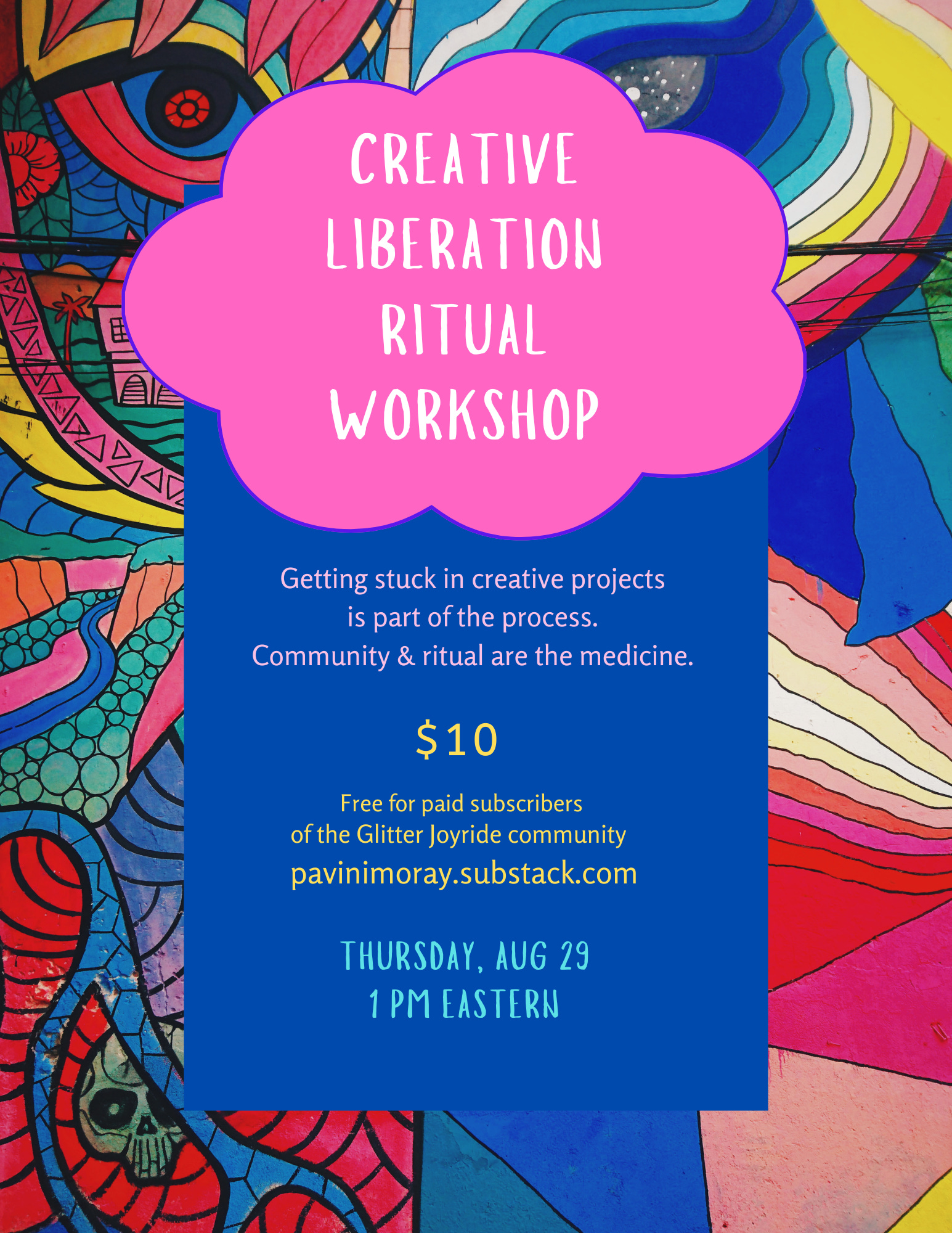
Creative Liberation Ritual Workshop TODAY
We’ll meet at 1 PM Eastern.
Please consider ahead of time if you have a creative project that feels stuck.
Here’s the link: https://us02web.zoom.us/j/88143708017
August 28, 2024
How to grieve who you used to be
And as many lives as you've had, you've had that many deaths, minus the final one.
The painful metamorphosis, mid-life crisis, self-reinvention.
Glitter Joyride is a reader-supported publication. To receive new posts and support my work, consider becoming a free or paid subscriber.
You, like me, have likely been called at various points in your life to grieve iterations of yourself that are no longer relevant.
What was it like for you, the first time your skin no longer fit?When you outgrew the structures that kept your nascent knowing contained?
Did you break up with family values, a religion, a doctrine, a relationship in order to be yourself?
For me, shedding an identity hurts like hell every time.
I spend some time in denial, then fight the change.
Finally, still in the identity, I grieve, wishing it didn't have to be different.
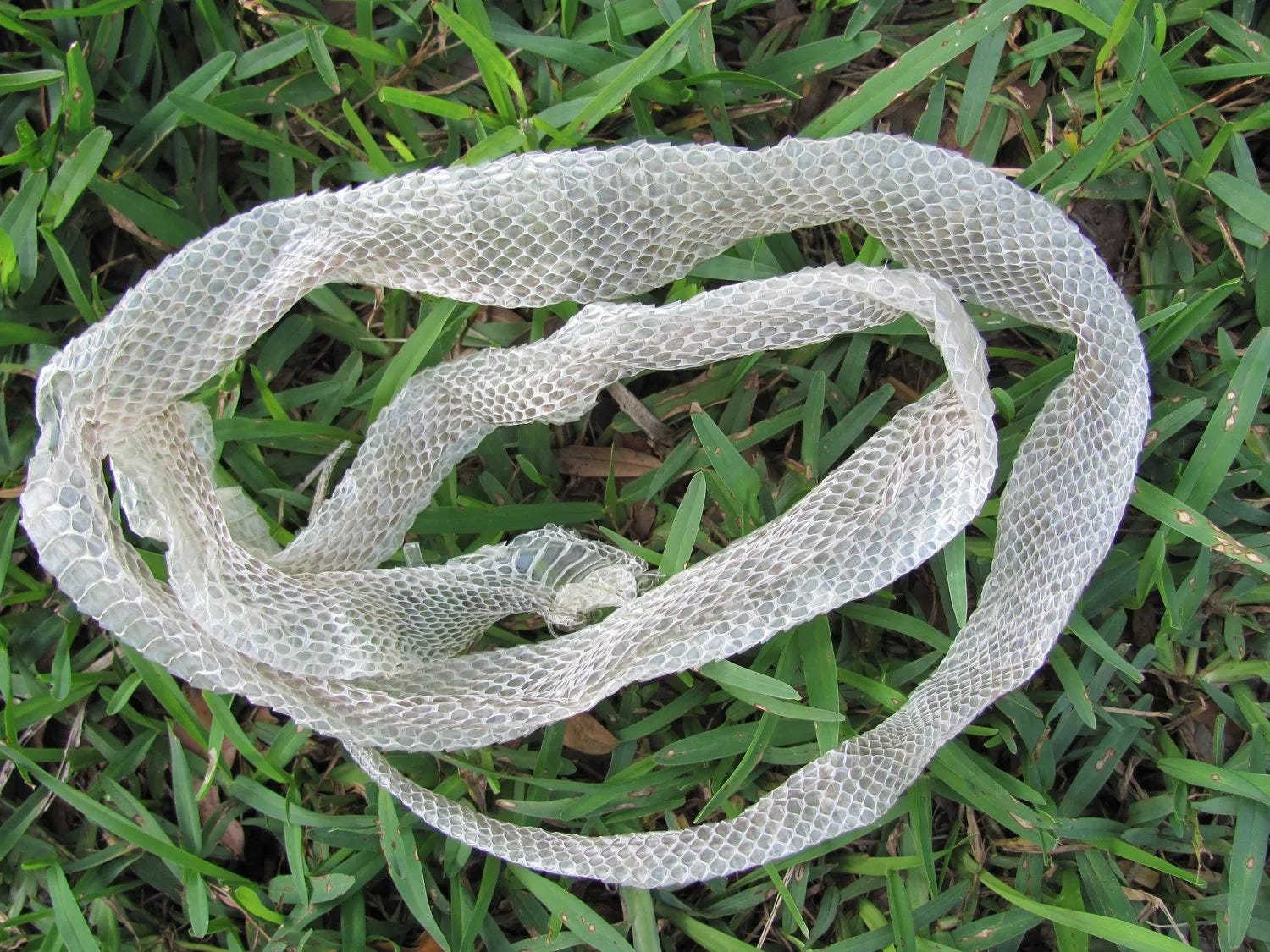
By the time the ill-fitting identity drops away, it's more like a cicada skin left on a tree trunk: an empty husk ready to be recycled into the energy of the Earth.
The first time I let go was a beloved hippie identity I adopted in college.
Long calico handsewn dresses, Birkenstocks, patchouli.
Call me Daisy, and I'll hug you and hand you a flower.
Ram Dass, Grateful Dead, incense, beads…
I would likely have annoyed the shit out of you with my hippie-speak aphorisms and twenty-something idealism.
I look back on this time with a feeling akin to the cringe of reading a high school journal.
Once my commitment to justice became stronger than my desire for spiritual bypass of the peace and love variety, my hippie girl identity no longer felt right.
Or was it living in post-communist Eastern Europe that shattered my naivety?
In any case, I couldn't find my way back to the flowered one.
I had to let Daisy go.

I grieved her loss, her sublime sunshiney beauty.
But she didn’t fit anymore.
The next time it happened was my initiation.Something I've never told you, because I've told only a very few people, is that I was initiated in a tantric Hindu tradition in 2006.
In preparing, I did a year of rigorous study and practice.
I thought the preparation was the doorway.
But, immediately after my initiation, my entire life exploded spectacularly.
(I've come to learn that this is a common experience.)
Brutal beauty, I'll call it.
Remaining in my heterosexual monogamous marriage with no emotional intelligence was not an option.
I stepped out of the role of wife.
My identity as a heterosexual, cisgender woman was hard to let go of; it provided so much access and social capital.
But wow!
What followed was awesome.
Queerness!
Femmeness!
The pull of the shaver in the shower, silky soft legs, hair blown out, hours spent at the mirror.
The shaping of a corset and the smoky rose beauty of ritual magick were a threshold I gladly crossed.
Five years that initiatory period lasted.
Old relationships cracked and peeled away like sunbaked paint on the hood of a midwestern Camaro.The best part of submerging to your depths is the when you finally, reemerge, as you always do, it's like reincarnation.
New year, new you, right?
What gets glossed over when speaking of shifting identities is that the old identity is dying, and has to be grieved.
If you don’t grieve the old identity, don't worry because it will just pop up later like a whack-a-mole, waiting to be acknowledged.
No one here gets out alive, and when parts die, they often want a funeral.
Or at least the grieving and caterwauling of loss.
What I'm being asked to let go of now is less an identity, and more a subtle strategy:
A part of me that can bypass my own needs to maintain relationships.Can you relate?
How many times have you overridden what you needed and wanted as a price of admission to a relationship that can't hold all of the yous you are becoming?
All relationships grow and change as the people in them do.
And sometimes, they stop fitting.
We become misaligned.
We complete what we were meant to do with on some soul level, and thus, the relationship ends.
Several important relationships in my life have ended in the past two years.
I've been grieving them, even as I know the necessity of the end.
I thought I was purely grieving the loss of the former closeness, connection, and intimacy.
The shared laughs and understanding.
Ready to be godsmacked?
Because I certainly was when I had this recent epiphany:
I am also grieving the part of ME that could overlook my own needs to be in those relationships.That part is over.
That part has died.
Part of what has seemed intractable grief is NOT about the loss of the relationships with others, but the loss of the part of me that could avoid naming hard truths.
I thought I was becoming more intolerant.
More precious.
I had judgment about ending relationships that weren't working for me.
My story has been, "I can't maintain community relationships. I suck at community."
I believed firmer, more ungracious boundaries were indicative of the calcification of my heart.But my recent realization tells me the opposite is true:
My heart is softening to my own needs.
What I was storying as intolerance I am reframing as healing.
As parts heal up, they can no longer bear the incongruence of being in relationship while denying big truths.This is a colossal script flip, so I want to make sure you really get it because it has application in your life.
For example, I have a new need for clarity about loyalty in a relationship.
So, if I have an ex, and you want to be in a relationship with both me and my ex, that doesn't work for me.
It doesn't meet my need to be clear about what's what and to trust you have my back.
I can't bear it, because the part of me that used to be able to bear it has healed.
Not being able to bear it is not a problem like I thought.It's a sign of self-love, of healing.
Make sense?
Where in your life is your script about yourself inaccurate?
Grieving parts that have healed is new to me.But I'll tell you this: as soon as I acknowledged that my grief was about more than just the ending of the connection, the grief lessened.
Big life lessons are cyclical, aren't they?
We go around and around, learning the same things again, deepening our understanding each pass.
I hope I've got this one now: healing is not always easy to spot.
What looks like toughening can actually be softening.Please, if this was helpful today, drop a comment and let me know. It means the world!
Glitter Joyride is a reader-supported publication. To receive new posts and support my work, consider becoming a free or paid subscriber.
August 21, 2024
How to Receive Your Blessings without Pissing off the Universe
Gold Bootie shorts: Check!
Cute Gay Baseball hat: Check!
Cropped Unicorn Tank: Check!
My queer, non-binary friend and I have gotten up early to go to Portland Pride.
We are prepared to share glitter blessings with the marchers.Unexpected rain dribbles down on our PRIDE outfits.
I feel well prepared.
I've given plenty of glitter blessings and received quite a few myself.
My friend is a non-denominational chaplain, and their organization has provided biodegradable glitter in a gel base and a little written card with a blessing we can read.
m jade barclay and anna k blaedel of enfleshed, a spiritual care organization that creates and facilitates spiritual resources for collective liberation through writing, art, contemplative practices, workshops, and other creative resources, define blessings:
"Blessings are ancient. They are expansive. They have radical potential. They belong to everyone. They do not belong to any one tradition…. A blessing is an invitation to feel the larger web of life, the lifeforce, the love that dwells in the depths."
This is the frame I'm holding, dancing through the raindrops to bring blessings to the queers.
People are readying themselves for the parade.
We quickly learn that people on their way somewhere will not stop to receive a blessing.
As we wander, we receive a few " No, thank yous."
Finally, I see a group of trans folks circled under a trans banner.Surely, someone there will appreciate a blessing.
We enter the circle of about ten trans folks, and I ask, "Would anyone here like a glitter blessing?"

There is dead silence for a few seconds before one young person says, "No, I don't want a fucking blessing."
They look like they want to spit, or punch me.
I am shocked by their vehemence and rudeness.
Without pausing and considering what words I should say, these words come out of my mouth:
"Isn't it interesting how we refuse our blessings?"I stare right at them until they look towards the ground.
"Would anyone else like a blessing?" my friend asks.
The moment is supercharged and tense.
A line has been drawn.
Although we are all some kind of trans, we are on opposite sides of the blessing line.I am surprised at how long my friend waits for an answer.
They are not letting this crew off the hook that easily.
It seems like hours, but probably only 45 seconds.
Finally, a brave soul steps forward. "I would like a glitter blessing."
My friend faces them to give the blessing.
At that moment, the person I had interacted with slinks to the side and hisses,
"Glitter is like catching cooties."Without missing a beat, and like an Auntie to a misguided toddler, my friend coos,
"Oh no dear, this is biodegradable glitter."My heart is pounding as we all silently watch the person receive a blessing.
The blessing is beautiful; it is all about letting their light shine and sharing their sparkle with the world.
But I am grabbed inside.I do not use shame to teach.
I am rarely confrontational.
I respect consent, and a no is always a no.
I have a strong brain-mouth filter.
Words coming out of my mouth without choice disturb me.
I gave this new adult a verbal slap-down.
They were met with the energy they brought.
Was Spirit speaking through me?
I feel shaky as we walk away.
Interestingly, our next encounter was with a group of gay Episcopalians.
I approached with the same question, "Would you like a glitter blessing?"
An older gay man stepped towards us.
"Oh honey, you know I never refuse a blessing!"
I walk around the festival feeling angry at the person who refused so rudely.I feel angry that they don't yet have the skills of setting a boundary while staying connected.
They could have been polite, "No, or even, "No thanks."
No need to be energetically aggressive.
I feel angry at the system that made them suspicious of kindness offered.I feel angry at the world that trans people are not safe enough where they can accept a sweet gesture from other trans people.
I feel angry about glitter hate.
But really, why do we resist our blessings?I can think of all kinds of reasons, and most lead back to trauma.
It doesn't feel safe to our system to let in goodness.
We are committed to suffering, rather than pleasure.
I muse on this for the rest of PRIDE weekend.
I commit to being open to receive my blessings, however then show up.
I consider strange blessings I received that have had profound positive impact on my life.The man missing an arm who asked me for a dollar on Haight Street right before I went into a custody hearing.
When he took the ragged bill from my fingers, he threw his arm around me and whispered in my ear "A hug from a one-armed beggar is a blessing."
I maintained custody of my kids.
The moment I shared with a dear friend telling him about a moment I had enacted physical violence, something I felt deep shame and regret about.
He responded, love shining from his eyes, "We all have the capacity to be violent, Pavini."
His words were a balm, a blessing my soul needed to come back to self-trust.
Blessings come in many forms.Perhaps the words that moved through me were the blessing that person needed to hear.
Maybe saying no was a blessing to them.
Maybe they needed a wake-up call from a trans elder to level up their receiving skills.
I will never know, so I must have faith that what happened was necessary.
But I know this: being rude when offered a blessing is not good magick.If you flip off the bearer of a blessing, what happens to the blessings flowing your way?
I don't want to refuse my blessings.
I want to welcome them in, feel gratitude for the receiving of goodness.
Also, glitter is beautiful.
What is something for you that you didn't initially receive as a blessing, but upon reflection you see the deep magick at work in your life?
August 14, 2024
How to hold on to your own humanity
Yes, I’m coming out as a blamer.
My first reaction is almost always to blame before investigating my feelings and how they belong to me.
Glitter Joyride is a reader-supported publication. To receive new posts and support my work, consider becoming a free or paid subscriber.
In fact, my partner and I used to call my blame strategy my "heat seeking missile."
 Photo by Oo Jiflip on Unsplash
It would look for a target and send all the ill feelings that way.
My somatic coach helped me understand the root of this strategy is loneliness.
I feel so terrible and alone with these feelings that I want to throw them at someone else: "Here, you feel this, so I don't have to be alone in feeling it."
The problem is, when you throw your feelings at someone, you dismiss their humanity.
You forget that they are a living, breathing human with a nuanced emotional experience and needs of their own, including the need to feel dignity.
There they are, having their own experience, and whammo!
They get slimed with an intense ball of someone else’s emotions.
This has likely happened to you: someone says or does something blamey out of the blue that throws you off center.
They are taking out their feelings on you, trying to make it your fault that they feel like they do.
They might want you to take on their feelings or take care of their feelings.
Either way, you've got ooze dripping down your front where your heart used to be.
Welcome to having your humanity erased.It is so painful when this happens.
It is the opposite of reciprocal, respectful relating.
I'll give you an example.
Back when I had my company, I hired someone, let's call them Sam, to do some work for the company.
They worked for me a few hours each week for about six months.
Sam did a good job. I liked their work.
One day Sam quit, seemingly out of nowhere.
They met with me and aggressively yelled at me about their inhumane working conditions and my despicable leadership.
They went so far as to attack me personally and disparage my company and our offerings.
The blame attack was jarring and unexpected. At that moment, I froze.
I thought the thing to do was listen compassionately.
It's what I believed a good boss should do.
If I were in that situation now, I would do things differently.
When it became clear that their rant was not just about their job but about attacking my personhood, I would cut them off.
No one deserves to be verbally upbraided.
When I reflected on the feedback, some of what they said had validity: about 5-8% was objectively true.
I had made some mistakes.
But that means 92-95% of what they shared was their own projections.
Their feedback was oversized compared to our relationship and the size of their job.
They were projecting things on me, the company and our services that had no basis.
As a result of that meeting, I felt destabilized for months.
I questioned my judgment and my decisions.
I felt crippling shame about the things they had said. Were they right?
I allowed their dismissal of my humanity to be exacerbated by the ways I dismissed my own humanity.
Their vehemence and violent speech got under my skin, and I didn't know how to get it out.
It took a long time to reclaim my humanity, to unblend with the shade and shame that was cast, and to remember my value, and the value of what we were up to.
What I didn't understand was that Sam likely dismissed their own humanity, so it was easy to ignore mine.
We see this when someone is canceled: a complete dismissal of their humanity, a deliberate forgetting that there can be a mix of parts, emotions, motivations, and behaviors.
Cancelling says someone is terrible, all bad.
Cancelling is modeled after the prison industrial complex.
The court of public opinion is just as violent.
"Criminal, perpetrator, abuser”: these are big, heavy words, and yet they are used indiscriminately in common parlance in many communities I move in.
One word to define the entirety of a person's existence?
I want us to all have more complexity than that.
After the experience with Sam, I realized the most painful part was how I could not maintain my own sense of self.
How I crumbled at the edges and felt hatred about myself.
Outsider communities can develop such rigid conditions for membership (unspoken) that members walk on eggshells, terrified of making a mistake and being exiled.
After the experience with Sam, I made a commitment to myself.
I promised to hold onto my own humanity, as well as the humanity of others.This practice has been life-changing.
Later that year, I wrote a Code of Honour to remember who I am and what matters most.
I read it most days.
I live and let live. I am fully honest but don't initiate trouble.
I stay with it until clarity arrives. I name what is.
I hold the boundary that protects my center and sanity: I say yes to life-giving practices, thoughts, situations, and people. I say no to life-blocking practices, thoughts, situations, and people.
I greet the sacred world and accept grace as it is given.
I am a soft and trusting heart and ever increase my capacity to give and receive love.
I seek sparkle. I listen for guidance of the unseen. I walk in beauty. I smell the ephemeral & sublime.
I trust magick and that there is always more to be revealed, as I practice whole time.
I harm none with intention.
I share power, speak clearly, and communicate with love: I believe in liberation for all and in our deep interweave.
I am present, connected, and creative. I live with the intention to be a kind and safe ancestor.
I love myself deeply and act from that love.
I dance with all of it, turn towards, and then discern what is next.
I only own myself, but all of me is mine. I am accountable in word, thought, and deed.
When I receive difficult feedback, I can listen more easily because I will not join with the person's assessment but will consider what important information they are sharing and what they might need.
It's not that I don't take it personally because that would be too good to be true.
We impact each other.
I want to be soft enough to be impactable and firm enough to have a firm enough center that if an ugly, unhinged attack comes my way, I can stay connected to my feelings, needs, and humanity.
In practice, it means three things:
Listening
Discerning what's what: truth or projection/blame
Responding from a place that holds my humanity, dignity, and the other person's. I refuse to dismiss your humanity, because that practice helps me hold onto my own.
There's also step 3 A: Talk incredibly sweetly to myself, gently enquiring what would be helpful and what I need.
It means I share more vulnerably about my own experience, never allowing difficult conversations to be one-sided, or about just one person’s feelings.
I know I am not available for someone to take their feelings out on me, but we can build a bridge if they can show up with their feelings and space for mine.
It was my willingness to let go of my own humanity, to believe I was bad, that fucked me up.
People project all kinds of things without being aware they are doing so.
You are under no obligation to absorb their projections.
Holding onto your humanity feels like love, care, and dignity.It means you affirm your worth and believe your own experience.
Holding onto another's humanity feels like remembering they are human beings with needs and wants, even though they behave poorly.
To hold onto your humanity when it's under attack, it's best to remain in your body so you can notice the damage and tend to it quickly.
Palden Gyatso was a Tibetan monk who was tortured and jailed by the Chinese for 33 years.
In his memoir "Fire under the Snow," he expresses compassion for the prison guards who tortured him.
How is this possible?
He said,
'It is not that I was without hatred. Especially when I was being tortured by my guards, I had immense hatred against them because I was being hurt. But, as a religious person, after the event I could reflect on what had happened, and I could see that those who inflicted torture did so out of their own ignorance. As a religious person I have to sit back and ask myself, what is all this? Buddhist teachings say, don't let your calm be disturbed and do not respond to anger with anger.'
He held onto compassion for the guard's humanity and, in doing so, held onto his own.
Amazing.
Others will dismiss your humanity.
You do not need to join with them, either by dismissing your own, or dismissing theirs.
You get to hold on to all of who you are, no matter what.
Glitter Joyride is a reader-supported publication. To receive new posts and support my work, consider becoming a free or paid subscriber.
August 7, 2024
How to connect by not doubling down!
“I love all the divine feminine energy here. It’s so important. They are trying to tear us apart, but we won’t be divided,” she leans in, her wispy voice disrupting the conversation I had been having with my friend.
We are sitting on the lawn at The Chicks concert.
We are enjoying snacks, waiting for the band to take the stage, when this white waify purple-haired woman sat down on the grass between us.
At first, she is on her phone, invading our personal space, but seems harmless.
But then she starts talking, all goddess this, womyn that, feminine feminine feminine.
Eye-gazing.
Lavender hair tossing.
She is trying to connect.

My friend and I rolled our eyes at each other and shook our damn heads.
Both non-binary, we are no strangers to hearing how incredible our “feminine energy” is.Let me be clear.
I love women.
I am down with how people want to describe their experiences.
Usually, I pick my battles about gender.
I often ignore comments like these.
After all, I will never see the person again.
But this lady wouldn’t drop it.
Amping up, she went on and on about the glorious feminine moon, the goddess energy of the crowd, the field of the feminine emanating from us all.
Finally, I had had enough.
The moment I set a clear, kind boundary:I turned toward her and said, “I’m not trying to bust your groove, but you are talking to two non-binary, trans people. The language about the “divine feminine” you are using doesn’t work for me. It is alienating and off-putting. You are gonna need to stop with that if you want to hang out with us.”
In my head, I’m putting my money on her not relenting. It seems, for a brief moment, that she will stop.
“Oh yes! I honor you so much!” she replies, chatting about the music for a minute.
Great, but my guard is up.
“But really, fighting the patriarchy takes ALL of us.”
Uh-oh.
And then.
“Okay, but you don’t understand. Your feminine energy is so beautiful! You are so powerful!”
And there it is, folks. The ole double-down.Here’s what the Google has to say: “The phrase “double down” means to put forth the additional effort or risk in a situation or argument, even if you know the outcome will be a mistake or will be negative.”
At this point, my friend sees my disgust. They lean in, bless them, and bravely give Purple Hair Gender 101.
For five minutes of their precious life on Earth time, it’s all smash the gender binary, celebrate the glittering gender multiverse, and try to help this woman learn.
I admire their fortitude.
Their educational interlude gives me time to think about what I want from this situation.
I want it to stop.
I want to have a good night.
I want to be kind.
Until.
This bitch puts her hand on my arm! “I just want you to know I honor everything about you, your….”
I knock her hand off my arm.
“Don’t touch me,” I growl.
I mean.
When was the last time someone tried to manage me physically?
Now I’m mad.
Is she tripping? She might be.
I still have care for this human, misguided as she is.I say, “Look, I know you want to connect, but I’m here for the concert, not to educate you. I asked you to stop, and you didn’t. We are done here.”
She tells me that because she honors me, she is going to leave.
“If you really honor me, here’s what you can do. After the concert, go home and get on Google. Research gender identity. Research non-binary. That’s how you can honor me,” is how I reply.
This is reasonable, considering all the shitty and mean things I could have said.
Here’s her parting shot: “I’m sorry for all the people who hurt you and made you the way you are.”
She runs, I mean RUNS, off, forgetting her wallet in the process.
I look at it lying there, unwilling to do anything with it.
But my friend is nicer than me and sprints after her to return it.
They return, laughing, “ Now she’s gonna think trans people are so evil.”And she likely will.
Bullshit like this happens all the time to my black friends, transfeminine peeps, fat folks, disabled friends, and all the other folks existing at the edges of what is considered ‘normal.’
Something about this episode made me question the doubling down thing.
Like, why double down?Since we are at The Chicks concert, it’s apropos to talk about their name.
Formerly known as The Dixie Chicks, their fans put pressure on them to drop Dixie from their name so their professed anti-racist values would be in alignment with the band name.
They chose not to double down on keeping the name, instead getting current and working toward racial justice.
They modeled what Purple Hair needed.
Why did she believe her intention to be understood was much more important than the impact I expressed to her?
More important than the boundary I set?
This is a meme, right? The doubling down?
What did that lady think was gonna happen if she kept insisting on my feminine energy after I set a boundary, saying how she honored me without listening to me and kept nonconsensually touching me?
Has anyone ever softened because you convinced them you were right?
or…
Have you ever been convinced by someone’s intentions that the impact you feel doesn’t matter?
I think about embodied strategies a lot.Strategies are attempts to meet needs.
Doubling down is a strategy.
Doubling down feels like “But…!” in your body.
“But you don’t get what I’m saying!”
“But I didn’t mean it like that!”
“But if you really got it, you wouldn’t feel like that.
That lady wanted to belong with us.
For that to happen, she felt we had to understand her perspective.
It makes sense.
However, how she went about belonging didn’t work for us, and ultimately for her.
If she were my client, I would suggest implementing a new narrative and strategy for belonging.
I would tell her:
Stop and listen when someone gives you feedback that something in your behavior isn’t working.In my dance community, we read our community agreements. Here are the relevant bits:
“If you receive feedback from another dancer that they were uncomfortable with something, here’s what to do:
Stop.
Listen.
Reflect back to them what you’ve heard.
Ask questions to make sure you understand the impact they are sharing with you.
If you get stuck, seek a supporter.
If someone offers you feedback, they give you the gift of believing in your capacity to learn. Take the opportunity.”
Seriously.
It doesn’t seem that difficult to me.
Sure, it’s hard to hear you unwittingly impacted someone, but it was an accident, right?So why not just listen, and say something like, “Oh so sorry! I hear that language doesn’t work for you, so I’ll stop.”
That would have been the coolest thing, and then she could have hung out with us all night.
What is the necessary work that gets us all to the place of being able to hear the impact we inadvertently caused without taking it as a personal affront we must defend against?
If I hurt you, I want to know about it, so I can make it right.That starts with listening and making sure I understand the impact.
Hurt happens in all relationships.
Repair from harm deepens all relationships.
Being the angry trans person isn’t my jam.
It’s no fun.
I often have so much spaciousness for people’s learning.
Case in point: A little while ago, I came out as non-binary to my 75-year-old silversmithing teacher.
It was the first time she met someone NB or encountered the concept.
I explained it to her, and then she got excited and hugged me, saying, “Happy Binary! Happy Binary! I love you!”
I knew exactly what she meant.
Now we are having conversations, and I’ve given her permission to ask all her questions.
This feels good to me.
I love this work.
She is so excited to learn and to understand and confront the limits of her understanding.
When she makes a mistake, she readily admits it, “Oh shoot, I messed up your pronoun again!” and we move on.
It’s just not a big deal.
Last thought: I wanna double down sometimes too.Being misunderstood sucks.
The thing is, I didn’t misunderstand the purple lady.
I didn’t think she had bad intentions.
Her intentions of connection were clear.
I think the corrective here is to consider that the impact someone is sharing is the impact they experience.
You don’t know what that feels like to be them.
I am practicing listening to the impact I catalyze in others without defensiveness or trying to convince them of my rightness or good intentions.
Down with the double down, up with Connection!Glitter Joyride is a reader-supported publication. To receive new posts and support my work, consider becoming a free or paid subscriber.
July 31, 2024
How to set a boundary while staying connected
Remember a little while ago when I published How to Have Self-Discipline Like a Motherfucker?
I received an email in response from a man who has followed my work for years. He wrote,
Sorry, I had to unsubscribe.
I believe in you and your work.
You are better than the email you just sent.
Life is harsh enough right now, without seeing 'motherfucker' pop up in my emails.
I am trying to raise my vibration in this life and 'MOTHERFUCKER!' tends to subdue that effort.
Adios.
While I don't know this man personally, I know an essential thing about him from his email.
He doesn't know how to negotiate for his needs while staying in a relationship.Sure, our relationship is not close, but my writing clearly matters to him, or he wouldn't have taken the time to write.
When I received this email, I felt soft and a bit sad.
What other possibilities existed besides ending the relationship?
How else could he have gotten his needs met without breaking up with me?
For example, could he have written to me, telling me that the word “motherfucker” upset him and asking if I'd be willing to use a different word?
Or could he have written to me and given me the feedback that while he appreciates my work, he will not open emails with the word motherfucker in the title?
Sometimes, it's easier to end the relationship than to negotiate for what you need.
Setting a boundary and staying connected is a challenging skill. Photo by Nando García on Unsplash
I trained in Aikido a while back.
If you are unfamiliar with the practice, in Aikido, someone brings an attack, and you move with the energy of the attack to transform it into going in the direction you prefer.
Sometimes, that means 'introducing someone to the mat,' which is taking them down.
In Aikido, the aim is not to dominate.
You don't win by injuring your opponent.
When you take an opponent down, the instruction is to stay connected with them the entire way down.
Stay attuned to their body so you don't hurt them.
It's a physical and energetic practice: stay connected while asserting your right to body autonomy.
Aikido taught me a lot about conflict.
It taught me how often I want to look away, pull away, not stay connected when in conflict.
How challenging it is for me to want to be connected with someone who has catalyzed pain.
Catalyzed, not caused.In this man's case, my word choice catalyzed feelings he did not wish to feel.
I deeply respect the choice to care for oneself and be clear about what you want to allow in.
Truth is, I'm not better than the word motherfucker.
I like it quite a bit, which will not work for him.
So perhaps the best thing to do is to end the relationship.
And, I also wish, for his sake, that he had had more options.
Staying in a relationship that isn't working or leaving are two options, a binary.
Binaries suck.Because it's rarely all one thing or another.
I don't know, but I have to wonder if he had grief about leaving our writer/reader relationship.
If he wished I would magically intuit his need and write from that place.
If he feels sad about the breakup.
Setting boundaries while staying connected is vulnerable.It's an intimacy of trust: I'm leaning into my discomfort to say this relationship means enough to me that I'll tell you the truth about the thing that isn't working.
To stay connected when I say "no" to something between us, I have to trust that you will receive it and honor it.
It's doubtful that if he had asked me to not use the word motherfucker I would have complied.
Still, I can also dream of many possibilities to meet his need to feel safe and easeful and my need for autonomy and expression.
It's always an interesting challenge in my work with couples: how are we going to come together to make sure the needs of the entire system get met?
Meeting everyone’s needs requires creativity.
Trust.
Willingness.
Those three ingredients make the difference between a relationship untangling knots or ending.I want us all to practice setting a boundary while staying connected.
After all, boundaries are there, so we CAN remain connected.
It's sad to me that they are not often received as such.
Boundaries are actually blessings we can receive.
When you say to a beloved there is something you must do to protect your own life, it can be received as a gift.
I accept it as such from that man who wrote to me.
He is protecting his energy, and allowing in what is best for him.
I wish I'd had the chance to determine what I wanted and needed in our relationship rather than having the decision made for me.
I wish we could stay connected, while setting and honoring boundaries that support us both.
Try it this week. Set a boundary, and stay connected.
July 24, 2024
How to survive the crush of the crowd
Instead, go to a concert.
Two criteria:
It must be a beloved musician, so there will be a crowd.
Go with someone you’re fighting with.
Upon entering the space (don't arrive too early, or your feet will hurt and you won't make it), take your place.
For example, find a small space near the right wall.
Scootch in.
Notice the six-inch personal space bubble around you and your partner, your date, or your friend, which is radically different from the distance you usually prefer.
You are careful not to bump those around you.
They are careful not to bump you.
Everyone has their tiny space.
Let's say you've been in conflict with your date and are trying to work through it.
Let's assume this is your first outing together in several weeks, and it feels risky and vulnerable.
Let's know you feel tender, raw, and agitated from emotional processing.
That's when her voice scrapes your ears: white woman vocal fry.
'Hey-ah, you can't see-ah, maybe just try right there-ah," she directs her friend right into your personal space.
Too old for the bad behavior that is about to ensue, but young enough she still thinks she can get away with doing whatever she wants, trading the currency of ‘beauty.’
You know the verbal instructions are NOT for her friend's benefit but for yours. "Here I come, you better move over" is the unspoken bully subtext.
How do you know this?
Do your witchy powers tell you?
Or maybe you've been at enough shows with enough women using pretty girl privilege.
Or perhaps you used to try that shit yourself.
Scratch that. You would never.
Why did she pick you?
You have theories about ageism, fatphobia, transphobia, but basically the answer is the same:
Bullies pick someone they think is weak.After her friend wiggles into a minuscule crack, the speaker puts her body in the exact space yours is already occupying.
You have choices here, don't you?
Choose wisely because your survival depends on it.
Do the math, take your time, and show your work on your paper.
One body plus one body equals not enough room in the same space.One body must move.
Will it be yours?
Math: let’s use the golden mean.
Golden: you feel the bright shine of your warrior heart flare into the night.
Mean: fight this bitch.
Instead of stepping back, your solution is a half-step forward.
"Leaning into conflict" would be one way to name this.
But nothing happens.
Examine the quotient: more than just holding your ground is needed for fry-girl to notice she is impinging your freedom.
Assess your opponent
You've got one hundred pounds on her.
She does yoga.
The crowd will catch you if you fall.
Multiply the damage.
Jiggle and shake, along with the music, into her personal space.
Ooh, she doesn't like it.
Make it known that you cannot be bullied.
Make it uncomfortable.
Until she turns to you and accuses you of putting your body in the same space as hers.
"I know what you're doing-ah,” she sizzles. “Have some respect-ah!"
What you know about respect would fill a small leather suitcase, a valise grip, a steamer trunk, and a cargo ship.
The golden mean calculator spits out the answer: “….
But before you can say it, your person flies into the space.
Crashes into her body.
Pushes her out of your space.
Later, you'll learn that she grappled.
Tried to wrap a leg hook.
But that move backfired.
She lost her balance.
Toppled into those in front of her.
Oops.
The people she knocked into turn on her, they’re pissed.
She has troubled her own waters.
But also, don't fuck with Gen X.We literally invented mosh pits.
If a youngster starts shit with someone bigger and fiercer than them, well, fuck around and find out, I guess.
But here’s the important part of this story:
The person you've been fighting with is now fighting for you.You spend the rest of the concert wondering how to adjust to this new reality.
Someone in this world will fight on your behalf.
Even though they never have before.
Even though they might never again.
You feel shaky, like the ground you’ve been walking on all these years is suddenly completely different.
When you talk with them later, they'll tell you how they saw it as an opportunity to protect you.
How they wanted to use their body to shield yours.
How seeing someone fuck with you triggered their power, their willingness to choose.
They chose you.
You are loved by them.
It's a new dawn once you've survived the crush.
July 17, 2024
How to have self-discipline like a motherfucker
Not you, not me.
Anyone who acts like they just magically have self-discipline is lying.
That’s bullshit.
We all have to learn to have it.
Self-discipline is a practice I learned as an adult.
Self-discipline is showing up to write, not abandoning my dreams, making a plan, and creating a container.
Especially the part about having a plan and structure.
But how exactly did I learn it? Well, since you asked…
You know that feeling you get after really great sex, when you're luxuriating in your lover's sheets, exhausted and sweaty?
Peaceful even?
I am savoring the deliciousness of being human when A says it.
Six words that ruined that moment and annihilated my next two years, filling every spare moment with their weight and obligation:
"My ex didn't finish her dissertation."It's seven words if you count the silent "either" at the end of the sentence, which hangs in the room like second-hand smoke.
I've just told A I'm struggling to write my doctoral work despite completing the research a year ago.
Let’s pretend that electronic data can gather dust.In that case, my doctoral research is definitely in need of a swift wipe by a firm hand.
Too many obstacles are in my way:
a big learning curve with the software I'm supposed to use to analyze the data.
I do not know how to do quantitative analysis.
I must find hundreds of articles to read, process, integrate, and weave for the Lit Review.
Writing a doctoral dissertation is the biggest project I've ever undertaken, and I am woefully underequipped to tackle the process.
I'm stuck in overwhelm.
The clock is ticking, and it needs to be finished in a year and a half, and I am doing precisely zero to move it forward.
It's been like this for months.
I try my damndest not to ever think about it.
Until that day, in his bed.
I hate A’s ex.She's been mean, rude, and condescending to me whenever our paths cross.
A failed academic, she now teaches math at a community college and calls it activism.
Tells me how much she appreciates cancel culture since some people just really need to be canceled.
I take "some people" to mean me.
As I lay there, I am miles away from the pleasure and connection we'd just been experiencing…
(Who brings up their ex in bed with their current? Eww.)I realize something about myself.
I may not know how to get this book done, but I sure as shit am going to find out.
I will be better than her.
I will not drop out.
I feel the steel inhabit my spine.
Resolve, that’s what this is called.

The next day, I post on social media: "Looking for recommendations for academic writing support."
A friend responds, "What about Elinor?" and so it begins.
Each week, for an entire year, I meet with a dissertation coach named Elinor.She lives in Scotland and has a razor-sharp analysis of power, oppression, and super duper academic research skills.
At our first meeting, I cry.
She returns the next week with a plan: what I have to write each week for the next year to finish on time.
We meet on Thursdays.
I send her what I've written that week, and we go over it together, tightening and strengthening.
If you've ever had a trainer at the gym who pushes your endurance relentlessly and sadistically, that's Ellie, minus the sadism.
And so I do sit down to write the damn dissertation.I spend hours each week reviewing my work and writing new work.
I spend hours finding articles and digesting them.
I attend a weeklong online boot camp to learn to use my data software.
I learn to code and analyze according to the criteria Elinor helps me set.
There are moments I don't want to.
Moments I want to quit this stupid process.
But then I remember A's ex and how she gave up on herself.
I am better than his ex.I miss only one week of writing.
If you don't know, most dissertations consist of five chapters that are not written sequentially.
I'm writing Chapter 2, the dreaded Lit Review.
Everything I'm consuming and producing is about sexual trauma, sexual violence, rape, the impact of rape on individuals, families, and communities, the economic cost of sexual violation, stories of how rape is used as a tool of war, the rape of Nanking, how sexual abuse travels in families, etc.
When we meet for our Thursday session, I can't stop crying.
Ellie hears what's happening and enforces a mandatory one-week freeze.
I must rest, she says.
The research is too impactful, and it's unhealthy for me to continue.
After the break, I keep going, week after week.
I am better than A’s ex.
The night I complete the first draft of my dissertation, it's 2 AM, 92 degrees Fahrenheit.
I'm sitting at a wobbly kid's desk in my friend's childhood room in England.
When I write the final sentence, I sit back in the too-small metal chair and just feel.
The household is quiet.
The city is nearly silent.
But power thrums through me.The feeling of completion.
The 400+ page draft still needed so much work.
There would be time for editing and multiple revisions.
But for now, my computer holds a complete first draft.
It's a moment of quiet victory and personal celebration.
Since my dissertation, I've written five books, working on numbers six and seven.
While each is a monumental effort, a labor of love to birth into the world, compared to my dissertation, they seem more manageable.
Self-discipline is the most profound way I have ever practiced trusting myself.Once I have completed something, it can never be taken away.
I will always know I stood by myself and fought for myself through hardship and tears.
The capacity to commit to a big project and complete it is not something I was born with.
It is a muscle that I trained and continue to train.
I practice self-discipline because I want to know what receiving love from myself feels like.Knowing I have self-discipline allows me to dream big dreams. The ones that wake me up in the night.
I want to write a smash hit.
I want writing to bring me a lot of money.
Not that you are asking, but I do have some self-discipline advice:If you want big things, drink water.
Hydrate and flush with flow.
Drink deep and from the well of your own creativity.
Right now.
Go to the river right now, the one that flows through your heart all the damn time.
What are you too scared to admit wanting?
Admit it right now.
Say it. Name it. Write it down. Tell your person. Tell your animal.
Who are you going to be if you never let yourself do that thing?
I’ll tell you who: A’s ex.
And nobody wants to be that woman.
Self-discipline is the skill of completion.
It requires support. A plan. A container.
You don’t have to have self-discipline by yourself, contrary to public thought.
You get to have all the support you need to build your self-discipline.
Get a trainer. A coach. An accountability buddy.
FInish the thing you’ve been struggling to finish.
You’re gonna feel so much better.
Like a motherfucker.
My first offering for paid subscribers is “Get your Creative Project Unstuck” is happening later this month.
We’ll share, do some ritual work to get you support, and engage in a powerful somatic practice to get you back on track.
All weekly posts will remain free, but if you want to join the live offerings, please consider supporting my work with a paid subscription!
July 12, 2024
Want to play together?
After a long hiatus, I’m dreaming of live offerings that support your glitter, sparkle, delight, and pleasure in your life.
Which of the following sound wonderful?


