
Pavini Moray's Blog, page 3
July 22, 2025
The Honey of Roses: On Repairing What Feels Too Broken
You know that thing where people are coming for dinner, so you clean?
I'm in my dining room. I'm not in a rush; I planned plenty of time for the overhaul.
Wipe down the dusty windowsills, vacuum the chair seats covered in cat hair.
It's been a while since this room was last deep cleaned.
In the corner sits a floor lamp I inherited from my grandmother's house.
Tall as me, patinaed brass, smooth milk glass globe, open top.
I've had this lamp since I was 24, the year my sweet grandma died.
The light is intense because it uses old-fashioned light bulbs that are about twice the size of normal ones.
(Have you noticed that it's harder to find incandescent light bulbs? All LED, which I don't love.)
The light from this lamp is also old-fashioned; the warm cream milk glass throws a soft light across the whole room.
In the 30 years this lamp has lit my spaces, I've changed the bulb exactly once. That was 15 years ago.
It came with a spare, wrapped in faded blue cardboard.
The only problem with the glass lamp shade is that it flares out widely at the top and tends to get grimy.
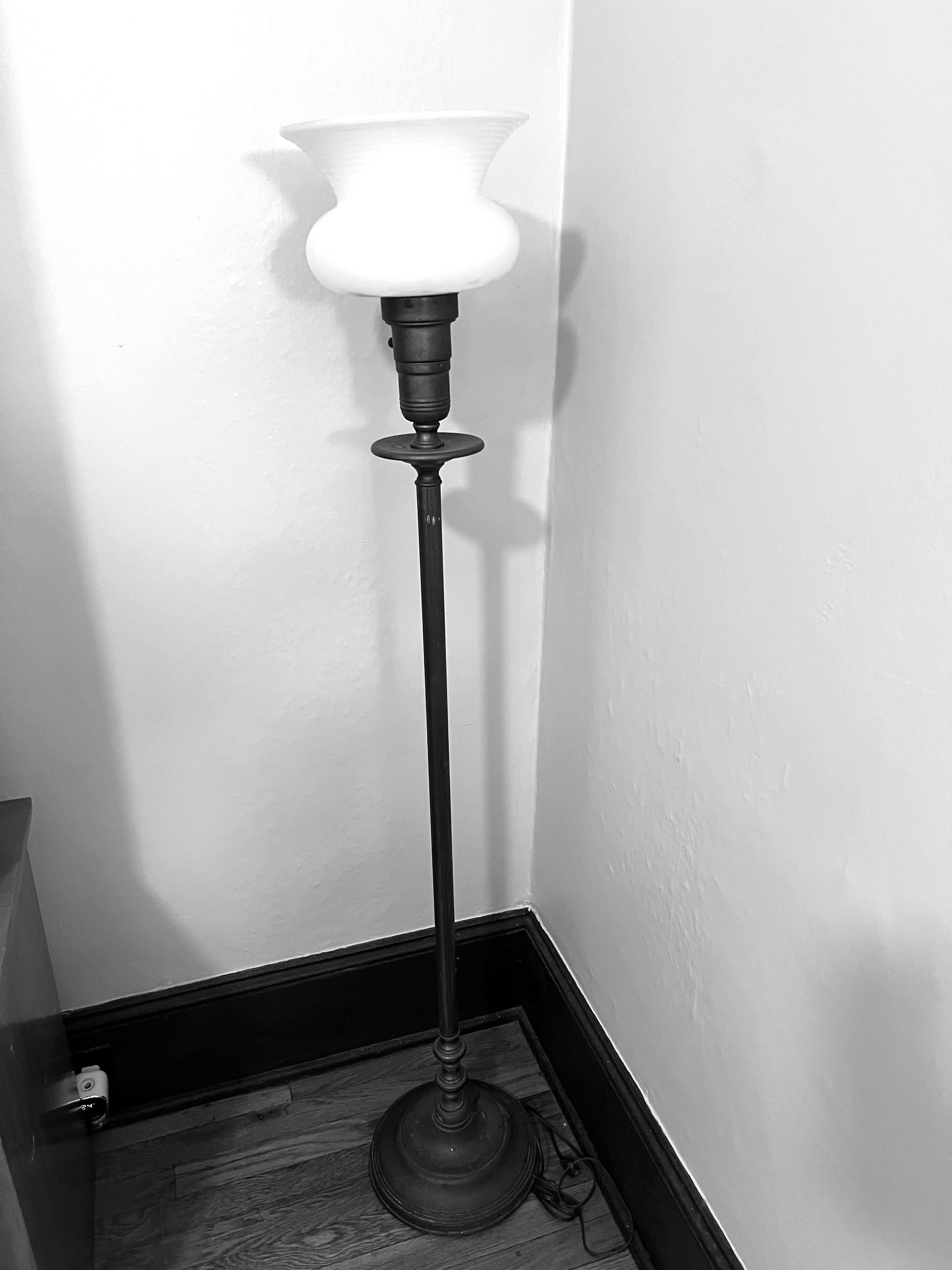
When I turned the lamp on today, I almost heard it whine, "Clean me."
I use paper towels for some types of cleaning.
Wiping glass is one.
My hands are full of white stiff fresh paper towels.
As I touch the towel to the glass, I hear a loud gunshot.Without a thought, my hands cover my face with paper towels, just as glass explodes violently.
Shards rain down on me, embed into my feet.
Later we'll find pieces across the room, diagonally, as far as you could get from that lamp.
I open my eyes to see blue flames shooting out of the lightbulb base.The air crackles with electricity, acrid smoke filling the room.
My housemates come running at my loud expletive: one grabs the dogs, the other scrambles to unplug the lamp.
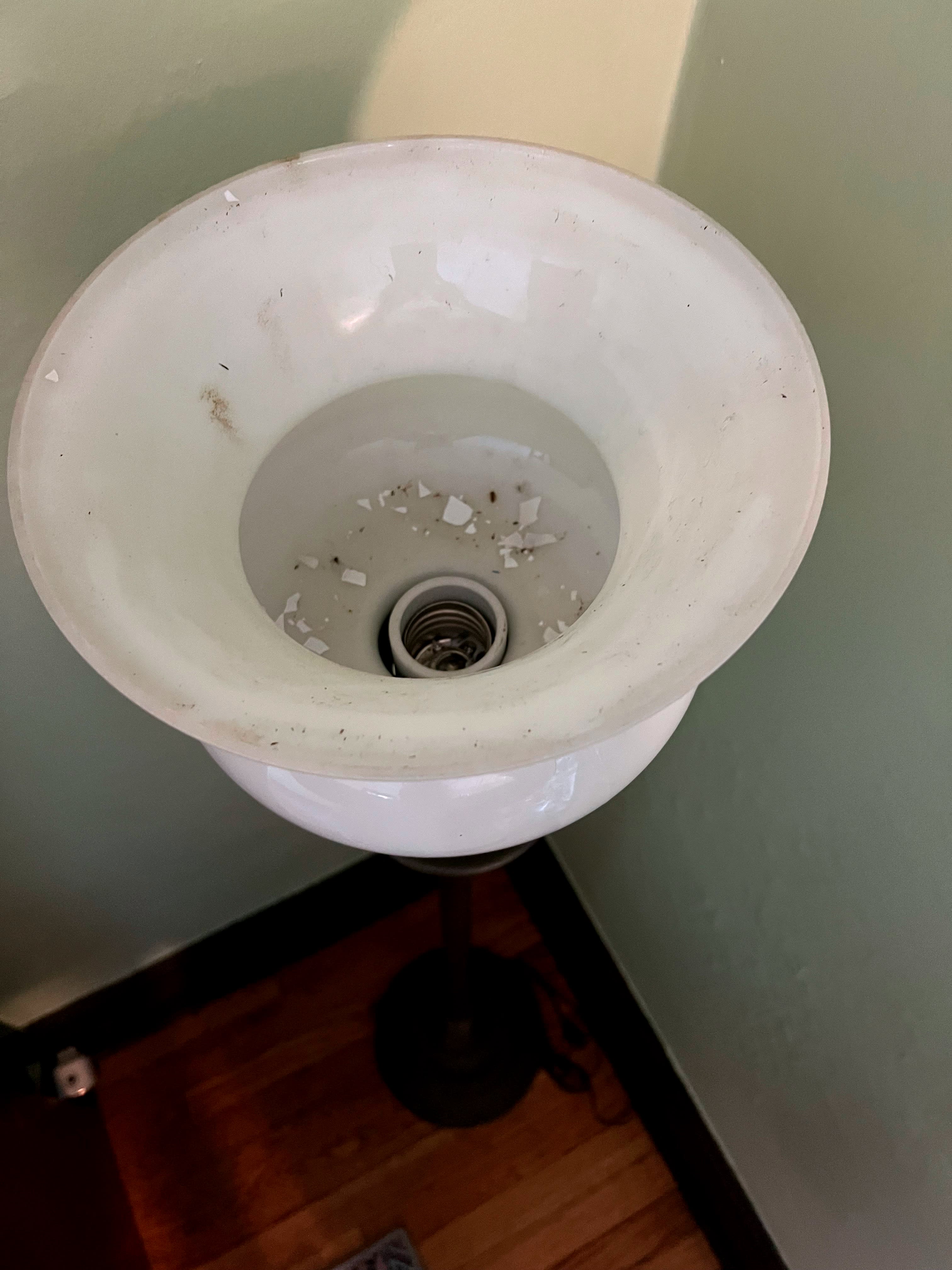 It was, to say the least, dramatic.
It shook me.
My heart raced for hours.
My hands trembled.
Not only because of the physical danger that could have been.
The moment of glass exploding and flame bursting in the middle of my house felt like a rupture in the membrane between worlds.
Thirty-six hours earlier, I'd awoken with a start from a dream.I was in my grandmother's house.
She was alive, but the paint on the soffits of her house was badly peeling, the house in need of repair.
The house was sad and hurting. "I can help you," I'd murmured to her, thinking in the dream of who I could call.
Upon waking, I discussed it with Ari, and the message seemed clear: it was time to drop in with that line of grandmas ritually.
My ancestral reverence practice these days is more integrated and casual, following a decade of daily repair and worship.
I no longer feel it neccessary to hold the same ancestral awareness I once did.
After several years, my ancestral healing work was eventually complete.
Now my ancestors are more of a resource than a point of daily focus.
I feel their soft presence whenever I turn my attention toward them.
I still sing to them and say daily prayers, but they no longer require the same level of care they once did.
When I first began tending to my unwell ancestral lines, it felt like lifting a massive weight.I was swimming in the grief of generations, and it almost drowned me. But over time, through years of practice, things have settled. Their pain softened, and my capacity grew.
That's the thing about tending. It changes you.After the dream, I went to my rose garden and chose a beautiful salmon-colored rose to offer my grandmas.
I placed it in a small glass bowl filled with water and set it on the part of my altar dedicated to ancestors.
Struck a match, lit a candle, poured some whiskey, promised to come back to tend them later in the day.
But it was the weekend, full of fun activities, and I didn't make it back to my altar.
One of my activities was tending to my rose garden. Roses are so finicky. This spring, my children worked together, digging the earth and pouring compost and amendments into the soil before planting the rose bushes they had gifted me for Parents' Day.
I learned my love of roses from my grandma. Like many of us, I associate roses with grandmothers.
Lying in bed unable to sleep, it hit me: it was my grandmother's lamp that had exploded.I'd named her in several conversations that day. I'd promised to tend, and I hadn't.
So, at 11:58 PM, I dragged my butt out of bed and lit candles at my altar.
I asked my well, bright grandmas what it was they needed.
Food, they said.
But I wasn't about to trek to the kitchen at midnight.
So I prayed and sang instead.
I imagined pink roses, like the one floating on my altar, cocooning our maternal line in scent and presence.
Pink light, from me and my children, from the garden they'd made, flowing toward our ancestors.
Every day, I engage with roses: I spritz rose water on my face, anoint my skin with rose oil, add tincture to my water, perfume myself with rose.
I love these flowers that bring so much beauty and goodness into my life. Last year I went to Grasse, France, to study perfuming during the rose harvest.
The roses that grow there are Rosa Centifolia. Not much to look at, but the scent is a thread of divinity.
The smell brings me immediately to presence: the kind that is animist, ancestral, pleasurable, and delighted.
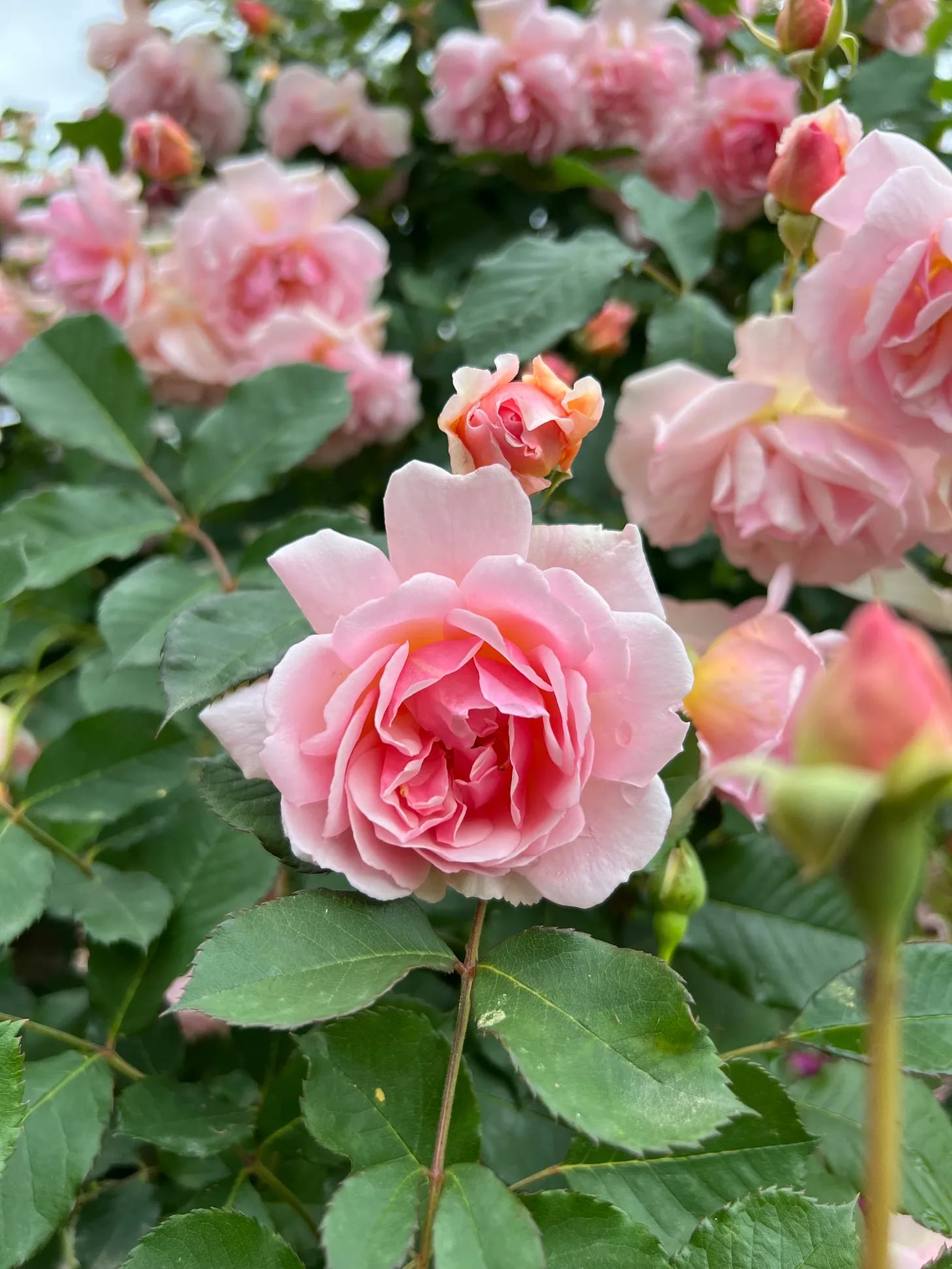
Deep joy in the belly of the rose.
I've used rose oil to grow my capacity to feel love in real time. To soften my angry heart. To hold the container of reverence.
My dear friend, energy healer teacher Sâde Gryffin, taught me recently how to use roses to clear my energetic field. How to separate from enmeshment through visualizing a rose, and then exploding it into golden light that returns to the universe.
That's the funny part, right? I'm over here exploding roses into gold, and the ancestors are over there exploding lightbulbs into blue flame.
I have had very few experiences where my ancestors influence the physical world.Once, I felt a gentle push in the right direction when trying to locate my ancestors' eroded graves in Cornwall, England.
But most of the weird ancestral coincidences have not occurred in the physical realm.
Changing my last name to Moray, for example, only to find out decades later while doing genealogy research that was the surname of one of my ancestral lines.
But exploding lightbulbs?
In general, I don't believe the dead have access to the physical amount of energy it takes to mess with stuff in our world.
It may be a coincidence that when I wasn't turning my attention to my ancestors, asking for help in my dreams, they increased the volume.
Could be.
But what if it's not?
What if the world is way more magickal than we acknowledge?My ancestor teacher, Daniel Foor, taught me that it's rude to act surprised when things improve in your life once you start tending to your ancestors. It is my experience.
Healing transgenerational trauma has changed my life in significant, potent ways.
I never thought I'd be someone with the patience to tend roses.
To grow businesses.
To publish books.
To maintain long-term love.
To have a healthy, loving family.
Yet here I am.
The honey of roses, and the work of tending reaps rewards.
This is the last week of Camp LightHeart: Rosy Delight.
We’re working with roses as medicine.
For your too-hard heart
For your grief that feels endless
For your feel-good-ness that feels edgy but necessary.
Roses know how to hold both: the ache and the sweetness.
We’ll be learning and playing with them.
Dogma No. Ritual Yes.
We’ll be smelling, integrating, and opening hearts to more capacity for love!
P.S.
Some wounds live in the chest cavity as personal, quiet, solitary.
Some live in the space between two people, shared, relational, hurting.
If your heart work right now is about tending your grief and pleasure, the rose is waiting.
If your heart work is about tending a partnership that feels stuck but still precious, Ari and I are opening two spots for Kitchen Table Rebuild couples coaching.
I wrote about our relationship rebuild here.
It’s not too late to apply.


July 15, 2025
Kitchen Table Relationship Rebuild: How We’re Finding Our Way Back After Burnout
For the scrollers, the skimmers, and the “cut to the chase” folks—this part’s for you.
In a partnership where you love each other but are stuck?
My partner Ari and I are offering 2 couples the chance to rebuild with us in a beta coaching round.
Click the link to apply. Or scroll down for the full story.
Ari comes in the front door from work.
I used to get up to greet him, but I don’t anymore. I know what I’ll be met with: a heavy face, unsmiling. A brief hug that feels tight and distant.
So I stay where I am, curled on the red sectional, scrolling my phone.
“Hey,” I say.
He sighs, collapses onto the couch, feet up, eyes closed.
Sometimes he gets up to cook with me. Sometimes he doesn’t. Tonight I didn’t wait to find out; I already ate. I’ve also learned not to push for conversation. It almost always ends in frustration.
Everyone in our circle has gently, repeatedly told Ari what I’ve been saying for years: the job is killing him. It’s draining the life out of him and out of us. But he won’t, or can’t, let it go.
We love each other. Truly. We’re kind. We want to be close. But sometimes that closeness gets buried under a thousand small distances. Like this one. Like the fucking job that’s slowly disintegrating his soul and dragging us down with it.
At this point, we were twelve years into our marriage. Ari was five years into the job.
I hit my wall. I felt unhappy, burned out, helpless. But I kept going.
I stayed in my marriage because I love Ari too much to leave, but it's killing me and us to stay.
I’m a relationship coach, after all. I’ve helped hundreds of couples find their way back to connection.
Now I’m the one who needs help.
That’s when we began a process we are now calling a Kitchen Table Relationship Rebuild.
It wasn’t an interpersonal issue destroying my marriage. It was two things:
First, a part of my partner that craves financial security so bad he will sacrifice his own physical and mental health to achieve it.
Second, capitalism: we are stuck in jobs, a mortgage, and debt that trap us in systems we cannot sustain, but must endure.
Ari has an enduring shape. He could have continued like that, miserable, until he died young of a stress-related illness.
But I couldn't. And I couldn’t watch him do that, either.
Things had to change, or I was going to need to leave the relationship, regardless of how much we love each other.
Things were at a breaking point.So we did what our couples therapist had repeatedly warned us never to do:
We put the relationship on the table.Both literally and figuratively.
Literally, we took a huge piece of white paper, and spent ~80 hours mapping all areas of our relationship.
Sex, money, family, celebration, collaboration, household, creativity, community, spirituality… on and on it went. We assessed our vows and commitments we had made at our wedding.
We were both unhappy about what we saw: misalignment of values and practices, huge important relational areas being neglected, and especially that we were not having any fun!
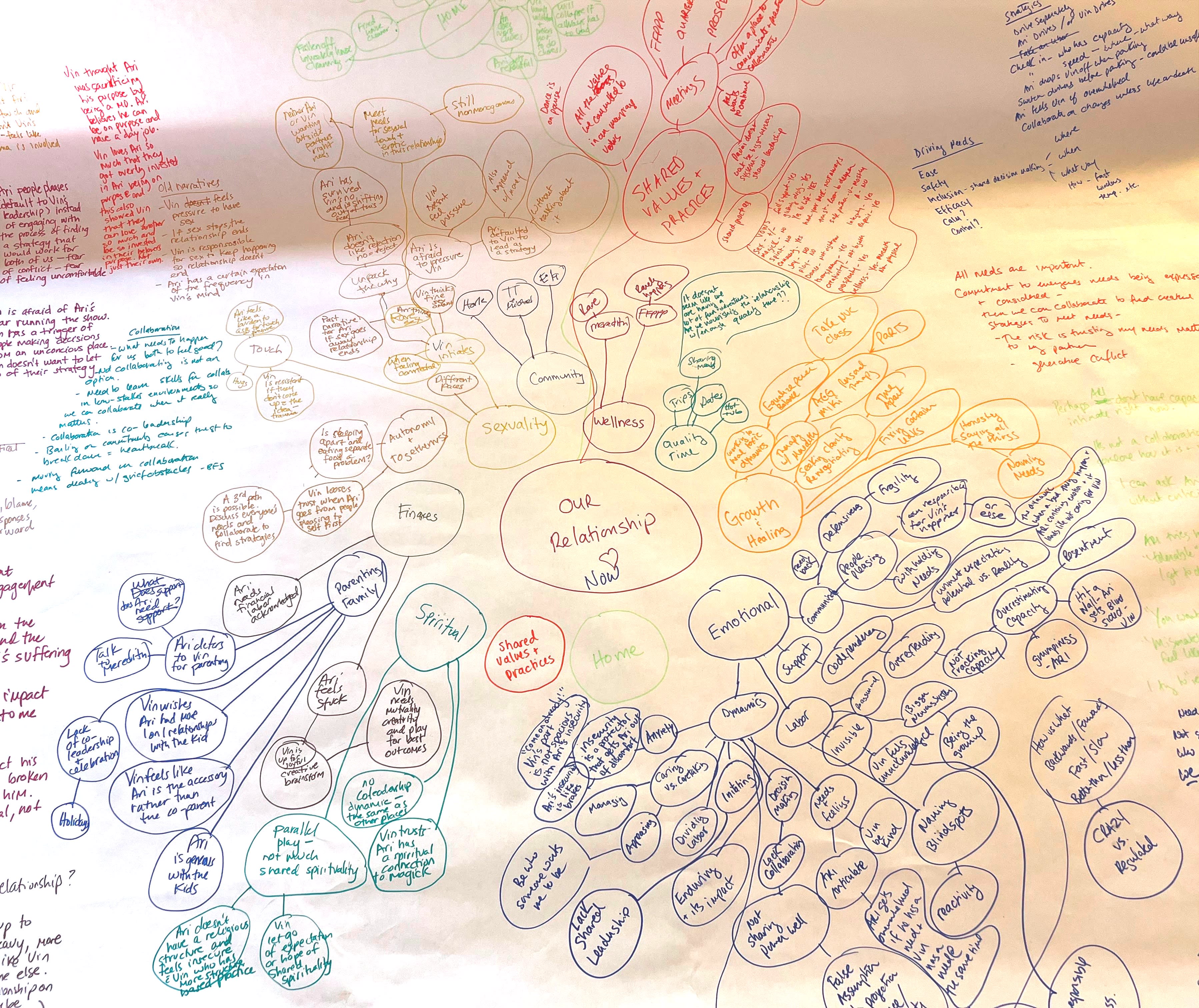 A small section of our on-the-table relationship mapping project.
 Figuratively, we decided to take a long break from our marriage.
Ari got a new job and moved back to California. I went to India for six months solo.
During the time apart, we each did our own internal work.
We learned how to exist on our own, after living as a couple for 14 years.
It was a hard, beautiful time.
We talked almost every day. We witnessed each other's rhythms like watching a stranger. How did he organize his days? How did I meet my own needs?
When I came back, we were so happy to reunite, but there was no map for how to be together again.Love was still there. We care about each other deeply.
Willingness was there.
We were both rooted again in sovereignty, but needed to find our way back to connection.
The foundation we'd built together when we met 15 years ago had been strong and sufficient for then, for raising a family and making a cross-country move, and building several businesses.
But we are different people now. There had been some drift from our agreements. Some values had shifted.
We pulled out the white paper, and harvested what we wanted to keep.
We burned the rest.
Since then, we’ve been doing a Kitchen Table Relationship Rebuild.
Most couples in this situation either white-knuckle it, break up, or outsource repair to therapy, retreats, or date nights that feel like work.
We’re doing something different. We’re rebuilding at the kitchen table. Just us, together, at home.
Kitchen Table because it's D-I-T (Doing-It-Together) with the mindset that we can figure our way through together. Rather than being in therapy (don't get me wrong: I love couples therapy and we've done a lot of it), we meet twice a week to examine patterns, set up systems, dream, and inhabit a new way of being together.
Also, kitchen table because it's homey. We are choosing our process and making it comfortable and cozy for us.
We are aiming for a relationship that matches who we are now, 15 years after falling in love. We are building a new relationship where our practices align with our values NOW.
It's important to note that we’re not fixing a crisis. There wasn’t infidelity or a big relationship rupture. We are updating the agreements and values that are not current. It's like taking off clothes that no longer fit, and exchanging them for something that not only fits, but that feels extraordinary and sparkles too.
It's not a six-step plan, but hundreds of conversations, tweaks, small adjustments. For example, Ari is learning to be okay when I have feelings, and not move to fix them. I am coming down from the safety of my better-than position and not constantly critiquing. We’re both growing as individuals, which means the relationship has to stretch, too.
6 Things We’re Learning to Do Differently at the Kitchen Table1. Speaking for our parts, not from our parts.
IFS (Internal Family Systems, AKA Parts Work) is having its moment in the sun, and we're into it. We each belong (separately) to an Authentic Communication Group (ACG), where the goal is to identify and give voice to the parts of ourselves that are emerging in response to other group members. It's arduous, beautiful work in honesty and self-awareness. When we are in harder conversations, IFS has been an incredibly useful framework to make sure the louder parts get airtime, but also the quieter parts. And when conveying a controversial opinion, it's helpful for the person listening to know that this is merely one part of a bigger whole.
2. Repairing after rupture, every single time.
Gottman studies indicate this is the biggest predictor of relationship longevity and success. In our wedding vows, Ari and I committed to repairing with each other, always. We know that repair can look lots of different ways; it doesn't mean going back to the way things were before the conflict. But this commitment, and the enactment of it, has built our secure attachment to each other over time. We know there is never going to be a conflict to end all conflicts.
3. Getting curious about our own needs and each other's needs.
We've agreed that everyone's needs matter. For folks who grew up in families where you had to compete for resources to get your needs met, knowing that both of you hold the value that everyone's needs are important is a game-changer, maybe even a life-changer.
4. Speaking what's true, even when it is hard.
Although I am typically averse to famous white guru ladies, Brene Brown's got something here. We have no secrets. We do have privacy, which is a different post. But the true things must be named for our relationship to be built with the strongest possible foundation.
5. Getting clear on what is mine and what is yours.
So much transference and projection happens in relationships. Ever had your partner tell you what you were feeling? As in, "You seem really pissed off right now." But you are feeling sad or hurt. How was that to receive? Or if they say, "I don't think you actually want to go see my family," when that’s what they are themselves feeling, but projecting it onto you as blame? Yeah, no. We've been lovingly handing back those projections. "That's not mine, thank you."
6. Disrupting downward spin cycles of anxiety.
This has been a hard one. One of us (not naming names) tends to channel anxiety into money worries. That means the person is feeling anxious, but blames their internal feelings on an external situation, like money. Then, because it is hard to win an argument against "the numbers," that person will spin out in a way that is never helpful. And when invited to consider that's what's happening, the spinning part gets angry and insists there is never room to be heard, although we have structures set up to talk about finances, and an agreement that we are grounded when we discuss money.
The other person has had to set and hold clear boundaries: we don't discuss money when you are spinning anxiously. There is a time and place for that. I am walking away now. And then bear the discomfort of walking away when their beloved is having a hard time.
And one bonus practice: Readjusting the power balance between us! (Lots of talking and naming.)
The Other Thing We’re Learning: More Joy.We’re also learning how to have more fun again. We’re playing and gallivanting. There’s more laughter at the table these days, and that matters just as much as the tough conversations.
A Quiet InvitationAs part of this rebuild, Ari and I are exploring moving into somatic couples coaching private practice together. We’re training in Relational Life Therapy with Terry Real.
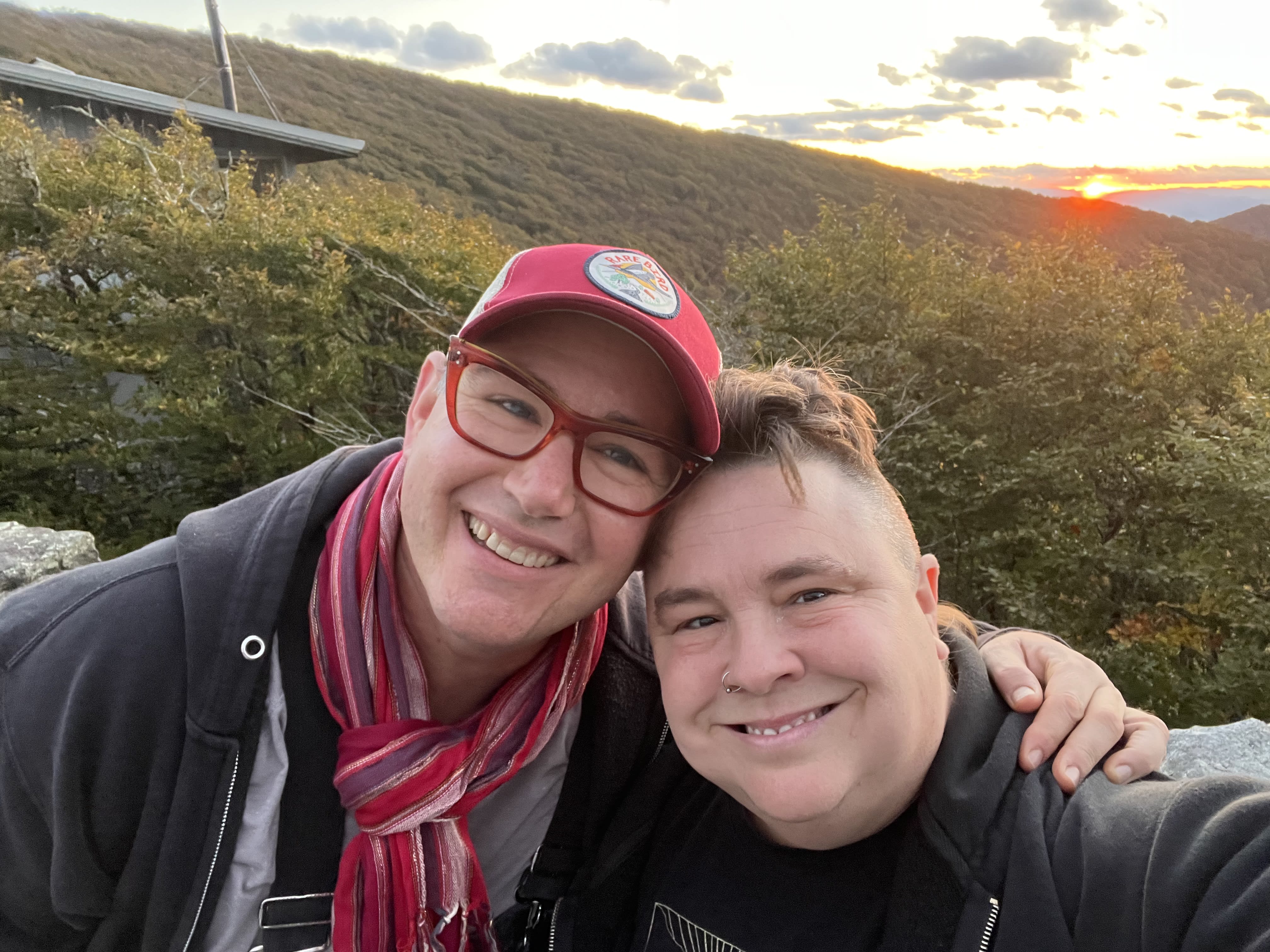 Ari and meStarting in August, we are offering a beta series of couples sessions.
 We’ll be integrating Relational Life Therapy with somatic couples coaching. We are experimenting with working as a queer couple, holding space for other couples (of all varieties.) Session rates will be reduced as we explore.
We’re looking for two couples who feel a reflection of this post in your own relationship.
Couples who love each other but are stuck in patterns that no longer match who you are now.
Couples who want to stay together but know something has to change.
If you’re ready to rebuild, not from scratch but from this moment, we’re inviting you to walk this process with us.
We’ll meet for 5-8 sessions, get real about what’s working and what’s not, and build something new. More connection. More honesty. More laughter.
If this sparks something for you, you can learn more and apply here:
July 11, 2025
The Joke That Got Me Cancelled (Again)
Recently, I spent the weekend at a community gathering focused on singing. I had imagined attending all the sessions, learning lots of new songs to nourish my heart.
I thought I'd get really embodied through entraining by singing with others. I imagined embodiment would be the thing.
Instead, I played all weekend. A group of playful friends came too, including clowns who once non-consensually inducted me into their siblinghood.
The organizers of the event were clear: they are creating a new culture, which they call "the village," requiring great unlearning of patriarchy and supremacy culture, and new learning about how we fit together in life-affirming ways that honor collective good.
All of which I am firmly behind.
But after the fifth or sixth time hearing it, it became background noise.
Many of us had been in radical spaces before. We knew how to ask for consent, center marginalized voices, and uplift the edges.
So while important, some of us were, dare I say, a bit bored. Instead of attending singing circles, we respectfully gathered in meadows and forests and just played.
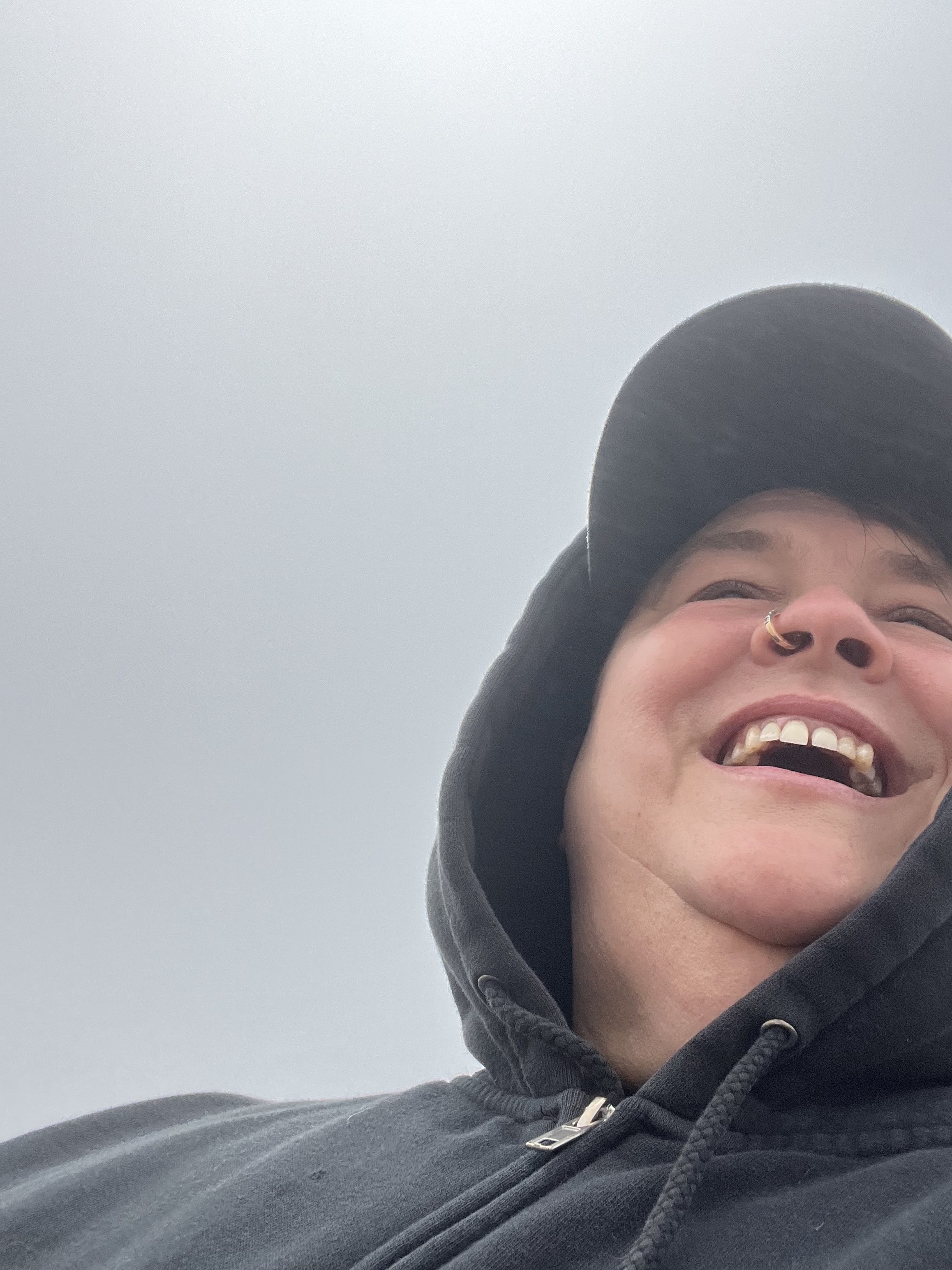 Play disrupts the mundane.
We didn’t use substances. No drugs, alcohol, or cigarettes. Minimal caffeine. But my experience, and that of my beloveds, was of being significantly altered. Higher than a kite.
There was no cell service, so we couldn't check out on our phones. We were far in the woods, away from businesses, stores, and theaters. All there was were the people and the nature.
We played across generations, made up our own rules, and welcomed everyone in. Some games were open to all. Other games required navigating the uncertainty of not knowing who was in charge or whether you were included.
Sometimes, we played organized games.
Sometimes, clowning and making up ridiculous scenarios with complicated rules that were constantly broken and reinvented.
On our last day, we ended with a spontaneous clown council set in the imaginary future, reflecting on everything that had happened.
A list of banned words emerged that could not be used in circles at all, ever, including: process, needs, village, love, sacred.
We laughed about the makeover of the registration booth into the cancellation station, where you got cancelled when you arrived.
We wrote on bits of paper how someone might have gotten cancelled, folded them up, put them in a hat, drew them out, and, without looking, licked the paper and stuck it to our own foreheads.
The emergent rules included walking around, encountering others, and trying to figure out why you were cancelled, while others avoided you and worked out why they were cancelled.
We laughed until snot ran down from our noses and our bellies ached with pain and delight.
Fun creates community.The fun I had happened through collective practice.
We all decided our intention had shifted from singing to playing.
Play became the root of all our interactions.
Long discourses on the Enneagram were interrupted with jokes. We traded core wounds, made up new identities, and processed the amenities of the gathering.
How would I experience the food if I had a wound of not belonging?
What about the composting toilets through the lens of betrayal?
Joy restores our humanity.Edgy play made jokes about where the line was. Is it here? What about here? The line is definitely aliens, right? Or fake science pretending to be real? Where is that line?
In deep play, the line blurs.
Where does funny start? Where does healing begin? Where do we mock the parts of us that are overly serious, deeply dogmatic? Can we get made fun of for the thing that is our line and stay connected? Can we trust that love for one another enables the kind of teasing we wouldn’t allow outside of friendship?
My friend, knowing I can be intimacy-averse, especially in tantra-esque settings, asked if I would eye-gaze for an hour with him. It was a joke at my expense, and it was funny. I returned the joke, poking fun at an eye defect he has, which he is a bit sensitive about. "Give me that good old droopy eye!" I spat.
Had I crossed the line?
A beat.
"How many times can I hear that and laugh?" he asked. "One, I think." And laughed.
The kind of play I’m talking about isn’t always sweet, but it does see us. It points at our wounds with clarity and gentleness. Hearing the line, I didn’t push it. Play isn’t fun when you’re being an asshole.
I tell this story because joy is not always gentle. It is not always light. But in cracked-open play, sometimes you can name the thing, and it's okay.
Lightheartedness is necessary.Back in the day, during a messy, painful divorce, it became clear to me that I was the one responsible for the quality of my life. I remember standing outside the school bus I was living in, facing into the California January sun, breathing in the light and warmth.
Around this time, someone handed me the phrase, "the artist of my own life."
I was the artist of my own life, responsible for my happiness and satisfaction. No one was coming to save me.
I had to find joy in the midst of a terrible time, or not. It was on me.
To move forward, raising two kids on my own with no job and no permanent home, I needed to be resourced. I needed to feel light and joy inside my own heart. The other way, being angry, bitter, and resentful, had made me physically ill. There was no way I would get through intact without figuring out how to lighten up.
These days call for lightheartedness on a collective level.This is not the worst it's ever been, even if it feels like it. Our ancestors survived similar times. Our forebears had skills of community and interdependency that we can relearn.
Without lightheartedness, we muddle through, but for the sake of what? The genocide in Palestine ends, or doesn’t end, but has our own heavy-heartedness contributed in any positive way?
I use that as an example, but the same is true for many crises.
How does heavy-heartedness serve the revolution? How does it create lasting change? Or does it just make us feel like we are doing our part by feeling the weight of the world in response to our powerlessness and smallness?
Joy is a temporary guesthouse you inhabit, not a destination you arrive at and never leave."We have to pay attention to joy. Otherwise, we will spiral into despair. The world does not need people in despair. Nothing is going to get better in despair." ~Leadership coach Karen Walrond
Think about all the ways you have felt just this morning. We have such a huge range of emotions. I believe it's important to feel all the feelings. Some are not better than others.
But most of us have habituated feelings. For some, anger. For others, fear. Others are joyful. What’s most important is having the capacity to feel the full range. Joy is not a goal as in "I will be a joyful human forever and always," but rather, "I am a person who sometimes feels joyful."
When was the last time you felt joyful?
Are you practicing?
Joy is a practice.Sometimes, joy arrives unbidden. But not usually. Usually, I have to at least make the effort of opening the door for it to come in. So I practice.
I have many joy practices, including clowning, singing and dancing, moving my body, whispering to the mystery "I don't know," and seeing what happens next. I am a joy practitioner, maybe only because if I don't practice, I'm not joyful. And when I'm not joyful, everything feels sad and serious, and I don’t want to be here anymore.
Everything is a practice. You practice all the time, every day. But most of the time, you’re not consciously practicing. You’re just doing what you do.
Change becomes possible with practice over time. Choosing what to practice, which can be anything, is wonderful freedom.
You get to choose what you practice.
Joy can be one of your practices.If you were going to practice joy today, what might you do? Looking at the clouds is a joy practice. Connecting with a friend. Singing in the shower. Practice is best when it is small and simple and doesn’t require special equipment or a lot of time.
I have a "wonderful list" practice I do sometimes. In the morning, I write a list of three to five things I will do that day that make my life more wonderful. At the top is often something like, "Look at my garden" or "Text Kendra."
Practice used to be hard for me. I used to resist it because I didn’t want to be accountable to myself. If I didn’t practice, I didn’t fail. I pre-failed.
For kids who had practice forced on them (mine was piano), I feel for you. It gives practice a bad rap. Something to resist. Something to define yourself in opposition to.
So, how do you build a practice of joy, because you know you need it, but you resist practicing?
Whenever I'm struggling to do a practice, I ask a series of questions:
Do I have enough structure?
Do I have enough support?
Is this the right practice for this time?
Usually, my difficulties with practice are about not having enough structure or support. Something wonderful about practice is that it builds on itself. The more you practice, the better you get.
No one likes sucking at a new thing, so there is a period of agreeing to suck. That is a wall you have to get over.
Once you do, practice reinforces itself. To get over that initial wall, community and other structures are huge.
Want to practice joy as activism in real time?
Join me for Joy as Activism Week at Camp LightHeart, starting Monday.
This week focuses on building a joyful practice in community. We’ll lean into silliness, connection, and showing up even when things feel heavy.
This week, we make joy a daily ritual, for ourselves, and the world we long to build.
We’ll build practices and routines that center what matters and create embodied play rituals we use to anchor our activism.
For people who crave a daily practice (spiritual or otherwise) but struggle to make it stick.
Camp is pay-what-you-can.
Joy is not a solo project. Let's practice it together.
All love,
June 18, 2025
How to be a Killer
Both organic and industrial at the same time.
Dark hairy body, legs like tangled girders, twisted twigs, crab joints.The shudder rips through me like the San Andreas fault.
I hesitate, but it's morning, and… I gotta pee. Like, now.
I tiptoe past the wildebeest clinging to the tile wall.
Flick a glance at the ventilation slats at the top of the bathroom wall, where it has certainly clambered in.
Eight sparkling eyes watch me make water. Eight legs, flexing and gyrating as I pee.
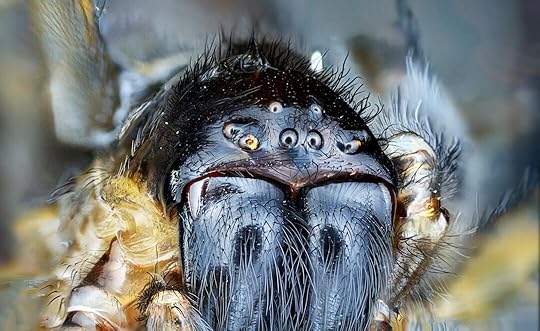 Photo by v2osk Let me back up and give you the context you need.
I’m pretty much a lifelong vegetarian.
I practice Non-Violent Communication.
I believe in resolving conflict in ways that support everyone involved.
I’ve never initiated a fist-fight.
I don’t use violence to solve my problems.
At the time this story takes place, I'm in India, in a rented room in a house in the jungle.
Mine is the only room with an attached indoor bathroom.Technically, the house belongs to the jungle, pressing in on the outside of the windows.
Technically, I am in the spider's territory.
But.
This is my bathroom, and I just can't.
A frequent pee-er, I will never enter this bathroom at night with this guy just… hanging out.
In my youth, I spent a year living in the forest in a tent.I made my peace with spiders, especially the large wolf spiders that would inhabit the space between my tent and rainfly, their outlines visible through the translucent tent fabric.
Inches from my face but separated by a wall of fabric.
I admired that they navigated by the stars.
I knew I was in their space.
However, I've lost some of my grit in the intervening years.
Part of going to India alone for six months is about earning it back.
But I get to have limits, right?It is a house, after all.
A house. A HOUSE.
I make a decision.
I will gently remove this fellow. Eyeing the red shower bucket, I make a plan. I’ll capture him quickly and return him to the outside.
And get on with the day.
But in the process of this ‘simple’ maneuver, chaos ensues.
Huntsman spiders, which is what I later discovered he is, have evolved an incredible movement strategy.Doing research I learn they can travel extremely quickly, often using a springing jump while running.
They walk on walls and even on ceilings.
They also tend to exhibit a "cling" reflex when picked up, making them difficult to shake off and increasing the likelihood of a bite.
So you can imagine the scene in my rustic bathroom.
The spider is running like it's trying to win an Olympic sprint.
I'm chasing it with the bucket until it turns and runs directly at me, hopping on my leg.
Screaming and flailing, I knock it off.
It flies up the wall and heads for my shampoo, like a vampire scaling a gothic castle wall.
At this point, I am freaking out.
My skin is crawling in repulsion and terror.
I grab the ubiquitous Indian toilet hand sprayer and aim it at my toiletry bottles.
The enormous spider (probably at least five inches) hurls itself out of the spray, retreating to the corner underneath the toilet, probably to plan its attack.
Clearly, it is not trying to escape.
We are in a battle, and I'm starting to realize it is to the death.
One of us will make it out alive.
At that moment, I am not sure it will be me.
No, fuck that.
It's going to be me. Indian bathrooms typically feature a shower on the wall without a tub or curtain.Water goes all over the floor.
After your shower, you scrape the tiles with a huge squeegie to push the water down the drain.
But in that moment, the innocuous bathroom cleaning technology becomes a weapon.
The spider has crept out from under the toilet, glowering at me from the corner.I grab mine like a spear and aim at the monster.
The edge of the squeegie catches it in the gut, and it falls, collapsing in on itself.
It collapses in on itself, hinged legs curling into a ball.
I've killed it.There is a moment of silence.
Guilt floods through me.
It is small, perversely crumpled, and now, deadly forlorn. I am huge, a giant.
I can't believe I've tossed away my non-violence toward such a small creature.
Sweat drips down my sides. I catch a glimpse of my red angry face in the mirror.
Part of me feels guilty, sure, but another part is relieved.
Tremendously relieved.
I’m powerful.
I've defeated the enemy.
Which is the precise moment it unfolds itself and tears ass straight at me.The literal moment in the horror film the dead villian rises from the bloody tub, just when the hero thought they were safe.
I grab the abandoned squeegee.
Eventually, I prevail.But in the process, I've reinjured an old shoulder injury.
The creature is a curled tangle on the floor.
Giving it another poke to make sure it’s really dead, I cannot bring myself to pick it up and flush it.
I am panting and crying. Disgust floods me, at the spider and at my violence.
That's what I'm writing about today: despite our best attempts at being peaceful, inside each of us is a part that can choose violence if the stakes become high enough.
Did I pause and reflect before going on the killing rampage?No, I did not.
I don't go in my bathroom for the rest of the day.But when I do, I am confronted by a mystery: the arachnid corpse has vanished.
That's when I figure it out: Huntsmen spiders have many defense strategies, and one is faking death.
That spider pretended to be dead, and then, once I left, it got up, shook itself off, and proceeded to go… somewhere.
Ugh.
The next morning, nature calls.
I just stick my head into the bathroom and take a look around.
No spider.
(By the way: This is how I will enter this bathroom for the next three weeks. My heebie-jeebies never go away.)
I proceed with caution.
I sit on the pot, ready to do my business.
But when I turn to get the handheld, who do you think is sitting DIRECTLY BEHIND ME on the tank of the toilet? I call my landlord to plug the vents.He stuffs Styrofoam in them and covers them with packing tape.
The next morning, a gecko casually races through the tape.
The spider and his friends continue to torment me.
One morning, I wake with three spider bites on my back.
We all know exactly who put them there.
I set a boundary out loud. "If I see you, I will kill you. You cannot live here."
Why didn't I just change rooms, you ask? Go stay somewhere else? Why keep feeding the violent part of me?
Not sure. I didn't want to give up, I guess.
I wanted to stick it out and re-up my grit quotient.
My injured shoulder comes with me back to the US, a reminder of the part that couldn’t bear to be with what I fear.I spend a small fortune on Reiki, acupuncture, and massage.
Down bottles of anti-inflammatories.
It aches at night, reminding me of how I lost my shit over a spider.
It reminds me of how fear makes us lose compassion for others.
I am scared, therefore, you are terrifying.
I am afraid, therefore, you are trying to hurt me.
Even though I have all the institutional power, I still need to squash your life.
I hate to say this next part, but I can really relate to the humans who are terrified by those of us who threaten the gender binary, or any other conservative value.
I can understand the impulse to exterminate that which gives us the heebie-jeebies, that which scares us, that which disturbs our peace.
We never talk about the part of us that can (and often does) choose violence.If we are loving, compassionate humans working on ourselves and our healing, it is challenging to be transparent about this part that wants to harm and destroy.
That's for 'them,' not us, right?We would never do that.
Except that my spider knows otherwise.That spider witnessed the part of me that just can't be with my fear and moved to destroy rather than settle my nervous system.
That spider knows I did not stop to consider the dignity and aliveness of others who I fear.
I wish I had a bow to wrap around this package, handing you a nice story about how I overcame my own inner violence.
How I was able to access compassion.
But.
I found a spider in my bed last week.June 15, 2025
Still Silly After All This Grief
And all I could do was cry.
Glad for my sunglasses, tears poured from my eyes.
My grief?
The collective’s grief and rage?
I can’t tell the difference right now.
I can’t discern between what I’m being manipulated to feel and what I actually feel.
But it hurts.Tomorrow, I begin teaching Camp LightHeart’s School of the Holy Fool.At the protest, I watched the clowns tramping and traipsing, frollicking and romping.
They pulled a movable dumpster fire puppet.
They chased each other with pretend DOGE chainsaws.
They handed out fake $100 bills and then grabbed them back.
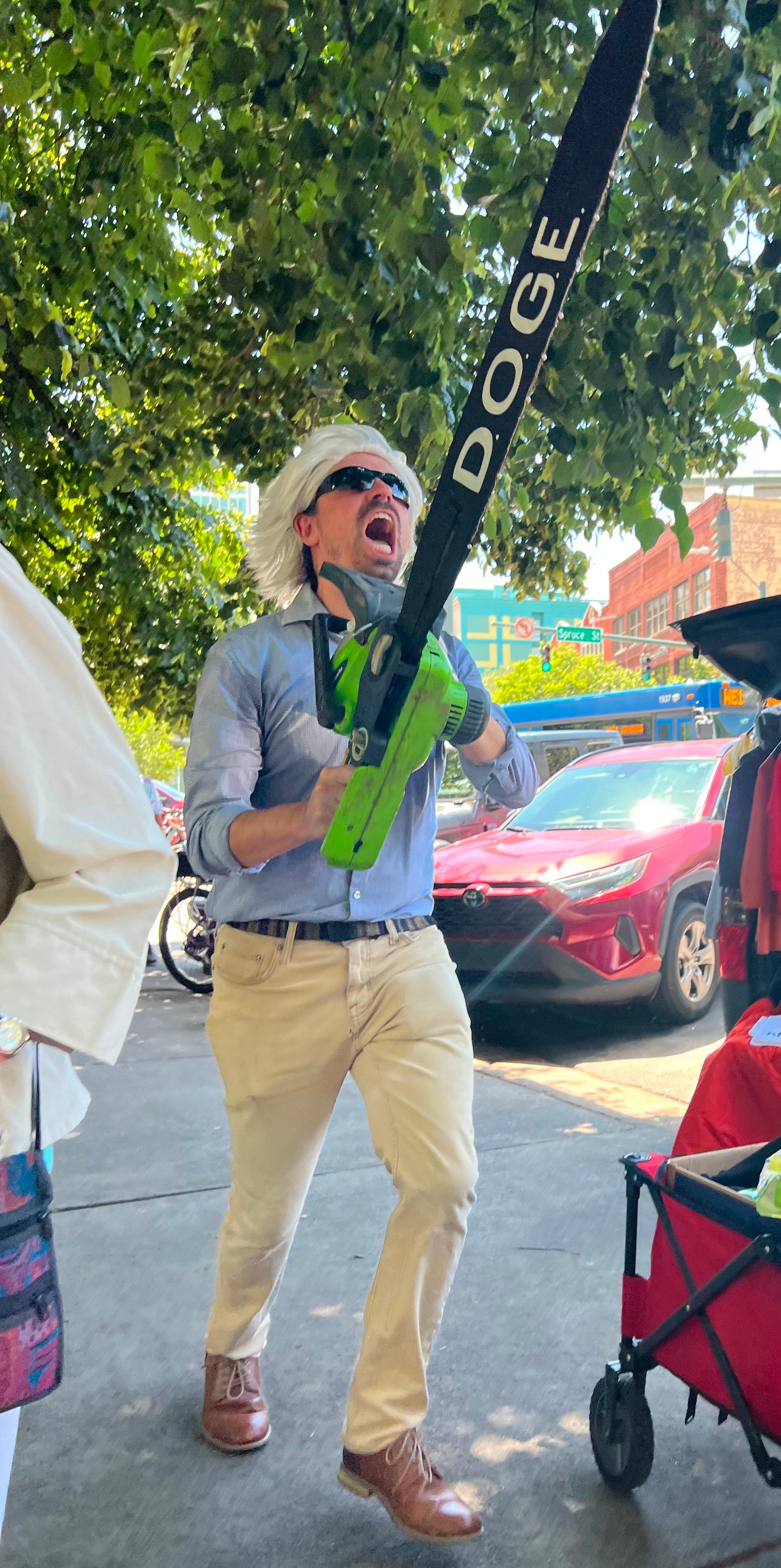
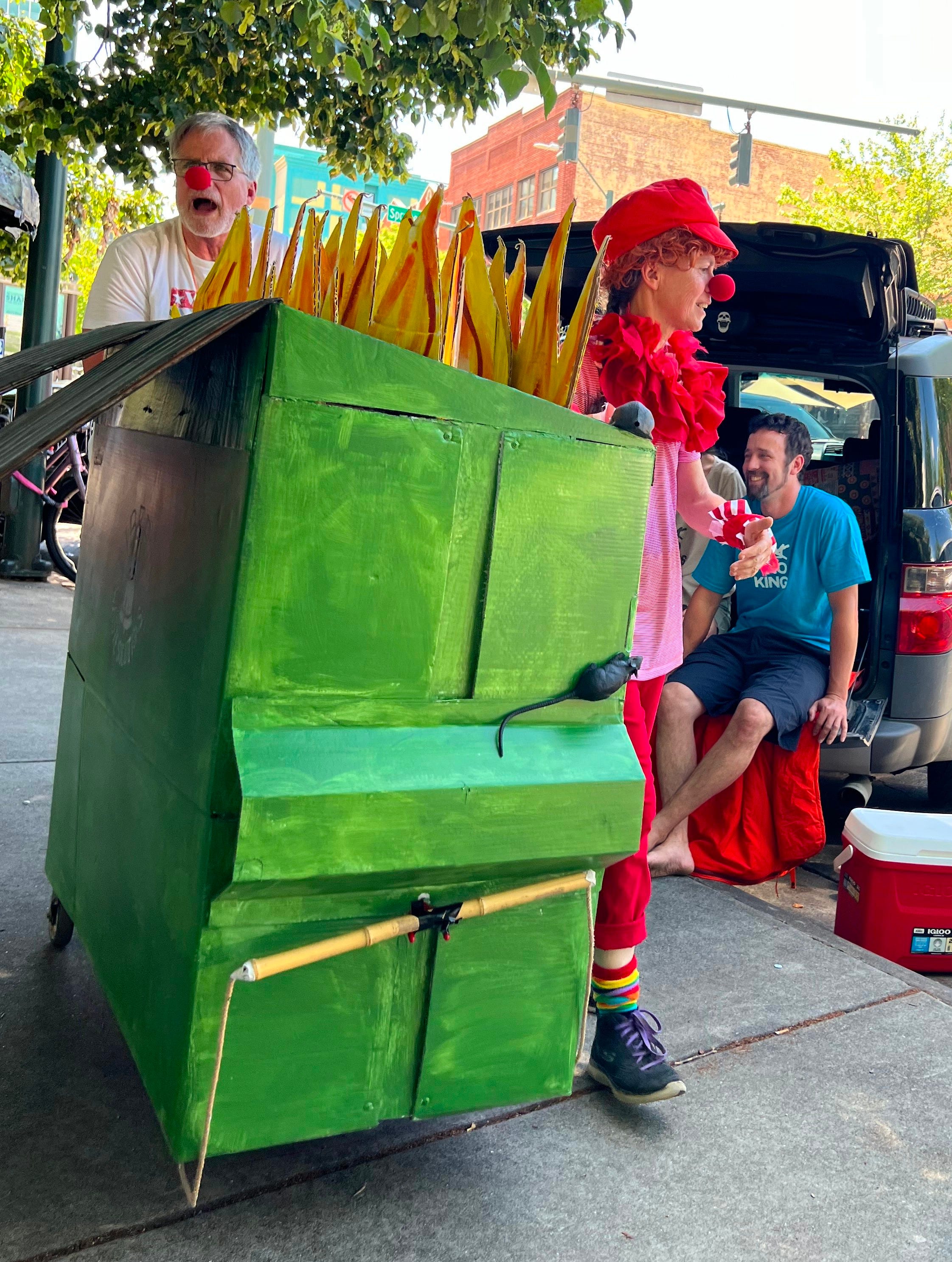
I was grateful for their presence, but kept thinking:
I can’t play like that right now.I’m too sad.
How am I going to get back to GlitterHeart, my clown, by tomorrow, in time to teach it?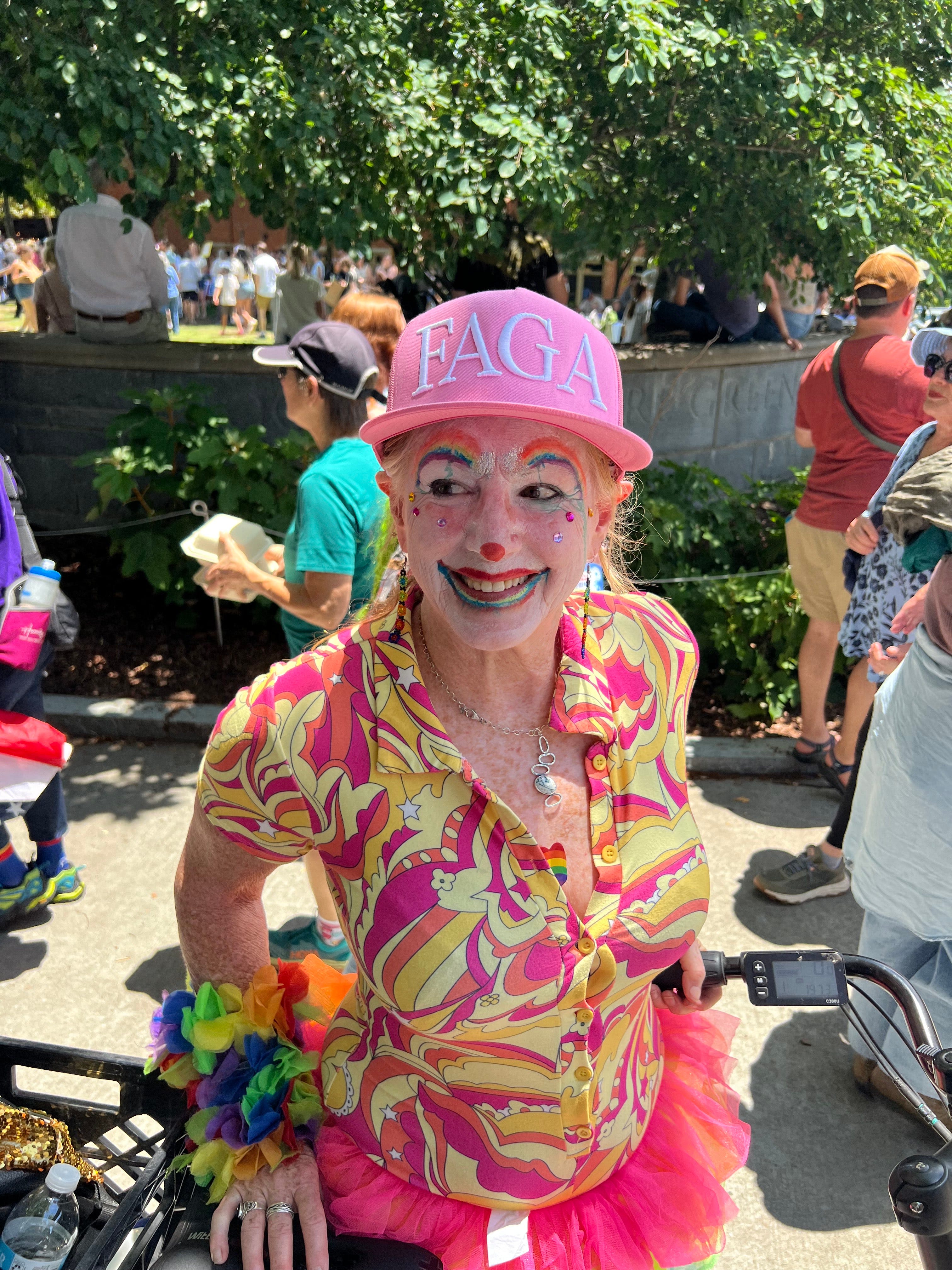 And then I realized: THAT is the point.
 How, amid so much despair this week, can we both feel the entire fullness of our grief, without losing access to our creativity, our deep joy, and our aliveness?
How indeed?
As I write this, I have no idea but I know one thing: it’s easier to figure it out together.
So if you see Camp LightHeart’s School of the Holy Fool as something for others, but not you, well, I’m with you.
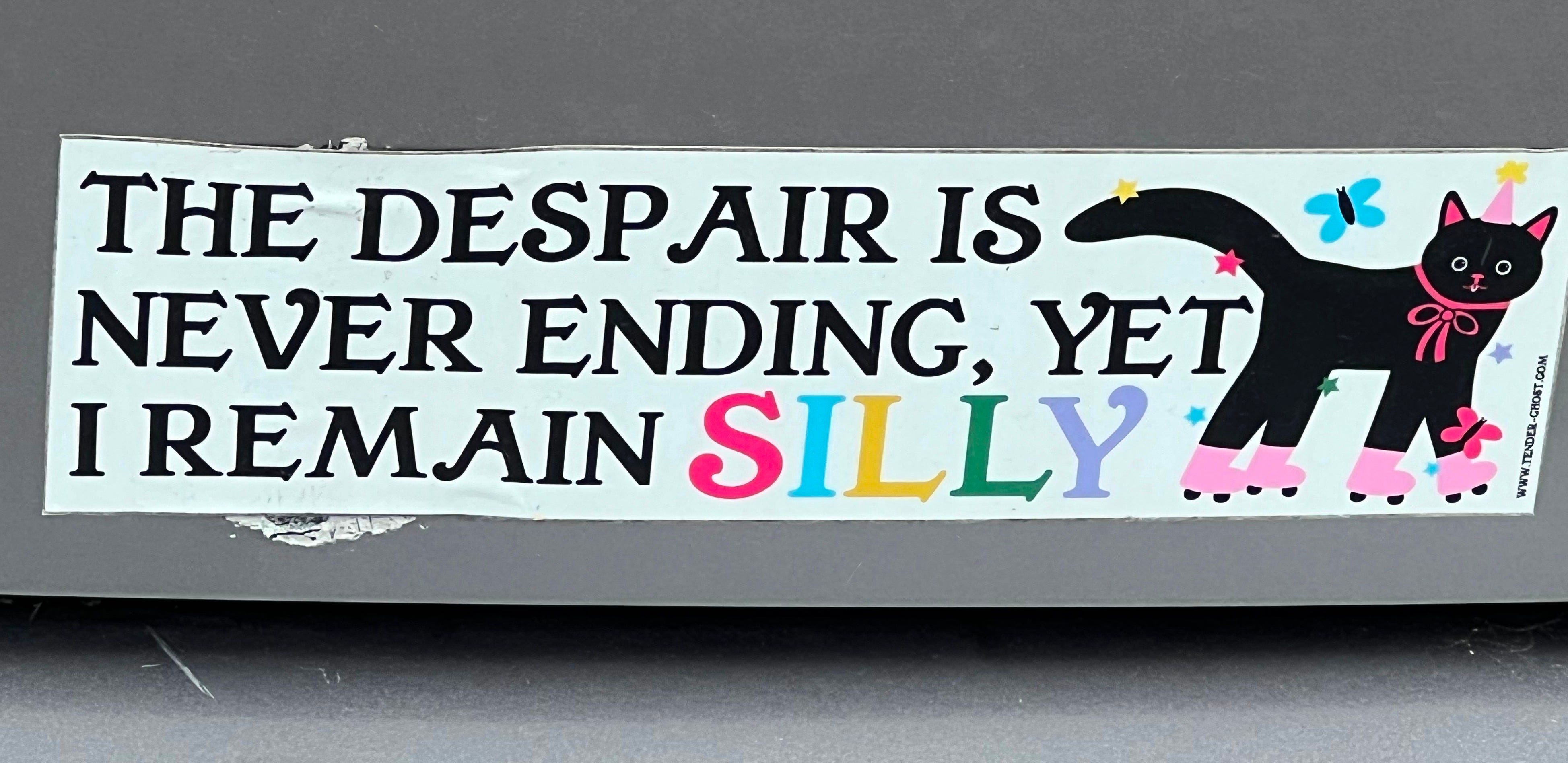
But then today, I saw this in the grocery store parking lot.
The despair is never ending, yet I remain SILLY.
It made me think:
How can I become wide enough within myself to hold all of this?
And why is this crucial for my own heart, my good life?
That’s what we’ll be figuring out together this week, in the sweetest possible manner.
Look, friend, I made this camp for us.
It has no barriers to access, a resource for anyone who could use a little lightening up right now, which, in my opinion, is everyone.
Come play.
Give yourself (and us) a couple hours this week, a little silliness, some gentle vulnerability…
We’ll leave feeling lighter, weirder, and more alive, fool’s honor!
Ready for camp?1. Fill out the registration form
2. Make camp donation via Venmo @pavini-moray
3. You will receive a welcome letter
June 10, 2025
How to be a Holy Fool
Every summer, we would meet in the woods for a week and practice liberatory, Earth-based magick together.
We worked for the world we long for.
Just.
Relational.
Animist.
Every year we failed. The world didn't change overnight.
But we kept showing up, knowing that our magick and our power made a difference.
As in any community, conflicts arose frequently.
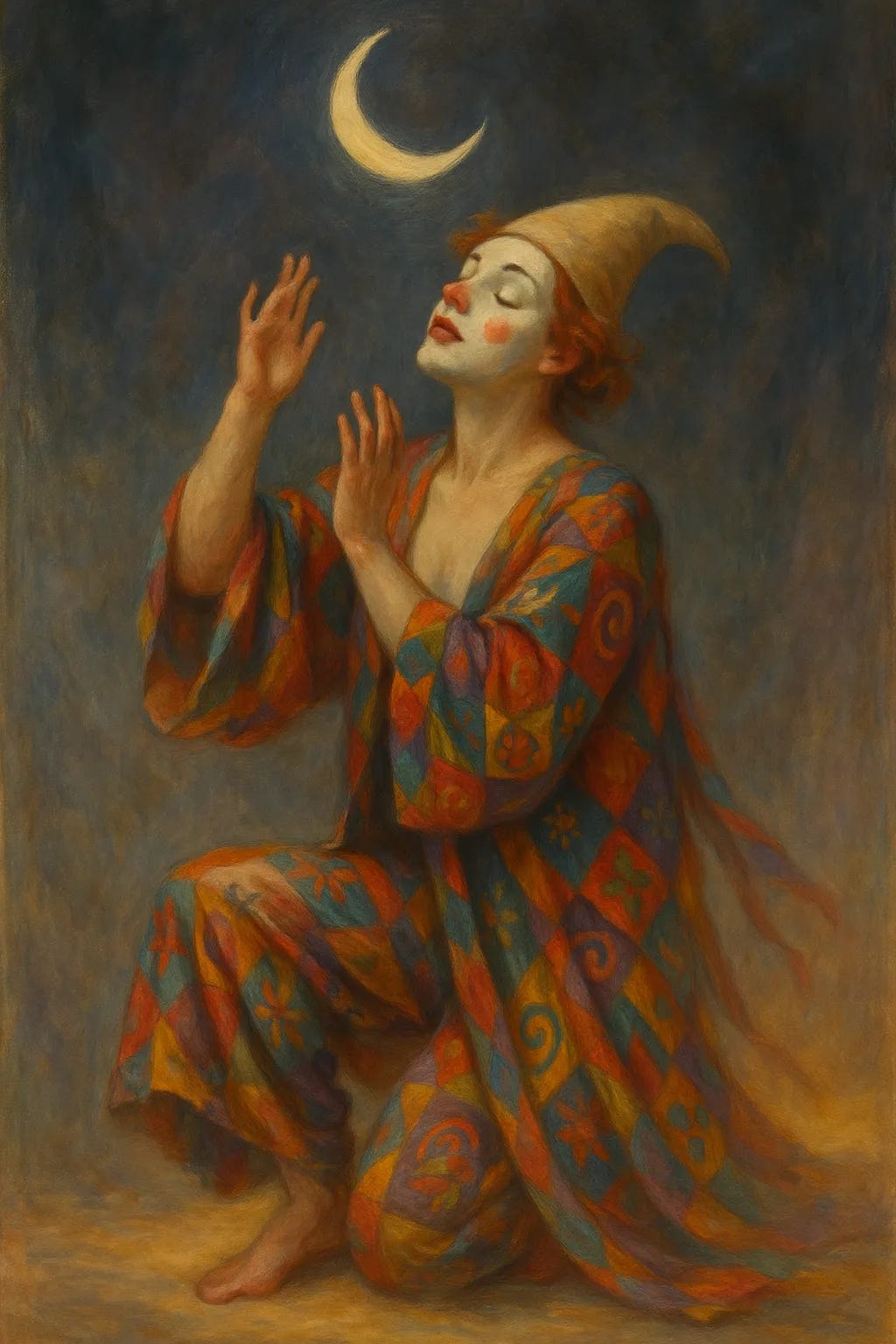
One of the most fracturing fights was around the clowns.The clowns were an undefined group within our camp who reached connection with Spirit through clowning: irreverent sass, interruption, disruption, snark, heckling.
When it was good, helping those of us caught in seriousness break through into divine play.
But a significant faction of us found the clowns irritating, disrespectful, and did not appreciate the irreverence. It was NOT FUNNY.
For example, the clowns did a skit at the no-talent show.Probably 7-8 clowns, some in clownface, others not, stood in a row.
The first brushed their teeth, a great display of foam and vigor.
When they finished, they spat directly into the next clown's mouth, who then brushed their teeth, before depositing the saliva, food bits, and well-used toothpaste into the next clown's open mouth, and so on.
I am nauseated as I write this.The clowns would mock our well-planned rituals (as well-planned as a bunch of anarchist witches can make) and often conduct their counter-rituals behind the central ritual.
Feelings ran high, and tensions grew intense.
In what would come to be known as the clown problem, after a couple of years, some people had had enough.
A meeting was called.
Clowns were called to be accountable for their clownish ways.Which they clowned.Now I'm laughing, remembering the mockery, how the clowns Would Not Be Serious.
"This is a very bad situation," they kept yelling.
I was not a clown.
I was an organizer, concerned with everyone at camp having the best possible experience.
I felt the impact the clowns were having.
Had been annoyed a time or two myself when in a particularly tender ritual moment, a cackle or howl would disrupt the energy, or the words to sacred songs were spontaneously rewritten from "Stir the Brew" to "Sip the Goo."
While the clowns put up a grand show of being unfussed by the criticism they were receiving, something inside me knew it hurt.
What they were doing was their best: sacred work to break taboo, and undo white uptight-ness and religious trauma.They were bringing a form of non-consensual yet very necessary magick and healing.
A different kind of light.
So the day of the meeting, a feeling grew in me: grief, but wild and feral.
We had forgotten this sacred role, and the necessity of its awkward, splendiferous power.
Uncomfortable yet holy.
Disruptive.
Playful.
Childlike with a critical edge of mocking norms.
Freedom for anyone who could claim it.
I, and a couple of others, spoke up for the shamed and projected-on clowns.
We spoke about the gifts they brought to our camp and the necessity of their presence.
We named the divisiveness and asked how these different approaches to Spirit could co-exist.
Was there room at camp for clowns?
Miraculously, hearts opened on both sides.
Tears.
Wonder.
Appreciation for the role the clowns were committed to holding.
Acknowledgment that sometimes, to get to the sacred, you have to go in through the door of the profane.
Mid-week at every camp, we held the HEALING RITUAL, caps intentional.
This was a Big Deal Ritual where some people waited an entire year to receive the healing they needed.
It depended on group cohesion, on offering our best to each other, and letting ourselves receive healing energy from the love the collective held for us all.
In the year of the clown problem, the clowns abducted me during the Healing Ritual.I won't say it was totally nonconsensual, but I'm not sure what would have happened had I protested.
But instead, I went soft, and they took me down to the forest floor.
Rolling around in the pine duff and dirt, they whispered things in my ears: “Lick the Earth,” one whispered.
Feeding me bark, another commanded, “Chew and swallow!”
I complied.
They bathed me with their spit.
They rolled me over and over, singing and laughing, covering me with dirt.
Until I went quiet, still.
I gave in.
That moment has become a lighthouse, ever shining in my life.
The presence of the holy mystery roared and tickled, leapt and giggled.I felt it flow in, and bring a tide of quiet ecstasy.
My surrender was absolute: I just let go all the way.
Once the clowns felt it, they left, on to heckle and harass others.
I tried to draw the threads of my undoing into a new weave.
When I could finally peel myself from the forest floor, I arose as GlitterHeart, a silent clown who could face everything with compassion.
A clown with the capacity to be with the world as it is, not turn away, not lose my heart.I've never told this story.
I write it today because the clowns gave me back an essential piece of my soul that had slipped away.
Freedom through silliness that is without boundaries and limits.
A lack of societal conditioning where I can do anything, but not be a sociopath.
I trust my clown more than any other part.
The most loving parts of me come through GlitterHeart.
I share this now because I want you to join School of the Holy Fool happening next week at Camp LightHeart.
It's not a pitch.
It's an invitation back to irreverent play of the most joyful, highest vibes kind.
No spitting on each other, promise.
That's just what I needed for my clown initiation.
I needed to embrace disgust and see what was beyond my programming.
What was actually going on? Those clowns loved me back to life.
We'll be gentling each other into a more playful way of engaging with the world as it is: broken, blisteringly beautiful, and holy.
Play is the antithesis of trauma.You might not need to be rolled in dirt or baptized in spit, but I know there's a clown in you waiting to be freed.
A part (perhaps undiscovered) that could lighten your grief, interrupt your programming, and help you laugh yourself back to aliveness.
GlitterHeart didn’t emerge because I was healed.
They came because I stopped trying to be so… put together.
School of the Holy Fool is where we can come undone, for the sake of holiness and wholeness.
It’s where we play our way into freedom.
If you’ve ever felt stuck in reverence, afraid to be ridiculous, or too tired to be earnest anymore, this is your space. This is your clown’s call.
Here I am, nuzzling in your ear.
Come play with me.
Come get whole with me.
Ready for camp?1. Fill out the registration form
2. Make camp donation via Venmo: @pavini-moray
3. You will receive a welcome letter and packing list
June 1, 2025
How to let your nose lead your way home
What you need:
About 15 minutes
A nose
This is your final invitation to register for Camp LightHeart’s SMELL THIS POEM week, starting Monday, June 2.
Sessions will be recorded.
Anticapitalist experiment: Camp by $ donation.
Scent as embodiment practice, words and poetry as pleasure and respite from a heavy heart.
More info and registration hereMay 29, 2025
How to Use Your Nose to Find Your Way Home
In a long-ago life, I was a park ranger helping kids fall in love with the wild.
We learned through our bodies: salamanders slipping through our fingers, tectonic plates traced in dirt, water tables crafted with muddy feet.
Everything was hands-on.
We stomped, rolled, trolloped, and meandered through meadows and caves.
We held tarantulas and turtles, cockroaches and snakes.
I loved watching wonder bloom for my kids.
JamalJamal was eleven the first time he stepped into the woods.
His class came on a grant-funded series of field trips, one of the few programs trying to get kids out of concrete and into the trees.
His Cleveland neighborhood was a place where even dandelions had to fight through sidewalk cracks.
While the other kids shrieked about spiders and smeared mud on each other, Jamal led with his nose.
Jamal smelled everything .
Bark, moss, leaf litter, stream stones. He pressed his face into the forest like he was trying to memorize it.
“This tree smells like the library,” he said. “The water smells stinky, like dirt.”
And then:
“ It smells…green. ”
My sense?
He’d caught a memory he never lived, but already knew.
The Bat Cave GameOne of my favorite lessons to teach was about bats.
Some species live in colonies of millions.
Mothers leave each night to feed, and when they return, they find their pup in the chaos using only scent and sound.
Each mother-baby pair has a unique chemical and vocal signature.
Scent is how they survive.To teach this, we played the Bat Cave Game.
Each pair of kids got a vial of a specific scent: lemon, cedarwood, vanilla, peppermint.
Both kids put on blindfolds.
Baby bats held scent caps.
Mama bats held the matching vial. Then we mixed them all up.
Chaos ensued: shrieking, chirping, wild flailing, a cloud of aromas hanging thick in the field, er, the cave.
But Jamal didn’t rush.He moved slowly, nose tilted, alert.
He sniffed, paused, moved on.
When he found his baby bat, he threw his arms in the air and shouted, “I found my baby!”
His joy was deep, mammalian, and contagious.
 Photo by Nils BouillardBecause smell is presence, and as Jamal showed me, it is also ecstasy.Coming Home
Take a deep breath.
Breathe deeper.
What do you smell?
Smell anchors you in the here and now.
But it also calls you back to a place in your body where memory and emotion are tangled, tender, and alive.
How Do We Smell?Ever wonder how you perceive smell?
Why does the scent of onions simmering smell good to most people? Or the scent of bacon frying, coffee dripping?
How does the smell of an apple permeate your nose and enter your brain, where you immediately recognize its scent, where a memory or an association comes up?
Scent is both poetic and scientific.
You perceive the aromas of thousands of substances, and make discernments about what is good for you.
Smell the milk, and it's sour? Not good for you.
Smell a rose and want to press your face deeply into her velvet petals until the core of her consumes you, the essence of beauty and magic, divine?
Yep, that's great.
Your nostrils both contain the olfactory epithelium, a small patch of tissue high up in the nasal cavity.
Each of the epithelial cells receives the chemical signatures of scent, and sends an electrical signal to your brain's olfactory bulb, where you begin to interpret it.
The route of smell transmission is short and fast, and it goes right to your feels.
Smell is the only sense that does not pass through the thalamus, but instead goes directly to the limbic system, particularly the amygdala (associated with emotion) and hippocampus (involved in memory).
This is the same circuitry that processes fear, pleasure, love, grief, and your deep emotional patterns.
Scent as SurvivalYears ago, broke and unraveling, I’d go stand in the co-op’s essential oil aisle.
I couldn’t afford therapy, but I could uncork the little bottles and inhale.
 Photo by Kelly Sikkema
 Rose Absolute made my chest warm.
White Pine cleared my mind.
I’d leave feeling more alive.
Not fixed, but less fractured.
Some scents were wrong for me.
Clove and manuka were too thick and sharp.
Later, I found I had a skin sensitivity to both.
My body said no before my mind knew why.
This is scent’s gift: a language older than words, spoken from skin to spirit.
The Landscape of EmotionThe smell of hot slate after summer rain still calms me—earthy, metallic, faintly sweet.
It smells like freedom. Like being ten and barefoot and unafraid.
The smell of my baby’s head.
My high school boyfriend's t-shirt.
Of an old book or new soil.
These scents don’t just remind us who we are, they re-member us, stitching together scattered parts.
The Perfume StudioNow I help people translate scent into story.
In my studio, I hand clients scent strips and watch their bodies respond.
When someone finds a note they love, their whole system shifts.
Shoulders drop, eyes close, a smile flickers.
Their mind quiets. Their animal body awakes.
I had one client who seemed all business: spreadsheets, strategy, heels on hardwood.
But when she smelled cardamom, her breath caught.
“This reminds me of something I can’t name,” she said.
We built her perfume around it, spicy, warm, mysterious. A scent for her power, yes.
But also her pleasure.
Another client smelled basil and started crying.
“My Nonna’s kitchen,” she whispered. “She’s gone now. I miss her every day.”
We added basil to her blend, a ribbon of memory running through the heart of the fragrance, both ache and joy.
Scent is not frivolous.
It is not superficial.
Scent is how we find our way back.
To ourselves.
To each other.
To what we love and what we've lost.
Whether as baby bats in a dark cave, broke-ass seekers in a food co-op aisle, or clients in a perfume studio, scent bypasses logic and speaks directly to our emotional body.
It is both instinct and invitation to come home, to remember, to feel.
Next Week at Camp LightHeart: Smell This PoemWe’ll be using scent to write, remember, play, and pray.
We’ll explore the poetics of the nose: how aroma shapes emotion, how scent can ground, arouse, transport, and transform.
If you’re longing to feel more you, come.
If you want to follow your nose into memory, magick, or just a little joy, come.
No scent or writing background needed.Just your breath, your nose, your willingness.
This is a by-donation, no-barrier-to-access offering.
Part of my ongoing anti-capitalist experiment in community, celebration, and poetic living.
Update from the field:The first week of Camp LIghtHeart ‘How to be like Water’ was a wet, wondrous success.
Needs were met: mine and the campers’.
Hearts were lightened. Joy was shared.
We made beauty together.
Let’s keep going.
So come.Come smell this poem with me.Let’s remember who we are through scent, story, and the sacred.
Logistics:Week of June 2
Online
Monday 7 pm Eastern, Saturday 12 PM Eastern
Sessions will be recorded.
By donation
Ready to join?1. Fill out the registration form
2. Submit donation via Venmo: @pavini-moray
P.S. A scent meditation is coming to entice your senses further and welcome you to camp. Watch your inbox this weekend!
May 20, 2025
Spiritual Hygiene
Someone asked me if there was a recording of the spiritual hygiene practice I offered in April at the book launch for Tending the Bones. There wasn’t, so I made one.
I hope you find it helpful. It’s especially good after you’ve been energetically slimed (you know the feeling) but is also an essential daily practice for me.
Love,
Pavini
May 18, 2025
Trauma will not save you.
Have you noticed the offering I’ve been singing out this summer?
Camp LightHeart is a summer camp for adults.It is a grand anticapitalist experiment in teaching beauty, magic, and joy as a form of resistance.
It’s a pay-what-you-can offering with no barrier to access.
I’m trusting that giving my work generously can meet both our needs.
We can playfully collaborate in the solemn work of protecting our hearts—and our vulnerable communities.
Tomorrow begins How to Be Like Water , our first session.
Right now, two brave beings are signed up.
And I want more people to play with.
I recently received feedback that I haven’t clarified just how crucial this work is—that it reads as light, fluffy, maybe even frivolous.
But here’s the truth: pleasure is not fluff.
Joy is not a luxury.
Beauty is not an escape.
This work is serious because it uplifts.
This work matters because it allows us to remember who we are beneath the systems trying to grind us down.You’ve seen the offerings out there.
So many are focused on trauma and grief.
And don’t get me wrong—that is an essential level of the work.
But.
When I first started my somatic sex coaching practice in 2012, I believed that pleasure would save us.
I made up all kinds of offerings about pleasure and how to feel good in our bodies.
But very few people came, so I pivoted to sexual trauma work, and suddenly, my practice was full.
People came to do the hard, painful stuff.
And while that’s important work, most clients stopped once the suffering was lessened.
We rarely touched exuberance.
We never made it to the kind of aliveness that sings in your cells.When I dove deep into ancestor work, people lined up to heal transgenerational trauma.
But when it came time to receive the gifts of well, elevated ancestors, many weren’t ready or didn’t feel worthy.
My friend Barbara Carrellas wrote a book called Ecstasy is Necessary.
She teaches that cultivating the capacity to feel beyond good is neurologically essential—it strengthens our full capacity to live, love, and lead.
The leaders and visionaries I trust say the same thing: joy is the medicine for these times.
If we can’t laugh, we’ll cry—if we’re lucky.
If not, we numb out, dissociate, and lose ourselves.
Earnestness and commitment to grief work can only take us so far.
So I’m circling back.
To pleasure.
To joy.
To the beauty that nourishes revolution.
Camp LightHeart isn’t therapy, and it isn’t entertainment.
It’s a remembering space—a devotional, playful, sacred place to reconnect with your body, your joy, and your ability to feel good on purpose.
It’s especially for people who can’t imagine feeling lighthearted right now.
We’re not trained to turn toward what feels good.
We’re taught to brace, fix, hustle for healing.
We’ve been schooled in scarcity, not delight.
We’re fluent in crisis—but illiterate in joy.
Most of us don’t yet know how to receive offerings that aren’t transactional, or that don’t demand heavy lifting to feel valid.
So when something nourishing arrives without a price tag, we hesitate.
Capitalism has taught us to mistrust the generous, to overlook the beautiful, to stay focused on what’s wrong.
That’s negativity bias, baked into our bones.
So—I’m inviting YOU to register for Camp LightHeart this summer.
There are many sweet, potent offerings all summer long.
Five different experiments. Different magicks.
And this week?
It’s all about water.
 Photo by Vishal Banik
 If you have a relationship with water—or want to deepen one…
If you’re longing for softness, spaciousness, and sweetness…
If you want to root into beauty to stay strong in your resistance…
If you are a water mystic…
Then come.
Bring a beloved vessel filled with water from home.
Let’s pray with it.
Play with it.
Become like it.
I want this experiment to work.
Because no one is coming to save us.
It’s us who will save us.
The ability to cultivate lightheartedness amid war is one of our sharpest tools.
Come float.
Come drink.
Come play dolphins.
Come be water with me.
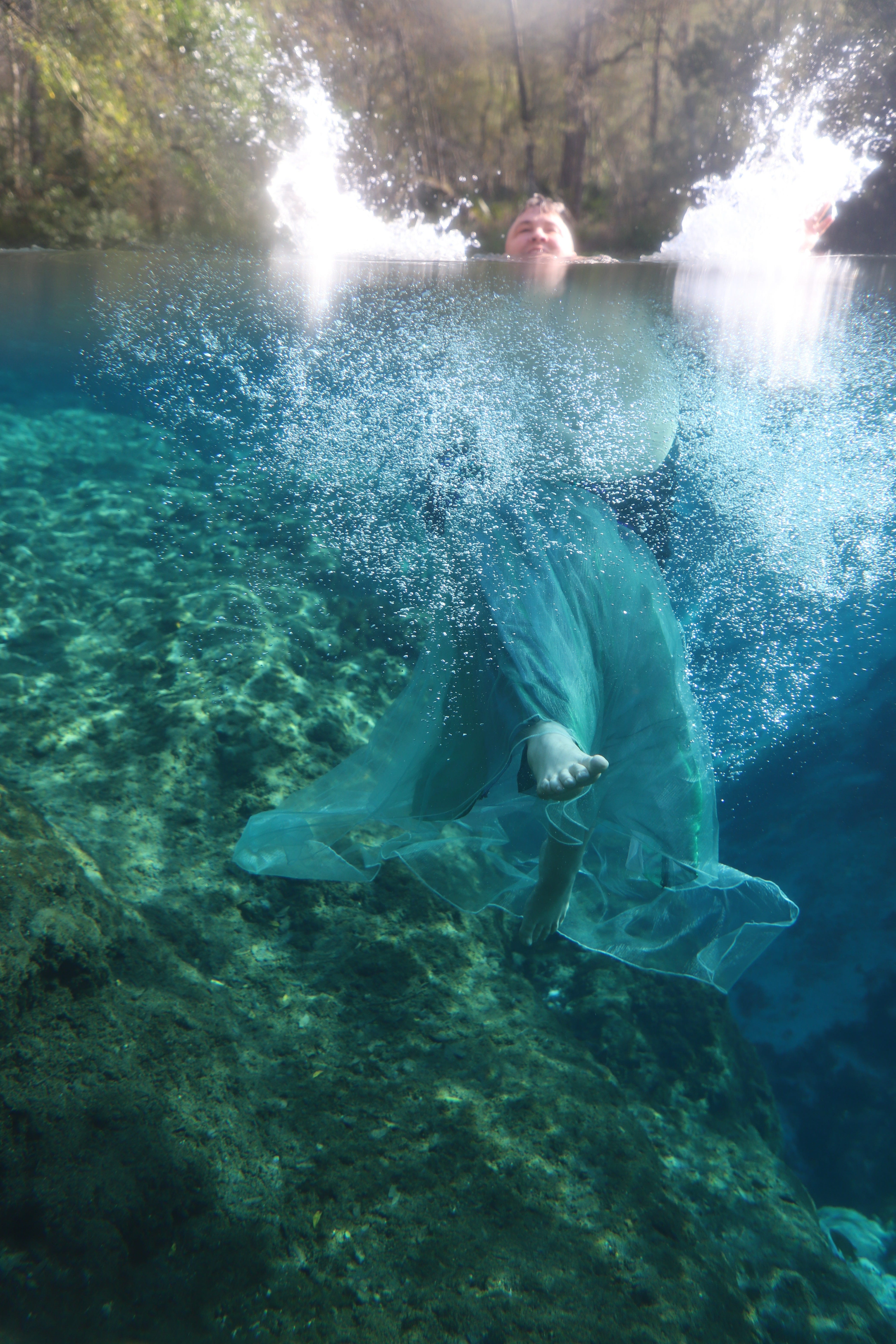 Merfolk photo shoot with Shoog McDanielWith big, bright love from my glowing, radiant heart,
PaviniReady to come to camp?
Fill out the registration form.
Make payment via Venmo: @pavini-moray
You'll receive a welcome email with a supply list and instructions.
P.S.I also received feedback from people wanting to come but unable to make the time, and I said I wouldn’t be recording sessions.
I realize now that puts up an unnecessary barrier to access.
I will be recording sessions and sending them out to participants.
Want more info? Have Questions?

