
Keris Stainton's Blog, page 7
February 21, 2014
Feminism Friday: Rewrite the Story
I finally got round to watching Miss Representation a couple of weeks ago and it’s really excellent. I can’t say I enjoyed it, because it’s infuriating, but it’s well worth a watch. (And it’s on Netflix, if you’ve got it.)
I’m very much looking forward to The Mask You Live In, the new film – about masculinity this time – from the same people, and their new promo video is good too.





February 11, 2014
To read list 2014
 Yes, I know we’re almost halfway through February, but I’ve had a busy year so far (I’ve made a new website for starters – what do you think?).
So I decided that this year would be the year of reading books I’ve always meant to read, but haven’t got around to. Plus I wanted to read (or reread, I can’t remember which I’ve already read) Maya Angelou’s books. So here’s the list.
A Wrinkle in Time – Madeleine L’Engle
Anne of Green Gables – LM Montgomery
The Beauty Myth – Naomi Wolf
The Bell Jar – Sylvia Plath
The Golden Notebook – Doris Lessing
The Grapes of Wrath – John Steinbeck
Herland – Charlotte Perkins Gilman
The Ocean at the End of the Lane – Neil Gaiman (the only Gaiman I’ve read is Coraline and everyone tells me I need to read more)
The Wee Free Men – Terry Pratchett
Maya Angelou’s memoirs (I read the latest last year):
I Know Why the Caged Bird Sings
Gather Together in My Name
Singin’ and Swingin’ and Gettin’ Merry Like Christmas
The Heart of a Woman
All God’s Children Need Traveling Shoes
A Song Flung Up to Heaven
I’m also going to try to read some of the books on Oprah’s 40 books before 40 list (even though I’m 42).
Do you have any reading goals this year? What are the books you’ve always meant to read, but haven’t got round to… yet?





February 7, 2014
Feminism Friday: Herstory
Yes, I know the “his” in history is nothing to do with men. And the first time I heard the word “herstory” I thought it was one of those “political correctness gone mad” things* but the fact is that the history that we are taught is male-centred. (*Whenever anyone says “political correctness gone mad” Richard Littlejohn does a bit of excitement-wee.)
I read a while ago that the actress Hedy Lamarr invented the technology that we use for bluetooth and wifi. We went on a boat tour in London last week and learned that women built Waterloo Bridge. And then I read yesterday that women “invented all the core technologies that made civilization possible.”
But I knew that, I learned that at school. Oh wait no I bloody didn’t.
I read the above quote on Cory Doctorow’s tumblr (tweeted by Sam Baker) and I urge you to read the full thing. So much so that I’m posting it below to make it easier. But the quote comes from this post – Patriarchy in action: the New York Times rewrites history – by Dr Violet Socks and I urge you to read all of that post too. (Remember the Miss Rep How the Media Failed Women in 2013 video? Remember the guy who said “women just haven’t done much”?)
“Women invented all the core technologies that made civilization possible. This isn’t some feminist myth; it’s what modern anthropologists believe. Women are thought to have invented pottery, basketmaking, weaving, textiles, horticulture, and agriculture. That’s right: without women’s inventions, we wouldn’t be able to carry things or store things or tie things up or go fishing or hunt with nets or haft a blade or wear clothes or grow our food or live in permanent settlements. Suck on that.
Women have continued to be involved in the creation and advancement of civilization throughout history, whether you know it or not. Pick anything—a technology, a science, an art form, a school of thought—and start digging into the background. You’ll find women there, I guarantee, making critical contributions and often inventing the damn shit in the first place.
Women have made those contributions in spite of astonishing hurdles. Hurdles like not being allowed to go to school. Hurdles like not being allowed to work in an office with men, or join a professional society, or walk on the street, or own property. Example: look up Lise Meitner some time. When she was born in 1878 it was illegal in Austria for girls to attend school past the age of 13. Once the laws finally eased up and she could go to university, she wasn’t allowed to study with the men. Then she got a research post but wasn’t allowed to use the lab on account of girl cooties. Her whole life was like this, but she still managed to discover nuclear fucking fission. Then the Nobel committee gave the prize to her junior male colleague and ignored her existence completely.
Men in all patriarchal civilizations, including ours, have worked to downplay or deny women’s creative contributions. That’s because patriarchy is founded on the belief that women are breeding stock and men are the only people who can think. The easiest way for men to erase women’s contributions is to simply ignore that they happened. Because when you ignore something, it gets forgotten. People in the next generation don’t hear about it, and so they grow up thinking that no women have ever done anything. And then when women in their generation do stuff, they think ‘it’s a fluke, never happened before in the history of the world, ignore it.’ And so they ignore it, and it gets forgotten. And on and on and on. The New York Times article is a perfect illustration of this principle in action.
Finally, and this is important: even those women who weren’t inventors and intellectuals, even those women who really did spend all their lives doing stereotypical “women’s work”—they also built this world. The mundane labor of life is what makes everything else possible. Before you can have scientists and engineers and artists, you have to have a whole bunch of people (and it’s usually women) to hold down the basics: to grow and harvest and cook the food, to provide clothes and shelter, to fetch the firewood and the water, to nurture and nurse, to tend and teach. Every single scrap of civilized inventing and dreaming and thinking rides on top of that foundation. Never forget that.”





February 6, 2014






February 4, 2014
New book! Baby, One More Time – OUT NOW!
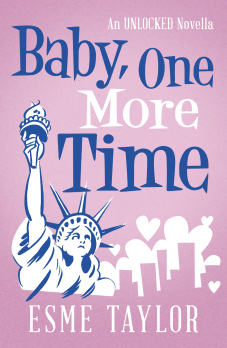
I have a new Esme Taylor novella out with Hot Key Unlocked. It’s called Baby, One More Time, it’s set in New York and features a flight, a hotel room, lots of food and some sexytimes (so it’s not suitable for younger readers).
I’ve had the basic premise in my mind for a LONG time (maybe ten years?) so I was thrilled to finally write it and it was the most fun to write. I don’t think I did any angsty I can’t do it! whining at all! And I’m always happy to wander New York (on Google Maps rather than in reality, sadly) for research. Plus I’ve nicked the details of a hotel I’ve been desperate to visit for years. How’s this for a hotel room?

(The room is in The Hotel on Rivington, but I’ve never been there so everything else is made up.)
I hope you read it, I hope you love it and I hope you fancy Nick as much as I do (is that weird?).





January 26, 2014
The most important lesson I’ve learned
I’ve read this quote before – I may even have blogged it before – but I always need a reminder.
For a long time it had seemed to me that life was about to begin – real life. But there was always some obstacle in the way. Something to be got through first, some unfinished business, time still to be served, a debt to be paid. Then life would begin. At last it dawned on me that these obstacles were my life.
Fr. Alfred D’Souza





January 21, 2014
Days for Girls
 I’ve written before about how O magazine changed my life and I’m currently reading through all the magazines I’ve saved over the years and throwing them out (I’m decluttering in preparation for – hopefully – moving house later this year). There’s something in pretty much every issue that resonates with me (I’m saving the links and the covers on Pinterest - I may never go back to them, but it makes me feel better about throwing them out!).
The other day I was reading the January 2014 issue and I skipped past the page then thought, “Wait. Did that say ‘periods’?” I flicked back and, yes, it did.
Period Drama: Helping Girls Around the World Navigate “That Time of the Month”
How’s that for serendipity?
I haven’t had a chance to decide what I’m going to do yet – I’ve still got lots of reading to do – but after my blog post last week, people asked if there was somewhere they can donate and this seems like a good start: Days for Girls





January 16, 2014
Writing for Teenagers course starts 1 February
 I’m running my Writing for Teenagers course again next month.
It runs for six weeks, costs just £50 and you can read all about it here.
But don’t take my word for it…
“So inspiring and informative! I found the whole approach a brilliant way in to talking about the issues surrounding writing and editing YA.” Harriet Reuter Hapgood
“The course for me was well rounded and packed with enough information/guidelines for the novice writer to put together a jolly good book. It’s the best fifty quid I’ve spent in a long time.” Paula Smith
“I’ve loved the course. It’s been supportive, inspiring and helpful. It’s given me more confidence and enthusiasm to keep going.” Lesley Taylor





January 10, 2014
Feminism Friday: Why can’t periods be private?
You’ve all seen the ‘vagina knitting’ woman, right? Or if you haven’t seen it, you’ve heard about it? (If not, you can read all about it – including the response - here.) But that’s not really what I want to talk about.
When a friend posted it on Facebook, she tagged me in, asking what I thought. (Three friends sent it to me, in fact. Should I be concerned that they all saw ‘vagina knitting’ and thought of me?!) A discussion ensued, during which I mentioned that I thought demystifying periods was important and my friend asked why. Why does it need to be demystified? Why can’t it be private?
My feeling is that we’re not taught so much to be “private” as we are to be ashamed. I was told never to mention periods in front of boys. A friend told me about buying tampons and the (female) shop assistant put a newspaper down on top and whispered, “There’s a man behind you, love.” I read this quote from Stevie Nicks on Rainbow Rowell’s tumblr a while ago:
The world teaches you that the way you exist in it is disgusting — you watch boys cringe backward in your dorm room when you talk about your period, blue water pretending to be blood in a maxi pad commercial. It is little things, and it is constant. In a food court in a mall, after you go to the gynecologist for the first time, you and your friend talk about how much it hurts, and over her shoulder you watch two boys your age turn to look at you and wrinkle their noses: the reality of your life is impolite to talk about.
But that’s not really what I want to talk about either.
The other day on Twitter, I read this from @allthepie: “I was reading recently that discussion of 3rd world sanitation ignores the gender inequality crossover whereby girls are forced to give up school [because] there aren’t facilities for menstruation. How this can be ignored as a social/health issue?”
Girls are forced to give up school because there aren’t facilities for menstruation.
When I read that, my eyes filled with tears, but then I had another, stranger, reaction – I felt like an electric shock ran right through my body from the top of my head to my toes and it left me almost vibrating. With grief. And anger. And shame.
I went on to read this on WaterAid’s Gender Aspects of Water and Sanitation:
Girls who have reached menstrual age may also be deterred from school by inadequate sanitation in public places. Simple measures, such as providing schools with water and latrines, and promotion hygiene education in the classroom, can enable girls to get an education, especially after they reach puberty, and reduce health-related risks for all. WaterAid Bangladesh found that a school sanitation project with separate facilities for boys and girls helped boost girls’ school attendance 11 per cent per year, on average, from 1992 to 1999.
And I read Jamuna’s Story on Just A Drop.
12 year old Jamuna is from Parumpai Kandikai Village in India. Each month, she – along with 350 million other women – feels ashamed, uncomfortable and unsafe.
This is because in India, menstruation is cloaked in secrecy, negativity and stigma. This taboo inflicts indignity upon millions of girls such as Jamuna, leaving them isolated and insecure. Furthermore, with even more serious consequences, the grave lack of toilet facilities can force menstruating girls out of school, temporarily and sometimes permanently. In fact, 23% of Indian girls leave school altogether when they begin to menstruate.
This is why it needs to be demystified. This is why it can’t be private. This.


January 7, 2014
My books of the year
Last year (heh!) I set myself a Goodreads reading challenge. I wanted to read 200 books in 2013. I knew it was a lot, but that was intentional – I wanted to spend less time idly surfing, tweeting, facebooking and, you know, looking for more books on Amazon.
And I only just made it. I finished the last book on New Year’s Eve after prising the iPad out of Harry’s hot little hands. I’ve no plans to read so many books this year. This year is going to be about reading the books I’ve always intended to read, but somehow have never got round to. I’ll be blogging about that another day.
In the meantime, here are the books I loved in 2013.
Children’s/MG. I read two Pea books, two Exiles books and four Casson family books. (I’d already read the other two Kat Stephenson books). All brilliant. All highly recommended.

YA. I actually was surprised to find I didn’t read a huge amount of YA – probably because I spent so much time trying to write it and I can’t read it when I’m writing it. But I did manage to sneak in a few brilliant books…

So many amazing adult books this year. My book of the year was undoubtedly The Signature of All Things, but I love love loved so many others too.

I tend to read non-fic when I’m writing and I read some doozies this year. All different. All brilliant.

 I don’t really read short stories. But one of my absolute favourite books of the year was Elizabeth Berg’s short story collection, The Day I Ate Whatever I Wanted. It made me laugh, it made me cry, it made me think. I LOVED it.
[PSA: Life After Life, Tiny Beautiful Things and Love, Nina are currently 99p on Kindle/Nook.]





