Monica Bruno's Blog, page 6
February 9, 2015
Is Running Bad For You?
I love to run, I really do. I’ve been doing it for fourteen years and it has become an integral part of my life. In fact, I call myself a runner, not because I run almost every day or because of the mileage I rack up, but because I can honestly say I feel better running than not running. That doesn’t mean it’s always easy; I have good runs and really bad runs. Sometimes I feel energized when I run, sometimes I feel like my feet weigh fifty pounds each. But, at the end of the day, I always feel better if I ran.
Running allows me to keep my weight in check and my legs strong. It helps clear my mind and lower my anxiety. It’s inexpensive (you just need a good pair of shoes) and you can do it anywhere and at any time.
It’s the most widely done exercise in the world. Haven’t humans been running since the cavemen had to chase down their meals or runaway from being a meal themselves? And who can forget Farah Fawcett and Lee Majors starting the jogging craze back in the 70s?

Okay, maybe I just dated myself…
So, it’s no wonder my jaw dropped when I read some of the new research that suggests running too much can actually be bad for you (e.g. http://bit.ly/1Kn6woR ). Like, as bad as being a couch potato. What??? Running is bad for you? I can hear my Grandma now, yelling down from Heaven, “I told you so!” But wait, there is countless research showing how exercise, especially, vigorous exercise is beneficial to our health. So, what gives?
I asked my long time friend and fitness guru Greg Burch, with Burch Fitness, if he could shed some light on this, and here’s what he had to say:
My auto-response is to say that in most cases too much of anything is not optimal and is sometimes even more harmful than beneficial. This is from the perspective of our physiology.
In the case of running, when asked if too much is bad for you, I’d say “it depends.” It depends on you primarily and the why behind your efforts. Physiologically humans are in a growth mode through the age of 25, so ladling on more mileage for the sake of improved athletic performance or speed makes good sense for high school, collegiate and post-collegiate athletes. They’re growing, therefore recovery occurs rather quickly and recovery is where the athletic performance improvements occur.
As we enter our 30s, the game changes physiologically as well as mentally. Unfortunately, our 30s (which is still really young) bring about the beginnings of degradation for things left untouched. In men, testosterone development starts dipping instead of climbing. In women, it’s more likely that childbirth has brought about physiological change. We’re aging and this is where exercise (like running) finds a new purpose for most of us. It’s no longer athletic performance as much as it is weight control, doctor’s orders and perhaps for a few – an enjoyable effort that brings about preservative benefits.
For both men and women, age brings about two things without an effort – muscle atrophy and fat gain. As Monica stated, for some, running is simply a cheap, easy, efficient means of killing a lot of birds with one stone. We know that with every year of age our maximum heart rate tends to decrease as the body is very much a use it or lose it entity. So, by running we’re using it and our heart tends to appreciate that as an individual muscle, as well as, the fact that it pumps the blood that carries a majority of necessary substrates to the rest of our body’s systems (organs, skeletal muscle, bones, etc).
Unlike metal and plastic, which weaken when used and stressed, the human body actually increases in potential in response to use and stress. It’s called positive physical adaptation. Running is an efficient means of stressing the body’s different systems in order to maintain and even improve that which is designed to ultimately fail (or not last forever). We’re not just muscle and bones though. Our brain is tied in with a very complicated nerve and endocrine system that regulates everything to include our mental state. Here again, running tends to be a positive stimulant and many runners (myself included) report experiencing a runner’s high. All good stuff!
With regards to this study, or any study citing running as being bad for one’s health … It just depends. Are you running to lose weight? Well, if you’ve kinda let yourself go, are obese and haven’t changed your eating habits, then you may not lose as much weight by running as expected (a very general rule of thumb is 1 mile = approximately 100 calories). Plus, you may even experience joint/knee pain. I always remind clients that they can’t out-exercise a crappy diet. Are you running because the doc said you better exercise and running is the only exercise you know how to do? Are you running because if you don’t get your run in you’re really crabby and life just seems more grey?
My point is, there are a lot of people out there running for so many different reasons. Some think there is no other option for exercise. Some truly enjoy the “runner’s high” (increased endorphin release) and therapeutic value. Some simply get the results they desire by running (feel good, look good, and are by all markers of good health – healthy!). Running is just a very practical option for some, yet not the ideal mode of exercise for everybody.
Sure, research has demonstrated that sometimes too much running/high mileage running (think marathon distances and further) can actually stress the body’s systems a tad too far, to the point of creating a compromised immune system, cumulative stress to connective tissues causing premature wear & tear, etc. But, as far as a magazine article that quotes a quote of a quote regarding a researcher who is familiar with a study that may or may not have been properly conducted, well, magazine articles are for selling magazines and writers are writers, NOT researchers. So, take those articles with a grain of salt and keep running as long as it works for you, makes you happy, a bit more healthy (than not doing anything) and helps to keep you in the same size pants.
Are there better means of building muscle? Yes. Is there current and compelling research for including intensity into some workouts? Absolutely. Is your longevity threatened by choosing to only run, run a lot or run fast? Uhhhh – NO.
So, there you go. Since I run primarily to keep sane, I’m just going to keep on running, thank you very much. I will continue to use it or I will definitely lose it.

How about you? Are you going to modify your running regiment in lieu of the recent studies?
You can connect with Greg and his social media sites via his blog at http://burchfitness.com/


January 24, 2015
The Ferry Ride

It was on a Sunday night in November. We were on the Stanton Island Ferry, on our way back to Manhattan. My eight year old daughter, Gianna, was crying. She was upset that we were on the ferry. At least, I think that was the reason. She can’t tell me why she was upset because she has autism and is basically non-verbal. So, when she’s upset, I try to access the situation the best I can.
We had been in New York City for the Thanksgiving holiday and this was our last night of our vacation. My son, Gianna’s twin brother, asked if we could go see the Statue of Liberty. Because we had promised him at the beginning of the trip that he would be able to see Lady Liberty, we agreed and took a cab from Central Park to Battery Park.
My daughter picks up on routine quickly and at the end of each evening while we were there, we would grab a cab, head to a restaurant for dinner and then back to our rented apartment in the Lower East Village. So when the cab driver dropped us off at the Stanton Island Ferry Terminal, she became upset.
“Go to eat,” she said.
I replied, “Yes. First we’ll go on the boat, and then we’ll go eat.”
She repeated what I said. But still began to protest when we joined the crowd of people who packed the ferry. And then, when we got off the ferry in Stanton Island only to turn right around and get back on it to return to NYC, Gianna began to cry. I tried my usual tactics, holding her, telling her it’s almost over, repeating to her we’re going to go eat then we’ll go back to the apartment, I gave her the Ipad, which usually helps calm her down.
As this was happening, I began to feel my usual feelings of despair. I’m pretty good of making the best of a situation. Not looking back and dealing with the hand that’s been dealt. But, when things like this happen, it’s hard not to be brought down. I look at her and wish I could fix her. I wish I could talk to her as a normal mom speaks with her daughter. I see girls her age, with their friends, playing games, singing songs, telling secrets, giggling together and I wonder what Gianna would be like if she didn’t have autism. I wonder how my son would be different if his only sibling didn’t have autism. I start to feel depressed.
I was feeling like this when I noticed a woman and her young son sitting next to me. I think they were Orthodox Jews because they were dressed in black and the boy had very short hair with long payos (curly sideburns). They were staring at Gianna. I smiled, that kind of what are you gonna do? smile, at the woman.
“He wants to know why she’s cryin’?” She asked me in a thick New York accent.
“She doesn’t like the ferry. I think it scares her… and, she’s autistic,” (I think I tell people my daughter’s autistic in situations like these because I hope they’re not blaming my kid’s inappropriate behavior on poor parenting).
“So is my son,” the woman said.
I looked again at the boy, then looked past the woman to the older boy in a wheelchair who was sitting behind her. He was also dressed in black and wore payos. He rocked his body back and forth and looked out the window. “How old is he?” I asked.
“He’s seventeen, he looks a lot younger,” she said.
He did, I would have guessed he was twelve. “What’s his name?” I asked.
“Shimon,” she said, and then she called to him and tried to get him to wave hello to me. He looked in my direction and moved his folded hand side to side. He smiled widely, and then looked back out the window. “Does she talk?” she asked me.
“Not really,” I said. “She can relay basic needs, but not much more than that.”
“Shimon doesn’t talk, but he can say uh when he wants to pray,” she smiled. “Is she trained?”
I knew what she meant, she wanted to know if Gianna was potty trained. I nodded, “She still uses a pull-up at night though,” I said trying to relate.
“He’s not,” she said.
I realized she was telling me this because Shimon was relieving himself as we were speaking. He was wearing an adult diaper. Her younger son, with his big brown innocent eyes, was still staring at Gianna. I smiled at him, and then his mother smiled at him.
“He asks me why Shimon is this way, I tell him that’s just the way he was born. He’s a good brother. He helps a lot,” she said.
“Yes, Gianna has a brother, too,” I motioned towards my son who was standing by the window with his father.
Then the woman put her hand on her son’s wheelchair, “He likes to ride the ferry. It calms him. So, we come here in the evenings and ride back and forth, back and forth,” she said smiling.
It was at this moment that I felt like God, or the universe, was speaking directly to me. Smacking me upside the head.
How on earth could I feel bad? Look at this woman and her son. Look at the card they were dealt, and here they were riding the ferry, making him happy. Living their life. We reached the terminal and I squeezed her shoulder. We smiled at each other and then we went our separate ways.
Whenever I feel bad about what my daughter can’t do, or when I begin to wonder what life would be like if she didn’t have autism, I think of Shimon, and his mom and his little brother. I think about their smiles, his mother’s chutzpah and positive attitude. I think of them and I count my blessings.


January 10, 2015
Back at It

As we start 2015 with renewed enthusiasm, ready to take on our resolutions, keep in mind that after a few weeks, most of us tend to revert to our old habits. So, I want to share a couple of tips that help me stay motivated throughout the entire year:
Let go of old stories.
It’s a good idea to make sure you’ve first let go of all the old things that no longer serve you. Start off fresh and clean out what you can. This goes for our psychical space as well as any mental or emotional hang-ups we might have.
They say your surroundings are a reflection of how you feel, so if your home or office is a mess and full of clutter, chances are you probably feel stuck. You’ll be surprised how much better you’ll feel by just clearing off your work desk or cleaning out your closet. Clear the clutter, donate what you can and throw away the rest.
Get rid of those old stories you tell yourself as well. Stop telling yourself you’re just not a morning person (I’ve been telling this to myself for eons), how you don’t have enough time or energy or how it’s too hard to change. It’s time to let it go. Stop thinking of reasons why you can’t do something and start thinking about the reasons you can. Clear it all out and fill your space (& head) with new, positive ideas.
Direct your goals to ALL aspects of your life.
We have a tendency to focus our goals around one or two areas of our life, typically these involve exercising more and eating better. These are great goals to have, but, to feel really complete, we should work on all aspects of our lives. One way I make sure I don’t lose sight of my intentions and stay on track is to utilize a vision board. You’ve probably used visual reminders for your goals before. I’ve used some variation of vision boards for years with great results. But last year, I started using a Feng Shui bagua vision board and it has made a huge difference.
Why a bagua vision board? The bagua vision board helps you create intentions for all the areas of life, including our homes and relationships, as well as our mental, physical and spiritual well being. It also helps create energy around those intentions. I bought a poster board and divided it into nine areas like the one below:

Notice that each area is dedicated to one aspect of our lives and has a specific color associated with it. I took my board and filled each area with visual reminders of my intentions for that part of my life, trying to keep to its dominant color.
I also have mantras for each area (e.g. I embody financial abundance for the purple/prosperity area, I have meaningful relationships with the people I love for pink/love & relationships, I travel to the mountains, to the oceans and the cities for silver/travel, I write everyday for black/career). This is what my board looks like right now:

Your board doesn’t have to look like mine, in fact, it shouldn’t. Your board should be visually appealing to you. Once you make it, make sure to hang it where you can easily see it. Then, set a little time each day to reflect on it. Preferably in the morning and at night before bed, so your intentions can seep into your head while you sleep.
For more information on how to make a bagua vision board, visit: http://artfulparent.com/2014/12/make-vision-board-works-10-steps.html
Even if you think this is a little too “hokey or out there” for you, you have to admit that we are what we think about. Our thoughts control how we feel and what we do. So, if you have a visually appealing, daily reminder of what you want for your life, things will start to happen. They may not happen exactly the way you thought they would, or on your time schedule, but they will happen. Be open to new possibilities!
Since I started using my bagua vision board, I have seen incredible things happen in my life. I can’t say all of my intentions have come true, but I can say I have moved closer to realizing many of them and, more importantly, I haven’t lost sight of any of them. I am both amazed and humbled by the power of it all.
If you’ve never used a vision board, I encourage you to try it. Set your intentions and let the universe open a path for you. Just stick to it and see what happens. And, be sure to update your board once your intentions are fulfilled, so it remains relevant for you.
Here’s to you and a happy, healthy 2015. Good luck making all of your resolutions a reality!


May 18, 2014
Monica Bruno Author Interview
My interview with Jeri Walker-Bickett on writing, editing, publishing and marketing.


February 10, 2014
Rachel’s Folly

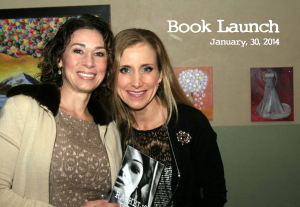
After four years of writing, I’m pleased to announce Rachel’s Folly is finally out!
My debut novel, Rachel’s Folly, is a suspense/thriller set in the eclectic city of Austin, TX.
Read what reviewers are saying…
“It is a compelling psychological mystery-suspense-thriller dealing with betrayal, deception, and retribution. The unique way this novel is structured makes it particularly difficult to summarize the plot without giving away essential elements. Frankly, I’m afraid that just about anything I might reveal could end up destroying your pleasure if you choose to read it. You’ll have to trust me: it’s a terrific story and it deserves to be told exactly like the author plays it out.
Perhaps, it’s enough to know that this novel starts with an odd and very assertive sexual seduction, develops into a psychological drama, morphs into a mystery, and finally ends up a fast-paced suspense-thriller.”
-B. Case, Top 500 Reviewer, Amazon
“A psychological thriller [that] takes a serious, thoughtful look at the consequences of adultery. This is a book you can immerse yourself in fully. When the big moments, the twists and revelations do come, they are genuinely stunning. Highly recommended.“
- Walter Conley, Back Again and Gone
Rachel’s Folly paperback and Kindle Edition are available at Amazon.
Get yours today!


October 23, 2013
The Flip Side

This post is sort of an addendum to my last one: Seven Steps to Reaching Your Goals.
It’s good to be driven and have healthy goals. We live in a society that rewards type A personalities. We get promoted, we get medals, we get accolades. We’re continually striving to improve our lives (be that psychically, monetarily, emotionally or spiritually). But there can be a downside. Sometimes, we can become so goal driven, we forget to stop and check in with our surroundings.
We also live in a time of hyper connectivity. We’re constantly making human connections, via text, facebook, twitter, etc. With one click of an icon we can instantly share a thought with hundreds of people. In many ways, it’s a great thing. But social media can become addictive. We can become dependent on it to feel content. You can feel the need to connect with your social media friends at all times. But what about the people you really care about? Your significant other? Your family? Your real friends? When was the last time you really reached out and connected with them?
Sometimes, we get so caught up in our own ambitions; our own lives, we lose sight of the things that actually count. It can happen to anyone. We need to make sure that in our pursuit of our goals and in the muddle of social media, we don’t neglect the people who matter the most.
Given, not every person is worth investing in. There are relationships that are truly unhealthy. For whatever reason, some people may need to remain in your life but in order to keep a peaceful heart, it’s better to keep them at a distance. What I’m referring to here, are the people who are important to you. The people who are always there, but we sometimes take for granted.
In many ways, every relationship you have is like a flower. If you neglect it, it will wither. And if you neglect it for too long, it can die. It is the ultimate paradox – by searching for a better way of life and trying to connect with others, we can destroy the most significant relationships in our lives. Like the shriveled flower, sometimes you can dig under the dead plant and find a part of the root that is still alive. You have to acknowledge it. Is this relationship valuable to you? If it is, you can begin to nurture it again. Hopefully, it will grow back, maybe even stronger than before. Maybe not.
The key is to recognize it, and do something about it, before it’s too late.
So, my advice to you, from one goal oriented person to another, is to stay true to yourself and follow your ambitions. Dream Big. But, stay grounded. Make sure to stop and disconnect from your agenda, the daily routine and social media for a while to just be. Check in with the people you love and make sure you’re nurturing your significant relationships along the way.


September 30, 2013
7 Steps to Reaching Your Goals

Everybody has dreams. A lot of people make goals. And many people give up.
People give up because they don’t have a clear path. They begin working towards their goals with great enthusiasm; get discouraged, and eventually fall back into their old habits.
Below are seven tips to help you form good habits, stay on course and achieve whatever you set your mind to.
1. Be specific. It’s not enough to say: I want to lose weight, I want to run a marathon, I want to write a book, I want a new job. Those are all great goals to have, but unless you zero in on exactly what you want, how you plan to get there and set a date for completion, they’re too vague and hard to grab onto. Instead, your goals should be something like: I want to lose 10 lbs in 6 months by eating less fried food, cutting out sugary drinks, and exercising for at least 30 minutes, five times a week. Or, I’m going to write a children’s book about two homeless lizards who make it big in New York City and complete the first draft in 12 months. It can be whatever you want. Just be specific, give yourself a realistic deadline, write it down and stick it somewhere you’ll see it every day.
2. Make it a priority. Once you have your specific goal, you need to make it a priority. Running and writing are two priorities in my life. That means, I put other things aside to make sure I get to run and write every day. People know they need to make things a priority if they want to accomplish something, but they don’t realize this means that other things will have to move down the priority list. For me, I have to accept that my house will not be spotless, there will be unfolded laundry piled on chairs and the dishes may need to wait until tomorrow to be washed. I don’t watch TV (really). I know this is hard for some people to accept. They’ll try to do it all. But trust me, you will burn out. Something has to give. Think about what’s really important to you and let go of the things that aren’t.
3. Break it up. Break up your goal into smaller manageable tasks. I have a goal of running at least 140 miles per month. That may seem like a lot for some, maybe not for others, but it’s what works for me. Instead of focusing on the big number of 140, I break it up into 35 miles per week. Then, I break that up into 6 or 7 miles per day. I only tackle what I have to do for that day. I did the same thing when I was working on my manuscript. Instead of focusing on the mountain of things I had to do to finish the book, I broke it up. I made sure to write a minimum of 250 words per day (even if they were horrible) or complete at least one task (e.g. researching for a scene, jotting down ideas for a new scene, etc.). Just do something every day that gets you a little closer to your goal. And when you do this, you’ll be amazed how things start to fall into place for you, new opportunities will suddenly begin to present themselves.
4. Surround yourself with positive people. And be a positive person. There are naysayers everywhere. You know who they are. Most of the time, they don’t even know they’re being negative, it’s just the way they look at the world. It’s hard to avoid the Debbie Downers or Gloomy Gus’ because they might be your coworkers or family members. They can be draining and may make you question yourself. But here’s the thing, they only have as much power over you as you give them. Don’t engage with them if they criticize you. Change the subject or just politely agree to disagree. Once they realize their words have no effect on you, they’ll stop trying to discourage you.
5. Stay committed. You’ll have good days and not so good days. There will be roadblocks. Days when self doubt raises its ugly head and growls at you. You’ll want to give up. You need to believe in yourself and push past these toxic feelings. When you get discouraged, stop and look back at what you’ve already accomplished. You may need to revise your goal, but, that’s okay. As long as you’re moving forward, you’re going in the right direction. Most people don’t understand that insecurity and self doubt are part of the process. These feelings will happen, you just need to push through them and stay focused. Don’t beat yourself up. Learn from your mistakes and move on. Don’t give up.
6. Enjoy the journey. Celebrate your small accomplishments. You’re a badass.
7. Keep going. Once you reach your goal, make another one. After a while, you won’t even think about these steps, they’ll become innate. Encourage others to follow their dreams. Keep growing, keep dreaming.
Stay true to yourself and good luck achieving your goals. You can do it!


September 21, 2013
Gonna Make It
Remember that scene from The Three Amigos, where Steve Martin’s character, Lucky Day, is in shackles and is trying to escape from his cell? He’s almost there, almost free, just about to pull the lever and then bam! He suddenly slams back into the wall and has to start all over again.
Well, that’s exactly what my experience with finishing my manuscript has been like for the last three and a half years.
In 2010, I was inspired to write a book. Something happened to a friend that got my wheels turning. I started asking the “what if” questions and eventually created an entire story in my head. So, I sat down and started writing. I worked on the first draft for a little over a year. I remember the joy I felt when I wrote the last sentence. Whew! There, I was finished! I patted myself on the back. The only thing left to do was find an editor and have them fix any typos and grammatical errors. Right?
Gonna make it.
Wrong.
I did find a great editor. She had years of experience and was very professional. I remember my first meeting with her after she had read my manuscript. I was expecting her to say something like “I had to make a few revisions, but oh my God, that was one of the best stories I’ve ever read!” I would lower my head bashfully and say, “Oh you’re just saying that. But, please go on.”
Uh, no. It’s actually funny to think about how naïve I was back then.
Needless to say, that didn’t happen. Not even close. She started by telling me the things she liked about the manuscript and then, very politely, listed all the things that were wrong. It was a long list. I had made numerous point of view violations, had scenes that were going nowhere, had underdeveloped characters, too many adverbs, scripted dialogue, I was telling not showing, etc. etc. etc.
What the what? I slowly turned to look over my shoulder. Was she speaking to me? Surely, she must have read the wrong manuscript.
She went on to tell me how I could fix it, but it was going to include taking the manuscript apart, dissecting it, placing each scene on an index card, getting rid of the ones that didn’t move the story forward, creating entirely new ones, putting the manuscript back together and then focusing on character development and dialogue.
Ugh! That was a lot of work. I felt like throwing in the towel, it seemed too daunting a task.
Slam back into the wall.
I took a few months off and considered just forgetting it. Moving on. But, as much as I tried, I couldn’t stop thinking about the story. So, I got back in the saddle, followed my editor’s advice and basically started over. Fast forward two years later. She sent me an email that read “I’m excited to tell you your manuscript is finished! It’s gone through the final proof and it’s ready for publication!”
I was thrilled. I was there. I made it!
So, I had the final manuscript printed out, sat down and read it.
Hmmm … I was underwhelmed.
Don’t get me wrong, it was a VAST improvement from my first draft. It was okay, but far from great. There was something missing. I let my editor know how I felt and she was surprised. Could I be more specific? What exactly did I feel was missing? But, the truth was I couldn’t put my finger on it. I knew it could be better but I didn’t know how. After going a couple of more rounds, I realized my editor was just too close to the story and had probably taken me as far as she could. I was grateful for her guidance, work, and everything she taught me … but I needed to find another editor. Someone who could help me make it really shine.
Slam back into the wall.
So, a few weeks ago, I found a new editor. She’s awesome. With new eyes, she’s coming at the story from a completely different angle. She’s helping me breathe more life into the characters, primarily by focusing on the dialog. I feel a lot better about the manuscript now. I’ve actually fallen in love with it all over again. It should be ready to publish in a couple weeks.
Gonna make it.
Let’s see if I can finally pull the lever.


August 31, 2013
Chester

Meet our newest family member, Chester. He’s a Chiweenie (a cross between a Dachshund and a Chihuahua). We adopted him from the Austin Animal Center and he’s the best little dog we’ve ever had. Anybody who’s looking for a new pet, should adopt from their local animal shelter. There’s really no good reason not to. I don’t plan on blogging about Chester, I just needed a guinea pig for my first post.