Monica Bruno's Blog, page 5
June 26, 2015
How To Be a Happy Runner (for Life)
Are you a happy runner? Did you used to be? Would you like to be one?
A lot of people have run at some point in their lives (maybe to compete in a distance challenge, be it a 5K or a full marathon). But after a few races under their belt, they usually stop.
I’ve been a happy runner for nearly fifteen years and I don’t plan on stopping anytime soon. I was actually inspired to start running by an elderly neighbor who had started running in his twenties.
People often ask how I stay motivated to run as much as I do, and the truth is that running has become a habit for me, much like brushing my teeth or washing my face. Anything can become a habit if you are consistent and do it long enough.
Here are my ten tips to help you start running, or get back into it, enjoy it and never stop.
1. Make running a priority. I know this is stating the obvious, but if you don’t make running a priority then it will be really hard to stick to it. When you wake up in the morning you should have a mental (or actual) list of the things you need to do that day. Make sure running is at the top of that list. Think of it as something you get to do rather than something to have to do.
2. Make time to run. Get up an hour or half hour earlier to run before you do anything else. Running in the morning is great because it’s out of your way for the rest of the day, plus, it helps you feel good, too. You can also take your running gear with you to work and get a quick run in during lunch or after work. Also, make sure to take your running gear with you on business trips or vacation, you never know when you’ll be inspired to go for a run.
3. Invest in a good pair of running shoes and replace them around every 500 miles. This is so important to avoid getting injured. A good pair of shoes can make the difference between a great run and a painful one. I use Asics Gel Nimbus 16 because they have mid-sole bounce back cushions and a heel clutching system. These shoes work well for my feet, but everybody is different, so I suggest going to a specialty running store and trying on a few different brands. Get a recommendation from a knowledgeable salesperson that has examined how your feet hit the ground.

4. Use an activity tracker. It’s a great way to see how far you’ve gone and some can help you to get faster (if that’s what you want). I used to use Nike+ on my iPhone, but the GPS used too much data, so I switched over to Nike+iPod. It’s okay, not as accurate as the iPhone app, but it works. I haven’t tried any other activity trackers, so I really can’t recommend one over the other, but there are many others available, including: Garmin, Fitbit and Polar.
5. Make realistic but challenging weekly mileage goals. Start slow and work your way up. Do not over do it. I know, it’s harder said than done. Many runners try to do too much too soon (cough, cough, that was me a few years back). Trust me, your body will tell you when it’s had enough (usually, by screaming a pulled hamstring at you or yelling a shin split at the top of its lungs).
I run 25 miles per week. It doesn’t sound like a lot, but when you add it up it’s 1,300 miles a year, nearly 50 full marathons!
6. Stretch! It’s so important to stretch those overused front and back leg muscles (especially after your run). Stretching keeps your muscles supple, which helps prevent injury. That’s why yoga is such an awesome complement to running. Click here for some good post run stretches you can try.
7. Be flexible. Didn’t get your run in because there was a thunderstorm, come down with a cold or just had a busy day? No worries, don’t let it knock you off track. Just run the next day (or the next). Expect for there to be days when you won’t be able to get your run in for whatever reason and carry on.
8. Listen to music while you run. I swear, I can run three times longer listening to music than without it. There’s even research that proves listening to up-tempo music can actually make you run faster. I hesitate to include this tip in the list, because wearing headphones while running can be dangerous. So use them at your own risk, keep the volume low and your eyes peeled.

9. Join a running group. Being part of a running group is a great way to meet other runners who can hold you accountable and keep you motivated. If you use Twitter, read my recent post Top 5 Reasons You Should Join a Virtual Running Group. The second Earthathon Relay is starting on July 1st. I’m part of the #RunderfulRunners team, but you can join any team you want. It’s so much fun!

10. Tell people (and yourself) you are a runner. I don’t care if you run three or fifty miles per week. It doesn’t matter if you run a fourteen or sub six minute mile. If you strap on your running shoes and pound the pavement, you are a runner. And that is awesome!
What about you? Do you have any suggestions for being a happy lifelong runner? I’d love to hear from you!



June 12, 2015
Summertime Slow Down
It’s been an eventful week.
After the kids got out of school and my son tested for his red stripe in Taekwondo, we dropped the dogs off at the Pet Ranch and left for the beach. Five hours later, we arrived at the Texas Gulf Coast. As soon as we drove in, time seemed to slow down as I lowered the car window and took in the salt air and warm ocean breeze. In a matter of hours we went from the strenuous schedule of work, school and extracurricular activities to having absolutely no plans, other than to relax and have fun.
My days are typically filled with the usual mommy duties of getting the kids to and from school and their after school programs, countless trips to the grocery store, cooking dinner (ugh), cleaning the house (double ugh), helping with homework, and getting the kids ready for bed. Plus, I try to get in at least a five mile run, as well as write 1,000 to 1,500 words per day. When I’m at the beach, I let all of those “to-dos” gradually fade away and I eventually just let go.
We typically rent a unit from the same condominiums I have stayed at since I was in grade school. Nothing fancy, but very comfy. It’s an awesome feeling to see my children swim in the same pool and play on the same beach where I did growing up. You never know what the beach conditions will be until you get there – sometimes there’s so much seaweed washed up on the shore, it’s hard to find a place to sit. But other times, like this past week, the beach is beautiful and perfect. I can’t remember the last time the water was so clear, the sand so soft and free of debris.

A picture from the beach during an early morning run.
My daughter likes to play in the shallow waves, while my son uses a small fishing net to capture little sea creatures. He collects tiny fish and crabs in a bucket and then releases them back into the ocean before we return to the condo. On Tuesday, we watched a fisherman standing in the waves reel in a baby lemon shark, about two and a half feet long. After he brought it in, he let the children look at it up close before he pulled the hook out of its mouth with pliers and released it back into the water. Needless to say, we decided it was a good time to go swim at the pool where the only sea creatures are plastic.
We also took the kids to Corpus Christi’s Texas State Aquarium. As long as I’ve been going to the Texas coast, I had never been there before. It’s a pretty cool aquarium with tons of sea life, including an octopus, freaky electric jellyfish, a dolphin show, huge sea turtles, super cute otters, and slimy stingray fish you can touch. The aquarium is right next to the USS Lexington Museum. It’s quite impressive from the outside; we’ll have to go check it out on our next trip.

Sea turtle at the Texas State Aquarium
Without putting any demands on myself, I was still able to get in a couple of morning beach runs along the shore before it got too hot. These were nice and slow runs (I had to abide by the speed limits, after all). And, I’m happy to say, I was able to get some quality writing done while I was there, too.
I slept in when I wanted to. I meditated on the beach. I caught up on my reading. I forgot about juicing and eating healthy and I devoured a bag of Cheetos (those little, crunchy cheesy sticks that leave your fingers orange…so bad, but oh so good). I ate hamburgers and fried shrimp po’ boys and drank cold beer. It was … wonderful!
All in all, it was a great trip. It helped me re-calibrate and adjust to the slower, more forgiving tempo of the summertime.
What about you? Have you gone anywhere or are you planning on taking any trips this summer? I’d love to hear from you.


May 31, 2015
What Are You Reading?
I’ve been asked to speak on a panel at the upcoming ThrillerFest X in NYC. The topic is “MUSIC, TELEVISION, OR PEOPLE WATCHING? Finding Inspiration to Write.” I think this is a great topic. It should be a lot of fun hearing what the rest of the panel has to say. I’m pretty much influenced by all three, and then some.
Music
I HAVE to listen to music whenever I write (or paint or do anything creative). Music helps my mind wander and stay open to new possibilities. There’s actually scientific proof that music can help unlock creativity. You can read more about that in this article here.
Music can also help tell a story in a powerful way. A title of a familiar song can automatically bring up certain feelings in a scene. If a character overhears Led Zeppelins’ Going to California while sitting in a coffee house and suddenly becomes nostalgic, a reader from his generation can probably relate. Music can bring to mind a time, a memory, a heartache.
Television
As for TV, growing up, everything from Colombo to The X Files influenced my love for mysteries. I’m a huge fan of Turner Classic Movies (TMC). I can watch Murder on the Orient Express, Whatever Happened to Baby Jane?, Rear Window or North by Northwest over and over again. I also go gaga for Game of Thrones. I love watching all of those beautiful, powerful women characters go head to head with their male counterparts.

People Watching
People watching is a given when you’re a writer. It’s important to be aware of all your surroundings in general. The only way to write about people’s characteristics is to observe them. You need to eavesdrop and watch their mannerisms, their facial expressions, their ticks, how they pause when they speak, how the use their hands or other body language.
Books
But, of all the places I find inspiration to write, reading books is the most influential for me. It was right after I read The Girl with the Dragon Tattoo when I became inspired to write my own novel. The masterful way Stieg Larsson wrote the story of the troubled Lisbeth Salander made me want to create my own mystery of a tortured, but strong and resilient female character.
Right now I’m reading two books.
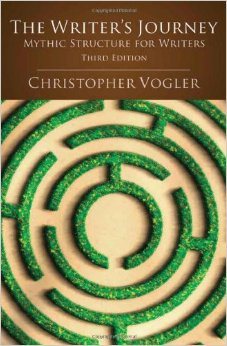
One is non-fiction, called The Writer’s Journey by Christopher Vogler. It’s an in-depth analysis of the structure of storytelling. I probably should have read this a long time ago, but, I must say, a lot of the information the author gives is somewhat innate to those who have paid attention to what makes a story work. It’s still very interesting and it will definitely help me develop my writing skills, especially because I like to use an outline and plot out a story before I start writing.
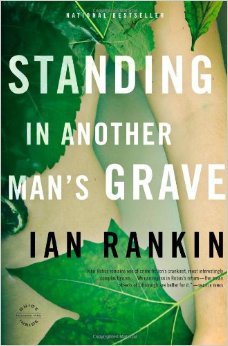
The other book I just started reading is Ian Rankin’s Standing in Another Man’s Grave. I love just about anything Ian Rankin writes. He’s a best-selling mystery crime fiction writer from Scotland best known for his long running series character, John Rebus. Rankin’s Inspector Rebus novels are set mainly in Edinburgh. The back cover description says Standing in Another Man’s Grave is a riveting story of sin, redemption, and revenge. That’s right up my alley!
What about you? What are your reading right now? Anything you recommend? I’d love to hear from you!


May 3, 2015
Work in Progress Blog Hop
I was recently asked to participate in a blog hop and share some information on my current work in progress. I was invited by the talented Julia Park Tracy (so, click here to hop on over to her blog post). Thanks Julia!
1. What is your working title of your book (or story)?
Reprisal
2. Where did the idea come from for this book?
Reprisal is the sequel to my debut novel, Rachel’s Folly. The story picks up five years later.
3. What genre do your books fall under?
Psychological Suspense Thriller
4. Which actors would you choose to play your characters in a movie rendition?
When I first started writing Rachel’s Folly in 2010, I envisioned the actor Philip Seymour Hoffman (RIP) as Ben, so I still envision him today. Sara would be played by a young Kristen Stewart and Jack would be played by Colin Farrell …. mmm yummy!

5. What is the one-sentence synopsis of your book?
A man, on the brink of a nervous breakdown, thinks he’s being stalked by a murderer.
6. Will your book(s) be self-published or represented by an agency?
Published through Booktrope, most likely.
7. How long did it take you to write the first draft of your manuscript?
I’m still working on it. I expect to finish it this summer. Then, it’ll go through the editing process and I hope to have it ready for publication in the Spring of 2016.
8. What other books would you compare this story to within your genre?
Quite a few people have compared Rachel’s Folly to Gone Girl by Gillian Flynn. Reprisal has the same feel.
9. Who or what inspired you to write this book?
I never intended on writing another book, but the response to Rachel’s Folly was so positive, I was inspired to write a sequel. I didn’t want to commit to it until I had a story that I could fully get behind. I have it now and I’m really excited about it.
What about you, what are you working on right now? I’d love to hear from you.


April 26, 2015
Top 5 Reasons You Should Join a Virtual Running Group
Although I usually run by myself, I’ve always craved the camaraderie running groups can bring. So I was delighted when I was on Twitter one day and I inadvertently stumbled upon the Earthathon Relay, a virtual running group open to runners of all levels. It consists of ten teams competing to complete a lap of 25,000 miles. After the first team finishes, they join other teams to help them finish their lap. And when the 10th team finishes, everybody celebrates having finished a MASSIVE 250,000 mile relay around the earth!
It’s been an awesome experience, and here are my top five reasons for joining a virtual running group:
1. It gets you excited about running again. People actually care about how much you run! You tweet your daily mileage and your team members cheer you on, which makes you want to cheer them on. It’s a continuous loop of motivation and inspiration!
2. It helps you keep to your running regimen. You don’t want to let your team down, so you get an extra bounce in your step knowing you have people counting on you to get your running done.
3. It brings more enjoyment to your run. A lot of team members take pictures of their running route and/or selfies from the trail. Doing this makes you more aware of your surroundings and helps you stop and take in the scenery around you.
4. It gets you out of your old routine. Sharing pictures of your route also encourages you to try other running trails to get different shots. This helps you get out there and try different trails , which makes your run more interesting, and that’s always a good thing!
5. You make new friends! This is the best reason of them all. Team members are from all over the world. I have running buddies from Chicago, Massachusetts, Georgia, California, Oregon, New York, Canada, England, and even South Africa!
So, if you’re looking for a way to bring more excitement into your running, you should try joining a virtual running group!
By the way, I’m part of the #RunderfulRunners team and we have the BEST team captains! Seriously, these ladies do an amazing job of keeping the team members motivated: @albidress, @healthynfit4you, @Shanks324, @runninrocker and @blonderunner322… you gals really rock!
My Twitter handle is @MonciaBruno71 if you’d like to follow me on Twitter.

Interested in joining the Earthaton Relay?
Because the relay utilizes twitter and the hashtag #earthathon, you can follow the race by searching for that hashtag. Also search for each of the team names using their team name hashtag. You can also find more information about Earthaton on Twitter @earthathon or by visiting their website at www.earthathonrelay.com
What about you? Are you part of any virtual running groups? Do you have any you’d recommend? I’d love to hear from you!


April 19, 2015
How to Self-Publish Your Book
In a recent blog post, How to Write a Novel in Ten Steps, I explained how I went from waking up one day with a dream of writing a book to actually finishing the manuscript. In today’s post, I’ll explain how I self-published my work and marketed my novel. I’ll also tell you how I ended up finding a publisher.
When I first started writing Rachel’s Folly, I didn’t think about what I was going to do with it after it was done. I wrote it mainly as a personal goal, something to check off the bucket list. But, when I finally finished the manuscript, I changed my mind. I had worked so hard and so long on the story, finally getting it to a point where I felt proud of it, I suddenly found myself really wanting others to read it.
So, this is what I did, and what you should do, too …
1. Create Your Book
To be honest, I never considered approaching a traditional publisher. I was intimidated and it seemed rather daunting, so I went directly to CreateSpace, which is owned by Amazon. I formatted and uploaded the text myself. It wasn’t hard, it just takes practice. I also took the picture used for the book cover (with my iPhone) and had a good friend, who happens to be a graphic artist, design and format it for me.
![Pageflex Persona [document: PRS0000026_00023]](https://monicabruno.files.wordpress.com/2015/04/blog-image-1.jpg)
It’s critical that your book cover looks professional. If you don’t happen to be a graphic artist or know one personally, there are tons of cover designers you can hire online. Createspace even has designers you can hire, as well.
CreateSpace lets you produce paperbacks and eBooks for Kindle. But, the most astonishing thing about using CreateSpace is they automatically allow you to send your book straight to their sales channels!
But here’s the thing, no one will know your book is there if you don’t market it. And, even if you get people to check it out on Amazon, if you have zero (or even just a few) reviews, no one’s likely going to buy it.
Which is why you need to …
2. Get Reviews
The first thing I did when I decided to market Rachel’s Folly, was to get legitimate reviews. I looked for book critics who were specifically interested in my genre and were open to reading independently published work.
I searched for reviewers on The IndieView, looked for books similar to mine on Amazon and reached out to those who left good reviews. I reached out to about 140 reviewers and received 12 reviews in return. I know, it’s not great, but it’s not too bad for an unknown author in a market saturated with debut novels.
Then, it was time to have a party …
3. Hold a Book Launch
Once I had some reviews under my belt, I planned and promoted my book launch through Facebook. I created an event and invited my friends and family. We ended up with a packed house (over 70 people came out) and we sold out of books before the night was over.

In addition to trying to build awareness and a fan base through Facebook, I attended local and surrounding book festivals. I spoke at Book Clubs and I held a giveaway on Goodreads, which led to over 400 readers adding Rachel’s Folly to their “to be read” lists. I was also able to get into my local independent bookstore.

But, the most important thing you can do to market your book is to …
4. Build a Social Media Presence
In retrospect, this is something I should have been doing when I first started writing my manuscript. Four years would have been an awesome amount of time to build relationships with people who could have helped me promote it when it was finally published.
I realize now, the reason I had a packed house for my book launch, was because the people there were people I had real relationships with. They genuinely were interested in supporting me. Some of them were people I had known all my life, while others were friends I made along the way. But, in most cases, they were all people I was connected to via Facebook.

So, if you want to reach more people, you need to build more meaningful relationships. And the way we do this in today’s world is through social media. Whether you like social media or not, that’s where your potential readers are. They are on Facebook, Twitter, Pinterest, Instagram, Goodreads, Tumbler, etc. I’m not saying you should be using all these platforms (you shouldn’t). But, you should pick a couple (ones you actually like) and go out there and build relationships.
Even if you want to go through a traditional publisher … more than likely, they will want to know if you already have a social media following.
Keep in mind, these are the things I did to self-publish and market my book over a year ago. The publishing industry continues to change and evolve at rocket speed. So, I suggest you do more research before deciding on your action plan. I’m sure there are more things available now than when I was starting out.
When I felt like I had taken my novel as far as I could, I began to look for traditional publishers. I went through Writer’s Market and looked for agents and publishers that were interested in my genre and submitted queries to them. I reached out to about fifty agents. I only heard back from three, and all were dead ends.
But then, I came across a hybrid publisher, Booktrope, and they were open for submissions. So, I applied and was accepted.
A hybrid publisher is somewhere in-between a traditional publisher and self-publishing. You give up part of your royalties (like you do with traditional publishing) but, you remain very integrated in the process of producing and ultimately marketing your work.
One of the best things about Booktrope is that you’re able to build your own team. You get to interview your book manager, editor, cover designer and proofreader and decide who will work with you on your project.
Another advantage with publishing with Booktrope is you get to network with other Booktrope authors, book managers and designers. You’re part of a community that supports each other. It was a perfect fit for me, because I enjoy being on social media and meeting new people, plus working with a team is so much more fun than working alone in a silo.
I was also recently accepted into International Thriller Writers and I’ll be attending the ThrillerFest X in NYC this Summer. Trust me, this wouldn’t have been possible if I hadn’t had a publisher.
I’ve only been with Booktrope for a few months, but they have already done more for me in this short period of time than I was able to do for myself in over a year.
One of the first things they did was to change my book cover. Even though they said there was nothing technically wrong with my original cover, they felt like it was geared more for a horror genre. We decided on a cover that was more suspenseful and did a better job of inviting the reader to engage.
 I love both covers, but I agree that the new one is more reflective of the book’s genre.
Rachel’s Folly was just re-released in April. The book launch is underway and we’ll be conducting more promotions in the upcoming months. Only time will tell how far it will go, but, I have no regrets. With all the cutbacks and closures taking place with traditional publishers, I’m very grateful to be working with Booktrope while I get to plug away on my next novel.
How about you? Do you have any tips on self-publishing, promoting your book or finding a publisher? I’d love to hear from you.
Here are more resources for self-publishing and self promotion:
How to Self-Publish Your Book Through Amazon
How to Get Reviews for Your Book
What to Consider When Deciding How to Publish


April 5, 2015
How to Spring Clean Your Mind
Ahhh … Spring. It’s finally here, that time of year Mother Nature shows off with her new life, warm weather, gorgeous flora and all its splendor. A time of renewal and … a time for Spring Cleaning: when we clear our homes of the old stuff that clutters our space.
But, what about our minds? When was the last time you cleared your mind of negative old thinking?
Just like how cleaning our physical space makes us feel better, clearing our minds is just as, if not more, powerful to feel better and to bring positive changes into our lives.
We all have negative thoughts that enter our minds from time to time. They were probably established in childhood or as a result of negative events from the past. It’s a natural phenomena, perhaps a self-defense mechanism, that subconsciously becomes part of us. But, the problem is if we allow our minds to continue to replay these old stories, we stay stuck in a self-defeating loop.
Once we replace our negative thoughts with positive ones, we change our perspective, and we change our lives.
So, how can we do this?
Meditate.
Oh, no, no, no, don’t get discouraged. Meditation is not just for incense burning, pachultii loving hippies (although I do love hippies). By now, I’m sure you’ve heard about the benefits of mindfulness. Everyone, from professional athletes to Fortune 500 CEOs are meditating.
Meditation may not be the easiest habit to form, especially in todays rushed, instant gratification, type A society. But, I promise you, meditating (even a little) can change your perspective.
Meditation helps us become more aware. This not only opens our minds to new opportunities, it helps us become conscious of our negative thinking. We can stop and say to ourselves, “Wait, this is a negative thought, it is not based on reality.” We then can force our attention elsewhere and sooner or later that old negative thought will not enter our minds anymore.

I started meditating last year and I have seen dramatic improvements in my life. Everything from better sleep and lower anxiety to having more meaningful relationships with family and friends, and accomplishing goals I once thought were way out of reach.
And if I can do it, so can you.
I meditate daily for twenty minutes in the morning and fifteen minutes at night. But, when I first started, I meditated for 3 minutes a day. Three minutes! You can do three minutes. I started with this brief meditation video.
After a while, I added a few minutes to my time by finding longer guided mediations on YouTube. There are plenty out there, all you have to do is look for some that suit you. I now use mediation apps like Ananda Conscious Health on my iPhone. It’s really easy to do.
So, go ahead, give it a try. Stick with it, and you won’t regret it!
What about you? Do you have any tips on how to clear our minds of self defeating thoughts? I’d love to hear from you!
Here are more resources to help you start meditating:
How You Can Eliminate Negative Thoughts With Meditation
3 Centering Meditations You Can Do in 5 Minutes or Less
3 Common Fears of New Meditators


March 22, 2015
How to Write a Novel in Ten Steps
Are you writing your first novel or have you always wanted to write one? If so, you probably already know there has never been a better time to do so. The publishing industry has changed a lot, and continues to change, making it easier than ever to publish your work. I self-published my debut novel, Rachel’s Folly, early last year and I just recently signed on with a publishing company that’s going to republish it in April.
Growing up, I never dreamed of being a writer, much less an author of a novel. But, when I was thirty-eight years old, I woke up one day with an idea for a story. And, perhaps because of the impending “four-oh” on the horizon, I decided to write a novel. Granted, it ended up taking four years to get it to a point where I thought it was ready for publication, but I did it.
After I published Rachel’s Folly, I was amazed by how many people told me they wanted to write a novel, or how they had started writing, but ended up abandoning their manuscript. So many people have a story they want to tell, but never do. That’s so unfortunate, because believe me if I can do it, you can too. It just takes some planning and willingness to see it through.
I’ll be the first to admit, it’s not easy. There were definitely times I wanted to give up. I remember one time in particular, when I was ready to throw in the towel. I was sitting in a writer’s workshop wondering what I was doing there feeling pretty inadequate and disheartened. The workshop wasn’t very good, but the instructor did say something I still carry with me to this day …
She told me I should never feel like my stories aren’t worthy enough to write. She said I didn’t have to be a famous acclaimed author to be a successful writer.
She told me that not everybody is going to like my work, but, there will be people who do. These people will be glad I wrote my story. These people will be my tribe. I should write for them.
That was the epiphany that changed the way I approached writing. All of a sudden, I understood I didn’t have to strive for perfection with every word and I allowed myself to just do the best I could. What she told me helped me keep chugging away until I finished. And what she told me is true for you, too. There are people who want to read your story. You should write it.
So, here’s what you need to do to write your novel:
1. Set time aside to write and give yourself realistic goals. How much time during the day can you sit down and write? An hour or two? Thirty minutes? Do you have long commutes? Could you record your ideas on your way to work and type them out before you go to bed? Whatever it is, make a commitment to yourself and keep it. And try to write at the same time everyday and without any distractions (e.g. turn off your cell phone, get off facebook). This will help you establish good writing habits.

2. Aim for a minimum daily word count. When I first started, my goal was to complete a mere 250 words per day. On good days, I would write much more than that. But, there were more days when just meeting those 250 words were a struggle. Whether you choose to use an outline for your story or just write by the seat of your pants, you need to write something daily.
3. Don’t get discouraged. If you find yourself in the middle of a creative doldrum, just know it happens to everyone. I had to give myself a break for a few weeks and then come back to it. I read a couple of suspense thrillers in the meantime, to take my mind off my writing while paying attention to the author’s writing style. The important thing is that you come back to it. Detours are a way of life.
I also have habits that help me deal with writer’s block, you can read about them on my last post, Overcoming Writer’s Block.
4. Try to write your first draft without editing it as you go. There will be plenty of editing before it’s over, but the rough draft is just that – rough. It’s more important that you get your story down. It’s the shitty rough draft as Anne Lamott so eloquently calls it. If you haven’t already read her book, Bird by Bird: Some Instructions on Writing and Life, I highly recommend you do. It’s an awesome resource for writers.

5. Once you finish your rough draft, celebrate! That’s a huge accomplishment. Pat yourself on the back and take some time away from your manuscript.
6. After a few weeks, it’s time to read your manuscript, put your editing hat on and start the rewrite. I had to rewrite my manuscript several times before I felt like I could share it with anyone.
7. When you think it’s ready, recruit a few beta readers to read it and give you their feedback. Make sure you chose people you know will be honest with you. Tell them you value their opinion and you’re looking for ways to improve the story. I had four beta readers read my manuscript. It was so interesting to hear how each one interpreted the story and had very different ideas on how to enhance it.
8. Thank your beta readers and take some time to think about their suggestions. Only make revisions on the things that really resonate with you. You can’t make everyone happy. In the end, it’s your story. You’re the only one who understands the motivations of your characters. Perhaps you just need to make those clearer. You’ll know which ideas feel right and which ones don’t.
9. Once you’ve done the post beta-reader rewrite it’s time to find a professional editor. Yep. Unless you’re lucky and happen to have a friend who’s an editor, you’ll need to hire one. And, you need to make sure it’s a good one. Ask them for a sample before you make a decision on which one to hire. I know a lot of writer’s think they don’t need editors, but the reality is they do. Even the best writer’s have editors.
A good editor helps you tell your story in a better way. And a great editor asks the right questions to help you uncover things you never knew you had in you. They see your blind spots and help you build the bones and expose the soul of your story. I worked with Justine Tal Goldberg at WritebyNite and Amanda Kimmerly at Polished Pear Creative Editing, I highly recommend both of them.
10. After you work with an editor to get the manuscript print ready, you’ll need to hire a proofreader. This should not be your editor, they are too close to your work and you need a set of fresh eyes to go through your manuscript with a fine tooth comb.
After the final proof, you have a manuscript that’s ready for publication. You wrote a novel. Yay! You can really celebrate now.

At least for a little while …
You’ll need to think about what you’re going to do with this manuscript. After all, you need to find your tribe so they can read your story.
Do you want to seek an agent or a publisher? Would you rather self-publish? You should actually be thinking of these questions before you finish your manuscript. For marketing purposes, you’ll need to establish a social media presence (create a platform) regardless of which way you chose to publish. And, if you do decide to self-publish, you’ll need a professional book cover. This is crucial. You don’t want your novel to end up on Kindle Cover Disasters.
I’ll do a follow-up post in a few weeks on how I self-published and marketed my novel and then how I later found a publisher.
In the meantime, write your novel. You can do it!
How about you? Do you have any writing tips to share? I’d love to hear from you.
Here are some more tips for writing a novel:
How to Write a Book in 4 Steps & Why Deadlines are Important
Six Monstrous Ways to Turn a So-So Story Into a Great One
The One-Two Punch Approach That Finally Got Me Writing
A Novel Idea: Week One {5 Key Plot Points}


March 8, 2015
Overcoming Writer’s Block
One of the questions authors get asked a lot, is how they deal with writer’s block. There are many different ways writer’s deal with this temporary loss of creativity. Everything from forcing yourself to continue to write, even though it may be awful, to completely walking away from your work for a while. And, while I’m not immune to the occasional mental road block, I do have habits that help me overcome them quite effortlessly. These habits not only help me clear my mind, they help me stay positive and creative, too.
Just as our emotions can effect our physical bodies, like when we’re scared our hearts beat faster or when we’re nervous our muscles tense up, the reverse is true as well. There’s a direct connection between our physical body and our state of mind. If we don’t take care of our body, our mind suffers. And one sure way to clear your mind, and open yourself up to creativity, is to engage your body.
That being said, here are three things I do to overcome writer’s block:
Run

I can imagine the collective eye rolls from all the non-runners out there. Oh no, she’s one of those crazy people that runs for fun! Well, yes, I am somewhat crazy, but that’s not the topic of this post. Keep in mind, I didn’t start running until I turned thirty. Before then, I couldn’t make it to the end of my street without my heart pounding so hard I thought it was going to explode. But, I started slowly, increased my mileage even more slowly and now, I’m a certified runner. I’ve been running for fourteen years. And sometimes, believe it or not, it really is fun.
Putting the physical benefits aside, running is an excellent way to clear your mind and lift your spirits. Numerous studies have shown that running stimulates neurotransmitters, like serotonin, dopamine, epinephrine, and beta-endorphin, all of which elevate mood and reduce depression and anxiety. The endorphin release is what’s commonly referred to as the runner’s high.
When I’m stuck on a scene or trying to understand one of my character’s motivations, I can usually untangle the web while I’m running. And it’s not a conscious effort. I just focus on the road, listen to my music and things just start to work themselves out in the back of my mind.
So, the habit of running makes you feel good while helping to clear your head. And you don’t have to run a lot to get the benefits, even a little bit helps you feel better.
Yoga

Yoga is the yin to the running yang. It’s a great complement to running because it helps you lengthen the overused muscles in your legs. It also helps you strengthen your upper and side body, which is often neglected if you only run. Doing yoga actually helps you become a stronger runner. Here again, though, the mental benefits of yoga are just as important, if not more so.
The essence of yoga is regulating your breathing, and focusing on your breath helps to remove the static noise in your head. It helps you stay in the present moment. The practice of concentration and retention of breath is the perfect way to clear your mind!
You don’t have to go to a yoga studio either. I do most of my yoga at home. You can check out online yoga services like YogaGlo, YogaVibes and GaiamTV (just to name a few).
Meditate

Which leads me to meditation. Although yoga in the US takes on a more physical exercise, in Eastern traditions, yoga has more of a meditative core. Therefore, there’s a natural transition from going from yoga to meditation.
I started meditating last year and I can say, without a doubt, it has helped me achieve a higher state of mental clarity than anything else I do. Writer’s block doesn’t seem to be an issue for me since I started meditating daily.
Meditating may not be the easiest habit to form, especially in todays rushed, instant gratification society. For many people, it’s easier run a mile than to sit down and just be. It takes time and practice to learn how to slow down and let it all go. I recommend starting with five minutes and then building from there.
Meditation helps raise your awareness. It helps increase intuition. It can also help you become more reverent, which is so important when you’re a writer. Research has even found that meditation promotes divergent thinking, a type of thinking that generates new ideas.
Like running, meditation increases serotonin production which improves mood and behavior. It also lowers high blood pressure and has shown to lower levels of blood lactate, reducing anxiety. It even helps you sleep better!
And this is just what we know. Researchers are still discovering new ways meditation helps to improve our health.
So, these are the things I do to help clear my mind and keep the creative juices flowing. What about you? How do you deal with writer’s block?
Here are other ways to deal with writer’s block:
http://flavorwire.com/343207/13-famous-writers-on-overcoming-writers-bloc k
Here’s more links regarding the benefits of running:
http://www.fitbie.com/get-fitter/5-brain-benefits-running
http://greatist.com/fitness/30-convincing-reasons-start-running-now
More information about the benefits of yoga:
http://life.gaiam.com/article/benefits-yoga
More info on the benefits of meditation:
https://www.headspace.com/science
http://io9.com/how-to-meditate-and-get-the-most-benefit-out-of-it-1688990555


February 23, 2015
How to Turn Juice Pulp Into Black Gold in 3 Easy Steps
Do you juice? I started juicing a couple of years ago and I’ve been hooked ever since. It’s is so yummy, and healthy, as long as you juice more veggies than fruit (I aim for at least 80% veggie to fruit ratio). Juicing is a natural way to make sure I get those all important vitamins and minerals into my diet. My current favorite juice contains one small green apple, a bunch of kale, parsley, ginger and lemon. It’s good stuff.
But, as much as I love juicing, I hate throwing away all the left over pulp. It just seems like a crime to let it all go to waste. So, since my garden is in desperate need of some TLC, I thought I’d give composting a try. I should note, I do not have a green thumb, in fact, I have the opposite of a green thumb. Is that a dry brown thumb or a dead thumb? You know what I mean, I tend to kill whatever I try to grow. But, this year, I’m opening myself to new possibilities, and I’ve decided to try recycling the all that pulp into something useful.
Composting can turn your juicing pulp and scraps into a nutrient rich fertilizer for your garden (what gardener’s refer to as black gold).

It’s easy, too. Just follow these three steps:
1. Make or buy a compost bin.
I asked my handy-dandy husband to build me a compost bin with some fence post I bought at the hardware store. I spent a total of $24 for all the materials. If you’re not up to building one, you can always buy one. In fact, you don’t even really need a bin, a hole in the ground will work, too, but you’ll need to cover it so birds and other critters can’t get into it. If you do decide to build one, keep in mind the optimal size is 3x3x3 cubic feet. The bottom panel of the one we built has hinges on it so I can open it and remove the compost from the bottom of the pile when it’s ready.

2. Collect your scraps.
I collect the pulp in a small compost container that sits on my kitchen counter. Almost any container will work, you can even use an old plastic coffee container. Just make sure it has a lid, so it doesn’t stink up your kitchen. And speaking of coffee, did you know you can compost coffee grinds as well? Below are some common things that you can compost:
Fruit & vegetable scraps
Coffee grinds
Egg shells
Grass clippings
Leaves and straw
Shredded newspaper
The trick here is to mix equal parts green stuff (things that are high in nitrogen, e.g. fruit, veggies, coffee grinds) with equal parts brown stuff (things that are high in carbon, like dried leaves).
3. Turn and water your pile.
Just add your scraps to the pile, turn it every few days and let the earthworms do the rest! The earthworms actually eat the scraps and excrete the nutritious soil. Every few days, I make sure to add sufficient dried leaves and turn everything over a few times. Water as needed, as the compost pile should remain a little moist.
*Tips for the cold, winter season:
Add a layer of brown ingredients over your pile to help trap the heat inside.
Don’t turn. It’s better not to disturb the layer of insulation. You can mix things up when the temperature warms.
Make sure the pile is moist. Cold temperatures can dry things out.

It can take a couple of months for the worms to do their thing. So, I’ll do a follow up post to let you know how it’s going.
Here is more information on how to build a compost bin:
http://eartheasy.com/grow_compost_bin_build.htm
Here is some info on where you can buy one:
http://thesweethome.com/reviews/best-composters/
Here’s more info on how to compost:
http://www.wikihow.com/Compost
http://www.prettyhandygirl.com/compost-gardenings-black-gold/
How about you? Do you compost? Any tips you want to share? Do you juice? What do you do with the leftover pulp? I’d love to hear your thoughts.